Skip to content
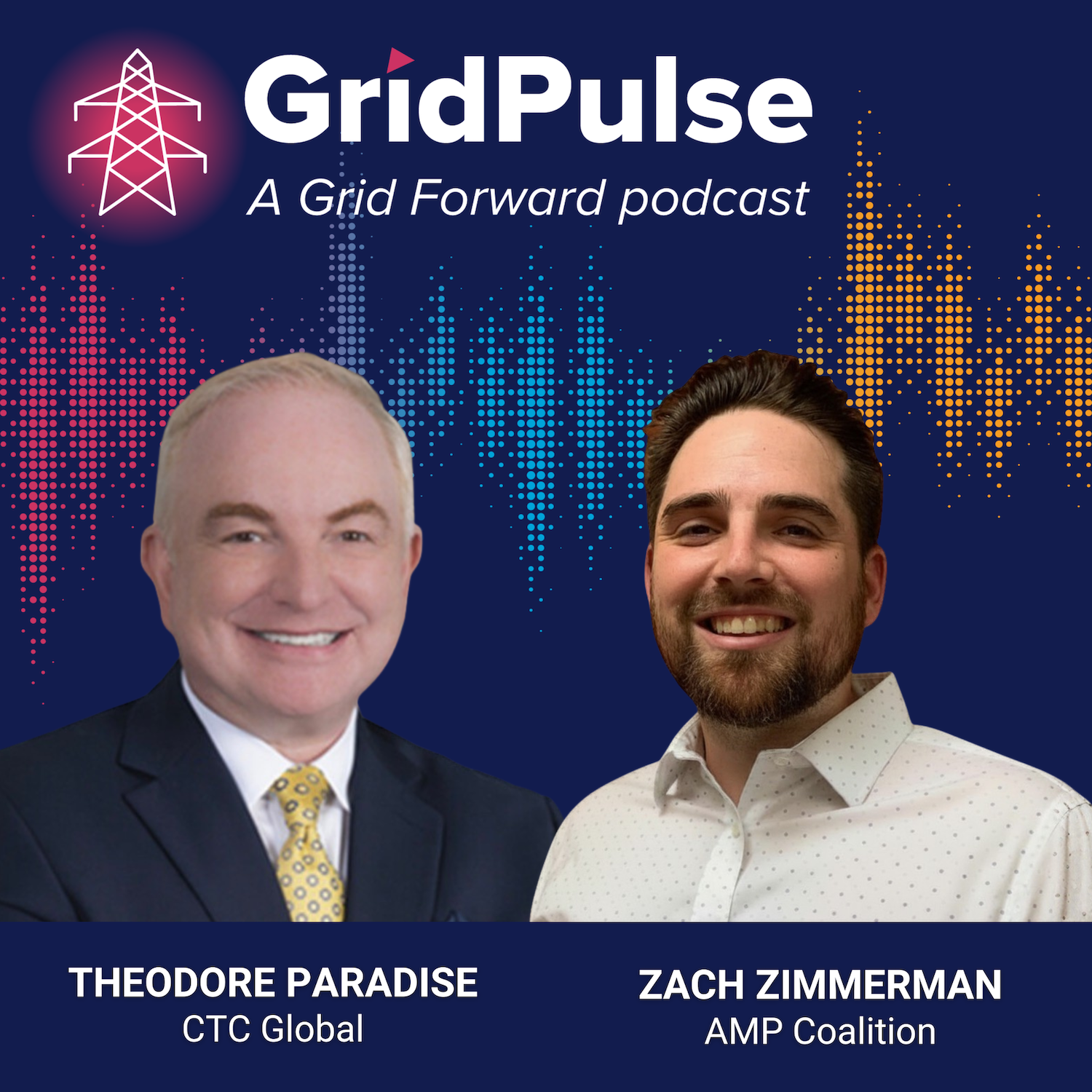
Artwork for GridPulse, a Grid Forward podcast

GridPulse, a Grid Forward podcast

gridforward

Grid Forward’s GridPulse podcast series with industry leaders on what lies ahead for advancing our electric grid. Hosted by Bryce Yonker, CEO and executive director of Grid Forward. Formerly Grid Forward Forum, this season of GridPulse is sponsored by Virtual Peaker.

Play
  • 22 episodes
  • fortnightly
  • Avg 33 min
  • English
Counted on this page — what you have heard stays on this device, so it is not something the list can be paged by.
  • #84
    Monday · 34 min

    How Can Data Centers Expand Without Passing the Costs to Other Energy Users?

    For years, energy providers have operated on the basis that adding additional meters spreads energy costs and makes the grid more affordable for everyone. But is that true when a data center needs a city’s worth of electricity? Drawing on their current research in energy policy, markets and transitions, Paulina Jaramillo of Carnegie Mellon University and Abe Silverman of Johns Hopkins University discuss how rapid data center growth is challenging preconceptions about reliability and rates. They also talk about how flexibility, tariffs and new investment practices could keep the costs needed with rapid growth from falling on current customers. Listen now - you won't find a more informed discussion on the rising impact of data centers on the electric system.

  • #83
    August 28 · 30 min

    Solving Speed-to-Power and Future Grid Needs with Behind-the-Meter Generation

    For large facilities scrambling to bring new energy capacity online, waiting several years for a new grid connection is not a viable option. John Carrington, CEO of ERock, and Jesse Noffsinger, Partner at McKinsey & Company, discuss current trends in behind-the-meter (BTM) generation and how it can provide a faster solution while utilities build needed grid connections. Over the long term however, BTM resources could shift from serving individual customers to supporting the larger power system. John and Jesse also explore the challenges that come with rapid growth on the grid, including supply chain constraints, complex large-load rate structures, and how costs and benefits should be shared. Hear two expert viewpoints on this fast-evolving BTM area in this episode.

  • #82
    August 5 · 32 min

    How Grid Innovation Leads to Lower Energy Costs at Saint John Energy

    Saint John Energy exemplifies how modernizing the distribution grid can be a productive path for greater affordability and resiliency. In this episode, CEO Ryan Mitchell shares how Saint John Energy has using a range of hardware and software innovations -- such as renting high-effiiciency heating and deploying advanced demand management -- to meet growing customer demand with the lowest rates in the region. He also discusses their new Plugin Labs, a digital twin of system data designed to give innovators and developers a safe environment to test new ideas before launching software solutions. Listen in to this success story of grid modernization delivering power more efficiently and economically.

  • #81
    July 7 · 27 min

    How Enhanced Geothermal Can Deliver Clean, "Always On" Power for Rising Energy Demands

    As electricity demand continues to climb, geothermal energy is emerging as a key source of reliable, around-the-clock clean power. In this episode of GridPulse, Bryce Yonker sits down with Sarah Jewett, chief operating officer at Fervo Energy, to discuss how the company is scaling the next generation of geothermal power. Sarah explains how Fervo is applying technologies pioneered in the oil and gas sector to reduce costs and accelerate deployment. They also explore locational factors, timelines, permitting, and how enhanced geothermal is poised to play a major role in the future of the electric grid. Don't miss this excellent discussion of how next-generation geothermal can help shape a clean, reliable energy grid.

  • #80
    June 18 · 37 min

    Energy Affordability and the Grid: What Recent Research Reveals About Causes and Potential Solutions

    Energy affordability is a growing problem across the commercial, industrial, and residential sectors. In this episode, Christopher Knittel of MIT and Ryan Hledick of The Brattle Group turn to recent research to unpack the many factors pushing up electricity prices, including infrastructure replacement, climate change impact, fast-growing demand and evolving energy policies. They then lay out potential solutions using grid flexibility and energy pricing to help manage costs while advancing a reliable, capable grid. You won't find a better up-to-date explanation of the dynamic between energy affordability and grid modernization. Listen in!

  • #79
    May 21 · 31 min

    Don't Rebuild! Reconductor for Twice the Grid Capacity on Existing Corridors

    The ability to double grid capacity is here today, ready to work in existing transmission corridors. Get grounded in advanced reconductoring options in this episode with Zach Zimmerman from the AMP Coalition and Theodore Paradise, Chief Policy and Grid Strategy Office at CTC Global. They explain how advanced conductors can move more energy using existing poles and corridors or boost capacity of new projects. Utilities and grid operators can reduce grid expansion timelines, lower costs compared with new transmission builds, and even improve affordability. Listen in to this "technology whose time has come."

  • #78
    May 5 · 35 min

    From Demand Response to Dispatchable Capacity: The Rise of Storage-Led Virtual Power Plants

    Virtual power plants (VPPs) are entering a new phase. Utilities and regulators are moving beyond pilot programs and enrollment metrics toward dispatchable distributed capacity that can reliably support the grid. At the same time, new policy frameworks, funding mechanisms, and technology capabilities are accelerating deployment. In this episode, leaders from Tesla (Kevin Joyce), Virtual Peaker (Jeff Quigley) and Ohm Analytics (Madeline Turner) explore how DERs, and especially storage, are being deployed at scale to provide fast, flexible capacity. They discuss the way these systems are already reducing pressures on costs, improving reliability and helping utilities respond to quickly shifting conditions.

  • #77
    April 21 · 29 min

    The Grid is Not a Lab: How Avista Drives Innovation Across the Utility

    As the energy landscape grows more complex, utilities see new technologies as critical to making electricity more clean, affordable and reliable. Yet how can they nurture innovation in a historically conservative industry? In this episode, Avista CEO Heather Rosentrater shares the ways her team is embedding innovation across the organization, not just within a single team, to navigating rising operational risks. Avista is empowering employees to rethink how work gets done, optimize business operations, and communicate with communities. If you're looking for inspiration for how to make innovation integral to your organization, listen to Heather's experience at Avista.

  • #76
    April 15 · 34 min

    Why Tech Giants Must Build Trust as Well as Tools to Advance the Grid

    As energy demand surges, tech giants are stepping up as key partners to utilities navigating a rapidly changing grid. At CERAWeek 2026, Bryce Yonker explored this topic speaking with Hannah Green, Global Operations & GTM Leader for Energy & Resources at Microsoft, and Rayford Smith, Global Head of Power and Energy for Cloud at Google. They detailed how digital infrastructure, the cloud and AI are reshaping how utilities plan and operate the grid. From faster forecasting to smarter operations, these technologies are unlocking new efficiencies. But as new tech become embedded in critical infrastructure, building trust through strong governance, transparency and accountability is increasingly essential. Listen in to understand the evolving dynamic between these two mission-critical industries and the path to "getting it right."

  • #75
    April 3 · 20 min

    The Unexplored and Unknown: How ARPA-E Is Advancing Energy Innovation

    As energy demand surges, how is the U.S. Department of Energy supporting breakthrough technologies to strengthen grid resilience? ARPA-E Director Conor Prochaska shares how the agency is identifying and advancing high-impact solutions, including fusion (which he thinks is getting closer), advanced nuclear, next-generation geothermal, long duration storage and more to help meet growing demand. But technology alone isn’t enough. Prochaska also highlights the critical role of public-private partnerships and faster commercialization pathways in bringing these innovations to scale. We recorded this live at CeraWeek in Houston and will be joining the ARPA-E Energy Innovation Summit next week. Hope to see you in San Diego.

  • #74
    March 24 · 31 min

    Electric Co-ops Meet the Moment as Technology Advances and Demand Surges

    What does it take to power rural America in a time of fast-changing technologies and rising demand and costs? Jim Matheson of NRECA shares insights into how electric cooperatives are adapting to meet supply chain pressures, infrastructure needs, and the rapid growth fueled by data centers and other energy demands. He also discusses the importance of federal financing and the cooperative model to maintain affordability and reliability on the rural grid. How well are U.S. co-ops suited to meet the day? Tune in to listen to our lively conversation.

  • #73
    March 11 · 33 min

    Balancing Growth and Affordability While Building the Grid We Need Today

    On the season opener of GridPulse, Virginia Commissioner Jehmal Hudson joins the podcast to discuss the national and local drivers behind rising energy demand and what they mean for grid planning and regulation. He explores the need for smarter transmission utilization, meeting the demand for accelerating data center facilities, thoughtful rate design for large loads, and updated regulatory processes that take innovation into account without sacrificing public accountability. As the energy landscape evolves, Judge Hudson emphasizes that affordability must remain a core outcome, and not a restraint, as decision-makers work to modernize the grid for the demands of today as well as the future.

  • #72
    Nov 11, 2025 · 39 min

    Season 6 Finale — The Benefits of AI Technologies on Grid Modernization

    In this season 6 finale, Luis D’Acosta, CEO of Uplight, recaps this season’s driving issues with a rapid-fire discussion with Bryce. They cover a wide range of topics: Applying AI-driven technologies to run the grid more effectively Mitigating wildfire risks by integrating digital and advanced monitoring solutions Ongoing effects of the federal agencies’ changing priorities on grid modernization The importance of scaling new technologies quickly and broadly across the grid to help curb rate increases Optimizing the Demand Stack to enable more grid flexibility Listen in to this expert recap of an exciting and challenging year for advancing the electric grid. And thank you for listening to this season of GridForward Forum!

  • #71
    Nov 5, 2025 · 47 min

    AI Impacts for a Resilient Grid with Duke Energy, NextEra and PG&E

    On the first day of the GridFWD 2025 event, leadership from some of the nation’s largest and most AI-engaged utilities joined a panel to tell our audience about their acceleration of AI use cases. Jason Glickman (EVP Engineering, Planning and Strategy, PG&E), Bonnie Titone (Senior VP and Chief Administrative Officer, Duke Energy) and Petter Skantze (Senior VP of Infrastructure Development, NextEra Energy Resources) discuss how utilities and infrastructure developers can leverage AI for their own use and accommodate the added demand from large load customers, while ensuring that their systems remain resilient.

  • #70
    Oct 6, 2025 · 22 min

    Utilizing Dynamic Line Rating to Increase Reliability and Reduce Costs

    Dynamic line rating (DLR) is a Grid Enhancing Technology (GET) that measures the impact of ambient conditions on the carrying capacity of a grid. When DLR is employed network wide, it improves asset utilization, reliability, resilience, and confidence in investments. Guest host Julia Selker of Grid Strategies and Vishal Kapadia, CEO of LineVision, discuss how the successful implementation of DLR can save millions of dollars, identify grid weaknesses, and help meet the need for increased capacity.

  • #69
    Sep 4, 2025 · 38 min

    Weighing Solutions to Increase Flexibility on the Grid

    Increasing flexibility on the electric grid is necessary as demand and capacity requirements rapidly rise. Diversifying generation portfolios with emerging technologies is a good start, and significant T&D investments in innovations like virtual power plants can help match supply with demand. Cost, construction, and timing are often challenges to increasing flexibility; therefore, what solutions are going to make the most impact to help meet energy needs? Joining us to discuss these important topics about flexibility are Dr. William (Bill) Burke, CEO at Virtual Peaker, Jessica Matlock, CEO at PNGC Power, and Darren Murtaugh, Director of Electric Distribution Strategy at ICF.

  • #68
    Aug 25, 2025 · 39 min

    Analyzing Data Center Flexibility to Meet Growing Power Demands

    Power demand from data centers is clearly increasing faster than current electric infrastructure and markets can accommodate. Therefore, data centers and grid operators are exploring one workaround: flexing data center loads during peak demand times. Brian Janous, of Cloverleaf Infrastructure, and Chris Pennington, of Iron Mountain Data Centers, discuss the current opportunities and challenges to data center flexibility. For example, there are options for moving workloads among facilities and leveraging the improving capabilities of battery storage. On the other hand, demand response is not a major business driver. The industry needs to define relatively simple solutions that can be deployed at scale to meet market demand.

  • #67
    Aug 1, 2025 · 35 min

    Powering Texas: Grid Growth, Resilience & Innovation

    In this episode of Grid Forward Forum, host Bryce Yonker speaks with Rudy Garza (CPS Energy) and David Naylor (Rayburn Electric Cooperative) about the urgent challenges and innovations in the Texas energy sector. They explore topics like grid modernization, the impact of Winter Storm Uri, growing demand from data centers, and how Texas utilities are going to have to invest billions to keep up while working to maintain affordability and reliability. Please join us in helping provide disaster relief for the communities impacted by recent flooding in Kerr County by contributing to the Salvation Army Kerrville and the Kerr County Flood Relief Fund.

  • #66
    Jul 11, 2025 · 34 min

    How State Energy Offices Are Tackling Load Growth, Affordability and Resilience on the Grid

    State energy offices have a delicate balancing act in leading policy, tracking market signals, and encouraging economic development. All that is harder now that load growth is accelerating. David Terry, the president of National Association of State Energy Officials (NASEO) , discusses trends within state energy offices to help get energy onto the grid quickly to grow the economy while meeting community concerns. David and Bryce discuss how new approaches such as grid enhancing technologies, automated load management and long-duration energy storage provide new pathways. Listen in to this insider perspective on how the state energy offices are learning more, planning better and adjusting to new federal energy priorities.

  • #65
    Jun 27, 2025 · 37 min

    Supply Chain Constraints on the Grid - And What Needs to Improve

    Since 2020, supply chain shortages have delayed the progress of necessary grid infrastructure improvements. Consolidation in the industry means fewer vendors are available which drives up prices, extends lead times and limits capacity, especially as worldwide demand increases. Will Perrich and Stephen White of POWER Engineers provide an insider's view to current constraints on the market and what needs to be done to alleviate them. Their answers cover the gamut from standardization of key components (regionally or nationally) to changing how utilities retain inventory and plan projects. The discussion ends with a rapid fire round of rating how difficult it is to procure different grid components.

Showing 1–20 of 22 episodes