Skip to content
Artwork for Great Investors
BusinessInvestingEntrepreneurship

Great Investors

Latticework Podcasts

Great Investors is a series of narrated programs on the paths of superinvestors: the ideas that formed early, the positions that tested them, and the convictions that survived. The series is built from primary material, including the investor’s own letters and MOI Global’s archive of interviews and conference sessions recorded, much of it heard until now only by our members. You come away understanding how a great investor thinks: where the method came from, what it cost to learn, and which ideas have held up.

www.latticework.com
Play
  • 15 episodes
  • weekly
  • Avg 1 hr 4 min
  • English
  • Today · 1 hr 5 min

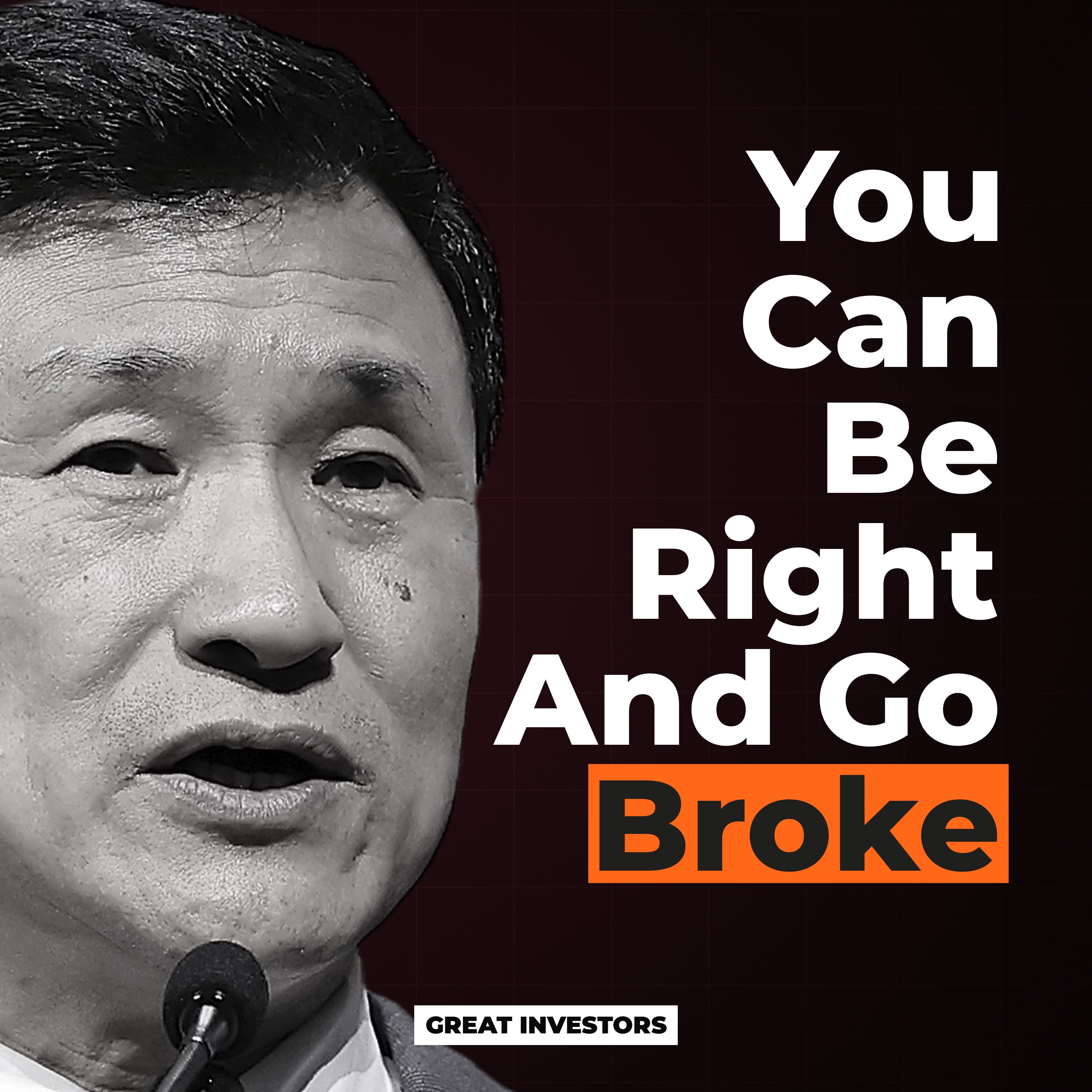
    Li Lu: Compound Your Knowledge

    We are delighted to share with you our audio program on Li Lu, founder and chairman of Himalaya Capital, part of the Great Investors podcast by Latticework. Each program in the series is an hour-long narrated profile of one investor, researched by the MOI Global team from the investor’s own lectures, writings and interviews. We make these programs so that members can learn how a great investor thinks and works, through the decisions he made and what he said about them at the time. Your feedback on what was useful, and on which investors to cover next, shapes what we produce. We start with who he is: Li Lu was the guest of honor at Columbia Business School’s thirty-sixth Graham & Dodd luncheon on October 5, 2026. He had attended a few of those luncheons as a student. He was born and raised in China, where, he said, there was not much of a private business or market economy at the time. From 1990 to 1996 he studied at Columbia and earned three degrees at once. There he went to a talk expecting a free lunch and heard Warren Buffett. He bought his first stock in 1993 and founded Himalaya Capital in 1997. In 2004 Charlie Munger became his partner. He started out knowing very little, he said, and learned his way from the simple to the complex. His first stocks were statistically cheap ones he could judge from a balance sheet, in the style of Benjamin Graham. Over the years he moved to good businesses, and then to businesses with enduring competitive advantages and long runways of growth. At the luncheon he put it as a rule: “And I always say, look, if you can compound your knowledge in a sustainable fashion, eventually you can compound your capital as well.” Every ten years, he said there, he finds himself a somewhat different person. Three of his six principles come from Graham. A share is a piece of a business. The market’s moods are there to be used, never obeyed. A margin of safety protects the downside. From Buffett comes the circle of competence, and he stresses where it ends as much as what lies inside it. He judges that he understands a business if he would buy more after its stock fell by half. From Munger comes a fisherman’s rule: go where hardly anyone is casting a line. His own sixth principle measures wealth as a share of global purchasing power. He keeps it by owning great businesses in the most dynamic economies, bought at good prices and held long enough for the value to be created. The program opens with those principles and then goes back to the start. It follows Timberland in the fall of 1998, when he read every complaint filed against the company. It covers the years he sold stocks short, which he called in 2013 one of the worst mistakes he had made. It has the Thanksgiving weekend of 2003 in Munger’s home library. It follows BYD from a trade magazine item around 2000 to a Berkshire Hathaway subsidiary’s agreement in September 2008 to buy 225 million new shares. Near the end it takes up generative AI, which he wants kept a tool, with a human in the loop. The program is built around his conversation at the luncheon with his host, Professor Tano Santos. The host asked what AI means for the equity analyst and how to protect a portfolio in a market top-heavy with a few giant companies. He also asked how to invest in China after the bust in its property market. Around that conversation the program sets what he said in English earlier, from a 2006 class at Columbia to a 2021 conversation with his old professor. It translates his talks in Mandarin, at Peking University in 2015 and to a gathering in Beijing in 2024. The complete program runs sixty-five minutes. Get the next program the day it comes out. Great Investors is on Apple, Spotify, and YouTube (or add the podcast feed to any app). The transcript is available for download to members only. Narrated by an AI voice. This is a public episode. If you'd like to discuss this with other subscribers or get access to bonus episodes, visit www.latticework.com/subscribe
  • November 17 · 1 hr 6 min

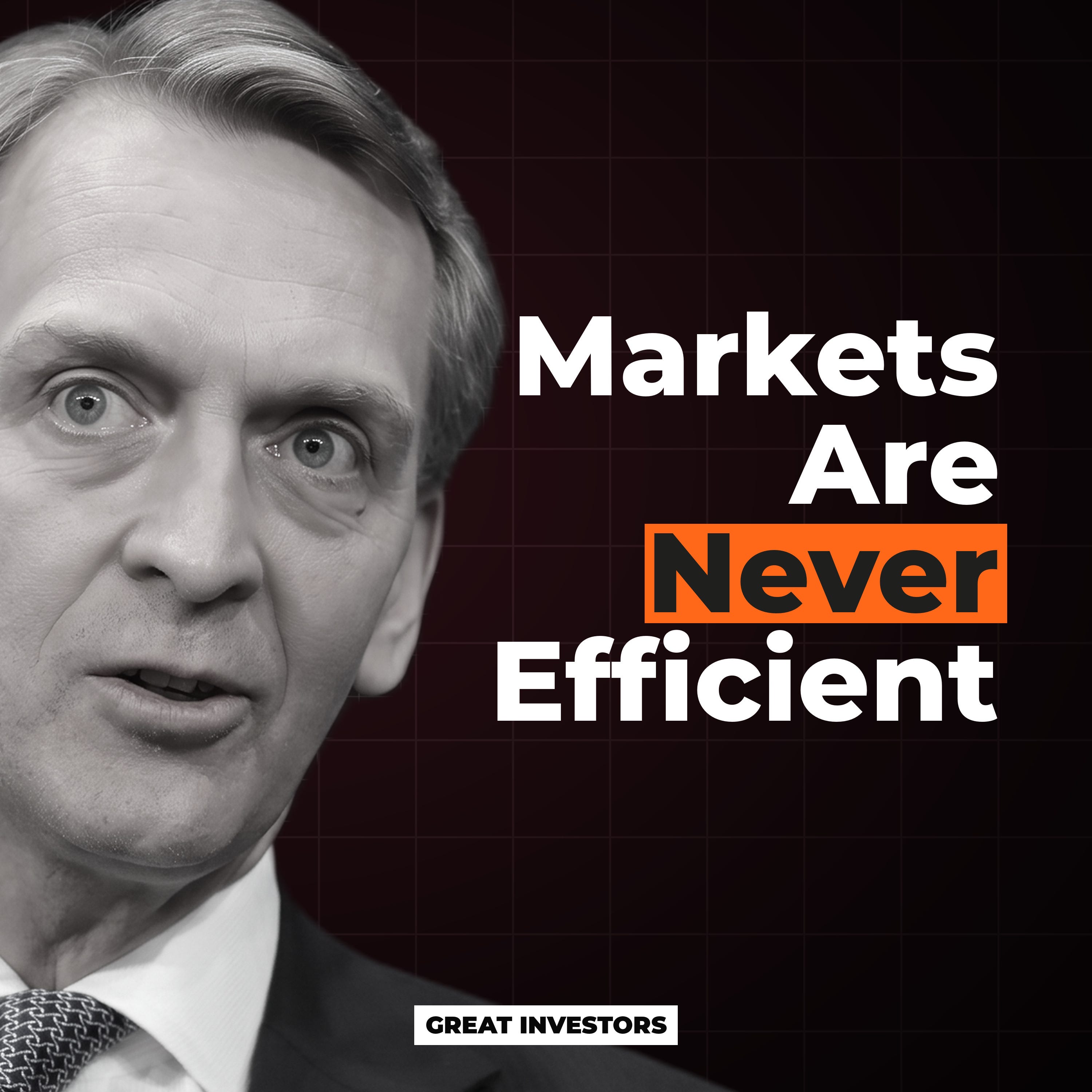
    Bruce Flatt: Strength to Act When Others Cannot

    We are delighted to share with you our audio program on Bruce Flatt, chief executive of Brookfield Corporation, part of the Great Investors podcast by Latticework. Each program in the series is an hour-long narrated profile of one investor, researched by the MOI Global team from the investor’s own letters, talks and interviews. We make these programs so that members can learn how a great investor thinks and works, through the decisions he made and what he said about them at the time. Your feedback on what was useful, and on which investors to cover next, shapes what we produce. We start with who he is: Bruce Flatt joined Brookfield in 1990 and succeeded Jack Cockwell as its chief executive in 2002, when the company’s name was Brascan. By his own account he was a value investor at heart from the start. Brascan became Brookfield Asset Management, his letter for 2005 reported. In December 2022 the parent became Brookfield Corporation and handed shares of its asset manager, which kept the old name, to its shareholders. In February 2026 Connor Teskey became chief executive of Brookfield Asset Management, and Flatt stayed on as chair of its board. He argues that the clearest signal to buy is a shortage of capital. In a distressed period, he wrote in his letter for 2009, the owner has too much debt, cash flow has shrunk, the mood is gloomy and financing is scarce, so few can bid. Brookfield finances each asset on its own, with long-term non-recourse debt, so no single loan can force a sale elsewhere in the company. The third of three principles he credits to Jack Cockwell’s generation is to have more capital than anybody else. On September 10, 2025, at Brookfield Asset Management’s investor day, he went on: “never, ever, ever get yourself in a situation where you don’t have capital when things are going down.” Real assets, he wrote on November 5, 2010, behave like bonds, with cash flows far into the future, and like equities, because those cash flows grow. Brookfield buys them below replacement cost: a coal terminal in Australia cost three quarters of that in 2009, two years after its previous owner had paid one and a half times. Downside protection of the capital employed is in a sentence near the end of nearly every annual letter since 2005; in 2025 he said Brookfield’s investment committees spend virtually all their time on it. The miracle of compounding, he said in August 2018, comes down to sticking with it. His letter of February 12, 2026, set down the record: $1 million invested in Brookfield Corporation more than thirty years earlier was worth $285 million, 19 percent a year. The program opens with his letter of November 7, 2008, and the 7.5 million shares Brookfield bought back at an average of US$20. It goes back to the first funds, which nobody would take, and the move out of mining. It tells 2009 through General Growth Properties, whose defaulted bank debt Brookfield bought that year: $2.3 billion invested, $6.0 billion of value by his November 2013 count. It has TerraForm, Westinghouse and a tower on Park Avenue. It has the letter of March 23, 2020, the split of 2022 and the partnership that promotes from within. It ends with the trees Brookfield let grow on the stump and his advice to a young person starting out. The program quotes him from his letters to shareholders first. They run from his first as chief executive in 2002 to his letter of May 14, 2026. Brookfield’s own recordings cover its investor days of 2022 and 2025 and its podcast of October 2024. Beside them are a talk to Google employees in August 2018, a Bloomberg interview in March 2022, Norges Bank Investment Management’s podcast late in 2023 and The Knowledge Project in April 2025. The complete program runs sixty-six minutes. Get the next program the day it comes out. Great Investors is on Apple, Spotify, and YouTube (or add the podcast feed to any app). The transcript is available for download to members only. Narrated by an AI voice. This is a public episode. If you'd like to discuss this with other subscribers or get access to bonus episodes, visit www.latticework.com/subscribe
  • November 10 · 1 hr 2 min

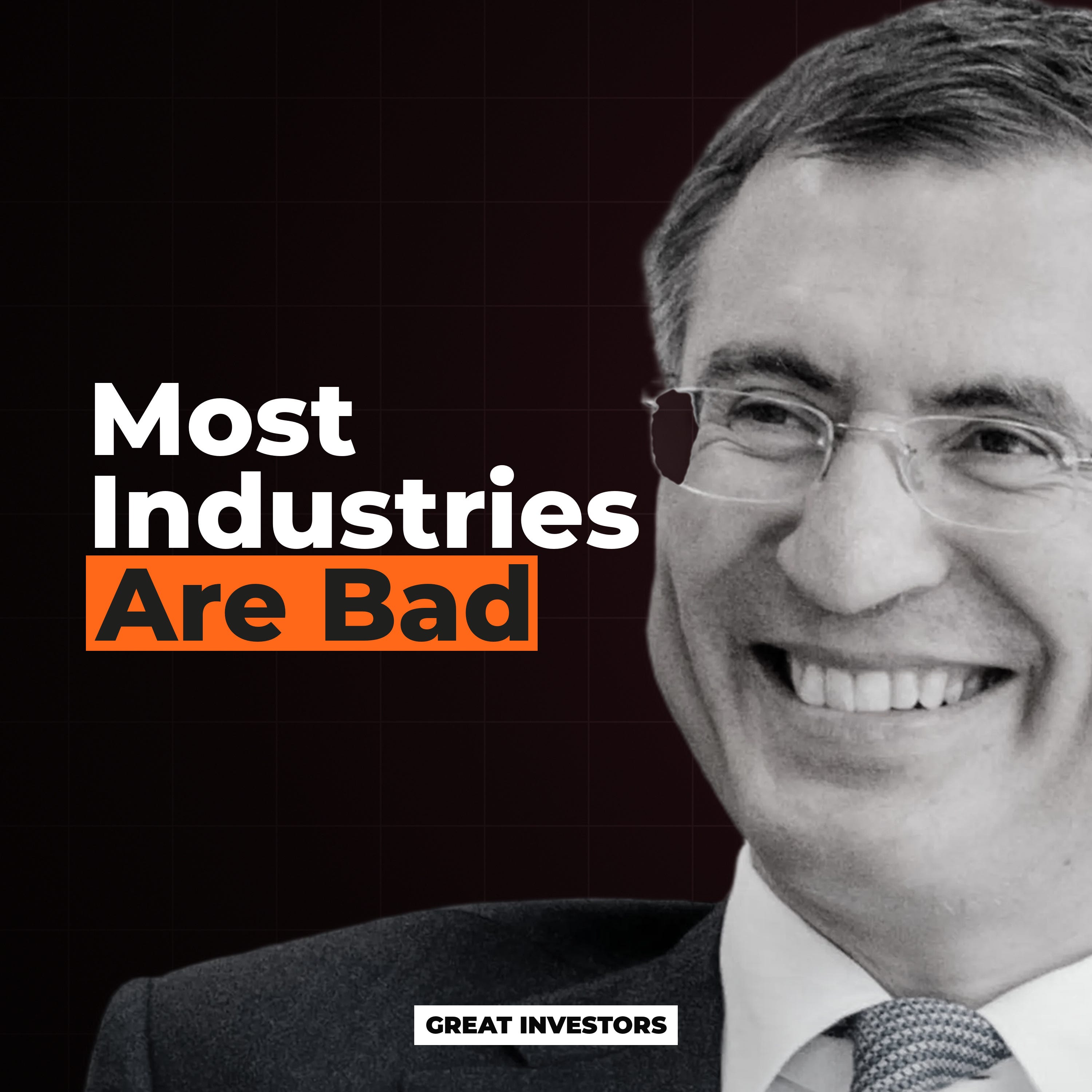
    Chris Hohn: Guardians of Others’ Capital

    We are delighted to share with you our audio program on Chris Hohn, founder and portfolio manager of TCI Fund Management, part of the Great Investors podcast by Latticework. Each program in the series is an hour-long narrated profile of one investor, researched by the MOI Global team from the investor’s own letters, talks and interviews. We make these programs so that members can learn how a great investor thinks and works, through the decisions he made and what he said about them at the time. Your feedback on what was useful, and on which investors to cover next, shapes what we produce. We start with who he is: Chris Hohn studied accounting and business economics as an undergraduate in the United Kingdom, where a visiting professor from Harvard Business School pointed him toward that school. He spent a brief period at Apax, in private equity, then seven years at Perry Capital, which sent him to London to build its European investing. He has said he was born into a poor family and always wanted his capital back. TCI Fund Management was established in June 2003. In 2008 CSX shareholders elected four of the five board candidates put forward by TCI and 3G Capital, Hohn among them. He argues that risk comes before return, and that risk, in the definition he takes from Warren Buffett, is not knowing what you are doing. TCI spends nearly all its time on two questions: what protects a business, and what could disrupt it. The protection he wanted first was physical: toll roads, airports, transmission lines and cell towers. The test of a moat is pricing above inflation: 1 percent above inflation on a 20 percent margin, and profits grow 5 percent faster than revenue. In a 2025 podcast interview he singled out one lesson from his whole career: “investors underestimate the forces of competition and disruption. Because they just look today.” Long holding periods: on a panel in Oslo in April 2025, he put the average life of a TCI holding at eight years, against less than a year for the average American stock. Concentrated quality: ten or fifteen stocks, each selling something essential; he counts perhaps 200 companies as high quality and investable. His example in 2025 was the rating agencies: an issuer can put off a bond deal for a year, but the debt comes due and new debt needs a rating. The shareholder’s voice: on February 20, 2023, he wrote to the chief executive and board of Airbus, urging them to end talks on a 29.9 percent stake in Evidian. On March 29, 2023, Airbus announced that it would no longer pursue those discussions. The program opens with the letter TCI sent to the board of CSX on October 16, 2007. It goes back to Harvard, Apax and Perry Capital, and to an Italian telephone directory business where he learned that you can be wrong. It has Deutsche Börse and the Eurex bond future. It follows Microsoft’s Teams against Zoom and the Moody’s trade he tells against himself. It takes up the letters to Airbus, Altaba and Alphabet, and the seventeen emissions letters of November 30, 2019. It visits an investment team of seven or eight people that takes nothing at face value. It ends with the closing paragraphs of the same CSX letter. The program quotes him from TCI’s letters and from his own talks and interviews. The letters run from CSX in October 2007 to Airbus in February 2023, Altaba, Aena, Union Pacific and Alphabet among them. The spoken record begins with his evidence to a parliamentary committee in London in January 2009 and a conference interview in 2013, and continues with a podcast and a climate-finance keynote in 2021. In 2025 it has a podcast interview with Norges Bank Investment Management, a panel and a session of his own at an investor conference in Oslo, and an allocators’ summit. The complete program runs sixty-two minutes. Get the next program the day it comes out. Great Investors is on Apple, Spotify, and YouTube (or add the podcast feed to any app). The transcript is available for download to members only. This is a public episode. If you'd like to discuss this with other subscribers or get access to bonus episodes, visit www.latticework.com/subscribe
    • Transcript
  • November 3 · 1 hr 4 min

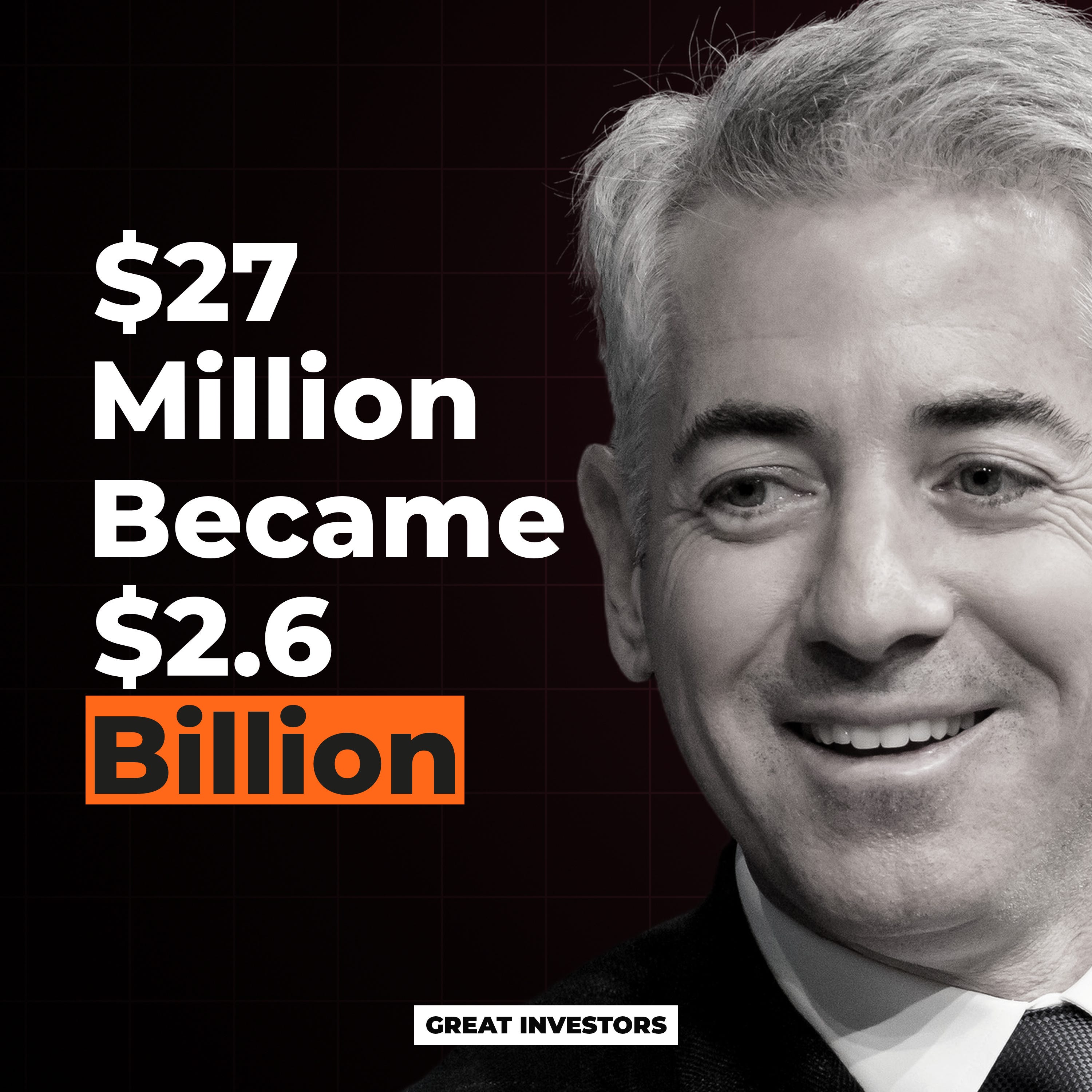
    Bill Ackman: Sleep at Night, Make Money

    We are delighted to share with you our audio program on Bill Ackman, founder, chief executive officer and chairman of Pershing Square, part of the Great Investors podcast by Latticework. Each program in the series is an hour-long narrated profile of one investor, researched by the MOI Global team from the investor’s own letters, talks and interviews. We make these programs so that members can learn how a great investor thinks and works, through the decisions he made and what he said about them at the time. Your feedback on what was useful, and on which investors to cover next, shapes what we produce. We start with who he is: Bill Ackman grew up in Chappaqua, New York, where his father was a mortgage broker in the family firm. After Harvard College and a little under two years working for his father, he went to Harvard Business School. In 1992 he started Gotham Partners with David Berkowitz; it opened in early 1993 with a little over $3 million and closed in 2003. He founded Pershing Square in 2003, and its first fund opened on January 1, 2004. Pershing Square Inc. listed in New York at the end of April 2026. He argues that a firm should own very few businesses, each one it can see ten, twenty and thirty years out, on permanent capital. His test is a stock market shut for ten years, and a business you would not mind holding through it. The one thing the firm does not compromise on is business quality: simple, predictable, dominant companies with a moat around them. His letter of March 2015 described the firm’s risk management: a few very sturdy baskets, kept where no margin call could force a sale at the wrong moment, and watched closely. He wrote: “We call this approach the sleep-at-night approach to risk management.” Engaged ownership is Canadian Pacific, where the firm won a proxy contest in May 2012 and the new board chose Hunter Harrison as chief executive. The railroad’s operating margin went from 19 percent to 39 percent in 2015. It is also Chipotle, bought in 2016 after food-safety problems, where a Pershing Square partner helped find Brian Niccol, chief executive from 2018. Cheap protection is the 2020 hedge. In late February the firm bought credit default swaps on corporate debt indices and closed them out between March 12 and March 23. His annual letter for 2019 put the proceeds at $2.6 billion against $27 million in premiums and commissions. When the price of insurance is favorable, he wrote in March 2022, the firm over insures. Permanent capital is Pershing Square Holdings, listed in Amsterdam in October 2014. In December 2018 the firm bought Hilton into a falling market; his letter of March 2019 said it would likely have been a seller had the fund faced redemptions. The program opens with the tablet on each desk at Pershing Square and the mistake that put it there. It goes back to a flat tire in the family driveway and the cold calls that raised Gotham’s first money. It follows the MBIA short from a trader’s tip in 2002 to the House subcommittee hearing of February 14, 2008. It has General Growth, bought at 34 cents a share, and the spin-off that became Howard Hughes. It gives the letter of January 2016 on the firm’s worst year. It ends with the listing of Pershing Square Inc. and the team around him. The program quotes him from his letters to shareholders and his own talks and interviews. He spoke at Oxford’s Saïd Business School on October 29, 2013, and to the cadets at The Citadel in April 2025. He answered Columbia Business School’s newsletter Graham & Doddsville in November 2014 and its podcast Value Investing with Legends in October 2025. The conversations on The Knowledge Project and a CAZ Investments podcast came out in September 2026. The complete program runs sixty-four minutes. Get the next program the day it comes out. Great Investors is on Apple, Spotify, and YouTube (or add the podcast feed to any app). The transcript is available for download to members only. This is a public episode. If you'd like to discuss this with other subscribers or get access to bonus episodes, visit www.latticework.com/subscribe
  • October 27 · 1 hr

    Stanley Druckenmiller: Never Invest in the Present

    We are delighted to share with you our audio program on Stanley Druckenmiller, chairman and CEO of Duquesne Family Office, part of the Great Investors podcast by Latticework. Each program in the series is an hour-long narrated profile of one investor, researched by the MOI Global team from the investor’s own talks and interviews. We make these programs so that members can learn how a great investor thinks and works, through the decisions he made and what he said about them at the time. Your feedback on what was useful, and on which investors to cover next, shapes what we produce. We start with who he is: Stanley Druckenmiller graduated from Bowdoin in 1975 and joined the research department of Pittsburgh National Bank in 1976. In 1978 his mentor there, Speros Drelles, made him director of research, and the bank later made him chief investment officer. In February 1981 he started Duquesne Capital Management. In 1988 he joined Soros Fund Management to run the Quantum Fund, while still running Duquesne, and left in 2000. His letter of August 18, 2010, told Duquesne’s clients he was retiring from managing their money. In January 2026 he was still running his own capital. He argues that liquidity moves markets, and that an investor judges a company by where its situation will stand a year and a half out, not by what it earns now. Both came from Drelles in 1978. He reads the economy from the bottom up, starting with what companies report about their businesses. In November 2024, on the podcast of Norges Bank Investment Management, he gave the rule: “I have found it’s very important never to invest in the present. Always try and envision the situation as you see it in 18 to 24 months.” Liquidity first is a game he set his staff at the end of 2003, with fed funds at 1 percent. He asked where the rate would be if they had just come down from Mars and seen only the data. The lowest guess was 3 percent. The big bet is the pound in September 1992, which by his 2022 account cost 50 basis points if Britain did not devalue and paid 2,000 if it did, 40 to 1. The nerve to reverse is January 2000, when he sold every technology stock he held while the market was still rising. He said in November 2016 that he had never used a stop loss in 40 years, but that he exits when the reason he bought starts to change. The program opens in the summer of 1992, with a call from London about houses and a trade that cost half a percent to put on. It goes back to Pittsburgh, where a mentor promoted him in 1978 because he was young enough to charge, and to the oil and defense list of 1979. It follows Duquesne’s first bet in 1981 and the rocky start at Soros before the Berlin Wall fell. It gives what Soros taught him about size, in baseball terms. It has the technology trade of 1999 and 2000 and the summer he spent away from every price. It ends with the letter of August 18, 2010, and the advice he gives himself in a drawdown. The program quotes him from his own talks and interviews, and from one letter. He told the story of the pound in November 2024 and gave the short version at CNBC’s Delivering Alpha conference in September 2022. He spoke about Pittsburgh to his neighbors at the Lost Tree Club in North Palm Beach, Florida, in January 2015. He explained the Federal Reserve’s bond buying to the Economic Club of New York in May 2020. His USC Marshall keynote of May 2023 and Bloomberg’s investment conference of June 2023 are in it. Morgan Stanley recorded the latest conversation, Hard Lessons, in Grand Central Terminal on January 30, 2026. The complete program runs sixty minutes. Get the next program the day it comes out. Great Investors is on Apple, Spotify, and YouTube (or add the podcast feed to any app). The transcript is available for download to members only. Narrated by an AI voice. This is a public episode. If you'd like to discuss this with other subscribers or get access to bonus episodes, visit www.latticework.com/subscribe
    • Transcript
  • October 20 · 1 hr 2 min

    Mohnish Pabrai: The Dhandho Investor

    We are delighted to share with you our audio program on Mohnish Pabrai, managing partner of Pabrai Investment Funds and chairman and chief executive officer of Dhandho Holdings, part of the Great Investors podcast by Latticework. Each program in the series is an hour-long narrated profile of one investor, drawn from MOI Global’s archive of interviews and conference sessions and from the investor’s published work. We make these programs so that members can learn how a great investor thinks and works, through the decisions he made and what he said about them at the time. Your feedback on what was useful, and on which investors to cover next, shapes what we produce. We start with who he is: Mohnish Pabrai grew up in a suburb of Mumbai. His father started, grew, sold or shut down well over twenty ventures in forty-two years. He came to the United States around 1983 and took a degree in computer engineering. In 1990 he started TransTech, an information technology services firm, with his retirement savings and credit cards. On July 1, 1999, he started Pabrai Funds with eight friends as its first partners, on a legal structure copied from one book chapter about the Buffett Partnership. Dakshana, the foundation he co-founded in 2005, coaches its scholars for the entrance exam of the Indian Institutes of Technology. He calls himself a shameless cloner. He watches what Buffett, David Einhorn and Ted Weschler do and tries to reverse-engineer what they saw. He noticed that Berkshire Hathaway owned General Motors and forgot it in about five seconds, because he hated the auto business. Then, flipping through The Manual of Ideas, he saw that Einhorn owned it too, drilled into the company to learn why, and bought GM and then Fiat. At his April 2026 annual meeting a partner said he looked more like a trailblazer. “If you go through my portfolio, it is a trailblazing portfolio, but I am sorry to disappoint you, it is all a cloned portfolio.” Dhandho, as he applies it to investing, starts with downside protection. He credits the phrase heads I win, tails I don’t lose much to his friend Amar Bhidé. His case is Ipsco, a steel tubing maker whose cash and two years of promised cash flow came to nearly the whole share price. The checklist dates from the fourth quarter of 2008, built the way aviation studies crashes, from other investors’ mistakes and his own. By January 2014 it had about 97 questions, and its first section, on leverage, held the most failures. The big bets are few because the anomalies are few; that January he said it was approaching nineteen months since his last new idea. The program opens at the Best Ideas conference in January 2014, with his checklist and the three red flags it raises on carmakers. It goes back to his father, who paid an astrologer for a bright picture of the future. It has the silver bubble of about 1980 that paid for his American education. It covers the June 2008 lunch with Warren Buffett, won at auction to say thank you, with Guy Spier at the table. It tells how Dakshana copied Anand Kumar’s Super 30. It ends with the 2020 turn toward compounders, the coal thesis, and the partner who asked whether the cloner label still fit. Pabrai has spoken at MOI Global’s Best Ideas conference in 2014, 2021, 2023 and 2025, and 2018. MOI Global, which also hosts the Latticework summit, turned its Meet the Author Forum to The Dhandho Investor in 2019. At Best Ideas 2014 he opened with aviation and its checklists. In 2021 he said he was looking for compounding machines. In January 2025 his Best Ideas keynote made the coal case through CONSOL Energy. For more, see Mohnish Pabrai on His Coal Thesis and the Mental Model Behind It, which carries that keynote for Latticework members. The complete program runs sixty-two minutes. Get the next program the day it comes out. Great Investors is on Apple, Spotify, and YouTube (or add the podcast feed to any app). The transcript is available for download to members only. Narrated by an AI voice. This is a public episode. If you'd like to discuss this with other subscribers or get access to bonus episodes, visit www.latticework.com/subscribe
  • October 13 · 1 hr 7 min

    Charlie Munger: Worldly Wisdom

    We are delighted to share with you our audio program on Charlie Munger, vice chairman of Berkshire Hathaway and chairman of Wesco Financial and the Daily Journal Corporation, part of the Great Investors podcast by Latticework. Each program in the series is an hour-long narrated profile of one investor, drawn from the investor’s own letters, talks and meetings. We make these programs so that members can learn how a great investor thinks and works, through the decisions he made and what he said about them at the time. Your feedback on what was useful, and on which investors to cover next, shapes what we produce. We start with who he is: Charles Thomas Munger was born in Omaha, Nebraska, on January 1, 1924, the son of a lawyer. His first job was at Buffett & Son, an Omaha grocery store where Warren Buffett would later work. He graduated from Harvard Law School in 1948 and moved to Southern California. In 1962 he helped found the firm that became Munger, Tolles & Olson, and by 1965 he had left the law. He was vice chairman of Berkshire Hathaway from 1978, chairman of the Daily Journal Corporation from 1977 to 2022, and chairman of Wesco Financial from 1984. He died on November 28, 2023, at 99. He argues that stock picking is a branch of worldly wisdom, and that worldly wisdom needs models from many disciplines. With only one or two models, he told students at the University of Southern California in April 1994, a person tortures reality until it fits them. The same lecture explained how he and Buffett moved past Benjamin Graham’s bargains: over decades, a stock can hardly earn much more than the business underneath it. In his Wesco letter for 1989 he wrote: “It is remarkable how much long-term advantage people like us have gotten by trying to be consistently not stupid, instead of trying to be very intelligent.” The mental model he built the stock market on is the racetrack, where everybody bets and the odds move with the betting. The track takes 17 percent off the top, the market much less, so the wise bet heavily on the rare mispriced bet and the rest of the time do not. Misjudgment is his catalog of twenty-five tendencies, incentives first: FedEx got its night shift to load the planes fast enough only when it paid by the shift and let them go home once the planes were loaded. The wonderful business is See’s Candies, bought in 1972 for $25 million, about three times its net tangible assets; he and Buffett then raised its prices a little faster than others might have. The program opens at the Daily Journal annual meeting in Los Angeles in March 2015, where close to two hours went to questions. It goes back to Omaha and the two clients of his father’s practice, Grant McFayden and Mr. X. It has the 1986 commencement address at the Harvard School, a speech on how to guarantee misery, built backward. It works through the 1994 lecture on worldly wisdom, the misjudgment talk, the Wesco letters and his 2014 account of the Berkshire system. It closes with what he told the law graduates of 2007: that, like Epictetus, he had had a favored life. Beginning in 2018, members of MOI Global, the community behind the Best Ideas conference and the Latticework summit, gathered in Omaha on the Berkshire weekend for Best Ideas Omaha. In 2017 Phil Ordway updated the misjudgment talk with newer cases, which MOI Global published as Human Misjudgment Revisited. At Latticework 2025 in New York, Tom Russo of Gardner Russo & Quinn recalled meeting Munger at Stanford Law School. For more, see Remembering Charlie Munger: Life and Legacy, the This Week in Intelligent Investing episode MOI Global recorded two days after the news and released on December 2, 2023. The complete program runs sixty-seven minutes. Get the next program the day it comes out. Great Investors is on Apple, Spotify, and YouTube (or add the podcast feed to any app). The transcript is available for download to members only. This is a public episode. If you'd like to discuss this with other subscribers or get access to bonus episodes, visit www.latticework.com/subscribe
  • October 6 · 1 hr 4 min

    Jean-Marie Eveillard: The Art of Global Value Investing

    We are delighted to share with you our audio program on Jean-Marie Eveillard, who ran the SoGen International Fund, later First Eagle Global, from 1979 and handed it to Matt McLennan in 2008, part of the Great Investors podcast by Latticework. Each program in the series is an hour-long narrated profile of one investor, drawn from MOI Global’s archive of interviews and conference sessions and from the investor’s published work. We make these programs so that members can learn how a great investor thinks and works, through the decisions he made and what he said about them at the time. Your feedback on what was useful, and on which investors to cover next, shapes what we produce. We start with who he is: Jean-Marie Eveillard finished at HEC Paris in 1962 and went to work for Société Générale that fall. In the summer of 1968, bicycling in Central Park with two French students, he heard the name Benjamin Graham and bought The Intelligent Investor. He spent ten years trying to convince the bank to let him run money on Graham’s ideas. Early in 1979 it let him, with the SoGen International Fund, then $15 million, and for seven years he ran it alone. He handed the fund to Matt McLennan in 2008. First Eagle announced his retirement as senior adviser on July 1, 2020. Value investing, he says, makes sense and works over time, and the reason so few practice it is almost entirely psychological. Most professional investors think six to twelve months ahead. A value investor thinks five years or more and accepts in advance that now and then he will lag. At an MOI event in 2015, asked what to look for in a young fund manager, he named the willingness to suffer. His example was the late 1990s: “I was not losing money, but I was making much less money than more aggressive fund managers. After one year, my shareholders were disappointed. After two years, they were really upset. After three years, they were mad at me. After three years, they were gone, basically.” Graham abroad meant small stocks in continental Europe in the 1980s, where the fund was among the first to invest in a major way. A Paris money manager told him a small French stock would never go up if the French did not buy it. It would go up, he said, if it deserved to. Gold as insurance is how his January 2004 letter put it, and the letter counted the cost: the premium was much more expensive with gold at about $400 an ounce than near $250. The patience to look wrong is Tokyo. He sold his last Japanese stock in mid-1988, eighteen months and 30 percent too soon, and the market peaked at the end of 1989. The program opens in New York in 2012, with the Tokyo market of the late 1980s. It goes back to Central Park in 1968 and to the Berkshire Hathaway letters that illuminated him again in 1978. It follows the fund into continental Europe and to a dinner with Walter Schloss before Enron. It reads his letters through the late 1990s and the December 2002 letter on the two meanings of risk. It ends with the Austrian school, gold, his analysts, Japan and India, his farewell letter, and Hayek’s Pretense of Knowledge. MOI Global, the community behind the Best Ideas conference and the Latticework summit, recorded the New York conversation in 2012 and had him back at its summits. At the Asian Investing Summit in April 2014 he said the bank had sent him back to New York late in 1978, probably because it had tired of his complaining. At the European Investing Summit in October 2015 he called continental Europe more inefficient than the British market, and more attractive for that reason. At the Asian Investing Summit in 2017 he took the other side from Charlie Munger on China against India. The complete program runs sixty-four minutes. Get the next program the day it comes out. Great Investors is on Apple, Spotify, and YouTube (or add the podcast feed to any app). The transcript is available for download to members only. This is a public episode. If you'd like to discuss this with other subscribers or get access to bonus episodes, visit www.latticework.com/subscribe
  • September 29 · 53 min

    Arnold Van Den Berg: A Mind Trained to Value

    We are delighted to share with you our audio program on Arnold Van Den Berg, founder and chief executive officer of Century Management, part of the Great Investors podcast by Latticework. Each program in the series is an hour-long narrated profile of one investor, drawn from MOI Global’s archive of interviews and conference sessions and from the investor’s published work. We make these programs so that members can learn how a great investor thinks and works, through the decisions he made and what he said about them at the time. Your feedback on what was useful, and on which investors to cover next, shapes what we produce. We start with who he is: Arnold Van Den Berg was born in Amsterdam, to parents who had fled the Nazis to Holland. His parents went into hiding, and a young woman from the Dutch underground carried him through the German lines to an orphanage. They were caught, taken to Westerbork and then to Auschwitz, and both survived. The family came to the United States in 1949. He sold insurance, then got his mutual fund license six months before the market peaked. In 1974, about three months before the market reached its bottom, he opened his firm in Century City, which gave it its name. He is the founder and chief executive officer of Century Management, in Austin, Texas. He built his method out of a shoebox. Whenever he read about an acquisition, he cut out the article, and on the weekend he ran every ratio. The file showed him what a sophisticated buyer would pay, and about 80 percent of that became his sell point. He gave MOI Global the rule in Omaha in May 2014. “I had the private market value, I have my worst case, and then I buy it no more than 20% above the worst case, and that gives me my five to one.” He says none of it needs more than fourth grade math. He learned visualization on a rope, by accident. He watched the city champion from Venice High School shoot up the rope, replayed it in his mind, and practiced the move in front of the mirror every night. He once wrote his wife, Eileen, a check for $250,000, when he was $20,000 in debt and grossing $8,000 a year. He says he has a hundred rules of thumb, and that his favorite milestone is an industry eight years into a bear market. The patience is in oil: in June 2021 he said the firm had bought early, been wrong for two or three years, and lost clients before the price went from $15 to $60. The program opens in 1987, with 50 percent of the portfolio in cash, clients leaving, and, by his account, the crash two weeks later. It follows his mother’s two kinds of people, and the market she made in garlic in Auschwitz. It covers the slide from 1969 to 1974 and the funds that did well, all run by people who believed in Benjamin Graham. It has his father’s death march and the one thought he kept on it, to move that leg. It has the prospect who counted four stocks where he had claimed three, and closed the account on the third call. It ends with the seismologist’s map, the move to Austin, and the wall of photographs. Arnold spoke at MOI Global’s Latticework summit in New York in 2019. He said that investment counselors are wrong a lot of the time. MOI Global, the community behind the Best Ideas conference and the Latticework summit, sat down with him in Omaha in May 2014. On November 18, 2014, at the offices of Century Management in Austin, the whole conversation went to using the subconscious mind in business. For more, see Arnold Van Den Berg: Five Decades of Investing and Life Lessons, which replays a segment of the 2019 Latticework session. The complete program runs fifty-three minutes. Get the next program the day it comes out. Great Investors is on Apple, Spotify, and YouTube (or add the podcast feed to any app). The transcript is available for download to members only. This is a public episode. If you'd like to discuss this with other subscribers or get access to bonus episodes, visit www.latticework.com/subscribe
  • September 22 · 1 hr 9 min

    Ed Wachenheim: The Quiet Compounder

    We are delighted to share with you our audio program on Ed Wachenheim, chief executive and chairman of Greenhaven Associates, part of the Great Investors podcast by Latticework. Each program in the series is an hour-long narrated profile of one investor, drawn from MOI Global’s archive of interviews and conference sessions and from the investor’s published work. We make these programs so that members can learn how a great investor thinks and works, through the decisions he made and what he said about them at the time. Your feedback on what was useful, and on which investors to cover next, shapes what we produce. We start with who he is: The introduction of Ed Wachenheim as a Latticework 2018 speaker took four lines. Williams College, then Harvard Business School, where he was a Baker Scholar. Three years at Goldman Sachs. Then Central National Corp, as an analyst and then as a portfolio manager. In 1987 he set up Greenhaven Associates on the family’s own money, and three years later took outside money, an amount he limited deliberately. The firm runs out of Purchase, New York, and has never published a letter. He is its chief executive and chairman, and he wrote Common Stocks and Common Sense. By April 2026 the firm had $12 billion under management. He wants to double his money, and he wants a reason for it that Wall Street has not already priced. He has no opinion on the market. Balance sheets come first, under an office rule that a firm makes its money off the income statement and survives off the balance sheet. He gave Graham & Doddsville the method in April 2026 in one sentence. “We project earnings two or three years out, put a multiple on them (16x or 16.5x for an average company, maybe 19x for an above-average company), and that is what the business is worth to us.” In the fall of 2025 he had thirty percent of the portfolio in homebuilders, and he told the room that thirty percent is the limit. General Motors, at ten percent, he calls a truck company. In 2011 he put a housing thesis into Home Depot, Lowe’s, Masco, Owens Corning, Lennox and Whirlpool, because the builders’ balance sheets were too weak to own. He bought Union Pacific late in 2003 and one airline, Southwest, which had as much cash as debt. The program opens in October 2025 with 45 percent in cash, which he called historic, and a market at about 28 times earnings. It follows the friend he met off the train on October 19, 1987, who had sold that day. It covers the 2014 letter asking Whirlpool’s chairman not to buy Indesit, and the sale around the start of 2023 after an acquisition put too much debt on the balance sheet. It has AIG, which he called the worst investment of his life in July 2016. In March 2020 he said he felt like a sailor lost in a fog, and that the firm had been net sellers until the day before. It ends with the Lennar walk to $315 a share and the tennis coach who told him to buy a ticket. He spoke at MOI’s Latticework summit in New York in the fall of 2018 and again in the fall of 2025. In 2018 he set out the hunter-gatherer thesis and worked Whirlpool to $300 a share. In 2025, asked whether a new technology justified a permanently higher multiple, he said he did not want to be the skunk at the picnic. MOI Global’s members also gather at the Best Ideas conference. John Mihaljevic, MOI Global’s chairman, opened a special online session on March 19, 2020. For more, see Ed Wachenheim: How a Contrarian Mindset Leads to Outperformance, which replays the 2018 conversation, and Latticework 2025: Ed Wachenheim on Homebuilders, which replays the 2025 session. The complete program runs sixty-nine minutes. Get the next program the day it comes out. Great Investors is on Apple, Spotify, and YouTube (or add the podcast feed to any app). The transcript is available for download to members only. This is a public episode. If you'd like to discuss this with other subscribers or get access to bonus episodes, visit www.latticework.com/subscribe
  • September 15 · 1 hr 6 min

    Tom Russo: The Capacity to Suffer

    We are delighted to share with you our audio program on Tom Russo, Managing Member of Gardner Russo & Quinn, part of the Great Investors podcast by Latticework. Each program in the series is an hour-long narrated profile of one investor, drawn from MOI Global’s archive of interviews and conference sessions and from the investor’s published work. We make these programs so that members can learn how a great investor thinks and works, through the decisions he made and what he said about them at the time. Your feedback on what was useful, and on which investors to cover next, shapes what we produce. We start with who he is: Tom Russo grew up in Janesville, Wisconsin, a General Motors town. His mother kept a globe on the dining room table. He read philosophy at Dartmouth, then went to Stanford, where in the early 1980s he found value investing and Warren Buffett came to his class. From Stanford he went to the Sequoia Fund in New York and to Bill Ruane. In 1989 he left New York for the Gardner firm in Lancaster, Pennsylvania, where he is Managing Member of Gardner Russo & Quinn. The capacity to suffer, as he uses the phrase, belongs to the management and not to the investor. When a management spends the right amount to develop long-term competitive advantage, there are periods when the spending weighs on reported profits, and Wall Street likes smooth and predictable. He pairs it with the capacity to reinvest. The distinction came in his first sentence at the Latticework summit in December 2022: “…it’s not because you have to suffer, it’s because the company management must have the capacity to suffer.” Family control, for him, earns a premium rather than a discount. European family companies carried a lower multiple because of an overblown investor fear of mismanagement or self-dealing. In Heineken, which he first bought in 1986, his firm owned the control shares at a twenty percent discount to the same instrument. An example of reinvestment is Nespresso, which Nestlé kept supplied with capital for eleven years before it broke even. The price of patience is in his letters. In November 2022 he reported Semper Vic Partners down 23 percent for the first nine months of the year. The program opens at the summit in December 2022, where he reads his holdings by age rather than by weight. It follows the man in a Chicago club who ate lunch alone and owned the bear grease the railroads could not run without. It takes Heineken to Brazil, where Kirin outbid it for Schincariol at five billion dollars in 2011 and Heineken bought the business in 2017 for seven hundred and fifty million. It shows General Mills, which could have answered a yogurt startup for twelve million dollars and did not, and the startup became Chobani. It covers Weetabix, where the cash grew from 7 million pounds to over 105 million and Semper Vic, he wrote in October 2023, earned nearly 17 percent a year over fifteen years. It closes with the Stanford students who think of him as Mr. Weetabix. He gave the capacity-to-suffer talk at MOI’s Latticework summit in New York in December 2022 and opened the day there in October 2025. At Best Ideas Omaha in 2022 he presented Heineken and told that room a return of 11 to 15 percent over a long period can make a big difference. The complete program runs sixty-six minutes. Get the next program the day it comes out. Great Investors is on Apple, Spotify, and YouTube (or add the podcast feed to any app). The transcript is available for download to members only. This is a public episode. If you'd like to discuss this with other subscribers or get access to bonus episodes, visit www.latticework.com/subscribe
  • September 8 · 1 hr 9 min

    Murray Stahl: Owning What Cannot Be Indexed

    This audio program is part of the Great Investors podcast, by Latticework. Murray Stahl grew up in Bedford-Stuyvesant, in a household that spoke Yiddish and Russian. He went to Brooklyn College and joined Bankers Trust in 1978. He stayed sixteen years, working up investment strategies off the beaten path. He and Steven Bregman left the bank in the fall of 1994 to start Horizon Asset Management. Kinetics followed in 1996 and FRMO in 2001. He wrote with a ball point pen to slow his writing. He died on April 7, 2026. On his account, the indexes behind ETFs changed their calculation around 2006, from market cap to float, the shares in public hands. The index is price indifferent, with no price at which it stops buying. On a call in October 2016 he described what he looked for: “For us, a true alternative asset is a rare company that’s not likely to access the capital markets. Therefore, in the long run, the behavioral characteristics will be based on a certain scarcity value. That’s kind of what we’re looking for, scarcity value of a hard asset, encased in scarcity value of corporate structure.” An owner-operator, he said in 2018, is a company whose leaders own more equity than anyone else. Dormant assets, he said in October 2015, are potentially productive but dormant at the moment. Spin-offs he compared to expelling the worst student from a class: the average grade goes up, but the average student learned no more. The opportunity was with the parent. In late 2007 he launched a fund to own securities exchanges. In 2008 he could not find a single person who agreed with him. One royalty company he worked through had more reserves in its 2021 annual report than thirty years earlier. The program opens at the Best Ideas conference in January 2018. Near the end of that talk he said he had owned one stock since 1984 and bought more that day in his own account. It goes back to 1984, when he turned the wrong way out of a downtown elevator and read an unfamiliar name off a door. It follows the business plan he and Bregman made at a Burger King table in 1994, which put a ceiling on assets. In 2008 every investment he touched did poorly, and he did not blame his own analysis. It quotes the July 2010 letter telling shareholders he had begun designing indexes of his own. Its last section covers the quarterly call of March 3, 2026, on which he answered what he most regretted. He spoke at MOI Global’s Best Ideas conference in January 2018 and at the Latticework summit in September 2018. At Best Ideas he said he could not run a diversified portfolio and worked through Texas Pacific Land Trust. At Latticework he named companies one at a time, with his reasons for each, and withdrew the timing call he had made in April 2016. For more, see Replay of a Fireside Chat with the Legendary Investor at Latticework 2018. The program runs sixty-nine minutes. Get the next program the day it comes out. Great Investors is on Apple, Spotify, and YouTube (or add the podcast feed to any app). The transcript is available for download to members only. This is a public episode. If you'd like to discuss this with other subscribers or get access to bonus episodes, visit www.latticework.com/subscribe
  • September 2 · 1 hr 1 min

    Howard Marks: Higher-Level Thinking

    This audio program is part of the Great Investors podcast, by Latticework. Howard Marks has spent more than half a century on a problem he says he still has not solved: what risk actually is, and what an investor can do about it. His career runs from equity research in the late 1960s, through the launch of Citibank’s convertible and high-yield bond funds in 1978, into distressed debt in 1988, and on to the firm he co-founded in 1995. Through all of it he has written memos to anyone willing to read him. One of the recurring lessons in Howard’s work is that knowing where a market is going and knowing where it stands are entirely different problems, and only the second one is solvable. He is unusually willing to say so plainly. Asked at a Latticework summit what he was still curious about, he named the subject he is best known for: “In investing, the greatest puzzle for me is risk, how we should think about it, and how we can work with it.” That idea runs through this audio program. It traces Howard’s early years as an analyst and the three lessons he took from them; the 1978 telephone call that sent him into a market with a bad name and no data; the first memo he ever published, in October 1990, written five years before Oaktree existed and already containing the sentence the firm would be built on; the decade he wrote without receiving virtually a single reply; the memo he published four days after Lehman Brothers filed for bankruptcy; and the argument with his son Andrew that revised part of his own framework fifty years into his career. We are grateful to Howard for the wisdom and insights he has shared with the MOI Global community over the years, at Latticework summits, at Best Ideas, and in conversation during the crisis of 2020. He has spoken with unusual candor about what cannot be known, about the difference between controlling risk and avoiding it, and about the discipline of daring to look wrong for as long as it takes to be proved right. Our hope is that this special episode, Howard Marks: Higher-Level Thinking, will help more investors appreciate the depth of Howard’s approach. It is a program about risk, but also about writing, temperament, and the willingness to keep an important question open for fifty years rather than pretend it has been settled. For those willing to think at the second level, the lesson is not that the future can be read. It is that knowing where you stand, and sizing your positions accordingly, remains one of the investor’s most durable advantages. Corrected October 21, 2026: Lehman Brothers filed for bankruptcy on Monday, September 15, 2008, not on a Friday. Get the next program the day it comes out. Great Investors is on Apple, Spotify, and YouTube (or add the podcast feed to any app). The transcript is available for download to members only. This is a public episode. If you'd like to discuss this with other subscribers or get access to bonus episodes, visit www.latticework.com/subscribe
  • August 25 · 1 hr 10 min

    Bob Robotti: Turning Over Rocks

    This audio program is part of the Great Investors podcast, by Latticework. Bob Robotti has spent decades doing the kind of investing that is easy to describe but hard to practice: looking carefully where others are not looking, studying unfashionable businesses, distinguishing temporary difficulty from permanent impairment, and waiting patiently for value to surface. His career has unfolded across deep-value securities, cyclical industries, energy, housing, shipping, board service, and active ownership. Through it all, he has remained unusually committed to the bottom-up work of understanding real-life businesses. One of the recurring lessons in Bob’s work is that investing is not an abstract exercise. It is not enough to say that an industry is cyclical, a stock is cheap, or the market is wrong. The real work is in understanding the business, the balance sheet, the capital cycle, the incentives, the industry structure, and the people making decisions. As Bob has put it, “There are no universals. There are only specifics.” That idea runs through this program. It traces Bob’s early exposure to Tweedy, Browne, Walter Schloss, Joe Reilly, and Mario Gabelli; his founding of Robotti & Company; his development as a value investor in overlooked and capital-intensive sectors; and his long study of how markets misprice businesses when fear, institutional constraints, or short-term thinking obscure normalized earnings power. We are deeply grateful to Bob for the wisdom and insights he has shared with the MOI Global community and the broader investment community over the years. His willingness to explain not only what he has done, but how he thinks, has made him an important teacher for intelligent investors. He has spoken with unusual candor about mistakes, cycles, patience, active ownership, and the emotional discipline required to stay with an investment when the market disagrees. Our hope is that this special episode, Bob Robotti: Turning Over Rocks, will help more investors appreciate the depth of Bob’s approach. It is a program about value investing, but also about apprenticeship, temperament, independent judgment, and the enduring importance of doing the work. For those willing to turn over enough rocks, the lesson is not merely that bargains exist. It is that the act of looking carefully, patiently, and specifically remains one of the investor’s most durable advantages. We are delighted to announce Bob Robotti as a featured speaker/panelist at the Latticework 2026 summit, to be held in Chicago on November 10-11. Get the next program the day it comes out. Great Investors is on Apple, Spotify, and YouTube (or add the podcast feed to any app). The transcript is available for download to members only. This is a public episode. If you'd like to discuss this with other subscribers or get access to bonus episodes, visit www.latticework.com/subscribe

  • April 22 · 1 hr 6 min

    Chris Bloomstran: The Flawed Bulb

    This audio program is part of the Great Investors podcast, by Latticework. We are delighted to share The Flawed Bulb, a special audio program on Chris Bloomstran, president of Semper Augustus Investments Group and one of the most rigorous, patient, and underheralded investors of his generation. The program is part of the MOI Global series on great investors whose lessons deserve a wider audience than the quarterly interview cycle allows. The essay opens in the Grand Ballroom of the Yale Club of New York City at Latticework 2025, where Chris read a Joni Mitchell parody to a room of professional investors before walking them through the case that hyperscaler capex (on the order of $350-400 billion against less than $40 billion of corresponding revenue) is one of the largest bubbles in American history. From there, the piece moves backward to 1998, when a St. Louis patriarch who had bought GE for twelve cents a share in 1932 handed a 29-year-old Chris a family portfolio and the mandate that became Semper Augustus. The through-line is a single word Chris has been defending for a quarter century: price. In November 2000 he wrote Price Matters and closed it with a sentence he has never really stopped arguing: the market has a way of fairly pricing stocks over long periods. Ten months earlier, in January 2000, he had written a related piece on Microsoft — predicting zero percent returns for fifteen years. Microsoft compounded earnings at 8.4% and sales at 10.1% over those fifteen years and still returned 0.6% annualized to shareholders. The company was always great. The price was the problem. When the price reset at 17× in late 2014, the same business compounded at 26.6% annualized for the next decade. That is the argument, lived out across 26 years of client letters, letters that began at seven pages and have grown, without losing a single founding client, to 184. The essay and audiobook collect the ideas, cases, and stories — from the patriarch’s twelve-cent GE to the options-as-hidden-liability critique, from Ross Stores to the Berkshire Scorecard — into a portrait of a manager whose method is itself a kind of patience. We are grateful to Chris for the wisdom and insights he has shared with the MOI Global community over many years. Get the next program the day it comes out. Great Investors is on Apple, Spotify, and YouTube (or add the podcast feed to any app). The transcript is available for download to members only. This is a public episode. If you'd like to discuss this with other subscribers or get access to bonus episodes, visit www.latticework.com/subscribe

Showing 1–15 of 15 episodes