#303
October 17 · 22 min

Chris Schembra
Chris Schembra is a dinner host, question asker, and facilitator. He's a columnist at Rolling Stone magazine, USA Today calls him their "Gratitude Guru" and he's spent the last nine years traveling around the world helping people connect in meaningful ways.
As the offshoot of his #1 Wall Street Journal Bestselling book, Gratitude Through Hard Times, he uses this podcast to blend ancient stoic philosophy and modern day science to teach how the principles of gratitude can be used to help people get through their hard times.
By finding the positive benefits from negative situations, and giving gratitude to them, listeners can develop the resilience and optimism needed to get through further trying times. Having used these principles to spark over 500,000 relationships through his workshops and his experiences, this podcast now aims to educate listeners across the world.

Katie Zion invites Chris Schembra to write his Crush List live — the small things that romanticize life — and Chris realizes the practice isn't about inventing romance, it's about remembering he's a romantic.
Rick Sems: Heart at Peace "The get-rich-quick scheme is actually to do a couple of things really well for a sustained period of time, and you set yourself apart." — Rick Sems Real leadership isn't about running fast in every direction—it's about building deep human relationships, compounding wisdom over decades, and choosing peace over perpetual conflict. In this episode of Gratitude Through Hard Times, host Chris Schembra sits down with Rick Sems, CEO of Equity Bank. Rick reflects on his family's immigrant roots, leading a multi-billion-dollar regional bank, applying the Influence Pyramid from The Anatomy of Peace, and why mastering three core focus areas beats chasing endless shiny initiatives. The 5 Levels of the Influence Pyramid (From The Anatomy of Peace) Shift Posture: Heart at Peace (Base): See people as human beings rather than objects or obstacles. Build Relationships: Invest in deep personal trust with those you wish to influence. Listen & Learn: Create space to authentically understand what others are experiencing. Teach & Communicate: Share your vision, values, and expectations with clarity. Correct / Fix (Top): Address behaviors—which becomes much easier once levels 1–4 are firmly established. 10 Memorable Quotes: "The get-rich-quick scheme is actually to do a couple of things really well for a sustained period of time, and you set yourself apart." — Rick Sems "People don't care about how much you know until they know how much you care." — Rick Sems "Vulnerability actually makes you stronger." — Rick Sems "Every time you say yes to something, you're saying no to something else." — Rick Sems "When you shift from seeing people as objects to seeing people as people, you shift from a heart at war to a heart at peace." — Chris Schembra "Compounding happens in everything we do—it happens in your decision-making." — Rick Sems "Change is loss, loss is grief, and grief creates anxiety. As leaders, we have to sit with people in their grief and anxiety." — Rick Sems "Fear and gratitude cannot coexist." — Chris Schembra "Gratitude doesn't change your circumstances; it changes your capacity to carry them." — Chris Schembra "If you can put two things together that are diametrically opposed, you create a differentiation that is hard to beat." — Rick Sems 10 Key Takeaways: Heart at Peace: Stop seeing colleagues and clients as obstacles; view them as human beings. The Influence Pyramid: Solve issues by building trust and listening before trying to correct behavior. Help Things Go Right: Shift focus away from crisis firefighting toward building foundational trust. Rule of Three: Focus on 3 core strategic goals rather than executing dozens of superficial tasks. Confidence & Humility: Balance strong executive drive with genuine personal humility. Empathy in M&A: Recognize that corporate acquisitions create loss and anxiety for acquired teams. Compounding Wisdom: Real expertise is built over sustained time through repeated, hands-on reps. Proactive Mentorship: Encourage rising leaders to raise their hands and ask for guidance. Genius of the "And": Combine organic growth with profitability to build sustainable advantages. Physical Co-Creation: Recharge resilience through manual labor and shared offline activities. About Our Guest: Rick Sems is the Chief Executive Officer of Equity Bank, leading day-to-day operations and growth across its regional footprint. He previously served as Chief Banking Officer at First Bank in St. Louis and President/CEO of Reliance Bank. Rick holds a B.A. from Grove City College and an MBA from the University of Michigan Ross School of Business.
"The more that you learn about what is, the more it frees you up to think about what could be." — Kimberli Carroll In a world obsessed with digital efficiency and quick fixes, the real currency of a meaningful life remains independent thought, presence, and intentional effort. In this episode of Gratitude Through Hard Times, host Chris Schembra sits down with Kimberli Carroll, President and CEO of Ruiz Food Products. Kimberli reflects on her leadership journey—from working in California's Central Valley packing houses to stewarding over 3,800 team members at the largest frozen Mexican food manufacturer in the United States. She breaks down why human intelligence and emotional safety matter more than ever alongside rapid AI adoption, how leaders can cultivate psychological safety before crises hit, and why bringing diverse people together to solve hard problems creates lasting joy and organizational resilience. 10 Memorable Quotes: "The more that you learn about what is, the more it frees you up to think about what could be." — Kimberli Carroll "When you're pushing up against something hard and making a real effort, accomplishing things that are hard is joyful." — Kimberli Carroll "My obligation to myself is to figure out how I put myself in situations where I can help people come together to solve problems." — Kimberli Carroll "Real currency in a meaningful life remains independent thought, presence, and intentional effort." — Chris Schembra "AI doesn't replace us; all it does is create a better opportunity for us to get better faster." — Kimberli Carroll "We don't want technology to replace human relationships—we want it to augment and enhance them." — Kimberli Carroll "At the end of the day, when a life is well lived and it's over, people won't mention your business metrics—it's more about the interaction they had with you." — Kimberli Carroll "A leader's responsibility is to figure out how to create that level of engagement to get the best out of folks." — Kimberli Carroll "Fear and gratitude cannot coexist." — Chris Schembra "Gratitude doesn't change your circumstances; it changes your capacity to carry them." — Chris Schembra 10 Key Takeaways: Human Intelligence Alongside AI: Using artificial intelligence to rapidly synthesize existing knowledge ("what is") so human minds are freed up to imagine novel solutions ("what could be"). Building Psychological Safety in Advance: Cultivating deep, in-person trust and emotional safety across teams long before relying on it during times of organizational pressure. The Leader as a "Brave Gatherer": Leveraging the superpower of convening people with diverse backgrounds, cultural norms, and perspectives to solve complex enterprise challenges. Joy in Overcoming Hard Obstacles: Reframing workplace friction and difficult goals not as drudgery, but as the essential source of genuine professional growth and shared victory. Believing in Others' Unrealized Potential: Instilling confidence in team members by painting a picture of who they can become, transforming doubt into self-efficacy and bold execution. Navigating Misaligned Performance with Grace: Accepting when individuals are not in the right season or fit for a role, handling transitions with generosity while holding a consistently high performance bar. Mitigating "Jevons Paradox" and Cognitive Decay: Consciously resisting digital isolation, remote fatigue, and screen dependency by intentionally designing face-to-face gatherings. Cascading Human-Centered Leadership: Structuring leadership development so direct reports experience personalized stewardship and, in turn, extend that care down to front-line workers. Community Stewardship & Philanthropy: Connecting corporate mission with local community support through active engagement with organizations like the Boys & Girls Club. Honoring a Legacy of Service: Carrying forward foundational life lessons learned from family—such as showing up for others without expectation of reward—to ground executive decision-making. About our Guest: Kimberli Carroll is the President and Chief Executive Officer of Ruiz Food Products, Inc., the nation’s largest manufacturer of frozen Mexican foods, including flagship brands El Monterey and Taquis / Tornados. Raised in California’s Central Valley, Kimberli began her career working in agricultural packing houses before joining Ruiz Foods, where she has served for more than 25 years in various executive roles spanning sales, marketing, supply chain, and general management. Under her leadership, Ruiz Foods operates manufacturing and distribution facilities across the United States, employing over 3,800 team members. Kimberli holds a Bachelor of Science degree in Organizational Leadership. Beyond her corporate steward duties for the third-generation, family-owned business, she serves on the Board of Directors for the Boys & Girls Club of Collin County in Texas. She resides in Frisco, Texas, with her family.
"If you stop learning, you stop growing." — Philip Schembra In a world obsessed with digital efficiency and quick fixes, the real currency of a meaningful life remains independent thought, presence, and intentional effort. In this landmark 300th episode of Gratitude Through Hard Times, host Chris Schembra welcomes his father, Philip Anthony Schembra, owner and Broker-in-Charge of Schembra Real Estate Group. Philip reflects on his roots in Glen Ridge, New Jersey, his record-breaking 50-year career in Hilton Head Island real estate, and his lifelong commitment to sales as an act of service, connection, and mentorship. He breaks down the importance of specialization, reading social styles with empathy, and balancing high ambition with family, lifestyle, and philanthropy. 10 Memorable Quotes: "If you stop learning, you stop growing." — Philip Schembra "I don't think work is defined by the way people think. If you let work be fun, enjoyable, and rewarding, it's not work. I stopped working forever ago." — Philip Schembra "When you're in need, ask for help. From an efficiency standpoint, it gets you to where you want to go a heck of a lot faster." — Philip Schembra "Be a specialist, and then be the best that you possibly could be at whatever product you have." — Philip Schembra "Real currency in a meaningful life remains independent thought, presence, and intentional effort." — Chris Schembra "You don't want to be the richest guy in the cemetery." — Philip Schembra "In anything you do in life, if you don't believe in it, don't do it." — Philip Schembra "If you get out of your world and get into your client's world, everything opens up." — Philip Schembra "When you give, you get." — Philip Schembra "Gratitude doesn't change your circumstances; it changes your capacity to carry them." — Chris Schembra 10 Key Takeaways: Embracing Specialization Over Generalization: How narrowing focus exclusively to Palmetto Dunes, Shelter Cove, and Leamington built a record-breaking, resilient real estate practice. Reading Social Styles with Empathy: Applying Wilson Learning's social styles model (Amiable, Expressive, Analytical, Driver) to step into the client's world through active listening. Asking for Help as Trust Building: Overcoming ego to proactively seek guidance from mentors, colleagues, and experts to strengthen teams and accelerate growth. Translating Athletics to Enterprise: Carrying the mindset of preparation, positive mental attitude, and team culture learned under legendary Glen Ridge High School coaches into business success. Selling Experiences Over Mere Investment: Positioning real estate around family memories, lifestyle, and community enjoyment rather than transactional numbers. The Power of Mentorship: Drawing lifelong strategic wisdom from senior executives, including former RCA Victor President Norman Racusin. Balancing Work, Lifestyle, and Philanthropy: Creating a "diversified happiness income" by intertwining business achievements with community service, sports foundations, and charitable causes. Pivoting Priorities for Family: Cold-turkeying extensive national speaking circuits to prioritize being present for family milestones and raising a child. Human Connection as Tomorrow's Edge: Reclaiming interpersonal relationships, active listening, and face-to-face communication as digital technology and AI expand. Grit as Passion and Perseverance: Maintaining a 50-year commitment to a single community to achieve over $1.25 billion in individual sales through market cycles. About our Guest: Philip Anthony Schembra is the Owner and Broker-in-Charge of Schembra Real Estate Group, specializing in luxury oceanfront and resort properties in Palmetto Dunes, Shelter Cove, and Leamington on Hilton Head Island, South Carolina. Since 1976, Phil has achieved over $1.25 billion in individual sales across 2,000 transactions, making him the #1 all-time listing and selling agent in Hilton Head Island history for a single community. A Glen Ridge, New Jersey native and LIU Post graduate, Phil was inducted into the Glen Ridge High School Athletic Hall of Fame for football and track. Beyond real estate, he co-created sales training programs such as THE TOTAL SALESPERSON® and co-founded major national philanthropic initiatives, including the Thurman Munson Awards Dinner and the Golf World | Palmetto Dunes Intercollegiate Golf Tournament. Phil resides on the ocean in Palmetto Dunes with his wife and business partner, Carol.
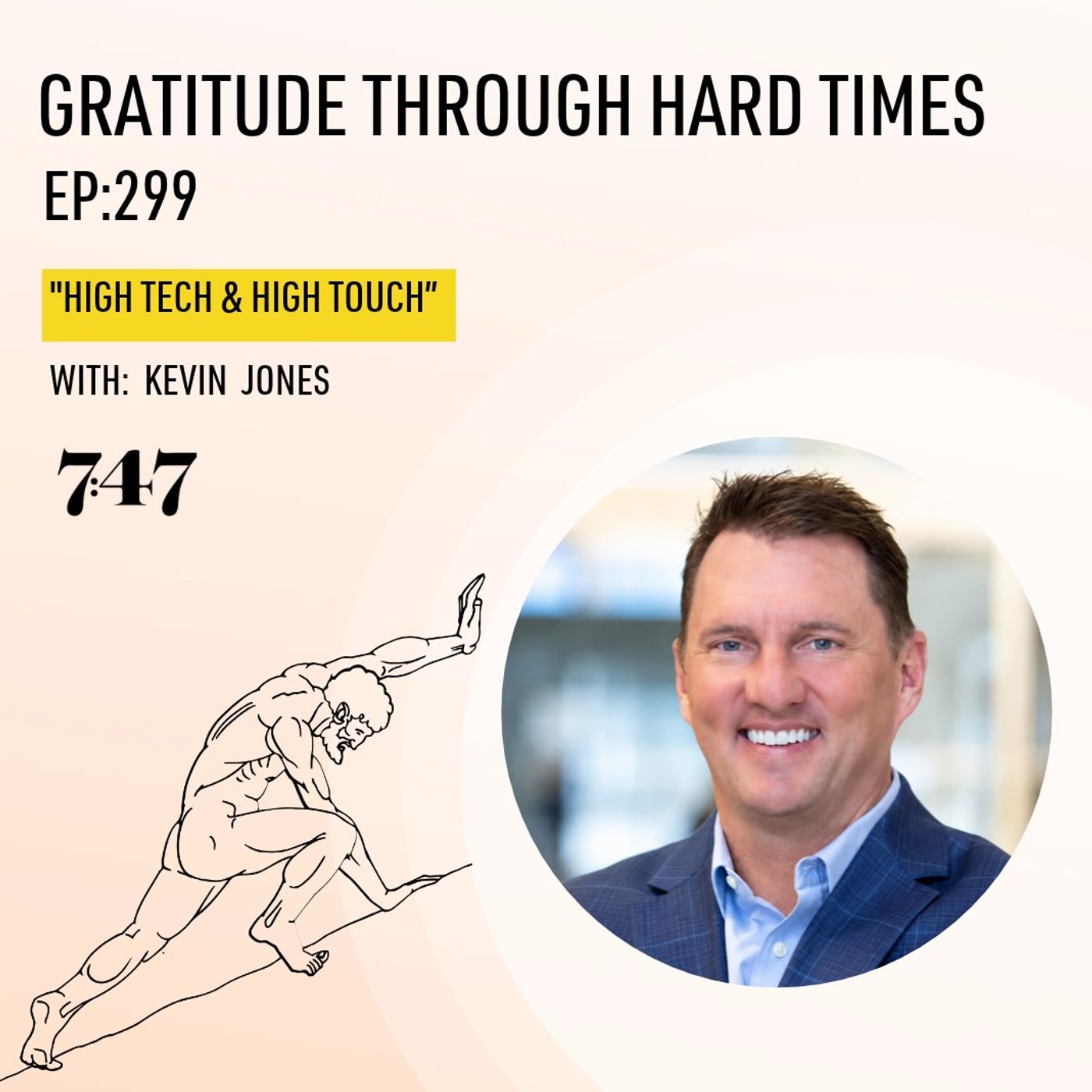
"Living a life of gratitude eliminates entitlement and eliminates so many obstacles to success." — Kevin Jones In a world obsessed with digital efficiency and quick fixes, the real currency of a meaningful life remains independent thought, presence, and intentional effort. In this special 299th episode of Gratitude Through Hard Times, host Chris Schembra sits down with Kevin Jones, founder and CEO of Celero Commerce. Kevin reflects on building Celero into a top-10 non-bank payments processor, steering through black swan market events, and combining high-tech platform innovation with high-touch human connection. He breaks down why respect and humility are essential cornerstones of leadership, how genuine followership makes better leaders, and why holding low ego allows teams to achieve extraordinary scale together. 10 Memorable Quotes: "Living a life of gratitude eliminates entitlement and eliminates so many obstacles to success." — Kevin Jones "You cannot be a good leader if you're not a good follower. Followership is something everybody should spend a little time on." — Kevin Jones "Respect and humility are cornerstones... if you remain respectful and humble, you can solve incredibly difficult problems with people who have different backgrounds and beliefs." — Kevin Jones "Your job as a leader is really to facilitate outcomes, not dictate them." — Kevin Jones "For every five years, expect at least one black swan. As part of being a good leader, you need to hone your skills at managing through it." — Kevin Jones "Real currency in a meaningful life remains independent thought, presence, and intentional effort." — Chris Schembra "When you take on a challenge, you burn your ships and go chase that challenge. You don't have one foot in and one foot out." — Kevin Jones "It's okay for leaders to allow themselves to be vulnerable and have some fun with their teams." — Kevin Jones "Fear and gratitude cannot coexist." — Chris Schembra "Gratitude doesn't change your circumstances; it changes your capacity to carry them." — Chris Schembra 10 Key Takeaways: High-Tech Meets High-Touch: Balancing cutting-edge fintech payment integrations with deep, relationship-driven partner care to build sustainable competitive advantage. The Power of Respect & Humility: Eradicating entitlement in business culture by focusing on merit, continuous learning, and mutual respect across diverse perspectives. Practicing Genuine "Followership": Understanding that effective executives must first know how to align with, support, and execute under other strong leaders. Navigating "Black Swan" Market Events: Developing leadership muscle to maintain composure, protect employee families, and protect investor trust through unexpected macroeconomic downturns. Leading with Love over Machiavellian Fear: Shifting away from rigid top-down authority to collaborative environments built on trust, psychological safety, and productive dissent. Granting Permission to Pause: Recognizing that while M&A transitions and high-growth phases demand intense sprinting, leaders must proactively grant teams permission to rest and recharge. Managing the "Silence Tax": Encouraging open dissent and diverse voices within leadership teams to avoid costly, unexamined strategic missteps. Surrounding Yourself with Superior Talent: Maintaining low ego by hiring specialists who are smarter in their respective operational domains than the CEO. Carrying the Invisible Weight of Responsibility: Acknowledging the heavy, unsaid burden leaders carry to safeguard the livelihoods of employees, families, and pension investors. Anchoring Strength in Personal Relationships: Recognizing how unshakeable support from family and partners builds the confidence required to take bold entrepreneurial risks. About our Guest: Kevin G. Jones is the founder and Chief Executive Officer of Celero Commerce, a top-10 non-bank payment processor and one of the fastest-growing financial services companies headquartered in Tennessee. Founded in late 2018, Celero combines business management software, data analytics, and modern payment solutions to serve over 50,000 small-to-midsized American businesses through financial institution partnerships, software integrations, and direct merchant strategies. Under Kevin’s leadership, Celero executed 12 strategic acquisitions alongside organic growth, culminating in its acquisition by Deluxe Corporation. Leveraging over two decades of fintech experience, Kevin began his career at Chase Paymentech building strategic partner solutions before driving growth at First American Payment Systems. In 2013, he founded Anovia Payments, delivering an 8.5x investment return and driving organic growth to over 10,000 customers. Kevin previously served as President of the Electronic Transactions Association (ETA), advocating for government relations and member initiatives on Capitol Hill. He holds a Bachelor's degree in Political Science from the University of North Carolina at Greensboro and lives in Nashville, Tennessee, with his wife, Carol, and their three children.

"When you're in need, you realize you need help. And when you're successful, you realize you got help all along." — James Farrin In a world obsessed with digital efficiency and quick fixes, the real currency of a meaningful life remains independent thought, presence, and intentional effort. In this episode of Gratitude Through Hard Times, host Chris Schembra sits down with James "Jim" Farrin, founder, President, and CEO of the Law Offices of James Scott Farrin. Jim reflects on growing up across 10 countries in 17 years, applying rigorous business principles to plaintiff representation, and taking on one of the largest civil rights litigations in U.S. history. He breaks down why authentic leadership requires intentional culture, why high metrics can distort purpose, and how focusing on service frees leaders from personal despair. 10 Memorable Quotes: "When you're in need, you realize you need help. And when you're successful, you realize you got help all along." — James Farrin "In a time of despair, turning attention outwards and focusing on the people you serve sets you free and gets you out of your own head." — James Farrin "Culture is either defined intentionally by leadership or by the strongest personality in the room." — James Farrin "Real currency in a meaningful life remains independent thought, presence, and intentional effort." — Chris Schembra "When a measure becomes a target, it ceases to be a good measure." — Chris Schembra (referencing Goodhart's Law) "No man is an island. We need people, we've always needed people, and we need them more than ever." — James Farrin "Our clients aren't superheroes—they're ordinary people who overcome adversity through faith, perseverance, and getting the right help." — James Farrin "In a world of everlasting change, find the constants and savor the constancy around you." — Chris Schembra "We must step out of the tyranny of the 'or' and into the genius of the 'and'." — Chris Schembra (quoting Jim Collins) "Gratitude doesn't change your circumstances; it changes your capacity to carry them." — Chris Schembra 10 Key Takeaways: Navigating Constant Transition: Lessons from living across 10 countries in 17 years on leaning into family constants, building adaptability, and trusting that new chapters always work out. Turning Despair Into Empathy: How refocusing on the suffering of marginalized clients during high-stakes civil rights litigation removed personal worry and provided purpose. Building Culture via "The JSF Way": Translating abstract corporate values into 24 concrete, daily behaviors that are actively practiced, evaluated, and reinforced firm-wide. Establishing a "South Star": Defining explicitly what an organization will not tolerate—such as greed, lack of accountability, self-centeredness, and "being a jerk". Avoiding Goodhart's Law in Business Growth: Recognizing when aggressive numerical growth targets (like 15% annual growth) risk outkicking quality, and shifting focus back to client-centric meaning. The Power of Confident Humility: Drawing inspiration from military leaders and achieving high-level legal success while maintaining unpretentious humility and honoring team contributions. Resisting Digital & AI Isolation: Preserving human-to-human empathy and direct client relationships instead of outsourcing core human care to automated chatbots and scripts. Fire Bullets, Then Cannonballs: Testing small strategic initiatives before making multi-million dollar or firm-wide commitments. Finding Modern Heroism in Ordinary People: Celebrating everyday perseverance, vulnerability, and resilience over performative social media achievements. Sustaining Unsaid Gratitude: Creating regular operational space to acknowledge the mentors, family members, and team members who make collective success possible. About our Guest: James "Jim" Scott Farrin is the founder, President, and CEO of the Law Offices of James Scott Farrin, one of the largest plaintiff's firms in the Carolinas. Since opening his doors in Durham, North Carolina in September 1997, Jim has grown the firm to more than 60 attorneys serving clients across North and South Carolina, recovering over $2 billion in compensation for more than 78,000 injured people. His practice areas include personal injury, workers' compensation, Social Security disability, and civil rights litigation, and he is best known in the legal community for applying rigorous business principles to the practice of law itself, an approach that has been the subject of guest lectures at his alma mater's Master of Judicial Studies Program. Jim's path to the courtroom is not a conventional one. The oldest of five children, he spent his childhood in 10 different countries over 17 years while his father worked internationally for Colgate-Palmolive and other global brands, before returning to the United States for his last two years of high school at Phillips Exeter Academy in New Hampshire. He went on to earn a B.A. in Philosophy from Trinity College in Hartford, where he was elected to Phi Beta Kappa, and a J.D. with honors from Duke University School of Law. He began his career at a corporate firm in California, but found the work lacking in meaning and nearly left the law entirely. In 1995 he returned to Durham, joined a plaintiffs' firm, and remembers to this day the first personal injury client he handed a settlement to. He has not looked back. Jim played a leading role in In re Black Farmers Discrimination Litigation, one of the largest civil rights cases in United States history. He is a member of the Million Dollar Advocates Forum, the American Association for Justice's Leaders Forum, the North Carolina Advocates for Justice, the Public Justice Foundation, and the North Carolina Bar Association. He has been recognized on Business North Carolina's Power List for Law, named among North Carolina's Most Influential Leaders, and honored with a 2021 Diversity & Inclusion Award.

"We don't really think as much about who we are when no one's watching... that's where a lot of integrity comes from, and it's where we learn to enjoy our lives." — Kathryn Jezer-Morton In a world obsessed with digital efficiency and quick fixes, the real currency of a meaningful life remains independent thought, presence, and intentional effort. In this episode of Gratitude Through Hard Times, host Chris Schembra sits down with Kathryn Jezer-Morton, sociologist, columnist at The Cut, and author of The Story of Your Life: How Social Media Shapes the Way We Experience Everything. Kathryn breaks down the concept of "friction maxing"—reintroducing positive friction into our lives to counteract frictionless, algorithm-driven efficiency. She explores how social media platforms have transformed everyday experiences into performative brand management and why reclaiming nuanced, "flat" stories can restore authentic human connection. 10 Memorable Quotes: "We don't really think as much about who we are when no one's watching... that's where a lot of integrity comes from, and it's where we learn to enjoy our lives." — Kathryn Jezer-Morton "Humanity itself is never going to be simple. It's never going to be linear." — Kathryn Jezer-Morton "The purpose of a flat story is to provide an honest accounting of what real life is like." — Kathryn Jezer-Morton "Real currency in a meaningful life remains independent thought, presence, and intentional effort." — Chris Schembra "When a metric becomes a measure, it ceases to become a good measure." — Chris Schembra (referencing Goodhart's Law) "Friction maxing is about inviting the unknown into your life and having to react to it." — Kathryn Jezer-Morton "To take a photograph of something is to appropriate the thing being photographed." — Chris Schembra (quoting Susan Sontag) "We have come to see ordinary stories as boring because we are so used to crazy up-and-down peaks and valleys." — Kathryn Jezer-Morton "Unjudgmental listening gives people the confidence to become better storytellers." — Kathryn Jezer-Morton "Gratitude doesn't change your circumstances; it changes your capacity to carry them." — Chris Schembra 10 Key Takeaways: Understanding "Friction Maxing": Embracing intentional, offline friction to counter hyper-optimized digital culture and restore real meaning to personal relationships. The Strength of Weak Ties on Social Media: How digital platforms leverage loose acquaintances to pass social information, while strong ties remain essential for deep emotional resilience. Moving Beyond the "Man in the Hole" Formula: Rejecting performative, dopamine-driven comeback narratives in favor of "flat stories" that capture the realistic, everyday plateaus of human life. The Rise of "Brand Called You": Examining how ordinary social media users inadvertently communicate like corporate brands, curating a polished, risk-averse front stage. Developing "Backstage Integrity": Cultivating personal experiences, private habits, and self-worth when cameras and social media audiences aren't watching. Escaping "Airspace" and Homogenized Experiences: Resisting standardized, Instagram-curated travel aesthetics in order to invite unpredictable, authentic cultural discovery. The Trap of Dual Experiences: Recognizing how document-first culture forces people to experience life twice—first living the moment, then packaging it for public consumption. Communal Storytelling Roots: Drawing lessons from intentional communities and hippy communes on how shared stories hold groups together without commercial incentives. Building Critical Media Literacy: Developing a "skeleton key" to understand algorithmic behavior and view performative social media posting with greater empathy rather than judgment. Unjudgmental Listening as Mentorship: How safe, non-evaluative spaces provided by mentors and family allow individuals to explore complex personal narratives. About our Guest: Kathryn Jezer-Morton is a journalist and sociologist whose work sits at the intersection of family life, identity, and digital culture. She is the author of "Brooding," the biweekly column at New York Magazine's The Cut, where she reports on modern family life and the invisible ways social platforms shape it. Her debut book, The Story of Your Life: How Social Media Shapes the Way We Experience Everything (Penguin Random House, August 2026), examines how algorithm-driven platforms have quietly rewritten not just how we share our lives, but which lives we choose to lead. The book was named a Best New Book of Summer by The Globe and Mail, a Must-Read of August by Marie Claire, Chicago Review of Books, and Lit Hub, and was among The New York Times's 22 Books Coming in August. The Times called it "breezily inquisitive... intellectual generosity... hopeful and unscolding." Kathryn's byline has appeared in The New York Times, The Nation, The Guardian, BuzzFeed, Jezebel, Maisonneuve, and elsewhere. Much of her writing centers on ambivalence, the shady human emotion that social media, with its bright performative hits and insistence on redemption, largely fails to capture. Her work has become a touchstone for readers navigating the widening gap between the life they are actually living and the life the feed rewards them for performing. Kathryn holds a Ph.D. in Sociology from Concordia University, where her doctoral research focused on motherhood and online discourse. She is represented by Aevitas Creative Management and lives in Montreal with her partner and their two children.
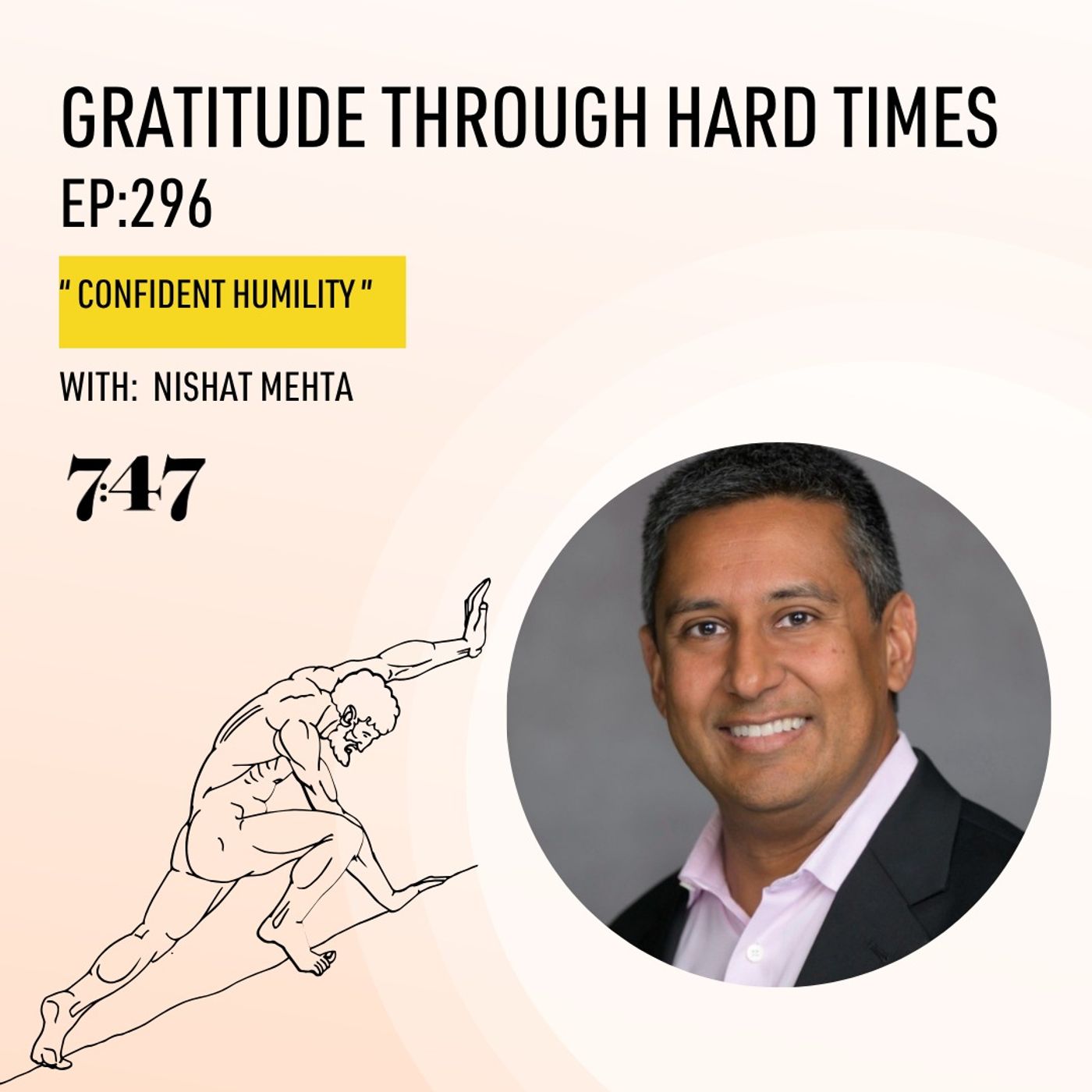
"When something becomes a measurement, it stops becoming a good target." In a world obsessed with digital efficiency and quick fixes, the real currency of a meaningful life remains independent thought, presence, and intentional effort. In this episode of Gratitude Through Hard Times, host Chris Schembra sits down with Nishat Mehta, CEO of Lexitas. A Harvard-trained mathematician and computer scientist turned executive, Nishat breaks down how leaders can navigate rapid change by embracing dialectical thinking—holding two seemingly competing truths at the same time. From balancing bottom-line performance with human empathy to shifting parenting styles as children grow, Nishat shares key insights on Goodhart's Law, confident humility, and finding extraordinary meaning in ordinary moments. 10 Memorable Quotes: "The new normal is that it will just keep changing. It really comes down to the ability to accept the change yourself and then lead the change amongst those around you." — Nishat Mehta "Confident humility balances high confidence in one's ability to figure things out with low ego regarding one's own current knowledge." — Chris Schembra "When something becomes a measurement, it stops becoming a good target." — Nishat Mehta "Always find the extraordinary in the ordinary." — Chris Schembra "Everything is on a spectrum... the edges of the spectrum are rarely the right answer." — Nishat Mehta "Efficiency increases consumption if you're not careful." — Chris Schembra "The journey is far more important than the destination... if we are constantly changing, it's because we are succeeding at the things we needed to do before." — Nishat Mehta "We must step out of the tyranny of the 'or' and into the genius of the 'and'." — Chris Schembra "Great work is something you're supposed to do, but recognizing what might seem ordinary is worthy of extraordinary gratitude." — Nishat Mehta "Gratitude doesn't change your circumstances; it changes your capacity to carry them." — Chris Schembra 10 Key Takeaways: Practicing Confident Humility: Balancing low ego regarding current knowledge with high confidence in a team's adaptability to solve complex, unfamiliar problems. Overcoming Goodhart's Law: Why single metrics distort business outcomes, and how pairing competing targets (like quantity vs. quality) maintains operational integrity. The "Genius of the 'And'": Replacing rigid "either/or" tradeoffs with dialectical thinking that unites radical acceptance with proactive change. Navigating Shifts in Family & Parenting: Transitioning from physical, hands-on care for young children to emotional, social mentorship as they grow into independence. Understanding Jevons Paradox in Modern Work: Recognizing how efficiency gains from AI can be swallowed by routine busyness unless leaders intentionally safeguard time for human connection. Harnessing "Collective Effervescence": Leveraging physical experiences, shared sports, and community gatherings to foster genuine human harmony and connection. Lowering Barriers to Access Justice: Applying technology and low-level AI guidance to make legal support more affordable, equitable, and fair. Change Management as a Core Leadership Skill: Shifting focus from day-to-day tactical execution toward building organizational consensus and motivating teams through continuous evolution. Finding Extraordinary Meaning in Ordinary Moments: Cultivating daily awareness to appreciate quiet family routines and ordinary acts of care that are often taken for granted. Embracing the Business Journey Over Destinations: Accepting that strategic goals evolve naturally as progress is made, making the growth process the ultimate measure of success. About our Guest: Nishat Mehta is the Chief Executive Officer of Lexitas, a leading national provider of technology-enabled litigation services and an Apax portfolio company based in Houston, Texas. He stepped into the CEO seat on January 1, 2025, having originally joined the company as President and Chief Operating Officer in March 2024. Under his leadership, Lexitas is launching AI-enabled deposition analysis, expanding its eLaw case-tracking platform, and continuing to serve law firms, insurance companies, and corporations across all 50 states. Nishat brings more than two decades of leadership across data, analytics, and enterprise technology. He most recently served as President of Global Products and Solutions and Chief Product Officer at Circana (formed from the merger of IRI and The NPD Group), where he ran the firm's global media, analytics, e-commerce, software, and consulting divisions. Prior to Circana, he led the customer communications team at 84.51° (Kroger's data-science and personalization arm), directed strategic partnerships at dunnhumby, and spent 15 years at MicroStrategy. He also serves on the Board of Directors of The E.W. Scripps Company (NASDAQ: SSP) and on the Board of Advisors of Adelaide Metrics. Nishat holds a Bachelor's degree in Applied Mathematics and a Master's degree in Computer Science, both from Harvard University. He lives in New York with his wife, Shalini, and their three children. His guiding quote, from John Wooden: ability may get you to the top, but it takes character to keep you there.
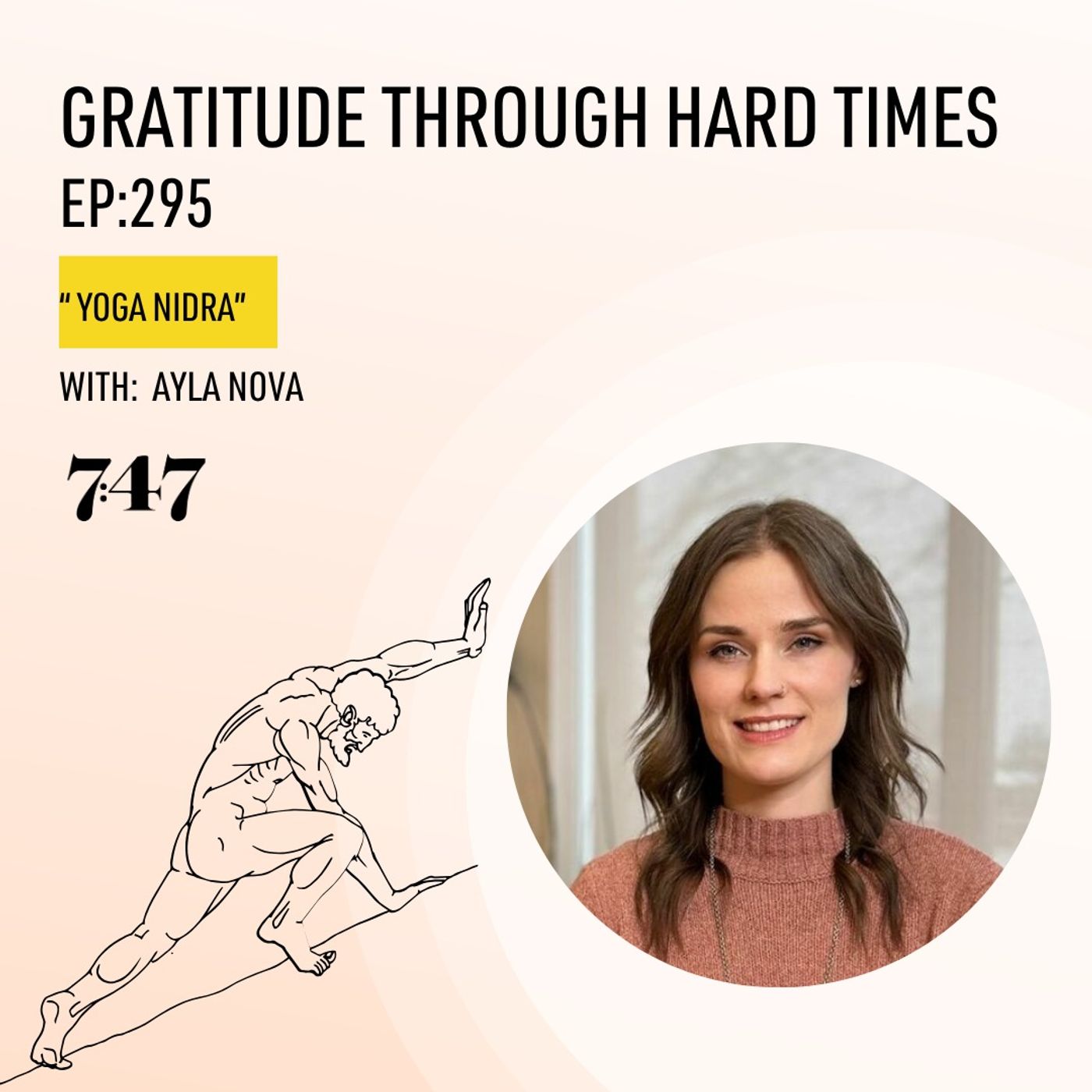
"Work-life balance isn't a thing... it's about work-life harmony." In a world obsessed with digital efficiency and quick fixes, the real currency of a meaningful life remains independent thought, presence, and intentional effort. In this episode of Gratitude Through Hard Times, host Chris Schembra sits down with Ayla Nova, founder of Yoga Nidra & Beyond and creator of The Peace in Rest Program. From navigating life-altering health crises and traumatic brain injuries to guiding listeners worldwide toward restorative sleep and mental clarity, Ayla breaks down the science, psychology, and spiritual practice of non-sleep deep rest (NSDR). She shares key lessons on managing internal tension, unlearning limiting beliefs, and using intentional stillness to unlock human intuition and creative genius. 10 Memorable Quotes: "Surrender to something bigger than yourself, lean into discipline to do positive work for our world, and you'll have the power to make the world a better place tomorrow." — Chris Schembra "Discipline is a ring on the door... when you show up for yourself in that way, then the opportunities start knocking." — Ayla Nova "We get so busy in the doing that we forget that the answer is being." — Ayla Nova "Yoga Nidra is true surrender, but it's also a practice for integrating your reality so that you can bring it out into the world when you're complete." — Ayla Nova "The present moment is flawless." — Ayla Nova "When you're being honest with yourself, where do you feel the tension in your body? And what would be the opposite of that experience?" — Ayla Nova "If AI helps you stand and run fast, and meditation helps you sit with your thoughts, Yoga Nidra is done laying down on the floor." — Chris Schembra "A leader's act of self-care means to be regulated from a capacity standpoint yourself so that then you can pour that capacity positively into others." — Chris Schembra "Learning is not differentiated... the hard thing that requires discipline is the unlearning part that comes from surrender." — Chris Schembra "Gratitude doesn't change your circumstances; it changes your capacity to carry them." — Chris Schembra 10 Key Takeaways: The Healing Power of Non-Sleep Deep Rest (NSDR): How Ayla used Yoga Nidra to heal and rebuild her life through severe health crises, loss of mobility, and a traumatic brain injury. Navigating the Tension of Opposites: Learning to hold space for contrasting internal states—such as uncertainty and trust—to discover a grounded middle path. Unlocking Intuition over Artificial Logic: Accessing Vijnanamaya Kosha (the inner wisdom body) through intentional rest to make creative decisions from intuition rather than forced analytical logic. Shifting from Reactive to Responsive Leadership: Regulating the nervous system to cultivate essential leadership traits: discernment, patience, clarity, and acceptance. Broadening the Cognitive Periphery: Stepping back from narrow, task-oriented focus to view broader data points, connect disparate ideas, and make wiser long-term strategic choices. The Metaphor of the Ground and Surrender: Using Savasana (corpse pose) to quiet the ego, let go of performative busyness, and reconnect with fundamental human truth. Reallocating Time with "Einstein Time": Overcoming the illusion of calendar scarcity by being fully present in current moments, effectively creating expansive time elsewhere. Integrative Mental Health Practices: Moving beyond passive escapism and digital input to engage in conscious rest that processes stored emotional tension. The Power of "Unlearning": Recognizing that modern growth requires unlearning old mental models through stillness before relearning new frameworks. Daily Discipline as Self-Trust: Embracing consistency and structured self-care routines to build deep internal trust and model integrity for others. About our Guest: Ayla Nova is a trauma-informed Yoga Nidra guide, teacher trainer, and the founder of Yoga Nidra & Beyond, a global platform for Non-Sleep Deep Rest (NSDR) that reaches listeners each week through her podcast, YouTube channel, and the Nova Nidra Community. Her work centers on the conviction that awareness is the key to remapping the mind and that deep rest is the doorway to nervous-system regulation, emotional healing, and radical self-acceptance. Through her signature Peace in Rest Program and 2026 Teacher Training, she certifies the next generation of Yoga Nidra guides. Ayla began her yoga journey in 2011 and earned her 200-hour yoga teacher certification in 2015 at Shri Kali Ashram in Goa, India, followed by trainings in Ashtanga and Kaula Tantra. In 2018, when diagnosed with a rare form of biphenotypic leukemia, she turned inward, making Yoga Nidra her therapy. She trained with the School of Sankalpa and in Integrative Restoration (iRest) with certified yoga therapist Barbara Eastham, and she is a lifetime Vedic Meditation practitioner. Today, Ayla lives and teaches in Calgary, Alberta, where her sessions are known for their trauma-sensitive framing, seasonal and archetypal themes, and sanctuary-like voice, guided by her refrain: rest well, be well.
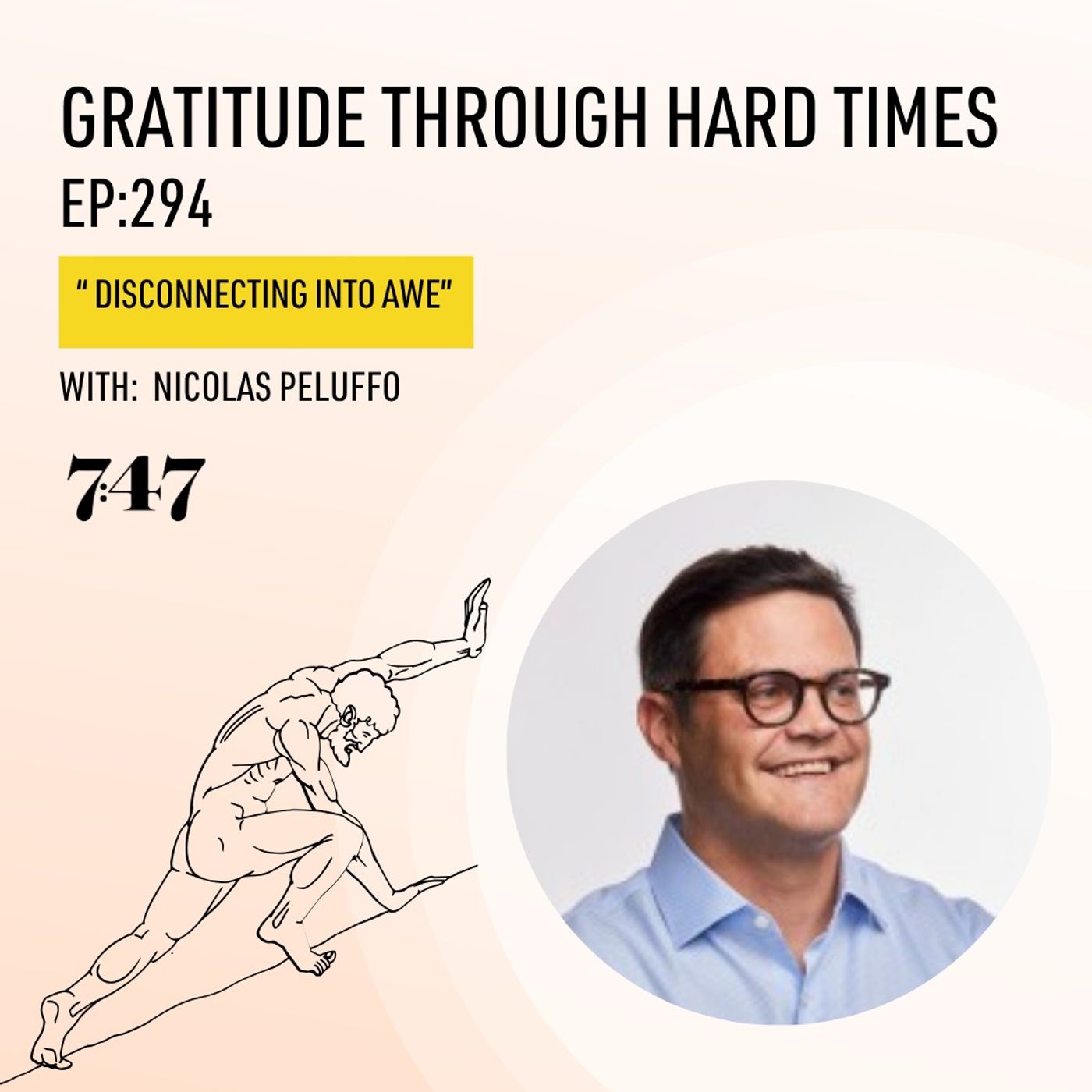
In a hyper-connected world filled with constant noise, notifications, and performance, we often travel just to capture the photo rather than live the moment. But what happens when true luxury isn't about being seen—it's about the privilege of disappearing? In this profound episode, Chris Schembra sits down with Nicolas Peluffo, CEO of Awasi Lodges. With over two decades of experience across hospitality, real estate, and finance, Nicolas explores how Awasi’s carbon-neutral, Relais & Châteaux lodges in South America—from Patagonia and the Atacama Desert to Iguazú and Santa Catarina—provide the setting for guests to disconnect, surrender control, and reconnect with intrinsic human awe. Together, they discuss why time and space are the ultimate modern luxuries, how unscripted nature lowers cortisol and restores genius-level creativity, why hiring for attitude over aptitude is the secret to true hospitality, and how surrendering to the present moment unlocks our deepest clarity. 10 Memorable Quotes "You come to experience something unique, right? To be in awe. And that's the reason that makes you get there." — Nicolas Peluffo "A normal hospitality company says, 'We're your home away from home.' The way we approach it is: this is your best friend's home." — Nicolas Peluffo "We're hit by way too many distractions—noise, people, email, text... that makes it increasingly difficult for anyone to be human." — Nicolas Peluffo "We all need that connection with nature. We all need that disconnection from the noise and the things that are unimportant." — Nicolas Peluffo "We're not built to be in a seat, on a sofa, definitely not in a shopping mall." — Nicolas Peluffo "When looking for attitude versus aptitude, attitude always prevails. It's very difficult to teach someone to smile, but it's pretty easy to teach someone to use Excel." — Nicolas Peluffo "Smile, not because you were told to smile. Smile because this is what you were meant to do." — Nicolas Peluffo "Hospitality is unlike any other customer experience. I don't think any other business has the same level of vulnerability and surrender both ways." — Nicolas Peluffo "Surrendering for me is letting go of all those constraints that the world told us—that we need to be better, faster, cheaper." — Nicolas Peluffo "Forcing things into existence is not the best way of going about things... Flow happens when you surrender." — Nicolas Peluffo 10 Key Takeaways The Privilege of Disappearing: In an overstimulated society, true well-being comes from reaching places where you can become unreachable and step away from constant noise. Hyper-Customized Hospitality: Exceptional experiences are built around individual human pacing ("your pace, your space") with dedicated guides and private vehicles rather than rigid group itineraries. Space for Cognitive Genius: Slowing down in nature allows the brain to process internal insights, creating the mental space needed for breakthrough creativity and innovation. The Neurobiology of Awe: Immersing oneself in vast natural landscapes reduces cortisol, lowers inflammation, and shifts focus away from big egos toward prosocial connection. Unstaged and Unscripted Moments: Authentic human experiences cannot be transactional or manufactured; they flourish in unscripted interactions with nature and local cultures. Hiring for Heart and Energy: True hospitality cannot be scripted; organizations must hire people with an innate inclination to serve, prioritize attitude over skills, and cultivate genuine presence. The Power of the Smile: Emotional energy is transmitted instantly—even through a phone call—making authentic warmth and positive energy essential for meaningful human connection. The Vulnerability of Hospitality: Creating transformative experiences requires mutual trust and vulnerability between host and guest as people share meals, stories, and life moments. Surrender Before Power: Letting go of the need to control every outcome opens up flow, presence, and deeper alignment both in leadership and in personal life. Living Intrinsically vs. Extrinsically: Shifting from external validation (like social media approval) to intrinsic presence transforms a brief transaction into a lifelong memory. About Our Guest Nicolas Peluffo is the Chief Executive Officer of Awasi Lodges, a collection of carbon-neutral luxury lodges and Relais & Châteaux member set in South America’s most remote corners—including the Atacama Desert, Torres del Paine, Iguazú, and Santa Catarina. Bringing over 23 years of experience across hospitality, real estate, finance, and technology, Nicolas previously served as Founder and CEO of TRVLR and spent nearly seven years at Awasi's Santa Catarina property (formerly Ponta dos Ganchos) rising to General Manager. He served as President and Co-Founder of the Brazilian Luxury Travel Association (BLTA) and sat on the Board of Directors of Relais & Châteaux as Delegate for South America. A graduate of Harvard Business School's OPM program with certifications from Cornell University, Nicolas resides in Santa Barbara, California, leading Awasi’s conviction that time and space are the greatest of privileges. Learn more at awasiexperience.com.
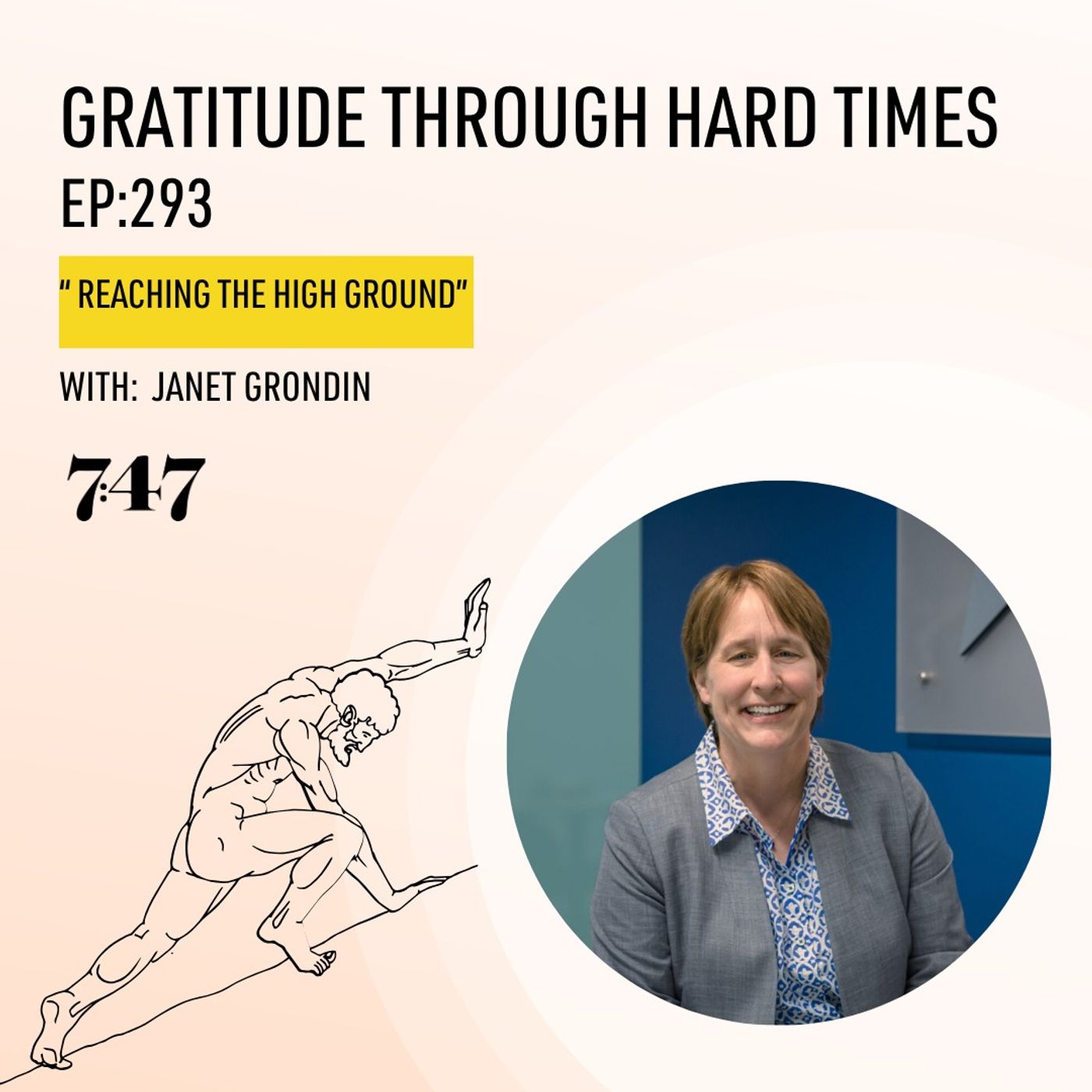
We often think of groundbreaking innovation in terms of technology, spreadsheets, and complex engineering. But what happens when humanity's most ambitious moonshots—literally reaching for the stars and returning to the moon—depend entirely on the subtle, daily interactions of human connection and moral courage? In this powerful episode, Chris Schembra sits down with Janet Grondin, CEO of Stellar Solutions and former U.S. Air Force Colonel. Janet shares her journey from a small town in Iowa to directing teams of top engineers and advisors on humanity’s most critical space and defense missions, including NASA's Artemis program. Together, they explore the tragedy that shaped her childhood, how to lead with moral courage through delayed gratification, why true leadership means helping every employee find their "dream job," and why human vision—not AI—will always be the ultimate driver of high-ground innovation. 10 Memorable Quotes "You won't survive in our business if you don't work hard and have a solid ethical foundation." — Janet Grondin "When you do see someone who could use a hand, reach out and take action. Don't walk by that problem." — Janet Grondin "For you to operate maritime, terrestrial forces, really hold your nation secure, you do need the high ground of space." — Janet Grondin "Processes don't build systems. Paper doesn't build systems... People build systems. People have visions." — Janet Grondin "Very subtle, small human interactions can have outsized impact on the mission." — Janet Grondin "If leadership is lonely, you’re doing it wrong." — Janet Grondin "Mission success is paramount. People are paramount." — Janet Grondin "The connection is through the question, and then you have to be ready for the answer because it's not always the answer you want." — Janet Grondin "AI is not going to put those together and go, 'Hey, we should build a spaceship... to create diamonds and silicon.' Humans do that." — Janet Grondin "The work is done by people. And without people, I don't care what you're building, you're not gonna build much without people." — Janet Grondin 10 Key Takeaways The Ethical Foundation: High-stakes leadership requires an unshakeable ethical foundation and a commitment to leaving every environment better than you found it. Taking Action over Bystander Mindset: Real leadership means taking immediate action when you spot someone in need or identify a flaw in a critical system. The High Ground Advantage: Long-term security, communication, and economic innovation depend on securing and developing the "high ground" of low Earth orbit and lunar bases. Humans Build Systems, Not Spreadsheets: Technology and processes are just tools; the human connection between designers, builders, and leaders is the true "secret sauce" of complex mission success. Psychological Safety in Engineering: High-performing cultures require enough trust and moral courage for team members to raise flags when something isn't right without fear of dismissal. The "Dream Job" Culture: Regularly asking employees "Are you in your dream job?" builds deep alignment and ensures the company evolves in the direction of its people. Combating Productivity Paradoxes: Instead of letting efficiency gains get swallowed by routine administrative busywork, leaders must intentionally protect space for collaboration and connection. Intentional Community Building: Distributed and remote teams require intentional, high-touch connection points, from monthly one-on-ones to biannual retreats and collaborative strategy sessions. Human Vision vs. AI Execution: While AI excels at data sifting and routine tasks, original genius, cross-domain breakthroughs, and visionary courage remain uniquely human. Redefining Impact and Boundaries: True growth comes from recognizing you are a small, vital part of something much bigger than yourself—and expanding your sights beyond terrestrial boundaries. About Our Guest Janet Grondin is the Chief Executive Officer of Stellar Solutions, Inc., a woman-owned aerospace engineering services firm and Malcolm Baldrige Award winner serving intelligence, defense, civil, commercial, and international customers. Janet’s career spans three decades across the U.S. Air Force—where she retired as a Colonel—Fortune 500 defense contractor Northrop Grumman, and now Stellar Solutions. Winner of the 2022 Women in Aerospace Leadership Award, she serves as Chair of the National Defense Industrial Association (NDIA) Space Division. Janet holds a B.S. magna cum laude in Aeronautical Engineering from Embry-Riddle Aeronautical University and master’s degrees from AFIT, the Air War College, and the Air Command and Staff College. She resides in Reston, Virginia with her husband Pat. Learn more at stellarsolutions.com.
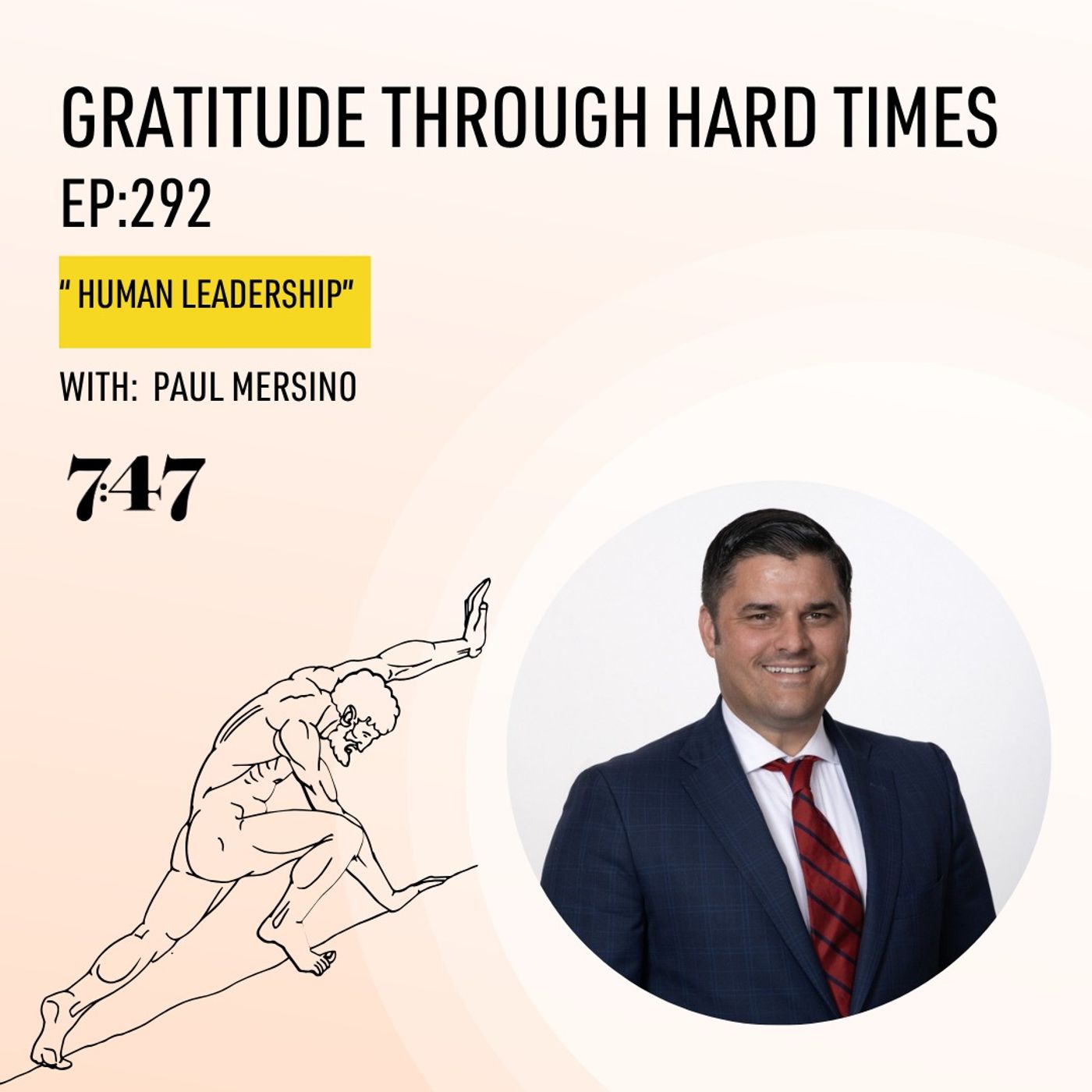
"Work-life balance isn't a thing... it's about work-life harmony." In a world obsessed with digital efficiency and quick fixes, the real currency of a meaningful life remains independent thought, presence, and intentional effort. In this episode of Gratitude Through Hard Times, Paul Mersino, President and CEO of Butzel, breaks down why true leadership requires excellence, mentorship, and continuous improvement. From starting as a young student guided by a transformative professor to steering a historic law firm as it approaches its 175th anniversary, Paul shares key lessons on leading with heart, embracing work-life harmony, and surrounding yourself with a team that pushes you to aggregate daily marginal gains. 10 Memorable Quotes: "If you could do everything just 1% better... and you aggregate up all of those little marginal gains, think of how much further you're going to be ahead." "You are who you are when nobody is watching. And that's integrity." "Iron sharpens iron, and steel sharpens steel." "If people turned off cable news and social media and looked next door at their neighbors, they'd realize the world is actually a pretty good place." "Work-life balance isn't a thing... it's about work-life harmony." "Moving fast isn't necessarily a threat or too big of a risk—you either get it right fast or find out sooner so you can adjust." "History's innovation is just history repeating itself looking different." "You can be a zealous advocate and a zealous competitor and still do it professionally like a gentleman or a lady." "Inspecting excellence is about focusing less on what's going wrong and elevating more of what's going right." "Gratitude doesn't change your circumstances; it changes your capacity to carry them." 10 Key Takeaways: The Life-Changing Power of Mentorship: How a dedicated professor founding a mock trial team sparked a passion that launched a multi-decade career in law. Inspecting Excellence and Marginal Gains: Focusing on daily 1% improvements across all operations to create compounding, unstoppable progress over time. The "PR Problem" of Human Kindness: Recognizing that real-world kindness hasn't declined—our perception of it has been distorted by negative media cycles. Embracing Work-Life Harmony: Moving past the rigid trade-offs of "work-life balance" to build a synergistic lifestyle where professional passion and personal fulfillment energize each other. Radical Candor and Psychological Safety: Cultivating a team culture so tight and trusting that colleagues can give direct, honest feedback without destroying relationships. Combatting AI Isolation with Connection: Addressing employee anxiety around AI by intentionally using saved time for deeper mentorship, cross-functional collaboration, and human presence. Respectful Dissonance and Tactical Empathy: Setting ego aside in high-stakes negotiations and trial advocacy to find common ground and convert adversaries into friends. Honoring Legacy Through Shared History: Building firm culture by constantly communicating history, values, and traditions across generations and remote offices. The 3 Pillars of Trustworthy Communication: Over-communicating openly, speaking candidly, and actively soliciting feedback to continuously grow. Leading with Integrity: Embracing the mindset that true professional success is defined by how you act when no one is watching. About our Guest: Paul M. Mersino is the President and CEO of Butzel, one of the oldest and most respected law firms in the United States, currently celebrating its 170th anniversary and approaching its 175th. Appointed to the CEO role in March 2023, he sits on the firm's Board of Directors and previously served as Chair of Butzel's Litigation Practice Department, overseeing the firm's commercial litigation attorneys and strategic growth. A commercial litigator by trade with nearly two decades of experience, Paul handles complex commercial litigation and "bet-the-company" matters spanning contract disputes, trade secrets, automotive supplier disputes, construction, and First Amendment litigation. He is admitted to practice before every level of Michigan state court, multiple U.S. District and Circuit Courts, and the Supreme Court of the United States. In addition to advising and sitting on the boards of several startup companies to help them navigate early-stage legal needs, Paul serves as a Trustee of the Butzel Charitable Trust and sits on the Board of Directors of the Detroit Regional Chamber. His leadership has earned him extensive recognition, including DBusiness magazine's Detroit 500, Crain's Detroit Business "Who's Who" and "40 Under 40," Michigan Lawyers Weekly's "Up and Coming Lawyers," a Detroit Business "30s in Their 30s" honoree, and a Michigan Super Lawyer. Paul holds a B.B.A. from Northwood University (2005) and earned his J.D. magna cum laude from Ave Maria School of Law (2008), where he served on Law Review and won a state moot court championship. Beyond his practice, he is deeply committed to community service, youth sports coaching, and his most cherished role as a dedicated husband and father.
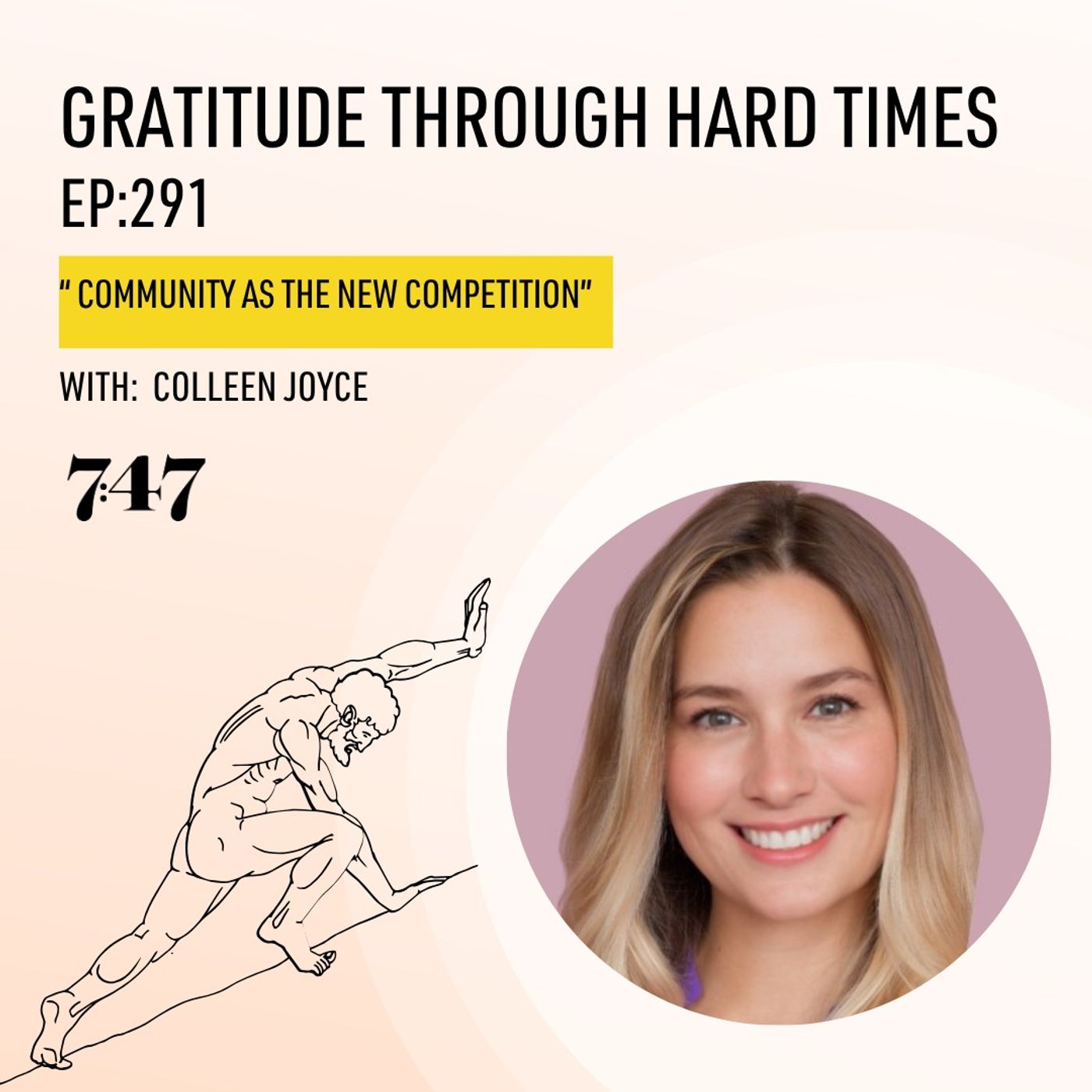
"I don't live well in the box because the box is not made for entrepreneurs." In a world obsessed with digital efficiency and quick fixes, the real currency of a meaningful life remains independent thought, presence, and intentional effort. In this episode of Gratitude Through Hard Times, Colleen Joyce, CEO of Lawyer.com, breaks down why community is the new competition and how proactive resilience drives real growth. From starting in a green, part-time role to rising to CEO, Colleen shares key lessons from her mentor Gerry Gorman on leading with heart, leaning into an unstructured life, and surrounding yourself with people who challenge you to build something bigger than yourself. 10 Memorable Quotes: "I don't live well in the box because the box is not made for entrepreneurs." "In the world, a lot of luck matters." "Community is the new competition." "We suffer more in imagination than in reality." "You can't connect the dots looking forward, but you can only connect the dots looking backwards." "I lead with love, and it's kind of weird to say that in a business setting, but I truly care." "I'd rather have a small piece of a big pie than a big piece of a small pie." "There's no value in what's been said. There's only value in what's been unsaid." "Wisdom can't just be taught. It must be earned by getting through hard times." "Progress over perfection." 10 Key Takeaways: Betting on the Non-Linear Path: How saying "yes" to a part-time opportunity without a traditional corporate roadmap opened the door to building an eight-figure powerhouse. Inquisitive Empathy and Radical Candor: Balancing deep care for team members with the accountability needed to deliver direct, honest performance feedback. Competition as Collaboration: Embracing aspirational competitors, learning from industry adversaries, and bringing competing voices together to elevate the entire ecosystem. The "Give Maxing" Philosophy: Countering isolation and hardship by gathering people, asking thoughtful questions, and actively extending gratitude. The Trap of Jevons Paradox: Recognizing that time saved by AI tools often gets swallowed by routine busyness unless leaders intentionally reallocate it toward human connection. Unlocking Untapped Potential: Pushing past comfortable boundaries to help team members tap into their unsaid thoughts and internal genius. Overcoming Imposter Syndrome: Accepting that leading through rapid industry changes requires living in the present while continuously learning as technology evolves. Surrendering Control to Foster Growth: Giving up micro-management to allow team members the freedom to make mistakes, learn, and step into leadership roles. The Power of Intentional Disconnection: Practicing small daily habits—like stepping away from digital devices—to remain fully present for family and community. Abundance Mindset vs. Scarcity: Rejecting the idea that success is a zero-sum game, choosing instead to build partnerships that lift all participants faster. About our Guest: Colleen Joyce is the CEO of Lawyer.com, the #1 U.S. lawyer matching service and online legal directory. Over the past decade, she has helped transform Lawyer.com from a simple concept into an eight-figure legal powerhouse, growing the company's revenue by more than 20% in 2024 alone. She rose to the CEO seat by way of Senior Vice President of Lawyer Services and then President, and today leads the strategy, technology, and partnerships that connect consumers with qualified attorneys across every practice area and jurisdiction in the country. Colleen is also the Co-Founder of the Lawyer Growth Summit, a national conference that brings attorneys, legal technologists, and industry thought leaders together to share the strategies driving real growth in modern law firms. She is a sought-after keynote speaker, mentor, and podcast host, and her leadership has been featured in Authority Magazine's "Female Disruptors" and "Leading with Heart" series and recognized by Marquis Who's Who. Before her legal-industry career, she served as Director of Marketing and Publicity at PopStar.com (a subsidiary of World Media Group), producing celebrity content for a global audience and covering red carpets, press junkets, and awards shows. Colleen holds a Bachelor of Arts in Liberal Arts and Sciences from the University of Illinois, where she graduated magna cum laude. She is based in Basking Ridge, New Jersey, and describes herself first and foremost as a proud mama. Her guiding mantra: progress over perfection.
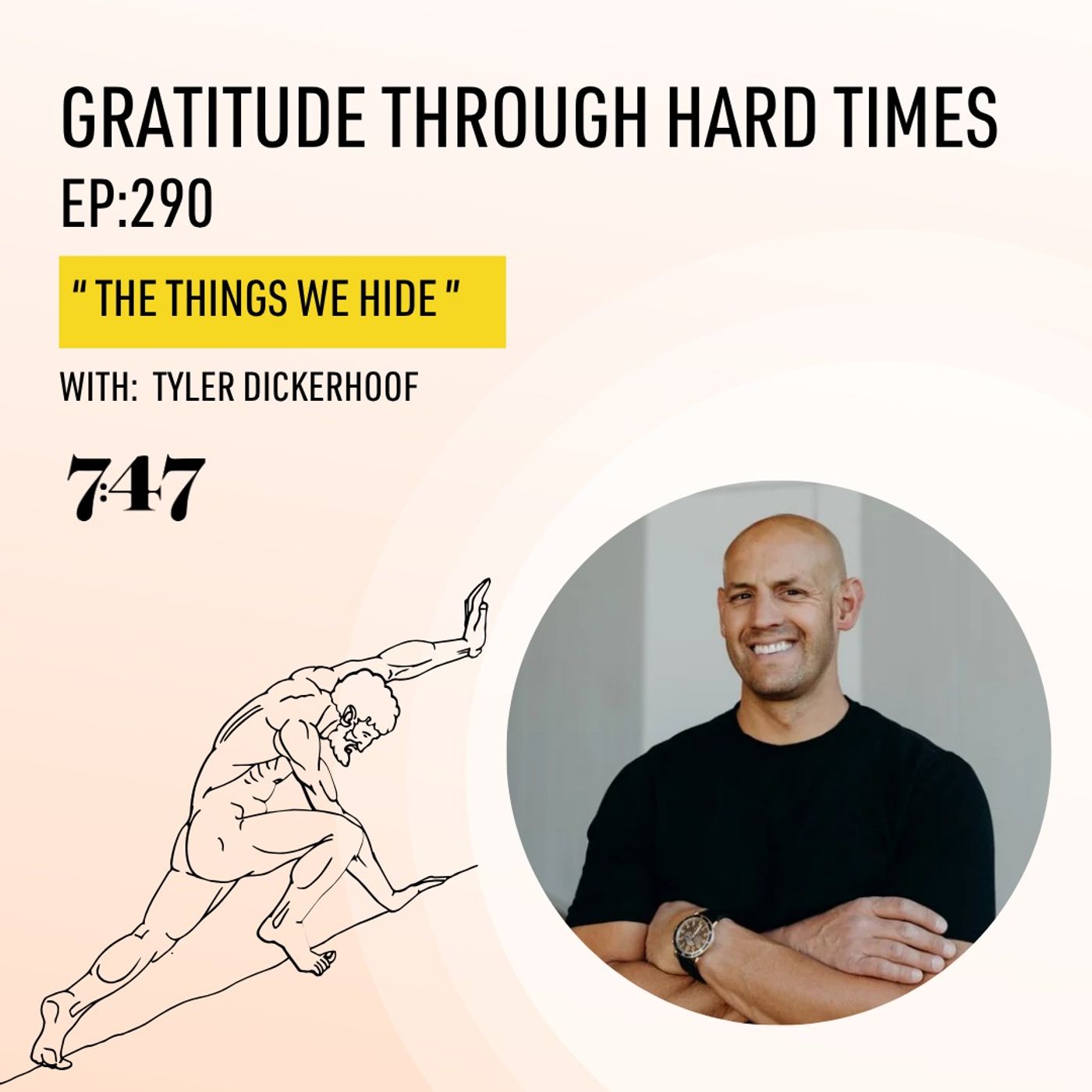
Philosophical Hook We often treat professional drive, relentless intensity, and self-reliance as badges of honor. But what happens when our greatest leadership strengths are actually walls we built to hide our deepest pain? In this powerful episode, Chris Schembra sits down with leadership coach and author Tyler Dickerhoof to discuss his new book, The Things We Hide. Tyler opens up about the tragic childhood loss of his younger brother, Joel, and how that single event led him to build a 25-year defensive wall of extreme intensity. Together, they explore how to break through the four walls of insecurity—intensity, inactivity, insensitivity, and isolation—to transition from a defensive, lonely "bulldozer" into a truly connected, impact-driven leader. 10 Memorable Quotes "My brother had died and it was an accident. I was fourteen and Joel was three." — Tyler Dickerhoof "Where we get in trouble is when we start to depict other people's interpretation of value as our own. And that's where everything goes awry." — Tyler Dickerhoof "I don't tell that story because I don't think it has value. I didn't understand that that manifestation of hiding those things was creating a barrier in my ability to connect." — Tyler Dickerhoof "Instead of it showing up at the bottom of a bottle or drugs... it was my intensity." — Tyler Dickerhoof "Intensity is a bulldozer. A bulldozer will clear a path, but it's going to leave carnage. And in a human sense, that carnage is relationships." — Tyler Dickerhoof "If you want to level some land, great, but I'm not gonna go hang out with you... because I was always on to the next thing." — Tyler Dickerhoof "If leadership is lonely, you’re doing it wrong." — Tyler Dickerhoof "I was marooned on an island because I thought I had to do it all... But I was the one that held the keys to the lifeboat." — Tyler Dickerhoof "When we're looking in the mirror, it looks real good. But then someone sits across from us and says, 'Hey, your face is flipped around the other way.'" — Tyler Dickerhoof "Too often we think impact is monumental... Joel was thirty-four months old when he died. His life made an impact." — Tyler Dickerhoof 10 Key Takeaways The Shield of Intensity: Extreme drive and work ethic can often be subconscious survival mechanisms built to mask grief, trauma, or insecurity. The "Bulldozer" Trap: While intensity clears paths and gets things done in business, it leaves a trail of damaged relationships if left unchecked. The Valuation Crisis: Real security begins when you stop adopting external definitions of success and start grounding yourself in your intrinsic value. The Four Walls of Insecurity: Leaders protect themselves through four distinct defensive mechanisms: Intensity, Inactivity, Insensitivity, and Isolation. The Illusion of Lonely Leadership: Loneliness at the top is not an inevitable byproduct of leadership; it is a self-imposed prison created by our unwillingness to be vulnerable. Windows vs. Mirrors: Leading effectively requires looking through a "window" to see how your actions affect others, rather than just looking in a "mirror" of your own intentions. Tech-Enabled Isolation: In the age of AI, we must be careful not to use productivity tools to further isolate ourselves, but rather to buy back our time for genuine human connection. The Power of the Round Table: High-level growth happens in layers when you surround yourself with a diverse group of peers who can pressure-test your perspectives. The 5 R's of Mindset: Maintaining a healthy leadership attitude requires a daily cycle of Routine, Reset, Remember (or Not), Realistic alignment, and constant Repetition. Redefining Impact: True, lasting impact isn't measured by scale or longevity, but by the depth of meaning we bring to the lives of those we touch. About Our Guest Tyler Dickerhoof is a keynote speaker, leadership coach, and host of The Tyler Dickerhoof Show. As the founder of Impact Driven Leader and developer of the Awaken the Leader Within framework, he helps executives and entrepreneurs grow in influence without losing their humanity. Tracing his leadership roots back to his agricultural upbringing, Tyler holds a degree from Cornell University and is based in Spokane, Washington. Learn more at tylerdickerhoof.com.
"In business, you're either moving forward or you're going backward. There's no treading water." This core philosophy, passed down from serial-entrepreneur parents, has driven Chris Burnham and his family to transform a single storage location into a multi-billion-dollar global enterprise. Yet, despite overseeing vast international real estate holdings, the heartbeat of the company remains rooted in humor, local family values, and an endless appetite for innovation. In this episode of Gratitude Through Hard Times, host Chris Schembra sits down with Chris Burnham, President of StorageMart, to discuss the human foundation behind exponential growth. Burnham reflects on his early career moves—from studying Japanese business dynamics in 1980s Tokyo to walking away from corporate commodity trading—and shares how embracing curiosity, family unity through high-stakes deals, and a signature dose of wit helped shape brands like Manhattan Mini Storage. Together, they explore what it takes to navigate business setbacks, empower the next generation, and raise true "Renaissance men" in a rapidly changing world. 10 Memorable Quotes: "In business, you're either moving forward or you're going backward. There's no treading water." "I realized that I had to do things for myself, and that maybe climbing the corporate ladder was not the career path for me." "Ganbatte means go get it... attack, charge." "If you ask me what one of my deepest fears are, it's retirement 'cause I'm not sure I can handle that." "That feeling that you wake up in the morning and you can hardly wait to get to work—that's what keeps me going." "We got on the airplane... and as I was leaving, I got a phone call: 'Deal's off.' We stopped off at a gas station, bought a 12-pack, and drank it on the way home, strategizing about what comes next." "Laughter is one of the most essential parts of life... I try to find humor in everything." "I don't have to invent anything. I just have to innovate what's there and make it the best it can be." "I always go back to curiosity, 'cause that tells me that it's somebody who knows how to learn." "I wanted them to be able to fight a battle on the front line, come home and write a sonnet, paint a picture, or climb a mountain." 10 Key Takeaways: The Dreamer and the Realist Dynamic: How balancing big-picture curiosity with grounded realism creates the ideal environment for testing and executing ideas. No Treading Water: Why staying static in business or personal life eventually leads to decline, and why navigating obstacles requires constant forward motion. The 'Ganbatte' Mindset: Channeling the Japanese ethos of active drive and fierce determination when confronting major career turning points. The Power of Family Wingmen: Relying on familial trust and unity during high-stakes business reversals rather than retreating into isolation. Cheeky Brand Differentiation: How turning a dry, functional product into a memorable experience through bold, satirical local advertising builds massive brand equity. Innovation Over Invention: Recognizing that long-term enterprise growth often comes from refining and elevating existing models rather than starting from scratch. Curiosity Maxing as a Core Skill: Framing critical thinking, awareness, and reverse-engineering as essential human traits in an automated economy. Proactive Resilience: Developing the mental agility and endurance needed to bounce back quickly when major deals fall through at the eleventh hour. Wandering and Competitive Research: Understanding that true market intelligence comes from physically stepping into customer experiences and actively listening. Raising Renaissance Leaders: Fostering multi-faceted capability in the next generation—combining hard work, intellectual depth, and artistic appreciation. About Our Guest: Chris Burnham is the President of StorageMart, the world’s largest privately and family-owned self-storage company. Over a 40-year family legacy in the self-storage industry, Burnham and his family have scaled the business from a single location to over 250 properties worldwide, overseeing more than $8 billion in real estate transactions. Known for preserving local, values-driven leadership while scaling exponentially, StorageMart’s footprint includes iconic regional brands such as New York City’s Manhattan Mini Storage. A former Ernst & Young Entrepreneur of the Year recipient, Chris studied agricultural economics and spent his early academic years studying Japanese business in Japan before working as a commodity trader at Cargill. He later rejoined his family business to help lead its global expansion. Dedicated to mentorship, customer satisfaction, and continuous innovation, Chris lives and works alongside multiple generations of the Burnham family.
"Those who can't do are good hype men for others." This simple principle serves as the heartbeat for a life dedicated to authentic human depth. In a world optimized for digital efficiency and "frictionless" convenience, the true currency of a meaningful life remains the unscalable power of independent thought, presence, and intentional effort. In this episode of Gratitude Through Hard Times, Chris Schembra explores the growing cultural movement of human connection, proactive resilience, and the universal language that unites us. Samantha Wolfson shares insights from her personal journey, including navigating a life-changing career evolution since moving to Amsterdam in 2017, executing intense top-tier tech launches at Wieden+Kennedy, and the long road to paying forward the lessons of grit and character learned from her father, Steven. Together, the conversation dives into how we show up for others, the power of surrounding ourselves with people who challenge us, and how leaning into creative outlets outside the boardroom can fundamentally alter our perspectives. 10 Memorable Quotes: "He is the reason I have become a pit bull in some areas and can be very soft in others because I see that is how he can both engage and react to the people around him." "Never did I think that could actually become such a quintessential part of my career." "I want every woman that's coming to not know each other. Just bring a bottle of wine and I will cook the food." "You don't have to trade a life that looks good on paper for a good life around the dinner table. It's an and, not or." "The moment you stop is when you'll fall into the trap of thinking you can do it all by yourself." "Growth starts at those points of like, 'Ooh, I don't know how I feel about that.'" "Who's at the table is as important as who's not at the table." "There's no value in what's been said. There's only value in what's being unsaid." "Community is the hardest thing to build because there is, for the most part, not crazy financial gain behind it." "Hard work breeds luck, and I definitely live by that." 10 Key Takeaways: The Test of Truth Tellers: Why surrounding yourself with an executive team and community that pressure-tests your ideas is infinitely better than building an inner circle of enablers. Six is the Gate: Understanding the tactical benefit of keeping meetings and gatherings to exactly six women so that everyone has an active voice, safety, and a real seat at the table. The Transition from Analog to Digital: How navigating high-intensity tech rollouts like the Ray-Ban Meta glasses exposed the deep human exhaustion behind the corporate digital push. Dismantling Structural Silos: Breaking away from transactional networking by designing spaces where professionals connect over shared human truths rather than industry metrics. The "Three-Letter Word" Framework: Cultivating deep conversation by refusing to counter someone's story with your own anecdote, choosing instead to simply ask "why?" to uncover what is unsaid. Grit at the Dinner Table: Reclaiming the narrative of hard work by looking to foundational role models, including Steven Wolfson's lessons on listening, character formation, and absolute abundance. The Tyranny of the OR vs. The Genius of the AND: Learning that world-class leadership requires balancing binary traits, integrating logical business goals with emotional human connections. Failing Fast with Guidance: Why moving forward through a community's hard times and "imperfect dinners" under strong internal resolve is the only real vehicle for long-term relational success. The Core Value of Peer Review: Recognizing that even in an automated, AI-driven environment, verified human connection and peer-reviewed credibility remain irreplaceable. Mudita and Pro-Social Gratitude: Shifting away from keeping score to actively finding joy in the achievements of others, which ultimately drives collective organizational momentum. About our Guest: Samantha (Sam) Wolfson is the founder of & the Table, a global dinner platform that brings ambitious women together around a shared meal. The platform operates on a distinct format: six women who have never met, three courses, one host-chosen theme, and a strict rule that everyone shows up completely alone. What began in 2022 as just five open spots at her Amsterdam apartment quickly went viral, drawing more than 500 applications in its very first open round. Today, & the Table has built a robust global presence, empowering more than 75 hosts in over 10 countries, spanning from Nigeria to Spain to Hungary. A Philadelphia native, Sam studied Media, Culture, and Communications at New York University before launching into the music industry, where she spent years on the road producing branded sponsorships for major music festivals across Mexico, Australia, and beyond as an account manager at LiveStyle, Inc. After falling for Amsterdam during a work trip, she relocated there permanently in 2017 and transitioned into advertising. She served as an Account Director at world-class agencies Wieden + Kennedy and TBWA\NEBOKO, leading global campaigns for heavyweights like Airbnb, Samsung, Ray-Ban, and Adidas. Before scaling & the Table into a full platform, she honed the concept as "Sam's Dinners"—her personal hosting practice designed to meet other women and build deep connections in a new city. Outside of her dinner platform, Sam is also the co-founder of the card game WHAT ARE THE ODDS, and frequently shares her insights as a speaker at events like the Self-Made Summit in the Netherlands. She currently lives in west Amsterdam with her partner and her dog.
"The best man on the floor is actually a woman." This simple principle serves as the heartbeat for a life dedicated to authentic human depth. In a world optimized for digital efficiency and "frictionless" convenience, the true currency of a meaningful life remains the unscalable power of independent thought, presence, and intentional effort. In this episode of Gratitude Through Hard Times, Philip Greer explores the growing cultural movement of human connection, proactive resilience, and the universal language that unites us. Philip shares insights from his personal journey, including navigating a life-changing career evolution since joining the firm in 2005 as a software engineer, building the company's first content management system, and the long road to paying forward the lessons of grit learned from his mother, Sherry. Together, the conversation dives into how we show up for others, the power of surrounding ourselves with people who challenge us, and how leaning into creative outlets outside the boardroom can fundamentally alter our perspectives. 10 Memorable Quotes: "There was no position that was beneath her, but also no position was the ceiling." "Sometimes they say no because systems are built that way, but that doesn't mean the answer is no." "The bookkeeping of benefits is simple. It's all an expenditure. We give for the sake of giving. We do not keep score." "I have so much belief that if we keep saying the bad ones, the good ones will come to the top." "The more you congratulate others, the more they'll end up congratulating you." "The best man is a woman, and it's her right there." "Limitations are what created limitless belief." "I want to be able to solve problems that people say can't be solved." "We must step out of the Tyranny of the or and step into the genius of the and." "Just go out there and congratulate some people today." 10 Key Takeaways: The Test of Truth Tellers: Why surrounding yourself with an executive team and community that pressure-tests your ideas is infinitely better than building an inner circle of enablers. Eight is the Gate: Understanding the tactical benefit of keeping meetings and task forces to eight people or less so that everyone has an active voice and a seat at the table. The Transition from Analog to Digital: How leveraging a software engineering background allowed Philip to modernize a global data platform away from fax machines and phone calls. Dismantling Structural Silos: The strict rule that task forces must pull from multiple departments—such as research, engineering, sales, and finance—to achieve true cross-pollination. The "Tuesday Talks" Framework: Cultivating a transparent culture through monthly, small-group touchpoints that openly address what's working, what's failing, and high-level strategy. Grit on the Factory Floor: Reclaiming the narrative of hard work by looking to foundational role models, including Philip's mother breaking barriers in military transit and heavy manufacturing. The Tyranny of the OR vs. The Genius of the AND: Learning that world-class leadership requires balancing binary traits, integrating logical business goals with emotional human connections. Failing Fast with Guidance: Why moving forward and making quick mistakes under strong mentorship is a better vehicle for success than remaining frozen by the fear of limits. The Core Value of Peer Review: Recognizing that even in an automated, AI-driven environment, verified human connection and peer-reviewed credibility remain irreplaceable. Mudita and Pro-Social Gratitude: Shifting away from keeping score to actively finding joy in the achievements of others, which ultimately drives collective organizational momentum. About our Guest: Phillip Greer is the CEO of Best Lawyers, the oldest and most respected peer-review resource for top talent in the legal profession. He has driven the company's continual evolution since joining in 2005, originally as a software engineer. By tapping into his engineering background, he built the company's first content management system and led the transition, in his own words, "from analog to digital." He was named President in 2013 and CEO in 2018. Under Phil's leadership, Best Lawyers has solidified its reputation as a market leader and innovator, processing millions of peer-review votes each year and powering rankings that are syndicated by partner publications including the New York Times, the Wall Street Journal, Handelsblatt in Germany, and the Australian Financial Review. He has led international expansion strategies that bring Best Lawyers recognition to attorneys and firms in markets including the United States, Canada, Australia, Spain, and Germany. Phil is a graduate of Augusta University and is based in North Augusta, South Carolina. A lifelong musician, he writes and performs music with his family (most recently with his daughter) and is a frequent supporter of his son's musical theater and dance productions. His perspective on leadership and disruption has been featured in Authority Magazine's "Meet The Disruptors" series and on Gina Rubel's "On Record PR" podcast, where his episode was the #1 downloaded of 2023.
"At the end of the day, that's what we do. I mean, that's our job... we're professional helpers." This simple principle serves as the heartbeat for a life dedicated to authentic human depth. In a world optimized for digital efficiency and "frictionless" convenience, the true currency of a meaningful life remains the unscalable power of independent thought, presence, and intentional effort. In this episode of Gratitude Through Hard Times, Chris Caldwell explores the growing cultural movement of human connection, healing, and the unexpected ways community anchors our lives. Chris shares insights from his personal journey, including navigating his rise from a part-time teller to the CEO of a historic community bank, the critical behind-the-scenes support of his wife Bettie, and his deep-seated commitment to paying forward success through active volunteerism. Together, the conversation dives into how we show up for others during challenging times, the power of people who challenge us, and how a chance commitment to local service can bring an entire community to life. 10 Memorable Quotes: "If there’s an opportunity to be part of a conversation about gratitude... sign me up. I’m all for it." "When you understand that your job is to do more than just take a deposit to make a loan—it is to be an integral part of our community—that’s when we excel our best." "At the end of the day, that’s what we do. I mean, that’s our job... we’re professional helpers." "I can’t force others, I can’t change others, but I can have the courage to change how I show up, and the wisdom to know the difference." "If you don't take care of your customers, someone else will." "There are people out there that are willing to give up their time, the most expensive thing we have, and volunteer." "She is my biggest cheerleader. I wouldn't be where I am today without her support." "We want to make sure that we're there for them through the good times and the bad times." "Community is in our name, so we better do it right." "Go thank someone in your life, but do it the inconvenient way. Sit down and write a letter rather than just clicking a button to sending a gift card." 10 Key Takeaways: The Character Test of Leadership: Why surrounding yourself with people who challenge you and say the hard things is infinitely better than building an inner circle of enablers. The Evolution of a Community Banker: Understanding the stark reality of early career growth, where starting as a part-time teller teaches you the foundational value of frontline human interactions. The Power of Behind-the-Scenes Support: Recognizing the profound impact of spouses and loved ones whose quiet, proactive baseline contributions keep leaders grounded and supported. Active Volunteerism vs. Writing a Check: Dealing with the heart-centered shift from merely donating money to physically getting out into the field, proving that true community connection requires active presence. The Value of Leading by Example: Processing the realization that you cannot force a charitable mindset onto others; instead, you must consistently model the behavior to inspire your team. Balancing the Old and the New: Reclaiming the narrative around technological advancement by ensuring digital innovation (like AI) never replaces the human desire to "see and be seen" by someone you trust. Sympathy vs. Presence: Learning that showing up for a community in crisis requires skipping transactional interactions and simply sitting with people to understand their immediate needs. Bypassing the Corporate Script: A look at how unexpected, vulnerable bonds form when leaders choose to skip fiscal policy talk and instead lean directly into conversations about human gratitude. The Inconvenient Path of Gratitude: How breaking past personal convenience to write a handwritten letter rather than sending a digital gift card can fundamentally alter the energy of a relationship. The Micro-Intervention of Trust: How breaking past systemic corporate barriers to prioritize local relationships allows a business to become a true sanctuary for the people it serves. About our Guest: Growing up with a deep appreciation for local connection shaped the foundation of Chris Caldwell's work ethic and sense of purpose. As a dedicated leader in the banking industry with over 30 years of experience, he learned early the value of hard work, resilience, and the tradition of contributing to what you build together. Those early experiences—alongside holding advanced degrees in history from Manchester and Ohio Universities and an MBA from Anderson University—instilled in him a deep appreciation for perseverance, lifelong learning, and creating a meaningful life rooted in community. After entering the financial workforce, Chris discovered a lasting passion for connecting with people within the community banking space across Indiana and Vermont. What began as an early career in commercial banking and business consulting evolved into a fulfilling leadership path, culminating in his role as President and CEO of Community Bancorp and Community National Bank. Dedicated to being both a steward and advocate for the regions he serves, Chris actively believes relationships are at the heart of meaningful work. Outside of his career, he stays involved in his community by serving on the boards of the Green Mountain United Way and Manchester University, championing a culture of gratitude as a core leadership practice, and enjoying life in Newport, Vermont, with his wife Bettie.
"You are always a student, never a master." This simple principle serves as the heartbeat for a life dedicated to authentic human depth. In a world optimized for digital efficiency and "frictionless" convenience, the true currency of a meaningful life remains the unscalable power of independent thought, presence, and intentional effort. In this episode of Gratitude Through Hard Times, Sandra Lopez explores the growing cultural movement of human connection, healing, and the unexpected ways we tune back into our personal truths. Sandra shares insights from her personal journey, including navigating a high-stakes executive career at tech giants like Intel, Adobe, and Microsoft, confronting a pivotal 360-feedback review that labeled her a "robot," and utilizing the forced pause of the COVID-19 pandemic to embark on a radical road of self-discovery through Kabbalah. Together, the conversation dives into how we show up for our teams with deep empathy, the power of using technology as a contrarian force, and how choosing a messy, non-traditional path allows leaders to trade superficial ego validation for lasting, soul-led growth. 10 Memorable Quotes: "Business is business, and you keep your personal life separate." "Until, you know, maybe two years into, uh, my management, I got my 360 feedback, and, feedback is a gift." "One of my team members said, 'I don't know Sandra. She seems to be like a robot.'" "A good leader delivers results, but how do you become a great leader? And the great leader is the understanding that we are all humans." "The greatest gift that I get isn't my bonus. It's the little emails that I get..." "I'm 53 and I would say most of my lifespan, was probably giving gratitude very superficially." "Am I doing this for my ego or am I doing this for my soul? And that's a very hard transition actually." "The soul responds to the soul. So when, if you're starting your own business and you really focus on what's the soul of the company... Humans are gonna respond to that." "The moments, the hardest moments of my life was when I saw exponential growth." "Be delusionally... Be delusional about finding your soul. How's that? DeLulo" 10 Key Takeaways: The Character Test of Feedback: Why embracing uncomfortable 360-degree reviews and extracting truth from critical peer assessments is infinitely better than building an inner circle of enablers. Good vs. Great Leadership: Understanding the stark reality of corporate metrics, where delivering OKRs only makes you a good leader, while a great leader prioritizes the unscalable human-to-human capacity. The Hidden Debt of the Ego: Recognizing the profound impact of modern business systems and digital platforms like LinkedIn, which function as machines engineered to feed external images rather than internal truths. The Evolving Rules of Tech: Dealing with the modern reality of AI engagement, choosing to use technology strictly as a contrarian tool to challenge strategic blind spots rather than a superficial echo chamber to validate existing bias. The Value of Trailing Humans: Processing the bittersweet realization that while tools can assist operations, chatbots lack a conscience, meaning true personal breakthroughs require stepping away from screens to converse with a real human being. Remembering COVID's Gift: Reclaiming the narrative around global and personal hardships by extending genuine gratitude to a crisis that forced a necessary internal pause and deep ancestral self-discovery. Systemic vs. Soul Presence: Learning that showing up authentically requires skipping rigid, traditional expectations of how leaders "should" live or format their personal partnerships and spaces. Sitting in the SAVERS Routine: A look at how intentional daily habits form resilience, utilizing quiet mornings dedicated to silence, gratitude, visualization, exercise, contrarian reading, and scribing. Certainty and Intuition: How dialing into your core intuition prompts people to pause, providing an unshakeable confidence that overrides logical fears when making massive career pivots. The Micro-Intervention of the Zag: How breaking past a commoditized, fast-paced, and highly automated corporate landscape to bring the purposeful messiness of the soul back into business is the ultimate competitive advantage. About our Guest: Growing up with a relentless work ethic shaped the foundation of Sandra Lopez's purpose-driven approach to leadership. Guided by the personal philosophy that "you are always a student, never a master," she learned early that true wisdom requires a lifelong commitment to unlearning, learning, and continuously putting one foot in front of the other, no matter how grueling the path becomes. Raised to appreciate the delicate balance between high-stakes profit metrics and a deep responsibility to give back, those early values instilled in her a lasting dedication to community advocacy, representation, and leading with radical transparency. After entering the technology workforce, Sandra discovered a deep passion for driving corporate transformation at an elite level, spending over twenty years holding executive and leadership roles at iconic global brands including Intel, Adobe, and serving as the former CMO of Microsoft Advertising. What began as a traditional path focused on hard business outcomes evolved into a fulfilling calling as the CEO of Ambi Ventures, where she partners with ambitious businesses to provide elite fractional CMO services, advisory expertise, and investments. Dedicated to being an active advocate for Latina executives across America and serving as a co-chair for the World Economic Forum's AR/VR Model Commission, Sandra believes that integrating empathy and humanity into corporate spaces is at the heart of meaningful growth. Outside of her advisory career, she stays actively involved in exploring diverse spiritual and mindfulness practices like Kabbalah, prioritizing intentional morning routines, and inspiring the next generation of leaders to look past the ego to connect deeply with their soul's true purpose.
"So many things about our life are numbers." This simple principle serves as the heartbeat for a life dedicated to authentic human depth. In a world optimized for digital efficiency and "frictionless" convenience, the true currency of a meaningful life remains the unscalable power of independent thought, presence, and intentional effort. In this episode of Gratitude Through Hard Times, Abigail Beach explores the growing cultural movement of human connection, healing, and the unexpected ways numbers anchor our lives. Abigail shares insights from her personal journey, including navigating a life-threatening placental abruption at age 22, the heartbreaking loss of her daughter Rayleigh, and the long road to paying forward the anonymous blood transfusions that saved her life. Together, the conversation dives into how we show up for others during grief, the power of people who challenge us, and how a chance moment sharing "angel numbers" at a housing innovation conference brought an entire auditorium to life. 10 Memorable Quotes: "I thought to myself, I can't say that I'm true to myself if I don't take this opportunity and run with it." "She said the things that I didn't wanna hear." "You don't wanna be in a room surrounded by a bunch of yes people." "The world needs more truth tellers, and sometimes the truth hurts." "So many things about our life are numbers." "Had it not been from them, or for them, I would've died." "There are people out there that are willing to give up their time, the most expensive thing we have, and volunteer." "It was sad that we had to bond over such a horrific incident, but it was nice to know I wasn't alone." "This is terrible, but I'm gonna sit in your grief with you." "The last thing we wanna do is be pitied. We just wanna be able to talk about our kid." 10 Key Takeaways: The Character Test of Ambers: Why surrounding yourself with people who challenge you and say the hard things is infinitely better than building a leadership team or inner circle of enablers. Eight is the Gate: Understanding the stark reality of critical health metrics, where dropping past a specific threshold means fighting a silent battle to survive. The Hidden Debt of 11 Transfusions: Recognizing the profound impact of anonymous blood, platelet, and fibrin donors whose proactive community contributions keep strangers alive. The Evolving Rules of Giving: Dealing with the heartbreak of a rare medical deficiency that temporarily blocked paying a life-saving gift forward until industry donation guidelines shifted. The Value of Trailing Volunteers: Processing the bittersweet realization that sometimes local giving organizations are entirely booked and busy, proving the baseline goodness of local communities. Remembering Rayleigh: Reclaiming the narrative around infant loss by keeping her alive through favorite family stories, including her reactions to Irish dancers in utero. Sympathy vs. Presence: Learning that showing up for a grieving parent requires skipping heavy looks of pity and simply giving them space to discuss their child openly. Sitting in the Grief: A look at how unexpected bonds form, such as crying with a local veterinarian during a standard animal wellness checkup over shared maternal loss. Angel Numbers and Synchronicity: How arbitrary moments on a clock or unexpected digital encounters prompt people to pause and realign their daily outlook. The Micro-Intervention of Yes: How breaking past personal discomfort to share vulnerable personal histories can fundamentally alter the energy of a room. About our Guest: Growing up in a farming community shaped the foundation of Abigail Beach's work ethic and sense of purpose. As the daughter of a third-generation fruit farmer — and now married to a third-generation farmer myself — she learned early the value of hard work, resilience, and the family tradition of contributing to what you build together. Raised alongside three sisters by parents who never questioned their ability to get the job done, those early experiences instilled in her a deep appreciation for perseverance, family, and creating a meaningful life rooted in community. After entering the workforce through a traditional 9-to-5 role, Abigail discovered a lasting passion for connecting with people within the multifamily industry. What began in leasing and property management evolved into a fulfilling career in marketing, where she currently focuses on digital marketing, customer service, and building authentic human connections. Dedicated to being both a steward and advocate for the communities she serves, Abigail believes relationships are at the heart of meaningful work. Outside of her career, she stays actively involved in her community by volunteering with the local little league, enjoying the outdoors with her family, and raising children to see barriers as challenges they have every capacity to overcome.