Skip to content
Artwork for Gradient Dissent: Conversations on AI
TechnologyBusiness

Gradient Dissent: Conversations on AI

Lukas Biewald

Join Lukas Biewald on Gradient Dissent, an AI-focused podcast brought to you by Weights & Biases. Dive into fascinating conversations with industry giants from NVIDIA, Meta, Google, Lyft, OpenAI, and more. Explore the cutting-edge of AI and learn the intricacies of bringing models into production.

Play
  • 21 episodes
  • monthly
  • Avg 58 min
  • English
Counted on this page — what you have heard stays on this device, so it is not something the list can be paged by.
  • S1 · E142
    August 18 · 1 hr 34 min

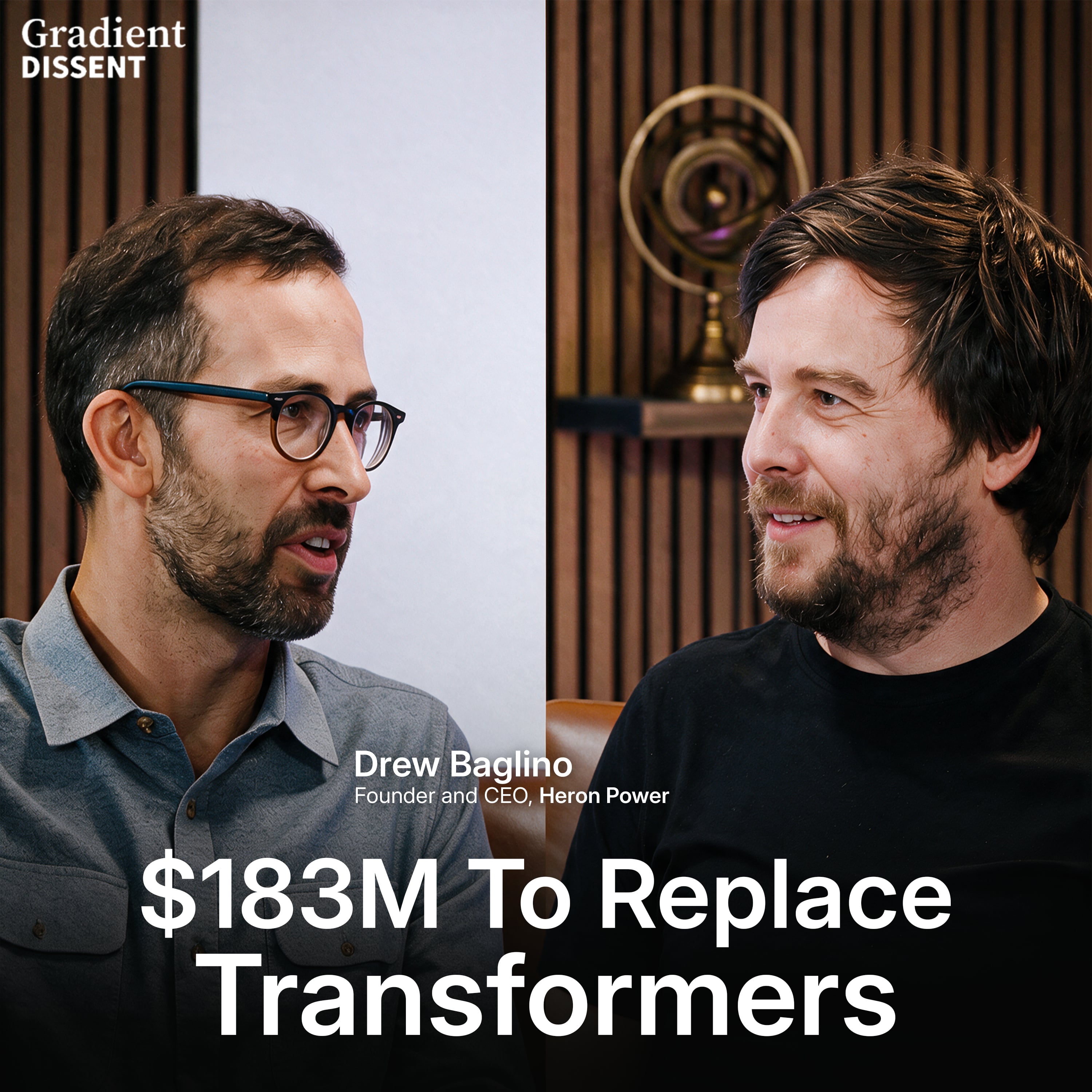
    Elon's Former Battery Chief: AI Data Centers Will Make Electricity Cheaper

    Can today's power grid handle the explosive growth of AI data centers? Tesla Alum Drew Baglino, now founder & CEO of Heron Power, doesn't think so. In this episode, he joins Lukas Biewald to talk about why scaling compute requires a fundamental overhaul of grid-to-chip infrastructure, not just bigger power plants. They cover how Heron Power raised $140M to cut power losses in half, shrink massive oil-filled transformers by 100x, and unlock 35MW of extra compute for every gigawatt data center, and what that means for the future of AI energy efficiency. Connect with us here: Drew Baglino Heron Power Lukas Biewald Weights and Biases

  • S1 · E141
    August 3 · 1 hr 19 min

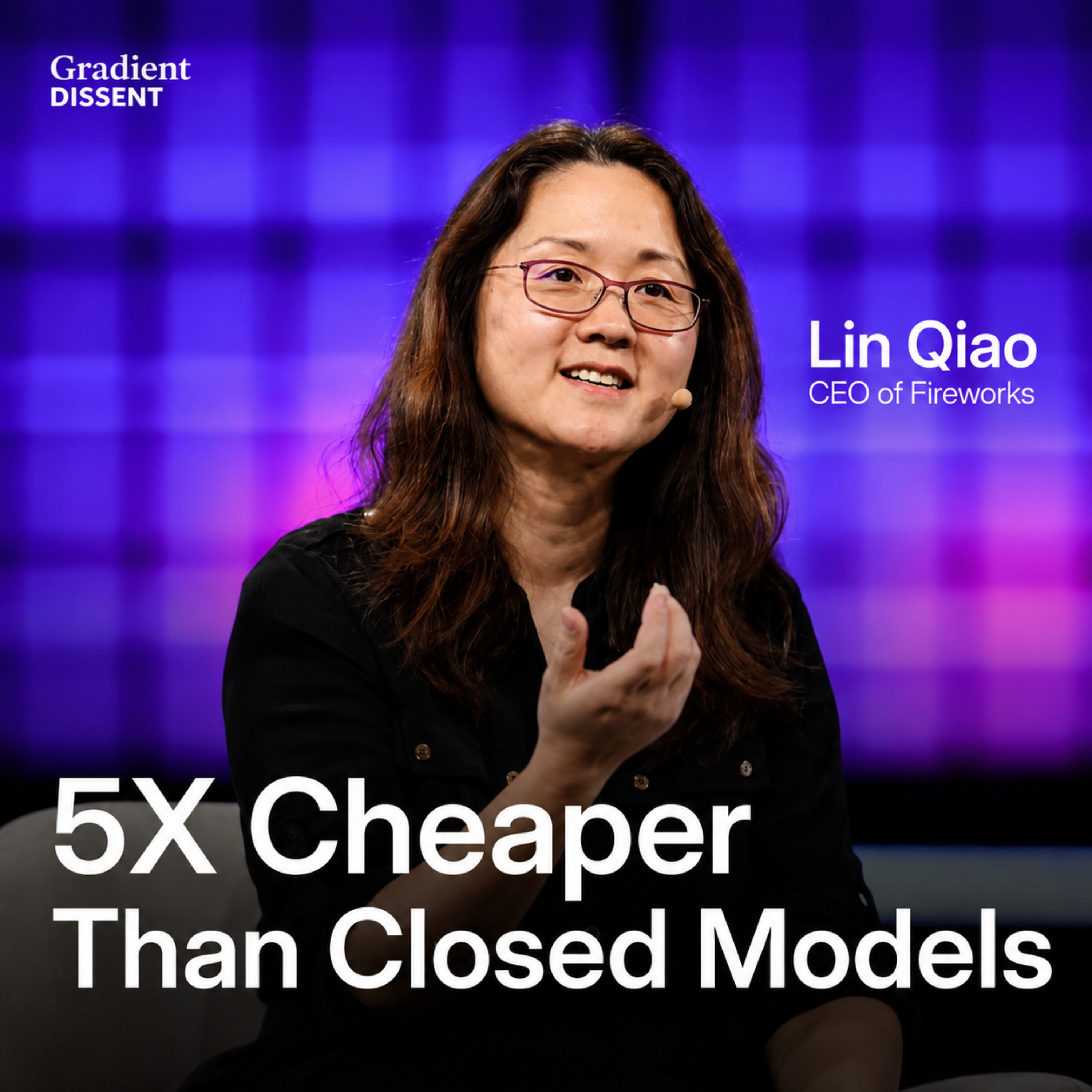
    40 Trillion Tokens a Day (Yes, More Than OpenAI) | Lin Qiao, CEO of Fireworks

    Should American companies be worried about Chinese open-source AI models? Lin Qiao, CEO of Fireworks, doesn't think so. In this episode, she joins Lukas Biewald to talk about why she believes the industry is at a turning point, one that calls for more open intelligence, not less. They cover how Fireworks now processes more tokens a day than OpenAI's API, why she thinks the future belongs to specialized models built on private company data rather than general-purpose ones, and why she believes OpenAI and Anthropic should be open-sourcing their own models too. Connect with us here: Lin Qiao Fireworks Lukas Biewald Weights and Biases

  • S1 · E140
    June 16 · 1 hr 14 min

    He's Building an AI That Can't Lie | Dan Klein

    "We are going to switch from the problem in AI being that nothing works to the problem being that everything works." Dan Klein has been studying language models for over two decades and is now a professor of computer science at Berkeley. His new company, Scaled Cognition, is built around one question: how do you build a system that will not lie to you? In this episode, Dan joins Lukas Biewald to talk about why every LLM output is technically a hallucination, how reinforcement learning can quietly teach AI to deceive you, and what it actually takes to build models that check their own work. He also gets into why reliability is the one part of AI that hasn't kept pace and why that matters more than most people realize. Connect with us here: Dan Klein Scaled Cognition Lukas Biewald Weights and Biases

    • Chapters
  • S1 · E139
    May 26 · 1 hr 14 min

    He Raised $70M to Cure Every Disease With AI | Samuel G. Rodriques, Edison Scientific

    Samuel Rodriques left physics because there were no unsolved problems left. Instead, he built an AI scientist named Kosmos to cure every disease, solve aging, and map the human brain. In this episode: The cure his AI proposed for blindness Why he would never touch a peptide Whether we'll need human scientists in 20 years What's stopping America in drug discovery Connect with us here: Samuel Rodriques Edison Scientific Lukas Biewald Weights & Biases

    • Chapters
  • S1 · E138
    April 15 · 45 min

    Uber, Nissan, and Mercedes Chose This Self-Driving Startup | Alex Kendall, Wayve

    "Every vehicle is capable of driverless operation. That's clearly the steady state of where we're going." Wayve started in a rented house in Cambridge with $1.5M, a car in the garage, and an aim to integrate end-to-end AI into driving. A decade later it's driven across 506 cities without a single HD map and is worth over $8.6 billion. In this episode, CEO Alex Kendall joins Lukas Biewald to talk about how he built the AI driver Uber, Nvidia, Mercedes, and Nissan all backed, and why putting self-driving AI into 100 million cars a year is a far bigger bet than 10,000 robotaxis. Waymo and Tesla both come up. He doesn't shy away. Connect with us here: Alex Kendall Lukas Biewald Wayve Weights and Biases

  • S1 · E137
    March 31 · 43 min

    Why Netflix, Uber, and Spotify Never Lag: The Database Nobody Talks About | Aaron Katz

    "Companies designing for agents, not humans, are going to get a lot of lift." ClickHouse started as an internal tool at Yandex. Today it's the database Anthropic, OpenAI, Meta and Tesla all run on. In this episode, CEO Aaron Katz joins Lukas Biewald to talk about how he turned an open source project into a $15B company, why he acquired LangFuse knowing it could cost him customers, and what he's actually building for the agent era. Snowflake, Datadog and Databricks all come up. He doesn't shy away. Connect with us here: Aaron Katz: https://www.linkedin.com/in/aaron-katz-5762094 ClickHouse: https://www.linkedin.com/company/clickhouseinc/ Lukas Biewald: https://www.linkedin.com/in/lbiewald/ Weights and Biases: https://www.linkedin.com/company/wandb/ 00:00 Trailer 00:57 The Origin Story: From Yandex to ClickHouse Inc. 04:43 Building ClickHouse Cloud & Raising $300M 10:36 Growing Up Around Xerox PARC 12:51 Salesforce, Mark Benioff & the Dot-Com Bust 15:32 Cloud Skeptics vs. AI Skeptics | History Repeating 18:05 Building a Modern Go-To-Market Playbook 21:57 The SaaS Crash, Agents & the Future of Infrastructure 27:09 The Datadog Love-Hate Story 35:21 Hardest Moments: Russia, SVB & Sleepless Nights 43:16 Outro

  • S1 · E136
    February 5 · 50 min

    The $64M Bet on an AI That Has to Be Right | Carina Hong, CEO of Axiom

    Formal verification already consumes years of human effort. In this episode, Lukas Biewald talks with Carina Hong, Founder & CEO of Axiom, about why verification is becoming the real bottleneck in high stakes AI systems. They discuss how Axiom uses AI to take on the tedious checking that stretches verification cycles across years, starting with formal mathematics and extending to hardware and software. Carina also explains why Axiom’s approach to auto-formalization mirrors spec driven models like Kiro from AWS. Connect with us here: Carina Hong: https://www.linkedin.com/in/carina-hong/ Axiom: https://www.linkedin.com/company/axiommath/ Lukas Biewald: https://www.linkedin.com/in/lbiewald/ Weights & Biases: https://www.linkedin.com/company/wandb/

  • S1 · E135
    January 20 · 1 hr 7 min

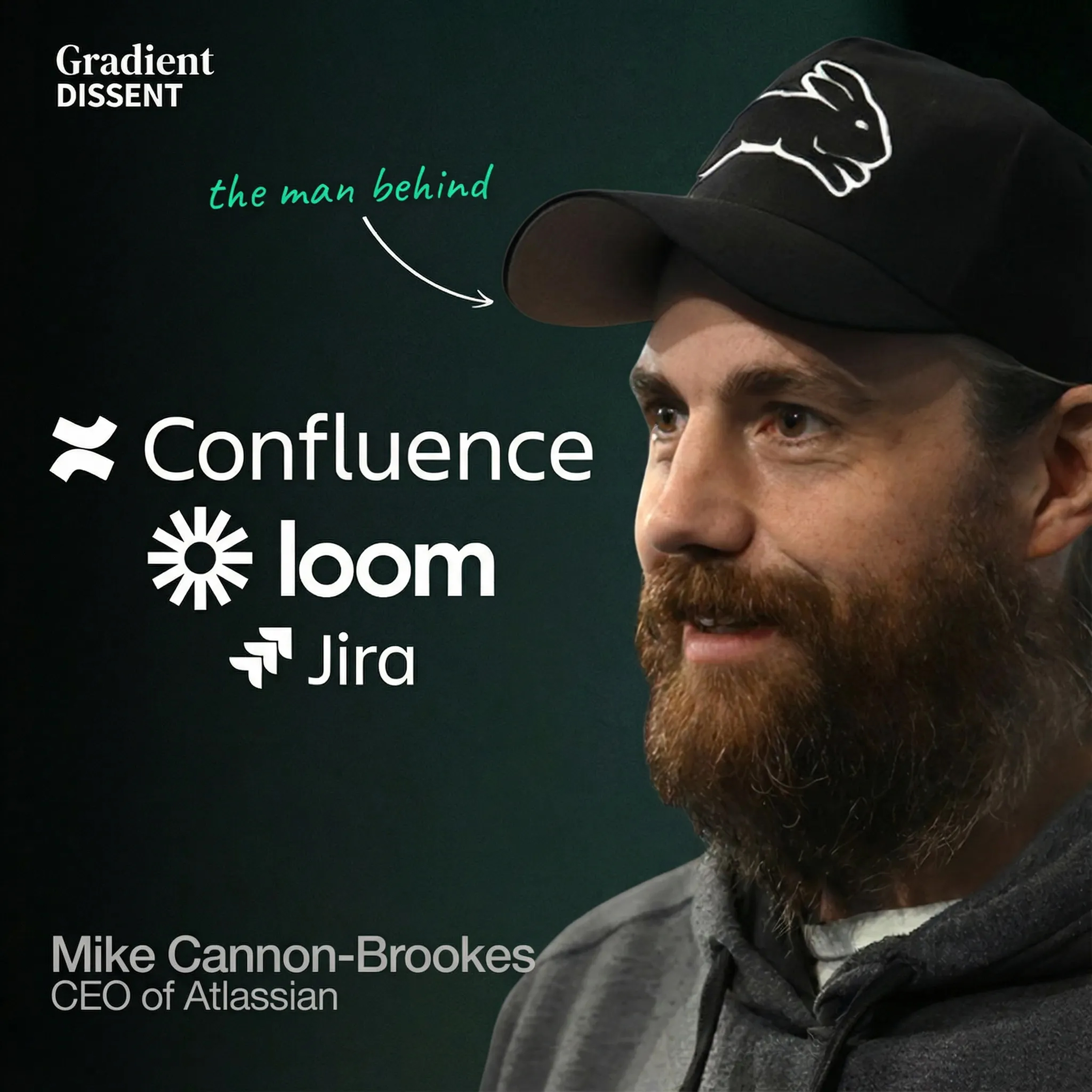
    What a $42B Software Co. Really Spends on AI Tools

    “I don't worry about being replaced by AI. I worry about being replaced by someone who's really good at using AI.” Atlassian has 10,000+ engineers currently split-testing the world’s top AI coding tools, from GitHub Copilot and Cursor to Claude Code. In this episode, Co-Founder & CEO Mike Cannon-Brookes joins Lukas Biewald to share what their data reveals about the world's best AI tools today. Hear how 24 years of building a tech giant and a massive internal study on AI productivity have shaped Mike's vision for the future of dev jobs. Connect with us here: Mike Cannon-Brookes: https://www.linkedin.com/in/mcannonbrookes/?originalSubdomain=au Atlassian: https://www.linkedin.com/company/atlassian/?viewAsMember=true Lukas Biewald: https://www.linkedin.com/in/lbiewald/ Weights & Biases: https://www.linkedin.com/company/wandb/ 00:00 Trailer 01:08 Introduction 03:11 Connecting Technology and Business Teams 07:22 The Impact of AI on Business Workflows 13:26 Developer Productivity and AI 21:03 Measuring Developer Efficiency 25:41 Future of AI in Development 34:59 Legacy Technology and Code Changes 39:29 AI's Role in Developer Productivity 47:40 AI and Junior Developers 52:30 Product-Led Growth and Business Strategy 01:00:29 Core Metrics for Sustainable Growth 01:06:56 Staying Creative in the Tech Industry

  • S1 · E134
    January 6 · 53 min

    Inside the $41B AI Cloud Challenging Big Tech | CoreWeave SVP

    The future of AI training is shaped by one constraint: keeping GPUs fed. In this episode, Lukas Biewald talks with CoreWeave SVP Corey Sanders about why general-purpose clouds start to break down under large-scale AI workloads. According to Corey, the industry is shifting toward a "Neo Cloud" model to handle the unique demands of modern models. They dive into the hardware and software stack required to maximize GPU utilization and achieve high goodput. Corey’s conclusion is clear: AI demands specialization. Connect with us here: Corey Sanders: https://www.linkedin.com/in/corey-sanders-842b72/ CoreWeave: https://www.linkedin.com/company/coreweave/ Lukas Biewald: https://www.linkedin.com/in/lbiewald/ Weights & Biases: https://www.linkedin.com/company/wandb/ (00:00) Trailer (00:57) Introduction (02:51) The Evolution of AI Workloads (06:22) Core Weave's Technological Innovations (13:58) Customer Engagement and Future Prospects (28:49) Comparing Cloud Approaches (33:50) Balancing Executive Roles and Hands-On Projects (46:44) Product Development and Customer Feedback

  • S1 · E133
    Dec 16, 2025 · 1 hr

    Why Physical AI Needed a Completely New Data Stack

    The future of AI is physical. In this episode, Lukas Biewald talks to Nikolaus West, CEO of Rerun, about why the breakthrough required to get AI out of the lab and into the messy real world is blocked by poor data tooling. Nikolaus explains how Rerun solved this by adopting an Entity Component System (ECS), a data model built for games, to handle complex, multimodal, time-aware sensor data. This is the technology that makes solving previously impossible tasks, like flexible manipulation, suddenly feel "boring." Connect with us here: Nikolaus West: https://www.linkedin.com/in/nikolauswest/ Rerun: https://www.linkedin.com/company/rerun-io/ Lukas Biewald: https://www.linkedin.com/in/lbiewald/ Weights & Biases: https://www.linkedin.com/company/wandb/

    • Chapters
  • S1 · E132
    Dec 1, 2025 · 14 min

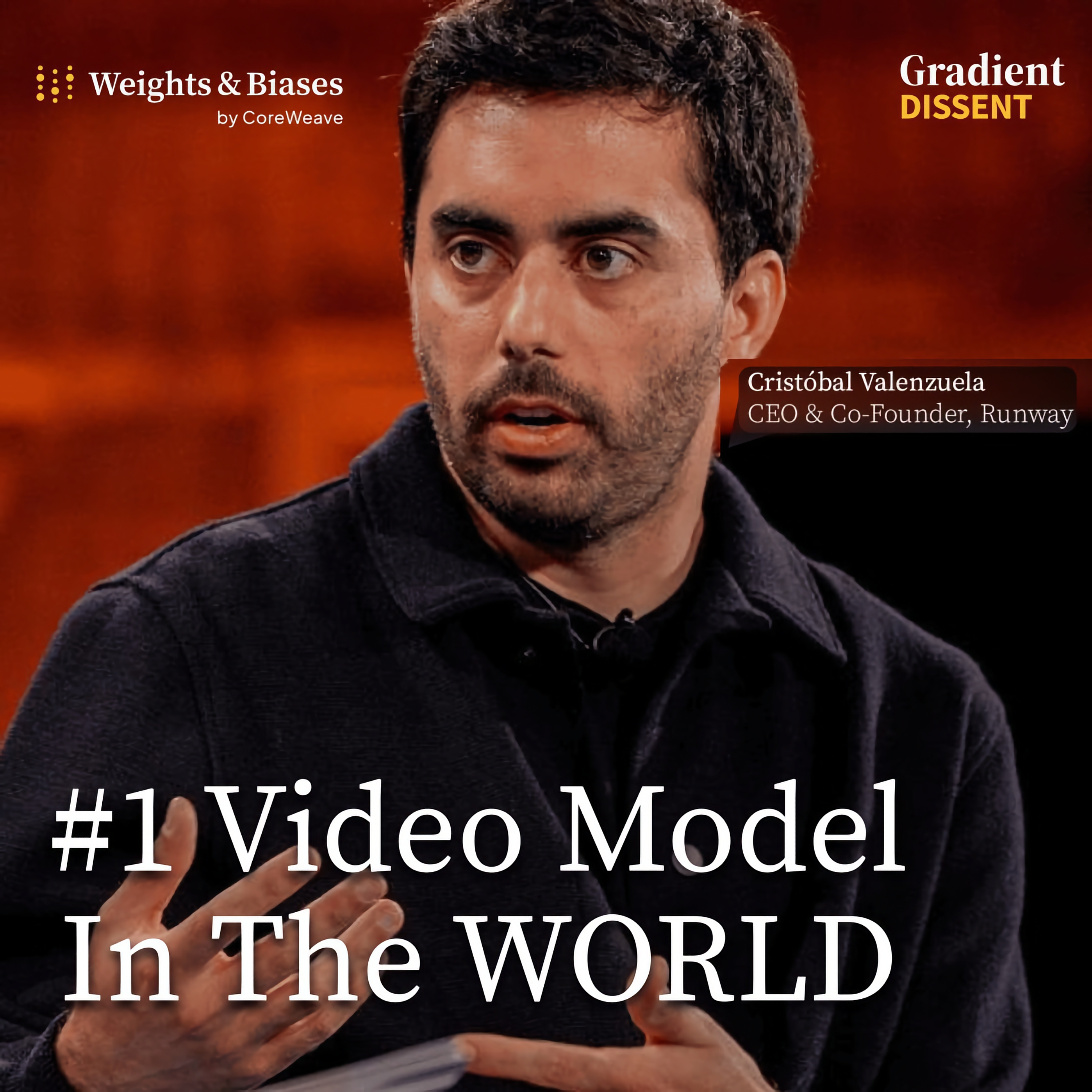
    The Engineering Behind the World’s Most Advanced Video AI

    Is video AI a viable path toward AGI? Runway ML founder Cristóbal Valenzuela joins Lukas Biewald just after Gen 4.5 reached the #1 position on the Video Arena Leaderboard, according to community voting on Artificial Analysis. Lukas examines how a focused research team at Runway outpaced much larger organizations like Google and Meta in one of the most compute-intensive areas of machine learning. Cristóbal breaks down the architecture behind Gen 4.5 and explains the role of “taste” in model development. He details the engineering improvements in motion and camera control that solve long-standing issues like the restrictive “tripod look,” and shares why video models are starting to function as simulation engines with applications beyond media generation. Connect with us here: Cristóbal Valenzuela: https://www.linkedin.com/in/cvalenzuelab Runway: https://www.linkedin.com/company/runwayml/ Lukas Biewald: https://www.linkedin.com/in/lbiewald/ Weights & Biases: https://www.linkedin.com/company/wandb/

  • S1 · E131
    Nov 18, 2025 · 59 min

    The CEO Behind the Fastest-Growing AI Inference Company | Tuhin Srivastava

    In this episode of Gradient Dissent, Lukas Biewald talks with Tuhin Srivastava, CEO and founder of Baseten, one of the fastest-growing companies in the AI inference ecosystem. Tuhin shares the real story behind Baseten’s rise and how the market finally aligned with the infrastructure they’d spent years building. They get into the core challenges of modern inference, including why dedicated deployments matter, how runtime and infrastructure bottlenecks stack up, and what makes serving large models fundamentally different from smaller ones. Tuhin also explains how vLLM, TensorRT-LLM, and SGLang differ in practice, what it takes to tune workloads for new chips like the B200, and why reliability becomes harder as systems scale. The conversation dives into company-building, from killing product lines to avoiding premature scaling while navigating a market that shifts every few weeks. Connect with us here: Tuhin Srivastva: https://www.linkedin.com/in/tuhin-srivastava/ Lukas Biewald: https://www.linkedin.com/in/lbiewald/ Weights & Biases: https://www.linkedin.com/company/wandb/

  • S1 · E130
    Sep 16, 2025 · 56 min

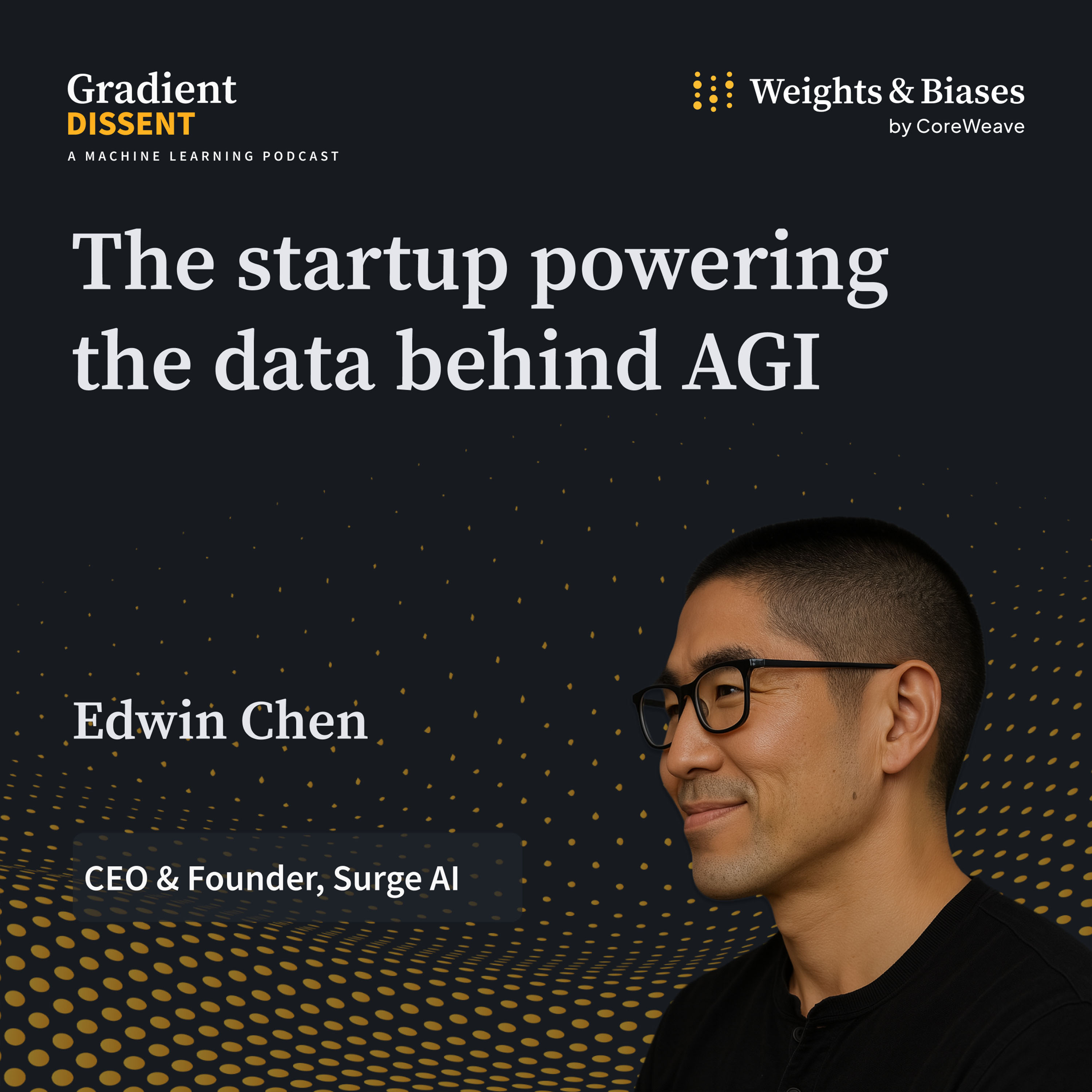
    The Startup Powering The Data Behind AGI

    In this episode of Gradient Dissent, Lukas Biewald talks with the CEO & founder of Surge AI, the billion-dollar company quietly powering the next generation of frontier LLMs. They discuss Surge's origin story, why traditional data labeling is broken, and how their research-focused approach is reshaping how models are trained. You’ll hear why inter-annotator agreement fails in high-complexity tasks like poetry and math, why synthetic data is often overrated, and how Surge builds rich RL environments to stress-test agentic reasoning. They also go deep on what kinds of data will be critical to future progress in AI—from scientific discovery to multimodal reasoning and personalized alignment. It’s a rare, behind-the-scenes look into the world of high-quality data generation at scale—straight from the team most frontier labs trust to get it right. Timestamps: 00:00 – Intro: Who is Edwin Chen? 03:40 – The problem with early data labeling systems 06:20 – Search ranking, clickbait, and product principles 10:05 – Why Surge focused on high-skill, high-quality labeling 13:50 – From Craigslist workers to a billion-dollar business 16:40 – Scaling without funding and avoiding Silicon Valley status games 21:15 – Why most human data platforms lack real tech 25:05 – Detecting cheaters, liars, and low-quality labelers 28:30 – Why inter-annotator agreement is a flawed metric 32:15 – What makes a great poem? Not checkboxes 36:40 – Measuring subjective quality rigorously 40:00 – What types of data are becoming more important 44:15 – Scientific collaboration and frontier research data 47:00 – Multimodal data, Argentinian coding, and hyper-specificity 50:10 – What's wrong with LMSYS and benchmark hacking 53:20 – Personalization and taste in model behavior 56:00 – Synthetic data vs. high-quality human data Follow Weights & Biases: https://twitter.com/weights_biases https://www.linkedin.com/company/wandb

  • S1 · E129
    Aug 5, 2025 · 43 min

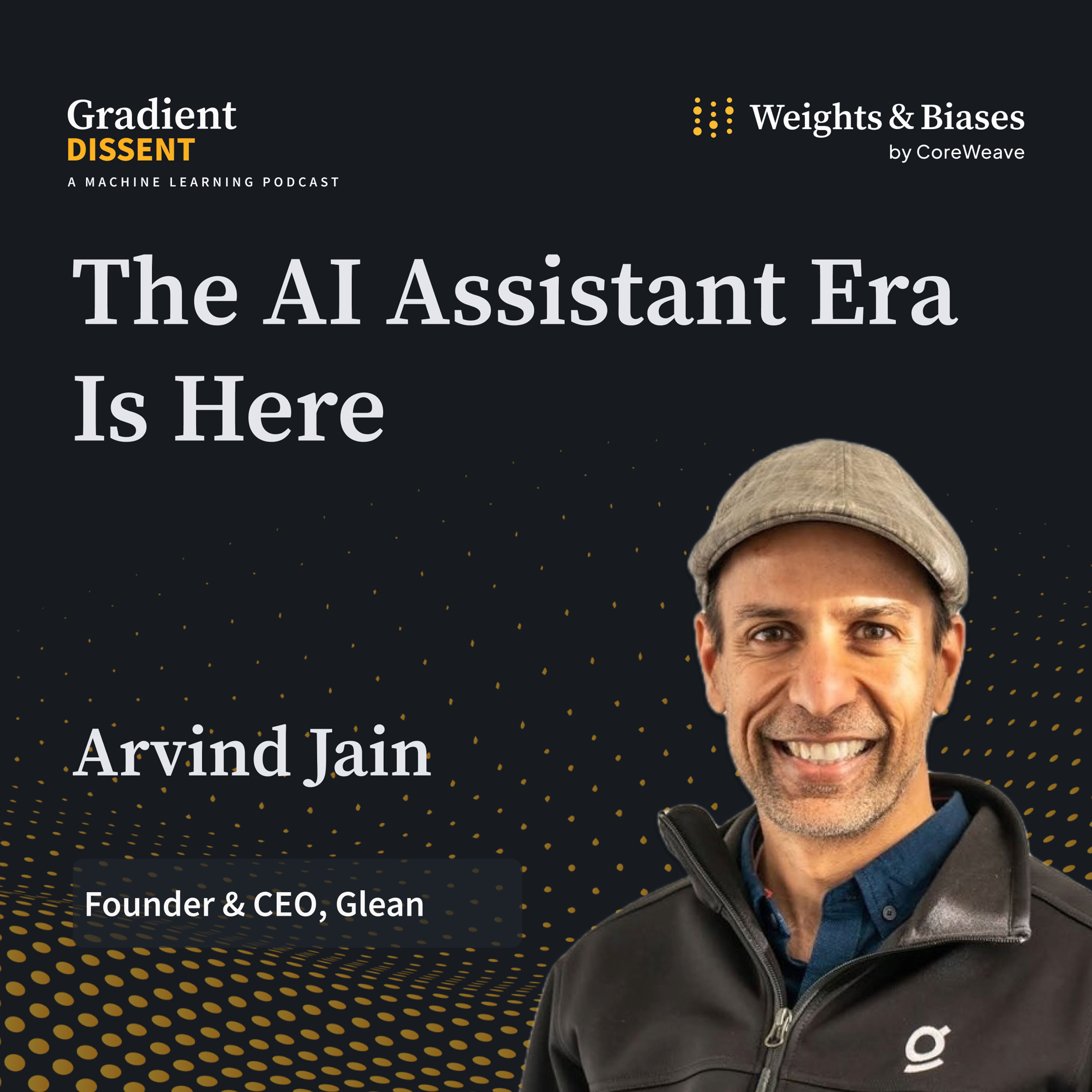
    Arvind Jain on Building Glean and the Future of Enterprise AI

    In this episode of Gradient Dissent, Lukas Biewald sits down with Arvind Jain, CEO and founder of Glean. They discuss Glean's evolution from solving enterprise search to building agentic AI tools that understand internal knowledge and workflows. Arvind shares how his early use of transformer models in 2019 laid the foundation for Glean’s success, well before the term "generative AI" was mainstream. They explore the technical and organizational challenges behind enterprise LLMs—including security, hallucination suppression—and when it makes sense to fine-tune models. Arvind also reflects on his previous startup Rubrik and explains how Glean’s AI platform aims to reshape how teams operate, from personalized agents to ever-fresh internal documentation. Follow Arvind Jain: https://x.com/jainarvind Follow Weights & Biases: https://x.com/weights_biases Timestamps: [00:01:00] What Glean is and how it works [00:02:39] Starting Glean before the LLM boom [00:04:10] Using transformers early in enterprise search [00:06:48] Semantic search vs. generative answers [00:08:13] When to fine-tune vs. use out-of-box models [00:12:38] The value of small, purpose-trained models [00:13:04] Enterprise security and embedding risks [00:16:31] Lessons from Rubrik and starting Glean [00:19:31] The contrarian bet on enterprise search [00:22:57] Culture and lessons learned from Google [00:25:13] Everyone will have their own AI-powered "team" [00:28:43] Using AI to keep documentation evergreen [00:31:22] AI-generated churn and risk analysis [00:33:55] Measuring model improvement with golden sets [00:36:05] Suppressing hallucinations with citations [00:39:22] Agents that can ping humans for help [00:40:41] AI as a force multiplier, not a replacement [00:42:26] The enduring value of hard work

  • S1 · E128
    Jul 8, 2025 · 42 min

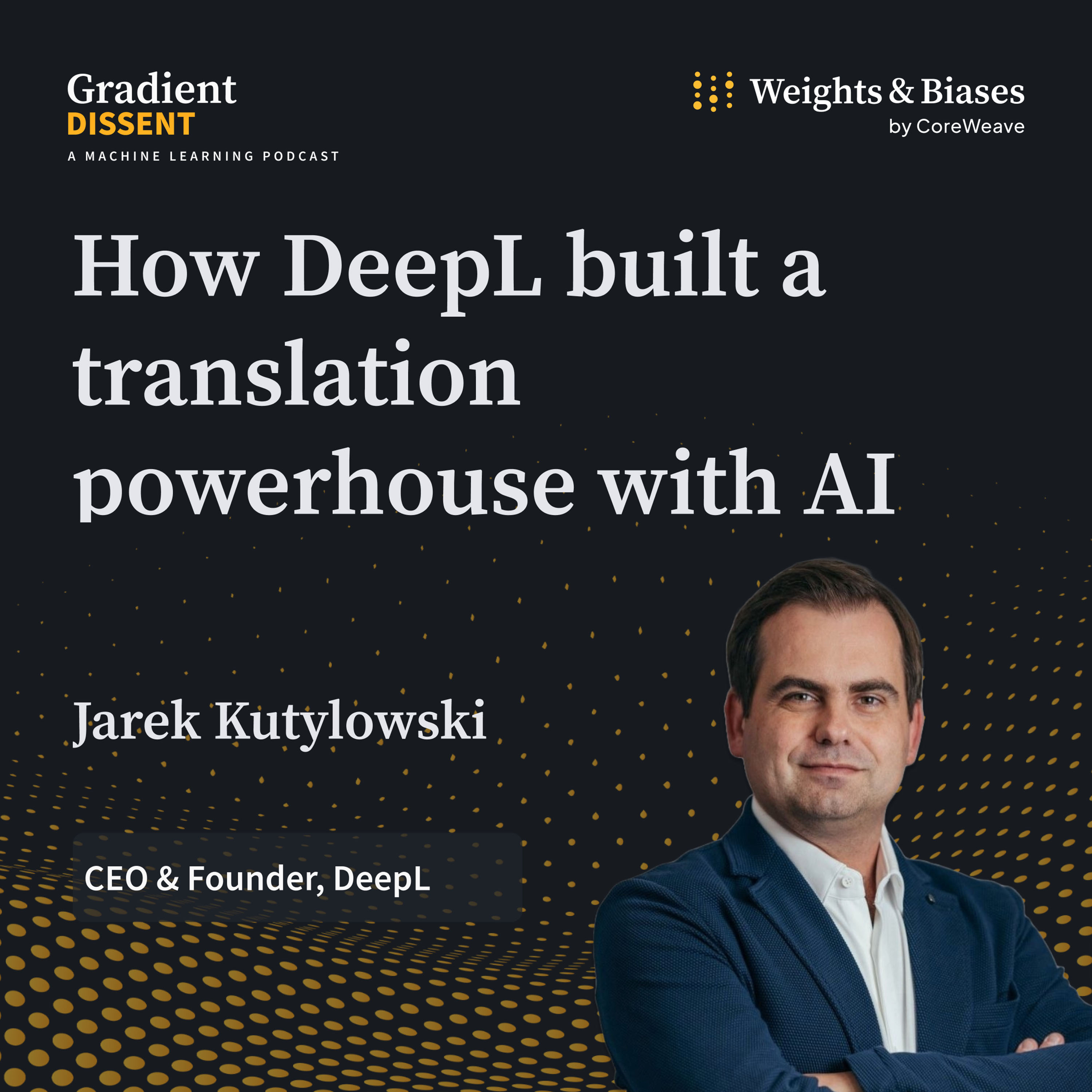
    How DeepL Built a Translation Powerhouse with AI with CEO Jarek Kutylowski

    In this episode of Gradient Dissent, Lukas Biewald talks with Jarek Kutylowski, CEO and founder of DeepL, an AI-powered translation company. Jarek shares DeepL’s journey from launching neural machine translation in 2017 to building custom data centers and how small teams can not only take on big players like Google Translate but win. They dive into what makes translation so difficult for AI, why high-quality translations still require human context, and how DeepL tailors models for enterprise use cases. They also discuss the evolution of speech translation, compute infrastructure, training on curated multilingual datasets, hallucinations in models, and why DeepL avoids fine-tuning for each individual customer. It’s a fascinating behind-the-scenes look at one of the most advanced real-world applications of deep learning. Timestamps: [00:00:00] Introducing Jarek and DeepL’s mission [00:01:46] Competing with Google Translate & LLMs [00:04:14] Pretraining vs. proprietary model strategy [00:06:47] Building GPU data centers in 2017 [00:08:09] The value of curated bilingual and monolingual data [00:09:30] How DeepL measures translation quality [00:12:27] Personalization and enterprise-specific tuning [00:14:04] Why translation demand is growing [00:16:16] ROI of incremental quality gains [00:18:20] The role of human translators in the future [00:22:48] Hallucinations in translation models [00:24:05] DeepL’s work on speech translation [00:28:22] The broader impact of global communication [00:30:32] Handling smaller languages and language pairs [00:32:25] Multi-language model consolidation [00:35:28] Engineering infrastructure for large-scale inference [00:39:23] Adapting to evolving LLM landscape & enterprise needs

  • S1 · E127
    Jun 10, 2025 · 1 hr 9 min

    GitHub CEO Thomas Dohmke on Copilot and the Future of Software Development

    In this episode of Gradient Dissent, Lukas Biewald sits down with Thomas Dohmke, CEO of GitHub, to talk about the future of software engineering in the age of AI. They discuss how GitHub Copilot was built, why agents are reshaping developer workflows, and what it takes to make tools that are not only powerful but also fun. Thomas shares his experience leading GitHub through its $7.5B acquisition by Microsoft, the unexpected ways it accelerated innovation, and why developer happiness is crucial to productivity. They explore what still makes human engineers irreplaceable and how the next generation of developers might grow up coding alongside AI. Follow Thomas Dohmke: https://www.linkedin.com/in/ashtom/ Follow Weights & Biases: https://twitter.com/weights_biases https://www.linkedin.com/company/wandb

  • S1 · E126
    May 20, 2025 · 1 hr 30 min

    From Pharma to AGI Hype, and Developing AI in Finance: Martin Shkreli’s Journey

    In this episode of Gradient Dissent, Lukas Biewald talks with Martin Shkreli — the infamous "pharma bro" turned founder — about his path from hedge fund manager and pharma CEO to convicted felon and now software entrepreneur. Shkreli shares his side of the drug pricing controversy, reflects on his prison experience, and explains how he rebuilt his life and business after being "canceled." They dive deep into AI and drug discovery, where Shkreli delivers a strong critique of mainstream approaches. He also talks about his latest venture in finance software, building Godel Terminal “a Vim for traders", and why he thinks the AI hype cycle is just beginning. It's a wide-ranging and candid conversation with one of the most controversial figures in tech and biotech. Follow Martin Shkreli on Twitter Godel Terminal: https://godelterminal.com/ Follow Weights & Biases on Twitter https://www.linkedin.com/company/wandb Join the Weights & Biases Discord Server: https://discord.gg/CkZKRNnaf3

  • S1 · E125
    Apr 29, 2025 · 49 min

    Inside Cursor: The future of AI coding with Co-founder Sualeh Asif

    In this episode of Gradient Dissent, host Lukas Biewald talks with Sualeh Asif, the CPO and co-founder of Cursor, one of the fastest-growing and most loved AI-powered coding platforms. Sualeh shares the story behind Cursor’s creation, the technical and design decisions that set it apart, and how AI models are changing the way we build software. They dive deep into infrastructure challenges, the importance of speed and user experience, and how emerging trends in agents and reasoning models are reshaping the developer workflow. Sualeh also discusses scaling AI inference to support hundreds of millions of requests per day, building trust through product quality, and his vision for how programming will evolve in the next few years. ⏳Timestamps: 00:00 How Cursor got started and why it took off 04:50 Switching from Vim to VS Code and the rise of CoPilot 08:10 Why Cursor won among competitors: product philosophy and execution 10:30 How user data and feedback loops drive Cursor’s improvements 12:20 Iterating on AI agents: what made Cursor hold back and wait 13:30 Competitive coding background: advantage or challenge? 16:30 Making coding fun again: latency, flow, and model choices 19:10 Building Cursor’s infrastructure: from GPUs to indexing billions of files 26:00 How Cursor prioritizes compute allocation for indexing 30:00 Running massive ML infrastructure: surprises and scaling lessons 34:50 Why Cursor chose DeepSeek models early 36:00 Where AI agents are heading next 40:07 Debugging and evaluating complex AI agents 42:00 How coding workflows will change over the next 2–3 years 46:20 Dream future projects: AI for reading codebases and papers 🎙 Get our podcasts on these platforms: Apple Podcasts: https://wandb.me/apple-podcasts Spotify: https://wandb.me/spotify YouTube: https://wandb.me/youtube Follow Weights & Biases: https://x.com/weights_biases https://www.linkedin.com/company/wandb

  • S1 · E124
    Apr 8, 2025 · 50 min

    Inside the Dark Web, AI and Cybersecurity with Christopher Ahlberg CEO of Recorded Future

    In this episode of Gradient Dissent, host Lukas Biewald talks with Christopher Ahlberg, CEO of Recorded Future, a pioneering cybersecurity company leveraging AI to provide intelligence insights. Christopher shares his fascinating journey from founding data visualization startup Spotfire to building Recorded Future into an industry leader, eventually leading to its acquisition by Mastercard. They dive into gripping stories of cyber espionage, including how Recorded Future intercepted a hacker selling access to the U.S. Electoral Assistance Commission. Christopher also explains why the criminal underworld has shifted to platforms like Telegram, how AI is transforming both cyber threats and defenses, and the real-world implications of becoming an "undesirable enemy" of the Russian state. This episode offers unique insights into cybersecurity, AI-driven intelligence, entrepreneurship lessons from a two-time founder, and what happens when geopolitical tensions intersect with cutting-edge technology. A must-listen for anyone interested in cybersecurity, artificial intelligence, or the complex dynamics shaping global security. 🎙 Get our podcasts on these platforms: Apple Podcasts: https://wandb.me/apple-podcasts Spotify: https://wandb.me/spotify YouTube: https://wandb.me/youtube Follow Weights & Biases: https://twitter.com/weights_biases https://www.linkedin.com/company/wandb
  • S1 · E123
    Mar 25, 2025 · 1 hr 1 min

    AI, autonomy, and the future of naval warfare with Captain Jon Haase, United States Navy

    In this episode of Gradient Dissent, host Lukas Biewald speaks with Captain Jon Haase, United States Navy about real-world applications of AI and autonomy in defense. From underwater mine detection with autonomous vehicles to the ethics of lethal AI systems, this conversation dives into how the U.S. military is integrating AI into mission-critical operations — and why humans will always be at the center of warfighting. They explore the challenges of underwater autonomy, multi-agent collaboration, cybersecurity, and the growing role of large language models like Gemini and Claude in the defense space. Essential listening for anyone curious about military AI, defense tech, and the future of autonomous systems. ✅ *Subscribe to Weights & Biases* → https://bit.ly/45BCkYz 🎙 Get our podcasts on these platforms: Apple Podcasts: http://wandb.me/apple-podcasts Spotify: http://wandb.me/spotify Google: http://wandb.me/gd_google YouTube: http://wandb.me/youtube Follow Weights & Biases: https://twitter.com/weights_biases https://www.linkedin.com/company/wandb Join the Weights & Biases Discord Server: https://discord.gg/CkZKRNnaf3
Showing 1–20 of 21 episodes