Skip to content
Artwork for Gaming Tech Brief By HackerNoon
Gaming Tech Brief By HackerNoon · June 3 · 5 min

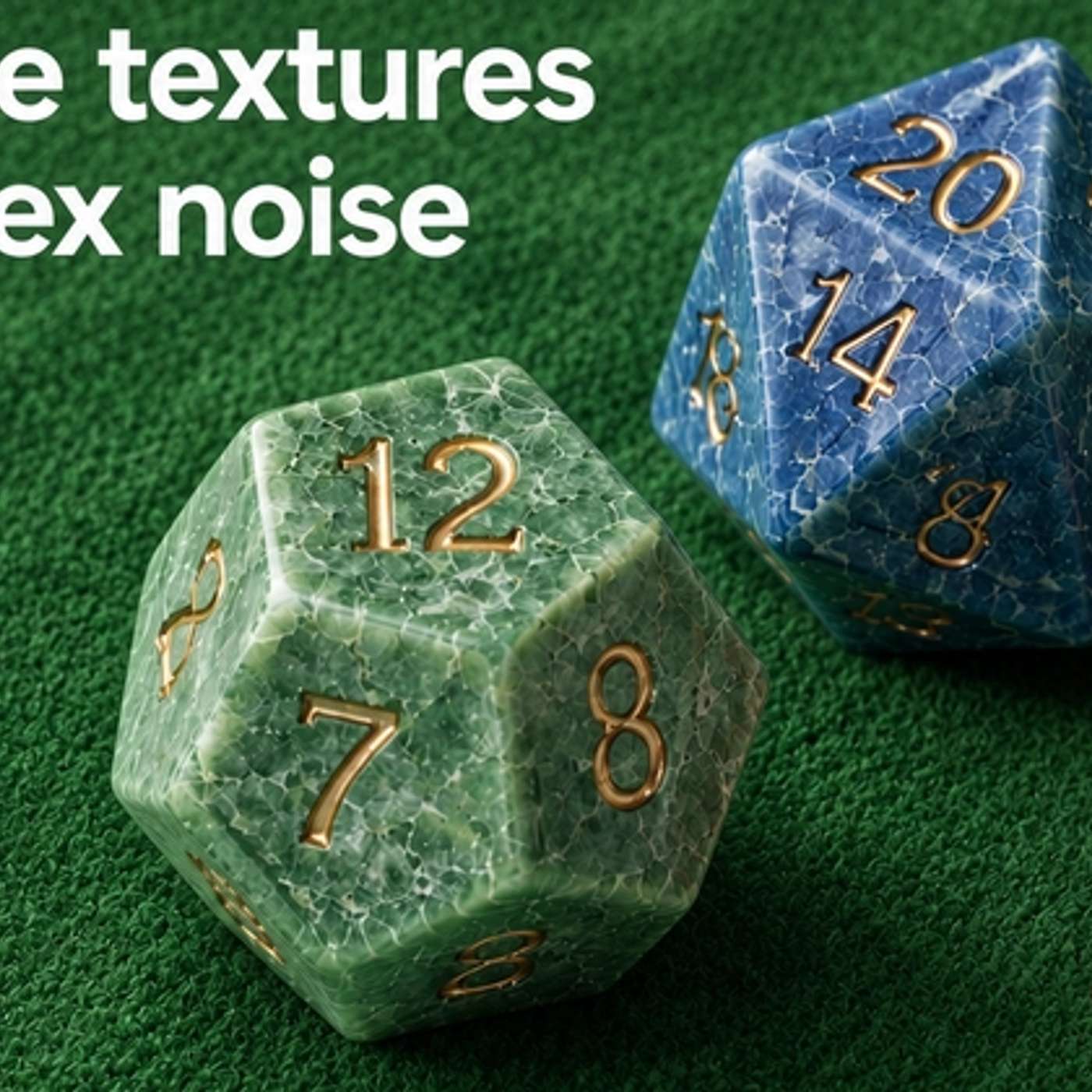
Generating Procedural Marble Dice Textures With Simplex Noise and Domain Warping

This story was originally published on HackerNoon at: https://hackernoon.com/generating-procedural-marble-dice-textures-with-simplex-noise-and-domain-warping. Learn how to generate realistic marble dice textures with simplex noise, domain warping, ridged transforms, and an alpha-channel trick. Check more stories related to gaming at: https://hackernoon.com/c/gaming. You can also check exclusive content about #game-development, #3d-rendering, #simplex-noise, #3d-graphics, #computer-graphics, #material-design, #generative-graphics, #texture-atlases, and more. This story was written by: @mdenda. Learn more about this writer by checking @mdenda's about page, and for more stories, please visit hackernoon.com. This tutorial walks through the creation of procedural marble dice textures for a Chrome extension using simplex noise rather than photographic assets. The author combines multi-octave noise, domain warping, ridged transforms, thresholding, and alpha-channel compositing to generate customizable marble patterns that adapt to user-selected die colors. A key insight is that the texture's alpha channel, rather than its RGB values, determines how the final material interacts with the renderer's color system.


0:00-5:57

transcript

No transcript — this publisher did not publish one.

show notes

This story was originally published on HackerNoon at: https://hackernoon.com/generating-procedural-marble-dice-textures-with-simplex-noise-and-domain-warping.
Learn how to generate realistic marble dice textures with simplex noise, domain warping, ridged transforms, and an alpha-channel trick.
Check more stories related to gaming at: https://hackernoon.com/c/gaming. You can also check exclusive content about #game-development, #3d-rendering, #simplex-noise, #3d-graphics, #computer-graphics, #material-design, #generative-graphics, #texture-atlases, and more.

This story was written by: @mdenda. Learn more about this writer by checking @mdenda's about page, and for more stories, please visit hackernoon.com.

This tutorial walks through the creation of procedural marble dice textures for a Chrome extension using simplex noise rather than photographic assets. The author combines multi-octave noise, domain warping, ridged transforms, thresholding, and alpha-channel compositing to generate customizable marble patterns that adapt to user-selected die colors. A key insight is that the texture's alpha channel, rather than its RGB values, determines how the final material interacts with the renderer's color system.

links13