Skip to content
Artwork for Gain Traction
BusinessEntrepreneurshipManagement

Gain Traction

Mike Edge

The Gain Traction Podcast features top tire and auto repair professionals, shop owners, industry executives, and thought leaders.

Play
  • 21 episodes
  • weekly
  • Avg 32 min
  • English
Counted on this page — what you have heard stays on this device, so it is not something the list can be paged by.
  • #244
    Wednesday · 34 min

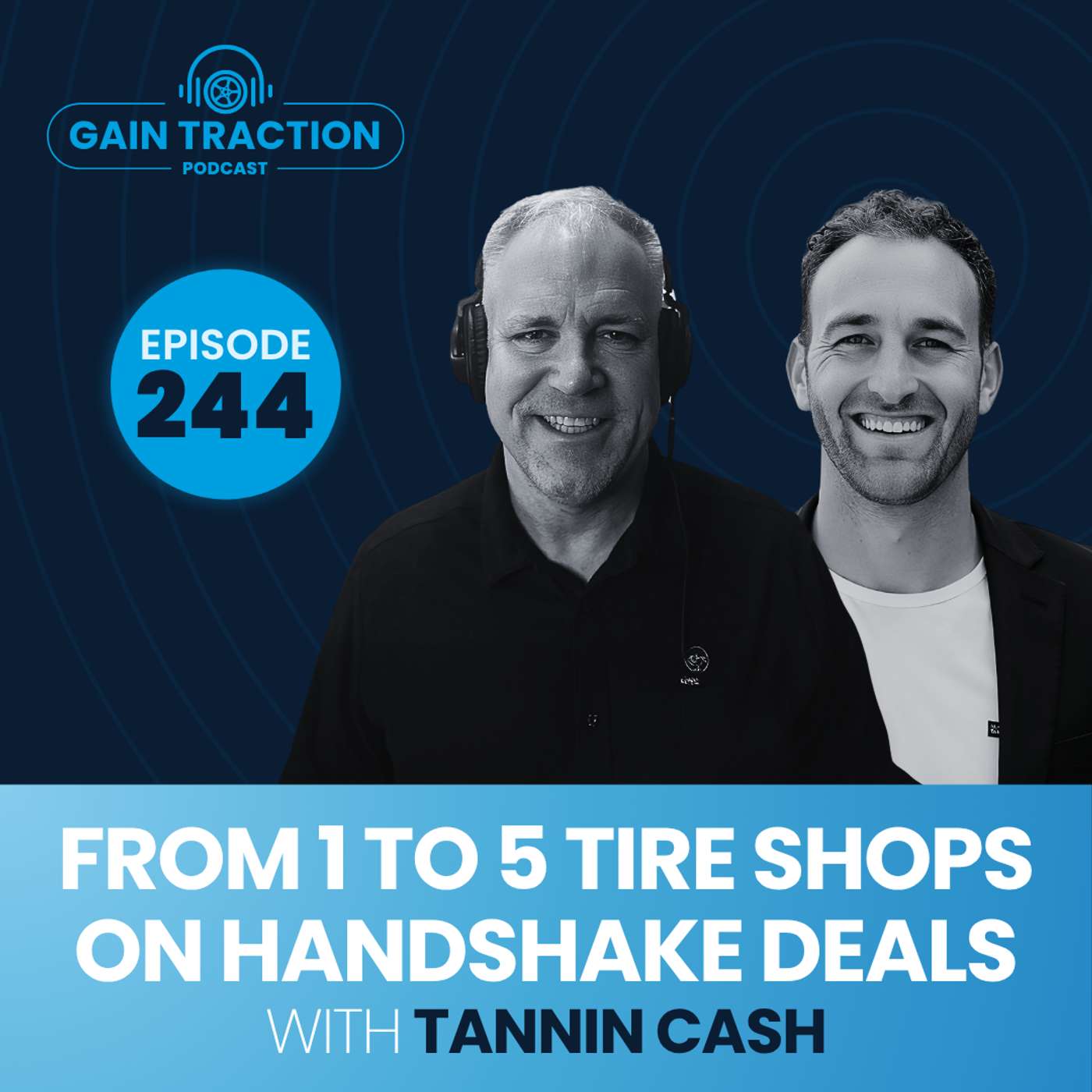
    From 1 to 5 Tire Shops on Handshake Deals

    Tannin Cash is the owner of Delta Tire, a five-location tire business in New Mexico with more than 50 employees. He entered the industry at 23 after purchasing his first shop with his brother while enrolled in an engineering program. His experience scaling a tire shop business includes owner-financed acquisitions, multi-store operations, and the development of tire-focused management software. In this episode… Delta Tire’s first two location deals came directly from owners who carried the financing. The first purchase followed an informal conversation with the shop owner. The second took eleven months of steady follow-up before Cash secured a lease with an option to buy. Relationships opened the door, while persistence and a strong service reputation moved each deal forward. The harder problem surfaced as the company expanded. Cash and his brother launched ventures outside the shops, creating distractions that competed with the core operation. Adding more stores demanded tighter priorities and repeatable systems across every location. That operating discipline matters as tire retail adopts new software and shop technology at a faster pace. Cash’s work with a tire-focused management platform turned new-location setup into a repeatable process and gave Delta Tire a consistent structure for continued growth. Here’s a glimpse of what you’ll learn: [01:15] How Tannin Cash bought his first tire shop [04:50] How Delta Tire grew from one location to five [09:56] Why outside ventures distracted from tire shop growth [12:05] How tire-focused software supports multi-location operations [17:33] How SEMA connects technology, networking, and industry advocacy [24:18] What tire shop owners learn from industry peers [27:36] Why entrepreneurship can compete with a college education [31:37] Why developing employees makes tire retail rewarding Resources mentioned in this episode: Tannin Cash on LinkedIn Delta Tire Website Tread Partners Gain Traction Podcast on YouTube Gain Traction Podcast Website Mike Edge on LinkedIn Quotable Moments: “You need to do your best, so always do your best.” “We can’t win at everything all at once.” “This industry is usually slow to move, but I feel like in the last five years, the tire industry is moving so quickly.” “The customers of tire shops are the best customers.” “We’ve got more than 50 people that work for us, and I love getting to work with the people, seeing them develop, seeing them grow.” Action Steps: Create a 12-month acquisition follow-up list tomorrow. Record each owner’s contact details, property status, and next outreach date. Ask sellers about owner-carried financing before assuming a bank-funded deal. Put the proposed down payment and repayment structure in writing. Run a distraction audit with the leadership team. Pause one venture that takes attention from the shops without improving store performance. Make scaling a tire shop business repeatable. Document the steps for launching a location inside the management system and assign one person to own the process.

    • Transcript
  • #243
    August 19 · 33 min

    Turn Your Business Into a System You Can Franchise

    Ron Ramy is the COO of Integrity 1st Car Pros, a bootstrapped automotive repair company operating 14 locations at the time of this conversation. He joined the company in 2020 when it had four locations, bringing experience in software, automation, data, and organizational growth from his earlier work at a real estate technology startup. Ramy has worked across departments to understand how the business operates and where stronger systems are needed. His work on franchising an auto repair shop has centered on documenting processes, developing leaders, and creating an operating model that someone outside the automotive industry can learn within 90 days. In this episode… An auto repair business does not become scalable simply by opening more locations. Growth exposes undocumented decisions, inconsistent hiring practices, compensation plans that break at higher revenue levels, and daily operations that still depend on the owner. The work of franchising an auto repair shop forces those hidden dependencies onto paper. Integrity 1st faced that pressure while converting its corporate-store experience into a franchise model. Recruiting shifted from judgment-based hiring to panel interviews, defined questions, checklists, and compensation ranges. Incentive plans also required redesign because structures built for stores producing $1 million to $1.5 million became unsustainable as revenue moved beyond $2 million. The franchise process also changed how leadership received feedback. Franchisees brought questions that revealed missing procedures, while employees closest to customers provided context that dashboards could not show. Ramy connects that openness to internal development, practical problem-solving, and a hiring philosophy built around character, charisma, and competency. Tires represent another operational opportunity for the company. They currently account for a smaller share of store revenue, but Ramy views the category as a durable service line with room for growth, especially as vehicle technology continues to change. Here’s a glimpse of what you’ll learn: [01:23] How Ron Ramy entered the auto repair industry [06:32] Why franchising requires documented, repeatable business systems [14:53] Creating a business that can operate without its owner [18:02] Why tires represent an untapped growth opportunity [19:23] Why solving problems matters more than identifying them [21:58] How employee curiosity creates new leadership opportunities [29:11] Why character matters more than competency when hiring Resources mentioned in this episode: Tread Partners Gain Traction Podcast on YouTube Gain Traction Podcast Website Mike Edge on LinkedIn Quotable Moments: “Do I even have a system, or is my business mostly relying on discernment?” “Anytime the emotions are seven to 11, just don't make a decision.” “It's always going to reward the best solution.” “And at the end of the day, we are going to always be rewarded in direct proportion to the size or complexity of the problems we solve.” “So their feedback is extremely valuable, and obviously, you have to parse through the signal and noise of what they're saying.” Action Steps: Record every decision that requires owner approval for one week. Turn recurring decisions into written procedures with a clear trigger, responsible role, and expected result. Replace informal recruiting with a panel interview, a standard set of questions, a candidate scorecard, and defined compensation ranges for technicians and service advisors. Test incentive plans against stores producing $1 million, $2 million, and $3 million in annual revenue. Adjust payouts that become unbalanced as sales increase. Assess the operation for franchising an auto repair shop by giving documented procedures to a manager from another location. Track every point that still requires explanation or owner involvement. Hold a monthly frontline feedback review with general managers, advisors, and technicians. Record operational gaps, assign responsibility, and test proposed solutions inside a corporate location.

    • Transcript
  • #242
    August 12 · 30 min

    Why I Never Change the Name, Pay, or Hours

    Parham Parastaran is the founder of Left Lane Auto, an automotive service company operating 40 brands across 90 locations in 20 states. His career began in his family’s Car-X shop while he attended the University of Illinois. He later expanded the business into a 17-location portfolio that included independent tire stores. After selling the company he had built over 24 years, Parastaran watched nearly every employee leave within a year. That experience shaped his approach to employee retention after acquisition: preserve the local identity, protect established working arrangements, and earn the team’s support before introducing change. In this episode… Multi-location operators buy shops for their revenue, reputation, and experienced teams. The first push toward standardization often puts those assets at risk. Pay changes alter household income. Schedule changes disrupt family routines. A fast rebrand removes a familiar name that employees and customers already trust. Each additional location increases the pressure to impose a single operating model. That is the central challenge behind employee retention after acquisition. Left Lane Auto protects continuity while its leaders learn how each shop works. Operational changes begin after the local team understands the reason and supports the direction. Parastaran also explains how this philosophy shapes conversations with sellers. Owners receive flexibility in how they exit, remain involved, or retain a financial interest. The business follows strong shops and structures the transition around what keeps each operation stable. Here’s a glimpse of what you’ll learn: [01:03] Parham Parastaran and Left Lane Auto [01:37] Building an automotive career from one family shop [07:40] Preserving local businesses after an acquisition [13:16] Lessons from losing a long-standing team [21:19] Balancing tire sales with mechanical service [23:27] Evaluating shops and speaking with sellers [26:10] Structuring flexible transitions for former owners [27:38] Expanding deal options through Bertram Capital Resources mentioned in this episode: Parham Parastaran on LinkedIn Left Lane Auto LLC Website Tread Partners Gain Traction Podcast on YouTube Gain Traction Podcast Website Mike Edge on LinkedIn Quotable Moments: “It’s the blessing of having nothing, so you have no choice.” “You know, you’re going to go backwards when you lose people.” “The things that I learned from the failures was that I don’t ever want to put ourselves in a cash position where we’re going back.” “We’ll follow good stores.” “We’ll find a way to say yes.” Action Steps: Build an employee retention checklist after an acquisition that records each person’s pay plan, regular schedule, tenure, and responsibilities before the handoff. Pause proposed compensation and scheduling changes until their effects on employees’ lives and store performance are documented. Meet with the store manager and longest-tenured employees to identify the routines, relationships, and local practices customers depend on. Keep the acquired shop’s local name while reviewing its customer recognition and community value with the existing team. Write the former owner’s post-sale role, decision authority, and exit timeline into the transition plan before announcing the acquisition.

    • Transcript
  • #241
    August 5 · 31 min

    One Word: The Tire Shop Marketing That Built a Brand

    Ricky Ivey is the second-generation owner of Pueblo Tires & Service, a South Texas tire and automotive service company with 13 stores and a dedicated lube shop. His experience with tire shop marketing strategies spans decades of local advertising, brand development, store expansion, and operational growth. Ivey also brings long-standing industry involvement to the conversation. He has served on the Texas Tire Dealers Association board since the 1980s and encourages dealers to build relationships through associations, buying groups, and operators in other markets. In this episode… Independent tire dealers sell products that customers can find in many places. Recognition comes from giving people a clear reason to remember the business. Pueblo Tires & Service approached the problem by creating “Shampoozie,” a made-up word tied to the company’s promise of superior service. Building recognition required more than a memorable word. Pueblo placed the message across its advertising and kept funding marketing as media shifted from radio and television toward Google and social platforms. The expense remained visible every month, while the results took longer to measure. Multi-location growth added another layer. Procedures helped Pueblo create consistency across stores, property ownership gave the company more control over its locations, and a separate lube shop created room for oil-change demand without disrupting tire sales. Marketing still depended on the experience customers received at the counter because advertising carried little value without honesty and a protected reputation. Here’s a glimpse of what you’ll learn: [01:21] Ricky Ivey and Pueblo Tires & Service [02:19] Development of the “Shampoozie” brand [07:29] Long-term investment in marketing [11:30] Pueblo Tires family business history [18:13] Operational systems supporting company growth [20:02] Business expansion and a $1 million loss [23:30] Development of a dedicated lube operation [26:31] Customer transparency and brand reputation [28:11] Industry associations and professional relationships Resources mentioned in this episode: Pueblo Tires & Service Website Tread Partners Gain Traction Podcast on YouTube Gain Traction Podcast Website Mike Edge on LinkedIn Quotable Moments: “You have to be really creative to sell tires because they’re kind of everywhere, especially nowadays.” “You have to pay attention to marketing, and it’s always changing.” “You can never, ever, ever recover your reputation.” “I lost $1 million in one year, and that was in 1992.” “You need to have some leverage over your properties.” “Get involved with your association, your buying groups, and get to know people in different markets.” Action Steps: Choose one service promise customers can remember and write a one-sentence definition for it. Review every location’s website, signage, social profiles, and printed materials for consistent use. Build tire shop marketing strategies into a 12-month calendar. Set the monthly budget as a fixed percentage of sales and assign the campaign, channel, owner, and review date before spending begins. Review recent customer complaints, declined work, and callbacks before increasing advertising. Correct unclear estimates, inconsistent inspections, and counter communication that puts the shop’s reputation at risk. Document one customer-facing process across all locations by tomorrow. Start with vehicle intake, inspection findings, estimate approval, or final delivery, then give each manager the same standard. Contact an industry association or buying group and schedule conversations with two dealers outside your market. Compare one operating process, one marketing expense, and one growth decision.

    • Transcript
  • #240
    July 29 · 33 min

    How One Tire Program Caps a Fleet's Costs Every Year

    Keith Redford is the Director of Fleet Operations at JAM Best-One Tire, a commercial tire and fleet service organization with locations across Michigan and Ohio. He began his commercial tire career at Belle Tire, moved into tire wholesale, and joined JAM in 2005. Redford brings more than two decades of experience to fleet tire management. His work focuses on controlling operating costs, strengthening preventive maintenance, and building service relationships that support fleets over the long term. In this episode… Commercial fleet customers need more than a shop that responds when a tire fails. They need a service partner who understands their operations, monitors spending, and recommends products that make sense for their equipment. Redford’s approach is built around predictability. A structured program gives fleet operators a clearer view of annual tire expenses and the maintenance decisions driving those costs. Regular account reviews compare spending with prior years and connect the numbers to changes inside the customer’s business. That creates a real tension for tire dealers. Good fleet tire management often means helping customers purchase fewer tires. Redford treats lower customer spending as the foundation of a longer relationship rather than a threat to immediate sales. Trust creates room for fleet growth, referrals, and deeper service partnerships. Consistent execution also depends on culture. Technicians, salespeople, and managers bring different skills to the operation, but no role succeeds on its own. The work ultimately supports drivers carrying goods and returning home safely. Here’s a glimpse of what you’ll learn: [01:26] Career progression in commercial tire sales and fleet operations [03:43] JAM Best-One’s commercial tire business formation and growth [07:38] Extending national-account service standards to smaller fleets [12:01] Employee retention through a people-centered service culture [18:04] Commercial truck utilization as an economic indicator [20:26] Reducing fleet operating costs through long-term service partnerships [23:53] Applying a seek-to-understand leadership approach Resources mentioned in this episode: Keith Redford on LinkedIn JAM Best-One Tire Website Tread Partners Gain Traction Podcast on YouTube Gain Traction Podcast Website Mike Edge on LinkedIn Quotable Moments: “We cannot be successful apart from one another because we all have different skill sets.” “At the end of the day, I want my people to know that they’re valued.” “Our job is much more important than that. It’s about people keeping people safe on the road.” “We’re looking for those 20-year relationships.” “The more we understand their business, the better we can help them.” Action Steps: Create a fleet tire management baseline by pulling the previous 12 months of tire and mechanical-service invoices for each fleet account. Separate recurring maintenance from unplanned replacements and identify the accounts with the largest spending changes. Schedule account reviews with key fleet customers. Compare current spending with the previous year, document operational changes, and agree on the next maintenance priority. Standardize a small-fleet service program across every location. Define inspection intervals, reporting expectations, product recommendations, and the person responsible for customer communication. Review handoffs between sales, technicians, and location managers. Assign ownership at each stage so recommendations reach the customer and approved work reaches the bay without delay. Measure the relationship beyond monthly tire sales. Track annual customer spending, maintenance consistency, account retention, and referrals to show the long-term value of the program.

    • Transcript
  • #239
    July 22 · 25 min

    Run Your Auto Shop Like You're Running for Mayor

    Geoff Fisher is the COO of GVT Tire & Auto and Auto Pros of Minnesota, an automotive service network with 18 locations. His perspective on auto repair shop growth comes from experience across the shop floor, service counter, process development, and multi-location operations. Fisher began working as a tire and lube technician at age 16 before earning an operations management degree from the University of Minnesota’s Carlson School of Management. He later spent two years as a service writer and moved into leadership, where he now helps guide an expansion plan targeting 26 locations. In this episode… Growth exposes every loose process inside a shop. One location often survives inconsistent communication because the owner sees problems firsthand. Eighteen locations operate differently. Managers develop separate expectations, accountability becomes uneven, and recurring problems turn leadership into constant firefighting. Fisher uses the Entrepreneurial Operating System to create a shared operating language across locations. Weekly scorecards replace emotional decisions with measurable information. Car count, average repair order, and labor hours reveal where a process has broken down and give managers a clear place to begin correcting it. That operational discipline addresses only part of auto repair shop growth. Expansion also creates tension between consistency and local identity. Fisher’s team wants every location to feel connected to its town rather than viewed as another chain. Community involvement, local partnerships, and visible service build relationships that a new sign cannot create by itself. The economics reinforce that approach. Fisher places the average cost of acquiring a new customer at about $130. A free oil change or community initiative costs less while creating a direct opportunity to demonstrate the shop’s service. Opening one location every five weeks raises the stakes because each new team must carry the same processes without losing its connection to the community. Here’s a glimpse of what you’ll learn: [01:14] Fisher begins his automotive career at age sixteen [04:06] Shop-floor experience leads Fisher into operations management [06:22] EOS replaces emotional management with measurable performance data [10:55] Repeatable processes support expansion across multiple locations [13:12] The company averages one shop opening every five weeks [15:46] Community involvement strengthens retention and local trust [20:30] Clear measurements expose operational breakdowns [22:19] Coaching shapes Fisher’s team leadership approach Resources mentioned in this episode: Geoff Fisher on LinkedIn GVT Tire & Auto Website Auto Pros of Minnesota Website Tread Partners Gain Traction Podcast on YouTube Gain Traction Podcast Website Mike Edge on LinkedIn Quotable Moments: “That people feel like your shop is a part of the town, not just located in it.” “We are currently averaging one shop every five weeks.” “I call it running for mayor, right?” “And I felt like sometimes we were playing too much firefighter and not really understanding what started the fire.” “Help me, help you, help us.” Action Steps: Turn auto repair shop growth into a weekly scorecard. Track car count and average repair order, then add one labor-efficiency measure that managers review at the same time each week. Select one recurring operational problem and document its root cause. Assign ownership of the correction, set a deadline, and review whether the same problem returns. Build a store-opening playbook from the processes already working. Document training responsibilities, workflow expectations, and the first-week operating routine before the next location opens. Give every location one concrete community commitment. Choose a school partnership, local business relationship, or service initiative that places the team in direct contact with residents. Calculate customer acquisition cost and compare it with the actual cost of a goodwill offer. Track whether recipients return for a second visit rather than measuring success by redemption alone.

    • Transcript
  • #238
    July 15 · 35 min

    When Should Auto Repair Shops Raise Labor Rates?

    Henry Rose is the CEO of Neighborhood Car Care in Western New York. He entered the automotive industry from outside the traditional technician path, bringing experience from property management, construction, and operations into independent auto repair. After first connecting with the business as a customer, Henry became involved with what was formerly Scruggs Automotive Repair and later purchased two of its locations. Today, he leads Neighborhood Car Care with a practical view of auto repair labor rates, customer experience, team support, and shop profitability. In this episode… Auto repair labor rates are not just numbers on an invoice. They reflect the value a shop proves, the confidence of the team presenting the work, and the cost of keeping trained people supported. Shop owners are dealing with rising technician costs, tighter margins, customer price sensitivity, and the pressure to build a business that survives slow months. Henry Rose brings the discussion back to capacity, billable hours, customer trust, and the shop experience behind the rate. A labor rate becomes easier to defend when the operation supports it. Full schedules, clean facilities, clear communication, easy scheduling, team benefits, and confident advisors all change how customers receive the number. Here’s a glimpse of what you’ll learn: [01:10] Introducing Henry Rose of Neighborhood Car Care [01:20] Henry Rose’s transition into independent auto repair leadership [03:20] How a garage door invoice reframed labor rate value [06:22] Why auto repair pricing faces unique customer scrutiny [13:05] Using hospitality to strengthen diagnostic value and trust [16:19] Structuring labor rates around business costs and team support [18:23] Using shop capacity as a signal for rate increases [20:23] Measuring market response without weakening price confidence [23:11] Building team alignment behind higher labor rates [26:19] Protecting long-term stability through responsible profit strategy [31:19] The work ethic behind sustained shop growth Resources mentioned in this episode: Henry Rose on LinkedIn Neighborhood Car Care Website Tread Partners Gain Traction Podcast on YouTube Gain Traction Podcast Website Mike Edge on LinkedIn Quotable Moments: “You have to charge what you need to charge, but at the same time, when we’re just nothing but confrontational in our pricing structure, that’s also very scary for the customer.” “We have to be huge on building the value when we’re talking with people.” “We need to make the money that we need to make, so that our team can do the job they need to do, the training, the education.” “If you’re hitting 120 billable hours, and you’re that capacity, and then you’re booking out more than four or five days, you really should consider increasing your labor rate.” “We have a fiduciary responsibility to our team members. We need to keep the company healthy because if there’s a weird dip, a bad month, you can’t have everyone wondering, are they going to get paid?” Action Steps: Audit weekly billable-hour capacity before raising rates. Compare the shop’s actual billed hours against the total hours the operation can realistically sell. Review the customer experience that supports the price. Clean waiting areas, clear communication, easy scheduling, and visible professionalism help customers understand the value behind auto repair labor rates. Train advisors to present price with confidence. A labor rate loses strength when the person explaining it sounds unsure, defensive, or apologetic. Track close rate and booking pressure after a rate change. Use customer response, schedule demand, and advisor confidence to find the market’s breaking point. Tie pricing to team stability. Build rates around wages, benefits, training, tools, and the cost of keeping the business healthy through slow months.

    • Transcript
  • #237
    July 8 · 29 min

    How On-Demand Grip Could Change Winter Driving

    Wes Boling is the Senior Communications and Content Manager for Nokian Tyres, where he helps explain product innovation, dealer education, and the company’s North American story. Based in Nashville, Tennessee, he has been with Nokian Tyres for nearly eight years and joined the company as it prepared to open its North American production factory in Dayton, Tennessee. Before entering the tire industry, Boling worked as a sports reporter in Knoxville, earned his MBA from Belmont University, and built experience in public relations and family business. His role gives him a clear lane for explaining on-demand grip winter tires in terms that connect engineering, safety, and the conversations happening inside tire dealerships. In this episode… Winter driving has become harder to explain with old tire categories. Drivers still need control on ice, but they also care about road noise, dry-road performance, road wear, and the limits tied to traditional studded tires. Multi-location tire dealers need a cleaner way to talk about winter traction without turning the counter conversation into a technical lecture. Nokian Tyres is bringing that conversation into a new place with on-demand grip winter tires. The studs respond automatically to the road, absorbing when conditions are warmer or dry and engaging when cold conditions call for ice grip. That changes the selling conversation because the value is not hidden inside a compound chart. The customer problem is visible: changing winter roads, black ice, and the need for control before the driver loses confidence. The business lesson is bigger than one tire launch. Product knowledge only works when the counter team knows how to translate it. Drivers walk in with an immediate problem, and the dealer’s job is to connect the right technology to the risk sitting in front of them. Here’s a glimpse of what you’ll learn: [01:04] Who Wes Boling is and why his role matters [01:38] Wes Boling’s path from sports reporting into tire communications [04:44] How on-demand grip winter tires automatically respond to road conditions [06:51] Why modern studded tires are trying to reduce old tradeoffs [08:21] How double stud technology supports braking and turning on ice [10:22] Why black ice makes changing winter conditions harder to manage [12:52] How Arctic testing shaped years of winter tire research [14:19] What dealers and journalists noticed during the tire launch [17:36] When dealers and consumers can expect the tire rollout [18:12] Why asking better questions builds stronger industry relationships [23:29] How tire shop counter staff help customers understand safety Resources mentioned in this episode: Wes Boling on LinkedIn Nokian Tyres Website Tread Partners Gain Traction Podcast on YouTube Gain Traction Podcast Website Mike Edge on LinkedIn Quotable Moments: “It is the first studded winter tire to come with what we call on-demand grip.” “The tire kind of makes that decision itself.” “We were able to essentially reduce the studs’ negative impact on the road while increasing its safety properties.” “What this tire delivers is that responsiveness.” “We’re crafting it on a foundation of more than a decade of incredible research.” Action Steps: Build a winter tire talk track for every counter team. Start with the driver’s real concern: ice, black ice, loss of control, noise, and confidence on unpredictable roads. Train advisors to explain on-demand grip winter tires without engineering overload. Use plain language: the tire adjusts to the road, the studs engage on ice, and the customer gets a clearer safety story. Audit old objections around studded tires before winter selling season. List the concerns customers bring up most often, then create direct answers around noise, road impact, dry-road comfort, and legal limits. Use changing winter conditions as the sales context. Shoulder-season ice, warmer dry roads, and sudden black ice events give dealers a practical reason to revisit winter recommendations with customers. Make the counter team part of the product launch strategy. Technology does not create revenue until the person across the counter connects it to the driver’s daily risk.

    • Transcript
  • #236
    July 1 · 35 min

    The Succession Plan Most Tire Shops Overlook

    Brad Templin is the owner of Scott’s U-Save Tires & Auto Repair, a four-store tire and auto repair business serving Indiana and Illinois. His family’s automotive roots go back more than a century, starting with a parts distributorship in Chicagoland before the next generation moved into the tire and auto repair side of the industry. Brad returned to the business after studying aerospace engineering at Purdue and working in a corporate technical sales role. He came back through the shop floor first, working as a tire tech, learning the counter, and earning his way into leadership. His experience gives him a practical view of tire shop succession planning, especially for owners who already have future leaders inside the business. In this episode… Shop owners talk often about technician shortages, training, and recruiting. Brad Templin brings up a different issue that sits closer to the owner’s seat: who carries the business forward when the current owner starts thinking about stepping away. The next owner is not always a son or daughter. The next owner is sometimes the manager who has been there for 15 years, the lead tech who already knows the crew, or the trusted employee who opens the shop when the owner is gone. Brad’s point is direct: second-generation ownership does not have to mean blood. It means culture, trust, experience, and the ability to protect what the business already means to the people inside it. For multi-location operators, the succession question gets bigger. Growth creates opportunity for the next layer of leaders, but owners still have to decide who gets a real path forward. A sale to an outside buyer changes the financial picture. A handoff to someone inside the business changes a life, protects the shop’s identity, and keeps the business tied to the community that helped build it. Here’s a glimpse of what you’ll learn: [01:01] Brad Templin’s role at Scott’s U-Save Tires [02:55] How Brad’s family history shaped his view of the industry [04:06] Why second-generation ownership does not have to mean family [06:10] Why blue-collar shop ownership still offers serious opportunity [08:18] How self-awareness shapes stronger leadership decisions [11:30] Why technician-minded owners struggle to think like visionaries [15:39] How owner financing can create a practical succession path [20:55] Why Brad had to earn leadership by working every shop role [22:20] How the next generation can improve what the founder built [24:36] Why independent shops matter beyond the services they sell [29:13] How endurance training connects with business leadership Resources mentioned in this episode: Brad Templin on LinkedIn Scott’s U-Save Tires & Auto Repair Website Tread Partners Gain Traction Podcast on YouTube Gain Traction Podcast Website Mike Edge on LinkedIn Quotable Moments: “I have now fallen so in love with this industry, I see so much opportunity and runway in front of it.” “Second generation ownership doesn’t even have to be blood.” “Taking over a succession plan of an already successful shop that you’re familiar with, you have such a great runway opportunity.” “Shop ownership is very rewarding.” “We’re needed as much as a doctor, a lawyer, an attorney, an accountant.” Action Steps: Identify one person inside the business who already operates with ownership-level trust. Look at who opens the shop, handles pressure, protects the culture, and keeps the team moving when the owner is not there. Start tire shop succession planning before the exit feels urgent. Build a path around responsibility, financial structure, leadership development, and clear expectations instead of waiting for a forced sale. Let future leaders work every major seat in the business. Counter work, tire tech work, customer conversations, and store operations create respect that no title can replace. Separate technical skill from ownership readiness. A strong technician is valuable, but ownership also requires leadership, vision, decision-making, and the ability to carry people through change. Use growth to create opportunity for the next layer of leaders. Multi-location operators need people who see a future inside the business, not just a job inside the shop.

    • Transcript
  • #235
    June 24 · 33 min

    The Tire Sale That Keeps Repair Customers Coming Back

    Brad Griffin owns Griffin Tire and Auto, with two locations in Charlotte, North Carolina. His family has done business in Charlotte since 1961, the Berkshire location has operated since 1989, and Brad is the third generation around the business. The shops have shifted toward commercial and fleet accounts while continuing to serve retail customers. Brad has made his shops competitive on tire pricing to bring customers back for higher-profit repair and maintenance work, an approach built on customer retention through tire sales. He emphasizes a team, from the counter to the technicians, who can hold a knowledgeable conversation with any customer. In this episode… The oil change is no longer the hook. Intervals have stretched so far that the dependable three-month visit is gone, and the shops that built their traffic on it are watching customers drift to whoever they pass next. Brad makes a sharper play: tires and rotations now do the work the oil change used to do, bringing drivers back on a schedule you can count on. The tension lives in the pricing. Charge what the market expects and you protect margin but lose the relationship. Sharpen the pencil on tires and you trade a little short-term profit for a customer who returns for years of repair and maintenance work. Brad lays out the math that decides which side of that line a shop lands on, plus the staffing, sourcing, and trust decisions that hold the whole model together. Here’s a glimpse of what you’ll learn: [03:07] Brad's background and the family path into the business [05:25] Going to market with tires as the new loss leader [06:46] Staffing and training technicians in a tight labor market [08:26] Choosing tire brands and reading customer value [15:06] How tires build the relationship that drives repair work [17:26] Selling "happy" versus running a need-based business [21:40] Customer-first service against the big-box model [23:58] Tariffs, parts sourcing, and the Right to Repair Act [30:05] Closing philosophy on people and customer education Resources mentioned in this episode: Brad Griffin on LinkedIn Griffin Tire & Auto Website Tread Partners Gain Traction Podcast on YouTube Gain Traction Podcast Website Mike Edge on LinkedIn Quotable Moments: "The best tire is the one that fills the need of the customer and provides a profit to us." "We joke that we're the dentist that you can't feel." "The tire seems to be the easiest way to show value, because, quite frankly, most people don't know enough about their cars to understand the repairs." "Focus on taking care of the customer, value their dollar, value their time." "Everybody who walks through those doors doesn't come because they have to, they come because they want to." Action Steps: Audit your current loss leader this week and rebuild customer retention through tire sales by pricing tires and rotations to pull drivers back on a predictable schedule. Stop quoting premium brands your volume cannot support; stock a strong tier-two or tier-three line with a comparable mileage warranty and sell it on dollars-per-mile value. Run the used-versus-new math for a customer at the counter tomorrow to show why a cheaper used tire often costs more per mile than a new one. Coach every person from the counter to the bay to explain a repair in plain terms, since that conversation is what earns the next visit. Track repeat-visit rate by customer, not just ticket average, and make protecting the customer's time the metric your team manages to.

    • Transcript
  • #234
    June 17 · 37 min

    Why Long Car Loans Are Changing Auto Repair

    Tim Szabo is the owner and president of Trail Tire stores in Edmonton, Alberta, and Hoosier Tire Western Canada. He grew up working in his father’s repair shop, became a journeyman technician at 21, and has spent nearly three decades in the automotive industry. His experience spans vehicle repair, shop operations, customer service, and business ownership. That background gives him a clear view of how long car loans and repairs are changing customer behavior, maintenance decisions, and the role independent shops play in keeping aging vehicles on the road. In this episode… Eight-year auto loans have changed the repair cycle. Drivers reach the five-year mark still owing years of payments just as suspension work, fluid services, leaks, tires, and other major expenses begin appearing. Trading the vehicle often means carrying negative equity into another long loan, so repairing and maintaining the current vehicle becomes the more practical path. That shift creates a new responsibility for multi-location operators. A declined repair no longer means the customer sees no value in the work. Many customers lack a clear picture of what the vehicle is worth, what they still owe, and what continued neglect will cost. Shops that explain those numbers, document developing problems, and present financing without pressure become trusted advisers rather than another unexpected bill. Customer education also protects future revenue. Clear recommendations, digital inspection records, and documented “next time” items give customers time to plan. They show exactly how a small leak, skipped service, or delayed repair turns into a larger failure. The shop earns trust by helping customers avoid the same financial situation again. Here’s a glimpse of what you’ll learn: [01:02] Tim Szabo’s automotive background and career path [05:03] Long car loans reshape vehicle repair decisions [08:20] Trail Tire’s approach to customer financing [14:34] Deferred maintenance reduces vehicle value [18:36] Customer education prevents repeat repair problems [22:47] Education as the foundation of a successful shop [25:05] Digital records strengthen transparency and trust [27:09] Tire preferences and budget tire demand [29:46] Business lessons from Ford v Ferrari [35:01] Tim’s guiding philosophy and closing advice Resources mentioned in this episode: Tim Szabo on LinkedIn Trail Tire Tamarack Website Tread Partners Gain Traction Podcast on YouTube Gain Traction Podcast Website Mike Edge on LinkedIn Quotable Moments: “Mileage doesn’t kill cars, neglect does.” “People’s vehicle is their freedom.” “The customer needs to know everything we’re doing, so that we don’t hide anything from them.” “Educating your customer is a key foundation in owning a successful shop.” “You never get in life what you deserve, you only get what you negotiate.” Action Steps: Review how service advisers explain negative equity. Create a standard process for presenting repair financing. Document every developing problem. Build a maintenance plan around long car loans and repairs. Track declined work and revisit it at every visit.

    • Transcript
  • #233
    June 10 · 32 min

    The Simple System That Can Add 5% Profit to Your Shop

    Jim Noblitt is the District Manager at Auto Care USA in Houston, Texas, with more than four decades of automotive experience. He entered the industry in 1979 as a mechanic’s helper, advanced into technician and dealership roles, and later helped launch Cornerstone Automotive; a business that contributed to the early operating model behind Christian Brothers Automotive. Noblitt went on to build and operate Mission Car Care in Katy, Texas, for 20 years before selling the business in 2022. His experience as a technician, owner, consultant, and multi-location operator gives him a practical view of recovering lost profit in an auto repair shop through disciplined processes, stronger financial controls, and better use of shop data. In this episode… Revenue does not disappear only through weak sales or low car count. It also disappears through unreturned cores, defective parts, missing credits, incorrect shipments, and paperwork that never gets reconciled. Noblitt estimates that these overlooked details can represent four to five percent of annual sales losses, money the shop has already earned but failed to collect. Multi-location operations carry even greater exposure because the same process failure repeats across every store. A return shelf filled with aging parts represents trapped cash, and an unverified credit slip represents money that has not reached the bottom line. Shop metrics expose another layer of lost opportunity. An extremely high close ratio often signals that advisors are presenting only the customer’s original concern. A very low close ratio signals that customers are receiving large estimates without clear priorities. Digital vehicle inspections, average written repair orders, and close ratios reveal whether advisors are identifying needed work, communicating value, and separating urgent repairs from services that belong in a future visit. Recovering lost profit in an auto repair shop requires owners to study what the numbers are saying, assign accountability for routine financial controls, and correct small operational gaps before they spread across multiple locations. Here’s a glimpse of what you’ll learn: [01:17] Jim Noblitt’s four-decade automotive industry career [03:25] Advancing from technician to dealership operations [04:12] Helping shape Christian Brothers Automotive’s early model [08:46] Building and selling Mission Car Care after 20 years [12:20] Applying decades of experience through shop consulting [14:24] Recovering profit through stronger parts return controls [18:55] Using shop metrics to diagnose operational weaknesses [22:54] Why experienced shop owners still need business coaching [24:34] Leadership built on fairness, trust, and quality work Resources mentioned in this episode: Tread Partners Gain Traction Podcast on YouTube Gain Traction Podcast Website Mike Edge on LinkedIn Quotable Moments: “The numbers will usually tell you where your holes are.” “Knowing your numbers is so important.” “You’re presenting all the facts now.” “Nobody cares like the owner, you know.” “Do a good job and treat people the way you want to be treated.” Action Steps: Audit every return shelf tomorrow morning. Assign one person to own parts returns and credits. Create a weekly return-credit report for every location. Review close ratios beside average written repair orders and DVI results. Build recovering lost profit in an auto repair shop into the management scorecard.

    • Transcript
  • #232
    June 3 · 28 min

    Meet AACF: The Foundation Quietly Backing the Aftermarket Industry

    John Kairys is the Executive Director of the Automotive Aftermarket Charitable Foundation (AACF), a position he has held for the past two and a half years. Before stepping into the role, he served on the AACF board, giving him deep organizational context from both a governance and operational standpoint. Kairys brings more than 40 years of experience in the automotive aftermarket to the foundation. He is a consistent presence at industry conventions, trade shows, and annual meetings; including Auto Care Connect and the APSG, working to raise awareness of the AACF across every segment of the aftermarket. In this episode… Most shop owners know their employees by name. They know who just had a baby, who's been with the shop for fifteen years, who's holding things together and who's quietly struggling. What they don't always know is what happens to that person when a car accident totals their vehicle, a house fire displaces their family, or routine back surgery leaves them unable to walk. The automotive aftermarket has a safety net built specifically for those moments. It isn't workers' comp. It isn't a GoFundMe. It's a 501(c)3 nonprofit with a 29-person volunteer board, a mid-90s approval rate, and a five-day window from application to ACH deposit. The people it helps aren't just technicians and counter staff; they're marketing managers, warehouse drivers, and executives. Anyone employed in the aftermarket qualifies, whether the hardship is work-related or not. John Kairys runs that organization. He's spent two and a half years as Executive Director making sure shop owners and their employees know it exists because awareness is still the AACF's biggest obstacle. Here’s a glimpse of what you’ll learn: [01:01] Meet John Kairys, Executive Director of the AACF [02:15] Who qualifies and what hardships the AACF covers [06:01] The annual Classic Car Sweepstakes: How to donate and enter [07:54] Stories of hope: A routine surgery that changed everything [12:42] Stories of hope: A totaled vehicle, then a house fire two weeks later [15:39] Corporate giving, sponsorships, and the annual SEMA fundraiser [19:28] Two paid staff, a 29-member board, and how to connect [22:14] The Aftermarket Hearts Giving Circle: Recurring giving for industry insiders Resources mentioned in this episode: Automotive Aftermarket Charitable Foundation Website John Kairys on LinkedIn Tread Partners Gain Traction Podcast on YouTube Gain Traction Podcast Website Mike Edge on LinkedIn Quotable Moments: "We like to say we take care of our own." "Our biggest challenge is awareness, and that is getting people to know who we are and what we do." "The AACF is the on-ramp to the freeway of recovery." "After losing so much so quickly, the AACF gave me hope and a way to start over." — AACF recipient, shared by John Kairys "God forbid, if ever you need that help, the AACF will be there for you." Action Steps: Share the AACF with your team this week. Send an internal message or post a one-pager in your break room with the link to aftermarketcharity.org. Make a corporate donation or explore sponsorship. The automotive aftermarket charitable foundation is a 501(c)3, meaning contributions are tax-deductible. Sign up for the Aftermarket Hearts Giving Circle. Recurring donations start at $5 a month. Add AACF to your employee onboarding materials. The application is at aftermarketcharity.org, reviewed within 24 hours, and results in a direct ACH deposit within five days. Attend the SEMA events if you're in Las Vegas. Reach out to John Kairys directly through the leadership page at aftermarketcharity.org to get involved.

    • Transcript
  • #231
    May 27 · 25 min

    How AI Is Changing the Way Consumers Buy Tires

    Komal Choong is the co-founder of Tire Pig, an AI-powered tire shopping platform, and Zohr, a mobile tire installation service operating in Kansas City and Dallas-Fort Worth. Born in India and raised in Kansas City, Komal and his brother cut their teeth in the restaurant business before turning a shared obsession with cars into a venture; flipping parts, then full vehicles, then launching Zohr in 2015 to fix the tire-buying experience they kept finding broken. A decade in, Komal has built a customer base of premium-vehicle owners who pay for convenience, and he's now putting that audience in front of an AI engine that ranks tires by performance data rather than brand relationships. Tire Pig's public beta is live, with a membership model that pairs tires with roadside, flat repair, and road hazard coverage built around the same service-first thesis. EPISODE SPONSOR This episode of the Gain Traction Podcast is sponsored by Cosmo Tires. Cosmo Tires offers a wide range of tire solutions designed for durability, reliability, and performance across multiple vehicle segments. Learn more at https://www.cosmotires.com In this episode… The tire-buying decision is moving out of the shop and onto the customer's phone. Komal's platform pulls thousands of data points on every tire available in a buyer's market, weights them against where the customer lives and what they drive, and surfaces three options out of 150, with zero brand favoritism. Brand-loyalty pitches at the counter are losing power because the customer walks in already knowing which three tires fit their car best. The install side is shifting just as fast. Mobile installers run on the customer's schedule, not the bay's. Online buyers expect a concierge handoff that puts tires in their driveway or routes them to a partner shop without a phone call. Shop owners who treat themselves as the destination keep losing margin to brokers who treat themselves as the network. Komal lays out the model, DoorDash for tires, plus a membership wrapper, that's pulling high-value customers off the dealership and chain-shop conveyor belt. Here’s a glimpse of what you’ll learn: [01:30] Komal's path from restaurants to flipping cars to founding Zohr in 2015 [05:27] How Tire Pig's AI ranks tires against where you live, what you drive, and your priorities [08:51] The two install paths: ship-to-door DIY or concierge handoff to a partner shop [12:12] Inside Zohr's mobile tire shop model running in Kansas City and Dallas-Fort Worth [15:26] The Tire Pig membership: flat repair, roadside, road hazard, and monthly coffee [17:34] Why "nerd mode" gives enthusiasts the full data stack behind every recommendation [19:05] Cutting brand bias by narrowing 150 tires to three based on performance data [22:13] Leading with empathy and putting the customer's perspective ahead of the sale Resources mentioned in this episode: Komal Choong on LinkedIn Tire Pig Website Zohr Website Tread Partners Gain Traction Podcast on YouTube Gain Traction Podcast Website Mike Edge on LinkedIn Quotable Moments: "We want to give the power back to the consumer." "We're simply trying to provide the best unbiased recommendation based on data that's available online." "It's as easy as buying something on Amazon, maybe even easier, because the decision process has been simplified significantly." "The whole entire idea is trying to make tires a little bit less confusing, so people can make a better decision for themselves." "We've always kind of put ourselves in the consumer shoes before we even put ourselves in our own shoes sometimes." Action Steps: Audit last month's tire tickets to see how often the same three SKUs show up, then align your counter pitch with the data-backed shortlist customers now expect from AI-powered tire shopping platforms. Apply to become a Tire Pig install partner in your market before a competitor down the road claims the default spot on the network map. Stand up a mobile install option, even a single van, and route it to fleet accounts and high-end residential customers willing to pay a premium to skip the lobby. Bundle every tire install into a 12-month membership at checkout that covers rotations, alignments, a flat repair credit, and road hazard coverage. Train your service writers to confirm or beat an AI-vetted top three with local intelligence on regional wet-traction performance, fitment quirks, and current rebate stacking.

    • Transcript
  • #230
    May 20 · 34 min

    Why Acquired Auto Repair Shops Grow 50% Year One

    Jesse Jackson is the co-founder and operator of Mango Automotive, a multi-location auto repair group running eight shops across Texas, New Mexico, and Arizona. After a career in software, Jesse pivoted into the trades alongside her partner Brian, building Mango into a regional operator focused on acquiring auto repair shops from retiring owners whose businesses are already profitable but under-marketed. Jesse is the creator of a free acquisition-evaluation tool at autorepairqueen.com/shop It's the same model Mango Automotive uses internally to underwrite its own deals. Her perspective sits at the intersection of operator, acquirer, and brand-builder, which is why shop owners modeling their first or fifth acquisition keep coming back to her playbook. EPISODE SPONSOR This episode of the Gain Traction Podcast is sponsored by Cosmo Tires. Cosmo Tires offers a wide range of tire solutions designed for durability, reliability, and performance across multiple vehicle segments. Learn more at https://www.cosmotires.com In this episode… The Boomer generation built most of the independent auto repair shops in this country, and a huge share of them are heading toward retirement with thirty years of word-of-mouth equity and zero modern demand generation on top. That's the deal flow most multi-location operators are sleeping on. Acquiring auto repair shops at this stage means buying already-profitable businesses and unlocking the growth the previous owner stopped chasing a decade ago. The 50%+ year-one number comes from three layers: Google Maps SEO, Local Service Ads, and AI search visibility on the marketing side; a transition protocol that retains every technician on the people side; and the right district manager, finance, and HR hires at the three-shop and five-shop inflection points. Jesse Jackson of Mango Automotive has run this playbook across eight locations and three states, and this conversation breaks down exactly how it gets executed. Here’s a glimpse of what you’ll learn: [01:14] Guest introduction: Jesse Jackson, Operator of Mango Automotive [01:41] The career pivot from software into the automotive trades [04:49] Building Mango Automotive into a multi-state operator through acquisition [06:41] Navigating the three-store and five-store inflection points in multi-location growth [12:00] The transition protocol for retaining staff through a change in ownership [14:14] Customer acquisition strategy and cost-per-acquisition in secondary markets [18:29] Local brand-building and the role of community partnerships in market penetration [24:16] Operator mindset and the discipline of career reinvention [25:31] Leadership lessons from It's Not About the Mangoes [31:57] The free acquisition-evaluation tool Mango uses to underwrite deals Resources mentioned in this episode: Jesse Jackson on LinkedIn Mango Automotive Website Free Acquisition Evaluation Tool (Mango Automotive) Tread Partners Gain Traction Podcast on YouTube Gain Traction Podcast Website Mike Edge on LinkedIn Quotable Moments: "The shops we buy are already successful, the previous owner just stopped pushing for growth." "We wait in the parking lot while the owner tells the team, then walk in so nobody has time to get paranoid." "Customer acquisition in our secondary markets runs about $150, and that's with the referral base already working for us." "I'm rebuilding our website because I don't like what ChatGPT or Gemini says when I ask for the best repair shop in town." "The three-shop and five-shop inflection points are where most operators break; district managers, finance, and HR are what get you through." "We've never lost an employee through a transition, and that's not luck, it's benefits and how you walk in the door." Action Steps: Underwrite every deal on year-one marketing upside, not trailing revenue. Assume a 50%+ lift when acquiring auto repair shops from retiring owners who never invested in modern demand generation. Run the parking-lot transition play on day one. Let the seller announce the sale to the team alone, then walk in within minutes with the full benefits package in writing. Audit AI search visibility this week; ask ChatGPT, Gemini, and Claude for the best repair shops in each market and treat every gap as a website rebuild priority. Hire the district manager, finance lead, and HR seat before hitting five locations: those three roles carry multi-location auto repair operators through the inflection point. Pull Jesse's free acquisition-evaluation tool and run it on the next deal in the pipeline, it's the same model Mango uses to pressure-test year-one assumptions before signing an LOI.

    • Transcript
  • #229
    May 13 · 31 min

    AAA’s Playbook for Fixing the Technician Shortage

    Jim Sennett is the manager of repair programs at AAA (American Automobile Association), where he oversees the Approved Auto Repair network of roughly 6,000 shops across the country, about 5,000 independents and 1,000 dealerships, along with the club's emerging technologies work on EVs and hybrids. He came up through Goodyear, starting as a tire changer and working through alignment tech, service advisor, service manager, and store manager across two stints with the company. Between his Goodyear years and his current role he spent nearly a decade in law enforcement before returning to the industry. Jim has been with AAA for 12 years and serves as Vice Chair of the ASE Education Foundation, which puts him at the center of how the industry is responding to the technician shortage in auto repair; both through the certification side and through the apprenticeship program AAA built with NAPA to bring new people into the trade. In this episode… The technician shortage in auto repair stopped being an abstract talking point around 2022-2023, when AAA's approved shops started telling Jim Sennett the same thing in different words: the tows keep coming, the waiting rooms keep filling up, and there's nobody behind the bay door to do the work. AAA's response was to stop waiting for the trade-school pipeline to fix itself and build a parallel one, partnering with NAPA on an apprenticeship program designed to take someone out of a grocery store, a fast-food job, or a closed-down factory and turn them into a working technician in 18 to 24 months. Jim walks through the actual mechanics: $300 a year per person, free for shops already running NAPA, but built parts-supplier agnostic so O'Reilly, Advance, and AutoZone shops are not locked out. The program is self-paced and mentor-based inside the shop, and the apprentice finishes with four ASE certifications; brakes, steering and suspension, A/C, and electrical. He also gets into why the recruiting pitch itself is part of the problem. The trade is still being sold as the "Cooter from Dukes of Hazzard" job; greasy coveralls, wrench in hand, when the actual work is a laptop in one hand and a diagnostic tool in the other. The shortage closes faster when the marketing catches up to what the job has become. The other thread worth following is Jim's story about a Buffalo shop owner who was a few months from closing. Jim sat down with him, looked at the numbers, and made him do two things first: raise labor rates and raise parts margins. The shop is now operating out of its second, bigger location. Here’s a glimpse of what you’ll learn: [01:14] Introducing Jim Sennett and his role at AAA [02:45] Early career path from college into a general service technician role at Goodyear [04:26] Overseeing AAA's Approved Auto Repair program [08:49] The three-decade partnership between AAA and NAPA [09:40] Reframing the technician's image in the modern trade [10:36] Formative lessons from Goodyear's management training [13:28] Addressing the technician shortage through the AAA/NAPA apprenticeship [17:30] Rescuing a Buffalo shop through disciplined pricing and margin strategy [21:06] Leading with a firm, fair, and consistent standard [24:35] The under-promise, over-deliver principle and the Five Guys case study [26:48] Closing reflections and hometown conversation Resources mentioned in this episode: Jim Sennett on LinkedIn American Automobile Association ASE Education Foundation Tread Partners Gain Traction Podcast on YouTube Gain Traction Podcast Website Mike Edge on LinkedIn Quotable Moments: “These men and women are professional people out there, you got a laptop in your hand now, you're doing more work on a computer than you are turning wrenches." "You find the right person, the right personality for you, and we'll give you a program, and we'll make them into a technician in 18 months to two years." "Always be firm, fair and consistent every day." "I'm always a fan of under-promising and over-delivering." "If you can't be your word, or you can't have someone that believes in you, it kind of sets a bad foundation and we know what happens with bad foundations, the building tends to crumble." Action Steps: Audit your labor rates and parts margins this week, raise both if the math says so. Enroll one career-changer in the AAA/NAPA apprenticeship at $300 a year and assign a senior tech as mentor. Rewrite your tech job postings to lead with diagnostics, scan tools, and EV work, not wrench-turning. Pick one customer promise: timeline, price, or scope, and engineer the over delivery. Join AAA's Approved Auto Repair program to access the apprenticeship pricing and the nationwide warranty.

    • Transcript
  • #228
    May 6 · 40 min

    The Franchise Advantage Nobody Talks About Enough

    Joe Happel, Desiree Elliott, Steve Towers, Charlie Alexander, Tim & Terri Hollander, and Gary Skidmore represent a cross-section of some of the most experienced operators and leaders within Big O Tires. From Hall of Fame-level leadership and second-generation ownership to multi-state expansion and corporate strategy, each brings decades of real-world experience in building, scaling, and sustaining automotive service businesses. Their combined perspective reflects what actually works inside high-performing tire shop networks; not theory, but execution. Across their roles as franchisees, operators, and executives, they reveal how tire shop owners grow through standards, accountability, and long-term relationship building. Their insights are grounded in running multiple locations, navigating growth cycles, developing teams, and aligning franchise systems to support both independence and scale. EPISODE SPONSOR This episode of the Gain Traction Podcast is sponsored by Cosmo Tires. Cosmo Tires offers a wide range of tire solutions designed for durability, reliability, and performance across multiple vehicle segments. Learn more at https://www.cosmotires.com In this episode… The industry doesn’t have a growth problem, it has a standards problem. Shops chase tactics, marketing angles, and quick wins, but the operators scaling from one location to ten and beyond are playing a different game entirely. Growth is being driven by discipline, culture, and consistency, not creativity. Inside Big O Tires, the pattern becomes clear. The operators winning long-term don’t reinvent systems, they refine them. They build pressure into their culture, hold teams accountable, and treat customer relationships as assets that compound over time. The gap between average and top-performing shops isn’t access to better tools. It’s the refusal to let standards slip. This is where most operators fall behind. Weak retention, inconsistent service, and constant hiring challenges aren’t random, they’re the result of operating without a defined standard. Meanwhile, the shops that understand how tire shop owners grow are building businesses that scale predictably, retain customers for years, and create internal leadership pipelines that sustain expansion. Here’s a glimpse of what you’ll learn: [01:11] Joe Happel on maintaining high standards and prioritizing work over recognition [09:09] Desiree Elliott on generational leadership and scaling a multi-store operation [14:05] Steve Towers on expanding across multiple states and building brand consistency [22:23] Charlie Alexander on acquisition-driven growth and co-op structure advantages [27:04] Terri & Tim Hollander on customer retention through long-term relationships [35:01] Gary Skidmore on franchise growth strategy and system-wide collaboration Resources mentioned in this episode: Big O Tires Big O Tires Franchise Opportunities Joe Happel on LinkedIn Desiree Elliott on LinkedIn Steve Towers on LinkedIn Charlie Alexander on LinkedIn Gary Skidmore on LinkedIn Tread Partners Gain Traction Podcast on YouTube Gain Traction Podcast Website Mike Edge on LinkedIn Quotable Moments: “You just have to listen… and you learn a lot.” “Pressure creates diamonds.” “You can’t teach somebody to care.” “Delight the customer, not just satisfy them.” “It is cheaper to keep an employee than to find and train a new one.” Action Steps: Establish one non-negotiable service standard across every location and enforce it daily without exception. Build structured mentorship inside your shop by pairing experienced operators with newer team members to accelerate learning. Audit your customer experience and shift from satisfaction to retention-driven service that builds long-term trust. Identify where inconsistency exists in your operations and eliminate it through repeatable systems and accountability. Study how tire shop owners grow by focusing on culture, employee retention, and execution rather than chasing new strategies.

    • Transcript
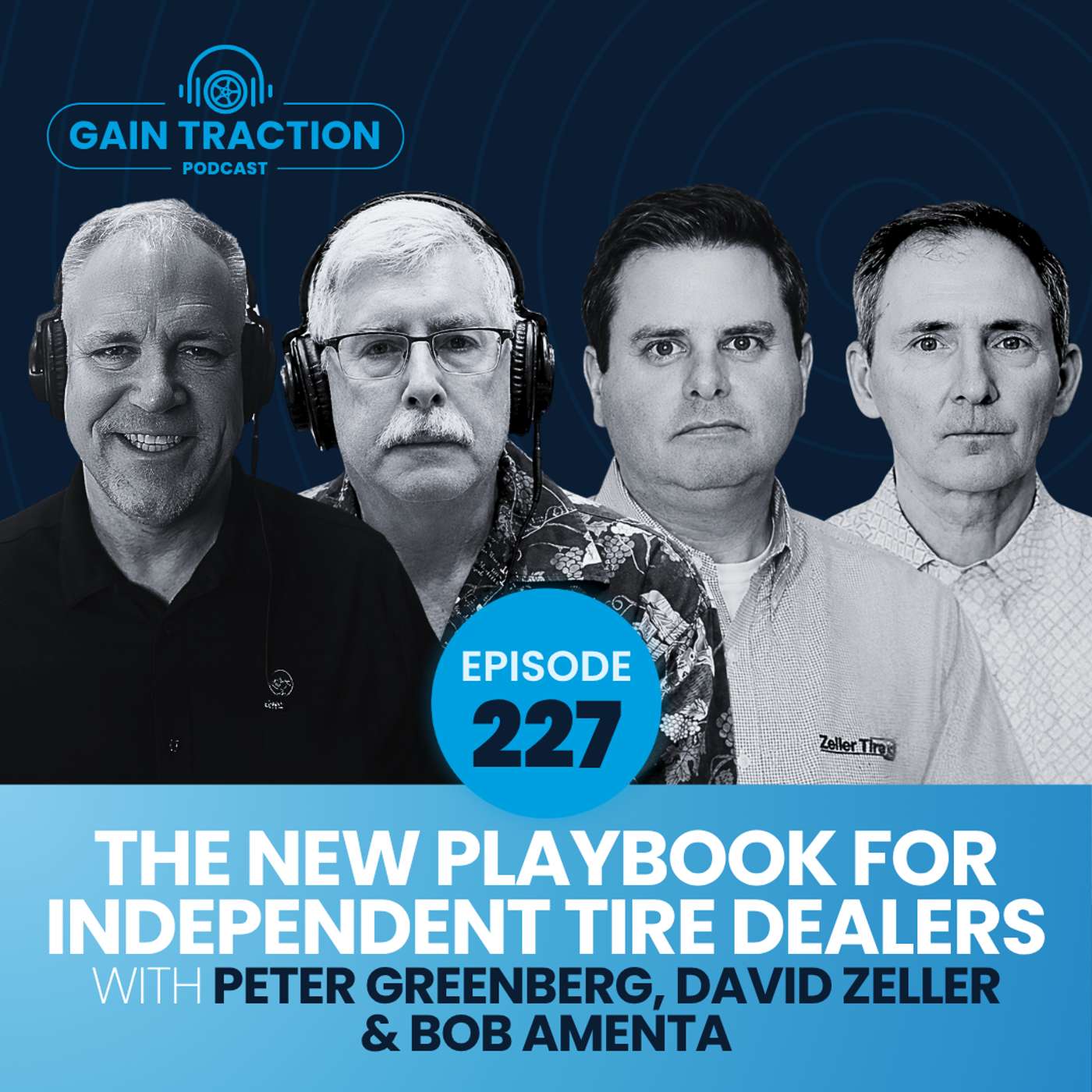
  • #227
    April 29 · 21 min

    The New Playbook for Independent Tire Dealers

    Peter Greenberg — owner of City Tire Co., a business operating since 1927 with a long-standing presence in retail, commercial, and retread segments. With decades of industry experience, he brings a strong perspective on vendor relationships, buying group strategy, and the operational decisions shaping how independent tire dealers compete today. David Zeller — owner of Zeller Tire & Auto Center, a multi-location operation established in 1952. His experience centers on integrating tire sales with automotive service, refining internal systems, and driving profitability for independent tire dealers in an increasingly competitive market. Bob Amenta — President of Modern Tire, where he oversees a service-focused operation that complements tire sales with long-term maintenance and repair. His approach emphasizes operational structure, customer retention, and sustainable growth within the independent tire dealers segment. EPISODE SPONSOR This episode of the Gain Traction Podcast is sponsored by Cosmo Tires. Cosmo Tires offers a wide range of tire solutions designed for durability, reliability, and performance across multiple vehicle segments. Learn more at https://www.cosmotires.com In this episode… Independent tire dealers are losing margin in plain sight, and the root cause sits inside their own operations. Pricing no longer defines competitiveness. Buying power, service integration, and internal alignment now determine who grows and who gets left behind. Peter Greenberg, David Zeller, and Bob Amenta expose a shift that many operators still overlook. Running a shop in isolation limits leverage with vendors, restricts access to best practices, and slows down operational evolution. Their collaboration through Tire Team Partners reveals a model where shared intelligence and complementary strengths unlock both cost advantages and revenue growth. The pressure from consolidation and rising customer expectations continues to intensify. Shops that fail to modernize purchasing strategies and service mix face shrinking margins and weaker retention. Growth now depends on executing both sides of the business; tires and service, with precision, while building systems that scale beyond a single location mindset. Here’s a glimpse of what you’ll learn: [01:10] Overview of panel guests and their operations [01:54] Formation of Tire Team Partners and collaboration model [05:39] Strategic importance of balancing tire sales and service revenue [07:23] Role of advisor recommendations in tire purchasing decisions [08:08] Impact of internet-informed customers on the sales process [10:13] Guest backgrounds and industry experience [11:01] Leadership perspectives and operational philosophies [15:09] Business outlook and collaboration strategy for 2026 [17:16] Leveraging buying power to improve pricing and margins [19:44] Future direction and potential expansion of Tire Team Partners Resources mentioned in this episode: Peter Greenberg on LinkedIn City Tire Co. Website David Zeller on LinkedIn Zeller Tire & Auto Center Modern Tire Tread Partners Gain Traction Podcast on YouTube Gain Traction Podcast Website Mike Edge on LinkedIn Quotable Moments: “70% are going on the recommendation of the advisor.” “The real diamond in the rough is doing both—tires and service—and doing both well.” “The price largely is determined by the market, not by my cost.” “We have to control our own destiny.” “Small tweaks can turn out to be incredibly profitable over the course of 12 or 24 months.” Action Steps: Audit purchasing strategy and consolidate vendor relationships to increase leverage and reduce cost per unit. Rebalance operations to ensure tire sales consistently drive service opportunities and long-term customer retention. Build peer-level partnerships or join collaborative groups to access shared best practices and scale advantages. Standardize internal processes across locations to eliminate inefficiencies and improve profitability at scale. Implement a dual-focus growth plan that strengthens both service operations and tire volume to position independent tire dealers for sustained expansion.

    • Transcript
  • #226
    April 22 · 47 min

    The Real Issues Independent Tire Dealers Are Facing in 2026

    Jeff Webster is the owner of Take Ten Tire Service, with nearly three decades in the tire industry. He has expanded his operations beyond Oklahoma through recent acquisitions and is an active member of the Independent Tire Dealers Group, where he values long-term relationships and peer collaboration. Josh Porter is the owner of Lex Brodie’s Tire Company on the Big Island of Hawaii, where he operates multiple retail locations alongside commercial tire centers, car washes, and service businesses. With over 20 years in the industry, he focuses on staying relevant in a geographically isolated market through diversification and industry connections. Ryan Anderson is the president and owner of Montana Tire Distributors Inc., a business that combines wholesale distribution with retail operations. Having grown up in the industry, he emphasizes the financial and competitive advantages of group buying power and has helped lead the company through continued expansion. Katie Youngblood is a third-generation owner of Youngblood Auto & Tire based in Texas, overseeing both retail locations and a large-scale mobile commercial service operation. Her business primarily serves commercial clients, with a strong focus on roadside service and fleet support across a wide regional footprint. Jay Baxter is the president of Delaware Tire Centers, where he operates a smaller independent dealership. With decades of experience, he highlights the challenges faced by independent operators and the importance of joining networks like ITDG to remain competitive. Peter Greenberg is the owner of City Tire Company and serves as chairman of the Independent Tire Dealers Group. Coming from a multi-generational business, he focuses on helping independent dealers compete against large chains through private brands, collective buying power, and shared strategies. Rick Benton II is the president of Black’s Tire Service, a long-standing family-owned company known for its strong community involvement and internal culture. He advocates for collaboration among independent dealers and emphasizes adapting to industry changes while maintaining core values. EPISODE SPONSOR This episode of the Gain Traction Podcast is sponsored by Cosmo Tires. Cosmo Tires offers a wide range of tire solutions designed for durability, reliability, and performance across multiple vehicle segments. Learn more at https://www.cosmotires.com In this episode… Independent tire shop owners are losing margin in places they don’t even see, buried in pricing, sourcing, and deals that were never built for them to win. The big chains aren’t just bigger; they’re buying better, negotiating harder, and moving faster. That advantage shows up every single time a customer says yes to a quote. The operators in this conversation aren’t guessing what’s wrong. They’re seeing it firsthand: the cost of staying independent without leverage is rising, and it’s showing up in tighter profits, tougher competition, and slower growth. Meanwhile, shops that have aligned themselves with groups like ITDG are playing a different game: better pricing, stronger supplier relationships, and a seat at the table they didn’t have before. This is the shift most shop owners feel but haven’t fully defined yet. The shops that recognize it are already adjusting how they buy, how they price, and how they scale. The rest are still trying to outwork a system that was never built in their favor. Here’s a glimpse of what you’ll learn: [01:11] Jeff Webster on ITDG value and industry relationships [06:23] Josh Porter on ITDG benefits and business expansion [12:43] Ryan Anderson on buying power and profit impact [17:36] Katie Youngblood on commercial operations and scale [25:10] Jay Baxter on challenges facing independent dealers [28:59] Peter Greenberg on competition and private label strategy [37:21] Rick Benton II on culture and industry evolution Resources mentioned in this episode: ITDG (Independent Tire Dealers Group LLC) Jeff Webster LinkedIn Take Ten Tire & Service Lex Brodie’s Tire Company Montana Tire Distributors Inc. Youngblood Auto & Tire Jay Baxter LinkedIn Delaware Tire Centers City Tire Company Rick Benton II LinkedIn Black’s Tire Service Tread Partners Gain Traction Podcast on YouTube Gain Traction Podcast Website Mike Edge on LinkedIn Quotable Moments: “You just never know where you’re gonna run across the same people, it’s a great family of people.” “It’s the difference between competing and succeeding and thriving.” “When we come together, we’re a really big fish; it’s hard to beat us.” “As an independent, you’re faced with private equity getting bigger, how do you compete?” “It’s not just about making a living, it’s about making a difference.” Action Steps: Join or evaluate a dealer network to immediately increase buying power and reduce cost per tire, independent tire shop owners who stay isolated are overpaying. Audit your current supplier pricing and compare it against group purchasing benchmarks to identify margin leakage. Diversify revenue streams by adding commercial services, mobile support, or complementary automotive offerings to stabilize cash flow. Build relationships with other operators in your market or network to share strategies, vendors, and operational efficiencies. Develop a private label or alternative tire strategy to regain pricing control and protect margins from manufacturer restrictions.

    • Transcript
  • #225
    April 15 · 30 min

    Why Most Auto Shops Fail When They Try to Scale

    Phil Carpenter is the Director of Operations at Urban Autocare and Avalon Motorsports, overseeing seven locations in the Denver, Colorado area. He began his career as a technician and became the first employee in what was once a two-person shop, eventually helping grow the business into a 55-person operation. His experience spans every stage of scaling an auto repair shop; from turning wrenches to leading teams, building systems, and managing multi-location complexity. That progression gives him a grounded perspective on what actually breaks, evolves, and demands attention as shops grow beyond a single location. EPISODE SPONSOR This episode of the Gain Traction Podcast is sponsored by Cosmo Tires. Cosmo Tires offers a wide range of tire solutions designed for durability, reliability, and performance across multiple vehicle segments. Learn more at https://www.cosmotires.com In this episode… Growth doesn’t fail loudly at first. It slips in through divided attention, stretched leadership, and roles that multiply faster than the team can support. Scaling an auto repair shop introduces a different kind of pressure, one that doesn’t show up in car count or revenue reports. It shows up in managers juggling three roles, in culture that starts to drift, and in decisions that carry more weight than they did at one location. The systems that once worked stop holding, and the habits that built the business begin to limit it. This conversation centers on what actually changes as a shop grows. The shift from technician to leader, the cost of trying to do everything at once, and the reality that profitability is what allows a business to stand behind its work when things go wrong. Scaling an auto repair shop demands sharper focus, stronger systems, and a clear understanding of where leadership attention belongs. Here’s a glimpse of what you’ll learn: [01:15] Background and introduction of Phil Carpenter [02:39] Early career path and entry into the automotive industry [04:15] Building culture through care and accountability [07:16] Early challenges and stagnant growth in the first location [10:57] Transition from technician to advisor and manager [14:40] Operational strain from wearing multiple roles [20:33] Profitability as a foundation for stability and customer care [22:50] Leadership framework: execution, preparation, and review [26:48] Personal background and life outside the shop Resources mentioned in this episode: Phil Carpenter on LinkedIn Urban Autocare Website Avalon Motorsports Website Tread Partners Gain Traction Podcast on YouTube Gain Traction Podcast Website Mike Edge on LinkedIn Quotable Moments: “I can be a very good technician and I can be a very good service advisor, but I cannot do them at the exact same time.” “We know how to take care of people, and we’re going to do that really, really well.” “We can love and care about you, but that doesn’t mean that we don’t expect you to do a really good job.” “If we’re not running our businesses soundly and with profit, we start squeezing pennies and stop standing behind what we do.” “Feedback is a gift.” Action Steps: Audit current roles across your team and eliminate overlap where one person is carrying multiple critical functions. Divided attention is one of the fastest ways scaling an auto repair shop breaks down operationally. Define clear accountability standards for each role and enforce them consistently. Culture weakens when expectations stay informal. Review profitability at a granular level. Margin is what allows the business to take care of customers without hesitation when mistakes happen. Identify one process that worked at a single location and stress-test it across multiple locations. Systems must evolve as complexity increases. Build a leadership habit of preparation and review. Go into key conversations with intent, then evaluate performance immediately after to improve the next decision.

    • Transcript
Showing 1–20 of 21 episodes