Skip to content
Artwork for FreightCasts
NewsBusiness NewsDaily NewsNews Commentary

FreightCasts

FreightWaves

A full trailer load of freight podcasts from FreightWaves. Enjoy shows like the award-winning WHAT THE TRUCK?!? podcast, Put That Coffee Down, Freightonomics, Fuller Speed Ahead, Great Quarter, Gals and more with one click of the subscribe button. One freight feed to rule them all!

Play
  • 143 episodes
  • Avg 52 min
  • English
Counted on this page — what you have heard stays on this device, so it is not something the list can be paged by.
  • September 11 · 3 min

    Teamsters Warn UPS of 2028 Strike, Delaware's $669M Terminal, & Deadly Shipyard Fire | The Morning Minute

    In this episode, we kick things off with a stark warning from the Teamsters union as ⁠President Sean O'Brien puts UPS on notice for a potential strike in 2028⁠, two full years before contract negotiations typically turn contentious. Among the key demands are protections against benefit rollbacks, restrictions on autonomous trucks, and a highly unusual provision allowing regional unions to strike mid-contract over unresolved grievances. Next, we explore major maritime infrastructure developments as ⁠construction officially begins on Delaware's massive $669 million container terminal along the Delaware River⁠. The Delaware Container Terminal will feature a 45-foot berth depth capable of handling post-Panamax vessels up to 16,000 TEUs and is projected to create nearly 6,000 new jobs once fully operational by late 2028. Finally, we cover a devastating incident in China where ⁠a deadly fire aboard a cargo ship at a Qingdao shipyard claimed 25 lives⁠ during repair operations. The blaze erupted Thursday morning aboard the Liberia-flagged dry bulk carrier Ocean Melody, with authorities launching an investigation into the cause of the tragedy that left 42 people aboard at the time of the incident. ⁠Follow the FreightWaves Today Podcast⁠ ⁠Other FreightWaves Shows⁠ Learn more about your ad choices. Visit megaphone.fm/adchoices

  • September 10 · 57 min

    Freight Costs Are Surging — Here’s What’s Really Happening to Trucking Capacity | Freightonomics

    What’s driving freight costs higher — fuel, tight capacity, inflation, or all of the above? On this episode of Freightonomics, Zach Strickland and economist D.J. Donahue break down the latest economic data and what it means for transportation, consumers and the broader freight economy. Producer prices are rising, with energy playing a major role. Diesel prices have surged, putting additional pressure on trucking and transportation costs, while elevated tender rejection rates point to a freight market that remains tight. The show also examines consumer credit, historically high credit card rates and what slowing credit growth could signal for consumer health and future freight demand. The conversation then turns to trade policy and the latest tensions with Canada. Zach and D.J. examine proposed restrictions on Canadian imports, the potential economic impact and why some of the targeted trade flows may have a much smaller effect on overall freight volumes than the headlines suggest. In the second half, Thomas Wasson joins Zach to explore the changing North American freight landscape. They discuss Mexican cross-border trucking, cabotage enforcement, falling Laredo freight volumes, shifting Mexico trade flows and the growing influence of data-center construction on freight demand. Data-center investment is generating demand for electronics, steel, concrete and open-deck capacity even as traditional consumer demand remains relatively muted. The episode also dives into ocean freight rates, fuel costs, congestion and the impact of weather on trans-Pacific shipping. Finally, Zach and Thomas examine changing FMCSA data and what it really tells us about trucking capacity. The bottom line? Capacity is not meaningfully growing yet, and the industry may be moving toward a smaller, more closely vetted and safer carrier base — but at a higher price. ⁠Follow the Freightonomics Podcast⁠ ⁠Other FreightWaves Shows⁠ Learn more about your ad choices. Visit megaphone.fm/adchoices

  • September 10 · 2 hr

    FreightWaves Today | September 10

    The freight market is heading into peak season with plenty of uncertainty. On this episode of FreightWaves Today, Malcolm Harris and Zach Strickland break down the latest data shaping trucking, logistics and the broader economy. First, Eric Lemus of The Fulfillment Lab joins the show to discuss new Commerce Signal data showing operator margin cushions nearly disappearing as shipping costs rise faster than revenue. With parcel costs up sharply and peak-season surcharges approaching, retailers and 3PLs face growing pressure to control transportation spend while managing lean inventories. Lemus also explains why diversifying carrier strategies could deliver significant savings. Then, Zach dives into the latest SONAR data, including tender rejection rates, tender volumes, spot rates, diesel prices, imports and the potential for tighter capacity as retailers replenish inventory heading into Q4. Weather is also taking center stage. Ben Hershey of DTN explains how AI-powered weather intelligence and crash-risk forecasting can help fleets anticipate dangerous conditions, improve routing decisions and keep drivers moving safely. The discussion also examines what the developing El Niño pattern could mean for winter weather, freight corridors and mountain passes across the country. In the second hour, Zach is joined by FreightWaves economist D.J. Donahue to unpack the latest economic releases, consumer credit, transportation inflation, tariffs and the growing influence of AI and data-center construction on the economy and freight demand. Finally, Thomas Wasson returns to discuss major transportation and international trade issues, including U.S.-Mexico cross-border freight, cabotage enforcement, changing freight flows, maritime rates and the latest FMCSA carrier data. The conversation takes a close look at whether trucking capacity is actually growing — and what recent regulatory changes could mean for the carrier base. ⁠Follow the FreightWaves Today Podcast⁠ ⁠Other FreightWaves Shows⁠ Learn more about your ad choices. Visit megaphone.fm/adchoices

  • September 10 · 1 hr 2 min

    The Detective's Guide to Protecting Your Trucking Company | The Long Haul

    Josh Lovan has seen how trucking companies die. Not slowly, from rates. Fast, from one crash. Before he became an advisor at J. J. Keller, Josh was Director of Safety and Security for a major carrier — the man in the room when the accident call came in, when OSHA showed up, when the lawyers started prepping for trial. He's sat in the depositions. He's watched a single wreck, with shared fault and complicated facts, turn into a verdict big enough to erase a company. And before trucking, he was a law enforcement detective running undercover operations — which is exactly the background you want advising fleets on security in the middle of a cargo theft epidemic. Here's what he'll tell you that most safety conversations won't. The lawsuit doesn't start when the crash happens. It starts years earlier — in the driver file you didn't complete, the camera footage you never reviewed, the coaching conversation you skipped because the truck was making money. When the plaintiff's attorney gets your records, they're not looking for the accident. They're looking for the pattern. And most small carriers are handing them one without knowing it.We get into what actually gets carriers destroyed in litigation, how to use dash cams to coach drivers instead of policing them, the safety management cycle that turns compliance from paperwork into protection, the hours-of-service exceptions most small carriers misuse, what a mock audit catches before the real one does, and — from a former undercover detective — how thieves and fraudsters are actually targeting carriers right now, and what stops them. Good drivers are made great on purpose. This episode is the blueprint. ⁠Follow The Long Haul Podcast⁠ ⁠Other FreightWaves Shows⁠ Learn more about your ad choices. Visit megaphone.fm/adchoices

  • September 10 · 1 hr 3 min

    WHO THE HELL ARE YOU ACTUALLY HAULING FOR? | Brake Check

    The rate confirmation looks legit. The authority checks out. The email looks right. The money looks good. Then the freight disappears .... or you deliver it and nobody pays you. Freight fraud isn't just getting bigger. It's getting smarter. Stolen identities, fake carriers, double brokering, strategic theft and criminals who increasingly know exactly how to look legitimate long enough to get your truck .... or your customer's freight. On this episode of Brake Check, we're putting BOTH sides of the transaction in the same room. Jason Schaftlein, General Manager of McLeod Express, breaks down how a real carrier decides which brokers deserve its trucks, the red flags that kill a load, what five-truck fleets can verify themselves, what it really costs to operate compliant equipment, and what happens when legitimate carriers compete against bad actors. Then former Chicago Bear and Bear Down Logistics President Desmond Clark takes the broker's chair. What does a broker actually verify before trusting a carrier? How do legitimate small fleets avoid getting treated like criminals? How fast should brokers pay? What does running actual equipment teach a broker? And yes .... we go straight at BROKER TRANSPARENCY. Then comes the question underneath this entire mess: How the hell did freight build a system where carriers don't trust brokers, brokers don't trust carriers...and criminals learned to exploit BOTH? No fluff No conference-panel answers Just two people sitting on opposite sides of the freight transaction explaining who they trust, who they don't, and WHY. If you're a carrier, owner-operator, freight broker, dispatcher, 3PL, shipper or fleet owner, watch this before you book your next load. Because the paperwork can look perfect. THAT DOESN'T MEAN THE PERSON BEHIND IT IS. #Trucking #FreightFraud #FreightBroker #OwnerOperator #TruckingIndustry #DoubleBrokering #CargoTheft #Logistics #TruckDrivers #Freight ⁠Follow the Brake Check Podcast⁠ ⁠Other FreightWaves Shows⁠ Learn more about your ad choices. Visit megaphone.fm/adchoices

  • September 10 · 3 min

    US-Mexico Trade Hits Record, FMCSA Suspends Enforcement, & ICE CDL Fraud Tip Line | The Morning Minute

    In this episode, we kick things off by examining a massive milestone in cross-border commerce as US-Mexico trade smashed the monthly record at nearly $95 billion in July. Two-way trade surged 27.5% year over year, with Mexico now firmly holding its position as America's number one trading partner ahead of Canada and China. Laredo, Texas, retained its crown as the nation's busiest international trade gateway, handling nearly $37 billion in commerce while experiencing tight trucking capacity. Meanwhile, federal regulators are giving carriers some breathing room during a major technology transition. We discuss how FMCSA suspended enforcement of biennial update requirements and stopped deactivating USDOT numbers for missed filings. The relief covers deadlines on or after June 1, 2026, and remains in place while registrants transition to the agency's new MOTUS system, which launched in May. Finally, we unpack the federal government's aggressive crackdown on alleged CDL fraud as ICE launched a tip line for reporting suspected commercial driver's license fraud in partnership with the Department of Transportation. The tip line comes shortly after federal officials removed over 110 commercial driver training schools from a federal registry, with HSI already receiving more than 1,000 leads involving CDL-related businesses suspected of unsafe practices and potential connections to human smuggling, drug trafficking, and cartel activity. Follow the FreightWaves NOW Podcast Other FreightWaves Shows Learn more about your ad choices. Visit megaphone.fm/adchoices

  • September 9 · 2 hr 14 min

    FreightWaves Today | September 9

    On this episode of FreightWaves Today, Malcolm Harris and Julie Van de Kamp break down the latest developments shaping freight, transportation and global supply chains. The show leads with escalating trade tensions as Canada imposes retaliatory tariffs of up to 50% on nearly $20 billion of U.S. goods, while President Donald Trump raises the possibility of further changes to trade with Mexico, Canada and the European Union. The hosts examine what the uncertainty could mean for cross-border freight, manufacturers, shippers and transportation costs. Then, Jason Murray, CEO and co-founder of Shipium, and Penny Allen, SVP of AI Product and Engineering, join the show to discuss Shipium's new "Always-On Audit." They explain how AI-powered, continuous auditing can track shipments in real time, identify billing and data issues, catch problems before they become costly and automate freight-payment reconciliation. The team also digs into the deadly Amazon cargo jet crash at Miami International Airport with FreightWaves air and parcel expert Eric Kulisch. Eric provides an update on the NTSB investigation, the sequence of events surrounding the Boeing 767 freighter's runway overrun and the potential implications for air cargo operations at one of the country's key international gateways. ⁠Follow the FreightWaves Today Podcast⁠ ⁠Other FreightWaves Shows⁠ Learn more about your ad choices. Visit megaphone.fm/adchoices

  • September 9 · 55 min

    How Mexican Cartels Are Using Pizza Shops To Move Meth Across the Border | WHAT THE TRUCK?!?

    Malcolm and The Dude dissect recent CargoNet reports regarding Labor Day cargo theft spikes, questioning the data manipulation versus real-world risk. They also dive into former President Donald Trump’s comments on trade deficits and cross-border supply chains with Mexico and Canada. Keith Miao (CEO of Birdstop) and Carl Rundell (President & CEO of Truck Specialized Parking Services) discuss how autonomous drone technology and node networks are being deployed across major freight corridors. They explain how real-time aerial data is helping solve the nationwide truck parking crisis—starting with critical trade routes between Detroit and Windsor, Canada. Guy Yehiav (President of SmartSense) breaks down the physical and digital vulnerabilities in today's supply chains. From "no stop zones" to GPS spoofing and stealth pallet trackers, Guy highlights how organized crime is getting smarter and how shippers can better protect high-value freight ⁠Watch on YouTube⁠ ⁠Visit our sponsor - KOONER FLEET MANAGEMENT SOLUTIONS⁠ ⁠Subscribe to the WTT newsletter⁠ ⁠Apple Podcasts⁠ ⁠Spotify⁠ ⁠More FreightWaves Podcasts⁠ #WHATTHETRUCK #FreightNews #supplychain Learn more about your ad choices. Visit megaphone.fm/adchoices

  • September 9 · 3 min

    Canada's $20B Tariff Retaliation, Amazon Freighter Crash Details, & Trump Trade Ultimatum | The Morning Minute

    In this episode, we kick things off by examining the massive trade escalation adding serious costs and uncertainty across North American supply chains. Canada imposed retaliatory tariffs of up to fifty percent on nearly ⁠twenty billion dollars worth of U.S. goods following the collapse of bilateral trade negotiations⁠ in August. These duties target hundreds of American products, from steel and aluminum to dairy, clothing, furniture, and industrial equipment, impacting one of the world's largest bilateral trading relationships. Meanwhile, investigators are piecing together critical details from Sunday's deadly cargo jet crash at Miami International Airport. National Transportation Safety Board officials revealed that ⁠the Amazon Boeing 767 freighter was carrying over thirty-two thousand pounds of contact lenses⁠ and failed to deploy critical systems meant to slow the aircraft upon landing. The plane hovered well past the normal runway zone, ran off the runway at one hundred eighty-one miles per hour, and plowed into vehicles and fences, leaving five people dead. Finally, we unpack President Trump's dramatic escalation of trade rhetoric against America's largest trading partners. During a September fourth Oval Office news conference, ⁠Trump suggested the U.S. could stop trading with Mexico and other countries where it runs large trade deficits⁠, claiming America could prosper by reducing its dependence on foreign trade. Trump singled out Mexico, Canada, and the European Union, arguing the U.S. could eliminate trade deficits simply by refusing to trade with those markets. ⁠Follow the FreightWaves Today Podcast⁠⁠ Other FreightWaves Shows⁠ Learn more about your ad choices. Visit megaphone.fm/adchoices

  • September 8 · 2 hr

    FreightWaves Today | September 8

    On this episode of FreightWaves Today, the team breaks down the latest freight market developments as the industry heads into fall peak season. Topics include the deadly cargo plane accident at Miami International Airport, rising truckload tender rejections, spot and contract rate trends, strong intermodal demand and what the latest SONAR data signals for the weeks ahead. The episode also explores record-high diesel prices and their impact on carriers and brokers, along with the evolving legal and regulatory landscape facing the trucking industry. Plus, the team looks at autonomous trucking, automation and the potential for consolidation across freight and logistics. Learn more about your ad choices. Visit megaphone.fm/adchoices

  • September 8 · 57 min

    YOU’RE AUTOMATING THE WRONG DAMN THING | Brake Check

    Trucking is spending a fortune on AI and automation. But what if fleets are automating the WRONG damn thing? AI can quote freight, process tenders, move data, predict maintenance problems and eliminate hours of back-office work. What it CAN'T do is lead your people. On this episode of Brake Check, Charles puts both sides of trucking's technology revolution in the hot seat. Grace Sharkey of Orderful has lived freight from nearly every angle .... brokerage executive, FreightWaves journalist and now freight-tech insider. We break down AI in trucking, freight automation, EDI, back-office technology, carrier productivity and how small fleets can separate REAL technology from another expensive demo with “AI” slapped on the front. What should a 20-truck carrier automate FIRST? What should stay human? How do you prove a technology investment actually delivers ROI? And how can you tell the difference between a real AI product and somebody who simply wrapped a shiny dashboard around an API? Then Dr. Vernard “Doctor V” Jenkins of Knight-Swift Supply Chain takes the other side. With 29 locations and roughly 10 million square feet of operations, Doctor V tackles leadership, employee retention, frontline management, AI implementation, change management and developing the next generation of transportation leaders. Because a dashboard can tell you WHAT happened. It still takes a leader to figure out WHY. And then we put $100,000 on the table: SOFTWARE OR PEOPLE? You can only choose one. If you're a fleet owner, trucking executive, owner-operator, freight broker, logistics professional, operations leader or anyone considering AI and automation, watch this before buying another piece of technology. The future isn't about choosing humans OR machines. It's knowing which damn job belongs to which. AUTOMATE THE WORK. NOT THE PEOPLE. #Trucking #AI #ArtificialIntelligence #FreightTech #TruckingIndustry #Automation #Logistics #FleetManagement #TruckDrivers #Leadership #SupplyChain Learn more about your ad choices. Visit megaphone.fm/adchoices

  • September 8 · 3 min

    Miami Cargo Jet Tragedy, UP-NS Labor Concerns, & Mexico B-1 Visa Dispute | The Morning Minute

    In this episode, we kick things off with a tragic cargo jet accident that has crippled half of Miami International Airport's operations. An Amazon Air Boeing 767 freighter operated by 21 Air overran a runway during landing, struck multiple vehicles on a nearby road, and caught fire, leaving five people dead and five seriously injured. Listen in to learn how two of Miami's four runways remain closed following the deadly Amazon cargo jet accident, causing massive flight disruptions while the National Transportation Safety Board investigates the runway excursion that occurred at one hundred thirty miles per hour. Shifting gears to the rails, we examine a rare display of Democratic Party unity just weeks before crucial midterm elections. More than one hundred House Democrats are demanding that railroad workers come first in the proposed Union Pacific–Norfolk Southern mega-merger review by the Surface Transportation Board. The eighty-five billion dollar deal would create the first transcontinental freight railroad and the largest rail network in U.S. history, but union leaders warn that Union Pacific's lifetime employment offer does not fully protect some critical positions. Finally, we cover a critical visa enforcement dispute threatening to disrupt cross-border freight flows between Mexico and the United States. Mexican trucking industry leaders are intensifying calls for clarity after a trucker protest raised the stakes in the escalating Mexico-U.S. B-1 visa dispute with drivers blocking the Mexicali-Calexico East border crossing. Mexico's National Chamber of Freight Transportation estimates more than twenty-five thousand visas have been revoked from commercial drivers, potentially disrupting time-sensitive shipments including medical products, technology, food, and perishables. Follow the FreightWaves NOW Podcast Other FreightWaves Shows Learn more about your ad choices. Visit megaphone.fm/adchoices

  • September 4 · 2 hr 1 min

    Best of FreightWaves Today | September 4

    FreightWaves Today takes a look back at some of the biggest conversations shaping freight and transportation in this special edition featuring a collection of standout interviews from the summer. Malcolm Harris and the FreightWaves team dig into the real-world performance of the Tesla Semi with Inter-coastal Trucking’s Bob Lewis, including driver feedback, range, charging infrastructure, maintenance savings and where electric trucks make the most sense in a fleet. The show also explores the state of the rail freight market with Telegraph’s David Correll, including rail volume forecasts, coal exports, tank car availability, AI data center construction and the growing gap between truck and intermodal pricing. Freight market strategy takes center stage with RXO Chief Strategy Officer Jared Weisfeld, who discusses the ongoing capacity correction, tightening freight markets, shipper concerns, routing guide failures, spot versus contract rates and why he believes the industry could be entering a multi-year freight recovery. Mitsubishi HC Capital America’s Kirk Mann joins the conversation to examine the equipment financing market, the impact of the freight recession on small carriers, truck values, lending conditions and what fleets are doing as the market begins to recover. Finally, Ken Adamo of EASE Logistics weighs in on current freight volumes, seasonality, intermodal growth, contract repricing and the question of whether new capacity is actually entering the trucking market. Learn more about your ad choices. Visit megaphone.fm/adchoices

  • September 3 · 1 hr 54 min

    FreightWaves Today | September 3

    On this episode of FreightWaves Today, Malcolm Harris and Zach Strickland break down the latest developments shaping freight, logistics and the broader economy. The show opens with the latest headlines, including an EPA proposal that could change how diesel exhaust fluid warnings work, a series of commercial vehicle safety enforcement blitzes and rising Pacific container rates amid strong peak-season demand and port congestion. Then, Ainsley Williams, VP of Automation and Innovation at Kenco, joins the show to discuss the expansion of Kenco’s Innovation Lab in Chattanooga from 10,000 to 30,000 square feet. She explains how the larger facility will allow Kenco to test interconnected warehouse robotics, automation systems and emerging technologies in a real-world environment before deploying them for customers. Zach then dives into the latest SONAR data, examining the impact of Labor Day on tender rejections, freight volumes and spot rates across van, reefer and flatbed markets. Later, Matt Pyatt, CEO and co-founder of Arrive Logistics, joins the show to discuss Mubadala Capital’s majority investment in Arrive, the company’s growth strategy and what the deal means for its future. Pyatt also shares his outlook on freight demand, capacity, truckload rates and why he believes the market remains highly susceptible to disruption. Finally, the FreightWaves team examines the latest JOLTS and ADP employment data with economist D.J. Donahue, looking at what the numbers reveal about the labor market and the health of the economy. Subscribe to FreightWaves for the latest news, data and analysis from across the transportation and logistics industry. Learn more about your ad choices. Visit megaphone.fm/adchoices

  • September 3 · 43 min

    Taking a Breath | Freightonomics

    Dr. Zac Rogers comes on to discuss the latest LMI results from August. Learn more about your ad choices. Visit megaphone.fm/adchoices

  • September 3 · 1 hr 14 min

    WHO THE HELL GAVE THEM A CDL? CONGRESS, YOUR MOVE | BRAKE CHECK

    Who the hell gave them a CDL .... and why did it take a family paying the price before Washington started listening? This episode of Brake Check isn't an attack on professional truck drivers. It's an investigation into the systems, safeguards, bad actors and policymakers that are supposed to keep unqualified drivers from ever getting behind the wheel of a commercial truck. Professional truck driver and father Marcus Coleman joins Charles after taking his family's story to Congress. His daughter Dalilah suffered catastrophic injuries in a crash, and Marcus is now fighting for Dalilah's Law and stronger accountability throughout the commercial driver licensing system. We dig into the questions Washington needs to answer: How does an unqualified driver get a CDL? Where can the licensing and verification process fail? Who is responsible when safeguards aren't followed? What would Dalilah's Law actually change? And why does government so often react AFTER somebody pays the price? Then Zach Meiborg, owner of Meiborg Transportation, joins the conversation. Meiborg isn't just talking about supporting Dalilah's family — they're opening their Rockford, Illinois headquarters September 26 for the Stand With Dalilah Charity Motorcycle Ride. But we also tackle another side of the same accountability problem: legitimate motor carriers spending real money to hire qualified drivers, maintain equipment, follow hours-of-service regulations and operate legally while bad actors can gain an unfair advantage by cutting corners. Running illegal isn't innovation. Cheating isn't competition. And a government-issued piece of paper shouldn't replace actual qualification. This episode is about CDL standards, trucking safety, driver qualification, hours-of-service compliance, FMCSA enforcement, bad carriers, Dalilah's Law and government accountability. Professional truckers deserve better than being lumped together with operators who never should've been on the road. Families deserve better than finding out where the system failed after the crash. And policymakers? CONGRESS, IT'S YOUR TURN. #Trucking #CDL #TruckDrivers #TruckingSafety #FMCSA #Congress #Transportation #TruckingIndustry #OwnerOperator #BrakeCheck Learn more about your ad choices. Visit megaphone.fm/adchoices

  • September 3 · 45 min

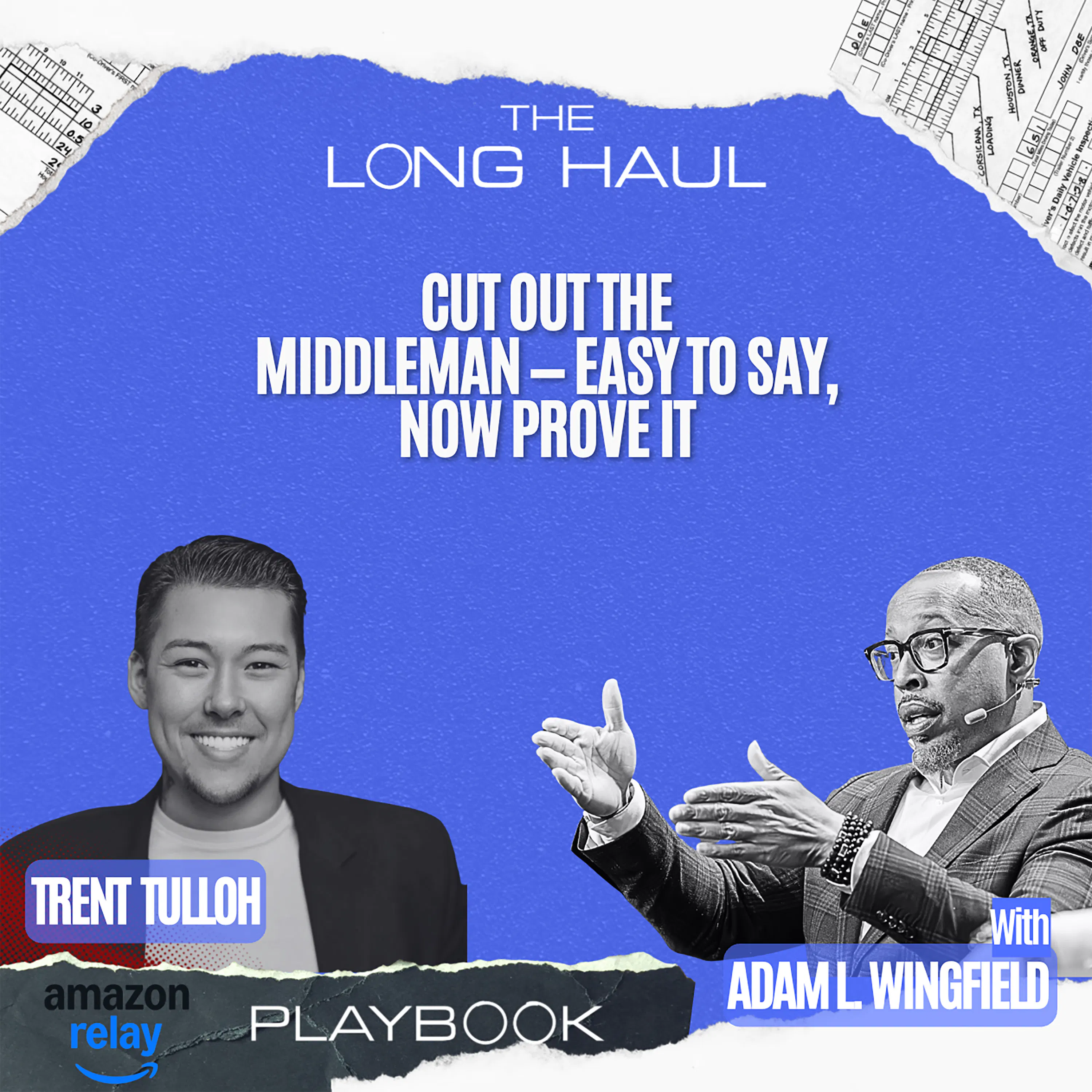
    Cut Out the Middleman — Easy to Say, Now Prove It | The Long Haul

    There's a pitch aimed at truckers on every platform right now. Brokers are eating your margin. Cut out the middleman. Get your own authority. It's not hard — you just need a mentor. And there's always a mentor selling. Trent Tulloh is one of them. He runs Forever Freight Broker, a Tampa training company that teaches drivers and dispatchers to become freight brokers. His reason is personal — his father was an owner-operator who lost his business to bad brokers, and Trent built his company to make sure truckers stop getting the bad end of the stick. I respect the wound. Today we test the remedy. Because this show doesn't platform pitches — it pressure-tests them. So Trent came in knowing the format: the claim goes on trial. Is brokering actually the answer for a struggling carrier, or is it a second business bolted onto a first one that isn't working? What does it really take — the bond, the credit, the shippers who don't know your name? And how does "it's not hard" survive a world where the Supreme Court just ruled that anyone selecting carriers can be sued for choosing wrong? He gets every chance to make his case. His numbers, his students, his story. And you get what this show owes you — the pitch, cross-examined, before you pay for it. Somebody's leaving this conversation with a different opinion. Might be him. Might be me. Might be you. Learn more about your ad choices. Visit megaphone.fm/adchoices

  • September 3 · 3 min

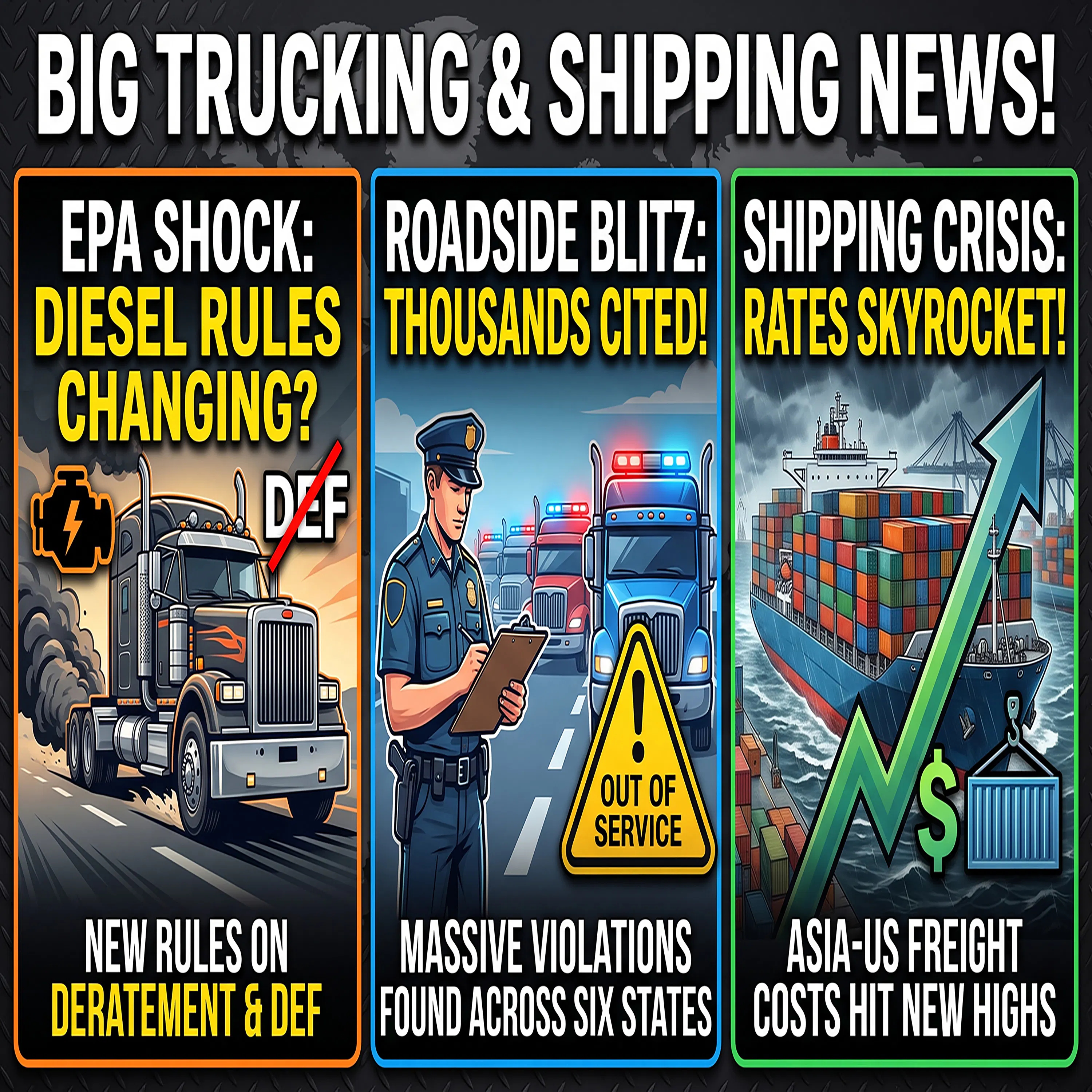
    EPA's DEF Rule Decision Nears, Truck Blitzes Sideline 99 Drivers, & Trans-Pacific Rates Surge | The Morning Minute

    In this episode, we kick things off in Washington, where the public comment period has just closed on a major Environmental Protection Agency proposal that could fundamentally reshape how diesel engine systems operate. Listen in to learn how the EPA's controversial plan to replace engine deratement with warning signals has drawn nearly two hundred submissions spanning industry praise and sharp environmental criticism, while the proposal also includes nonconformance penalties allowing manufacturers to pay fines and continue selling current products. Next, we explore the results of a sweeping series of state enforcement blitzes where inspectors uncovered thousands of safety violations and placed ninety-nine drivers out of service across six states. Texas authorities led with a brutal operation in the Permian Basin that posted a staggering forty-seven point six percent vehicle out-of-service rate, averaging five point five violations per inspection and signaling dramatically heightened enforcement exposure for carriers operating through major freight corridors. Finally, we examine the ocean freight market as trans-Pacific container rates climb to fresh highs on resilient peak-season demand and severe port congestion caused by typhoons hammering Chinese and regional Asian facilities since mid-July. Asia-to-U.S. West Coast spot rates increased to seven thousand six hundred twenty-one dollars per forty-foot unit, while a succession of disruptions at Shanghai and Ningbo has forced carriers to omit port calls and adjust vessel rotations, creating significant capacity constraints supporting freight rates across multiple trade lanes. Follow the FreightWaves NOW Podcast Other FreightWaves Shows Learn more about your ad choices. Visit megaphone.fm/adchoices

  • September 2 · 2 hr

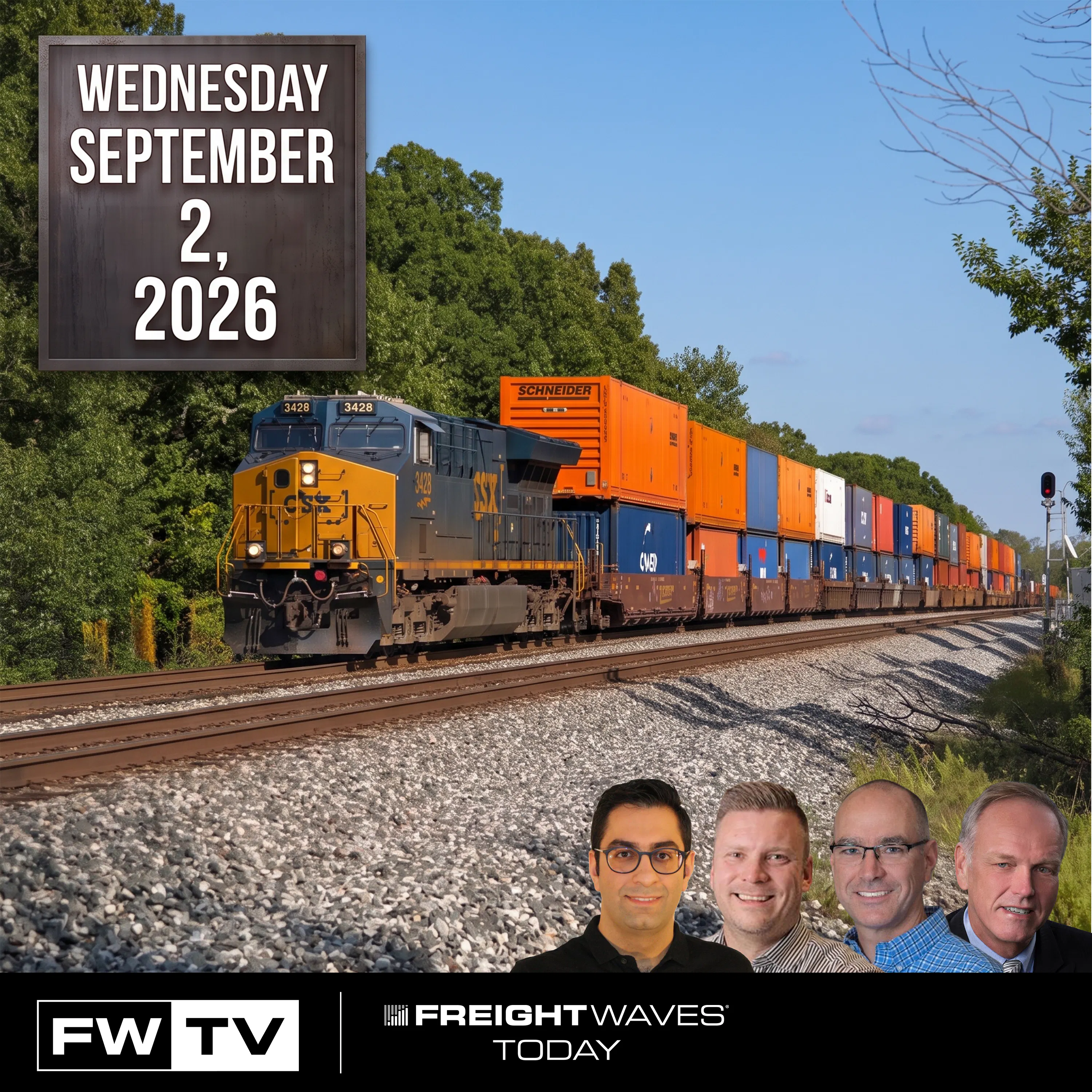
    FreightWaves Today | September 2

    AI is transforming freight operations, but how far can automation go — and what happens when location intelligence, rail networks and energy markets collide? On this episode of FreightWaves Today, Malcolm Harris and Julie Van de Kamp break down the biggest stories and trends shaping transportation and logistics. The show opens with three major headlines: an alleged Texas grain theft ring involving more than 170 loads, a federal crackdown on 110 commercial driver training schools, and the latest developments in Yellow Corp.’s bankruptcy and pension settlements. Then, EAIGLE CEO and founder Amir Hoss joins the show to explain how AI-powered computer vision is automating truck gates and yards. The discussion covers unmanned and paperless facilities, real-time yard visibility, fraud prevention, data accuracy and the path toward fully autonomous yards. HERE Technologies’ Bart Coppelmans discusses the next phase of AI in logistics, including spatial reasoning, location intelligence and the importance of connecting planning, execution and analytics. He explains how AI can help fleets make better routing decisions while keeping humans in control of critical decisions. For the weekly rail segment, Trains Magazine editor Bill Stephens and Trinity Rail Chief Commercial Officer Charlie Moore break down the latest rail traffic numbers, railcar demand, intermodal growth, coal shipments, tariffs and steel costs. They also discuss the proposed Union Pacific-Norfolk Southern merger, rail service reliability and what could drive railcar demand into 2027. Finally, FreightWaves editor-at-large John Kingston takes a deep dive into surging diesel prices, refinery constraints, Russia-Ukraine disruptions, the Strait of Hormuz and what historically high diesel costs could mean for trucking and the broader economy. Plus, Julie breaks down the latest manufacturing and logistics data, including the August PMI and Logistics Managers’ Index, with a look at transportation capacity, utilization, pricing and what the numbers could mean heading into peak season. Subscribe to FreightWaves for the latest news, analysis and data covering trucking, freight, logistics, rail and supply chain. #FreightWaves #FreightWavesToday #Trucking #Logistics #SupplyChain #AI #Rail #Diesel #Freight ⁠Follow the FreightWaves Today Podcast⁠ ⁠Other FreightWaves Shows⁠ Learn more about your ad choices. Visit megaphone.fm/adchoices

  • September 2 · 56 min

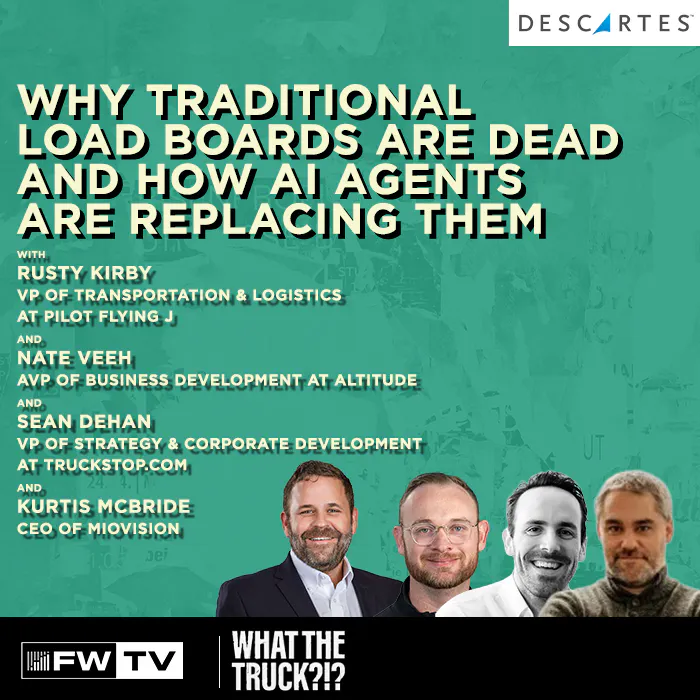
    Why "Traditional" Load Boards Are Dead And How AI "Agents" Are Replacing Them

    Malcolm and Michael kick off September with a jam-packed Wednesday episode celebrating driver appreciation and cutting-edge freight tech Rusty Kirby, VP of Transportation and Logistics at Pilot Flying J, breaks down the 2026 Road Warrior contest featuring a custom Kenworth truck built by the Diesel Brothers plus $50,000 in cash! Rusty also discusses Pilot’s elite driver rewards program and the crucial role truck drivers play in everyday life. Nate Veeh, AVP of Business Development at Altitudes, shares surprising vehicle data analyzed across 104 World Cup matches in 16 cities. Learn how post-match exits spike traffic congestion and harsh braking, and why cities like Atlanta and Kansas City had dramatically different traffic outcomes. Sean Dehan, VP of Strategy and Corporate Development at Truckstop, pushes back on the claim that traditional load boards are outdated. He discusses how AI assistants like "Ava" are transforming load matching into an intelligent, contextual marketplace for carriers and brokers Kurtis McBride, CEO of Miovision, explains how their AI platform "Mateo" creates digital twins of intersections to modernize traffic control, reduce citizen response times, and enable real-time traffic management. ⁠Watch on YouTube⁠ ⁠Visit our sponsor - KOONER FLEET MANAGEMENT SOLUTIONS⁠ ⁠Subscribe to the WTT newsletter⁠ ⁠Apple Podcasts⁠ ⁠Spotify⁠ ⁠More FreightWaves Podcasts⁠ #WHATTHETRUCK #FreightNews #supplychain Learn more about your ad choices. Visit megaphone.fm/adchoices

Showing 101–120 of 143 episodes