Skip to content
Artwork for Fraud Forward
BusinessCareersGovernment

Fraud Forward

Hailey Windham

Fraud Forward is a banking-focused podcast bringing together fraud fighters, risk leaders, and financial crime experts to explore how fraud is evolving, and how financial institutions must adapt.
Each episode features practical, candid conversations with teams in the trenches, covering strategy, governance, prevention, and recovery. Rather than chasing headlines, Fraud Forward focuses on what’s working, what’s changing, and what fraud leaders need to prepare for as financial crime accelerates.
This is where banking comes together to challenge assumptions, pressure-test controls, and move fraud forward.

Play
  • 20 episodes
  • weekly
  • Avg 39 min
  • English
  • #116
    Wednesday · 31 min

    SardineCon 2026 Debrief: Live from the Show Floor

    What’s up fraud fighters, and welcome back to Fraud Forward! This one’s a little different. I recorded this episode live on the floor at SardineCon 2026, and instead of one long sit down with a single guest, you're getting a debrief of the day. One conversation after another, right where they happened. I kicked things off by catching up with Simon Taylor after his opening keynote. From there I sat down with Tal Yeshanov, Head of Risk and Compliance at Zeni, who’s spent 17 years in payment risk and consulting. Everything from chargeback abuse to friendly fraud to credit risk. Then came the conversation that’s going to stick with you. Joseph Cox didn’t just talk about AI powered fraud in theory. And to close out the day, Karisse Hendrick and I got into a full recap of Sardine Con. If you couldn’t make it this year, consider this your SardineCon 2026 debrief. Straight from the people who were actually there. What you’ll hear: Simon Taylor on whether the industry actually understands AI or is just moving fast enough to look like it does Tal Yeshanov on 17 years in payment risk, and the practical takeaways she's already applying from SardineCon sessions on AI and AB testing Joseph Cox walking through how he built and deployed a fake ID against a real KYC process, and what it revealed about where fraud detection still falls short Why agentic commerce came up in almost every conversation on the show floor, and what it means for how fraud teams need to start thinking Karisse Hendrick on her SardineCon roundtable, where the room debated who owns liability when an agent makes the purchase A rundown of the sessions, fireside chats, and roundtables that shaped the day, plus a look at Sardine's own workflow product You should listen to this episode if you: Couldn’t make it to SardineCon 2026 and want the debrief straight from the floor Are trying to figure out where agentic commerce fits into your fraud strategy Want to hear what it actually looks like when someone tests fake ID detection and KYC testing against real defenses instead of just talking about it Are building out deepfake detection and want perspective from people who are living it day to day Want to hear how a traditional bank is thinking about fraud alongside the fintech and crypto crowd Like your fraud content with a little conference energy instead of another studio recording

  • #115
    August 19 · 51 min

    More than a transaction: What Happened to the Career Teller?

    What’s up fraud fighters, and welcome back to Fraud Forward! This one started with a can of hairspray. Jen Lamont and I were getting ready for a networking event, and somehow a conversation about hair products turned into a conversation about the future of fraud prevention in banking. Because we ended up talking about her mom. A career teller in banking for decades. Someone who knew multiple generations of families, who turned down promotions to stay at the window because she loved the people, who took pride in the role in ways that I think a lot of institutions have quietly trained out of the job. And that got me asking a question I haven't been able to shake since: have we made it harder for the people closest to our customers to actually see them? We still call tellers our first line of defense. But we've also loaded that line with sales goals, referral quotas, transaction time expectations, compliance responsibilities, and lobby metrics. Meanwhile, fraud has gotten more human than ever. Scammers aren't just stealing credentials anymore. They're manipulating customers into moving the money themselves. And the only person standing between a coached customer and a wire going out the door is often a teller who has been measured on everything except whether they noticed something felt wrong. Jen brings a perspective to this conversation that I think is rare and really important. She's a fraud professional who grew up watching her mom build a full career at the teller window. She's seen what that role looks like when it's valued, and she's spent years as a practitioner trying to figure out how to rebuild some of that in institutions where the teller role has shifted into something almost unrecognizable. This is not a conversation about blame. It's a conversation about what we've inherited, what we're still questioning, and what we could do differently. What you’ll hear in this episode: Why Jen's mom's career as a teller, and the pride she took in that role, is the lens for this entire conversation How teller performance metrics in banking have shifted from relationship quality to sales and efficiency, and what that costs us in fraud prevention A real wire fraud scenario that shows exactly what happens when a teller has a bad feeling but no clear authority or path to act on it Why the authorized versus unauthorized distinction misses the coercion behind authorized push payment scams What tellers can see that transaction monitoring systems miss, including behavioral fraud signals, coached customer body language, and vague answers to routine questions Why Jen sent a $35,000 wire she knew was fraud early in her career, and what changed after that What a direct escalation path to the fraud team actually needs to look like, and why ticketing systems are not enough Why prevented scam losses should count as strongly as product referrals on a teller scorecard What a senior teller career path and frontline fraud specialist role could actually look like The phrase you should keep in your pocket for any frontline employee dealing with a suspicious transaction You should listen to this episode if you: Work in fraud or risk and want to understand what the career teller in banking brings to your fraud prevention program that your systems cannot replicate Lead a branch, manage frontline staff, or set teller performance metrics and want to know whether your scorecards are creating conflict between service speed and teller scam detection Are trying to build a better escalation path between your frontline and your fraud team Want practical, actionable recommendations you can bring back to your institution this week Have ever seen a scam succeed because the teller had the right instinct and no room to act on it Are building a fraud ambassador program or a senior teller fraud specialist role and want a framework for thinking through it Care about the human cost of fraud and want to hear a conversation about it from people who have sat with those losses

  • #114
    August 12 · 1 hr 1 min

    How Vault.Bank launched digital banking without launching fraud

    What’s up fraud fighters, and welcome back to Fraud Forward! Community banks know they need digital transformation in banking to stay competitive. They also know one bad launch can overwhelm a fraud team, frustrate customers, and torch years of trust. So today we're going beyond the headline case study to unpack how one community bank actually pulled it off. I'm joined by Omar Hamden, Chief Experience Officer at Vault.Bank, and Jorge Garcia, CEO of Linker Finance, to talk about how a 120-year-old community bank in Broadhead, Wisconsin turned itself into a digital brand, without opening the door to the fraud everyone assumes comes with it. Omar didn’t want a system that approved everyone or treated every customer like a suspect. He wanted risk-based account opening that could actually tell the difference, and it worked. Fraud losses in digital banking at Vault have stayed close to zero since launch, with onboarding now taking about three minutes, funding included. Most banks assume digital growth means a bigger fraud team. Vault runs its entire fraud and onboarding operation with two people. That's it. No army of analysts, just the right core banking integration and automation in place from day one. Jorge breaks down why vendor selection for community bank leaders, not the technology, is usually the real blocker for community banks trying to launch digitally, and how Linker built a turnkey approach so Vault didn't have to stitch together a dozen point solutions on its own. The numbers back all of it up. Vault grew deposits 16% year over year, five times its prior growth rate, and customer retention rate sits close to 90%. If your institution is weighing a digital brand launch in community banking, this digital banking case study is the one to send to your board. What you'll hear in this episode: How Vault.Bank and Linker Finance came together to launch a digital-only brand for a community bank under $300 million in assets. Why risk-based account opening matters more than trying to hit zero fraud alerts. How identity verification and KYC digital onboarding got built to satisfy auditors without slowing down real customers. Why Vault runs its entire fraud and onboarding operation with a team of two people, and how core banking integration and automated decisioning make that possible. How vendor selection for community bank leaders became the real blocker in digital brand launches, more than the technology itself. The deposit growth strategies for banks that helped Vault grow deposits 16% year over year, five times its prior growth rate. Why customer retention rate matters just as much as acquisition, and how nearly 90% retention changed the growth conversation. What's next as Vault plans national digital banking expansion beyond Wisconsin. Who should listen: Community bank leaders considering a digital brand launch in community banking. Fraud and risk professionals evaluating fraud losses in digital banking and looking for real, verifiable numbers. Bank executives weighing vendor selection for community bank technology partnerships. Anyone curious how lean fraud team operations actually work without a large analyst team. Community banks exploring small business lending and neobank technology in community banks as growth levers. Boards and leadership teams trying to build the business case for bank compliance automation and best of breed banking technology.

  • #113
    August 5 · 58 min

    Trust is under attack: Inside the world of deepfakes, with Andrew Austin

    What’s up fraud fighters, and welcome back to Fraud Forward! This episode opens a little differently. And if you are not paying close attention, you will probably believe it was me. It sounds like me, it looks like me, but every bit of it is a deepfake created with artificial intelligence in about twenty minutes for less than five dollars. That is not a future threat. That is today. Andrew Austin is one of my favorite people to talk to because he does not do hype. He spends a lot of time exploring where emerging technology meets fraud risk. And this is one of the most practical conversations I have had on the show. We are not here to scare anyone. We are here to make sure fraud fighters understand exactly what they are up against and how organizations need to start thinking differently about deepfake fraud and AI voice cloning. We walk through the full landscape of deepfake technology together, from voice cloning to live face swapping to lip sync. We talk about what each one costs, how convincing each one is, and where criminals are already using deepfake scams today. Andrew breaks down why identity verification is the most vulnerable point for financial institutions right now, why real time detection of AI-generated content is still an unsolved problem, and why fraudsters do not need Hollywood quality deepfakes to be effective. They just need to be convincing enough. We do not stop at the threat. We spend the second half of the conversation talking about defenses, device intelligence, behavioral biometrics, consortium data, friction design, and why employee awareness and organizational culture still matter as much as any technology investment. Andrew also shares what excites him about where AI is headed on the fraud fighting side, and what he thinks every CISO should already have on their roadmap to combat AI fraud. Fraud has always been built on manipulating trust. AI does not change that. It just gives criminals a far more convincing disguise. What you’ll hear in this episode: How Andrew created a convincing deepfake in twenty minutes for less than five dollars, and what that means for fraud teams The difference between voice cloning, live face swapping, and lip sync technology, and the distinct fraud risk each one creates Why deepfake scams do not need to be perfect to work, and how criminals are already exploiting that reality Where financial institutions are most vulnerable to AI-generated content right now, and why onboarding and IDV top the list Why real time detection of AI-generated video content is still not a solved problem How device intelligence, behavioral biometrics, and consortium data work together to close the gaps IDV alone cannot cover Why employee awareness and organizational culture are just as important as any technology investment What Andrew thinks every CISO should already have on their roadmap to combat AI fraud Where AI is creating real operational efficiency gains on the fraud fighting side, and why Andrew is genuinely excited about it You should listen to this episode if you: Lead fraud, risk, compliance, or financial crimes at a bank, credit union, fintech, or neobank Are responsible for identity verification, onboarding design, or authentication strategy Want a practical, non-sensational breakdown of what deepfake scams and AI voice cloning actually look like today Are building or updating your fraud program and want to understand where AI fraud risk fits into your existing controls Are new to fraud and want to understand how emerging technology is reshaping what fraud fighters need to know

  • #112
    July 29 · 38 min

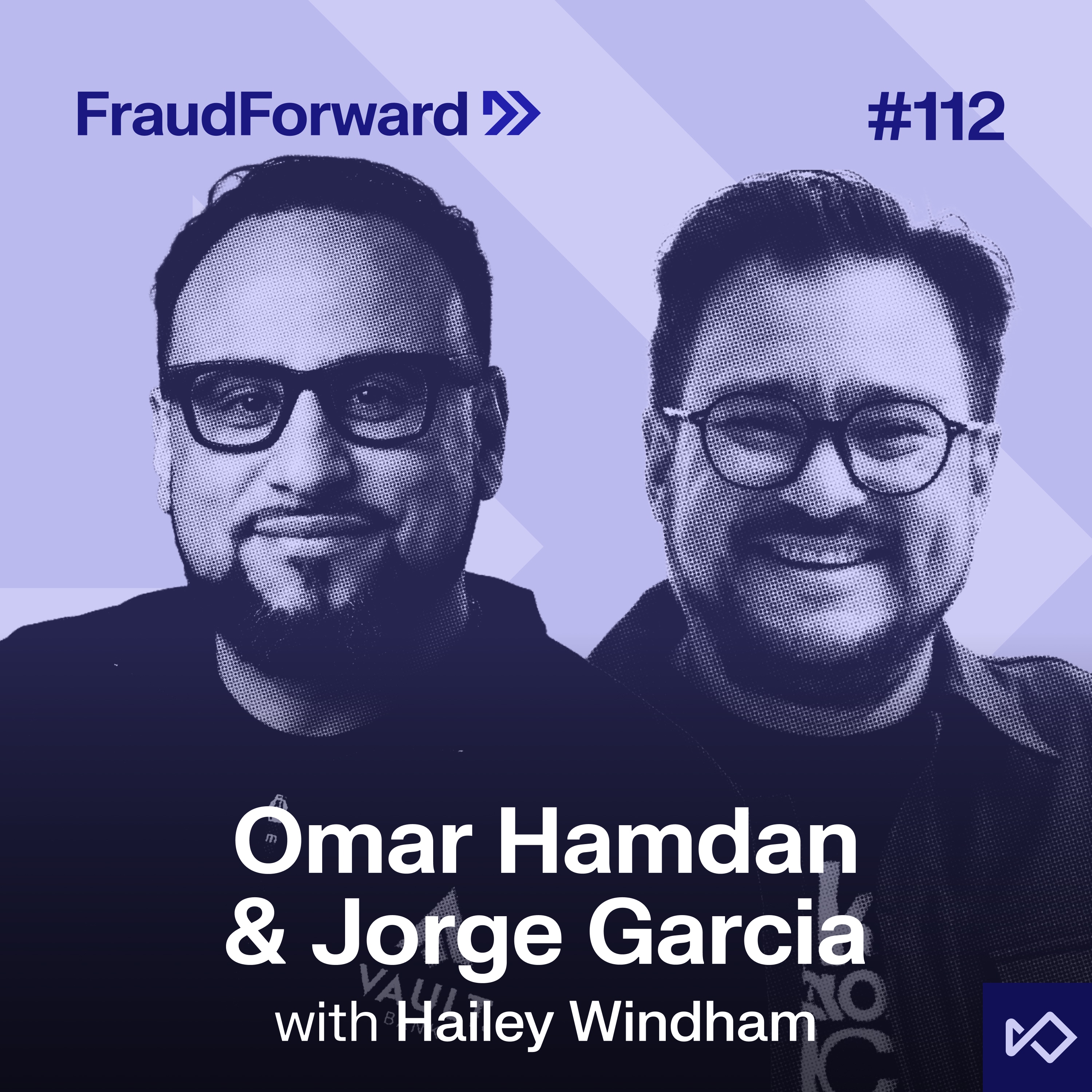
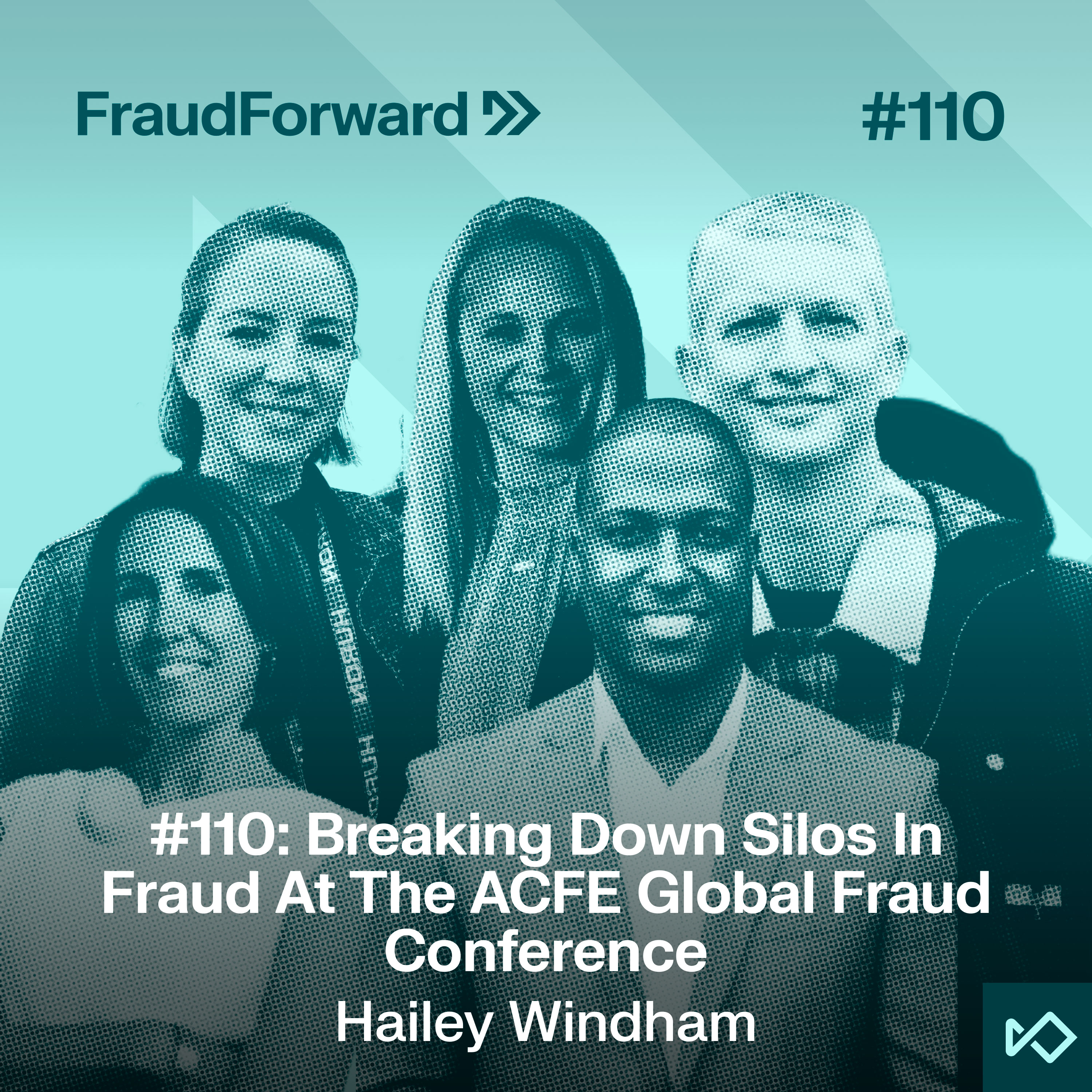
    Breaking down silos at the ACFE global fraud conference

    What’s up fraud fighters, and welcome back to Fraud Forward! I always say fraud is a team sport, and this episode is exactly why. I recorded these conversations live from the ACFE fraud conference in Boston, sitting down with five fraud fighters who each bring a completely different piece of the puzzle. Law enforcement. Banking. Government. Fintech. BSA. Investigations. Every single one of them came back to the same point: we cannot fight fraud alone, and the silos we work in are one of the biggest advantages we are handing to fraudsters. Marc Evans opened the conversation by making the case that fraud analyst training has to be rooted in real cases, not theory. Linda Miller followed with one of the most honest takes of the day: the organizations waiting for regulatory guidance before building their AI governance frameworks are already behind. Tracy Swaim added something I had never heard framed so cleanly, that document fraud is a context problem, not a technology problem. And Dustin Eaton brought it back to the data: clean, collective information is the edge, and fraudsters are counting on us not having it. Jen Lamont closed it out with a reminder that hit close to home. For every fraud fighter who cannot make it to a conference like this, the knowledge is still out there. Podcasts, white papers, LinkedIn, local and international fraud associations. This community is one of the most generous there is. And if there is one thing I took away from all five conversations, it is this: fraudsters share everything with each other. Until we do the same, we are always playing catch-up. What you’ll hear in this episode: Why the ACFE fraud conference brings together fraud fighters from banking, government, law enforcement, fintech, and investigations under one roof How cross-sector fraud prevention helps organizations identify emerging threats faster Why breaking silos in fraud is one of the biggest opportunities facing our industry right now What Marc Evans has learned training new fraud analysts using real investigations and holistic case data Why AI governance is outpacing organizational readiness, and what Linda Miller says financial institutions should do before regulations catch up How Tracy Swaim reframes document fraud detection around interrogating context rather than authenticating the document itself Why clean and connected data is the foundation of effective AI-driven fraud prevention, according to Dustin Eaton How Jen Lamont approaches fraud analyst training, mentorship, and continuous learning for fraud teams at every level Career advice for new fraud fighters from five professionals who have built careers across every corner of this industry You should listen to this episode if you: Attend fraud conferences and want practical ideas you can bring back to your team Lead a fraud, investigations, risk, or financial crimes program and want to strengthen cross-sector fraud prevention Are responsible for fraud analyst training or new fraud analyst onboarding Want to understand how AI governance and deepfake document fraud are reshaping the threat landscape Are early in your fraud career and want honest advice from professionals across banking, government, law enforcement, and fintech

  • #111
    July 22 · 26 min

    The reverse card: Live from ACFE

    What’s up fraud fighters, and welcome back to Fraud Forward! This episode is a little different, and honestly, a lot of fun. We recorded this one live from the ACFE conference while playing a game of Uno. And if you've worked in fraud long enough, you already know why that felt like the perfect setup. Just when you think you've figured everything out, someone throws down a reverse card, the rules change, and suddenly you're solving a completely different problem. Joining me are three incredible fraud leaders: Karen Boyer, Steve Lenderman, and Jen Lamont. What starts as a lighthearted game quickly turns into a candid conversation about some of the biggest questions facing fraud teams today. From agentic AI fraud and synthetic identity fraud to fraud leadership, analyst development, scam prevention, and where human expertise still matters most. One thing I loved about this conversation is that there was no script. Just practitioners sharing honest opinions about what's changing, what's overhyped, and what they believe will define the next generation of fraud prevention. What you'll hear in this episode: Why agentic AI fraud could reshape the future of synthetic identity fraud The growing risks surrounding synthetic agents fraud and autonomous digital identities Why human in the loop AI remains critical for fraud prevention Whether AI should investigate alerts or focus on SAR automation The future role of fraud analysts in an AI-driven industry Why check fraud continues to frustrate fraud professionals The value of networking, mentorship, and industry collaboration You should listen to this episode if you: Lead a fraud prevention, investigations, risk, or financial crimes team and want to hear how other practitioners are thinking about agentic AI fraud and the future of the industry. Are exploring how AI in fraud, machine learning fraud detection, and fraud detection automation can improve operations without losing the value of human expertise. Want a practical discussion on synthetic identity fraud, synthetic agents fraud, and the next generation fraud threats that financial institutions should be preparing for. Are evaluating where human in the loop AI, AI fraud alert triage, AI writing SARs, and SAR automation fit into your fraud program—and where human judgment should remain at the center. Enjoy candid conversations between experienced fraud professionals on leadership, analyst development, fraud education, and the real challenges shaping modern fraud prevention.

  • #110
    July 15 · 11 min

    Beyond the Button: Investigating fraud in the age of agentic payments

    What’s up fraud fighters, and welcome back to Fraud Forward! Over the last few months, I've had more conversations about agentic payments than just about any other topic. At conferences, on webinars, and in discussions with some of the smartest people in payments, compliance, and fraud, one thing has become clear to me: I think we're asking the wrong question. Most people want to know whether AI will start moving money. The question I keep coming back to is this: How do fraud teams investigate transactions when software starts making decisions? In this solo episode, I pull together insights from recent conversations with Matt Vega, Mary Ann Miller, and Matt Janiga to explore what agentic commerce really means for fraud investigations, SAR reporting, and the future of financial crime investigations. We talk about why traditional fraud models have always assumed a human initiated the payment, why that assumption no longer holds, and what investigators will need to understand when AI agents begin making decisions on behalf of customers. The technology may be changing, but the principles of good fraud prevention are not. Documentation, audit trails, authority management, explainability, and strong transaction monitoring will become even more important as agentic payments move from theory to reality. What you’ll hear in this episode: Why agentic payments are fundamentally different from traditional payment automation. How agentic commerce changes the way fraud teams investigate payment fraud. Why audit trails, attribution, and explainability will become essential during fraud investigations. How SAR reporting and AML investigations may evolve as AI becomes part of the payment decision process. Why regulators are focused on enabling innovation safely instead of slowing it down. The three questions every fraud investigator should begin asking today to prepare for the future. You should listen to this episode if you: Work in fraud prevention, AML compliance, investigations, or financial crime. File suspicious activity reports or conduct SAR reporting. Lead fraud operations, transaction monitoring, or payment investigations. Are evaluating how AI and agentic commerce will affect your institution. Want practical steps your team can begin implementing today instead of waiting for the rulebook to catch up.

  • #109
    July 8 · 40 min

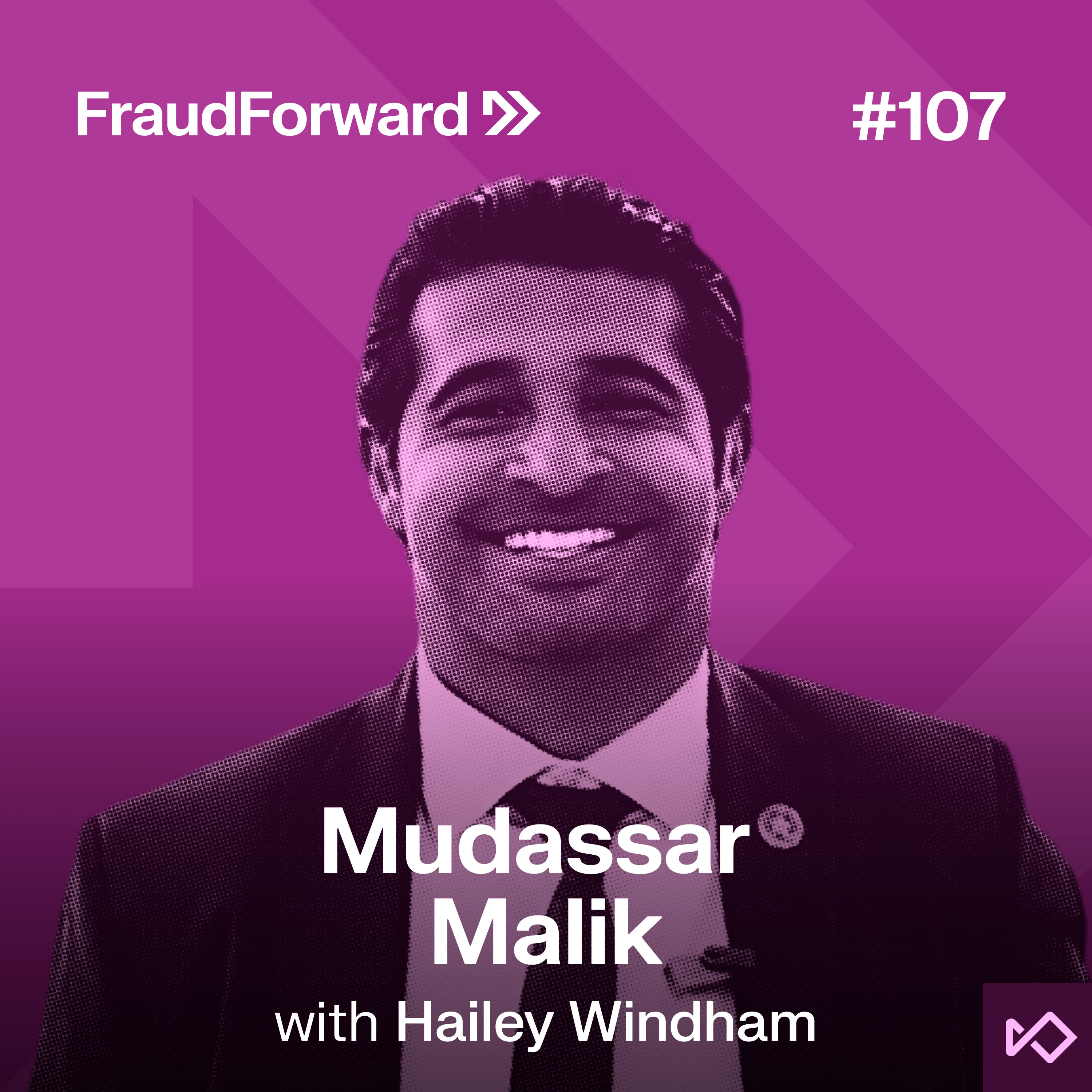
    Inside Deconflict: Bridging Law Enforcement and Banking

    What’s up fraud fighters, and welcome back to Fraud Forward! In this episode, I’m sitting down with Mudassar Malik, Special Agent with the U.S. Secret Service and Founder and CEO of Deconflict.com, to talk about something our industry needs to get a whole lot better at: financial crime deconflict. Money mule networks do not care where one institution’s visibility ends and another one begins. Pig butchering scams, romance scams, business email compromise, BEC fraud, account takeover, wire fraud, they all move across people, accounts, institutions, platforms, and jurisdictions. Meanwhile, too many of us are still trying to solve pieces of the same case from opposite sides of the wall. Mudassar walks us through what happens when law enforcement and banking actually have a better way to connect investigative intelligence, share what they are seeing, and recognize when different teams may be looking at the same financial crime pattern from different angles. This episode is not about sharing everything with everybody. It is about better fraud response, better financial crime intelligence, and better collaboration between the people who are already fighting the same criminal networks. Because if a credit union, a community bank, a larger institution, and law enforcement are all seeing pieces of the same mule activity, but nobody can connect those pieces fast enough, the criminals keep moving. And the victims keep paying for it. What you’ll hear in this episode: Why financial crime deconflict matters for banks, credit unions, fintechs, and law enforcement How the Deconflict platform helps connect investigative intelligence across financial crime cases Why money mule networks, pig butchering scams, romance scams, and BEC fraud require cross-institutional visibility Where 314(b)d information sharing fits into the larger fraud response conversation Why financial institution fraud prevention cannot stop at the edge of one institution’s data How law enforcement data sharing can help fraud fighters move from isolated cases to connected intelligence What teams can take back to think differently about collaboration and case escalation You should listen to this episode if you: Work in fraud, BSA, AML, investigations, or financial crime intelligence at a bank or credit union Are trying to improve financial institution fraud prevention without adding more disconnected alerts Support fraud response for scams, mule activity, business email compromise, or suspicious account movement Want a better way to think about law enforcement data sharing and investigative collaboration

  • #108
    July 1 · 13 min

    From Liability to Visibility: The Real Story Behind NACHA Phase 2

    What’s up fraud fighters, and welcome back to Fraud Forward! Today we are talking about ACH compliance, and I know that may not sound like the most exciting opener in the world, but if you work in fraud, payments, operations, compliance, treasury, management, or anywhere near ACH this matters because ACH is one of the most widely used payment rails in the country. And when something goes wrong, it doesn’t just stay contained to one team. It impacts customers, creates operational strain, introduces regulatory risk, and can expose gaps in how your institution detects and responds to fraud. Over the last few months, I have had conversation after conversation with fraud leaders at community banks and credit unions who are asking the same questions. Do we need new technology? Are we expected to monitor every ACH transaction in real time? What exactly are examiners going to expect from us? And if your head has been spinning a little bit, I want you to hear me on this: you are not alone. This episode is about the real story behind NACHA Phase 2. And to me, the real story is not that every institution needs to run out and buy another fraud platform. The real story is that ACH compliance is becoming a much more intentional conversation. It is about knowing your risk, documenting your processes, understanding who owns what, and being able to explain why your institution monitors ACH fraud the way that it does. I actually think that is a good thing. Because for too long, our industry has leaned on liability as the finish line. If we are not liable, it is not really our problem. And technically, maybe sometimes that has been true. But operationally, ethically, and from a fraud fighter perspective, that has never sat well with me. Fraud does not live in silos. Neither should ACH fraud prevention. What you’ll hear in this episode: Why NACHA Phase 2 is about intentionality, not just technology What changed in the final Nacha ACH rules and why that flexibility matters How ACH compliance applies to community banks and credit unions now in scope Why layered controls do not always mean buying another vendor solution How false pretenses fit into ACH fraud detection and ACH fraud prevention Why RDFI compliance and ODFI compliance require clear ownership across teams What examiners may expect when reviewing your ACH compliance program Five questions every institution should ask about ACH fraud documentation You should listen to this episode if: You work in fraud operations, payments compliance, ACH operations, BSA, AML, or treasury management Your institution is working through NACHA Phase 2 implementation You are trying to understand ACH examiner expectations without overbuilding your program You serve a community bank or credit union and need practical ACH compliance guidance You want to move from a liability mindset to a visibility mindset in payments fraud If you liked this episode, be sure to subscribe and review the podcast on iTunes, Spotify, YouTube, or wherever you listen to podcasts.

  • #107
    June 24 · 1 hr 5 min

    The Hidden Infrastructure Behind Modern Money Movement

    What’s up fraud fighters, and welcome back to Fraud Forward: Y’all, this episode is one of those conversations where I found myself taking notes while we were recording. Matt Janiga from Modern Treasury joined me to talk about hidden fraud infrastructure. We talk all the time about faster payments, one API, better vendor tooling, AI agents, global money movement, and payment modernization. But underneath all of that is a much more complicated reality. There are payment rails, reversibility rules, KYC requirements, digital fingerprints, transaction monitoring decisions, consortium data, fraud operations workflows, and infrastructure choices that determine what fraud teams can actually see and stop. And here is the thing: fraud does not live in silos, and neither does the infrastructure that moves money. Matt has worked across regulation, fintech infrastructure, compliance, payments, and risk, with experience touching Dodd-Frank, Square, Stripe, Lithic, and now Modern Treasury. So this conversation gives us a really practical look at how the industry moved from the pre-vendor world, where teams were basically building fraud and compliance tools from scratch, into a world where specialized partners, orchestration layers, and agentic AI are changing what fraud teams can do. For my credit union and community bank folks especially, this matters because you do not have to build everything alone anymore. A rising tide lifts all boats, and the more we understand the hidden fraud infrastructure behind modern payments, the better we can ask questions, pressure test controls, and protect the people we serve. What you’ll hear in this episode: How Dodd-Frank and post-crisis regulation helped shape the fintech ecosystem we know today Why banks stepping away from certain customer needs opened the door for fintech growth What the pre-vendor world looked like for fraud and compliance teams building tools from scratch Why fraud vendor infrastructure, orchestration layers, and fraud consortium data changed the way teams manage risk What fraud teams miss when they hear “one API” and assume payment infrastructure is simple How payment rail reversibility, ACH fraud, Reg E fraud, and tokenized credentials create hidden operational risk Why global USD accounts and global money movement require strong digital fingerprinting and risk-based controls How agentic AI fraud tools may reshape investigations, fraud operations, and human review over the next five years Why the “front door” is one of the most important places to invest when building a fraud program You should listen to this episode if you: Work in fraud operations, payments, fintech, banking, risk, or compliance Want to better understand the hidden fraud infrastructure behind modern payments infrastructure Are evaluating fraud tooling, fraud vendor infrastructure, or payment orchestration partners Need a clearer view of payment rail reversibility, ACH reversibility, Reg E fraud, or global money movement risk Are thinking about agentic AI fraud, AI fraud agents, digital fingerprinting, and where humans should remain in the loop

  • #106
    June 17 · 38 min

    The Most Underrated Law Enforcement Agency in Fintech

    What’s up, fraud fighters, and welcome to Fraud Forward. In this episode, I am sitting down with Eric Shen, inspector in charge of the criminal investigations group for the United States Postal Inspection Service, to talk about something I think way too many fraud teams overlook: USPIS financial crime. When financial crime escalates, most of us immediately think FBI, Secret Service, Homeland Security, or local law enforcement. And listen, those partners matter. But the Postal Inspection Service is one of the most powerful investigative partners in financial crime investigations, especially when mail theft, check fraud, mail fraud, bank fraud, identity theft, money laundering, or organized fraud networks are part of the picture. This conversation is about more than stolen mail or missing packages. It is about how physical infrastructure still connects to modern financial institution fraud, how fraud teams can build stronger law enforcement partnerships, and why collaboration has to happen before the big case hits your desk. Because behind every fraud case is a real person. A member. A customer. A family. A business. Someone whose trust, dignity, and financial stability may have been shaken in a way they will never forget. And we, fraud fighters, have a responsibility to do something about that. What you’ll hear in this episode: A practical breakdown of how USPIS financial crime investigations work Why the United States Postal Inspection Service matters to banks, credit unions, fintechs, and payments companies How mail theft connects to check fraud, mail fraud, identity theft, bank fraud, and money laundering Why physical mail still matters, even in a digital fraud environment How organized fraud networks use stolen mail, altered checks, social media, and other channels to scale financial crime What makes a strong fraud referral to law enforcement Why relationship building matters before major fraud investigations happen How IAFCI and other industry networks help financial crime investigators connect the dots Why criminals are using social media, Telegram, and other platforms to organize fraud activity How AI and agentic AI are changing the future of financial crime investigations Why human oversight still matters when we use technology to fight fraud Who should listen: Fraud fighters at banks and credit unions Community bank and credit union leaders BSA, AML, fraud, and compliance teams Fintech and payments risk teams Financial crime investigators Frontline teams who see suspicious activity before anyone else does Law enforcement partners working fraud investigations and financial crime cases Risk leaders trying to improve referral and escalation processes Anyone responsible for fraud prevention, investigation, intelligence sharing, or victim support This episode is for the teams who are trying to protect people in the middle of a fraud landscape that is moving fast.

  • #105
    June 10 · 50 min

    AI, Payments & the Future of Fraud Operations — Live from Safeguard

    What’s up, fraud fighters, and welcome to Fraud Forward. I recorded this live from Safeguard’s AI Deep Dive Retreat at The Broadmoor in Colorado Springs, and y’all, let me tell you something: this was not just another room full of AI buzzwords. This was fraud leaders, payment experts, financial institution professionals, fintech voices, marketplace operators, and risk leaders all sitting in the same place asking one very real question. What happens to fraud prevention when artificial intelligence changes everything? The future of AI fraud is not some far-off thing we are all fixin’ to deal with later. It is already here. We are seeing AI change the speed, scale, and complexity of fraud operations right now. We are seeing it show up in synthetic identity fraud, AI scams, AI identity verification, agentic AI fraud, fraud detection automation, governance conversations, and the pressure fraud teams are already carrying every single day. But this episode is not about panic. It is about realism. It is about what fraud fighters are seeing, what institutions are building, where the gaps still are, and how we keep humans at the center while fraud keeps accelerating around us. What you’ll hear in this episode: A practical conversation about the future of AI fraud and what it means for fraud operations How AI fraud prevention is changing across banking, credit unions, fintech, payments, marketplaces, and risk teams Why synthetic identity fraud, AI scams, and identity fraud prevention are becoming major areas of concern How AI in fraud prevention can help investigators analyze data, identify patterns, and reduce noise Why AI governance in fraud prevention cannot be treated as something we clean up later How agentic AI fraud, know your agent, and KYA fraud prevention are becoming part of the next conversation Why human-in-the-loop fraud detection still matters, even when fraud analyst AI tools are getting better How fraud fighters and AI can work together without replacing the people who know this work best A reminder that responsible AI risk management has to include governance, empathy, collaboration, and practical controls Who should listen: Financial institution leaders and fraud professionals Risk, compliance, and cybersecurity teams Fraud operations teams and investigators Credit union and community bank leaders Banking fraud prevention teams Credit union fraud prevention teams Fintech, payments, and marketplace risk teams BSA, AML, KYC, and identity teams Regulators and policy advisors Industry advocates and victim support professionals Media professionals covering scams, fraud, AI, and financial crime Anyone trying to understand how AI-driven fraud affects real people, real institutions, and real fraud teams This conversation is for the fraud fighters who are not just trying to check a compliance box. It is for the teams trying to protect members, customers, and communities while also figuring out how to use AI-powered fraud prevention without creating new risk.

  • #104
    June 3 · 55 min

    Accelerate What, Exactly? The Fraud Side of Fintech Innovation

    What’s up, fraud fighters, and welcome back to Fraud Forward! This conversation is one I think a lot of us need right now. Financial services are moving fast. Fintech innovations, AI in financial services, real-time payments, embedded finance, digital assets, and payment systems modernization are all changing how institutions serve members and customers. And let me just assure you, fraud fighters are not anti-innovation. We are not the department of no. We are the people who know what happens when fintech innovation moves faster than controls, when fintech compliance is treated like a checklist, and when fraud risk management gets discussed only after something has already gone wrong. In this episode, I sit down with Nyla Cortes to talk through what fintech innovations really mean for credit unions, community banks, fraud teams, BSA officers, compliance leaders, and frontline staff trying to protect people in real time. Because behind every fraud case is a customer. A member. A family. Someone whose trust, dignity, and financial stability may be permanently affected. That is why this conversation matters. What you’ll hear in this episode: A practical look at how fintech innovations are changing fraud risk inside financial institutions Why modernization creates opportunity, but also expands the attack surface What AI governance in financial services needs to look like before something goes wrong How AI in financial services can support fraud prevention strategies when governance is built in Why real-time payments require real-time fraud operations How fintech partnerships and third-party risk management can introduce hidden exposure Why fintech risk management has to include fraud, compliance, BSA, AML, operations, and frontline teams What community bank fintech adoption looks like when resources are already stretched Why operational readiness matters before losses show up on a report How we can support fintech fraud prevention without forgetting the people impacted by crime This is not a political conversation. It is not a vendor pitch. It is a practical, honest conversation about what it takes to modernize responsibly. Who should listen: This episode is for the fraud fighters doing the work every day. Fraud directors and fraud analysts BSA and AML officers Risk and compliance leaders Community bank and credit union teams Frontline tellers and member service representatives Vendor risk and fintech partnership teams Cybersecurity and payments professionals Regulators and policy advisors Anyone trying to balance fintech innovation, fraud prevention strategies, consumer protection, and operational reality If you are sitting inside a smaller institution thinking, “Holy moly, we are being asked to move faster, but we do not have the same resources as the big banks,” I want you to hear me. You are not behind because you are doing something wrong. You are operating in an environment where fintech innovations are accelerating faster than the resources available to manage the risk. And that means we have to get very intentional. Show Notes: https://www.whitehouse.gov/presidential-actions/2026/05/integrating-financial-technology-innovation-into-regulatory-frameworks/ https://www.whitehouse.gov/fact-sheets/2026/05/fact-sheet-president-donald-j-trump-integrates-financial-technology-innovation-into-regulatory-frameworks/ https://www.sardine.ai/whitepapers/the-agentic-ai-oversight-framework

  • #103
    May 27 · 13 min

    Fraud as Infrastructure

    What’s up, fraud fighters, and welcome back to Fraud Forward! I want to take a moment and talk about something bigger than one scam trend, one crypto headline, or one fraud typology. We are talking about fraud as infrastructure. Because what we are seeing right now is not isolated activity. Organized fraud networks are operating like coordinated systems, connecting pig butchering scams, social engineering scams, mule accounts, crypto money laundering, fraud and AML gaps, and national security and financial crime concerns. And y’all, this matters because behind every case is a real person. Someone’s retirement. Someone’s trust. Someone’s financial stability. Someone who was manipulated by a criminal network long before the money ever moved. What you’ll hear in this episode: Why fraud as infrastructure changes how we need to think about financial crime How organized fraud networks are using scam infrastructure, mule accounts, and crypto money laundering Why pig butchering scams and social engineering scams are not simple one-off cases Where financial institutions are making progress in fraud prevention and scam prevention Why fraud investigations need stronger collaboration across fraud, AML, cybercrime, and law enforcement How public-private partnerships can help close the gaps criminals are exploiting What fraud fighters can take back to their teams as organized fraud becomes more connected Who should listen: Financial institution leaders and fraud professionals Risk, compliance, fraud and AML, and cybersecurity teams BSA officers and fraud investigators Regulators and policy advisors Public-private partnership leaders Victim support and advocacy professionals Anyone trying to understand how organized fraud impacts real people Fraud does not live in silos, and neither should our solutions.

  • #102
    May 21 · 54 min

    Payment Fraud Prevention and the Future of Trust

    What’s up, fraud fighters, and welcome back to Fraud Forward! I wanted to do something different for our 100th episode. I didn’t want a victory lap. I wanted an honest conversation about payment fraud prevention, where our systems feel fragile, and whether we are building financial infrastructure worthy of public trust. I brought together Karisse Hendrick, Becky Reed, David Maimon, and Jeff Taylor to talk about what fraud fighters are seeing across banking, payments, e-commerce, digital assets, and fraud research. Fraud is moving fast. Payments are moving faster. AI fraud detection and AI fraud prevention are becoming more important every day. Institutions are trying to balance innovation, regulation, speed, and protection all at once. This conversation is not just about payment fraud detection or payment risk management. Behind every account takeover fraud event, business email compromise attack, wire fraud case, ACH fraud prevention gap, or social engineering fraud scheme is a real person, a real business, and a real loss of trust. What you’ll hear in this episode: How faster payments are changing real-time payment fraud prevention Why payment fraud detection must move beyond isolated incidents How AI fraud prevention, AI fraud detection, behavioral biometrics, and device intelligence are changing fraud strategy Why business email compromise, check fraud, wire fraud prevention, ACH fraud prevention, and account takeover fraud remain major concerns How digital payment fraud is evolving across banks, merchants, marketplaces, and digital asset rails Why social engineering fraud continues to exploit trust, emotion, and human behavior What collaboration, fraud education, and payment risk management need to look like moving forward Who should listen: Fraud fighters across banking, fintech, payments, and e-commerce Financial institution leaders and fraud professionals Risk, compliance, cybersecurity, and payment operations teams Teams focused on real-time payment fraud prevention Professionals working on ACH fraud prevention, wire fraud prevention, and account takeover fraud Leaders evaluating AI fraud prevention, behavioral biometrics, device intelligence, and fraud orchestration Anyone who cares about protecting trust in financial services

  • #101
    May 13 · 37 min

    Future of Fraud Operations: We Can’t Fight This Alone

    What’s up, fraud fighters, and welcome back to Fraud Forward! In part one, you heard fraud fighters describe the current state of fraud with words like acceleration, chaos, fractured, and explosive. And honestly, none of those felt exaggerated. But in this episode, I wanted to ask a different question. Not just what fraud feels like right now, but what teams are doing that they are actually proud of. And that is where the conversation shifted. Instead of only hearing about pressure and burnout, I started hearing about collaboration, communication, empathy, innovation, and people who are trying to figure this out together in real time. That is what stood out to me most at Fraud Fight Club this year. Not just the tools. Not just the AI in fraud prevention conversations. Not even just the tactics. The people. This episode is really about the future of fraud operations. And if there is one thing that came through loud and clear, it is this: we cannot fight this alone anymore. What you’ll hear in this episode: Why fraud prevention in banking is becoming more collaborative How fraud and AML collaboration is helping teams see more of the full picture Why 314(b) information sharing matters in today’s fraud environment How fraud prevention strategy is shifting from reactive detection to proactive prevention Why human-centered fraud prevention and empathy in fraud investigations still matter How fraud prevention technology and fraud analytics are changing the way teams work What fraud prevention professionals are doing right now to build stronger networks You should listen to this episode if: You work in banking fraud detection or fraud risk management You are trying to improve fraud decisioning inside your institution You care about real-time fraud prevention and operational response You want to understand where credit union fraud prevention is headingYou believe collaboration is no longer optional in fraud operations If you liked this episode, be sure to subscribe and review the podcast on iTunes, Spotify, YouTube, or wherever you listen to podcasts. It really helps with getting the word out.

  • #100
    May 6 · 10 min

    The State of Fraud in One Word

    What’s up fraud fighters, and welcome back to Fraud Forward! I asked a room full of fraud professionals one question: describe the current state of fraud in one word. And the answers? Acceleration. Chaos. Explosive. Scary. Unmanageable. No one said stable. No one said under control. So in this episode, I’m breaking down what those answers tell us about evolving fraud trends, the current fraud landscape, and the pressure fraud teams are feeling across banking, financial services, and every channel where fraud is moving faster than our systems were built to handle. This isn’t just about the latest fraud trends. This is about fraud attack evolution, AI-driven fraud attacks, organized fraud trends, and the operational reality of trying to protect real people in real time. What you will hear in this episode: A structured breakdown of evolving fraud trends from fraud professionals on the front lines A look at the latest fraud trends shaping banking, payments, and financial services Insight into how AI-driven fraud attacks and automation are accelerating scam operations Discussion of cross-channel fraud trends, from impersonation scams to social engineering fraud trends A focused look at fraud operations trends and why teams feel more reactive than proactive Practical fraud prevention strategy insights for adapting to faster, more coordinated attacks A call for stronger collaboration, benchmarking, and shared intelligence across the fraud ecosystem This is one of those episodes where we move from what fraud feels like to what we actually need to do about it. Who should listen: Financial institution leaders and fraud professionals Risk, compliance, and cybersecurity teams Fraud operations, payments, and product leaders Banking and credit union teams tracking fraud trends in financial services Industry advocates and fraud community members Anyone trying to understand modern fraud trends and how fast they are changing If you’re in this space and you’ve felt that pressure, this episode is for you. Because we’re all dealing with it. Links: FI Benchmarking Survey Link: https://form.typeform.com/to/WqJf9uqb

  • #99
    April 29 · 25 min

    There’s No Such Thing as “Just a Teller”

    What’s up, fraud fighters, and welcome back to Fraud Forward! Before I was sitting in fraud strategy conversations, before I was talking about controls, governance, and layered defenses, before any of this, I was on the teller line. Face-to-face with members. Balancing speed, service, and that gut feeling when something just didn’t sit right. And I’m telling you right now, that experience shaped everything I understand about teller fraud prevention today. Because here’s the reality we don’t talk about enough. We’re building smarter systems. We’re investing in AI. We’re moving toward real-time monitoring and faster payments. And fraud is still scaling right alongside it. The latest IC3 report made that very clear. The numbers are growing. The losses are growing. And if we’re being honest, part of the problem is that we’re underestimating one of the most powerful fraud prevention tools we already have, our frontline. This episode is about resetting that perspective. It’s about recognizing that fraud isn’t just happening in data. It’s happening in behavior. In hesitation. In subtle shifts that no system can fully capture yet. And that is exactly where teller fraud prevention becomes critical. Here is what that frontline-first fraud prevention mindset means in practice: · Recognizing that behavioral signals are often the earliest fraud indicators · Treating frontline staff as active participants in fraud risk management · Bridging the gap between transaction data and real-world interaction · Building fraud prevention strategy around human insight, not just automation What you’ll hear in this episode: · Why teller fraud prevention is one of the most underutilized controls in banking · How frontline fraud detection captures signals that systems miss · A real-world scenario showing how behavioral fraud detection plays out · Why fraud prevention in banking must include human interaction layers · How financial institution fraud controls fail without frontline input You should listen to this episode if you: · Work in fraud risk management and want stronger frontline fraud detection · Are building a fraud prevention strategy in banking and need better alignment · Oversee teller teams or call centers and want to improve fraud awareness · Have seen fraud slip through despite strong systems and controls · Want to understand how human fraud detection signals impact real outcomes If you liked this episode, be sure to subscribe and review the podcast on iTunes, Spotify, YouTube, or wherever you listen to podcasts. It really helps with getting the word out.

  • #98
    April 22 · 58 min

    Fraud Fight Club Debrief w/Karisse Hendrick and Jen Lamont

    What’s up, fraud fighters, and welcome back to Fraud Forward! This Fraud Fight Club recap is one I have been wanting to put down in words because some events are just conferences, and some events remind you exactly why this work matters. This one brought together fraud fighters from across the industry, from brand-new practitioners to people who have shaped this space for years, and it created the kind of honest, useful, human conversations that do not happen nearly enough. This was not just another event where people showed up, swapped business cards, sat through panels, and flew home. Yes, there were sessions. Yes, there were deep dives. Yes, there were a lot of smart people in the room. But what stayed with me was the heart behind it. The honesty. The humility. The willingness to share what is not working, not just what sounds good on stage. In this episode, I sat down with Hailey Windham and Jen Lamont after a packed few days in Charlotte to talk through what stood out, what hit hard, and what still has me thinking. We talked about the sessions, about the conversations happening in the hallways, the sidebars, the debriefs, and the moments that make you stop and think, okay, this industry is changing. We got into the real heart of Fraud Fight Club, the energy behind it, the collaboration, the pattern recognition, and the reminder that anti-fraud collaboration is not a nice idea anymore. It is a requirement. And honestly, this conversation also went somewhere deeper. We talked about scam awareness through the lens of victim stories that were impossible to shake. We talked about first-party fraud and a case that showed what can happen when investigation, collaboration, and persistence all line up. We talked about ghost tapping fraud, chargeback fraud, and the very real sense that fraud fighters are trying to move faster in an environment where fraudsters still have fewer constraints than the rest of us. This is one of those episodes where the big takeaway is not just “here is what happened at a fraud conference.” It is bigger than that. It is about what happens when the people who care deeply about scam prevention, financial institution fraud, and banking fraud get in the same room and stop pretending they can solve it alone. Here is what that collaborative fraud-fighting mindset means in practice: It means making room for new fraud fighters, not just established voices. It means learning from victim stories without turning their pain into a talking point. It means sharing tactics, trends, and blind spots across institutions instead of guarding information too tightly. It means recognizing that fraud industry networking only matters if it turns into action after the event ends. What you’ll hear in this episode: Why Fraud Fight Club feels different from other fraud conferences What Tracy Hall’s story revealed about the emotional and systemic toll of scams Why scam awareness and victim advocacy have to be part of any serious fraud prevention conference conversation What stood out in Jen Lamont’s first-party fraud case with Marc Evans Why ghost tapping fraud is still creating confusion for financial institutions How chargeback fraud, merchant fraud, and issuer-side fraud strategy connect more than people realize Why anti fraud collaboration is becoming one of the most important shifts in the industry How Merchant Fraud Alliance fits into the bigger picture from here You should listen to this episode if you: Work in financial institution fraud and want a sharper sense of where the industry is heading Care about scam prevention and want a more human conversation about romance scam victim advocacy Are trying to understand why first-party fraud and ghost tapping fraud keep surfacing in the same broader fraud conversations Want a real fraud event recap that goes deeper than “these were the sessions” Believe fraud industry networking should lead to actual progress, not just more business cards If you liked this episode, be sure to subscribe and review the podcast on iTunes, Spotify, YouTube, or wherever you listen to podcasts. It really helps with getting the word out.

  • #97
    April 15 · 57 min

    The Gaps We Create: Controls, Strategy, and Process Misalignment w/ Angela Diaz

    What’s up, fraud fighters, and welcome back to Fraud Forward! In this episode, I’m sitting down with Angela Diaz to talk about something that sounds simple on the surface, but honestly, it creates more fraud gaps than a lot of teams realize. We throw around terms like controls, strategy, and process all the time in fraud operations. We say them like they mean the same thing. They do not. And when we start treating them like they are interchangeable, that is exactly where things begin to break down. This conversation came directly from Angela, and I loved that immediately because when a practitioner says, “we need to talk about this,” that usually means there is something real happening inside fraud programs right now. And this one is real. I have seen it. You have probably seen it too. Teams are busy, alerts are firing, processes are moving, and yet losses are still getting through. That is usually not because nobody cares. It is because the foundation is off. So this episode is really about getting back to basics in the best possible way. We slow down and separate fraud controls from fraud strategy and from fraud processes, because if we cannot define those correctly, we are going to build the rest of the fraud program on top of confusion. And once that happens, fraudsters do what they always do. They find the gap and they use it. What you’ll hear in this episode: The real difference between fraud controls, fraud strategy, and fraud processes Why preventative vs detective controls matter more than most teams realize How process mapping in fraud helps expose operational fraud gaps Why control performance monitoring needs to be part of every fraud risk management conversation What the Chase check fraud incident shows us about fraud loss prevention controls How fraud leaders can tell whether they have a true layered approach or just more stuff Why fraud monitoring needs to connect back to strategy, not just activity Where process gaps in banking show up in ATM fraud controls, payments risk controls, and check fraud control in banking Why vendor management fraud risk and lack of line of sight create another layer of exposure You should listen to this episode if: You work in fraud operations and feel like your team is doing a lot but still not getting ahead of loss You are trying to mature your fraud program and need clearer thinking around financial institution fraud controls You are working on a fraud risk assessment and need a better way to think about risk entry points You know your team has processes in place, but you are not sure whether they are actually functioning like controls You want a more practical way to think about fraud control strategy in banking without making it overly complicated Subscribe and stay connected If this episode makes you pause and rethink something in your own program, send it to your team. Really. Start the conversation. Pressure test the way controls, strategy, and process actually show up in your environment. And if you want more of these real conversations, make sure you are subscribed to Fraud Forward and signed up for the Monday Fraud Fix.

Showing 1–20 of 20 episodes