Skip to content
Artwork for Found in Interpretation Podcast
BusinessCareers

Found in Interpretation Podcast

Alain Breton and Brian Bickford, Conference Interpreters

Found in Interpretation is a bilingual podcast dedicated to exploring the multifaceted world of conference interpretation. Hosted by seasoned interpreters Alain Breton and Brian Bickford, each episode delves into the challenges, triumphs, and evolving dynamics of the interpreting profession in both English and French. From dissecting the nuances between remote and on-site interpretation to unpacking the cognitive demands placed on interpreters, Alain and Brian offer valuable insights drawn from personal experience and industry expertise.

Play
  • 20 episodes
  • Avg 51 min
  • English
  • S1 · E72
    September 10 · 55 min

    Ep. 72 : Quelle place pour les interprètes de conférence, avec Betty Cohen

    Quelle place les interprètes de conférence occupent-ils au sein de l’OTTIAQ? Que représente le titre d’interprète agréé et jusqu’où un ordre professionnel peut-il intervenir dans les enjeux de la profession?Dans cet épisode de Found in Interpretation, Alain Breton et Brian Bickford reçoivent Betty Cohen, présidente de l’Ordre des traducteurs, terminologues et interprètes agréés du Québec, pour une discussion sur les questions qui touchent les interprètes au Québec et ailleurs au Canada.Dans un ordre composé majoritairement de traducteurs, comment faire entendre les réalités de l’interprétation de conférence? Avec Betty, nous explorons la valeur de l’agrément, les démarches d’admission, l’inspection professionnelle et la participation des interprètes aux décisions de l’OTTIAQ.Nous abordons aussi une question centrale : qui défend les intérêts des interprètes? La conversation précise les rôles complémentaires d’un ordre professionnel et d’une association, ainsi que les liens entre protection du public, qualité des services et conditions de travail.Enfin, nous discutons des relations avec le Bureau de la traduction, des effets de l’intelligence artificielle sur les professions langagières et de l’évolution des attentes des clients.Dans cet épisode :• La place des interprètes de conférence au sein de l’OTTIAQ• La valeur du titre d’interprète agréé• L’admission, la déontologie et l’inspection professionnelle• Les différentes spécialités en interprétation• Les associations provinciales et le Bureau de la traduction• La représentation des interprètes et le mandat de l’Ordre• L’intelligence artificielle et le jugement professionnel• La formation, le réseautage et le congrès de l’OTTIAQVous êtes interprète au Canada, membre ou non de l’OTTIAQ? Qu’attendez-vous d’un ordre professionnel ou d’une association? Partagez votre expérience en commentaire.Abonnez-vous à Found in Interpretation pour suivre nos échanges avec les personnes qui font vivre l’interprétation. Aimez et partagez cet épisode, et proposez-nous vos questions ou vos invités pour une prochaine discussion!#OTTIAQ #InterprétationDeConférence #Interprétation
  • S1 · E71
    September 2 · 39 min

    Ep. 71: Interpreting Beyond Words: Matthew Perret on AI & the EU

    What does a human interpreter convey beyond the words themselves—and can AI do the same?In episode 71 of Found in Interpretation, Alain Breton and Brian Bickford welcome Matthew Perret, conference interpreter, interpreter trainer, and comedy writer and performer working at the European Parliament.From literary translation and theatre to multilingual political debates, Matthew explains how his background shaped his approach to simultaneous interpreting. We explore the importance of voice, intention, humour, and the relationship between speakers and listeners.Matthew also shares his perspective on AI interpreting: what gets lost when communication is reduced to a transcript, and why translating words is only part of the task.In this conversation:• Interpreting at the European Commission and European Parliament• Balancing confident delivery with accuracy and intellectual honesty• Conveying meaning without embellishing the message• AI, human communication, and the limits of transcription• Relay interpreting, cultural nuance, and language combinations• Training, accreditation, mentoring, and entering the profession• Teamwork and rapid turns during parliamentary debates

  • S1 · E70
    June 25 · 46 min

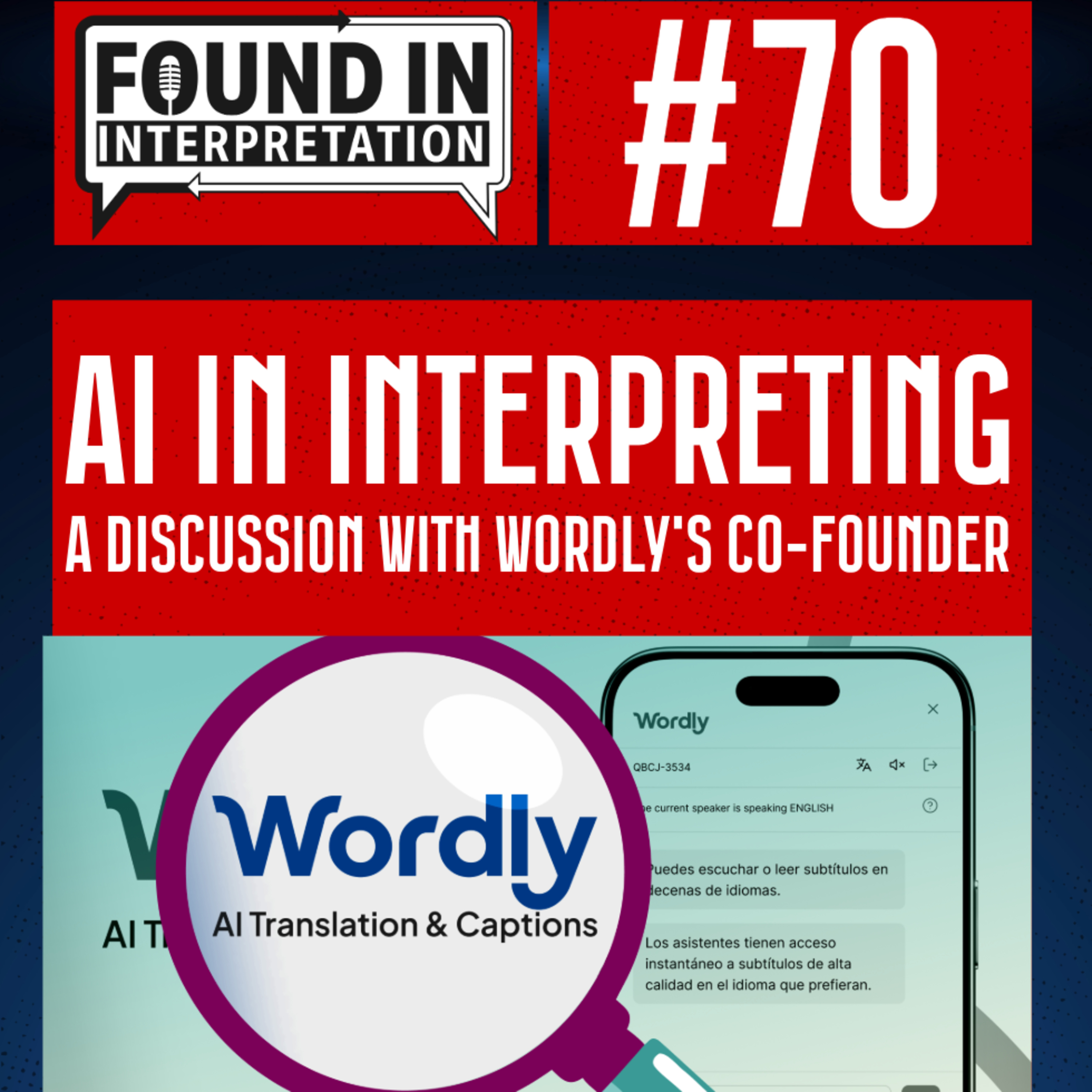
    Ep. 70 - Wordly, an AI Interpreting software, discussion with Kirk Hendrickson.

    Kirk Hendrickson, COO and co-founder of Wordly, joins Found in Interpretation to discuss AI-powered simultaneous interpretation across 67 languages. In this honest conversation, Kirk addresses interpreters' biggest concerns: Is AI replacing you? How does Wordly actually work? And why the "pie gets bigger" for everyone. From United Nations events to enterprise meetings, discover how AI and human interpreters can coexist—and why they already are.00:00 Introduction: Meet Kirk Hendrickson and Wordly03:00 The Evolution of AI in Interpretation08:30 How Wordly Actually Works: Behind the Tech15:00 Friend or Foe? Addressing Interpreters' Fears22:00 Use Cases: Where AI Excels vs. Where Humans are Vital30:00 Quality Control and Accuracy in AI Translation38:00 The Future of the Profession: Co-existing with Machines44:00 Closing Thoughts and Advice for Future Interpreters

  • S1 · E69
    June 16 · 59 min

    Ep. 69 - L'Interprétation Japonais-Français | Marché de Niche, IA et Avenir de la Profession

    FRENCH EPISODE: Camille Ogawa, interprète de conférence française installée au Japon depuis 1989, nous parle du marché fascinant et ultra-niche de l'interprétation japonais-français.Dans cet épisode, nous explorons :🎙️ Son parcours à l'ESIT Paris et formation au Japon📊 Le marché de l'interprétation : 95% japonais-anglais, le reste en niches🤝 Conseillère interculturelle : bien plus que simplement interpréter🌍 Missions exceptionnelles : délégations ministériales, visites en RDC, survols en hélicoptère🏢 Les trois circuits du travail au Japon : agences, business, académique🤖 L'IA et son impact réel sur l'interprétation (spoiler: la consécutive, c'est l'avenir)🌊 Son expérience du tsunami de 2011 et la résilience japonaise👥 L'ageing out de la profession et l'absence de jeunes interprètes japonais A

  • S1 · E68
    June 4 · 50 min

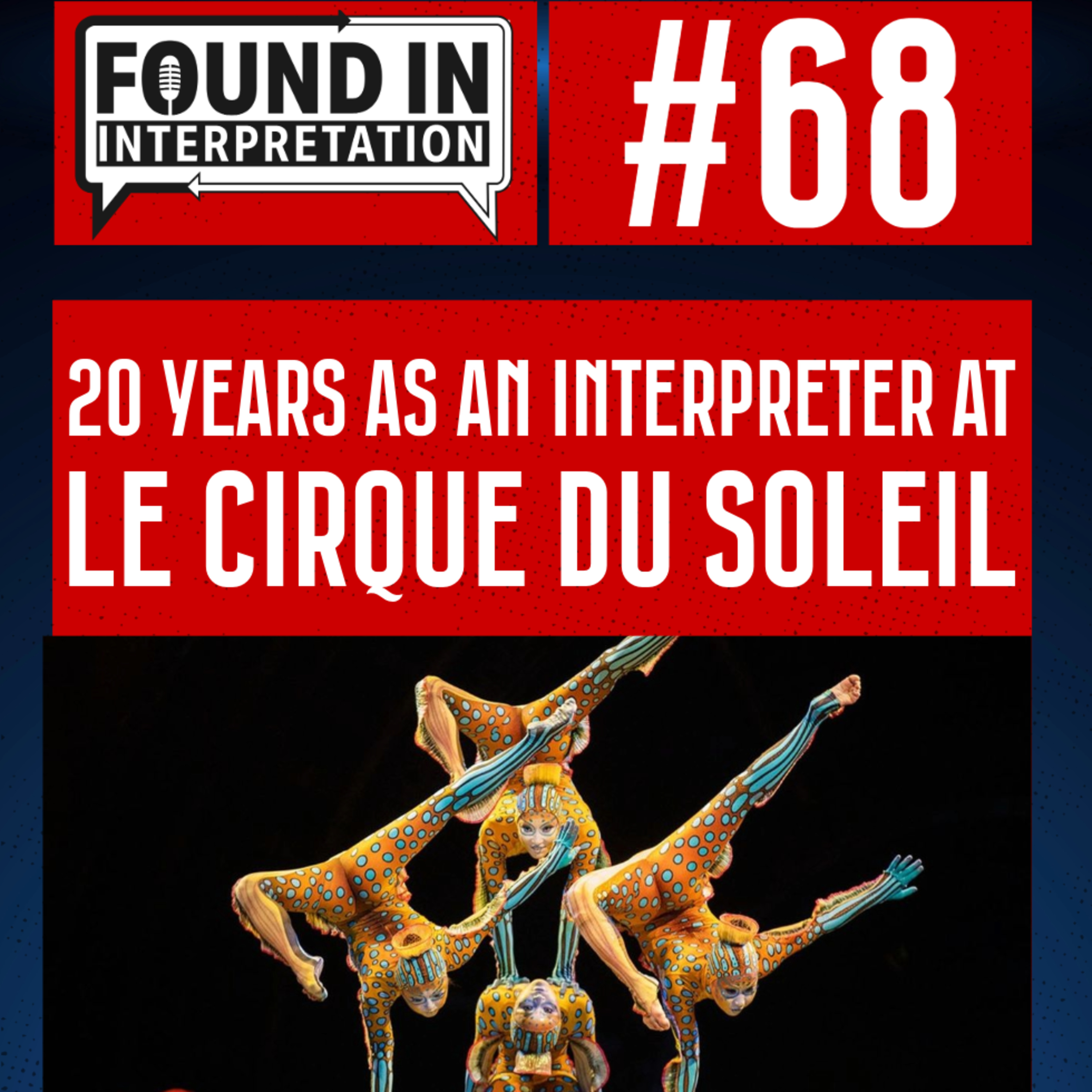
    Ep. 68 | Over 20 Years of Interpreting at Cirque du Soleil

    Sandy Gonçalves has spent over two decades as a Foreign Language Specialist at Cirque du Soleil in Montreal — and her story will completely reframe how you think about our profession.In this episode, Sandy walks us through what it really means to be an interpreter in one of the world's most unique and multilingual workplaces: a "city" of 2,000 employees, 75+ nationalities, and 23 shows running every night around the globe.

  • S1 · E66
    May 28 · 28 min

    Ep. 67 - Le DESS en interprétation de l'UQTR : témoignage de la première cohorte (FRENCH)

    Gilda Boffa et Ayoub El Karoubi font partie de la toute première cohorte du DESS en interprétation de conférences de l'UQTR — un programme en ligne, à temps partiel, lancé il y a à peine un an. Dans cet épisode, ils nous racontent leur parcours vers l'interprétation, leurs raisons de choisir ce programme plutôt que les maîtrises d'Ottawa ou de Glendon, et ce que ça représente concrètement de suivre une formation universitaire en interprétation tout en travaillant déjà sur le marché. On aborde aussi la structure du programme, la place de la consécutive, le défi d'intégrer le marché canadien, et ce que l'avenir leur réserve.

  • S1 · E66
    May 13 · 1 hr 1 min

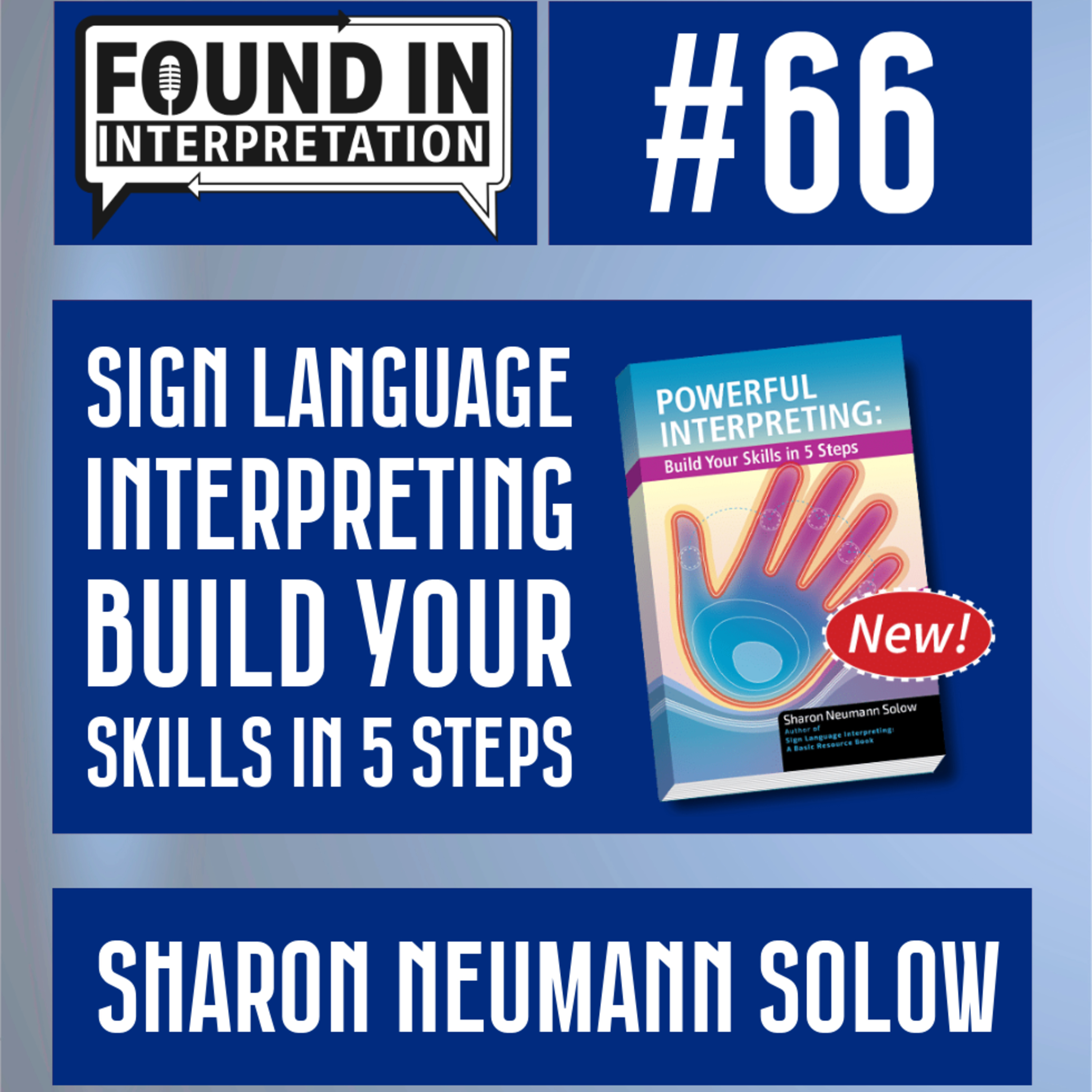
    Ep. 66 - Sign Language Interpretation with Sharon Neumann Solow — History, Training & the Five Steps

    In this episode of Found in Interpretation, we welcome Sharon Neumann Solow — ASL interpreter, trainer, author, and pioneering figure in sign language interpreting with over 60 years of experience.Sharon began interpreting at 15, pulled out of high school to work at a university doctoral program — with no formal training and no roadmap. What followed was a career spent building the profession from the ground up: becoming one of the first professional ASL interpreters, then one of the first trainers, and eventually a multi-award-winning educator with a legal interpreting specialist certificate and an Emmy-nominated PBS appearance to her name.In this episode, we cover:How Sharon got started at 15 as a CODA (child of deaf adults) with no training and no precedentThe history of ASL and its roots in French Sign Language (LSF), via Laurent Clerc and the founding of Gallaudet UniversityWhy ASL and British Sign Language are mutually unintelligible despite sharing a spoken languageIconic vs. abstract signs — and what sign languages around the world have in commonThe fake interpreter at Nelson Mandela's funeral — and what it did for the certification debateHow signed and spoken language interpretation compare: simultaneous vs. consecutive, team intervals, physical fatigueThe silo between signed and spoken language interpreting agencies — and why it's a missed opportunitySharon's new book, Powerful Interpreting: Build Your Skills in Five Steps (2025) — 40 years in the making, and relevant to all interpreters, not just ASLCareer opportunities for multilingual interpreters (trilingual ASL/English/Mexican Sign Language, International Sign, and more)How remote work and COVID changed everything — and why closed captioning is not a replacement for interpretersThe book: Powerful Interpreting: Build Your Skills in 5 Steps by Sharon Neumann Solow, available here: https://www.aslinterpreting.com/ic_store/powerful-interpreting-build-your-skills-in-5-steps/

    • Transcript
  • May 8 · 22 min

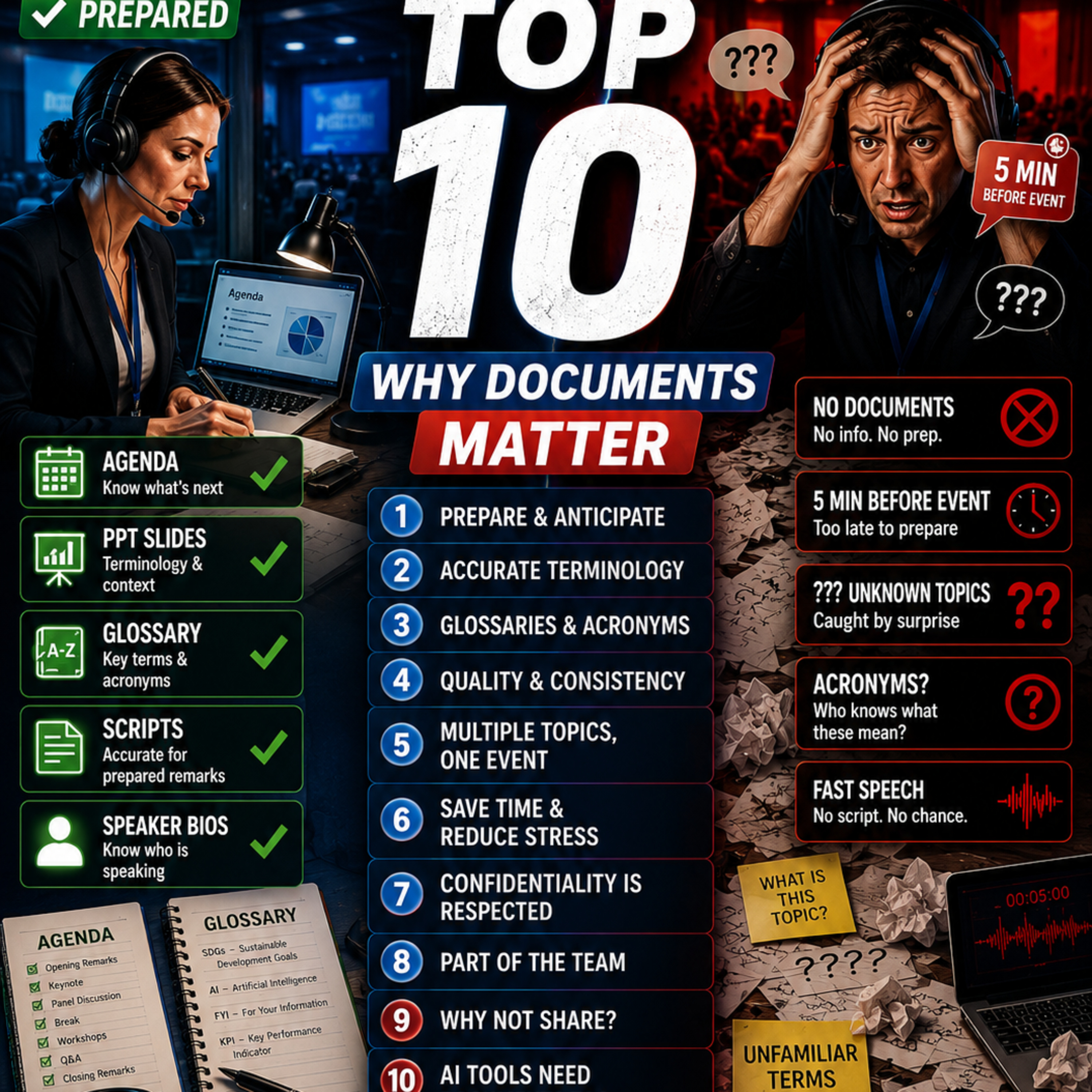
    Ep. 65 – Why Interpreters Need Your Documents Before the Event

    In this special listener-requested episode of Found in Interpretation, Alain and Brian break down the top 10 reasons why event organizers and clients should send documents to their interpreters as early as possible — and why "confidentiality" is not a valid excuse.Topics covered:- How interpreters use agendas and PowerPoints to prepare- Why glossary-building depends on client documents- The particular challenge of scripted speeches read at high speed- Confidentiality and the interpreter's code of ethics- Why interpreters are part of your event team- The truth about AI speech translation accuracy (spoiler: ~46% average)Whether you're an event planner, a client, or an interpreter looking for talking points to share with clients, this episode gives you the full picture.🎙️ Found in Interpretation is co-hosted by Alain Breton and Brian Bickford.👍 Like, share & subscribe — and send us your topic suggestions!#ConferenceInterpreting #Interpretation #EventPlanning #LanguageAccess #Interpreters #FoundInInterpretation #Translation

    • Transcript
  • S1 · E64
    May 8 · 1 hr 26 min

    Ep. 64 - From Hospital Corridors to Remote Booths: Tech, Sound & the Interpreter's Toolkit

    What does a decade as a hospital interpreter in Georgia and New York have to do with sending microphones to speakers in Lima? More than you'd think.In this episode, Alain and Brian sit down with Laura Holcomb — interpreter, trainer, and founder of String and Can — whose winding path through healthcare interpreting, a Glendon master's degree completed from a coffee farm in rural Brazil, and the chaos of early remote platforms eventually made her one of the most practically-minded voices on remote interpreting tech working today.They cover a lot of ground: why good sound is a non-negotiable professional standard and not a nice-to-have, the case for sending microphones to your speakers before an event (and who pays for them), the open-back headphone debate, the chain of custody problem in hybrid and institutional settings, acoustic shock and what interpreters can actually do about it, and whether video back channels are an asset or a distraction in the remote booth.Laura also shares an honest reflection on what it's like to enter the conference interpreting field as a trainer before having a solid interpreting runway of your own — and why, looking back, that shaped her career in ways she didn't expect.Topics covered:Healthcare vs. conference interpreting: two worlds that rarely meetBreaking into a market as an outsider (and why Brazil was harder than expected)Building a small, quality-focused remote interpreting businessMicrophone logistics: why Laura sends them, how she prices for it, and what she asks about portsOpen-back vs. on-ear headphones for long interpreting daysEthernet, second screens, printers: the remote interpreter's minimum viable setupAcoustic shock: peaks, prolonged exposure, and the limits of decibel limitersVideo back channels: useful booth simulation or cognitive overload?When to fire a client over sound conditionsGuest: Laura Holcomb — interpreter, trainer, and founder of String and CanFound in Interpretation is a bilingual podcast about conference interpretation, hosted by Alain R. Breton and Brian Bickford.Like, share, and subscribe to help us keep finding great guests.

    • Transcript
  • S1 · E63
    April 22 · 51 min

    Ep. 63 - Interpreting among penguins — life as an interpreter on an Antarctic expedition ship

    What if your office was an expedition ship in Antarctica, and your colleagues were marine biologists, ornithologists, and geologists? For German conference interpreter Luisa Bach, that's not a fantasy — it's her job. In this episode, Luisa takes us inside a world that very few interpreters ever experience: working aboard expedition ships in Antarctica and the Arctic, interpreting for scientists and tourists while navigating Drake Passage swells, driving Zodiac boats, protecting penguins from overeager passengers, and watching whales surface right next to her boat.In this episode:How Luisa discovered and landed her dream job on an expedition shipWhat the interpreting booth looks like on a ship — and what happens when the seas get roughWhy only 100 people are allowed ashore in Antarctica at the same time The difference between the Arctic and Antarctica as working environments Living and working with the scientists you interpret — 12 hours a day, 40 days straightLearning to drive a Zodiac boat as part of the jobThe wildlife you encounter — penguins, whales, orcas (which are actually dolphins), polar bearsWhy AI is already replacing her subtitling work for German broadcasting Why this kind of interpreting job is safe from AI — for nowLuisa Bach is a German conference interpreter based in Berlin. She works across simultaneous interpretation, speech-to-text interpreting, and subtitling for German broadcasting. She is a regular expedition interpreter for Hurtigruten Expeditions, working in both Antarctica and the Arctic.

    • Transcript
  • S1 · E63
    April 22 · 49 min

    Ep. 62 - The ATA President-elect on AI, certification, and the future of our profession.

    What does the future look like for translators and interpreters in the age of AI? Ben Karl — President-elect of the American Translators Association and ATA-certified French to English translator — joins Alain and Brian to talk about professional associations, certification, the upcoming ATA conference in San Francisco, and what it takes to build a resilient language career today.Whether you're a translator, an interpreter, or a student just starting out, this episode is packed with practical insights on why community matters, what AI cannot replace, and how to level up your expertise in a rapidly changing profession.In this episode:How Ben went from going it alone to becoming ATA President-electWhy professional associations are only as strong as their membersThe value of certification — not just for clients, but for yourselfATA's conference in San Francisco (October 28–31, 2026) and what to expectHow interpreters fit into the ATA — and why the interpreters division is the largest in the organizationATA's strategy to promote human expertise in the age of AIJoachim Lepine's standing-room-only session at the last ATA conferenceLanguage access rights in the United States under a changing political landscapeWhat Ben would tell a 25-year-old starting a language career todayBen Karl, MBA, CT is the President-elect of the American Translators Association (ATA). He is a certified French to English translator, copywriter, and founder of BK Translation LLC. He has been an ATA board member since 2021 and holds an advanced Chinese proficiency certificate.

    • Transcript
  • S1 · E61
    April 8 · 54 min

    Ep. 61 - Consecutive Note-Taking and Mindfulness for Interpreters — Laura Burian & Julie Johnson

    What does it take to truly master interpretation? In this episode, Laura Burian and Julie Johnson, both professors at the Middlebury Institute of International Studies at Monterey, share the knowledge behind their online courses on consecutive note-taking and mindfulness for interpreters.As the Middlebury Institute faces closure, these two courses will be taken offline on June 30th, 2026. If you've ever wanted to sharpen your note-taking skills or learn how to stay calm under pressure, now is the time.⚠️ Use discount code FOUND2026 to enroll at a reduced price — valid through June 1st, 2026.🎓 Enroll before June 30th, 2026:🔗 Note-Taking for Consecutive Interpretation: https://www.middlebury.edu/institute/academics/degree-programs/translation-interpretation/program-details/note-taking-consecutive-interpretation🔗 Mindfulness for Interpreters: https://www.middlebury.edu/institute/academics/degree-programs/translation-interpretation/program-details/mindfulness-for-interpreters📖 Resources mentioned:🔗 "River Flow" article in La Linterna del Traductor: https://lalinternadeltraductor.org/n30/wellbeing-and-optimal-performance.html🔗 Peak Performance study interviews (HKBU): https://www.youtube.com/@peak-performance-hkbu/videos🔗 Laura's TEDx Talk on interpretation: https://www.youtube.com/watch?v=5zTLg-Ax2M4In this episode:Why the Middlebury Institute is closing — and what it means for interpretation education. How consecutive note-taking works and why it's becoming a lost skillThe role of memory, attention, and brain wiring in note-taking. What mindfulness really means for interpreters under pressure. How to manage stress before, during, and after an assignment. Letting go of perfectionism without sacrificing quality. The physiology of stress — and how breathing can reset your nervous system.Why awareness is the foundation of great interpretationLaura Burian is a professor of Chinese/English translation and interpretation at the Middlebury Institute. She is the creator of the Note-Taking for Consecutive Interpretation course and an accomplished violinist.Julie Johnson, EdD is a professor at the Middlebury Institute and creator of the Mindfulness for Interpreters course. She has delivered mindfulness workshops for interpreter associations and courts internationally.Found in Interpretation is hosted by Alain Breton and Brian Bickford.📩 Contact us: found-in-interpretation@gmail.com

    • Transcript
  • S1 · E60
    April 2 · 49 min

    Ep. 60 - From Kazakhstan Oil Rigs to London Courtrooms — Anna Kerod

    Anna Kerod started her career as a biologist in St. Petersburg. Thirty years later, she's one of the UK's leading legal interpreters — specializing in commercial arbitration and litigation involving multi-billion dollar disputes. In between: 17 years on a massive oil and gas project in Kazakhstan, drilling rigs, minus-42 winters, and more acronyms than you can shake a stick at.In this episode, Alain and Brian talk with Anna about what it really takes to build a specialized interpretation career, what happens when a court case turns on the meaning of a single word, and why she believes the era of the generalist interpreter is over.In this episode:- How Anna went from biology to oil and gas interpretation in the 1990s- What it's like to interpret on a drilling rig in Kazakhstan — in full PPE- The transition from in-house to freelance and into commercial litigation- Being called as a witness for language-related matters in court- Why specialization is her top advice for interpreters facing AI- ISO certification, AIIC, ITI — what actually matters to clients- Common law vs. civil law and what that means for interpreters- How legal interpreters get paid — contracts, reading-in time, and cancellationsAnna Kerod is a simultaneous interpreter (Russian A, English B) with 20 years of experience. She is Vice Chair of the Institute of Translators and Interpreters (ITI) and a member of AIIC. She is based in Brighton, UK.Found in Interpretation is hosted by Alain Breton and Brian Bickford.📩 Contact us: found.in.interpretation.podcast@gmail.com

    • Transcript
  • March 23 · 48 min

    Ep. 59 - One Trial, Four Languages: The Nuremberg Interpreters

    What really happened inside the booths at the Nuremberg Trials? In this episode, we sit down with Elke Limberger-Katsumi, creator and curator of the exhibition "One Trial, Four Languages," to explore the pioneering interpreters who made simultaneous interpretation possible at Nuremberg in 1945 — and why their story still matters today.We discuss how interpreters were recruited and screened, the birth of simultaneous interpretation, the role of IBM, the yellow and red light system, and the emotional toll on interpreters working through some of history's darkest testimony.🔗 One Trial, Four Languages exhibition: www.1trial-4languages.org🔗 Association managing the project: www.profession-of-interpreting.org🔗 AIIC (International Association of Conference Interpreters): www.aiic.org🔗 AIIC on LinkedIn: https://www.linkedin.com/company/aiic🔗 World of Interpreting (Conference Interpreting - Past, Present, Future): https://www.linkedin.com/company/world-of-interpreting🎙️ Found in Interpretation PodcastHosted by Alain Breton & Brian Bickford

    • Transcript
  • S1 · E58
    March 11 · 54 min

    Ep. 58 - Joachim Lepine - Stop Asking ChatGPT. Ask Yourself First.

    What if the most powerful AI you have access to… is your own brain?In this episode of Found in Interpretation, we sit down for a third time with Joachim Lepine — interpreter trainer, author, and founder of Lion Academy — to talk about his upcoming book YouGPT Before ChatGPT, releasing in late March.Joachim makes a compelling case for something we've all stopped doing: thinking for ourselves before turning to a machine. In a world where ChatGPT has become the default first stop for ideas, writing, decisions and even business strategy, he argues that we've got the order completely backwards.We dig into:- Why going to ChatGPT first leads to cognitive atrophy- How Joachim wrote his book using AI without letting AI write it. - The difference between what machines do well and what only humans can do.- Why French speakers get a worse deal from AI (and why that won't change soon)- The environmental cost of AI that nobody talks about- Confidentiality risks you're probably not aware of

    • Transcript
  • S1 · E57
    March 4 · 1 hr 1 min

    Ep. 57 - Mohamad Moussa : The Evolution of Interpretation Technology

    In this episode of the Found in Interpretation podcast, hosts Alain Breton and Brian Bickford engage with Mohammed Moussa, a pioneer in interpretation technology. They discuss his journey from an entrepreneur to the founder of Global Audio Visual and the innovations he has introduced, including the WebSwitcher platform and modular soundproof booths. The conversation explores the challenges and adaptations in remote and hybrid interpretation, the role of AI in the field, and the importance of maintaining high sound quality for interpreters. The episode concludes with insights into the future of interpretation technology and the ongoing need for human involvement in the process.

    • Transcript
  • S1 · E56
    February 26 · 1 hr 7 min

    Ep. 56 - Sylvie Lemieux : Traducteurs et interprètes face à l’IA et aux neurosciences.

    EPISODE IN FRENCH : Dans cet épisode, Sylvie Lemieux, traductrice et chercheuse, discute des défis auxquels font face les traducteurs et interprètes dans un monde en évolution rapide, notamment à cause de l'intelligence artificielle. Elle aborde la question de l'estime de soi des traducteurs, la nécessité de formation continue, et les changements dans la perception de leur métier. Les impacts de la COVID-19 sur la profession et l'importance de s'adapter aux nouvelles technologies sont également des thèmes centraux de la conversation. Cette conversation explore les thèmes des valeurs personnelles et professionnelles, l'impact de la COVID sur le travail, ainsi que les défis liés à la traduction et à l'interprétation. Les intervenants discutent de l'importance de la priorisation des valeurs, de la charge mentale en post-édition, et des effets du bilinguisme sur la fatigue mentale. Ils abordent également les implications des neurosciences dans le domaine de l'interprétation et l'impact de l'intelligence artificielle sur le travail des traducteurs et interprètes.

    • Transcript
  • S1 · E55
    February 10 · 42 min

    Ep .55 - Paul Appleyard on the early days of computer-assisted translation.

    In this episode of the Found In Interpretation podcast, hosts Alain Breton and Brian Bickford engage with Paul Appleyard, a seasoned professional in translation and interpretation. The conversation explores Paul's extensive career journey, from his early days in translation to managing multilingual software releases and transitioning into interpretation. They discuss the impact of COVID-19 on the industry, cultural shifts in conference content, and the role of AI in translation and interpretation. Paul shares insights on the future of the profession, emphasizing the importance of human connection in an increasingly digital world.

    • Transcript
  • S1 · E54
    February 4 · 51 min

    Ep. 54 - Corrine McKay: Getting Started as a Freelance Interpreter.

    In this episode of the Found in Interpretation podcast, hosts Alain Breton and Brian Bickford welcome back Corinne McKay to discuss her new book, 'Getting Started as a Freelance Interpreter.' The conversation covers various aspects of the interpretation industry, including insights from the American Translators Association conference, the importance of specialization, and the impact of AI on the profession. Corinne shares her experiences and offers valuable advice for aspiring interpreters, emphasizing the significance of professionalism, communication, and continuous learning in the freelance market.

    • Transcript
  • S1 · E53
    January 25 · 54 min

    Ep. 53 - Marisa Rueda Will

    In this episode we welcome Marisa Rueda Will, a seasoned medical interpreter and educator. We discuss the vital role of healthcare interpreters, the importance of certification through organizations like CCHI, and the impact of technology on the profession. Marisa shares her experiences in training new interpreters, the emotional challenges of the job, and the need for cultural sensitivity in patient communication. The conversation highlights the advocacy role interpreters play in healthcare settings and the ongoing need for professional development in the field.

    • Transcript
Showing 1–20 of 20 episodes