Skip to content
Artwork for Forward Deployed
Forward Deployed · September 25 · 1 hr 23 min

Evals - Beyond the Vibe Check | LangChain, Langfuse, Mercor, CoreWeave & Galileo

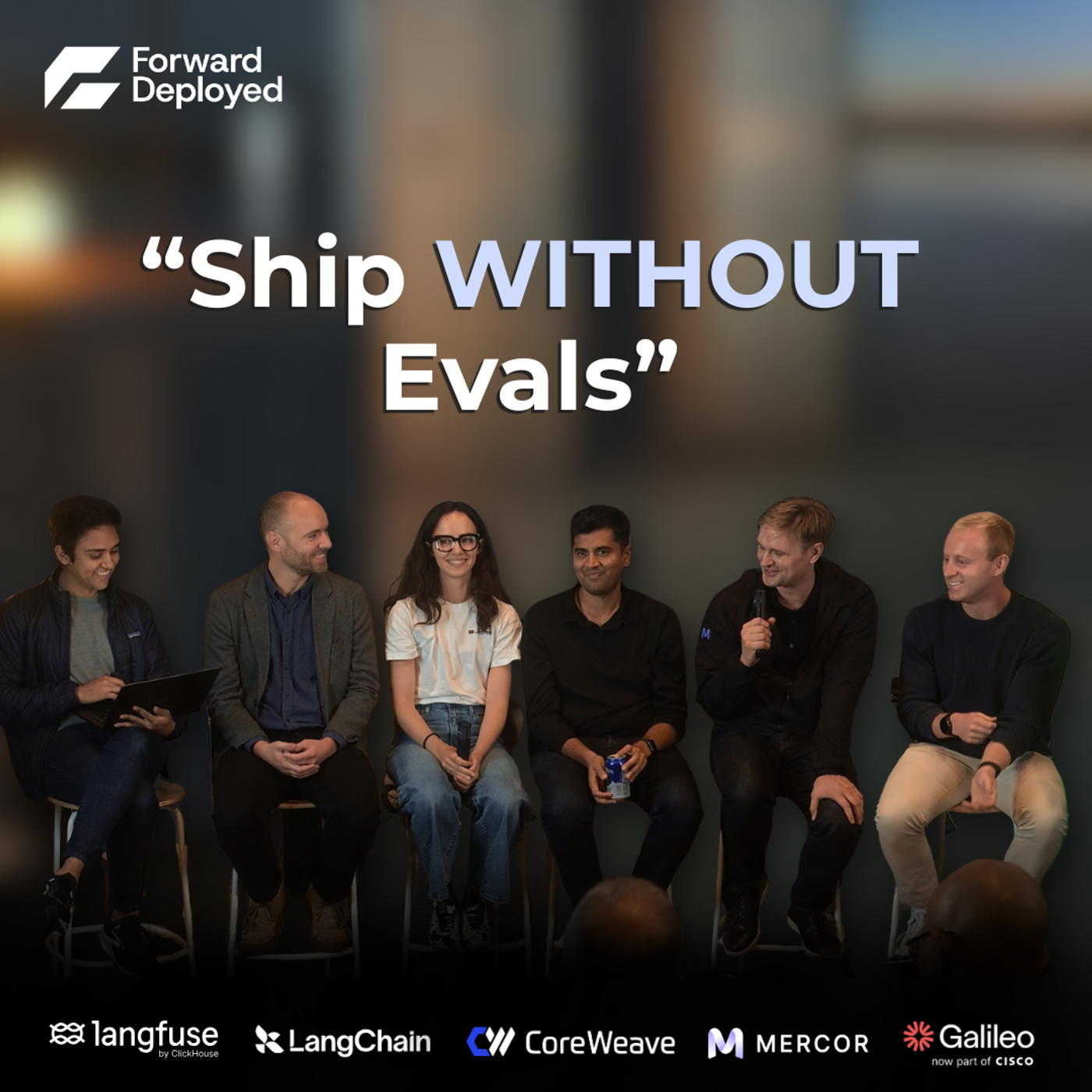
Everyone says they do evals. Almost nobody does. LangChain actually put a number on it: around 89% of teams have observability set up, and only about a third ever do anything with what it collects. So I got five people who do this for a living in a room, from LangChain, Mercor, Galileo, Langfuse, and CoreWeave. Side note, three of those companies got acquired in the past year. Galileo to Cisco, Langfuse to ClickHouse, Weights & Biases to CoreWeave. The layer is getting bought up faster than most teams can figure out how to use it. A few things I didn't expect going in. Grading an agent while it runs can cost you more than the agent does. The model you're using as a judge is probably wrong in ways you'll never notice. And the guy whose company sells eval tooling told the room to stop writing evals before shipping, just put it out and learn from what breaks. We also got into the parts nobody blogs about. How many traces a person still has to read by hand. Why the same agent is a weekend project internally and a year of work at a bank. What happens when your users start doing things you never thought to test. If you've shipped an agent and had no real way to know whether it was working, this one's worth your time! Chapters 00:00 Welcome 00:34 Meet the Panel 02:11 Why Nobody Runs Evals 03:35 Traces Explained 04:14 Offline Evals Basics 05:13 Online Evals in Production 08:26 Surprises From Production 11:22 Trajectory Checks and Bucketing 12:51 Verifiers and Trusting Evals 14:21 Hard Lessons at Scale 19:10 Human Review and Judge Drift 21:29 Which Agents Are Hardest 23:41 Voice and Multimodal Evals 27:10 Cheap Binary Guardrails 30:09 Enterprise Deployment Lifecycle 35:24 Tooling and Expert Knowledge 37:40 Fixing Long Horizon Agents 40:12 Error Analysis Workflow 41:11 Trajectory Evals and Runbooks 42:27 Condensing Long Traces 43:09 Real Long Running Agents 44:11 What's Hardest to Evaluate 45:06 Verifying Tool Side Effects 46:20 Evaluating Auto Research 48:20 Picking a Sampling Rate 49:59 Metric Drift and Security 53:49 Common Evals Mistakes 57:34 Regulated Industry Rollouts 01:01:37 Sourcing Domain Experts 01:03:50 Hallucination Evaluators 01:05:37 Predictions for Evals 01:11:55 Audience Q&A Begins 01:16:30 Are Complex Playbooks Ready 01:18:22 Where Models Fall Short 01:20:04 Extracting Expert Knowledge 01:22:10 Evaluating Writing Style 01:23:24 Closing Remarks GUESTS Liam Bush - Deployed Engineer @ LangChain Braden Holstege - VP Enterprise AI @ Mercor Soumya Mohan - Head of Product @ Galileo Lotte Verheyden - Head of Developer Relations @ Langfuse Emmanuel Turlay - Director of Engineering @ CoreWeave

0:00-1:23:55

transcript

No transcript — this publisher did not publish one.

show notes

Everyone says they do evals. Almost nobody does. LangChain actually put a number on it: around 89% of teams have observability set up, and only about a third ever do anything with what it collects.

So I got five people who do this for a living in a room, from LangChain, Mercor, Galileo, Langfuse, and CoreWeave. Side note, three of those companies got acquired in the past year. Galileo to Cisco, Langfuse to ClickHouse, Weights & Biases to CoreWeave. The layer is getting bought up faster than most teams can figure out how to use it.

A few things I didn't expect going in. Grading an agent while it runs can cost you more than the agent does. The model you're using as a judge is probably wrong in ways you'll never notice. And the guy whose company sells eval tooling told the room to stop writing evals before shipping, just put it out and learn from what breaks.

We also got into the parts nobody blogs about. How many traces a person still has to read by hand. Why the same agent is a weekend project internally and a year of work at a bank. What happens when your users start doing things you never thought to test.

If you've shipped an agent and had no real way to know whether it was working, this one's worth your time!

Chapters
00:00 Welcome
00:34 Meet the Panel
02:11 Why Nobody Runs Evals
03:35 Traces Explained
04:14 Offline Evals Basics
05:13 Online Evals in Production
08:26 Surprises From Production
11:22 Trajectory Checks and Bucketing
12:51 Verifiers and Trusting Evals
14:21 Hard Lessons at Scale
19:10 Human Review and Judge Drift
21:29 Which Agents Are Hardest
23:41 Voice and Multimodal Evals
27:10 Cheap Binary Guardrails
30:09 Enterprise Deployment Lifecycle
35:24 Tooling and Expert Knowledge
37:40 Fixing Long Horizon Agents
40:12 Error Analysis Workflow
41:11 Trajectory Evals and Runbooks
42:27 Condensing Long Traces
43:09 Real Long Running Agents
44:11 What's Hardest to Evaluate
45:06 Verifying Tool Side Effects
46:20 Evaluating Auto Research
48:20 Picking a Sampling Rate
49:59 Metric Drift and Security
53:49 Common Evals Mistakes
57:34 Regulated Industry Rollouts
01:01:37 Sourcing Domain Experts
01:03:50 Hallucination Evaluators
01:05:37 Predictions for Evals
01:11:55 Audience Q&A Begins
01:16:30 Are Complex Playbooks Ready
01:18:22 Where Models Fall Short
01:20:04 Extracting Expert Knowledge
01:22:10 Evaluating Writing Style
01:23:24 Closing Remarks

GUESTS
Liam Bush - Deployed Engineer @ LangChain
Braden Holstege - VP Enterprise AI @ Mercor
Soumya Mohan - Head of Product @ Galileo
Lotte Verheyden - Head of Developer Relations @ Langfuse
Emmanuel Turlay - Director of Engineering @ CoreWeave