Skip to content
Artwork for First Principles
BusinessEducationSelf-Improvement

First Principles

Adrian Wells

First Principles isn't another business podcast recycling the same startup stories. Adrian Wells takes the fundamentals that actually matter and breaks them down like you're having coffee with the smartest professor you ever had.

Wells spent twelve years teaching philosophy and critical thinking before ditching the lecture hall for the microphone. Turns out, the same principles that help you think clearly about ancient Greek ethics also work pretty well for modern business decisions. Who knew?

Every episode strips away the latest trends and buzzwords to focus on the core ideas that don't change. How to actually evaluate evidence when everyone's throwing around statistics. Why most "revolutionary" business advice is just old wine in new bottles. The thinking patterns that separate smart decisions from lucky guesses.

You won't get hyped-up success stories or flavor-of-the-month strategies. Instead, you'll learn how to think through problems the way philosophers have for centuries, applied to the stuff that matters in your work and life right now.

Multiple new episodes drop daily, so there's always something fresh when you need it. Follow now if you're ready to think better, not just think faster. Multiple new episodes daily—follow now!

Play
  • 403 episodes
  • Avg 22 min
  • English
Counted on this page — what you have heard stays on this device, so it is not something the list can be paged by.
  • August 24 · 19 min

    The $150M Moonpig Secret: Why Constraints Made Me Richer Than Freedom

    What if the secret to building a £120 million business wasn't more freedom, but fewer choices? Nick Jenkins proved exactly that when he turned a £1,000 website test into Moonpig, one of the UK's most successful online businesses. In this episode, Adrian Wells breaks down how Jenkins used constraints as his competitive advantage, treating every limitation as a filter that revealed what actually mattered. 🎯 What You'll Learn: • Why Jenkins spent only £1,000 testing Moonpig's concept before committing (and how this "cheap education" approach saved him years) • The counterintuitive reason Moonpig stayed profitable for 11 years without external funding • How keeping operations intentionally simple became their biggest competitive moat • The mindset shift that turns business constraints into strategic advantages 👤 Perfect for: lifelong learners and anyone passionate about personal growth who wants to understand how philosophical thinking applies to real business decisions. 📍 Chapters: [00:00] Adrian Wells introduces the Moonpig constraint paradox [01:45] The £1,000 test that launched a £120 million company [03:30] Why Jenkins treated failure as cheap education [05:15] How constraints filtered out bad ideas automatically [07:00] The profitability secret most startups miss [08:30] Keeping it simple when everyone says scale up [10:15] Key takeaways you can apply today Jenkins didn't just build a business. He built a thinking system that turned every "no" into a "yes" for what truly worked. This isn't another startup success story, it's a masterclass in using philosophical principles to make better business decisions. 🔔 Never miss an episode: Follow First Principles on Spotify and turn on notifications. New episodes drop daily, your next favorite insight is one tap away. 🔍 Topics: business constraints, startup strategy, philosophical thinking, Moonpig case study, profitable growth Find all episodes at First Principles --------------- Keywords: ai dangers, critical thinking podcast, success psychology, evidence evaluation, philosophy business, motivation psychology, health myths, decision making Learn more about your ad choices. Visit megaphone.fm/adchoices

  • August 24 · 13 min

    Top Boy Star: 'Me & Kano Didn't Have The Greatest Time' (FULL STORY)

    What happens when two of the UK's biggest urban artists clash behind the scenes of television's grittiest drama? Ashley Walters just pulled back the curtain on the real tensions that shaped Top Boy's incredible journey from cancelled Channel 4 show to Netflix global phenomenon. In this episode, Adrian Wells breaks down the untold story of creative differences, ego clashes, and the industry pressures that nearly derailed one of Britain's most authentic dramas. 🎯 What You'll Learn: • How Top Boy went from cancelled in 2013 to Netflix hit after Drake's involvement • The real reason Ashley Walters and Kano struggled to find common ground on set • Why Channel 4's original cancellation actually saved the show from mediocrity • The music industry backgrounds that created unexpected on-screen chemistry 👤 Perfect for: lifelong learners and anyone passionate about personal growth who wants to understand how creative partnerships survive when artistic visions collide. 📍 Chapters: [00:00] Adrian Wells introduces the Top Boy phenomenon most people never heard about [02:15] Channel 4's cancellation decision: the numbers that shocked everyone [04:30] Drake's executive producer role: how a Canadian rapper saved British television [06:45] Ashley Walters vs Kano: when So Solid Crew meets grime royalty [08:30] The Netflix transformation: reaching 190+ countries overnight [10:15] Behind-the-scenes tensions that actually improved the final product The show's authentic portrayal of London estate life comes directly from both actors' lived experiences, but that shared background didn't automatically create harmony. Walters reveals how their different approaches to the craft created friction that ultimately served the story's rawness. From music careers in So Solid Crew and solo grime to becoming faces of British television's most uncompromising drama, this story shows how creative tension can fuel breakthrough art. 🔔 Never miss an episode: Follow First Principles on Spotify and turn on notifications. New episodes drop daily, your next favorite insight is one tap away. 🔍 Topics: Top Boy, Ashley Walters, Kano, Netflix originals, British television Find all episodes at First Principles -------- Keywords: performance optimization, billionaire mindset, celebrity interviews, relationship psychology, first principles Learn more about your ad choices. Visit megaphone.fm/adchoices

  • August 24 · 18 min

    Lucy Hale's $2M Career Almost Ended Because of This Hidden Problem

    What if the pressure to look perfect on screen literally saved Lucy Hale's life? The Pretty Little Liars star reveals how her $2 million career almost crumbled under the weight of eating disorders and addiction. In this raw conversation, Adrian Wells unpacks the hidden mental health crisis plaguing Hollywood and what it teaches us about perfectionism, recovery, and breaking destructive cycles. 🎯 What You'll Learn: • Why 30 million Americans battle eating disorders (and only 10% get help) • The people-pleasing trap that increases anxiety risk by 40% • How child actors face 3x higher rates of eating disorders than average • The recovery mindset shift that helped Lucy rebuild her relationship with food and fame 👤 Perfect for: lifelong learners and anyone passionate about personal growth who wants to understand the psychology behind perfectionism and self-destructive patterns. 📍 Chapters: [00:00] Adrian Wells introduces Lucy's shocking confession [01:45] The moment stardom became a prison [03:30] Why eating disorders thrive in plain sight [05:15] People-pleasing: the anxiety multiplier nobody talks about [07:00] Breaking the perfectionism cycle (Lucy's turning point) [09:30] What recovery actually looks like day to day [11:00] Key takeaways for spotting warning signs in yourself This isn't another celebrity tell-all. It's a masterclass in recognizing when ambition becomes self-destruction and how to course-correct before it's too late. Lucy's vulnerability offers a roadmap for anyone trapped in cycles of perfectionism or struggling to ask for help. 🔔 Never miss an episode: Follow First Principles on Spotify and Apple Podcasts and turn on notifications. New episodes drop daily, your next favorite insight is one tap away. 🔍 Topics: eating disorders, mental health, celebrity psychology, perfectionism, addiction recovery Find all episodes at First Principles ----- Keywords: leadership psychology, evidence evaluation, first principles, thinking skills, fame psychology, social media addiction, ai dangers Learn more about your ad choices. Visit megaphone.fm/adchoices

  • August 24 · 25 min

    UK Rapper's £17.5M Baby Business Secret That Nobody Saw Coming

    Most UK rappers stick to music. Krept built a £17.5 million baby empire instead. In this episode, Adrian Wells breaks down how one frustrated new father turned personal pain points into a business that's reshaping an entire industry. When your baby products suck and you've got chart-topping albums under your belt, what do you do? Most artists complain on social media. Krept launched Nala's Baby and proved that creative thinking plus market gaps equal serious money. 🎯 What You'll Learn: • How Krept identified a £2 billion market opportunity that everyone else ignored • The exact moment of frustration that sparked a multi-million pound idea • Why his music career actually made him a better entrepreneur (not worse) • The strategic moves that took Nala's Baby from concept to £17.5M valuation 👤 Perfect for: lifelong learners and anyone passionate about personal growth who wants to understand how creative professionals can successfully diversify beyond their core expertise. 📍 Chapters: [00:00] Adrian Wells introduces the rapper who broke all the rules [01:45] From chart hits to changing tables: Krept's "aha" moment [03:30] Why the baby products market was ripe for disruption [05:15] How music industry skills translate to business success [07:00] The £17.5M valuation story: what investors actually saw [09:30] Lessons other creatives can steal from this playbook [11:00] Key takeaways you can use today The UK baby products market generates over £2 billion annually, but it took a rapper to spot what established companies missed. Sometimes the best business insights come from completely unexpected places. 🔔 Never miss an episode: Follow First Principles on Spotify or Apple Podcasts and turn on notifications. New episodes drop daily, your next favorite insight is one tap away. 🔍 Topics: creative entrepreneurship, business diversification, UK startup success, market opportunity identification, celebrity business ventures Find all episodes at First Principles ------ Keywords: leadership psychology, first principles, ai dangers, evidence evaluation, logical reasoning, celebrity interviews, entrepreneurship philosophy Learn more about your ad choices. Visit megaphone.fm/adchoices

  • August 24 · 22 min

    Marisa Peer: Why Your Brain Is Killing Your Sex Drive (And How To Fix It)

    What if the thing killing your intimacy isn't stress, hormones, or relationship problems, but something way simpler? Celebrity therapist Marisa Peer has treated over 100,000 clients including royalty and Olympic athletes, and she's discovered that 95% of sexual dysfunction comes down to one thing: the stories your subconscious mind tells itself. In this episode, Adrian Wells unpacks her rapid transformational therapy approach that's helping people rewire decades of limiting beliefs in just 90 minutes. 🎯 What You'll Learn: • Why your subconscious processes 11 million bits of info per second (and how it's sabotaging your sex life) • The specific childhood programming that creates adult intimacy blocks • Marisa's 3-step RTT process that claims a 95% success rate in 1-3 sessions • How to identify and rewrite the beliefs that are literally turning off your desire 👤 Perfect for: lifelong learners and anyone passionate about personal growth who wants to understand the hidden psychology behind intimacy and relationships. 📍 Chapters: [00:00] Adrian Wells introduces the surprising stats on sexual dysfunction [01:30] Why 43% of women struggle with desire (it's not what you think) [04:00] How childhood experiences create adult bedroom problems [07:00] The subconscious mind's 11 million bits per second revelation [10:00] Marisa's rapid transformational therapy breakdown [12:00] Practical steps you can start using today 🔔 Never miss an episode: Follow First Principles on Spotify or Apple Podcasts and turn on notifications. New episodes drop daily, your next favorite insight is one tap away. 🔍 Topics: rapid transformational therapy, sexual dysfunction psychology, subconscious mind reprogramming, intimacy therapy, relationship psychology Find all episodes at First Principles ---- Keywords: first principles, logical reasoning, thinking skills, celebrity interviews, relationship psychology, performance optimization, evidence evaluation, cognitive biases Learn more about your ad choices. Visit megaphone.fm/adchoices

  • August 24 · 33 min

    Why Your Brain Sabotages Your Productivity (And How to Fix It Today)

    Your brain processes 60,000 thoughts daily, and 95% of them are just reruns from yesterday. Adrian Wells breaks down why your mind works against your productivity goals and shares the science-backed fixes that actually stick. Most people think meditation is about emptying your mind. Wrong. It's about training your brain's attention muscle, and new research shows just 10 minutes daily can slash cortisol levels by 23%. That's not wishful thinking, that's measurable stress reduction. 🎯 What You'll Learn: • Why chronic stress literally shrinks your hippocampus and kills your memory • The prefrontal cortex hack that stops mental loops before they spiral • Simple awareness techniques that boost focus without apps or gimmicks • How to spot the thought patterns sabotaging your best intentions 👤 Perfect for: lifelong learners tired of productivity advice that ignores how your brain actually works. 📍 Chapters: [00:00] Adrian Wells introduces the 60,000 thought problem [01:45] Why 80% of your thoughts are negative by design [03:30] The stress-memory connection most people miss [06:15] Meditation myths that keep smart people from trying it [08:45] Three awareness techniques you can start today [11:00] Key takeaways for immediate implementation Your mind doesn't have to be your enemy. Understanding these patterns changes everything about how you approach work, stress, and daily decisions. The research is clear: awareness beats willpower every time. 🔔 Never miss an episode: Follow First Principles on your podcast app and turn on notifications. New episodes drop daily, your next favorite insight is one tap away. 🔍 Topics: meditation, productivity, stress management, mindfulness, neuroscience Find all episodes at First Principles ------- Keywords: ai dangers, social media addiction, business strategy, personal development, leadership psychology, logical reasoning Learn more about your ad choices. Visit megaphone.fm/adchoices

  • August 24 · 26 min

    Nick Cannon: How A Simple Nickname Accidentally Built My $1.3 Billion Empire

    What if the key to building a billion-dollar empire isn't having the perfect plan, but stumbling into the right nickname? Nick Cannon turned "Wild 'N Out" from a simple comedy concept into a $1.3 billion entertainment machine, and the best part? He had no idea what he was building. In this episode, Adrian Wells breaks down how Cannon's accidental business genius created multiple revenue streams that most entrepreneurs spend years trying to crack. 🎯 What You'll Learn: • How Wild 'N Out generated over $500 million across MTV, VH1, and international markets by focusing on one simple format • Why owning 100% of your production company matters more than landing the biggest deal (Cannon's Ncredible Entertainment strategy) • The radio syndication playbook that turned 100+ markets into $50 million in annual revenue • How live touring became a $75 million side hustle that most content creators completely ignore 👤 Perfect for: lifelong learners and anyone passionate about personal growth who wants to understand how authentic passion can accidentally become systematic wealth. 📍 Chapters: [00:00] Adrian Wells introduces the billion-dollar accident [01:45] The Wild 'N Out formula that nobody saw coming [04:15] Why Cannon kept 100% ownership when everyone said sell [06:30] Radio syndication secrets the entertainment industry doesn't share [08:45] Live touring revenue that dwarfs most people's entire businesses [11:00] Three principles you can apply to your own "accidental" empire 🔔 Never miss an episode: Follow First Principles on Spotify or Apple Podcasts and turn on notifications. New episodes drop daily, your next favorite insight is one tap away. 🔍 Topics: Nick Cannon business empire, entertainment industry revenue, production company ownership, radio syndication deals, live touring profits Find all episodes at First Principles ------------- Keywords: evidence evaluation, mental health celebrities, fame psychology, health myths, performance optimization, business strategy, business fundamentals Learn more about your ad choices. Visit megaphone.fm/adchoices

  • August 24 · 15 min

    Dr. Tara Swart: Your Stress Is Literally Contagious (And Making Others Fat)

    Ever wonder why you gain weight when you're stressed, even when you're eating the same? Dr. Tara Swart drops a bombshell: your stress isn't just affecting you. It's literally leaking through your skin as chemical signals that make everyone around you stressed too. In this episode, Adrian Wells sits down with the leading neuroscientist to unpack how our bodies turn into stress broadcasting stations. 🎯 What You'll Learn: • Why cortisol makes you store 30% more belly fat than other types of fat • How humans detect stress pheromones at parts per trillion (you can't smell it, but your brain knows) • The 30-second rule: how fast stress contagion actually spreads between people • Why chronic stress keeps cortisol pumping 3-4 times longer than it should 👤 Perfect for: lifelong learners and anyone who's noticed their stress seems to affect their whole household (spoiler: it does). 📍 Chapters: [00:00] Adrian Wells introduces the stress contagion discovery [02:15] The biology behind stress-induced belly fat storage [04:30] How pheromones make stress literally contagious [07:00] Why your stressed coworker is making you gain weight [09:30] Breaking the stress transmission cycle [11:45] Practical steps to stop being a stress spreader Dr. Swart's research flips everything we thought we knew about individual stress management. Turns out, managing your stress isn't just about you anymore. 🔔 Never miss an episode: Follow First Principles on Spotify or Apple Podcasts and turn on notifications. New episodes drop daily, your next favorite insight is one tap away. 🔍 Topics: stress contagion, cortisol belly fat, neuroscience, pheromones, chronic stress Find all episodes at First Principles ------------ Keywords: anxiety management, billionaire mindset, fame psychology Learn more about your ad choices. Visit megaphone.fm/adchoices

  • August 24 · 30 min

    Daniel Ek: How A 23 Year Old Introvert Built Spotify Into A $31 Billion Empire

    What if the biggest tech disruption in history started with a 23-year-old introvert who couldn't get record labels to return his calls? Daniel Ek turned his bedroom coding sessions into Spotify, a $31 billion empire that solved music piracy by making stealing music less convenient than just paying for it. In this episode, Adrian Wells breaks down how Ek's introverted nature became his secret weapon for building one of the most successful platforms ever created. 🎯 What You'll Learn: • How Ek made $50,000 by age 18 building websites (while most teens were figuring out MySpace) • The 2-year persistence strategy that convinced stubborn record executives to license their catalogs • Why Spotify's freemium model converts 25% of free users when most companies struggle to hit 5% • The counterintuitive reason being an introvert helped Ek outmaneuver flashier competitors 👤 Perfect for: lifelong learners and anyone passionate about personal growth who wants to see how unconventional thinking beats conventional wisdom. 📍 Chapters: [00:00] Adrian Wells introduces the bedroom coder who changed music forever [01:45] From $5,000 teenage websites to million-dollar ideas [03:30] Why every record label said no (and how Ek kept going anyway) [06:00] The freemium psychology that competitors completely missed [08:15] How introversion became Ek's competitive advantage [10:30] Three thinking patterns you can steal from Spotify's playbook This isn't another "hustle harder" startup story. It's about how someone who hated networking built a platform that required convincing the most relationship-driven industry on earth. Ek proved that solving real problems beats smooth talking every single time. 🔔 Never miss an episode: Follow First Principles on Spotify and Apple Podcasts. New episodes drop daily, your next favorite insight is one tap away. 🔍 Topics: Daniel Ek, Spotify founder, introvert entrepreneur, freemium business model, startup strategy Find all episodes at First Principles --- Keywords: productivity science, social media addiction, behavioral economics Learn more about your ad choices. Visit megaphone.fm/adchoices

  • August 24 · 34 min

    Scott Galloway: Why 73% of Young Men Are Failing (And It's Not Their Fault)

    Here's what 73% of people missed when that statistic about failing young men went viral: it's not actually about the men. Adrian Wells breaks down Scott Galloway's research to reveal what's really happening, and why the data tells a completely different story than the headlines suggest. 🎯 What You'll Learn: • The real numbers behind the "masculinity crisis" and what they actually measure • Why comparing 2024 men to 1950s men misses the entire point • Three specific economic shifts that created this situation (and it's not what you think) • How the college enrollment gap connects to dating apps, housing costs, and career paths 👤 Perfect for: lifelong learners who want to understand social trends beyond the hot takes, especially if you're tired of oversimplified explanations for complex problems. 📍 Chapters: [00:00] Adrian introduces the viral stat that got everyone arguing [01:45] What "failing" actually means when you look at the data [03:20] The college gender flip: 60% female enrollment and what it reveals [05:10] Dating apps, economics, and the 30% statistic nobody talks about [07:30] Why suicide rates tell a different story than employment numbers [09:15] Three real solutions hiding in plain sight [11:00] What this means for how we think about social change The conversation gets uncomfortable fast, but that's where the actual insights live. Wells connects dots between education policy, economic trends, and individual outcomes that most analysis completely ignores. 🔔 Never miss an episode: Follow First Principles on Spotify or Apple Podcasts and turn on notifications. New episodes drop daily, your next favorite insight is one tap away. 🔍 Topics: young men crisis, Scott Galloway, gender education gap, social trends analysis, economic inequality Find all episodes at First Principles ---------- Keywords: motivation psychology, evidence evaluation, ai dangers, philosophy business, behavioral economics, decision making Learn more about your ad choices. Visit megaphone.fm/adchoices

  • August 24 · 36 min

    Food Doctor: Why Extra Protein Is Making You Fatter (6 Food Lies Exposed)

    What if everything you've been told about "healthy eating" is actually making you fatter? Adrian Wells breaks down six food industry lies that are costing you health, money, and results you've been working toward for years. Turns out Americans consume about 15% more protein than their bodies can actually use. That extra protein your fitness app keeps pushing? It might be sabotaging your weight loss goals. And that "healthy" smoothie from your favorite chain packs more sugar than two cans of soda. 🎯 What You'll Learn: • Why the $4.2 billion supplement marketing machine wants you confused about nutrition • The psychology trick that makes identical foods cause weight gain or loss based on labels alone • Which "health foods" are actually sugar bombs in disguise • How protein timing matters more than protein quantity for actual results 👤 Perfect for: lifelong learners and anyone tired of conflicting nutrition advice who wants to think clearly about what they're actually putting in their body. 📍 Chapters: [00:00] Adrian Wells introduces the protein paradox [01:45] Why more protein isn't always better for weight loss [04:15] The smoothie scam hiding in plain sight [06:30] How food labels manipulate your metabolism [08:45] The supplement industry's $4.2 billion confusion campaign [11:00] Six lies exposed and what to do instead The food industry spends billions making simple nutrition complicated because confusion sells supplements. But the actual science is pretty straightforward once you strip away the marketing noise. This episode gives you the critical thinking tools to see through the hype and make decisions based on evidence, not advertising budgets. 🔔 Never miss an episode: Follow First Principles on Spotify or Apple Podcasts and turn on notifications. New episodes drop daily, your next favorite insight is one tap away. 🔍 Topics: nutrition myths, protein intake, weight loss, food industry, supplement marketing Find all episodes at First Principles -------------- Keywords: productivity science, decision making, first principles Learn more about your ad choices. Visit megaphone.fm/adchoices
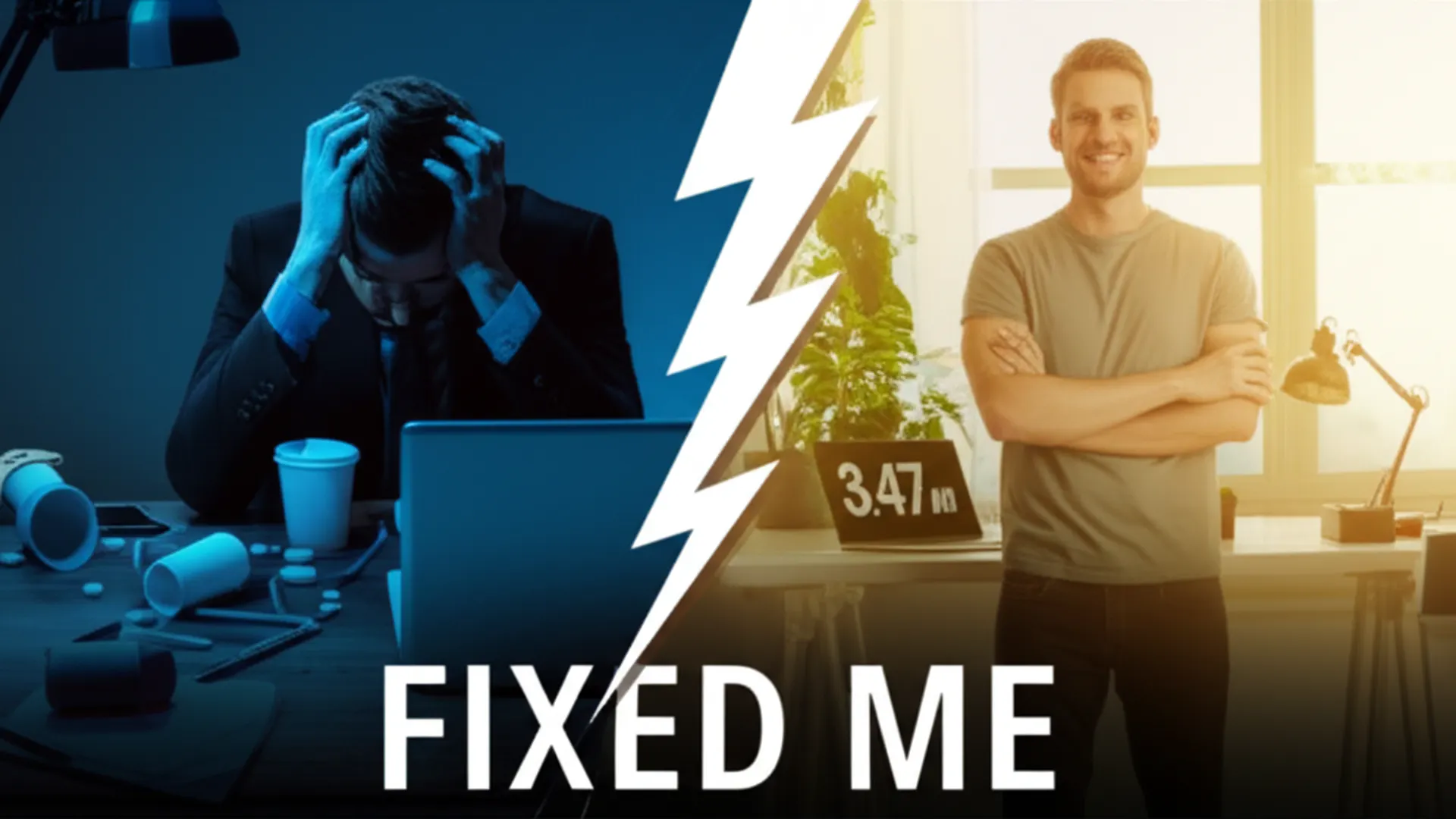
  • August 24 · 20 min

    Airbnb CEO: I Built a $100B Company But Was Suicidal at the Top

    What if the most successful CEO in the hospitality industry was secretly drowning in loneliness while his company soared to a $100 billion valuation? Adrian Wells breaks down Brian Chesky's raw confession about the hidden mental health crisis that nearly destroyed him at Airbnb's peak. 🎯 What You'll Learn: • Why Chesky worked 18-hour days for over a decade and slept in his office during Airbnb's biggest growth years • The shocking statistic: entrepreneurs are 50% more likely to suffer mental health conditions than corporate employees • How extreme isolation at the top can happen even when you're surrounded by hundreds of employees • The specific moment Chesky realized his success was killing him from the inside 👤 Perfect for: lifelong learners and anyone passionate about personal growth who wants to understand the real cost of entrepreneurial success. 📍 Chapters: [00:00] Adrian Wells introduces Chesky's $100B confession [01:45] The loneliness epidemic among high-achieving founders [03:30] Why 18-hour workdays became Chesky's normal for 10+ years [05:15] The December 2020 IPO that should have been pure celebration [07:00] How success can become a prison you build yourself [08:30] The friendship drought that left Chesky completely isolated [10:15] Key takeaways about sustainable success vs. burnout culture This isn't another rah-rah entrepreneurship story. It's a philosophy professor turned podcaster examining what happens when we chase external metrics while ignoring internal warning signs. Chesky's honesty about his darkest moments offers something most business content won't: the truth about what extreme ambition actually costs. The ancient Stoics warned about this exact trap 2,000 years ago. Turns out they were right about the dangers of tying your identity to outcomes you can't fully control. 🔔 Never miss an episode: Follow First Principles on Spotify or Apple Podcasts and turn on notifications. New episodes drop daily, your next favorite insight is one tap away. 🔍 Topics: entrepreneurship, mental health, Airbnb, business leadership, work-life balance Find all episodes at First Principles ------- Keywords: thinking skills, first principles, ai dangers, billionaire mindset, mental health celebrities, business fundamentals, performance optimization Learn more about your ad choices. Visit megaphone.fm/adchoices

  • August 24 · 15 min

    Dr. Gabor Maté: Why Nice People Get Sicker (The Disease of Being Too Kind)

    What if being "too nice" is slowly killing you? In this eye-opening episode, Adrian Wells explores Dr. Gabor Maté's groundbreaking research connecting people-pleasing behaviors to serious illness. The data is shocking: cancer patients score significantly higher on "niceness" scales than healthy people. 🎯 What You'll Learn: • Why women with breast cancer are 16 times more likely to suppress anger (and what this means for your health) • How childhood emotional neglect literally shortens your chromosomes, accelerating aging • The hidden link between autoimmune diseases and people who describe themselves as "always putting others first" • Simple ways to honor your emotions without becoming selfish or mean 👤 Perfect for: lifelong learners and anyone passionate about personal growth who's ever been told they're "too nice" or struggle with setting boundaries. 📍 Chapters: [00:00] Adrian Wells introduces the niceness paradox [02:15] The cancer connection: why people-pleasers get sicker [04:30] Childhood stress and adult disease: the telomere evidence [06:45] Autoimmune disorders and emotional suppression patterns [08:30] Dr. Maté's approach to healing through authentic expression [10:15] Practical steps to break the "disease of being too kind" This isn't about becoming selfish. It's about understanding that your emotional health directly impacts your physical health in ways most doctors won't tell you. Dr. Maté's decades of research reveal patterns that could save your life. 🔔 Never miss an episode: Follow First Principles on Spotify or Apple Podcasts and turn on notifications. New episodes drop daily, your next favorite insight is one tap away. 🔍 Topics: emotional health, stress and disease, people pleasing, childhood trauma, autoimmune disease Find all episodes at First Principles ---- Keywords: celebrity interviews, personal development, performance optimization, billionaire mindset, social media addiction Learn more about your ad choices. Visit megaphone.fm/adchoices

  • August 24 · 26 min

    Why Jada Pinkett Smith Set Her Survival Goal at 4pm Every Day

    What if surviving depression meant celebrating making it to 4pm? Jada Pinkett Smith's raw confession about her darkest moments reveals how mental health struggles can turn basic survival into an hourly victory. In this episode, Adrian Wells breaks down the psychology behind suicidal ideation and why her goal-setting approach actually saved her life. 🎯 What You'll Learn: • Why suicide is the 4th leading cause of death for people 15-29 globally, and the gender patterns that might surprise you • The shocking regret rate among Golden Gate Bridge survivors (it's 90%) and what this tells us about suicidal thoughts • How breaking survival into micro-goals can be a lifeline during crisis moments 👤 Perfect for: lifelong learners and anyone who wants to understand mental health beyond surface-level conversations 📍 Chapters: [00:00] Adrian Wells on Jada's survival strategy [01:45] The global suicide statistics nobody talks about [03:30] Why women attempt suicide 3x more but men succeed 4x more [05:15] The Golden Gate Bridge study that changed everything [07:20] How micro-goals work in crisis psychology [09:30] Why talking about suicide doesn't increase risk [11:15] Key takeaways for supporting others This isn't about celebrity drama. It's about understanding how the human mind works when everything feels impossible, and why Jada's 4pm goal was actually brilliant crisis management. 🔔 Never miss an episode: Follow First Principles on Spotify or Apple Podcasts and turn on notifications. New episodes drop daily, your next favorite insight is one tap away. 🔍 Topics: mental health, suicide prevention, depression, crisis psychology, Jada Pinkett Smith Find all episodes at First Principles ---- Keywords: performance optimization, productivity science, personal development Learn more about your ad choices. Visit megaphone.fm/adchoices

  • August 24 · 24 min

    Why Apple & Tesla Never Sell Products (They Sell This Instead)

    Ever notice how Apple never actually talks about phones and Tesla barely mentions cars? There's a reason both companies can charge premium prices while their competitors race to the bottom on features and specs. In this episode, Adrian Wells breaks down the psychological playbook these brands use to sell something way more valuable than products. 🎯 What You'll Learn: • Why Tesla spent $0 on ads in 2021 but sold 936,000 cars (hint: they made customers do the marketing) • The 40% rule Apple stores use to make you feel like you're joining an exclusive club, not shopping • How both companies turn waiting into wanting by manufacturing scarcity they could easily solve 👤 Perfect for: lifelong learners and anyone passionate about personal growth who wants to understand the psychology behind why we buy what we buy. 📍 Chapters: [00:00] Adrian Wells introduces the trillion-dollar marketing secret [01:45] Tesla's $0 advertising budget that beats billion-dollar campaigns [03:30] Why Apple stores feel empty (and why that makes you spend more) [05:15] The iPhone's "three devices" launch trick that rewired expectations [07:20] How manufactured scarcity creates real desire [09:00] The waiting list psychology that turns customers into evangelists [11:30] Key takeaways you can apply to your own work These aren't marketing tactics, they're psychology principles that work because they tap into how humans actually make decisions. Both companies figured out that people don't buy products, they buy stories about themselves. 🔔 Never miss an episode: Follow First Principles on Spotify or Apple Podcasts and turn on notifications. New episodes drop daily, your next favorite insight is one tap away. 🔍 Topics: Apple marketing, Tesla strategy, consumer psychology, behavioral economics, premium pricing Find all episodes at First Principles -------------- Keywords: success psychology, leadership psychology, career advice, entrepreneurship philosophy, decision making, behavioral economics, anxiety management, evidence evaluation Learn more about your ad choices. Visit megaphone.fm/adchoices

  • August 24 · 17 min

    The Man Who Claims He Can Predict Your Death Date (To The Month): Gary Brecka

    What if someone could look at your DNA and tell you exactly when you'll die? Gary Brecka claims he can predict your death date to the nearest month using genetic markers and biomarkers. In this episode, Adrian Wells breaks down the science behind longevity prediction and whether anyone can actually forecast your lifespan with that kind of precision. 🎯 What You'll Learn: • Why insurance companies have been predicting death for 150+ years but still can't nail individual cases • The FOXO3 gene variant found in 20% of centenarians versus just 8% of regular folks • How telomeres shrink 20-40 base pairs yearly but vary wildly between people • The surprising truth: genetics only account for 25% of how long you'll live 👤 Perfect for: lifelong learners and anyone passionate about personal growth who wants to separate genetic hype from actual science. 📍 Chapters: [00:00] Adrian Wells introduces Gary Brecka's bold mortality claims [02:15] How insurance actuaries actually predict death rates [04:30] The FOXO3 gene and what centenarian DNA really tells us [06:45] Telomere testing: useful data or expensive guesswork? [08:30] Why genetics matter less than you think for lifespan [10:15] The 75% factor that trumps your DNA every time The math is fascinating, but the reality is messier than any single test can capture. Turns out predicting individual death dates is way harder than measuring population trends. Your lifestyle choices, environment, and plain old luck play bigger roles than your genetic code. 🔔 Never miss an episode: Follow First Principles on Spotify or Apple Podcasts and turn on notifications. New episodes drop daily, your next favorite insight is one tap away. 🔍 Topics: longevity prediction, genetics, biomarkers, mortality science, FOXO3 gene Find all episodes at First Principles ------------ Keywords: anxiety management, first principles, entrepreneurship philosophy, evidence evaluation, critical thinking podcast Learn more about your ad choices. Visit megaphone.fm/adchoices

  • August 24 · 44 min

    Sadhguru's Extinction Warning: Why Humans Have 12 Years Left

    What if one of the world's most influential spiritual leaders just gave humanity an expiration date? Sadhguru, who's reached over 4 billion people with his teachings, isn't talking about meteors or nuclear war. Adrian Wells breaks down why this extinction warning is actually about something much more immediate: our complete disconnection from nature and ourselves. 🎯 What You'll Learn: • Why Sadhguru's Save Soil campaign influenced policy in 24 countries and what it reveals about our survival timeline • The shocking study showing 76% of people feel disconnected from nature (and why that's literally killing us) • How inner transformation becomes a species survival skill, not just personal development fluff 👤 Perfect for: lifelong learners who want to understand how ancient wisdom applies to modern existential challenges. 📍 Chapters: [00:00] Adrian Wells introduces Sadhguru's 12-year extinction timeline [01:45] The real meaning behind "extinction" that nobody talks about [03:20] How 3.9 billion people responded to one soil conservation message [05:40] The disconnection crisis: why 76% of us are nature-starved [07:15] Inner transformation as species insurance policy [09:30] What this means for your daily life right now [11:20] Key takeaways you can actually use This isn't doomsday prepping. It's about understanding how our relationship with the planet directly affects our ability to think clearly, make good decisions, and actually survive as a species. Sadhguru's timeline isn't arbitrary, it's based on soil degradation rates and psychological disconnection data that most people never see. 🔔 Never miss an episode: Follow First Principles on your podcast app and turn on notifications. New episodes drop daily, your next favorite insight is one tap away. 🔍 Topics: Sadhguru extinction prediction, environmental psychology, spiritual ecology, human survival, nature disconnection Find all episodes at First Principles ------ Keywords: leadership psychology, ai dangers, logical reasoning, performance optimization Learn more about your ad choices. Visit megaphone.fm/adchoices

  • August 24 · 22 min

    Chris Van Tulleken: Why Your Breakfast Is More Dangerous Than Smoking

    What if your morning cereal is slowly killing you faster than a pack of cigarettes? Adrian Wells sits down with infectious disease doctor Chris van Tulleken, who ate nothing but ultra-processed foods for 30 days and watched his body and brain literally change on the scanner. 🎯 What You'll Learn: • Why ultra-processed foods make up 60% of American calories (and how they're engineered to hijack your hunger signals) • The shocking brain scan results that showed physical changes after just one month of processed eating • How people automatically eat 500 more calories per day when given ultra-processed versus whole foods • The simple way to identify ultra-processed foods in your kitchen right now 👤 Perfect for: lifelong learners and anyone passionate about personal growth who wants to understand what's really on their plate and how it affects their body. 📍 Chapters: [00:00] Adrian Wells introduces the processed food experiment [01:45] What counts as ultra-processed (it's more than you think) [03:30] The 30-day experiment: 14 pounds gained and brain changes [06:15] Why these foods override your natural hunger signals [08:45] The engineered addiction: how companies design cravings [10:30] Simple strategies to spot and avoid ultra-processed foods Van Tulleken's research reveals that ultra-processed food consumption links to increased obesity, type 2 diabetes, and cardiovascular disease risk. But here's what makes this different: he didn't just study it, he lived it. The brain scans don't lie. This isn't about perfect eating or food shaming. It's about understanding how modern food engineering works against your biology, and what you can actually do about it. 🔔 Never miss an episode: Follow First Principles on Spotify or Apple Podcasts and turn on notifications. New episodes drop daily, your next favorite insight is one tap away. 🔍 Topics: ultra-processed foods, nutrition science, food addiction, health risks, processed food dangers Find all episodes at First Principles -------- Keywords: anxiety management, ai dangers, fame psychology, depression stories, productivity science, personal development, evidence evaluation Learn more about your ad choices. Visit megaphone.fm/adchoices

  • August 24 · 20 min

    Why 95% of Women Over 40 Can't Lose Belly Fat (The Real Reason)

    What if 95% of women over 40 are fighting the wrong battle when it comes to belly fat? Adrian Wells sits down with Dr. Mindy Pelz to reveal why traditional dieting fails and what actually works at the hormonal level. 🎯 What You'll Learn: • Why fasting can boost growth hormone by 1300% in women (and what that means for fat loss) • The insulin resistance epidemic affecting 88% of adults and how it locks fat in place • How autophagy kicks in after 16-18 hours and repairs cellular damage naturally • Why women need to sync fasting with their menstrual cycle for optimal results 👤 Perfect for: lifelong learners who want science-backed solutions to health challenges that actually make sense. 📍 Chapters: [00:00] Adrian introduces the belly fat epidemic most women face [01:45] Dr. Pelz explains why traditional dieting backfires hormonally [03:30] The growth hormone connection nobody talks about [05:15] Insulin resistance: the hidden culprit behind stubborn fat [07:00] How autophagy becomes your body's repair system [09:30] Why timing matters more than you think for women [11:00] Practical steps you can start implementing today This isn't another quick fix. It's understanding how your body actually works so you can work with it instead of against it. Dr. Pelz breaks down complex metabolic science into actionable insights that make immediate sense. 🔔 Never miss an episode: Follow First Principles on Spotify or Apple Podcasts and turn on notifications. New episodes drop daily, your next favorite insight is one tap away. 🔍 Topics: intermittent fasting, hormone optimization, belly fat, insulin resistance, autophagy Find all episodes at First Principles ------------ Keywords: productivity science, fame psychology, cognitive biases, leadership psychology, celebrity interviews, behavioral economics, social media addiction, motivation psychology Learn more about your ad choices. Visit megaphone.fm/adchoices

  • August 24 · 17 min

    Why Smart Women Keep Dating Toxic Men: The Psychology Logan Ury Discovered

    Why do brilliant women keep falling for men who treat them terribly? Logan Ury has studied thousands of dating patterns and discovered something shocking: our brains are literally wired to choose chaos over compatibility. In this episode, Adrian Wells breaks down the psychology behind why smart women get addicted to toxic relationships and how to rewire your dating patterns for actual happiness. 🎯 What You'll Learn: • The 50% rule: Why relationships with high initial passion are doomed from the start • How anxious attachment makes you 3x more likely to stay with emotionally unavailable partners • The brain chemistry secret behind why "boring" relationships actually create lasting love • Logan's practical framework for spotting red flags before you're already hooked 👤 Perfect for: lifelong learners and anyone passionate about personal growth who wants to understand the psychology behind their own relationship patterns. 📍 Chapters: [00:00] Adrian Wells introduces the toxic attraction paradox [01:45] Why smart women choose excitement over stability [03:30] The brain chemistry of intermittent reinforcement [05:15] Anxious attachment and the unavailable partner trap [07:00] The "boring relationship" strategy that actually works [09:30] Logan Ury's red flag detection system [11:15] Practical steps to rewire your dating brain Studies show that couples who rate their relationship as "boring" in year one report 23% higher satisfaction scores after five years. Your brain's reward system gets hijacked by hot-cold behavior the same way it does by gambling. Understanding this changes everything about how you approach dating. 🔔 Never miss an episode: Follow First Principles on Spotify or Apple Podcasts and turn on notifications. New episodes drop daily, your next favorite insight is one tap away. 🔍 Topics: dating psychology, toxic relationships, attachment theory, relationship advice, Logan Ury Find all episodes at First Principles --------- Keywords: relationship psychology, performance optimization, logical reasoning, entrepreneurship philosophy Learn more about your ad choices. Visit megaphone.fm/adchoices

Showing 141–160 of 403 episodes