Skip to content
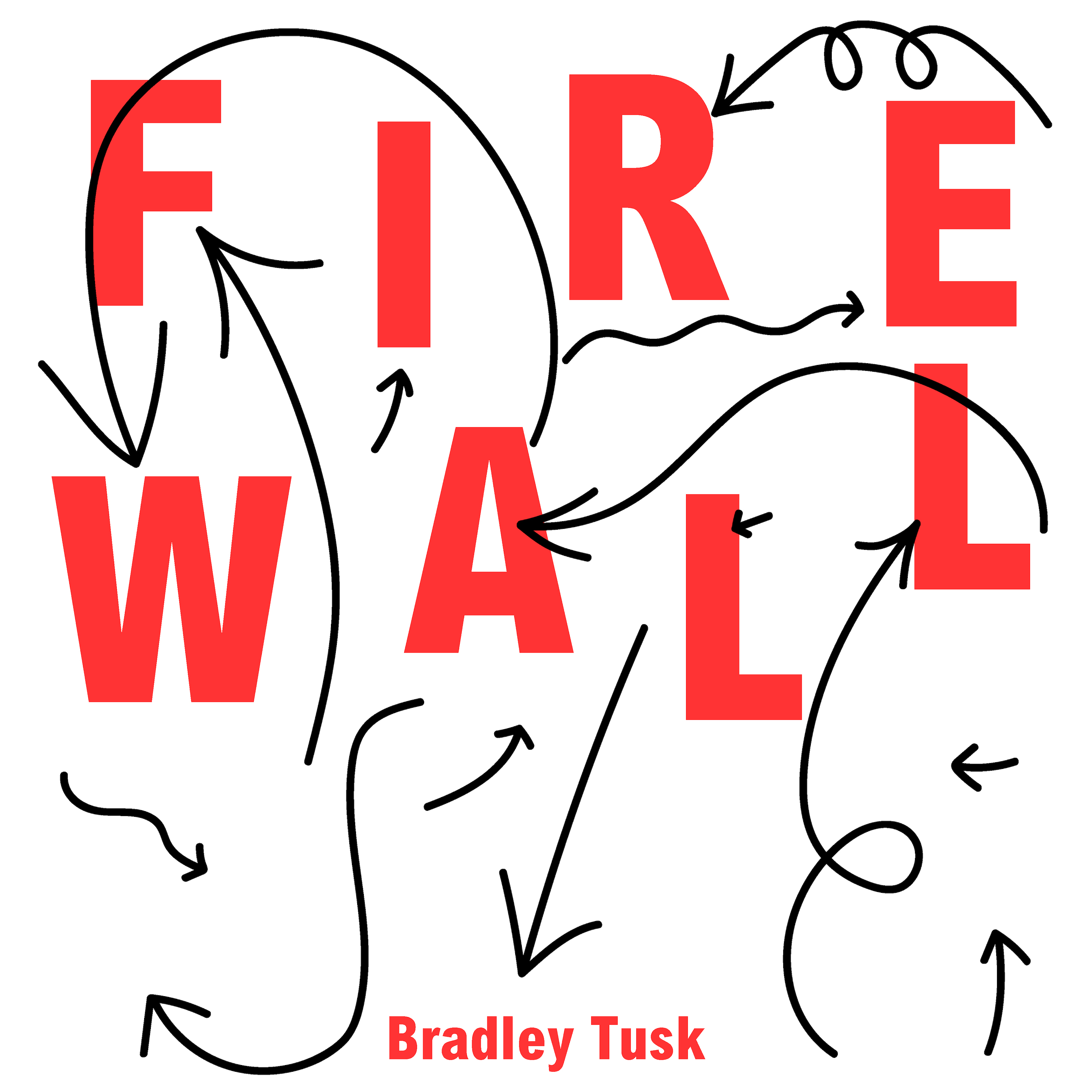
Artwork for Firewall with Bradley Tusk
NewsNews CommentaryBusinessPolitics

Firewall with Bradley Tusk

Firewall

Politics, technology and the pursuit of happiness. Twice a week, Bradley Tusk, New York-based political strategist and venture investor, covers the collision between new ideas and the real world. His operating thesis is that you can't understand tech today without understanding politics, too. Recorded at P&T Knitwear, his bookstore / podcast studio, 180 Orchard Street, New York City.

Play
  • 39 episodes
  • a few times a week
  • Avg 48 min
  • English
Counted on this page — what you have heard stays on this device, so it is not something the list can be paged by.
  • Today · 55 min

    How to Get Our Money's Worth From Government

    What if paying our taxes came with the ability to shape public spending? Noah Kerner, the founder of Acorns, the pioneering micro-investing app, joins Bradley to discuss his new venture, Accountable, which aims to make filing taxes faster, cheaper, and more transparent—and ultimately give taxpayers a say in how their money is spent. "Taxpayers should be treated like investors," Kerner says. They talk about the impact of AI on civic engagement, why Americans have lost faith in government, and to what extent a company can put its customers ahead of profits without putting itself at risk. This episode was taped at P&T Knitwear at 180 Orchard Street — New York City’s only free podcast recording studio. Send us an email with your thoughts on today’s episode: info@firewall.media. Subscribe to Bradley's weekly newsletter and follow Bradley on Linkedin + Substack.

  • Tuesday · 43 min

    The Era of the Heroic CEO

    Can we please shut the door on it now? Bradley sorts through the unfolding drama around Nvidia’s Jensen Huang and pins the problem on the cult of personality that feeds the hubris of our tech leaders. “Whether it’s Jensen or Elon or Zuck or Dario,” he says, “we substitute economic fundamentals for personality and hype. We substitute judgment and common sense for hype and narrative.” Plus, Bradley explains what makes a real hero, sketches how Chuck Schumer could make a dignified exit from elected office, and picks your next favorite Filipino restaurant. This episode was taped at P&T Knitwear at 180 Orchard Street — New York City’s only free podcast recording studio. Send us an email with your thoughts on today’s episode: info@firewall.media. Subscribe to Bradley's weekly newsletter and follow Bradley on Linkedin + Substack.

  • November 12 · 38 min

    Happiness Is Being a Plus One

    The best seat on a rocket ship isn’t necessarily the driver’s, says Nihal Mehta, a serial entrepreneur and co-founder of the venture firm ENIAC. He joins Bradley to discuss how he does his job and what motivates him as an investor. “As a kid building startups, I was the CEO in the driver’s seat,” he says. “But I’m a much better supporting actor. I’m a much better plus one to my wife, and a much better plus one to all these founders. I get my happiness from seeing other people succeed in something I can be a small part of.” Plus, he talks about why management fees make investors timid, the unworkable numbers behind OpenAI, and all the friends who went MAGA. “People have values and prioritize certain values over others,” he says, “and a lot of these folks, some of them still my best friends, have prioritized wealth creation, capitalism, as their core value.” This episode was taped at P&T Knitwear at 180 Orchard Street — New York City’s only free podcast recording studio. Send us an email with your thoughts on today’s episode: info@firewall.media. Subscribe to Bradley's weekly newsletter and follow Bradley on Linkedin + Substack.

  • November 10 · 51 min

    Poke Every Bear You See

    To anyone thinking about jumping into what promises to be a very crowded 2028 presidential field, Bradley offers advice they probably won’t hear from their own people. It starts with taking uncomfortable risks from the outset. Be bold. Don’t count on your résumé getting you anywhere. If you’re a Republican, go ahead and poke the bear, aka Trump. “If you run a conventional campaign,” he says, “you will get a conventional outcome, which is defeat.” Plus, Bradley lays out what should happen in the wake of the Jensen Huang spy scandal (congressional hearings, a halt to chip sales to China and an investigation we can trust) and catalogs Election Day voting snafus across the country. None of it was fraud, he argues, just the ordinary dysfunction of a broken system — exactly what mobile voting would fix. This episode was taped at P&T Knitwear at 180 Orchard Street — New York City’s only free podcast recording studio. Send us an email with your thoughts on today’s episode: info@firewall.media. Subscribe to Bradley's weekly newsletter and follow Bradley on Linkedin + Substack.

  • November 6 · 1 hr 2 min

    The Way to Win Now

    This is a rare window into cutting-edge political tactics. Chris Coffey and Matt Munsil of Tusk Strategies join Bradley to talk about the firm's high success rate in the midterms, specifically the half dozen Republican House candidates they worked against on behalf of the Invest in Tomorrow Coalition, a clean-energy group. In the second half of the episode, they are joined by key members of the Tusk Strategies team: Lizzie Han, Simone Kanter, Alejandro Gonzalez Vega and Tanner Palin. Send us an email with your thoughts on today’s episode: info@firewall.media. Subscribe to Bradley's weekly newsletter and follow Bradley on Linkedin + Substack.

  • November 3 · 53 min

    Putting the Brakes on Trump

    Never mind all the talk about waves and tsunamis. “The number one thing that matters," says Bradley, "would be the Democrats taking one chamber of Congress, not because I love the Democrats particularly, but because I really think Trump is the worst president we’ve ever had. And not giving him the ability to push legislation through Congress is critical.” But no margin on Tuesday changes the deeper problem: “We still have a system that effectively incentivizes everyone to just attack each other and have one-sided policy and ideology, because when everything is gerrymandered, only the primaries matter, and primary turnout is 10 percent. We have this tendency to think that once we’ve elected someone, now everything that they promised is going to happen. And even if they are truly well-intentioned and are willing to not put their own political and emotional needs first, it’s still unlikely they’re going to be able to accomplish what you want them to accomplish, because they’re working within a system where all of the structural incentives are aligned towards dysfunction and failure.” Plus: the logic of Haley Stevens’ crossover endorsement in Michigan, the Democrats’ self-defeating trick in Alaska, and why Netanyahu clinging to power feeds the American left’s antisemitic impulses.

  • October 29 · 51 min

    Does Anybody Know Anything About AI?

    “Nobody knows anything,” screenwriter William Goldman famously said about Hollywood. These days, the same feels true about AI. Akash Pasricha, host of TITV, The Information’s daily tech show, switches sides of the mic for the first time to test Bradley’s ideas and arguments with the rigor of a beat reporter. They discuss Meta’s bet that free, ad-supported models can beat paid subscriptions, and why Zuckerberg is now building an enterprise business too, along with why OpenAI may be the most confused of the labs. They get into how Google’s end-to-end stack of chips, cloud, models and apps gets overlooked while everyone watches the leaderboards, and how an Anthropic IPO might trigger a market correction that’s beneficial for the industry, if not for our nerves. Plus, when asked for advice on a video strategy for Firewall, Akash looks around at the studio’s bright color scheme and says, “Lean into the orangeness.” This episode was taped at P&T Knitwear at 180 Orchard Street — New York City’s only free podcast recording studio. Send us an email with your thoughts on today’s episode: info@firewall.media. Subscribe to Bradley's weekly newsletter and follow Bradley on Linkedin + Substack.

  • October 27 · 39 min

    Venture Money Is Expensive Money

    The quiet truth of venture capital is that it's not the optimal way for many new businesses to fund themselves. Bradley does the math on how bootstrapping can often be the wiser choice. "Venture funding is really great if you fail," he says, "because you don’t have to pay us back. But if you succeed, it’s really expensive." Plus, he previews this huge week in politics: Israel’s election, the noisy stretch run of the midterms and the big blue wave he sees coming, though he doesn't expect the winning party to do much with it. "Democrats," he predicts, "will run a hell of a kabuki show for the next two years." This episode was taped at P&T Knitwear at 180 Orchard Street — New York City’s only free podcast recording studio. Send us an email with your thoughts on today’s episode: info@firewall.media. Subscribe to Bradley's weekly newsletter and follow Bradley on Linkedin + Substack.

  • October 22 · 51 min

    Nobody’s Good at Everything

    “Management bundles a lot of things together,” says Roy Bahat, head of Bloomberg Beta. “I only liked some of them, and I was terrible at other things.” Bahat joins Bradley to talk candidly about how he runs the in-house venture fund for Bloomberg LP, focusing on the future of work. Venture capital is a customer-service job built on lists and follow-ups, he says. He does it with a nine-person team that hasn’t grown in years. Any single partner can say yes to a deal, and the firm publishes its operating manual on GitHub. Though he cultivates interests outside work — “I’m a terrible chess player, but I play every day” — the job is never far from his mind: “I think of myself as having a work addiction. I think of myself as managing it reasonably well, but it is a work addiction.” This episode was taped at P&T Knitwear at 180 Orchard Street — New York City’s only free podcast recording studio. Send us an email with your thoughts on today’s episode: info@firewall.media. Subscribe to Bradley's weekly newsletter and follow Bradley on Linkedin + Substack.

  • October 20 · 46 min

    Are We Dodger Nation?

    Just as the Los Angeles Dodgers were undone by money hubris, argues Bradley, so too is our society. What can we do about it? He has three remedies. Plus: Though Elon Musk’s spending on the November midterms won’t stop the blue wave, it might still achieve his broader objective; and why the new documentary You Can See Everything reveals more about us than about disgraced Theranos founder Elizabeth Holmes. Turns out she’s a pretty serious Dodger, too.

  • October 13 · 45 min

    Start Making Sense

    Philip K. Howard is an agitator for common sense. He’s been at it since at least 1994, when he wrote a book about public-sector dysfunction called The Death of Common Sense. During the tumult of the 1960s, he explains to Bradley, Americans stopped trusting anyone in government to make sensible decisions and replaced judgment with thousand-page rulebooks. And the country that devalued judgment ultimately tried to correct itself by electing Donald Trump, who honors no rules at all. Though the societal snafu Howard identified three decades ago has only worsened with time, he keeps coming up with new ways to fight the problem, most recently a vision for government he calls the Green Light. “People say, well, have you done any good?” says Howard. “And I say, I think I have a more or less perfect record of failure. But at least I’m trying.” This episode was taped at P&T Knitwear at 180 Orchard Street — New York City’s only free podcast recording studio. Send us an email with your thoughts on today’s episode: info@firewall.media. Subscribe to Bradley's weekly newsletter and follow Bradley on Linkedin + Substack.

  • October 8 · 47 min

    Roommates Wanted

    Here's a novel way to make a dent in the housing crisis. City Council member Virginia Maloney joins Firewall to make the case for her Shared City Act, which would turn half-empty office floors into legal shared housing (private rooms, common kitchens and baths), adding as many as 37,000 beds in a decade. She and Bradley also get into homeless encampments, why City Hall can't seem to make job creators feel wanted, putting AI to work inside city government, age checks for teens on e-bikes, and whether independents should get a vote in primaries their taxes pay for. This episode was taped at P&T Knitwear at 180 Orchard Street — New York City’s only free podcast recording studio. Send us an email with your thoughts on today’s episode: info@firewall.media. Subscribe to Bradley's weekly newsletter and follow Bradley on Linkedin + Substack.

  • October 6 · 51 min

    Dario’s No Luke Skywalker

    So that likable, conscientious CEO warning that AI could kill us all — is he still going to be so likable and conscientious if his stock price falls off a cliff? Let’s take that off the table, argues Bradley: Until we know how to manage AI, Anthropic should not go public. As for Trump letting tech CEOs police themselves, well, that’s only going to further poison popular opinion and make data centers harder to build. Plus, the Times' 100 biggest questions in science is the Gray Lady at her best; the war in Iran has turned a boring industry into a juggernaut; why the oldest, tiredest brand imaginable could make for a perfect pop-up; and an impassioned endorsement of Digger, the Tom Cruise movie critics hated, because it’s actually about something important. This episode was taped at P&T Knitwear at 180 Orchard Street — New York City’s only free podcast recording studio. Send us an email with your thoughts on today’s episode: info@firewall.media. Subscribe to Bradley's weekly newsletter and follow Bradley on Linkedin + Substack.

  • October 1 · 1 hr 1 min

    "I'm Not Good at Doing Nothing"

    What would you do with a year devoted to getting good at one thing? Ravi Gupta, good friend of the pod, is back on Firewall to talk about his new book, The Invisible List, in which he argues for chasing one new passion every year, no matter how busy or stuck you feel. He and Bradley talk about tennis as a midlife balm, the surprising difficulty of making risotto, the secret greatness of Western New York, dinner parties where every guest confesses a meaningful failure and why hobbies are cool. "Hobbies," says Gupta, "are how you meet your friends, your significant others. It's how you inspire your kids. It's how you show your wife or your husband that you're sexy." This episode was taped at P&T Knitwear at 180 Orchard Street — New York City’s only free podcast recording studio. Send us an email with your thoughts on today’s episode: info@firewall.media. Subscribe to Bradley's weekly newsletter and follow Bradley on Linkedin + Substack.

  • September 29 · 1 hr 3 min

    What Good is a Fun Mayor?

    What New York really needs is a City Hall that nails the normie stuff: getting the homeless off the streets, fighting crime and fixing the budget. Plus, Bradley explains why nobody should feel compelled to abide by strict religious rules, argues that declaring martial law on Election Day would only hasten Trump's downfall, and gives a hearty plug to Ari Emanuel's memoir. This episode was taped at P&T Knitwear at 180 Orchard Street — New York City’s only free podcast recording studio. Send us an email with your thoughts on today’s episode: info@firewall.media. Subscribe to Bradley's weekly newsletter and follow Bradley on Linkedin + Substack.

  • September 24 · 53 min

    Phoniness Is the Only Unforgivable Sin

    How big of a blue wave should we expect next month? Sheila Nix, CEO of Tusk Philanthropies and veteran of three presidential campaigns, tells Bradley that the House is a done deal for the Democrats, while arguing that Chuck Schumer's smartest move would be to win the majority and then walk away. Together, they dig into how voters forgive crazy but never phony, why AOC's path to the nomination is more plausible than the dinner-party crowd admits, and whether Trump actually cares about the midterms. Plus, they review the Tusk Philanthropies agenda, including recent developments in mobile voting, school meals and shield laws for abortion providers. This episode was taped at P&T Knitwear at 180 Orchard Street — New York City’s only free podcast recording studio. Send us an email with your thoughts on today’s episode: info@firewall.media. Subscribe to Bradley's weekly newsletter and follow Bradley on Linkedin + Substack.

  • September 22 · 51 min

    A Who's Who of Accretors and Extractors

    Among tech titans, there is an invisible line dividing those who add something meaningful to our society and those who are merely extracting value for their own benefit. Bradley reviews the roster of Jobs, Musk, Bezos, Zuckerberg, Altman and more. Plus, will the e-bike tragedy in the East Village force Mayor Mamdani to do the right thing, does standing in line bring New Yorkers together, what Bill Simmons could bring to the LA Clippers and why 'Exit Party' by Emily St. John Mandel is the book to read right now. This episode was taped at P&T Knitwear at 180 Orchard Street — New York City’s only free podcast recording studio. Send us an email with your thoughts on today’s episode: info@firewall.media. Subscribe to Bradley's weekly newsletter and follow Bradley on Linkedin + Substack.

  • September 17 · 50 min

    Nobody Ever Misses Their Chance at Life

    When Zibby Owens, author of the forthcoming Between Chapters: How I Started Over, Took Some Chances, and Found the Plot, was at her lowest point, she started taking baby steps toward what would turn into a bustling mini-empire, built in and around the publishing business. Bradley talks to Zibby about how it all came together. On starting from nothing: "I recorded a podcast into my phone sitting on the edge of my bed. And was like, I'm not even going to tell anyone I'm doing this." On her publishing thesis: "I wanted to make every author a lead title. We want to put the resources behind each one ... I didn't want to be a printer. I wanted to be a partner." On her new book: "It is intended to be the same as going to coffee with a good friend." On owning a bookstore: ""I feel like I've created a community center that also sells books." On what it all means: "I felt like I missed my chance in life. And I've realized that nobody ever misses their chance at life... you may feel incredibly stuck, but you have the power to find yourself." This episode was taped at P&T Knitwear at 180 Orchard Street — New York City’s only free podcast recording studio. Send us an email with your thoughts on today’s episode: info@firewall.media. Subscribe to Bradley's weekly newsletter and follow Bradley on Linkedin + Substack.

  • September 15 · 1 hr 5 min

    How Hyperscalers Can Save The World From Themselves

    Now that AI risk has jumped from theoretical to totally real and frightening, Bradley lays out a five-point plan for what OpenAI and Anthropic should do if they're serious about safety: disclose everything about how they're developing their products, draw real distinctions between what the technology can do and what people actually need, enact unilateral safety measures like kill switches and independent evaluators, aggressively push for robust regulation and — the big one — postpone their IPOs until the risk is under control. This episode was taped at P&T Knitwear at 180 Orchard Street — New York City’s only free podcast recording studio. Send us an email with your thoughts on today’s episode: info@firewall.media. Subscribe to Bradley's weekly newsletter and follow Bradley on Linkedin + Substack.

  • September 10 · 49 min

    "We Warned You"

    That's what the framers would say if they popped out of a time machine and saw our politics today, argues John Opdycke. From the start, they cautioned against political parties. Forty-one percent of the country now identifies as independent, yet closed primaries in states like New York lock them out of the elections that actually decide who governs. Opdycke, who runs a group called Open Primaries, talks to Bradley about the effect nonpartisan primaries have had in California, why he's suing to overturn closed primaries in Maryland, Pennsylvania, and Oregon, and how the DSA and New York's entrenched party establishment — despite hating each other — both benefit from keeping turnout low. The fight isn't ideological, he and Bradley agree, it's all about power. This episode was taped at P&T Knitwear at 180 Orchard Street — New York City’s only free podcast recording studio. Send us an email with your thoughts on today’s episode: info@firewall.media. Subscribe to Bradley's weekly newsletter and follow Bradley on Linkedin + Substack.

Showing 1–20 of 39 episodes