Skip to content
Artwork for Fictionable
FictionArtsBooksExplicit

Fictionable

Fictionable

Interviews, book chat and everything about the short stories and graphic fiction from all around the world appearing in Fictionable. "Storytellers, readers and creatives alike will love" – The Independent

Hosted on Acast. See acast.com/privacy for more information.

Play
  • 21 episodes
  • weekly
  • Avg 20 min
  • English
Counted on this page — what you have heard stays on this device, so it is not something the list can be paged by.
  • #68
    Thursday · 23 min

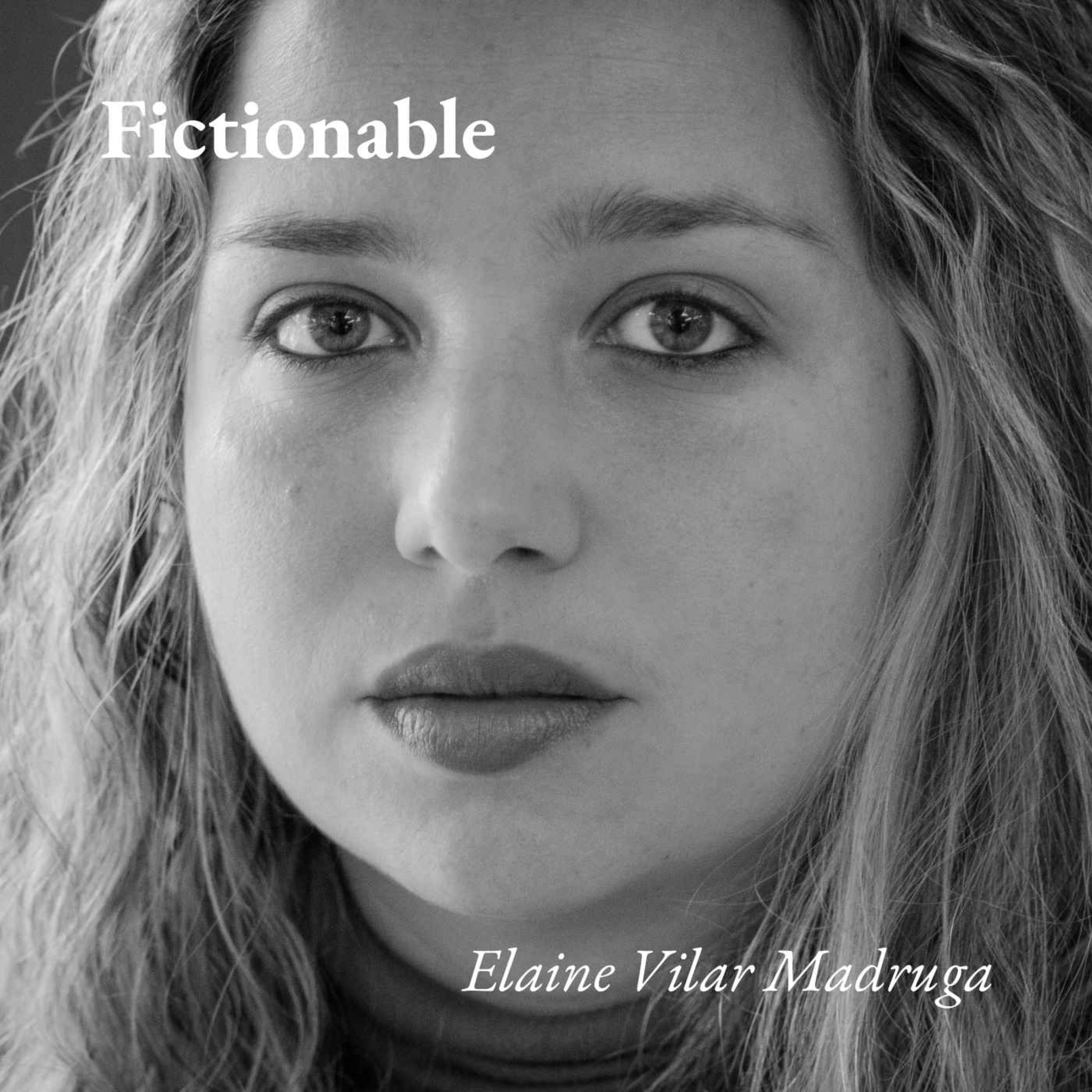
    Elaine Vilar Madruga: 'I’m always thinking about Kafka when I write'

    This Summer series we've already heard from Will Boast, EC Osondu, Robin Munby and Zhenya Oliinyk. But we bring it to a close with Elaine Vilar Madruga and her short story Wild, translated from Spanish by Samantha Luna. Wild is not only a story about vengeance, Vilar Madruga says, it's also "a story about hope". "It's about sisterhood and it's about resilience," she continues. "It's about the possibility of survivors telling their own stories. Having their own agenda, Having our own words." Women have always spoken about male violence, Vilar Madruga explains, but it's always been behind closed doors. "Now we don't have any whisper of fear," she says, "we have a screaming voice. And that screaming voice allows us to share with the world what we are thinking and what our great-grandmothers and our grandmothers thought in their own lives." Vilar Madruga cites the Cuban saying "pueblo pequeño, infierno grande" – a small town is a large hell. Even though her stories are fantastical, unmoored in time and place, she's still exploring the shared experience of "the woman in the street". "My reality, my space, my spiritual biography, the territories where I live are not only mine," she says. "It's a human experience. It's not a Caribbean experience, or a Cuban experience or a Latin American experience, it's a human experience." The themes that run through Wild – male violence, motherhood, sisterhood – echo through her latest novel, La piel hembra (The Female Skin). And Vilar Madruga also returns to the idea of metamorphosis, with Kafka's story of a man who becomes an insect always at the back of her mind. "I'm always thinking in all my novels how men and women – the fictional characters – become monsters." Hosted on Acast. See acast.com/privacy for more information.
  • #67
    August 22 · 17 min

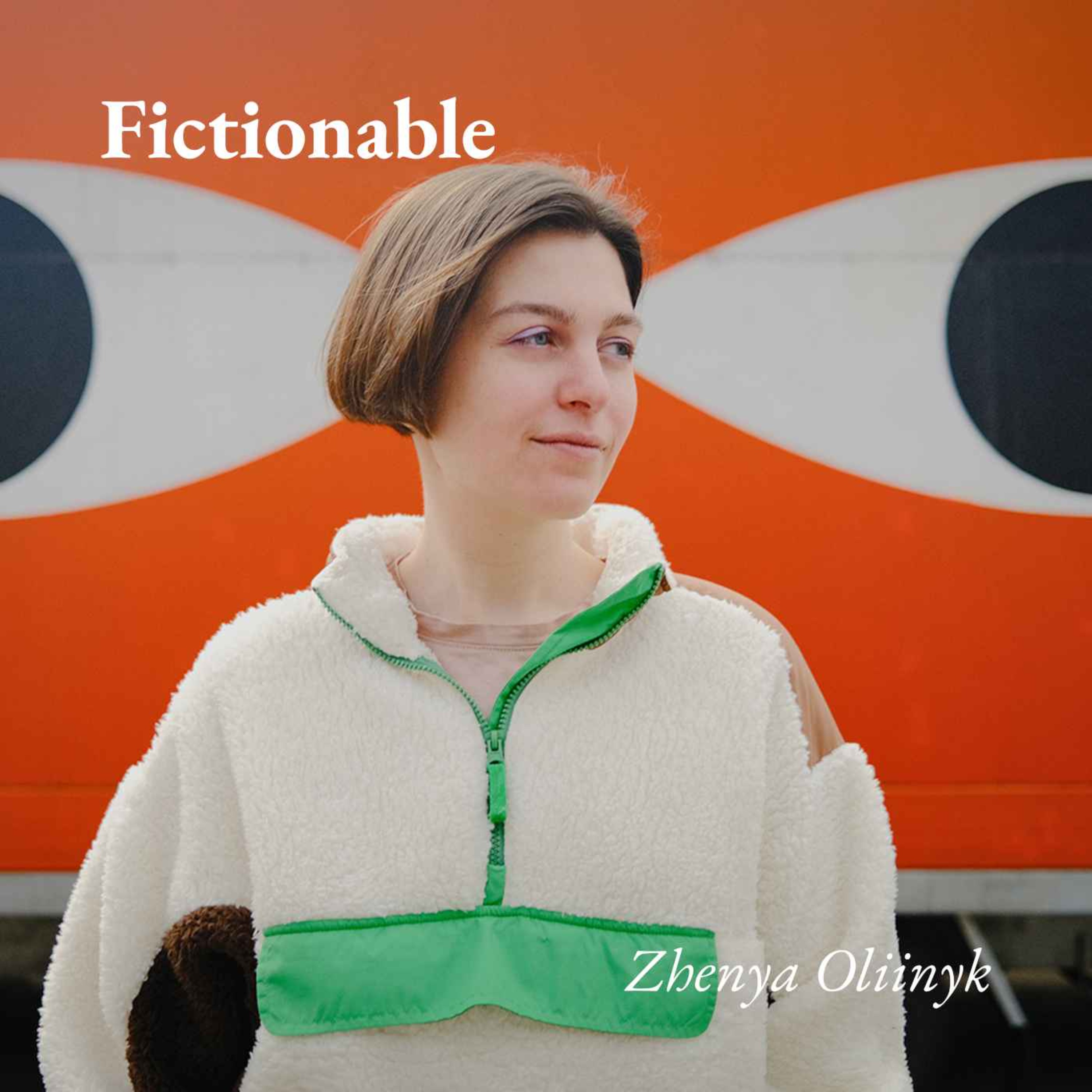
    Zhenya Oliinyk: 'Drawing and writing comics is more like journalism to me'

    We've heard from Will Boast, EC Osondu and Robin Munby already in this Summer series of podcasts, and Elaine Vilar Madruga is lined up next. But this week we welcome Zhenya Oliinyk and her graphic short story A Night in Kyiv. This story is short and made up of unsettling images, but Oliinyk tells us it's "not exactly fiction". "It is a documentation of one particular night," she says, "in terms of the numbers, because the numbers are real." Oliinyk charts the night in a series of alerts as the ballistic missiles come down, the hits are confirmed and the death toll rises. And through it all runs the struggle to get some sleep. "This is pretty much how it is happening," the author explains. "It happens on a regular basis now, in Kyiv and in other big cities as well." Making art under Russian bombardment may be something of a challenge, but Oliinyk is resolutely practical. "It is my occupation," she says. "It is what brings food to the table. So I would be insincere if I'd say that it's just my way of copying with the situation, it's just how my artistic spirit needs to manifest itself. But no, it's just what I do for a living." Of course it's still meaningful and inspiring to share her work, she continues, but the brute realities of life remain. "Surprisingly, when the war starts you still have to pay rent and buy food. This is probably one of the biggest disappointments of the full-scale invasion." With the news full of long-range strikes on oil refineries deep in Russian territory, it's tempting to imagine the war is at some sort of turning point. Retaking Crimea may feel like a distant dream, but "it still feels empowering to know that we're not helpless," Oliinyk says, "that we're not weak, that we can actually make some impact." Hosted on Acast. See acast.com/privacy for more information.
  • #66
    August 15 · 20 min

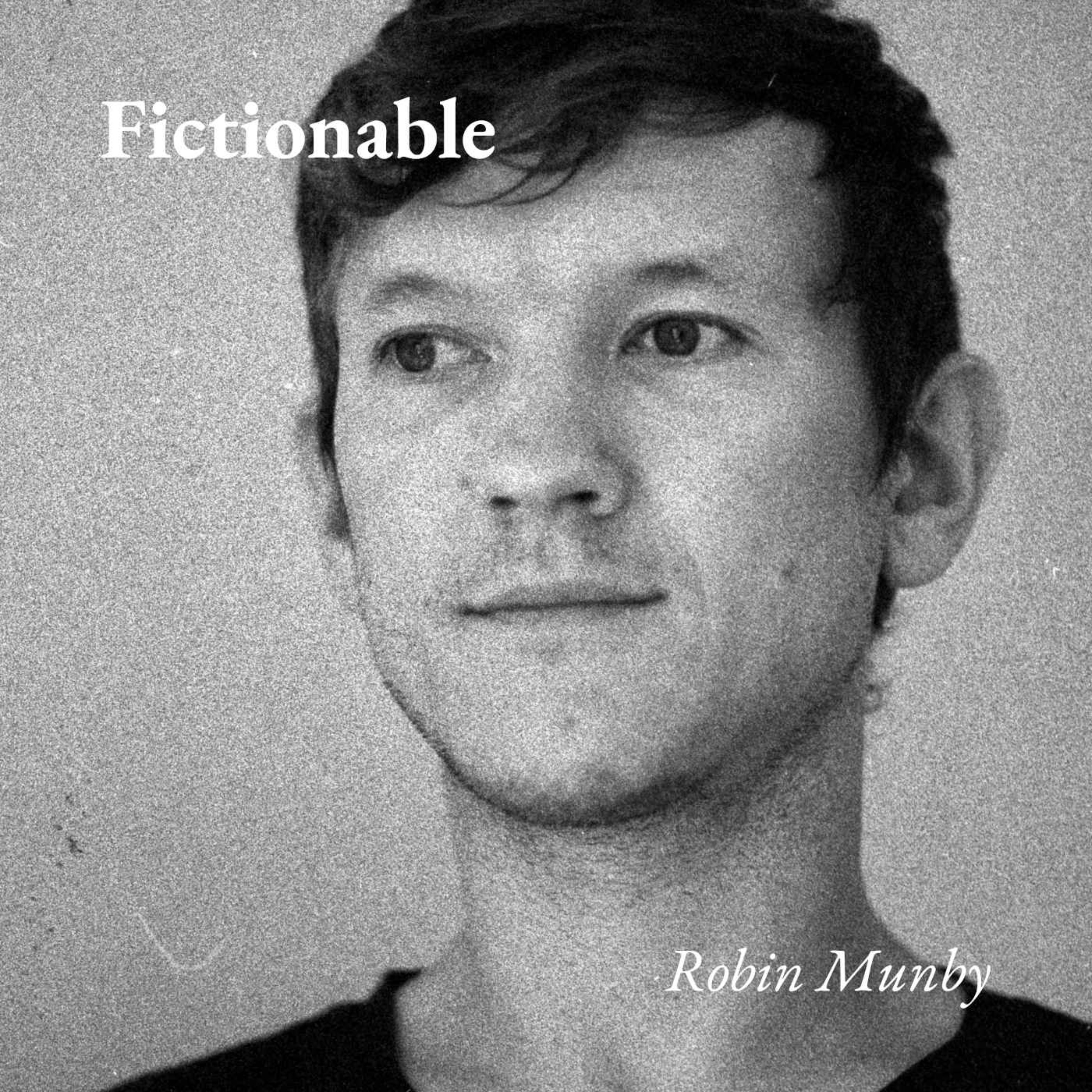
    Robin Munby: 'You're always writing in some sense for yourself'

    This summer we've already heard from Will Boast and EC Osondu, and we'll be welcoming Elaine Vilar Madruga and Zhenya Oliinyk on to the podcast over the next few weeks. But this time we're heading north with Robin Munby and his short story Of All Who Sorrow, Joy. Munby's narrator is adrift in language, an experience the author says is drawn from his own life. "This is especially about that early phase of learning a language or living in a new place," he explains, "when you have some proficiency, but things are still a struggle." At this stage, Munby continues, comprehension is often a matter of guesswork, but it's only a more extreme version of something that happens in your mother tongue. "You're half hearing what the other person is saying and filling in the gaps, which is often something we naturally do in conversation." The narrator's blanks and missing pieces are echoed in the construction of a story built from fragments that cuts between a discussion about a journey and the journey itself. But it's no accident. "I, as a reader, do very much enjoy writing that is ambiguous in that way," the author says. As a translator from Spanish, Russian and Asturian, Munby's day-to-day tussles with language are very different from his narrator's. But translation itself is still something of a mystery. "A lot of people invest a lot of time in explaining how to do it and analysing how it's done," he says, "and I find all of that fascinating. But I still find myself lost for words in terms of trying to describe how I do it." Hosted on Acast. See acast.com/privacy for more information.
  • #65
    July 31 · 14 min

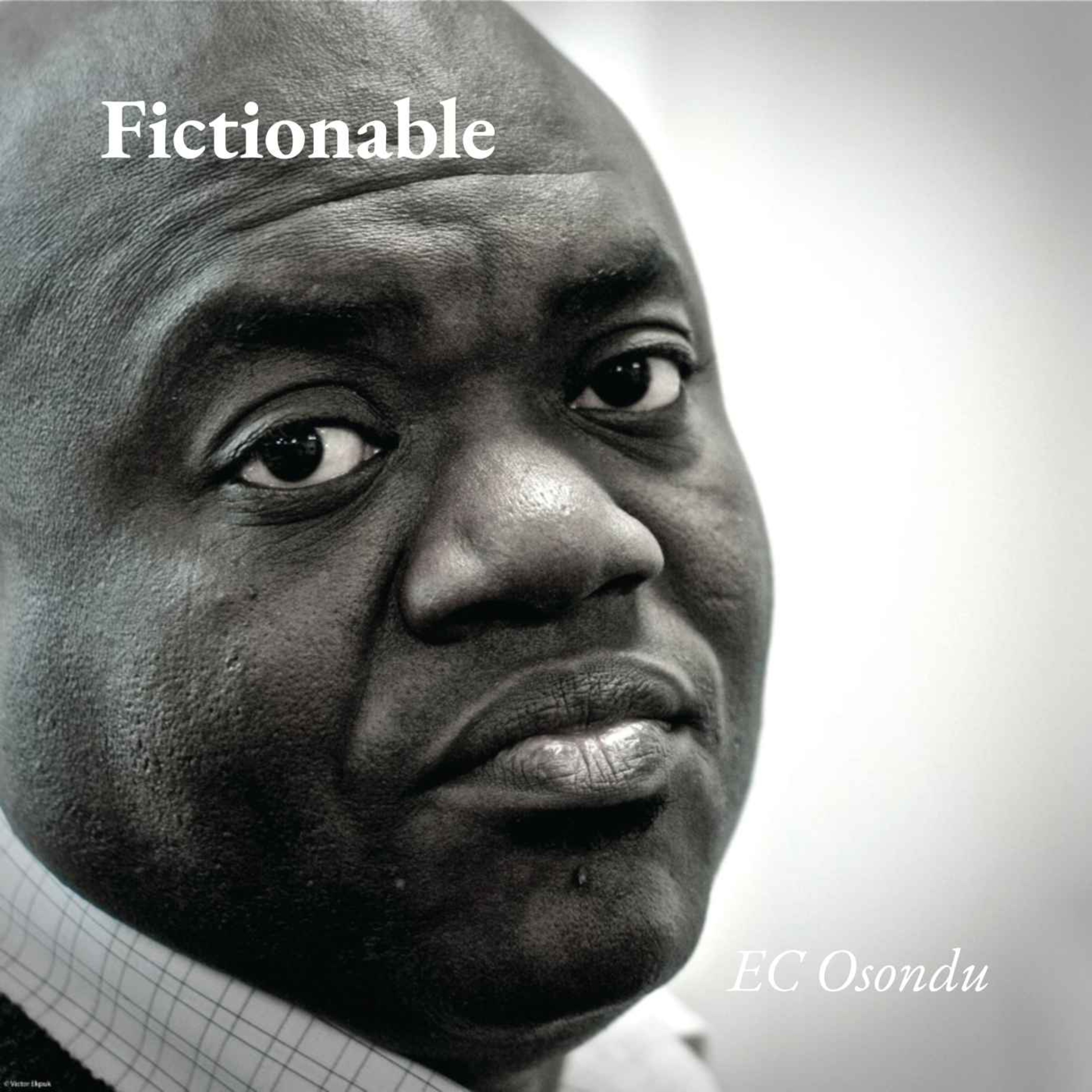
    EC Osondu: 'The  writer is also a strange animal'

    Will Boast kicked off this Summer series of podcasts, discussing the bureaucracy and hostility that immigrants face all around the world. We'll be hearing from Elaine Vilar Madruga, Zhenya Oliinyk and Robin Munby over the next few weeks. But this time we welcome EC Osondu and his short story Uber Chat. Osondu explains that he didn't start using Ubers because they were convenient. As a Black man in New York City, he was struggling to hail a cab until a passer-by told him about Uber. "In less than five minutes," he says, "I got a ride." He discovered that Uber drivers were often more interested in conversation than people driving cabs, and started to enjoy the strange intimacy of an app throwing you together with a stranger. "It's highly unlikely that you'll meet that person again," Osondu explains. "There is some kind of freedom that comes with that, a certain lack of constraint. You don't censor yourself." Even though he's been living in the US for more than a decade, the author still doesn't feel at home. "The longer you live in America," he says, "the more conscious you are of your foreignness." It's no surprise that American life is appearing in his fiction, Osondu continues. "Every writer who finds himself in any environment, you're like a sponge." But an author isn't bound by their immediate surroundings. No writer "has ever been to Mars," he adds, but they've been "writing about Mars since the beginning of science fiction". Hosted on Acast. See acast.com/privacy for more information.

  • #64
    July 23 · 20 min

    Will Boast: 'You almost have to make your characters feel interestingly doomed'

    The heat is on in London, so it's time for another set of exclusive short stories and another series of podcasts. Over the next few weeks we'll be hearing from Elaine Vilar Madruga, EC Osondu, Zhenya Oliinyk and Robin Munby, but we launch into Summer with Will Boast and his story The Line. Boast explains that this story came out of his own family's struggles with the US immigration system in the 1990s, after they moved from the UK when he was a child. "We would get to the Federal Building in downtown," he says, "and literally if you didn't get in line by a certain hour you were not getting in the building." The Line started off with a family much like his own, Boast continues, but as he thought about the "hierarchy of immigrants" he started making his characters "less comfortable in the English language". "Polish immigrants are not thought about as much, I guess," he says, "and they are often more politically conservative than some groups. So I thought it would be interesting to take a character who has more conservative, right-leaning views on migration than I do and put that character in this scenario." The long line stretching around the Federal Building is just the visible end of a figurative line stretching all around the world, Boast adds. "Behind the line of people actually there physically waiting to get their papers, their green cards, eventually their citizenship, of course, there's a huge line of people applying for visas, hoping and dreaming to get that chance to be in that physical line." Even if his characters find a way through the bureaucratic nightmare, the west's ever-increasing hostility towards migrants is sure to exact some cost. But according to Boast, there's something about short fiction that makes them doomed from the start. "Because of its formal rigour and its un-open-endedness as opposed to novels, which can stretch," he says, "a short story really won't work unless its ending is satisfying and feels fated in some way," We'll be tempting fate next time with EC Osondu and his short story Uber Chat. Hosted on Acast. See acast.com/privacy for more information.
  • #63
    May 16 · 19 min

    Takiguchi Yūshō: 'When I’m writing fiction, I have very little sense I’m the one inventing the story'

    We've already heard from Diana Evans, Bruna Martini, Joel Cox and Holly Edwards in this Spring series of podcasts. Now we bring it to a close with Takiguchi Yūshō and the translator Jesse Kirkwood. Takiguchi tells us that the wandering narrator in Peppermint is following the same method as his author. "It's when things start heading somewhere unexpected and when unexpected things begin to happen that it really starts to feel like the novel is working properly," he says. Just as in life, Takiguchi continues, "even if you don't want to go off track, you end up doing so. Things never quite unfold the way you intended, and you still have to keep moving forward in some way." And it's no good looking back. Memory may be "always with us", he explains, but it's also "profoundly unstable". So whether we reach for prose or images, it's impossible to capture the past. "No matter how many photographs we have, no matter how much we try to preserve something in words, it's never the same as the thing itself." That gap between words and the things they represent is familiar territory for the translator, Kirkwood adds. But you can start to solve the puzzle when you focus on the voice. "Once you have that voice," Kirkwood says, "a lot of your other decisions become very easy, because you just listen to the voice." It's an echo of the way Takiguchi writes his fiction. Instead of coming up with his stories, it's a question of paying attention to what his characters are telling him. "What matters more," he says, "is whether I'm able to listen well to someone's story." That's the last of these Spring podcasts. We'll be back with another season of stories for Summer. Hosted on Acast. See acast.com/privacy for more information.
  • #62
    May 9 · 17 min

    Holly Edwards: 'There's obviously something political about presenting trans characters'

    Diana Evans, Bruna Martini and Joel Cox have already joined us on this Spring series of podcasts, and next time we'll be hearing from Takiguchi Yūshō and the translator Jesse Kirkwood. But this time we welcome Holly Edwards. The country comes calling in her short story Little Lamb, Who Made Thee? But Edwards has always lived in the city, so she doesn't have a store of memories to draw on. "What I have is – from very much an urbanite's perspective – an obsession with what it must be like to live in the countryside," she says, "ever since I was a child. And as part of that I have watched hours of shows like This Farming Life and River Cottage." The story follows Rose as she reconnects with her roots, the author continues, with much of the detail taken from those sessions. "I'm often eating my dinner while watching people lambing on telly." For Edwards, the comfortable rural life portrayed in TV documentaries is altered by viewing it through the queer lens. "I don't consciously set out to queer a story," she says, "but that's how I perceive the world and so I'll often have queer characters or queer perspectives in my stories." Queerness is inherent in Little Lamb, Who Made Thee? with the tension between Rose and her father coming from his discomfort with her transition, Edwards explains, but she didn't want to write a "battle cry". "There's obviously something political about presenting trans characters and trans lives," she says, "I think that's inescapable." There's something inherently political about presenting all sorts of queer lives, she adds, "but it wasn't my intention when writing it". Rose's father may have started out as the bad guy, Edwards says, but she knew from the start that it wasn't that simple. "As a queer writer, I do feel a responsibility to portray the complexities and the intricacies and the beauty of queer lives. Fiction definitely has an important role in helping people across the spectrum understand each other." We'll be exploring the convolutions of memory next time with Takiguchi Yūshō and the translator Jesse Kirkwood. Hosted on Acast. See acast.com/privacy for more information.
  • #61
    May 3 · 24 min

    Joel Cox: 'It's fine to have jerks in stories, but you have to have something that makes the reader keep reading'

    We've heard from Diana Evans and Bruna Martini already in this Spring series of podcasts, and we'll be welcoming Takiguchi Yūshō and the translator Jesse Kirkwood, and Holly Edwards over the next couple of weeks. But this podcast is devoted to Joel Cox and Variable Rewards. Cox explains that this short story came out of his own move to the suburbs and his love for Richard Yates's novel Revolutionary Road. "A few months into living in the suburbs," he recalls, "I was thinking this story sounds really familiar." But while Yates's characters were all members of the Rotary club and hanging out at cocktail parties, in the 21st century the suburbs have become far more fragmented. "I couldn't tell you the name of our neighbours, probably for the last ten years," Cox admits. "So you're living in this strange world where you're in a village, or the simulation of a New York village, that's in the middle of nowhere, where you don't know anyone." This sense of disconnection is amplified by social media, he continues, which allows people to "project the image of the life you want to live, even if you're not really living it". And it's intensified by the wave of redundancies, as companies pivot to AI. "There's a lot of scrambling right now for everyone to figure out what their role will be in this new AI world," Cox explains, "and how they can leverage AI to survive, to hide out while this transition takes place." When people are jostling for position on a sinking ship, there's always room for fiction, he adds, but even if your characters are behaving like jerks you have to keep your sense of humour. "I like to have fun while I write," Cox says. "If my characters are having a laugh at themselves, I think it balances out their jerkiness." We'll be striking a balance with Holly Edwards next time, and her short story Little Lamb, Who Made Thee? Hosted on Acast. See acast.com/privacy for more information.
  • #60
    April 24 · 25 min

    Bruna Martini: 'I have spent too many months without drawing'

    This Spring series of podcasts began with Diana Evans, who took us back to the 1990s. We'll be hearing from Takiguchi Yūshō and the translator Jesse Kirkwood, Holly Edwards and Joel Cox over the next few weeks. But for this episode we welcome Bruna Martini and her graphic short story One Day at at Time. Martini says that this story of looking after a young child was drawn from her own experiences – but she had to go back to the notes she took at the time to remember it properly. "There are some moments that are really beautiful and full of joy," she explains, "and they tend to replace the moments where you're angry or bored, or simply don't know what to do. So there is a really helpful trick that the brain does, where it only gives space to good memories." Parents may tell themselves that their children will be perfect, Martini says, but even the perfect child will have to go through the necessary steps of development, and those steps "bring a lot of problems". It wasn't that she wanted to focus on the negatives, she continues, she just "wanted to take a step back and look at the situations and maybe laugh, because laughing is the perfect solution". Looking at what was happening like she was reading a comic or watching a film helped her feel "a little bit in control", Martini says. But it wasn't long before she wanted to get back to her work, declaring "I have spent too many months without drawing, I do not feel myself." We'll be looking at another kind of work next time with Joel Cox and his story Variable Rewards. Hosted on Acast. See acast.com/privacy for more information.
  • #59
    April 16 · 19 min

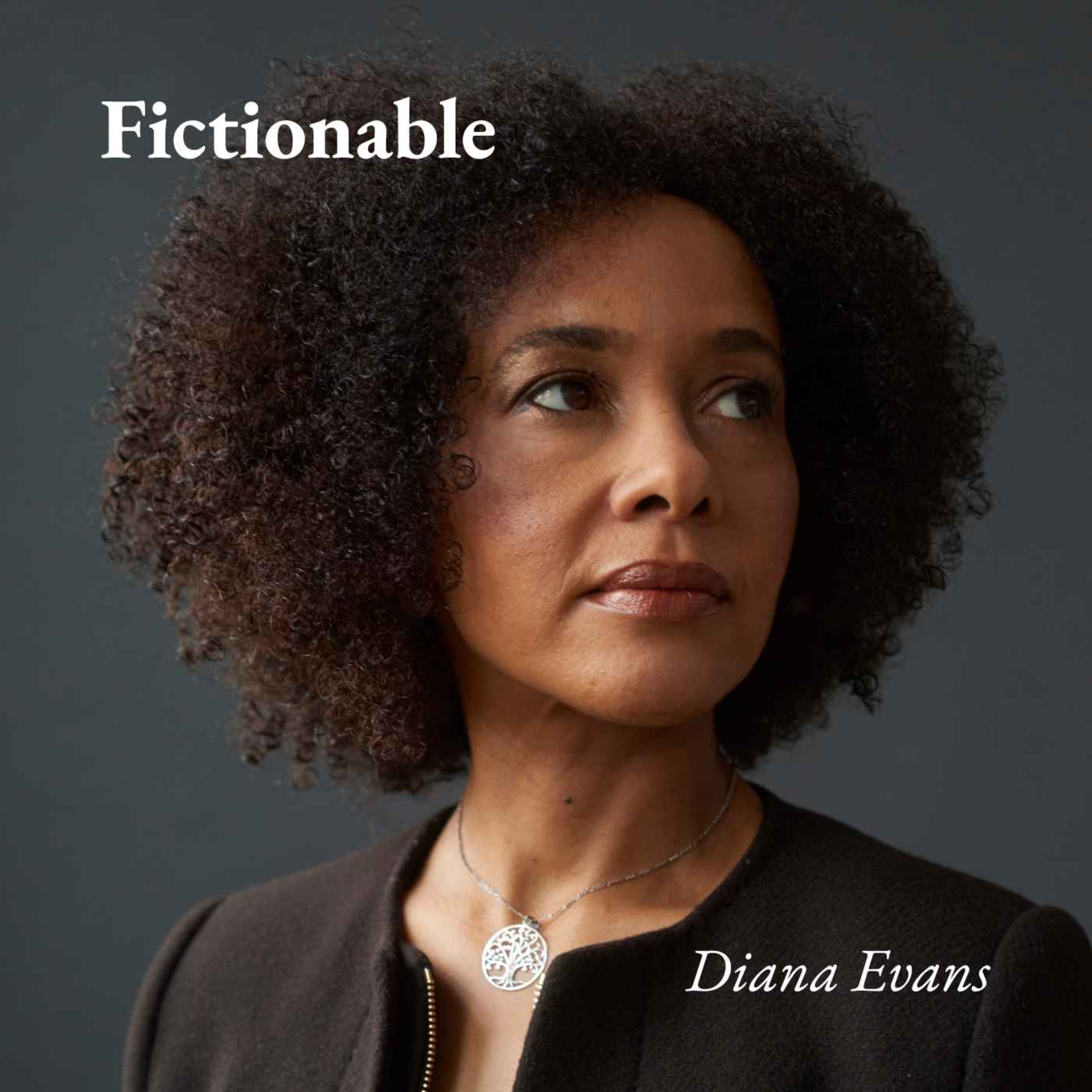
    Diana Evans: 'Writing is an act of hope'

    Spring is here and so is Fictionable, with another set of exclusive short stories and another series of podcasts where we meet our fantastic authors. During the next few weeks we'll be hearing from Takiguchi Yūshō and the translator Jesse Kirkwood, Bruna Martini, Holly Edwards and Joel Cox. But this Spring series marks a return to Fictionable for Diana Evans, who joined us on the Fictionable podcast way back in 2022 to talk about her short story Broth. This time she brings dessert, with Ice Cream, which catches a young woman in that awkward gap between graduation and real life. Evans says she was thinking back to her own past and comparing it with the ongoing crisis in youth unemployment. "It's such a long stretch," she says. "It seems almost like climbing a mountain to actually manifest your talents and give what you have to offer to the world, and for it to be accepted." Evans takes us back to the 1990s, when she fell into a job as culture editor at Pride magazine. "There was this huge Black music scene," she recalls, "that was just proliferating and I was interviewing these rappers and R&B singers. Rap music was becoming pop music and reggae was really popular. It was just a really exciting time." Our current moment feels urgent too, Evans continues, but it's still part of the same continuum. "We're dealing with the same issues, the same injustices," she says. "There's just this global escalation of possible catastrophe… but it's the same energy." It can feel like capitalism is propelling us towards some kind of Armageddon, Evans continues, but writers mustn't be discouraged. "I think artists are really important in this moment," she insists. "I think we have a real call now to reflect on things that are happening and to just make people feel that there is hope." We'll be considering the miracle of new life next time with Bruna Martini and her graphic short story One Day at a Time. Hosted on Acast. See acast.com/privacy for more information.

  • #58
    February 20 · 26 min

    Cynthia Banham: 'Writing is a dangerous act'

    In this Winter series we've already welcomed Cynthia Zarin, Rodrigo Urquiola Flores and the translator Shaina Brassard, Tim Conley and Samuel Rigg. We bring down the curtain with Cynthia Banham and her short story Swimming With Crocodiles. Banham confesses that she shares her protagonist's passion for rewilding, but insists that her short story both is and isn't about the author: "You don't really control what finds its way into your story." After losing her legs following a plane crash in 2007, Banham says that one of the few things that gave her some measure of control was writing. "My only way to avoid the grief overwhelming me was to retreat to my computer and my notebook and to write." It took Banham seven years before she could start writing about the accident, and then another three before publishing her memoir, A Certain Light. She delves further back into her family history in Mother Shadow, due in April 2026, but says that fiction is a liberation. "Writing memoir I've found to be really tricky morally, ethically," Banham explains. "There's a freedom in writing fiction." But that freedom is not without risk, she adds. "This is a whole new level of danger, where you're in constant danger of offending. And I think about that quite a lot." That's it for this Winter season. We'll be back in Spring. Hosted on Acast. See acast.com/privacy for more information.

  • #57
    February 12 · 14 min

    Samuel Rigg: 'Often I find I'm writing about people who are not me'

    After hearing from Cynthia Zarin, Rodrigo Urquiola Flores and the translator Shaina Brassard, and Tim Conley, this Winter series of podcasts enters the final stretch. We'll be rounding off with Cynthia Banham next time, but stepping out on to the ice this week is Samuel Rigg and his short story, At the Rink. Although a short story that explores parenthood and loss is far from his own life, Rigg tells us his short fiction rarely starts close to home. "Often I find I'm writing about people who are not me," he says, "or are relatively far from my own experience. You obviously need to find a way in that connects." This connection with an issue that might seem remote can sometimes be fairly abstract, Rigg continues. "If the form comes to you with that subject, then you don't really question it, you just think, 'OK, I know what I'm going to do,' and you go with it." At the Rink took the author all the way to Scarsdale, a suburb north of New York City where Rigg – like his protagonist – has spent some time. "Maybe there was a sense in which I wanted to write a character who was an outsider," he says, "because that's how I came to that place myself." The nuclear family and the picket fence may never have been a dream for every American, but it still holds some power. "I'm not sure that the suburbs in Britain have the same significance," Rigg suggests, "or quite the same cultural resonance." We'll be listening out for echoes with Cynthia Banham next time, as we dip our toes carefully into her short story Swimming With Crocodiles. Hosted on Acast. See acast.com/privacy for more information.

  • #56
    February 5 · 19 min

    Tim Conley: 'Short fiction is a lot more liberating'

    We've already heard from Cynthia Zarin, Rodrigo Urquiola Flores and the translator Shaina Brassard in this Winter series – we'll be welcoming Cynthia Banham and Samuel Rigg on to the podcast over the next few weeks. But this time we're putting Tim Conley on the turntable with his short story Records. While Conley does confess to owning a few vinyls, he's fascinated by the idea that a record can also be "something that we regret". If you look at where the word comes from, he continues, "to record something is to have it by heart, again. That intrigues me, because there are things that we want to forget and things that we want to remember." In Records, the author explains, "Anna's trying to forget and the ghost is trying to remember, or reclaim a past that he once had". As a literature professor who writes on Joyce, Nabokov and Beckett, Conley admits that his own fiction can be a little highbrow, but insists that it's "not without a great deal of feeling". "Thinking and feeling are not opposed to each other," he says. "As AI debates show us, people seem to think that thinking is somehow greater than feeling, and that's not true. They're both a very humane human activities." Conley's fiction is also shot through with humour, but that's only part of the picture. "It has to be fluid," he says. "Funny is part of a strategy, but it's not exactly a goal in itself." This kind of variety is what draws Conley to short form fiction. "The novel can be swallowed up a lot more by convention," he argues. "In some ways it's more compromised." If the novel is "a little more tyrannical", Conley adds, the short story "is a lot more liberating in a weird, weird way. It also can linger." We'll be hanging around with Samuel Rigg next time and his short story At the Rink. Hosted on Acast. See acast.com/privacy for more information.

  • #55
    January 30 · 23 min

    Rodrigo Urquiola Flores: 'Everything in this short story is true'

    We began this Winter series of podcasts with Cynthia Zarin, who suggested that every single one of us is torn in different ways. We'll be examining those cracks with Tim Conley, Cynthia Banham and Samuel Rigg over the next few weeks, but this time we welcome Rodrigo Urquiola Flores and the translator Shaina Brassard. According to Urquiola, his short story DYSNEYWORLD is all true. The author says that – just like his character – he grew up in a couple of small rooms on the edge of La Paz and sometimes stayed in the big house where his grandma worked, a childhood he says was like "living in two worlds". The gap between one world and another was hard he continues, but he's "not complaining. When I was a child, that arduous path exhausted me too much. But everything I experienced, when it wasn't sad or painful, seemed fun, full of adventures and discoveries." Other writers might have explored these memories in autobiography, but when Urquiola started writing about a football match it came out as fiction. He compares memory to a bolt of lightning, which suddenly "illuminates everything". "The short story is the genre where this magical feeling can be achieved and left to linger in the mind," he says. While there are always losses when you translate from Spanish to English, Brassard argues that it's worth the heartache to get a flavour of La Paz. "Rodrigo's writing captures the rhythms, the poetry, the way that people talk," she says. This reportage is central to Urquiola's project. "A writer is simply an observer who reads," he explains. "Writing is a way of reading." But there's still a lot of freedom in the way an author can make these observations. "Any genre is useful to say the truth," Urquiola insists, "not just realism. When I read great sci-fi, for example Philip K Dick, he is telling me the truth. He's showing me the world in a way that's possible to see it and I don't think he's lying to me." Hosted on Acast. See acast.com/privacy for more information.

  • #54
    January 22 · 31 min

    Cynthia Zarin: 'You write out of the world that you're living in'

    It's cold, it's wet, it's January. Time for another series of exclusive short stories and another series of podcasts. Over the next few weeks, we’ll be hearing from Rodrigo Urquiola Flores and his translator Shaina Brassard, as well as Tim Conley, Cynthia Banham and Samuel Rigg. But we kick off this winter series with Cynthia Zarin and Housekeeping. Zarin reveals that both the houses in her short story are taken from life, but with a certain amount of embroidery. "Everything is drawn from life," she says, "because what else is there?" Her protagonist is torn between New York City and Cape Cod, her heart "in two places at once", the author continues, but that's hardly unusual. "Very few of us live lives that are not full of complication and conflict." After five books of poetry and a glittering career as a journalist, Zarin says she fell into prose fiction almost by accident. "I'd started writing, actually, a letter," she explains, "and then that letter just became something I wrote all the time. It started out as a letter to a specific person, but it became absolutely something else." Zarin's novels Inverno and Estate are constructed in layers, with significant moments tolling through them like bells – a natural form for a writer who believes that "everything is about memory". But it's a form that took some time to emerge. When she showed the work in progress to her friends they would say, "OK sweetheart, it's very beautiful, but what is it?" Zarin says that she began to find out what her letter might be when the artist and writer Leanne Shapton told her to "Stop trying to put it together, take it apart." And she identifies a meeting with her agent, Luke Ingram, as another turning point. "We started to talk about the structure," she recalls, "and we drew it on a napkin." As a poet and journalist, Zarin says she finds prose fiction something of a liberation. "The idea that you can have a character and you can decide that she has red hair – it's fun." We'll be having more fun next time with Rodrigo Urquiola Flores and the translator Shaina Brassard. Hosted on Acast. See acast.com/privacy for more information.

  • #53
    Nov 20, 2025 · 18 min

    Ephameron: 'My work is always at the crossroads between literature, graphic arts, painting, comics'

    This Autumn series of podcasts has already brought us Helon Habila, Caroline Clark and Kasimma. We round it off with Ephameron and her graphic short story <cloud_update>. This enigmatic comic imagines a couple divided by distance but reaching for connection by talking about the weather. So when Ephameron joined us down the line from Antwerp, we began with an update on the skies. Clouds are endlessly fascinating, the author says, "A lot of painters have been interested in painting skies and how you do the textures right." In <cloud_update>, Ephameron uses watercolours, a technique she says she first adopted when she was travelling, pairing it with a font based on the video game Minecraft. "I'm an artist," she explains, "so I try and draw inspiration from a lot of different corners of the web." This broad vision, married with a background in fine arts and an ambition to tell "stories that are set in real life, that are talking about real issues", puts Ephameron's work firmly on the boundary between art and story. "I really want to push the borders," she says. That's all for this Autumn season. Hosted on Acast. See acast.com/privacy for more information.

  • #52
    Nov 13, 2025 · 21 min

    Kasimma: 'Because I’m writing fiction, I can get away with anything'

    We've already heard from Helon Habila and Caroline Clark in this Autumn series of podcasts, and we'll be rounding out the set with Ephameron in the next couple of weeks. But this time we welcome Kasimma and her short story Mama Taught Me That. This story is set in the 16th century. "We are not really sure what life was like then," Kasimma explains. "After colonisation, a lot of our culture was destroyed or merged with the beliefs of the colonisers, so that we don't really – in my opinion – have the original culture and beliefs that we had then, before European intrusion." Some of the most important differences in Igboland – the homeland of the Igbo people in southeastern Nigeria – were around women's rights, she continues. "Everybody was equal. Both male and female owned land, both male and female could do the same kind of jobs. There was no 'A man is better than a woman,' or 'A male child is preferred.' All these things are just debris of colonisation." Many of the details of life five hundred years ago are lost, so there was a lot of freedom in trying to capture that world view. "It's mostly just fiction," she says. Our ancestors may have been more connected with the natural and spiritual worlds, Kasimma continues, so there is a lot to learn from them. "But we shouldn't go back. I don't want to go back. I like my phone, and I like my laptop. I like the airplanes, I like the nice hotels. I love how far we've gone, as human beings, to make life easier for ourselves and to bring communication closer." Next time we'll be communicating with Ephameron, discussing the weather and her graphic short story <cloud_update>. Hosted on Acast. See acast.com/privacy for more information.

  • #51
    Nov 6, 2025 · 17 min

    Caroline Clark: 'This story completely surprised me'

    This Autumn series of podcasts started with Helon Habila confronting the difficult legacy of slavery in the US. Over the next few weeks, we'll be talking with Ephameron and Kasimma. But this time we welcome Caroline Clark and I Will Go. Clark tells us she isn't really sure where this haunting story started. "I could tell you a story about how this story came together," she says, "but it probably wouldn't be the real one." The author explains how she assembles her writing mosaic fashion, instead of a "linear, chronological manner". "I think that's what I have to do," she says, "to get my words out there – come upon something from a different angle." This mysterious process may have served her in poetry, memoir and now fiction, but she isn't hung up about genre, suggesting that her work is "all connected". "When I've written everything you'll have the video game of Caroline Clark," the author adds, "and you can play it." We'll be levelling up with Kasimma next time as we discuss history, equality and her short story Mama Taught Me That. You can find her here on the site or via Apple podcasts, Spotify, Acast and Podchaser and more. Hosted on Acast. See acast.com/privacy for more information.

  • #50
    Oct 29, 2025 · 22 min

    Helon Habila: 'What fiction does is make you live the life of the other'

    Here in the northern hemisphere it's getting misty and mellow all over again. Time for Autumn 2025 and another fruitful harvest of podcasts, ripened to the core. Over the next few weeks, we'll be hearing from Caroline Clark, Kasimma and Ephameron. But we launch into autumn with Helon Habila and his story Paradise. Habila tells us how, after twenty years of living in the USA, in this story he's trying to "make sense of America". "History is not past," Habila says, "it's still with us, and we're living the consequences of that history of slavery in America. To even begin to understand the place, you have to grapple with that history." Paradise puts different Black experiences alongside each other – a Nigerian girl living in Northern Virginia, a young woman whose mother is Nigerian and whose father is white, and a vision of the Brazilian countryside "filled with Black people". But at the heart of the story are two twins, whose ancestors were enslaved on the Strout Estate. When they return to the house, there's "almost a beautiful symmetry", Habila says, "a cycle coming to a close". "You can only imagine that, for them, what it must feel like." To be free people, he continues, knowing their ancestors could never have dreamed of the freedoms that they enjoy today, "that's the contradiction, that's the complexity in American history and the American present, where the past is always in conflict with the present". Some people want to erase the evidence, Habila adds, to "rewrite history. They want to claim that the slaves were actually happier being slaves than Black people are today." The pressure on academics, the new boldness of people in power to say out loud what could only be said before in a whisper is "scary" he says, but he has to go on. "The only thing one can do as an artist is just to remind people and historicise these things and try to turn it into art." Next time, Caroline Clark will be talking about the inevitable pain of the writing life and her short story I Will Go. Hosted on Acast. See acast.com/privacy for more information.

  • #49
    Sep 1, 2025 · 21 min

    Sheyla Smanioto: 'It's a haunted story, where you know something is going to happen'

    This summer series of podcasts has taken us from the snow and ice of AL Kennedy's Expedition Skills to the blunt heat of Ali McClary's Proper Magic, and from the staccato fragments of Pete Segall's Bolex Man to the unstoppable momentum of Dafydd McKimm's The Nosebleed. We bring this season to a close with Sheyla Smanioto and the haunting threat of her short story Intruder, translated by Laura Garmeson and Sophie Lewis. Speaking with the help of the interpreter Jaciara Topley Lira, Smanioto tells us that the story came to her with "almost the last sentence", in a dream where "Somebody was holding me by the throat and saying, 'Look how difficult it will be for me not to kill you when I'm choking you'." She had to deliver that sentence so that she could recreate the feeling she had in the dream, she continues, "And so that's why I needed to trick the reader sometimes." The slippery first-person plural, the sudden switches between the present and the past and the abrupt swerves into dialogue that keep the reader on their toes are also a challenge for the writer. "So, in a way," Smanioto adds, "both me and the reader are victims of what the text needed." Pito's bar is midway along the great journey from the country to the city that Smanioto charts in her novel Out of Earth. "It's a historical movement," the author says. "It's a movement that brought my family to São Paulo. But when you look at it as a movement, it always looks like it is made up of a mass. But it's never a mass, it's made up of people." The people who make this journey are left with a "specific type of loneliness", Smanioto continues, an emptiness that she has tried to fill with her writing by "creating a culture that was a sort of dream, a memory of the past". Even though she calls herself a "very intellectual" writer, dreams are still central to her work. "I have studied technique," Smanioto says, "I'm a literature graduate. But I can't create anything if I don't feel it in my skin first." Hosted on Acast. See acast.com/privacy for more information.

Showing 1–20 of 21 episodes