Skip to content
Artwork for Fem Poem

Fem Poem

The Austrian radioshow and Podcast Fem Poem (gr. poiēma, „The process of making; production, creation; creativity“, poiēo „I do/ I make“) holds space for the beauty of literature, activism, body politics, queerness and feminism. A show to affect and inspire each other- produced by Romina Achatz. #lyricsmatters Voices of international writers, poets, philosophers, artists, rappers, thinkers.

Interviews, Gedichte, Philosophie, Diskurs, Theorie, themenspezifischer Erfahrungsaustausch, persönliche Erzählungen. Eine Sendung zum Austausch, lustvollen, gemeinsamen Denken, reflektieren, affizieren, inspirieren.Eine Sendung die Raum entfaltet für die Kraft der Worte.

Dieser Raum wird gefüllt von den Stimmen internationaler Schriftsteller*innen, Poet*innen, Philosoph*innen, Künstler*innen, Rapper*innen, Wissenschafter*innen, kritischer Denker*innen.

Eine Sendung zum Austausch, lustvollen, gemeinsamen Denken, reflektieren, affizieren, inspirieren.

#femqueer

Play
  • 20 episodes
  • Avg 1 hr 3 min
  • German
  • August 13 · 1 hr 17 min

    Stephan Hellweg: Zwischen Brasilien, Eifel und Berlin

    Zwischen Brasilien, Eifel und Berlin: Stephan Hellweg im Gespräch Schauspieler, Moderator und Sprecher Stephan Hellweg war zu Gast bei FEM POEM. Im Gespräch mit Romina Achatz ging es um seine autobiografische Lesereihe Zwischen Brasilien, Eifel und Berlin, um Literatur als Begleiterin durch unterschiedliche Lebensphasen und um die Frage, wie persönliche Erfahrungen in künstlerische Arbeit einfließen. Hellweg wurde in Brasilien geboren und wuchs nach seiner Adoption in der Eifel auf. Heute arbeitet er für Theater, Film und Fernsehen. Er war unter anderem im Kinofilm Führer und Verführer von Joachim A. Lang zu sehen, arbeitete mit international renommierten Künstlerinnen wie Meg Stuart und Deborah Hay und spielt in der fünften Staffel der ZDFneo-Comedyserie Doppelhaushälfte. In Zwischen Brasilien, Eifel und Berlin verbindet Hellweg seine eigene Biografie mit Literatur. Texte von Christopher Isherwood, James Baldwin, Naja Marie Aidt und weiteren Autor:innen treffen auf Erinnerungen und Erfahrungen aus seinem eigenen Leben. Während der Sendung präsentiert er Ausschnitte aus der Lesereihe. Inspiriert von „Der Soundtrack meines Lebens“ suchte er nach der Literatur des Lebens. Bücher werden zu Erinnerungsräumen, zu Wegmarken und manchmal auch zu einer Sprache für Erfahrungen, für die zunächst die eigenen Worte fehlen. Ein weiterer Teil des Gesprächs widmet sich Long Covid und ME/CFS und damit der Erfahrung eines Körpers, dessen Möglichkeiten sich plötzlich verändern können. Auch hier stellt sich die Frage nach Sprache, Sichtbarkeit und danach, wie persönliche Krisen Eingang in künstlerische und biografische Erzählungen und Werke finden. So entsteht ein Gespräch über Schauspiel und Literatur, über Herkunft und Erinnerung, über Krankheit, Freundschaft, Abschied und künstlerische Praxis – und darüber, welche Bücher uns zu bestimmten Zeitpunkten unseres Lebens finden und vielleicht länger bei uns bleiben, als wir zunächst ahnen.

  • July 14 · 58 min

    Butoh histories: Seminal and forgotten figures of 1950&1960s Japan

    In this episode, Romina Achatz speaks with writer Stephen Barber, author of Films Ghost: Tatsumi Hijikata and the Transmutation of 1960s Japan, about seminal and forgotten figures who shaped the Japanese avant-garde of the 1960s. The conversation focuses especially on filmmakers and the remarkable collaborations between Butoh dancers, photographers, writers, philosophers, and choreographers surrounding Tatsumi Hijikata and Kazuo Ohno. Drawing on his personal encounters, Stephen Barber reflects on meeting many of these extraordinary artists while they were still alive. All of them have since passed away, making his memories a rare first-hand testimony to a generation that profoundly transformed postwar Japanese culture. The episode explores figures including Akiko Motofuji, Hironobu Oikawa, Eikoh Hosoe, Donald Richie, Takahiko Iimura, and Nobuo Ikemiya, as well as key works such as Rose-Coloured Dance, Anma the Masseur, Hiroshi Nakamura’s Super 8 film Revolt of the Body, Donald Richie’s Sacrifice and War Games, and Eikoh Hosoe’s Navel and A-Bombs. The conversation also revisits the Osaka Expo film Birth, filmed on the volcanic landscape of Mount Io in Hokkaido. The episode concludes with a conversation about the importance of archives in preserving the history of Butoh, as Stephen Barber asks Romina Achatz about her own experience visiting the extraordinary private archive and dance studio of the famous choreographer Nakao Ikemiya, the son of Nobuo Ikemiya, who worked with Hijikata and Kazuo Ohno during their recent research in Japan.

  • April 25 · 16 min

    An exploratory cultural and theoretical history of mermaids

    In this radio essay, Romina Achatz explores the cultural, philosophical, and literary history of mermaids, undines, and sirens. Beginning with ancient and medieval myths, including the writings of Paracelsus, she traces how water-bound, feminine-coded figures were once understood as embodiments of nature, transformation, and the emergence of the soul. The essay then examines how, within European traditions, these figures gradually become tied to narratives of love, possession, and projection. Through literary works such as Undine geht by Ingeborg Bachmann, Achatz reflects on the loss of voice, autonomy, and subjectivity, showing how the transition from water to land marks a shift into silence, dependency, and objectification.At the same time, the radio essay opens a queer-feminist and poststructuralist perspective: returning to the water becomes an act of resistance and self-assertion. Underwater, identity dissolves into multiplicity, fluidity, and affect — a space beyond fixed roles and normative concepts of love. Drawing on thinkers such as Gilles Deleuze, Maurice Blanchot, and Franz Kafka, sirens are reimagined not as seductive figures, but as forces, events, and interruptions that destabilize language and meaning. The essay also connects these ideas to global mythologies, including Mami Wata and Oshun, where water beings appear as powerful, sovereign entities rather than passive objects. In dialogue with voices such as Anaïs Nin and Audre Lorde and bell hooks the essay situates these figures within broader questions of creativity, voice, and resistance. Finally, Achatz reflects on the ecological and political urgency of these myths today. In the context of climate crisis, displacement, and ongoing violence, the figure of the mermaid becomes an allegory for the fragile relationship between humans and nature — and a call to return to depth, to imagination, and to forms of life that resist domination. The radio essay unfolds as a poetic and analytical journey into the oceanic — an invitation to listen differently, to embrace uncertainty, and to rediscover the creative forces that lie beneath the surface.

  • Nov 25, 2025 · 54 min

    Invisible People: an exploratory, experimental film on Butoh

    Berger spent four years living in Japan, moving within communities of dancers, filmmakers, and musicians. What began as informal, narration-free filming — including weekly visits to Yoshito Ohno’s studio — slowly unfolded into a long-term cinematic attention to Butoh as it continues to exist today. Invisible People follows dancers who hover between visibility and invisibility, between appearing and disappearing and memory. Rather than explaining or historicizing, the film stays close to bodies, gestures, atmospheres — allowing presence to emerge, waver, recede, and return. It’s also a film about fathers- her own and the final „father figure“ Yoshito Ohno. It is attentive to what flickers at the edge of perception. In conversation, Achatz and Berger explore artistic collaborations, alliances, the contemporary Butoh dance scene in Japan and how Butoh inhabits thresholds between life and death, presence and absence. An episode for listeners drawn to dance, Japan, experimental cinema. „Further Information: https://www.fortisfemfilm.com/invisiblepeople 2023, 71 min, experimental documentary, Director: Alisa Berger in Co-Production with Le Fresnoy – Studio national des arts contemporains (FR) Invisible People is a multi-layered depiction of the unique Japanese contemporary dance Butoh that flows between revolt, eroticism, trance, prayer, ancestral experience, and physical anonymity. The film gradually drifts away from its core issue and becomes a general portrayal of life itself, with all its unforeseen strokes of fate and strange micro-connections.​“ Deutsche Kino-Tour 2025-2026 ​Sonderveranstaltungen / Special Screenings: 18.11. – Karlsruhe – Kinemathek Karlsruhe – 19:30 Uhr 19.11. – Berlin – B-Ware Ladenkino – 18:00 Uhr- w Q&A 26.11. – München – Monopol Kino – 18:30 Uhr – w Q&A 29.11. – München – Werkstattkino – 17:15 Uhr – w Q&A mit Alisa Berger und Stefan Maria Marb ​04.12 – Berlin – Brotfabrik Kino – 18:00 Uhr – w Q&A 05.12 – 07.12 – Berlin – Brotfabrik Kino – täglich um 18:00 Uhr 06.12 – Essen – Filmstudio Glückauf – 17.30 Uhr 07.12 – Köln – Filmhaus Kino – 17:00 Uhr – w Q&A 12.12 – Bamberg – Lichtspiel Bamberg – 17:00 Uhr- w Q&A 12.12 – Nürnberg – KommKino Nürnberg – 21.15 Uhr – w Q&A 13.12. – Düsseldorf – Bambi Kino – 15:00 Uhr 13.12. – Leipzig – Kinobar Prager Frühling – 18:00 Uhr – w Q&A 13.12 – 14.12 – Bamberg – Lichtspiel Bamberg – täglich 19.12. – Hannover – Kino im Sprengel 17.01.2026 – Berlin – Lichtblick Kino – 18:30 Uhr – w Q&A 19.01.2026 – Erftstadt – VHS 20.01.2026 – Bonn – University of Bonn – 16:00 Uhr – w Q&A 11.02.2026 – Bremen – City 46 – 18:00 Uhr – w Q&A

  • Nov 7, 2025 · 1 hr 40 min

    Stephen Barber on Zoo Hotel Delirium

    FEM POEM – Romina Achatz in conversation with Stephen Barber: The Death Zone, Sepsis, Butoh and the Return from Hades In this episode of FEM POEM, Romina Achatz speaks with author Stephen Barber about his haunting and hallucinatory book „Zoo- Hotel Delirium“, a descent into the borderlands between life and death, written in the aftermath of a near-fatal sepsis. The book will be published next year in May 2026 by Infinity land press, London.The conversation begins with the body: with sepsis as both biological catastrophe and metaphysical rupture. Stephen Barber describes the moment when the body becomes inhabited by death — when tissue turns necrotic, when consciousness begins to fracture, and yet the mind persists in dreaming. Together, they explore how this “death zone” became a geography of its own — a space where the author’s feverish visions unfolded: a brutalist tower in the northern forests, a cursed city, the volcanic mountains of Japan, and a Butoh dancer from Saranda, Albania entering death’s stream. Stephen Barber in the Ruby Marie Hotel, Vienna 2025 Romina Achatz and Stephen Barber move between medicine, dance, philosophy, and art — tracing how the capacity to dream intensely after sepsis can open another kind of perception, where hallucination becomes revelation. Remarkably, both Romina Achatz and Stephen Barber survived sepsis at the same time in their lives- and therefore founded „The Sepsis dreamers club“. Now, they share not only an experience of physical vulnerability at a moment in life but a heightened sense of dreaming, a sharpened sensitivity to presence, and a deeper resilience than before. Their dialogue touches on Deleuze’s notion that the artist must descend to Hades and return bearing something of that underworld — as well as on the contemporary machinery of death, the politics of dying, and the persistence of life even inside collapse. What unfolds is less an interview than a shared passage — an intimate mapping of the line where death begins, and happiness, creativity, and art continue.

  • Sep 20, 2025 · 1 hr 25 min

    Butoh, Film, Archives, Memories

    In this episode, Stephen Barber, writer and cultural researcher, shares his profound experiences with Butoh and the Japanese experimental art scene. The dialogue between Romina Achatz and Stephen Barber weaves between history, memory, and artistic practice, offering rare insights into archival discoveries, the contemporary preservation of Butoh, and its living legacy today. An expert on Antonin Artaud, Stephen explores Artaud’s and Genet’s influence on the Japanese avant-garde and Butoh in the 1950s and 1960s and 80s. He reflects on the legendary Asbestos-kan studio, a meeting point for artists and writers including Yukio Mishima, and discusses Hijikata’s collaborations with filmmakers such as Donald Richie and Eikoh Hosoe, as well as dancers Yoshito and Kazuo Ohno. Iconic works like the photobook Kamaitachi and the film Naval and A-Bomb, (Heso to genbaku), a short film directed by Eikoh Hosoe and Tatsumi Hijikat are explored, alongside insights into Hijikata’s involvement in erotic and horror films and his experimental approach to performance. The show also weaves in personal stories and encounters, including Stephen’s experience with Akiko Motofuji, who asked him to sit in utter darkness through the night to await an encounter with the spirit of Hijikata. Romina and Stephen reflect on their personal sensory experiences in Tokyo, late-night walks through the city, and encounters with the avant-garde performance scene. They also discuss Hijikata’s cinematic involvement, his performance at the Osaka Expo, and the philosophical resonance of Antonin Artaud within Butoh, revealing the rich texture of Japan’s cultural world. Romina briefly shares how her early exploration of Japan through her Super 8 and Leica cameras shaped her perception of the landscape and cultivated an observational “eye” that later became a bridge to film dancers such as Murobushi and others. She also recounts filming at the harbour in Le Havre, France, and discusses her ongoing research and her upcoming book. FEMPOEM is a radio space for literature, art, and politics — and in this nearly three-hour conversation, which was cut down to almost 1,5 h, the dialogue itself becomes a living archive: a testimony to the power of art, memory, imagination and even the ghostly presence of the past. It offers insights into archival discoveries, the contemporary preservation of Butoh, and its ongoing influence today.

  • Sep 2, 2025 · 1 hr

    Imagination und Bewegung in Butoh

    Die Sendung beginnt mit einem Essay von Romina Achatz über das schöpferische Potenzial von Imagination und Bewegung. Anschließend folgt eine etymologische Betrachtung der Begriffe Imagination, Bewegung und Butoh. Von dort öffnet sich der Weg zu Yoshito Ohno, der den Körper einst mit Bambus verglich – hohl, durchlässig und leer. Daraus entspinnt sich die Auseinandersetzung mit dem japanischen Zeichen Mu, das zugleich für Leere und für Tänzer steht. Daraufhin wendet sich FEM POEM dem Butoh-Fu von Tatsumi Hijikata zu, erforscht poetische Bewegungsanweisungen und imaginationsbasierte Transformationen, und führt weiter zu Übungen von Yoshito Ohno sowie zu zeitgenössischen Ansätzen der Choreografin Minako Seki. Abgerundet wird die Sendung mit einem poetischen Epilog über die Kraft der Imagination – als Quelle von Empathie, Verwandlung und radikaler Lebendigkeit. English translation: The program begins with an essay by Romina Achatz on the creative potential of imagination and movement. It then turns to an etymological exploration of the words imagination, movement, and Butoh. From there, the journey leads to Yoshito Ohno, who once compared the body to bamboo—hollow, permeable, and empty. This image opens into a reflection on the Japanese character Mu, signifying both emptiness and dancer. FEM POEM then delves into Butoh-Fu by Tatsumi Hijikata, exploring poetic notations and imaginal transformations, and continues with practices by Yoshito Ohno as well as contemporary approaches by choreographer Minako Seki. The broadcast concludes with a poetic epilogue on the power of imagination—as a source of empathy, transformation, and radical vitality.

  • May 5, 2025 · 58 min

    Tatsumi Hijikata: Entstehungsgeschichte des Butoh

    Romina Achatz liest selbst verfasste Texte über die Entstehungsgeschichte von Butoh. Gelesen aus: Romina Achatz, Der Atem des Unpersönlichen: Ent-Subjektivierung und das Denken des Außen im Tanz von Kō Murobushi, Dissertation, Universität für künstlerische und industrielle Gestaltung, Linz 2018 Romina Achatz, Butoh und Imagination (Unveröffentlicht), 2025

  • Feb 4, 2025 · 1 hr 11 min

    Vom Datenkapitalismus zum Tech-Faschismus

    Zu Gast in der Sendung ist Programmierer, Forscher, Publizist, Lektor, Erwachsenenbildner, Netzaktivist, Soziologe und Leiter von Cracked Labs, Wolfie Christl. Er beschäftigt sich seit vielen Jahren mit den gesellschaftlichen Auswirkungen neuer Informations- und Kommunikationstechnologien. Er denkt, schreibt und spricht über freie Medien, kritische Netzkultur, Big Data, Privacy, Überwachung, Copyright, Open Source, digitaler Überwachung, Kontrolle am Arbeitsplatz und erforscht seit einigen Jahren die Macht der Online-Plattformen, algorithmische Entscheidungssysteme und die Ökonomie der persönlichen Daten im digitalen Zeitalter. Wolfie Christl und seine Projekte wurden u.a. zitiert in der New York Times, Washington Post, New Yorker, Wired, Forbes, Financial Times, Guardian ecc. In dem Interview für FEMPOEM sprechen Romina Achatz und Wolfie Christl vom Datenkapitalismus bis zum Thema Tech-Faschismus. Wie werden unsere Daten missbraucht und warum werden diese weiterverkauft ohne unsere Zustimmung- und von wem? Welche Nutzer- Listen werden erstellt und wie werden diese gehandelt? Wie legal ist der Verkauf dieser Daten? Wolfie Christl hat in verschiedenen Forschungsprojekten die Machenschaften sehr bekannter Firmen aufgedeckt- die daher teilweise auch hohe Strafen zahlen mussten. Das Gespräch mündet im Thema „Tech- Faschismus“, das nun im Jänner 2025, in Verbindung mit den Wahlen von Trump aktueller denn je die Welt erschütterte. Die Erzählungen über die Hintergründer so einiger Sillcon Valley Bros und ihre Vorstellungen und (U)Topien klingen wie aus einem schlechten Horrorfilm. Wie können NutzerInnen ihrer eigenen Datensouveränität etwas näher kommen? Welche Gesetzte und Rechte gibt es, auch für KonsumentInnen, Unternehmen und ArbeitsnehmerInnen? Und was ist eigentlich die AI oder KI und welche dystopische Erzählungen gibt es über sie- und wie mächtig oder „gefährlich“ ist diese wirklich? Nähere Informationen zu Wolfie Christl: https://wolfie.crackedlabs.org/ 2017 wurde seine international vieldiskutierte Studie Corporate Surveillance in Everyday Life veröffentlicht, die auf Basis langjähriger Recherchen dokumentiert, zusammenfasst und erklärt, wie Unternehmen heute Daten über Milliarden von Menschen sammeln, verknüpfen, analysieren, handeln und für ihre Zwecke einsetzen. Das ebenfalls 2017 veröffentlichte Arbeitspapier How Companies Use Personal Data Against People befasst sich mit den Auswirkungen des zeitgenössischen Überwachungskapitalismus auf Individuen und Gesellschaft, mit Schwerpunkt auf automatisierte Entscheidungen über Menschen, personalisierte Diskriminierung und datenbasierte Verhaltensmanipulation. Sein 2016 gemeinsam mit Sarah Spiekermann veröffentlichtes Buch Networks of Control gilt als „Atlas der Überwachungsgesellschaft“ (netzpolitik.org) und als „must-read for anyone who is interested in today’s data-driven world“ (Paul Nemitz, Direktor für Grundrechte, Generaldirektion Justiz der Europäischen Kommission). Auch die 2014 veröffentlichte deutschsprachige Studie zum Thema wurde breit diskutiert und im Europäischen Parlament präsentiert. Darüber hinaus schreibt er unregelmäßig für Medien wie die FAZ über Facebook oder datenbasierten Wahlkampf und ist regelmäßig als Trainer für digitale Sicherheit und betrieblichen Datenschutz für diverse Gewerkschaften aktiv.

  • Jan 3, 2025 · 1 hr

    Chinas grüne Wende- WIE MACHT CHINA KLIMAPOLITIK?

    Zur Gast in der Sendung ist Chinaexpertin und Wirtschaftssoziologin Lia Musitz. Sie ist Sinologin, Wirtschaftsoziologin und wissenschaftliche Studienautorin u.a. für die Arbeiterkammer, Hans-Böckler-Stiftung mit dem Schwerpunkt auf Politik, Wirtschaft und die Grüne Transformation in China und hält international Vorträge. 1996 veröffentlichte Chinas Regierung ihren ersten „Nationalen Entwicklungsplan für neue und erneuerbare Energien“. In einem Interview mit Romina Achatz skizziert Lia Musitz die Entwicklung der Grüne Wende in China von den 1990er Jahren bis heute und deren Ziele bis 2060. Dabei gibt sie auch u.a. Einblick in internationalen Diskurse und Handelsbeziehungen- zb. von Seiten Europas und den USA. Im vergangenen Jahrzehnt wurde die Volksrepublik China zur führenden Nation bei der Entwicklung, Produktion und beim Absatz von „Grünen Technologien“ – Photovoltaik, Windenergie, Elektroautos und Batterien und ist auf einem guten Weg, seine massiven Treibhausgasemissionen zu reduzieren, die im globalen Klimawandel uns alle treffen. China ist nicht nur der größte Produzent, sonder mittlerweile auch Anwender beziehungsweise Markt für Grüne Technologien. Die ökologische Transformation ist eine fundamental soziale wie auch ökonomische Frage. Siehe https://www.ipg-journal.de/rubriken/wirtschaft-und-oekologie/artikel/globale-dominanz-7994/ https://www.awblog.at/Wirtschaft/Chinas-gruene-Technologiefuehrerschaft Nähere Informationen: https://at.linkedin.com/in/lia-musitz-4549b42b0

  • Sep 13, 2024 · 1 hr

    Minako Seki: about life, dance and Butoh

    In this episode Romina Achatz is in conversation with dancer, director, dance teacher and choreographer Minako Seki who is also practicing meditation, cooking macrobiotic food and also teaching Japanese traditional healing techniques. At the moment she is the choreographer of WOYZECK at the Nationale Theater Düsseldorf. She speaks about her life’s journey, how dance found her, Butoh, her holistic approach to life, her teaching and fulfilling her dreams. She speaks about her upcoming book that she and Jessica Cottee wrote. It’s called THE SEKI METHOD, Illustrated by Lili Lenfant. Romina Achatz is also the author of an essay in Minako Seki’s new book called „Thoughts on imagination“. For the episode of FEMPOEM she reads the introduction of Minako Seki’s book as well as from her essay. Performer and producer Rachel Alvarez Rodriguez also reads a part of the book. Minako Seki and Romina Achatz were holding lectures together at the University of Frankfurt, Tanzfabrik Berlin- and are cooperating again theoretically through the book. Minako Seki and Romina Achatz Minako Seki aspires with her dance to the space inbetween. It is not only title of her work but the request of her dance and choreography. With her dance she explores the mystery between body, space, time and human soul. She is interested in perception and effects of energy -potentials, like they exist in the state before an avalanche breaks through or a pendular swings back. Minako Seki stills feels the same joy and curiosity of life now as in the age of 7. The see sparkling eyes makes her feel fullfilled. She feels like she was destined to be a dancer and feels very happy living her destiny every day. Further Information: Minako started her dance career in Tokyo with the Company Dance Love Machine, under the artistic direction of Tetsuro Tamura and Anzu Furukawa. Since 1987, Minako Seki has been working as a director and choreographer in increasingly interdisciplinary projects. She has been continuously interested in the crossing over of diverse disciplines and dance styles. She developed her own fusion of contemporary dance and physical theater with the classic Butoh dance technique. In her pieces, Seki examines the communication amongst the conscious and subconscious and describes emotional states on the borders of reality and illusion. Besides her artistic career, Minako Seki is devoted to teaching. She facilitates intensive dance workshops worldwide, through a holistic program. She also lectured in a number of universities such as Folkwang University in Essen, Justus Liebig Universität in Giessen, Germany, University of Andes in Chile, University of Vigo in Spain and Roehampton University in London.

  • Jul 14, 2024 · 1 hr 9 min

    Theory of art curating

    In this episode Romina Achatz interviews Rome based art critic and political theorist Ilari Valbonesi. She talks about her personal journey from Philosophy, Phenomenology, to a practice of inter-being with artists which resulted in an own art radioshow during the Biennale, to writing and curating spaces for artists in Zagreb, Rome, Sarajewo and Vienna. In an ongoing dialog with Alessio Fransoni she developed and is still developing and weaving a political theory of art. For „Fem Poem“ Ilari Valbonesi is reading texts from her essay „the paradigma of listening“ and her latest work. Text by Ilari Valbonesi: Roma, 15 luglio 2024 Sometimes one wonders why a reference is made. One should rather ask how a reference is born, how it crystallises and what crystallises around it. A reference is usually born by chance, thanks to an encounter that is usually accidental, unforeseen. An art criticism or a theory of form that does not start from the works themselves would be a very strange, empty, abstract kind of writing, perhaps to be applied a posteriori with some success. An art criticism or a theory of form can only start from the works themselves, from the encounter with the works. But which works? If they were chosen a priori, it would be a trick. They would in fact be chosen on the basis of a theory. Such a choice would therefore correspond to what was said earlier, namely the formula of „theory to be applied“. But this is not the case with criticism and theories of quality. They start from the work of art that one simply encounters. And from this, they can gradually establish a familiarity or a series of distances. Or rather, and I really mean the best critiques and theories, one derives from the work a perspective that can – yes – be applied to other works. Not to establish relationships this time, but to make a leap into abstraction and arrive at a purely theoretical level. This means no longer identifying affinities at the level of phenomena, but paradigms that change the way we see and judge everything. In this interview, I have tried to narrate a curatorial practice through paradigms. Starting with listening. For several years now, I have been pursuing an “estranged” agenda, which I have exhibited in multimedia projects, radio practices, writings and exhibitions (recently, from The Smile of the Sphynx in 2020 to the Devotion Salon series in 2014, both in progress), and which revolves around a fundamental question. Where is the possibility for an object (a thing) to influence a context? Where is the possibility for an object (a thing) to trigger the discursive and emancipatory formation that is art judgement? A timeless question, because it is at the heart of a discursive formation that is political rather than aesthetic. I am more concerned with a constant examination of the possibilities of the thing, or the thing that is the work of art, to modify the movements of people in a context by virtue of an intrinsic virtue. An intrinsic virtue: which therefore does not escape the consistency of the work as a thing and the materiality of its support. The means I use to pursue this question are very simple. Firstly, I do not take into account the social hierarchy of places. It is not about proposing alternative spaces. The alternative is always an alternative to something, and that something is the institution. So the alternative is simply the other face of the institution. It seems to me a trap that I have never fallen into, and in fact in my history I have always accepted the space of the institution or the commercial space indifferently. So it is simply a matter of being indifferent to the place, because the place is not the point. The point is precisely the work: in order to prove whether the work, the thing, is capable of determining a conflict, a gap in the trajectories, of appearing as a difference, of activating the place as a difference, its movement must in itself be indifferent to the social positioning of the place. It will certainly not be indifferent to the political positioning of the place. But this is another point, and in order to understand it we need to highlight this apparent paradox: political space is made, and thus ‚positioned‘, by the presence of works, things, people, understood as plurality, and their interactions. It is only in indifference to place that works can be freed from the temptations of the individual experience of the exceptional, of dual hermeneutics, of the „one-to-one“ relationship, and show us that they are irreducibly third among themselves and third among us. The point, then, is the work. As Alessio Fransoni admirably writes in his Political Theory of Art (p.33): „ The work of art enters the world as a new beginning among other beginnings and forces others to move, to take a position, to judge, in other words, to act. In this sense, it is in turn liberating. Such irruption also resembles a birth: it is not a controlled process, but a partially blind act that triggers unpredictable effects. „. And this is the second simple element of the programme: the selection of the works, not the artists. The artist, his name, his signature, are already in the context, the value, the society. But from a political point of view, it is not the artist, but the works. So do not be offended if I put the works in their place. The works are charged with the burden of presence, they have to prove in the field whether or not they are able to differentiate, to make a difference. Whether they are capable of exercising a certain agency or not. The political enigma of art lies in this ‚however‘, an unguaranteed ‚however‘ that manifests itself with the force of fact. And that is why I suggest you read Alessio Fransoni’s book “Political Theory of Art”, just published by Academia Verlag, which I had the privilege of “listening” and read through its long development and gestation. The Black Paradigm. In 1985, Frank Stella published a short essay on Caravaggio in the New York Times Magazine, the content of which had been the subject of a lecture given at Harvard as part of the Charles Eliot Norton Lectures. For Stella, Caravaggio has a place of honour, and the reason for this lies in a comment on the relationship between painting and the environment: „He is able to take the pictorial space he creates in his own studio and move it into a public space without making any concessions to the structure of that space. Even now, his paintings create and occupy a specific, self-contained space‘. I think the key to pictorial space and the aforementioned independence of the painting from its environment is Caravaggio’s blackness. This is in fact something surprising and unprecedented. It is not a background in the sense of a figurative motif, nor is it a simple illusion of a dark environment. The figures move into it and occupy it. It is not simply an empty space in shadow. It is the very degradation of light into shadow, a depth explored by the very force of painting, without architecture, without form itself, without signs. Black is the absorption of all colour, it is the rest of form, that to which form returns, Caravaggio’s black as black absorbs all colour, it attracts it, but it does so slowly, so much so that in this slowing down space and movement are perceived. Caravaggio’s black is there, made of paint, to radically question the emergence of something in the light, of emergence in art in general, and thus the relationship between pictorial space and support: plastic space in painting. It is the discovery of blackness as a paradigm of withdrawal by leaving space, of the emergence of something without that something being completely free of that from which it emerges. For it is from this black that the form emerges and in this black that the form rests, and it is in this double movement that the work finds its unity. What is this blackness? It is background that is not background, it is that from which form emerges and in which it rests. It is the paradigm. But not to establish affinities and aggregate other works. But to look at other works, all works, with different eyes. The last expedient in the programme is movement. The movement of the work is understood. Already in the Devotion Salons, I experienced the continuous rearrangement over the course of the exhibition. Otherwise the exhibition runs the risk of becoming in turn context, scenography. And I have also experienced, at times, the changing of the artists represented in the exhibition. For how could the agency of the works ever be experienced if we did not allow them to move in space? And also to add or change themselves. How could we ever make the political effective if we were not invited to a continuous change of perspective? Die Schwarze welle Thank you, dear Romina, for our interview that calls for the possibility of responsive listening (and writing). And thank you, dear artists, for your incredible artworks that accompanied first studio exhibition at Brauhausgasse 31: the occasion of a fortunate and at the same time virtuous encounter. Towards a Neue Plastik Welle. (to be continued) @ilarzip

  • May 20, 2024 · 1 hr

    Ghosts in other birds

    Alfredo Félix-Díaz is a Mexican writer living in Europe since 2013. He works as a screenwriter. Alfredo Félix-Díaz has published three books of poems and a verse play in Spanish. His novel in English „Parted Gods“ will be published by Unsolicited Press in March of 2026. In this episode of Fem Poem he is reading from an unpublished collection of poems in English called Humming and Other Birds as well as one poem in Spanish. Romina Achatz and Alfredo Félix-Díaz are in conversation about poetry, birds, the wild nature, city-animals and the intensification of life through words. „…access your haptic grooves kiss your kissing pores or maybe, bicolored crows, you’ll be back as ghosts in other birds for each call has an echo and life itself- by which one means love- is an earworm implanted by inscrutable light.“ Alfredo Félix-Díaz

  • May 6, 2024 · 1 hr

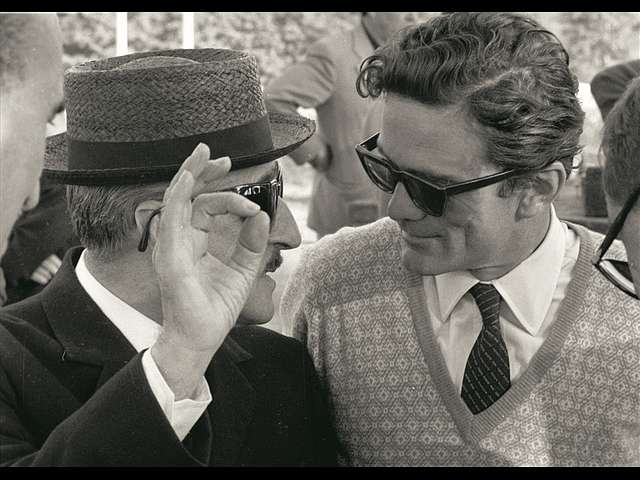
    Pier Paolo Pasolini: Ein Rabe in der Krise

    Am Beginn der Sendung liest Romina Achatz selbst verfasste Texte über den Pier Paolo Pasolinis Übergang von der Literatur zum Film 1961. Als hermetischer Lyriker und Romancier des Lebens in den römischen Slums durch seine Romane Ragazzi di vita oder Una vita violenta bekannt, verändert er 1961 die Schreibweise seiner Poesie. Der Autor wendet sich dem Film zu. Danach beschreibt Romina Achatz Pasolini filmtheoretische Schriften, wie Das Unpopuläre Kino und seine Begriffe der AutorInnenfreiheit und wirklicher Zuschauerschaft. Ein großes Kapitel der Sendung ist dem Film Uccellacci e Uccellini Größe Vögel Kleine Vögel gewidmet. Diese bespricht die marxistische Ideologie in der Krise. Zwei Jahre nach der Verfilmung des Evangeliums nach Matthäus erscheint 1966 der letzte Film, der nach Angaben des Regisseurs von dem Geist Antonio Gramscis geprägt ist. Danach verabschiedet sich der Weggefährte für immer. Es ist sein letzter Film als Ausdruck des Dranges zur politischen Bewusstseinsbildung. Der Film thematisiert die zersplitterten, langsam verbleichenden Kommunismen. Die Schreie des italienischen Befreiungskampfs, der 1945 sein Ende findet, verhallen langsam im Sog des allumfassenden Kapitalismus. Der Rabe versucht den zwei sorglosen Protagonisten den Weg zu weisen, denn sein Weg ist zu Ende. Music by G8 „When tomorrow is a date late“/ and „Cup With a Handle“ by G8 is licensed under a Attribution-Noncommercial-Share Alike 3.0 United States License https://freemusicarchive.org/music/G8/20190315163559198/08_When_Tomorrows_a_Day_Late/

  • Feb 29, 2024 · 1 hr

    Queer Ecology

    Lou Lisa und Marion Steinfellner und Azuki Marion Steinfellner und Lou Liska, die Queerness, Performancekunst, der Tanz, das Schreiben und die Malerei verbinden, schreiben gerade an einem gemeinsamen Buch namens „Queer Ecology“. Lou Liska studierte Humanökologie und arbeitet im Bereich Performancekunst. In der Radiosendung besprechen die GästInnen mit Romina Achatz ihre ersten Skizzen bzw. die Landkarte des Buches in erarbeiteten Kategorien- und stellen Fragen, die zum lustvollen Miteinander Denken und Reflektieren anregen dürfen. Queer Ecology bedeutet für Marion Steinfellner vor allem, dass ALLE Lebewesen gleich bedeutsam sind: in ihrem Glück, in ihrem Wesen- Sein, in ihrem Leid, in ihrer Bedrohtheit, in ihrem Sein. Es bedeutet auch die Auflösung von Geschlechterbinariät sowie der Hierarchisierung zwischen Mensch, Tier, Pflanzen und Steine. Wie gestaltet sich die Forschung? Wie fühle ich mich in meinem Körper? Wie ist mein Körper verbunden mit der Welt? Körper sind sehr zerbrechlich. Daraus stellt sich auch die Qualität der Verbundenheit: Wie können wir einander inspirieren, einladen, einander beim Leben helfen? Wie können wir Miteinander im Moment da- sein? Es gibt auch den Moment, der über den Moment hinausragt. Im Bezug auf den Moment bedeutet Spiritualität für Marion Verbundenheit, Empathie und ein Stück weit Nachhaltigkeit. Wie kann sich ein Moment gestalten, dass er nicht ausbeuterisch ist und räuberisch? Marion Steinfellner und Romina Achatz

  • Oct 27, 2023 · 1 hr

    Manuela Tomic: Schreiben und Identität

    In der Sendung ist Romina Achatz im Gespräch mit der in Wien lebenden Autorin, Hörspielproduzentin und Journalistin Manuela Tomic. Nach einem Dialog über das Schreiben, Erinnerung und Identität liest die Autorin ihren Text Blaupausen, ein Mosaikstück aus ihrem Roman, an dem sie gerade arbeitet. Manuela Tomic wurde 1988 in Sarajevo geboren, ist in Südkärnten, Völkermarkt, aufgewachsen und lebt seit 2006 in Wien. In den frühen 90er-Jahren floh sie mit ihrer Familie vor dem Bosnienkrieg. Die Themen ihrer literarischen Werke umfassen Familie, Migration, Introspektion, Identität, Kärnten, Bosnien und Politik. Im zweiten Teil der Sendung liest die Autorin einen journalistischen Text namens Erinnerungen an Sarajevo: Die Tauben auf dem Sebilj über eine Kindheit im Konjunktiv, fragile Identitäten, Rückkehr und die Suche nach Erinnerungen. Nachzulesen unter: https://www.furche.at/feuilleton/zeitgeschichte/erinnerungen-an-sarajevo-die-tauben-auf-dem-sebilj-7415437 Die Sendung schließt mit eine Gedicht. Manuela Tomic ist auch Lyrikerin. Mit ihrem Hörspiel „Lieber zerfranst es mich…“ erreichte Manuela Tomic 2021 den zweiten Platz beim Ö1-Kurzhörspielwettbewerb „Track 5’“. Mit ihrem Prosatext „Gartenland” erreichte sie 2019 den zweiten Platz in der Kategorie Publikumspreis beim Wiener Werkstattpreis für Literatur. Prosa-Veröffentlichungen in: „Neue Texte“ (Ö1), Lichtungen und FLUCH’T’RAUM. Ihr neuestes Hörspiel erscheint am 25. November. Zu hören auf: https://oe1.orf.at/programm/20231125/740239/Ein-Hoerspiel-auf-Deutsch-und-Serbokroatisch Manuela Tomic und Romina Achatz, Wien, 2023

  • Oct 3, 2023 · 1 hr 6 min

    Ursula Knoll: Über das Schreiben

    Romina Achatz ist im Gespräch mit der in Wien lebenden Schriftstellerin und Verlagslektorin Ursula Knoll. Sie studierte Germanistik, Judaistik, Genderstudies und Romanistik in Wien, Bishkek, Washington DC und Prag und promovierte in in Literaturwissenschaften über NS-Täter*innenschaft. Zeitgleich absolvierte sie am Burgtheater Wien eine Ausbildung zur Dramatikerin. Ihr Debütroman „Lektionen in dunkler Materie“, aus dem sie in der Sendung liest, gewann 2023 den Blogger Literaturpreis für „das beste Debüt des Jahres 2022“. Der Episodenroman erschien 2022 im Edition Atelier Verlag und erzählt von fünf unterschiedlichen Frauen in der Gegenwart, die im Sinne von Harraway’s „kindship“ in einem Verwandtschaftsverhältnis stehen, bzw. dessen Leben in der einen oder anderen Form miteinander verwoben sind und alle eines gemeinsam haben: sie gelangen an einen Punkt, an dem es nicht mehr weiter geht. Sie „explodieren“, „flippen aus“, verlassen das lähmende Gefühl von Ohnmacht und wehren sich auf unterschiedliche Weisen u.a. gegen repressive strukturelle Probleme. Sie verlassen alle den Pfad auf dem sie bisher gegangen sind und schlagen eine andere Richtung ein. Ursula Knoll webt literarisch einen Kosmos der Wut, in dem die Frauen miteinander verbunden sind- eingebettet in ein Klima der Bedrohung von Waldbränden und allgemeine Überhitzung aufgrund des Klimawandels aufgrund des erschöpften Systems in dem wir heute leben. Der Roman bespricht u.a. Themen wie den Umgang mit Geflüchteten, die Situation am Mittelmeer, den Turbokapitalismus, Lieferservices, Klassismus, Care Arbeit bzw. die Situation von v.a. alleinerziehenden Müttern, Finanzcrashes und überhitzte Aktivistinnen. Neben dem Debütoman sprechen Romina Achatz und Ursula Knoll über Techniken und Rituale des Schreibens, das aktuelle Romanprojekt, sowie den Unterschied zwischen dem Schreiben für das Theater und der Erfahrung einen Roman zu schreiben. Nähere Infos unter: https://www.ursulaknoll.net

  • Aug 1, 2023 · 1 hr

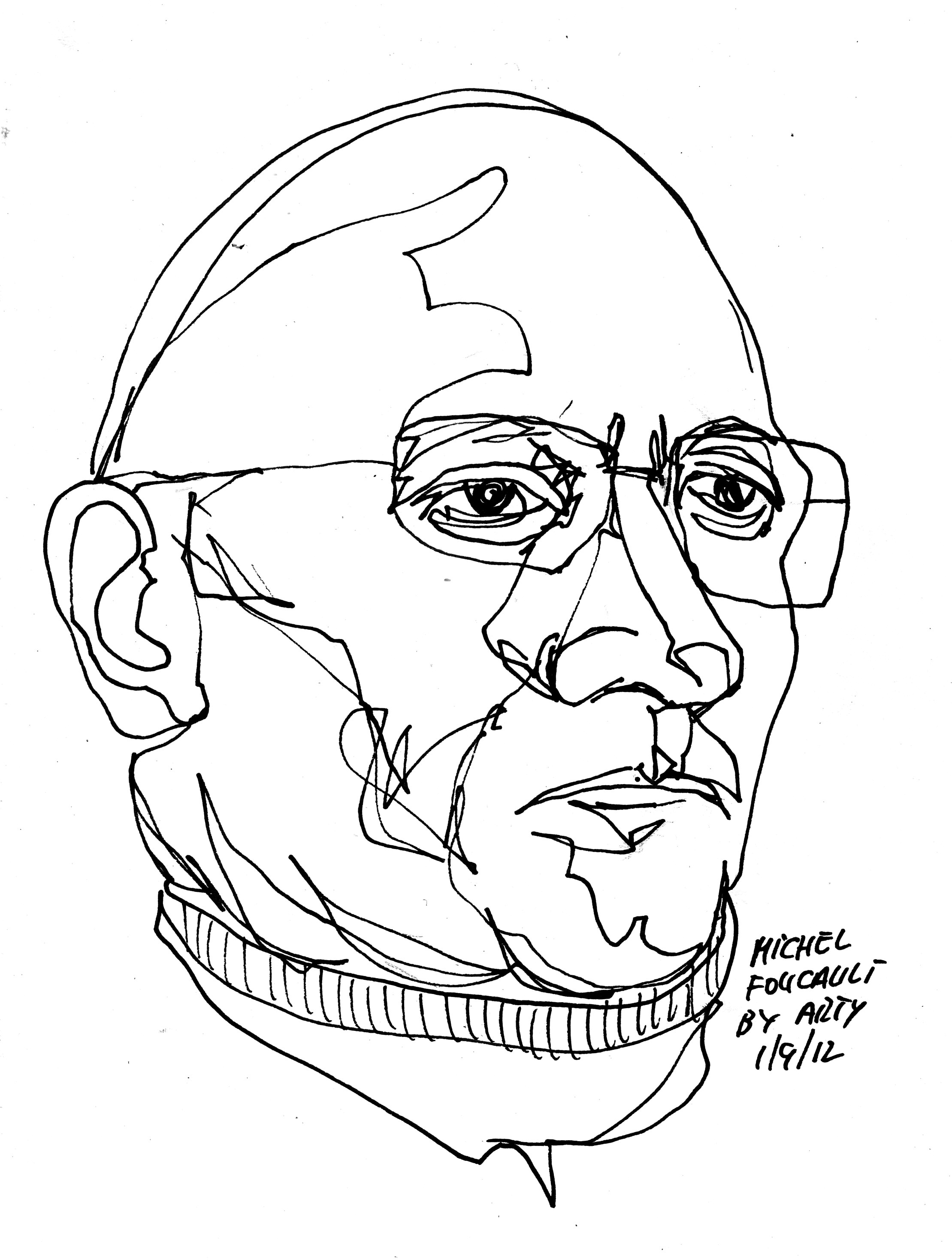
    Michel Foucault: Von den Disziplinartechniken zu den Selbsttechniken

    „Das Hauptziel besteht heute zweifellos nicht darin, herauszufinden, was wir sind, sondern abzulehnen, was wir sind. Wir müssen uns vorstellen und konstruieren, was wir sein könnten, wenn wir uns dem doppelten Zwang entziehen wollen, der in der gleichzeitigen Individualisierung und Totalisierung der modernen Machtstrukturen liegt.“ Foucault, Michel: Schriften IV, Dits et Escrit. Schriften Band 4, 1980-1988, Suhrkamp, Frankfurt, 1994, S. 280 Die Sendung bespricht Romina Achatz verschiedenen Analysen der Macht bzw. der Biopolitik im Werk des französischen Philosophen, Historiker und Soziologen Michel Foucault. Sie liest in der Sendung aus ihren eigenen Texten über Disziplinarmacht, Mikrophysik der Macht, Sicherheitstechnologien, Liberalismus, Selbstoptimierung und Sexualdispositive- sowie über Selbsttechnologien. Lesetexte: Achatz, Romina: Der Atem des Unpersönlichen. Ent- Subjektivierung und das Denken des Außen im Tanz von Ko Murobushi, Wien, 2018 (Disseration) Achatz, Romina: Die Körper des Poltischen im Werk von Pier Paolo Pasolini und viele unveröffentlichte Texte. Zitate aus: Foucault, Michel: Ästhetik der Existenz, Schriften zur Lebenskunst, Suhrkamp, Frankfurt, 2007 Subversion des Wissens, Suhrkamp, 1968 (1976) Überwachen und Strafen, Die Geburt der Gefängnisse, Suhrkamp Verlag, Frankfurt am Main (1983) Der Wille zum Wissen. Sexualität und Wahrheit 1, Suhrkamp Verlag, Frankfurt am Main (1978) Dispositive der Macht. Über Sexualität, Wissen und Wahrheit. Merve Verlag, Berlin.(1999) In Verteidigung der Gesellschaft, Suhrkamp Verlag, Frankfurt am Main (2004) Geschichte der Gouvermentalität, 2 Bände, Die Geburt der Biopolitik, Suhrkamp Verlag, Frankfurt am Main Lemke, Thomas (2007) Biopolitik, Zur Einführung, Junius Verlag, Hamburg Photo- Source: Arturo Espinosa, CC BY 2.0 <https://creativecommons.org/licenses/by/2.0>, via Wikimedia Commons Romina Achatz

  • May 6, 2023 · 1 hr 33 min

    Sexarbeit als Beruf(ung)

    Zu Gast in der Sendung ist die Lil. Sie ist Bildende Künstlerin & Tänzerin aus Berlin und arbeitet als Sexworkerin. Mit ihrer Freundin Leonie gründete Sie auch den Podcast „Mit Zunge“, der sich Ihrer Arbeit widmet. Lil erzählt im Gespräch mit Romina Achatz über den Zusammenhang von Kunst, Tanz, Tanzworkshops und Sexwork, dem Affiziert sein von einem Gefühl von Ewigkeit und Gegenwart. Welche Rolle spielt die chronologische Zeit in der Arbeit und wie entkommt man ihr? Warum ist der Beruf an sich schon politisch? Und aus welchen sozialwissenschaftlich/ geschichtlichen Gründen, die u.a. auch auf einem Konzept von heterosexueller Monogamie fußen, wurde Sexwork absichtlich verheimlicht und tabuisiert? Welche Rolle spielt die Sprache in dem Beruf und wie und von wem kann Sie als Machttechnik gelebt werden? Lil gibt Einblick in ihre Gedankenwelt und über ihren Arbeitsalltag, der als Independent Escort zu 80 Prozent von Computerarbeit und Marketing geprägt ist. Sie erzählt über eine gewisse Offenheit, Neugier und Durchlässigkeit, die Grundvoraussetzungen sind für Ihre Arbeit. Der Mensch als Erfahrungstier, dessen Eintauchen in andere Lebenswelt, das Einlassen auf andere Menschen. Lil und Romina sprechen u.a. über ein Buch namens „Sexistenz“, von dem französischen Philosophen Jean Luc Nancy, sowie über Begehren, Sex, Liebe, die Kunst der Verführung, Geheimspioninnen und Shadowbanning auf sozialen Medien und vieles mehr. Nähere Information zu Gästin: https://linktr.ee/lllil_Berliner

Showing 1–20 of 20 episodes