Skip to content
Artwork for Faithfully Explore!
Kids & FamilyReligion & SpiritualitySociety & Culture

Faithfully Explore!

Laura Menousek

Pack your curiosity and get ready to explore!

Faithfully Explore! is an educational podcast for curious kids ages 5–12, families, homeschoolers, and classrooms. Hosted by Laura, each episode introduces listeners to world religions, cultural traditions, myths, folktales, inspiring people, holidays, and big ideas in a warm, respectful, and kid-friendly way.

Through sound-rich storytelling, guided imagination, original songs, movement, games, mindfulness, and hands-on challenges, children discover both what makes people’s beliefs and traditions unique and what connects us across the world.

Every adventure ends with something meaningful to place in our Belief Backpack, a lesson about kindness, courage, compassion, honesty, curiosity, stewardship, or understanding that children can carry into their own lives.

Faithfully Explore! encourages children to ask thoughtful questions, appreciate different perspectives, and explore the world with wonder, without preaching or telling families what to believe.

Listen together in the car, before bed, during homeschool, or as part of a classroom lesson. Then continue the adventure with videos, educational printables, activities, and family resources at FaithfullyExplore.com.

Play
  • 20 episodes
  • weekly
  • Avg 16 min
  • English

Support the show

Goes straight to the publisher. podnod takes nothing.

  • #69
    Thursday · 15 min

    Nasreddin’s Clever Solution: A Story About Fairness

    Can someone charge you for smelling their soup? A hungry traveler has only a piece of bread for lunch—but when he enjoys the delicious smell drifting from an innkeeper’s pot, he gets an unexpected bill. Three coins for a sniff? Something doesn’t seem fair! Join Laura on Faithfully Explore! for a funny folktale featuring Nasreddin Hodja, a beloved character known for surprising people into thinking differently. When the traveler and innkeeper bring him their disagreement, Nasreddin listens, asks questions, and comes up with an answer you’ll want to hear for yourself. Can your explorer solve the problem before Nasreddin does? Listen together, pause to share your guesses, and discover how a little humor can make a big point. Inside This Episode Travel to Turkey, also known as Türkiye, and discover how a ferry ride in Istanbul can take you between Europe and Asia. Meet Nasreddin Hodja and learn that his stories are told across many countries and cultures. Follow a hungry traveler into a marketplace—and a very unusual disagreement. Think through the problem before the story’s clever conclusion. Connect fairness to everyday situations, including someone changing the rules in the middle of a game. Practice a simple way to speak up: “That doesn’t seem fair. Can we talk about it?” 🎒 This Week’s Belief Backpack “Be fair and speak up when something is unfair.” Children are encouraged to listen carefully, ask what actually happened, and seek help from a trusted grown-up when they need support. For Parents and Educators Created for children ages 5–12, this episode offers a starting point for conversations about fairness, critical thinking, respectful communication, and resolving disagreements. Try it during a car ride, at bedtime, in a classroom, or as part of a homeschool lesson on folktales and world cultures. This is a retelling of a traditional Nasreddin tale. Names, details, and settings vary across the communities that share these stories. Keep the Conversation Going Ask your child: “Why do you think Nasreddin asked questions before deciding what was fair?” Then try a family or classroom fairness check during your next game or shared activity: Did everyone understand the rules? Has everyone had a chance to explain? Does anyone need help participating? Explore More Visit FaithfullyExplore.com for more episodes exploring stories, cultures, beliefs, and big ideas from around the world. Follow Faithfully Explore! wherever you listen so your next adventure is ready for carpool, quiet time, or learning together. Know a family or teacher who would enjoy this story? Share the episode and invite them to solve Nasreddin’s puzzle, too!

    • Transcript
    • Chapters
  • #68
    September 17 · 20 min

    Pele, Hawaiian Goddess of Fire: A Journey Across the Islands

    Pele, Hawaiian Goddess of Fire: A Journey Across the Islands Why do visitors mail lava rocks back to Hawaiʻi and what does that have to do with Pele? A package arrives filled with volcanic rocks and a worried note asking for them to be returned. The sender believes they have experienced “Pele’s curse.” But where did that belief come from, and how does it compare with traditional Hawaiian stories? Join Laura on Faithfully Explore! for a journey across the Hawaiian Islands to meet Pele, the revered goddess of fire and volcanoes. Follow her search for a home as her sea-goddess sister sends waves against her flames, paddle along in an imaginary voyaging canoe, and discover how lava can destroy a landscape while also creating new land. Then return to the mystery of the mailed rocks. Explore the difference between traditional Hawaiian moʻolelo and the popular souvenir-curse legend and why respecting the land matters regardless of whether we believe in bad luck. In This Episode, We Explore Who is Pele? Meet a sacred figure whose connection to Hawaiʻi’s volcanic landscape remains meaningful to many Native Hawaiians. Why does Pele travel across the islands? Hear one telling of her journey from Kahiki toward a home at Kīlauea. How does fire become land? Discover what happens when lava cools and how Pele’s route parallels the broad progression of the Hawaiian island chain. What is “Pele’s curse”? Investigate the popular belief about taking lava rocks and why its uncertain origins matter. Why leave rocks where they belong? Consider the cultural and environmental reasons to appreciate a place without removing pieces of it. For Curious Kids and Their Grown-Ups Looking for an introduction to Pele, Hawaiian goddess, for kids? This episode brings together storytelling, Hawaiian cultural learning, geography, and volcano science for children ages 5–12, families, and educators. Listeners can join a seated paddling activity, imagine the meeting of fire and water, and cross our Friendship Bridge to consider how different beliefs inspire care for the Earth. The story includes conflict between sisters and descriptions of volcanic destruction, alongside themes of creation, belonging, and responsibility. This Week’s Belief Backpack “Respect means learning the true story and leaving a place whole.” After listening, ask: “How could you remember a special place without taking anything from it?” Draw a favorite view, describe its sounds, or tell someone what you discovered. Keep Exploring Visit FaithfullyExplore.com for the episode page, discussion prompts, deeper discoveries for adults, and companion recommendations for Hawaiian storybooks, volcano books, and hands-on activities. Enjoyed the journey? Follow Faithfully Explore! for more stories, cultures, beliefs, and big ideas from around the world—and share this episode with a family who loves asking “why?”

    • Transcript
    • Chapters
  • #67
    September 10 · 11 min

    Why the Sun and Moon Take Turns: A Traditional Lithuanian Sky Story

    Why the Sun and Moon Take Turns: A Traditional Lithuanian Sky Story What happens when the Sun and Moon both insist it’s their turn to watch over the Earth? Join Laura on Faithfully Explore! for a Lithuanian sun and moon myth for kids about a celestial family, a noisy disagreement, and two different ways of showing love. Saulė, the Sun, brings warmth and light to her daughter, Žemė—the Earth. Mėnulis, the Moon, offers a gentle glow and quiet nighttime care. But when neither will step aside, their argument echoes across the heavens! Can Perkūnas, the powerful thunderer, help them discover that Earth needs what each of them offers? Through this warm retelling, children explore cooperation, listening, and the possibility that two different ideas can both have value. In This Episode Travel to Lithuania and meet the celestial characters of a traditional sky story. Discover how a disagreement changes when everyone focuses on what is needed. Explore the story’s explanation for the Sun and Moon taking turns. Learn that Earth’s rotation causes day and night—and that the Moon can sometimes appear during daylight, too. Reflect on the importance of both activity and rest, warmth and quiet, giving and listening. Our Belief Backpack Takeaway We can care in different ways, and both ways can matter. Sometimes working together begins with recognizing that someone else’s contribution does not have to look like ours to be valuable. Keep the Conversation Going Ask your explorer: “How do different people show they care for you?” Perhaps someone helps with homework, someone listens when you’re upset, and someone makes you laugh. How do those different kinds of care help you? Explore More Visit FaithfullyExplore.com for more stories, episode resources, and ideas for bringing curiosity into your family or classroom. Enjoyed this journey? Follow Faithfully Explore! and share this episode with a family, teacher, or friend who loves discovering the world through stories. Stay curious, stay kind, and keep faithfully exploring!

    • Transcript
    • Chapters
  • #66
    September 3 · 13 min

    Moonlight in a Cup: The Guaraní Legend of Yerba Mate

    Moonlight in a Cup: The Guaraní Legend of Yerba Mate What if a simple green leaf could carry kindness from one person to another? Travel to South America for the Guaraní legend of yerba mate. When Jasy, the Moon, and Arai, the Cloud, leave the sky to explore the forest, they encounter a powerful jaguar—and a brave hunter who protects them without expecting anything in return. Grateful for his courage and hospitality, Jasy and Arai leave behind a remarkable gift: the ka’a plant. Its leaves are not meant to be hidden or enjoyed alone. Prepare them with water, place them in a cup, and pass them from person to person so friendship can travel around the circle. Along the way, children will: Meet the Guaraní, living Indigenous peoples whose homelands extend across parts of Paraguay, Argentina, Brazil, and Bolivia. Join Jasy and Arai on a sound-filled journey through the forest. Discover how one brave act of kindness leads to a gift for an entire community. Learn how yerba mate is prepared using a special cup and a filtered straw called a bombilla. Explore the difference between hot mate and cold tereré. Consider how shared traditions create opportunities for welcome, conversation, and connection. Discover how traditional stories may have different versions after being shared across generations. This Week’s Belief Backpack Takeaway Friendship grows when kindness is passed. Kindness does not have to end with the person who first receives it. We can keep it moving by welcoming someone new, listening to another person’s story, offering a sincere compliment, or making room for someone who feels left out. Just like a cup traveling around a circle: sip, refill, pass. Keep Exploring After listening, ask your young explorer: Why did the hunter help two strangers? Why was the gift of ka’a meant to be shared? How did passing the cup help people connect? What traditions bring people together in your family? What act of kindness could you pass to someone else this week? Find more stories, cultural resources, activities, and family learning adventures at FaithfullyExplore.com. Faithfully Explore! is a family-friendly educational podcast for children ages 5–12. Each episode uses stories, sounds, movement, imagination, and interactive learning to explore world beliefs, cultures, traditions, and big ideas with curiosity and respect.

    • Transcript
    • Chapters
  • #65
    August 27 · 12 min

    When Water Came to Visit: Why the Sun and Moon Live in the Sky

    What would happen if you opened your front door and an entire river came inside? In Why the Sun and Moon Live in the Sky, we travel to southeastern Nigeria for a playful traditional story from the Efik people. Long ago, Sun, Moon, and Water all lived on Earth. Sun often visited his friend Water, but Water never visited Sun. When Sun asks why, Water explains that his family is enormous. If Sun truly wants them to visit, he will need to build an enormous home. Sun and Moon get to work, but when Water arrives with fish, turtles, crabs, and countless other creatures, their carefully built home begins filling fast. Water repeatedly asks, “May we come in?” Young listeners get to answer for Sun and Moon—and decide when it might be time to stop saying “Come in” and start making a new plan. Through imagination, movement, and interactive storytelling, children will explore an Efik explanation for how Sun and Moon came to live in the sky. They will also consider the difference between hearing someone’s words and truly listening to what those words mean. In this episode, explorers will: Travel to southeastern Nigeria and encounter an Efik folktale Meet Sun, Moon, Water and Water’s enormous family Participate by answering Water’s repeated question Discover how traditional stories use imagination to explore questions about nature Think about listening, planning, boundaries and changing course Cross the Friendship Bridge to recognize the wonder that inspires stories around the world Belief Backpack Takeaway Listen carefully before you say yes. Sun heard Water’s warning, but he did not fully consider what it meant. Listening requires more than remaining quiet while someone speaks. It also means pausing, thinking, and asking questions when we do not understand. Kindness does not always mean saying yes. Sometimes kindness sounds like, “Wait—let’s figure this out together.” Talk About It Together What warning did Water give Sun? When should Sun and Moon have paused to make a new plan? What questions could Sun have asked before inviting Water? Have you ever agreed to something before realizing how much work it would require? How can we be welcoming while still respecting our limits? What question about nature would you answer with an imaginative story? For Parents and Educators This episode can support lessons and conversations about African folktales, Nigeria, oral storytelling, listening comprehension, decision-making, and healthy boundaries. Remind children that this is an imaginative traditional explanation, not a scientific account of the Sun and Moon. Extend the learning by finding Nigeria on a map, researching the Efik people, illustrating Water’s crowded visit or asking children to identify each moment when Sun and Moon could have made a different decision. Visit Faithfully Explore! for episode resources, family learning ideas, books and printable activities: https://faithfullyexplore.com/ Stay curious, stay kind, and keep faithfully exploring the wonderful world around you.

    • Transcript
    • Chapters
  • #64
    August 20 · 22 min

    Wish Upon a Star: Why Humans Make Wishes

    Wish Upon a Star: Why Humans Make Wishes Why do people make wishes when a shooting star flashes across the sky? And can a wish become more than something we quietly hope will happen? In Wish Upon a Star, young explorers journey through meteor science, history, and cultural traditions to discover why the night sky has inspired wishes for generations. We’ll learn what a “shooting star” really is, explore how meteor showers form, and uncover the history behind the familiar “Star Light, Star Bright” rhyme. Then we’ll travel to Japan for Tanabata, the Star Festival. Listeners will hear the story of Orihime and Hikoboshi and learn why people write wishes on colorful strips of paper called tanzaku. Along the way, children will consider how wishes, prayers, and other expressions of hope can reveal what matters most to people. But a wish does not have to remain only a wish. Through imagination, movement, and reflection, children will explore how one small action can help a hope begin to grow. In This Episode, Young Explorers Will: Discover what a shooting star really is Learn how meteor showers form Explore why rare moments in the sky have inspired wishing traditions Hear the history of the “Star Light, Star Bright” rhyme Visit Japan to learn about Tanabata Meet Orihime and Hikoboshi through a beloved star story Learn how tanzaku are used during the Star Festival Imagine watching a meteor shower Join a shooting-star movement activity Play Wish, Star, or Step Practice turning a meaningful hope into one manageable action Play Along: Wish, Star, or Step Can you tell the difference between a wish, a fact about the night sky, and an action someone can take? During Wish, Star, or Step, listeners sort statements into three categories: Wish: Something a person hopes will happen Star: A scientific fact about meteors or the night sky Step: An action that can help a hope grow Try creating your own examples after the episode. Begin with a wish, and then name one safe, realistic step you could take. This Week’s Challenge: Star Seed Steps Choose one hope that matters to you. It might be something you hope to learn, improve, create, or change. Next, choose one small action you can take this week. Your step does not need to accomplish the entire goal. Like planting a seed, it simply helps you begin. Celebrate taking the step... even if the complete wish has not come true yet. Belief Backpack Takeaway Today’s idea to carry with you is: Hopes become stronger when we turn them into actions. Wishes can help us recognize what matters to us. We cannot control every outcome, but we can look for the choices that are ours to make. One thoughtful action may be the beginning of something meaningful. Continue the Conversation After listening, ask: What surprised you about shooting stars? Why do you think people make wishes during unusual or beautiful moments? What did you learn about Tanabata? How is a wish different from a step? Which hopes can our actions influence? What is one small step you could take this week? Listen to Wish Upon a Star with your family, class, homeschool group, or curious young stargazer—and discover how science, tradition, wonder, and action can meet beneath the same night sky. Visit FaithfullyExplore.com for more episodes, educational resources, book recommendations, and activities that help children explore world beliefs, cultures, stories, and big ideas.

    • Transcript
    • Chapters
  • #63
    August 13 · 23 min

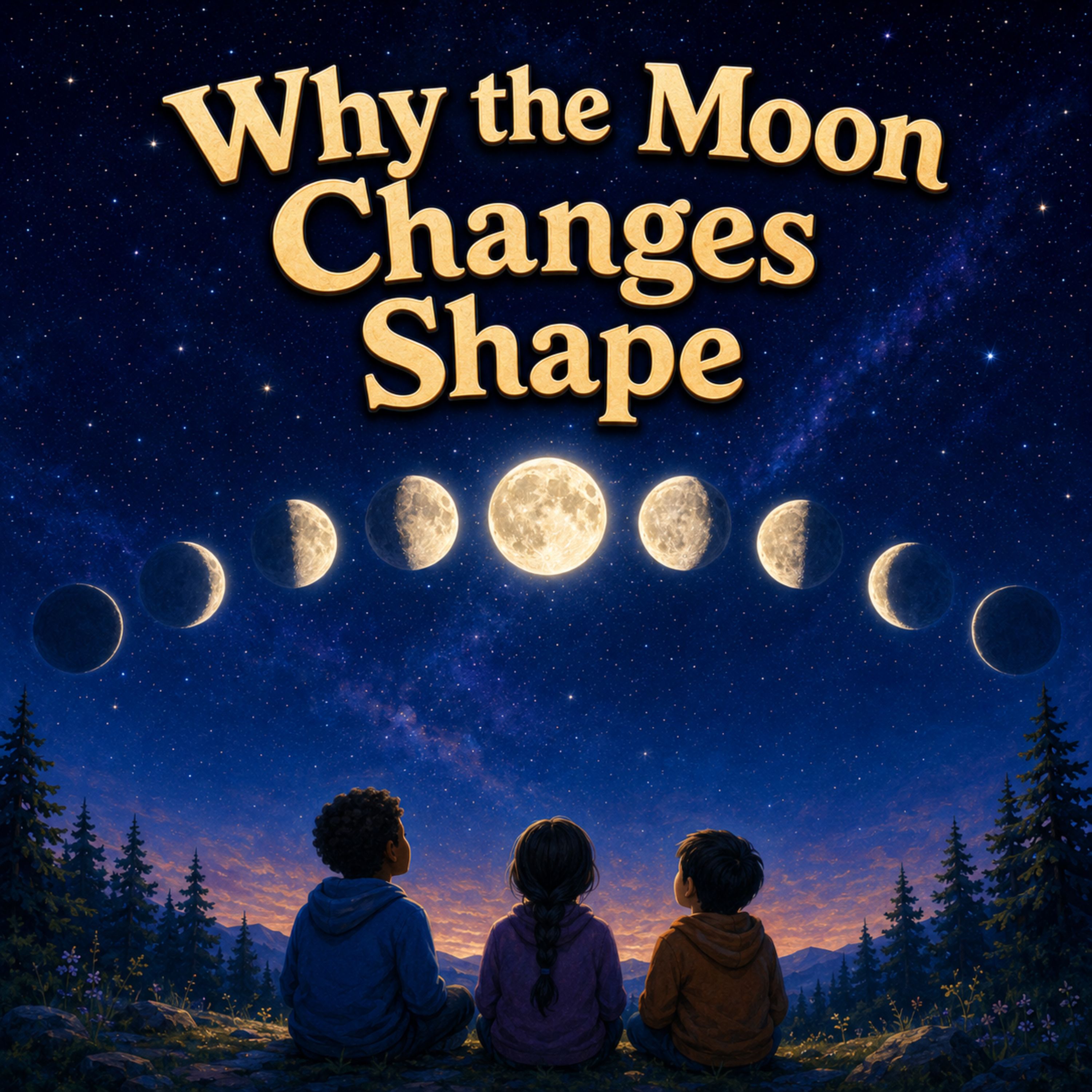
    Why the Moon Changes Shape: Every Phase Has Beauty

    One night, the Moon is a glowing circle. A few nights later, it looks like half a cookie. Then it becomes a delicate crescent—or seems to disappear completely. But is the Moon really changing shape? In this episode of Faithfully Explore!, young listeners follow the Moon through its repeating cycle and discover what causes the lunar phases. Through vivid explanations, cultural connections, and playful riddles, children learn how the movement of the Moon around Earth changes the portion of its sunlit half that we can see. Along the way, we explore how people have watched the Moon for thousands of years—not only to understand the night sky, but also to organize time, welcome new months, and determine the dates of meaningful celebrations. Listeners will discover: Why the Moon always remains a round world, even when it looks like a crescent How the positions of the Sun, Earth, and Moon create the lunar phases The difference between waxing, waning, crescent, quarter, gibbous, full, and new moons Why Earth’s shadow does not cause the Moon’s regular monthly phases How Muslims watch for the first crescent, or hilal, to mark the beginning of Islamic months How the Hebrew calendar follows both the Moon and the Sun, with Rosh Chodesh welcoming each new month How the Chinese lunisolar calendar helps determine celebrations such as Lunar New Year, the Lantern Festival, and the Mid-Autumn Festival Why different calendars can follow the same Moon in different ways Children can test what they have learned during a round of moon-phase riddles. Can they identify each phase using only the clues? The episode ends with a Belief Backpack reminder inspired by the Moon’s dependable cycle: Change is natural, and every phase has beauty. Perfect for families, elementary classrooms, homeschool science units, bedtime listening, and anyone who has ever looked up and wondered, “Why does the Moon look different tonight?” After listening, continue the adventure by observing the Moon over several nights. Sketch what you see, record the date and time, and watch for patterns as the bright portion appears to grow and shrink. You can also explore the episode’s companion books, activities, and learning resources at FaithfullyExplore.com. Press play, look toward the night sky, and discover why the Moon changes shape.

    • Transcript
    • Chapters
  • #62
    August 6 · 18 min

    The Great Bear in the Sky

    Great Bear in the Sky: How the Big Dipper Helps Us Find Our Way Seven bright stars. Two very different stories. One pattern that has helped people navigate the night for generations. In this episode of Faithfully Explore!, we look up at one of the most recognizable patterns in the sky: the Big Dipper. Children will discover that the Big Dipper is not a constellation by itself—it is part of the larger constellation Ursa Major, the Great Bear. Travel to ancient Greece to hear the story of Callisto, then explore a Haudenosaunee tradition in which hunters pursue a great bear across the changing seasonal sky. Although both traditions connect these stars with a bear, each tells its own distinct story shaped by the people and culture from which it comes. Then, become a sky navigator! Learn how the Big Dipper’s two pointer stars lead toward Polaris, the North Star, and discover how people have used this familiar pattern to find north. In This Episode, Children Will: Identify the seven stars that form the Big Dipper. Learn the difference between an asterism and a constellation. Explore Greek and Haudenosaunee stories connected with the Great Bear. Compare how different cultures interpreted the same stars. Discover how the sky changes with the seasons. Practice using the Big Dipper to locate Polaris and find north. Consider how stars can help us understand both direction and belonging. Belief Backpack Takeaway The stars can help us find our direction, while the stories people share can help us understand where they come from and what matters to them. Continue Exploring Pair the episode with the Great Bear in the Sky Learning Companion for listening activities, cultural comparisons, navigation practice, night-sky observations, and hands-on learning. You can also continue your stargazing adventure with our recommended books, planispheres, observation journals, and constellation activities on FaithfullyExplore.com. Look up, stay curious, and remember: the same stars can hold many stories.

    • Transcript
    • Chapters
  • #61
    July 30 · 18 min

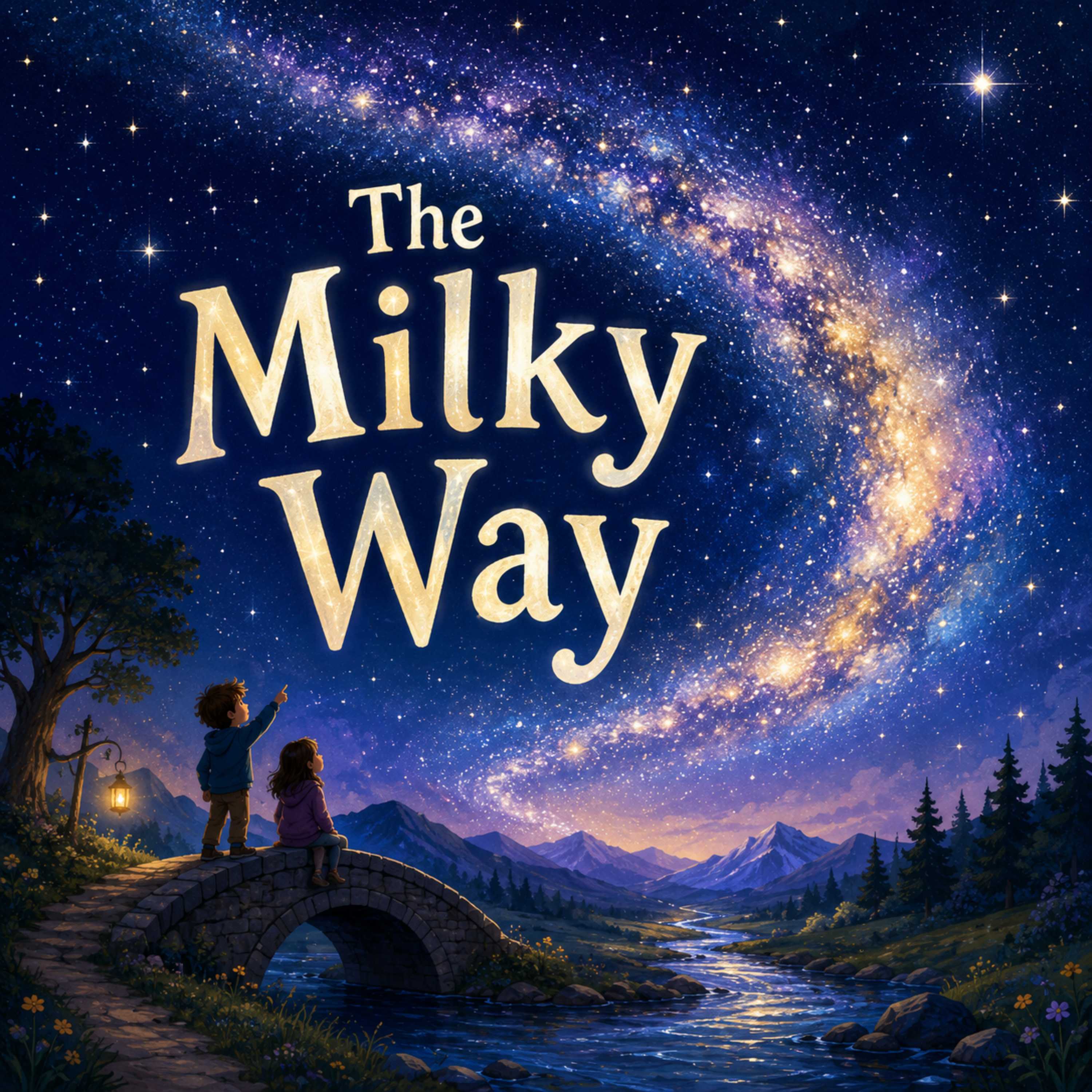
    The Milky Way: River, Path, and Bridge

    What do you see when you look at the Milky Way? A glowing river? A road through the stars? A bridge connecting people across the sky? In this episode of Faithfully Explore!, Laura invites young explorers to discover both the science and the stories behind the Milky Way. Kids will learn that the Milky Way is our galaxy and that the pale band we see from Earth is made from countless distant stars blending together. Then the journey moves across cultures and traditions. In Hindu tradition, the Milky Way is connected with Akash Ganga, the Ganga of the sky, and the story of the sacred river goddess descending from heaven with the help of Lord Shiva. In Ojibwe star knowledge, the Milky Way can be understood as Jiibay Ziibi, the River of Souls, or Jiibaykona, the Spirit Path—a glowing trail connected with spirits and the journey after death. In East Asian traditions, the Milky Way becomes the Heavenly River separating the cowherd Niulang and the weaver girl Zhinü. Once each year, magpies form a bridge so the two can meet again. Along the way, listeners will: Discover what a galaxy is Explore the Milky Way through science and story Learn about Akash Ganga in Hindu tradition Hear about the Ojibwe Spirit Path Meet the Cowherd and the Weaver Girl Play River, Path, or Bridge Cross the Friendship Bridge Add a new idea to the Belief Backpack Try the Starlight Questions family challenge This episode encourages children to ask big questions about where we come from, where we are going, and how people use science, faith, culture, and storytelling to make sense of the world. The Belief Backpack takeaway is simple: Wonder can open the door. Respect can build the bridge. Perfect for families, classrooms, homeschool lessons, world-culture studies, astronomy units, and thoughtful conversations under the night sky.

    • Transcript
    • Chapters
  • #60
    July 23 · 19 min

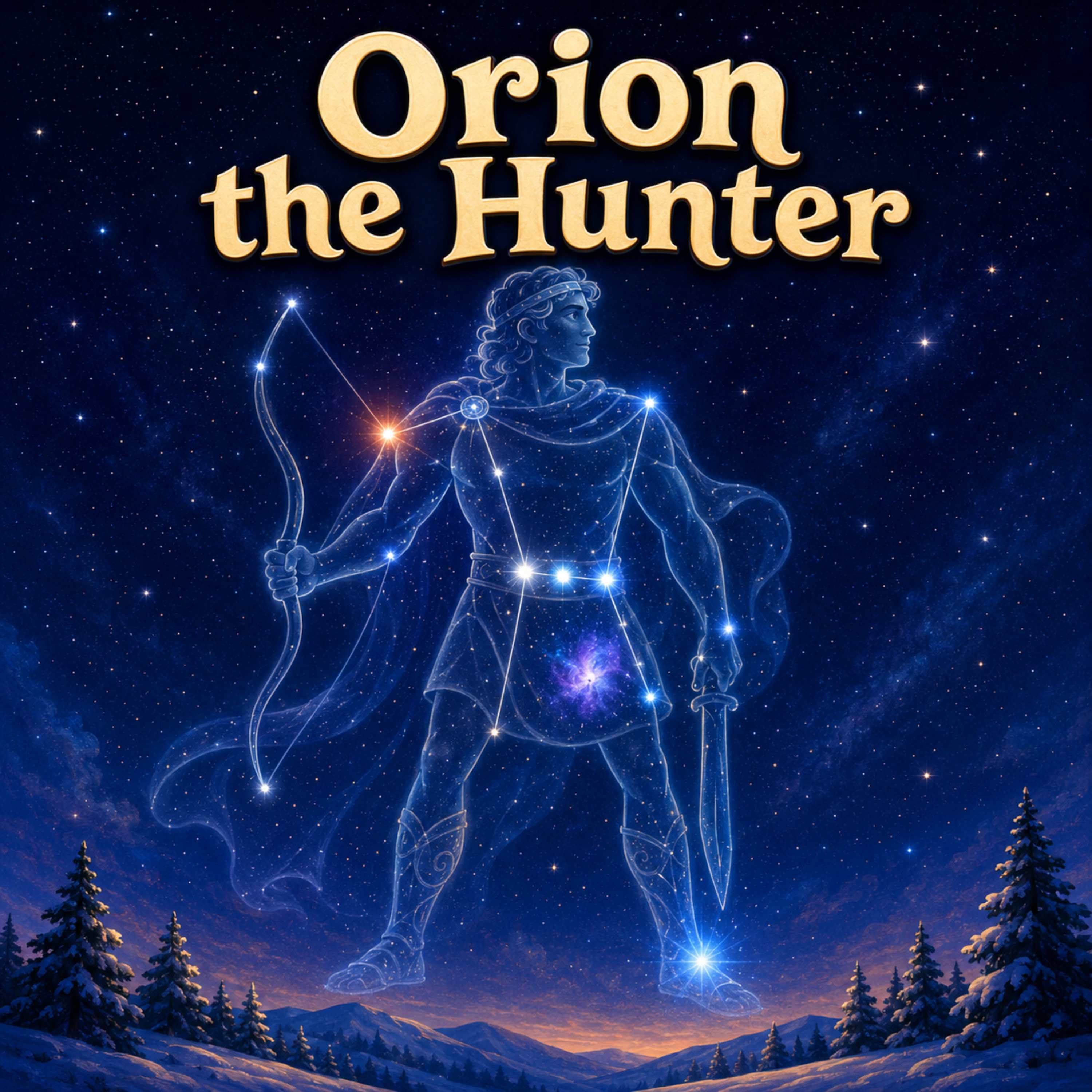
    Orion the Hunter: The Story in the Winter Sky

    Three bright stars in a row create one of the most recognizable patterns in the night sky—but not everyone has imagined the same picture among them. In this episode of Faithfully Explore!, kids learn how to find Orion’s Belt and discover the real science hidden within the constellation, including reddish Betelgeuse, blue-white Rigel, and the Orion Nebula, where new stars are forming. Then we travel through three cultural perspectives connected with this part of the sky. We hear a Greek myth about Orion and the giant scorpion, explore the Māori celestial canoe known as Te Waka o Tamarēreti, and discover the turtle imagery connected with the Orion region in Maya traditions. Along the way, explorers will: Learn why constellation stars look close together from Earth even when they are far apart in space Hear one Greek version of the story of Orion and Scorpius Move like a hunter, scorpion, and star Discover how stars helped skilled Māori ocean voyagers navigate and notice seasonal changes Explore the turtle as a meaningful symbol in Maya traditions Test their sky knowledge with Constellation or Not Cross the Friendship Bridge to compare different ways of seeing the same stars In our Belief Backpack, we carry an important reminder: the way we see something is shaped by the stories we carry. Kids are challenged to become “story detectives” by pausing before making assumptions and asking what someone else might be experiencing. Look up, connect the stars, and discover how one sky can hold many meaningful stories. Perfect for: ages 5–12, homeschool astronomy, world cultures, mythology studies, classroom listening, family learning, and curious stargazers.

    • Transcript
    • Chapters
  • #59
    July 16 · 21 min

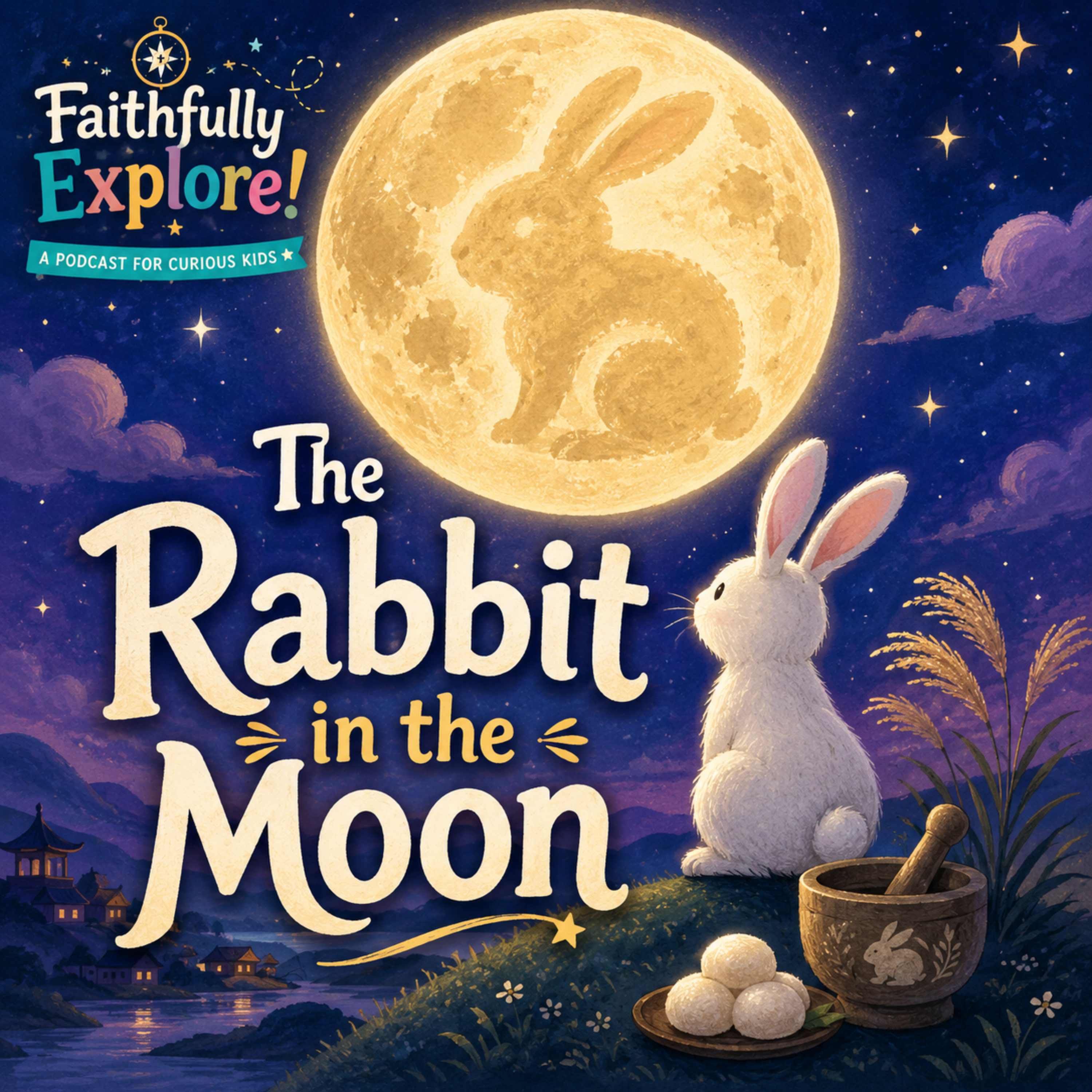
    The Rabbit in the Moon: A Sky Story Shared Around the World

    The Rabbit in the Moon: A Sky Story Shared Around the World What do you see when you look at the full Moon? Some people see a face. But across many parts of Asia and the Americas, people have looked at the Moon’s light and dark markings and imagined something very different... a rabbit. In this first episode of our new series, Sky Stories: Wonder Written in the Stars, we follow the Moon rabbit through Chinese, Japanese, Buddhist, and Nahua traditions. Although each culture looked up at the same Moon, the rabbit they saw was doing something different. In Chinese folklore, the Jade Rabbit lives on the Moon with Chang’e and grinds magical herbs for an elixir of immortality. In Japan, the Moon rabbit pounds sticky rice to make mochi. In a Buddhist Jataka tale, a generous hare is honored on the Moon for offering everything he has to help another. In a Nahua story, a small rabbit’s enormous kindness is remembered in the Moonlight. Along the way, young explorers will move, imagine, compare stories, and play Moon Rabbit Mix-Up as they discover an important Friendship Bridge: Same Moon. Different stories. Shared wonder. In This Episode, Kids Will: Discover why people see shapes in the Moon’s markings Meet China’s Jade Rabbit and learn about Chang’e Explore Japan’s Moon-viewing tradition of Tsukimi Pretend to pound mochi and grind magical herbs Hear a Buddhist story about generosity and compassion Travel to Mexico and Central America for a Nahua Moon-rabbit story Compare how different cultures interpreted the same Moon Play an interactive listening and movement game Take on the Moonbeam Kindness Challenge Belief Backpack Takeaway “I may be small, but my kindness can shine far.” The rabbits in these stories are not the biggest, strongest, or loudest animals. Yet they are remembered for helping, serving, sharing, and caring. Children are reminded that they do not have to solve every problem or make a grand gesture to matter. A shared toy, a helping hand, a kind word, or a thoughtful picture can shine like a small Moonbeam. Try the Moonbeam Kindness Challenge Sometime this week, look up at the Moon and choose one small act of kindness to do for someone else. You might: Help set the table Draw a picture for someone who needs encouragement Let someone else choose the game Share something you enjoy Help without being asked Afterward, imagine your kindness shining outward like a tiny Moonbeam. Questions to Explore Together What shape do you see when you look at the Moon? Why might different cultures tell different stories about the same Moon? What was the rabbit doing in each tradition? Which story stood out to you most? What did the Moon rabbits have in common? How can a small act of kindness make a big difference? About Sky Stories Sky Stories: Wonder Written in the Stars explores the animals, heroes, pathways, and possibilities people around the world have discovered in the night sky. Together, we will learn that the sky is not only filled with stars and planets. It is also filled with stories, questions, values, and wonder. Listen to The Rabbit in the Moon: A Sky Story Shared Around the World, then look up and see what stories the Moon inspires in you.

    • Transcript
    • Chapters
  • #58
    July 9 · 13 min

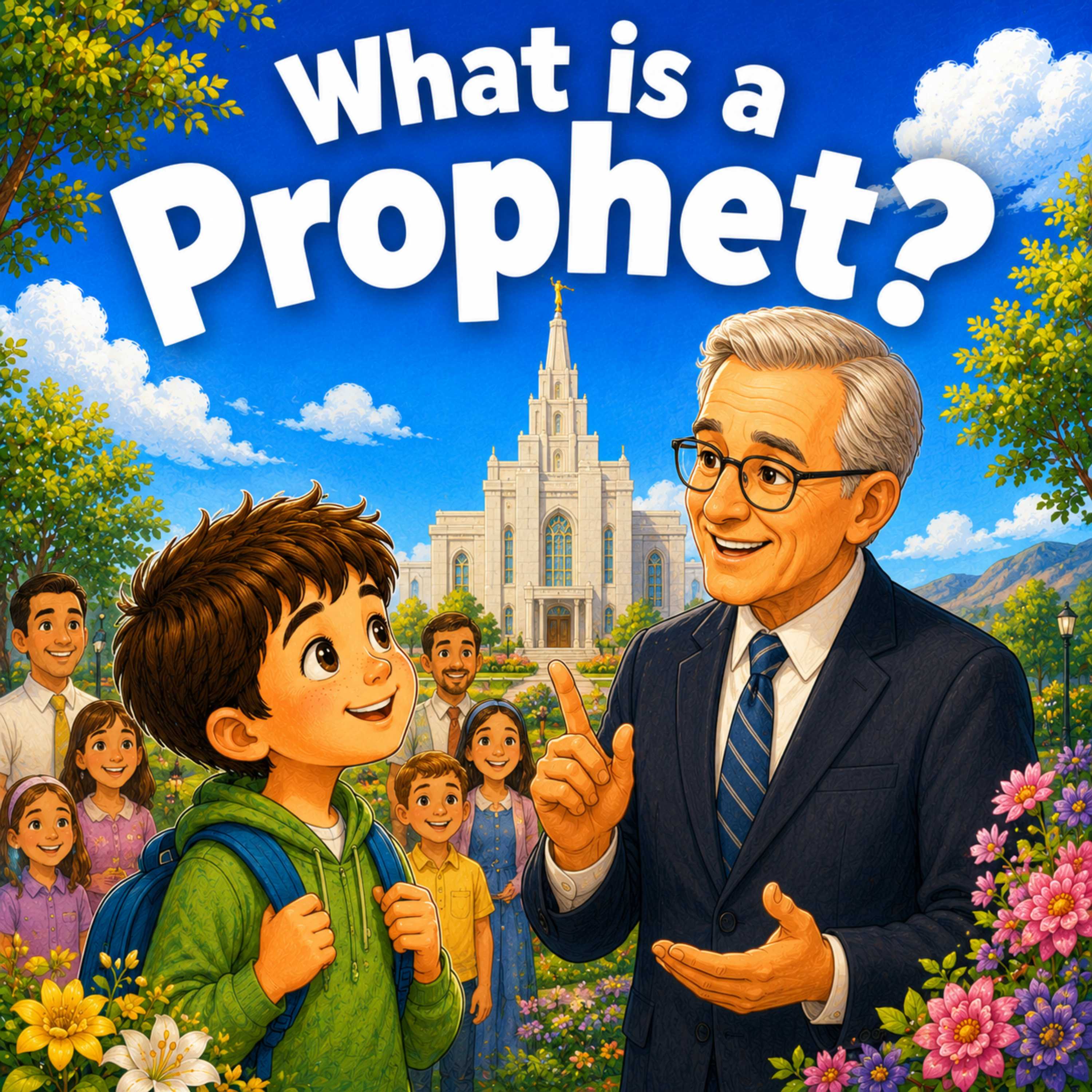
    What Is a Prophet? Exploring Latter-day Saint Beliefs

    What do Latter-day Saints mean when they talk about a “living prophet”? In this Faithfully Explore! episode, we answer a listener's question from eight-year-old Liam, who noticed a picture of a kind-looking older man on his neighbor’s refrigerator and wondered, “Why do they call him the prophet?” Together, we explore what members of The Church of Jesus Christ of Latter-day Saints believe about prophets, spiritual guidance, General Conference, and following Jesus through kindness, prayer, service, and faith. Kids will imagine a guide with a lantern leading the way through a dark forest, learn how Latter-day Saints connect ancient prophets like Noah and Moses to modern-day leadership, and discover why many Latter-day Saints listen closely to the President of the Church. This episode also introduces the First Presidency, the Quorum of the Twelve Apostles, and General Conference in a simple, kid-friendly way. Along the journey, listeners will move their bodies in “Prophet’s Path,” hear a story about a child learning how prayer and peace can help people understand guidance, play “Prophet, Predictor, or Pal?”, and cross the Friendship Bridge to compare spiritual leaders in different faith traditions. In This Episode Children will learn: What Latter-day Saints believe a living prophet is Why prophets are often seen as spiritual guides How Latter-day Saints connect modern prophets with ancient biblical prophets What the First Presidency and Quorum of the Twelve Apostles are What happens during General Conference How prophets are different from fortune-tellers or magical predictors How different faith communities look to leaders, teachers, and guides How kids can practice being helpful guides for others Belief Backpack Takeaway For members of The Church of Jesus Christ of Latter-day Saints, the prophet is a living leader who helps guide people through life’s choices, like a trusted guide holding a lantern on a dark trail. This week’s reflection question: Who is someone in your life who helps light the path when you are unsure what to do? Weekly Compass Challenge This week, try the Guide Challenge. Practice being a guide for someone else. You might help a younger sibling, explain a game to a friend, hold a door for someone, or offer encouragement when someone feels unsure. Notice how it feels to help clear the path for another person. For Families and Classrooms This episode is a great fit for conversations about religious leadership, trusted guidance, community, service, and how different faith traditions understand wisdom and authority. Families and educators can use the episode to compare prophets, rabbis, imams, pastors, ministers, elders, monks, and the pope while encouraging children to notice both similarities and differences with respect. Stay curious, stay kind, and keep faithfully exploring! 🧭🎒

    • Transcript
    • Chapters
  • #57
    July 2 · 15 min

    What Is a Rabbi? A Teacher of Torah, Kindness, and Big Questions

    This week on Faithfully Explore!, we step inside a Jewish synagogue to ask a big question: What is a rabbi? Kids will discover that a rabbi is a Jewish teacher, guide, interpreter, listener, and community helper. Rabbis study sacred Jewish texts such as the Torah and Talmud, help people understand Jewish teachings, lead and support community life, and walk with families through both joyful celebrations and difficult times. In this episode, we explore how rabbis help people ask big questions, learn from ancient wisdom, and practice kindness in everyday life. In This Episode Visit a Jewish synagogue and learn what happens there Discover what rabbis do in Jewish communities Learn kid-friendly meanings for Torah, Talmud, and mitzvot Play an interactive “Is it a Rabbi Job?” game Meet Ari, a child wondering about kindness, anger, and his dog Barnaby Move along with a fun Rabbi Book Workout Cross the Friendship Bridge to compare rabbis with other wise guides Hear a story about Rabbi Yisrael Salanter and a crying baby Pack the Belief Backpack with a reminder that wisdom is something we live, not just something we read about Big Ideas for Kids A rabbi helps people learn, ask questions, and live with kindness. Sacred texts can guide people in everyday choices. Different communities have different kinds of wise guides. Asking big questions is part of learning. Kindness matters most when we put it into action. Weekly Challenge Find a wise guide in your own life. It could be a teacher, grandparent, coach, neighbor, parent, or another trusted grown-up. Ask them a big question, such as: What is the hardest thing you have ever learned? How do you stay calm when you feel mad? What is one lesson you hope kids remember? Who helped guide you when you were young? For Parents and Educators This episode is a gentle introduction to Jewish leadership and synagogue life. It can be used to support conversations about religion, community helpers, sacred texts, thoughtful questioning, and respect for different traditions. After listening, invite kids to reflect on the wise guides in their own lives and the ways they can show kindness through action. Listen and Explore More Visit the Faithfully Explore! website for related printables, book lists, and family learning resources.

    • Transcript
    • Chapters
  • #56
    June 25 · 16 min

    What is an Imam?: Muslim Leadership, Mosque Life, and Kindness

    What is an imam, and what does an imam do? In this episode of Faithfully Explore!, we step inside a mosque and learn about one of the important helper-leaders in many Muslim communities: the imam. Kids will discover that an imam may lead prayer, teach about the Qur’an and Hadith, give a Friday talk called a khutbah, listen to people who need guidance, and help bring the community together. Through imagination, storytelling, movement, and a playful game called “Imam Hat or Not?”, young listeners will explore how imams serve with wisdom, kindness, and care. We’ll also meet Zainab, a young girl with a big question, and see how Imam Yusuf helps her understand anger, mistakes, and peaceful choices. Then we’ll cross the Friendship Bridge to compare imams with other religious leaders and note what makes the role of an imam unique. Kids will learn that in Islam, an imam is not exactly the same as clergy in some other traditions, and that Muslim communities may organize imam roles in different ways. Finally, we’ll hear a traditional story about the Prophet Muhammad and a neighbor, helping children reflect on what it means to lead with compassion—even when kindness is hard. In this episode, kids will learn about: What an imam is What happens inside a mosque Muslim prayer and the role of a prayer leader The Friday khutbah The Qur’an and Hadith How imams teach, listen, guide, and support their communities How religious leaders in different traditions can be similar and different Kindness, self-control, wise listening, and community care Belief Backpack Takeaway An imam is a community helper who leads through kindness, listening, and learning. We can all be leaders in our own lives by helping the people around us feel safe, heard, and supported. Weekly Challenge Practice Wise Listening this week. Ask someone, “How are you doing today?” Then listen with your whole heart—without interrupting, fixing, or rushing away. For Parents and Educators This episode is designed to help children learn about Islam in a respectful, age-appropriate way. It can support conversations about mosques, Muslim prayer, religious leadership, community helpers, and how different faith traditions guide people toward kindness and service. Use this episode as a starting point to ask thoughtful questions, compare different kinds of community leaders, and help children understand that learning about someone else’s faith is an act of respect and friendship. Companion Books Looking for books to continue the conversation? Pair this episode with kid-friendly Islamic books about Allah, prayer, gratitude, Quran values, and Muslim family life. Listen and Learn More Subscribe to Faithfully Explore! for more kid-friendly episodes about world religions, cultures, stories, and big ideas. Stay curious, stay kind, and keep faithfully exploring!

    • Transcript
    • Chapters
  • #55
    June 18 · 14 min

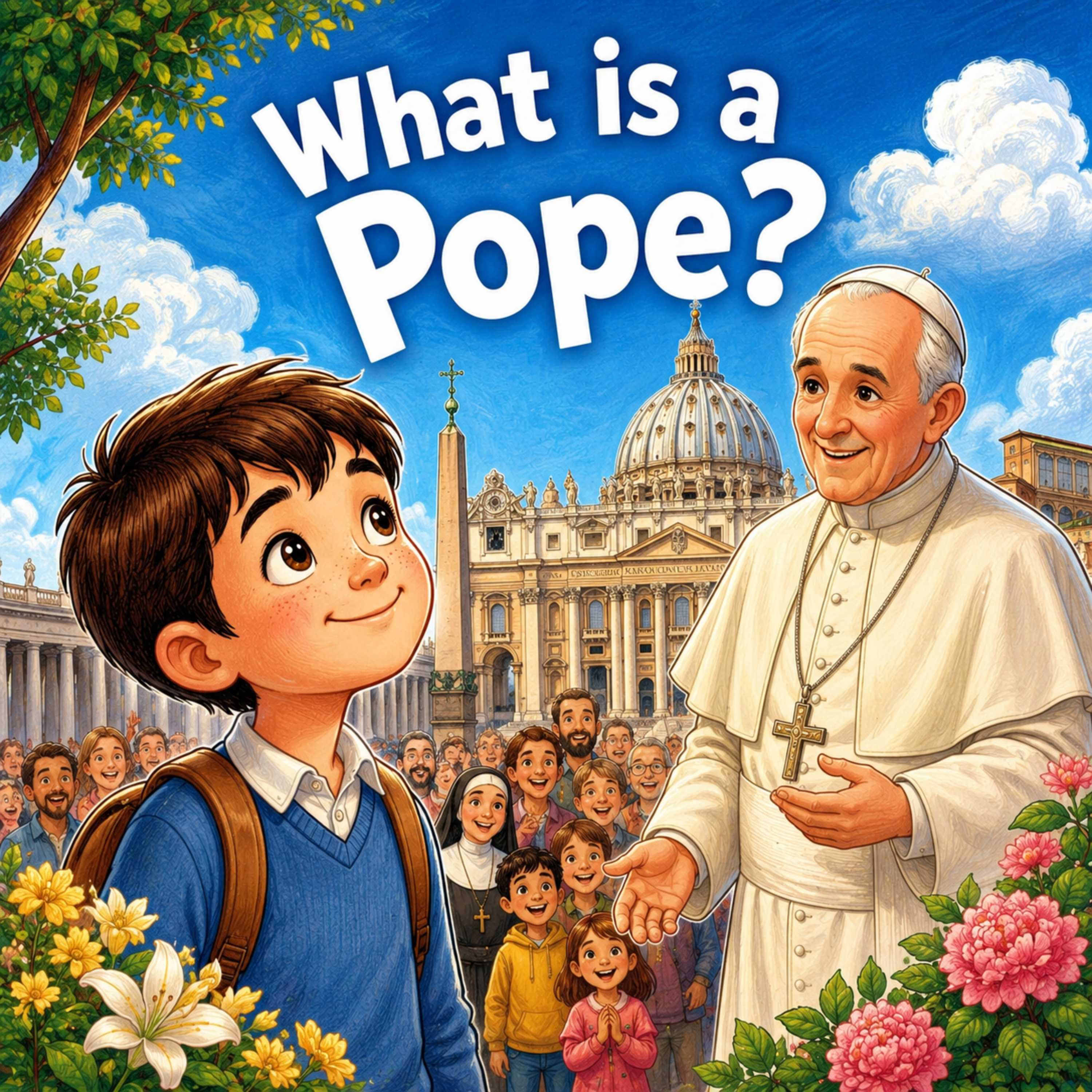
    What Is a Pope?: Vatican City, Catholicism, and Kind Leadership

    What is a Pope? In this episode of Faithfully Explore, we travel in our imaginations to Vatican City to learn about the spiritual leader of the Catholic Church. Kids will discover that Catholicism is part of Christianity, that the Catholic Church is a worldwide community, and that the Pope helps guide Catholics with messages of faith, kindness, service, and care for others. We also explore Vatican City—the tiny country inside Rome where the Pope lives and works—and learn a few fun facts about St. Peter’s Basilica, the Popemobile, and Pope Leo XIV. This episode is designed as a gentle, kid-friendly introduction to Catholic leadership. It does not expect children to know anything about Catholicism before listening. Instead, it uses simple comparisons, movement, trivia, storytelling, and interfaith connections to help kids understand what the Pope does and why many people around the world look to him as a spiritual guide. Along the way, listeners will: Learn what the word “Pope” means Discover where the Pope lives Explore why Vatican City is such a special place Try a silly Popemobile movement break Play a Pope and Vatican City trivia game Meet other kinds of religious leaders through the Friendship Bridge Hear a heartwarming story about Pope Francis welcoming a child Pack “Kind Leadership” into their Belief Backpacks The heart of this episode is the idea that true leadership is not about being the loudest, most powerful, or most important person in the room. True leadership means helping others, welcoming people in, listening with care, and using your voice to make the world a little kinder. Discussion Questions for Families What surprised you most about the Pope? Why do you think people look to spiritual leaders for guidance? What makes someone a kind leader? Can you be a leader even if you are not “in charge”? How can you help someone feel included this week? Try This After Listening Invite your child to draw a “kind leader.” It could be the Pope, a teacher, a coach, a grandparent, a community helper, or even themselves. Around the picture, write or draw ways that person helps others. You can also find Vatican City on a map and talk about how a tiny place can still have a big impact around the world. Belief Backpack Takeaway Today we packed the tool of Kind Leadership. You do not need a white robe, a giant church, or a Popemobile to be a leader. You can lead with kindness by helping others, including people who feel left out, listening before speaking, and choosing love over bossiness.

    • Transcript
    • Chapters
  • #54
    June 11 · 23 min

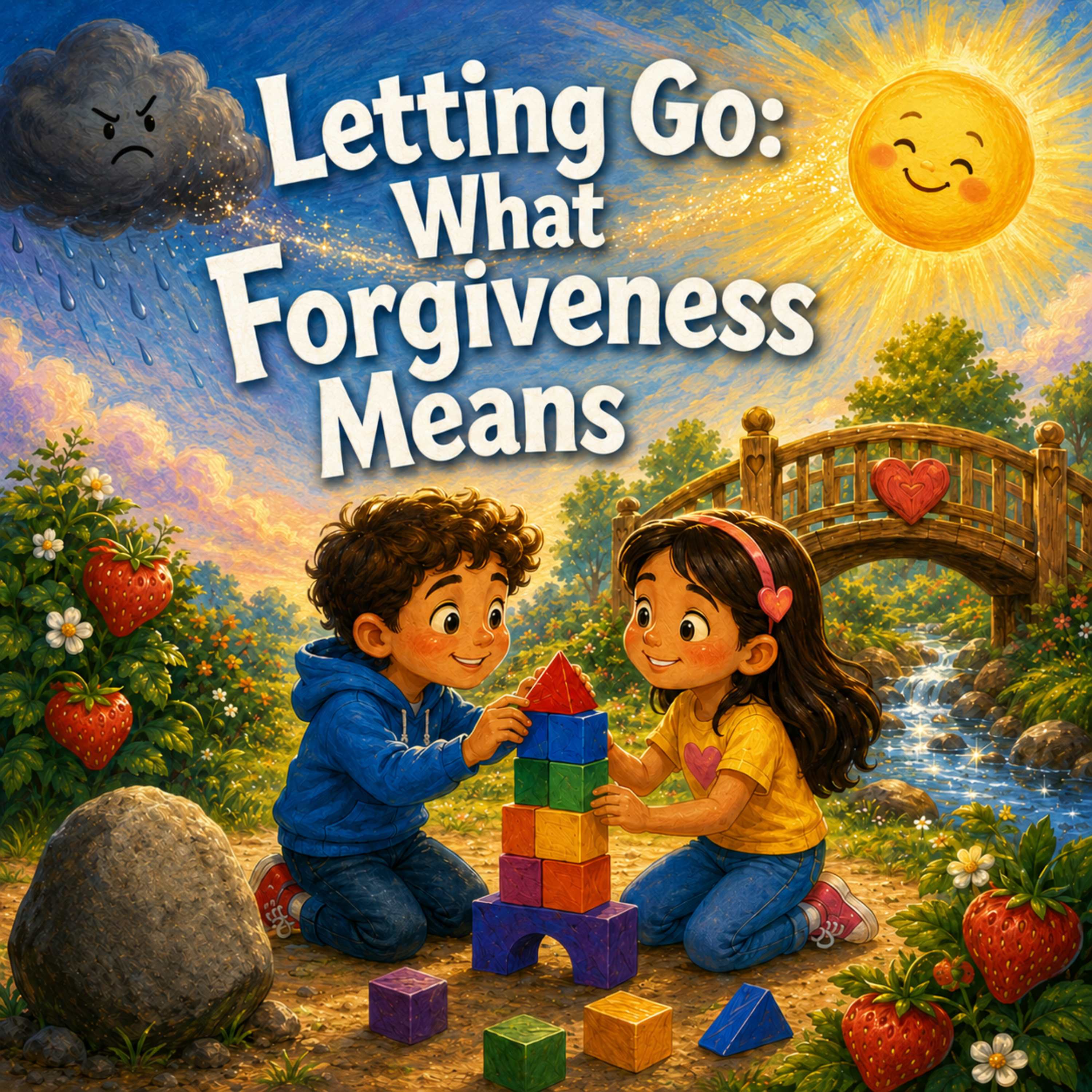
    Letting Go: What Forgiveness Means

    What does it really mean to forgive someone? In this heart-filled episode of Faithfully Explore!, kids discover that forgiveness is not about pretending hurtful things are okay. It is about learning how to let go of anger, make room for healing, and choose kindness when our hearts feel heavy. Using the image of anger as a “heavy rock,” this episode helps children understand big feelings in a concrete, age-appropriate way. Listeners meet Lily and Leo, two friends who face a relatable accident when a spilled cup of juice ruins a special drawing. Through their story, kids see how apologies, second chances, and forgiveness can help repair the invisible bridge between friends. Along the way, children play a “Forgave or Not?” game, cross the Friendship Bridge to explore how Christianity, Islam, and Humanism each teach about forgiveness, and move their bodies through a simple Forgiveness Flow designed to release tension and calm big emotions. The episode also includes a beautiful Heart Berry Moon story inspired by Ojibwe tradition, in which the strawberry becomes a symbol of healing, vulnerability, and the restoration of friendship. By the end of the adventure, kids will carry this Belief Backpack reminder: “Forgiveness means dropping the heavy rock of anger so my heart can feel light again!” In This Episode Kids will explore: What forgiveness means in everyday life Why anger can feel heavy in our hearts How apologies can help repair friendships Why forgiveness does not mean forgetting or saying hurtful behavior was okay How different traditions teach about compassion, mercy, and second chances A movement activity for releasing angry feelings The Heart Berry Moon story and the healing symbol of the strawberry Big Ideas for Kids Forgiveness is a brave choice. It is okay to feel hurt or angry. Saying “I’m sorry” matters. Forgiveness helps friendships heal. Letting go of anger can help your heart feel lighter. You do not have to forgive before you are ready. Try This After Listening Ask your child: What did anger feel like in the episode? Why was Lily still allowed to feel sad about her ruined drawing? What is the difference between forgiving someone and saying what happened was okay? When is it easy to forgive? When is it hard? What can you say when you need to apologize? You can also try the “heavy rock” activity: have your child hold a small rock or object while naming a hurt feeling, then set it down while taking a deep breath. Talk about how forgiveness can feel like letting go of something heavy. Perfect For Families Classrooms Homeschool lessons SEL conversations Character education Bedtime listening Car rides Faith and values discussions Children ages 5–12 Listen and Explore If your child is learning how to handle conflict, say sorry, rebuild friendships, or move through big emotions, this episode offers a gentle and hopeful place to begin. Tune in to “Letting Go: What Forgiveness Means” and explore how forgiveness can help our hearts feel lighter, our friendships grow stronger, and our world become a little kinder.

    • Transcript
    • Chapters
  • #53
    June 4 · 9 min

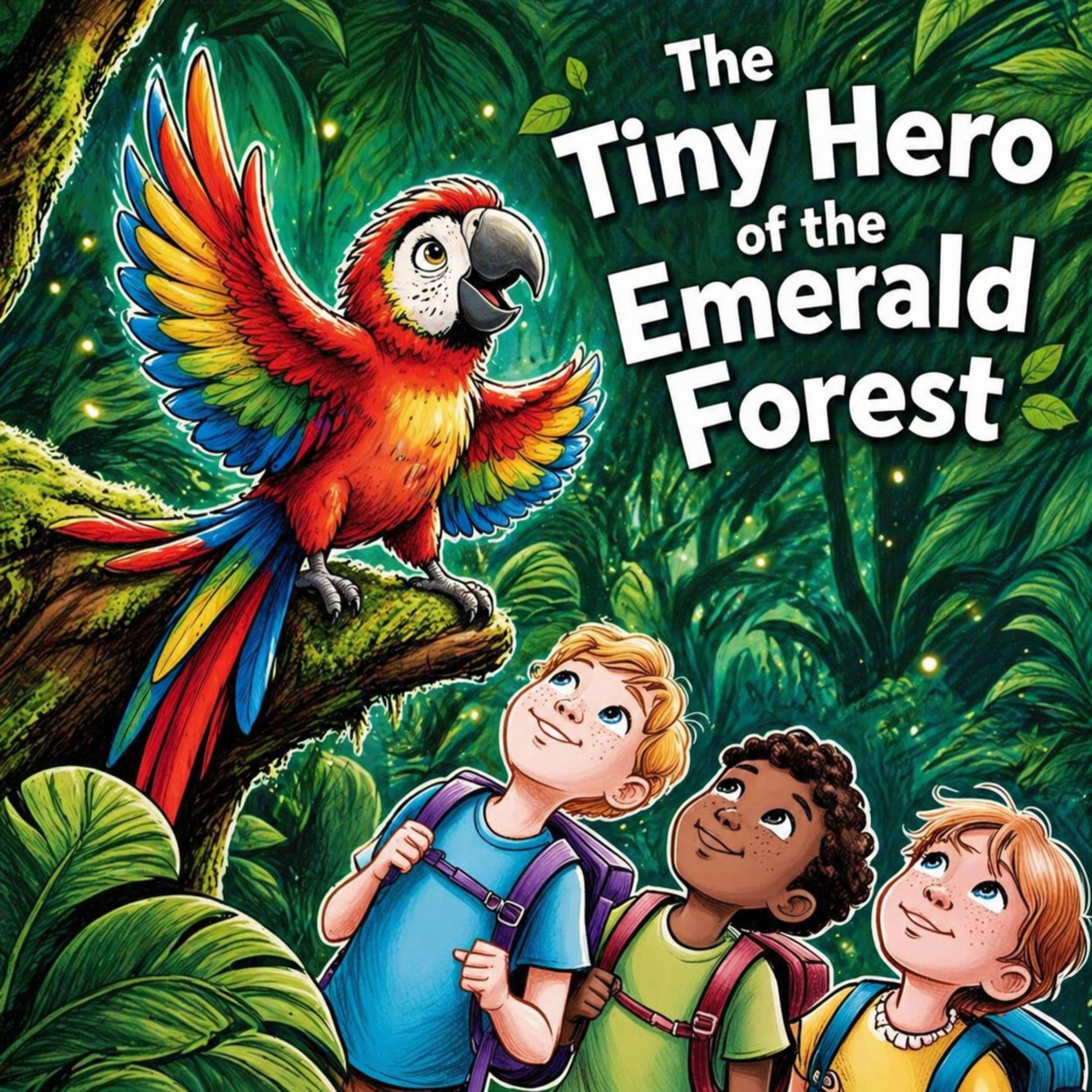
    Stories That Shape Us: The Tiny Hero of the Emerald Forest

    What can one tiny parrot do when a whole forest is in danger? In this episode of Faithfully Explore!, kids meet Pip, a small green parrot with a heart as big as the sun. When smoke rises in her beloved jungle home and the animals begin to run, Pip refuses to give up. She flies to the river, dips her feathers in the water, and carries one tiny drop at a time back to the flames. At first, the Great Eagle laughs. How could someone so small help with something so big? But as Pip keeps trying, her courage begins to change his heart. Soon, the Eagle learns that small does not mean powerless—and that one brave action can inspire something much greater. This episode is full of movement, imagination, jungle sounds, and a powerful Belief Backpack lesson children can carry into everyday life: Even small actions make a big difference. In This Episode, Explorers Will Stretch tall like a giant, shrink small like a tiny feather, and imagine what it feels like to be both big and small. Step through the Faithfully Explore teleportation door into a warm, colorful jungle filled with monkeys, mango trees, flowers, rain, and damp earth. Meet Pip, a brave little parrot who loves her forest home. Join the Rainmaker Relay, an interactive movement game where kids scoop, fly, and shake water drops to help Pip. Discover how courage can inspire others, even someone as powerful as the Great Eagle. Pack the Belief Backpack takeaway: “Even small actions make a big difference!” Journey Highlights Meet Pip the Parrot A tiny green parrot with a huge heart shows explorers that being small does not mean being powerless. Step Into the Jungle Kids travel into a warm, colorful forest filled with monkeys, mango trees, flowers, and the sounds of nature. A Forest in Danger When smoke rises and fire threatens Pip’s home, the other animals run—but Pip decides to help. One Brave Drop at a Time Pip dips herself in the river again and again, carrying tiny drops of water to the flames. The Eagle Learns a Lesson A powerful eagle laughs at Pip’s small effort—until her courage changes his heart. Big Idea: Small Actions Matter Explorers discover that one kind, brave action can inspire others and help make a big difference. For Parents and Educators This episode is a meaningful way to help children talk about courage, persistence, kindness, environmental care, and what it means to help when a problem feels too big. Conversation Starters What made Pip brave? Was it because she knew she could put out the fire, or because she tried even when the problem felt too big? Have you ever felt too small to help? Talk about a time when your child wanted to help but wondered whether their action would matter. Why did the Eagle change his mind? Help children notice that Pip’s courage inspired someone bigger and stronger to take action. What is one “drop of kindness” you can give this week? Ideas might include inviting someone to play, picking up trash, helping at home, sharing supplies, or saying something encouraging. Try This at Home or in the Classroom Create a Tiny Hero Moments jar. Each time a child does something kind, brave, or helpful, write it on a slip of paper and add it to the jar. Act out the story. Assign roles for Pip, the Eagle, the animals, the river, and the fire. Let kids retell the story with movement and sound effects. Make a kindness ripple chart. Choose one small action and trace what might happen next. For example: “I said hello → someone felt included → they smiled → they helped someone else.” Connect it to real life. Talk about helpers in the community, including firefighters, teachers, neighbors, friends, and family members. Books to Pair with This Episode The Curious Garden by Peter Brown A wonderful story about how one child’s small act of care helps transform a whole city. Something, Someday by Amanda Gorman, illustrated by Christian Robinson A hopeful book about beginning with one small action when a problem feels overwhelming. Be Kind by Pat Zietlow Miller, illustrated by Jen Hill A gentle reminder that kindness often begins with simple everyday choices. The Great Kapok Tree: A Tale of the Amazon Rain Forest by Lynne Cherry A beautiful rainforest story that connects well with Pip’s jungle home and the importance of caring for the earth. Tiny Hero Challenge This week, invite your explorer to look for one small way to help. It might be: saying hello to someone who feels left out, picking up one piece of trash, helping without being asked, giving someone a kind word, or trying again when something feels hard. Every small action is a drop. And sometimes, one brave drop is exactly where change begins. Belief Backpack Takeaway Even small actions make a big difference. Pip reminds us that we do not have to be the biggest, strongest, or loudest to help. We can notice. We can care. We can try. And sometimes, our small brave actions inspire others to act too. Listen and Explore More Download the Tiny Hero Moments Tracker and keep looking for small ways to make a difference at home, at school, and in the world around you. Stay curious, stay kind, and keep exploring the wonderful world around you!

    • Transcript
    • Chapters
  • #52
    May 28 · 15 min

    Stories that Shape Us: The Courage of the Empty Pot

    What does bravery look like? Sometimes bravery looks like fighting a dragon or climbing a mountain. But sometimes bravery looks much quieter. Sometimes it looks like standing in front of everyone with an empty pot… and telling the truth. In this episode of Faithfully Explore!, kids journey to ancient China to meet Ping, a young gardener with a special gift for growing beautiful plants. When the Emperor announces a challenge to find the next ruler, every child receives one tiny seed. Whoever grows the most beautiful flower will win the crown. Ping waters his seed. He waits. He moves it into the sunshine. He gives it his best soil, his best care, and all his love. But nothing grows. When the day comes to bring his flower to the palace, Ping faces a choice: should he pretend, replace the seed, or bring the truth? His empty pot may look like failure, but it becomes the most powerful proof of courage and honesty. This gentle, interactive episode helps children explore honesty, integrity, and the brave feeling that comes from telling the truth, even when it is hard. In This Episode Children will: Explore the story of Ping and the empty pot Learn why honesty can take real courage Practice the episode’s Belief Backpack phrase: “Tell the truth… even when it is hard.” Think about their own “Empty Pot Moments.” Discover that doing the right thing matters more than looking perfect Connect storytelling with everyday choices at home and school Journey Highlights Meet Ping A gentle young gardener in ancient China who has a special gift—everything he plants seems to grow beautifully. The Emperor’s Challenge The wise old Emperor gives every child a seed and announces that whoever grows the most beautiful flower will become the next ruler. Nothing Grew! Ping waters, waits, changes the soil, moves his pot to the sun, and tries everything he knows—but his seed never sprouts. An Empty Pot Moment When the day arrives to visit the palace, Ping must decide whether to hide the truth or bring his empty pot honestly. The Courage to Tell the Truth In a courtyard full of beautiful flowers, Ping stands before the Emperor with only dirt—and tells the truth even though he feels nervous. The Big Reveal The Emperor explains that all the seeds had been cooked, so none of them could grow. Ping’s empty pot proves he was the only child who stayed honest. Belief Backpack Takeaway Tell the truth… even when it is hard. Ping’s story reminds children that honesty is not always easy. Sometimes telling the truth feels scary, embarrassing, or uncomfortable. But truth helps trust grow, and choosing honesty is one of the bravest things we can do. For Parents and Educators This episode is a wonderful springboard for conversations about honesty, responsibility, and moral courage. Ping’s story helps children understand that bravery is not only about big heroic actions. It can also mean admitting a mistake, telling the truth, or standing alone when others are making a different choice. Try This After Listening Talk about “Empty Pot Moments.” Ask: “Have you ever had a moment when it felt hard to tell the truth?” Keep the conversation calm and supportive so children can reflect without shame. Praise honesty first. When a child tells the truth about a mistake, try saying, “Thank you for telling me. That was brave.” Then work together on repair or responsibility. Use everyday scenarios. Ask what they could do if they broke something, forgot a chore, copied an answer, or felt tempted to blame someone else. Repeat the episode phrase. Use “Tell the truth… even when it is hard” as a family or classroom reminder. Discussion Questions Why do you think Ping felt nervous bringing an empty pot? What would have been easier for Ping to do? Why was the Emperor happy with Ping’s empty pot? Can telling the truth ever feel brave? Why? What helps you tell the truth when you feel scared? Companion Activity After listening, head to faithfullyexplore.com to download the companion Grow or Not? game. Families and classrooms can use it to keep exploring honesty, courage, and the choices that help trust grow. Closing Thought Ping’s empty pot looked like nothing, but it held something powerful: the truth. This episode reminds children that they do not have to be perfect to be brave. They can be honest. They can make things right. And they can carry this treasure in their Belief Backpack: Tell the truth… even when it is hard.

    • Transcript
    • Chapters
  • #51
    May 21 · 16 min

    Stories That Shape Us: The Very First Spider

    What happens when a wonderful gift gets tangled up in pride? In this episode of Faithfully Explore, Explorers travel all the way back to Ancient Greece to meet Arachne, a young weaver whose talent is known far and wide. Her cloth is so beautiful that people come from distant villages just to see it. But as Arachne’s skill grows, so does her boastfulness—until she claims she is even better than Athena, the goddess of wisdom and crafts. Through a vivid retelling of the Greek myth of Arachne, kids explore the difference between healthy pride and boasting, discovering that being talented is something to celebrate—but using talents to make others feel small can hurt. With movement, call-and-response moments, and a playful “skitter-skitter-skitter” spider activity, this episode invites children to think about how they can use their own gifts with kindness. In This Episode Travel to Ancient Greece Explorers imagine a sunlit village filled with olive trees, fresh bread, and the rhythmic sound of a loom. Meet Arachne Arachne is a gifted young weaver whose beautiful creations amaze everyone around her. Learn Proud vs. Boastful Kids practice spotting the difference between feeling proud of hard work and using talent to put others down. Meet Athena Athena, goddess of wisdom and crafts, appears in disguise after Arachne makes a bold and boastful claim. Join the Weaving Movement Break Explorers jump “over” and crouch “under” as they help weave an imaginary masterpiece. Discover the Very First Spider Arachne’s story explains how, according to Greek mythology, the first spider came to be. Belief Backpack Takeaway This week’s Belief Backpack reminder is: I am talented. I am kind. Be proud, but stay kind. Arachne’s story reminds Explorers that gifts are not meant to make us feel bigger than everyone else. They are meant to help us make the world more beautiful. Explorer Challenge This week, kids are invited to try a two-part challenge: First, choose something they are good at—drawing, building, running, listening, helping, storytelling, or anything else—and use that talent to make someone smile. Second, when they feel that “puffy chest” feeling of wanting to be better than everyone, they can pause, take a breath, and ask: “Am I being proud, or am I being boastful?” For Families and Classrooms This episode is a great fit for conversations about: Greek mythology Pride and humility Kindness and character Using talents for good Social-emotional learning Respecting other people’s gifts The difference between confidence and arrogance Discussion Questions What was Arachne good at? Was it wrong for Arachne to feel proud of her weaving? How did Arachne’s pride turn into boasting? What did Athena want Arachne to understand? How can you use one of your talents to help someone else? What is one kind thing you can say when someone else does something well? Listen and Explore Join Faithfully Explore for a story full of weaving, wisdom, movement, mythology, and one very important reminder: You can be amazing—and kind at the same time.

    • Transcript
    • Chapters
  • #50
    May 14 · 16 min

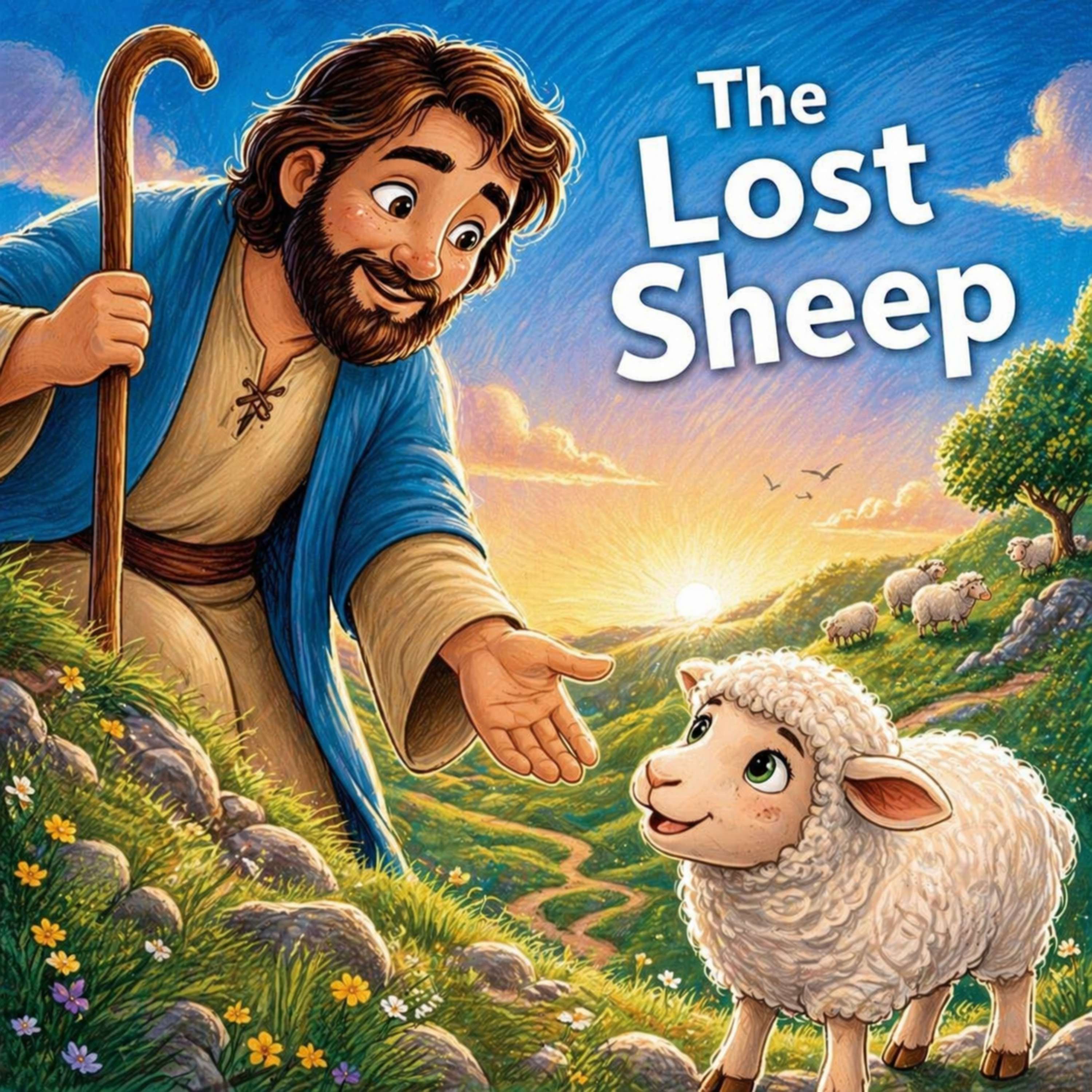
    Stories That Shape Us: The Lost Sheep

    What happens when one little sheep wanders too far? In this episode of Faithfully Explore!, young listeners journey to the rolling green hills for a heartfelt retelling of The Lost Sheep, one of Jesus’ beloved parables. Kids meet Clover, a curious sheep with floppy ears and a hungry tummy, who follows one tasty bite after another until she realizes she is far from the flock. As the sun sets and the hills grow quiet, Clover begins to feel scared, alone, and forgotten. But back at the sheepfold, the shepherd notices something important: he has 99 sheep safe and sound, but one is missing. And to this shepherd, one matters. He steps back into the cold, windy night, searches through the darkness, listens for Clover’s tiny “baaaa,” and finds her tangled in the thorns. Instead of scolding her, he gently untangles her wool, lifts her onto his shoulders, and carries her home. Then he throws a celebration because the one who was lost is found. Through playful storytelling, movement, imagination, and kid-friendly reflection, this episode helps children remember: Everyone matters. Nobody is forgotten. In This Episode Explorers will: Meet Clover, a curious little sheep who wanders away from the flock Follow the shepherd as he counts, notices, searches, finds, and celebrates Move with the story as they graze, wander, freeze, march, jump, and wiggle Play “Would You Rather, Shepherd?” to think about kindness, courage, and care Learn that the Lost Sheep story comes from the Bible and was told by Jesus Cross the Friendship Bridge to explore how many traditions teach the importance of caring for the one who needs help Add a meaningful reminder to their Belief Backpack: Everyone matters. Nobody is forgotten Take on a Secret Mission to notice someone who may feel left out and help them feel included Why Families Will Love This Episode This episode is tender, active, and deeply reassuring. Children who have ever felt left out, overlooked, lonely, or unsure if anyone notices them will hear a comforting message: you are seen, you are valued, and you are worth searching for. At the same time, kids are invited to look for the “Clover” in their own lives: the classmate sitting alone, the sibling who feels left out, the friend who has gone quiet, or the person who needs a kind invitation. For Parents, Educators, and Faith Leaders This episode works beautifully for family listening, Sunday school, homeschool lessons, classroom community conversations, social-emotional learning, kindness challenges, and discussions about inclusion, empathy, and belonging. The shepherd does not ignore the missing one. He does not shame Clover when she is found. He searches, helps, carries, welcomes, and celebrates. That makes this story a wonderful starting point for talking about how we respond when someone feels lost, left out, or forgotten. Discussion Questions After listening, try asking: How do you think Clover felt when she realized she was lost? Why did the shepherd go looking for one sheep when 99 were already safe? What did the shepherd do when he found Clover? Have you ever felt left out or forgotten? Who might be a “Clover” in your classroom, family, or neighborhood? What is one small thing you can do this week to help someone feel noticed? Try This After Listening Look for the Clover Invite kids to notice someone who might need kindness this week: someone sitting alone, someone who seems quiet, or someone left out of a game. Practice Kindness Words Try simple phrases like: “You can sit by me,” “Do you want to play?” “I’m glad you’re here,” or “Do you want help?” Create a Flock of Kindness At home or in the classroom, add a paper sheep to a wall or poster each time someone helps another person feel included. Use the Sheep Tracker Printable Continue the Secret Mission with the Sheep Tracker printable. Kids can color in one sheep each time they help someone feel included, remembered, or cared for. Belief Backpack Takeaway Everyone matters. Nobody is forgotten. This simple phrase reminds children that they are important—and challenges them to help others feel important, too.

    • Transcript
    • Chapters
Showing 1–20 of 20 episodes