Skip to content
Artwork for Exploring Modern AI in Tamil
Exploring Modern AI in Tamil · May 18 · 19 min

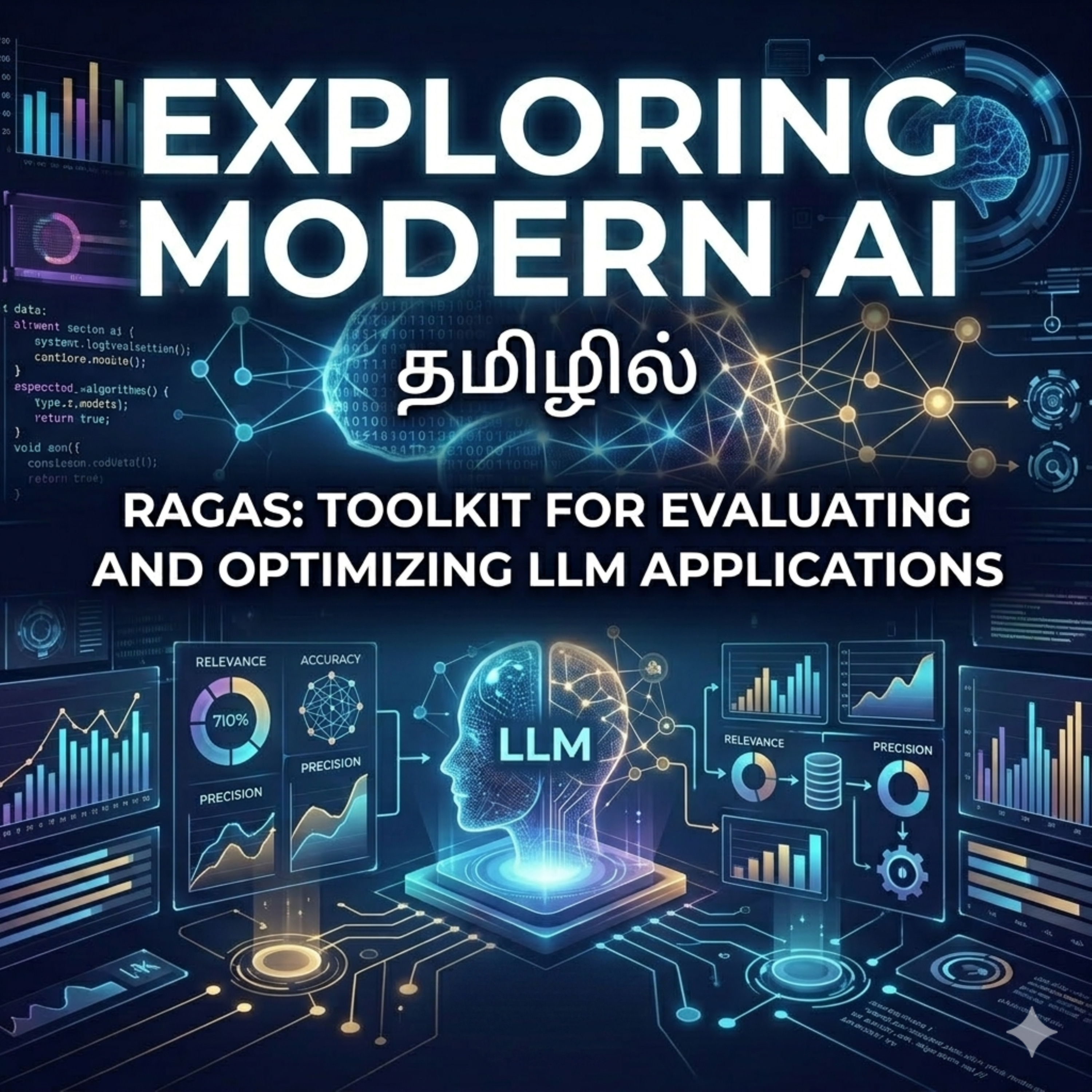
Ragas: Toolkit for Evaluating and Optimizing LLM Applications

ராகாஸ்: எல்எல்எம் பயன்பாடுகளை மதிப்பீடு செய்வதற்கும் மேம்படுத்துவதற்குமான கருவித்தொகுப்பு Outline the steps to integrate Ragas evaluations into an existing AI development project. - Explain best practices for creating high-quality, representative datasets for your AI application. - Detail effective strategies for managing dataset versions and storage in local or cloud environments. - Compare model-based metrics against traditional non-LLM computation-based metrics for better assessment accuracy. - Structure an efficient workflow to run evaluations and interpret score results for performance tracking. - Explain when to choose character-based metrics versus model-based metrics for your specific evaluation goals. - Highlight easy methods to format data into the Ragas evaluation dataset structure. - Compare ROUGE and BLEU scores for assessing text similarity in different language contexts. - Contrast exact match metrics with semantic similarity measures for specific use cases. - Summarize techniques for curating balanced datasets with diverse difficulty levels and metadata tagging. - Suggest ways to transition from local file storage to cloud-based systems for teams. - Define how to set up custom evaluation rubrics for unique task requirements. - List essential steps for installing dependencies and preparing the evaluation environment for beginners. - Detail how to use the evaluation function to generate row-level performance scores. - Explain how to configure evaluator language models and embeddings for point-wise metric tasks. - Compare CHRF and BLEU metrics for evaluating morphologically rich languages or paraphrased responses. - Describe how to build custom point-wise metrics for specialized AI task requirements. - Contrast string-based distance measures like Levenshtein and Jaro for evaluating non-LLM metrics. - Suggest methods for scaling evaluations as your dataset size and team grow. - Outline a practical workflow to automate routine performance testing in production environments. - Discuss choosing between semantic similarity, string distance measures, and LLM-based rubric scoring. - Emphasize cloud-based management and automated testing workflows for large enterprise datasets. - Detail how to pick between string-based distance measures like Jaro versus character n-gram scoring. - Compare usage of model-based evaluators versus traditional string metrics for complex, multilingual generation tasks. - Explain how to integrate evaluation workflows into existing CI/CD pipelines for continuous performance monitoring. - Recommend ways to organize datasets using unique identifiers and metadata for easier analysis. - Discuss tracking experiment results across different test iterations and model versions. - Describe how to build custom metrics using LLM calls for unique task logic. - Detail the process for training and aligning custom metrics to match human judgment. - Share tips for using rich metadata to segment and analyze evaluation results effectively. - Advise on selecting high-quality representative samples for diverse real-world scenario testing.

0:00-19:30

transcript

No transcript — this publisher did not publish one.

show notes

ராகாஸ்: எல்எல்எம் பயன்பாடுகளை மதிப்பீடு செய்வதற்கும் மேம்படுத்துவதற்குமான கருவித்தொகுப்பு


Outline the steps to integrate Ragas evaluations into an existing AI development project.

- Explain best practices for creating high-quality, representative datasets for your AI application.

- Detail effective strategies for managing dataset versions and storage in local or cloud environments.

- Compare model-based metrics against traditional non-LLM computation-based metrics for better assessment accuracy.

- Structure an efficient workflow to run evaluations and interpret score results for performance tracking.

- Explain when to choose character-based metrics versus model-based metrics for your specific evaluation goals.

- Highlight easy methods to format data into the Ragas evaluation dataset structure.

- Compare ROUGE and BLEU scores for assessing text similarity in different language contexts.

- Contrast exact match metrics with semantic similarity measures for specific use cases.

- Summarize techniques for curating balanced datasets with diverse difficulty levels and metadata tagging.

- Suggest ways to transition from local file storage to cloud-based systems for teams.

- Define how to set up custom evaluation rubrics for unique task requirements.

- List essential steps for installing dependencies and preparing the evaluation environment for beginners.

- Detail how to use the evaluation function to generate row-level performance scores.

- Explain how to configure evaluator language models and embeddings for point-wise metric tasks.

- Compare CHRF and BLEU metrics for evaluating morphologically rich languages or paraphrased responses.

- Describe how to build custom point-wise metrics for specialized AI task requirements.

- Contrast string-based distance measures like Levenshtein and Jaro for evaluating non-LLM metrics.

- Suggest methods for scaling evaluations as your dataset size and team grow.

- Outline a practical workflow to automate routine performance testing in production environments.

- Discuss choosing between semantic similarity, string distance measures, and LLM-based rubric scoring.

- Emphasize cloud-based management and automated testing workflows for large enterprise datasets.

- Detail how to pick between string-based distance measures like Jaro versus character n-gram scoring.

- Compare usage of model-based evaluators versus traditional string metrics for complex, multilingual generation tasks.

- Explain how to integrate evaluation workflows into existing CI/CD pipelines for continuous performance monitoring.

- Recommend ways to organize datasets using unique identifiers and metadata for easier analysis.

- Discuss tracking experiment results across different test iterations and model versions.

- Describe how to build custom metrics using LLM calls for unique task logic.

- Detail the process for training and aligning custom metrics to match human judgment.

- Share tips for using rich metadata to segment and analyze evaluation results effectively.

- Advise on selecting high-quality representative samples for diverse real-world scenario testing.