Skip to content
Artwork for Exploring Modern AI in Tamil
Exploring Modern AI in Tamil · May 18 · 16 min

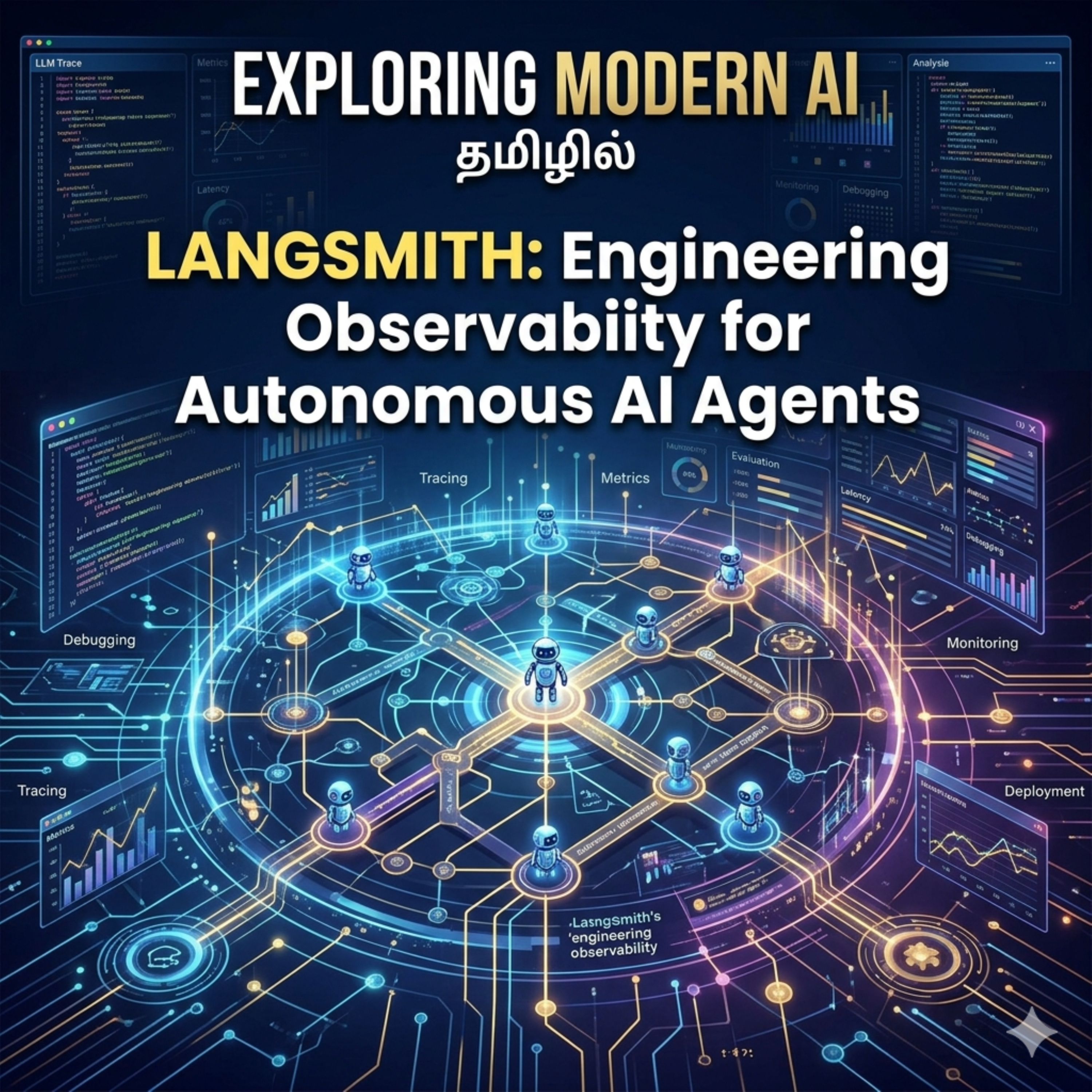
LangChain LangSmith: Engineering Observability for Autonomous AI Agents

லாங்ஸ்மித்: தன்னாட்சி AI ஏஜெண்டுகளுக்கான கண்காணிப்புத் திறனைப் பொறியியல் செய்தல் Explains how tracing helps debug LLM applications and monitor agent performance. - Details the difference between projects, traces, and runs. - Describes how these containers relate to each other. - Compares these concepts to OpenTelemetry span structures for clarity. - Explains the difference between automatic integration and manual instrumentation for sending trace data. - Describes how manual instrumentation helps developers gain control over their application tracing. - Describes how to filter trace data using run attributes or specific key-value pairs. - Shows how to perform negative filtering for metadata and output fields. - Summarizes how storage services like ClickHouse and PostgreSQL manage your trace data. - Explains using advanced dot notation to match nested key-value pairs. - Details the process for routing OpenTelemetry traces to experiment sessions for evaluation purposes. - Explains linking dataset examples to specific application runs via span attributes. - Explains the difference between stateful and stateless cron execution modes. - Explains how to configure background cron jobs for scheduled assistant execution. - Describes options for managing thread lifecycles using stateless cron configurations. - Explains how to use thread cleanup to manage data retention costs. - Explains how to use metadata and tags for categorizing traces during local development. - Summarizes how to use blob storage and external databases to handle large datasets. - Details how to use OpenTelemetry attributes to link custom traces to datasets. - Summarizes the roles of frontend, backend, and platform services in self-hosted deployments. - Describes the technical differences between standalone server setups and full control plane deployments. - Compares the resource requirements for self-hosted observability versus full agent deployment setups. - Outlines infrastructure considerations for scaling self-hosted deployments in secure enterprise environments. - Explains how to use evaluator scores to compare model performance during experiments. - Describes how to automate feedback collection to improve agent reliability over time. - Provides best practices for testing local graph changes before deploying to production servers. - Describes how to optimize data retention settings for long term trace storage. - Explains how to configure secure authentication providers for private agent deployments. - Details requirements for isolating sensitive data in multi tenant enterprise environments.

0:00-16:36

transcript

No transcript — this publisher did not publish one.

show notes

லாங்ஸ்மித்: தன்னாட்சி AI ஏஜெண்டுகளுக்கான கண்காணிப்புத் திறனைப் பொறியியல் செய்தல்


Explains how tracing helps debug LLM applications and monitor agent performance.

- Details the difference between projects, traces, and runs.

- Describes how these containers relate to each other.

- Compares these concepts to OpenTelemetry span structures for clarity.

- Explains the difference between automatic integration and manual instrumentation for sending trace data.

- Describes how manual instrumentation helps developers gain control over their application tracing.

- Describes how to filter trace data using run attributes or specific key-value pairs.

- Shows how to perform negative filtering for metadata and output fields.

- Summarizes how storage services like ClickHouse and PostgreSQL manage your trace data.

- Explains using advanced dot notation to match nested key-value pairs.

- Details the process for routing OpenTelemetry traces to experiment sessions for evaluation purposes.

- Explains linking dataset examples to specific application runs via span attributes.

- Explains the difference between stateful and stateless cron execution modes.

- Explains how to configure background cron jobs for scheduled assistant execution.

- Describes options for managing thread lifecycles using stateless cron configurations.

- Explains how to use thread cleanup to manage data retention costs.

- Explains how to use metadata and tags for categorizing traces during local development.

- Summarizes how to use blob storage and external databases to handle large datasets.

- Details how to use OpenTelemetry attributes to link custom traces to datasets.

- Summarizes the roles of frontend, backend, and platform services in self-hosted deployments.

- Describes the technical differences between standalone server setups and full control plane deployments.

- Compares the resource requirements for self-hosted observability versus full agent deployment setups.

- Outlines infrastructure considerations for scaling self-hosted deployments in secure enterprise environments.

- Explains how to use evaluator scores to compare model performance during experiments.

- Describes how to automate feedback collection to improve agent reliability over time.

- Provides best practices for testing local graph changes before deploying to production servers.

- Describes how to optimize data retention settings for long term trace storage.

- Explains how to configure secure authentication providers for private agent deployments.

- Details requirements for isolating sensitive data in multi tenant enterprise environments.