Skip to content
Artwork for Exploring Modern AI in Tamil
Exploring Modern AI in Tamil · May 19 · 20 min

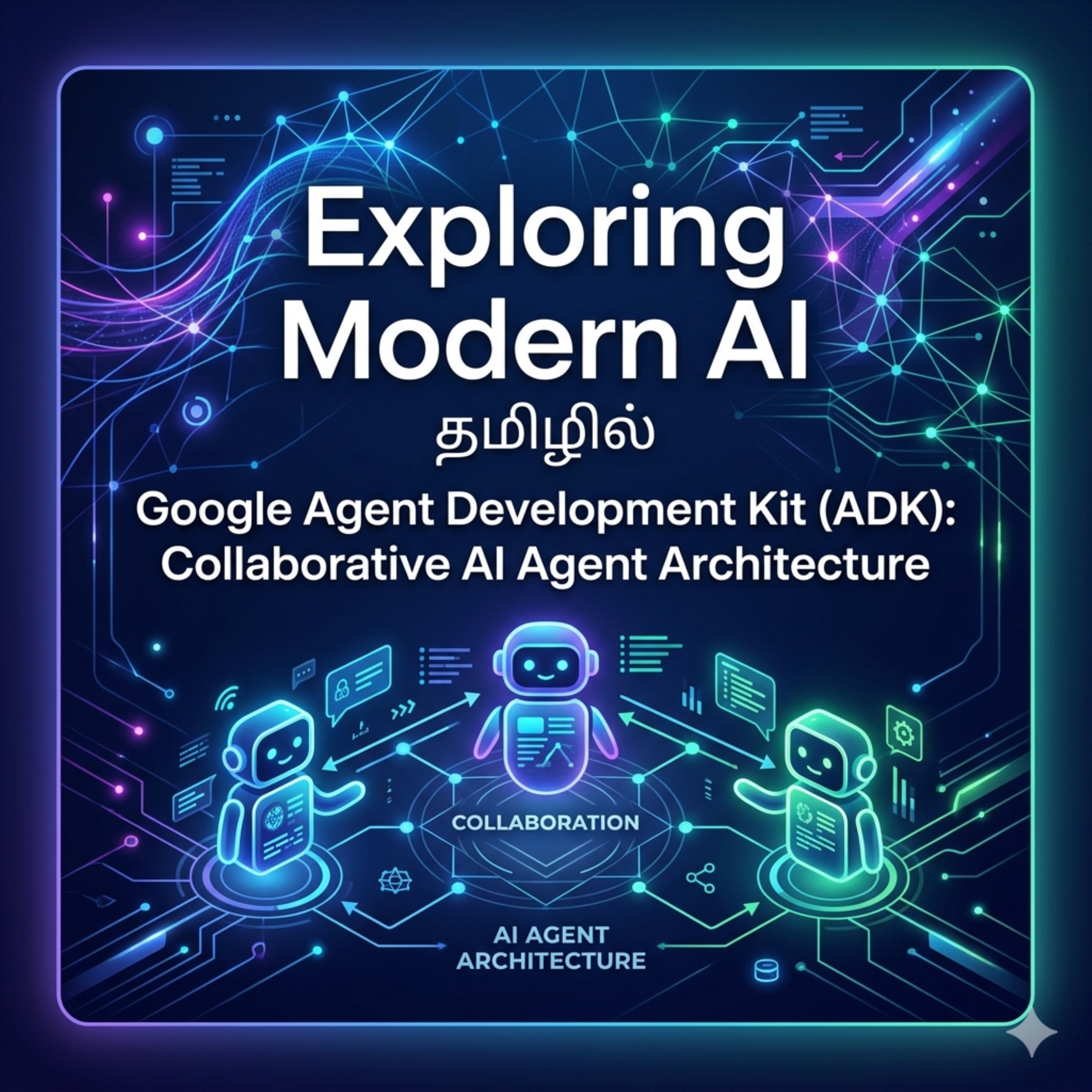
Google Agent Development Kit (ADK): Collaborative AI Agent Architecture

கூகிள் ஏஜென்ட் டெவலப்மென்ட் கிட் (ADK): கூட்டுச் செயற்கை நுண்ணறிவு முகவர் கட்டமைப்பு Provide a comprehensive overview of ADK Architecture for Building Collaborative AI Agents - Analyze the architectural trade-offs between Sequential, Loop, and Parallel agent types. - Compare sequential workflows with graph-based or parallel agent architectures. - Describe the structure and benefits of using SequentialAgent for deterministic workflows. - Discuss how developers can chain agents using a SequentialAgent workflow. - Walk through building a multi-agent system for a code development pipeline. - Discuss using Output Key to pass data between agents in a pipeline. - Explain how to share session state between agents during multi-step processes. - Discuss when to choose custom agents over standard workflow agent patterns. - Describe how to integrate external tools using the Model Context Protocol. - Outline how to use FastMCP servers for building and exposing custom tools. - Compare when to use local versus remote agents for microservices architectures. - Outline essential steps for developers choosing between local sub-agents and remote A2A agents. - Contrast the usage of A2A versus local sub-agents with concrete examples. - Explain when to use A2A for integrating standalone services. - Explain the process of connecting specialized agents via the A2A protocol. - Summarize how developers can use the Gemini Live API Toolkit for streaming. - Detail how to implement safety guardrails for agent inputs and outputs. - Explain best practices for sandboxing model code execution to prevent security risks. - Compare plugins versus callbacks for enforcing uniform security policies across agents. - Explain how to use callbacks and plugins to implement security guardrails. - Focus on identity, authorization, and advanced plugins like Gemini as a Judge. - Explain how to implement a PII Redaction Plugin for data protection. - Discuss using Model Armor to prevent content safety violations. - Highlight tips for implementing effective user authentication with OAuth scopes. - Explain common risk scenarios like reward hacking and data exfiltration in production. - Detail how to implement VPC security controls to protect sensitive agent data. - Explain how to use the Code Executor tool for secure data analysis tasks. - Review how to configure content filters to block harmful model output automatically. - Illustrate how to deploy ADK agents on Google Cloud Run for production. - Show how to use observability tools like logging and traces to debug agent workflows. - Explain how to setup cross-language support between Python and Java agents. - Explain how to build a layered defense strategy against indirect prompt injection. - Analyze advanced strategies for context compression in long-running agent workflows. - Discuss best practices for managing state and memory in multi-agent systems. - Analyze trade-offs between agent-auth and user-auth for securing external tool access. - Discuss techniques for handling multi-language agent communication patterns effectively. - Describe about Ambient Agent Build Approaches

0:00-20:06

transcript

No transcript — this publisher did not publish one.

show notes

கூகிள் ஏஜென்ட் டெவலப்மென்ட் கிட் (ADK): கூட்டுச் செயற்கை நுண்ணறிவு முகவர் கட்டமைப்பு


Provide a comprehensive overview of ADK Architecture for Building Collaborative AI Agents

- Analyze the architectural trade-offs between Sequential, Loop, and Parallel agent types.

- Compare sequential workflows with graph-based or parallel agent architectures.

- Describe the structure and benefits of using SequentialAgent for deterministic workflows.

- Discuss how developers can chain agents using a SequentialAgent workflow.

- Walk through building a multi-agent system for a code development pipeline.

- Discuss using Output Key to pass data between agents in a pipeline.

- Explain how to share session state between agents during multi-step processes.

- Discuss when to choose custom agents over standard workflow agent patterns.

- Describe how to integrate external tools using the Model Context Protocol.

- Outline how to use FastMCP servers for building and exposing custom tools.

- Compare when to use local versus remote agents for microservices architectures.

- Outline essential steps for developers choosing between local sub-agents and remote A2A agents.

- Contrast the usage of A2A versus local sub-agents with concrete examples.

- Explain when to use A2A for integrating standalone services.

- Explain the process of connecting specialized agents via the A2A protocol.

- Summarize how developers can use the Gemini Live API Toolkit for streaming.

- Detail how to implement safety guardrails for agent inputs and outputs.

- Explain best practices for sandboxing model code execution to prevent security risks.

- Compare plugins versus callbacks for enforcing uniform security policies across agents.

- Explain how to use callbacks and plugins to implement security guardrails.

- Focus on identity, authorization, and advanced plugins like Gemini as a Judge.

- Explain how to implement a PII Redaction Plugin for data protection.

- Discuss using Model Armor to prevent content safety violations.

- Highlight tips for implementing effective user authentication with OAuth scopes.

- Explain common risk scenarios like reward hacking and data exfiltration in production.

- Detail how to implement VPC security controls to protect sensitive agent data.

- Explain how to use the Code Executor tool for secure data analysis tasks.

- Review how to configure content filters to block harmful model output automatically.

- Illustrate how to deploy ADK agents on Google Cloud Run for production.

- Show how to use observability tools like logging and traces to debug agent workflows.

- Explain how to setup cross-language support between Python and Java agents.

- Explain how to build a layered defense strategy against indirect prompt injection.

- Analyze advanced strategies for context compression in long-running agent workflows.

- Discuss best practices for managing state and memory in multi-agent systems.

- Analyze trade-offs between agent-auth and user-auth for securing external tool access.

- Discuss techniques for handling multi-language agent communication patterns effectively.

- Describe about Ambient Agent Build Approaches