Skip to content
Artwork for Exploring Modern AI in Tamil
Exploring Modern AI in Tamil · May 18 · 17 min

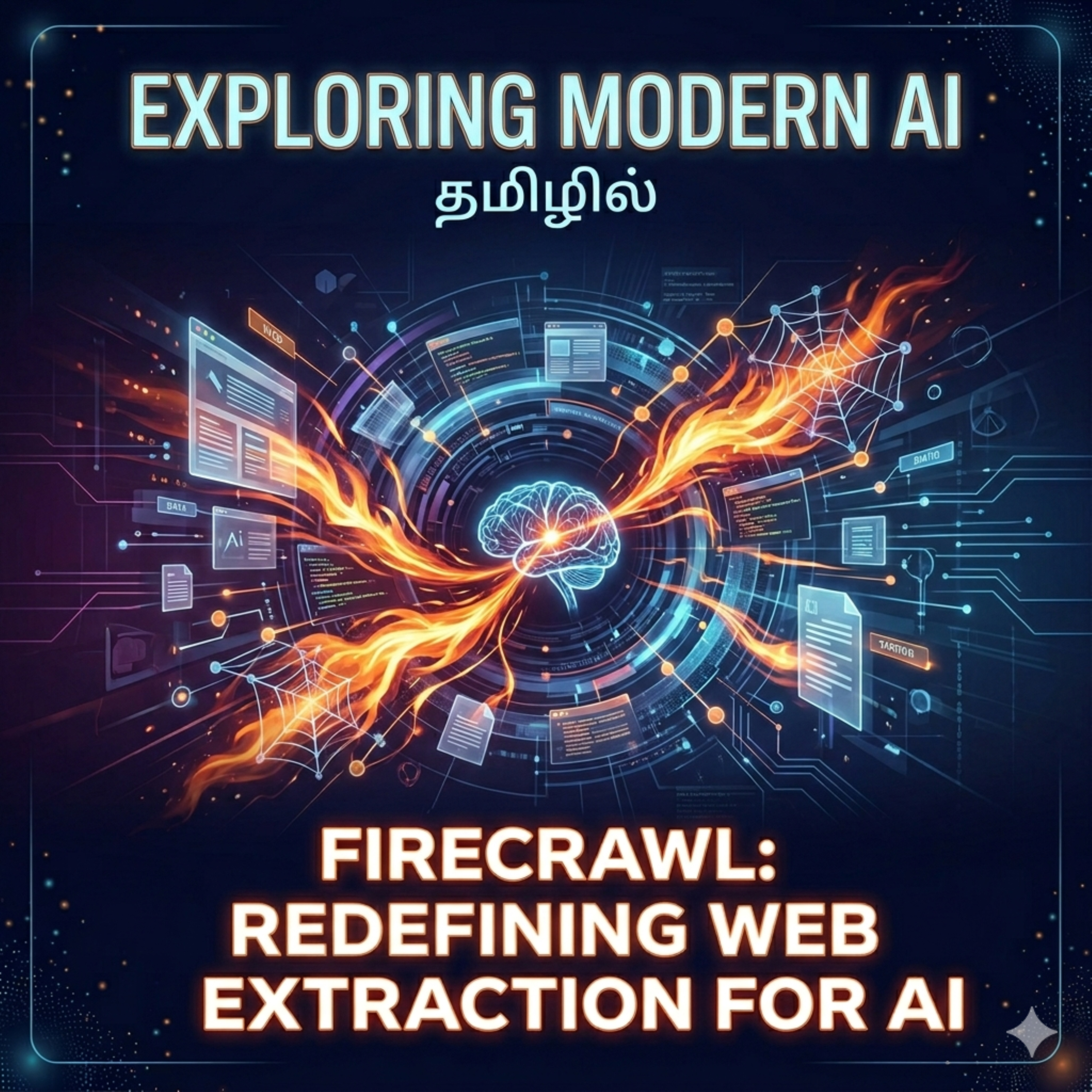
Firecrawl: Redefining Web Extraction for AI

Firecrawl: AI-க்கான இணையத் தரவுப் பிரித்தெடுத்தலை மறுவரையறை செய்தல் Provides scenarios for using Firecrawl to build knowledge graphs from Wikipedia pages. - Uses the map endpoint to discover article categories and relationships. - Defines node entities based on infobox data extraction. - Focuses on automating research workflows for academics and fact-checkers. - Explains how to structure entities like people, locations, and events. - Uses JSON mode to extract structured schema data from articles. - Links extracted content to your database schema for graph visualization. - Utilizes the agent endpoint to autonomously discover interconnected biographical facts across multiple articles. - Demonstrates how to run Firecrawl locally to manage custom schema migrations securely. - Describes using the interact endpoint to refine data extraction via prompts after initial scraping. - Compares agent versus extract endpoints for research discovery versus targeted multi-page extraction tasks. - Explains how to chain interactive calls to navigate and extract dynamic data efficiently. - Details best practices for migrating existing data pipelines to use modern autonomous agents. - Uses the interact endpoint to perform multi-step data cleaning inside the browser session. - Chains interaction prompts to extract specific infobox details across complex Wikipedia categories. - Automates biographical entity mapping to identify relationships between historical figures in large datasets. - Validates citation data accuracy by programmatically checking links across multiple academic Wikipedia pages. - Organizes output into JSON schemas to streamline migration into graph database environments. - Sequences extraction tasks to handle large-scale link discovery without overloading local resources. - Uses the agent endpoint for autonomous cross-domain research discovery. - Implements persistent profiles to keep sessions authenticated across multiple Wikipedia scraping steps. - Extracts citation metadata to build reliable and verifiable academic knowledge graphs. - Batchs scrape related academic articles to improve data consistency and structure. - Optimizes token usage by choosing between JSON mode and autonomous agent endpoints. - Leverages the interact endpoint to handle dynamic content or form interactions automatically. - Integrates interact sessions to verify multi-step citation trails across academic sources. - Discusses optimizing local infrastructure for large-scale Wikipedia scraping and graph schema generation. - Includes code snippets for batch scraping biographical articles to speed up knowledge extraction. - Explains using persistent profiles to maintain authentication during complex multi-page citation verification tasks. - Details how to use interactive live views to debug scraper logic during session execution. - Outlines steps for academic users to automate citation validation across large article datasets. - Describes techniques for structuring historical data to support graph-based academic relationship analysis. - Recommends efficient batch processing patterns for scraping thousands of Wikipedia pages simultaneously. - Suggests hardware configurations for locally hosted Firecrawl instances handling heavy knowledge graph workloads. - Compares pricing for JSON mode versus autonomous agents to minimize your monthly budget. - Explains how to use batch scraping for high volume data gathering efficiently. - Outlines steps for using Docker Compose to deploy and manage local scraping infrastructure. - Explains how to use persistent browser profiles to stay authenticated during long scraping jobs. - Explains how to extract and verify metadata to preserve academic citation accuracy. - Details how to map entity relationships across multiple languages for comprehensive research projects.

0:00-17:16

transcript

No transcript — this publisher did not publish one.

show notes

Firecrawl: AI-க்கான இணையத் தரவுப் பிரித்தெடுத்தலை மறுவரையறை செய்தல்


Provides scenarios for using Firecrawl to build knowledge graphs from Wikipedia pages.

- Uses the map endpoint to discover article categories and relationships.

- Defines node entities based on infobox data extraction.

- Focuses on automating research workflows for academics and fact-checkers.

- Explains how to structure entities like people, locations, and events.

- Uses JSON mode to extract structured schema data from articles.

- Links extracted content to your database schema for graph visualization.

- Utilizes the agent endpoint to autonomously discover interconnected biographical facts across multiple articles.

- Demonstrates how to run Firecrawl locally to manage custom schema migrations securely.

- Describes using the interact endpoint to refine data extraction via prompts after initial scraping.

- Compares agent versus extract endpoints for research discovery versus targeted multi-page extraction tasks.

- Explains how to chain interactive calls to navigate and extract dynamic data efficiently.

- Details best practices for migrating existing data pipelines to use modern autonomous agents.

- Uses the interact endpoint to perform multi-step data cleaning inside the browser session.

- Chains interaction prompts to extract specific infobox details across complex Wikipedia categories.

- Automates biographical entity mapping to identify relationships between historical figures in large datasets.

- Validates citation data accuracy by programmatically checking links across multiple academic Wikipedia pages.

- Organizes output into JSON schemas to streamline migration into graph database environments.

- Sequences extraction tasks to handle large-scale link discovery without overloading local resources.

- Uses the agent endpoint for autonomous cross-domain research discovery.

- Implements persistent profiles to keep sessions authenticated across multiple Wikipedia scraping steps.

- Extracts citation metadata to build reliable and verifiable academic knowledge graphs.

- Batchs scrape related academic articles to improve data consistency and structure.

- Optimizes token usage by choosing between JSON mode and autonomous agent endpoints.

- Leverages the interact endpoint to handle dynamic content or form interactions automatically.

- Integrates interact sessions to verify multi-step citation trails across academic sources.

- Discusses optimizing local infrastructure for large-scale Wikipedia scraping and graph schema generation.

- Includes code snippets for batch scraping biographical articles to speed up knowledge extraction.

- Explains using persistent profiles to maintain authentication during complex multi-page citation verification tasks.

- Details how to use interactive live views to debug scraper logic during session execution.

- Outlines steps for academic users to automate citation validation across large article datasets.

- Describes techniques for structuring historical data to support graph-based academic relationship analysis.

- Recommends efficient batch processing patterns for scraping thousands of Wikipedia pages simultaneously.

- Suggests hardware configurations for locally hosted Firecrawl instances handling heavy knowledge graph workloads.

- Compares pricing for JSON mode versus autonomous agents to minimize your monthly budget.

- Explains how to use batch scraping for high volume data gathering efficiently.

- Outlines steps for using Docker Compose to deploy and manage local scraping infrastructure.

- Explains how to use persistent browser profiles to stay authenticated during long scraping jobs.

- Explains how to extract and verify metadata to preserve academic citation accuracy.

- Details how to map entity relationships across multiple languages for comprehensive research projects.