Skip to content
Artwork for Exploring Modern AI in Tamil
Exploring Modern AI in Tamil · May 18 · 17 min

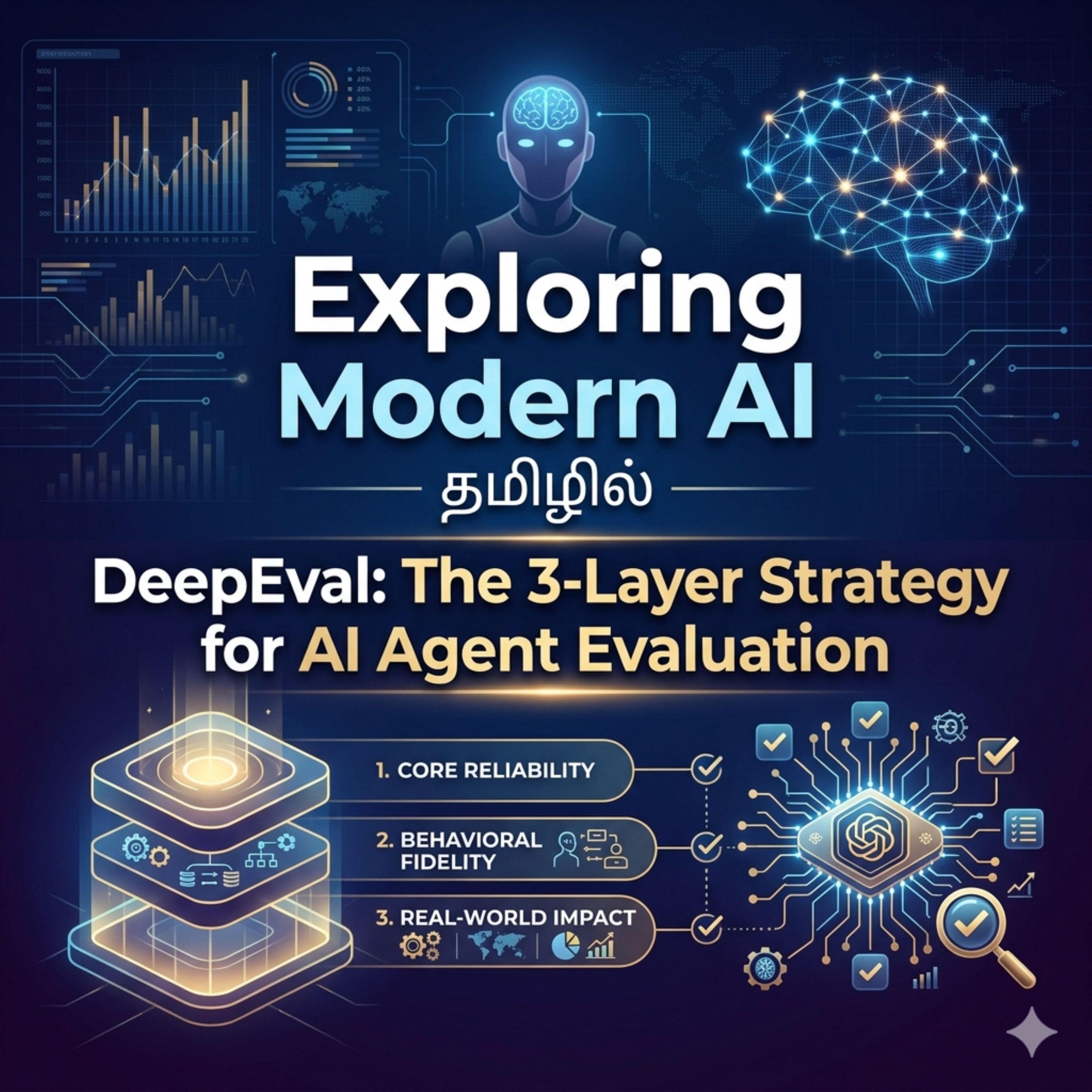
DeepEval: The 3-Layer Strategy for AI Agent Evaluation

DeepEval: AI ஏஜென்ட் மதிப்பீட்டிற்கான 3-அடுக்கு உத்தி Provides a comprehensive overview of the 3 Layer Strategy for AI Agent Evaluation - Simplifies the core concepts for someone new to LLM testing. - Breaks down how to create a first passing test case easily. - Explains how to setup component-level testing using DeepEval tracing. - Details the integration process with Confident AI for cloud reporting. - Describes the best metrics for agentic tasks like tool correctness. - Suggests how to mix generic and custom metrics for high accuracy. - Explains how to choose between the recommended generic and custom evaluation metrics. - Suggests a balanced mix of metrics to avoid evaluation overload. - Guides a developer on configuring custom embedding models for data synthesis. - Explains how to implement a custom LLM judge for unique evaluation requirements. - Shows how to use verbose mode to debug failing metric scores. - Describes steps for resolving stuck evaluations due to API or rate limits. - Lists the best criteria for choosing between generic and custom evaluation metrics. - Suggests a five-metric limit to maintain focus on specific quality goals. - Explains how to implement asynchronous evaluation methods to improve performance. - Shows how to build custom evaluation templates for improved model accuracy. - Details advanced strategies for implementing decision tree DAG metrics. - Explains how to switch between reference and referenceless evaluation metrics. - Focuses on RAG evaluation by balancing retrieval and generator metrics effectively. - Details how to use context precision and faithfulness to improve RAG performance. - Provides a clear guide for setting up local CLI environments correctly. - Explains how to persist configuration settings to speed up local testing. - Contrasts objective DAG metrics against subjective G-Eval scoring approaches. - Details why referenceless metrics are essential for production monitoring workflows. - Explains how to integrate custom models for advanced evaluation needs. - Summarizes why you should limit evaluations to five metrics total. - Explains how to select the best mix of generic and custom metrics. - Details the best practices for scaling evaluation workflows in production environments.

0:00-17:49

transcript

No transcript — this publisher did not publish one.

show notes

DeepEval: AI ஏஜென்ட் மதிப்பீட்டிற்கான 3-அடுக்கு உத்தி


Provides a comprehensive overview of the 3 Layer Strategy for AI Agent Evaluation

- Simplifies the core concepts for someone new to LLM testing.

- Breaks down how to create a first passing test case easily.

- Explains how to setup component-level testing using DeepEval tracing.

- Details the integration process with Confident AI for cloud reporting.

- Describes the best metrics for agentic tasks like tool correctness.

- Suggests how to mix generic and custom metrics for high accuracy.

- Explains how to choose between the recommended generic and custom evaluation metrics.

- Suggests a balanced mix of metrics to avoid evaluation overload.

- Guides a developer on configuring custom embedding models for data synthesis.

- Explains how to implement a custom LLM judge for unique evaluation requirements.

- Shows how to use verbose mode to debug failing metric scores.

- Describes steps for resolving stuck evaluations due to API or rate limits.

- Lists the best criteria for choosing between generic and custom evaluation metrics.

- Suggests a five-metric limit to maintain focus on specific quality goals.

- Explains how to implement asynchronous evaluation methods to improve performance.

- Shows how to build custom evaluation templates for improved model accuracy.

- Details advanced strategies for implementing decision tree DAG metrics.

- Explains how to switch between reference and referenceless evaluation metrics.

- Focuses on RAG evaluation by balancing retrieval and generator metrics effectively.

- Details how to use context precision and faithfulness to improve RAG performance.

- Provides a clear guide for setting up local CLI environments correctly.

- Explains how to persist configuration settings to speed up local testing.

- Contrasts objective DAG metrics against subjective G-Eval scoring approaches.

- Details why referenceless metrics are essential for production monitoring workflows.

- Explains how to integrate custom models for advanced evaluation needs.

- Summarizes why you should limit evaluations to five metrics total.

- Explains how to select the best mix of generic and custom metrics.

- Details the best practices for scaling evaluation workflows in production environments.