Skip to content
Artwork for EUVC

EUVC

EUVC

The home of European tech.

Connecting the people, capital and companies building Europe.

EUVC features conversations with the founders, investors, operators and policymakers shaping the continent's future. We explore venture capital, startups, AI, deeptech, defense, industrial policy, entrepreneurship and the ideas driving European competitiveness. From emerging managers and unicorn founders to institutional investors and government leaders, EUVC documents the people building Europe's next chapter.

Play
  • 48 episodes
  • a few times a week
  • Avg 28 min
  • English
Counted on this page — what you have heard stays on this device, so it is not something the list can be paged by.
  • Yesterday · 10 min

    Summit | Owen Reynolds (Innotek): Venture as an active family business

    Owning and operating a business can give family investors access to insights that are difficult to reproduce from the outside. The question is how to turn that knowledge into a genuine advantage for funds and founders. In this conversation from EUVC Summit 2026, ⁠Owen Reynolds⁠, Investment Director VC at ⁠Innotek⁠, shares how an active family business can bring deeper market knowledge, faster diligence and practical operating context into venture investing. Innotek is a single family office investing across venture capital, private equity and direct investments, with roots in industrial, manufacturing and technology. Owen explains how its in-house automation, robotics and engineering expertise can support investment decisions and portfolio companies in ways that go beyond capital. He also discusses why operating companies can sometimes “skip the first five slides” of a pitch deck, how continuous exposure to customers and supply chains creates an information advantage and why specialist investors risk losing some of that edge as they become professional investors. The conversation also covers how family offices can support VCs and portfolio companies more effectively, why that support needs to be specific rather than assumed and where LP expectations and established fund structures may be holding venture back. Highlights How operating businesses create an investment edge Why active operators can accelerate due diligence How in-house technical expertise can support venture investing Why specialist VCs can gradually lose their specialisation How family offices can work more effectively with VCs Why operating support needs to be specific and credible Where LP structures may be restricting venture funds How family offices can become stronger long-term partners
  • Sunday · 51 min

    This Week in European Tech: What should founders expect from their VCs?

    What does a genuinely useful VC relationship look like, and how much should operating experience matter when investors are advising founders? In this episode of This Week in European Tech, Dan Bowyer and Mads Jensen of SuperSeed discuss what separates strong VC partnerships from weaker ones, why venture outcomes naturally follow power laws and what founders should realistically expect from the investors around their table. They also look at the UK Budget and whether it goes far enough for founders, the wider economic pressures facing younger people and what could encourage more people to build companies. The conversation then turns to AI, including Anthropic’s planned IPO, where inference may happen in the future and the growing question of whether companies can trust the models and agents operating inside their businesses. Dan and Mads also discuss technological sovereignty, the case for stronger European AI infrastructure and what Europe should prioritise rather than trying to recreate every layer of the technology stack. Highlights What founders should expect from a strong VC partnership How much operating experience matters for investors Why venture capital produces power-law outcomes What the UK Budget means for founders Why entrepreneurship may have an energy problem as well as a policy problem What Anthropic’s planned IPO could tell us about the AI market Why more AI inference could move onto personal devices The security risks created by AI agents at scale Whether European companies can trust foreign AI models Where Europe should focus its technology sovereignty efforts

  • Friday · 50 min

    Andreas Cleve (Corti): Why constraints can be an advantage in vertical AI

    In vertical AI, choosing a narrower market can look like giving up scale, but for Corti it created the focus needed to go much deeper into healthcare and build around the accuracy, compliance and real-world complexity that clinical environments demand. Andreas Cleve, Co-Founder and CEO of Corti, joins us to explain the thinking behind that choice and what it has meant in practice. Andreas describes healthcare not as one market but as many highly specialised ones, each with its own workflows, terminology and requirements. That depth means bigger general-purpose models alone are not enough. Corti has instead had to build further down the stack and take greater control over the technology and infrastructure required to get AI into production. The trade-off becomes especially clear around accuracy. AI can perform well in a demo and still fall short in a clinical environment, where one incorrect word or detail can change the meaning entirely. Andreas explains why clinical-grade performance depends on much more than training better models, from working closely with users to adapting to individual specialties and solving the last-mile problems that appear when technology meets real workflows. The conversation also explores why Corti brought compliance in-house rather than treating regulation as something to outsource. For founders building in healthcare, legal, financial services or other high-stakes domains, the broader question is how to decide which constraints to accept, which capabilities to own and where going deeper can create an advantage that broader competitors struggle to replicate. Highlights Why Corti chose vertical AI over a broader horizontal approach What founders give up when they deliberately narrow their market Why bigger models do not automatically solve regulated-domain problems Why 90% accuracy can still fall far short in clinical environments How specialisation pushes vertical AI companies deeper into the stack Why getting AI into production requires more than model performance Why Corti built its compliance capability in-house How founders can think differently about regulation and other high-stakes constraints Timestamps (00:00) Intro (01:45) What Corti is building (03:45) Why healthcare needs specialised AI (05:45) Why bigger models do not solve healthcare (07:40) Healthcare is not one market (09:50) The trade-offs of going vertical (11:50) Funding a capital-intensive AI company from Europe (13:15) Why Corti is doubling down on Copenhagen (16:45) Copenhagen’s talent problem (19:30) Why 90% accuracy is not enough in healthcare (23:00) Solving the last mile of healthcare AI (25:45) Where AI adoption is happening fastest in healthcare (31:20) Why regulation is not the enemy (34:40) How founders should approach compliance (37:40) What founders should understand about venture funding (42:30) Why European VCs need a GPU strategy (46:40) Europe’s growth funding gap (48:00) When should European founders move to the US?

  • Thursday · 11 min

    Summit | Romain Lavault (Partech) & Joe Schorge (Isomer Capital): Managing liquidity as a seed fund

    Seed investors are often told to ride their winners. But when the best companies remain private well beyond the original fund horizon, that creates a difficult question: when should a fund start turning paper gains into cash? In this conversation from EUVC Summit 2026, Romain Lavault, General Partner at Partech, joins Joe Schorge, Founder and Managing Partner at Isomer Capital, to discuss how seed funds can manage liquidity without giving up too much of their strongest positions. Romain explains how longer company lifecycles have changed the economics of seed investing, why secondaries have become a major route to liquidity and how Partech uses a framework to decide when to sell portions of high-performing companies. They also explore LP expectations around DPI, why liquidity decisions should be planned rather than emotional and how early conversations with founders can make future secondary transactions easier. Highlights Why seed funds face a growing liquidity challenge How longer company lifecycles affect fund returns Why secondaries have become more important When to sell part of a winner How to balance DPI with long-term upside Why founders need advance notice of liquidity plans Why funds need a liquidity model as well as a fund model

  • October 27 · 10 min

    Summit | Denes Ban (RAISE): Why "European resilience" is not a fundraising strategy

    Want help sharpening your fundraising story? Request a discovery call with Denes Ban, Founder of RAISE. --- Fundraising is not just about having a strong company or a compelling idea. It is also about understanding where the process breaks, how investors respond and what actually moves them to act. In this talk from EUVC Summit 2026, Denes Ban, Founder of RAISE, explains why fundraising should be treated as a measurable system rather than a matter of charisma or instinct. Drawing on his work with hundreds of founders and GPs, Denes breaks down the conversion funnel behind fundraising, why most people misdiagnose their bottleneck and how numbers, story and urgency work together. He also introduces the idea of a minimum viable story, built around five elements: how the world is changing, the problem, the solution, why you win and why now. Along the way, he explains why founders often rush too quickly to the solution and why “European resilience” on its own is not enough to raise capital. Highlights Why quality alone does not win How to identify the real fundraising bottleneck Why fundraising is a system that can be improved The role of numbers, story and urgency How to build a minimum viable story Why the problem should come before the solution What creates urgency in an investor process Why “European resilience” alone is not a fundraising strategy

  • October 26 · 1 hr 3 min

    This Week in European Tech: Why Europe’s own capital isn’t backing its growth

    Europe has deep pools of capital, but much of that money still fails to reach the companies and assets that could drive future growth. In this episode, Dan Bowyer and Mads Jensen of SuperSeed are joined by Karim Palant, Director of External Affairs at UK Private Capital, to discuss why domestic capital remains underrepresented in venture and private markets, and why that matters for Europe’s competitiveness. They look at pension reform, the UK’s reliance on international LPs, the incentives that keep domestic capital flowing elsewhere, and what the upcoming UK budget could mean for founders, investors, and wealth creation. The conversation also turns to AI infrastructure and cybersecurity, including whether trillion-dollar CapEx plans will actually materialise, how AI is making old cyber vulnerabilities easier to exploit, and what personal AI agents could mean for future security risks. Highlights Why Europe’s own capital is not backing enough of its growth Why pension money still struggles to reach venture and private markets The risks of relying too heavily on international capital What the UK budget could mean for founders and investors Whether the AI infrastructure boom is starting to slow How AI is changing cybersecurity What personal AI agents could mean for security

  • October 22 · 13 min

    Summit | Oliver Vince (Basecamp Research) & Lorenzo Cerchi (Singular): Rewriting the map of life

    AI has transformed what is possible in language, but biology remains a much harder frontier. Oliver Vince, Co-Founder at Basecamp Research, believes one of the biggest constraints is that we still understand only a fraction of life on Earth, leaving AI models with a fundamentally incomplete picture of biology. Speaking at EUVC Summit 2026, Oliver joins Lorenzo Cerchi, Venture Capital Investor at Singular, a backer of Basecamp Research, to discuss how new biological datasets and frontier AI models could change therapeutic design, and why Europe may have an edge where AI meets deep scientific expertise. Oliver explains how Basecamp Research approaches the data problem in biology, how scaling laws could translate into better models and how those models might eventually help move from disease biology towards new medicines. The conversation also looks at the gap between European and US attitudes to risk, what it takes to finance highly ambitious deep-tech companies and why scientific talent needs room to pursue outcomes that may be uncertain but potentially enormous. They close on the longer-term possibility that AI could help tackle diseases that remain difficult or impossible to treat today, and why Oliver believes that potential is too significant to remain confined to the lab. Highlights Why biology is still a major data problem How AI scaling laws could apply to therapeutic design Where Europe has an advantage in AI and deep tech Why ambitious deep tech needs a different attitude to risk Turning scientific talent into breakthrough companies The path from disease biology to new medicines Why “prompt to cure” could become possible Timestamps (00:00) Intro (01:10) Why biology has an AI data problem (03:20) Where Europe can win in AI (05:05) The challenge of scaling deep tech in Europe (07:10) Why ambitious venture needs a different risk mindset (09:15) Europe’s scientific talent advantage (11:05) From disease biology to generating medicines (12:35) Playing for diseases we cannot treat today (13:05) Why “prompt to cure” may be possible

  • October 20 · 14 min

    Summit | Jan Goetz (IQM Quantum Computers): Building a quantum unicorn from Europe

    Quantum computing is not simply about making today’s computers faster. For Jan Goetz, CEO & Co-Founder at IQM Quantum Computers, the opportunity lies in solving problems that conventional computing architectures may never handle efficiently enough. Speaking at EUVC Summit 2026, Jan explains how IQM grew from university research into a full-stack quantum company building its own chips, systems, manufacturing capacity and cloud infrastructure. He reflects on the practical realities of building deep tech, including operating an early quantum computer from an office with improvised cooling, raising significant capital for hardware and scaling a company before much of the surrounding infrastructure exists. The session also explores Europe’s position in quantum, why hardware is becoming a critical bottleneck and how IQM is trying to scale globally while remaining headquartered in Finland. Highlights Why conventional computing is approaching physical limits Why quantum requires a different computing model Turning university research into a deep-tech company Building hardware before the infrastructure exists Why hardware matters as much in quantum as it does in AI Europe’s current position in quantum computing Scaling a capital-intensive company from Europe Accessing global capital without leaving Europe Timestamps (00:00) Intro (01:05) Why some problems need a different kind of computer (03:05) Why bigger data centres are reaching their limits (04:05) How quantum computing scales differently (05:00) The energy problem behind AI compute (06:05) Building a full-stack quantum computer (07:20) From university research to building IQM (09:15) Building a quantum computer in an office (12:15) Europe’s position in quantum computing (13:25) Why hardware is becoming the bottleneck (14:05) Raising capital and planning a dual listing

  • October 19 · 1 hr 3 min

    Edouard Gouin (Convelio): Building through the hardest years to reach profitability

    Convelio’s most difficult period forced some of its most consequential decisions. After the art market contracted sharply, the company reduced its team, changed its business model and shifted its focus from top-line growth towards profitability. Host Andreas Munk Holm speaks with Edouard Gouin, CEO and Co-Founder of Convelio, about navigating that period and the decisions that ultimately helped the company reach its first fully profitable quarter. Edouard discusses the cost of delaying layoffs, bringing investors behind a new strategy, rebuilding trust and moving from a largely asset-light model towards physical operations, storage and software. He also shares the thinking behind the 65-page leadership manual he wrote during this period, the principles it codified around hiring, management and honest feedback and how Convelio is using AI to automate operational work. Highlights Moving from growth towards profitability Making difficult decisions before circumstances force them Aligning investors around a new strategy Rebuilding trust after layoffs Moving beyond a purely asset-light model Writing a 65-page leadership manual Hiring for strengths and giving honest feedback Using AI to automate operational work Reaching Convelio’s first fully profitable quarter Timestamps (00:00) Intro (02:00) How Convelio started (08:00) Copycats and the art market downturn (14:00) Looking inward and shifting to profitability (17:00) Layoffs and the cost of delaying difficult decisions (21:00) Aligning investors and the board (28:00) Rebuilding trust after layoffs (31:00) From asset-light to physical operations, storage and software (39:00) Writing a 65-page leadership manual (42:00) Hiring for strengths (45:00) Mistakes, sloppiness and honest feedback (53:00) Using AI to transform operations (1:01:00) Hard decisions, easy life and reaching profitability

  • October 18 · 54 min

    This Week in European Tech: AI’s next test is who actually gets paid

    The AI market is moving from proving the technology works to proving who can actually capture the value. In this episode of This Week in European Tech, Dan Bowyer, Mads Jensen and Priyanka Savjani of SuperSeed discuss the pressure building across AI infrastructure, Nvidia’s growing influence as both investor and supplier and why founders need to think carefully about strategic dependency. They also explore how AI agents could reshape ecommerce and distribution, where European founders can build harder-to-copy advantages and why physical AI, manufacturing and resilient supply chains remain important opportunities for Europe. Highlights Why AI investors are asking who actually gets paid Where the risks sit in AI infrastructure What Nvidia’s investment strategy means for founders Why distribution matters for AI agents Where European founders can build defensible advantages Europe’s opportunity in physical AI and manufacturing How founders should think about China in their supply chains Whether EU Inc. can still move the needle

  • October 15 · 15 min

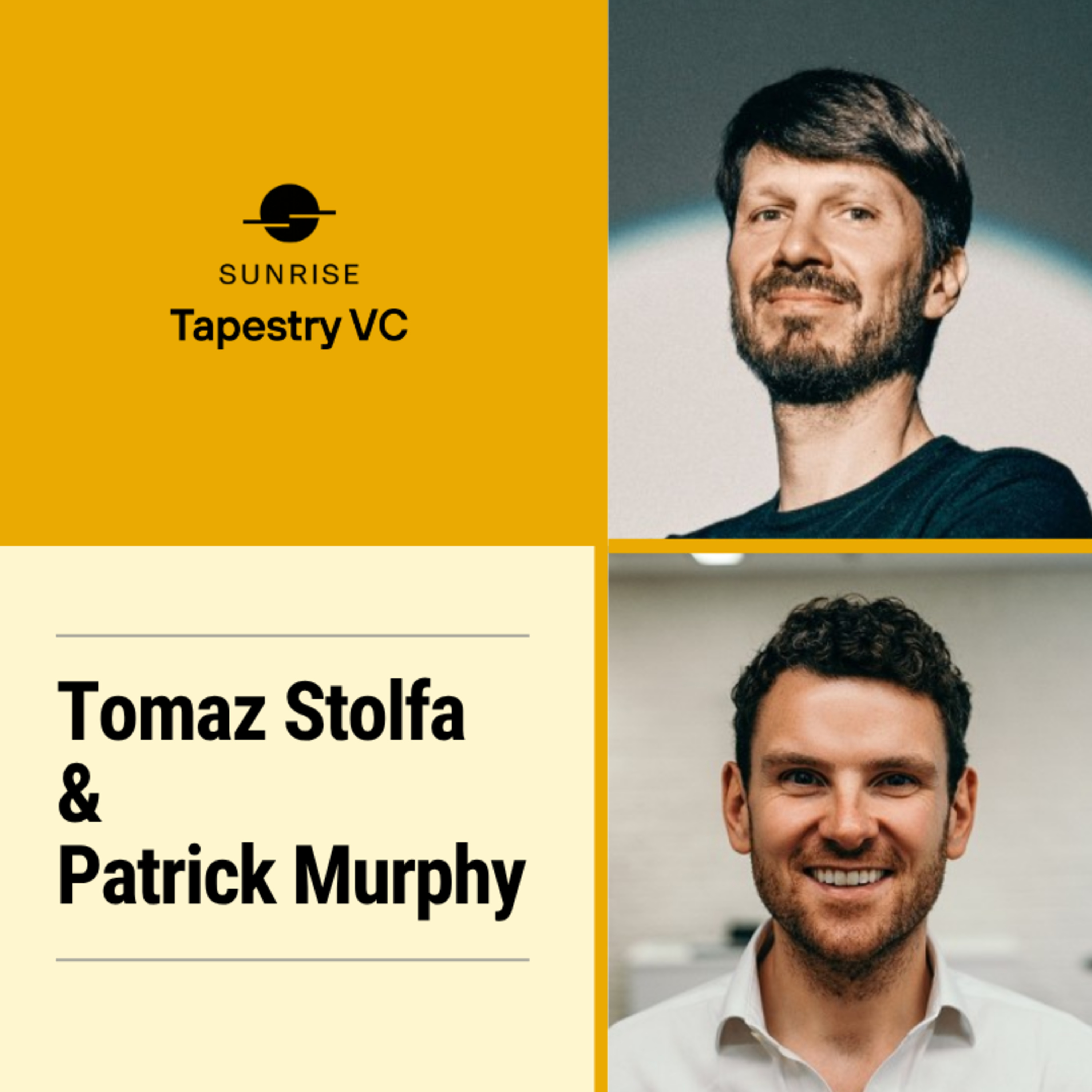
    Summit | Tomaz Stolfa (Sunrise Robotics) & Patrick Murphy (Tapestry VC): Revolutionizing European manufacturing

    Europe’s manufacturing sector faces a growing labour shortage, while much of the continent’s industrial base remains difficult to automate with traditional robotics. In this conversation from the EUVC Summit & Awards Show 2026, Tomaz Stolfa, Co-Founder and CEO of Sunrise Robotics, joins Patrick Murphy, Partner at Tapestry VC, to discuss what it takes to bring robotics into high-mix, low-volume manufacturing, where flexibility and reliability matter as much as the technology itself. Tomaz explains why manufacturers care less about the label of “AI-driven robotics” than whether a system can reliably take repetitive work off people’s hands, why even 99% robustness can fall short on a factory floor and how Sunrise is reducing automation projects that typically take 12 to 18 months to a matter of weeks. They also discuss Europe’s advantages in robotics, the importance of getting hardware into production early and why building a deep-tech company requires investors who are aligned for the long term. Highlights Europe’s growing manufacturing labour gap Why traditional automation struggles with high-mix production What manufacturers actually need from robotics Why 99% reliability is not enough How Sunrise is cutting deployment times from months to weeks Why Europe has an advantage in industrial robotics What it takes to finance deep tech for the long term Timestamps (00:00) Intro (01:00) Europe’s manufacturing labour gap (03:00) Why traditional automation falls short (04:20) Cutting deployment from 12–18 months to weeks (06:00) Why 99% reliability is not enough (08:00) Physics, safety and actually shipping robotics (09:00) Getting robots onto factory floors and scaling production (11:00) Why Europe is a strong place to build robotics (13:00) Choosing investors for a 15-year journey

  • October 13 · 12 min

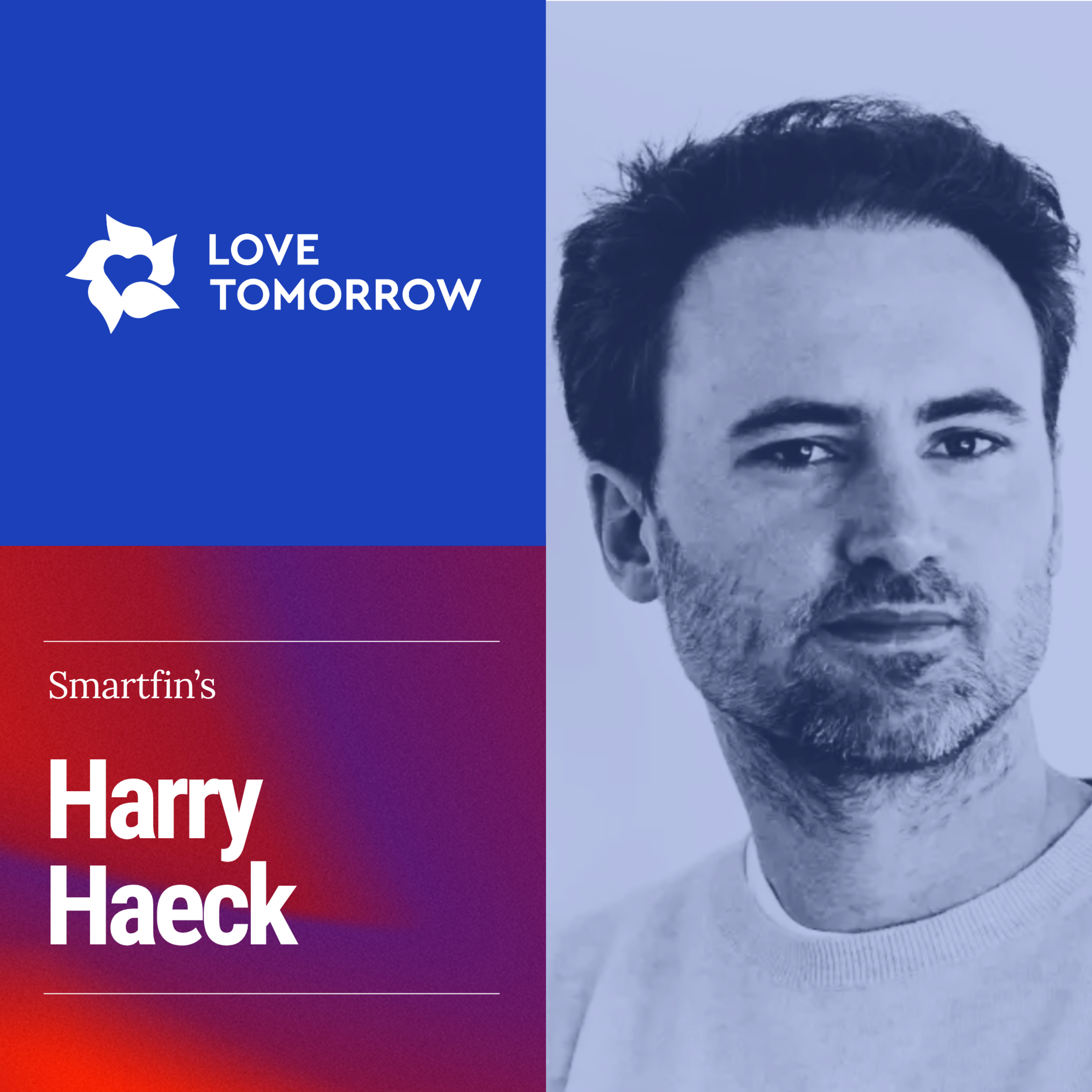
    Harry Haeck (Smartfin): AI’s footprint is easy to measure. Its handprint isn’t

    AI’s footprint is visible in the energy, water and infrastructure required to run it. Its positive impact is harder to capture in a single number, which can make the costs of AI easier to see than the value it creates. In this talk, Harry Haeck, Partner at Smartfin, looks at both sides of that equation. He starts with the story of San Marcos, Texas, where residents rejected a $1.5 billion data centre investment over concerns about water use, before examining why greater efficiency does not necessarily mean lower overall resource consumption. Harry then turns to AI’s “handprint”, highlighting examples across drug discovery, agriculture, methane detection, accessibility and the recovery of ancient texts to show where the technology is already creating tangible benefits. The session closes on the question of how investors, technologists and society can reduce AI’s footprint while directing more of its capabilities towards problems that matter. Highlights Why AI’s footprint is easier to measure than its positive impact What the San Marcos data centre dispute reveals about AI infrastructure Why efficiency gains can still lead to higher overall resource use How AI is already creating impact across science and society The difference between AI’s footprint and its “handprint” Why we still have agency over where AI is applied This session was recorded at the Love Tomorrow Summit, where EUVC curated the investor-focused programme. Timestamps (00:00) Intro (01:00) From bedroom DJ to talking AI at Tomorrowland (02:00) When a $1.5B data centre competes with water (03:05) The growing energy and water footprint of AI (04:10) Why greater efficiency can increase consumption (05:15) From AI’s footprint to its handprint (06:00) How AI is already creating impact in the real world (09:55) Why AI’s positive impact is harder to measure (11:35) Why we can still steer the future of AI

  • October 10 · 51 min

    This Week in European Tech: Europe’s AI edge could be science, not scale

    Europe’s strongest AI opportunity may not be building the biggest general-purpose model. It could be applying AI where the region already has an advantage in science, engineering and specialised industries. In this episode of This Week in European Tech, Dan Bowyer⁠, ⁠Mads Jensen⁠ and ⁠Priyanka Savjani⁠ of ⁠SuperSeed⁠ discuss what London-built Isomorphic Labs tells us about that opportunity and why AI for science could become a distinctive area of strength for the UK and Europe. They also examine who is paying for the AI infrastructure boom, why falling model prices can still lead to rising total costs, how Mistral fits into Europe’s sovereignty ambitions and why Anthropic’s potential IPO could become a benchmark for the wider AI market. The conversation also turns to closer UK-EU cooperation and whether sector-specific agreements could strengthen Europe’s technology ecosystem. Highlights Why Europe’s AI advantage may be strongest in science What Isomorphic Labs could signal about the UK’s AI opportunity Who is ultimately paying for the AI boom Why cheaper AI can still mean higher overall spending Where Mistral fits into the sovereign AI debate Why price-performance matters more than headline model size How Anthropic’s IPO could reshape AI valuations Whether deeper UK-EU cooperation could benefit European tech ------- We’re pleased to be partnering with Luxembourg Venture Days on October 14–15 at Luxexpo The Box. Explore the agenda and register here: venture-days.lu -------

  • October 8 · 12 min

    Summit | Joe McDonald (tem) & Adam Chirkowski (AlbionVC): Fixing the $900B energy problem

    Cheap, reliable energy is becoming a strategic advantage. As AI, data centres and manufacturing demand more power, the economics of electricity increasingly influence which countries and companies can stay competitive. Recorded at EUVC Summit 2026, Joe McDonald, CEO and Co-Founder of tem, joins Adam Chirkowski, Partner at AlbionVC, to discuss how the energy market needs to change and why the UK and parts of Europe could be particularly well positioned to build major new companies in the sector. Joe explains how tem is rebuilding the transaction infrastructure behind energy using AI, why layers of intermediation still add significant cost and what it takes to compete with long-established utilities. The conversation also explores why the complexity of energy can create defensibility, how the sector could develop in a similar way to fintech and why lowering the cost of the electron matters far beyond the energy industry itself. Highlights Why energy costs increasingly influence national competitiveness How AI and data centres are increasing the importance of low-cost power Where friction still exists in energy transactions How tem is building new transaction infrastructure Why incumbents struggle to reinvent their own business models How complexity can become a moat in energy Why the UK and parts of Europe may have a structural advantage What the energy sector can learn from fintech Why Europe could produce the next generation of major energy companies

  • October 7 · 44 min

    Jasper Roll (Haufe Group Ventures): How to build a credible CVC without a traditional fund structure

    A credible CVC does not have to start with a traditional fund structure. Haufe Group Ventures⁠ built its model around an evergreen balance-sheet setup, a lean team and a clear mandate, proving the approach through deals rather than a large fund launch. In this episode, Andreas Munk Holm and Jeppe Høier speak with Jasper Roll, Managing Director at Haufe Group Ventures⁠, about how he helped build the venture arm of a family-owned German software company from the ground up. Jasper explains how Haufe combines direct investments, venture building and, more recently, LP investing, why the team deliberately started small and how three investors have completed more than 20 deals, including follow-ons. He also shares why early-stage CVCs need a clear portfolio strategy, enough commitment to build it properly and the discipline to walk away when valuations or deal dynamics do not fit the model. The conversation also explores how Haufe manages expectations around venture timelines and failures, how a young CVC builds credibility with founders and other investors and why Jasper believes corporates can no longer rely on innovation happening entirely within their own walls. Highlights How to build a credible CVC without a traditional fund structure Why Haufe deliberately started with a lean setup How direct investing, venture building and LP investing work together How a three-person investment team has completed more than 20 deals Why CVCs need conviction before committing capital Why saying no can be harder than saying yes How to manage internal expectations around failures and long-term returns How young CVCs build credibility with founders and investors Why corporates need to engage with innovation beyond their own walls Timestamps (00:00) Intro (02:00) From startup operator to building Haufe Group Ventures (04:00) Designing Haufe’s corporate venturing model (09:00) AI, SaaS and the new moats in software (16:00) How a three-person team completed 20+ deals (24:00) Navigating inflated AI rounds and knowing when to say no (28:00) Building credibility and deal flow as a young CVC (34:00) Managing failures, returns and internal expectations (40:00) What European corporates should learn from the Mittelstand

  • October 6 · 14 min

    Summit | Pavel Mucha (Aspire11): Why and how a Czech pension fund launched a €500m venture fund

    Getting pension capital into venture is not simply about proving that the returns are attractive. It requires building an investment model that institutions can actually underwrite, while knowing which parts of the strategy should remain non-negotiable. Pavel Mucha, Founder of Aspire11, explains how a Czech pension fund committed €500 million to venture and growth investing, why the team chose to start with €500 million rather than the €2 billion initially discussed and how they structured the platform to make pension capital work in practice. The conversation covers how Aspire11 adapted the economics, absorbed initial costs and introduced shorter commitment windows, while maintaining its position on avoiding home bias, accepting long holding periods and building concentrated portfolios. Pavel also discusses why attracting younger savers mattered, what venture can learn from pension investment in buyout funds and how the Canadian pension model influenced Aspire11. Highlights Why Aspire11 started with €500m rather than €2bn What pension capital needed from a venture investment model Why attracting younger savers mattered alongside returns What venture can learn from pension investment in buyouts Why Aspire11 rejected a domestic-only investment mandate Why long holding periods and concentration mattered How Aspire11 removed an additional management-fee layer Why the team absorbed initial costs itself How vintage windows made commitments easier to manage How fund investments and later-stage direct investments helped smooth the J-curve

  • October 5 · 6 min

    Patrick Murphy (Tapestry VC): Why drone delivery could replace millions of car journeys

    Sending a car or moped across a city to deliver a single meal is an expensive and inefficient way to move food. Drone delivery offers a different model, with the potential to make last-mile logistics faster, cheaper and cleaner. Patrick Murphy, Co-founder and Managing Partner at Tapestry VC and a founding investor and board member at Manna, explains how autonomous drone delivery is moving into real-world use. He shares how Manna has completed 300,000 deliveries, partnered with major delivery platforms and raised $50 million to support its global expansion. The conversation covers the economics of drone delivery, how the technology works in practice and why replacing delivery cars and mopeds could change the way local logistics operate. Highlights Why delivery by car is so inefficient How drone delivery can reduce cost and delivery time Why Manna believes autonomous delivery is ready to go mainstream How the drones operate in practice What 300,000 completed deliveries have demonstrated Why major delivery platforms are partnering with Manna How the company plans to expand to hundreds of cities Why drone delivery could replace millions of car journeys This session was recorded at the Love Tomorrow Summit, where EUVC curated the investor-focused programme.

  • October 3 · 55 min

    This Week in European Tech: What ElevenLabs says about Europe’s AI potential

    ElevenLabs reaching a $22 billion valuation is another sign that Europe can produce globally competitive AI companies. But as personal agents become more capable, Europe also risks falling behind if consumers get access later and the US captures the learning curve first. In this episode of This Week in European Tech, Dan Bowyer, Mads Jensen and Priyanka Savjani of SuperSeed discuss what ElevenLabs says about Europe’s AI potential, why Mads believes UK venture is in its strongest shape since 2016 and how regulation could shape where the next generation of consumer AI products gets built and adopted. The conversation also covers the tension between making AI agents more persistent and keeping them within safe boundaries, what AI safety could learn from aviation, AMD’s acquisition of World Labs and what Anthropic’s economics reveal about the cost of competing at the frontier. Highlights What ElevenLabs’ $22B valuation says about European AI Why UK venture may be in its strongest shape since 2016 Why Europe could fall behind in personal AI agents How regulation is shaping where consumer AI products launch Why persistence makes AI agents both more useful and harder to control What AI safety could learn from aviation Why AMD acquired World Labs What Anthropic’s economics reveal about frontier AI

  • September 30 · 40 min

    Greg Lawton (Nodes & Links): Why product-market fit won’t get you through enterprise procurement

    A product can solve a real problem and still fail to make it through enterprise procurement. Greg Lawton, CEO at Nodes & Links, joins Andreas Munk Holm to explain why technical founders selling into large, risk-sensitive organisations need more than product-market fit. Greg argues that they also need company commercial fit: the processes, security, compliance and operational maturity required for a customer to actually buy from them. Drawing on his experience selling into defence and building Nodes & Links, Greg explains why complex enterprise sales is often about clearing milestones long before revenue starts to scale. That means understanding how decisions are really made across users, management, budget holders, IT, security and procurement. The conversation also explores why procurement friction can become a competitive moat, how to hire for relationship-led sales, why legitimacy matters more than lead volume and how Nodes & Links built auditable AI for environments where hallucinations are unacceptable. Highlights Why product-market fit is not enough for complex enterprise sales What company commercial fit means in practice Why procurement milestones can matter more than early revenue How multiple stakeholders shape the enterprise buying process Why procurement barriers can reduce competition What Greg looks for in enterprise sales hires Why legitimacy matters more than a huge top of funnel How Nodes & Links approaches AI where outputs need to be provably reliable ------- We’re pleased to be partnering with Luxembourg Venture Days on October 14–15 at Luxexpo The Box. Explore the agenda and register here: venture-days.lu ------- Timestamps (00:00) Intro (02:45) Why product-market fit is only the first hurdle (05:00) Why enterprise sales is a milestone game, not a revenue game (06:20) What Nodes & Links does and why its AI must be auditable (09:40) Selling AI where hallucinations are unacceptable (12:10) How enterprise procurement really works (16:00) Why barriers to entry become barriers to competition (17:30) What selling to the Navy taught Greg about complex sales (20:10) Hiring for relationship-led enterprise sales (23:45) Why legitimacy matters more than lead volume (28:15) How the AI boom changed the sales conversation (32:50) Why pilot contracts can mean very little (34:35) What 744 years of project time saved looks like (36:35) Why complex enterprise software is still difficult to build in-house

  • September 29 · 11 min

    Itxaso del Palacio (Notion Capital): The founder health paradox

    Working longer does not necessarily make founders feel worse. In fact, some of the founders putting in the most hours report feeling healthier than their peers. Itxaso del Palacio, General Partner at Notion Capital, explores this founder health paradox and why feeling capable of pushing harder may not be the same as performing sustainably. Using lessons from endurance sport and findings from Notion Capital’s Negative Split research, she explains why founders need to pace themselves for a journey that can last five, eight or ten years. She also looks at the role of intrinsic motivation, teams, coaches and peer networks in helping founders maintain performance over time. The talk ultimately challenges investors and board members to look beyond growth metrics and consider whether the people building the company have what they need to finish the race strongly. Highlights Why founders can learn from endurance athletes What the negative split reveals about sustainable performance Why long working hours can distort how healthy founders feel What startup culture misunderstands about recovery Why intrinsic motivation matters over the long term How strong support networks help founders keep performing Why boards should look beyond financial and operating metrics Why the way a founder finishes matters more than how they start This session was recorded at the Love Tomorrow Summit, where EUVC curated the investor-focused programme. Timestamps (00:00) Intro (01:20) What happens when founders have to keep going for years (03:00) Why elite athletes pace for the second half (04:35) Why investors treat founders like machines (05:30) What the Negative Split research found (06:40) The perception gap around founder health (08:05) What startup culture gets wrong about recovery (09:10) Intrinsic motivation and support networks (10:00) Why founder health is a business issue (10:40) What investors should ask in the boardroom (11:15) Why performance is about how you finish

Showing 1–20 of 48 episodes