Skip to content
Artwork for Eminent Americans
NewsPoliticsSociety & CultureExplicit

Eminent Americans

Daniel Oppenheimer

Eminent Americans is a podcast about the writers and public intellectuals who either are key players in the American intellectual scene or who typify an important aspect of it. It also touches on broader themes and trends in the discourse.

danieloppenheimer.substack.com
Play
  • 20 episodes
  • weekly
  • Avg 1 hr 31 min
  • English
  • Friday · 1 hr 26 min

    The Very Model of a Modern Major Middlebrow

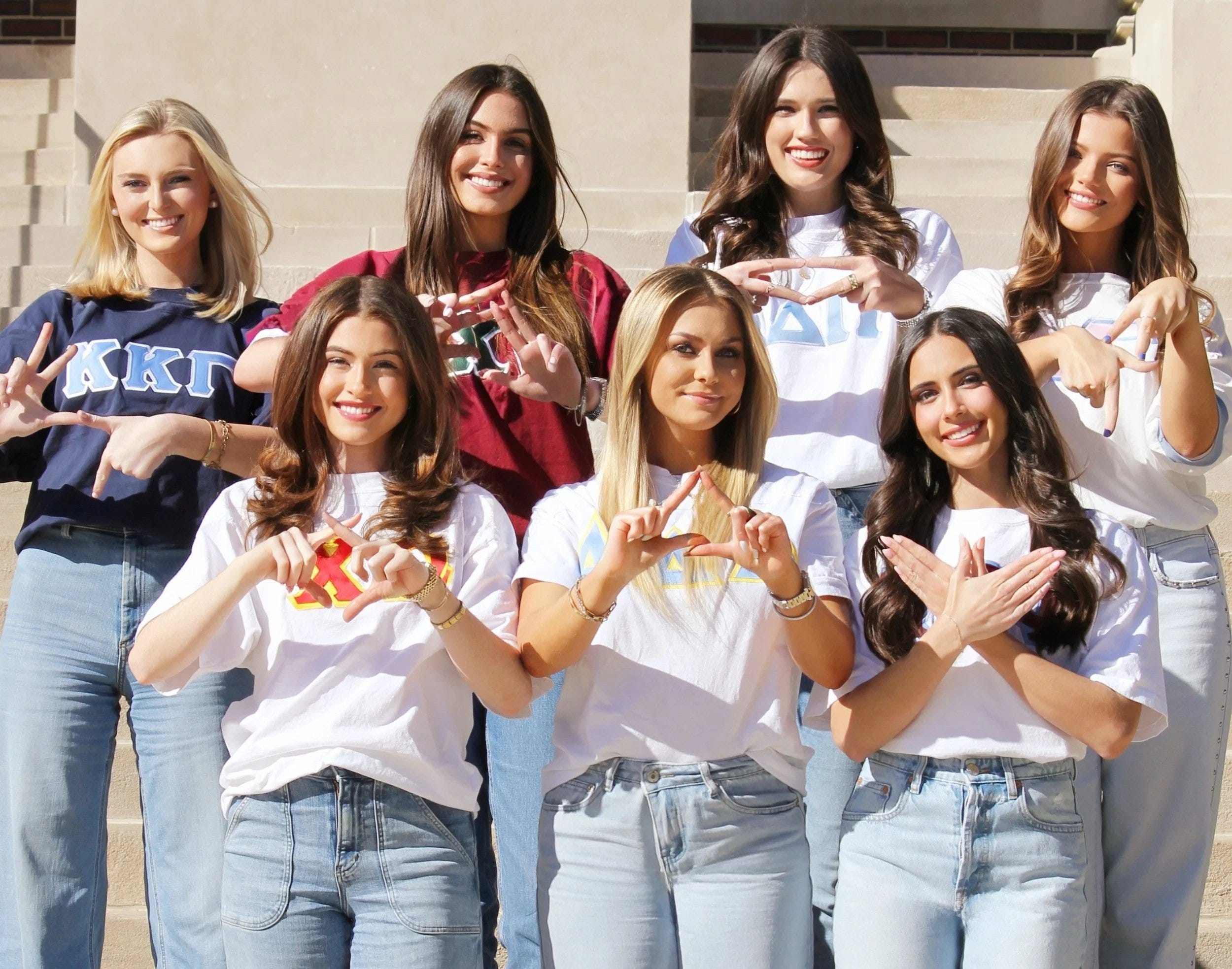
    My guest on the show today is Willard Spiegelman, emeritus professor of English at Southern Methodist University and the former longtime editor of the Southwest Review. He is the author of many books on English and American poetry as well as a number of collections of personal essays, including his most recent, My (Lucky) Stars, which he calls a “memoir of taste.” In it, he writes about the mostly middle brow artists who shaped his sensibility, popular entertainers like Gilbert & Sullivan, cabaret singer Mabel Mercer, and the great Patsy Cline. Someone once said of my show that I basically just interview Jews and Gays, and so it’s probably worth noting that from that perspective Willard is what we in the business call a two-fer, both gay and Jewish. We talk about both of those aspects of his life – growing up gay in a predominantly Jewish suburb of Philadelphia, the relative ease, looking back, of his coming out, and so on – but in some ways I think this episode fits better into two other Eminent Americans thematic lineages. One is Texas, where Willard lived for many decades as a prof at SMU and for which he developed a multi-layered appreciation. We talk about the institutions of high culture in the Dallas Fort Worth metroplex, which have been the beneficiaries of generations of oil money. There are the hard charging women of the SMU sororities, to whom Willard gave sage counsel, and their complex hierarchies, rituals, and manners, which deserve more artistic representation than they’ve received. And there is two-step dancing, which Willard fell in love with. The other genealogy into which I’d slot this episode is my series of episodes that spend time valuing the best of popular and middlebrow culture for the ways in which it can unite and even civilize our fractious, pluralistic nation. I’m thinking of my fashion episodes, on J. Crew and Ivy Style and men’s fashion; my conversation with Sherman Alexie on our shared appreciation for genre television; talking to Matt Dinniman on his Dungeon Crawler Carl series; and perhaps most gloriously my special two part episode on that great goddess of middlebrow culture, NPR’s Terry Gross. For Willard, and for me too, there is something genuinely significant, and interesting, in the ways we connect with our fellow Americans via these sometimes quite brilliant and often quite frivolous cultural products. It could be Legally Blonde, to pick one of Willard’s favorite movies, or the comedies of Judd Apatow, which he and I both dig. Or Saturday Night Live, which he liked back in the day, and which I’m slightly embarrassed to admit I still kind of like. His new collection is a love letter to some older iterations of this kind of work, and also, as the memoir in taste framing would suggest, an indirect reflection on himself and what he half-jokingly, but I think also half-seriously, refers to as his deep superficiality. Eminent Americans is a collaboration with the John C. Danforth Center on Religion and Politics, and a brother by another mother to its publication, Arc magazine. Read and listen to more from Arc at arcmag.org. Peace This is a public episode. If you'd like to discuss this with other subscribers or get access to bonus episodes, visit danieloppenheimer.substack.com/subscribe
  • October 16 · 1 hr 35 min

    Digging Ditches in New Mexico

    My guest on the show today is writer, activist and retired journalism professor Robert Jensen who has a new book out, This I Don’t Believe: A Fulfilling Life without Meaning. In it, Bob uses his own encounters with different sources of meaning – God, nature, even the idea that we’re free to choose anything at all, rather than just being the mechanistic product of a bunch of subatomic particles interacting with each other in a sequence that gives rise to the illusion of human agency – to make the case for a more down-to-earth, small-m idea of meaning. He also talks, in ways I found quite moving, about his own struggles to patch together an adult life of purpose after a childhood so abusive and chaotic that he genuinely doesn’t remember a lot of it. Bob spent most of his career as a journalism professor at UT Austin and as a writer of short, plainspoken books advocating for his brand of left-wing politics, including The Heart of Whiteness: Confronting Race, Racism and White Privilege; All My Bones Shake: Seeking a Progressive Path to the Prophetic Voice; and without question the best titled of his many books: Getting Off: Pornography and the End of Masculinity. I first heard of Bob, I’m pretty sure, when a lot of people first heard of him, which was when he published an op-ed three days after 9/11 that drew a deliberate moral equivalence between the Al-Qaeda attacks on us and the history of U.S. aggression in places like Vietnam, Cambodia, East Timor, and Chile. He wasn’t defending Al Qaeda; his point was that we kind of sucked too, and, more importantly, we almost certainly were about to suck quite hard again. Here he is, for instance, talking about the fear that took hold of him after the attacks, which wasn’t the fear that most people had, of more attacks on what we began to almost immediately call “the homeland,” but rather a fear of how we were going to respond militarily. He writes: I almost immediately had to face the question: “When will the United States, without regard for civilian casualties, retaliate?” I wish the question were, “Will the United States retaliate?” But if history is a guide, it is a question only of when and where. So, the question is which civilians will be unlucky enough to be in the way of the U.S. bombs and missiles that might be unleashed. Those are a few sentences that have worn quite well in the now 25 years since he first wrote them. There are others in the piece, as we discuss, that didn’t wear so well. But in both cases, the well- and ill-considered alike, they’re a testament to part of what I’ve always appreciated about Bob, whom I met some years later, first via email and then eventually in person when I moved to Austin, where he taught at UT. He calls ‘em like he sees ‘em. He just me much less fear than most of the rest of us experience, certainly including myself, when what we see doesn’t align with the perspectives and sentiments of the people around us. Bob also, and you’ll get a rich sense of this from our conversation, is unusually open to evidence that he’s been wrong. He doesn’t seem to fear that either, reflecting on his mistakes and trying to do better, though as he writes about in his new memoir, his conceptual openness to change and growth has rarely meant that the actual process has been smooth or fast. A lot of therapy. A lot of failure and pain. A lot of help from other people who saw more in him than he often saw in himself. I’m saying all this, about him, because when I try to summarize what stuff we talked about in the conversation, I struggle. We talk about his new book. We talk about his 9/11 essay, his history of left-wing activism, his retreat from that activism. We talk about his pretty nightmarish childhood, and the ways in which he’s tried to repair the damage it’s done. We talk about the wisdom of Ray Wiley Hubbard. We talk about digging ditches in rural New Mexico, where he now lives. And various other things. But really we talk about what it what it means to be alive, man, and how hard and beautiful that can be. I think it’s a special conversation. I hope you agree. Eminent Americans is produced in collaboration with the John C. Danforth Center on Religion and Politics at Washington University in St. Louis, and with its offshoot publication, Arc. To learn more about what’s going on at Arc, visit the magazine at arcmag.org. Peace. Show notes: 0:00 — Cold open: Dan introduces Robert Jensen and his new semi-memoir, *This I Don’t Believe: A Fulfilling Life Without Meaning*, referencing Jensen’s controversial post-9/11 op-ed. 2:02 — Dan reads from Jensen’s 9/11 op-ed, written three days after the attacks, drawing a moral equivalence between Al-Qaeda’s violence and U.S. militarism abroad. 4:46 — Dan on Jensen as a person: someone unusually willing to say what he believes and remarkably open to evidence that he’s been wrong, even when the process of growth is painful. 5:00 — Overview of the conversation: the new book, the 9/11 essay, left-wing activism, a traumatic childhood, therapy, Ray Wylie Hubbard, digging ditches in rural New Mexico, and what it means to be alive. 5:00 — Show credits: produced in collaboration with the John C. Danforth Center on Religion and Politics at Washington University in St. Louis and its publication, *Arc*. 5:16 — Interview begins. Jensen on never once making the Hook ‘em Horns sign in 26 years at UT Austin, and his biggest scrape with the university administration after 9/11. 6:26 — Jensen on his emeritus title: “a Latin word that means, ‘Thank God that guy finally retired.’” 6:32 — Jensen reflects warmly on his teaching career at UT Austin (1992–2018), his love of teaching first-year students, and academic freedom at the university. 7:52 — Why Jensen preferred teaching 18-year-olds over graduate students: their rawness, curiosity, and the exciting mix of students at UT Austin. 9:32 — Dan proposes Jensen as the ideal professor for first-years — combining strong conviction with a belief that students should argue with him and find their own convictions. 10:41 — Jensen on his teaching philosophy: “Reasonable people can disagree.” Making his own thinking process visible to students, including his confusion. 12:12 — Jensen on a colleague who bragged that his students didn’t know how he voted — and why Jensen disagreed with that approach. 13:04 — Dan on a renewed appreciation for the “view from nowhere” in journalism after the last decade of media chaos; Jensen agrees and discusses monitoring right-wing media in retirement. 15:03 — Jensen on rethinking left-wing critiques: “you can be wrong, your side can be wrong,” and the book as a plea for humility. 16:09 — Jensen on the 9/11 fallout: the fear of the rush to war, publishing the op-ed, the wave of hate mail, and being condemned by name by UT Austin’s president. 20:10 — Jensen on the specific content of the op-ed: pointing out U.S. war crimes in Vietnam and beyond, and how overseas audiences found the analysis routine while Americans were outraged. 21:50 — Dan pivots to the book and Jensen’s childhood. Dan says Jensen has a “questing quality” and “traumatic childhood energy” that he’s spent years in therapy working on. 23:18 — Jensen on David Hume — “Reason is and always will be a slave to the passions” — and his abusive, alcoholic, dysfunctional childhood, dissociation, and struggling to construct an origin story. 25:18 — The four things Jensen doesn’t believe in: God, a spiritual plane, nature mysticism, and free will. Writing the book for himself rather than an audience. 26:44 — Jensen on modeling that men can speak openly about being victims of abuse and survive it. 26:50 — Dan on Jensen’s “ministerial vibe” — a gentleness and attraction to the numinous despite his non-belief. Asks whether Jensen feels an attraction to transcendent experiences. 28:46 — Jensen: “From the time I can remember, I never understood what people were talking about when they talked about God or spirituality.” Finding fulfillment in intellectual work and honest labor instead. 32:20 — Dan asks whether Jensen has understood himself through “child of an alcoholic” narratives. Jensen resists being boxed in but acknowledges the patterns. 34:09 — Dan and Jensen on dissociation, intellectualizing as a defense mechanism, and how that skill helped Jensen as a teacher but hindered him in 17 years of therapy. 37:28 — Jensen on gratitude, luck, and Ray Wylie Hubbard’s line: “Any day where my gratitude exceeds my expectations is a good day.” 40:08 — Dan and Jensen on privilege: Jensen first wrote about white privilege in 1998, but rarely uses the term now because it’s become corrosive. Critique of DEI practices on the left. 44:03 — Jensen on stepping back from left political organizing: “We embrace our irrelevance.” 46:02 — Jensen on navigating feminist spaces as a man — his early fear of speaking, realizing other men need male models, and learning that women wanted him to speak, not hide. 49:06 — Dan asks about masculinity today. Jensen on the need to articulate a positive concept of manhood connected to decency, not patriarchy. 53:29 — Arc Magazine promo: Dan highlights Vineet Chander’s essay “The Man Beside Me,” about working alongside Anwar al-Awlaki as a fellow chaplain post-9/11. 56:28 — Dan asks why Jensen needed to write this book now. Jensen: his 13th book, but the first not aimed at persuading — written for his own mental health and self-reflection. 58:42 — Jensen on being “an incredibly unusual, ordinary person,” communal ditch cleaning in the acequia system of northern New Mexico, and proving himself to his neighbors. 1:01:50 — Dan on Orwell, Harvey Milk, and the power of being both ordinary and gifted — seeing the world as normal people do. 1:04:12 — Jensen reveals his sexuality is more complicated than “heterosexual” — a period of identifying as gay, and not knowing his orientation due to childhood trauma. 1:05:32 — Jensen critiques the term “heteronormative” and academic faddishness, including post-modernist language that alienates ordinary people. 1:06:16 — Dan and Jensen on the fraught intersection of childhood trauma, sexuality, and public discourse — from the priest abuse scandal to bathhouse culture and the AIDS crisis. 1:10:30 — Dan reflects on Jensen’s 9/11 op-ed: the tension between political analysis and communal grieving. Jensen on Ward Churchill’s “little Eichmanns” comment as cruel and strategically stupid. 1:14:34 — Dan on Martin Luther King Jr. as a political genius who could reorient people toward radical politics without violating their sense of community. Jensen agrees the left failed at this after 9/11. 1:19:06 — Dan and Jensen on *The Hidden Injuries of Class*, meaningful vs. “bullshit jobs,” and how the devaluation of manual labor feeds political resentment. 1:21:07 — Jensen on telling neighbors he’s “a teacher” rather than “a university professor,” valuing dignified work, and his pride in manual labor and warehouse work as a young man. 1:25:04 — Dan on making kids work as a path to flourishing — even bourgeois parents miss this within their own success paradigm. 1:26:04 — Jensen on his friend and mentor Jim Koplin: meeting at the University of Minnesota, Koplin’s honest assessment of Jensen’s limitations, and the book *Plain Radical*. 1:29:50 — Koplin as research psychologist, founding faculty at Hampshire College, radical activist since the 1960s, papier-mâché genius, and community member. Jensen: “I don’t know who I would be if I hadn’t met Jim Koplin.” 1:31:19 — Dan on the book’s subtitle — *A Fulfilling Life Without Meaning* — and Jensen clarifying that meaning comes from human connections and the living world, not transcendence. Jensen: “I proclaim the beauty of the ordinary.” 1:32:21 — Closing remarks. Jensen calls it the most enjoyable interview he’s done in recent memory and praises Dan’s interviewing style. 1:33:57 — Outro and credits. Produced by David Sugarman; in collaboration with the Danforth Center and *Arc* magazine. Contact: djopps@gmail.com. This is a public episode. If you'd like to discuss this with other subscribers or get access to bonus episodes, visit danieloppenheimer.substack.com/subscribe

  • October 12 · 4 min

    For the Love of the Game

    This is a free preview of a paid episode. To hear more, visit danieloppenheimer.substack.com This is the first in my new run of paid episodes, available in full only to paid subscribers. Instead of making every third or fourth of my standard episodes paid, which is what I was doing for a while, I’m going to instead offer one or two additional episodes a month for paid subscribers that have a different vibe. I’m not going to do much editing on th…

  • October 3 · 1 hr 45 min

    The People’s (Podcast) Microphone

    My guest on the show today is Jeffrey Lawrence, professor of English at Rutgers University and the author of an excellent essay in the most recent issue of The Point, “We Were the 99 Percent.” It’s an unusually thoughtful reflection on the legacy of Occupy Wall Street, which Jeff was a participant in, and observer of, from the very beginning. I asked Jeff to come on the show because I enjoyed the essay, which genuinely altered my perspective on a movement that I thought, in retrospect inaccurately, I more or less understood. Also, though, because he was someone who’d been popping up in my Substack feed recently in a way that I’d noticed, and it was striking to me that he’d gone in the space of a month or two from someone I’d never heard of to someone I now knew from both Substack and The Point, which are two of the key ingredients in my personal intellectual diet. There’s nothing magical about this. Big world, small tax bracket, as someone once said to me. Jeff I overlap in terms of background and interests in all sorts of ways. But I like to pay attention to these signals anyway. They often end up meaning something. One of the thing that turns out to be interesting about Jeff’s case, as you’ll see in the conversation, is that for all that we do share, intellectually, he’s also coming from a substantively different place, in terms of his scholarship and political experiences, than many of the rest of us, and it’s that difference – his grounding in both Spanish and English language literature, and his personal connections to activists from Latin America and Europe – that has a lot to do with what makes his work surprising. Hope you enjoy this conversation as much as I did. And keep an eye on Jeff. He’s a comer. Also keep an eye on my the new logo for the show, designed by Arc magazine intern Mina Fujii. It is, as the kids say 🔥. It jazzes up the whole joint. I feel at least 46.6% cooler than I did last week. Eminent Americans is produced in collaboration with the John C. Danforth Center on Religion and Politics at Washington University in St. Louis and distributed through its publication, Arc. You can read more articles and listen to more podcasts at their website. Peace. Show notes for this ep: [0:00] Intro: Host Dan Oppenheimer welcomes listeners and introduces Jeffrey Lawrence, Professor of English and Director of Creative Writing at Rutgers University, author of the essay “We Were the 99 Percent” in *The Point* magazine. [0:33] Dan explains why he invited Jeff on the show — the essay genuinely altered his perspective on Occupy Wall Street, and Jeff has been appearing across Substack and *The Point* as a rising intellectual voice. [2:33] Dan notes Jeff’s unique background in both Spanish and English literature and his connections to Latin American and European activists, which shaped his path to Occupy. [4:00] The “people’s mic” at Occupy — Jeff explains how it worked, its visceral power, and its limitations as a kind of physical Twitter. [6:11] Dan admits the essay forced him to reconsider his “easy, stereotypical, condescending” views on Occupy and raises the broader question of whether there’s always something cringe about movements. [7:30] Jeff’s origin story at Occupy — he was in his late 20s, a grad student in comparative literature in New York, connected to Spanish organizers involved in the Indignados (15-M) movement. [9:05] Jeff’s frustration with how left media outlets (Jacobin, N+1) claimed the Occupy narrative after late September 2011, missing the movement’s international prehistory. [10:25] The Spanish Indignados movement as a key influence — 40% of people at Occupy planning meetings in Tompkins Square Park were non-Americans, many from Spain, bringing conviction that a similar movement could work in the US. [12:30] Dan draws a parallel to Black Lives Matter’s internal narrative battles (DeRay Mckesson vs. the hashtag’s founders) and asks what’s at stake in who controls the story. [16:06] Jeff critiques the “Jacobin narrative” and Musa al-Gharbi’s *We Have Never Been Woke* for framing Occupy as purely a project of symbolic elites — and concedes he himself is one. [23:06] Dan argues the professional managerial class critique is potent but not a catch-all delegitimization of movements, citing the civil rights movement and gay rights as movements led by educated middle-class people who did profound good. [24:12] Jeff tells his Occupy story: a heterogeneous, international group suspicious of existing left organizations, experimenting with whether to issue demands or build a constituency. Early debates included a Tobin tax on financial transactions. [27:15] The “We Are the 99%” slogan’s populist power — Jeff traces its origins to his Spanish friends Begonia and Luis, Chris from Food Not Bombs, and David Graeber assembling it together. [29:30] The core insight of early Occupy: the left-right partisan axis wasn’t capturing the fundamental problem of massive wealth redistribution toward elites — a framing that remains powerful. [32:00] The encampment at Zuccotti Park lasted about two months (September 17 – late November 2011). Jeff identifies two competing currents: the autonomous/horizontal current and the institutional left current. [33:30] The institutional narrative won: Occupy as a rebirth of the left, to be articulated into institutional political power. Jeff argues this proved self-defeating — reducing everything to “is this left or not?” [36:00] Tracing the autonomous current forward: Occupy Sandy (mutual aid after Hurricane Sandy in 2012), Strike Debt (buying up student debt, later pushing Biden on debt cancellation), the 16 Beaver reading group, connections to BLM, Standing Rock, and Gaza. [39:00] The institutional side: N+1’s “Left Populism” editorial, Jacobin, Astra Taylor’s involvement, the Occupy Gazette, Bernie’s campaign, the DSA, and the Squad. [42:00] Dan and Jeff dig into the theory of left populism via Laclau and Mouffe — the “chain of equivalences” approach linking disparate group demands into a coalition, versus older economic populism. [46:00] Mid-roll break: Dan highlights new writing at *Arc* Magazine — essays by Amelia Morris on motherhood, Lydia Dugdale on illiteracy, and Travis Alexander on Zionism and queerness. [47:30] Two definitions of populism: (1) economic populism rooted in broad shared material interests (”We are the 99%”), and (2) Laclau/Mouffe’s “chain of equivalents” populism linking the distinct demands of different identity groups. Jeff argues the left conflated the two. [50:00] Latin American populist governments (Chávez in Venezuela, Morales in Bolivia, the Kirchners in Argentina) as the laboratory for left populism. Jeff argues this paradigm is now exhausted — right-wing governments have won the last several elections across the region. [55:00] Dan pushes back: Wasn’t Latin American populism largely about petrodollars and payoffs rather than genuine chain-of-equivalences politics? Jeff partially agrees but argues there were real redistributive achievements for a period. [1:08:00] Jeff’s key argument: When people like Matt Karp or Benjamin Kunkel say “we need populism,” they’re often confusing two very different things. The left needs fine-grained theoretical clarity about which populism it means. [1:12:00] Dan asks: What’s the difference between chain-of-equivalences populism and old-fashioned Democratic coalition politics? Jeff’s answer: populism requires an antagonism — a defined enemy — which Democratic coalition politics doesn’t. [1:16:00] The problem of subdivided antagonisms: instead of one universal “people vs. elites,” the chain-of-equivalences approach slices the antagonist into multiple enemies (whites, straights, cis people, Israel), creating more political opposition than it can overcome. [1:19:00] Jeff on the abolitionist movement’s refusal to answer basic questions (e.g., “What do you do when someone commits a murder?”) — he sees this as fundamentally unserious and unwilling to win politically. [1:23:00] Mamdani as a potential new model: recognizing that anti-Trump politics is played out, focusing on affordability with concrete examples, maintaining a consistent approach on Israel/Palestine, and not antagonizing for the sake of scoring points with liberals. [1:28:00] Jeff’s own vision: he still believes in unions, collective bargaining, and redistribution, but acknowledges the left failed spectacularly on racial justice and messaging. He calls for more experimentation and creative solutions rather than ideological rigidity. [1:29:00] The messaging problem: cancel culture and the left’s procedural dysfunction weren’t successful in preventing Trump. Jeff argues the left needs to rethink both messaging and substance. [1:35:00] Dan’s closing reflections: he hopes that 20–40 years from now, the energies traceable to Occupy will have borne genuinely positive fruit, even if many offshoots were misguided. He praises Jeff’s essay and encourages listeners to follow him on Substack. [1:44:30] Credits: *Eminent Americans* is produced in collaboration with the John C. Danforth Center on Religion and Politics at Washington University in St. Louis, distributed through *Arc* Magazine. Edited by David Sugarman. This is a public episode. If you'd like to discuss this with other subscribers or get access to bonus episodes, visit danieloppenheimer.substack.com/subscribe
  • September 25 · 1 hr 50 min

    The Gender Identity Episode

    My guest on the show today is Rogers Brubaker, professor of sociology at UCLA and author of many books, the most recent of which, Gender Identity: The Career of a Category, is our subject for discussion on this episode. If you want a really good kind of primer on this book before you listen to this episode, I recommend you pause and go read the review essay of it, by Shreeharsh Kelkar, that I published on my Substack recently. Both the book and Shreeharsh’s review of it have the double virtue of taking on a really fraught topic, one that very easily tends to dysregulate people, with both analytical dispassion and also genuine consideration and compassion for the people for whom these questions of gender identity, and gender identity at variance with biological sex, are not primarily or exclusively analytical ones. I wanted that kind of access point to talking about what I would globally call “trans issues” because it's just a tough topic to address without getting sucked into the culture war binaries. As in so many things, and you will deduce this from listening to the episode, I find myself in neither camp. I'm absolutely a gung-ho defender of equal rights for trans people. I'm absolutely and consistently grossed out by the ways in which the right treats with contempt the real lives of real people for the sake of their political gain and sometimes it seems just for the sake of the kind of pleasures of sadism. I also think the “left” side of this debate (I put it in quotes because in other countries it doesn’t break down as a clean left-right issue) has been profoundly illiberal in its efforts to police the discourse and to relegate to out of bounds all sorts of thorny policy questions that really do pit kind of various rights and concerns that are legitimate against each other in ways that simply can't be reduced to right bad, left good. This conversation with Rogers is really kind of prior to most of that, however. It's about what we're even talking about when we talk about this category of gender identity, which as I think Rogers demonstrates pretty persuasively wasn't until fairly recently even a way of understanding the world. Which is to say it's a social construction, which is not to say that that means that it's illegitimate, that it's not a real or authentic social construction any more than it's real or authentic for us to talk about all the other very real ways that we construct our senses of self. Even the modern idea of having a self, as Rogers and I discuss, is a constructions. At one point, Rogers chastises me a bit in our conversation when I use the term “social contagion” to get at an aspect of this idea of the social constitution of gender identity. And I take the chastisement, to a point. It's implicitly pejorative — suggestive of kind of disease, corruption. It also, inaccurately, suggests something out of the ordinary, a foreign invasion, when the much more banal truth is that how we imagine and construct ourselves is always this immensely complex negotiation between our biology, the things that are coded into our DNA, and the historically contingent ways in which our specific society at this moment in time carves that nature at its joints. Agreeing on that truth, which I think we really should, is not the end of the conversation about how we should live together with each other and treat each other with dignity and respect and balance all the competing concerns and values when it comes to policies around gender identity. It really is the beginning of that conversation, and that's where Roger's book to me is especially valuable, and that's why I'd like to believe this conversation is valuable, too. I hope you agree. Eminent Americans is produced in collaboration with the John C. Danforth Center on Religion and Politics at Washington University in St. Louis and distributed through its publication, Arc. You can read more articles and listen to more podcasts at their website. Peace. #oot This is a public episode. If you'd like to discuss this with other subscribers or get access to bonus episodes, visit danieloppenheimer.substack.com/subscribe
  • September 15 · 1 hr 48 min

    On Off Christopher Street

    My guests on the show today are David Sessions and Blake Smith, who are friends of the pod as well as co-hosts of the Off Christopher Street Podcast, which takes its name from the pioneering gay magazine Christopher Street, which aspired to be something like the gay New Yorker during it 20 year run from the mid 1970s to the mid 1990s. This episode is also being released via their show’s feed, and in that spirit (and because David does show notes so much better than I do), here’s that feed’s summary of the conversation: In this crossover episode with Eminent Americans, we take a step back from our regular programming to talk to our friend Dan Oppenheimer about the state of gay male intellectual life. Does it still exist? If so, where is it located? We talk about why the editors of Christopher Street thought it was important to use new media strategies to cultivate a distinctive gay male identity and a shared, if not homogenous, literary culture around it. Are today’s gay writers part of anything like a common identity or intellectual world? We talk about Gay Twitter, non-gay Substack, the “house gays” at straight magazines, the gay podcasts and the gay slop. We name all the names. Not because we think we have all the answers, but because we hope, in asking the questions, to provoke you to interest in the gay writing and thought we now have to inherit. Also discussed in this episode: * The political parallels between our political moment and the 1970s * How the editors of Christopher Street took inspiration from feminism but thought gay male culture should be separate from women * The “missing middle” between academic gay studies and the playful performativity of Gay Twitter * Why it’s important that gay men write for a gay audience, not just for whoever will read them in straight magazines * Why “not like other gays” writers like Dennis Cooper and Bruce Benderson are still part of gay culture * Why Bros is the best gay movie ever made David and Blake on Eminent Americans * David: “The David Sessions Session” (July 2026) * Blake: “Homosexual, Gay, Queer (and a Soupçon of Porn)” (January 2026) * David: “Left Behind” (May 2025) * Blake: “The Fall of the White American Gay” (May 2023) Sources * Michael Denneny, “Why Gay Men Need a Literary Magazine,” Christopher Street Reader (1983). * “A Conversation with Michel Foucault,” Christopher Street, May 1982. * Ben Nichols, Same Old: Queer Theory, Literature, and the Politics of Sameness (2020). * Ben Miller and Huw Lemmey, Bad Gays: A Homosexual History (2023). * Michael Denneny, “A Mouthful of Air: The Case of Larry Kramer,” On Christopher Street: Life, Sex, and Death After Stonewall (2023). * Paul McAdory, “Gay Sincerity is Scary,” Gawker, September 9, 2021. * Tom Crewe, “My Hands in My Face,” London Review of Books, June 26, 2025. * James Kirchik, “Transgendering Stonewall,” Tablet, July 11, 2019. * James Kirchik, “From Queer to Gay to Queer,” Liberties, Spring 2023. * David Sessions, “The Year of the Gay Sex Zeitgeist,” December 22, 2025. Eminent Americans is produced in collaboration with the John C. Danforth Center on Religion and Politics at Washington University in St. Louis, and distributed through its publication, Arc. This is a public episode. If you'd like to discuss this with other subscribers or get access to bonus episodes, visit danieloppenheimer.substack.com/subscribe
  • September 11 · 1 hr 33 min

    Athens, Jerusalem, Babel, Sodom

    My guest on the show today is writer Ann Manov, the artist formerly known as personality girl and the author of a recent essay in Harper’s Magazine, “Republican Machines: Can the GOP save the humanities?” In it, Manov goes back to her alma mater, University of Florida, to report on the Hamilton School for Classical and Civic Education, perhaps the best known of the growing number of schools and centers around the country, typically at state universities in red states, dedicated to some mix of the great books and what has come to be called “civic thought.” On their website, the Hamilton school says that it teaches “the ideas and habits of thought that founded our country and sustain our free society.” The question Manov set out to answer, in her reporting, was basically whether these civic centers were, as they billed themselves, the saviors of liberal arts education in the US, or were they what their liberal and left-wing critics warned they were: indoctrination centers to incubate young right wing culture warriors and/or “Trojan horses designed to ravage humanities departments across the nation.” Or, and this is what Manov set out to determine, something else entirely? She writes: It struck me that, as an undergraduate at UF, I might have preferred to take Hamilton’s Great Books of the Medieval World over the English department’s Survey of American Literature, whose syllabus from this past spring included Avatar: The Last Airbender, Sailor Moon, and A Series of Unfortunate Events: The Bad Beginning. It also struck me as sufficiently unusual for a member of the GOP to go on national news, as Sasse had, to say that “the answer is not to hate on the liberal arts. The answer is to recover the liberal arts.” I decided I would go back to Gainesville and investigate for myself. As I get into some in the conversation, this is of more than just academic interest to me. I work at a college of liberal arts at a flagship state university in a red state that has not just a school of civic leadership but a separate institute in this philosophical space and a separate center in this space and a new great books-focused core curriculum that all students will be required to fulfill when it’s launched in a year or two. Also, of course, I just care about these issues, because I’m a humanities guy down to my DNA. So many of the people in my life are humanities folks as well. Some of them are in one camp or another, and many are just worried about the state of the humanities, the liberal arts, in America, which we all seem to agree are under threat even if we differ from whence the threat come, whether it’s the left, the right, neoliberalism, or big bad AI. So the stakes is high, as the great De La Soul once said. Eminent Americans is produced in collaboration with the John C. Danforth Center on Religion and Politics at Washington University in St. Louis, and distributed through its publication, Arc. Peace. Here are timestamped show notes for the episode: - 0:00 — Intro: guest Ann Manov and her Harper’s essay “Republican Machines: Can the GOP Save the Humanities?” - 0:32 — Overview of the Hamilton School at the University of Florida and the rise of “civic thought” centers - 5:58 — Manov joins the conversation - 7:42 — How Manov got the idea for the piece and her UF background - 10:58 — What exactly are these “civic centers”? Legislative origins (e.g., Florida’s SB-266) - 14:38 — Role of money and donors (Ken Griffin, Tikvah) and the relative weakness of great-books enrollment vs. PPEL - 16:58 — Political and financial motives behind funding: Zionism, anti-”woke” messaging, donor pressure - 22:38 — Why centers become “schools”: hiring power and bypassing traditional departments - 24:06 — Politicization of academic hiring lines and curriculum specialization - 30:32 — Faculty quality at these schools; political diversity questions - 32:40 — Laptops, ChatGPT, and declining classroom rigor - 38:33 — Comparing reading loads: poli sci vs. Hamilton School’s PPEL intro course - 42:40 — Jennifer Frey’s ouster from University of Tulsa’s Honors College - 46:42 — New College of Florida case study: political control without academic rigor - 51:02 — Why elite schools could enforce rigor but mostly don’t - 56:31 — Institutional inertia, grading pressures, and fear of enrollment loss - 1:06:01 — Critique of “teaching critical thinking, not content” pedagogy - 1:12:22 — Tension between elite and mass education models; philosophy as a stable-enrollment outlier - 1:22:45 — Comparing University of Austin and Hamilton School trajectories - 1:27:29 — What’s the actual case for a shared liberal arts education? - 1:30:03 — Closing thoughts on specialization, declining reading loads, and scaling Tulsa’s model - 1:32:11 — Outro and credits Want me to trim this down to a shorter version, or format it differently (e.g., bullet list without links) for pasting into a specific show notes platform? This is a public episode. If you'd like to discuss this with other subscribers or get access to bonus episodes, visit danieloppenheimer.substack.com/subscribe
  • September 4 · 1 hr 47 min

    Girl, Disrupted

    My guest on the show today is Emmett Rensin, the author of 2024’s The Complications: On Going Insane in America, a really good collection of essays about various aspects of mental illness, how we construct and treat it as a society, and Emmett’s own fairly terrifying history of dealing with it. I asked Emmett to come on to the show after reading his recent essay in The Lamp Magazine, “Over the Borderline,” which is a profile of the soft anti-psychiatry activist and writer Laura Delano, whose memoir of extricating herself from what she sees as the baleful clutches of the mental health and psychiatric establishment has been a bit of a phenomenon. It’s a really extraordinary piece, which you should all go read. It’s about Delano’s story. It’s about the interesting ways in which she’s gentrifying anti-psychiatry for a new audience. It’s about Emmett’s own wrestling with mental illness, diagnosis, and psychopharmaceuticals. And it’s about how to contend with the fact that our psychiatric regime is both terribly inadequate to the challenge of all the mentally ill or struggling people it has to deal with—uncertain in its science, shameful in its legacy, destined to fail and in some cases do real damage to a fair number of people—and also, in the end, probably the least bad option we have on the table, run by a lot of people with good intentions, a lot of compassion, and a genuine desire to do the best they can with the tools we have for people who are suffering. I didn’t really know much about Emmett before reading this essay, but it’s one of those pieces where you read it and immediately know you’re dealing with a rare intellect and a talent. It’s that good. He’s on my list now of writers I have to keep track of. In addition to the show, one brief aside. Back in 2015, I attended a conference for communications and marketing people that was held on Coronoado Island in San Diego. The keynote speaker was Ezra Klein, who at the time was riding pretty high as the young philosopher king of Vox, which he and Matt Yglesias had founded just the year before. My memory of his talk, which may also just have been a conversation with one of the conference organizers, is pretty vague. But I have a very distinct memory of one thing he said to us, which was that one of the most fascinating things they’d learned from analyzing the metrics for the Vox site was that content about race and gender was massively more effective at driving traffic than almost any other topic. I don’t know if he said it approvingly, like it was evidence that people really did care about these important issues, and that it put the lie to the old status quo assumption that social justice content was boring to readers. He may have said it neutrally, like isn’t this interesting. Or maybe he said it with some alarm, like it was a combustible substance that had to be handled with extreme care. But the fact of it has stayed with me ever since, and I genuinely think it may have helped me in keeping some balance during the period of craziness that was about to ensue. I had this awareness that that kind of culture war content just drove people nuts, shot a bolt of electricity straight to the sub-rational regions of their brains, and was therefore suspicious of the consensus narratives that formed during that time. I was reminded me of Klein’s observations, recently, when I wrote a short essay for the Substack about him, and in particular about his partial mea culpa, on an episode of his podcast where he answered questions from listeners, for what he got wrong during that period, that he missed some of what was going on. Read my essay if you’re interested. It’s good. But what I wanted to observe is that my post about Klein and wokeness drove way more clicks, and new subscribers, than anything I’ve done in a long time, and it wasn’t because it was better, on its own terms, than other stuff I’ve written. It’s because it’s exactly what Klein pointed out, all those years ago. You get attention for delving into culture war topics. And the power of it isn’t just to sizzle readers’ brains but writers too, both because we’re vulnerable to the same provocations and then on top of that we’re vulnerable to how massively incentivized we are to write about these things out of self-interest, because it gets us readers, clicks, attention, money. As a writer and podcaster, I don’t want to overcorrect. I care about these topics too, and when I genuinely have something interesting to say, or an interesting person to interview, I don’t want to not do it out of some misguided sense of having to stand above or apart from out of principle or as an implicit demonstration of how cool I am. But it is a good reminder to be cautious. One of the unexpected blessings of having failed to make the cut as a self-sustaining writer, of having to build a career as a communications professional somewhat to the side of all that, is that I don’t have to play the game, heed the incentives, allow myself to be captured by the audience, in order to provide for myself and my family. I should avail myself of that privilege. Eminent Americans is produced in collaboration with the John C. Danforth Center on Religion and Politics at Washington University in St. Louis, and distributed through its publication, Arc. You can find all of Arc’s podcasts and much more at arcmag.org. Hope you enjoy this conversation with Emmett Rensin as much as I did. Peace. This is a public episode. If you'd like to discuss this with other subscribers or get access to bonus episodes, visit danieloppenheimer.substack.com/subscribe

  • August 21 · 1 hr 29 min

    Two Paths (?) for the American Jew

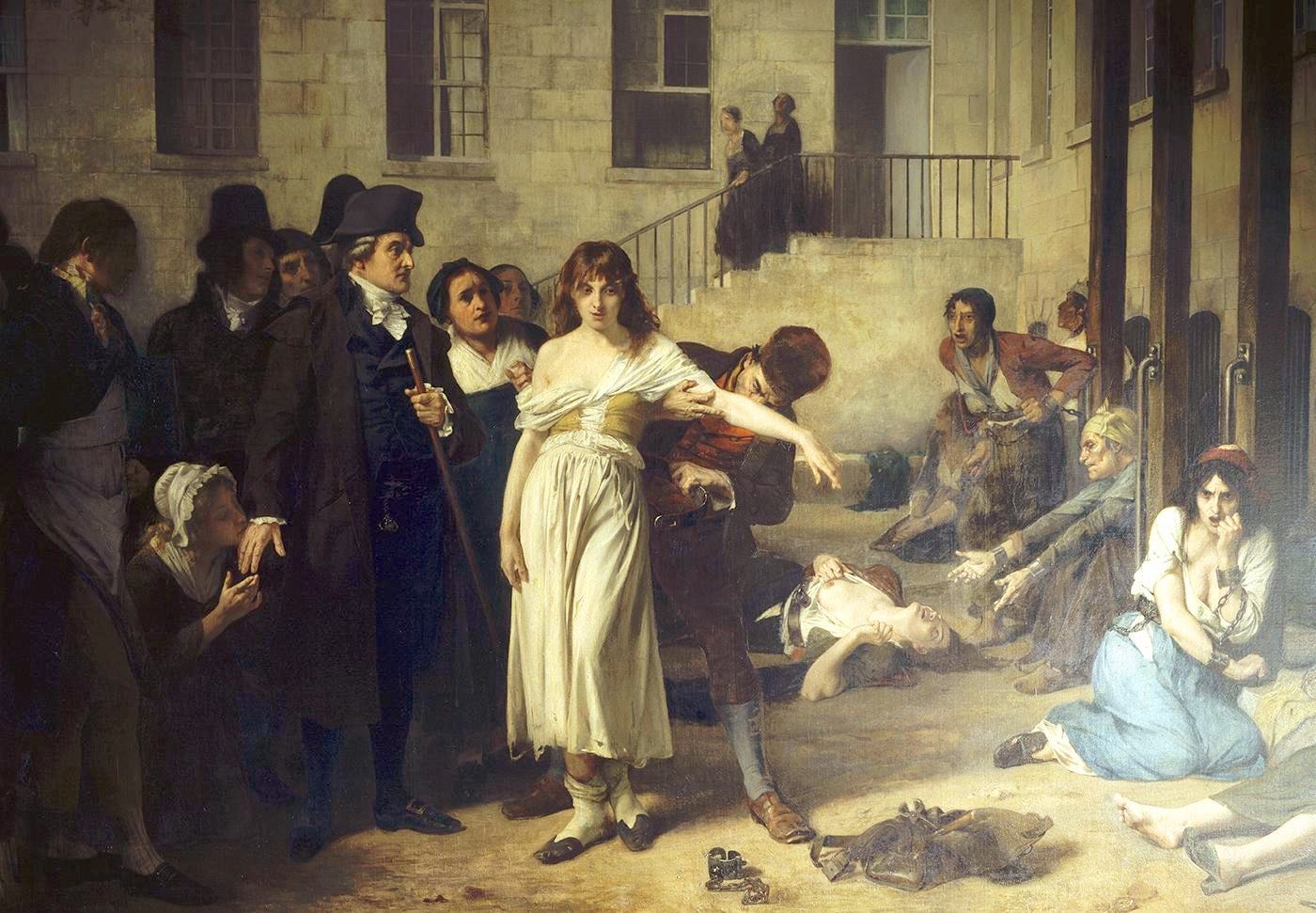
    My guest on the show today is David Sugarman, writer, Arc magazine editor, podcast producer of this very show, and agonizing, ambivalent American Jew. It's in this last capacity that he's joining me today to discuss his essay in the new issue of The Point magazine titled “Goodbye West Orange: Two Paths for the American Jew.” I want to note, before I say anything more about the essay or our conversation about it, that over the course of the three-plus years that I've been doing this Substack and podcast, there are two issue constellations that I have been especially gun-shy about confronting. One is the various issues surrounding trans people and policies in America, and the other, of course, is Israel-Palestine. As to why I've been so gun-shy, it should almost go without saying. There is no winning when you wade into these topics. They seem to devour people's capacity to contain nuance or complexity. They also seem to just devour people. You think you're just dipping in a toe, and then suddenly you're neck deep. Then you are underwater, completely defined by the issue, captured by the emotions around it, forever stigmatized or lionized as a hero or villain of the debate, and I have not wanted that fate for myself. I thought and continue to think that it is honorable to abstain from public comment when no one is waiting around breathlessly to hear your opinion, when you don't know that much, and when you don't feel like you have anything particularly interesting or useful to say. So that is why I've stayed away. As to why I'm breaking with that policy, both with this episode with David and with my upcoming episode with sociologist Rogers Brubaker, whose new book, Gender Identity: The Career of a Category, is very much in the space of the trans issue, I'm not wholly sure. It may be that I have a touch of a bad conscience for opting out to this point, notwithstanding my protestations of honorability around abstention. Or maybe, and this isn't mutually exclusive, I've just started to glimpse a narrow opening, where I didn’t before, for the having of complicated conversations about these immensely complicated topics. And maybe I have been waiting, without realizing I’m waiting, to run across texts that dignify my desire have a different kind of conversation, and then I found them. David's essay, "Goodbye West Orange: Two Paths for the American Jew," is about two Jews, Moshe and Tova. It's about them both as themselves in their human complexity and about them as avatars of rival sides of the increasingly stark divide in American Jewry between what we might call (and David and I get into our discomfort about just reducing it to this) the Zionists and the anti-Zionists. It's also about David's own lived experience, if you will, as a former member in good standing of both camps, and about his current disaffection with both. It's also about why language itself has become such a battlefield in this intra-American contest, and it's about what comes next for all of us. To give you a taste, here's David writing in the piece: Each side demanded, Moshe’s and Tova’s, that I disavow the other: the antisemitic left, the genocidal right; progressive secularism with all its dangerous bedfellows, Zionism in all forms. The logics were nearly identical: look at this community you belong to, this failed project you’ve supported; look at what it’s doing in the world and at the rot at its core: What would you need to see to finally understand its immorality? Moshe and his community monopolized the pull of peoplehood, and of historical trauma, and of a rising sense of insecurity that has only deepened, as Jews have been murdered in D.C., in Manchester, in Melbourne. Moshe, I’d assume, has both an explanation and solution: antisemitism; Zionism. Tova, too: empire; revolution. Such an explanation frames Israel’s collective punishment of the Palestinians in Gaza, or the state-sanctioned settler violence in the West Bank, or the war against Iran and Lebanon, as parts of a coherent colonial project that should be resisted by any means necessary—even the violent means deployed by Hezbollah and Hamas. …How can anti-authoritarians be so forgiving of some forms of authoritarianism? I wonder about this as I drive from Moshe’s house to Tova’s, a ground-level unit in a quiet complex surrounded by woods. It’s a matter of language, I conclude—that our words can’t really travel with us, even from one side of West Orange to another. To talk about Zionism or anti-Zionism with Moshe is entirely different from talking about Zionism or anti-Zionism with Tova, the words hollowed out by conflicting interpretations. Into that vacuum rush politicians, university professors, the media, the synagogue, the family, all working to impose their own definitions. When I say Zionist or anti-Zionist, I do so against the background of what those words have been made to mean, and by whom. Which is not to say that these coalitions don’t hold real appeal. To live in a community like Moshe’s, as I once did, is to know its deep cohesion and spiritual intensity. To have left it and joined a secular and progressive community like Tova’s is to know its powerful sense of justice. And to have been a part of either is to know their shortcomings. The dogmatism and conformity, the us/them thinking. It is also to know the blind spots: sometimes there really are colonizers in the synagogues; sometimes it really is a Hamas supporter on the front lawn. So that's just a taste. It's a really good piece. You should read it maybe before listening to the rest of this podcast, or if not then after. Eminent Americans is produced in collaboration with David's employer, the John C. Danforth Center on Religion and Politics at Washington University in St. Louis, and distributed through its publication, Arc, of which David is deputy editor. You can find all of Arc's podcasts and much more at arcmag.org. I hope you enjoy this conversation. I know I did. You can email me with thoughts, comments, hate, love at djopps@gmail.com. This is a public episode. If you'd like to discuss this with other subscribers or get access to bonus episodes, visit danieloppenheimer.substack.com/subscribe
  • August 14 · 1 hr 19 min

    Ballad of the Wild Ken

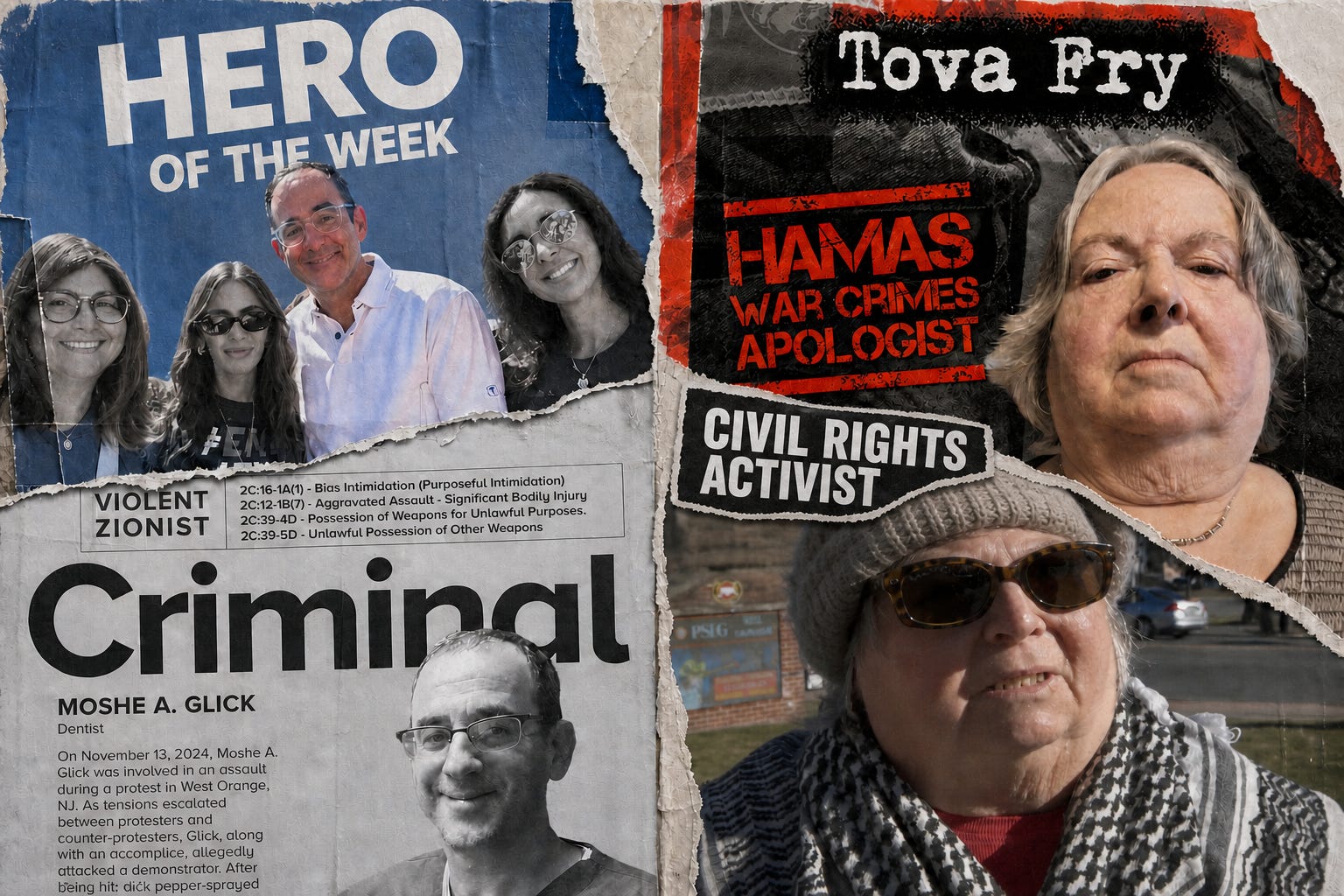
    I would rather that my spark should burn outin a brilliant blaze than it should be stifled by dry-rot.I would rather be a superb meteor, every atomof me in magnificent glow, than a sleepy and permanent planet.The function of man is to live, not to exist.I shall not waste my days trying to prolong them.I shall use my time.— Jack London My guest today is Ken Ilgunas, nature writer, adventurer, rewilding advocate, Substacker, podcaster, psychotherapy grad student, group fitness trainer, and shaggy lawn evangelist. Ken’s adult life, from graduating college until just a small number of years ago, was basically a series of solo adventures. He went out into the world, natural and not-so-natural, and walked it. And walked and walked, and boated, and hitchhiked, and drove and hopped trains and whatever other mode of transportation was available. He met wild people and wild animals. Along the way he wrote various books, including Walden on Wheels, about, among other things, living in a van down by the river while in grad school; Trespassing Across America, about an often quite illegal sojourn along the proposed Keystone XL pipeline route; This Land Is Our Land, about the lost but maybe someday to be regained American right to roam freely across lands both public and private; and A Walk Across Suburbia, which is about a three day walk across suburbia, in this case the specific suburb where he grew up. I met Ken a few years, when he was already ensconced in the more domesticated phase of his life– married, father of a very cute daughter, and homeowner in, and civic minded resident of, a small, tidy village just a few train stops out from Edinburgh, Scotland. Ken’s now working on a book proposal called The Future Wild, which is about both current efforts to re-wild the world in various ways, homespun and science fictional, and also what the natural world might look like if we give it a few hundred years to reassert itself, perhaps with some help along the way. In this episode we talk about the new project, his hitchhiking trip in his early 20s from Alaska to Buffalo, New York. We talk about American Prairie, the three-point-two million acre re-wilding project in north central Montana that almost nobody has heard of, which Ken hiked across last year with his nephew and which he describes as maybe the boldest conservation project in the world. We talk about de-extinction of species like wooly mammoths revival, direwolves, aurochs, all that Jurassic Park shit. We talk about whether depopulation is bad news or good news for the planet, whether environmentalism has been its own worst enemy, and whether a right to roam could ever come to America. And we spend some time on what it’s actually like to be a very hardcore introvert who has, over the course of his forties, had to negotiate between the part of himself that just wants to disappear into the wilderness for months at a time and the part that wants a family and a home and a steady job. What I most dig about Ken’s work, and Ken as a person, is that even as he’s utterly clear-eyed about environmental threats, current and future, he walks the world with a real wonder at what it still is and what it might still become. Eminent Americans is produced in collaboration with the John C. Danforth Center on Religion and Politics at Washington University in St. Louis and distributed through its publication, Arc Magazine. Enjoy this conversation with my comrade in wandering Ken. Peace. This is a public episode. If you'd like to discuss this with other subscribers or get access to bonus episodes, visit danieloppenheimer.substack.com/subscribe
  • August 7 · 1 hr 39 min

    The Sacred Dark Arts of the Snowflake Hermeneutical Brigade

    My guest on the show today is Len Gutkin, editor of The Chronicle Review, which is the ideas and analysis section of the Chronicle of Higher Education. Len, in his freelance life, is a critic whose essays have appeared in Liberties, The Los Angeles Review of Books, and elsewhere. He got his PhD in English from Yale in 2014, spent some time as a postdoc at Harvard, and has spent the years since largely at Chronicle, writing about the intellectual and institutional life of the American university with, from my perspective, an admirable sense of skin in the game; is somebody who cares about this stuff, and you can sense it in his writing. This episode with Len is something of a throwback for the show. A lot of my early episodes were pretty squarely focused on the culture wars — wokeness, anti-wokeness, what was going on in the academy, in journalism, in politics that kind of thing — and I have definitely drifted away from that territory, I think for good reason, in large part because I, like so many other people, kind of ran out of interesting new things to say about it. But I am coming back to it here because Len’s recent [paywalled - email Len for access] essay in Liberties, which he titles “Reading for Sins,” is the kind of piece that can probably only be written in retrospect, with a bit of distance from the hullabaloo. Len takes on what he calls at one point, maybe with a hint of apology, “snowflake hermeneutics”: the tendency, particularly acute in the literary humanities over the last decade or so, to read works of art primarily, or at least substantially, for the sins they contain; to fixate on the morally or politically objectionable aspects of books at the expense of everything else about them. He approaches that less to condemn it, though there’s no secret as you’re reading it that he’s not a fan of this approach to literature, than to give it what I think of as a genuine institutional and intellectual history — to understand it as something other than the thing that gives Chris Rufo too many owie feelings. To do that, Len ranges pretty widely. He gets into the sociology of taboo, the history of literary education, and, among other examples, a 2023 controversy over Merve Emre’s New Yorker review of John Guillory’s book Professing Criticism. Guillory’s book argued that literary scholars as a profession had made a rather grievous conceptual error at some point along the way: they came to think that their work as scholars was justified, at least in part, on the basis of its beneficial political impact on society. In some extreme cases, scholars saw themselves explicitly as activists, but in many cases it was somewhat more indirect. They had constructed a paradigm in which the critical, inquisitive, deconstructive work they did served clear political ends. Guillory was critical of that. Emre, reviewing his book for The New Yorker, lexplored his argument and then added some of her own, drawing on her own experience in academia. In doing so, and this is key to how Len gets into it in his essay, she repeatedly used a phrase that Guillory himself had used to characterize what had happened to his field: “professional deformation.” It is the English translation of what was a originally a French expression used to describe actual physical deformations, like the way coal miners might develop a distinctive slump or hunch. That phrase then provided the spark for an explosion of outrage from members of a public Facebook group called Remaking the University, administered by a former president of the Modern Language Association and populated by tenured and tenure-track faculty at high-prestige institutions. They did not like Emre’s use of “professional deformation.” Here is how Len, in his Liberties essay, characterizes what he observed in that Facebook group: I paid more than usual attention to the reception of Professing Criticism, because I had written about it several times myself. I was interested to see what the folks at a popular public Facebook page devoted to “Remaking the University,” hosted by a recent president ofthe Modern Language Association, would make of Emre’s review. They didn’t like it. And several of them — tenured professors of English, not naïve or overeager freshmen — were appalled by Guillory’s use of the phrase “deformation,” as well as by Emre’s approving use of it throughout her review. The subject is introduced thus, by a distinguished Victorianist: “I just read this and I’m feeling dismayed” by the “flippant, careless, and damaging work, including the unspeakable use of ‘deformation’ here, not to mention the Anglocentrism, elitism, etc.” This professor goes on: “It is horrifying that a person can use ‘deformed’/‘deformation’ in 2023 in an article in a major magazine and nobody flagged it.” Then another professor — like the first, a well-known scholar in her field — weighs in: “the ableism was stunning.” And the first professor returns to the charge: “I just did a search for ‘deformed’ and felt physically ill. She uses it nine times in the article, starting with ‘hideously deformed.’ What the hell? How are disabled scholars supposed to feel when they read that? How is it possible that she could think it was cute to use such a derogatory term and that the editors didn’t flag it? I don’t even see how one can debate the merits of the idea with slurs like that sitting in the prose.” In a less interesting essay than Len’s, we would simply be presented with this as blatant evidence of snowflakes doing their snowflake hermeneutics. Len’s approach is more interesting. He is somewhat taking for granted that it’s absurd, but he’s asking: what is actually going on here? What does it mean to say that one feels physically ill from reading the word “deformation” in this context? What feelings or reactions are being submerged, evaded, or sublimated in this kind of discussion? For what ulterior purpose was the accusation of ableism serving as a stalking horse? And why were people so pissed off in the first place? One answer Len gives has to do with the idea of words themselves as magic, as sacred, as having the power to heal or harm or alter the fabric of the universe. He points out that this is not a novel relationship to words — it is in fact ancient, and it connects in a pretty clear way, once he lays it out, to a much longer and then much more modern history of how literature, and the study of literature and other humanities, has functioned in the modern West as a kind of substitute for religion in the aftermath of the collapse of organized Christianity as a taken-for-granted source of meaning, vessel for sacred energies. The close reading of difficult texts was, within that period, understood as a serious spiritual practice. What Len argues — and what I find genuinely compelling and pretty persuasive — is that snowflake hermeneutics is in part a rearguard response to the loss of that function. The prestige that attached to literary study in that earlier period has drained away, and nobody quite knows how to recover from it. Snowflake hermeneutics is, in this reading, an unconscious attempt to restore some of literature’s old sacred charge by treating certain words and representations as sacred but in a negative register, because the positive ones can no longer serve. They’ve been vanquished from the inside by the contemporary academy, and then more thoroughly vanquished by the macro forces we’re all buffeted by — neoliberalism, postmodernity, capital, techno-futurism, whatever you want to call them. That is a much more interesting conversation to have than simply “snowflakes bad,” which isn’t really a conversation at all. Also interesting is where Len and I end up when we try to take seriously the role of taboo, the idea that certain words are genuinely destabilizing and that we need protection from them. We talk about whether taboos of some kind are necessary to the functioning of any society, whether any culture can really do entirely without taboos, whether everything should truly be on the table in a scholarly or intellectual context. We go deep on those things and others, and I had a lot of fun. One small production note: Len’s dog makes a brief but notable appearance early in the conversation. His barking, though loud, does not last long. He is not a bad dog. He is a good dog. But if you hear him and it feels disruptive, it will pass soon. Eminent Americans is produced in collaboration with the John C. Danforth Center on Religion and Politics at Washington University in St. Louis, and is distributed through its publication, Arc Magazine. You can find all of Arc’s podcasts, including this one, and much more online at arcmag.org. It was a real pleasure to have Len on for this semi-throwback episode. Peace. 0:00 Intro – Dan introduces guest Len Gutkin, editor of The Chronicle Review0:55 Framing the episode as a “throwback” to earlier culture-war coverage1:19 Len’s Liberties essay “Reading for Sins” and “snowflake hermeneutics”2:21 Sociology of taboo, literary education, and the Guillory/Emre controversy4:46 The “professional deformation” Facebook group outrage6:39 Len’s real question: why do people feel “physically ill” from a word?7:34 Words as sacred/magical — literature as substitute for religion9:19 Snowflake hermeneutics as grief response to lost prestige of humanities10:24 Preview: taboo, necessity of taboos in any culture10:56 Note on a barking dog early in the interview10:56 Danforth Center/Arc Magazine credits10:14 Interview begins — Len’s background and title at The Chronicle11:16 Len summarizes “Reading for Sins”13:20 Len’s academic background, PhD at Yale (2014)14:23 State of campus politics circa 2003–2014 (”interregnum”)16:02 2014 Yale grad student “atmospheric concerns” moment17:02 Postdoc years at Harvard, sensing the shift building19:20 The complicated student/faculty dynamic behind the culture wars22:46 Case study #1: the “N-word” podcast and classroom taboo rules26:52 The Michael Warner “faggotry” anecdote28:09 Slurs as concentrated sites of language’s power29:22 Workplace-norm slippage into classroom/literary norms32:14 The Odyssey, disturbing content, and professional hypocrisy36:14 Dave Hickey/Mapplethorpe/Jesse Helms tangent on art’s power to disturb39:17 Double-edged strategy: aggrandizing vs. vitiating one’s subject41:15 Right-wing “manosphere” vs. left-wing academic parallels (Barbara Kruger)46:44 Case study #2: Guillory’s “professional deformation,” Emre’s New Yorker review, and the Facebook backlash50:53 Is public Facebook commentary fair game as evidence?54:24 Faculty fear of students posting to social media57:00 Christian right’s historical claim to being the “OG” trigger-warning enforcers60:34 Hypocrisy on both sides of the free-speech/academic-freedom debate64:29 Buckley’s “God and Man at Yale” and academic freedom skepticism65:04 Psychoanalyzing the Facebook group’s outrage — displacement theory68:57 What was the actual “betrayal” in Guillory’s book and Emre’s review?70:42 Timing: 2023, the fraying of “woke consensus,” and October 7th73:15 Case study #3: Paul Moses and the 1960s Huckleberry Finn controversy at U Chicago80:29 Should there be any taboos in arts education? Céline as test case88:19 Circling back: blasphemy, sacralization, and STEM’s rising prestige93:52 AI as an accelerant of the loss of literary culture95:53 What a “mature” response to loss/grief might look like97:22 Closing thoughts and outro/credits This is a public episode. If you'd like to discuss this with other subscribers or get access to bonus episodes, visit danieloppenheimer.substack.com/subscribe

  • July 31 · 1 hr 51 min

    Birth of the A(I)uthor

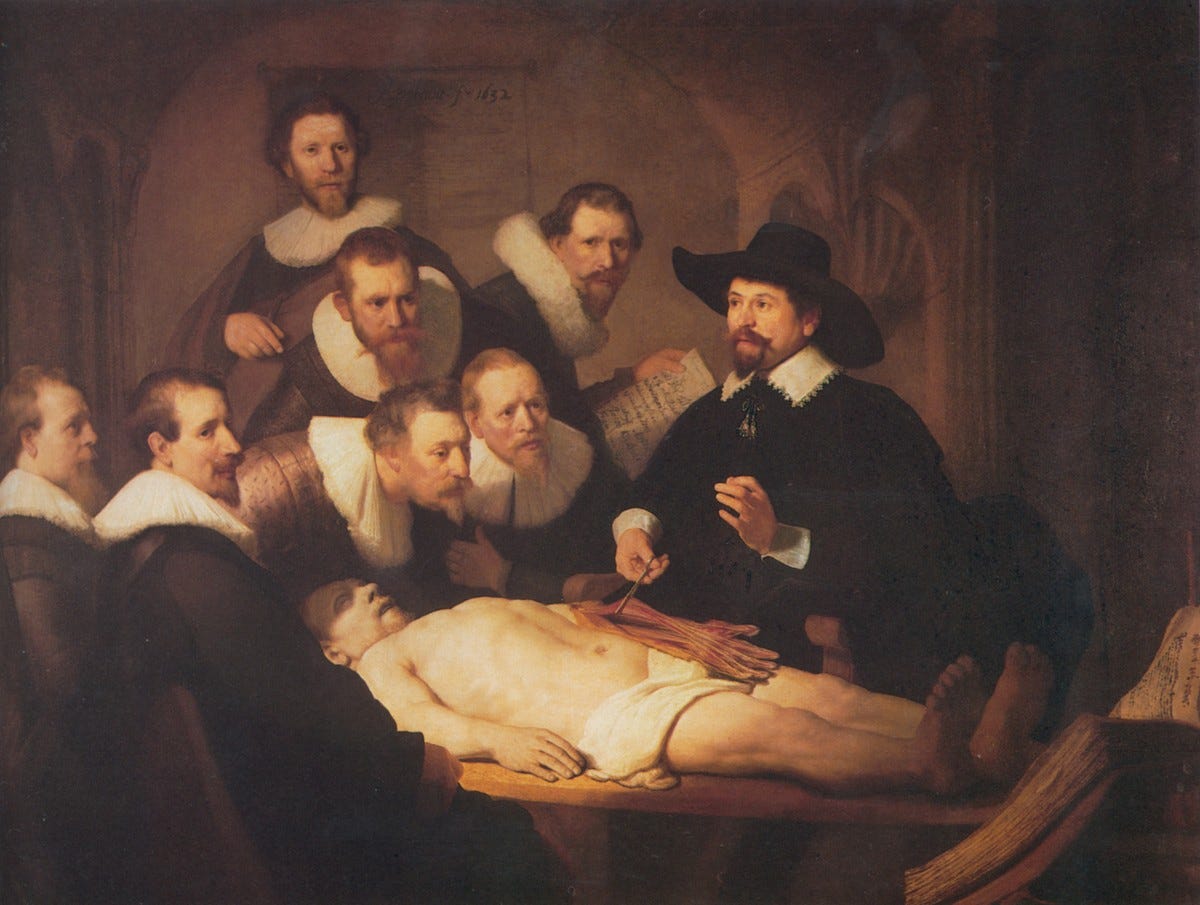
    My guest on the show today is Tuhin Chakrabarty, an assistant professor of computer science at Stony Brook University and the culprit behind my first ever trigger warning on eminent Americans. Here we go: if a big part of your identity is vested in being a writer, and you are already experiencing existential dread about the prospect of AI getting better than you at writing, you may want to not listen to this podcast, or at least you may need to take a Xanax or a gummy before listening. Because Tuhin’s work, training AI to produce super high quality samples of high literary writing, is existentially threatening. It goes right at the heart of what we wordsmiths do. Just to give a sense, here’s a passage from a New Yorker article by Vauhini Vara that explores what Tuhin has found: I asked Chakrabarty to run an informal version of his experiment on my writing, with a twist: I would pit his model directly against me. To start, he fine-tuned a model on my published writing, much as he’d done in the formal experiment. Then I sent him four short excerpts from a novel that I’m currently writing. No one else had read these excerpts; they had never been published or circulated. There was no way that a large language model could have seen them before. The narrator of my novel in progress is an Indian American ex-journalist. She runs a nonprofit that publishes stories from immigrant and refugee women, but it’s strapped for funding, so she courts an Indian American venture capitalist as a potential donor. Chakrabarty used an L.L.M. to create content summaries of the excerpts I’d sent him. (One representative sentence, from a summary about the narrator’s journaling habit, explains, “A pivotal memory is introduced: in ninth grade, the narrator’s mother read this journal, an act seen as a profound betrayal.”) Finally, he gave the summaries to his fine-tuned model, and he asked it to compose passages “in the style of Vauhini Vara.” Going into all this, I was self-assured, even smug. I’d always felt that my style was original and, more important, that my books were totally distinct from one another. I figured that, even if the A.I. model could imitate my past books, it couldn’t predict the style of the novel in progress. So, when Chakrabarty sent me the A.I.-generated imitations, I was genuinely confused. Like Díaz and Nunez, I found lots of stylistic details—rhythm, verbiage—annoying. But the text produced by the model was eerily close to mine. Reading some of its lines next to my own, I couldn’t remember which was which. Unlike Díaz or Nunez, I even preferred some of the doppelgänger’s versions. My style seemed to be more consistent across projects than I’d realized. I sent four passages to some readers who’d liked my previous books, explaining that half were mine and half were the model’s. I wanted them to guess which were which. … The first of my readers to respond was Dana Mauriello, my best friend from college and an accomplished tech entrepreneur. “Truth: this was terrifying!” she wrote. “I was so nervous that I would say that AI wrote something that you wrote, and you would be insulted!!!” Her anxiety, it turned out, was justified. She didn’t get any of them right. Dana blamed this partly on her not being a writer. But, of my seven readers, none correctly identified more than half the passages. One of the last people I heard from was the novelist Karan Mahajan, a professor of literary arts at Brown University. He and I learned to write together in college, along with Tony Tulathimutte, and have been sharing drafts with each other ever since. He’s among the most perceptive writers and readers I’ve met. “Oof, this was really confusing and mindmelting,” Karan wrote. Then he, too, misidentified all four excerpts. To be clear, Tuhin isn’t claiming that AI, except under the very specific, rather contrived circumstances of his experiments, can already match the best human writers. And he doesn’t know if they ever will be able to match or surpass us. I don’t know how much consolation that affords, though; what he has done is threatening enough. Moreover, in this episode we’re doing what is sometimes the most anxiety producing thing of all when it comes to fraught questions: We’re sitting in the uncertainty, and poking at it. How does his method work? What does and doesn’t it prove? Why did he think to do it in the first place? What are its implications? What technical challenges would need to be solved for it to move from short samples, where detailed plot points and themes are provided by a human, to actually generating a full book with just a short prompt or a broad outline? And what are we human writers owed if it’s our work, used as training data, that creates the conditions for being superseded by AI? Etc. I wrote a long essay, not too long ago, about my intuition that most of the fiercest responses to AI out there, both from the hardcore boosters and the hardcore haters, are flip sides of the same coin. They’re dysfunctional manifestations of the anxiety that so many of us have right now in the face of what may be an extinction level event not so much in the Skynet takes over the world sense but of a more existential sort. We may soon be deprived of some of the core ways we’ve understood what it means to be distinctively human, how we’ve constructed our unique purpose as humans. Because of this fear, Tuhin has gotten a bit of hate for what he’s done and shown, but from my perspective he’s dealing with the existential threat we face in exactly the right way, the psychologically functional way. He’s looking directly at it. He’s rejecting both utopian boosterism and head in the sand denialism as strategies of evasion. He’s being creative with the thing itself. And he’s thinking in super pragmatic ways about how to best serve human interests in the long run. And not just thinking about that but doing something concrete and positive about it, collaborating with legal scholars on how to think about and craft policies that protect and compensate authors. So I’m sorry to stoke your anxieties, dear listeners, if that’s what we do, but I’m not sorry I had Tuhin on the show. He’s a fascinating and flexible thinker, a hard core computer scientist and a true lover of literature. Also: Eminent Americans, my sweet baby, is now produced in collaboration with the John C. Danforth Center on Religion and Politics at Washington University in St. Louis, and is distributed through its publication, Arc Magazine. You can find all of Arc’s podcasts and much more online at arcmag.org. Hope you enjoy the show, and that the radiant beams of humanity and thoughtfulness that Tuhin and I generate between us don’t just soothe your anxiety but ultimately help you to process it. Peace. This is a public episode. If you'd like to discuss this with other subscribers or get access to bonus episodes, visit danieloppenheimer.substack.com/subscribe
  • July 23 · 1 hr 38 min

    The Psychedelic I

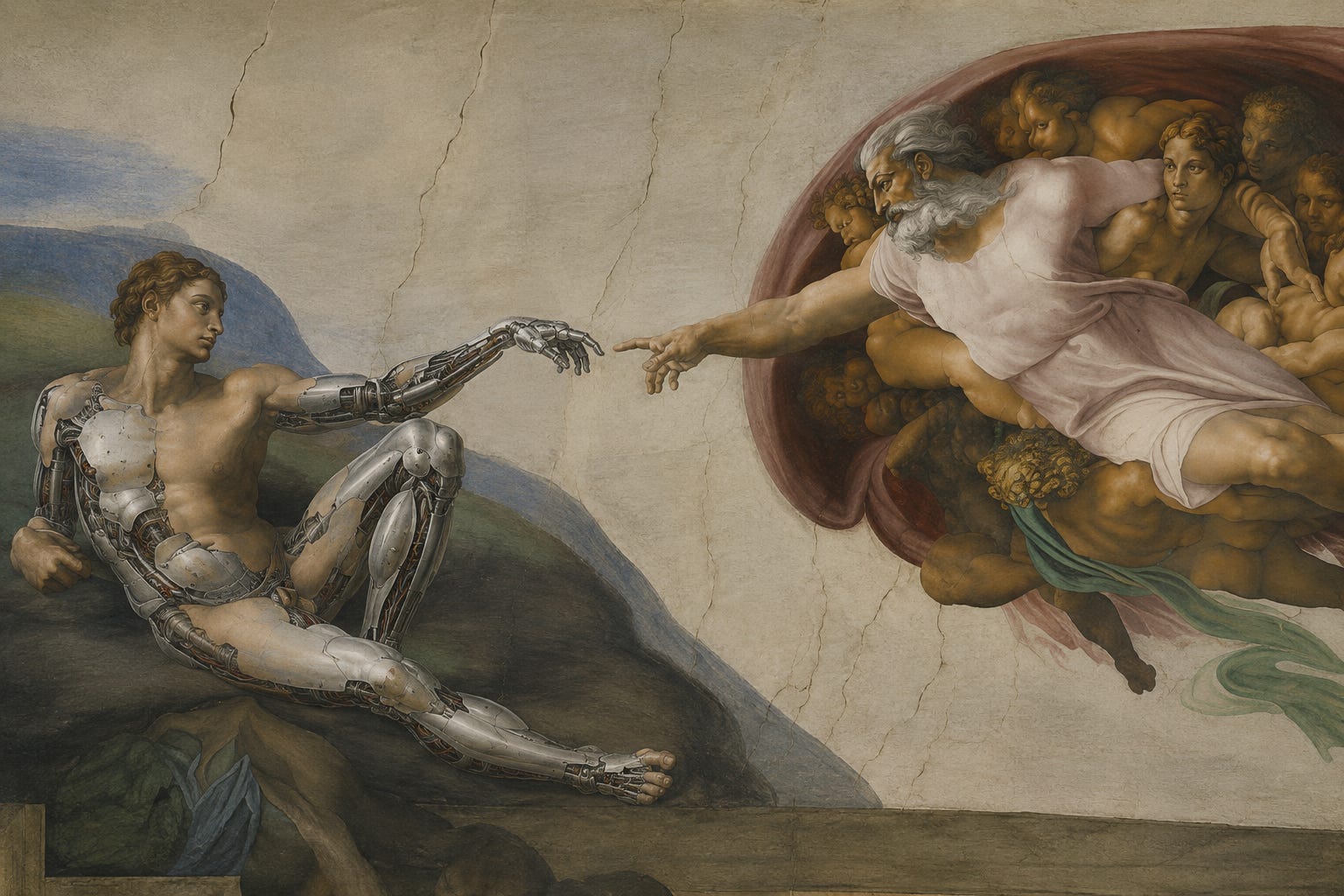
    I had the good fortune to be joined on this episode by the redoubtable Sheila Heti, award-winning novelist, avant-garde memoirist, incisive essayist, and all-around Canadian woman of letters. I asked Sheila to come on the show after I read “Good Medicine,” her recent essay in Granta, which is the report of her experience taking a series of guided psychedelic trips. It is also, though she didn’t set out with this in mind, a kind of midlife crisis essay, reflecting on where she’s been, where she’s going, what’s left for her, and so on. One thing that really struck me about the essay is that it really is, in the most basic way, a report on her experience. It’s here’s what she did, here’s what she felt, here’s who she met, here’s what came up psychologically during her trips, here’s what she felt like in its aftermath. And when a piece of writing feels so plain but so effortlessly holds your interest and propels you through the length of it, you know, if you’re somebody who’s tried your hand at writing yourself, that you’re in the hands of someone who has an exquisite command of language, and also that it’s who doesn’t need to prove it to you with every sentence she writes or every essay or story or novel. So I just appreciated that. I appreciated the craft of it. It also just vibed for me because a lot of the issues that she ends up confronting during the course of her trips are ones that I face, too. We also had some great conversation about other topics of interest to both of us, including clothing and fashion, class, money, success, and our mutual affection for the late, great essayist and critic Dave Hickey, who was a benevolent, generous, cantankerous spirit in both of our lives. So I really enjoyed this conversation, which was the official first episode of the second phase of an anticipated eight-phase journey of this podcast. As of this episode, Eminent Americans is produced in collaboration with the John C. Danforth Center on Religion and Politics at Washington University in St. Louis, and is distributed through its publication, Arc Magazine . You can find all of Arc's podcasts and much more online at arcmag.org. This won't change much about what I'm doing here. You'll now get some dulcet-toned promos for Arc and its flagship podcast. The occasional guest on my podcast will be someone who's written something recently for the magazine, or otherwise has something interesting or compelling to say about a topic the magazine has covered. Otherwise, though, we'll keep on keeping on Eminent Americans style. Peace. This is a public episode. If you'd like to discuss this with other subscribers or get access to bonus episodes, visit danieloppenheimer.substack.com/subscribe
  • July 20 · 1 hr 36 min

    The David Sessions Session

    My guest on the show today is returning guest and all-around friend of the pod David Sessions, a Boston-based freelance writer and the co-host, along with Blake Smith, of the relatively new Off Christopher Street Podcast and and Substack newsletter, about the history and present of gay male life and culture in America. David, Blake and I have recorded a crossover episode of Eminent Americans that focuses on their new endeavor, which should be out in the next month or two or three, but on this episode David and I are talking pornography, its ubiquity, the effect it may or may not have on our culture and kids, and related issues around technology, moral panic, and modern life. A few key differences between the two of us structure the discussion. One is our ages. David is 40. I’m now 50, and though it’s not a huge difference from one angle, it represents a fundamentally different generational growing up experience when it comes the internet, social media, and smart phones, none of which I basically had growing up, all of which David got relatively early on. Another is kids. I have three of them. David doesn’t have any. And a third is our backgrounds. I’m from a liberal secular Jewish home in the northeast where sex was discussed pretty openly, and porn wasn’t permitted but wasn’t really stigmatized either. David grew up in what he describes as a deeply conservative, Christian-nationalist home. He went to a Christian college, married a good Christian woman, and then came out as gay in his mid-thirties. One consequence of that background, for David, is that he’s unusually attuned to some of the ways that mainstream discourse around issues like porn, smart phones, the internet, and social media has been influenced by savvy right wing Christian groups, who recognized pretty early on that if they wanted to move the mainstream they would have to find rhetorical frames that weren’t aversive to establishment media. So instead of sin and god and traditional values they talk about public health harms, addiction, exploitation, objectification of women, etc. So David comes to these debates with an awareness of how they’ve often been covertly shaped by religious groups and motives. He also has the experience, as a gay man, of living a pretty flourishing social life that is enabled in all sorts of positive ways by the technologies that a concerned parent like me can easily fall into perceiving as purely pernicious. And one last thing I want to bring up, which I think is important as context for this conversation, is that so many of the discussions around the effects of tech on kids lack a real perspective on how it plays out differently depending on the socioeconomic class of the kids in question. Who is really speaking for, or from, the kids who aren’t living with the kind of social and cultural capital that David and I both, albeit in very different ways, had growing up. Two parent homes, relatively intact communities, financially secure, high parental investment, and so on. David and I, and my kids, and his kids if he has them, have been or will be raised with psychological protective factor layered on top of psychological protective factor. What about the kids who don’t have all that? Are we condescending to their parents in imagining that their kids are just at the mercy of the evil tech gods, that they’re not able to sufficiently protect and nurture them. Or, alternatively, are we just basically ignoring them when we have these discussions, as elites, as though their kids are just like our kids, having basically the same experiences. I don’t know, and David doesn’t either, and – and this is maybe the worst part – who would I even turn to to help me answer it? So that’s in the background of this conversation too. Two quick housekeeping notes. The first is a thanks to Joshua Howard for manfully editing this episode, as he has the last few. The second is that this the last episode of what I will retrospectively refer to as the scrappy, underground, indie era of this podcast. Starting in a week or two, I’ll be launching a partnership with Arc Magazine, which is published out of the John C. Danforth Center on Religion and Politics at Washington University in St. Louis. I’ll say more about that when we officially launch, but one thing I’ll say now is that Arc’s touch on the content and vibe of the show will be very very light. Occasionally I’ll have on a guest who is doing something for the magazine, there will be brief promos for other Arc content, and I hope to do some fun experiments that I didn’t have the bandwidth to do when it was just me and producer Robert. For the most part, though, I’m going to go about my business as I’ve done for the last few years. I’ll have on whoever I want. We’ll talk about whatever I want. And I’ll swear whenever I fucking want. Peace. This is a public episode. If you'd like to discuss this with other subscribers or get access to bonus episodes, visit danieloppenheimer.substack.com/subscribe

  • July 7 · 1 hr 31 min

    Who Killed the American Man?

     My guest on the show today, our special Fourth of July sesquicentennial episode, is Jacob Siegel. He's a writer and editor at Tablet Magazine, an Iraq and Afghanistan vet, co-host of the Manifesto! podcast, and author of the new book, The Information State, which we don’t discuss on the episode. Our topic, instead, is the “The Disappearing American Man,” the first installment of a column that Jacob is now writing for Tablet. To give you a sense of the essay, which is slightly to the left or maybe to the right or just below or above the typical crisis of masculinity polemic, here’s a particularly pungent passage from it: What I see in many prominent and representative American men today is a dribbling sludge of bitterness. A peacocking display of impotence, debility, worminess, insincerity, lack of competence, lack of confidence, lack of élan, pettiness, selfishness, scheming, and self-pity. Not all men, as the saying goes, but enough to pass a civilizational tipping point. The young men standing up at town hall meetings are almost pompous in their bitterness. The anonymous posters online have turned cattiness and petty sadism into a group erotic ritual. The politicians are embittered, the podcasters are embittered, even the popular comedians are embittered. Probably the comedians are the most bitter of all. Much of this bitterness seems to stem from an ambient feeling of betrayal. Today’s American man knows that he has been wronged. By globalist elites and international pedophile rings or else by his own toxic masculinity. By immigrants or perhaps by his innate racism. By “woke capital”; diversity, equity, and inclusion; greedy billionaires; and unappreciative modern women. And by the Jews, of course. Always by the Jews. So that's just a taste. It's a pretty intense, hard-charging essay. I would say there's more or less two overlapping arguments in the essay. One is about this bitterness as it's expressed in the more venomous, less inhibited regions of the right, which Siegel traces to the effects of the failed wars after 9/11, the thesis being something like: when the globe-bestriding American military colossus can't beat a bunch of goat herders, it powerfully undermines the projective identity that so many men, and particularly men on the right, have had with American military power. Its power is our power, is how they felt, and so then when its power is undermined so thoroughly, it strikes right at the core of people's identity, their sense of themselves as men. And what some people did with that searing sense of impotence was to turn it not just against the left, which is traditional right-wing move, but against the American soldier himself, and then behind him against what the American soldier traditionally has represented, which is American power, American might, American manliness. Attached to that is a historical narrative, a quite conspiratorial one, that the long period that most of us think of as a kind of golden age of American power and manliness, from the end of WW II to the end of the Cold War, was in fact a long, deep con perpetrated by the globalists on the real American men, who were its innocent victims. All that time that we thought we were powerful, by virtue of our affiliation and identification with American power, we were in fact being manipulated and betrayed. (Jacob and I wouldn’t say “we,” of course, since as Jews we were perpetrators of the con, not its victims.) So that's argument one, and the other argument, which I think is downstream of that one, is that an effect of all that — the loss of the wars, the cultural and political reaction to it — is that the cultural ideal of the American man has become exhausted. That figure who stood a certain way, held a cigarette a certain way, often looked on the world with a certain cool disdain, has died or at least has gone conspicuously silent. An archetype that was capacious enough over the decades to manifest in figures as diverse as manly Hemingway, the dandy Gatsby, the stoic Marlboro Man, swaggering Muhammad Ali, and the alienated Kurt Cobain seems no longer to be producing new manifestations of itself. The world spirit has abandoned him/us. Then braiding through these two arguments is Jacob’s own story of being in the wars. He did 15 months in Iraq, and then after some years in which he rather failed to figure out life as a civilian, he signed up again and went to Afghanistan. And it was in that space, he writes, that he was able to reassemble himself in a way that could eventually go on to do some flourishing in the aftermath. The piece opens with a road trip he takes with a bunch of enlisted guys from his unit, men over whom he had command. They semi-licitly liberated a van from the motor pool, and they went to see families of two soldiers who'd been killed by an IED in their last month over there. He talks about being the only officer in this tight group of enlisted men, some of whom had some real suspicion of him. He writes about his sense of guilt and dislocation during the interregnum between his two stints. He and I talk about that. We go into his theory of how the right talked itself into treating World War II as the original sin of American betrayal, how that recasts the Greatest Generation as a bunch of cucks, how a guy like Tucker Carlson, who was such a cheerleader for the Iraq War, has re-imagined himself into a state of metaphysical victimhood and purity, and how the big story of the betrayal of the American man has a weird double-sidedness to it— the true American man is pure, because he’s not responsible for the nation’s sins, but he also has no agency. He’s a dupe, a cuck. And so on. We get deep in the shit, in other words. I thoroughly enjoyed it. Hope you do too. Peace. This is a public episode. If you'd like to discuss this with other subscribers or get access to bonus episodes, visit danieloppenheimer.substack.com/subscribe

  • June 23 · 1 hr 43 min

    The Notorious R.O.D.

    Damon Linker is back on the pod to talk about another former guest, the notorious R.O.D., Ray Oliver Dreher Jr. — i.e. Rod Dreher, one of the more fascinating, tragic, and infuriating writers of the Christian right over the last few decades. Linker and Dreher first met back when Linker, who is now a man of the solid center-left, was a conservative and an editor at the Catholic conservative magazine First Things. They bonded over their shared horror at the Catholic priest abuse scandal, a lot of details of which were unfolding at the time, and also over their shared frustration with various figures on the Catholic right, including some important people at First Things, who seemed to be in some kind of denial about the severity of the scandal, or if not in denial about the severity of it then intent on shifting as much blame as possible away from the Catholic Church and onto other folks or forces. The two remained friends over the next decade and a half, even as both of them went through various evolutions and migrations. Linker migrated towards the left, although not too far to the left, and Dreher went through a series of shifts, or perhaps repetitions, ever in search of some kind of structure or vessel or institution to contain or pacify his various aspirations, contradictions, and demons. A few years ago they broke, as Dreher has broken with many former friends and comrades over the decades, over what Linker would characterize as Dreher’s extremism, though they’ve been in touch a bit more recently in the aftermath of Dreher’s public denunciations of the right’s tolerance of anti-Semites within its ranks. In a recent essay, Linker writes of Dreher: I’ve written enough posts about Rod Dreher down through the years that I could almost dedicate a stand-alone section of this newsletter to him. (That’s an exaggeration, but not by much. Here is the most recent post, from just a few months ago, in which he plays an important part.) When I write something on him, my most engaged readers usually respond in comments that they used to admire Dreher and read him fruitfully but that at some point he became a reactionary and racist crank they could no longer abide. I’ve had periods when I’ve felt like that. But I keep coming back to him, even as he’s drifted further and further away from the (perhaps idiosyncratic) skeptical and pessimistic liberalism I affirm in my work. One reason why I keep coming back to Rod is that I know him personally, we developed a friendship nearly a quarter century ago, and I don’t believe in dropping friends for political reasons. There are limits to that, of course. (A friend who began telling me Adolf Hitler made a lot of good points in Mein Kampf would no longer get invited over to dinner.) But I try as best I can to exemplify the ancient virtue of liberality in my dealings with people. That means demonstrating generosity and openness to difference. But it wouldn’t be entirely honest to suggest I remain drawn to Rod purely out of a principled commitment to tolerate a longstanding friend who holds views with which I sharply disagree. The truth is that I feel like I “get” him on a deep, spiritual level. I don’t feel like I get Dreher on a spiritual level, but I do feel like I perceive him insightfully, from the outside, on a psychological level, and though my perceptions and Linker’s don’t perfectly align, they end up proving (as you’ll appreciate it you listen to our conversation) quite complementary. For both of us, Dreher is such a compellingly open wound of a person. He’s endlessly vulnerable, incredibly affable in one-on-one interactions (as I learned when I did my interview with him), reliably hysterical and apocalyptic when he’s dealing with the broad sweep of things, and also very principled in his idiosyncratic way, unable to gloss over the sins of his own side, in the name of unity, when they conflict with deeply held values of his. This all is, in other words, primo Eminent Americans content, and it was a pleasure to have Linker back on for it. This is a public episode. If you'd like to discuss this with other subscribers or get access to bonus episodes, visit danieloppenheimer.substack.com/subscribe
  • April 21 · 1 hr 26 min

    Non-Producer Character (NPC)

    My guest on the show today is audio producer Robert Scaramuccia, my longtime collaborator on the podcast. Robert is leaving me, as of the end of this episode, so that he can get a healthy work/life balance in place in advance of starting an MFA writing program in the fall. We talk about the things you’d expect — our experience of working together, his thoughts on Eminent Americans, his plans for the future — but we also, fortuitously, focus a fair amount on a topic that I’ve thought about addressing on the show, in the past, but have never pursued because I couldn’t see a obvious way in. It turns out that Robert is wholly fascinated with video games. Pretty much exclusively, to this point, his engagement has been as a player of them. But his hopes, going into the MFA program, is to write about them seriously, and perhaps also to produce podcasts on them. He’s really effing serious about video games. They’re important to his identity, and intellectually and aesthetically fascinating to him. They even, as we get into, played a role in him dealing with some of the emotions around the long sickness and then death of his mother when he was in college. I’ve never been a serious gamer, but some of it I get. it was part of the mix with my friends when I was growing up, now has a significant presence in the social lives of my 10 and 15 year old sons, and is just this huge thing, obviously, in the social and emotional world of boys and young men and increasingly not so young men. It also seems to me a topic that hasn’t received nearly the degree of serious literary and journalistic attention that it clearly deserves. It gets a lot of ink, in a certain sense, but so much of it is quite shallow, and so little of it seems to even begin to grasp the profound role that games and the ecosystems around them have played, and are playing, in the social and psychological lives of the people who play them.Really enjoyed the conversation. Hope you do too. Apologies in advance as the pace of release slows down for a bit. Still working on finding a new producer, and have some good leads, but for a little while at least I’ll be on my own, and so I will not be as productive. Not going away, though! This is a public episode. If you'd like to discuss this with other subscribers or get access to bonus episodes, visit danieloppenheimer.substack.com/subscribe
  • April 2 · 1 hr 20 min

    The Reservation Broadcasting System

    My guest on the show today is the inimitable Sherman Alexie, poet, novelist, Substacker, and occasional screenwriter. I would be surprised if you don’t already know who Alexi ise, given that he’s been an award winning and best-selling writer for decades now and is almsot certainly the best known Native American writer of our time. I asked him on, naturally, to talk about genre television. I’d noticed over the past few years that whenever I posted something to Substack about whatever random genre TV I happened to watching at the moment, Alexie would often pop in to respond. It became clear that we shared an earnest love of TV as emotional comfort food, and I wanted to talk to him about that. It naturally spins off into all sorts of other issues about childhood, reservation culture, literature and other forms of media, and politics. It is, in other words, an immensely fun conversation. Hope you enjoy. Peace This is a public episode. If you'd like to discuss this with other subscribers or get access to bonus episodes, visit danieloppenheimer.substack.com/subscribe
  • March 26 · 1 hr 25 min

    I Get Schooled on Marx

    My guests on today’s episode are historians Andrew Hartman and James Livingston. Andrew is a professor of history at Illinois State University and the author, most recently, of Karl Marx in America. Jim is professor emeritus of history at Rutgers University and the author, most recently, of No More Work: Why Full Employment Is a Bad Idea. I asked Andrew and Jim on the show to talk to me about Karl Marx and his continued influence on the American left. Really, if I’m being honest, I asked them on to help me solve a problem that I’ve been feeling increasingly compelled to solve, which is that I have a very strong intuition that Marxism is a profound drag on the capacity of the American left to achieve what I would like it to achieve, which is to exert meaningful power in opposition to big money in all its forms, but I am embarrassingly vague on the why or how Marx continues to exert such pull. The bosses have so, so much power in America, and I fear it’s slowly killing us, and we desperately to find a way to rebalance the scales. But precisely the kinds of people and groups to whom we’ve looked, historically, to organize fundamental resistance to the evils of big money are the ones who seem least capable of talking and acting in ways that might get the job done. And I blame Marxism for some, though certainly not all, of that incapacity. So I have all these very strong feelings, but I don’t know how to talk to the people I might hope to persuade in a language that might be persuasive to them. I could tell a story about the various sins of various Marxist movements of the last century that might be persuasive to some people — and in fact have told versions of that story — but I don’t think that that story would be persuasive to contemporary Marxist-influenced intellectuals. They know all that history, have already baked it into their perspective. What I’d need to do is talk theory to them, and I don’t really grasp the theory. And maybe even more than not understanding the theory, I don’t understand, viscerally, why people continue to be so drawn to it. I don’t grok the lived experience of being a 21st century American leftist who feels compelled to draw on Marxist concepts and language to think and talk through the problems we face. I can’t mirror those neurons. And it kind of drives me nuts. So this episode is a very selfish effort to help reduce the level of my vexedness, and I appreciate Jim and Andrew for their indulgence of me and for their uncompensated labor in bringing some clarity to my confusion.If you’re interested in learning more about Andrew’s new book, by the way, the American Prestige podcast is producing a six-part series, Marx Prestige, where Andrew and Daniel Bessner work their way through the history covered in the book. I’m looking forward to it. Peace. This is a public episode. If you'd like to discuss this with other subscribers or get access to bonus episodes, visit danieloppenheimer.substack.com/subscribe

  • March 19 · 1 hr 36 min

    Crime Story

    This is a free preview of a paid episode. To hear more, visit danieloppenheimer.substack.com This converstion with Greg Berman, former longtime CEO of the Center for Justice Innovation and author of the Small Sanities Substack, is both like and unlike a lot of previous conversations I’ve had in the anti-woke liberal space. It’s like it…

Showing 1–20 of 20 episodes