Skip to content
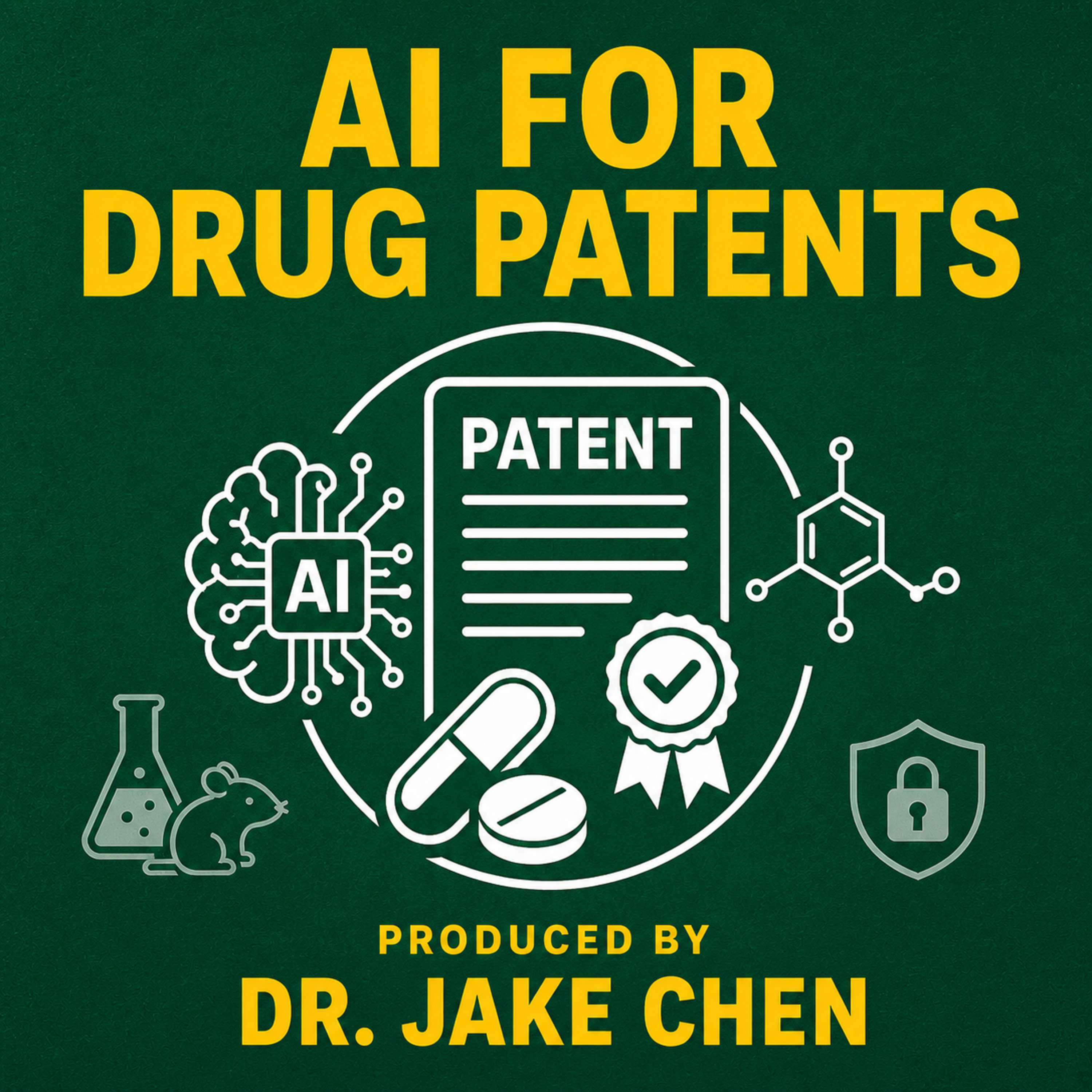
Artwork for Drug Discovery AI Talk
Drug Discovery AI Talk · May 2 · 20 min

#55. AI for Drug Patents

In this episode, we explore the evolving landscape of AI-driven pharmaceutical intellectual property, emphasizing that, for patent offices, artificial intelligence is viewed as a computational tool rather than an inventor. Effective legal strategies require a layered portfolio that protects not only the AI platform but also the specific therapeutic molecules, medical uses, and biomarkers discovered through these workflows. Success stories like Insilico Medicine’s rentosertib demonstrate that high-value patents must move beyond in silico predictions to include experimental validation, such as synthesis procedures and animal model data. Developers are cautioned to maintain rigorous human inventorship records to ensure that individuals, not algorithms, are credited with the creative conception of new drugs. Furthermore, the documents highlight a strategic tension between patenting repeatable workflows and maintaining proprietary training data or model weights as trade secrets. Ultimately, a robust defense against competitors relies on combining traditional drug patent substance with clear evidence of the technical improvements enabled by AI integration. Produced by Dr. Jake Chen.

0:00-20:58

transcript

No transcript — this publisher did not publish one.

show notes

In this episode, we explore the evolving landscape of AI-driven pharmaceutical intellectual property, emphasizing that, for patent offices, artificial intelligence is viewed as a computational tool rather than an inventor. Effective legal strategies require a layered portfolio that protects not only the AI platform but also the specific therapeutic molecules, medical uses, and biomarkers discovered through these workflows. Success stories like Insilico Medicine’s rentosertib demonstrate that high-value patents must move beyond in silico predictions to include experimental validation, such as synthesis procedures and animal model data. Developers are cautioned to maintain rigorous human inventorship records to ensure that individuals, not algorithms, are credited with the creative conception of new drugs. Furthermore, the documents highlight a strategic tension between patenting repeatable workflows and maintaining proprietary training data or model weights as trade secrets. Ultimately, a robust defense against competitors relies on combining traditional drug patent substance with clear evidence of the technical improvements enabled by AI integration. Produced by Dr. Jake Chen.
more episodes

All episodes