Skip to content
Artwork for Drafting the Past
HistoryArtsBooksLeisureHobbies

Drafting the Past

DTP Media LLC

Drafting the Past is a podcast devoted to the craft of writing history. Each episode features an interview with a historian about the joys and challenges of their work as a writer.

Play
  • 21 episodes
  • weekly
  • Avg 56 min
  • English
Counted on this page — what you have heard stays on this device, so it is not something the list can be paged by.
  • S5 · E110
    Tuesday · 55 min

    110: Richard Ivan Jobs and Steven Van Wolputte Figure It Out As They Go

    In episode 110 of the Drafting the Past podcast, Kate interviews historian Richard Jobs and anthropologist and illustrator Steven Van Wolputte. Rick and Steven teamed up to write, illustrate and create In the Land of the Lacandón: A Graphic History of Adventure and Imperialism. Part graphic history, part historical essay, part poetic commentary and more, the book not only tells the history of one moment in 20th century imperial exploration and anthropology but also takes apart the act of historical research and narration and turns it inside out for the reader. Rick and Steven discussed how they conceived of and developed the project and how they collaborated across countries. They also talked about the possibilities of historical narrative, and why the book would be a great teaching tool. And don’t miss the pretty amazing reading list they slipped in at the end. Links to bookshop.org are affiliate links. Mentioned in this episode: Richard Ivan Jobs and Steven Van Wolputte, with Manuel Bolom Pale, In the Land of the Lacandón: A Graphic History of Adventure and Imperialism Richard Ivan Jobs, Backpack Ambassadors: How Youth Travel Integrated Europe Richard Ivan Jobs, Riding the New Wave: Youth and the Rejuvenation of France After the Second World War Manuel Bolom Pale Voyagers Without Trace Matthew Barrett and Robert C. Engen, Through Their Eyes: A Graphic History of Hill 70 and Canada’s First World War Joe Sacco, Journalism Alison Bechdel, Fun Home: A Family Tragicomic, Are You My Mother? A Comic Drama, The Secret to Superhuman Strength Art Spiegelman, Maus: A Survivor’s Tale Michael Vann and Liz Clarke, The Great Hanoi Rat Hunt: Empire, Disease, and Modernity in French Colonial Vietnam Nick Sousanas, Unflattening Natalie Zemon Davis, The Return of Martin Guerre Carlo Ginzburg, The Cheese and the Worms: The Cosmos of a Sixteenth-Century Miller Louisa Passerini, Autobiography of a Generation: Italy, 1968 Bonnie Smith, Confessions of a Concierge: Madame Lucie’s History of Twentieth-Century France Craig Thompson, Ginseng Roots: A Memoir

    • Transcript
  • S5 · E109
    August 18 · 1 hr 3 min

    109: Megan Marshall Believes We Need Exemplary Lives

    Note: Links to bookshop.org are affiliate links. When you purchase books through these links, your purchase supports the authors, independent bookstores, and Drafting the Past. Visit draftingthepast.com to subscribe to the newsletter. This fall, Drafting the Past is expanding, and we'll be publishing book reviews, news, interviews, and more, in addition to the podcast you know and love. Megan Marshall estimated that it might take her 3 ½ years to write her first biography. In would up taking 20. Her commitment was worth it, though. In this episode of the Drafting the Past podcast, Kate interviews Megan Marshall about how she approaches the subjects and structures of her books, and what has kept her going—plus, why she believes biography is essential now. Megan is a writer and biographer who got her start writing book reviews. Her first biography was The Peabody Sisters: Three Women Who Ignited American Romanticism. It was awarded multiple prizes and became a finalist for the Pulitzer Prize in biography and memoir. Her second book, Margaret Fuller: A New American Life, won the Pulitzer Prize in Biography, and her third book was Elizabeth Bishop: A Miracle for Breakfast, a biography of the poet, Bishop, interwoven with chapters from Megan’s own life leading up to her study with Bishop. She has also been awarded the BIO award, the highest honor given by the Biographers International Organization. This year, she published a book of essays called After Lives: On Biography and the Mysteries of the Human Heart. It includes pieces on her family’s history, her own encounters with historic events, and some further investigations into research that didn’t make it in to her other books. Mentioned in this episode Megan Marshall, After Lives: On Biography and the Mysteries of the Human Heart Megan Marshall, Elizabeth Bishop: A Miracle for Breakfast Megan Marshall, Margaret Fuller: A New American Life Megan Marshall, The Peabody Sisters: Three Women Who Ignited American Romanticism Megan Marshall, “How Do You Like Your History? With Imaginative Leaps or Grounded in Fact?” New York Times, March 7, 2025 Biographers International Organization Megan Marshall, “Born in 1810, Margaret Fuller Was Labeled a Child Prodigy. She Later Used Her Intellect to Ask Important Questions About Women’s Role in America,” Smithsonian Magazine, Summer 2026 Citizen Historians for the Smithsonian

    • Transcript
  • S5 · E108
    August 11 · 59 min

    108: Amy Stanley Would Rather Be Writing

    When historian of early modern Japan Dr. Amy Stanley came upon a letter written by a woman named Tsuneno while she was prepping a class lesson in primary sources, she knew she had found a great story. The challenge was how to tell it, even through gaps in the archive—not to mention the challenges of writing while raising two small boys The result, Stranger in the Shogun’s City: A Japanese Woman and Her World, is an extraordinary biography that went on to win multiple national awards and demonstrate that compelling trade history can be about something other than war or famous white men. Amy Stanley, professor of history at Northwestern University, joins Kate Carpenter to talk about her research and writing process and give some practical advice for revision, bringing lost places to life, and more. To stay updated on new episodes and more from Drafting the Past (including reviews, craft essays, and author Q & As, sign up for the newsletter at draftingthepast.com). Note: Links to bookshop.org are affiliate links. Mentioned in this episode: Amy Stanley, Stranger in the Shogun’s City: A Japanese Woman and Her World Amy Stanley, Selling Women: Prostitution, Markets, and the Household in Early Modern Japan Niigata Prefectural Archive Amy Stanley, “Revisiting the ‘Comfort Girls’ of Report 49,” American Historical Review 130, no. 4 (December 2025), 1459-1483

    • Transcript
  • S5 · E107
    August 4 · 1 hr 10 min

    Episode 107: Chris Hodson and Brett Rushforth Upend History in 1.2 Voices

    In this episode, Dr. Christopher Hodson and Dr. Brett Rushforth join Kate Carpenter to talk about their new book, Beyond the Ocean: France and the Atlantic World from the Crusades to the Age of Revolution. It was a book two decades in the making, and when you read it, you’ll understand why. It’s absolutely packed with research and fascinating stories, and it makes a persuasive argument that, when you look beyond its official accounts, France played a much bigger role in the colonization of the Atlantic world than historians have assumed. Chris is an associated professor of history at Brigham Young University, and Brett is editor in chief of the Huntington Library Quarterly. They bring a dry wit and a spirit of joyful curiosity to their work that comes through in the book and in this interview. You’ll hear about the varied ways they researched their new book, not just in written archives but with visual culture, artifacts preserved across the world, and even at archaeological sites in order to write a history of France’s influence in the Atlantic world that focuses not on the accounts and experiences of officials, but on the daily lives of sailors, indigenous peoples in both North America and West Africa, nuns, smugglers, and much more. Note: Links to bookshop.org are affiliate links. Mentioned in this episode: Christopher Hodson and Brett Rushforth, Beyond the Ocean: France and the Atlantic World from the Crusades to the Age of Revolution Christopher Hodson, The Acadian Diaspora: An Eighteenth-Century History Brett Rushforth, Bonds of Alliance: Indigenous and Atlantic Slaveries in New France Laurent DuBois Feathered Tupi-Guarani Cape, held by the Musée de Quai Branly Foldable ivory spork Brett and Chris’s newsletter, Beyond the Ocean Garamond Agency Huntington Library Quarterly

    • Transcript
  • S5 · E106
    June 30 · 51 min

    Episode 106: Dolly Jørgensen Always Has Another Project Up Her Sleeve

    Dr. Dolly Jørgensen is professor of history at the University of Stavanger in Norway. As you'll hear in this episode, Dolly is one very busy historian. She is the author of three books, including her newest, Ghosts Behind Glass: Encountering Extinction in Museums. She has also co-edited five books and written a truly impressive number of academic articles. She recently ended a term as the editor of the journal Environmental Humanities, and she co-directs the Greenhouse Center for Environmental Humanities, which is most known for its excellent series of online book talks. As an environmental historian, I have been impressed not only by Dr. Dolly Jørgensen's work for years, but also by her warm and friendly presence at conferences and online. I was delighted when she said yes to coming on the show and talking with me about her writing process. I was eager to hear from Dolly about how she juggles her projects, what draws her to a topic, and how working at a university in Scandinavia changes her approach to scholarship. Sign up for the Drafting the Past newsletter for updates on the show and more. Note: Links to bookshop.org are affiliate links. When you purchase books through these links, you support not only authors and indie bookstores but the podcast itself. Mentioned in this episode: Dolly Jørgensen, Ghosts Behind Glass: Encountering Extinction in Museums Dolly Jørgensen, The Medieval Pig Dolly Jørgensen, Recovering Lost Species in the Modern Age: Histories of Longing and Belonging Dolly Jørgensen's website Greenhouse Center for Environmental Humanities Book Talks Series Dolly Jørgensen on Bluesky Finn Arne Jørgensen Bathsheba Demuth, Floating Coast: An Environmental History of the Bering Strait(and check out my Episode 3 interview with Bathsheba Demuth)

  • S5 · E105
    June 23 · 52 min

    Episode 105: Charles O'Malley and Scott Stern Collaborate On A Book and A Life

    Sign up for the Drafting the Past newsletter for updates on the show and more. In this episode, Kate welcomes Scott W. Stern and Dr. Charles O'Malley to the show. Scott is a writer and lawyer who is the author of two previous books of narrative nonfiction and has written for many media outlets and scholarly journals. Charlie is a dramaturg and writer who has worked at theaters across the country. Together, they teamed up to write a new book titled Shakespeare's Margaret: The Dramatic Life of a Warrior Queen. In it, they explore Shakespeare's character Margaret, a woman loosely based on a historical figure who is the only Shakespearean character, male or female, whose entire life appears on stage. They introduce readers to her historical model, her creation by Shakespeare, and her evolution across centuries of performances to show how the character of Margaret illuminates the world in which she is created and brought to life. As they put it, her story "shows how Shakespeare's plays have always been living collaborations among actors, directors, writers, critics, and history itself." It seems only fitting that the book itself was a close collaboration. Scott and Charlie are co-writers, but they also began working on the book together shortly after they got married. By the time they were in the final editing stages, their twin sons had been born. We talked about how they navigated intertwined domestic and writing lives, as well as the challenges of bringing different voices and backgrounds together on the page. Note: Links to bookshop.org are affiliate links. When you purchase books through these links, you support not only authors and indie bookstores but the podcast itself. Mentioned in this episode: Charles O'Malley and Scott Stern, Shakespeare's Margaret: The Dramatic Life of a Warrior Queen Scott Stern, The Trials of Nina McCall: Sex, Surveillance, and the Decades-Long Government Plan to Imprison 'Promiscuous' Women Scott Stern, There is a Deep Brooding in Arkansas: The Rape Trials That Sustained Jim Crow, and the People Who Fought It, from Thurgood Marshall to Maya Angelou Charles O'Malley, Toward a Just Pedagogy of Performance Scott and Charlie's LitHub piece on writing together: "What Co-Writing a Book on Shakespeare Taught Us About Marriage and Parenthood" The Internet Archive's blog posts about the Controlled Digital Lending Program Sam Quinones, The Perfect Tuba: Forging Fulfillment from the Bass Horn, Band, and Hard Work Daniel Hahn, If This Be Magic: The Unlikely Art of Shakespeare in Translation

  • S5 · E104
    June 16 · 39 min

    Episode 104: Anna O. Law Reads Her Way Into History

    In this episode, Kate Carpenter interviews Dr. Anna O. Law, a political science who retrained herself in historical methods to write her new book, Migration and the Origins of American Citizenship. Anna is a professor of political science and Herbert Kurz Chair in Constitutional Rights at CUNY Brooklyn College. In her new books, she takes a close look at which parts and levels of government in the United States have controlled people's ability to move around and across borders throughout the country's history. It's a history that is especially pertinent now, as we await the Supreme Court's forthcoming decision about the Trump administration's attempt to end the right to birthright citizenship protected under the 14th amendment of the constitution. Anna and Kate talked about what it meant to think like a historian as well as a political scientist. She also divulged her decidedly analog research tools, the feedback she asks colleagues to give on her drafts, and her advice for any writer deciding on a press for publishing a book. Sign up for the Drafting the Past newsletter for updates on the show and more. Note: Links to bookshop.org are affiliate links. If you purchase books through these links, not only will you be supporting the author, but you will also help to keep Drafting the Past going. Thank you! Mentioned in this episode: Anna O. Law's website Anna Law, Migration and the Origins of American Citizenship Anna Law, The Immigration Battle in American Courts Metal page darts Sarasa gel pens Anna's favorite Clairefontaine notebooks Anna Law on BlueSky Anna's blog post about writing the second book Episode 102: Gautham Rao Megan Kate Nelson, The Westerners: Mythmaking and Belonging on the American Frontier and The Three-Cornered War: The Union, the Confederacy, and Native Peoples in the Fight for the West (and my first and second interviews with her) Lucy Salyer, Laws Harsh As Tigers: Chinese Immigrants and the Shaping of Modern Immigration Law and Under the Starry Flag: How a Band of Irish Americans Joined the Fenian Revolt and Sparked a Crisis Over Citizenship

  • S5 · E103
    June 9 · 1 hr 6 min

    Episode 103: Charlotte Brooks Is Always Thinking About Research

    It's not every day that I find myself so invested in the characters of a history book that I stay up way past my bed time to find out what happens next, but that's exactly what happened when I read the new book by today's guest, Dr. Charlotte Brooks. Charlotte is a professor of history at Baruch College, which is part of the City University of New York, or CUNY, system. She is a scholar of race, immigration, and urban history, and is especially known for her work on Chinese American history. She is the author of four books. Her first three books were more aimed at an academic audience, but for her fourth book she wanted to try something a little different. The book that resulted is The Moys of New York and Shanghai: One Family's Extraordinary Journey Through War and Revolution. It's a group biography that tells the stories of six siblings, born to Chinese immigrant parents, and how they challenged the limitations and racism they faced in the United States, how many of them sought opportunities in China, and the ways they navigated the tumultuous world in which they lived in both countries in the first half of the 20th century. They are fascinating characters, but Charlotte uses them to give us a window into the history of an entire generation of Chinese American families that many Americans know little about. I talked with Charlotte about what finally motivated her to write the book that she had been dreaming about, as well as what it was like to work with the Moy descendants, how her narrative makes the siblings so compelling, and why it was still a tough sell as a trade book. Sign up for the Drafting the Past newsletter for updates on the show and more. Note: Bookshop.org links are affiliate links. When you buy books through these links, Drafting the Past receives a small percentage of the purchase price. Thanks for helping to support the show! Mentioned in this episode: Charlotte Brooks, The Moys of New York and Shanghai: One Family's Extraordinary Journey Through War and Revolution Charlotte Brooks, American Exodus: Second-Generation Chinese Americans in China, 1901-1949 Charlotte Brooks, Between Mao and McCarthy: Chinese American Politics in the Cold War Years Charlotte Brooks, Alien Neighbors, Foreign Friends: Asian Americans, Housing, and the Transformation of Urban California Museum of Chinese in America (MOCA) Ellen Wu Mae Ngai Sandra Dijkstra Literary Agency Virtual Shanghai Project Historical Photographs of China Gwulo: Old Hong Kong

  • S5 · E102
    June 2 · 55 min

    Episode 102: Gautham Rao Completes Each Vacation with an Archive Trip

    In this episode, Kate Carpenter is joined by a scholar who can never pass up a good archive, Dr. Gautham Rao. Gautham is a historian of American law and politics and is an associate professor of history at American University in Washington. He's the author of two books: National Duties: Custom Houses and the Making of the American State, and his new book, White Power: Policing American Slavery. White Power is a history of the laws that enslavers used to police enslaved people from 1619 until the Civil War, and how the violent legacies of those laws and practices have reverberated throughout American history and life. In addition to his books and journal articles, Gautham has also written op-eds, contributions to Supreme Court cases, and a Substack newsletter called "The State of the State." I was especially interested to hear how Gautham grappled with organizing and using the evidence he collected from many locations over more than two decades. You'll also learn how he writes and rewrites to make himself clear, and how an offhanded remark from a well-known colleague set him on a new publishing path. If you love the show and want to support it, but maybe don't have any spare cash to become a Patreon supporter, leave a review in your favorite podcast app. Sign up for the Drafting the Past newsletter for updates on the show and more. Links to bookshop.org are affiliate links. If you purchase books through these links, the show gets a small percentage of the price (at no extra cost to you). Thank you for supporting the podcast and our guest authors! Mentioned in this episode: White Power: Policing American Slavery National Duties: Custom Houses and the Making of the American State Gautham's Substack reMarkable tablet Ibram X. Kendi Kate Masur, Until Justice Be Done: America's First Civil Rights Movement, from the Revolution to Reconstruction Jessica Pishko, The Highest Law in the Land: How the Unchecked Power of Sheriffs Threatens Democracy Omohundro Institute book series in early American history Samantha Seeley, Race, Removal and the Right to Remain: Migration and the Making of the United States Sarah Gronningsater, The Rising Generation: Gradual Abolition, Black Legal Culture, and the Making of National Freedom Emily Conroy-Krutz, Missionary Diplomacy: Religion and Nineteenth-Century American Foreign Relations Rebecca Brenner Graham, Dear Miss Perkins: A Story of Frances Perkins's Efforts to Aid Refugees from Nazi Germany (check out my interview with Rebecca in Episode 60: Rebecca Brenner Graham Gives Us the Publicity Behind-the-Scenes) Dani Segelbaum, Gautham's agent Margot Canaday, The Straight State: Sexuality and Citizenship in Twentieth-Century America and Queer Career: Sexuality and Work in Modern America Mae Ngai, Impossible Subjects: Illegal Aliens and the Making of Modern America and The Chinese Question: The Gold Rushes, Chinese Migration, and Global Politics Giorgio Agamben, State of Exception Walter Benjamin, Illuminations, which includes his essay "Theses on the Philosophy of History Sally Hadden, Slave Patrols: Law and Violence in Virginia and the Carolinas Michael Willrich, American Anarchy: The Epic Struggle Between Immigrant Radicals and the US Government at the Dawn of the Twentieth Century

  • S5 · E101
    May 26 · 56 min

    Episode 101: Tara Mulder Describes the Conditions of Labor

    Today's guest, Dr. Tara Mulder, gets real about the challenges of writing while moving between temporary jobs, juggling a ton of teaching, and struggling to find a tenure track position. But also told me why that struggle brought a surprising amount of freedom and led to a much more creative and entertaining book. These days, Tara is an assistant professor at the University of Wisconsin-Madison, although she did not get that position until after her book was nearly published. She's a specialist in medicine, sex, and gender in antiquity, and her book is called A Womb of One's Own: Lost Histories of Childbirth in Ancient Rome. In it, she brings the experiences of pregnancy and childbirth of Roman women brilliantly to life, turning scraps of archival materials into richly detailed narratives. In addition to her teaching, Tara also previously worked as a managing editor of Eidolon, an online classics journal that brought classics scholarship to the public in a playful, easy to read voice. You'll hear more in our conversation about how that experience shaped Tara's writing. We also talked about how her lived experiences, especially as the daughter of a homebirth midwife, helped her read the archive, and how keeping her writing going means trusting in her future self. Heads up: Links to bookshop.org are affiliate links. If you buy books from these links, the podcast gets a small percentage—it's an awesome way to support our guests and the show at the same time. Mentioned in this episode: Tara Mulder, A Womb of One's Own: Lost Histories of Childbirth in Ancient Rome Eidolon archives Scrivener Anna Bonnell Friedin, Birthing Romans: Childbearing and Its Risks in Imperial Rome Anna Tatarkiewicz, The 'Cursus Laborum' of Roman Women: Social and Medical Aspects of the Transition from Puberty to Motherhood Saidiya Hartman, "Venus in Two Acts" Laurel Thatcher Ulrich, A Midwife's Tale: The Life of Martha Ballard, Based on Her Diary, 1785-1812 Sign up for the Drafting the Past newsletter for updates on the show and more.

  • S5 · E100
    May 19 · 50 min

    Episode 100: Jessica Riskin Lets the Story Carry the Argument

    Episode 100! I'm thrilled to welcome historian of science Dr. Jessica Riskin. Jessica is the Frances and Charles Field Professor of History at Stanford University. She's the author of three books and has edited two additional collections. She has also written extensively for academic journals and has published some highly entertaining book reviews and essays for the New York Review of Books and the Los Angeles Review of Books. Her newest book, and her first with a trade press, is The Power of Life: The Invention of Biology and the Revolutionary Science of Jean-Baptiste Lamarck. It's a biography of French naturalist Jean-Baptiste Lamarck, whose early theories of evolution have been discredited and ignored. But in this book, Jessica traces his life, restores his thinking, and shows not only that we have Lamarck all wrong, but also what we lose when we turn away from his expansive approach to science. It's an interesting subject, but in Jessica's hands it transforms into a deeply engaging, witty, surprising, and fascinating read. I loved learning more about how her love of novels helps her bring the past to life, how transformative it has been to work with great editors, and how she manages to write a book that is both a delightful read and a persuasive argument. Sign up for the Drafting the Past newsletter for updates on the show and more. Note that bookshop.org links are affiliate links that generate a small commission to support the show if you purchase books using these links. Mentioned in this episode: Jessica Riskin's faculty website Jessica Riskin, The Power of Life: The Invention of Biology and the Revolutionary Science of Jean-Baptiste Lamarck Jessica Riskin, The Restless Clock: A History of the Centuries-Long Argument over What Makes Living Things Tick Jessica Riskin, Science in the Age of Sensibility: The Sentimental Empiricists of the French Enlightenment Riskin at the The New York Review of Books Riskin at Los Angeles Review of Books FriXion Erasable Markers Natalie Zemon Davis, The Return of Martin Guerre Peter Elbow, Writing with Power: Techniques for Mastering the Writing Process Ken Alder, The Measure of All Things: The Seven-Year Odyssey and Hidden Error That Transformed the World Carlo Ginzburg, The Cheese and the Worms

    • Transcript
  • S5 · E99
    May 12 · 55 min

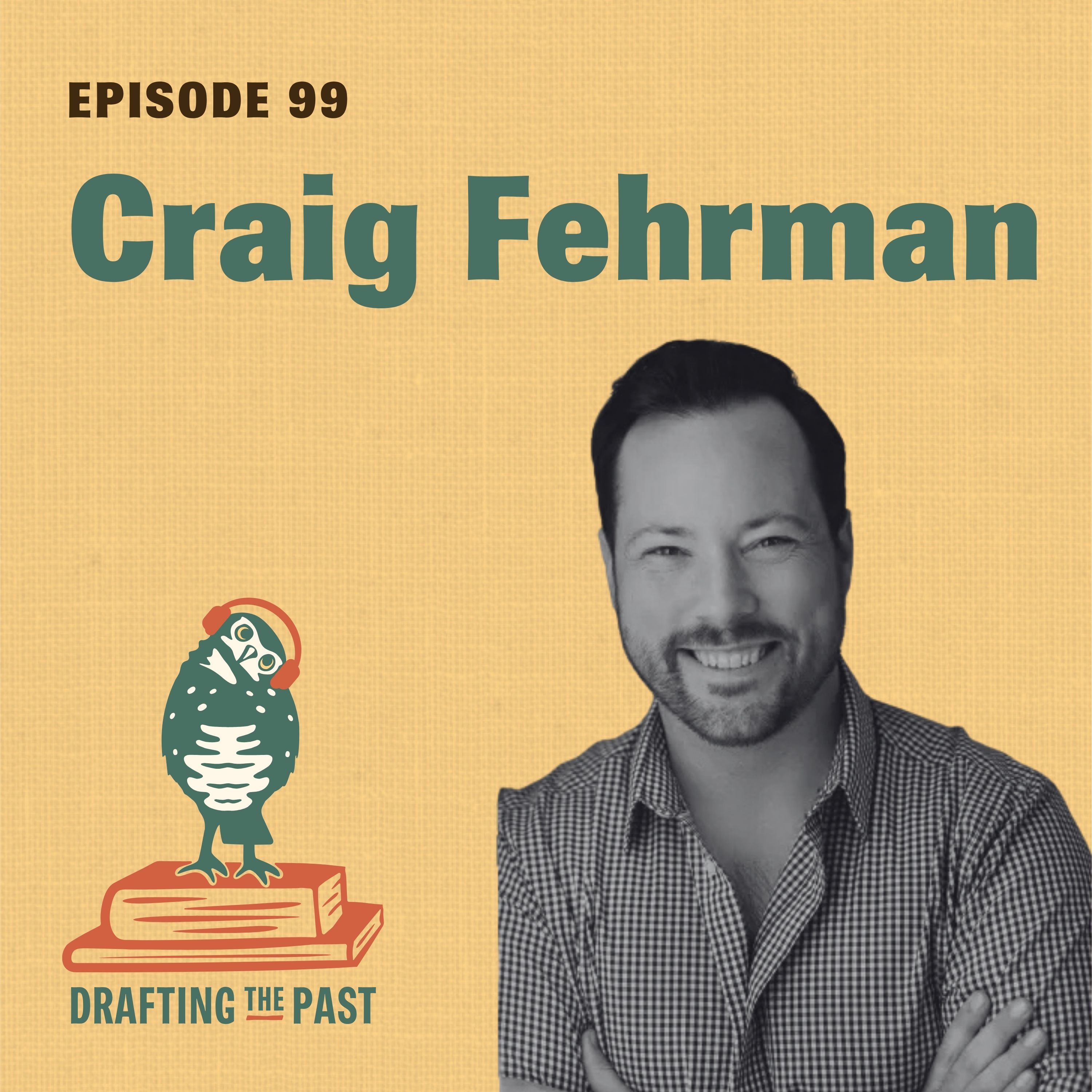
    Episode 99: Craig Fehrman Wanted to Write an Epic Page-Turner

    Is it possible to write a new history of Lewis and Clark (and get anyone to read it)? If you're Craig Fehrman, the answer is a definite yes! In today's episode, Craig joins Kate Carpenter to talk about his new book, This Vast Enterprise: A New History of Lewis & Clark. Craig is a journalist and historian who lives in Indiana, where he focuses on writing and occasional adjunct teaching at Indiana University. His first book was Author in Chief: The Untold Story of Our Presidents and the Books They Wrote. He has published articles and reviews in venues like Deadspin, the New York Times Book Review, and Boston Globe. In his new book, This Vast Enterprise, Craig retells the story of the Lewis and Clark expedition through the rotating perspectives of several members of the expedition, as well as some of the people they encountered along the way. The result is a nuanced, fresh version of this history that decenters the expedition leaders and introduces some new sources and interpretations! In the interview, We get into how Craig came upon those sources and how what he found allowed him to reinterpret other sources, like Lewis and Clark's expedition diaries. We also talked about his interviews with contemporary Native sources, how a creative constraint actually led to new insights, his approach to writing history as a page-turner, and much more. Sign up for the Drafting the Past newsletter for updates on the show and more. Note that bookshop.org links are affiliate links that generate a small commission to support the show if you purchase books using these links. Mentioned in this episode: Craig's website Craig Fehrman, This Vast Enterprise: A New History of Lewis & Clark Craig Fehrman, Author in Chief: The Untold Story of Our Presidents and the Books They Wrote Craig Fehrman, editor, The Best Presidential Writing: From 1789 to the Present Stephen E. Ambrose, Undaunted Courage: Meriwether Lewis, Thomas Jefferson, and the Opening of the American West Ken Burns documentary Lewis & Clark: The Journey of the Corps of Discovery Ned Blackhawk, The Rediscovery of America: Native Peoples and the Unmaking of U.S. History and Violence Over the Land: Indians and Empires in the Early American West Elizabeth Fenn, Encounters at the Heart of the World: A History of the Mandan People and Pox Americana: The Great Smallpox Epidemic of 1775-82 We Proceeded On journal from the Lewis & Clark Trail Alliance Isabel Wilkerson, The Warmth of Other Sons: The Epic Story of America's Great Migration Megan Kate Nelson, The Three-Cornered War: The Union, the Confederacy, and Native Peoples in the Fight for the West (Listen to Megan in DTP episode 1 and episode 94) Claire Keegan Carys Davies Rachel Aviv Lillian Ross Jill Lepore Louis Menand

  • S5 · E98
    May 5 · 40 min

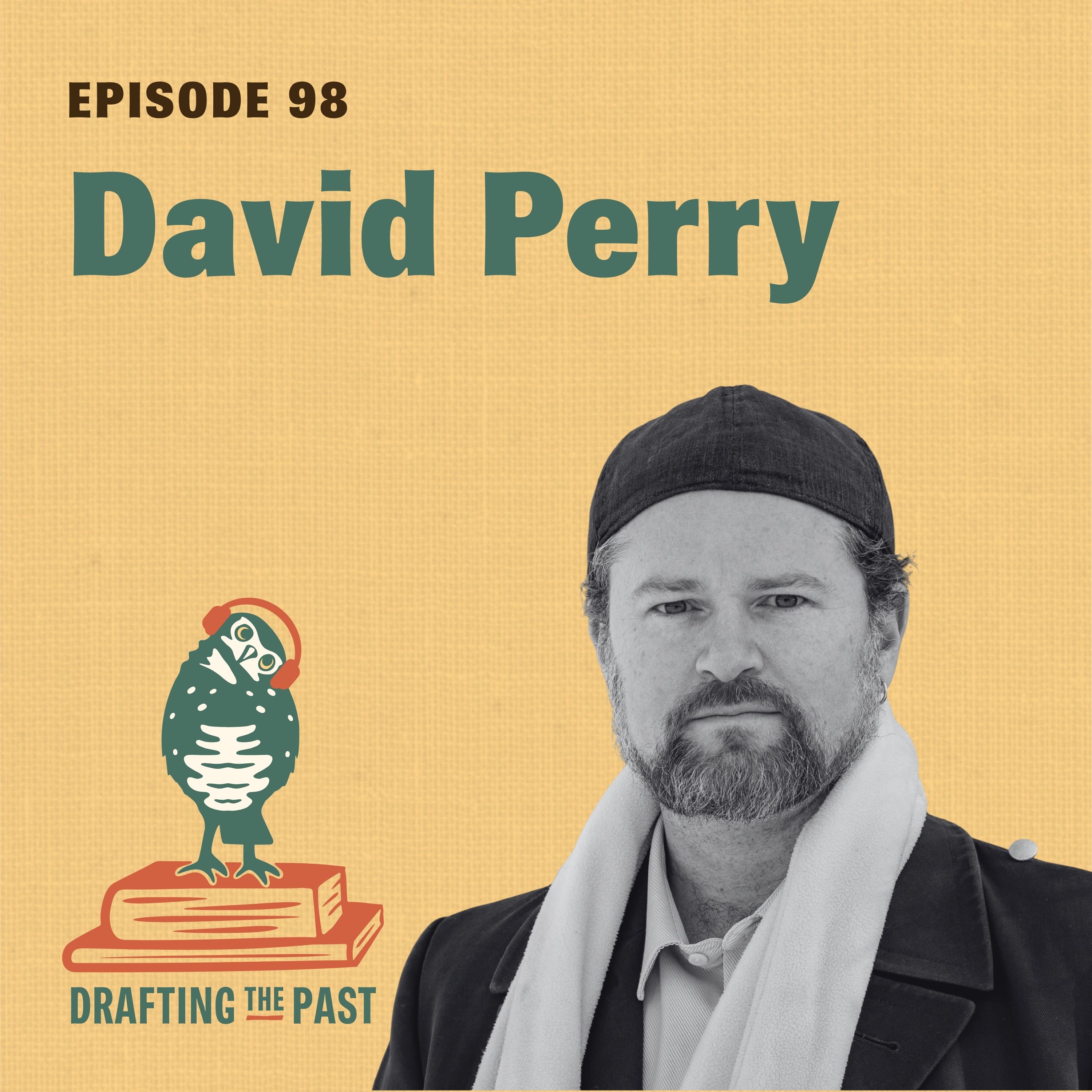
    Episode 98: David Perry Writes the Book on Public Scholarship

    David Perry returns to talk with Kate about his new book, The Public Scholar: A Practical Handbook. If you've ever been curious about writing essays or op-eds, but are unsure where to get started, David's book should answer pretty much any question you can dream up. I think this book is hugely helpful, and I was glad to hear more from David about why he wrote it—and to get answers to a few more burning questions about public scholarship (or, you know, just a pep talk). When David first joined me on Drafting the Past during the show's first season in 2022, we talked about The Bright Ages: A New History of Europe that he had just published with co-writer Matthew Gabriele. I highly recommend that you go back and listen to that episode, Episode 10. It's especially inspiring for anyone interested in co-writing or who does not find writing to come to them naturally. Since that conversation, David and Matthew have co-authored a second book called Oathbreakers: The War of Brothers That Shattered an Empire and Made Medieval Europe. And David has continued to write prolifically for the public. He has also been enthusiastic about giving other scholars the tools to do the same, and he started offering a workshop on public writing for university faculty and graduate students. Now, he's bringing that advice to all of us in a short, essential book called The Public Scholar: A Practical Handbook. Note that bookshop.org links are affiliate links that generate a small commission to support the show if you purchase books using these links. Sign up for the Drafting the Past newsletter for updates on the show and more. Mentioned in this episode: David's website David M. Perry, The Public Scholar: A Practical Handbook Matthew Gabriele and David M. Perry, Oathbreakers: The War of Brothers That Shattered an Empire and Made Medieval Europe Matthew Gabriele and David M. Perry, The Bright Ages: A New History of Europe Matthew and David's newsletter, Modern Medieval Drafting the Past Episode 10: David M. Perry Writes Out Loud David's Star Tribune column about Irish music: "This St. Patrick's Day, don't forget Irish music's anti-fascist roots" The Instagram reel promoting his column that we talked about at the start of the episode Tressie McMillan Cottom Irina Dumitrescu

  • S5 · E97
    April 28 · 49 min

    Episode 97: Emily Dufton Loves Paper (But Watch Out For Floods)

    Host Kate Carpenter is joined by drug historian Dr. Emily Dufton to talk about researching and writing Emily's newest book, Addiction, Inc.: Medication-Assisted Treatment and America's Forgotten War on Drugs. Emily holds a PhD in American studies and works full-time as a writer. Her first book was Grass Roots: The Rise and Fall and Rise of Marijuana in America. Thanks to her expertise in drug history, she regularly serves as a commentator on cannabis history and news, and she also writes essays and op eds for public outlets. Addiction, Inc. tells the history of medication-assisted treatment for illicit drug addiction, beginning with its emergence during President Richard Nixon's war on drugs in the 1970s as a radical approach to public health. From there she traces the controversies, missed opportunities, and privatization that have scrambled access to what is considered the gold standard of addiction treatment, even as America wrestles with an opioid overdose epidemic. Emily is the recipient of multiple awards that supported the book's creation, including a J. Anthony Lukas Works-in-Progress Award, a Robert B. Silvers Grant, and a Whiting Creative Nonfiction Grant. We spoke about the process of applying for those awards and why writers should try for grants, the home disaster that derailed the beginnings of this project, and how she balances feedback with her own vision for her book—even when there is A LOT of feedback. You'll also hear about whether she finds it lonely to write outside of an institution, and why she suggests that more historians pick up the phone and call their sources. Note that bookshop.org links are affiliate links that generate a small commission to support the show if you purchase books using these links. Sign up for the Drafting the Past newsletter for updates on the show and more. Mentioned in this episode Emily Dufton's website Emily Dufton, Addiction, Inc: Medication-Assisted Treatment and America's Forgotten War on Drugs Emily Dufton, Grass Roots: The Rise and Fall and Rise of Marijuana in America J. Anthony Lukas Prize Robert B. Silvers Foundation Works-in-Progress grants Whiting Creative Nonfiction Grant Pauline Kael's work at the New Yorker

    • Transcript
  • S5 · E96
    April 21 · 46 min

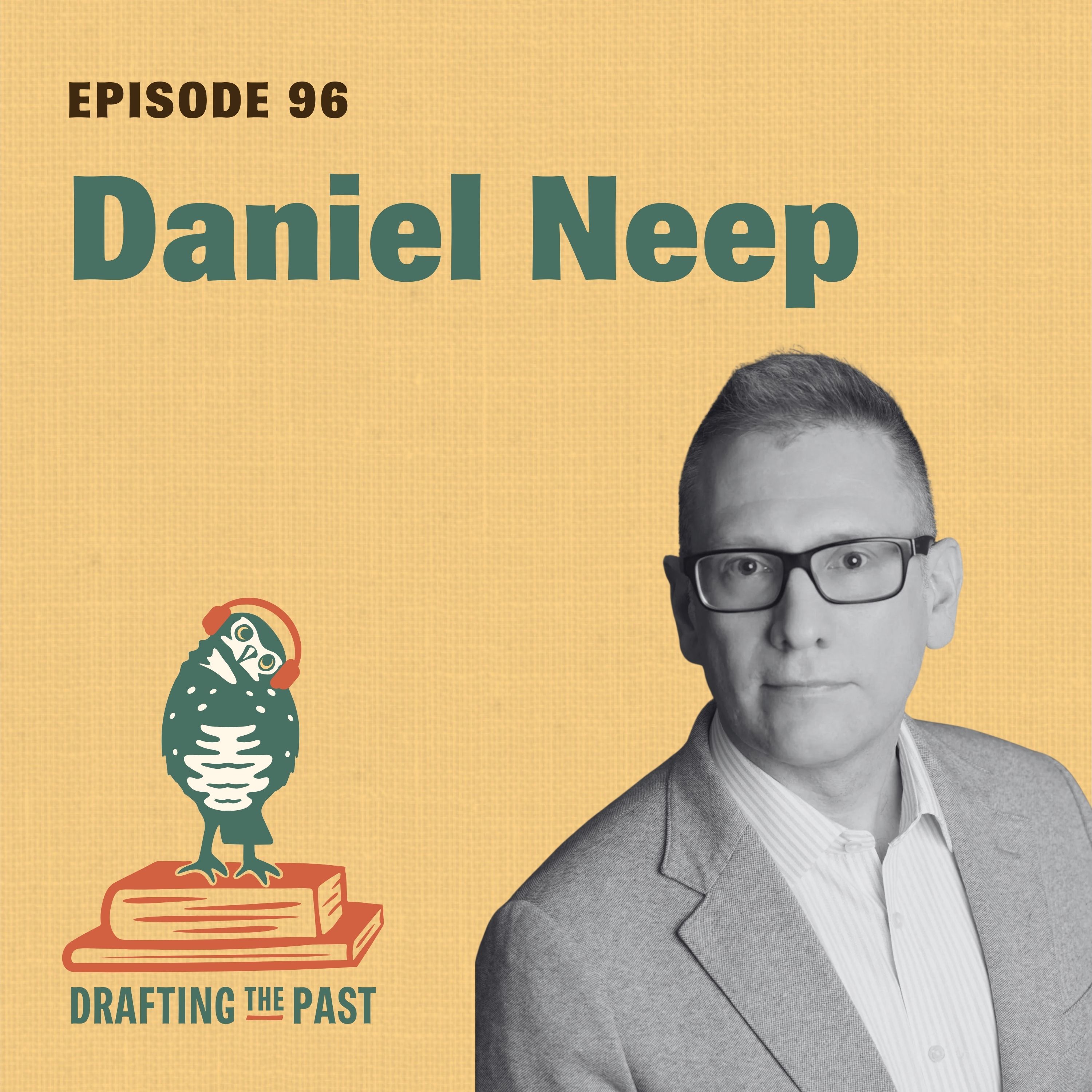
    Episode 96: Daniel Neep and the Power of Immersion

    In this episode, host Kate Carpenter is joined by Dr. Daniel Neep to talk about his new book, Syria: A Modern History. Daniel is a non-resident fellow at the Crown Center for Middle East Studies at Brandeis University and is currently senior editor at the Arab Center Washington DC, a think tank focused on the relationship between the Arab world and the US. Previously, he has worked as a faculty member, researcher, and leader at universities, NGOs, and research centers as he seeks to bridge academic work and institution building. He is the author of a previous book on Syria, as well as many articles and analyses in a wide variety of venues. His new book tells the history of Syria from the 1800s through the fall of the Assad regime in December 2024, focusing on how the Syrian people themselves have understood and advocated for their country's politics, economic relationships and social structures. Kate and Daniel talked about how his many years steeped in research about the Arab world and Syria went into this book, and how he thought about its structure and purpose. We also talked about some of the quirks of publishing a book in both the US and the UK, including how this one book has two slightly different titles, and about what it's like to be writing and revising a book when the ending is changing in real time. Note that bookshop.org links are affiliate links that generate a small commission to support the show if you purchase books using these links. Sign up for the Drafting the Past newsletter for updates on the show and more. Mentioned in this episode: Daniel Neep's website Daniel Neep, Syria: A Modern History (US version) Daniel Neep, A Modern History of Syria (UK version) Daniel Neep, Occupying Syria Under the French Mandate Arab Center Washington D.C. Timothy Mitchell, Colonizing Egypt Timothy Mitchell, Rule of Experts: Egypt, Techno-Politics, Modernity Michael Mann, The Sources of Social Power, Vol. 1

  • S5 · E95
    April 14 · 1 hr 2 min

    Episode 95: John Garrison Marks Starts Writing Before He's Awake

    In this episode, Kate is joined by Dr. John Garrison Marks, whose new book is Thy Will Be Done: George Washington's Legacy of Slavery and the Fight for American Memory. This is a fantastic book that takes a careful, and often surprising look, at how generations of Americans have remembered and forgotten George Washington's relationship to slavery and used that memory to bolster their own arguments. John Garrison Marks is the vice president of research and engagement at the American Association for State and Local History, so he is steeped in the role of public history across the country. He is the author of a previous book, Black Freedom in the Age of Slavery, and co-editor of an anthology. John has written essays and op-eds for outlets including TIME and Smithsonian Magazine. Recently, his expertise on the memory of Washington's relationship to slavery became particularly relevant when the National Park Service removed an exhibit about the history of slavery at the President's House in Philadelphia, and John was ready to jump into the fray and offer vital historical context. I asked John about the relationship between his work with public historians and how he thinks about writing history, as well as how he manages to write while having a busy day job and a young family. Note: Links to bookshop.org are affiliate links. If you purchase books through these links, Drafting the Past gets a small percentage at no additional cost to you. Thanks for supporting our guests and the podcast! Mentioned in this episode: John Garrison Marks, Thy Will Be Done: George Washington's Legacy of Slavery and the Fight for American Memory John Garrison Marks, Black Freedom in the Age of Slavery: Race, Status, and Identity in the Urban Americas John's website American Association for State and Local History (AASLH) John Garrison Marks, "We've Never Agreed About George Washington and Slavery," TIME Write Now with Scrivener Episode 60: John Garrison Marks, Historian Mary V. Thompson, The Only Unavoidable Subject of Regret: George Washington, Slavery, and the Enslaved Community at Mount Vernon Bill Hader's excellent writing advice John Vaillant, Fire Weather: On the Front Lines of a Burning World David Grann, The Wager: A Tale of Shipwreck, Mutiny and Murder Megan Greenwell, Bad Company: Private Equity and the Death of the American Dream Amanda Mull, "Do You Want a Boring Floor Lamp or an Ugly Floor Lamp?,"The Atlantic Sign up for the Drafting the Past newsletter for updates on the show and more.

  • S5 · E94
    April 7 · 1 hr 32 min

    Episode 94: Megan Kate Nelson Returns!

    In this episode, Kate welcomes back episode 1 guest Dr. Megan Kate Nelson as the very first return guest on Drafting the Past! Megan is a historian and the author of five books, and a Pulitzer Prize finalist. In our first conversation, we talked about Megan's writing process, favorite writing advice, and more. But in this episode, we're going deeper! While we talk about Megan's new book, The Westerners: Mythmaking and Belonging on the American Frontier, she's sharing a look behind the scenes at the timeline of a trade press book, how she balances promoting one book and researching the next one, and even some of the behind-the-scenes drama. Plus, she let me take a look at the book's original proposal, and share FIVE failed proposals before she landed on a winner for her next book. This episode is a rare glimpse into the nitty gritty of publishing as a trade press historian, and you're going to get a ton out of it. Plus, stick around to the end—we have a little (okay, BIG) announcement to share! Sign up for the Drafting the Past newsletter for updates on the show and more. Note: Links to bookshop.org are affiliate links. When you buy books through these links, you not only support the authors, you also help to keep Drafting the Past going. Thank you! Mentioned in this episode: Megan Kate Nelson, The Westerners: Mythmaking and Belonging on the American Frontier Megan Kate Nelson, Saving Yellowstone: Exploration and Preservation in Reconstruction America Megan Kate Nelson, The Three Cornered-War: The Union, the Confederacy, and Native Peoples in the Fight for the West Megan Kate Nelson, Ruin Nation: Destruction and the American Civil War Megan Kate Nelson, Trembling Earth: A Cultural History of the Okefenokee Swamp Drafting the Past Episode 1: Megan Kate Nelson Experiments with Structure Isabel Wilkerson, The Warmth of Other Suns: The Epic Story of America's Great Migration

  • S5 · E93
    March 31 · 47 min

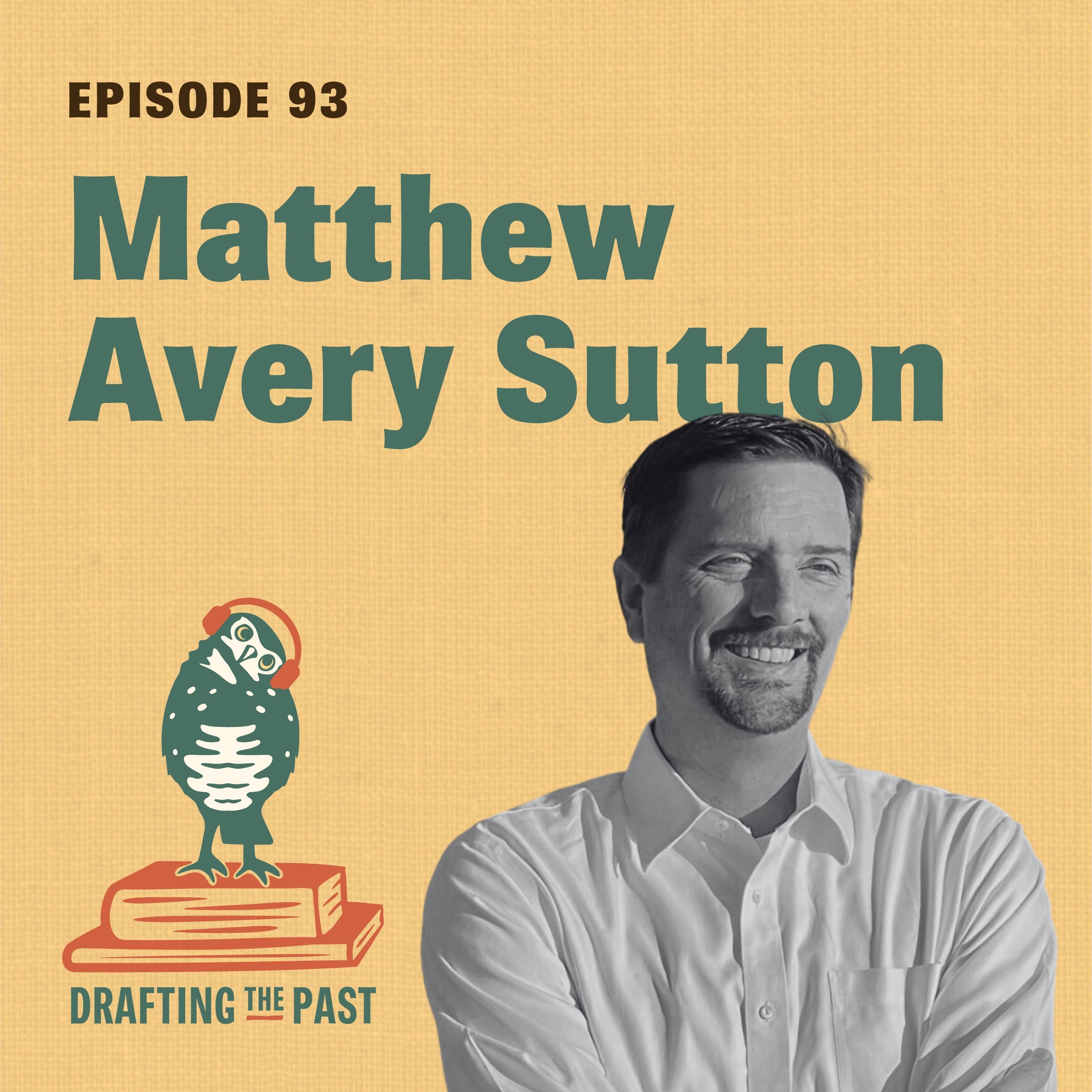
    Episode 93: Matthew Avery Sutton Religiously Opposes the Block Quote

    Before we get to the episode, I need a favor: Will you take a minute to fill out this survey about Drafting the Past, and let me know what is and isn't working for you about the show? It will help me bring even better episodes to you. Thanks in advance for your help! In this episode, I'm happy to welcome historian of religion Dr. Matthew Avery Sutton. Matt's newest book is called Chosen Land: How Christianity Made America and Americans Remade Christianity, following the relationship between Christianity and the nation from the arrival of the first Europeans up to Donald Trump's second term in office. Matt is the author of three previous books, along with an edited collection and a documentary history, and he regularly writes about the history of Christianity in America for a general audience. We talked about how he thinks about all those different audiences and how he keeps writing so much despite many personal and professional responsibilities—including seven years as department chair. Mentioned in this episode: Matthew Avery Sutton, Chosen Land: How Christianity Made America and Americans Remade Christianity Matthew Avery Sutton, Double Crossed: The Missionaries Who Spied for the United States During the Second World War Matthew Avery Sutton, American Apocalypse: A History of Modern Evangelicalism Matthew Avery Sutton, Aimee Semple McPherson and the Resurrection of Christian America American Experience: Sister Aimee Jane Sherron De Hart, Ruth Bader Ginsburg: A Life Grant Wacker, Heaven Below: Early Pentecostals and American Culture David Hollinger Stephen King, On Writing: A Memoir of the Craft John le Carré Jill Lepore, These Truths: A History of the United States Matthew Avery Sutton, "The antichrist has long haunted American politics. Now it's rearing its head again," The Guardian Note that bookshop.org links are affiliate links that generate a small commission to support the show if you purchase books using these links.

  • S5 · E92
    March 24 · 1 hr 6 min

    Episode 92: Rhae Lynn Barnes and the Writing Advice She Didn't Take

    In this episode, host Kate Carpenter is joined by Dr. Rhae Lynn Barnes to talk about book Darkology: Blackface and the American Way of Entertainment. Rhae Lynn is an assistant professor of history at Princeton University. With meticulous research and piles of evidence, Darkology reveals the widespread and persistent use of amateur blackface minstrelsy across the United States from the Civil War through the early 2000s. Rhae Lynn is also the co-editor of three books, the founder of open-access teaching resource U.S. History Scene, and was featured in and served as an executive advisor for the PBS documentary series Reconstruction. Researching and writing Darkology took a stunning amount of research, as well as a mental toll, and I'm grateful to Rhae Lynn for talking about how she grappled with all of it, the unusual challenges she faced when thinking about visuals for the book, and much more. Plus, she shares some excellent wisdom for how to keep going even when it seems too hard, or when you don't feel like you belong. Sign up for the Drafting the Past newsletter for updates on the show and more. Mentioned in this episode: Rhae Lynn Barnes, Darkology: Blackface and the American Way of Entertainment Rhae Lynn Barnes, Keri Leigh Merritt, and Yohuru Williams, eds., After Life: A Collective History of Loss and Redemption in Pandemic America Rhae Lynn Barnes and Catherine Clinton, eds., Roe v. Wade: Fifty Years After Rhae Lynn Barnes and Glenda Goodman, eds., American Contact: Objects of Intercultural Encounters and the Boundaries of Book History Rhae Lynn Barnes, "Yes, politicians wore blackface. It used to be all-American 'fun.'" The Washington Post Maya Angelou's 1992 commencement address at Spelman College, in which she tells her audience "bring your people with you" Sandra Cisneros, "I Hate the Iowa Writers Workshop" Note that bookshop.org links are affiliate links that generate a small commission to support the show if you purchase books using these links.

  • S5 · E91
    March 17 · 55 min

    Episode 91: Emily Lieb Writes (and Rewrites) Through It

    Historian and writer Emily Lieb's professional history is a fascinating one, from crafting textbooks for kids to leaving a job as a professor to become a full-time writer. She taught history and urban studies at Seattle University for more than a decade. Now, in addition to her work as a historian, she also works for the Derfner & Sons writing agency. Her first book came out in 2025 after many years of research, writing and revision. It's called Road to Nowhere: How a Highway Map Wrecked Baltimore, and it tells the story of a plan to build an expressway through Black, middle-class community in Baltimore, and how even though the road was never built, the plan paved the way for the destruction of a vibrant neighborhood. It's a history that echoes similar ones in cities across the United States, and Emily uses it to tell a fascinating but frustrating, deeply human story about racial inequality and the resistance of determined residents. Emily had a clear vision of how she wanted to tell this history, right down to the kind of book it should be, and you'll learn a lot in this interview from how she got there and her frank approach to writing and editing. Sign up for the Drafting the Past newsletter for updates on the show and more. Mentioned in this episode: Emily Lieb, Road to Nowhere: How a Highway Map Wrecked Baltimore Derfner & Sons Anne Lamott, Bird by Bird, the origin of the phrase "shitty first drafts" Andrew Hartman also praised editor Tim Mennel in episode 69 Calvin Trillin, "Thoughts Brought On By Prolonged Exposure to Exposed Brick" Note that bookshop.org links are affiliate links that generate a small commission to support the show if you purchase books using these links.

Showing 1–20 of 21 episodes