Skip to content
Artwork for Develop Yourself
EducationSelf-Improvement

Develop Yourself

Brian Jenney

To change careers and land your first job as a Software Engineer, you need more than just great software development skills - you need to develop yourself.
 
Welcome to the podcast that helps you develop your skills, your habits, your network and more, all in hopes of becoming a thriving Software Engineer.

Play
  • 20 episodes
  • weekly
  • Avg 22 min
  • English
  • Monday · 27 min

    They Made Me Senior Because I Quit

    We teach AI systems engineering at Parsity: parsity.io In this one I get into why senior is mostly a comp band with a name on it, the three things every senior actually needs to know/have, the big fish / small pond strategy I've been running for seven years, and the single move that gets you promoted faster than getting better at your language. Also: why you should stop replaying that interview where somebody corrected you.

  • August 17 · 7 min

    The 2 Skills That Will Keep You Employed as a Developer

    Become an AI engineer in 45 days. Join Parsity: https://parsity.io Being a "coder" is getting less and less about coding. I've been writing code for 12 years and I'm watching skills I worked hard for get automated. Counter-intuitively, I believe a new brand of software developer is going to be even more valuable and in demand going forward. Your existing skills aren't disappearing but the ones that matter the most certainly are. Book a call with me here: https://calendly.com/brianjenney83/15-minute-meeting-your-web-dev-roadmap-clone

  • August 10 · 43 min

    Teacher to Software Engineer. Do Coding Bootcamps Still Work in 2026?

    No one is hiring. AI took your job. Junior developers aren't needed anymore. I can't tell you how sick I am of hearing this but there is some truth to it. Things aren't roses and candy canes but they're not all doom and gloom either. Tom graduated from Parsity's coding bootcamp in 2025 and got hired faster than you might expect. There's no secret to his success but there are clues. He's got nothing to sell you but a lot to tell you.

  • August 3 · 34 min

    Former Yelp Eng Manager on Management, Mental Health, and the Move Most Devs Get Wrong

    Ryan Murphy spent five years as an engineering manager at Yelp on the team that owned the infrastructure behind every dollar moving through the company. He got the job the way a lot of people do, which is that his boss had no budget for a real engineering manager and asked if he'd try it. Most of this conversation is about the move from engineer to manager: what the job actually is, what he looks for before he'll move someone into it, and why he calls it a career change instead of a promotion. That last part is something I got told when I made the jump and completely ignored. I thought I was getting a bigger version of my old job. He also runs EM Accelerator, a training program for engineering managers, and Crying on the Sofa, a set of free mental health events for people in tech. He talks about the night that started the second one, sitting on his couch holding his newborn son. What we covered: The engineering manager archetypes, and how to spot which one a company is really hiring for What he watches during a production incident before he'll consider promoting you Why the strongest engineer on the team is often the wrong pick Why management is a career change, not a promotion Why there's so little real training for new managers, and what he teaches instead of one-on-one templates Whether a manager has to be regulated themselves to lead well Why he started Crying on the Sofa Who should not become an engineering manager His take on AI flattening orgs, and why he thinks people-focused managers matter more, not less Find Ryan: EM Accelerator: https://www.emaccelerator.com/ Crying on the Sofa: https://www.cryingonthesofa.org/ LinkedIn: https://www.linkedin.com/in/ryansmurphy1 Newsletter: https://www.softwareengineeringtimes.com/

  • July 27 · 18 min

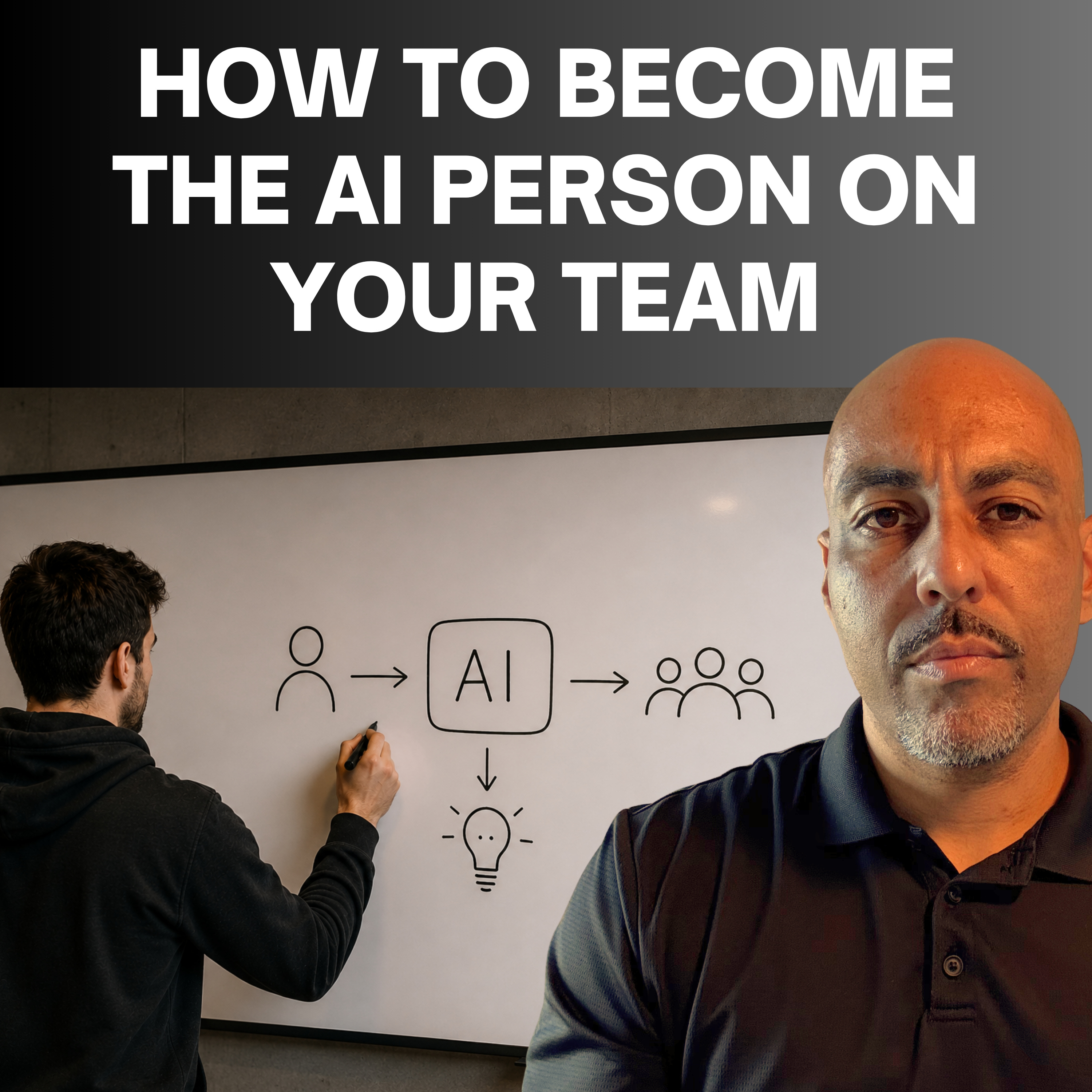
    How To Become the AI Person on Your Team

    Most engineers have read a lot about AI and built almost nothing with it. That is not a character flaw. It is the default. Stanford's AI Index puts numbers on the gap: a tiny fraction of households actually pay for AI tools, while nearly every company claims to be using it. Somebody is lying, and it is not the people quietly getting on with their jobs. This episode is about closing that gap. Two levels of leverage, both available to you without permission from anyone. Level one is team strategy. Skills, plugins, and shared config so your team stops solving the same problem fifteen different ways. Level two is connecting these tools to things that actually matter at your company. Your data, your documentation, your internal systems, with a human still in the loop where it counts. Plus why running a hackathon is the fastest way to find the problem worth solving, and what happened when I did it. Want to build this stuff instead of reading about it? Parsity's AI engineering program: https://parsity.io/ai-dev

  • July 20 · 18 min

    The Advice I'd Give My Own Kid About Getting Hired in Tech

    Want to actually build agents and RAG systems like the ones I mention in this episode? That's exactly what we do inside Parsity's AI engineering program: https://parsity.io/ai-dev I've been coding for nearly 12 years, I own and operate a coding bootcamp, and I've done over 1,000 free phone calls with people trying to break into tech. So this is the harsh advice I'd give you if you were my own kid. The stuff I can't really say on LinkedIn without getting flamed by people who've never worked a day in tech. The market for juniors is rough right now. That part is true. But most people trying to break in are doing the exact same thing as everyone else: building the same to-do app, obsessing over green dots on their GitHub, slapping "passionate junior developer" on their resume, and smashing LinkedIn easy-apply 1,000 times. That's your competition. And it's beatable. In this episode: Why "look junior, act passionate, wait for someone to take a chance on you" is a losing strategy How to build real, verifiable experience when you have none (start an LLC, get actual users, stop building toy apps) The one skill that actually matters now, and why "I use Claude" is table stakes, not a differentiator Why agents and RAG are still wide open. Even senior and staff engineers mostly aren't doing this yet Where the jobs actually are (small businesses and startups are hiring, big tech is slashing) and how to find them off LinkedIn The LinkedIn search-ranking trick most people ignore Why your timeline might take 2, 3, even 4 years, and why the ROI math still makes it worth it Stop outsourcing your brain to ChatGPT before you've even built the skill Take it all with a grain of salt. It's one opinion. But I'll never tell you to do something I haven't done myself or seen work firsthand. Free resources I mention: Parsity AI Engineering Program: https://parsity.io/ai-dev Free 5-Day AI Advisory Board course (build agents + RAG hands-on): https://www.parsity.io/5-day-ai-advisory-board Free RAG project (better than most paid ones): https://www.parsity.io/ai-with-rag The agent project I mention: https://www.parsity.io/ai-agent Gusto Small Business Jobs Report (hundreds of thousands of net new small-business jobs this year): https://gusto.com/resources/gusto-insights/smb-jobs-report-june-2026 My video on the entry-level hiring collapse, "Entry-level jobs didn't disappear. They moved. Got a question or something you want me to cover? Drop it in the comments. I get tons on YouTube but almost none on Spotify, and this is where the hardcore Develop Yourself crew lives. Comment away, it genuinely helps the show get found.

  • July 13 · 36 min

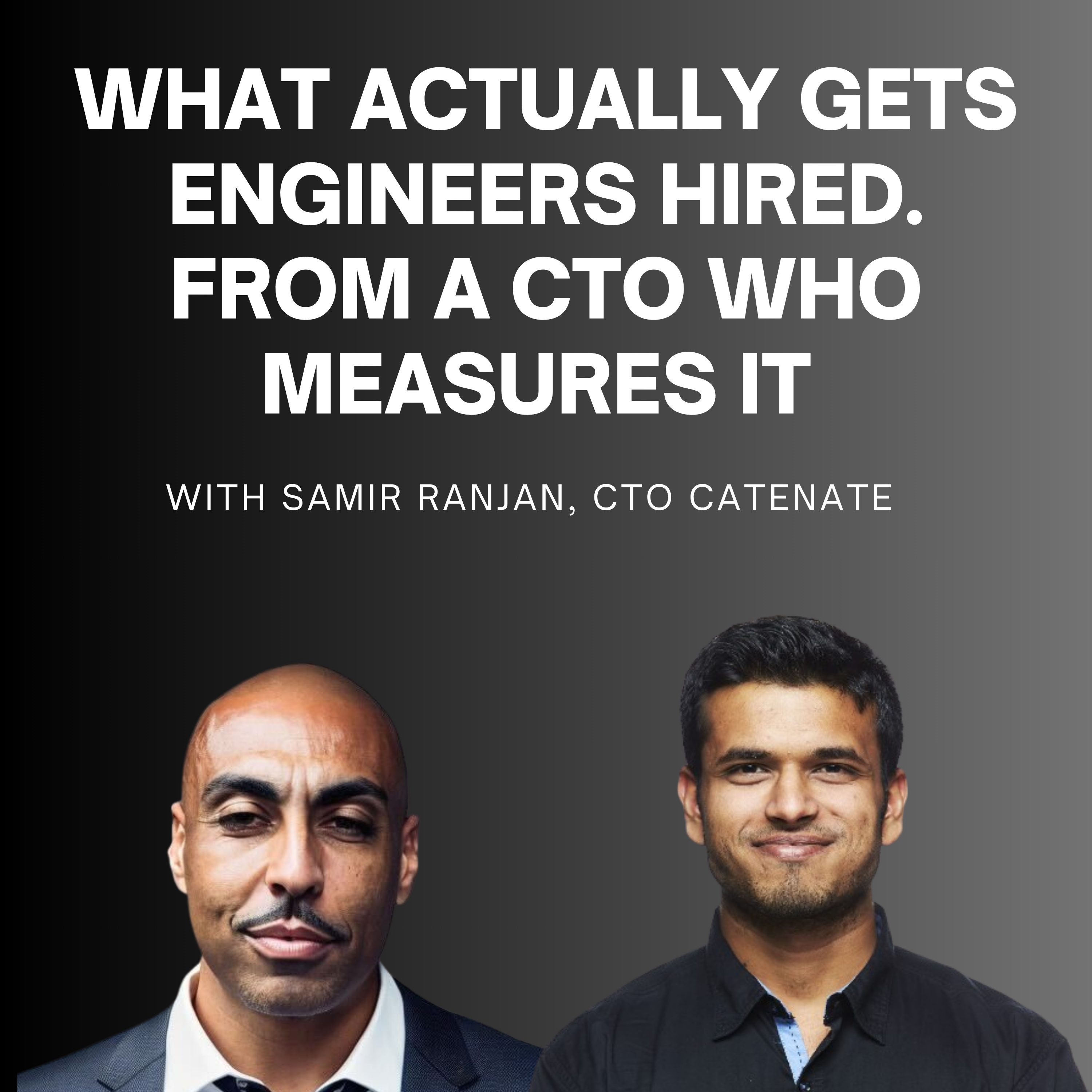
    What Actually Gets Engineers Hired, From a CTO Who Measures It

    Learn to build AI systems that companies actually pay for: RAG, agents, production LLM apps. Not YouTube tutorial toys. Real projects with a dedicated mentor who's shipped this stuff at scale. Spots are capped at 10 per cohort: https://parsity.io/ai-dev Who should software engineers marry? Not another software engineer, apparently. Samir Ranjan is the CTO and Director of Data Science at Catenate, where he built a patented platform that measures soft skills and personality to predict career outcomes. Translation: he has receipts on what actually gets engineers hired, promoted, and passed over. We get into: The 2 traits that separate good engineers from average ones (spoiler: it's not knowing every tool) Why "learning ability" beats technical knowledge in the AI era The age group struggling most with AI adoption (it's not who you think) What the data really says about junior devs getting replaced The new job roles coming by 2027: AI orchestrators and agent managers Why engineers should learn an art form (seriously) His weirdly practical advice for introverts: dress up and go to Target Who software engineers should actually marry Samir went from mining engineering a thousand feet underground to building AI career tools. If you're trying to make sense of a chaotic job market, this one's full of stuff you can actually use. Connect with Samir on LinkedIn and check out Catenate. Connect with me: LinkedIn: https://www.linkedin.com/in/brianjenney YouTube: https://www.youtube.com/@brianjenney

  • July 6 · 12 min

    How I'd Get to Senior Engineer Fast (If I Started Over)

    Ready to build production AI skills? Check out the Parsity AI Engineering program: https://parsity.io/parsityhome Too many people think getting to senior engineer means grinding LeetCode and memorizing every design pattern known to man. Wrong. I went from bootcamp grad in my thirties to senior engineer to engineering manager, and the thing that got me promoted had almost nothing to do with writing better code. In this episode I break down what senior engineers actually do differently: how they think about problems, why they say no more than they say yes, and the uncomfortable truth that your communication skills matter more than your ability to reverse a linked list. If you've been stuck at mid-level wondering what the secret handshake is, this one's for you. Spoiler: there's no handshake. Just a mindset shift most developers never make. What you'll hear: Why "better coder" is the wrong goal entirely The skill that actually separates seniors from everyone else How to get senior-level trust before you have the title What I screwed up on my own path (so you don't have to) Connect with me: Parsity AI Engineering: https://parsity.io/ai-dev YouTube: https://www.youtube.com/@brianjenney

  • June 29 · 30 min

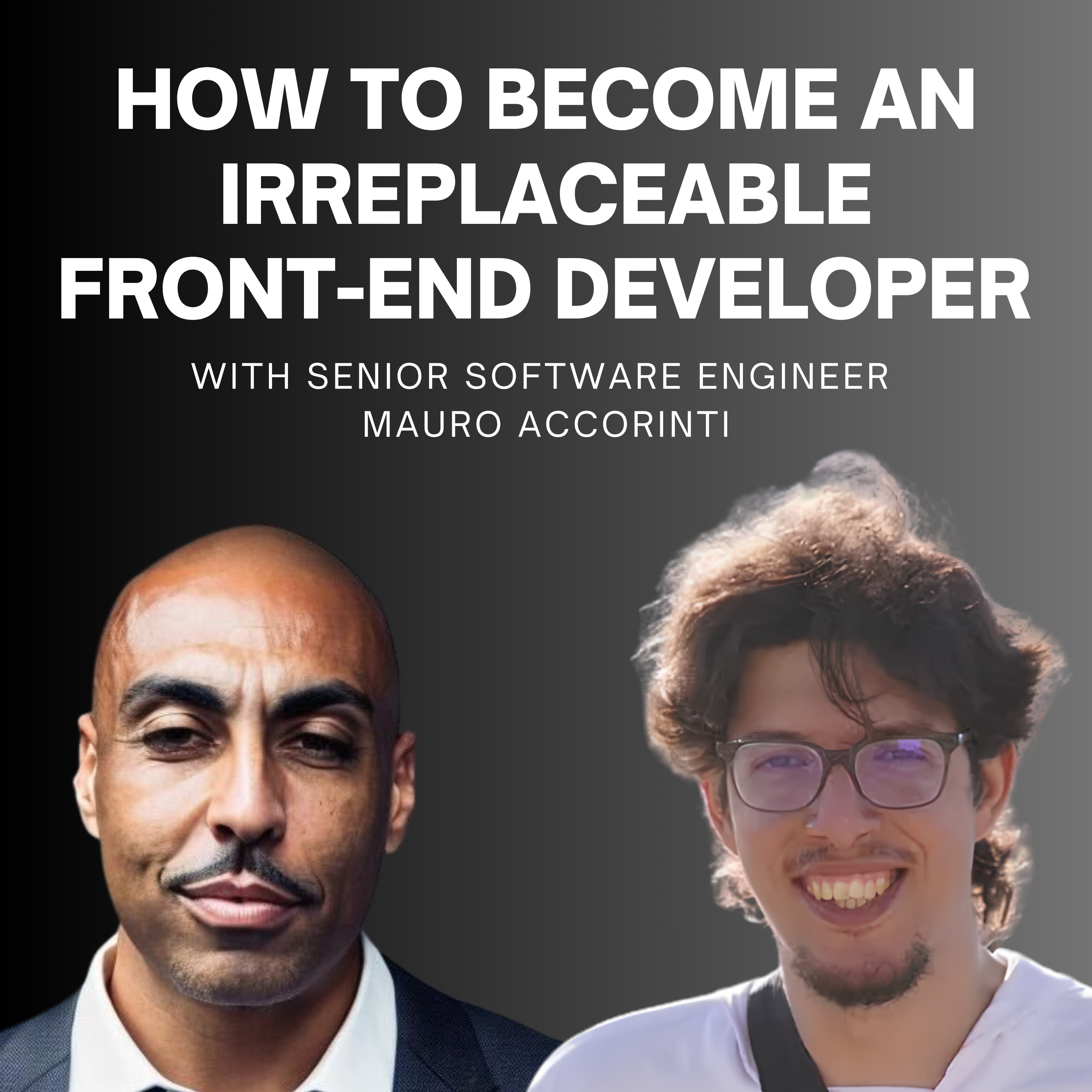
    How to Become an Irreplaceable Front End Developer

    Want to become an AI engineer? Learn the exact skills companies are hiring for at Parsity: parsity.io/ai-dev Everyone's screaming that AI is coming for frontend developers. Mauro Accorinti thinks most of them are missing the point. In this episode I sit down with Mauro, the writer behind Exceptional Frontend, to talk about why "frontend" is way more defensible than the doomers want you to believe. Spoiler: it was never just about centering a div. We get into: Why "irreplaceable" is a skill, not a job title. AI can spit out components all day. It still can't translate messy business problems into something a real human wants to use. That gap is where your value lives. The business-impact thing nobody teaches you. Mauro's whole thing is helping devs connect their technical work to outcomes the company actually cares about. Turns out "I shipped a feature" and "I moved the number that pays everyone's salary" are very different sentences. Is frontend actually dying, or is mediocre frontend dying? (Hint.) How to think about your career when the AI overlord keeps moving the goalposts. Practical stuff, not vibes. If you write code for a living and you've felt that low-grade panic every time a new model drops, this one's for you. Check out Mauro's newsletter: exceptionalfrontend.substack.com

  • June 22 · 17 min

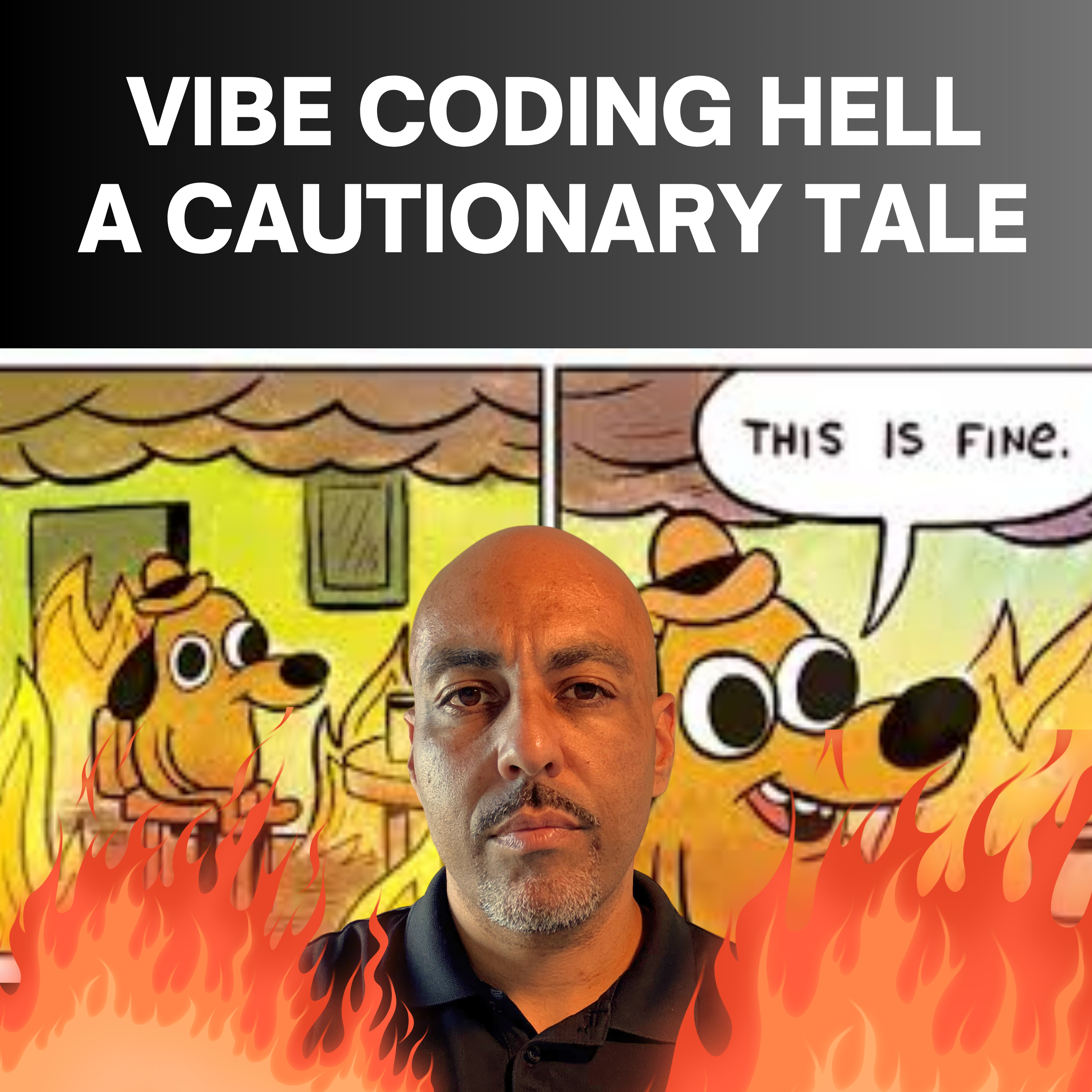
    Vibe Coding Hell: A Cautionary Tale

    Build AI systems at Parsity. I joined a fast-paced AI startup in early 2025 where the non-technical CEOs pushed an “AI-first” mandate—“twice as much in half the time with less people” and it turned into vibe-coding chaos. I'm still using AI to write 90% of my code with a very different approach on my new team. If you're feeling the pressure to "move faster" with AI, then this one's for you.

  • June 15 · 13 min

    Stability is a Myth (And It's Quietly Killing Your Career)

    Build AI systems. Build leverage in your career. Apply for Parsity's AI Engineer Cohort Stability is a myth, and chasing it might be the riskiest thing you do in your whole career. Here's how to use risk on purpose instead. Everyone says find a stable job and hold on tight. That's the worst advice in tech, and I've got the receipts. The "safe" path is a trap. Here's how taking the right risks (job hopping, betting on AI early, volunteering for stuff you can't do yet) actually builds real security.

  • June 8 · 30 min

    How a Recent Grad Got Hired in a Brutal Tech Market

    Connect with Salil here: https://www.linkedin.com/in/salil-monga/ If you're trying to make the jump into AI engineering, join Parsity: https://parsity.io/ai-dev Salil Monga had a 4.0 GPA, applied to over 1,000 jobs, and landed three interviews. Not one of the jobs he actually got came from those applications. I sat down with Salil, now CTO of Cupe Connect, to dig into how you actually get hired in a difficult market: warm connections over cold applications, fundamentals over chasing the "golden stack," and why he walked into an interview thinking JavaScript was Java and still walked out with the offer. What we get into: - The 1,000-applications, 3-interviews reality, and why the applications were the wrong game to begin with - How every job he landed came from a professor or a peer, not a job board - Getting emotionally wrecked by applications, and the strategic mindset that fixes it - Using AI to actually learn instead of copy-pasting answers, and how he taught students to do the same - Why there's no golden stack, and how he shipped an iOS app having never built one before - Why fundamentals and problem-solving beat the framework of the month - How LeetCode quietly came back as a hiring filter, and how to treat it like one instead of hating it - Treating interviews as a game of chance you can tilt in your favor with rapport - Cube Connect: his no-algorithm, 50-meter-radius iOS app built to get people talking in real life again Salil is one of the more generous guests I've had on. He literally offered to review resumes and talk shop with anyone who reaches out, so go take him up on it.

  • June 1 · 12 min

    Just Cheat! (an anti-guide to cheating on interviews with AI)

    A few spots left for Parsity's AI Engineer Cohort. Apply here I told candidates they could use Claude, Cursor, anything they wanted in their AI engineering interview. Half of them still cheated. Badly. I break down what cheating looked like and why you should re-consider it if you're thinking about it... even if you don't have any moral qualms against it 😅

  • May 25 · 15 min

    Software Developer Layoff Survival Guide

    Build AI engineering skills at Parsity. Spots filling fast. It's been a rough week. Meta just laid off 8,000 people, and then the CEO of ClickUp — a company most people have never heard of — went online to brag about cutting 20-something percent of his staff even though they're profitable. No financial pressure. Just vibes. Just "AI made our engineers 100X more capable" so we don't need these people anymore. Then he had the nerve to talk about million-dollar salary bands for the survivors while publicly dunking on the people he just fired. I'm not here to cover the Meta layoffs. There are a hundred channels doing that. I'm here to talk about the people nobody covers: the developer at the 50-person company who gets two weeks and a Slack message. The person who doesn't have a FAANG brand on their resume to fall back on. That's who I was when I got laid off in 2023. In this episode I get into what actually happened when I got canned - the Zoom call with the person you've never seen before, the access revocation, the immediate panic. What I did right after (not much). What I did wrong (a lot). The psychological damage that nobody talks about, and the things I wish somebody had told me before I spent weeks spiraling. This isn't a "5 tips to be layoff-proof" episode. I don't think layoff-proof exists. This is what it actually feels like, what actually helps, and what I'd do differently if it happened again tomorrow. Because it might. Your company doesn't have any loyalty to you, no matter how good things seem right now. If you're going through it, you're not alone.

  • May 18 · 13 min

    The Pros and Cons of Being the Worst Developer on the Team... and the Best

    8 spots left in the AI engineer cohort. Join here: https://parsity.io/ai-developer Ever get that feeling you're the worst developer on your team? And worse - that it's not in your head, you actually are the weakest link in the room? I've been on both ends. I've been the best developer on the team, and I've been objectively the worst And here's the thing nobody tells you: they're each worse than you'd expect, just in different ways. In this episode I get into what being the best actually cost me, why being the worst is psychologically brutal but might be the best thing for your career, and the one reframe that turned it around for me.

  • May 11 · 35 min

    From Amazon Warehouse to Software Developer: Carter's 4-Year Grind

    Free interview prep guide: ⁠https://www.parsity.io/interview-prep⁠ Free career roadmap for developers: ⁠https://www.parsity.io/career-roadmap⁠ Carter Nadain spent four years trying to break into software development. He started with a bootcamp in 2022, got his CS degree, worked at Amazon delivering packages, sent out thousands of applications, and went through every kind of setback you can imagine — including having to move back in with his mom at 25 and completely restart his life. In this episode, Carter shares what actually worked: the interview tip that landed his current job, why recording yourself talking through problems is the most underrated prep strategy, and how he stayed consistent for four years when most people quit after three months. We also get into imposter syndrome, what it's really like walking into your first dev job, and why this career rewards people who refuse to stop.

  • May 4 · 25 min

    Our AI Engineering Curriculum Exposed

    Join the free weekly live session: parsity.io/ai Hope I don't regret this. I'm giving away the exact AI engineering curriculum I teach at Parsity. The same stuff that helped change my own career trajectory and has recruiters sliding all in my DMs. How LLMs actually work (and why knowing this helps you push back on the hype) RAG from scratch — embeddings, vector databases, chunking strategies Building with Pinecone, Weaviate, or Qdrant Structured outputs with Zod + OpenAI/Anthropic SDKs Observability with LangSmith LLM-as-Judge evals so your agents don't silently degrade There's a free project linked below where you build a LinkedIn writing clone using my actual posts and articles as training data. No fluff, no theory. Just build the thing. 💅 Free RAG project: https://www.parsity.io/ai-with-rag

  • April 27 · 34 min

    How to Land A Junior Developer Job in 2026 (LinkedIn, Side Project, Networking and Interviews)

    Register for my live event on how you can build practical AI skills to give you an unfair advantage in the job market: parsity.io/ai I am so sick of the doom and gloom narrative. Things are tough, but not impossible. If you're treating the job market like it's 2019, you're setting yourself up for failure. Let's go over LinkedIn (so cringe, I know), interviews, networking without being weird and the side project you need to build. You can grab my FREE interview prep material here: https://parsity.io/interview-prep

  • April 20 · 14 min

    The 3 AI Skills That'll Actually Get You Hired in 2026 (Level 1, 2, and 3)

    A few years ago, my advice to developers would've been simple: learn the fundamentals, get good at system design, master your language of choice. And honestly? That advice still feels good to give. But it doesn't feel right anymore. Knowing how to code is table stakes now. It's not enough to get you hired. In this episode, I break down the three levels of AI skills I'd be investing in right now if I was a new grad, a bootcamp grad, or even a senior engineer looking to transition — and why the bar for "hireable" has shifted dramatically in the last few years. Level 1: Actually getting good at the tools. Not being a prompt monkey — having opinions on Claude, Cursor, git worktrees, and knowing why you accept or push back on what the agent gives you. Level 2: Building on top of AI. MCP servers, RAG pipelines, agents. This is where the biggest career opportunity is right now, and it's where the smallest pool of people actually know what they're doing. Level 3: The deep end: data engineering, pipelines, model hosting, fine-tuning. Less sexy, fewer positions, but massively defensible if you get in early. If you're trying to figure out where to put your time right now, this one's for you.

  • April 13 · 11 min

    3 Javascript Concepts That Will Level You Up as a Developer

    "There are only two kinds of languages: the ones people complain about, and the ones nobody uses." JavaScript gets a lot of hate—but it’s still everywhere for a reason. In this episode, I break down three underrated features: web workers, generator functions, and web components and how to use them in a practical way. Shameless plugs: Apply for our AI Engineer Cohort: https://parsity.io/ai-dev Apply for our software engineering program: https://parsity.io

Showing 1–20 of 20 episodes