Skip to content
Artwork for Deep in Japan
Society & CultureEducationExplicit

Deep in Japan

Deep in Japan

A hodgepodge of guest interviews, personal narratives, recent news, history, and Japan-related memes and cultural phenomena.

If you enjoy the show, please consider supporting us on Patreon: https://www.patreon.com/deepinjapan. Deep in Japan is an independent, crowd-funded project - so every yen helps keep it alive and kicking!

Got something to say? Catch me deep.in.japan.podcast@gmail.com

Thanks for listening!

Play
  • 20 episodes
  • fortnightly
  • Avg 2 hr 44 min
  • English
  • #48
    Friday · 1 hr 21 min

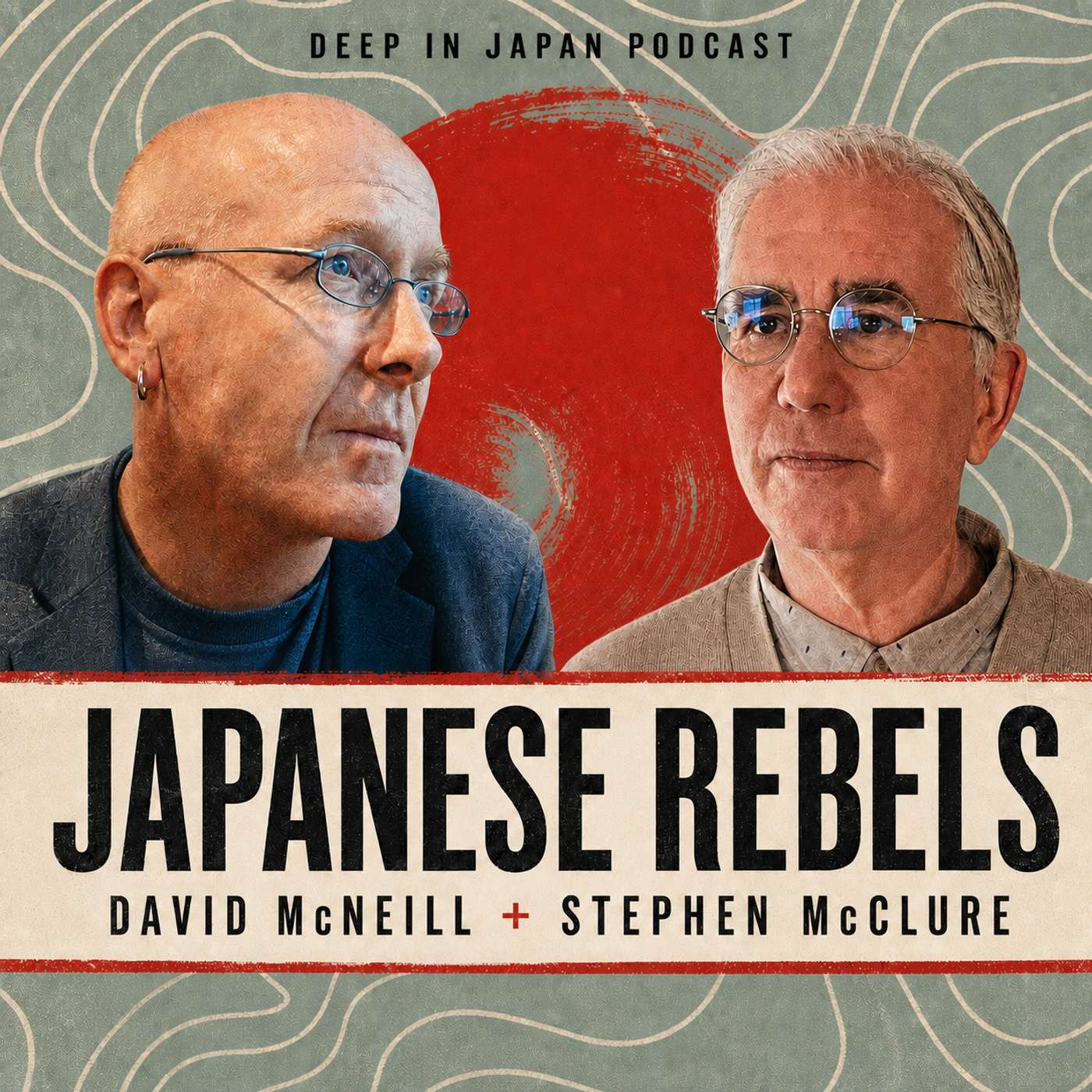
    Japanese Rebels with David McNeil and Stephen McClure

    Japan is often described as a place where the nail that sticks up gets hammered down—but what about the nails that refuse to stay down? In this episode, we speak with scholars and journalists David McNeill and Stephen McClure about their new book, Japanese Rebels: Non-conformists in a Conformist Society, which profiles a number of figures who challenged the prevailing orthodoxies of Japanese politics, religion, art, entertainment, journalism, and social life. The conversation explores openly gay political pioneer Togo Ken, cannabis activist Takagi Saya, artist Rokudenashiko, journalist Ito Shiori, Yoko Ono, Amakusa Shiro, the massive 1960 AMPO protests, and the battle over Narita Airport. Along the way, David and Stephen consider what makes someone a rebel, why not every rebel is a hero, how Japanese society marginalizes dissent, and why work, prosperity, mortgages, and fading historical memory can gradually drain a movement’s rebellious energy. If you like the show, consider supporting us. Every little bit helps keep the lights on. And while you’re at it, join the conversation over on Facebook and follow us on X/Twitter at @DogePunk2077. For inquiries, complaints, spiritual confessions, you may be able to reach us at deep.in.japan.podcast@gmail.com. Then again, you may not. Show supporters, naturally, jump the queue. :) The musical outro (Hammered Down) can be found here, along with various other Deep in Japan tracks. Thanks for listening!

  • #47
    August 23 · 4 hr 45 min

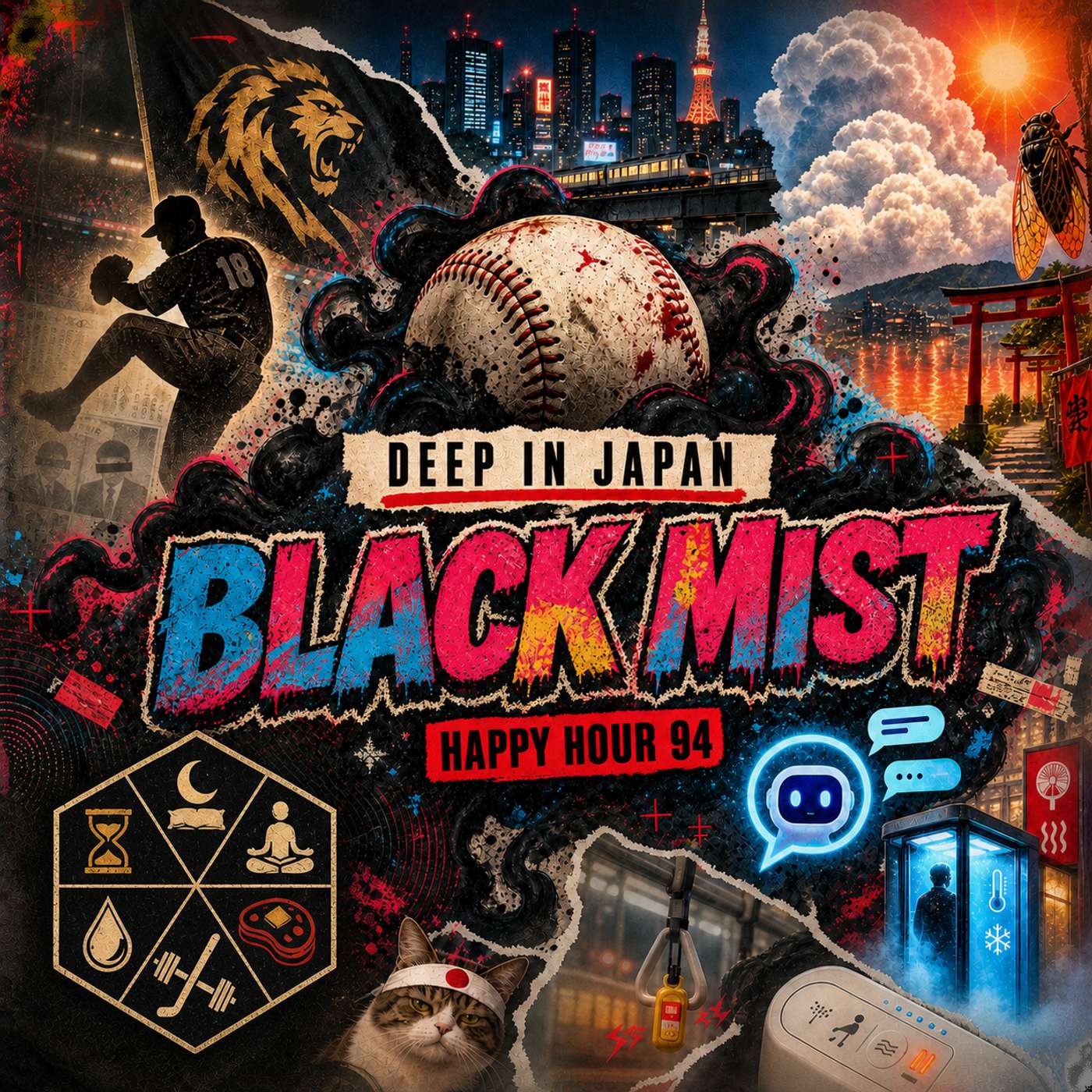
    Happy Hour #94: BLACK MIST

    This is Happy Hour #94: BLACK MIST The episode opens with Jeff accusing Trevor/Trey of being twelve minutes late, Trevor insisting it was two, and both immediately blaming suspicious waveforms and future audio problems on the other (American punctuality, sanding-induced camera refusal, and early concern about 音質); Jeff congratulates Trey on intermittently reaching ketosis, then reframes keto failure as experimentation rather than shame—recover from a bad meal, identify the breaking point, and resume immediately (graceful failure beats the “fuck it” spiral); Trey recounts a prolonged crash-out involving weight regain, a stubborn plateau, heart-health concerns, quitting hockey, social isolation, and the difficulty of losing weight while training, while Jeff argues that metabolic adaptation may take months and reports that six months of keto helped him lose roughly twelve kilograms, regain pull-ups, carry kettlebells, dead-hang for two minutes, and buy a weighted vest (Piccolo’s weighted cape and boots remain the superior training system); they audit Trey’s meals—four eggs, sausage patties, Costco rotisserie chicken, ground turkey, broccoli, green beans, salsa water, almonds, and macadamias—while Jeff treats eggs as a religion, distrusts every processed ingredient, and proposes increasingly terrible podcast names including Two Guys Zero Carbs, Keto Bros, Steak and Eggs, Deep in Ketosis, and Ketone Maxing (white rice becomes “white weiss,” “two or three” becomes “two tree,” and every meal earns claps); Trey’s real obstacles are sugary caffeine, late-night cravings, inconsistent hydration, and the ten percent of extra bullshit that destroys an otherwise keto-compatible day, but a sleep study reveals apnea and a new CPAP lets him sleep eleven and a half hours, feel awake, work productively, accept the podcast invitation, and publish three articles in three days (the apparent God Mode was sleep, not ketones); this produces the episode’s central philosophy, the Keto Shield: sleep, meditation, fasting, hydration, keto, and exercise arranged as six mutually reinforcing points inside a hexagonal shield (Jeff imagines intersecting divine triangles; Trey insists that hexagons are the bestagons), with sleep as the foundation because poor sleep disrupts hunger, judgment, mood, and every other habit; Trey scores himself 12/30—sleep 4, exercise 5, keto 1, hydration 2, meditation 0, fasting 0—while Jeff lands near 22/30 and challenges him to reach 20 by the next episode (points measure consistency, not mystical meditation quality); they argue that keto makes fasting easier, distinguish strategic social carb meals from total cheat days, joke about Ozempic “stolen valor,” and envision 30/30 as an almost unattainable state of creative, physical, and philosophical superpower; Jeff, newly fifty, says his goal is not merely looking good in a Speedo but thinking clearly, moving without pain, living long enough to play with grandchildren, and avoiding the inflammation, brain fog, intestinal trouble, irritability, and physical decline he felt before recommitting to keto (Trey still considers the Speedo aspirational); a proposed book evolves from The Deep in Japan Diet: How Two Fat Middle-Aged Podcasters Found the Secret to Six-Pack Abs Deep in Japan toward The Keto Shield, complete with an AI-generated cover and a possible steak-dinner six-pack wager; Trey then uncovers a 2014 email showing Jeff beginning keto before their friendship properly started, meaning keto evangelism predates their first mountain climb, Trevor’s lost apartment key, and nearly everything else in their relationship (Jeff says keto relieved years of debilitating allergies, though the discussion remains personal testimony rather than medical proof); good sleep leads into Trevor’s new Deep in Japan articles: Uni, the Japanese Cat presents a satirical interview with an internet-famous cat whose nationalist translator turns meows, blinks, box-sitting, and Roomba hissing into opinions about immigration, globalization, education, national confidence, and Saitama (Uni may simply be a cat); Obachan’s Going to Jail explores elderly Japanese women allegedly committing petty theft to obtain food, healthcare, companionship, work, supervision, and purpose in prison (an eight-dollar onigiri theoretically unlocks tens of thousands of dollars in state support), prompting discussion of aging, poverty, loneliness, prison incentives, paywalls, sourcing “the sauce,” and Japan’s weak yen; with the dollar around ¥163, they discuss the widening divide between people paid in dollars and yen, Jeff’s taxes, Miho’s repaired Vellfire and overlooked alignment, Japan’s gold driving licenses, elderly-driver marks, and locals’ horror when Jeff jokingly displayed one at forty; bumper stickers open a tangent on Japanese political signaling—outdoor-brand stickers, black-and-gold chrysanthemums, uyoku trucks, nationalist four-character slogans, anti-foreigner signage, yak-styled houses as burglary deterrents, and the idea of disguising Jeff’s vehicle as an intimidating right-wing machine (foreigners could theoretically be “erased,” one truck driver at a time); the next article follows a teenage girl who catches a fifty-eight-year-old taking upskirt photos and escorts him to police, leading to debate over whether she physically dragged him, whether train perverts are weak-willed “beta-cuck pajama boys,” and how girls should respond (judo grips, alarms, pointing and shouting “chikan,” direct eye contact, emergency plans, visible hands, or school-issued sasumata); Jeff then recounts witnessing a man violently assault a woman on a station platform during his early Japan years, intervening with limited Japanese—essentially “stop” and “please be gentle”—standing between them while everyone else looked away, then boarding his train only to see the attack resume as the doors closed (fear of violence, deportation, bystander paralysis, lasting regret, and the limits of imperfect intervention); the conversation moves to a ¥1.5-million “human refrigerator,” a wheeled one-person cooling booth inspired by vending machines and designed for construction sites, farms, commutes, concerts, and sports days (ideally paired with fan vests, a cooling hood, fried chicken, and two Gundam buckets of Strong Zero); Jeff mourns the end of his children’s undōkai era and learns that older sports days once had food stalls and drinking, while both imagine privately installing a refrigerator box at the field and watching everyone else roast; the joke turns serious as they discuss Japan’s increasingly dangerous heat, children and elderly people collapsing, air-conditioning in schools, and figures they pull for 2026 showing tens of thousands of ambulance transports and a majority of patients over sixty-five (the missing statistic is heat-stroke deaths among bears); Trey recalls climbing Kyoto’s Fushimi Inari area during a 41°C day in 2019 without enough water, barely reaching his hotel, collapsing in front of the air conditioner, and abandoning the rest of his Kyoto plans (heat plus humidity defeats gaman); a technology tangent covers Claude’s opaque premium-token billing and default model selection, OpenAI’s unnervingly lifelike Japanese voice “Sol,” conversational fillers so natural that it feels like a real woman reminiscing about Oregon, and the possibility that AI will first join and then entirely replace the podcast hosts; they next examine an article about a famous baseball coach whose eighteen-year-old daughter asked ChatGPT what to do after he pushed her down during a family argument, followed ChatGPT’s suggestion to contact a human support service, and was shocked when the service automatically contacted police, leading to his arrest and resignation (ChatGPT connected her to people rather than directly adjudicating the crisis); Japanese media, in their telling, focused less on the father’s behavior or the reporting service and more on AI dependency,...
  • #46
    August 14 · 1 hr 33 min

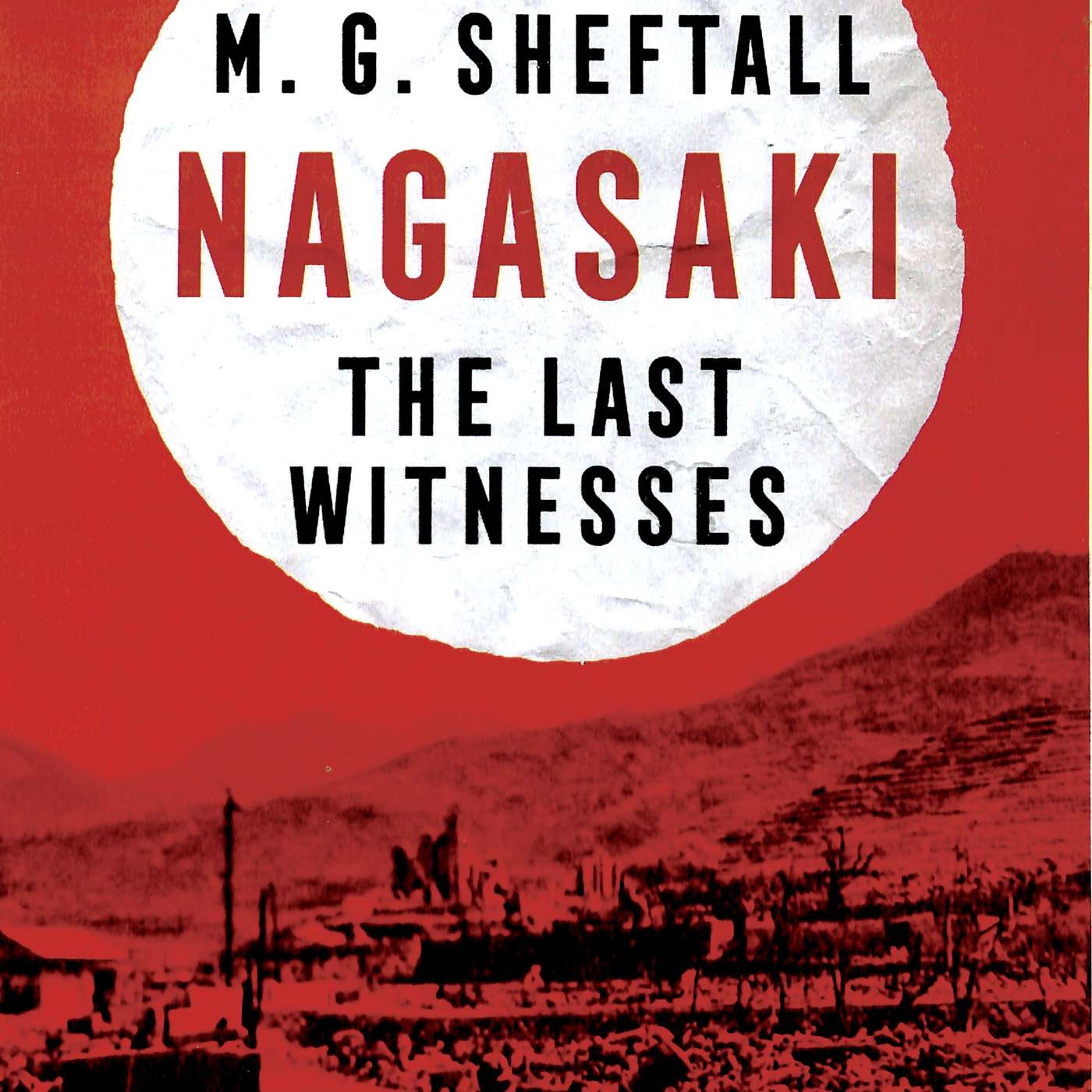
    NAGASAKI: The Last Witnesses

    Historian M. G. Sheftall returns to discuss Nagasaki: The Last Witnesses, the second volume of his Embers series documenting the atomic bombings through military history and the testimony of the hibakusha who survived them. The conversation places Nagasaki within the wider escalation of the Pacific War—from precision bombing to incendiary attacks on cities—and reconstructs the troubled mission that carried the atomic bomb from its original target, Kokura, to Nagasaki. Sheftall recounts the mechanical failures, bad weather and split-second decisions that culminated in the destruction of Urakami, the centre of Japan’s largest Catholic community. The episode also explores the survivors’ experiences, the political struggle over Japan’s surrender, and why Hiroshima became the dominant international symbol of nuclear war while Nagasaki receded from public memory. Finally, Sheftall considers what may change as the last living witnesses disappear—and as memories of Hiroshima and Nagasaki exert less influence over debates about Japanese pacifism and constitutional revision. Here is a full list of his books and links to purchase: Hiroshima: The Last Witnesses (Amazon US & Amazon Japan) The first volume of the Embers series, built around the testimony of Hiroshima’s surviving witnesses. Nagasaki: The Last Witnesses (Amazon US & Amazon Japan) The second and concluding volume of the Embers series, recounting the bombing of Nagasaki and its aftermath through survivor testimony. Blossoms in the Wind: Human Legacies of the Kamikaze (Amazon US & Amazon Japan) An oral history examining the lives, experiences, and legacies of Japan’s kamikaze pilots. The outro song was Kyōkun I (教訓Ⅰ) by Kagawa Ryō (加川良), a Japanese antiwar folk song that rejects the demand that ordinary people surrender their lives to the state. You can listen to the track and reference English lyrics here. Enjoying the show? Consider supporting us. Every little bit helps keep this magnificent shitshow lurching forward. And while you’re at it, join the conversation over on Facebook, and follow us on X/Twitter at @DogePunk2077. For inquiries, complaints, spiritual confessions, legal threats, guest pitches, or reasonably coherent messages, you may be able to reach us at deep.in.japan.podcast@gmail.com. Then again, you may not. Show supporters, naturally, jump the queue—so if you’re one of the blessed few, The Chosen, be sure to mention that at the top of your message for maximal response potential. Thanks for listening!

  • #45
    August 5 · 1 hr 37 min

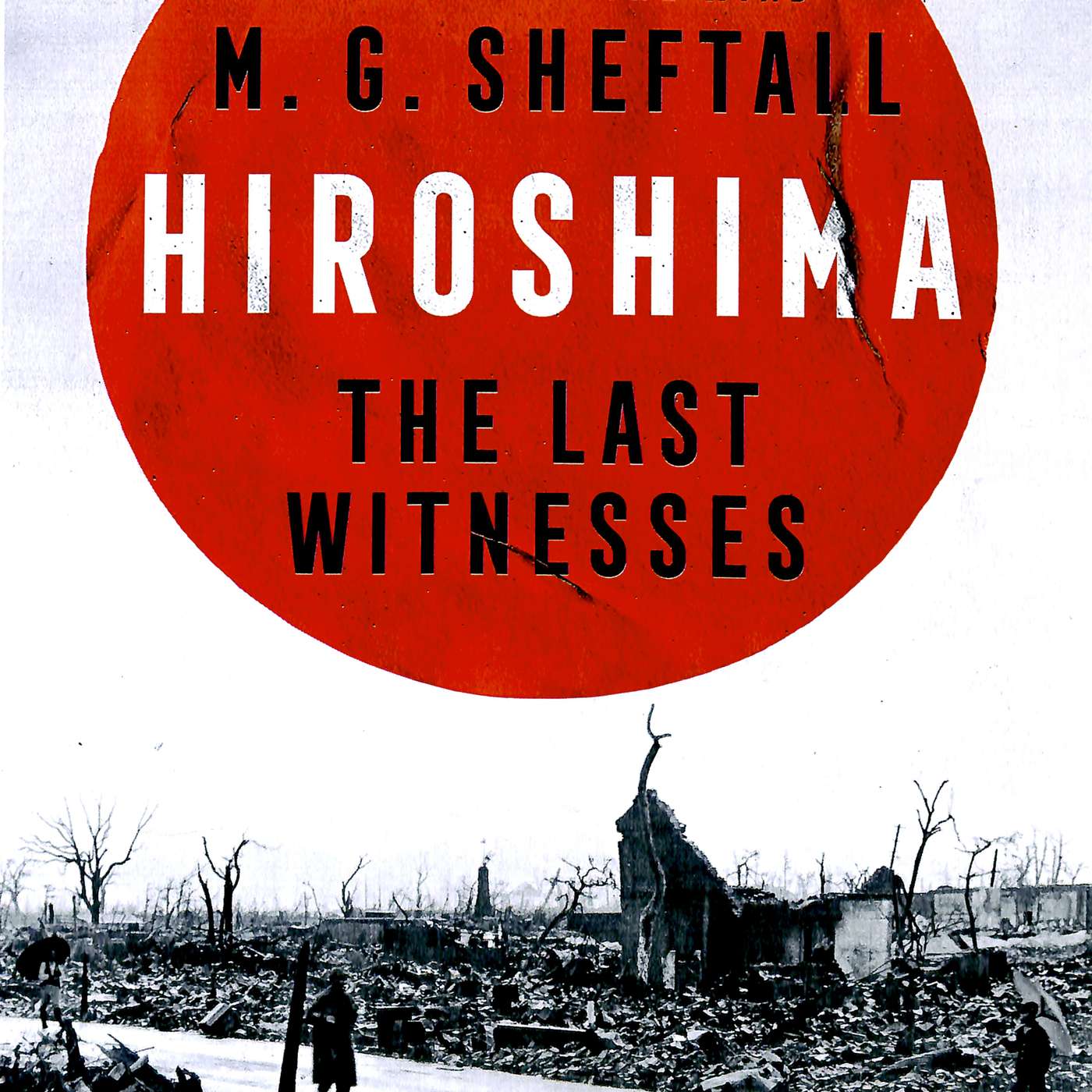
    HIROSHIMA: The Last Witnesses

    On August 6, 1945, at 8:15 in the morning, the United States dropped an atomic bomb on Hiroshima. Tens of thousands of people were killed almost immediately, and an estimated 140,000 were dead by the end of the year. For the survivors—the hibakusha—the physical, psychological, and social consequences continued for decades. Eighty-one years later, we remember Hiroshima through a conversation with historian and author M.G. Sheftall about his extraordinary book, Hiroshima: The Last Witnesses. Drawing on years of interviews with hibakusha, Sheftall reconstructs the city before the bombing, the experiences of those who were there, and the long aftermath that followed. The result is a devastating but deeply humane work of history—one that takes Hiroshima out of the realm of statistics and geopolitical argument and restores the individual people beneath the mushroom cloud. We discuss the responsibility involved in preserving these memories, the trust Sheftall developed with the survivors he interviewed, and what their testimony can teach us as Hiroshima passes from living memory into history. M.G. Sheftall is a historian and professor of modern Japanese cultural history and communication at Shizuoka University. He has lived in Japan since 1987 and holds a PhD in international relations and modern Japanese history from Waseda University. He is the author of the two-volume Embers series—Hiroshima: The Last Witnesses and Nagasaki: The Last Witnesses—as well as Blossoms in the Wind: Human Legacies of the Kamikaze. Here is a full list of his books and links to purchase: Hiroshima: The Last Witnesses (Amazon US & Amazon Japan) The first volume of the Embers series, built around the testimony of Hiroshima’s surviving witnesses. Nagasaki: The Last Witnesses (Amazon US & Amazon Japan) The second and concluding volume of the Embers series, recounting the bombing of Nagasaki and its aftermath through survivor testimony. Blossoms in the Wind: Human Legacies of the Kamikaze (Amazon US & Amazon Japan) An oral history examining the lives, experiences, and legacies of Japan’s kamikaze pilots. Enjoying the show? Consider supporting us. Every little bit helps keep this magnificent shitshow lurching forward. And while you’re at it, join the conversation over on Facebook, and follow us on X/Twitter at @DogePunk2077. For inquiries, complaints, spiritual confessions, legal threats, guest pitches, or reasonably coherent messages, you may be able to reach us at deep.in.japan.podcast@gmail.com. Then again, you may not. Show supporters, naturally, jump the queue—so if you’re one of the blessed few, The Chosen, be sure to mention that at the top of your message for maximal response potential. Thanks for listening!

  • #44
    June 29 · 1 hr 40 min

    The Translator’s Life: Motoyuki Shibata on MONKEY, Fiction, and Language

    Note: This episode originally aired in November 2021. My guest today is Motoyuki Shibata, one of Japan’s most celebrated translators of American literature and a hugely important figure in the world of literary exchange between Japan and the English-speaking world. Shibata is Professor Emeritus at the University of Tokyo, an essayist, editor, scholar, and award-winning translator whose work has helped introduce generations of Japanese readers to some of the most distinctive voices in American fiction. Over the course of his career, he has translated writers such as Paul Auster, Steven Millhauser, Stuart Dybek, Rebecca Brown, Brian Evenson, Kelly Link, Laird Hunt, Thomas Pynchon, and many others. His translations are not simply acts of linguistic conversion; they are literary performances in their own right, helping expand what contemporary Japanese prose can sound like. He is also central to the story of MONKEY, the Japanese literary journal he runs, and MONKEY: New Writing from Japan, its English-language offspring. Through MONKEY, Shibata has helped create a lively bridge between Japanese and international literary worlds, bringing together fiction, essays, poetry, manga, translation, and conversations across cultures. In this conversation, we talk about his life in translation, the writers who shaped him, the philosophy behind his work, and the pleasure and difficulty of carrying literature from one language into another. We also get into MONKEY, his role as an editor and curator of contemporary writing, and some more personal reflections on reading, travel, language, and the life behind the work. It was a real honor to speak with someone who has done so much to open doors between Japanese and American literature, and I’m very happy to bring this conversation back to listeners.

  • #43
    June 6 · 3 hr 25 min

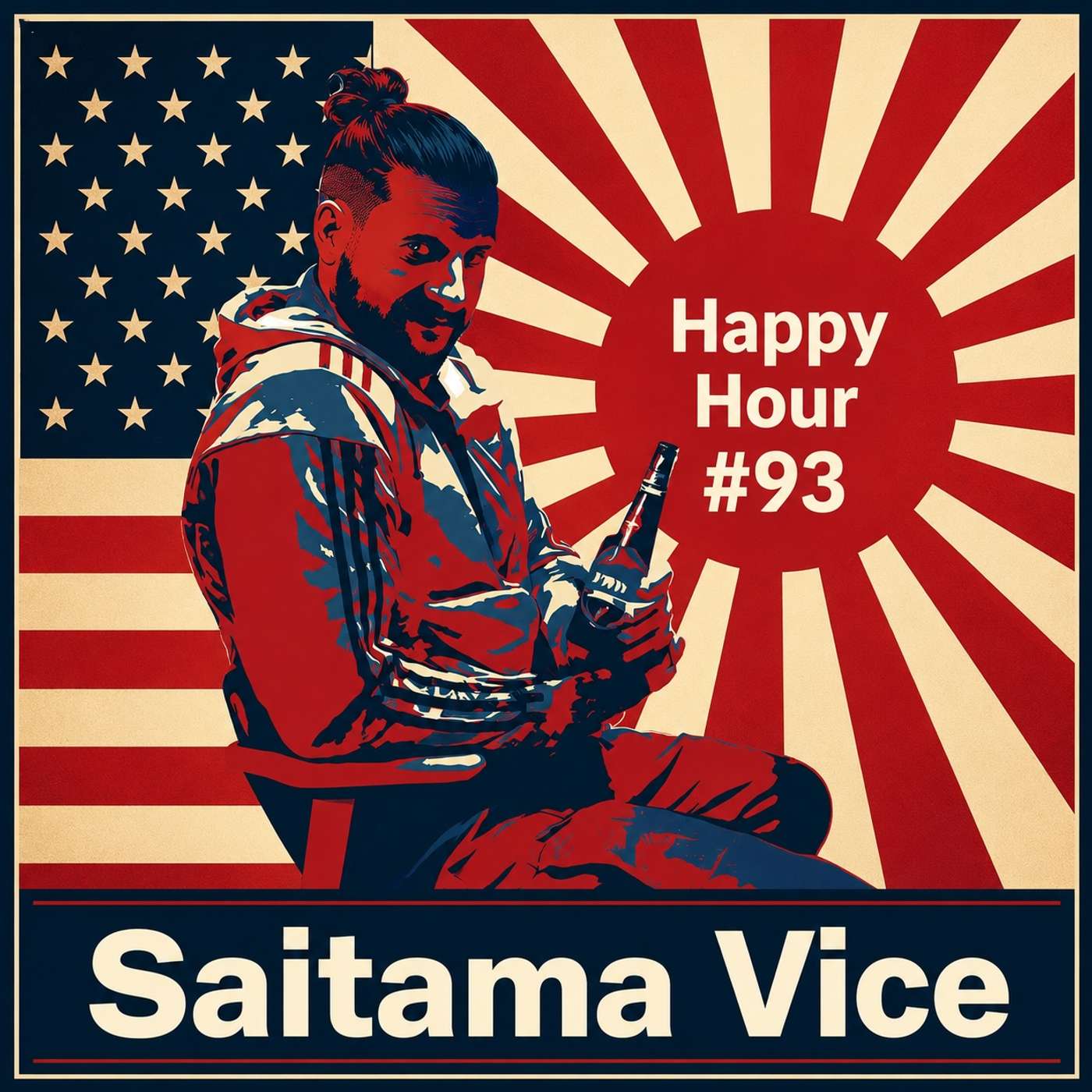
    Happy Hour #93: Saitama Vice

    This week, Jeff and Trevor return from the wilderness with tales of Oregon, AI disco bangers, bear attacks, workplace shorts, maruhara, tokuryu, and Saitama crimes so dumb they may qualify as performance art. It’s Japan news, expat brain damage, and podcast self-sabotage — all lovingly sealed inside one neon-lit convenience-store parking lot. Oh, and... >> CHECK OUT THE ALL-NEW DEEP IN JAPAN PODCAST WEBSITE << Saitama / Crime Stories 偽の覆面パトカーで飲酒運転か=危険運転致傷容疑で男逮捕―事故起こし発覚・警視庁 偽の覆面パトカーで重傷事故|飲酒危険運転疑い男逮捕、警視庁 コンビニ強盗、容疑の男逮捕 Tokuryu / New Organized Crime 令和6年版 警察白書 特集:匿名・流動型犯罪グループ (NPA) 警視庁 匿名・流動型犯罪グループ対策本部 匿名・流動型犯罪グループ対策 (gov-online) As Japan's yakuza weakens, police focus shifts to loosely organized crime groups (AP) Tokuryū, the shadowy criminal groups taking over from yakuza in Japan (Guardian) Evolving tokuryu gang groups test Japan's policing strategy (Japan Times) Bear Attacks in Japan クマに関する各種情報・取組 (環境省) クマ類による人身被害について(速報値)(環境省 PDF) クマ出没件数、25年度は5万件突破 (nippon.com) A bear injures 4 people in a residential area of Japan as attacks rise (AP) 'Extremely intelligent' Japanese bear that attacked four people still at large (Guardian) Japan launches bear hunt after unusually bold attacks in Fukushima (Times) Cool Biz / Shorts at Work 令和8年度クールビズについて (環境省) Tokyo workers encouraged to wear shorts to cut energy costs (Guardian) Tokyo wants you to wear shorts to work. Say no. (Japan Times) Tokyo orders office workers to wear shorts to keep cool (Times) Maruhara / Punctuation Harassment Japanese punctuation mark becomes latest symbol of workplace harassment (Japan Times) 「マルハラ」って何? (毎日新聞) Manga / Anime Piracy Crackdown The Great Japanese Piracy Conspiracy (Japanlysis) One of the biggest manga piracy networks has been shut down (Verge) Japan looks to AI in crusade against manga piracy (Times) Unspoken Rules Every Unspoken Japanese Rule You Need to Know (Japanalysis) Enjoying the show? Consider supporting us. Every little bit helps keep this magnificent shitshow lurching forward. And while you’re at it, join the conversation over on Facebook, and follow us on X/Twitter at @DogePunk2077. For inquiries, complaints, spiritual confessions, legal threats, guest pitches, or reasonably coherent messages, you may be able to reach us at deep.in.japan.podcast@gmail.com. Then again, you may not. Show supporters, naturally, jump the queue—so if you’re one of the blessed few, The Chosen, be sure to mention that at the top of your message for maximal response potential. Finally, if you enjoyed the musical outro and want more Deep in Japan-adjacent sonic nonsense, check our SUNO profiles: Trevor's SUNO page Jeff's SUNO page Thanks for listening!

  • #42
    April 26 · 3 hr 56 min

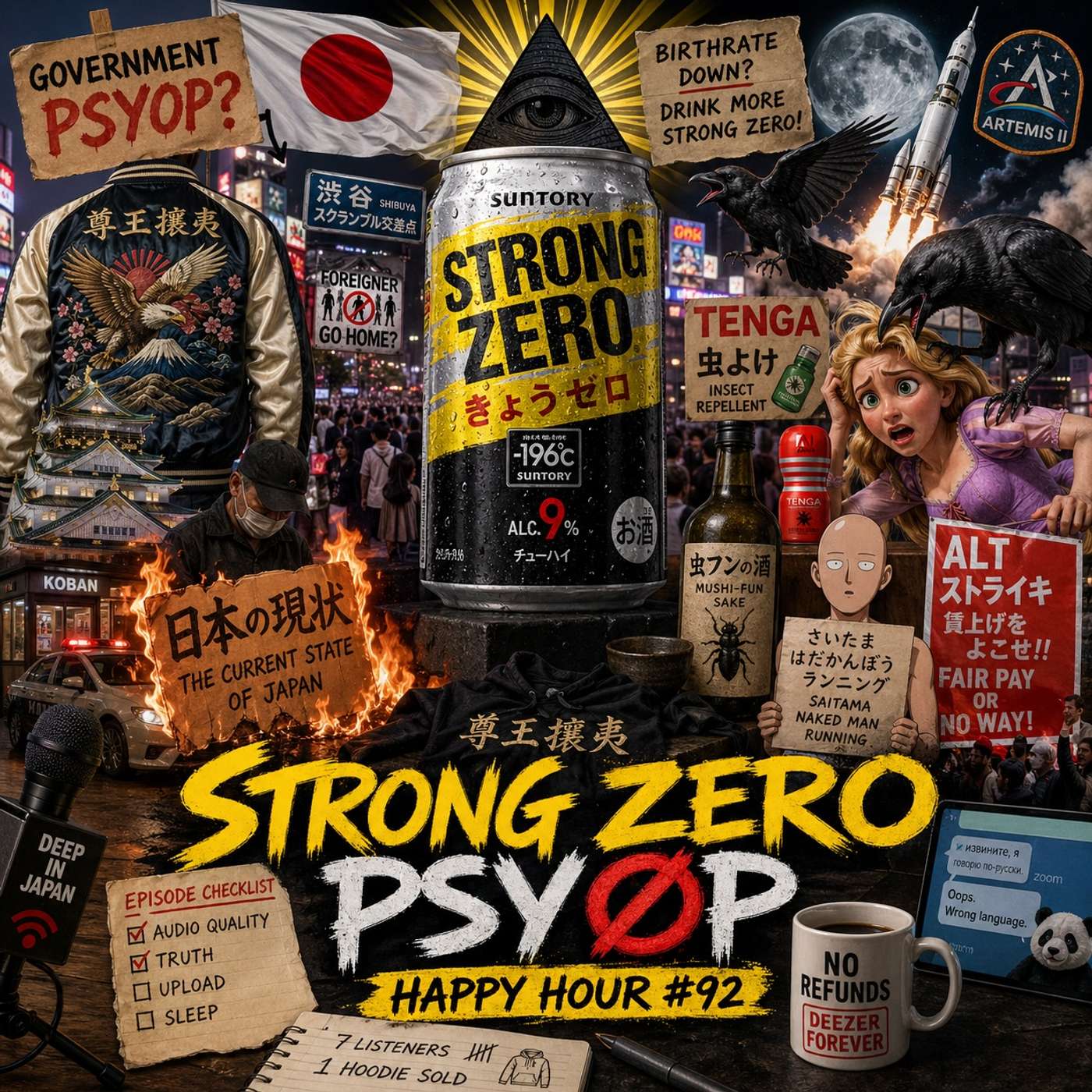
    Happy Hour #92: Strong Zero Psyop

    Episode 92 begins with a clerical apocalypse: Jeff and Trevor discover they are not on Episode 91 after all, but Episode 92, meaning the long-promised Episode 100 is now both closer and somehow less reachable than ever. The show immediately collapses into a metaphysical audit of its own existence. Episodes are too long. Files are too large. Transistor is too expensive. Spotify is the new economy bunker. Deezer remains preserved like a sacred shrine for the seven remaining listeners, each of whom is assumed to be either a monk, a bot, or James Hathaway. Then, against all odds, actual commerce occurs. Miho has made international Deep in Japan merch possible, Mythic Weeb James becomes the first customer, and Trevor unveils a design so volatile it may require both a fashion disclaimer and a police escort. This sends the hosts into a sukajan-shaped wormhole of Yokosuka jackets, bomber nostalgia, imperial ghosts, American military aesthetics, right-wing cosplay, and the eternal question: is wearing politically explosive kanji in Japan hilarious, suicidal, or merely good branding? From there, the episode achieves its natural Deep in Japan state: one topic mutates into another until the original premise has been legally declared missing. 尊王攘夷 becomes kanji literacy. Kanji literacy becomes man-on-the-street content. Man-on-the-street content becomes Osaka homeless YouTube. Osaka homeless YouTube becomes koans in the kōen. The kōen becomes One Cup. One Cup becomes Strong Zero. Strong Zero becomes a grand unified conspiracy theory involving patriarchy, declining birthrates, and possibly Abe-era beverage policy. Then, inconveniently, the hosts discover there is a real-world alcohol policy angle involving Japan’s 2024 drinking guidelines and the quiet retreat of 12–13% chūhai from polite society. The first great news relic is the Shibuya Scramble fire guy: a man from Nagoya who allegedly set fire to a cardboard sign at the crossing, turned himself in, and reportedly described the act as a protest against “the current state of Japan.” Jeff and Trevor are less interested in the fire than in the communications failure. If you ignite cardboard at the world’s most famous intersection and nobody can summarize your manifesto, have you protested, or merely littered with combustion? The middle section becomes a museum of Japanese weird-news objects: the dogeza volleyball player, the Saitama pipe/sinkhole imagination chamber, ChatGPT language-bleed errors, the naked Saitama rampage, RocketNews/SoraNews as a content-generating organism, a Dogo Onsen Lawson camouflaged for historical respectability, and the immortal TENGA insect-repellent collaboration. The TENGA segment becomes a reluctant MBA seminar on brand normalization: at what point can a company famous for adult products place a bright red TENGA-shaped mosquito repellent in your home and allow you to say, with a straight face, “No, no, this is for bugs”? After coffee, the fever cools into something dangerously close to substance. Jeff and Trevor talk recording tools, Zoom avatars, VTuber futures, Adobe hatred, and the misery of video editing before landing on the Kyoto ALT strike and the long erosion of ALT working conditions. Jeff’s own ALT past gives the section some ballast: dispatch English teaching is framed as a system where the “Japan experience” is increasingly used as emotional currency to justify bad pay, unstable contracts, and the slow grinding-down of people who came looking for meaning and found paperwork. That turns naturally into Japanese study: Kanzen Master, particles, Anki, Manabi Reader, OCR, tiny-font Japanese books, and the dream of an AI-powered custom reader that gives instant lookup, repetition, and mercy. The larger point: intermediate and advanced Japanese is where the grammar charts stop saving you, the particles begin laughing at you, and progress becomes less about rules than exposure, bruising, rhythm, and vibes. The legal and political center of the episode is Japan’s new post-divorce joint custody framework. Jeff broadly supports reform, but complicates the familiar “left-behind foreign father” story with a personal anecdote about interviewing someone whose later behavior made the custody narrative feel much less clean. The section ends in the proper DIJ shade of gray: reform is necessary, but family courts still have to separate alienated parents from people who may, in fact, be kept away for very good reasons. The final hour becomes a pachinko machine filled with geopolitics, parasites, theme parks, and municipal shame: crows attacking the Rapunzel animatronic at Tokyo DisneySea, Disney hatred, gas prices, Iran, Japan’s dependence on the U.S., Takaichi, China and Taiwan anxiety, Article 9, Artemis II as the thing humanity should probably care about more, overtourism, tourist defecation lore, Anisakis parasite pens, micro-crimes, mystery incidents, UV ninja parkas, Oregon steakhouse inflation, Asahi’s school future, and haccoba’s insect-poop sake. It closes, as all respectable cultural analysis should, with a proposed tourist itinerary: eat Anisakis sushi, wear a ninja mask, buy gasoline, set nothing on fire at Shibuya Crossing, and remember that Japanese police may arrest you, but they will not do your PR. Other possible titles include: Miho Made Merch, Japan Made Mayhem Koans at the Kōen The TENGA Mosquito Repellent Episode Rapunzel, Crows, and the Collapse of Civilization Adobe Must Fall, Deezer Must Live Dispatch ALTs and Insect-Poop Sake Kamehameha & Other Aisatsu Solutions The Shibuya Manifesto (Nobody Read) One Cup, Strong Zero, and Article 9 Ninja Masks, Parasite Pens, and Other Tourist Essentials Saitama Never Disappoints Takaichi Turns Down Donny Love your kids? Don't divorce. No Cherry Blossoms for You! Turning Shit Into Sake The Episode That Refused to End Request for Support: Enjoying the show? Consider supporting us. Every little bit helps keep this magnificent shitshow lurching for...

  • #41
    April 19 · 1 hr 21 min

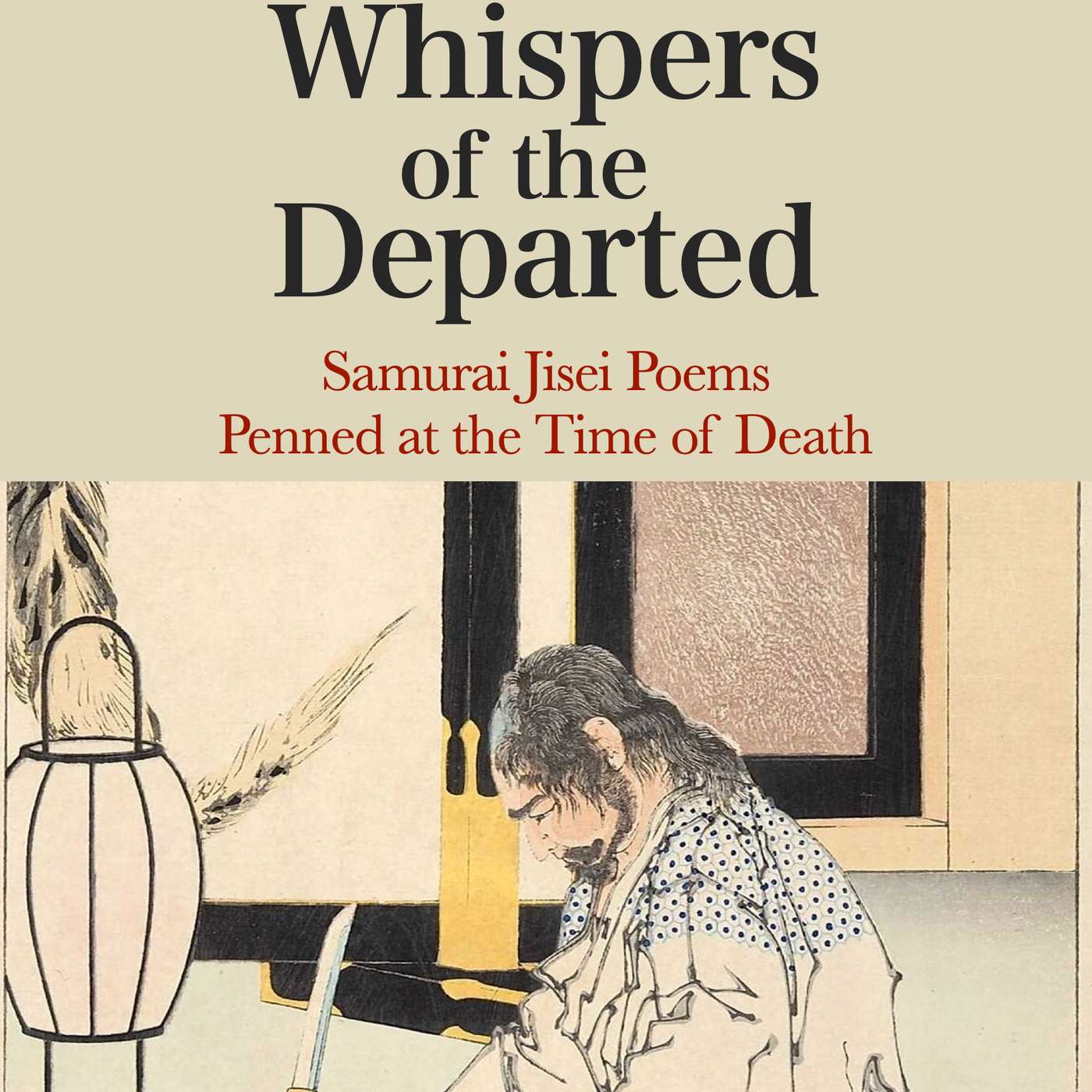
    Samurai Death Poems with Robert R. Gray

    In this episode, we sit down with writer, translator, martial artist, and long-time Japan resident Robert R. Gray to talk about his wonderful little book, Whispers of the Departed—a collection of samurai death poems (辞世, jisei) paired with glimpses into the lives of the people who wrote them. From impermanence and acceptance to emptiness and transcendence, the conversation explores what people reveal when there’s nothing left to hold onto. Links: 秘伝 Online Magazine Budo Japan (秘伝's English Site) [Outro] Iroha ft. Chi@ki by long-time friend of the show, Gomyo Kevin Seperic Enjoying the show? Please consider supporting us—every little bit helps keep the podcast going. And get some Deep in Japan merch while you're at it! I highly recommend the 尊王攘夷 (Revere the Emperor, Expel the Foreigners) hoodie. There is nothing else quite like it. And make sure to join the conversation on Facebook and follow us on Twitter @DogePunk2077. For all inquiries, you can reach us at deep.in.japan.podcast@gmail.com. Thanks for listening!

  • #40
    March 29 · 4 hr 16 min

    Happy Hour #91: 禁止

    This year, we celebrated the Emperor’s Birthday with a Happy Hour. From the Imperial Household to underground heroes, from banned words to ghost-town virality, this episode has a little something for everyone. We get into the “Naru-chan Kenpo” and how Emperor Naruhito was raised, Japan’s ever-evolving list of broadcast “NG” words, and the country’s real-life superheroes patrolling the streets with trash tongs instead of weapons. Along the way, we explore eerie signs of the Dead Internet, Japan’s obsession with craftsmanship—from luxury stationery to washi-paper headphones—and what it all says about living in an increasingly algorithmic world. So before you throw this one on, buckle up—because things get a little wild. That Sweet Sauce: The Naru-chan Kenpo Banned Japanese Words for TV and Radio Map of Active Real Life Superheroes and their Teams Final debuts DX4000 CL headphones with washi paper drivers SHO - イジメーはやめろ【STOP BULLYING】OFFICIAL MUSIC VIDEO 真岡北陵高校トイレで暴行】 学校に突撃してイジメーはやめろ 19日に判決「なぜ息子をいじめたのか」我が子の死から4年…母親の思い 福岡【高2自殺】 R65 THE SILVER GENERATION テクノミュージシャン 河西文治(77) 前編 日本今ばなし桃太郎 - SNSの”そのうわさ”、信じて大丈夫? MAN POURS CHUHAI ON COP harachan - Paradise The Cancer Doctor: "This Common Food Is Making Cancer Worse!" KINSHI-GO RHAPSODY (outro) Request for Support: Enjoying the show? Please consider supporting us—every little bit helps keep the podcast going. And make sure to join the conversation on Facebook and follow us on Twitter @DogePunk2077. For all inquiries, you can reach us at deep.in.japan.podcast@gmail.com. Finally, if you are hoping to hear more Deep in Japan music, check out Jeff's SUNO page. Thanks for listening!

  • #39
    March 11 · 1 hr 1 min

    Cracking the Crab: Russian Spies in Japan

    In this episode, I’m joined by Dr. James D.J. Brown, Professor of Political Science at Temple University’s Japan Campus and one of the leading experts on Russo-Japanese relations. His research focuses on the history and geopolitics between Japan and Russia, including territorial disputes, diplomacy, and security issues in Northeast Asia. We discuss his new book, Cracking the Crab: Russian Espionage Against Japan, from Peter the Great to Richard Sorge. The book traces more than three centuries of Russian intelligence activity directed at Japan—from early explorers and castaways gathering information during the era of Japanese isolation, to the famous Soviet spy Richard Sorge and his network in Tokyo before World War II. Along the way, Brown reveals how espionage shaped the relationship between the two countries, how spies operated in one of the world’s most closed societies, and why Japan was often seen by Russian intelligence as a “crab”—hard on the outside but vulnerable once its shell was cracked. Links & Resources: Cracking the Crab: Russian Espionage Against Japan, from Peter the Great to Richard Sorge Japan, Russia and their Territorial Dispute: The Northern Delusion FCCJ Book Break: James D.J. Brown, author of "Cracking the Crab" Qui etes-vous, Monsieur Sorge? (Old French Film on Sorge) Richard Sorge, Master Spy (Recent Russian series on Sorge) Cracking the Crab (outro) Enjoying the show? Please consider supporting us—every little bit helps keep the podcast going. And make sure to join the conversation on Facebook and follow us on Twitter @DogePunk2077. For all inquiries, you can reach us at deep.in.japan.podcast@gmail.com. Finally, if you are hoping to hear more Deep in Japan music, check out Jeff's SUNO page. Thanks for listening!

  • #38
    February 22 · 1 hr 35 min

    Tanaka Zakku: From Indian Hackerman to Japanese Citizen

    In this episode, we sit down with Zach Mathis—now commonly known in Japan as Tanaka Zakku—a cybersecurity expert with over two decades of experience working in Japan. Zach recently chose to relinquish his American citizenship and naturalize as a Japanese citizen. When he announced it on Twitter, the post exploded, racking up almost 6 million views. What was surprising wasn't just the reach, but the reaction. The comments were overwhelmingly positive. Given the rising anti-immigration sentiment in the country and how quickly Japanese ultranationalist elements on Twitter tend to dogpile these kinds of announcements, Zach’s reception was a massive exception to the rule. We had a wide-ranging conversation about how he fell in love with Japan, the reality of the naturalization process, his cybersecurity career, and his twenty-year journey here. Hope you enjoy it! Links & Resources: Zach's viral naturalization post on X Hybrid State of Mind (The Tanaka Zach Anthem) [musical outro] Enjoying the show? Please consider supporting us—every little bit helps keep the podcast going. And make sure to join the conversation on Facebook and follow us on Twitter @DogePunk2077. For all inquiries, you can reach us at deep.in.japan.podcast@gmail.com. Finally, if you are hoping to hear more Deep in Japan music, check out Jeff's SUNO page. Thanks for listening!

  • #37
    February 1 · 3 hr 54 min

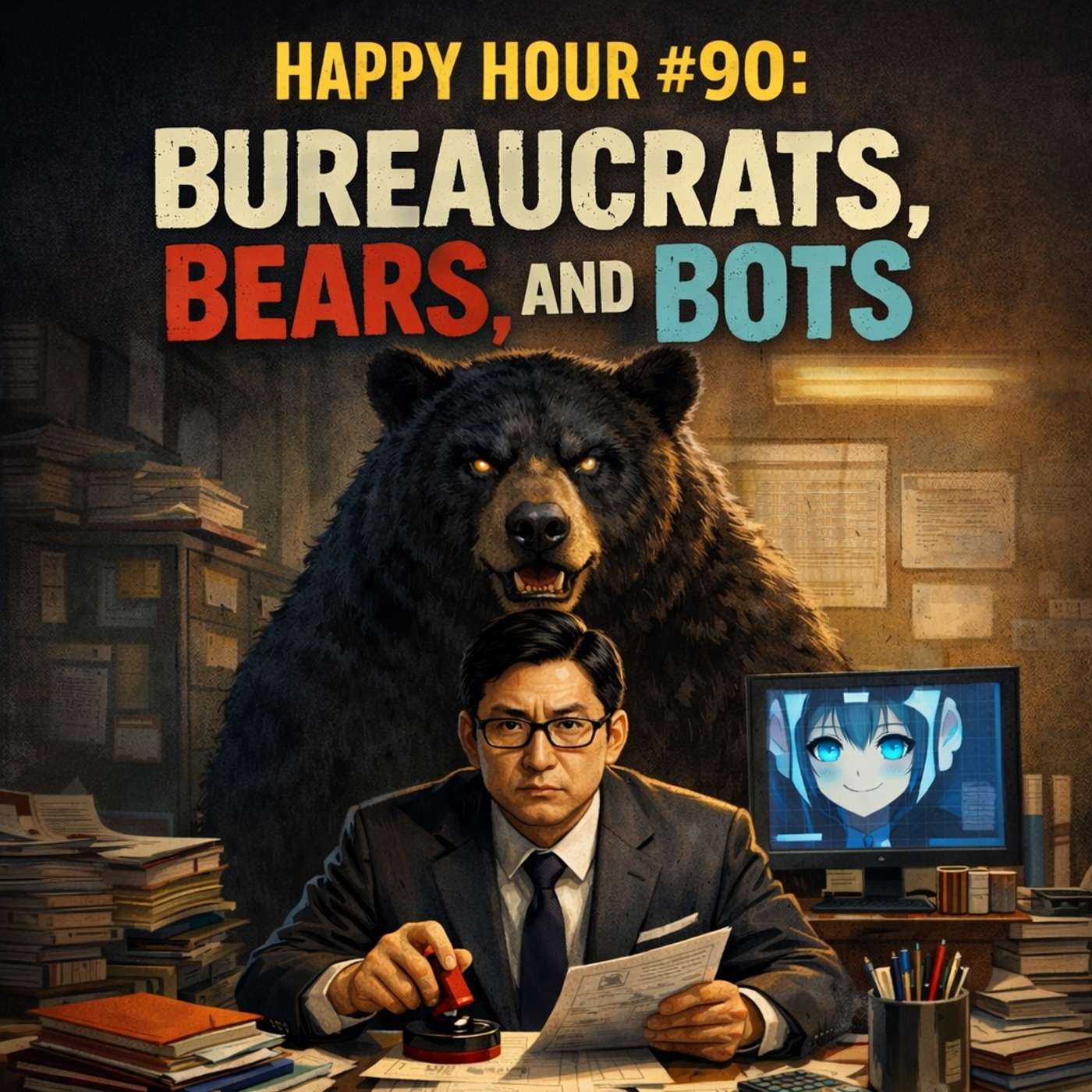
    Happy Hour #90: Bureaucrats, Bears, & Bots

    In this episode, Jay and Trey are joined by special guest Mythic Weeb James Hatheway for a three-hour tour de force through the green room of modern Japan—covering, among other things: The Japanese naturalization process The myth of Japan's “ancient” tradition of Hatsumode The Sankebetsu brown bear incident The rise of a very small online “Bear Slayer" movement, devotees of lo-fi aesthetics, spear-sharpening rituals, and MS-Paint iconography The odd rise of Elon Musk's "Unhinged" AI companion in Japan and what it might mean for a society governed by constrained intimacy and a growing need for low-stakes emotional release valves. Enjoying the show? Please consider supporting us—every little bit helps keep the podcast going. And make sure to join the conversation on Facebook and follow us on Twitter @DogePunk2077. For all inquiries, you can reach us at deep.in.japan.podcast@gmail.com. Finally, if you enjoyed the outro, check out Jeff's SUNO page. It's filled with goodies. Thanks for listening!

  • #36
    January 16 · 2 hr 33 min

    A Walk on the Wild Side: Japan’s Hidden Lives with Tom Gill

    In this episode, we walk the streets of Japan with Tom Gill—anthropologist, longtime Japan resident, and one of the most clear-eyed observers of the country’s marginalized communities. Gill is best known for his decades of fieldwork among day laborers, the homeless, and the urban poor, particularly in places like Tokyo’s San’ya district. Rather than studying Japan from a distance or through official narratives, Gill practices what he calls “being there”—immersing himself in the lives of people most visitors (and many locals) never see. Whether you’re interested in Japan, anthropology, or the uncomfortable realities beneath orderly surfaces, this episode is a reminder that understanding requires proximity—and humility. Enjoy the show? Please consider supporting us—every little bit helps keep the podcast going. And make sure to join the conversation on Facebook and follow us on Twitter @DogePunk2077. For all inquiries, you can reach us at deep.in.japan.podcast@gmail.com. Thanks for listening!

  • #35
    Dec 25, 2025 · 1 hr 7 min

    Christmas 2025 DiJ Mixtape

    Wishing you all a very Merry Christmas! -J and Trey TRACK LIST: [0:00:00] 01. クリスマス・イブ / 山下達郎 (Tatsuro Yamashita) [0:03:24] 02. クリスマスキャロルの頃には / 稲垣潤一 (Junichi Inagaki) [0:07:24] 03. 悲しみは雪のように(1992 single) / 浜田 省吾 (Shogo Hamada) [0:10:58] 04. X'masがいっぱい / 工藤静香 (Shizuka Kudo) [0:14:17] 05. Snow Lie / 岩崎良美 (Yoshimi Iwasaki) [0:17:31] 06. クリスマスまで待てない (雪だるま Version) / 渡辺 美里 (Misato Watanabe) [0:21:14] 07. 最後のHoly Night / 杉山清貴 (Kiyotaka Sugiyama) [0:24:42] 08. Sweet Snow Magic / スターダスト☆レビュー (Stardust Revue) [0:28:02] 09. クリスマスの夜 / 岡村 孝子 (Takako Okamura) [0:31:51] 10. ひとりでX'mas / 今井美樹 (Miki Imai) [0:35:14] 11. 冬のフォトグラフ / 新井正人 (Masahito Arai) [0:39:15] 12. 遠い街のどこかで… / 中山美穂 (Miho Nakayama) [0:43:28] 13. リフトの下で逢いましょう / 南野 陽子 (Yoko Minamino) [0:46:30] 14. スノーフレイクの街角 / 杏里 (Anri) [0:50:01] 15. Last Christmas / 松田 聖子 (Seiko Matsuda) [0:53:47] 16. クリスマスは一緒に / 竹内まりや (Mariya Takeuchi) [0:57:00] 17. Merry X’masをあげたい / 井上昌己 (Shoko Inoue) [1:00:20] 18. Kissin' Christmas (クリスマスだからじゃない) 2023 / 桑田佳祐 & 松任谷由実 (Keisuke Kuwata & Yumi Matsutoya) Enjoy the show? Please consider supporting us—every little bit helps keep the podcast going. And make sure to join the conversation on Facebook and follow us on Twitter @DogePunk2077. For all inquiries, you can reach us at deep.in.japan.podcast@gmail.com. Thanks for listening!

  • #34
    Dec 22, 2025 · 3 hr 31 min

    Happy Hour #89: Ball Wars

    Jay and Trey are at it again! This week, we investigate why Japanese parks are becoming "no-fun zones" with draconian bans on ball games—is the country waging a war on its own children? We also dive into the "Ultimate Waifu" politician Kimi Onoda, and the latest stats showing Japan’s English proficiency plummeting to new lows. And last but certainly not least—the big reveal—Trevor's got a new "Number One Waifu," none other than "Muscle Idol" and Saitama Queen Reika Saiki. Does that make Trevor the King of Saitama? You decide. As always, sauce included: Very Low Proficiency: Japan Drops into Bottom Group in English Ability Ranking Japanese Company Offers Up to 10 Days Paid Leave for Workers to Mourn Their Favourite Celebrity's Marriage or Retirement Reika Saiko - Japanese Muscle Girl Clips from Reika’ 4-hour Workout 所持金20円で焼き肉を無銭飲食か 酒や漬物、デザートまで約1万2000円分 49歳男「お金がない」で判明 Democracy Manifest and his succulent Chinese meal News report 1991 Democracy Manifest Wiki 完全自殺マニュアル Onoda Kimi’s YoutTube Channel Longform Interview with Onoda Kimi Japan’s Ultimate WAIFU: Kimi Onoda PARKS FOR KIDS TO KICK A BALL AROUND IN TOKYO Research on local governmental restrictions for ball play in block parks Enjoy the show? Please consider supporting us—every little bit helps keep the podcast going. And make sure to join the conversation on Facebook and follow us on Twitter @DogePunk2077. For all inquiries, you can reach us at deep.in.japan.podcast@gmail.com. Thanks for listening!

  • #33
    Dec 12, 2025 · 3 hr

    Happy Hour #88: The Takaichi Shock

    Please consider supporting us—every little bit helps keep the podcast going. And be sure to join the conversation on X (formerly Twitter) @DogePunk2077 and Facebook. For all inquiries, you can reach us at deep.in.japan.podcast@gmail.com. Outro: Now or Never by ISSUGI Thank you.

  • #31
    Nov 22, 2025 · 2 hr 51 min

    Happy Hour #87: Synthetic Rabu

    Pour yourself a Strong Zero and strap in. This week’s Happy Hour is a fever dream that starts with public displays of 2D affection and ends with a map of bears and suspicious people in Gifu. We cover the rising price of rice (and the rise of "Pasta Japan"), the legal ramifications of calling your coworker "-chan," and why Tommy Lee Jones is the greatest alien to ever sell canned coffee. Plus, we take a dark dive into the "Hentai Teacher" ring in Aichi and the ultimate compilation of "Truck-kun." Oh, and do stick around for the WORLD PREMIERE of our new original Outro track: テレアモリー・メモリーズ. You're gonna love it. 🥃 LINKS & RESOURCES: Reaction to foreign man holding anime waifu pillow in public Former coworker who used ‘-chan’ at work and commented on appearance ordered to pay ¥220,000 in damages for sexual harassment (Japanese article) Sex act in police box: officer disciplined with pay cut — Kanagawa Prefectural Police sergeant in his 40s and a female officer in her 20s (Japanese article) Japan's No. 1 Serial Killer | Ultimate “Truck-kun” Compilation Rice prices soar, consumers turn to pasta: January imports up 180% year-on-year Sam Rockwell monologue about being an Asian girl on The White Lotus Davido-kun loves Japan (Japanese variety show clip) 20th Anniversary Suntory Boss Coffee jacket from back in 2012 Tommy Lee Jones Boss Coffee Commercials Gifu Prefecture Bear-Sighting Map (Updated in Real Time): Suspicious-person alerts also visible at a glance — based on the Prefectural Police ‘Safety & Security Mail’ service Mei and the Kittenbus (めいとこねこバス , Mei to Konekobasu) Driver’s license of perpetrator revoked — Saku City junior high school student fatal accident; Supreme Court recognizes hit-and-run (Japanese article) Cocorade Bakery in Ueda (get the milk bread) Aichi police arrest seventh teacher in ‘Hentai’ group on child porn charges Enjoying what you hear? Please consider supporting us—every little bit helps keep the podcast going. And be sure to join the conversation on X (formerly Twitter) @DogePunk2077 and Facebook. For all inquiries, you can reach us at deep.in.japan.podcast@gmail.com. Thank you for listening, fellow traveler of the ear. 🚀🚀 Yoroshiku & rockets 🚀🚀

  • #30
    Nov 19, 2025 · 3 hr 33 min

    Zen War Stories with Brian Daizen Victoria

    In this powerful and far-reaching conversation, we sit down with Brian Daizen Victoria, Zen priest, historian, and author of the landmark work Zen War Stories. Internationally recognized for exposing the entanglement of Japanese Buddhism with wartime ideology, Victoria has spent decades examining the darker, more complicated intersections of religion, nationalism, and violence. But his scholarship extends far beyond Zen. In this episode, he offers a sweeping, context-rich look at the political, cultural, and economic forces that drove the United States and Japan into conflict—forces often flattened or ignored in mainstream narratives. Together, we dig into some of the most contested and emotionally charged historical questions of the 20th century: Japan’s imperial expansion across Asia, the atrocities committed on the mainland, the debates surrounding the Rape of Nanking, the truth behind Unit 731, the Pearl Harbor attack, the atomic bombings, the Tokyo War Crimes Tribunal, and the complex legacy of the U.S. Occupation. Victoria brings nuance, moral clarity, and a willingness to challenge deeply embedded assumptions—both Western and Japanese—that have shaped public memory for generations. Along the way, Victoria highlights the groundbreaking work of his wife, Aimee Tsujimoto, whose books Memories of “Furusato” in Tenri Village, Manchuria (2018) and The Truth About Unit 731’s “Youth Corps” (2025) shed new light on Unit 731, survivor testimony, and the lived experience of civilians in Manchuria—crucial pieces of history often overlooked in English-language scholarship. If you’re seeking deeper context, uncomfortable truths, and a clearer, more historically grounded understanding of the war that reshaped modern Japan and the Pacific world, look no further. This conversation challenges easy answers, confronts painful realities, and invites a more honest reckoning with the past. Enjoying the Show? Please consider supporting us—every little bit helps keep the podcast going. And be sure to join the conversation on X (formerly Twitter) @DogePunk2077 and Facebook. For all inquiries, you can reach us at deep.in.japan.podcast@gmail.com. And do check out the outro: 弾き語りカバー(コードは説明欄へ) SAMPO くるり Thanks for listening, fellow treveler of the ear. 🚀🚀 Yoroshiku and rockets 🚀🚀

  • #29
    Nov 4, 2025 · 4 hr 49 min

    Happy Hour #86: Bear Plow

    When genetically-modified bears start targeting foreigners, Jay and Trey load up the Bear Plow—a weaponized Mustang straight out of a fever dream—and hit the road to save Japan. Between the gunfire and snowdrifts we dig into everything that made this strange future possible: Japanese jazz-funk on dusty vinyl, forgotten mecha, flower-power hard-rock, and the very real rise in bear attacks across the country. It’s part apocalypse, part mixtape, and all Deep in Japan. Sweet Sauce: Dead Ass (Review) Why you should read Uzumaki (Review) Flower Travelin’ Band - Anywhere (full album) Flower Travelin’ Band - wiki Human Washing Machine Roujin Z Full Movie (English Subs) Japan Unveils 'Human Washing Machine' Super Robot Showcase: Z-001 from "Roujin Z" Beam Penetration and Mad Computer, plus the Minimal Sound of Motorcycles Spanish tourist attacked by bear in central Japan's Shirakawa-go area Japan plans to hire hunters as bear attacks rise Bear attack survival tips released in Japan as encounters surge Music: Flower Travelin' Band - Unaware Japanese Jazz & Funk Vinyl Set Bear Plow - Drake Trap Enjoying what you hear? Please consider supporting us—every little bit helps keep the podcast going. And be sure to join the conversation on X (formerly Twitter) @DogePunk2077 and Facebook. For all inquiries, you can reach us at deep.in.japan.podcast@gmail.com. Thank you for listening, fellow traveler of the ear. 🚀🚀 Yoroshiku & rockets 🚀🚀

  • #28
    Oct 13, 2025 · 2 hr 59 min

    Happy Hour #85: The Shit Nozzle

    In this philosophically unhinged episode, Jeff and Trevor fire up the nozzle and let it spray. From the euphoric delusion of “god mode” to the cosmic absurdity of heaven and hell, the boys spiral into deep reflection on meaning, mortality, and the strange comfort of digital immortality. Things only get weirder when they dive into Ghost of Yōtei — part samurai saga, part therapy session — before crashing headfirst into the online flame war that erupted after one of them dared to post about Japan’s potential first female prime minister, Sanae Takaichi. Cue the nationalists, the bots, and the philosophical meltdown of post-truth culture. It’s chaotic, hilarious, and weirdly profound — The Shit Nozzle in its purest form. Bertrand Russell - Message To Future Generations (1959) If Anyone Builds It, Everyone Dies: Why Superhuman AI Would Kill Us All Takaichi to become Japan's first female prime minister The Shit Nozzle (Outro Song) Enjoying the Show? Please consider supporting us—every little bit helps keep the podcast going. And be sure to join the conversation on X (formerly Twitter) @DogePunk2077 and Facebook. For all inquiries, you can reach us at deep.in.japan.podcast@gmail.com. Thanks for listening, fellow treveler of the ear. 🚀🚀 Yoroshiku and rockets 🚀🚀

Showing 1–20 of 20 episodes