Skip to content
Artwork for David's Gemini Notebook Podcast Collection

David's Gemini Notebook Podcast Collection

David Weissman

David’s Gemini Notebook Podcast Collection is a curated library of AI-generated audio overviews exploring the topics I find most fascinating, including artificial intelligence, technology, medicine, science, history, space, and the occasional intellectual rabbit hole. Each episode turns interesting source material into an engaging conversational podcast, making complex ideas easier to absorb, revisit, and share. I created this channel mainly as a personal collection and as an easy way to share these explorations with friends, family, and anyone else who enjoys learning something new.

Play
  • 41 episodes
  • Avg 43 min
  • English
Counted on this page — what you have heard stays on this device, so it is not something the list can be paged by.
  • Tuesday · 24 min

    Why AI Needs a New Kind of Computer

    Modern AI can write code and generate images, yet much of its hardware still follows a design rooted in 1945. This episode explores the von Neumann bottleneck: the costly shuttling of information between memory and processors. As AI’s appetite for electricity grows, researchers are rethinking that architecture—bringing computation closer to stored data and borrowing ideas from the brain. Follow the journey through memristors that store values and perform calculations, brain-inspired chips that communicate through electrical spikes, IBM’s NorthPole architecture, and connections that carry data using light. Then enter the world of biological computing, where living neurons interact with silicon and learn to play a simplified version of Pong. Along the way, we explore the engineering hurdles, the promise of more efficient AI on everyday devices, and the demands of keeping a computer’s cells alive. If a machine contains living tissue that can learn and adapt, where do we draw the line between computer and organism?
  • September 29 · 23 min

    Could a Pill Replace Your CPAP?

    What if treating sleep apnea started with a bedtime pill and a glass of water? This episode explores AD109, an experimental oral treatment designed to help keep the upper airway open by targeting the nerve signals that control its muscles. Drawing on research originating at Brigham and Women’s Hospital and Harvard Medical School, we unpack why airway anatomy is only part of the story—and how the combination of atomoxetine and aroxybutynin could offer another option for people who struggle with CPAP. We follow the science into the SynAIRgy and LunAIRo clinical trials, examining reductions in breathing interruptions and overnight oxygen deprivation alongside the harder questions: side effects, treatment discontinuation, residual apnea, and whether better numbers translate into feeling more rested. We also explore how this approach differs from weight-loss treatments such as Zepbound and what remains at stake in FDA review. Could the future bring a pill that replaces the mask for some patients—or a combination that makes treatment easier to live with?

  • September 27 · 22 min

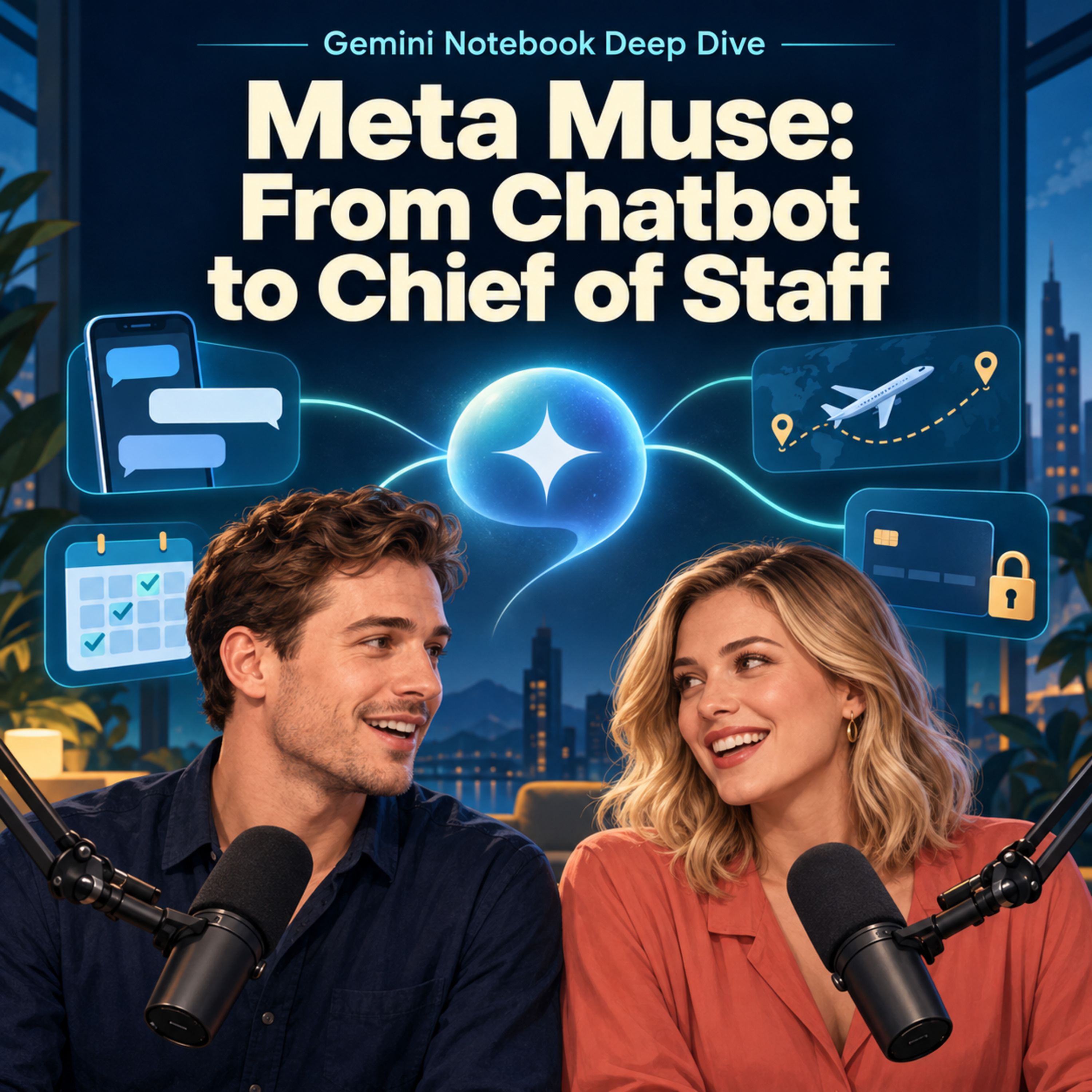
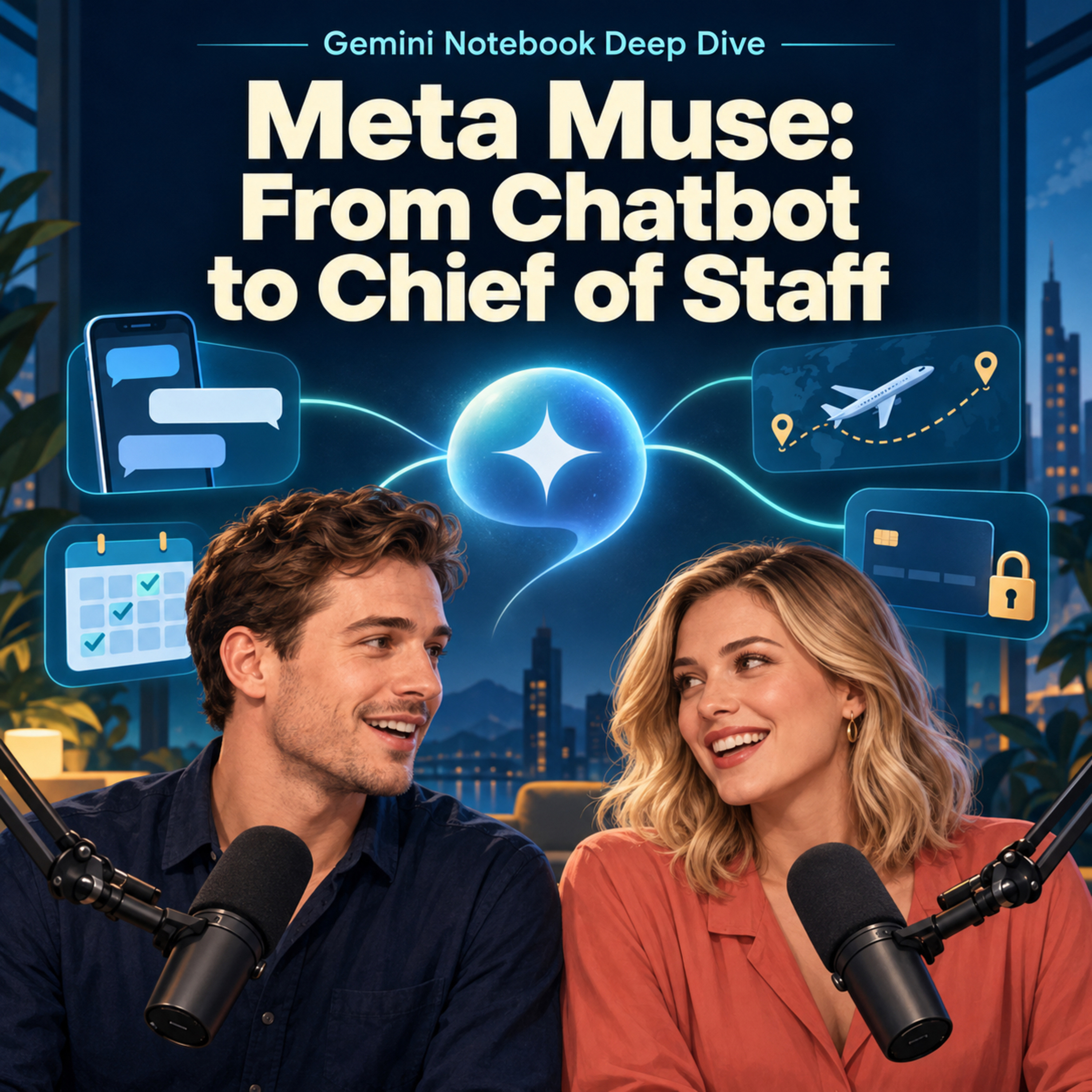
    Meta Muse: From Chatbot to Chief of Staff (22 min)

    What if your morning notifications were a report of everything already handled? Emails drafted, appointments rearranged, and a trip assembled from the Instagram reels you saved and forgot. This episode explores the promise of Meta Muse and the "agentic shift": Al moving from answering questions to carrying out tasks. Drawing on the beta-testing stories and product teardowns discussed in the episode, we examine the vision of a personal chief of staff operating through one continuous conversation-and the new skills involved in deciding what to delegate. From bargain hunting and travel planning to Al phone calls and personalized audio briefings, we follow that vision into the details that could make or break it. We unpack the episode's security claims around confidential computing and tokenized payments, explore persistent goals and the customizable "soul file," and consider the limits of cloud convenience. Along the way come approval fatigue, frustrated humans on the other end of automated calls, and the pull of Meta's ecosystem. If an assistant can take care of your daily life, which parts should you still insist on doing yourself?

  • September 27 · 56 min

    Meta Muse: From Chatbot to Chief of Staff (56 min)

    What if your morning notifications were a report of everything already handled? Emails drafted, appointments rearranged, and a trip assembled from the Instagram reels you saved and forgot. This episode explores the promise of Meta Muse and the “agentic shift”: AI moving from answering questions to carrying out tasks. Drawing on the beta-testing stories and product teardowns discussed in the episode, we examine the vision of a personal chief of staff operating through one continuous conversation—and the new skills involved in deciding what to delegate. From bargain hunting and travel planning to AI phone calls and personalized audio briefings, we follow that vision into the details that could make or break it. We unpack the episode’s security claims around confidential computing and tokenized payments, explore persistent goals and the customizable “soul file,” and consider the limits of cloud convenience. Along the way come approval fatigue, frustrated humans on the other end of automated calls, and the pull of Meta’s ecosystem. If an assistant can take care of your daily life, which parts should you still insist on doing yourself?

  • September 25 · 49 min

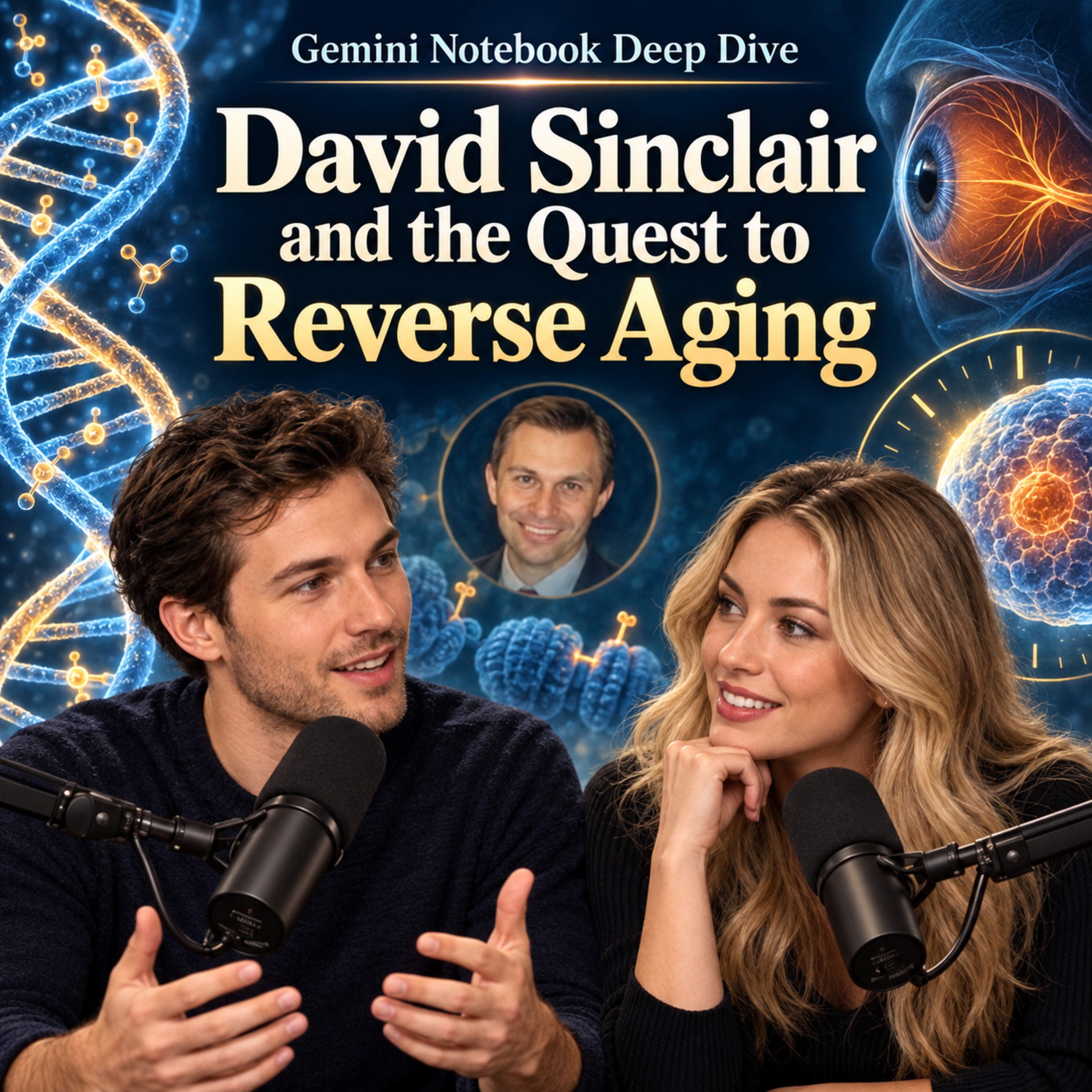
    David Sinclair and the Quest to Reverse Aging

    What if aging cells could recover the instructions that once kept them young? This episode explores David Sinclair’s information theory of aging and the science of partial epigenetic reprogramming—an effort to restore youthful cell function without erasing what makes each cell itself. From experiments in mouse eyes to an early human trial targeting optic nerve disease, we unpack the biological “software” metaphor, the Yamanaka factors, and why the eye has become a testing ground for this ambitious research. Then we examine the distance between a laboratory breakthrough and a treatment you can safely use. We explore the obstacles to whole-body rejuvenation, controversies surrounding resveratrol and NAD+ supplements, and why a younger-looking biomarker doesn’t automatically mean better health. The conversation closes with exercise, sleep, nutrition, and a practical framework for evaluating longevity claims. How can we recognize meaningful progress when the promise of turning back time is also such a powerful sales pitch?

  • September 25 · 1 hr

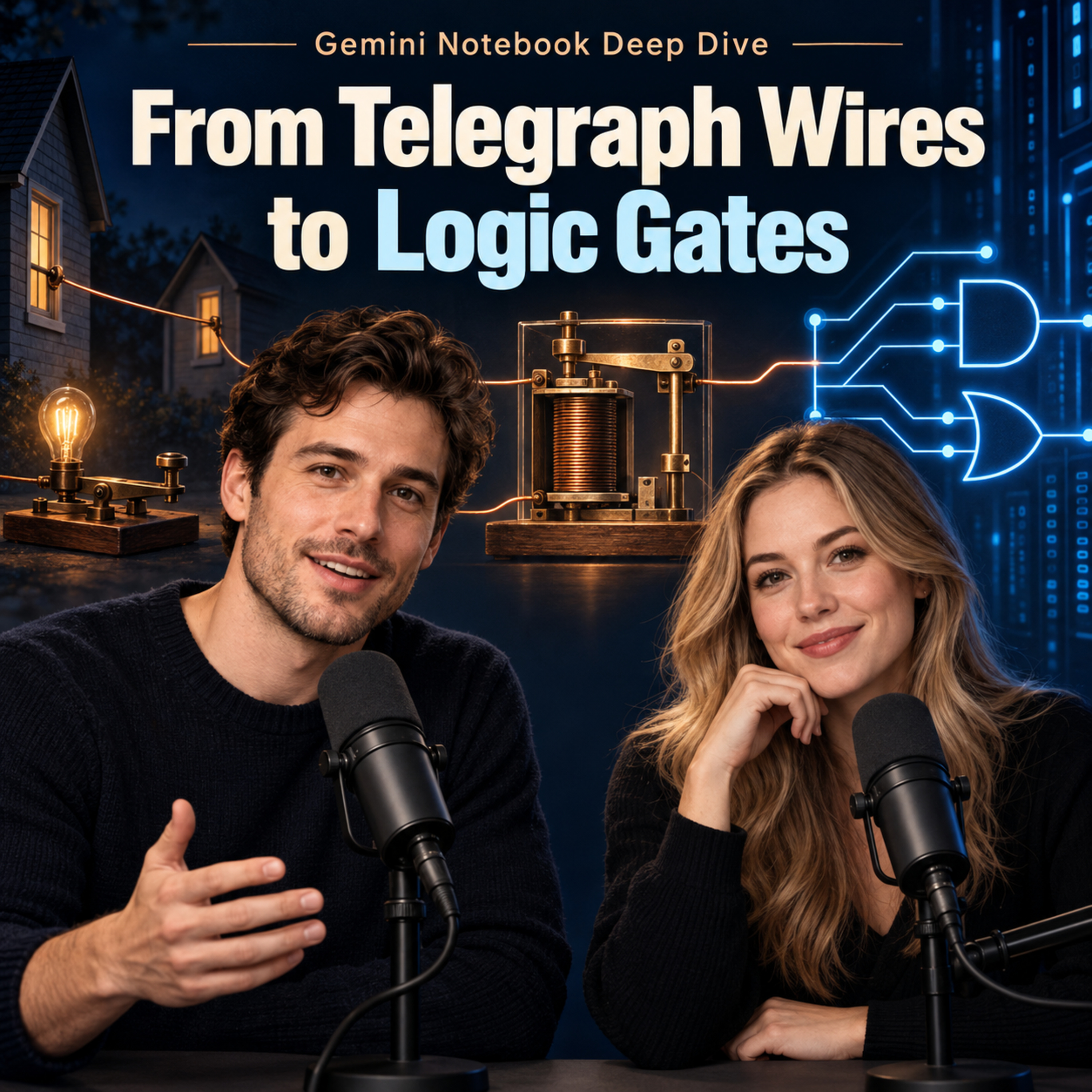
    From Telegraph Wires to Logic Gates

    What does a backyard telegraph have to do with the processor in your phone? Following chapters 5–8 of Charles Petzold’s Code, this episode starts with a simple attempt to send a message across a fence and follows the physical problems that make better circuits necessary. We trace the path from shared wires and electrical resistance to relays that can switch themselves, then meet George Boole’s algebra and see how AND, OR, and NOT become arrangements of real switches. By the time electricity and logic meet in a logic gate, the foundations of a computer are in place—and the next question is how to use them to count.

  • September 25 · 50 min

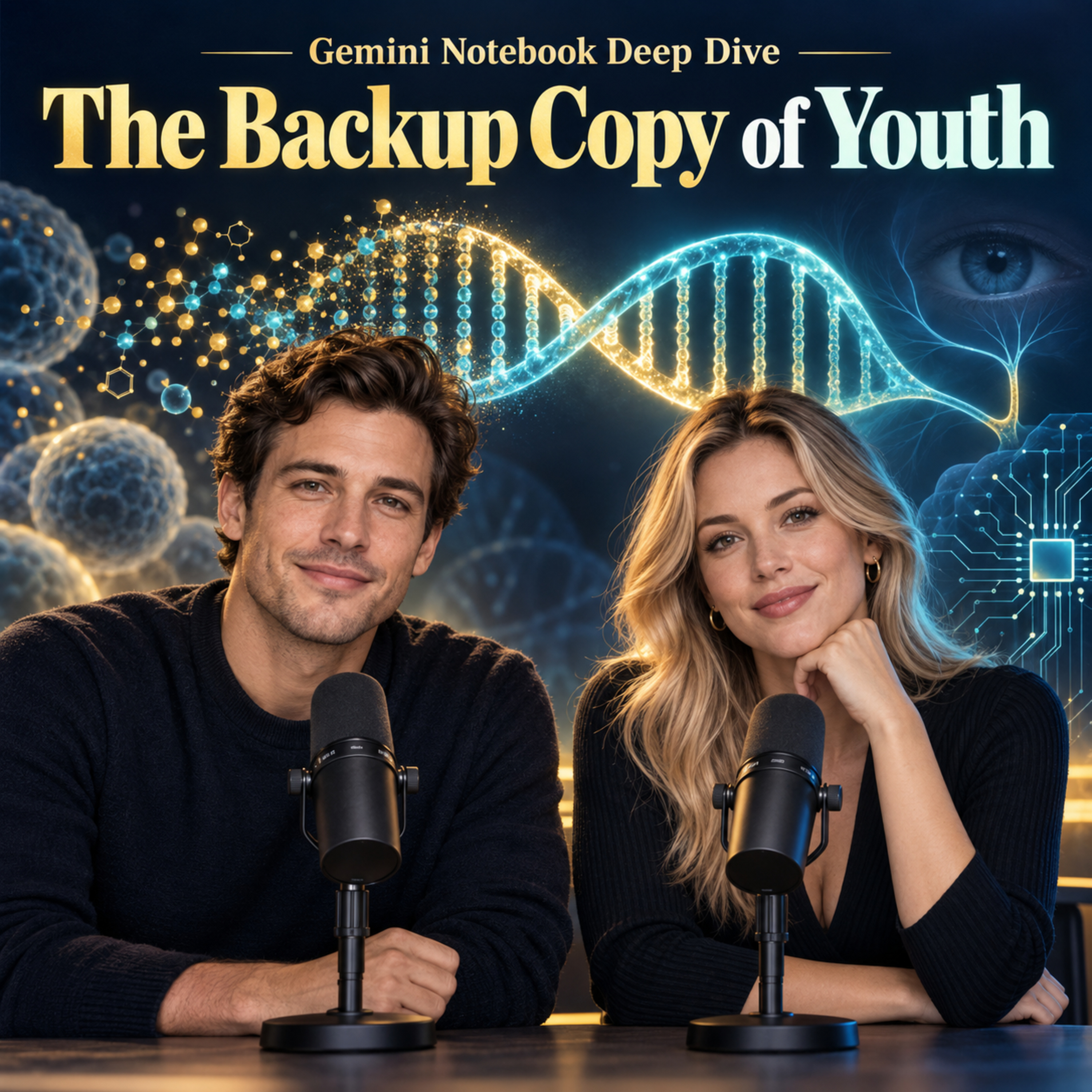
    The Backup Copy of Youth

    What if some of aging is a problem of lost instructions rather than worn-out parts? Drawing on a conversation with geneticist David Sinclair, this episode explores the epigenome—the system that helps cells decide which genes to use—and the possibility of partially resetting it. We follow the research from Yamanaka’s reprogramming factors and animal studies of optic nerve repair to an early human trial for vision loss. The story then turns to AI, from predicting protein shapes to screening potential drugs, and to unexpected questions about familiar medicines and experimental brain treatments. These findings offer intriguing paths for research, but the episode’s most dramatic possibilities remain unproven in people. Finally, we move from the laboratory to daily life: exercise, fasting, light therapy, chronic stress, and the relationships that shape health. The episode closes with the larger stakes of longer lives—who might gain access, how the technology could be misused, and what happens to a society built around a limited lifespan. If medicine gives us far more time, what will make that time meaningful?

  • September 25 · 1 hr 20 min

    The Secret Language of On and Off

    A flashlight blinking across a dark street seems far removed from a computer. But both turn simple physical states into meaningful messages. Guided by the first four chapters of Charles Petzold’s Code: The Hidden Language of Computer Hardware and Software, this episode starts with a child’s improvised signal and discovers why Morse code’s dots, dashes, and pauses work. From there, we follow the powers of two into binary trees and Braille’s six-dot cells, where context lets a limited set of patterns carry more meaning. Then we open the flashlight itself: batteries, current, resistance, and the switch that controls the circuit. If a switch can turn a light on and off, how can a network of switches perform a calculation?

  • September 25 · 42 min

    The Ice That Built the Modern World

    Cold was once something people had to harvest in winter and hope would survive the trip to summer. Drawing on Steven Johnson’s How We Got to Now, this episode begins with Frederick Tudor’s unlikely plan to ship New England pond ice to the tropics and follows the leap from selling ice to manufacturing cold. Travel from insulated ships and refrigerated railcars to Clarence Birdseye’s quick freezing and Willis Carrier’s air conditioning. Along the way, cold changes food, city life, and the preservation of human cells. The next time an ice cube drops into your glass, you may see far more than a convenience.

  • September 24 · 54 min

    The Glasses That Know Too Much

    What if replacing your smartphone meant wearing a computer on your face? Drawing on Joanna Stern’s interview with Mark Zuckerberg, this episode explores Meta’s bet that AI glasses could move computing out of our pockets and into the world around us. From lightweight audio glasses and immersive virtual displays to an AI agent that can handle everyday tasks, we trace what these devices promise and what they ask of us. Can they make us more present with other people while protecting our privacy and judgment—or will they bring distraction and surveillance even closer?

  • September 23 · 28 min

    From Sand to Stars: How Glass Changed the World

    A scarab in Tutankhamun’s tomb held a piece of desert glass formed millions of years earlier. How did a material born from heat become a way to see cells, distant planets, and even ourselves? This episode follows glass from natural shards to the workshops of Murano, where clearer glass opened new possibilities for shaping light. Follow the chain from reading lenses to microscopes and telescopes, from mirrors and self-portraiture to fiberglass and the fiber-optic cables that carry information across oceans. The journey ends at an observatory, where precisely controlled glass helps us look deep into the past—and raises a question about what other ordinary material might change the future.

  • September 20 · 24 min

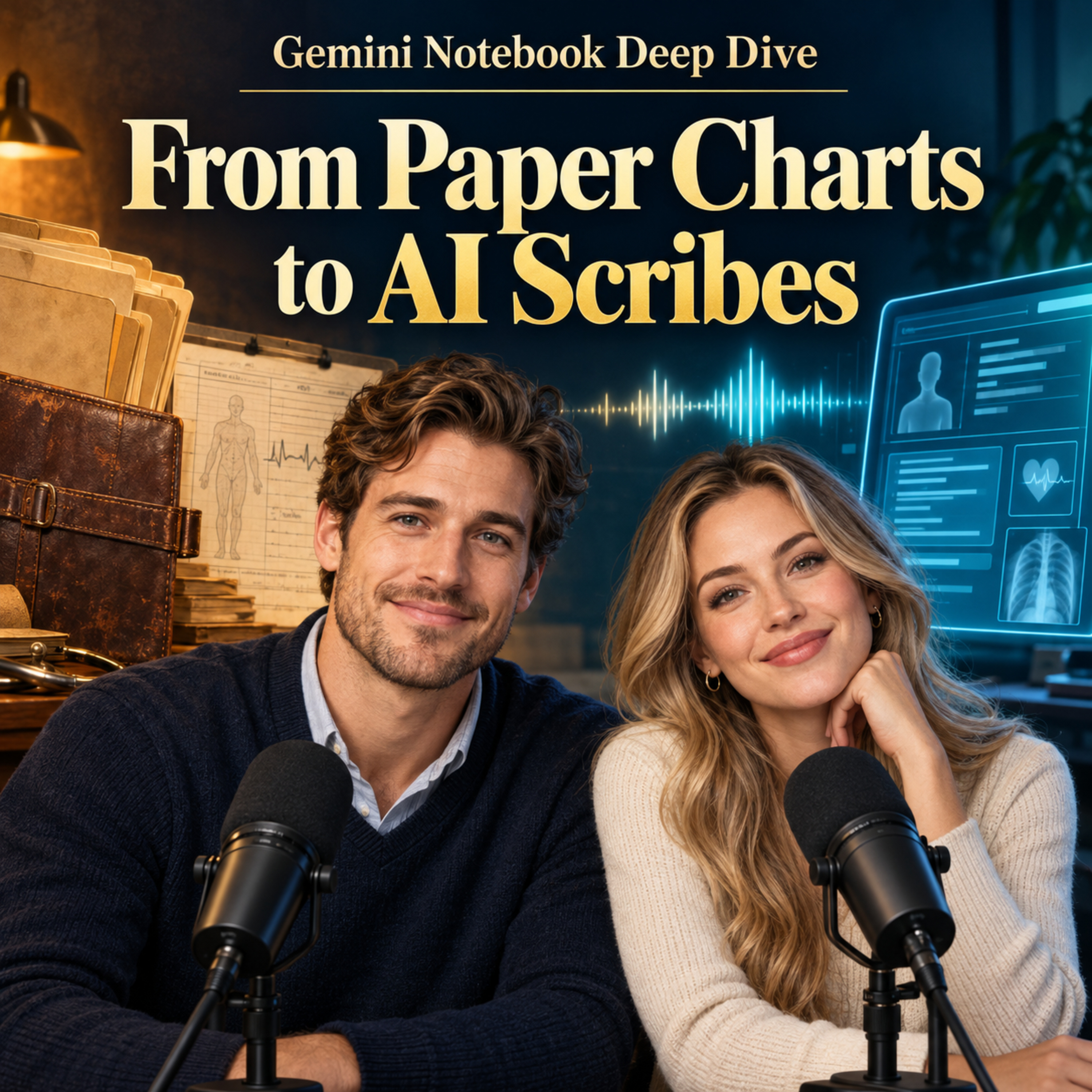
    From Paper Charts to AI Scribes

    One of medicine’s most consequential innovations was a simple file folder. This episode traces the evolution of the medical record—from private physicians’ casebooks and sprawling hospital ledgers to unified patient charts, electronic records, and AI scribes. Along the way, discover how Henry Plummer helped organize the patient’s story, Ernest Codman pushed doctors to account for their outcomes, and Lawrence Weed’s SOAP notes gave clinical reasoning a clearer structure. Follow the journey from paper to connected digital systems, exploring the promise of shared information, the consequences of cyberattacks, and the documentation burden that follows doctors home. Then meet ambient AI scribes, designed to turn clinical conversations into draft notes and return attention to the patient. But if writing a chart helps a physician think, what happens when a machine takes over the writing—and who will shape your medical story next?

  • September 18 · 20 min

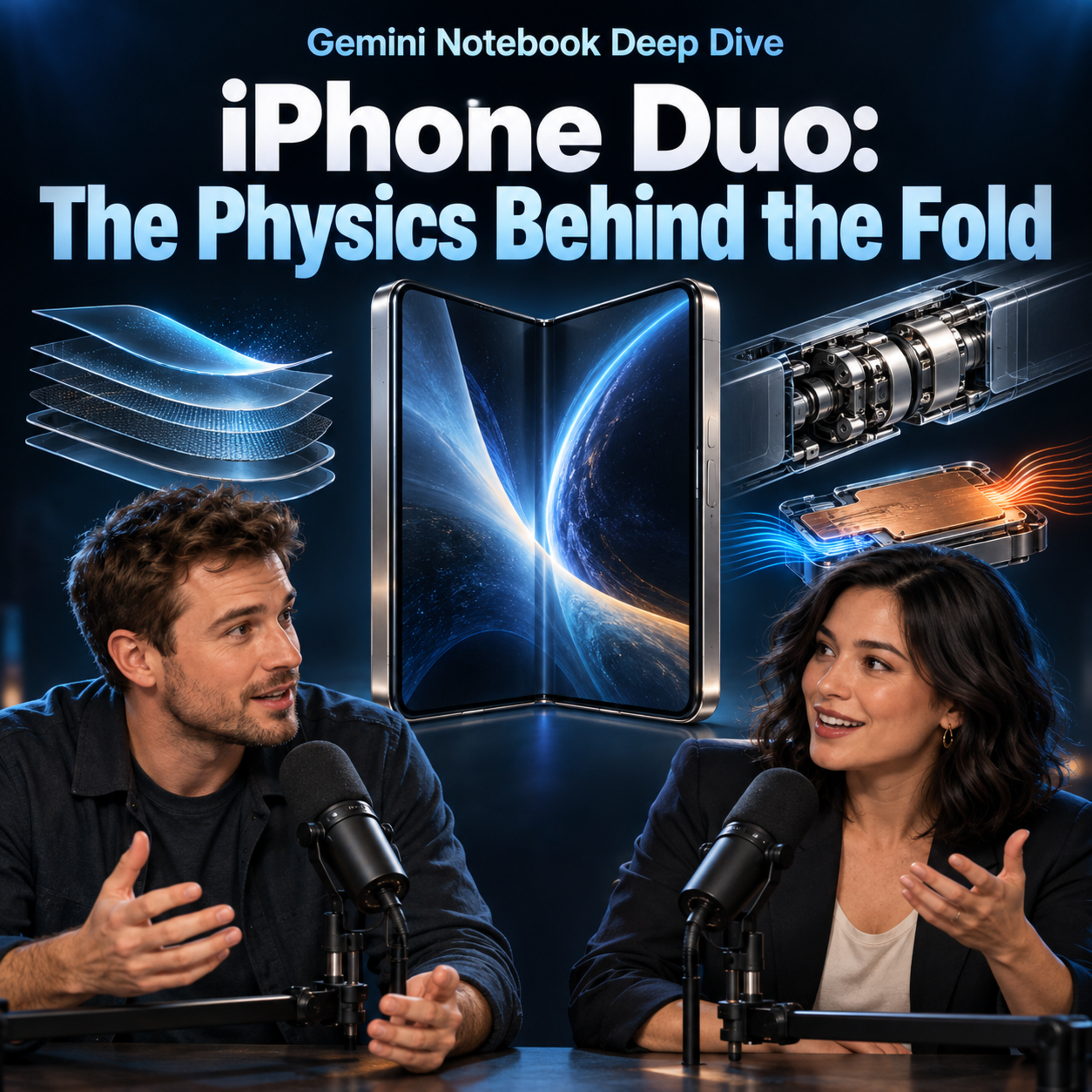
    iPhone Duo: The Physics Behind the Fold

    Making a phone fold means solving problems most smartphones never face: glass must bend, a moving hinge must support a delicate display, and powerful electronics must shed heat inside an exceptionally thin frame. This episode explores Apple’s iPhone Duo through the materials science, optical tricks, and mechanical engineering behind its transformation from pocket-sized phone to expansive digital workspace. From display layers that slide like pages in a book to vapor cooling that acts like a miniature weather system, we unpack the mechanisms discussed in the episode—and examine its intriguing claims about AI matching imperfect components on the assembly line. Along the way, we weigh the promise of multitasking against extra weight, camera compromises, and a cramped outer-screen keyboard. Can the engineering make those trade-offs worthwhile—and what happens when AI starts designing the hardware itself?

  • September 17 · 25 min

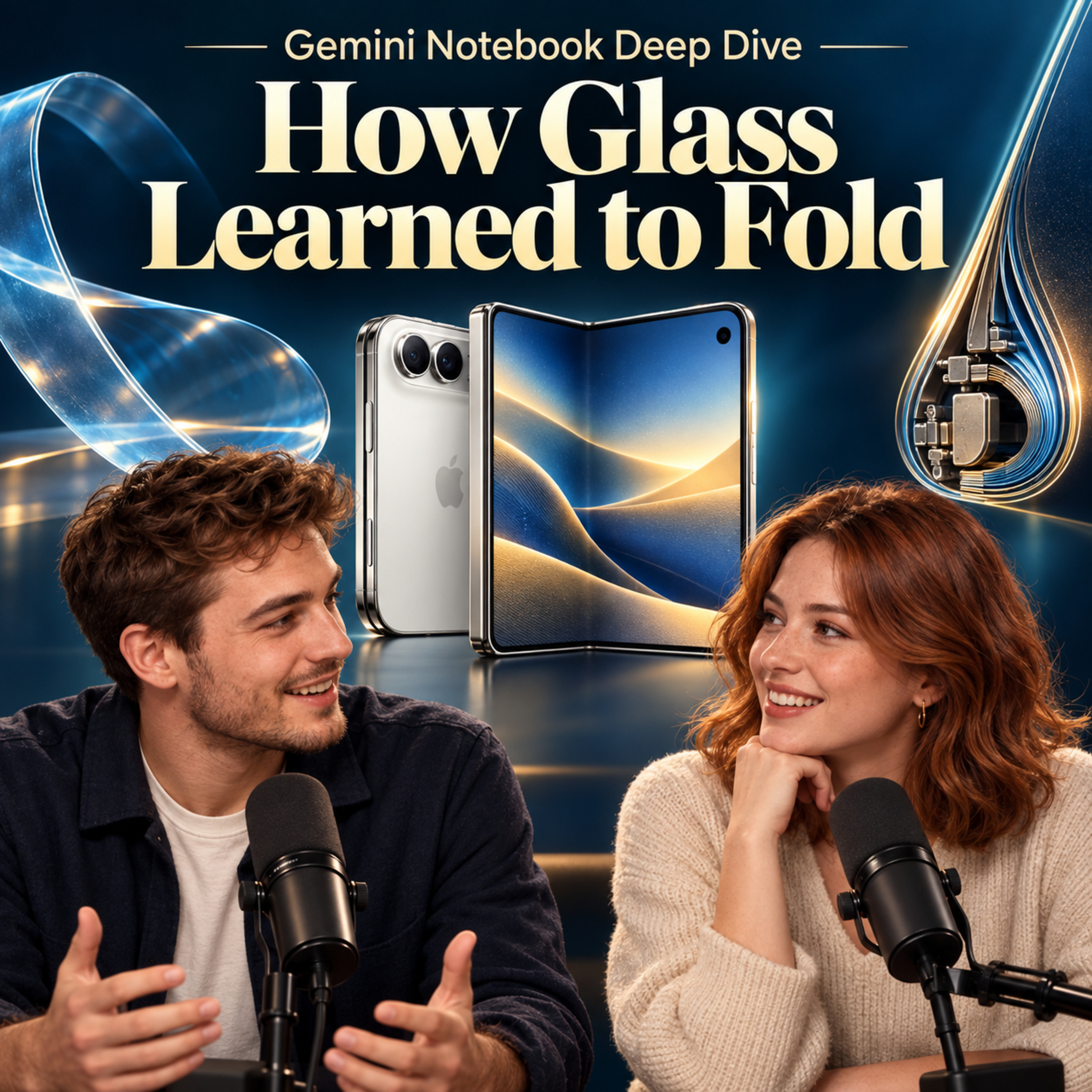
    How Glass Learned to Fold - 25 minutes

    Glass shatters—so how can a phone screen fold in half? This episode explores the materials science behind that seemingly impossible motion, starting with the microscopic cracks that make ordinary glass vulnerable. Discover how glass thinner than a human hair, carefully controlled surface compression, and ingenious manufacturing methods help turn a brittle material into a flexible display. Follow the journey from ribbons of molten glass and ultrafast laser cutting to adhesives that let display layers slide and teardrop hinges that give screens room to bend. Along the way, explore the trade-offs between flexibility and durability, then look ahead to the rollable displays, impact-responsive protective layers, and self-healing coatings envisioned in emerging designs and patents. As glass becomes more flexible and polymers become more glasslike, what will tomorrow’s screen actually be made of?

  • September 16 · 54 min

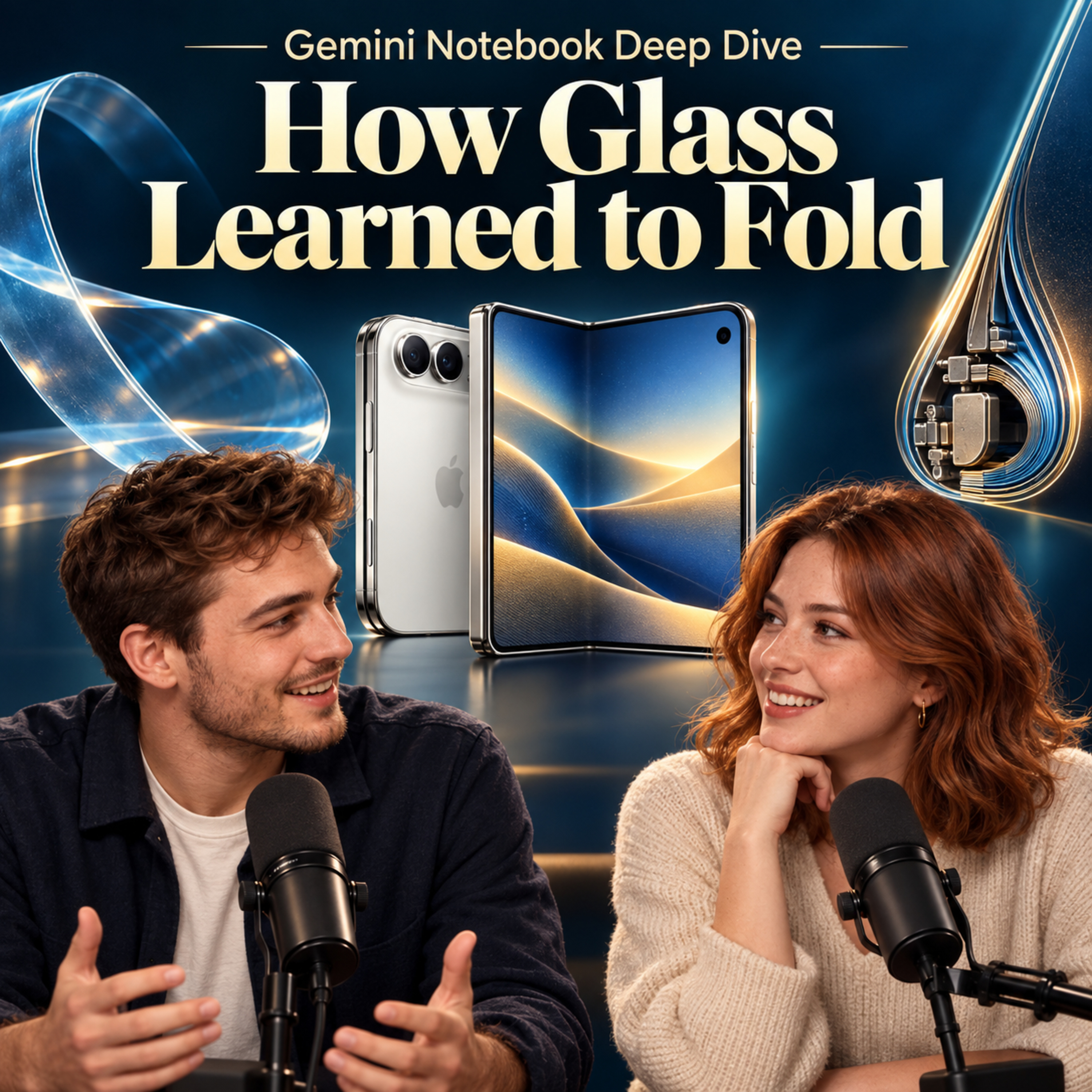
    How Glass Learned to Fold - 54 minutes

    Glass shatters—so how can a phone screen fold in half? This episode explores the materials science behind that seemingly impossible motion, starting with the microscopic cracks that make ordinary glass vulnerable. Discover how glass thinner than a human hair, carefully controlled surface compression, and ingenious manufacturing methods help turn a brittle material into a flexible display. Follow the journey from ribbons of molten glass and ultrafast laser cutting to adhesives that let display layers slide and teardrop hinges that give screens room to bend. Along the way, explore the trade-offs between flexibility and durability, then look ahead to the rollable displays, impact-responsive protective layers, and self-healing coatings envisioned in emerging designs and patents. As glass becomes more flexible and polymers become more glasslike, what will tomorrow’s screen actually be made of?

  • September 14 · 49 min

    Henry Winkler: The Man Beneath the Leather

    The man who made confidence look effortless spent decades struggling to believe in himself. Drawing on Henry Winkler’s memoir, Being Henry: The Fonz . . . and Beyond, and a candid Guardian interview, this episode explores the distance between an adored television character and the anxious actor behind him. From a childhood marked by undiagnosed dyslexia and harsh parental expectations to the audition that created Fonzie, we trace how imagination, instinct, and persistence helped Winkler find his place onstage—even when he struggled to feel worthy off it. Follow the leather jacket from breakthrough to burden: the extraordinary fame of Happy Days, Winkler’s loyalty to Ron Howard and the cast, and the typecasting that forced him to rebuild his career. Along the way, we explore family life with Stacy, reinvention through producing MacGyver, and the acting resurgence that led to Arrested Development and an Emmy for Barry. Beneath the Hollywood stories lies a more intimate question: when the world loves the character you play, how do you learn to accept the person you are?

  • September 12 · 1 hr 13 min

    When Reality Pixels - A Quantum Deep Dive

    Have you ever looked at a solid oak table and assumed that reality is continuous, predictable, and objectively real whether you are looking at it or not? Think again. In this deep-dive episode, our male and female hosts pull back the curtain on the subatomic world to reveal that our everyday physical experience is just an emergent macroscopic illusion. From the late-19th-century puzzle of black body radiation and the "ultraviolet catastrophe" that forced Max Planck to chop energy into discrete stairs, to Einstein’s photon bullets and Louis de Broglie’s matter waves, we trace the exact moments classical Newtonian certainty collapsed into quantum blurriness. Together, we tackle the mind-bending experiments that continue to challenge the very nature of causality and existence. Discover how quantum tunneling powers our sun and digital transistors, why particles act like waves exploring every path at once in the double-slit experiment, and how Alain Aspect’s tests of Bell’s inequalities shattered Einstein’s beloved principle of local realism. We also untangle the infamous Delayed Choice Quantum Eraser—debunking pop-science claims of time-traveling lottery hacks—and compare the major philosophical interpretations fighting for the soul of physics, from Bohr’s observer-driven Copenhagen model and Schrödinger’s cat to Hugh Everett’s Many-Worlds multiverse and pilot wave theory. Whether you are fascinated by Paul Dirac predicting antimatter out of pure mathematical elegance or the revelation that measuring a quantum system entangles your own brain with the fabric of reality, this episode breaks down heavy chalkboard physics into intuitive analogies without skipping the rigor. Hit follow, press play, and discover what the universe is actually doing when no one is watching.

  • September 8 · 39 min

    Giving AI Hands on Your Mac

    What happens when your AI assistant can reach through the chat window and actually use your Mac? This episode explores the move from asking AI for answers to delegating real work. Drawing on Claude Cowork documentation and the Macuse project, we examine the connection between cloud-based reasoning and local execution—and why giving an intelligent assistant access to your apps is more complicated than handing it a mouse. Follow the journey from screenshot-driven clicking to direct connections with Apple apps, background interactions through accessibility tools, and conversational control of Apple Shortcuts. Along the way, we explore how skills guide an agent’s actions, why permissions and verification matter, and the trust involved in opening your personal workspace to AI. If software can handle the clicking, filing, and scheduling while you keep working, how much of the traditional desktop will you still need?

  • September 6 · 53 min

    How to Build a Blue Planet

    What if the ingredients for Earth’s oceans were hidden in the rocks that built the planet? This episode explores evidence that supposedly dry meteorites carried enough hydrogen to challenge the familiar story of water arriving entirely through later impacts. Beginning in a freezing molecular cloud, we trace the turbulent birth of our solar system and the surprising chemistry that may have helped Earth become a blue world. Along the way, discover how magnetic winds help young stars grow, how swarms of pebbles overcome the barriers to building planets, and how Jupiter’s proposed migrations could have reshaped our cosmic neighborhood. Samples from Bennu and Ryugu, competing ideas about comet deliveries, and Webb’s observations of water around a young star bring fresh clues to an unfinished investigation. If rocky planets can inherit the ingredients for oceans from the beginning, how many other blue worlds might be waiting out there?

  • September 2 · 54 min

    How Wheat Built the World

    Humanity did not simply domesticate wheat—wheat may have domesticated humanity. Beginning with a scraggly wild grass in the Fertile Crescent 12,000 years ago, this episode reveals how one extraordinary trait—its ability to be stored through winter—persuaded nomadic people to settle, cultivate fields, defend granaries, and surrender their freedom of movement for a more reliable supply of food. Follow wheat from Egypt’s grain-based economy and Rome’s precarious imperial supply lines through feudal mills, famine, revolution, colonial expansion, the Dust Bowl, and Norman Borlaug’s lifesaving Green Revolution. Today this single grass supplies roughly one-fifth of humanity’s calories, yet depends upon vulnerable monocultures, intensive irrigation, synthetic fertilizer, global shipping, and an increasingly unstable climate. After building civilization around wheat, who has really been in charge?

Showing 1–20 of 41 episodes