Skip to content
Artwork for Daily Facts in Easy German
EducationLanguage LearningSociety & CultureDocumentary

Daily Facts in Easy German

Comprehensible Input

This podcast features two hosts exploring key facts and engaging topics in clear, accessible German. Designed for learners and casual listeners, each episode breaks down subject matter using simplified language, straightforward explanations, and a natural

dailyfactsineasygerman.substack.com
Play
  • 37 episodes
  • daily
  • Avg 19 min
  • German
Counted on this page — what you have heard stays on this device, so it is not something the list can be paged by.
  • Today · 11 min

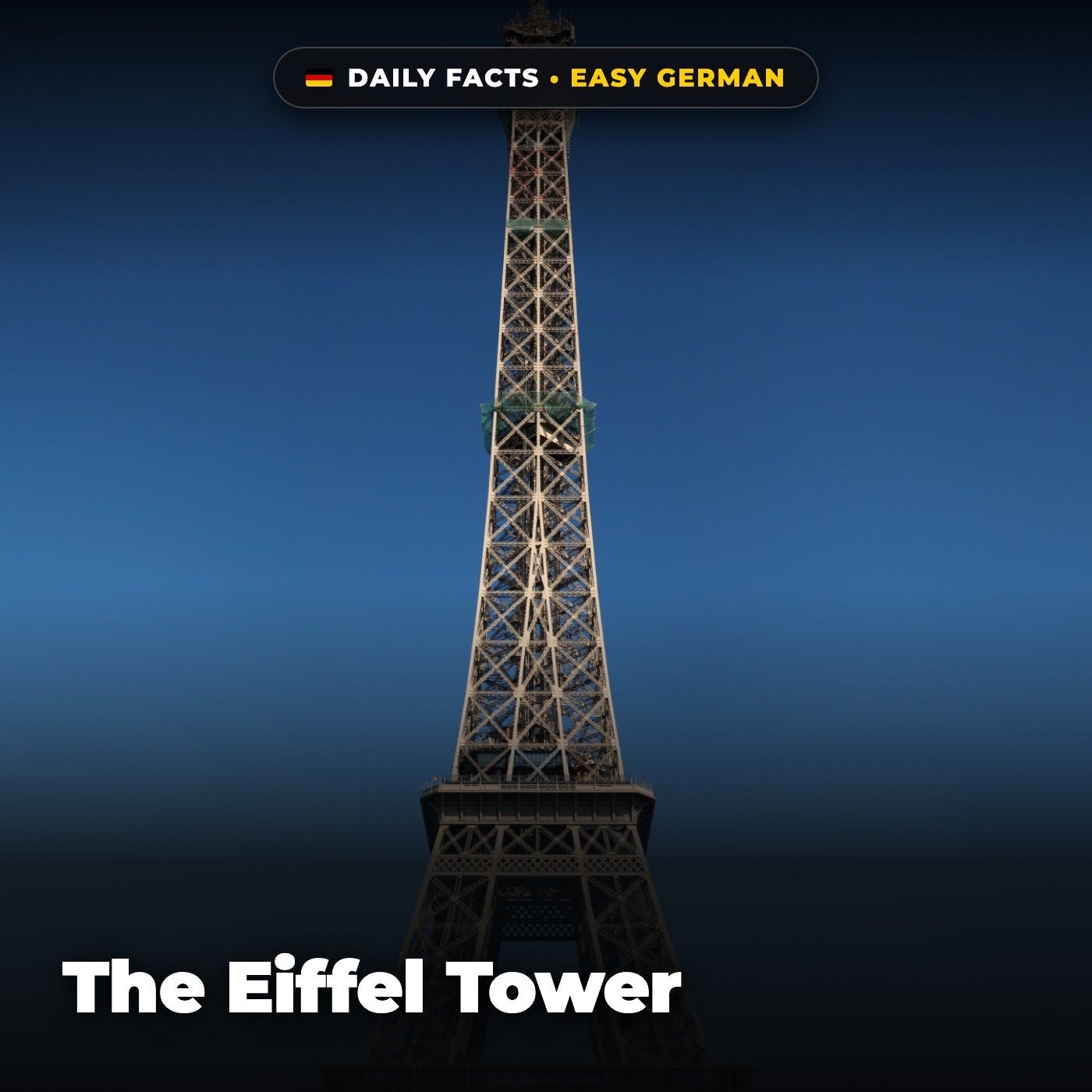
    The Eiffel Tower in Easy German

    Transcription: https://dailyfactsineasygerman.substack.com/p/the-eiffel-tower-in-easy-german?showTranscript=true Discover "The Eiffel Tower" in clear, natural German! Rising high above the Paris skyline, the Eiffel Tower is one of the most recognizable landmarks in the entire world. Built between 1887 and 1889 by engineer Gustave Eiffel, this towering iron structure was originally created for the World's Fair. Although many artists initially disliked its bold metal design, the tower soon won the hearts of locals and travelers alike. Today, millions of people visit each year to enjoy breathtaking views and celebrate French culture. Key Topics & Highlights: • The tower was constructed as the grand entrance arch for the 1889 World's Fair in Paris. • During summer heat, thermal expansion can cause the metal structure to grow by up to fifteen centimeters. • Originally intended to stand for only twenty years, it was saved because its height made it valuable as a radio antenna. • It takes approximately sixty tons of paint every seven years to protect the massive iron frame from rust. Key German Vocabulary: • der Turm (tower) • das Eisen (iron) • bauen (to build) • die Aussicht (view) Chapters: 00:00 - Introduction & The Symbol of Paris 02:18 - Designing the Iron Lady for the World's Fair 05:10 - Engineering Feats and Construction Challenges 08:02 - From Temporary Exhibit to Radio Pioneer 10:06 - The Enduring Legacy of an Global Icon Audio: 100% German • Spoken slowly and clearly (0.8x speed) This is a public episode. If you would like to discuss this with other subscribers or get access to bonus episodes, visit dailyfactsineasygerman.substack.com

  • Yesterday · 9 min

    The 1936 Summer Olympics in Easy German

    Transcription: https://dailyfactsineasygerman.substack.com/p/the-1936-summer-olympics-in-easy-german?showTranscript=true Discover "The 1936 Summer Olympics" in clear, natural German! Examine the tense, contradictory world of the 1936 Berlin Summer Olympics (Olympische Sommerspiele 1936). Orchestrated by Adolf Hitler and the Nazi regime, the games were staged as a massive propaganda spectacle of peace and modernity. Explore how African American track superstar Jesse Owens shattered Nazi racial myths by winning four gold medals, how the Olympic torch relay was invented for the games, and how Berlin hosted the world's very first live television broadcast. Key Topics & Highlights: • The Nazi regime invested 42 million Reichsmark in a colossal 100,000-seat stadium and whitewashed anti-Semitic signage. • African American athlete Jesse Owens became the undeniable star of the games, winning four historic Olympic gold medals. • The modern tradition of the Olympic torch relay from Greece was introduced for the very first time at the 1936 Berlin Games. • The Berlin Games featured the world's first live television coverage, broadcast to viewing booths across the city. Key German Vocabulary: • die Olympischen Spiele (Olympic Games) • das Stadion (stadium) • die Medaille (medal) • der Sport (sports) Chapters: 00:00 - Introduction & Berlin 1936: Sport Meets Politics 01:44 - Colossal Stadiums & The Nazi Propaganda Spectacle 04:45 - The Invention of the Olympic Torch Relay & Live TV 05:33 - Jesse Owens Shattering Racial Myths with Four Golds 07:23 - The Aftermath & Lessons of the Games Audio: 100% German • Spoken slowly and clearly (0.8x speed) This is a public episode. If you would like to discuss this with other subscribers or get access to bonus episodes, visit dailyfactsineasygerman.substack.com
  • Saturday · 11 min

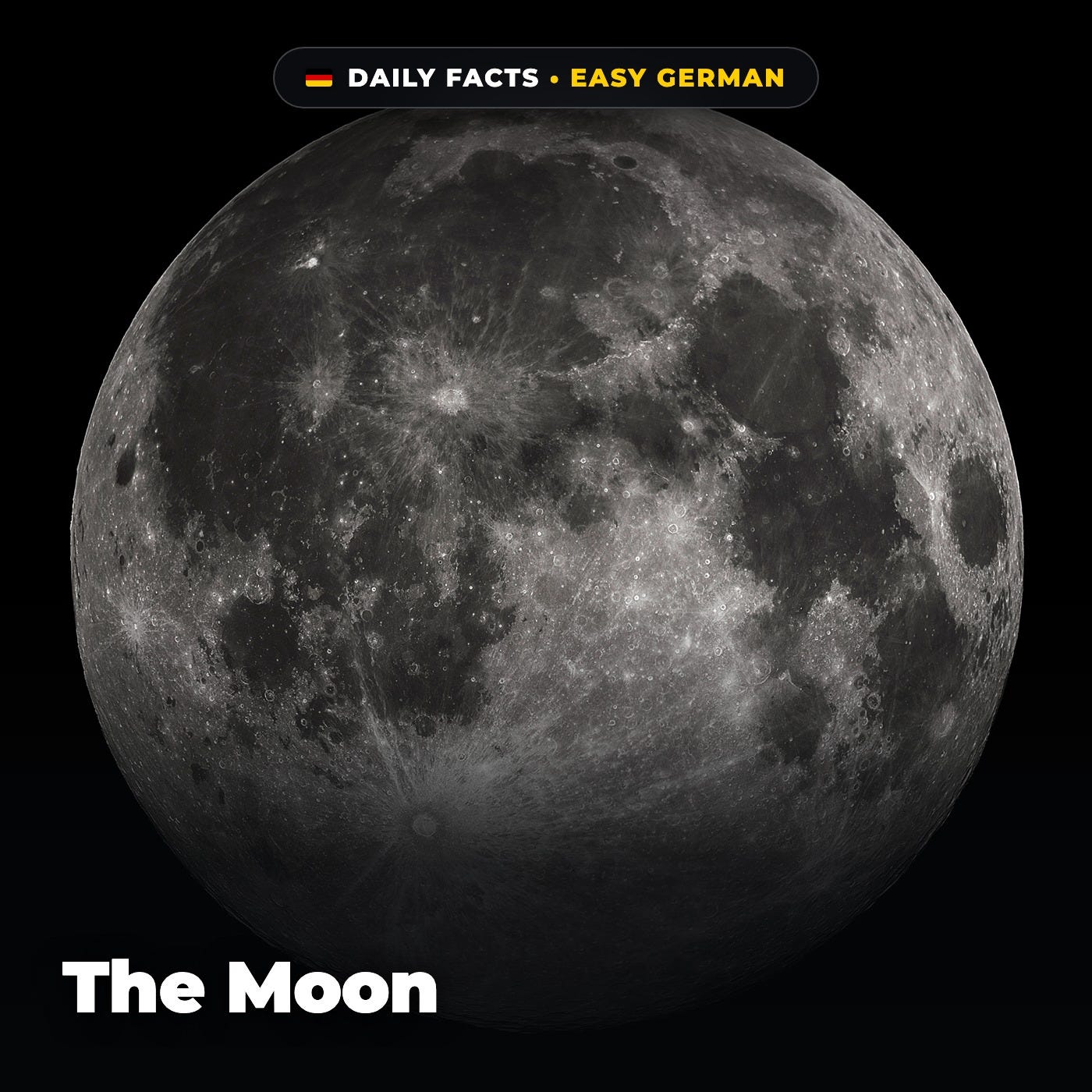
    The Moon in Easy German

    Transcription: https://dailyfactsineasygerman.substack.com/p/the-moon-in-easy-german?showTranscript=true Discover "The Moon" in clear, natural German! Gaze up into the night sky to explore Earth's celestial companion, the Moon (Mond)! Born 4.5 billion years ago when a Mars-sized planetoid collided with the young Earth, the Moon has shaped our tides and calendar ever since. Discover why tidal locking means we only ever see one side from Earth, revisit the historic space race from Soviet Luna probes to Apollo 11 moonwalkers, and learn why the Moon is slowly drifting away from us by 3.8 cm each year. Key Topics & Highlights: • The Moon likely formed from the debris of a cataclysmic collision between young Earth and a protoplanet named Theia. • Because the Moon's rotation matches its orbital period exactly (tidal locking), the same side always faces Earth. • Only 12 human beings have walked on lunar soil, starting with Neil Armstrong and Buzz Aldrin during Apollo 11 in 1969. • Due to gravitational tidal friction, the Moon is slowly moving away from Earth at a rate of 3.8 centimeters per year. Key German Vocabulary: • der Mond (moon) • die Erde (earth) • der Stein (stone / rock) • die Umlaufbahn (orbit) Chapters: 00:00 - Introduction & Earth's Celestial Companion 02:11 - The Theia Collision 4.5 Billion Years Ago 04:55 - Tidal Locking & The Hidden Far Side 06:37 - The Apollo 11 Landing & Human Footsteps 10:33 - Drifting Away & Tides of the Future Audio: 100% German • Spoken slowly and clearly (0.8x speed) This is a public episode. If you would like to discuss this with other subscribers or get access to bonus episodes, visit dailyfactsineasygerman.substack.com
  • Friday · 21 min

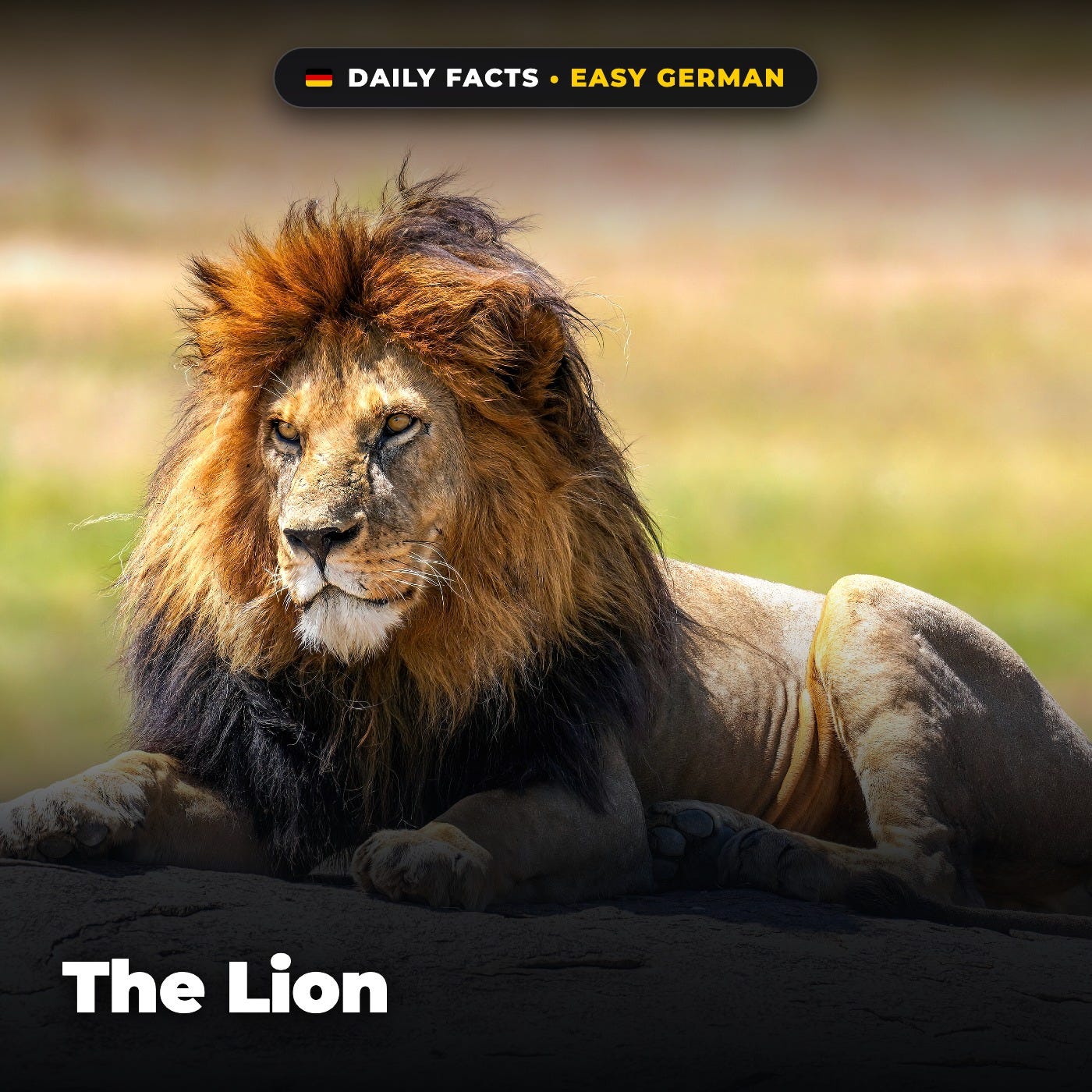
    The Lion in Easy German

    Transcription: https://dailyfactsineasygerman.substack.com/p/the-lion-in-easy-german?showTranscript=true Discover "The Lion" in clear, natural German! Meet the legendary "King of the Jungle," the Lion (Löwe)! Lions are unique among big cats for living in complex social prides where cooperative lionesses do the majority of the hunting across the open savanna. Explore why dark, heavy manes signal health and testosterone to rivals, how lions once roamed southern Europe and North America in prehistoric times, and discover the mysterious horny spur hidden in the tip of a lion's tail. Key Topics & Highlights: • Lions are the only truly social wild cat species, living in family prides containing up to several dozen related members. • A male lion's dark mane is an honest signal of strength and high testosterone, but causes significant heat stress in summer. • Until recent millennia, extinct lion species and subspecies roamed widely across Europe, Asia, and North America. • A lion's tail ends in a dark tuft of hair concealing a small, mysterious horny claw-like spur. Key German Vocabulary: • der Löwe (lion) • die Mähne (mane) • das Rudel (pride / pack) • die Savanne (savanna) Chapters: 00:00 - Introduction & The King of the Savanna 04:17 - Social Prides & The Hunting Lionesses 07:21 - The Dark Mane: Sign of Strength and Heat 11:21 - Prehistoric Range Across Continents & The Mystery Spur 21:02 - Modern Savannas & Protecting Wild Prides Audio: 100% German • Spoken slowly and clearly (0.8x speed) This is a public episode. If you would like to discuss this with other subscribers or get access to bonus episodes, visit dailyfactsineasygerman.substack.com
  • Thursday · 21 min

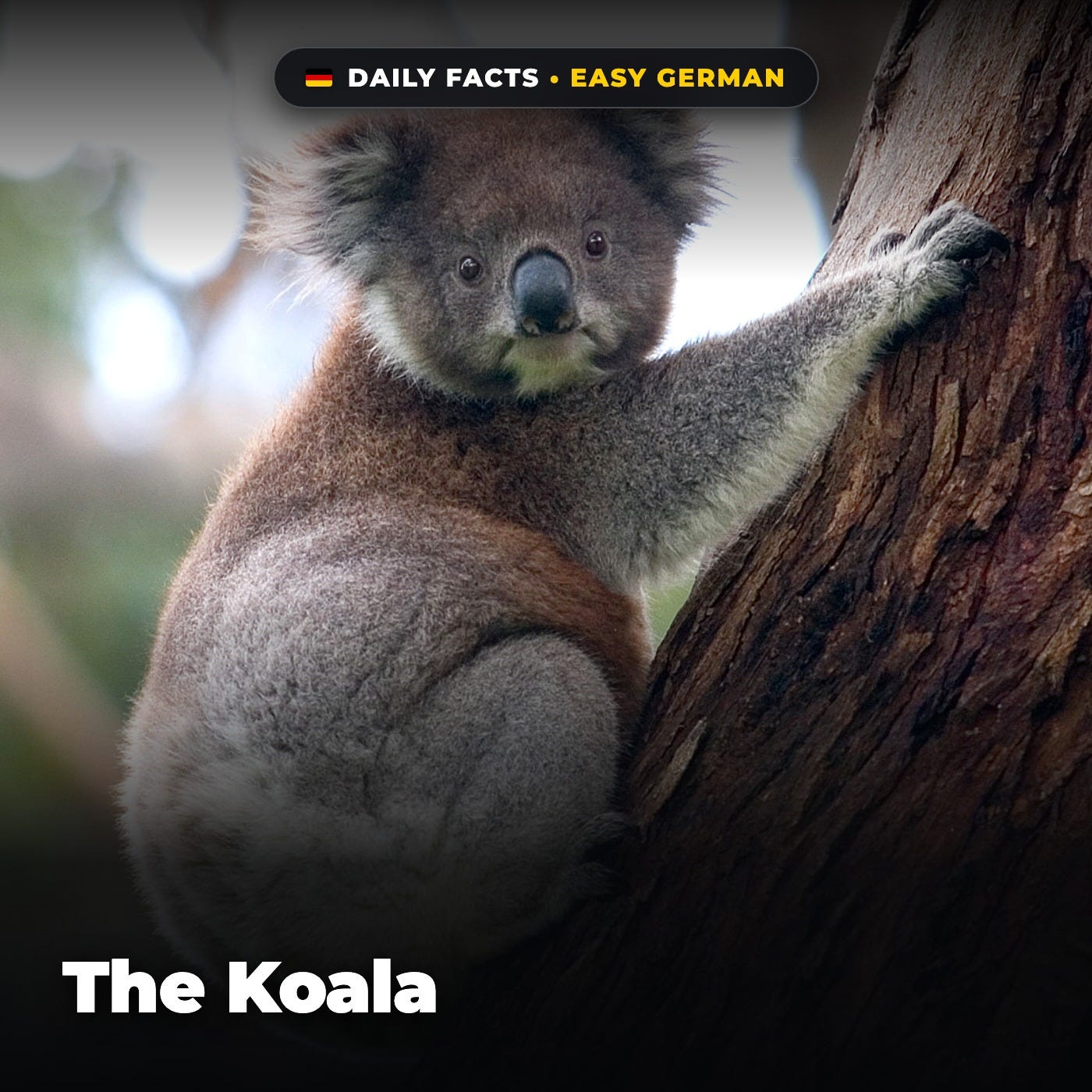
    The Koala in Easy German

    Transcription: https://dailyfactsineasygerman.substack.com/p/the-koala-in-easy-german?showTranscript=true Discover "The Koala" in clear, natural German! Climb high into Australia's eucalyptus canopies with the sleepy Koala (Koala)! While they look like cuddly teddy bears, koalas are actually solitary marsupials with one of the most specialized and bizarre diets on Earth. Discover how they detoxify poisonous eucalyptus leaves, sleep up to 20 hours a day to conserve energy, hug tree trunks to stay cool during Australian heatwaves, and why mother koalas feed their joeys a special substance called "pap." Key Topics & Highlights: • Koalas survive almost entirely on toxic eucalyptus leaves that would be lethal to almost any other mammal. • To digest tough, fibrous leaves, a koala's specialized gut fermenter (caecum) can be up to two meters long. • Mother koalas produce a special transitional food called 'pap' to inoculate their joey's gut with vital bacteria. • On scorching hot days, koalas hug smooth tree trunks, which are several degrees cooler than the surrounding air. Key German Vocabulary: • der Koala (koala) • der Baum (tree) • das Blatt (leaf) • schlafen (to sleep) Chapters: 00:00 - Introduction & Australia's Sleepy Marsupial 04:12 - Surviving on Lethal Eucalyptus 10:32 - The Two-Meter Gut & Unique Digestion 15:10 - Tree-Hugging for Heat Relief & Joeys 16:32 - Habitat Loss, Wildfires & Conservation Audio: 100% German • Spoken slowly and clearly (0.8x speed) This is a public episode. If you would like to discuss this with other subscribers or get access to bonus episodes, visit dailyfactsineasygerman.substack.com
  • Wednesday · 13 min

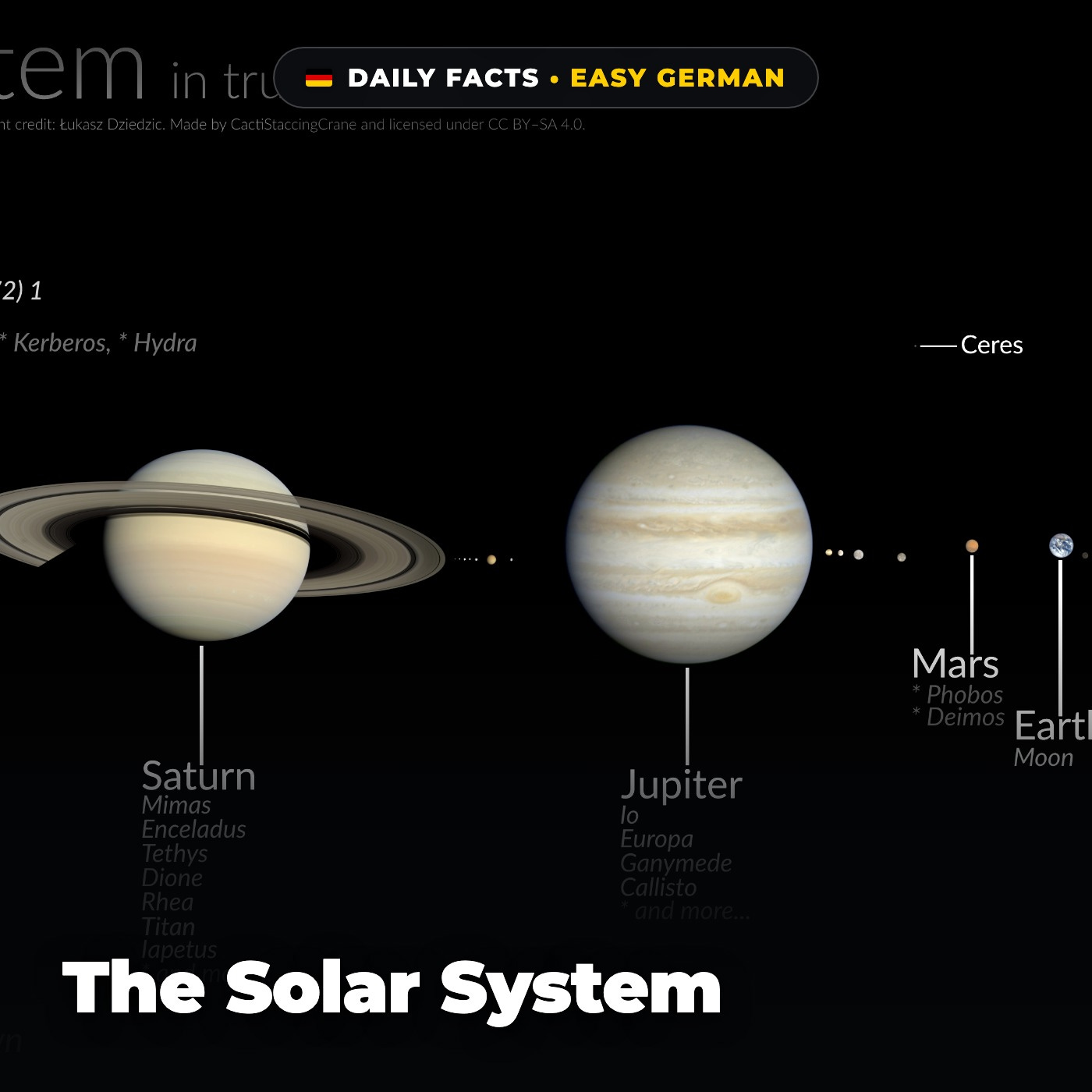
    The Solar System in Easy German

    Transcription: https://dailyfactsineasygerman.substack.com/p/the-solar-system-in-easy-german?showTranscript=true Discover "The Solar System" in clear, natural German! Embark on an epic cosmic tour of our home in space: the Solar System (Sonnensystem)! Born 4.6 billion years ago from a swirling cloud of gas and dust, our cosmic neighborhood stretches far beyond what the eye can see. Explore the four rocky inner worlds, the crushing pressures inside gas giant Jupiter, ringed Saturn, and the icy frontiers of the Kuiper Belt and Oort Cloud where comets are born. Key Topics & Highlights: • Our solar system formed roughly 4.6 billion years ago from the gravitational collapse of a giant molecular dust cloud. • The Sun holds over 99.8% of all the mass in the entire solar system. • Jupiter's atmosphere has atmospheric pressures so extreme that any entering spacecraft is crushed within minutes. • Beyond Neptune lies the Kuiper Belt, home to dwarf planet Pluto and millions of icy celestial bodies. Key German Vocabulary: • das Sonnensystem (solar system) • der Planet (planet) • die Sonne (sun) • der Weltraum (space / universe) Chapters: 00:00 - Introduction & Our Cosmic Neighborhood 02:36 - Formation 4.6 Billion Years Ago 05:13 - The Rocky Inner Planets & Earth's Sanctuary 06:52 - Gas Giants & Ringed Saturn 12:26 - Kuiper Belt, Oort Cloud & The Outer Void Audio: 100% German • Spoken slowly and clearly (0.8x speed) This is a public episode. If you would like to discuss this with other subscribers or get access to bonus episodes, visit dailyfactsineasygerman.substack.com
  • October 20 · 21 min

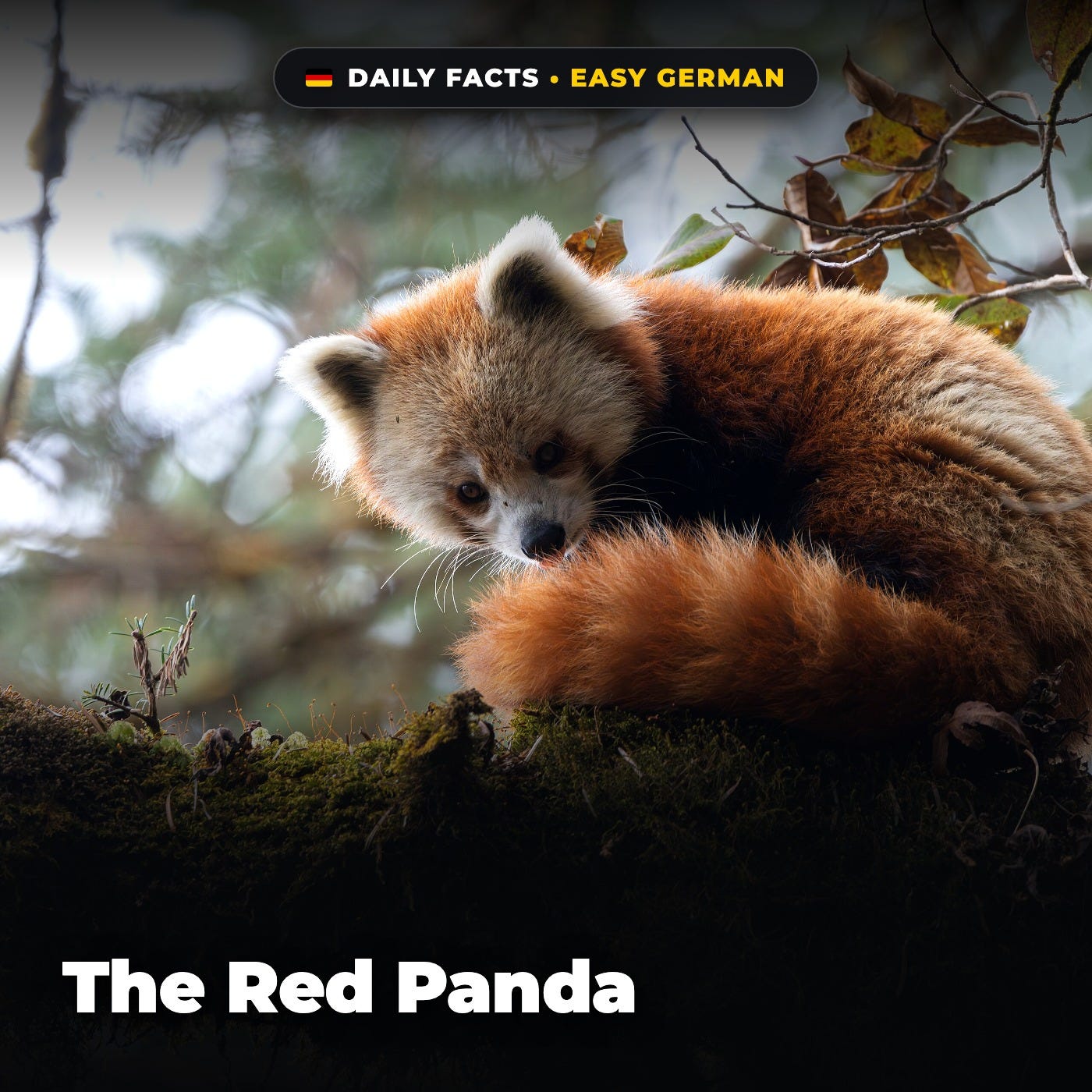
    The Red Panda in Easy German

    Transcription: https://dailyfactsineasygerman.substack.com/p/the-red-panda-in-easy-german?showTranscript=true Discover "The Red Panda" in clear, natural German! Meet the adorable Red Panda (Roter Panda), the original "Firefox" of the misty Himalayan forests! Despite their name, these arboreal acrobats are not closely related to giant pandas, forming their own unique animal family. Discover their clever survival habits: wrapping their bushy tails around their faces like cozy blankets in winter, and dangling all four legs from tree branches to cool down in summer while consuming mounds of bamboo. Key Topics & Highlights: • The red panda was discovered and named decades before the giant panda, and belongs to its own distinct taxonomic family. • In winter, red pandas wrap their thick, bushy striped tails over their faces like a blanket to stay warm. • On hot summer days, they stretch out flat on cool tree branches with all four legs dangling into the air. • Like giant pandas, they possess a modified wrist bone that acts as a 'false thumb' to grasp bamboo stalks. Key German Vocabulary: • der Panda (panda) • der Bambus (bamboo) • der Schwanz (tail) • der Ast (tree branch) Chapters: 00:00 - Introduction & The Original Firefox of the Himalayas 03:47 - Arboreal Life & Unique Evolutionary Family 07:35 - False Thumbs & The Mounds of Bamboo 11:16 - Bushy Tail Blankets & Summer Cooling 14:18 - Conservation in Misty Mountain Forests Audio: 100% German • Spoken slowly and clearly (0.8x speed) This is a public episode. If you would like to discuss this with other subscribers or get access to bonus episodes, visit dailyfactsineasygerman.substack.com
  • October 19 · 10 min

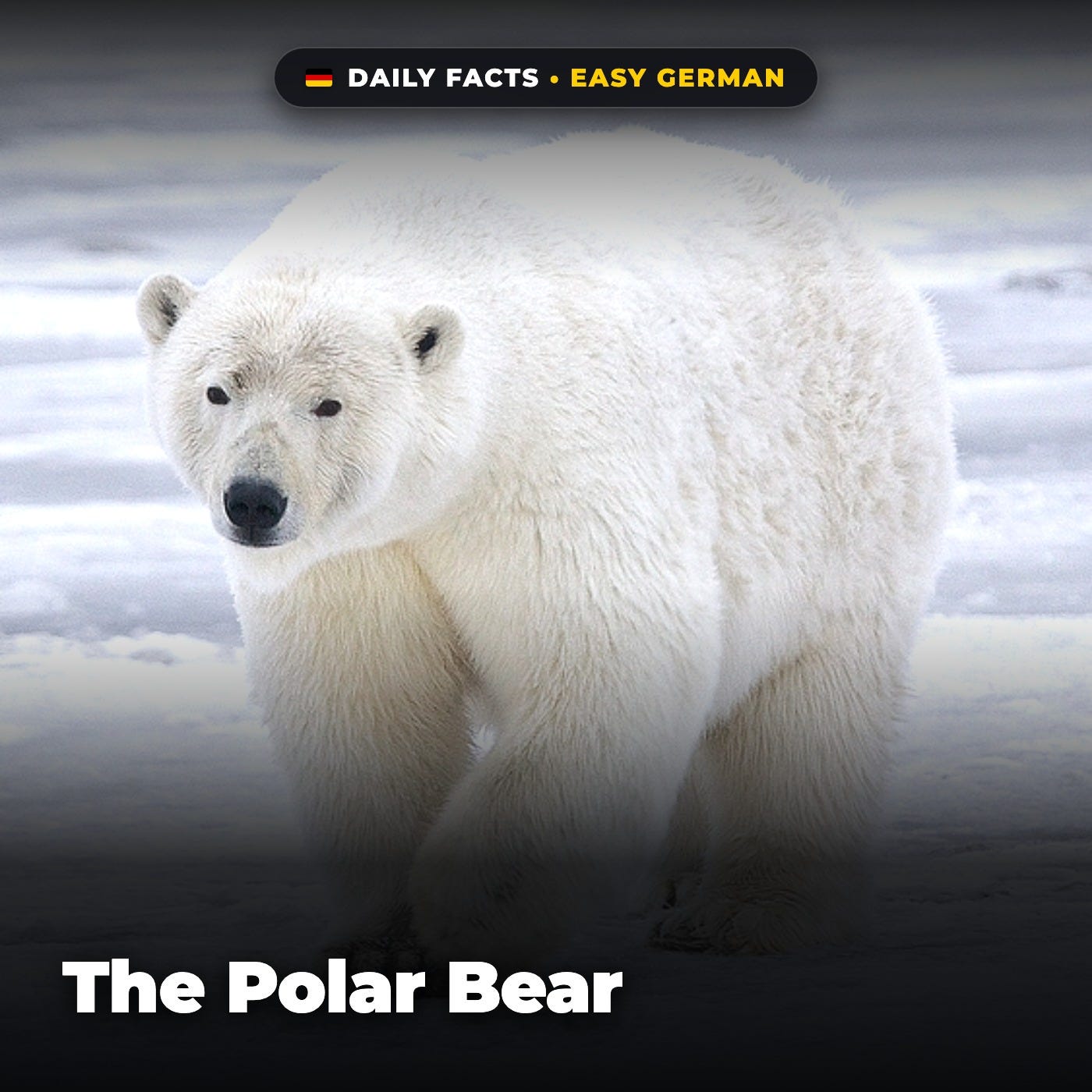
    The Polar Bear in Easy German

    Transcription: https://dailyfactsineasygerman.substack.com/p/the-polar-bear-in-easy-german?showTranscript=true Discover "The Polar Bear" in clear, natural German! Venture into the freezing Arctic ice desert to meet the Polar Bear (Eisbär), the undisputed apex predator of the far north. Beneath their thick, translucent white coat lies jet-black skin designed to absorb solar warmth. Discover how mother polar bears hibernate in snow dens to nurse tiny cubs with milk as rich as whipping cream, how they patiently hunt seals at breathing holes, and why melting sea ice threatens their future. Key Topics & Highlights: • A polar bear's fur is actually transparent and hollow, reflecting light while its underlying skin is completely black. • Mother bears fast for months inside snow dens while nursing tiny newborn cubs with milk containing 30% fat. • They possess an incredible sense of smell, able to detect a seal under a meter of snow from over a kilometer away. • Polar bears are classified as marine mammals because they spend most of their lives on drifting sea ice hunting seals. Key German Vocabulary: • der Eisbär (polar bear) • die Kälte (cold) • das Fell (fur / coat) • die Robbe (seal) Chapters: 00:00 - Introduction & Apex Predator of the Arctic 01:58 - Hollow Fur, Black Skin & Cold Adaptation 04:11 - Hunting Seals on Drifting Sea Ice 06:28 - Winter Dens & Nursing Tiny Cubs 09:11 - Melting Sea Ice & The Future of Polar Bears Audio: 100% German • Spoken slowly and clearly (0.8x speed) This is a public episode. If you would like to discuss this with other subscribers or get access to bonus episodes, visit dailyfactsineasygerman.substack.com
  • October 18 · 11 min

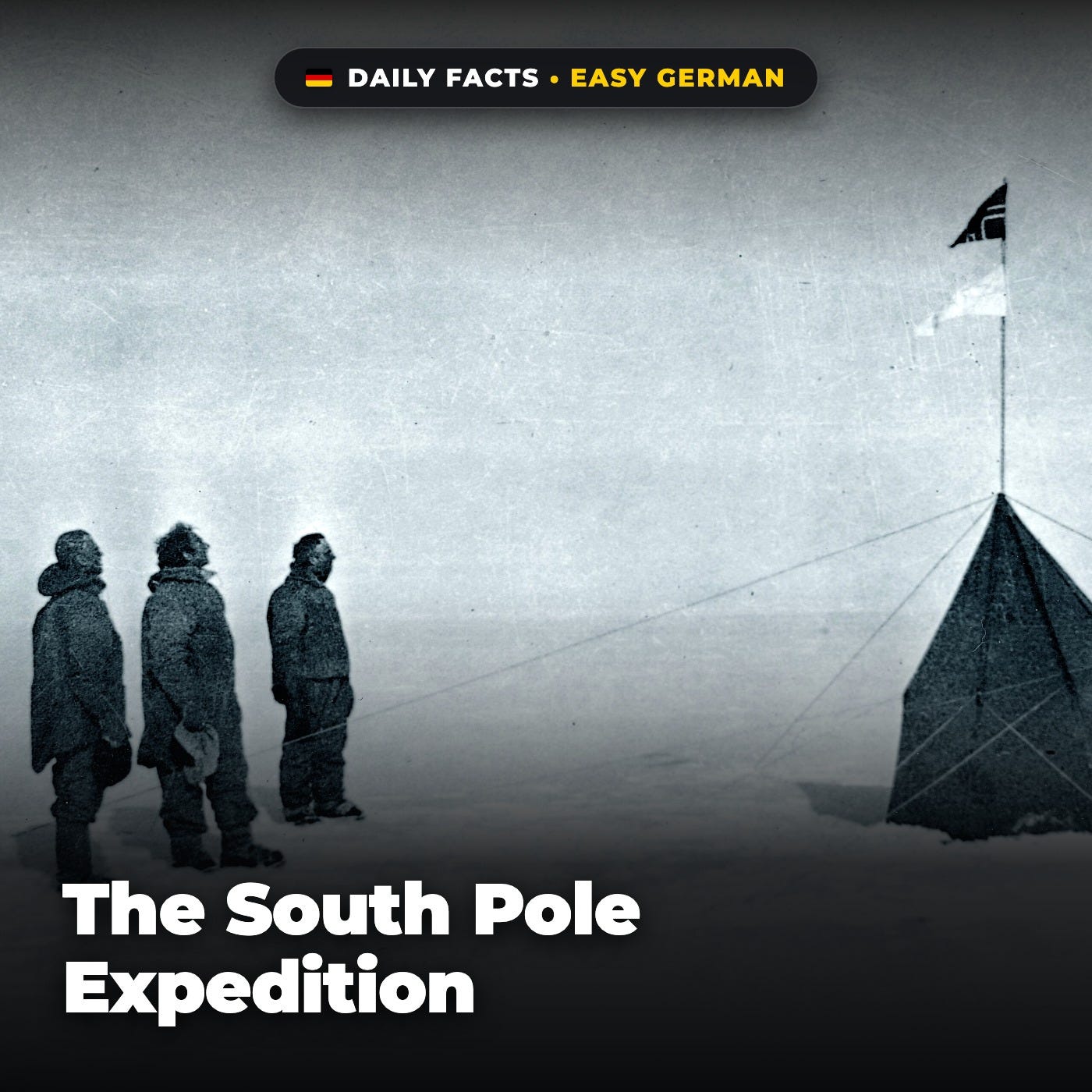
    The South Pole Expedition in Easy German

    Transcription: https://dailyfactsineasygerman.substack.com/p/the-south-pole-expedition-in-easy-german?showTranscript=true Discover "The South Pole Expedition" in clear, natural German! Journey to the bottom of the world in 1911, where Norwegian explorer Roald Amundsen led a daring, secret expedition to conquer the South Pole. Learn how Amundsen secretly changed his route from the Arctic to Antarctica, relied on indigenous Inuit survival techniques and hardy Greenland sled dogs, and overcame bitter -56°C temperatures and internal team rivalries to plant the Norwegian flag first. Key Topics & Highlights: • Amundsen kept his plan to reach the South Pole a total secret from his own crew and sponsors until they were already at sea. • Unlike British rival Robert Falcon Scott, Amundsen relied exclusively on skis and 52 well-trained Greenland sled dogs. • An aborted first attempt in extreme -56°C frost nearly cost lives and led to a bitter clash with explorer Hjalmar Johansen. • On December 14, 1911, Amundsen's five-man team became the very first humans to stand at the geographic South Pole. Key German Vocabulary: • der Südpol (South Pole) • die Expedition (expedition) • der Schlittenhund (sled dog) • das Eis (ice) Chapters: 00:00 - Introduction & The Race for the South Pole 01:58 - Amundsen vs Scott: Two Contrasting Approaches 04:31 - Dogs, Skis, and the Norwegian Triumph (1911) 08:58 - The Tragic Fate of Scott's Team 10:57 - The Frozen Continent's Legacy & Lessons Audio: 100% German • Spoken slowly and clearly (0.8x speed) This is a public episode. If you would like to discuss this with other subscribers or get access to bonus episodes, visit dailyfactsineasygerman.substack.com
  • October 17 · 12 min

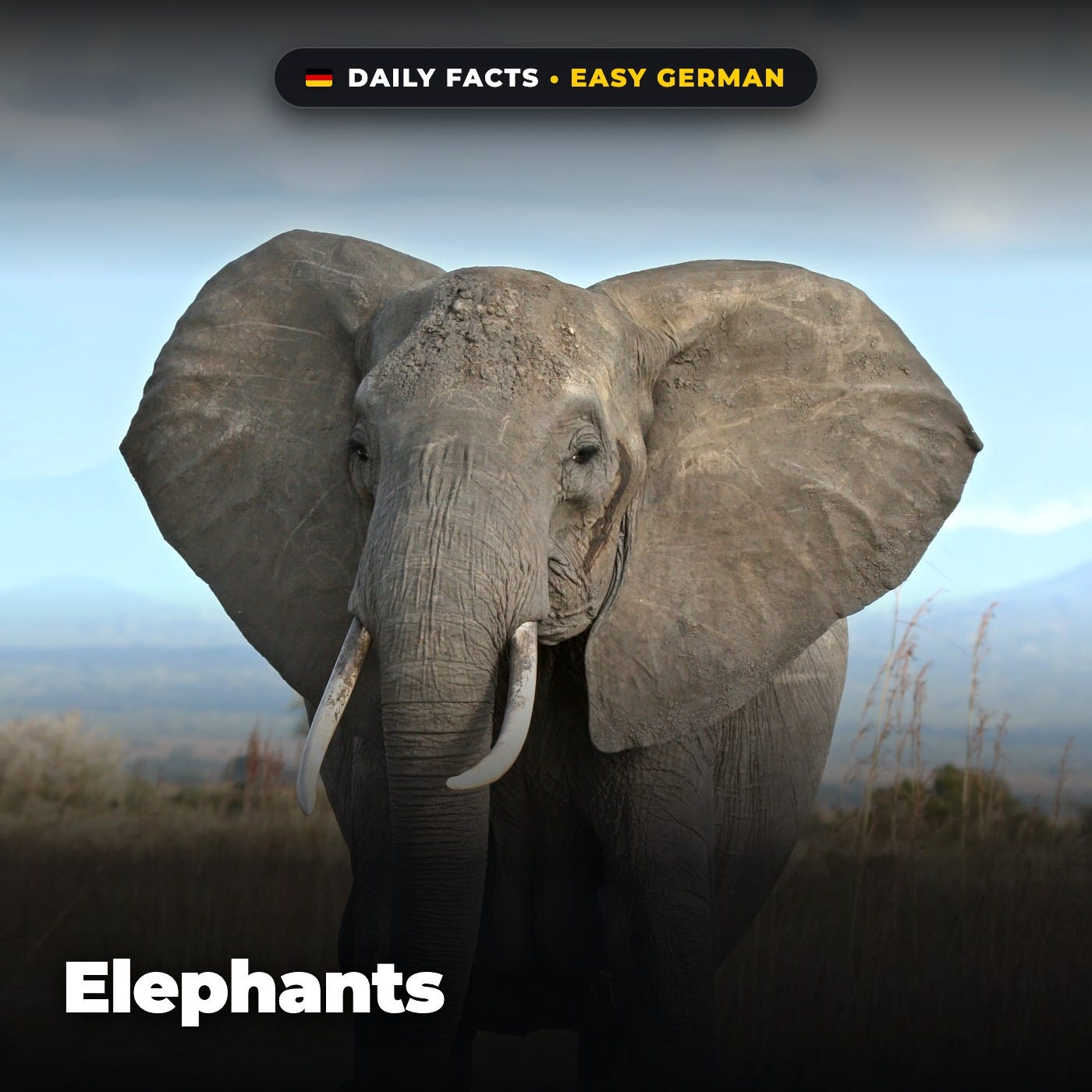
    Elephants in Easy German

    Transcription: https://dailyfactsineasygerman.substack.com/p/elephants-in-easy-german?showTranscript=true Discover "Elephants" in clear, natural German! Step into the fascinating world of Elephants (Elefanten), the largest and gentlest giants on land. Did you know that elephants can actually "hear" seismic rumbles through sensitive receptors in their giant feet? Explore the multifunctionality of the trunk with over 40,000 muscles, their tight-knit matriarchal family groups led by experienced grandmothers, and the extraordinary empathy and memory that make them truly unique. Key Topics & Highlights: • Elephants communicate over miles using deep infrasound that travels through the ground and is felt by their feet. • An elephant's trunk contains over 40,000 individual muscles and can lift heavy logs as well as pick a single blade of grass. • Herds are led by an older matriarch whose decades of memory guide the family to water during severe droughts. • Elephants exhibit deep emotional bonds, mourning deceased family members and greeting friends with joyful trumpeting. Key German Vocabulary: • der Elefant (elephant) • der Rüssel (trunk) • die Herde (herd) • das Gedächtnis (memory) Chapters: 00:00 - Introduction & Earth's Largest Land Mammals 02:25 - Complex Matriarchies & Emotional Bonds 05:53 - Trunks, Tusks & Acoustic Rumbling 09:17 - Ecosystem Engineers in Savannas and Forests 11:13 - Poaching, Conservation & Final Thoughts Audio: 100% German • Spoken slowly and clearly (0.8x speed) This is a public episode. If you would like to discuss this with other subscribers or get access to bonus episodes, visit dailyfactsineasygerman.substack.com
  • October 16 · 11 min

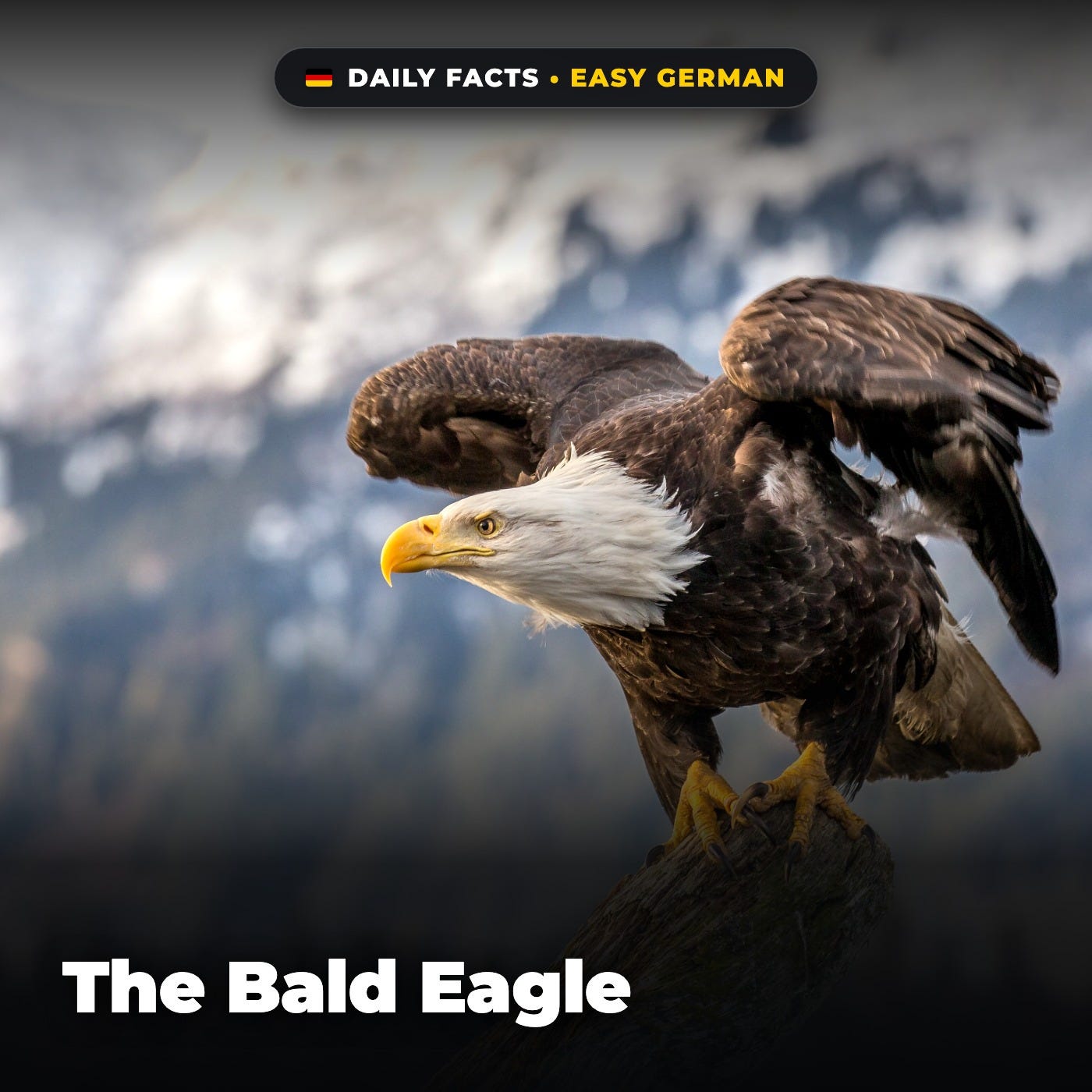
    The Bald Eagle in Easy German

    Transcription: https://dailyfactsineasygerman.substack.com/p/the-bald-eagle-in-easy-german?showTranscript=true Discover "The Bald Eagle" in clear, natural German! Soar into the skies with the Bald Eagle (Weißkopfseeadler), the majestic national bird of the United States! Discover how these incredible birds build the largest tree nests in the animal kingdom—weighing as much as a small car. Learn about their dramatic "cartwheel display" mating ritual high above the ground, how chemical pesticides like DDT nearly drove them to extinction, and how strict conservation helped their population stage a triumphant recovery. Key Topics & Highlights: • Bald eagles build giant tree nests up to 4 meters deep and weighing over two tons. • During courtship, eagle pairs lock talons in midair and free-fall spinning toward the earth before pulling apart. • The widespread use of pesticide DDT made their eggshells brittle, causing numbers to crash in the 20th century. • Protected by federal law and environmental bans, bald eagles have made one of history's greatest wildlife recoveries. Key German Vocabulary: • der Adler (eagle) • das Nest (nest) • die Flügel (wings) • jagen (to hunt) Chapters: 00:00 - Introduction & The American Icon 01:50 - Physical Traits & Size 03:15 - Giant Nests & Habitat 05:20 - Hunting & Flight Tactics 08:00 - The Threat of Extinction & DDT 09:50 - Conservation Victory & Conclusion Audio: 100% German • Spoken slowly and clearly (0.8x speed) This is a public episode. If you would like to discuss this with other subscribers or get access to bonus episodes, visit dailyfactsineasygerman.substack.com
  • October 15 · 25 min

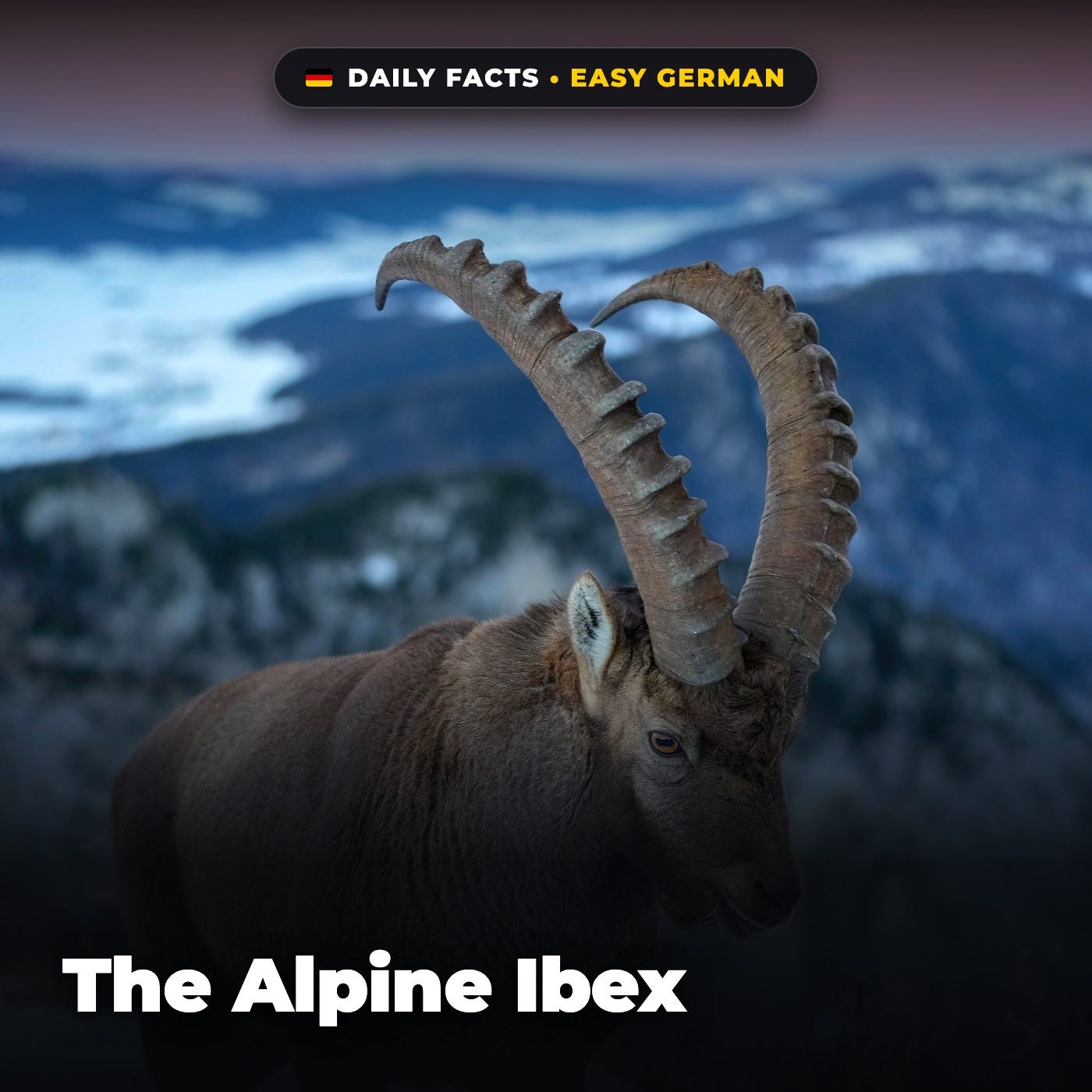
    The Alpine Ibex in Easy German

    Transcription: https://dailyfactsineasygerman.substack.com/p/the-alpine-ibex-in-easy-german?showTranscript=true Discover "The Alpine Ibex" in clear, natural German! Discover the dramatic rescue of the Alpine Ibex (Alpensteinbock), one of Europe's greatest conservation triumphs! By 1820, this majestic mountain goat was hunted down to just ~100 individuals in Italy's Gran Paradiso. Learn how King Victor Emmanuel II created a royal hunting reserve to save the species, and how audacious Swiss gamekeepers smuggled live ibex kids across the Alps in 1906 to bring the species roaring back to Switzerland. Key Topics & Highlights: • Uncontrolled hunting for meat, horns, and folk medicine reduced the entire world population of ibex to around 100 in Italy. • Italian King Victor Emmanuel II declared Gran Paradiso a royal reserve in 1821, saving the last herd from extinction. • When Italy refused to sell ibex to Switzerland, Swiss gamekeepers hired poachers to smuggle young ibex across the border in 1906. • Today, over 50,000 Alpine ibex thrive across the Alps in Switzerland, Italy, Austria, France, and Germany. Key German Vocabulary: • der Steinbock (alpine ibex) • die Hörner (horns) • die Alpen (Alps) • der Schmuggel (smuggling) Chapters: 00:00 - Introduction & The King of the Alps 03:59 - Master Climbers & Gravity-Defying Hooves 13:20 - Medieval Hunting & Near Extinction 16:31 - Royal Gran Paradiso Sanctuary & Reintroduction 17:06 - Thriving in the European Alps Today Audio: 100% German • Spoken slowly and clearly (0.8x speed) This is a public episode. If you would like to discuss this with other subscribers or get access to bonus episodes, visit dailyfactsineasygerman.substack.com

  • October 14 · 10 min

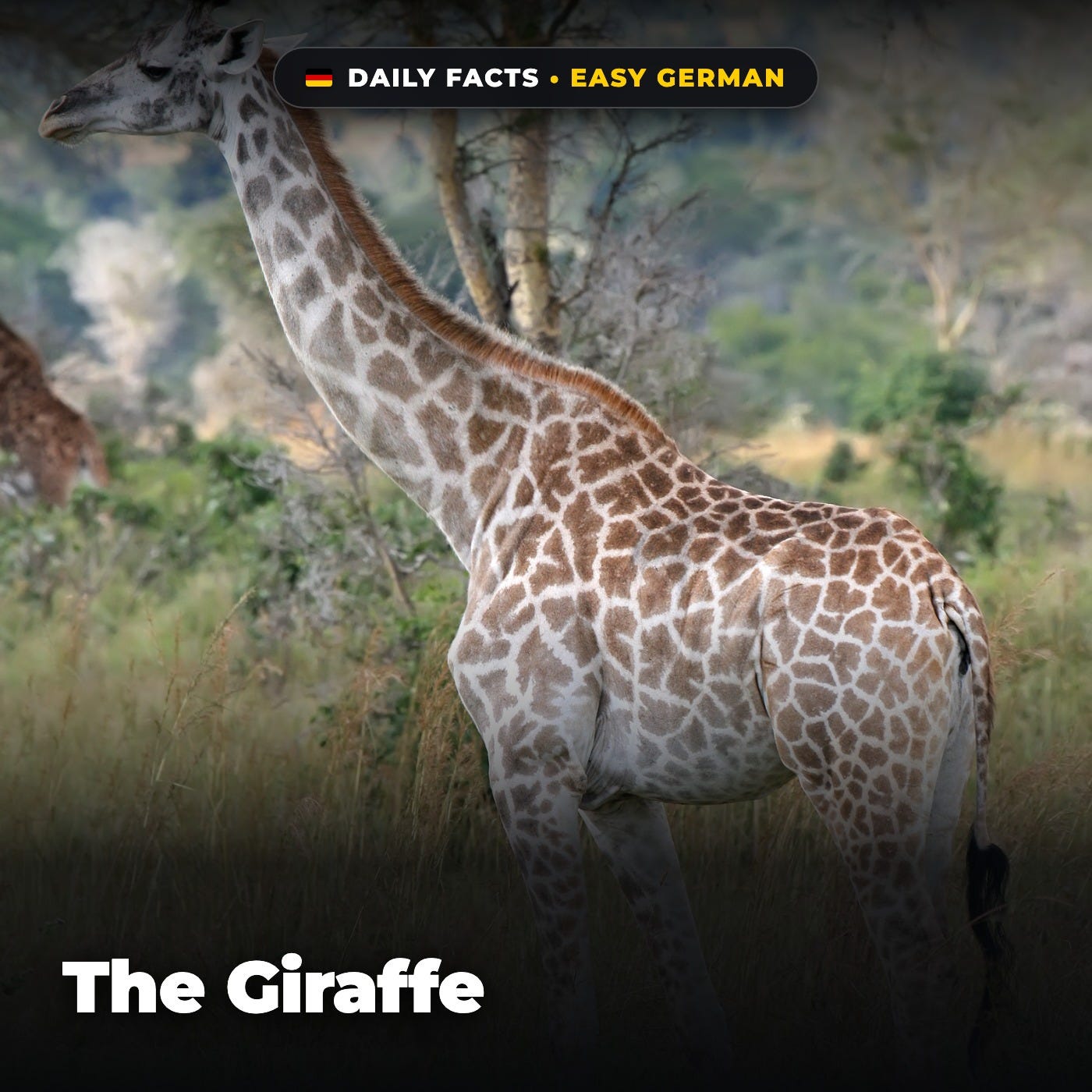
    The Giraffe in Easy German

    Transcription: https://dailyfactsineasygerman.substack.com/p/the-giraffe-in-easy-german?showTranscript=true Discover "The Giraffe" in clear, natural German! Reach for the treetops with the Giraffe (Giraffe), the tallest animal walking the Earth! With necks over two meters long, their bodies boast miraculous adaptations, including giant hearts pumping blood at double human pressure. Learn how giraffes hum to each other in deep, inaudible infrasound at night, why zebras use them as living watchtowers, and how their long, dark purple tongues protect them from harsh African sun and thorny acacia bushes. Key Topics & Highlights: • A giraffe's neck has only seven vertebrae—the exact same number as humans, but each bone can be 25 cm long. • To pump blood two meters up to the brain, a giraffe's heart weighs over 11 kilograms with extremely high blood pressure. • Recent studies revealed that giraffes hum quietly to each other at night using deep low-frequency sound vibrations. • Their 45-centimeter prehensile tongues are blue-black to prevent sunburn while browsing thorny acacia trees. Key German Vocabulary: • die Giraffe (giraffe) • der Hals (neck) • das Herz (heart) • die Savanne (savanna) Chapters: 00:00 - Introduction & The Skyscraper of the Savanna 02:06 - Extreme Anatomy & High-Pressure Circulation 04:43 - Sleeping Standing Up & Defense Against Predators 07:20 - Social Herds & The "Silent Extinction" 10:05 - Protecting Africa's Gentle Giants Audio: 100% German • Spoken slowly and clearly (0.8x speed) This is a public episode. If you would like to discuss this with other subscribers or get access to bonus episodes, visit dailyfactsineasygerman.substack.com
  • October 14 · 10 sec

    Trailer - Daily Facts in Easy German

    This is a public episode. If you would like to discuss this with other subscribers or get access to bonus episodes, visit dailyfactsineasygerman.substack.com
  • October 13 · 28 min

    The British Empire in Easy German

    Transcription: https://dailyfactsineasygerman.substack.com/p/the-british-empire-in-easy-german?showTranscript=true Discover "The British Empire" in clear, natural German! Examine the rise, reach, and profound global legacy of the British Empire, the largest empire in human history. At its peak in the early 20th century, it spanned nearly a quarter of Earth's landmass and population. Explore the economic machinery of the East India Company, the sugar plantations of the Caribbean, the spread of the English language, and the complex movements for independence and decolonization. Key Topics & Highlights: • At its height, the British Empire ruled over approximately 450 million people—one fifth of humanity. • The phrase 'the empire on which the sun never sets' was coined because it had territories in every global time zone. • Maritime naval power and global trade networks like the East India Company drove its imperial expansion. • Decolonization accelerated rapidly following World War II, culminating in the modern Commonwealth of Nations. Key German Vocabulary: • das Weltreich (empire) • der Handel (trade / commerce) • die Kolonie (colony) • die Macht (power) Chapters: 00:00 - Introduction & The Empire Where the Sun Never Set 04:46 - The East India Company & Early Trade 09:58 - Global Dominance in the Victorian Era 20:33 - Decolonization & The Commonwealth 24:34 - Historical Legacy & The Modern World Audio: 100% German • Spoken slowly and clearly (0.8x speed) This is a public episode. If you would like to discuss this with other subscribers or get access to bonus episodes, visit dailyfactsineasygerman.substack.com
  • October 12 · 24 min

    The History of Timekeeping in Easy German

    Transcription: https://dailyfactsineasygerman.substack.com/p/the-history-of-timekeeping-in-easy?showTranscript=true Discover "The History of Timekeeping" in clear, natural German! Look at your wrist and wonder: why do we divide our days into 24 hours and 60 minutes? Trace the evolution of human timekeeping from ancient sky-watchers to atomic precision. Discover how ancient Egyptians used shadow sundials and the stars, how Babylonians gave us the base-60 system, and how mechanical pendulum clocks and modern quartz crystals transformed time into the heartbeat of civilization. Key Topics & Highlights: • Ancient Egyptians divided day and night into 12 hours each based on shadow sticks and star constellations. • The 60-minute and 60-second divisions originate from the ancient Babylonian base-60 numbering system. • Mechanical clocks with pendulums, invented by Christiaan Huygens in 1656, increased accuracy to seconds per day. • Today's global time is synchronized using atomic clocks measuring the vibrations of cesium atoms. Key German Vocabulary: • die Zeit (time) • die Uhr (clock / watch) • die Stunde (hour) • die Minute (minute) Chapters: 00:00 - Introduction & Measuring Every Second 04:49 - Sundials, Water Clocks & Ancient Obelisks 10:50 - Mechanical Tower Clocks in Medieval Europe 14:53 - Marine Chronometers & Longitude at Sea 18:17 - Atomic Clocks & Modern Precision Audio: 100% German • Spoken slowly and clearly (0.8x speed) This is a public episode. If you would like to discuss this with other subscribers or get access to bonus episodes, visit dailyfactsineasygerman.substack.com
  • October 11 · 22 min

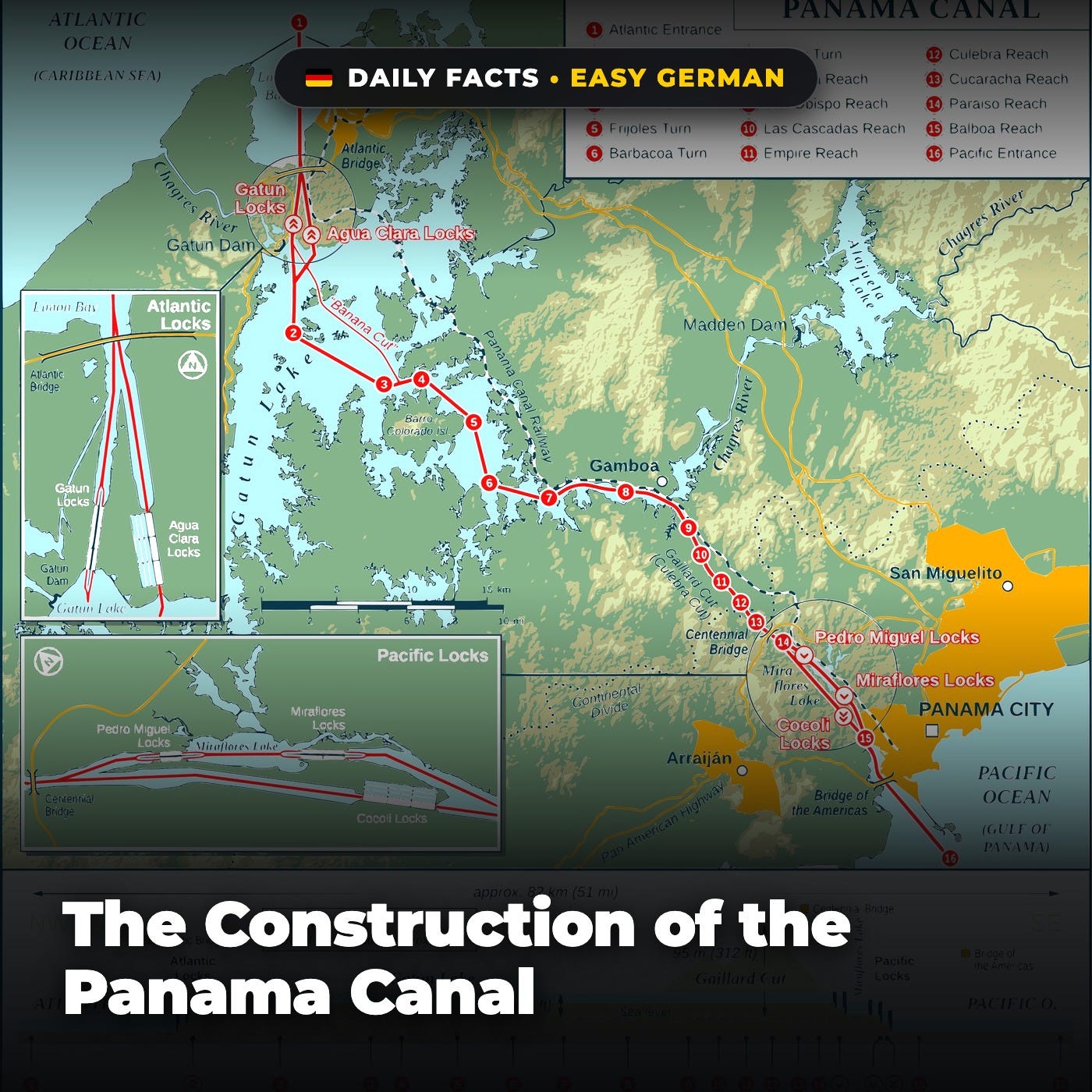
    The Construction of the Panama Canal in Easy German

    Transcription: https://dailyfactsineasygerman.substack.com/p/the-construction-of-the-panama-canal?showTranscript=true Discover "The Construction of the Panama Canal" in clear, natural German! Dive deep into the colossal engineering struggle to build the Panama Canal. Carving a waterway through dense mountainous jungle and unstable volcanic rock required moving over 200 million cubic meters of earth. Explore how chief engineer John Stevens and army doctor William Gorgas defeated deadly mosquito epidemics, enabling the construction of the mammoth Gatun Dam and electric lock gates that still lift ocean giants today. Key Topics & Highlights: • Over 75,000 workers laboured on the American construction effort between 1904 and 1914. • Controlling mosquitoes through fumigation and drainage eliminated yellow fever and drastically reduced malaria. • The Culebra Cut required excavating a 14-kilometer trench through the continental mountain divide. • The canal uses gravity-fed water from Gatun Lake to operate its massive locks without water pumps. Key German Vocabulary: • der Bau (construction) • die Mücke (mosquito) • der Berg (mountain) • die Arbeit (work / labor) Chapters: 00:00 - Introduction & Connecting Two Oceans 04:27 - The Deadly French Attempt & Yellow Fever 08:14 - American Construction & Engineering Marvels 12:03 - The Lock System & Rising Waters 19:45 - Global Shipping Impact & Modern Expansions Audio: 100% German • Spoken slowly and clearly (0.8x speed) This is a public episode. If you would like to discuss this with other subscribers or get access to bonus episodes, visit dailyfactsineasygerman.substack.com
  • October 10 · 24 min

    The Emperor Penguin in Easy German

    Transcription: https://dailyfactsineasygerman.substack.com/p/the-emperor-penguin-in-easy-german?showTranscript=true Discover "The Emperor Penguin" in clear, natural German! Brave the harshest environment on planet Earth alongside Emperor Penguins in the Antarctic winter. Standing against minus 50-degree blizzards and fierce polar winds, these incredible birds demonstrate supreme survival. Learn how male penguins balance a single precious egg on their feet for two months without eating, huddling together in giant rotating circles to share body warmth while the mothers hunt at sea. Key Topics & Highlights: • Emperor Penguins are the largest penguin species, standing over 1 meter tall and weighing up to 40 kg. • They breed during the brutal Antarctic winter, enduring temperatures of -50°C and 200 km/h winds. • Male penguins incubate the egg for 65 consecutive days on their feet under a warm brood pouch without eating. • To survive the freezing cold, thousands of males form giant huddles, constantly rotating positions so everyone shares warmth. Key German Vocabulary: • der Pinguin (penguin) • das Ei (egg) • der Sturm (storm / blizzard) • die Wärme (warmth) Chapters: 00:00 - Introduction & The Giants of Antarctica 04:48 - Trek Across the Frozen Pack Ice 08:12 - Winter Huddle in -50°C Blizzards 12:36 - Father Penguins Protecting the Egg 16:38 - Spring Feeding & The Threat of Ice Melt Audio: 100% German • Spoken slowly and clearly (0.8x speed) This is a public episode. If you would like to discuss this with other subscribers or get access to bonus episodes, visit dailyfactsineasygerman.substack.com
  • October 9 · 20 min

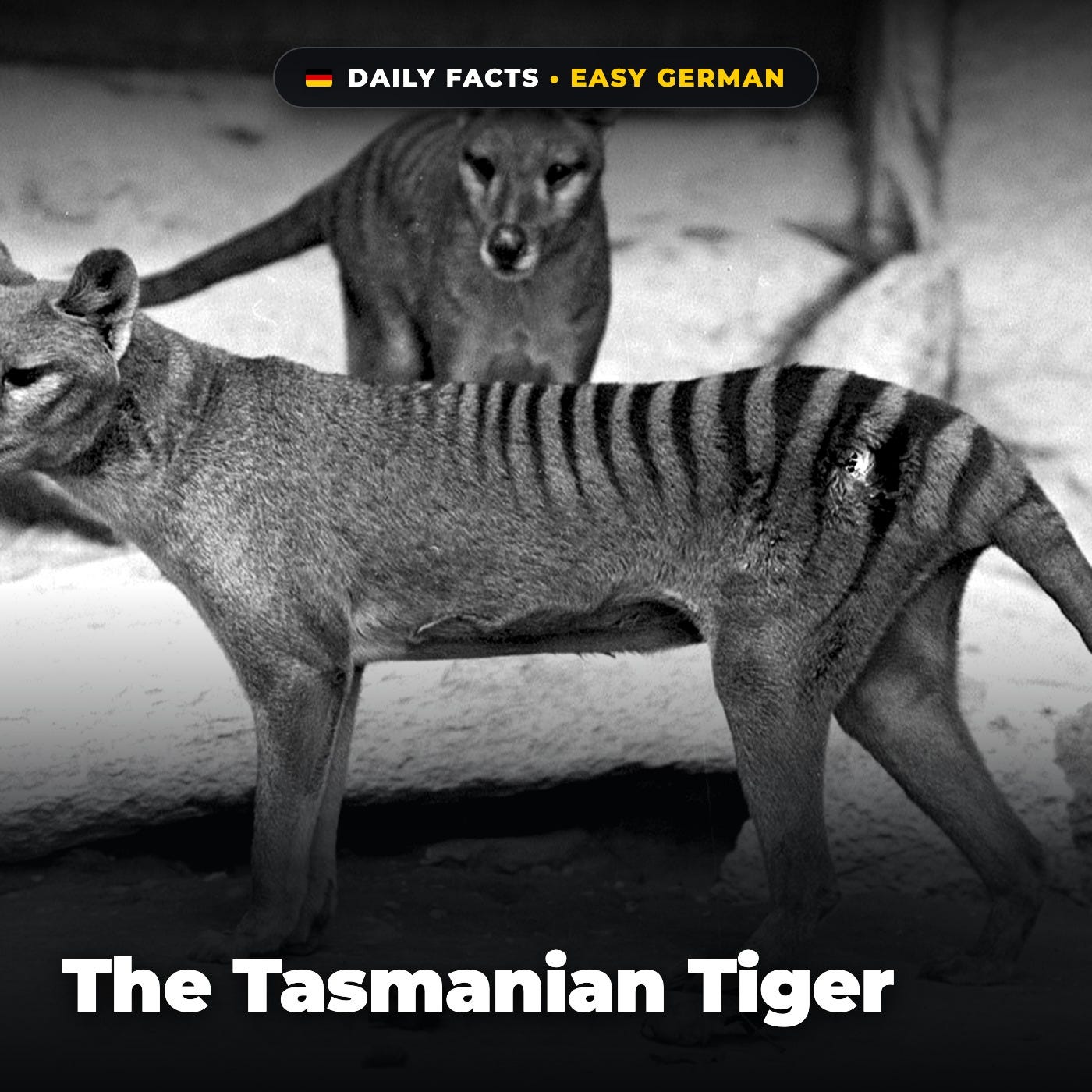
    The Tasmanian Tiger in Easy German

    Transcription: https://dailyfactsineasygerman.substack.com/p/the-tasmanian-tiger-in-easy-german?showTranscript=true Discover "The Tasmanian Tiger" in clear, natural German! Discover the bittersweet story of the Tasmanian Tiger (Thylacine), the unique striped marsupial that once roamed Tasmania. Despite its dog-like appearance and tiger-striped back, it carried its young in a pouch. Learn how misunderstandings by European sheep farmers led to government bounties that pushed the species to extinction in 1936, and explore modern scientific efforts attempting to resurrect this lost icon. Key Topics & Highlights: • The Tasmanian Tiger was not a dog or cat, but a carnivorous marsupial with a pouch like a kangaroo. • It had distinctive dark stripes across its lower back and could open its jaws to an astonishing 80 degrees. • Bounty hunting, habitat loss, and disease caused its rapid decline during the 19th and early 20th centuries. • The last known individual, 'Benjamin', died at Hobart Zoo in September 1936, just 59 days after receiving legal protection. Key German Vocabulary: • der Tiger (tiger) • der Beutel (pouch) • die Streifen (stripes) • aussterben (to become extinct) Chapters: 00:00 - Introduction & The Mysterious Thylacine 03:15 - Marsupial Pouch, Stripes & Bizarre Jaws 06:48 - Colonization, Bounties & Extinction in 1936 13:48 - Alleged Sightings & The Hobart Zoo Tragedy 17:38 - De-Extinction Science & Modern Lessons Audio: 100% German • Spoken slowly and clearly (0.8x speed) This is a public episode. If you would like to discuss this with other subscribers or get access to bonus episodes, visit dailyfactsineasygerman.substack.com

  • October 8 · 34 min

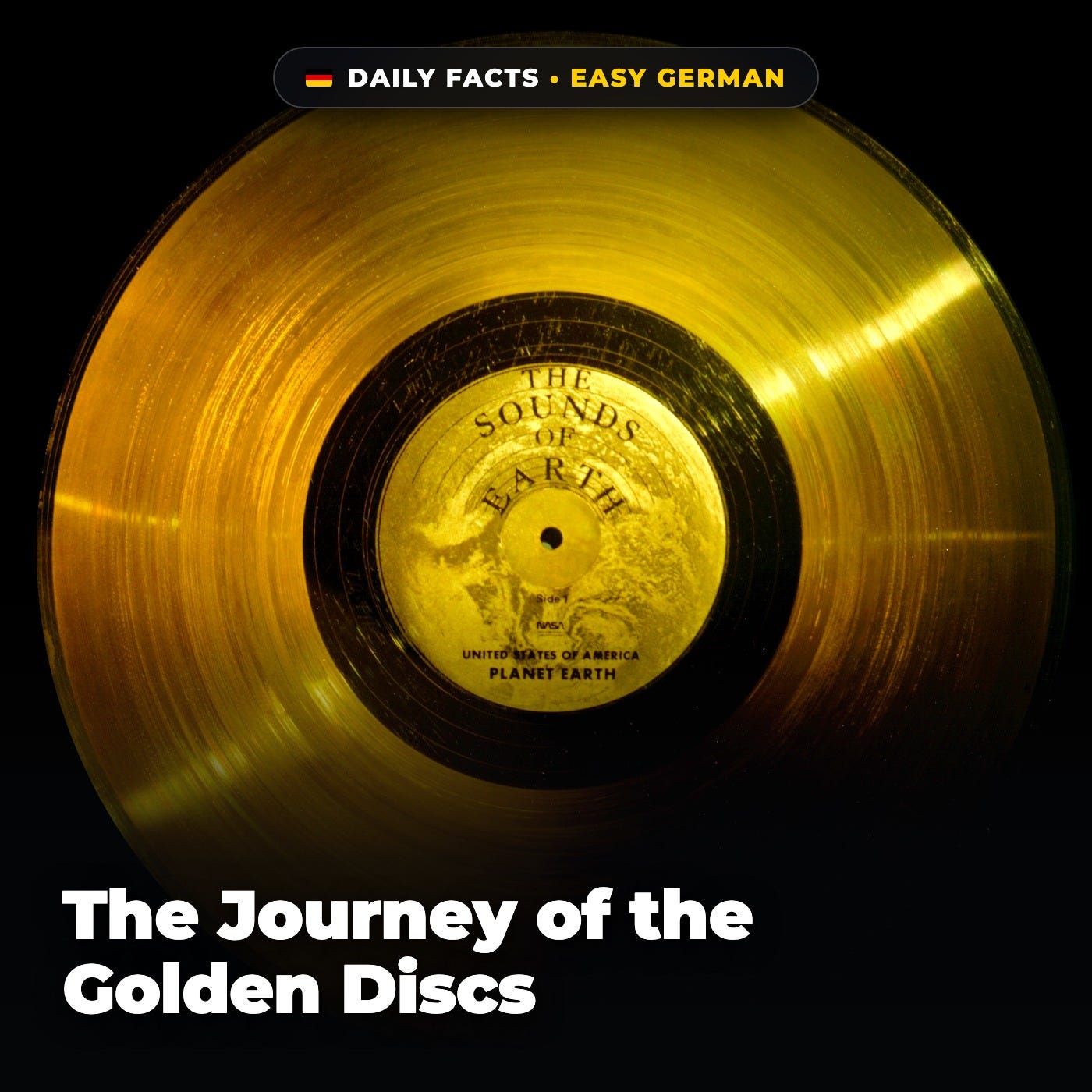
    The Journey of the Golden Discs in Easy German

    Transcription: https://dailyfactsineasygerman.substack.com/p/the-journey-of-the-golden-discs-in?showTranscript=true Discover "The Journey of the Golden Discs" in clear, natural German! Venture into deep interstellar space aboard NASA's twin Voyager spacecraft. Launched in 1977, Voyager 1 and 2 carry iconic gold-plated copper phonograph records as messages to extraterrestrial civilizations. Explore how astronomer Carl Sagan and his team curated sounds of thunder and birds, musical selections from Bach to Chuck Berry, greetings in 55 languages, and 115 images into an eternal cosmic time capsule. Key Topics & Highlights: • Voyager 1 and 2 were launched in 1977 to explore Jupiter, Saturn, Uranus, and Neptune before heading into deep space. • Each probe carries a 12-inch gold-plated copper disc containing sounds and images of Earth. • The records include greetings in 55 ancient and modern languages and 90 minutes of diverse global music. • Voyager 1 is now over 24 billion kilometers from Earth—the farthest human-made object in history. Key German Vocabulary: • die Schallplatte (record / vinyl disc) • das Weltall (outer space / universe) • die Botschaft (message) • die Sterne (stars) Chapters: 00:00 - Introduction & A Cosmic Message in a Bottle 08:22 - Carl Sagan & The Voyager Mission 13:16 - Sounds of Earth, Music & Greetings 22:16 - The Golden Disc's Trajectory & Immortality 32:00 - Reflections on Humanity's Place in Space Audio: 100% German • Spoken slowly and clearly (0.8x speed) This is a public episode. If you would like to discuss this with other subscribers or get access to bonus episodes, visit dailyfactsineasygerman.substack.com

Showing 1–20 of 37 episodes