How an AutoGPT Email Block Became an SSRF Surface
transcript
show notes
This story was originally published on HackerNoon at: https://hackernoon.com/how-an-autogpt-email-block-became-an-ssrf-surface.
CVE-2026-33234 let authenticated AutoGPT users scan internal networks and leak SSH banners through its unprotected SMTP connection path.
Check more stories related to cybersecurity at: https://hackernoon.com/c/cybersecurity.
You can also check exclusive content about #cybersecurity, #cve, #autogpt, #ai-and-ml, #ai-security, #network-security, #vulnerability, #pavan-nallamothu, and more.
This story was written by: @pavanchow. Learn more about this writer by checking @pavanchow's about page,
and for more stories, please visit hackernoon.com.
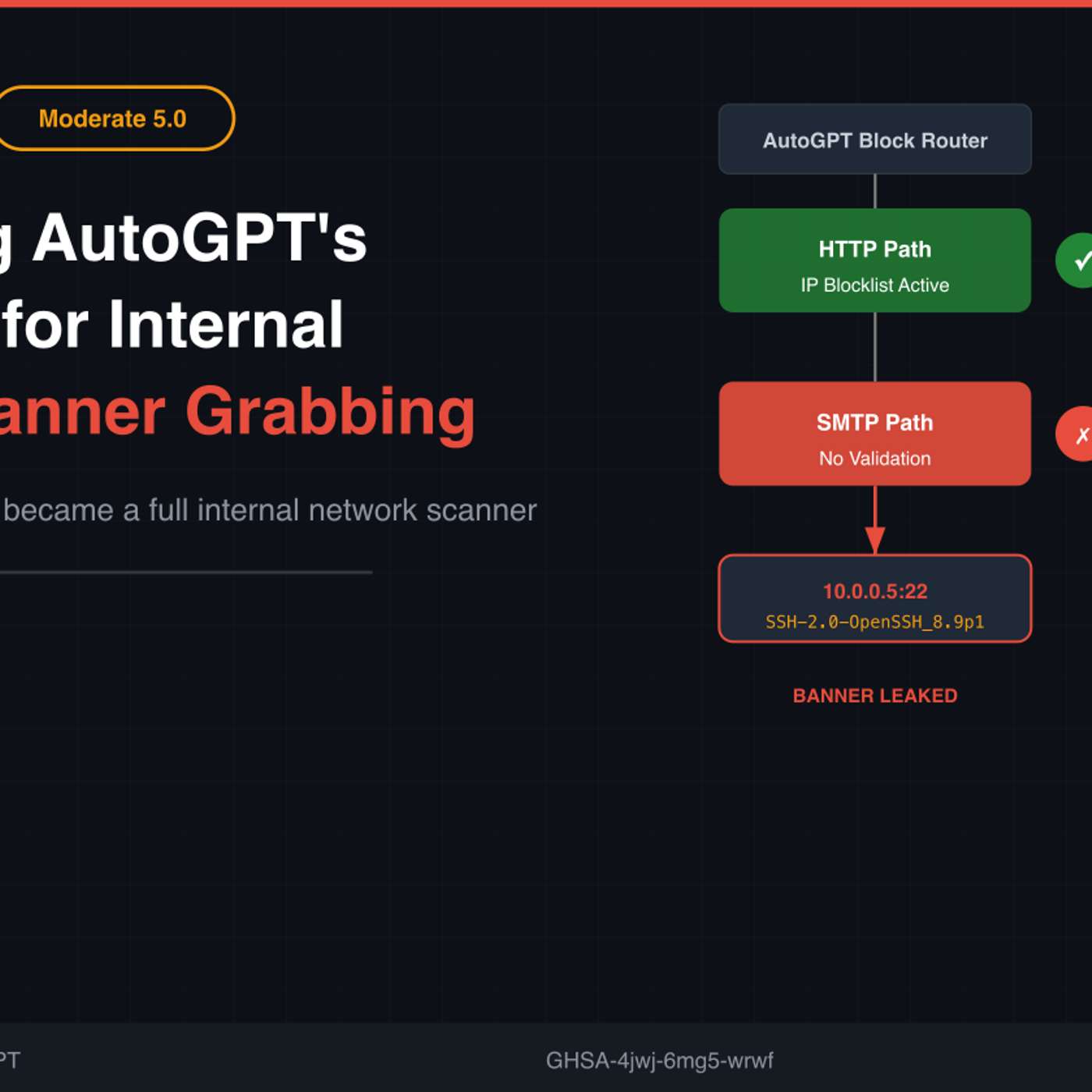
AutoGPT enforces strict SSRF protections on its HTTP layer. But the SendEmailBlock uses Python's smtplib to open raw TCP sockets, bypassing the blocklist entirely. Pointing this block at internal SSH or Redis ports forces smtplib to throw an exception that leaks the service banner directly in the API response. Authenticated users can map the internal network and identify vulnerable services from a single text field. Fixed in backend 0.6.52 by extending IP validation to all outbound protocols.