October 6 · 3 min
@Crotty
Get full access to Crotty Farm Report at crotty.substack.com/subscribe
The land is scorched. The surveillance of drivers is omnipresent. But boy is it quiet and pleasant. With, weirdly, nary a proper Englishman in sight. Welcome to the new, diverse and pricey Londontown. Crotty Farm Report is a reader-supported publication. To receive new posts and support my work, consider becoming a free or paid subscriber. Thanks for reading Crotty Farm Report! This post is public so feel free to share it. Get full access to Crotty Farm Report at crotty.substack.com/subscribe
After an idyllic 3-0 victory over the poor saps from The Czech Republic—which I witnessed first-hand three rows from the Azteca Stadium field at about the forty yard line—I trudged about 30 minutes past the immense security zone and at least 2000 cops and came upon this delightful older gent who commandeered a wildly colored taxi. I overpaid him 1200 pesos for the 90 minute ride back to the Four Seasons, but it was well worth it to be in the company of groovy techno as the city celebrated Team Mexico’s victory all around. Mexico! Mexico! Mexico! Crotty Farm Report is a reader-supported publication. To receive new posts and support my work, consider becoming a free or paid subscriber. Thanks for reading Crotty Farm Report! This post is public so feel free to share it. Get full access to Crotty Farm Report at crotty.substack.com/subscribe
To get your head around how dysregulated, crime-ridden, and homeless-occupied Brandon Johnson’s Chicago has become, you only have to look at the neighborhood 7-11. To deter criminals from entering the property, the owners of 7-11 play opera. Opera. Because the criminals of Chicago are so openly tolerated by the city’s Woke Mayor, the only effective force against them is civilization itself. It works. Combined with better lighting and the elimination of ledges for sitting, the tactic has been empirically successful in deterring loitering and reducing minor disturbances. Individual franchise owners in Chicago and other major U.S. cities have reported immediate drops in property crime, fewer panhandlers, less vandalism, and cleaner storefronts after installing speakers and playing opera. It’s like an acoustic version of broken windows theory, the only extant theory of law enforcement shown to radically reduce crime where it has been fully implemented. Here’s why the strategy works: * Dopamine Suppression: Studies show that when people are forced to listen to music they dislike, their brains suppress dopamine production, which sours their mood and drives them away. * Acoustic Discomfort: Blasting loud, high-pitched operatic vocals makes it physically uncomfortable to hold a conversation or sleep nearby, breaking up loitering hotspots. * The “Uncool” Factor: Loitering teenagers and young adults often find classical music unappealing or annoying, prompting them to seek another hangout spot. * Cultural Control: Opera instantly communicates that a space is managed, monitored, and intentionally maintained. Criminality and chronic disorder tend to flourish in environments that feel abandoned or culturally ownerless. Opera projects the opposite message. It says: somebody still cares what happens here. I went to a 7-11 to put the theory into practice. While there were some miscreants loitering out front, it was not a magnet for them. Inside, the 7-11 was remarkably clean, undisturbed, and free of riff-raff. Walgreens, which also suffers greatly from what retailers call “shrink,” or what real-world people call shoplifting or theft, has also used opera to great effect. While some locals have waged noise complaints, the practice is hopefully here to stay, or until Democratic mayors and governors start prioritizing major crime reduction again. Crotty Farm Report is a reader-supported publication. To receive new posts and support my work, consider becoming a free or paid subscriber. Cities have often shaped behavior through architecture, lighting, landscaping, and sound. Grand train stations once used classical music to cultivate calm and dignity. Churches used bells. Public squares used fountains and monuments to create atmospheres of order and civic seriousness. Civilization has always curated its soundscape. What is new is that the soundscape is now defensive. The music is no longer elevating public life. It is protecting property from it. The deeper significance is not the music itself, but that private businesses are now being forced to invent substitute forms of governance because the public sector no longer reliably performs its most basic function: maintaining order. Retailers have become amateur behavioral psychologists, environmental designers, and security theorists because the city increasingly refuses to impose consequences on anti-social behavior. Chicago’s notorious no-cash bail law, its highly restrictive foot and vehicular pursuit policy that prohibits officers from initiating chases unless there is an imminent threat of great bodily harm, and the reclassification of most retail theft as a misdemeanor have made the city a hellhole of free-range crime. When convenience stores begin using opera as a form of social control, a city is admitting something profound about itself. Public order is no longer being guaranteed by the state. It is being improvised piecemeal by private actors using architecture, lighting, music, and environmental pressure to reclaim fragments of civic dignity. The police retreat. The prosecutors rationalize. The politicians bloviate. And somewhere in Chicago, a 7-11 manager presses play on Mozart to keep the barbarians at bay. Thanks for reading Crotty Farm Report! This post is public, so feel free to share it. Get full access to Crotty Farm Report at crotty.substack.com/subscribe

I couldn’t help it. I broke down and cried when the Persians blared The Village People’s “YMCA” from loudspeakers on Sunday, as thousands gathered for blocks around L.A.’s Westwood Federal Building to celebrate Trump’s war on the diabolical regime in Iran and the killing of its Supreme Leader Ayatollah Ali Khamenei. I hadn’t felt such overwhelming joy since Trump’s victory in 2016. It was infectious. The Iranians had ample cause to celebrate. 47 years of evil theocratic oppression. 47 years of women and gays not having the most basic rights. 47 years of Iran threatening the U.S., Israel, and their neighbors with nuclear annihilation. Enough! Yet the Leftist Democrats just sat on their hands today or openly opposed this transformative moment for Iran and the Iranian people. It’s as if they prefer Iranians to still be in chains. The contrast was stark and revealing. LA is home to the largest concentration of Iranians outside Tehran. Many had settled in and around Westwood, earning the area the nickname “Tehrangeles.” In a city filled with violent inhinged Woke leftists, who will openly attack Trump supporters in the streets, they had the courage to wear MAGA hats. They had the courage to show the world that Iranians and Israelis can live in peace. Flags from both countries, along with the U.S. flag, were proudly displayed. They had the courage to show fierce and unapologetic pride in America. That’s who legal immigrants are. They get America. They also represented the largest contingent of face-lifted women I have ever seen, but that’s L.A., so it’s par for the course, and can hardly be held against people and families who have endured so much trauma and turmoil. Goodbye to the benighted leftists seeking to bring this country down. This was a day of genuine liberation for the Persian people. I was so honored to be a small part of it. Crotty Farm Report is a reader-supported publication. To receive new posts and support my work, consider becoming a free or paid subscriber. Thanks for reading Crotty Farm Report! This post is public, so feel free to share it. Get full access to Crotty Farm Report at crotty.substack.com/subscribe
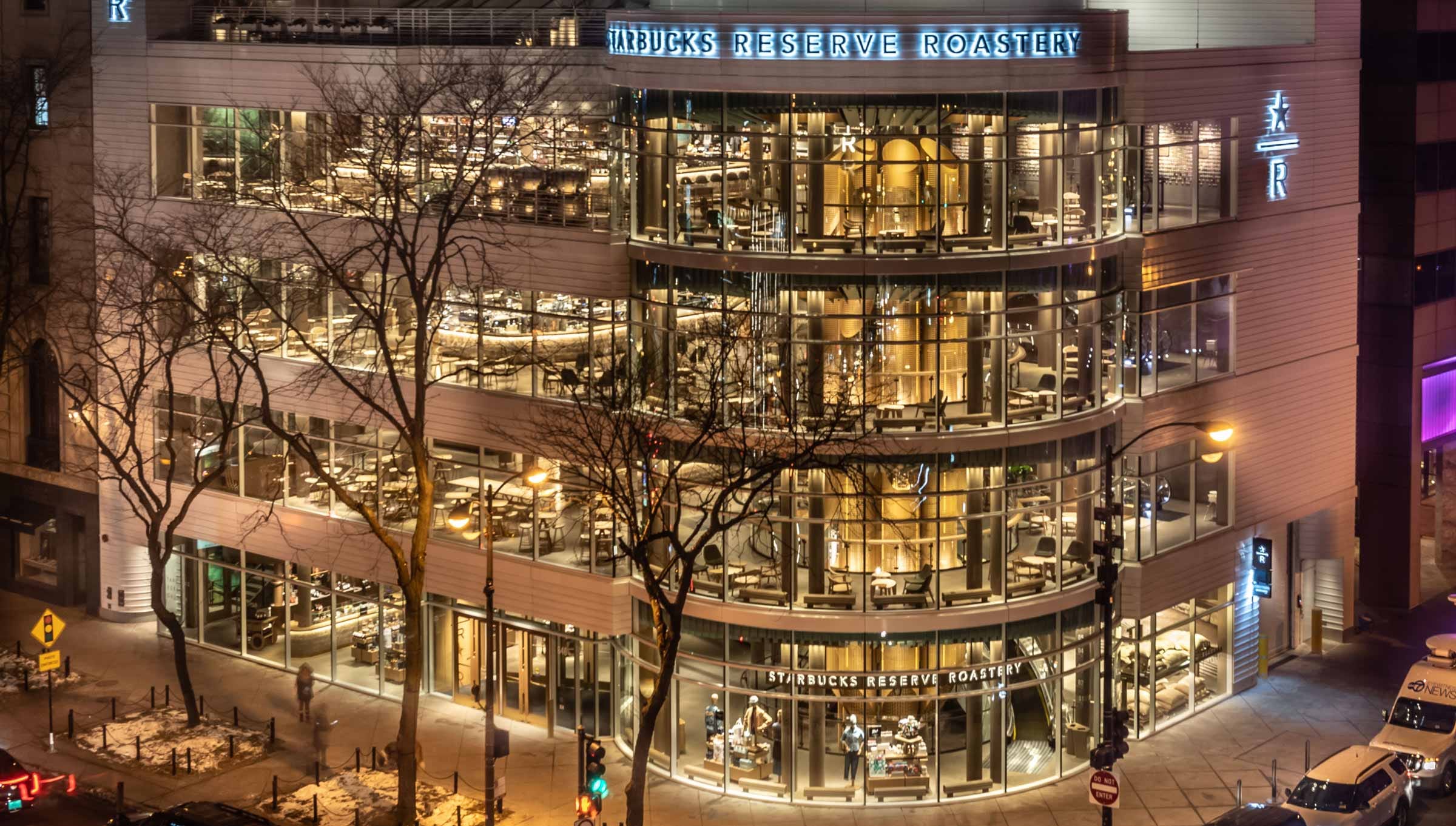
Amid the general desecration of all that is good about Chicago under the current Woke incompetent leadership of the clueless and déclassé Mayor Brandon Johnson, there remain a few standouts of excellence. One is the Starbucks on North Michigan Avenue. At 35,000 square feet, it’s the world's largest. It’s called Starbucks Reserve Roastery. And it makes you wonder, perhaps naively, why all Starbucks are not this inviting. The five-story Reserve Roastery does not merely sell coffee; it stages coffee as spectacle, ritual, and theater. Bronze curves sweep upward, glass glows with a honeyed warmth, and the great cask that carries roasted beans between floors turns slowly like an industrial reliquary, reminding visitors that even in a digital age, craft still has weight and gravity. Step inside, and the soundscape shifts from traffic to a murmur: milk steaming, grinders humming, conversation softening into the hush of shared indulgence, including craft liquor on the 4th floor. The building invites wandering. You ascend not only by staircase but by curiosity, drawn upward through aromas of caramel, citrus, and dark chocolate until the city itself reappears on the rooftop terrace—Chicago stretched wide, Lake Michigan a sheet of pale metal beyond the skyline. What makes the place memorable is not scale alone, though scale is everywhere. It is the feeling that commerce has briefly yielded to ceremony. People linger longer than they intend. Meetings drift into reverie. Tourists who expected a quick photograph find themselves seated with a drink they did not know existed, watching afternoon light settle across polished wood. In a corridor of Chicago famous for consumption, the Roastery offers something rarer: permission to pause, to savor, to believe—if only for the length of a cup—that ordinary rituals can still be made grand, that the city itself can be elevated again from the ugly stupor of Johnson, Lightfoot, and their arrogant, racialist ilk. Opened on November 15, 2019, from a repurposed Crate and Barrel, The Reserve Roastery predates Brian Niccol’s short but impactful tenure as Starbucks CEO. The locations of the Reserve Roasteries suggest a who’s who of major cities, including Milan, New York, Seattle, Shanghai, and Tokyo. Despite its precipitous fall in status, Chicago still sees itself as world-historical. And maybe that is something to ponder over a gourmet dessert and a fine cocktail at the greatest Starbucks in the world. Crotty Farm Report is a reader-supported publication. To receive new posts and support my work, consider becoming a free or paid subscriber. Thanks for reading Crotty Farm Report! This post is public, so feel free to share it. Get full access to Crotty Farm Report at crotty.substack.com/subscribe
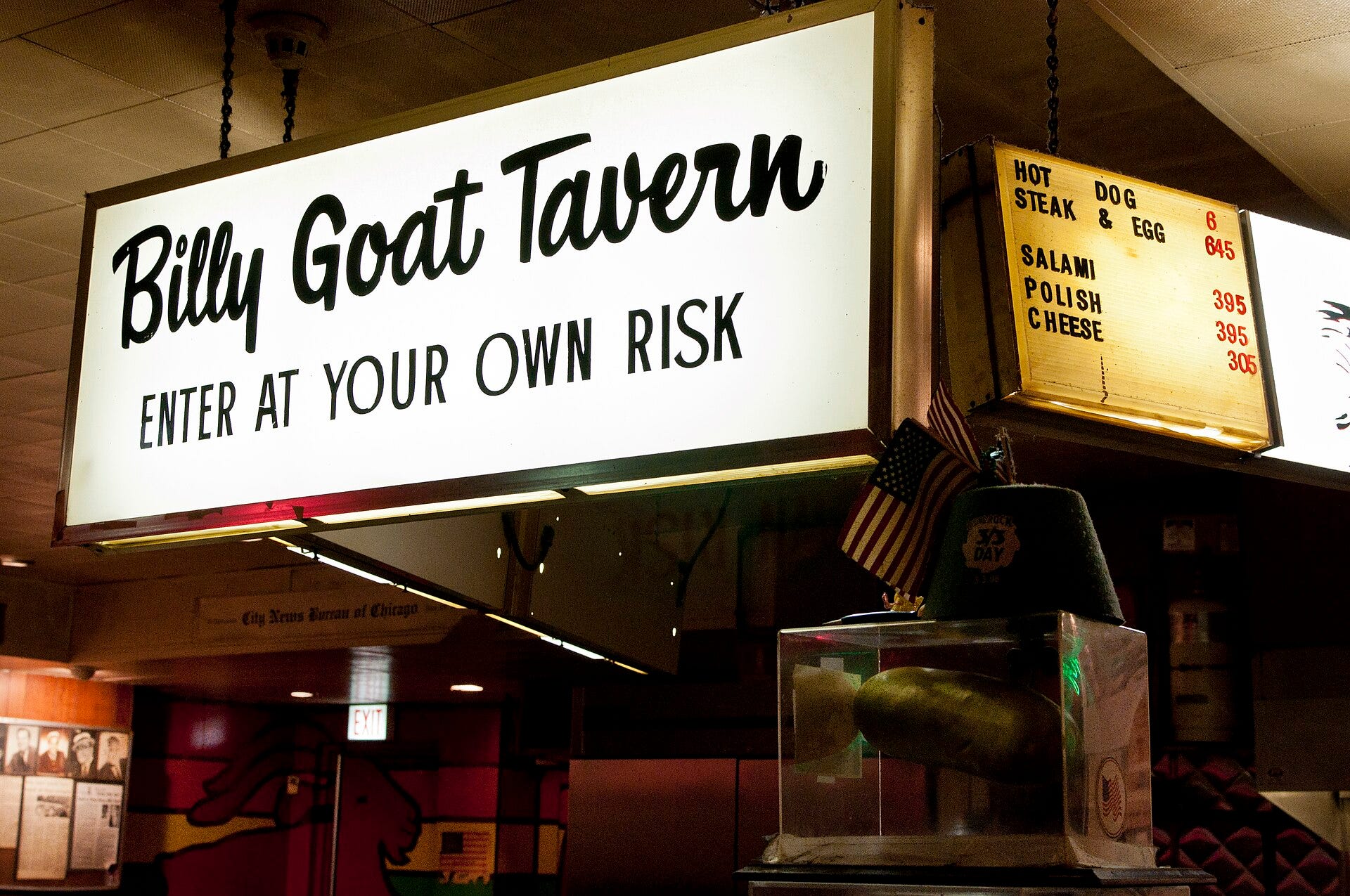
The Billy Goat Tavern is one of Chicago’s most enduring cultural landmarks, a subterranean saloon—evocatively situated below street level on the city’s Near North Side—whose mythology blends journalism, sports lore, and blue-collar humor. Founded in 1934 by Greek immigrant William “Billy Goat” Sianis, the tavern became famous for its no-nonsense menu—”cheezborger,” chips, and a Coke—and for Sianis’s outsized personality, including the legendary “Curse of the Billy Goat” placed on the Chicago Cubs during the 1945 World Series after Sianis was allegedly denied entry into the game because of the presence of his pet goat. More than a restaurant, the space evolved into a democratic clubhouse for reporters, politicians, cabdrivers, and night owls, embodying the gritty wit and egalitarian spirit often associated with the city itself. Its national pop-culture immortality arrived through The Blues Brothers, where the tavern’s swaggering Chicago attitude—working-class, musical, and slightly mischievous—mirrored the film’s tone and setting. Even more directly, the Billy Goat’s cadence and characters inspired the famous “Olympia Café” sketch on Saturday Night Live, written by former Chicago newspaperman John Belushi and his collaborators, turning the tavern’s shouted rhythms (“No fries, cheeps!”) into comedy legend. Through these echoes in film and television, the tavern became shorthand for an entire Chicago sensibility recognizable far beyond Illinois, but that has long since perished. Crotty Farm Report is a reader-supported publication. To receive new posts and support my work, consider becoming a free or paid subscriber. No figure cemented that sensibility more than Pulitzer-Prize-winning Chicago Tribune columnist Mike Royko, who treated the Billy Goat as both office and stage. Royko’s writing—acerbic, humane, fiercely local—captured the conversations and contradictions of the tavern’s regulars, transforming an underground bar into a literary symbol of the city’s conscience. In this way, the Billy Goat Tavern stands alongside Chicago’s great myths: the Cubs’ heartbreak and redemption, the swagger of its music and architecture, and, formerly, its politics, and the enduring belief that truth is best argued over a cheap burger in a crowded room. Though Chicago has become Woke, racist, and collosally mismanaged under the recent disastrous leadership of Brandon Johnson and Lori Lightfoot, and the sparkle of the Billy the Goat has faded with the disappearance of the Chicago Tribune from the Tribune building above and the crusty reporters and politicos with it—not to mention the robust commercial activity that came with actually going to an office for work—nothing too essential has changed at today’s Billy Goat, nor should it. In a city forever remaking its skyline and polishing its image, the tavern preserves something rarer: continuity. It reminds Chicagoans that identity is not built only in glass towers and grand civic plans, nor in race, ethnicity, and protests against ICE, but in stubborn places where memory, humor, and daily life gather shoulder to shoulder. Down there, over a simple burger and a shouted order, the city continues its long conversation with itself. Crotty Farm Report is a reader-supported publication. To receive new posts and support my work, consider becoming a free or paid subscriber. Thanks for reading Crotty Farm Report! This post is public, so feel free to share it. Get full access to Crotty Farm Report at crotty.substack.com/subscribe
Get full access to Crotty Farm Report at crotty.substack.com/subscribe
The Permian Basin: * Covers an area about 250 miles wide by 300 long. That’s roughly 75,000 square miles. It encompasses both Big Bend National Park and the Guadalupe Mountains National Park. * It is situated in West Texas and Southeastern New Mexico, with the central production and service hubs in Odessa and Midland. * It is the largest oil-producing field in the U.S., accounting for over 40% of U.S. oil production and about 15% of U.S. natural gas production. It produces over 4.2 million barrels of crude oil per day. An estimated 20 billion more barrels remain to be developed. * The area also has sizable deposits of sulphur, which explains the funky smell. * It is one of the largest employers in the U.S., accounting for over 850,000 jobs. I went to the heart of the Permian Basin, in Odessa/Midland. Easily one of the highlights of the year. But don’t believe anyone who says it’s lovely to live here. It’s not. But, man, is it profitable. Thanks for reading Crotty Farm Report! This post is public, so feel free to share it. Crotty Farm Report is a reader-supported publication. To receive new posts and support my work, consider becoming a free or paid subscriber. Get full access to Crotty Farm Report at crotty.substack.com/subscribe
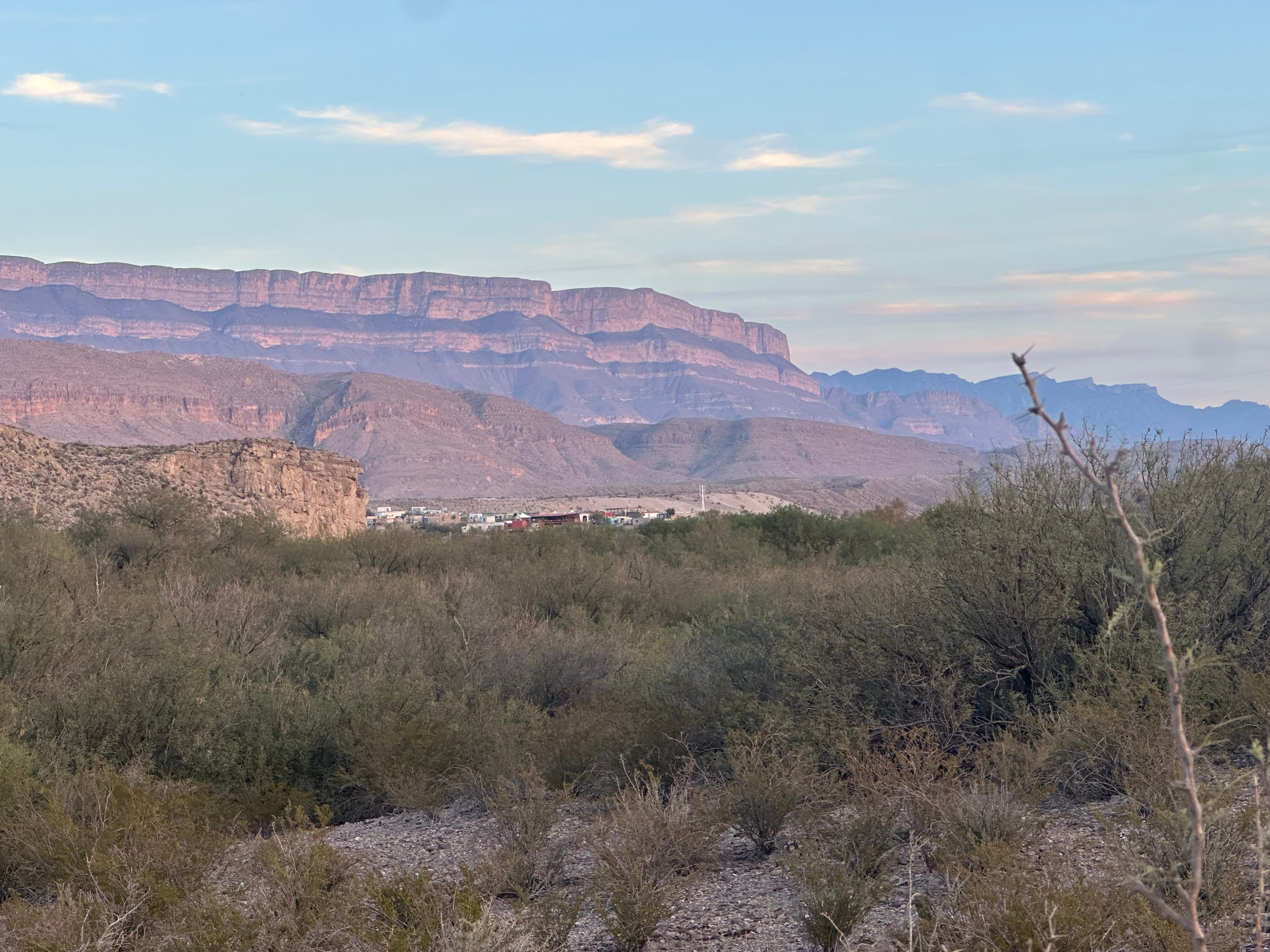
I rolled south on Highway 385 from the captivating high-desert town of Marathon, Texas. A truly relaxing stay at the evocative, peaceful Wild West accommodations of the Gage Hotel prepared me for the adventure ahead. The road down is looooong, with not a tree in sight, a ribbon of asphalt cutting through stark, empty beauty. After a stop at the Panther Junction Visitor Center, I head a further twenty miles down near the village of Boquillas del Carmen. I missed the cutoff—it’s 4:30 PM—for the trip by rowboat via the Boquillas Cross Port of Entry into town. So I travel several more miles until I come to the Boquillas Canyon Overlook. Several Mexican men were selling handmade bowls, walking sticks, and bracelets just across the skinny Rio Grande from the village. They were friendly. But I had to wonder: have they secured a deal with Border Patrol that allows them to cross back and forth without being apprehended? Were the handmade goods cover for the sale of legitimate contraband, like meth or cocaine? I decided not to ask, but the presence of only men, with no women, was slightly suspicious. Forty miles up the road is the Border Patrol checkpoint. A drug-sniffing German shepherd was guided around the Crius to isolate any narcotics. I am not sure if it can pinpoint persons, though Border Patrol did peer into the Crius windows. Back at Boquillas, all seemed well. Come dark, however, you have to believe that illegal immigrants will make their way across the formidable, volcanic Chisos Mountains of Big Bend. The Border Patrol’s Big Bend Sector covers 517 lonely miles of the Rio Grande, from Sanderson in the east to Sierra Blanca in the west. The region’s rugged, remote landscape makes patrolling difficult, especially with limited resources. It’s impossible to catch every crossing, and one presumes the Border Patrol accepts this fact. The Administration insists that no illegal crossings have occurred since June, but out here, where sensors and surveillance towers meet sheer emptiness, that claim is tough to swallow. Watch the video. You’ll see how easily I walked straight to the Rio Grande—no resistance, no questions asked. Then again, would you make this treacherous voyage across 70 miles of open desert? For a diehard illegal immigrant, there are easier ways to cross into America. Crotty Farm Report is a reader-supported publication. To receive new posts and support my work, consider becoming a free or paid subscriber. Thanks for reading Crotty Farm Report! This post is public, so feel free to share it. Get full access to Crotty Farm Report at crotty.substack.com/subscribe
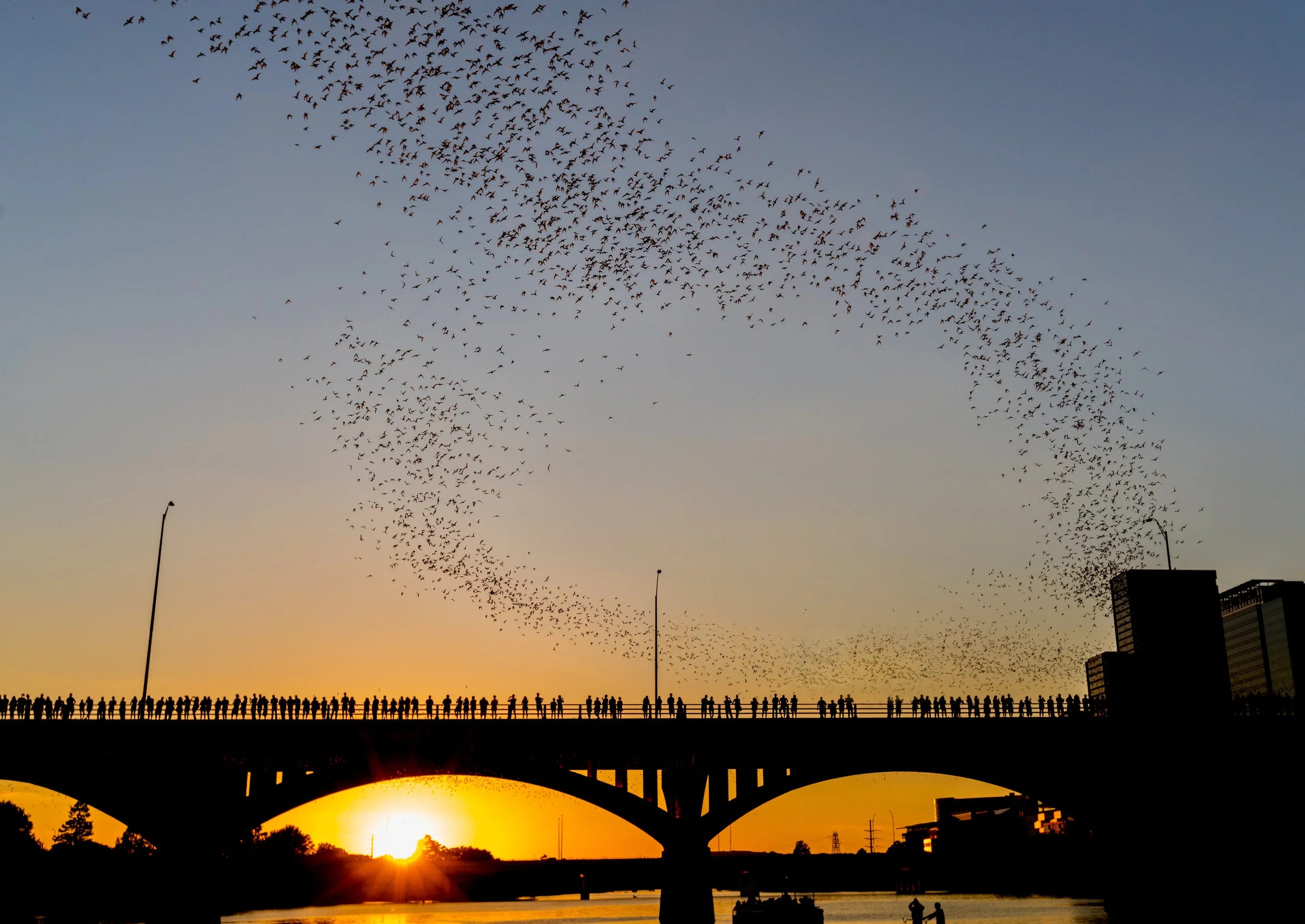
I was very excited. I had heard about the Austin bat emergence. Now I was going to see it in person. What to expect? Hundreds of people were milling on the southern edge of the Congress Avenue Bridge near gorgeous Lady Bird Lake. Most talked in very hushed tones. “Would they emerge tonight?” It was long past prime season for bat emergence. Soon they would be making their yearly trek down to central Mexico, not to return till spring. A well-informed Indian programmer gentleman gave me the heads up. It was supposed to occur between 5:30 and 6:00 PM, when 800,000 Brazilian free-tailed bats, mostly female, would emerge. Then again, it was very possible it would not occur at all. It was ticking close to 6:00. I could hear the very subtle high-pitched sounds of the bats beneath the Congress Avenue Bridge. It was as if they were nervously preparing for their big stage entrance. Then, suddenly, the bats took flight. It was magical, but quiet. They barely made a noise. Austin is home to the largest urban bat colony in the world. “In the 1980s,” according to Lindsey Liles writing in Garden & Gun, “the Congress Avenue Bridge underwent a renovation, and the finished product featured deep, narrow crevices between the beams. Those crevices turned out to be perfect bat habitat—they protected the bats from predators and served as a warm, incubator-like setting in which females could raise their pups.” The reason is that the sun heats the pavement atop the bridge and then filters down into the gaps, warming the pups. The unique bat habitat beneath the Congress Avenue Bridge was on the verge of destruction until the group Bat Conservation International, particularly Merlin Tuttle, became involved, helping educate the public and political representatives about the animals’ benefits. In particular, these bats are excellent at pest control, devouring between 10,000 and 30,000 pounds of insects, including mosquitoes and agricultural pests, as they travel up to 90 miles each night and at speeds of 100 miles per hour in search of food. It’s truly a miracle that the bat emergence occurs at all. Its location, mere blocks from the towering skyscrapers and other robust development of Austin, would not typically bode well for this highly sensitive species. Throw in the threats to habitat and from global warming, and the prospects are not great. But the bats hang on, literally and figuratively, a beautiful relic of when Austin was truly weird. Crotty Farm Report is a reader-supported publication. To receive new posts and support my work, consider becoming a free or paid subscriber. Thanks for reading Crotty Farm Report! This post is public so feel free to share it. Get full access to Crotty Farm Report at crotty.substack.com/subscribe
Norah Jovine is not your typical 20-something. She is a very smart graduate of the University of Chicago, easily one of the best schools in the country. Among the alumni are Susan Sontag, Milton Friedman, Carl Sagan, Thomas Sowell, Mike Nichols, Bernie Sanders, Phillip Roth, Kurt Vonnegut, Jr., Adam Silver, David Brooks, Larry Ellison, Nate Silver, and Satya Nadella. The list goes on and on. I worked for the University of Chicago back in 1982-83, as a fundraiser and editor of the school’s Grey City Journal, before hitchhiking to my first Rainbow Gathering on the Upper Peninsula of Michigan and the road less traveled by. I also took classes at the University of Chicago. I was super impressed. So, to hear Norah say she can’t get a job as a U of C graduate, my mind exploded. How can that be? U of C produces the best and brightest graduates that America has to offer. They may be radical sometimes, but they are thinking, original, out-of-the-box radicals. What gives? Watch my interview with Norah from the viewing deck at Chicago’s John Hancock Tower, where she took photographs of me after I descended from The Tilt, a frightening experience that causes one’s heart to leap out of one's chest as you are projected out from the Hancock Tower over the empty space below. Enjoy! Crotty Farm Report is a reader-supported publication. To receive new posts and support my work, consider becoming a free or paid subscriber. Thanks for reading Crotty Farm Report! This post is public so feel free to share it. Get full access to Crotty Farm Report at crotty.substack.com/subscribe
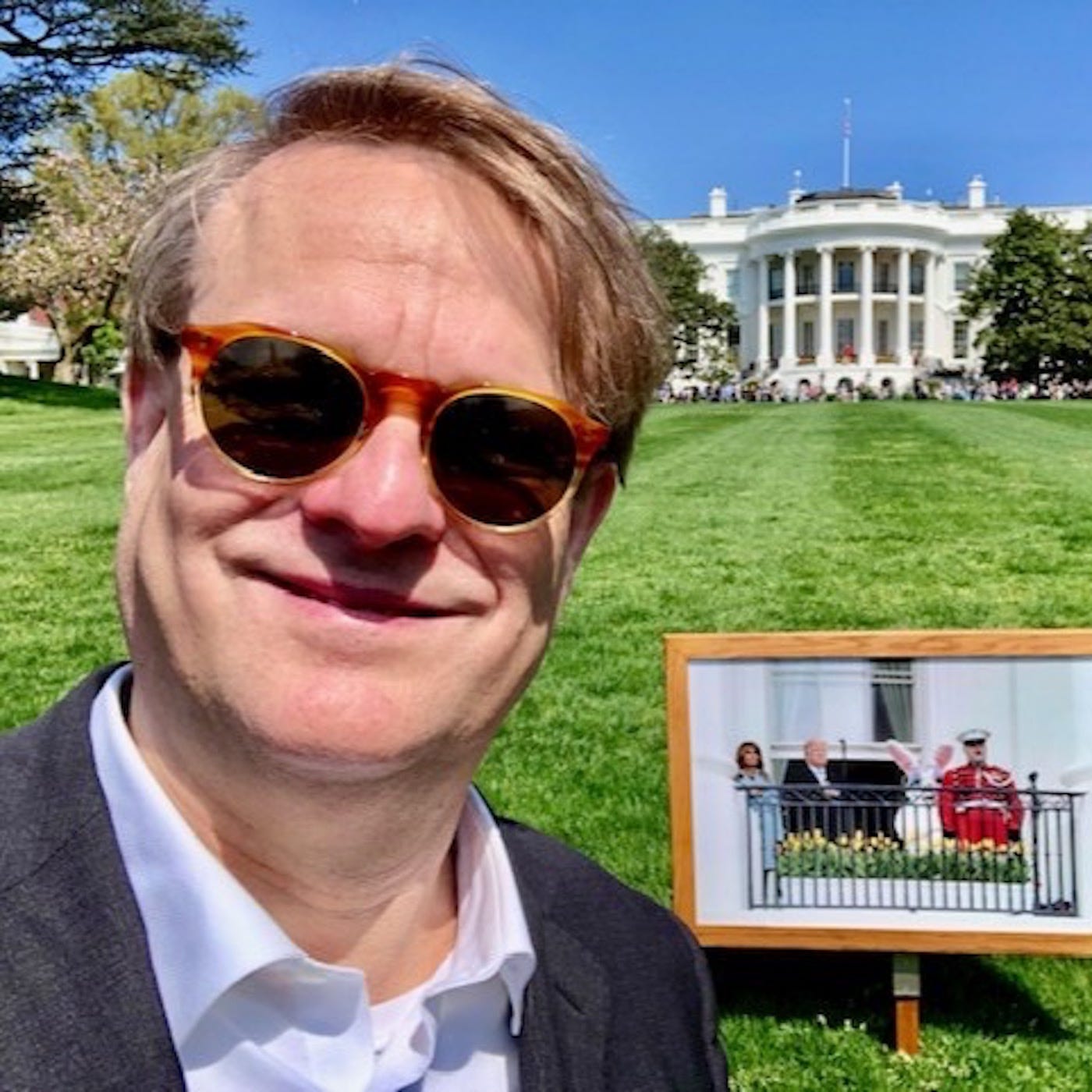
It was a beautiful Thursday afternoon when I arrived at the innocuous ICE detention facility in Plain Jane, Broadview, Illinois. The protesters, about 100 yards away from the facility, were friendly, well-behaved, even to the Charlie Kirk wannabes there to film the action. The gathering was serenaded by a transsexual man who never once stopped talking, no doubt the effect of steroids on his young body. But he was friendly. As is typically the case in this center of Midwest activism, Chicago. Then Friday came. The restrictions on the protesters were lifted by court decree, and after the removal of a fence around the facility on Beach Street, protesters attempted to get much closer to the facility and to the scene of ICE delivering illegal immigrants for processing. About eleven were arrested. My view catches the calm before the storm. Get full access to Crotty Farm Report at crotty.substack.com/subscribe

One of the hardest lessons I had to learn in DC was to become small to become big. In short, keep your head down and do your job well and rigorously, and you will get noticed. You will rise. Of course, that takes an office able to discern excellence. That is not the case in today's world of Trump. Those who excel in their craft, such as I do in writing, communications, and high-level policy analysis, often go unnoticed. Look at the President’s cheery, attractive 27-year-old Press Secretary Karoline Leavitt. Very good at rehashing the President’s talking points and combating disinformation, but when it comes to astute and nuanced policy analysis, she’s out of her depth. Not that the predecessor was any better. I have not even received a callback from this Administration. And that’s, I suspect, because it prioritizes absolute fealty, including to the President’s batshit crazy 2020 election narrative, instead of truth. In Washington, you must align your perspective with that of the member. That’s only natural. You won't agree on everything. On issues like abortion and gay rights, I softened my view. But I also came to understand Congresman Fortenberry’s position. I didn’t always agree with it, but it was always within the bounds of reason. So, I respected it. That is not the case with President Trump. Even though I cheerlead almost all his positions except tariffs—cracking down on illegal immigration, shrinking the size of government, keeping us out of disastrous wars of choice, tax cuts, and crime, to name just a few–-I cannot in good conscience abide his views on the 2020 election. That is outside the bounds of reason. As a result of this absolute demand for fealty, mediocrity is rewarded in this Administration, and eventually, that will become apparent. Everyone nominated in this Cabinet should have been asked, “Do you support the President’s view that the 2020 election was stolen?” Their answer needed to be yes or no. If yes, it should have been a delimiter. When chased by a passion for excellence, becoming small to become big can be a ticket to success in Washington, but only in an environment properly guided by reason and intelligence. Crotty Farm Report is a reader-supported publication. To receive new posts and support my work, consider becoming a free or paid subscriber. Thanks for reading the Crotty Farm Report! This post is public, so feel free to share it. Get full access to Crotty Farm Report at crotty.substack.com/subscribe
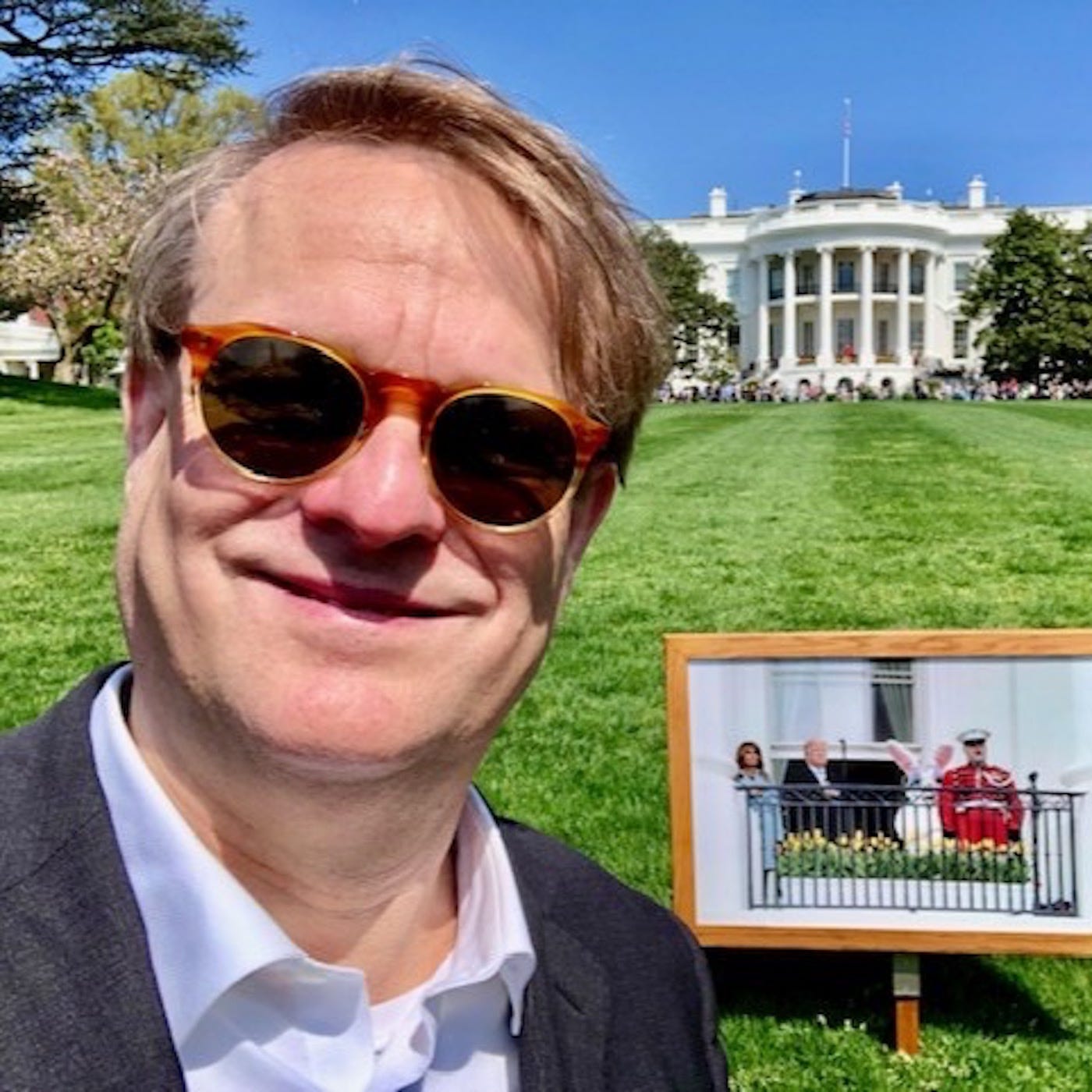
I know. A crime-free and stylish subway system. And most of it is unmanned! And it is one of three in the world that operates 24/7. But Copenhagen has it. In fact, Copenhagen is considered the safest city for women in the world. American cities can only dream. Our soft-on-crime policies have enabled open season for criminals. Thanks for reading Crotty Farm Report! This post is public, so feel free to share it. Crotty Farm Report is a reader-supported publication. To receive new posts and support my work, consider becoming a free or paid subscriber. Get full access to Crotty Farm Report at crotty.substack.com/subscribe

The Turning Torso in Malmö, Sweden—often mistakenly called the “Twisted Torso”—is one of the most striking feats of contemporary architecture in Europe and a defining symbol of the city’s post-industrial reinvention. Designed by the celebrated Spanish architect Santiago Calatrava and completed in 2005, the 190-meter, 54-story residential tower remains the tallest building in Scandinavia. Its form was inspired by one of Calatrava’s own sculptures, a white marble piece entitled Twisting Torso, which abstracted the motion of a human body spiraling upward. By translating this sculptural gesture into inhabitable space, Calatrava brought together engineering innovation, biomorphic design, and livable urban form in a way that few skyscrapers have achieved. The building is composed of nine five-story cubes stacked atop one another, each slightly rotated relative to the one below, resulting in a 90-degree twist from base to apex. This gradual spiraling not only creates its dramatic silhouette but also requires highly sophisticated structural engineering. A central concrete core stabilizes the building, while an external steel frame supports the twisting façade panels. The façade itself is clad in glass and aluminum, capturing the shifting light of the Öresund Strait and reflecting Malmö’s maritime character. The geometry ensures that no two apartments are identical, providing residents with a unique relationship between interior space and exterior views. Beyond its architectural daring, the Turning Torso represents Malmö’s economic and cultural transformation. Once a declining shipbuilding hub, the city reimagined its waterfront as Västra Hamnen (“the Western Harbor”), a district built around principles of sustainability and modern urbanism. The tower became the linchpin of this regeneration, serving as both a literal and figurative beacon for Malmö’s ambitions to transition from a heavy industry-based economy toward knowledge-based economies, green technology, and cosmopolitan living. Its prominence on the skyline is matched by its role as an emblem of Sweden’s commitment to innovative, environmentally conscious design—Malmö, after all, is frequently ranked among Europe’s greenest cities. Today, the Turning Torso is not only a residential complex but also a global architectural landmark that attracts visitors, design students, and professionals in engineering alike. It stands as an example of how architecture can embody both human form and urban aspiration, linking art with function, sculpture with shelter. As Calatrava himself intended, it suggests a “living body” in motion, perpetually spiraling upward—a fitting metaphor for Malmö’s own trajectory in the 21st century. Few buildings so effectively combine aesthetic daring, structural ingenuity, and civic symbolism, making the Turning Torso one of the great architectural icons of the new millennium. Team a trip to see the Turning Torso with a stop at Kallis, a tremendously cool cold plunge in Malmö. This historic clothing-optional, open-air cold bath house is unlike anything you have ever seen. It features opportunities to take the plunge from multiple piers, including a plunge into the cold Baltic Sea, as well as nude bathing, several saunas (one is co-ed), and stunning views of the sea and the Turning Torso. Enjoy! Crotty Farm Report is a reader-supported publication. To receive new posts and support my work, consider becoming a free or paid subscriber. Thanks for reading Crotty Farm Report! This post is public so feel free to share it. Get full access to Crotty Farm Report at crotty.substack.com/subscribe
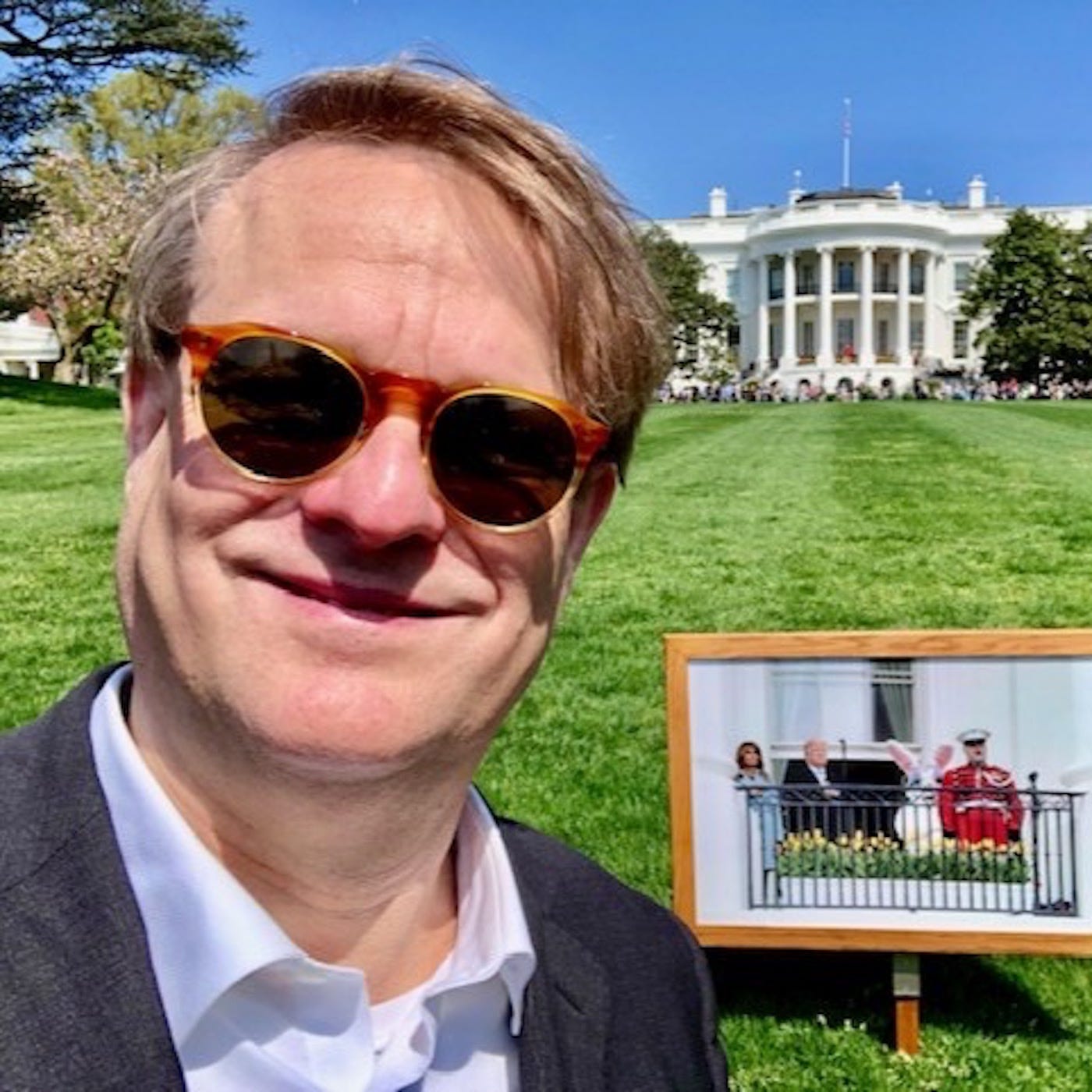
Copenhagen has more bikes than cars. More than 62% of residents bike to school, university, or work. Though 6 million people live here and 330 million live in the U.S., as many people commute by bicycle in greater Copenhagen as cycle to work in the United States. The result is a large metropolis gratifyingly free of air pollution, though the bicyclists are a bit righteous about getting in their lane. Time for the U.S. to get its bike act together. Thanks for reading Crotty Farm Report! This post is public so feel free to share it. Crotty Farm Report is a reader-supported publication. To receive new posts and support my work, consider becoming a paid subscriber. Get full access to Crotty Farm Report at crotty.substack.com/subscribe
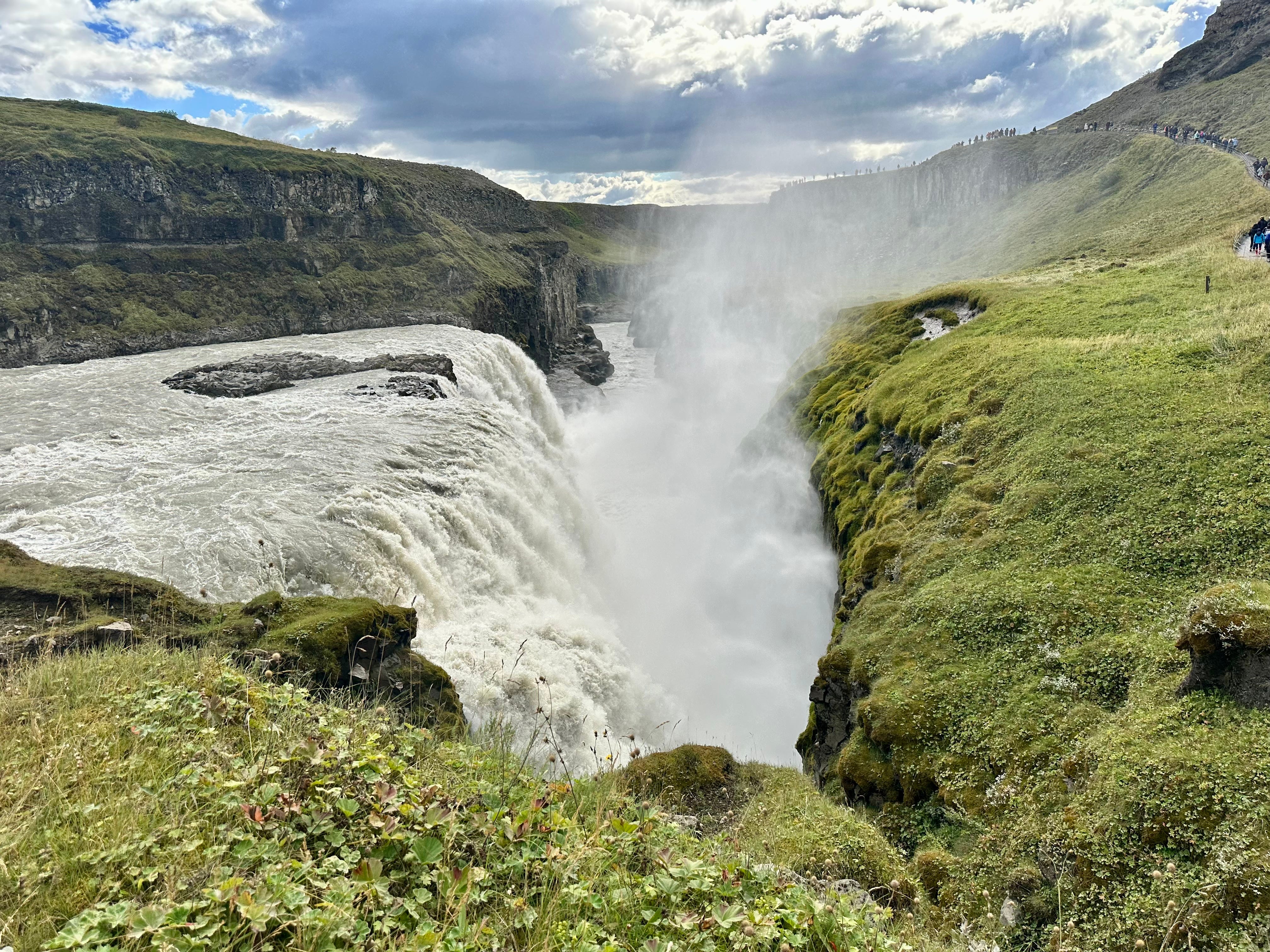
Gullfoss, or "Golden Falls," is a spectacular two-tiered waterfall in southwest Iceland, formed by the glacial meltwater from the Hvítá river, which originates from the Langjökull glacier. The waterfall derives its name from the golden-brown color the water can take on during a bright, sunny day. It is a major attraction on Iceland's popular Golden Circle tour (which we took) and is known for its powerful flow, misty environment, and the potential for rainbows on sunny days (we caught a double rainbow). The waterfall is a protected site, saved from hydroelectric development by the early 20th-century efforts of Sigríður Tómasdóttir, Iceland's first environmentalist. Enjoy the Crotty video! Crotty Farm Report is a reader-supported publication. To receive new posts and support my work, consider becoming a free or paid subscriber. Thanks for reading Crotty Farm Report! This post is public so feel free to share it. Get full access to Crotty Farm Report at crotty.substack.com/subscribe
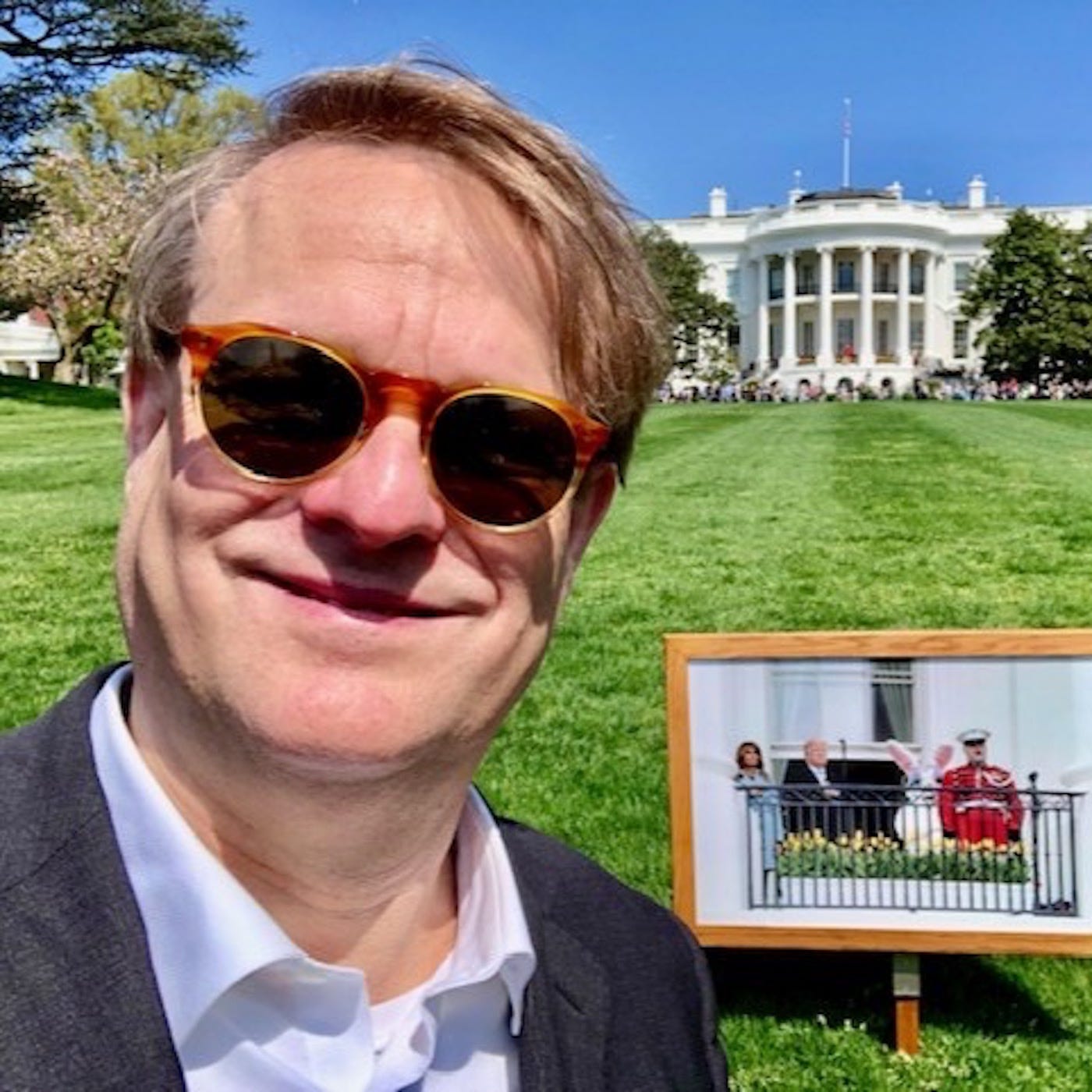
Watch Crotty in the subways of Copenhagen attempting to break through and have real connection! Crotty Farm Report is a reader-supported publication. To receive new posts and support my work, consider becoming a free or paid subscriber. Get full access to Crotty Farm Report at crotty.substack.com/subscribe
Crotty Farm Report is a reader-supported publication. To receive new posts and support my work, consider becoming a free or paid subscriber. Thanks for reading Crotty Farm Report! This post is public so feel free to share it. Get full access to Crotty Farm Report at crotty.substack.com/subscribe