Skip to content
Artwork for Coworkers & Crime

Coworkers & Crime

Rachel and Krystal

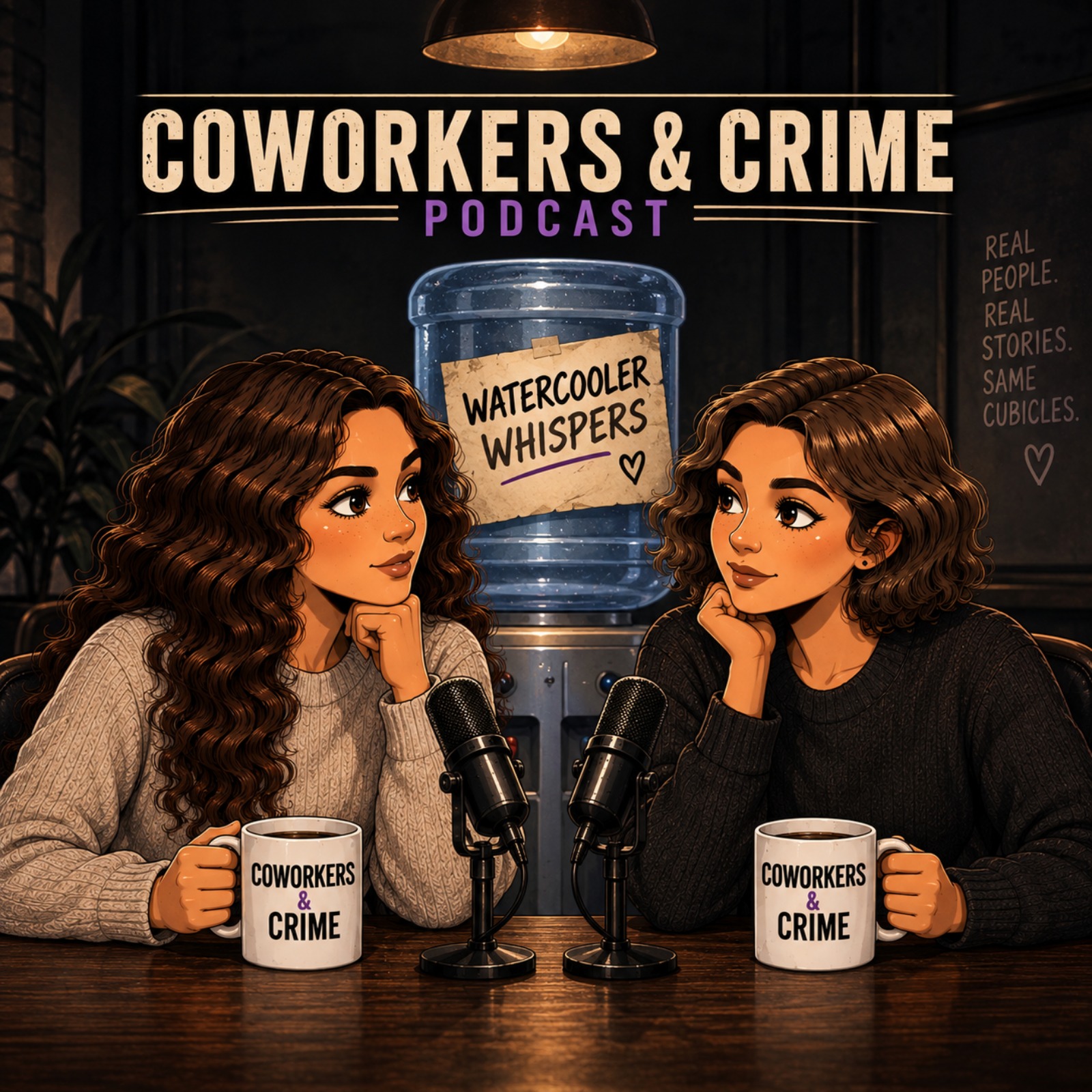
Welcome to Coworkers and Crime—the podcast where office chatter meets crime discussion. We’re your hosts, Rachel and Krystal. Yes, we really do work together... and yes, we’re totally obsessed with true crime. From watercooler whispers to cold case deep dives—we’re here to bring you stories that keep us chatting way past our coffee breaks.

email us at: coworkers.crimepodcast@gmail.com

https://www.facebook.com/share/g/1G4UhP9odP/

https://www.youtube.com/@CoworkersCrimePodcast

https://www.instagram.com/coworkersandcrime/#

Play
  • 22 episodes
  • weekly
  • Avg 26 min
  • English
Counted on this page — what you have heard stays on this device, so it is not something the list can be paged by.
  • S1 · E37
    Tuesday · 19 min

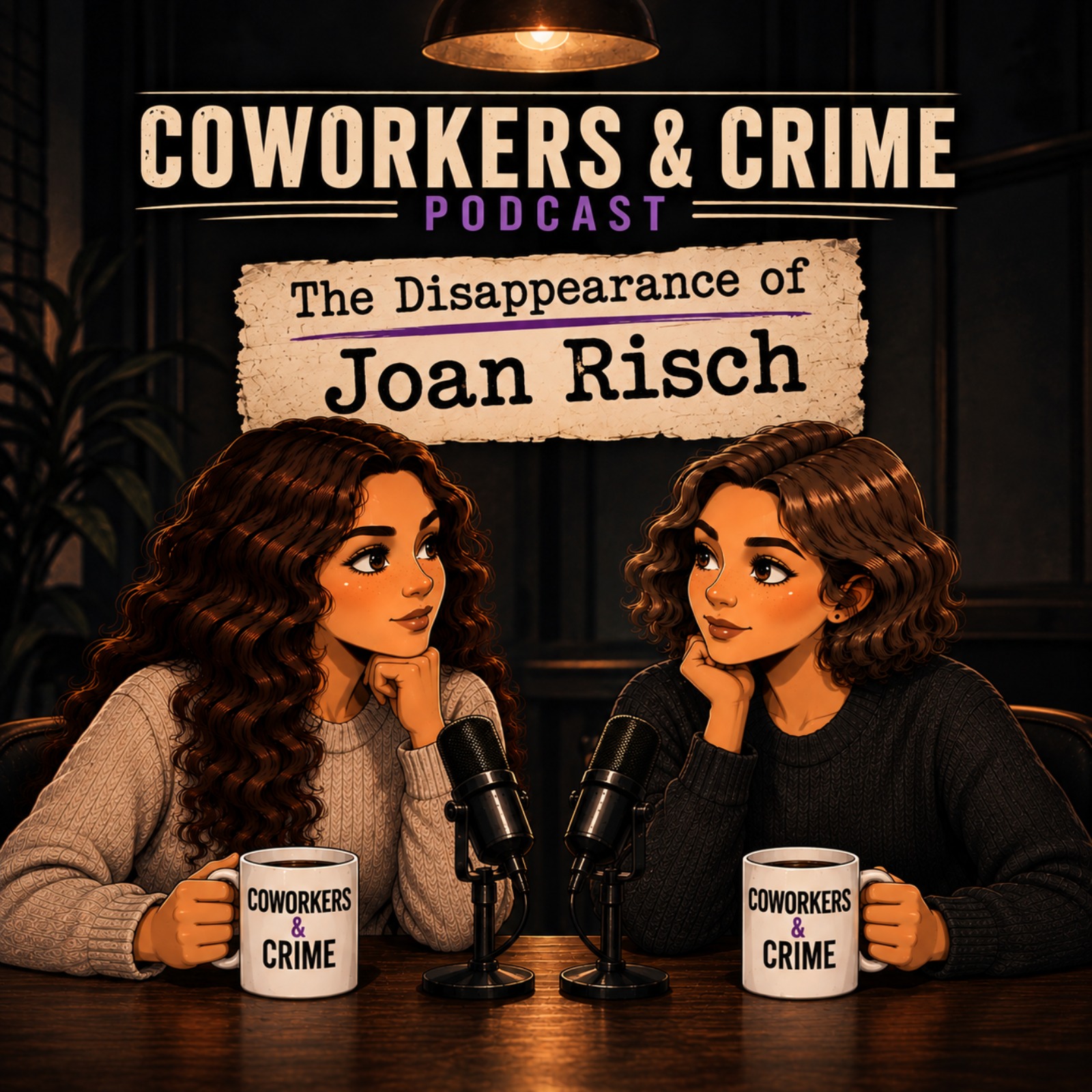
    The Disappearance of Joan Risch

    A quiet Massachusetts neighborhood. A normal autumn afternoon. And a kitchen covered in blood. When 31‑year‑old Joan Risch vanished on October 24th, 1961, she left behind one of the most contradictory crime scenes investigators had ever seen — a trail of blood that suggested she walked away, fingerprints that didn’t match anyone in her life, and a stack of library books about disappearances. In this episode, Rachel and Krystal dig into the case that has baffled detectives for more than sixty years. Was Joan abducted? Injured? Running? Or staging something far more complicated? This is a case where every clue points in a different direction — and none of them lead to Joan.
  • S1 · E36
    September 9 · 39 min

    History of Media and True Crime

    Media didn’t just shape true crime — it shaped justice. From Victorian tabloids to TikTok sleuths, every era of media has changed how we see victims, suspects, and the system meant to protect them. Rachel and Krystal trace the evolution of true crime storytelling across 150 years, revealing how headlines, reenactments, documentaries, podcasts, and social platforms have influenced investigations, public pressure, and even court outcomes. This is the story of how crime became content — and what that means for the people living it.

  • September 4 · 34 min

    Watercooler Whispers: Texas Killing Fields, Tupac, and Lindsay Clancy

    Three very different trials. Three cases that have dominated headlines. Texas Killing Fields James Elmore was found guilty of manslaughter in the 1984 death of 16-year-old Laura Miller. It marks the first conviction connected to the Texas Killing Fields, a stretch of land where multiple women and girls were murdered or disappeared over several decades. Tupac Shakur Duane “Keffe D” Davis was convicted of first-degree murder for orchestrating the 1996 killing of Tupac Shakur. After nearly 30 years, it is the first conviction in Tupac’s murder case. Davis is expected to be sentenced in October. Lindsay Clancy Lindsay Clancy’s murder trial ended in a mistrial after the jury was unable to reach a unanimous verdict. She was accused of killing her three children in 2022. Prosecutors have not yet decided whether they will retry the case.

  • S1 · E35
    September 2 · 17 min

    Missing: Angela Hammon

    Angela Hammond was 20 years old, four months pregnant, and standing under bright lights at a payphone in the center of town when she was abducted. She described the man circling her. She described his truck. Her fiancé heard her scream through the phone — and even chased the abductor’s vehicle. But Angela was never seen again. This is one of the most documented abductions in American history… and one of the most under‑reported. Full source list on Instagram. Episode streaming now.

  • S1 · E34
    August 26 · 23 min

    Dorothy Jane Scott: The Calls That Wouldn’t Stop

    In 1980, Dorothy Jane Scott began receiving terrifying calls from a man who claimed to be in love with her—and seemed to know her every move. Then Dorothy disappeared. Her car was found burning, her remains were discovered four years later, and the mysterious caller continued haunting her family. We’ll explore Dorothy’s disappearance, the unanswered questions surrounding her murder, and the case of Rebecca Schaeffer—whose 1989 murder helped change California’s stalking laws. Dorothy was afraid. She asked for help. Someone was listening. But not enough. #CoworkersAndCrime #DorothyJaneScott #TrueCrime #ColdCase #UnsolvedMystery #RebeccaSchaeffer

  • S1 · E33
    August 19 · 22 min

    Highway of Tears: Part 3

    A 724-kilometre stretch of northern British Columbia. Three women who disappeared. One highway—and decades of unanswered questions. In Part 3, we continue our look at these haunting unsolved cases and the systemic failures that have left families searching for answers. Their stories deserve to be remembered. Their cases deserve attention.

  • S1 · E32
    August 12 · 32 min

    History of: Criminal Profiling

    This episode explores the full history of criminal profiling — from Cesare Lombroso’s pseudoscience and Dr. Thomas Bond’s 1888 Jack the Ripper profile to the FBI’s Behavioral Science Unit and modern behavioral analysis. Using credible academic sources, forensic psychology research, and real case studies, Rachel and Krystal examine how profiling evolved, where it failed, and why Hollywood’s portrayal of profiling is deeply inaccurate. The episode also breaks down how media myths influence juries, police expectations, and public understanding of investigations. Ideal for listeners searching for evidence‑based true crime content, profiling accuracy research, and myth‑busting analysis of shows like Criminal Minds and Mindhunter.

  • S1 · E31
    August 5 · 24 min

    US Unidentified Women

    This week, Rachel and Krystal examine three cases that reveal the cracks in America’s investigative systems, cases where women weren’t just murdered, but erased. For decades, these victims were known only by nicknames: • The Lady of the Dunes — a woman found in Provincetown with her hands removed and her body carefully staged. • Belle in the Well — a woman whose injuries, clothing, and decomposition timeline contradicted every early investigative assumption. • Sumter County Doe — a traveler found beside a man on a rural road, both unidentified and both victims of a staged scene. All three women have now been identified through forensic genealogy, but their murders remain unsolved. Their stories highlight systemic failures in missing‑person reporting, cross‑state communication, and forensic limitations that left them nameless for decades.

  • August 5 · 38 min

    Watercooler Whispers

    Recent case updates: Nolan Wells, Nancy Guthrie, Lindsey Clancy, Sandra Birchmore, Taylor Charlton and the recent uptick in solved cold cases Join us for this weeks episode at the watercooler.

  • S1 · E30
    July 29 · 30 min

    Unsolved Bank Robberies

    Two cities. Two robberies. Zero answers. In this episode, Rachel and Krystal dig into two bank heists that should’ve been headline news — but instead disappeared into silence. St. Louis, 1930: Police guards are mysteriously pulled from a bank… hours before it’s robbed. Chicago, mid‑century: A professional crew hits a major bank so cleanly the case barely makes the papers. Both robberies show the same pattern: Inside knowledge. Organized‑crime shadows. Investigations that stalled before they began.

  • S1 · E29
    July 22 · 23 min

    Unsolved: The Man Who Erased Himself

    A man arrives in Sligo, Ireland with two bags and no identification. Over three days, he walks the town with purpose — disposing of items, avoiding cameras, and preparing for a death no one would witness. When his body is found on Rosses Point beach, investigators discover he was terminally ill… but nothing else. No name. No past. No country. No family. And no trace of who he really was. This episode examines the final movements of the man who called himself Peter Bergmann, using verified reporting from RTÉ, Irish Times, Garda statements, and the Sligo Coroner’s Court. It’s one of Europe’s most haunting identity mysteries — a man who erased himself with precision, leaving behind only questions. Sources referenced in this episode: RTÉ documentary The Last Days of Peter Bergmann: Irish Times coverage: https://www.irishtimes.com/news/ireland/irish-news/garda-renew-appeal-to-identify-man-found-dead-in-sligo-1.1427784 (irishtimes.com in Bing) Meath Chronicle reporting: https://www.meathchronicle.ie/2013/06/18/gardai-renew-appeal-to-identify-man-found-dead-in-sligo/ (meathchronicle.ie in Bing) Irish Independent coverage: https://www.independent.ie/irish-news/gardai-renew-appeal-to-identify-man-found-dead-in-sligo/ (independent.ie in Bing)

  • S1 · E28
    July 15 · 21 min

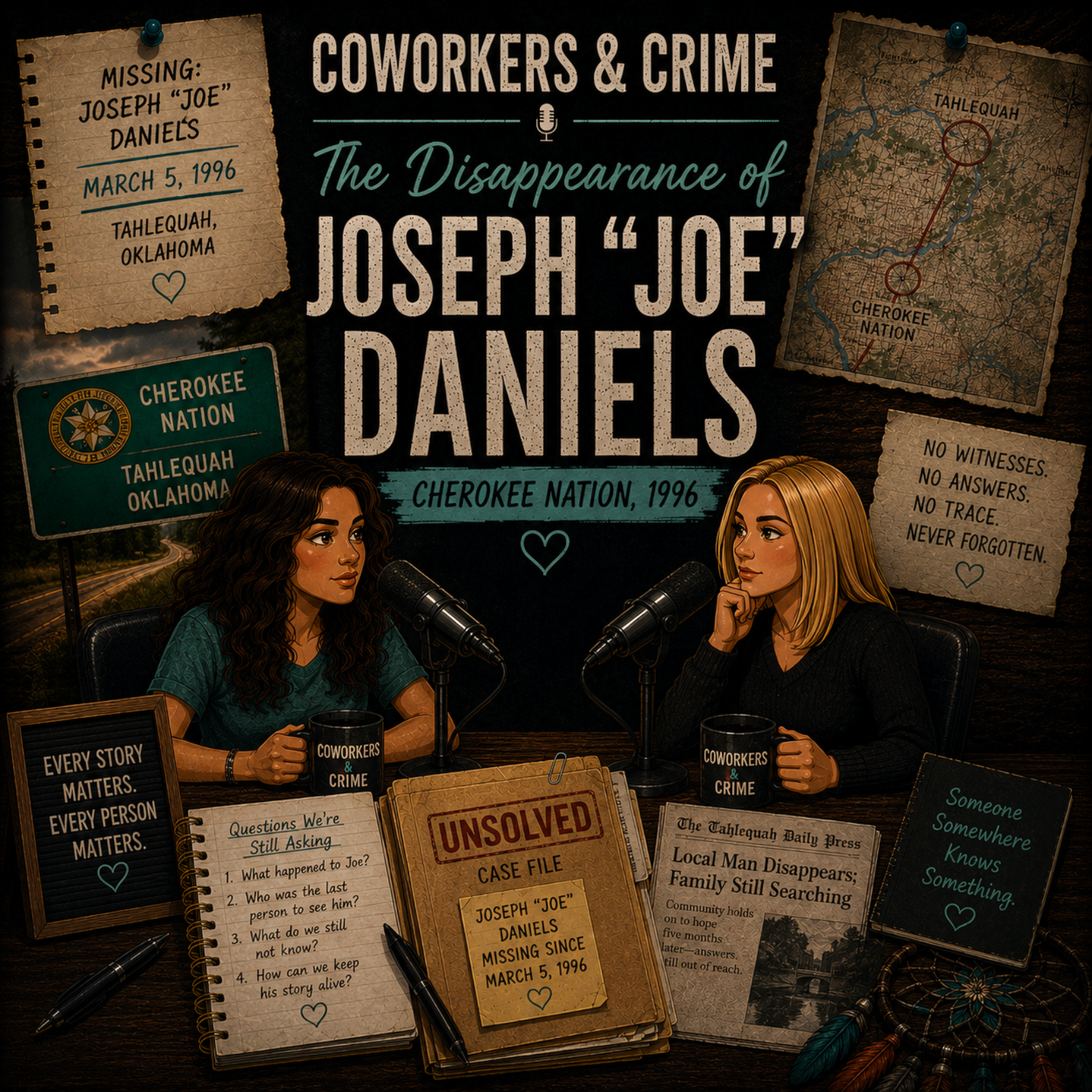
    The Disappearance of Joseph “Joe” Daniels (Cherokee Nation, 1996)

    A warm Oklahoma night. A short walk home. And a man who vanished without a trace. In 1996, Joseph “Joe” Daniels — Cherokee Nation, mid‑20s — stepped off a relative’s porch and into the dark. He was never seen again. No search. No headlines. No investigation that ever truly began. Nearly thirty years later, his story still lives mostly in memory — not in the systems meant to protect the missing. Tonight, we revisit the disappearance of Joe Daniels, the silence that followed, and the community that refused to forget him.

  • S1 · E27
    July 8 · 27 min

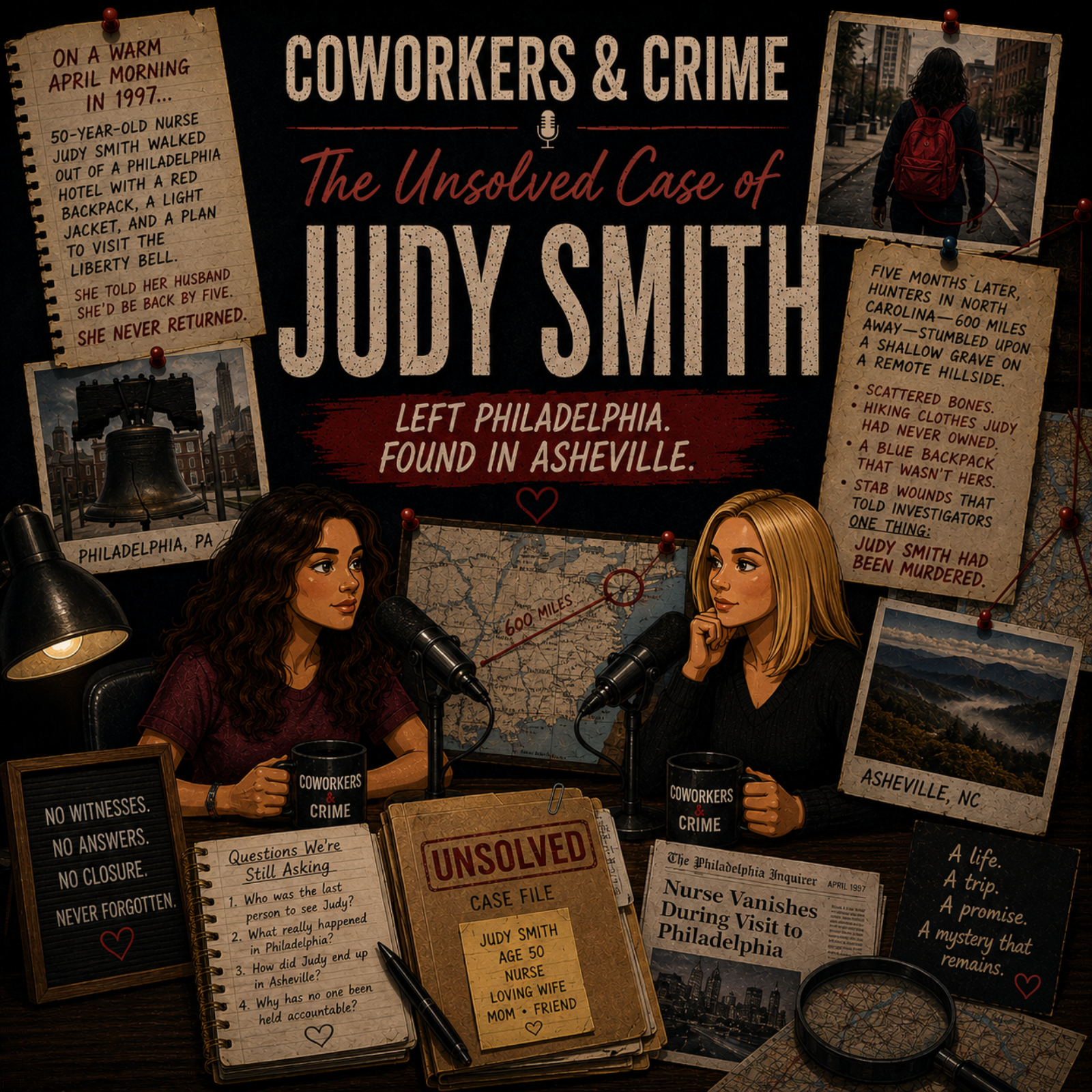
    The Unsolved Case of Judy Smith

    A nurse disappears in broad daylight in Philadelphia. Five months later, her remains are found 600 miles away on a remote North Carolina mountainside — dressed in clothes she never owned, carrying items she never bought. No timeline makes sense. No theory fits cleanly. And nearly 30 years later, investigators still can’t answer the most basic question: How did Judy Smith get from a crowded city to a secluded forest — and who killed her? In this episode, we break down Judy’s final known movements, the baffling Asheville sightings, the forensic contradictions, and the theories investigators still can’t rule out.

  • #26
    July 1 · 35 min

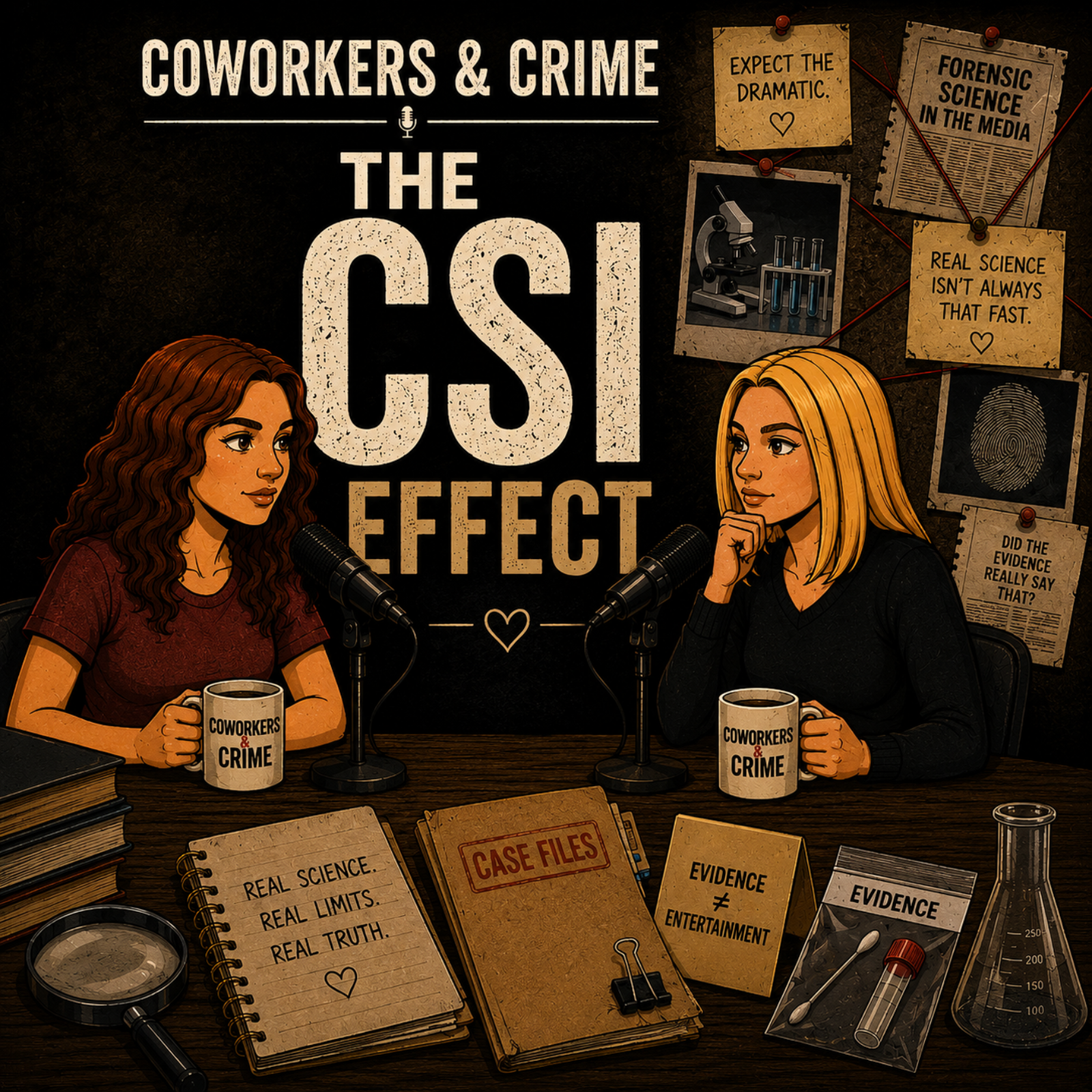
    The CSI Effect: Myth, Media, and Misconceptions

    The CSI Effect: Myth, Media, and Misconceptions Episode Summary: In this episode, we break down the CSI Effect — the belief that crime‑show viewers enter jury duty expecting high‑tech forensic evidence in every case. But what does the research actually say? We explore the myth, the data, the courtroom impact, and how TV crime dramas could help reduce misconceptions about forensic science. What We Cover: Why prosecutors popularized the CSI Effect What academic research actually shows (spoiler: it’s not what you think) How forensic TV dramas shape public expectations The danger of over‑trusting forensic evidence How courts have responded — and whether they made things worse What crime shows could do to help fix the problem Thought‑provoking questions about science, storytelling, and justice Key Sources: Oxford Research Encyclopedia of Criminology Stanford Law Review National Institute of Justice National Academy of Sciences U.S. Department of Justice Cornell Law School Legal Information Institute Why This Episode Matters: Forensic science is powerful — but it’s not perfect. When jurors expect TV‑style certainty, real‑world justice can suffer. Understanding the CSI Effect helps us separate entertainment from evidence. Listen + Follow: Follow us on Instagram and Facebook for episode updates, behind‑the‑scenes content, and case discussions.

  • July 1 · 38 min

    Watercooler Whispers: Colorado DNA, Murdaugh, Guthrie, Read

    Colorado DNA Lab Scandal A veteran Colorado Bureau of Investigation DNA scientist admitted to manipulating DNA testing and falsifying records, placing more than 1,000 criminal cases under review. We discuss how one person's misconduct can shake confidence in forensic science and what it could mean for future appeals. Massachusetts Drug Lab Scandals We revisit the infamous Annie Dookhan and Sonja Farak scandals that led to the dismissal of more than 32,000 drug convictions. Two chemists. Two different motives. One massive failure of oversight that changed the criminal justice system forever. Alex Murdaugh Retrial Update The first hearing in Alex Murdaugh's new murder trial is underway after South Carolina's Supreme Court ordered a retrial due to juror misconduct by former Clerk of Court Becky Hill. We explain what happened, why a new trial was granted, and what comes next. Nancy Guthrie Investigation Investigators confirm the existence of a second ransom letter in the Nancy Guthrie case, reportedly claiming she died shortly after the kidnapping. We discuss what this means for the investigation, the latest developments, and why authorities continue to treat the case as active. Karen Read Civil Case Update Discovery continues in the Karen Read civil lawsuit with new rulings involving Colin Albert's communications and deposition request. We break down what "without prejudice" means, why nearly three and a half years of communications have been ordered, and what this could mean going forward.

  • S1 · E25
    June 24 · 24 min

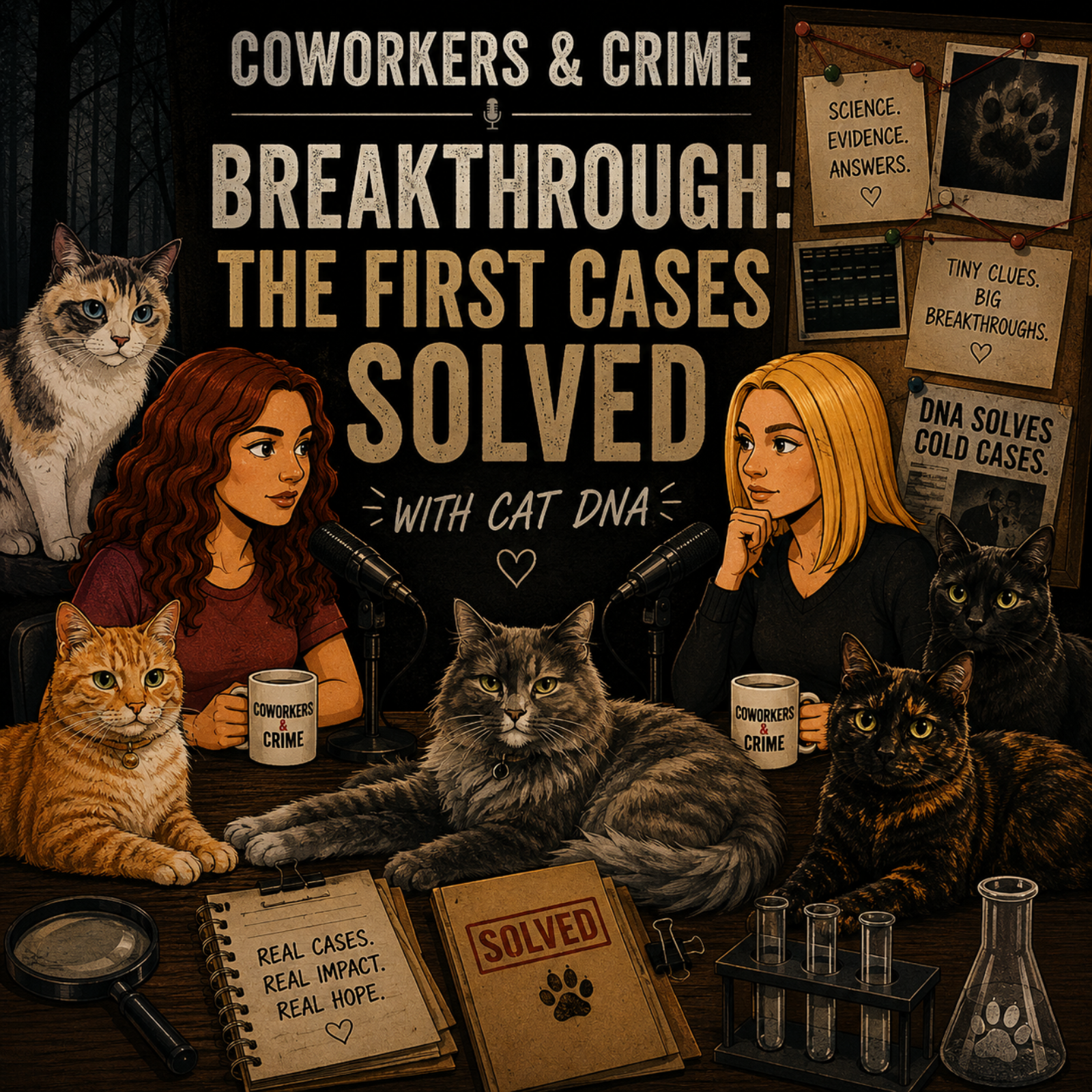
    Breakthrough: The First Cases Solved with Cat DNA

    In this episode, Rachel and Krystal explore two groundbreaking cases where cat DNA helped solve homicides — one in England, one in Canada. From a torso found on a British beach to a leather jacket buried near a shallow grave, these cases reshaped forensic science and expanded the definition of trace evidence. Featuring the first use of cat DNA in a UK homicide trial and the first animal‑DNA conviction in North America. Key Topics: The Body on the Beach (Southsea, England, 2012) The Snowball Case (Prince Edward Island, 1994–1996) Animal DNA in forensic science Trace evidence and pet hair transfer How new forensic techniques enter the courtroom

  • S1 · E24
    June 17 · 20 min

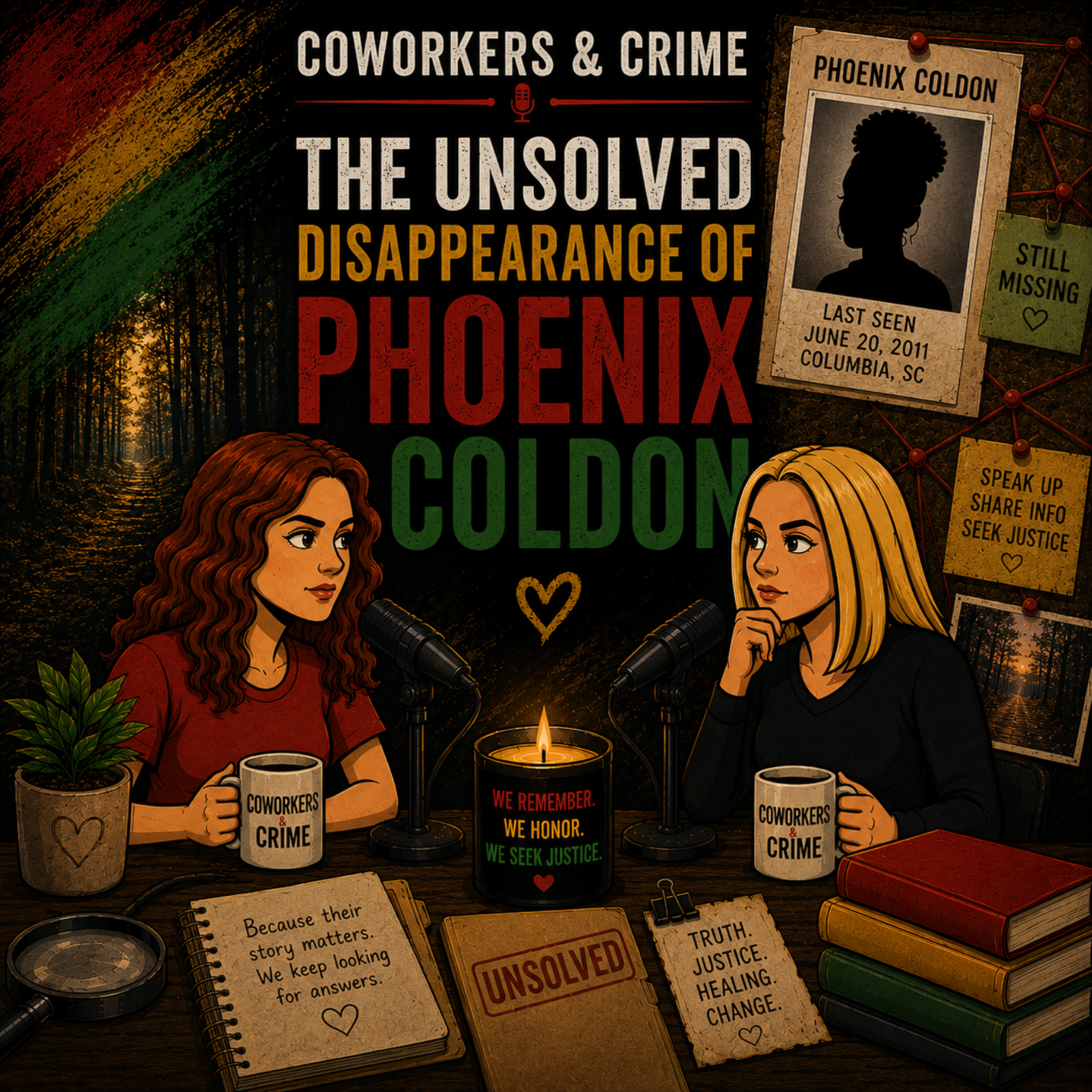
    The Unsolved Disappearance of Phoenix Coldon

    On December 18, 2011, 23‑year‑old Phoenix Lucille Coldon left her family’s home in Spanish Lake, Missouri, got into her mother’s black Chevy Blazer, and drove away without explanation. Two hours later, the SUV was found abandoned in East St. Louis — engine running, driver’s door open, personal belongings inside. Her parents wouldn’t learn about the vehicle for two weeks. In this episode, we explore Phoenix’s life, the timeline of her disappearance, investigative gaps, systemic issues affecting missing Black women, and the unanswered questions that still haunt this case more than a decade later. We approach Phoenix’s story with care, grounding every detail in credible reporting and centering the humanity of a young woman whose life was far more complex than the headlines suggested. What We Cover Phoenix’s upbringing, talents, and the pressures she navigated The final day she was seen The abandoned SUV and the two‑week communication gap Conflicting timelines and investigative challenges Media coverage and the “secret life” narrative Systemic disparities in missing‑person responses Theories explored by investigators and journalists Where the case stands today Thought‑provoking questions about justice, identity, and systemic reform If You Have Information St. Louis County Police Department: 314‑231‑1212 CrimeStoppers: 866‑371‑TIPS

  • S1 · E23
    June 10 · 13 min

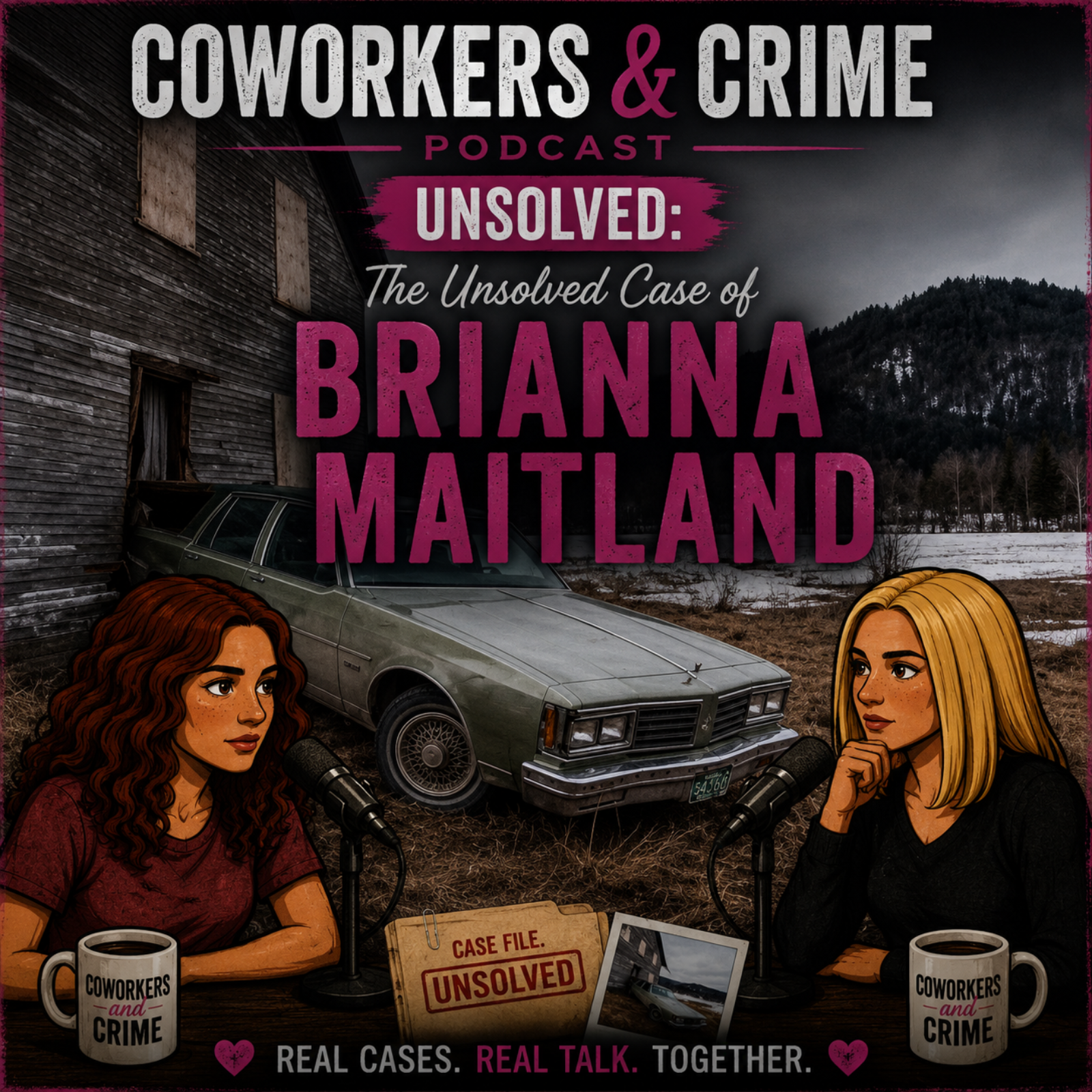
    Unsolved: Brianna Maitland

    Seventeen‑year‑old Brianna Maitland vanished on March 19, 2004, after leaving her shift at the Black Lantern Inn in Montgomery, Vermont. Hours later, her car was found backed into an abandoned farmhouse known as the Dutchburn House — driver’s door unlocked, turn signal still blinking, personal items scattered on the ground. But Brianna was gone. In this episode, we break down the timeline, the contradictions, the investigative leads, and the unanswered questions that have shaped this case for more than twenty years. No sensationalism. No speculation. Just the facts, the context, and the gaps that still matter. What We Cover Brianna’s final day and last confirmed movements The Dutchburn House scene and why it still raises questions Investigative leads, searches, and publicly acknowledged theories Timeline contradictions and what they mean The impact of early assumptions and delayed connections Thought‑provoking questions that remain unanswered Key Questions We Explore Why was Brianna’s car backed into the Dutchburn House? What happened in the minutes between leaving work and the crash site? Why wasn’t the car linked to her disappearance for nearly a week? What evidence was lost during that delay? Who was on that road that night — and why? If You Have Information Contact the Vermont State Police: https://vsp.vermont.gov/tipsubmit 📚 REFERENCES (REPUTABLE SOURCES WITH LINKS) These are the sources used to ground the episode’s factual content: Vermont State Police – Official Case Page https://vsp.vermont.gov/unsolved/missing/maitland (vsp.vermont.gov in Bing) FBI Missing Persons – Brianna Maitland https://www.fbi.gov/wanted/kidnap/brianna-maitland (fbi.gov in Bing) The Charley Project – Brianna Maitland https://charleyproject.org/case/brianna-alexis-maitland

  • S1 · E22
    June 3 · 21 min

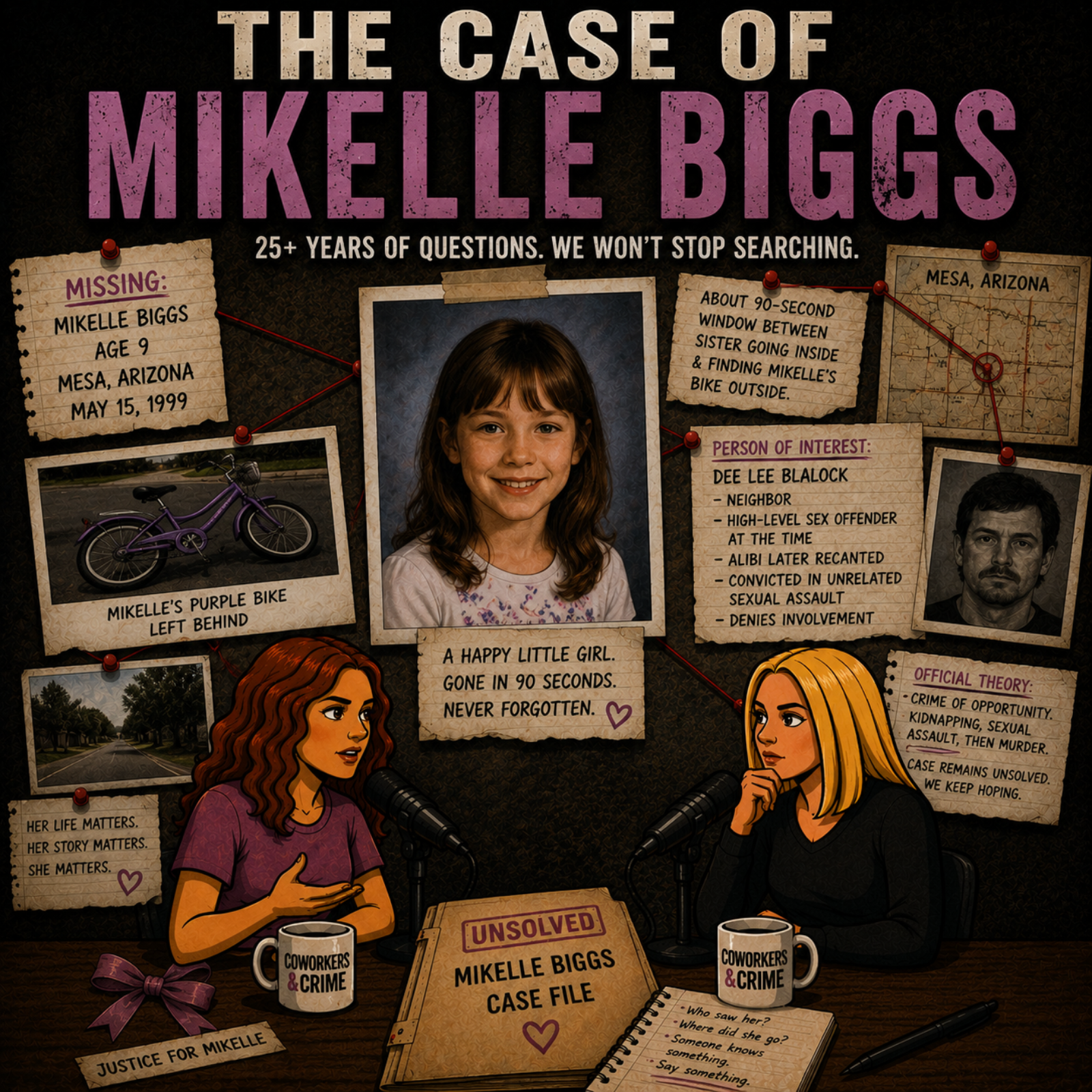
    The Case of Mikelle Biggs

    On January 2nd, 1999, 11‑year‑old Mikelle Biggs walked outside with her little sister to wait for the ice cream truck. Minutes later, she was gone. Her purple bike lay on its side. The front wheel was still spinning. Two quarters were on the pavement. And no one saw what happened. This episode examines one of Arizona’s most haunting cold cases — a disappearance that unfolded in under two minutes, before AMBER Alerts existed in the state, and before modern child‑abduction protocols were in place. We explore the timeline, the investigation, the long‑standing person of interest, the myths that have grown around the case, and the family who has spent 25 years searching for answers. If you have information about the disappearance of Mikelle Biggs, contact the Mesa Police Department. Content Notes: Missing child, abduction, discussion of sexual violence (non‑graphic), long‑term unresolved cases. Credits: Hosted by Rachel & Krystal Written and produced by Co‑workers & Crime Research from publicly available law enforcement statements and reputable reporting

  • S1 · E21
    May 27 · 21 min

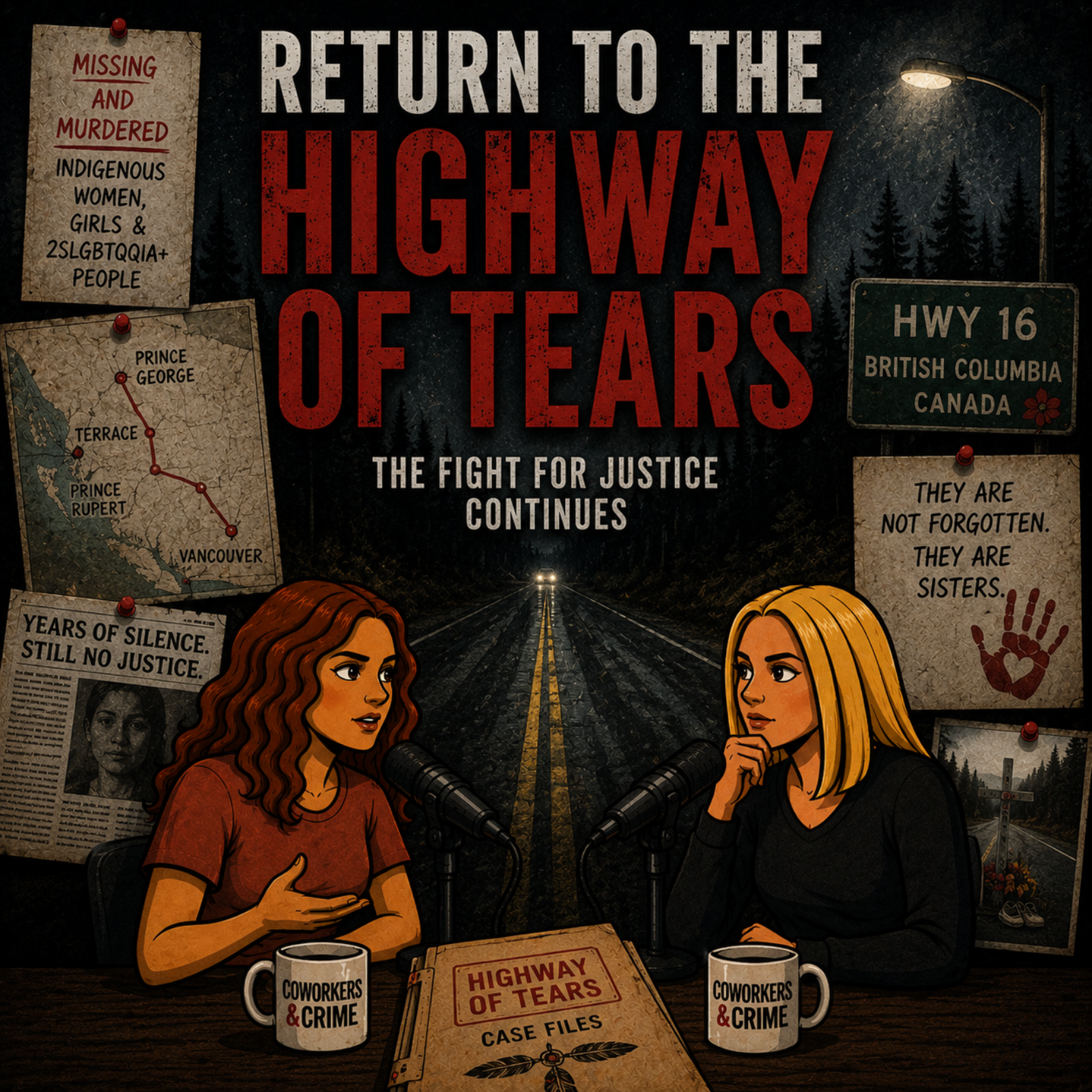
    Return to the Highway of Tears

    Before the world knew the phrase Highway of Tears, families in northern British Columbia were already losing daughters, sisters, and mothers — and fighting to be heard. In this episode, we revisit the earliest known cases connected to Highway 16: Gloria Moody (1969), Helen Claire Frost (1970), and Tracey Clifton (1970s). Their stories reveal the roots of a crisis decades in the making. This episode explores investigative gaps, transportation inequality, and missing documentation — and honors the women whose stories shaped the foundation of this crisis.

Showing 1–20 of 22 episodes