Skip to content
Artwork for CoROM cast. Wilderness, Austere, Remote and Resource-limited Medicine.
CoROM cast. Wilderness, Austere, Remote and Resource-limited Medicine. · August 7 · 41 min

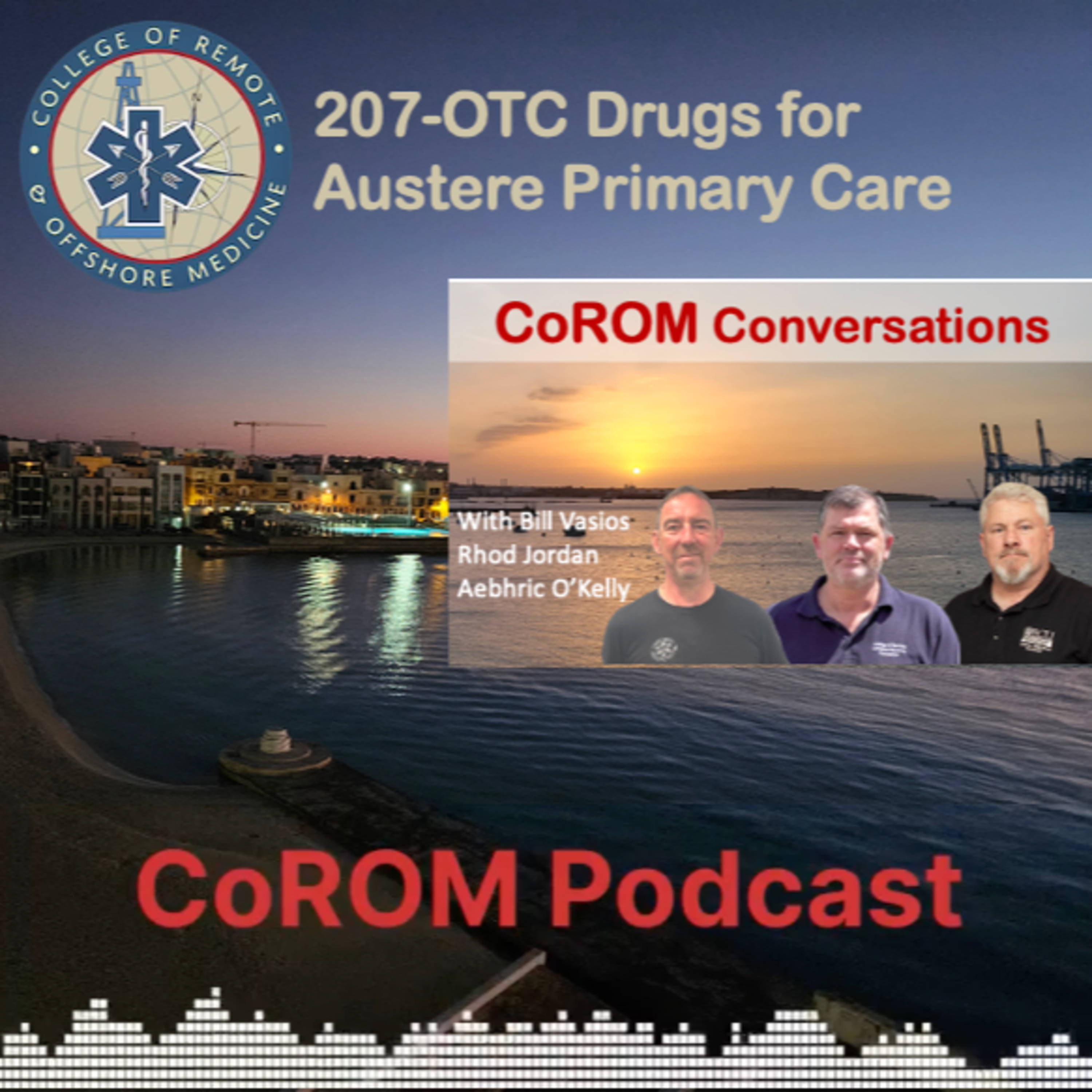
207-OTC Drugs for Austere Primary Care

In this episode of CoROM Conversations, Aebhric O'Kelly is joined by Dr Bill Vasios to discuss one of the most overlooked aspects of remote and austere medicine: the intelligent use of over-the-counter (OTC) medications in austere primary care. Rather than focusing on advanced equipment and prescription drugs, this discussion explores how a carefully selected collection of inexpensive, widely available medications can effectively manage many of the illnesses and injuries encountered in remote, expeditionary, humanitarian and disaster settings. The conversation emphasises clinical reasoning, careful assessment, conservative prescribing, and making the most of simple interventions before escalating treatment. Chapters 00:00 – Introduction: Why OTC medicines matter in austere medicine 02:22 – Traveller's diarrhoea Assessment Oral rehydration Loperamide: when to use it (and when not to) 06:54 – Upper respiratory infections Symptom management Salt-water gargles Saline sprays When antibiotics are unnecessary 13:34 – Musculoskeletal injuries Pain packs Diclofenac Patient-guided pain management RICE and the ice debate 20:45 – Allergic rashes and contact dermatitis Hydrocortisone Antihistamines Oatmeal Recognising anaphylaxis 23:02 – Insect bites and stings Local treatment Cold therapy When to escalate care 25:21 – Dehydration Oral rehydration IV versus oral fluids Hydration strategies in the field 29:59 – Heat illness Cooling methods Field management Preventing heat injury 32:15 – Acid reflux in austere environments Antacids Ginger Practical management tips 32:15 – Minor wound care Irrigation Soap versus antiseptics Dakin's solution Alcohol and iodine Practical wound cleaning 36:45 – Building the ideal austere OTC medical kit Essential medications Dressings Tape Water purification Splints EpiPens Multi-use equipment 41:20 – Final discussion, audience questions and wrap-up The discussion concludes by assembling a practical remote medicine kit, including: Oral Rehydration Salts (ORS) Paracetamol Ibuprofen Loperamide Antacids Oral antihistamines Hydrocortisone cream Antifungal cream Topical diclofenac Zinc oxide tape Cohesive bandage (Coban/Vet Wrap) Saline Soap Cling film Dressings Gauze Sunscreen Water purification equipment SAM splints EpiPen Compact medication organiser (FOLCA) Key Take-Home Messages Good assessment should always precede medication. Oral hydration remains the cornerstone of treating dehydration. Many common conditions can be managed safely with inexpensive OTC medications. Every item carried should ideally have multiple uses. Patient education and involvement improve outcomes. Simple treatments, applied correctly, are often more effective than complicated ones. Featured Speakers Aebhric O'Kelly: Paramedic, educator and Rector of the College of Remote and Offshore Medicine. Dr Bill Vasios: Physician Associate, educator and specialist in austere and remote healthcare. Resources Mentioned World Health Organization Oral Rehydration Solution (ORS) Wilderness Medical Society clinical practice guidelines Joint Trauma System Clinical Practice Guidelines (JTS CPGs) Bristol Stool Chart Ottawa Ankle Rules Listen, Learn, Deploy Whether you're preparing for an expedition, humanitarian mission, offshore deployment or remote clinic, this episode provides practical, evidence-informed advice on building a lightweight, effective medical kit capable of managing the conditions you are most likely to encounter.

0:00-41:52

transcript

No transcript — this publisher did not publish one.

show notes

In this episode of CoROM Conversations, Aebhric O'Kelly is joined by Dr Bill Vasios to discuss one of the most overlooked aspects of remote and austere medicine: the intelligent use of over-the-counter (OTC) medications in austere primary care.

Rather than focusing on advanced equipment and prescription drugs, this discussion explores how a carefully selected collection of inexpensive, widely available medications can effectively manage many of the illnesses and injuries encountered in remote, expeditionary, humanitarian and disaster settings.

The conversation emphasises clinical reasoning, careful assessment, conservative prescribing, and making the most of simple interventions before escalating treatment.


Chapters

00:00 – Introduction: Why OTC medicines matter in austere medicine

02:22 – Traveller's diarrhoea

  • Assessment
  • Oral rehydration
  • Loperamide: when to use it (and when not to)

06:54 – Upper respiratory infections

  • Symptom management
  • Salt-water gargles
  • Saline sprays
  • When antibiotics are unnecessary

13:34 – Musculoskeletal injuries

  • Pain packs
  • Diclofenac
  • Patient-guided pain management
  • RICE and the ice debate

20:45 – Allergic rashes and contact dermatitis

  • Hydrocortisone
  • Antihistamines
  • Oatmeal
  • Recognising anaphylaxis

23:02 – Insect bites and stings

  • Local treatment
  • Cold therapy
  • When to escalate care

25:21 – Dehydration

  • Oral rehydration
  • IV versus oral fluids
  • Hydration strategies in the field

29:59 – Heat illness

  • Cooling methods
  • Field management
  • Preventing heat injury

32:15 – Acid reflux in austere environments

  • Antacids
  • Ginger
  • Practical management tips

32:15 – Minor wound care

  • Irrigation
  • Soap versus antiseptics
  • Dakin's solution
  • Alcohol and iodine
  • Practical wound cleaning

36:45 – Building the ideal austere OTC medical kit

  • Essential medications
  • Dressings
  • Tape
  • Water purification
  • Splints
  • EpiPens
  • Multi-use equipment

41:20 – Final discussion, audience questions and wrap-up


The discussion concludes by assembling a practical remote medicine kit, including:

  • Oral Rehydration Salts (ORS)
  • Paracetamol
  • Ibuprofen
  • Loperamide
  • Antacids
  • Oral antihistamines
  • Hydrocortisone cream
  • Antifungal cream
  • Topical diclofenac
  • Zinc oxide tape
  • Cohesive bandage (Coban/Vet Wrap)
  • Saline
  • Soap
  • Cling film
  • Dressings
  • Gauze
  • Sunscreen
  • Water purification equipment
  • SAM splints
  • EpiPen
  • Compact medication organiser (FOLCA)


Key Take-Home Messages

Good assessment should always precede medication.

Oral hydration remains the cornerstone of treating dehydration.

Many common conditions can be managed safely with inexpensive OTC medications.

Every item carried should ideally have multiple uses.

Patient education and involvement improve outcomes.

Simple treatments, applied correctly, are often more effective than complicated ones.


Featured Speakers

Aebhric O'Kelly: Paramedic, educator and Rector of the College of Remote and Offshore Medicine.

Dr Bill Vasios: Physician Associate, educator and specialist in austere and remote healthcare.


Resources Mentioned

World Health Organization Oral Rehydration Solution (ORS)

Wilderness Medical Society clinical practice guidelines

Joint Trauma System Clinical Practice Guidelines (JTS CPGs)

Bristol Stool Chart

Ottawa Ankle Rules

Listen, Learn, Deploy


Whether you're preparing for an expedition, humanitarian mission, offshore deployment or remote clinic, this episode provides practical, evidence-informed advice on building a lightweight, effective medical kit capable of managing the conditions you are most likely to encounter.