Skip to content
Artwork for CoROM cast. Wilderness, Austere, Remote and Resource-limited Medicine.
CoROM cast. Wilderness, Austere, Remote and Resource-limited Medicine. · June 19 · 40 min

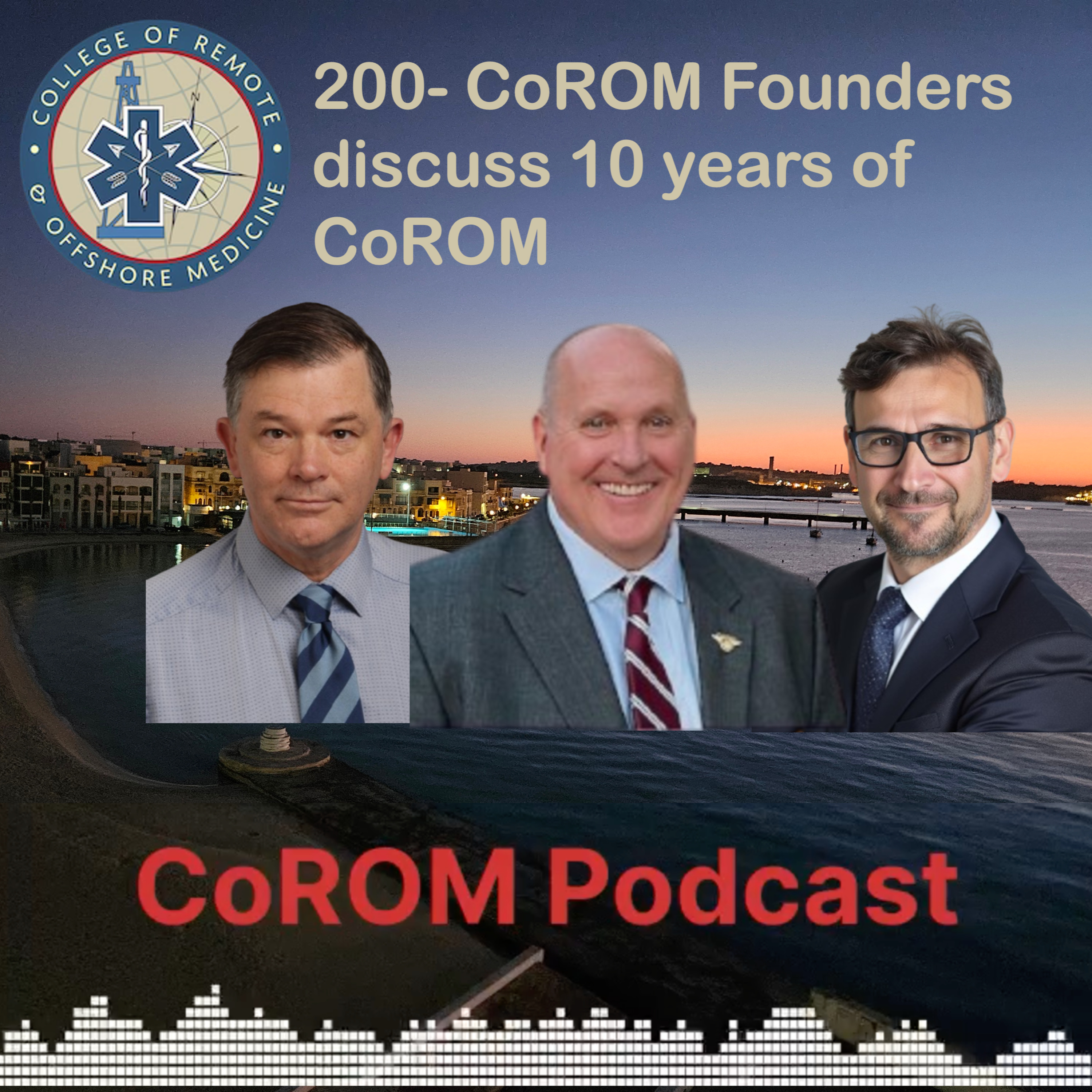
200-CoROM Founders discuss 10 years of CoROM

This special 200th episode of the CoROM podcast celebrates four years of continuous weekly episodes and reflects on the journey of the College of Remote and Offshore Medicine. Founder Aebhric O’Kelly is joined by fellow founders John Clark and Dr Csaba Dioszeghy to discuss how CoROM began, why Malta was chosen as its home, the growth of the organisation over the past decade, and the vision for the next five years. The conversation explores CoROM’s evolution from a small training organisation into an internationally recognised higher education institution serving students from more than 30 countries across five continents. Chapters 00:00 Introduction and celebrating 200 podcast episodes 00:50 How the three founders came together 01:20 Why CoROM moved to Malta 03:40 Malta’s medical history and its connection to CoROM 08:10 Why Pretty Bay became CoROM’s home 10:20 Historical medicine in Malta and the Hospitallers 12:00 Growth of CoROM over the past three years 13:00 Launch of the Doctorate in Health Studies (DHS) 14:00 The impact of the CoROM podcast 15:00 Building a non-profit educational institution 15:50 The origins of Remote Medicine Ireland 20:00 Student growth and global reach 22:40 Medicine in the Mediterranean (MIM) Conference 26:30 The CoROM family culture 28:20 Looking ahead: the next 12 years 28:40 John Clark’s five-year vision 34:00 Dr Csaba Dioszeghy’s five-year vision 38:00 Keeping education affordable 39:00 Impact stories from Tanzania 40:20 CoROM’s mission and global influence 41:40 Reflections on 200 podcast episodes 42:30 Closing remarks Key Discussion Points Why Malta? The founders discuss the circumstances that led CoROM to Malta in 2014. What began as an opportunity to support paramedic education evolved into the establishment of a permanent educational institution. Malta’s strategic location, English-speaking environment, rich medical history, and accessibility for international students all contributed to the decision. John Clark highlights Malta’s historical identity as the “Hospital of the Mediterranean” and its longstanding connection to military and austere medicine traditions. Building CoROM Aebhric reflects on the origins of Remote Medicine Ireland and how frustration with expensive, poor-quality educational programmes motivated the creation of something different. The founders describe the progression from wilderness medicine courses to paramedic education, postgraduate programmes, and doctoral-level education. Global Reach CoROM currently serves more than 160 students from over 30 countries across five continents. The founders discuss the importance of maintaining a truly international perspective while preserving a close-knit educational culture. Medicine in the Mediterranean (MIM27) The founders discuss the rapid growth of the Medicine in the Mediterranean conference, which has become a recognised gathering point for practitioners interested in remote, austere, wilderness, expedition, military, and offshore medicine.

0:00-40:02

transcript

No transcript — this publisher did not publish one.

show notes

This special 200th episode of the CoROM podcast celebrates four years of continuous weekly episodes and reflects on the journey of the College of Remote and Offshore Medicine. Founder Aebhric O’Kelly is joined by fellow founders John Clark and Dr Csaba Dioszeghy to discuss how CoROM began, why Malta was chosen as its home, the growth of the organisation over the past decade, and the vision for the next five years.

The conversation explores CoROM’s evolution from a small training organisation into an internationally recognised higher education institution serving students from more than 30 countries across five continents.


Chapters

00:00 Introduction and celebrating 200 podcast episodes

00:50 How the three founders came together

01:20 Why CoROM moved to Malta

03:40 Malta’s medical history and its connection to CoROM

08:10 Why Pretty Bay became CoROM’s home

10:20 Historical medicine in Malta and the Hospitallers

12:00 Growth of CoROM over the past three years

13:00 Launch of the Doctorate in Health Studies (DHS)

14:00 The impact of the CoROM podcast

15:00 Building a non-profit educational institution

15:50 The origins of Remote Medicine Ireland

20:00 Student growth and global reach

22:40 Medicine in the Mediterranean (MIM) Conference

26:30 The CoROM family culture

28:20 Looking ahead: the next 12 years

28:40 John Clark’s five-year vision

34:00 Dr Csaba Dioszeghy’s five-year vision

38:00 Keeping education affordable

39:00 Impact stories from Tanzania

40:20 CoROM’s mission and global influence

41:40 Reflections on 200 podcast episodes

42:30 Closing remarks

Key Discussion Points

Why Malta?

The founders discuss the circumstances that led CoROM to Malta in 2014. What began as an opportunity to support paramedic education evolved into the establishment of a permanent educational institution. Malta’s strategic location, English-speaking environment, rich medical history, and accessibility for international students all contributed to the decision.

John Clark highlights Malta’s historical identity as the “Hospital of the Mediterranean” and its longstanding connection to military and austere medicine traditions.

Building CoROM

Aebhric reflects on the origins of Remote Medicine Ireland and how frustration with expensive, poor-quality educational programmes motivated the creation of something different. The founders describe the progression from wilderness medicine courses to paramedic education, postgraduate programmes, and doctoral-level education.


Global Reach

CoROM currently serves more than 160 students from over 30 countries across five continents. The founders discuss the importance of maintaining a truly international perspective while preserving a close-knit educational culture.

Medicine in the Mediterranean (MIM27)

The founders discuss the rapid growth of the Medicine in the Mediterranean conference, which has become a recognised gathering point for practitioners interested in remote, austere, wilderness, expedition, military, and offshore medicine.