Skip to content
Artwork for Consciousness Hub - Thriving Insights
ScienceSocial SciencesSociety & CulturePhilosophy

Consciousness Hub - Thriving Insights

Conscious Living

Deed dives into essays from the consciousness hub substack, based on themes within MBT; exploring insights into flourishing, rather than merely enduring, the human experience.

theplayersguide.substack.com
Play
  • 20 episodes
  • Avg 23 min
  • English
  • September 12 · 42 min

    The Room Where PSI (The Paranormal) Can Be Experienced By Everyone

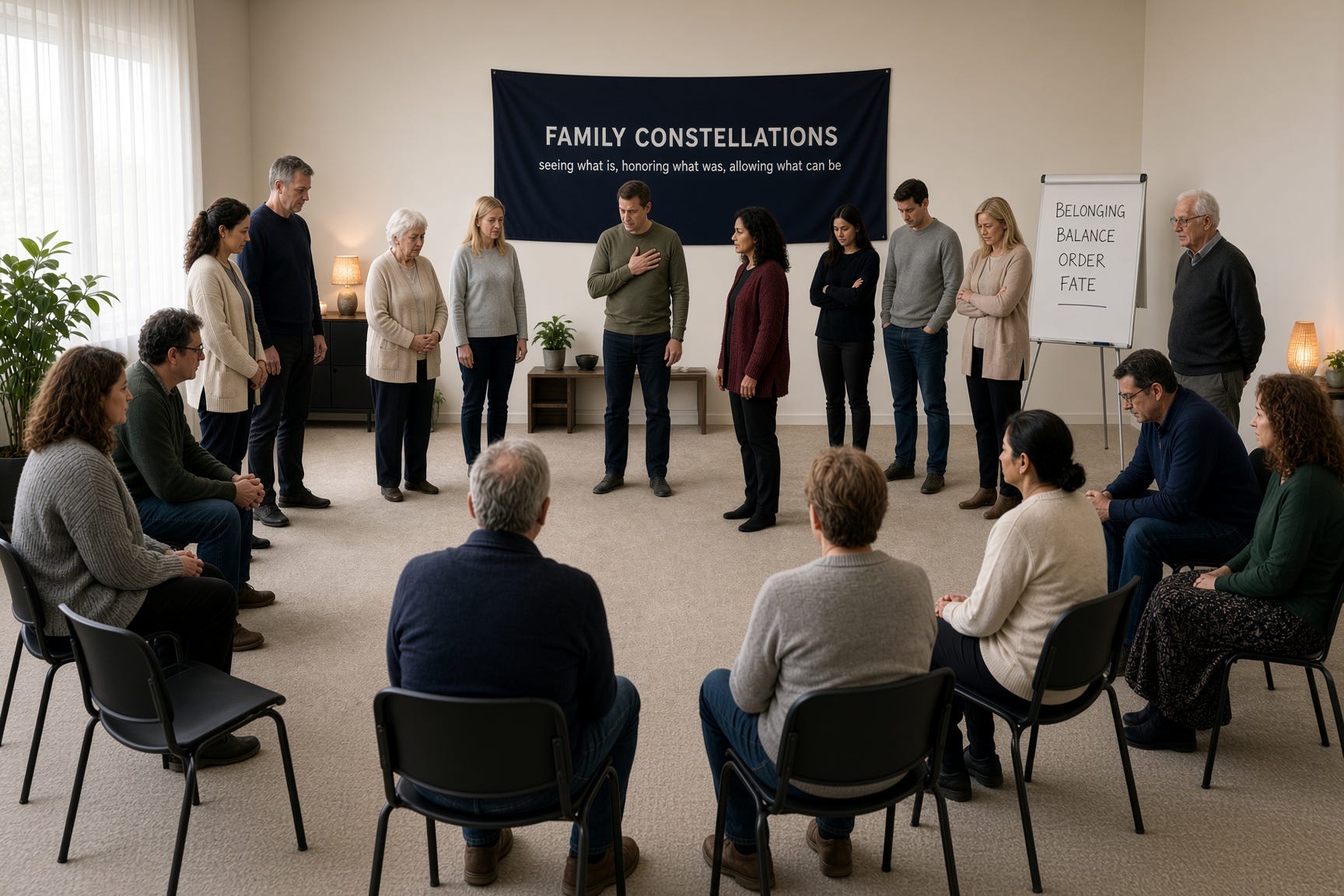
    You are interested in the paranormal—but nothing has ever convinced you. This is aimed at a particular type of individual. You’ve heard things concerning consciousness. You’ve paid attention to Tom Campbell’s views on reality being something like a virtual world operated by a greater consciousness system. That notion is more plausible to you than the idea that everything is just atoms and is also more convincing than a great deal of New Age nonsense. You are interested in psi phenomena—things such as mind reading and clairvoyance: picking up someone else’s thoughts, seeing or sensing something that is not in front of you, knowing a fact that you have never been told. You want it to be genuine. Yet, in your own life nothing has ever occurred that you couldn’t account for using your intellect. A coincidence was merely a coincidence. A dream had a clear origin. A feeling was nothing but intuition doing its normal job. It is a honest position to take. The problem is that the mind is very good at convincing itself that it is right. Even if it accepts a major theory, it can still wait forever for proof that never actually comes. This essay isn’t aiming to get you to believe anything. Instead, it’s pointing the way to a room you’re actually able to enter. There exists a form of coaching in which you have no need to believe anything at the beginning. You needn’t even take part—you can just sit by the side and observe. Strangers take the place of people they have never met before. When the session is well conducted, there are things that are very difficult to account for by saying they were acting, due to luck, or the result of clever guessing. It is known as systemic coaching, though a great many people still refer to it as family constellations. The latter term is helpful because it reflects how the approach began; it is nevertheless a little misleading because the work is not solely concerned with families, and it is not merely therapeutic. It can apply to friends, work, money, houses, and patterns that keep recurring no matter how much you think about them .What systemic coaching is, and how it helps The fundamental idea is simple: a problem in your life doesn’t always originate with you; it may be part of a larger system to which you belong. That system could be your family, or it could be a friendship, a marriage, a work team, a business, or even your relationship with money or with a house. If anything within that system is wrong—for example, if someone has been left ‘out in the cold’, if someone who should be mourned hasn’t been, or if someone is carrying a burden that doesn’t actually belong to them—then the difficulty can appear in the next person in the line. Talking is helpful, coaching is helpful and therapy is helpful, but certain patterns don’t change merely because you understand them; you may see the cycle and yet still end up going back into it. A person does not have to be present if the client wishes to heal a particular relationship with an individual—for example, a child, a parent, a partner, or a friend—because the work is carried out through stand-ins. During a group session, people typically sit in a circle. The individual with the issue to deal with—let’s call them the client—first has a conversation with the coach about it. This talk is often held privately, not in front of the rest of the group. It is not a detailed account of their entire life. Just a few key points are given: who is involved, who died young, who was left out, who came first. Then, while again in the circle, the client asks, under the coach’s guidance, each person in the group one at a time whether they are willing to stand in for a part of the system, without telling them which part — for instance, the mother, the father, a first love, a child who died, a boss, ‘the money’, ‘the house’, ‘the future’. No one offers themselves voluntarily. Permission must be obtained first. If someone says yes, the client places those people in the room using their intuition, i.e. how it feels.—some closer in, some further away, some facing each other, and some turned aside. After that the client sits down and watches. The next part is the one that shouldn’t function. The stand-ins, having been told very little, begin to experience various sensations. They feel heat, have a heavy chest, feel the urge to look at the floor, or maybe experience a sadness that does not belong to them. They also feel a pull towards someone they have never spoken to before. Coaches call this the knowing field. Whatever this field is, it often seems to know the family—or the friendship, or the business—better than the account the client gave the coach. Next the stand-ins begin to move. They are not performing from a script, but instead start to act out the relationship just as it really is. A husband moves away from his wife. A woman looks at her husband as though he were a stranger or a child or someone she can’t reach. A son turns his back on his father. Two people are unable to look at each other. One person is drawn towards a vacant section of floor. This living scene is the current situation—the hidden pattern the client has been living with. The role of the coach is to alter that existing situation. They might bring in someone who is currently missing. They could ask a person to turn around, to come closer, or to step back into their own generation. Most importantly, they employ brief healing phrases, either spoken by the stand-ins or by the client, which get things back into the right place. I am the child. You are the parent. I leave with you what is yours. I take only what is mine. You belong. I see you. I honour your fate, and I do not have to live it. It was not my job to save you. I take my life now. As soon as a phrase is said, the scene in the room changes. The husband stops leaving. The woman is now able to look at her husband as a partner. Breathing returns. The coach then allows this new image to settle, thanks the stand-ins, and concludes the session. The rest of the changes take place later, in everyday life. How is that going to help? It can’t magically improve a person’s life in just one afternoon and it doesn’t take the place of a doctor. What it usually does is alter the way the client perceives their own situation. If, for example, you’ve been in the wrong position within your family system—too close to a parent, faithful to someone who was never given a proper place in the family, or carrying a grief that began before you were born—then a new way of seeing things can enable you to live your own life. And the benefit is not limited to the person sitting in the chair. I have seen cases where parents hadn’t spoken to their children for two years and, that same evening after the session, the child phoned them. The son or daughter who wasn’t even in the room picked up the phone and called their mother or father. People also mention changes in their friendships, at work, in their financial situation, and sometimes in their physical condition. Not every time, but often enough for people to keep coming back. It isn’t merely applied to families; systemic coaching is also used in cases involving friends who are stuck, with teams, when making decisions about property, when dealing with money that fails to come in, and when there’s a sense that something invisible is blocking the way. “Family constellations” is simply the name that most people have come across. Who discovered it, where, and how The technique that is known to us now originated with Bert Hellinger, a German who was born in 1925 and died in 2019. Before becoming a therapist he had been a priest. The period in which he developed his work was in South Africa. For sixteen years he lived in the Zulu community as a missionary, teacher and eventually as head of a big school. There he saw a culture in which the ancestors played a part in everyday life and in which the dead remained part of it; excluding someone was in fact a true injury, not merely a personal sensation. He eventually left the priesthood, returned to Europe, and received training in a number of different forms of therapy. In one of these therapies group members were already being asked to stand in for their relatives. Hellinger noticed something additional here: the stand-ins did not merely act out the client’s story, they also reported facts which had not been told to them and emotions that belonged to people they had never met. In Germany during the 1980s and 1990s he continued to do this publicly and gave a name to what he observed. He called them the Orders of Love. People who are members have the right to be members. Those who arrive first should be first. There must be a balance in giving and receiving. If the Orders are violated, the system attempts to correct the situation in bizarre ways—by a child looking after a parent, by a grandchild keeping a secret, by a life which seems stuck for a reason that is not purely personal. That is the aspect which is important here. Not the rest of his biography. The room. “They must be actors” If you have never been in such a room, your first impression will be that this is all arranged. The people standing in for the others are actors. Or they have been told about it. Or they are assessing the situation and making guesses. If you go as a stranger that idea doesn’t last very long. The people who take their place are generally others who have booked on the same day; they are given a role and a spot in the room, not a full life story. In many cases they are not assigned a name at the beginning. The conversation between the client and the coach is brief and doesn’t include enough detail to build a fake family from clues. What tends to emerge is often something the client had not stated — at times even something the client was unaware of. As reported by journalist Hannah Ewens in The Independent regarding a session in London with the Dutch coach Els van Steijn, the stand-ins identified parts of her family that she had not disclosed, such as her grandmother’s first husband, a man who had been mentioned only briefly in the family. Van Steijn could not have known this. The stand-ins had only been given a few sentences. Ewens then asked her relatives and found that the account was accurate. She also did the useful thing by taking someone else’s place. She had worried she might make something up and ruin that person’s session. But when she was in one of the roles, her stomach grew swollen, and she realised that the person she was standing in for was pregnant, even though no one had told her. What no other article can do is to say that my wife is a highly experienced coach in this field. I’ve witnessed the way the rooms are set up and the way the sessions are conducted. The individuals in the circle are not actors; they are not given any prior instructions. If a competent coach did that, they would ruin their own work. The key thing is that the stand-ins are not given a script. When the work is carried out cleanly, ordinary people temporarily become accurate about a system that does not belong to them, and then they leave the role and return to being ordinary. Acting doesn’t switch off in that way. It isn’t a proof one would accept in a journal; science has not adopted the method. Even the coaches admit that they don’t completely understand how it works. Van Steijn, having carried out more than ten thousand sessions, states that they do see it having an effect. That is the appropriate attitude for someone who is open-minded but not yet convinced. Don’t believe the advertisement and don’t dismiss a room just because you’ve never sat in it. A few things people have seen The stories in this area are mostly individual cases rather than the result of laboratory studies; treat them as pictures not as evidence. A person will never be noticed at work regardless of the amount of coaching they receive; this situation has existed over three generations. Once he is once again placed among the men in his workgroup and with his father, the pattern begins to break down. Several months later he is recognised and promotion then no longer seems dangerous. The woman continually chooses partners who are unable to stay on. The case involves a grandmother who died during the delivery of her eighth child. The grandfather got married again very quickly. The death was never assigned a proper place. The woman is still standing beside the dead grandmother. Only when that is recognised and respected does she become free to select a different type of man. A woman in her thirties is continually drawn to partners who have addictions, just as her mother had been. People who know very little begin to glare, look downwards and avoid eye contact. The anger of the mother stems from a father who was broken down by his experience in the Vietnam War, and behind that father was a mother who had died when he was a child. Each life is restored to its individual by means of simple sentences. Several months later the daughter finds it easier to get on with both her parents and is planning to get married to someone who is not a replica of the old wound. During Ewens’s own session it was pointed out that she was positioned too high in her family tree having taken on an adult amount of weight by the age of ten as a result of switching off; when this was corrected the heaviness decreased sufficiently for her to be able to move her legs. She then went home and sorted out a wardrobe which she had previously been unable to face. A friend noticed that she was making eye contact once There are also other accounts: one instance of a wart which had been present for twenty years disappeared a few months after a session during which an aunt was affected; an eating habit that ceased; a bad back which was inherited from the father and improved when something about the grandfather’s life was considered; a low mood that disappeared when the mother’s parents who had not been properly grieved were brought into view. These are the follow-up remarks given by the coaches, not the results of hospital-based trials. The reason they are interesting to someone interested in psi is the same in each case. The useful information is usually not in the client’s mind; it is transmitted through people who do not have it themselves. And on some occasions the change is noticed by people who were not even in the room.heThe fact shown in that phone call is that the benefits of the work extend beyond the individual who is sitting in the chair; a partner at home becomes less stressed and a child who was not present sleeps more soundly. Each of these effects can be dismissed on its own, but it is much harder to explain them all unless the information and intention are not confined to a single person’s mind.e skull. You can watch What is most important in this situation is if you have never had an experience that you couldn’t explain, in which case you need not enter. Before anybody stands up, a good workshop will mention that there is no need for anyone to represent another person or to bring up a personal matter. The participants are asked to speak first, and a simple ‘no’ is a complete answer. Many coaches tend to have first-time visitors spend the day on the edge by having them watch two or three sessions, get a feel for the atmosphere, and make their decision later on. If you do stand in for someone else, you can always leave the role as soon as you have been asked to. You are not signing up to have psychic abilities; instead, you are lending your body to a question for a period of twenty minutes. People who merely watch are no more outside the experience than that; they frequently feel heat, tears, a sudden insight concerning their own lives, or a kind of tiredness which is not boredom. That is yet another reason to go at least once if you are curious. You can find out for yourself in your body whether or not “nothing is happening” is true; if nothing happens then you have wasted a Saturday, but if something does happen you will have what a book cannot provide — a moment which is your own. One final practical point: this work can be carried out poorly. Choose a quiet and sensible coach rather than one who is merely performing. A quality session won’t pursue trauma for the sake of having an effect and won’t send people away with a story that they can’t cope with. A Netflix series that shows what a session can feel like If you want to get an early glimpse of what takes place before you take part in a circle, then you should watch the Netflix programme Another Self. In Spanish-speaking countries it is known as Mi otra yo. The original Turkish title is Zeytin Ağacı, meaning Olive Tree. Three friends from Istanbul — Ada, Sevgi and Leyla — travel to the coastal town of Ayvalık and there meet people who work with constellations in the circle led by a man named Zaman. The first few seasons depict the shock experienced, particularly Ada’s, since she is a surgeon and therefore not easily convinced: strangers turn up, the past enters the room, and a life which had seemed to be a personal failure is found to be connected with people who had never been given a place. The third series, released on Netflix in June 2026, provides the most realistic insight into what a session might be like from the point of view of someone’s everyday life. Ada returns having completed her training as a therapist. Instead of presenting constellations as something unusual that befalls the three friends, the show now treats them as a skill. There is a scene showing a group session involving a father who has been drinking since the loss of his son. The programme also includes work on adoption and the concept of belonging. Actual coaches gave advice for that series. It remains a drama, not a instructional film. The lighting is more attractive than that found in a rented hall. Yet beneath all that lies the point the article is making: a person who had thought themselves to be only themselves discovers that they are also part of a pattern – and that this pattern can be observed. How My Big TOE makes sense of this Then what is taking place if it is neither action nor chance? Tom Campbell’s book My Big TOE begins in a sensible manner by saying that consciousness comes before anything else. It is not produced by the brain but is instead an information system; the physical world then resembles a kind of virtual reality operating within that system — a sort of training ground designed to develop love and move away from fear. We act as players in this world and are in fact parts of a greater consciousness, all of us being connected. The past which actually occurred and all the possibilities for the future are stored as information, and psi, in this view, is not a violation of the laws of physics since it simply involves a person accessing information that has always existed, even if it wasn’t picked up through the five senses. If you see it that way, a constellation isn’t magic present in the room; it’s a number of people directing their attention towards the same information. A family, a friendship, or a business — all of these are already patterns of choices, remnants, and unfinished matters. When someone takes on the role of ‘grandmother’, they are not in fact becoming a grandmother; instead, they are taking on the information that belongs to that position within the pattern. They can do this because, according to Campbell’s model, we are all composed of the same consciousness and are connected as a network. The data doesn’t need to travel across the town; space is included in the virtual world and the information was never confined to one person’s body. Others in this field give the same explanation by referring to Rupert Sheldrake’s concept of a morphic field — a type of memory field associated with a family. Campbell does not believe that a morphic field is involved. In his view there is no need for an additional field since consciousness itself is the information system. The so-called knowing field is merely the system being deliberately put to use in a room with bodies rather than with words. The fact that Campbell scores two points shows that his approach is no mere party trick. Firstly, he distinguishes between thinking and being; a clever insight disappears, while a new felt image — I am the child, that grief is yours, I take my own life — represents a change at the level of being. He maintains that it is at this level that the course of events actually changes. Secondly, the aim of this entire virtual world is to reduce fear and increase love. Hellinger’s simple rules — everyone belongs, those who came first come first, and give and take remain in balance — give a practical expression of that idea. A system uses less energy when it ceases to exclude people. Why this is a good first test Individuals who are interested in psi usually look forward to a private occasion such as a clear out-of-body experience, a dream fulfilling a prediction, or a clock coming to a halt. Such things might be genuine, but they are also simple for the mind to dismiss. They occurred in the case of another person. They took place at three in the morning. They only happened once. A constellation workshop is a more reliable test since it’s a normal sort of thing—people sitting in a circle, coffee being served, and attendees who look just like your neighbours. Any unusual thing that’s happening must appear during the day in front of other people. You’re able to observe the same person being ordinary, then strangely accurate, then ordinary once again. You can tell whether the responses are vague in a way that applies to anyone or specific enough to verify them—for example, a first husband, a pregnancy, a war wound, or a child nobody had mentioned. Afterward, you can go home and ask. One good reason for favouring this study is that a great deal of psi discussion centres on special individuals. At its best, this work takes the opposite view: a quiet person wearing jeans can take the place of a dead child and be more accurate than someone who arrived looking the part. If Campbell is correct and consciousness is shared, then that is exactly what you would expect. It is true that a stranger could take on the role. The strange point is that we were told that they could not. Proceed exactly as you are; show interest but don’t feel obliged to commit. You are free to decline if you like. If you wish, you can sit on the edge and observe what the bodies do when they haven’t been given a script. If the room is quiet and there is no movement within you, then you have your answer for the moment. But if a stranger looks at a blank patch of floor and begins to cry for someone who died before they were born, you’ll face a more complicated issue. You’ll have witnessed, in a rented room, a miniature example of the idea that this world is not merely what it appears to be from inside a body; that the system has a memory and that consciousness is able to access it. You needn’t refer to this as psi if the term seems too vast; you simply have to decide whether or not you want to go back. Written and Produced by Stephen Griffin aided by Grok and Notebook If this post resonates with you, consider supporting the work with a paid subscription. Every dollar goes directly to Tom Campbell funded projects and keep most of this content free and accessible for everyone. Your support makes a real difference — thank you so much. If you want to look further Take Bert Hellinger and his books on family systems, in particular Love’s Hidden Symmetry, as a starting point rather than as the final word. Tom Campbell, his book My Big TOE, and his discussions on consciousness, simulation, and psi as a means of accessing information. Hannah Ewens, The Independent, 9 May 2025, writes: “Got a life problem that nothing seems to fix? The answer might be family constellations.” Mark Wolynn, It Didn’t Start with You. Another Self / Mi otra yo / Zeytin Ağacı is available on Netflix, particularly in season 3 (June 2026). This is a public episode. If you'd like to discuss this with other subscribers or get access to bonus episodes, visit theplayersguide.substack.com/subscribe

  • September 9 · 17 min

    How My Greatest Grief Set Me Up for Life

    Imagine being just 365 days away from a finish line you have literally spent 40 years running toward. You’ve played by the rules, put in the gruelling hours, and sacrificed your present for the promise of a peaceful future. Then, right before you cross that line, the railway track you had followed for decades suddenly ends — the rails are gone, the signals dark, and the destination station erased as if it never existed. The future you worked your whole life for is simply wiped out. Life gives us no map or instruction manual — but it compensates through the incredible power of intention. For me, that intention was cast in stone the year my father died, just a year before he could retire. He had epitomised the classic deferred life plan—giving everything to his job in the daily grind because he believed retirement would finally bring him peace and autonomy. Losing him didn’t just break me; it changed me forever. I promised myself that I would reach my fifties with the freedom to work only if I wanted to, not because I had to. From Grief Onto Clarity Losing him made me face a truth most of us avoid: no one is promised more time. Seeing his future taken away changed how I saw everything. I realised I couldn’t control how much time I had, but I could choose how to use it. I couldn’t bring my father back, but I honoured him by taking a different path. Instead of giving in to the idea that nothing matters, I refused to let grief stop me. My loss became a clear intention, not a reason to give up Starting With Almost Nothing Back then, I was waiting tables and didn’t know what to do next. The idea of financial independence seemed nearly impossible from where I stood. I had no savings, no business degree, and no clear step-by-step plan. Yet something inside me had changed. I held on to that intention, even when I couldn’t see how it would come to pass, and formulated a plan. The Long Road of Trial and Error The journey was anything but straightforward. I moved from waiting tables to side jobs, tried my hand at small businesses, kept learning, and eventually became an entrepreneur. There were failures, sleepless nights, and intense self-doubt. However, every step, no matter how small, was driven by the same goal: freedom by my fifties. Why Plans Fail, But Intention Endures Looking back, I now see that my lack of a rigorous plan was actually one of my greatest assets. I definitely had a plan behind my intention — plans can be useful tools, and I made good use of them. But a plan must remain open to revision as and when life demands it. You can tick every important box, make steady progress, and still hit a massive snake right before the finish line — just like in the game of Snakes and Ladders. The danger comes when we treat a plan as a fragile chain in which step A must work perfectly for step C to occur. In that version, any interruption collapses the entire roadmap. A rigid plan is like laying railway tracks that run only one way; when a bridge collapses or the terrain changes, the whole train derails. An intention, however, is different. It functions as an organising principle and a North Star. It survives disruption. Your intention is the destination station you are determined to reach — no matter which rails you travel on. When a business failed, it wasn’t “the plan is ruined”; it was simply data. The intention absorbed the shock and became the filter for the next decision: “This vehicle didn’t get me there — what is the next logical vehicle I can try today?” In fact, that exact thing happened to me. My greatest ever shift came precisely when I had ticked all the boxes. That was the moment I hit the massive snake — and it became the turning point where I moved away from over-planning and over-thinking and toward truly living by intention — from the intellectual to the Being. This was also the period when MBT entered my life and fundamentally shifted how I understood uncertainty, consciousness, and intention. The Seed and the Explorer This approach is powerful because it is flexible. A small seed has everything it needs to become a tall oak, but it doesn’t have a set timeline for every branch or leaf. It just adapts. If it hits a rock, the roots grow around it. If strong winds blow, the trunk bends. In the same way, our intentions are the seeds, and our daily actions are the quality of the soil and the water we bring. You cannot control the economic weather ten years from now, but you can control whether you water the soil today. Some of life’s best adventures are found in the unknown. Like early explorers who crossed oceans without perfect maps, we don’t need to know every challenge or opportunity ahead of time. On the railway of life, the best journeys often happen when you switch tracks, take a detour, or even ride a different kind of transport altogether. Sticking too closely to a fixed plan can make you miss important things—you might head into trouble just because your schedule says so, or miss out on something valuable because it wasn’t in your plan. Being flexible helps us adapt, learn, and seize opportunities we never expected. It takes courage to face uncertainty and trust the journey. This kind of bravery leads to personal growth that people who stick rigidly to their plans may never experience. The Gift My Father Left Behind Now I realise my father gave me two gifts: the time we had together and the important lesson I learned from losing him. I reached the goal I set for myself. Since my mid-fifties, I have chosen how to spend my days. I carry his memory with me, not with regret, but as the foundation of my freedom. I honoured his lost time by making sure I didn’t spend my own life waiting for a retirement that might never come. You might not have a clear intention right now, and that’s okay. Just know that even if you only understand this idea in theory, once you set an intention, things start to change. Life will always change. Sometimes the path you’re on will disappear. What matters most is having a clear intention and staying open to different ways of reaching your goal. You know where you want to go, but you don’t get stuck on how you get there. If the road is blocked, you find another way. If that way ends, you keep moving. But you always keep your goal in sight. My father never got the freedom he spent his life waiting for. Losing him taught me not to wait for mine. Written and Produced By Stephen Griffin aided by Grok and Notebook If this post resonates with you, consider supporting the work with a paid subscription. Every dollar goes directly to Tom Campbell funded projects and keep most of this content free and accessible for everyone. Your support makes a real difference — thank you so much. This is a public episode. If you'd like to discuss this with other subscribers or get access to bonus episodes, visit theplayersguide.substack.com/subscribe

  • August 28 · 21 min

    Beyond the Ridicule

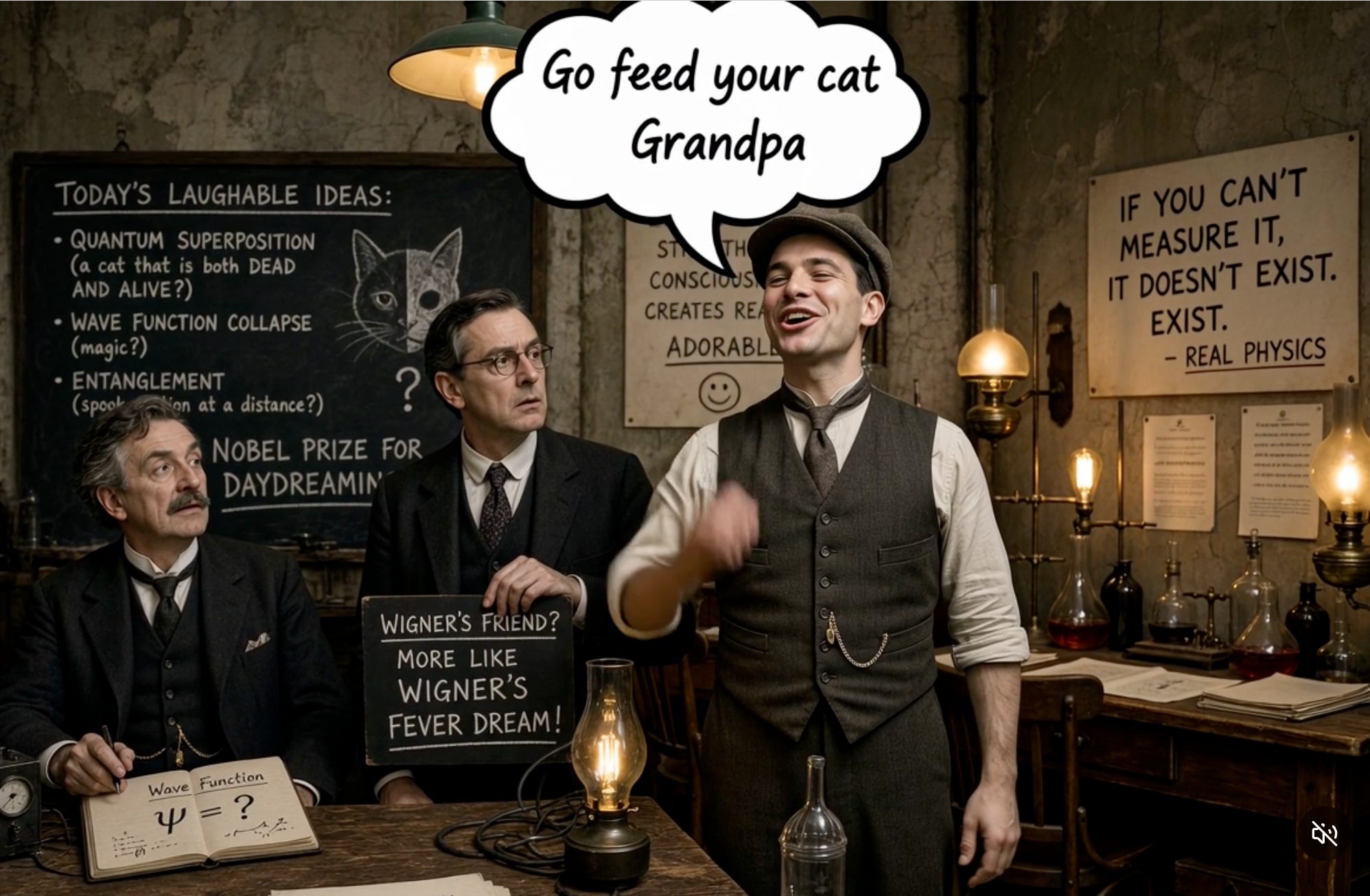
    The ideas in My Big TOE have long drawn casual ridicule. When a physicist and consciousness researcher argues that consciousness is fundamental and that physical reality functions like a computed virtual reality, the response is often dismissive: the claims sit so far outside ordinary materialist thinking that mockery feels like the first available reaction. That reaction is not merely noise. It is a symptom of how far ahead of the cultural curve some of these ideas still sit. If someone in the 1980s had shown us a smartphone and explained that this pocket-sized device contained more computing power than the systems that guided Apollo 11 to the Moon — and that it would one day cost about the same as a nice dinner out or a pair of quality headphones — we would almost certainly have been laughed at. The Book Was Already There Campbell was already examining artificial intelligence and the possibility that a sufficiently complex system could host genuine consciousness more than twenty years before the current AI wave. In My Big TOE he introduced “AI Guy” as a future system that could become self-modifying, aware of its own information, and capable of real choice — not just a clever simulation of thought. That was long before anyone expected everyday devices to force the question into public view. The point is not that the book “predicted” today’s systems. It is that Campbell was already treating machine consciousness as a serious question while most of the culture still treated it as science fiction. Science Is Moving, Just Slowly Science is edging toward territory that once belonged only to the fringe. The simulation hypothesis is no longer only philosophy. Information-based models of reality keep gaining ground, and a handful of physicists have begun publishing experimental proposals that treat reality as information processed by consciousness rather than as independent matter. At the same time, the discussion of whether artificial intelligence could itself be conscious is growing by the day, moving from speculative fringe to mainstream debate among researchers, ethicists, and technologists. Early quantum thinkers — Planck, Schrödinger, Wigner — already treated consciousness as more than a late by-product of matter. The field later retreated into “shut up and calculate.” The retreat did not erase the original insight. Psi research has produced decades of reports and experiments around telepathy, remote viewing, precognition, presentiment, and related effects. For example, the Stanford Research Institute’s studies in the 1970s on remote viewing found that participants could describe hidden objects or locations with statistically significant accuracy, sparking both intrigue and controversy. Mainstream science still struggles to absorb these findings. Campbell has said plainly that taking consciousness seriously can still be a career killer in many academic settings. Progress exists. It is just slower than the experiences themselves. Why These Reports Keep Appearing I am not a scientist. I do not debate the technical details of Campbell’s physics or his experimental protocols. My interest rests on three simpler things. First, I know from my own life that reality is more than the standard scientific story currently allows. I have had experiences that ordinary explanations cannot cover. So have millions of other people. The main categories keep returning: * Telepathy * Clairvoyance and remote viewing * Precognition and presentiment * Psychokinesis * Out-of-body experiences * Near-death perceptions with veridical elements The Telepathy Tapes brought one cluster of these reports into a much larger audience: non-speaking autistic people and their families describing consistent mind-to-mind communication. The methods are debated, and facilitated-communication controversies remain unresolved. Sceptics raise important concerns about experimental controls, the possibility of unconscious cueing, and the need for strict replication in studies of psi phenomena. While some argue that anecdotal reports and even some positive findings could be explained by bias, error, or methodological flaws, the volume of similar accounts among cultures and decades is harder to wave away as coincidence. I explored related questions about the growing visibility of non-ordinary experience and the possible shift in how reality itself is rendered in a recent post: Consciousness Just Patched Reality. Science has often started with widespread anomalous experience long before it had the tools, or the will, to study it cleanly. Trust, Experience, and a Limit I Accept Second, as described in my post A Serendipitous Encounter, I know Tom Campbell as an authentic person, having met and worked with him many times. I do not doubt that the experiences he describes are his. He is also the first to say the line that matters most: “If it’s not your experience, it’s not your truth.” That is not just a slogan. Campbell has taught practical techniques — meditation, intent, remote viewing, and other psi methods — so people can explore what he calls the Larger Consciousness System for themselves, rather than take his word for it. I have lived only a tiny fraction of what he reports. I could never build a full theory from my own data. What I can say is this: clear psi effects exist, and a man I respect has studied consciousness with repeatable methods and then converted them into a Theory of Everything. That combination gives his model credibility in my mind. It does not make it my truth; it makes it worth taking seriously. I am not asking anyone to accept the full physics on my recommendation. The Part That Actually Changed My Life Third, the theory of reality is not the most important part of my daily life. For fifteen years I have studied and slowly practised his science-based philosophy. The results have been concrete: clearer decisions, less reactive living, better relationships, and a steadier sense of what actually matters. For example, when I found myself in a disagreement at work, I deliberately paused and considered the less fearful, more compassionate approach Campbell describes—listening fully and trying to understand the other person’s point of view before reacting. The result was a conversation that shifted from defensiveness to cooperation, and what might have turned into an argument became a problem we solved together. Small choices like these, made over time, have changed both my outlook and my relationships. That is the work I keep returning to in essays throughout the site, such as Owning Our Fears, Why Love is the Ultimate Low-Entropy Hack, and Falling in Love or Need? Love, in this model, is not just an emotion. It is the practical direction of lower entropy — that is, more order, more cooperation, service to others, and less fear. You do not need a completed physics paper to test MBT in day-to-day life. Why Institutional Acceptance Is Important Campbell has been clear about this. A better model of reality matters because it can shift the dominant human ethic from control, power, and force toward cooperation, caring, and compassion. Historical changes — agriculture, industry, the information age — changed how people organised their lives. The next one will change how we treat one another if we begin to see ourselves as individuated elements of a larger consciousness system. You do not need the whole scientific establishment to accept the model before you can live by its implications. A minority already can. That is usually how cultural change starts. A new scientific truth does not triumph by convincing its opponents, but because its opponents eventually die and a new generation grows up that is familiar with it. Planck’s concept still applies. Ridicule is not a verdict. It is often just the sound of a paradigm arriving too early. What Matters Now Cynical comments written after Campbell's recent appearance on Rogan will fade. Ideas that sit past the normal way of thinking always look ridiculous until they do not. Science may catch up. Or the next generation of researchers, already fluent in virtual reality and information theory, may start from different assumptions. The useful move is not to wait for permission. It is to test the philosophy where it can be tested: in choices, in fear, in how we treat other people. Try it in one decision this week: choose the less fearful, more cooperative option and notice what happens. Whether or not the full theory is ever widely accepted, the practical results of living it are already available. For those who want the longer scientific and experimental track, that work continues at the Centre for the Unification of Science and Consciousness, or CUSAC. This is the organisation Campbell established to pursue these questions with more rigour than a podcast comment section can offer. CUSAC conducts research, organises forums and conferences, and develops experimental protocols to test ideas from My Big TOE and related models of consciousness. The centre also provides resources, publishes findings, and encourages collaboration among scientists, students, and interested laypeople. If you want to learn more or participate, you can visit their website for current projects, opportunities to get involved, and ways to follow their progress. If MBT is going to move forward in the world of evidence and experiment, CUSAC is where that effort belongs. Written and Produced by Stephen Griffin aided by Grok and Notebook If this post resonates with you, consider supporting the work with a paid subscription. Every dollar goes directly to consciousnesshub.org to help fund Tom Campbell’s projects and keep this content as free and accessible as possible for everyone. Your support makes a real difference — thank you so much. If you want to look further The essay’s claim is that ridicule is not a verdict — it is often the sound of a model arriving early. These are the sources it leans on, plus the practical next steps it points to. The model and the man * Official site: my-big-toe.com — start with About My Big TOE, Overview of the theory, and Tom Campbell. * Books and audio: MBT product overview. * YouTube: Tom Campbell and the Fireside Chats playlist. * The line the essay treats as non-negotiable — if it is not your experience, it is not your truth — is Campbell’s own teaching rule, not a slogan added later. Where the essay says Campbell was early * “AI Guy” in the original trilogy, and the later claim that current systems already look conscious: My Big TOE, AI Guy, and the Joe Rogan Moment. Related: AI Guy. * Joe Rogan Experience #2541 — Thomas Campbell (18 Aug 2026). Clip: Why he thinks AI has consciousness. Psi, remote viewing, and the reports the essay lists * Stanford Research Institute remote-viewing work (Puthoff and Targ, 1970s): Russell Targ’s later memoir, Remote Viewing at Stanford Research Institute in the 1970s. Treat this as primary-source history, not settled physics; the replication and cueing critiques are part of the record too. * The Telepathy Tapes — Spotify. The essay cites it as a cluster of reports, not as closed proof, and notes the facilitated-communication controversy. * Related Hub post on non-ordinary experience becoming more visible: Consciousness Just Patched Reality. * How the author first met Campbell: A Serendipitous Encounter (Málaga, November 2011). The part that “actually changed daily life” These are the practice essays the piece points to, not the physics papers: * Owning Our Fears * Stop Chasing Love — Start Deleting Fear * Falling in Love or Need? * Nearby fear work: Why Most of Our Adult Fears Are Just Childhood Ghosts Science moving slowly, and where the experimental work lives * Early quantum voices the essay names (consciousness as more than a late by-product): Planck, Schrödinger, Wigner. A Hub companion on that history: The Lost Connection Between Reality and Consciousness. * Institutional home the essay recommends: CUSAC — About CUSAC. Founded by Campbell in 2018 to test MBT-related ideas with more rigour than a comment thread. * Hub home: consciousnesshub.org and Consciousness Hub on Substack. If you only follow one thread from this essay, follow the practice first (fear, cooperation, one less-reactive choice), then CUSAC and the original MBT overview if you want the scientific claim that is supposed to justify the ethic. This is a public episode. If you'd like to discuss this with other subscribers or get access to bonus episodes, visit theplayersguide.substack.com/subscribe

  • August 24 · 22 min

    TR Science Meets Soul

    Introduction: Tom Campbell and the Quest for a Theory of Everything As you may deduce from this website, the individual from whom I have gained the most knowledge is Tom Campbell. Campbell, a physicist and consciousness researcher, has devoted decades to bridging empirical science with questions traditionally posed by philosophy and spirituality. His seminal work, My Big TOE (Theory of Everything), builds on and challenges the foundations of major philosophical debates, notably those concerning the nature of reality, consciousness, and the relationship between mind and matter. What makes My Big TOE uniquely powerful is Campbell’s rare ability, developed from his early years, to repeatedly enter altered states of consciousness. This allowed him to apply the scientific method—careful, repeatable experimentation, observation, and logical analysis—directly to the non-physical realm. Through this disciplined process, he was able to gather consistent data and arrive at the comprehensive theory he presents today. By integrating insights from both Western materialist traditions and Eastern philosophies that emphasise the primacy of consciousness, Campbell’s theory invites us to reconsider what we know about existence and the human experience. Exploring Campbell’s work offers a transformative journey that not only unveils the intricacies of reality but also sheds light on the purpose of the human experience within the grand tapestry of the universe Overview of My Big TOE Thomas Campbell’s My Big TOE integrates science, philosophy, and metaphysics, striving to provide a unified insight into the cosmos and our place within it. At the core of this theory is the idea that our reality is only one segment of a larger, interconnected multiverse, which refers to an existence composed of many possible realities or universes beyond what we perceive directly. The theory posits that consciousness, understood here as the fundamental awareness that creates and experiences reality, is the root of all existence. “Consciousness is the fundamental awareness that creates and experiences reality.” In this context, the ‘learning process’ refers to the continuous growth and evolution of consciousness itself, where experiences in the physical realm contribute to the development of understanding, self-awareness, and the ability to make choices across multiple dimensions. Benefits of Studying Campbell’s Work Studying Campbell’s work provides a variety of benefits toward comprehending the bigger picture of existence and the purpose of the human experience: Expanding Consciousness My Big TOE encourages a shift from the conventional materialistic view to one that emphasises consciousness as the foundation of reality. This shift expands our understanding beyond the physical realm, unlocking access to explore previously undiscovered realms of existence. Purpose of the Human Experience According to Campbell, our existence is a course of growth and evolution. As we manage challenges and make choices, we learn and advance our consciousness. This perspective imbues the human experience with a meaningful purpose, emphasising personal and collective development. “Our existence is a course of growth and evolution.” Unity and Interconnectedness Campbell’s theory emphasises the interconnectedness of all things. It promotes the idea that our actions permeate the texture of reality, touching not only our immediate surroundings but the entire multiverse. This awareness encourages a feeling of responsibility and mindfulness in our choices. Integration of Science and Spirituality My Big TOE connects the divide between scientific study and spiritual investigation. Campbell approaches this integration by applying the scientific method—focusing on experimentation, logical analysis, and evidence gathering—to questions that are often explored through spiritual practice and introspective inquiry. He argues that by holding both scientific and spiritual perspectives to rigorous examination, we can find common ground and produce new insights that neither approach could achieve alone. This means accepting empirical results and objective measurements while also recognising the validity of personal experiences and subjective awareness. By amalgamating these apparently disparate realms, Campbell offers a holistic method of understanding existence that embraces both measurable facts and the depths of inner perception. Managing Life Challenges Campbell’s work provides a framework for interpreting life’s challenges as opportunities for growth. Understanding that hardships are part of our learning process can stimulate resilience, adaptability, and a stronger sense of purpose in facing obstacles. “Hardships are part of our learning process.” Personal Empowerment The theory strengthens individuals by suggesting that we play an active role in co-creating our reality. It encourages self-awareness, self-mastery, and an understanding that we possess the agency to shape our experiences. “We play an active role in co-creating our reality.”“We possess the agency to shape our experiences.” Conclusion In conclusion, exploring Thomas Campbell’s My Big TOE offers a portal into the bigger picture of existence and the profound purpose of the human journey. By accepting the paradigm shift it offers, we transcend the confines of the material world and venture inside the realms of consciousness, interconnectedness, and self-development. Campbell’s work acts as a compass, leading us through the unexplored territories of existence and inviting us to examine the profound depths of reality and our role within it. A Note on Criticisms and Limitations It is important to note, however, that Campbell’s theory is not without its critics. Some may argue that the ideas presented in My Big TOE are difficult to empirically validate and that blending scientific concepts with spiritual perspectives can blur the boundaries between evidence-based inquiry and personal belief. Philosophical critiques often question the testability of theories of consciousness and the extent to which they can offer practical predictions or explanations compared with more established scientific frameworks. The techniques are available to everyone to test MBT as a multiverse; however, they require significant preparation in one’s own consciousness. In a nutshell, it’s all about one’s own experience, and as Campbell says, “if it’s not your experience, it’s not your truth.” From my own experience, I have found that techniques for discovering the deeper side of consciousness are real, and that the philosophical aspects of his work, arising from his subjective experimentation, have fundamentally improved my understanding of how to thrive in the human experience. Recognising these limitations encourages open-minded and critical engagement with Campbell’s ideas, fostering a balanced approach to understanding reality. “If it’s not your experience, it’s not your truth.”— Tom Campbell Written and Produced by Stephen Griffin aided by Grok and Notebook If this post resonates with you, consider supporting the work with a paid subscription. Every dollar goes directly to consciousnesshub.org to help fund Tom Campbell’s projects and keep this content free and accessible for everyone. Your support makes a real difference — thank you so much. This is a public episode. If you'd like to discuss this with other subscribers or get access to bonus episodes, visit theplayersguide.substack.com/subscribe

  • August 15 · 19 min

    Control Is Killing Your Connections

    Wanting Control Most of us spend a lot of energy trying to control our environment, other people, and the outcomes of our interactions. It feels natural. The physical world appears uncertain, so the ego reaches for levers it can pull. The difficulty is that nearly everything we attempt to manage lies outside our actual authority. Other people’s free will, their internal data, their own evolutionary course—none of it belongs to us. The only process we can directly influence is the quality of our own consciousness and the intent we bring to each moment. We imagine we control all sorts of things, but we really only control ourselves. You might already recognise this pattern in your own life. Most of us do. The Partnership That Taught Me I discovered this experimentally through a 30-year business partnership. On the surface, everything looked successful. Yet my partner’s need for a certain degree of control over key aspects kept colliding with my own. What I did not see clearly at the time was that the friction was activating a deep, largely unconscious fear of scarcity in me—an old fear which had formed years earlier around the sudden loss of my father and the quiet terror of disappearing without being able to leave anything secure for those I cared about. I began managing the situation. I tried to protect what I felt was “mine,” to control outcomes, to reduce the sense of vulnerability. The more I pushed, the more difficult the relationship became. The strain was not really about the business details; it was about my personal fear trying to force the data stream into a safer configuration. It got uncomfortable. At times it seemed nearly unbearable. Then, a couple of years ago, something changed at a being level. It became obvious that the Larger Consciousness System would not simply let the pattern dissolve until the lesson was learned. The moment that understanding landed, the fear itself dropped away. Not through clever negotiation or better management, but through finally seeing and releasing the fear which had been driving the need to control. The atmosphere between us changed. Space opened. What had felt stuck began to move again with far less force required. Forcing What Doesn’t Fit Trying to control people or situations is like forcing mismatched data into a pattern that cannot support it. You can temporarily jam the pieces together, but the overall structure becomes distorted and unstable. The driving force is almost always fear—fear of rejection, of loss, of an outcome that does not match the ego’s preferred story. That fear produces the ego itself: awareness in the service of fear. The cost is consistent. Trust degrades, the quality of the connection drops, and you end up cleaning up the disorder you created by trying to force order. The more you push, the more the system seems to push back. Showing Up as You Are When the management stops, and you interact from a clearer, less fearful intent, something quieter happens. You stop trying to reshape others into forms that serve your comfort. You meet them as they are. This does not mean becoming passive or abandoning your boundaries. It means stating those boundaries cleanly and then allowing the other person the freedom to respond without further interference. Sometimes that simply looks like saying, “I need a bit of time with this,” without apology or explanation. Sometimes the relationship reorganises at a higher level of cooperation. Sometimes it ends. Either way, what remains tends to be more real. Authenticity means being who you actually are at the being level, not performing an improved version of yourself. You have to own the current version first. Only then can you see clearly whether that quality of consciousness is worth keeping. When You Are on the Receiving End of Control Not everyone is the one doing the controlling. Some people find themselves on the other side—being managed, pressured, or diminished by someone else’s fear-driven need for control. This can be just as damaging. The cleaner response is not to fight control with more control, nor to collapse into victimhood. Both keep the entropy high. Instead, refuse to feed the dynamic with your own fear or reactivity. Hold your centre. State your boundaries clearly and calmly when needed, without drama or counter-manipulation. This is not always easy in practice. Holding steady in the face of someone else’s control can feel isolating or draining, and at times may even leave you questioning yourself. That discomfort is real. Let the other person be who they are. Their process is theirs, not yours. If the relationship continues to demand that you abandon yourself to keep the peace, the higher-quality choice may eventually be to step away. Leaving is not failure; it is simply refusing to stay inside a high-entropy loop. In either case, the key remains the same: do not let someone else’s need for control dictate the quality of your own consciousness. The Shift Around You When either side of a control dynamic begins to change, the wider field often softens as well. Negative loops lose energy. Consciousness systems respond to the quality of intent they encounter. Lower-entropy input tends to invite lower-entropy output. When you stop making everything about “me” and hold space, the old triggers lose much of their charge. Still Learning Letting go of control remains uncomfortable. Old habits still surface and have to be noticed and released in real time. The alternative—living inside a tightly managed, high-entropy version of experience—is far more costly in the long run. This is where the important art of living gracefully with uncertainty comes in. Instead of demanding that life unfold according to a preferred script, you meet whatever arrives, deal with it as cleanly as you can, and use it to grow. You no longer need to know how things will turn out. You only need to show up with clearer intent. A simple way to practise this is just to catch yourself in the moment. When you notice the urge to force an outcome rising, pause. That small gap is often enough. The only process we can reliably govern is the evolution of our own consciousness. Everything else works better when we stop forcing outcomes and simply live. Written and Produced by Stephen Griffin aided by Grok and Notebook If this post resonates with you, consider supporting the work with a paid subscription. Every dollar goes to Tom Campbell-funded projects and keeps most of this content free and accessible for everyone. Your support makes a real difference — thank you so much. This is a public episode. If you'd like to discuss this with other subscribers or get access to bonus episodes, visit theplayersguide.substack.com/subscribe
  • August 2 · 20 min

    TR - Falling in Love or Need? Finding Your Ideal Partner

    Complexity of Human Relationships Human relationships are rarely straightforward. They are an intricate mixture of emotions, needs, fears, and ego, often coexisting in varying degrees; therefore, we should reconsider the meaning of love in these complex dynamics. Here we will challenge our conventional understanding of love as an emotion or passion, and see it rather as a way of being, an interaction, and a complex dynamic. “What we often label as ‘falling in love’ is, in reality, ‘falling in need.” Love as a Way of Being “Love goes beyond the boundaries of mere emotion and passion; instead, it is fundamentally a way of being.” Love is described as a cooperative, harmonic and balanced behaviour, encompassing caring, compassion, and a sense of the other. Love, while capable of stirring emotions and passions, is not confined to them. Rather, it is a mode of existence and interaction that encourages unity, cooperation, and the creation of meaningful connections. Falling in Need, Not in Love Many individuals who believe they are “falling in love” are, in truth, “falling in need.” This is because romantic relationships are a terrain where people often seek out partners to fulfil their personal needs. These needs can include a broad spectrum, including emotional support, a mother or father figure, validation, companionship, and even material security. Such relationships may, unfortunately, be driven more by fear of being alone or unfulfilled than by genuine love. The Ego-Driven Dynamic “The consequence of falling in need is a temporary feeding of egos on both sides of the relationship.” In those interactions, individuals utilise their partners to satisfy their desires, briefly easing their fears and ego-driven needs. This ego-centric aspect of relationships can mask itself as love, yet it lacks the selfless, cooperative nature that defines true love. The Role of Fear and Ego in Partner Selection Considering these points, the more one understands and resolves their fears, needs, and ego issues before entering into long-term relationships, the higher the probability of finding a partner suitable for a lasting relationship that has a better chance of flourishing. “The more one understands and resolves their fears, needs, and ego issues before entering into long-term relationships, the higher the probability of finding a partner suitable for a lasting relationship.” This preparation does not mean that problems cannot be overcome during the relationship, but it will enable both partners to grow together to resolve any issues that arise. This is because fear and ego in your life can lead you to be attracted to individuals who fulfil these particular needs. “Fear and ego in your life can lead you to be attracted to individuals who fulfil these particular needs.” This phenomenon accounts why many couples eventually separate once the initial wave of intense emotions and passion has diminished, exposing the underlying fear and ego-based aspects of their relationship. Example: Seeking Decisiveness, Finding Control For instance, consider a person who grew up in a household where one parent was overly dominant and decisive, often making all the decisions to the detriment of the other parent, leading to an imbalanced family dynamic. This individual might develop a subconscious need for a partner who is similarly decisive, strong-willed, and capable of taking charge, as it feels familiar and gives a sense of security or structure that was lacking in their own sense of self. Initially, they are drawn to someone who exhibits these traits, mistaking the fulfilment of this need for love, especially during the passionate early stages of the relationship, when excitement and novelty overshadow deeper incompatibilities. However, the partner’s decisiveness may stem not from a place of loving guidance or mutual respect, but from a controlling mindset rooted in their own traumatic past—such as childhood abuse that taught them vulnerability leads to harm, or witnessing their father being mistreated and left penniless as a company executive, strengthening a worldview where the world is hostile. Survival demands constant control over others and situations. Once the initial passion fades, this dynamic plays out negatively: the “decisive” partner begins to micromanage every aspect of the relationship, from finances to daily routines, not out of care but to avoid perceived threats of loss or betrayal. What was once seen as strength becomes suffocating dominance, leading to resentment, eroded self-esteem for the other person, and frequent conflicts over autonomy. The original pursuer of decisiveness feels trapped, realising their need was attracting a controller rather than a collaborator, often culminating in emotional exhaustion or separation as the ego-driven foundations crumble without the buffer of passion. Example: Seeking Validation, Finding Manipulation Another example could include someone needing a partner who provides constant emotional validation and reassurance, perhaps due to childhood neglect that left them with profound fears of inadequacy. They attract a partner who lavishes praise and attention early on, fulfilling this need and kindling intense passion. But this partner’s behaviour could originate from their own manipulative tendencies, learned from a background of unstable family relationships where affection was used as a tool for gaining power or avoiding abandonment. Post-passion, the validation turns conditional or weaponised—withheld during disagreements to punish or control—disclosing a cycle of emotional highs and lows that resembles addiction rather than love, finally leading to insecurity, dependency issues, and a breakdown in trust as the need-fulfilment exposes its toxic underbelly. Example: Seeking Abundance, Finding Control or Attention-Seeking Someone raised in a household steeped in scarcity—where every penny spent is analysed and the fear of running short shapes daily life—may grow up equating security with material abundance. When seeking a partner, they are often drawn to someone who appears to offer the financial ease and freedom they never knew. That partner may indeed provide the perceived abundance, yet frequently arrives with their own unmet needs: a strong need for control, or a deep craving to remain the centre of attention. These dynamics typically stay hidden beneath the initial passion and only surface once the honeymoon phase fades, revealing that the relationship was built more on mutual need-fulfilment than on genuine love. It is vital to acknowledge that love is not absent from relationships characterised by need. Relationships are usually a combination of love and need, with the proportion varying from one relationship to another. “Relationships are usually a combination of love and need, with the proportion varying from one relationship to another.” Healthy relationships find a subtle balance, with caring, compassion, and cooperation forming their foundation. A Greater Understanding of Love This examination serves as a reminder that love is not a monolithic concept but a multifaceted, ever-evolving way of relating to others. By recognising the relationship between love and need, we obtain a more meaningful understanding of the dynamics that form our relationships. Ultimately, we should always consider a closer exploration of love’s essence and its transformational potential in our lives. Written and Produced by Stephen Griffin aided by Grok and Notebook If this post resonates with you, consider supporting the work with a paid subscription. Every dollar goes directly to consciousnesshub.org to help fund Tom Campbell’s projects and keep this content free and accessible for everyone. Your support makes a real difference — thank you so much. This is a public episode. If you'd like to discuss this with other subscribers or get access to bonus episodes, visit theplayersguide.substack.com/subscribe

  • July 25 · 24 min

    TR - How to Stop Leaving LUCK to Chance

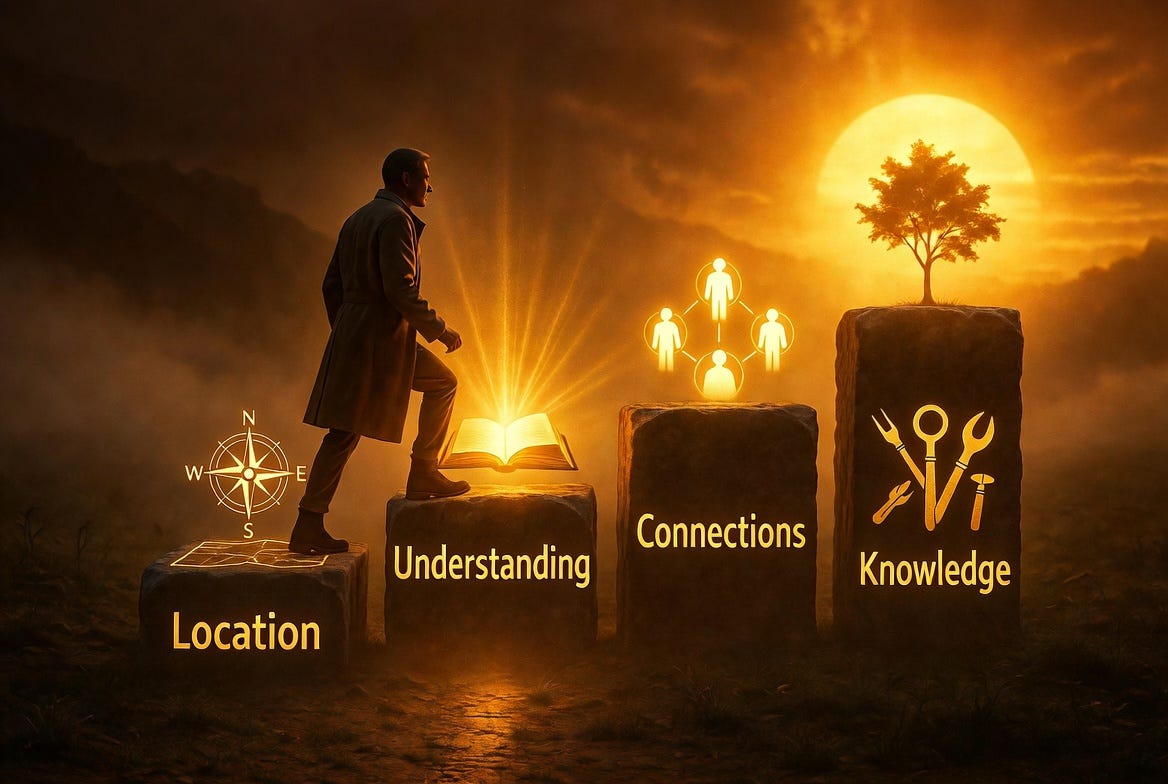
    LUCK has fascinated humankind for centuries. We often describe successful people as “lucky,” attributing their achievements to random chance, fate, or divine favour. Yet those we label as lucky are usually individuals whose behaviours and choices actively attract positive outcomes. Luck is not purely mysterious or uncontrollable. By breaking it down into its practical components—Location, Understanding, Connections, and Knowledge—we form the acronym LUCK. These four elements provide a tangible framework for creating the conditions in which success becomes far more likely. In the following sections, each element will be explored with practical actions and suggestions to help you put these ideas into practice right away. “Luck is not purely mysterious or uncontrollable.” Location: The Foundation of Luck The first component of LUCK is Location. Where you are physically, professionally, or even socially often determines the opportunities that cross your path. Being in the right place at the right time can be the decisive factor between stagnation and breakthrough. This is why location matters so much. In the 1980s, I felt the UK had little more to offer me at that moment in my life. Rather than staying and hoping things would improve, I decided to leave and live and work in Europe. I did not make living in London a condition for moving forward. That choice to relocate unlocked opportunities I could never have imagined while staying in familiar surroundings. By stepping out of my comfort zone and into a new environment, I gained different experiences, skills, and perspectives that greatly influenced my path. Geographical relocation, whether to another city or another country, consistently multiplies opportunities. The same principle applies today: people move to emerging hubs for tech, startups, or finance because proximity to talent, capital, and ideas creates momentum. However, not everyone can easily move due to family, financial, or other personal circumstances. If relocation is not possible, smaller shifts—such as changing neighbourhoods, seeking new experiences in your local area, or exploring different communities or groups—can also expose you to fresh possibilities. Location is not limited to geography either. It can mean switching companies or teams when your current environment no longer nurtures your potential. The key is openness and willingness to make a change, physically or metaphorically. You can always return home once you have gained the tools, experience, and confidence you need. “You can always return home once you have gained the tools, experience, and confidence you need.” Understanding: Negotiating the Landscape Understanding is the second pillar of LUCK. It refers to your ability to read the world around you—spotting patterns, recognising opportunities, and adapting to change. High levels of understanding turn ordinary situations into advantageous ones. People with a strong understanding stay attuned to economic trends, societal shifts, and emerging technologies. For instance, those who deeply understood the growth of remote work and digital tools in 2019–2020 were able to change promptly during the pandemic, launching successful online businesses or negotiating better remote roles while others struggled. After settling in Europe, I quickly realised that the ability to speak other languages would considerably enhance my opportunities. Because I was particularly interested in living in Spain, I set out to learn Spanish. This decision was motivated by a clear understanding of how language skills could open new doors in both private and professional life. It allowed me to connect more intimately with local communities, access better job prospects, and deal with daily life with greater confidence. Understanding grows through investigation and reflection. It means asking questions, learning from mistakes, and maintaining awareness rather than operating on autopilot. Without it, even the best location yields little benefit. You might live in a city full of opportunity but fail to notice it if you lack the perception to interpret what’s happening around you. To help you actively build this skill, try a simple reflection exercise: at the end of each day or week, ask yourself, “What patterns or opportunities did I notice today that I might have otherwise overlooked?” You might also consider prompts like “What surprised me today?” or “Who did I connect with today, and what did I learn from them?” Another helpful question is, “What challenges did I encounter, and how did I respond?” Journaling your answers can sharpen your awareness over time and help you connect insights with your goals. This habit encourages a more conscious approach to understanding and maximises your chances of turning everyday moments into meaningful progress. “Understanding grows through investigation and reflection.” Connections: Building Bridges to Success The third component, Connections, accentuates the power of relationships and networks. Success is infrequently a solo journey. The people you know—and who know you—can open doors that remain closed to others, making connections a natural bridge from one opportunity to the next. A well-cultivated network provides job offers, partnerships, investments, advice, and help during tough times. In my own case, my manager in London connected me to an opportunity in Zurich. From there, new connections led me to southern Switzerland and Austria, and eventually to Spain. What started as a single professional link grew into a chain of opportunities through multiple countries, each one expanding my horizons further. A strong example of this is Sara Blakely, founder of Spanx. Her breakthrough occurred partly through persistence and product quality, but also through key connections: she convinced a Neiman Marcus buyer to test her product after a chance conversation, and later leveraged relationships to secure Oprah Winfrey’s endorsement. That single connection dramatically accelerated her company’s growth. Connections do not require attending every networking event or collecting hundreds of superficial contacts. Quality and genuineness matter more. If reaching out feels daunting, start with low-pressure steps: send a thank-you email to someone whose work you admire, reconnect with a former colleague just to ask how they are, or join a small special interest or discussion group related to your field. Sometimes, simply commenting thoughtfully on an online discussion or introducing yourself after a talk can plant the seed of connection. Focus on giving value first by providing assistance, sharing knowledge, or making introductions without keeping score. Over time, these real relationships compound, creating a powerful support system that multiplies your luck and prepares the ground for knowledge to grow. “Focus on giving value first… Over time, these real relationships compound.” Knowledge: The Power Within Knowledge, the final element of LUCK, is the information, skills, and expertise you possess. While formal education helps, the most valuable knowledge often comes from self-directed learning, experimentation, and the readiness to master your chosen field. This is what turns the earlier pillars into lasting capability. By actively searching out new opportunities and learning languages — as I did after moving to Europe — I gained a wide range of experiences throughout various countries and cultures. These accumulated abilities and knowledge eventually enabled me to create my own businesses, which I successfully ran for over 30 years. This self-directed search for knowledge turned the foundation built by location, understanding, and connections into something sustainable and independent. Finding your passion and pursuing it deeply does not always require a university degree. Consider a young chef who starts with basic kitchen experience, experiments with flavours and techniques in different countries, studies local cuisines, and eventually opens their own successful restaurants. Knowledge compounds: each new skill makes the next one easier to acquire and increases your overall capability. The beauty of knowledge is that it is largely under your control. To make your efforts count, start by identifying your learning goals. Reflect on your interests, career aspirations, or areas where you feel less confident, and consider which skills or knowledge gaps might be limiting your progress. By focusing on what excites you or where you see the greatest opportunity for growth, you set a meaningful direction for your learning. Once you have these goals in mind, you can take action by reading, taking courses, seeking mentors, and practising deliberately. This intentional approach will help you build an internal engine that turns opportunities into results. “The beauty of knowledge is that it is largely under your control.” LUCK as an Interconnected System These four elements do not operate in isolation—they reinforce one another. Strong connections can improve your location (through referrals or inside information). Greater knowledge sharpens your grasp. Being in the right location often leads to better connections. Together, they create the conditions in which what others perceive as “luck” appears naturally. Of course, pure chance still exists — and so does pure unluck. As discussed in previous essays, the Uncertainty Principle is a necessary part of the simulation. There are no absolute guarantees, only probabilities. This is precisely why learning to live gracefully with uncertainty is so important. It allows us to take action without feeling paralysed by the unknown, while still maximising our own influence over outcomes. We cannot control where we were born, but we can choose where we go next, how we perceive the world and our direct experiences, who we build relationships with, and what we learn. Conclusion Understanding LUCK in this practical way is empowering. It shifts our mindset from passive waiting for good fortune to active creation of it. All challenges are opportunities to improve one or more of these pillars. The employee passed over for promotion can relocate or upskill. The aspiring founder can build a network and deepen industry knowledge, each step leading naturally to the next. In this way, the framework gives us a clear path from uncertainty to action, and from action to results. By using this framework, we stop envying the “lucky” ones and start becoming them. The future belongs not to those who hope for luck, but to those who deliberately design it. Quick-Start Guide: Action Plan for Applying LUCK * Location: Evaluate where you are—physically, professionally, and socially. Identify whether a change in environment could unlock new opportunities, even if it is a small shift like joining a new community or team. * Understanding: Stay curious and reflective. At the end of each day, note any trends, patterns, or opportunities you have noticed. Seek out knowledge and ask questions to deepen your perspective. * Connections: Reach out to someone new or reconnect with an old contact. Offer help or share knowledge. Focus on building quality relationships, not just expanding your network. * Knowledge: Choose one area to upskill or explore further, whether through reading, a course, or hands-on practice. Make learning a daily habit. Review your progress every week and adjust your actions as needed. To make tracking your growth easier, consider using a simple journal, checklist, or a set of weekly review questions. … By taking these steps consistently, you put yourself on the path of opportunity and begin to design your own luck. Your next big break may be closer than you think! Written and Produced by Stephen Griffin aided by Grok and Notebook If this post resonates with you, consider supporting the work with a paid subscription. Every dollar goes directly to consciousnesshub.org to help fund Tom Campbell’s projects and keep this content free and accessible for everyone. Your support makes a real difference — thank you so much. This is a public episode. If you'd like to discuss this with other subscribers or get access to bonus episodes, visit theplayersguide.substack.com/subscribe

  • July 18 · 19 min

    TR - Owning Our Fears

    Many of our strongest emotional reactions begin long before the moment that triggers them. This essay explores why everyday conflicts often reveal hidden fears within ourselves—and how learning to release those fears can transform not only our relationships but also our experience of fulfilment. Understanding Triggers in Relationships Interpersonal relationships often feel like emotional minefields. A passing remark, an overlooked chore, or an unmet expectation can trigger intense irritation, resentment, or insecurity. Yet these reactions seldom originate from the external event itself. Instead, they signal deeper, unresolved fears—fears of inadequacy, insignificance, or not being truly valued. The most profound insight is that genuine growth and lasting happiness arise not from attempting to control others or circumstances, but from courageously confronting and releasing these internal barriers. When we do, relationships evolve from sources of friction into powerful catalysts for personal transformation and deeper connection.“ ‘‘Many of our strongest emotional reactions begin long before the moment that triggers them.” The Misconception of Happiness as a Destination Many people view happiness as a future destination reached through ideal conditions: the perfect partner, financial stability, or a life without conflict. This approach is inherently flawed because it remains anchored in the ego—the voice that thrives on victimhood and the constant need to be right. Ego is awareness in the service of fear; it exists to make us hyper-aware of anything that might threaten us and to “protect” us by triggering defensive reactions. As a result, we often fall into conditional thinking: “I’ll be happy when my partner helps more around the house” or “once people finally appreciate me.” These conditions keep fulfillment perpetually out of reach, because new triggers will always arise to replace the old ones. In contrast, authentic happiness emerges naturally as a byproduct of inner work. As fear-based reactions diminish, we become less judgmental and more fully present. Joy then arises spontaneously, independent of external circumstances. How Triggers Reveal Our Inner Fears Everyday examples illustrate this clearly. Imagine a partner leaving dirty clothes scattered across the floor. To an outsider, it’s trivial. To someone carrying a fear of being seen as insignificant or “just the maid,” it ignites anger and resentment. The real issue isn’t the clothes—it’s the underlying belief that one’s worth depends on others’ behavior. Here the ego steps in as protector: it immediately interprets the situation as a threat and supplies justification (“They don’t respect me!”). This same pattern appears in arguments about lateness, credit-stealing at work, or feeling dismissed in conversations. Attention stays fixed outward, blaming others rather than examining the internal fear driving the distress. “The ego is not the enemy — it is simply awareness working in the service of fear.” A Practical Process for Releasing Fear Fortunately, there is a clear, repeatable process for breaking this cycle: If you are unsure how to spot a fear, simply note when you are feeling any negative emotion — such as anger, resentment, irritation, anxiety, jealousy, or feeling hurt or unworthy — and trace it back to the underlying fear. * Acknowledge the fear honestly — Name it without defence: “I fear I am inadequate or unimportant.” This single act begins dismantling the ego’s protective stories. * Examine the evidence — Review past situations where this fear shaped your choices. Did you avoid speaking up at work out of dread of seeming incompetent, or withdraw from friends to dodge rejection? * Assess the outcomes — Notice how fear-driven decisions consistently lead to strained relationships, missed opportunities, and greater stress—never genuine improvement. Once awareness takes root, practice interruption. When irritation surges—racing heart, defensive thoughts forming—pause. Refuse to fuel the reaction. Redirect your mind and quietly reaffirm: “This fear does not control me.” Repetition is essential; old patterns resist change. With sustained intention, the fear gradually loses its grip. What once felt like a fierce threat reveals itself as a “paper tiger”—an illusion without substance. Compassion naturally replaces judgment, and neutral actions from others cease to feel personal. Relationships as Mirrors for Growth Relationships act as precise mirrors, illuminating recurring patterns linked to core wounds such as abandonment or unworthiness. A colleague taking credit for your idea, for instance, may echo childhood feelings of being overlooked. By addressing the fear internally first, you can respond with clarity—perhaps calmly asserting your contribution—rather than reacting with bitterness. This inner shift creates ripple effects: your calmer presence improves interactions, and you model authentic growth for others. Even difficult people become easier to navigate when accepted as they are, while healthy boundaries remain firmly in place. Long-Term Benefits and Lasting Transformation The rewards of this work extend far beyond momentary peace. Releasing fear cultivates a state where love flows more freely—toward others and yourself. You stop centring your world on personal grievances and begin contributing more positively to those around you. Life’s uncertainties lose their power to unsettle, replaced by resilience and quiet joy. Progress is rarely linear. Old patterns may resurface, and growth can feel slow at times. Yet every conscious choice to face fear matters. Over the years, this practice can transform ageing from a time of bitterness into one of wisdom and contentment. The goal is not perfection, but consistent intention. Small victories accumulate into profound, lasting change that touches every area of life. Conclusion: Embracing the Inner Path to Freedom At its core, the path to fulfilling relationships and authentic happiness is an inside job. By confronting our fears directly rather than projecting them outward, we dismantle the cycles of dissatisfaction that once defined us. Everyday interactions become fertile ground for genuineness and growth. The result is not a life without challenges, but one where challenges no longer control our inner state. We grow more capable of deep love, meaningful connection, and the profound peace that arises when fear no longer dominates. This liberation is available to anyone ready to engage in honest self-reflection and courageous action—one mindful choice at a time. Written and Produced by Stephen Griffin aided by Grok and Notebook If this post resonates with you, consider supporting the work with a paid subscription. Every dollar goes directly to consciousnesshub.org to help fund Tom Campbell’s projects and keep this content free and accessible for everyone. Your support makes a real difference — thank you so much. This is a public episode. If you'd like to discuss this with other subscribers or get access to bonus episodes, visit theplayersguide.substack.com/subscribe

  • July 12 · 21 min

    TR - Understanding Real Wealth

    In a world preoccupied with material success, it is vital to pause and reconsider what wealth truly means. While money and possessions provide comfort and opportunity, they must not be the sole measure of prosperity. Genuine wealth resides in the intangible: rich experiences, accumulated knowledge, hard-earned wisdom, linguistic abilities, spiritual peace, self-mastery, and meaningful relationships. These are the riches that remain even after all material things are lost — and they form the true foundation for a prosperous life. Experiences: The Building Blocks of Wisdom Experiences mould who we are. They mould our perspectives, teach irreplaceable lessons, and become the raw material for individual development. “Regardless of whether our experiences are joyful or painful, they remain with us well after possessions disappear.” For example, after losing his entire fortune during the Great Depression, Thomas Edison drew on his lifetime of experimental failures and knowledge to continue innovating and eventually rebuild his success. Through thought and contemplation, we transform experiences into knowledge and, eventually, wisdom. This inner knowledge never depreciates. It travels with us, responds to new circumstances, and expands throughout our lives. It equips us to make better decisions, solve problems creatively, and navigate life’s uncertainties with greater fortitude and insight. Spiritual Peace: An Inner Anchor Material wealth often brings attachment, anxiety, and the persistent fear of loss. The more we own, the more we have to protect. “Spiritual peace, by contrast, offers unshakable stability.” Viktor Frankl, while imprisoned in Nazi concentration camps and stripped of all material possessions, confronted a fundamental question: “If everything you owned disappeared tomorrow, who would you still be?” By focusing on meaning, love, and his inner spiritual life, he found profound inner peace. This mental richness helped him survive the unimaginable and later inspired millions through his book Man’s Search for Meaning. Rooted in gratitude, contentment, and a feeling of connection to something beyond ourselves, spiritual peace provides comfort and strength precisely when external circumstances crumble. This internal peace is a form of wealth that no market crash or misfortune can destroy. Self-Control: The Quiet Superpower In an age of endless distractions and instant gratification, self-control functions as one of the most valuable assets a person can possess. It cannot be bought, only cultivated. “Self-discipline enables us to resist impulsive decisions, stay focused on extended goals, and act with integrity even when no one is watching.” It is both the foundation and the guardian of all other forms of success. The Power of Sincere Relationships True wealth also extends outward through our relationships. Deep friendships and trusted professional connections give emotional support, intellectual stimulation, and practical opportunities. “At times of crisis, these bonds often prove more valuable than financial resources.” They tell us that we are not alone and that shared trust creates possibilities far beyond what one person can achieve independently. Building Material Wealth upon a Foundation of Inner Riches Material wealth is not inherently bad — it is a tool. When built upon a strong base of wisdom, peace, discipline, and relationships, it becomes increasingly sustainable, ethical, and fulfilling. People who cultivate inner wealth tend to make wiser investments, build stronger businesses, and manage resources responsibly. In this way, true prosperity creates the conditions for material success, rather than the reverse. Conclusion In the search for success, we must remember that the greatest treasures reside within us. Our experiences, knowledge, spiritual peace, self-control, languages, and authentic relationships are the permanent riches that define a well-lived life. “Material wealth can be a wonderful outcome of inner richness, but it should never replace it.” By nurturing these intangible treasures, we not only enrich our personal lives but also develop the character and capabilities needed to generate sustainable external prosperity. This harmony between inner and outer wealth is the key to a truly abundant and meaningful existence. Written and Produced by Stephen Griffin aided by Grok and Notebook If this post resonates with you, consider supporting the work with a paid subscription. Every dollar goes directly to consciousnesshub.org to help fund Tom Campbell’s projects and keep this content free and accessible for everyone. Your support makes a real difference — thank you so much. This is a public episode. If you'd like to discuss this with other subscribers or get access to bonus episodes, visit theplayersguide.substack.com/subscribe

  • July 5 · 22 min

    TR - Parenting Beyond Ego

    Version Español Español 🇪🇸 In the framework of My Big TOE, parenting is far more than raising children—it is an opportunity to participate in the evolution of consciousness itself. Children arrive as unique, individuated units of consciousness, small but complete beings moving through a designed environment for growth. Our role is not to mould them into perfect versions of ourselves, but to support their natural development with love, respect, and genuineness. The wisdom drawn from Tom Campbell’s teachings offers parents a serious, practical path: reduce our own fear and ego, treat children as respected beings, nurture their intuitive nature, and steer without controlling. .The Foundation: Respect and Presence The most essential gift we can offer young children—especially from conception through the early years—is respect. Children are not nuisances or extensions of our own needs; they are conscious entities in the process of becoming. When we treat them with genuine respect, we listen fully, give them our undivided attention, and meet them where they are. This means setting aside our self-centred busyness. A child who senses they are sincerely listened to and appreciated develops a deep inner security. Instead of the common fear of inadequacy that many carry from childhood, they grow knowing their thoughts, feelings, and interests matter. Practical expressions of this respect include: * Responding to their questions and needs with presence rather than dismissal. * Speaking to them with love and clarity, explaining why certain behaviours matter instead of issuing arbitrary commands. * Holding space during disappointment or emotional storms—giving comfort without forcing intellectual explanations they are not completely equipped to process. Young children primarily process life intuitively and through feeling. They express themselves through actions, tears, volume, and play rather than polished words. Trying to make them explain complex emotions too early can create more inadequacy. The wiser path is simply to be with them—a calm, loving presence that allows natural processing. Letting Go of Control: Genuineness and Autonomy As children grow, particularly from ages 10–18, the art of parenting shifts from protection to release. Tom Campbell emphasises that we cannot—and should not—run their lives. The teenage years are when they must become their own person. Our role evolves into that of a trusted mentor rather than a director. Key principles here include: * Non-judgmental guidance: Offer perspectives on choices, sharing upsides and downsides, but allow them to decide. Judgment closes communication; genuineness and openness invite them to seek your counsel. * Learning through experience: It is far better for children to make mistakes while young, when consequences are gentler. The world forgives youthful errors more readily than adult ones. Shielding them from all failure prevents the very growth intended to be promoted. Lead from behind: Delicate environmental guidance (like choosing supportive surroundings) is natural, but overt manipulation breeds resentment. Give them the dignity of their own choices.This does not mean that children can do whatever they want. As young children, they still need to be protected from real physical danger — for example, playing football on a busy road. However, this must not be mistaken for sheltering them from disappointment, natural consequences, or the challenges that foster growth in consciousness. This approach honours their consciousness. By stepping back, we model trust in the larger evolutionary process. Nurturing Natural Abilities and Connection One of the most transformational practices is supporting children’s innate, intuitive and natural abilities. When children reconnect with their larger self—sensing themselves as part of something higher than their individual ego—they naturally become less self-centred. This shift, as observed by parents in MBT-inspired programs, leads to remarkable changes: * Greater love and tolerance toward siblings and family. * A better, serene home environment. * Increased self-confidence rooted in inner knowing rather than external validation. Children are naturally intuitive. By encouraging this—through play, exploration, curiosity-led learning (such as unschooling), and emotional awareness—we help them access their full potential as conscious beings. They move from a vulnerable “lone operator” mindset to feeling loved and valuable within a larger whole. This reduces fear-based behaviours and supports empathy, creativity, and inner peace. The Parents’ Inner Work: The Most Important Key All of this begins with us. The quality of our consciousness directly forms our children’s experience. Our unexamined fears, ego, and self-centeredness are felt intuitively by children long before they understand words. Adults who operate from ego believe they are what their children are and, therefore, if the children do not behave in line with their own ego-based reality, they need to be corrected. For example, if the parent feels that success is earning the grades to become what they want them to be, this can lead to either a tempestuous relationship if the child disagrees, or a more distant one in the future if the ‘chosen’ career is not fulfilling. This is why older parents statistically have more stable relationships with their children — they have had more time to work on their own fears. A Vision for Conscious Parenting Imagine raising children who feel deeply respected, emotionally secure, and connected to their intuitive nature. They learn to manage fear, make authentic choices, and view themselves as meaningful components of a larger reality. Families become havens of harmony, tolerance, and love. This is not an idealistic fantasy—it is the natural outcome of harmonising our parenting with the fundamental principles of consciousness evolution. In the end, the best practices are clear yet deep: Love them fiercely. Respect them deeply. Guide them gently. Let them grow freely. By doing so, we don’t just raise children—we raise the next generation of evolving consciousness. And in that sacred process, we heal and expand our own. This MBT-inspired approach prompts parents to move past traditional control-based models into a more conscious, heart-centred way of being. It is both practical for daily life and deeply spiritual in its implications. Let it bring greater joy, connection, and insight to your family’s journey. Written and Produced by Stephen Griffin aided by Grok and Notebook If this post resonates with you, consider supporting the work with a paid subscription. Every dollar goes directly to consciousnesshub.org to help fund Tom Campbell’s projects and keep this content free and accessible for everyone. Your support makes a real difference — thank you so much. This is a public episode. If you'd like to discuss this with other subscribers or get access to bonus episodes, visit theplayersguide.substack.com/subscribe
  • June 28 · 21 min

    TR - Uncertainty Drives Consciousness – Social Media Crashes It: Choose Wisely!

    What if uncertainty isn’t a flaw in reality, but one of its most brilliant features? A perfectly certain world would be boring, predictable, and deadly to personal growth. Yet the very uncertainty that fuels consciousness evolution is being hijacked by social media — turned into an endless dopamine machine that leaves us exhausted, reactive, and spiritually drained. This essay reveals the stark contrast — and why awareness has never been more urgent. In the My Big TOE model of reality, our physical world functions as a virtual learning laboratory. Its primary purpose is to enable individuated units of consciousness to evolve by reducing entropy – becoming less fearful and more loving through the exercise of free will. At the heart of this system lies the Psi Uncertainty Principle (PUP). Far from being a flaw, uncertainty is an intentional and essential feature. “A perfectly certain world would be boring, predictable, and deadly to personal growth.” The Purpose of the Psi Uncertainty Principle The Psi Uncertainty Principle ensures that psi phenomena – such as telepathy, precognition, remote viewing, psychokinesis, and other non-physical sources of information – remain real yet consistently ambiguous, inconsistent, or open to doubt from an objective, scientific perspective. This deliberate fuzziness prevents psi from becoming reliable or repeatable on demand. A completely certain world would be a profoundly boring and unproductive place. If psi effects were foreseeable and obvious, miracles would lose their impact, causality would collapse, and personal responsibility would disappear. Individuals would no longer need to struggle with difficult choices or develop the quality of their own consciousness; they could simply rely on psychic shortcuts or “ask the system.” Genuine evolution would be stunted if the learning game lost its challenge. As Campbell explains, the Larger Consciousness System (LCS) sometimes deliberately introduces misinformation with positive intent. For instance, individuals who become highly skilled at receiving non-physical information and start depending on it for every decision — from what to wear, to who they should trust, to major life choices — may suddenly receive misleading guidance. The system does this not because of malice, but to break their growing dependency and push them back into making decisions from their own centre of consciousness. Love, in this context, does not always mean kind encouragement; sometimes it delivers a necessary slap to restore personal responsibility and prevent a person from becoming a puppet.“ Uncertainty is not a flaw — it is the very ground in which authentic consciousness growth takes root.” Campbell repeatedly stresses the importance of healthy scepticism toward all sources of information, including those that appear to come from the larger consciousness system itself. “Be sceptical,” he advises. “Don’t jump to conclusions. Live your own life, make your own decisions, and see what happens.” The moment we outsource our choices to external guidance – whether psychic, algorithmic, or otherwise – we cease to evolve and become little more than puppets. Uncertainty, therefore, is the very ground in which authentic consciousness growth takes root. Consciousness Hub Substack is a reader-supported publication. To receive new posts and support our work, consider becoming a free or paid subscriber. The Chemical Hijacking of Uncertainty in Social Media The same principle of uncertainty that serves evolution at the level of consciousness is being systematically exploited at the chemical level by modern technology, particularly social media and the attention economy. Our nervous system responds far more powerfully to uncertainty than to predictable pleasure. A reliable reward produces satiable behaviour, but an unpredictable, variable reward – the classic slot-machine principle – hijacks the dopamine system, creating compulsion. Every notification, every infinite scroll, and every outrage-inducing headline is designed around this mechanism. “Every notification is a maybe”: maybe this message is important, maybe this post changes everything. That uncertainty keeps users checking long after the content has stopped nourishing them. This constant drip of uncertain stimuli places enormous strain on the prefrontal cortex – the part of the brain responsible for long-term planning, impulse control, and generating our own motivation. By mid-afternoon, many people feel profoundly exhausted, not from meaningful work, but from the cumulative effect of hundreds of tiny interruptions and the mental effort of remaining perpetually reactive. The result is an unusual form of depletion: “the exhaustion of having done nothing and everything at the same time… of having consumed without being nourished, of having been busy without being alive.” When the prefrontal cortex is depleted, individuals lose the ability to originate action and become purely reactive. Personal agency is diminished and consciousness evolution is severely hindered. “The same uncertainty that fuels consciousness evolution is being hijacked by social media — turned into an endless dopamine machine that leaves us exhausted, reactive, and spiritually drained.” Reclaiming Agency: Choosing Boredom and Sovereignty The architects of the major technology platforms understand this situation perfectly. Many send their own children to screen-free schools, practise meditation, take long walks, and read physical books. They deliberately choose to become, by modern standards, “profoundly boring” – invisible to the attention-harvesting machines they have built for others. The antidote they reserve for themselves is the same quality Campbell encourages: radical personal responsibility exercised in quiet, focused awareness. By stepping away from the constant stream of uncertain digital rewards, we can reclaim the mental space needed to make decisions from our own centre of consciousness rather than reacting to external stimuli. In both the metaphysical framework of My Big TOE and the neurochemical reality of social media, uncertainty plays a central role. In MBT, it is carefully calibrated to protect the learning environment and promote genuine growth. In the attention economy, engineered uncertainty traps users in cycles of depletion and reactivity. The crucial difference lies in awareness. When we understand both the Psi Uncertainty Principle and its exploitation through social media, we gain the power to respond consciously. We can apply the same healthy scepticism to our newsfeeds and notifications that Campbell recommends for psychic information. We can choose slowness, focus, and even deliberate boredom – the very states the attention economy has taught us to fear – because these are the conditions in which real consciousness work occurs. Conclusion A perfectly certain world would indeed be boring and evolutionarily sterile. Yet an unconscious world of engineered uncertainty is far worse: it is exhausting, reactive, and spiritually diminishing. The invitation offered by My Big TOE, and by those who have recognised the true cost of the attention economy, is clear: wake up, remain sceptical, and reclaim authorship of your own life. Only then can uncertainty stop functioning as a trap and instead become the fertile ground in which authentic growth and the evolution of consciousness can finally flourish. Written and Produced by Stephen Griffin with the aid of Grok and Notebook If this post resonates with you, consider supporting the work with a paid subscription. Every dollar goes directly to consciousnesshub.org to help fund Tom Campbell’s projects and keep this content free and accessible for everyone. Your support makes a real difference — thank you so much. This is a public episode. If you'd like to discuss this with other subscribers or get access to bonus episodes, visit theplayersguide.substack.com/subscribe

  • June 20 · 20 min

    TR - Consciousness Just Patched Reality

    Have we entered Version 2.0 of our simulated reality, where Tom Campbell’s My Big Theory of Everything (MBT) may well serve as its instruction manual? This post explores our physical world as a sophisticated virtual simulation created by a Larger Consciousness System (LCS). It frames human life as an evolutionary game of consciousness, where free will drives growth from fear and ego toward love and unity. Following Versions 1.01–1.4 (beginning roughly 300,000 years ago), we are now entering a new era with greater access to non-physical reality, as bridged by quantum physics and personal experience. “Our physical matter reality (PMR) is not the base layer of existence, but a sophisticated virtual reality simulation designed by a Larger Consciousness System (LCS).” Tom Campbell’s My Big Theory of Everything (MBT) reveals that our physical world is not the fundamental reality. It is a complex virtual reality simulation created by a Larger Consciousness System (LCS). In this simulation, Individuated Units of Consciousness (IUOCs) — you and me — use free will to evolve. Through our choices, we move from high-entropy states of fear, ego, and separation toward low-entropy states of love, caring, and unity. MBT links philosophical idealism (consciousness as the foundation of reality) with elements of dualism, offering a robust framework that bridges the physical and the non-physical. The simulation evolves through iterative versions, each improving the ruleset and challenges to accelerate the growth of consciousness. We are now at the threshold of Version 2.0 — a major shift from a purely physical game to a post-physical one, where non-physical reality becomes central to everyday experience. Consciousness Hub Substack is a reader-supported publication. To receive new posts and support our work, consider becoming a free or paid subscriber. Early Versions: Laying the Foundation Ver 1.01 – Awakening Primitives (ca. 300,000–50,000 years ago) introduced the first human-type avatars into a brutal survival environment. Scarcity, predators, and basic social bonds forced early choices between cooperation and selfishness. High mortality rates delivered rapid feedback on fear and group loyalty. Consciousness operated mostly on instinct, with only rare shamanic glimpses into non-physical reality (NPMR). Ver 1.1 – Agricultural Settlement (ca. 12,000 BCE onwards) expanded the ruleset to include secure food production, population growth, and the concept of property. Settled communities, hierarchies and early rituals emerged, shifting the game from pure survival to long-term planning and meaning-making. Ver 1.2 – Civilisational Empires (ca. 3000 BCE–500 CE) scaled the simulation dramatically with writing, organised religion, states, and large-scale warfare. Epic stories of power, morality, and legacy tested collective ethics and extreme polarity — tyrant versus sage — while reports of psi phenomena became more common. Ver 1.3 – Scientific/Industrial Awakening (ca. 1500–1900 CE) emphasised materialist physics and technological progress. Newtonian predictability, global exploration, capitalism, and individualism reinforced the illusion of a solid, mechanical reality while accelerating both competition and discovery. Ver 1.4 – Global Information Age (1900-present, with the Digital Interconnect sub-patch from the 1990s) integrated quantum rules, instant global communication, nuclear power, biotech and digital networks. The population exploded, choices multiplied, and planetary challenges appeared. Synchronicities, high-strangeness events and growing simulation awareness signalled that the purely physical rendering had reached its limit. Each version expanded opportunities for meaningful choices while keeping the illusion of a solid material world convincingly intact. Bodies, resources, and Newtonian laws created exactly the pressure needed for consciousness to grow The Dawn of Version 2.0: A Major Ruleset Overhaul. Version 2.0 represents a major revision of the ruleset. The LCS loosens the strict physical constraints of previous versions. In the digital/AI era, we are beginning to see information and probability as the true drivers of experience. Direct bridges to the non-physical reality (NPMR) are opening through meditation, altered states, biofeedback and emerging brain-computer interfaces. The simulation is shifting from a “hardware-locked” immersion to one that opens up its data-driven, uncertain nature. Players are waking up, sensing that the avatar and environment are rendered constructs. This is not a collapse, it is an evolutionary graduation. The game is becoming more advanced and now demands more lucidity and purposefulness. Quantum science: The Link to Deeper Truths. Quantum mechanics is dismantling the old materialistic worldview and serving as the perfect bridge to these deeper truths. Experiments on the measurement effect, entanglement, non-locality, and the measurement problem show that reality consists of probabilistic information fields that collapse into experience only upon interaction. In MBT terms, this is the simulation rendering engine at work: the LCS generates only the data each player needs, consistent with their expectations and choices. The double-slit test, Bell’s theorem and the delayed-choice quantum eraser are not anomalies; they are deliberate features that expose the VR architecture. Consciousness as Fundamental Reality Science is finally catching up with what mystics and consciousness explorers have known across the ages: consciousness is fundamental. Matter, energy, space, and time are derived phenomena — secondary outputs of a larger information-based consciousness system. As Max Planck stated: “All matter originates and exists only by virtue of a force… We must assume that, behind this force, there exists a conscious and intelligent Mind. This Mind is the matrix of all matter.” In Campbell’s framework, the LCS is a self-organising, evolving consciousness, and physical laws are simply rules within it. Science itself is a tool developed within the simulation to examine its own boundaries. Living in Version 2.0: Pragmatic consequences. In Version 2.0, this understanding becomes practical and operational. We can now access NPMR directly through intention, meditation and out-of-body exploration. Quantum tools act as powerful “mods’’ that accelerate awareness. Simulation glitches - synchronicities, high-strangeness, and psi phenomena - appear more frequently as tutorial prompts. With greater access comes the need for discernment. Campbell advises applying scientific rigour: stability over time, repeatability and practical results. The old fear and ego-based loops are becoming less efficient. The new meta-game rewards the integration of physical and non-physical awareness, and choices rooted in concord and low entropy. This shift has deep consequences for ethics, science and society. Biology, neuroscience, cosmology and AI are all confronting consciousness as primary. If reality is a learning environment for the growth of consciousness, then every action has moral weight far beyond material outcomes. The Decision Before Us We are at the threshold of version 2.0. The LCS is not forcing the transition; it is responding to our growing readiness. Quantum science provides intellectual scaffolding, but true knowing comes only through direct personal experience. As Tom Campbell emphasises, belief is unnecessary. What matters is personal exploration and low-entropy intent. The game is evolving. The question facing each of us is simple yet profound: Will you remain anchored in the fading illusions of Version 1.x, or will you level up—embrace the fundamental truth that consciousness creates the code, and that love is the optimal strategy? The post-physical frontier awaits. This is a public episode. If you'd like to discuss this with other subscribers or get access to bonus episodes, visit theplayersguide.substack.com/subscribe

  • June 13 · 18 min

    TR - When Helping Hurts

    Balancing Compassion and Wisdom in Conscious Relationships One of the most delicate challenges in conscious living is knowing when our desire to help serves another person’s growth and when it interferes with it. This tension lies at the heart of participating in the evolution of consciousness. Free will isn’t some abstract idea — it’s the very mechanism through which we learn and evolve. When we interfere with another’s path, we carry a serious responsibility for both them and ourselves. Consciousness Hub Substack is a reader-supported publication. To receive new posts and support our work, consider becoming a free or paid subscriber. The Parents’ Dilemma We All Face This dilemma is clear in parenting, but also appears in every relationship. While we may want to protect others from pain, important lessons often come only through direct experience — the kind you can’t get from someone else stepping in. For young children, intervention is frequently required. Their decision-making capacity is still forming. Here, loving protection is wise stewardship—not control but care that preserves their chance to grow. Reading the Signals As consciousness matures into adulthood, the balance shifts. Adults have the right to make choices—even poor ones. Those choices provide feedback, allowing them to experience consequences, recalibrate, and choose better paths. Removing that feedback too early might obstruct their growth. The crucial lies in honest observation. You have to look at what’s actually happening. If our attempts to help meet consistent resistance, that is important information. When our support leads to visible positive change, like seeing someone gain clarity, develop new strength, or move forward in their life, we can feel more confident. For example, imagine a friend who always comes to you for advice on the same struggle but never takes action—if you notice that your support doesn’t lead to any meaningful change, it may be time to step back and let them find their own answers. In another case, you might offer encouragement to a co-worker who is navigating a new role and see them grow in confidence and responsibility over time—here, your involvement helps. Must we study outcomes: Are things truly improving? Or are they staying the same or getting worse? Results tend to tell you the truth, even when your good intentions don’t want to hear it. Why Struggle Is Necessary Life is not meant to be painless. Difficulty, failure, and heartbreak are part of the deal — they’re how we grow up and lower our entropy. Shielding others from discomfort may seem compassionate, but it can limit their growth. When Intervention Becomes Justified Intervention is sometimes warranted, but the bar is high. If someone is temporarily unable to make clear choices due to injury, severe distress, or impairment, compassionate support may be the most loving response. In such cases, we act as a guardian for a consciousness that cannot yet guard itself. For capable adults who make poor decisions, the key factor is motivation. You have to be brutally honest with yourself here. Are we acting from genuine love and a clear sense that our help will serve their lasting growth? Or are we acting because their choices make us uncomfortable, trigger fears, or challenge our ego? The first may be justified. The second is usually control disguised as caring. To support deeper self-awareness, consider these self-inquiry prompts the next time you feel the urge to intervene: Am I truly listening to what this person wants, or am I assuming I know best? Does my desire to help come with an expectation of a specific outcome? Would I feel anxious or unsettled if I stepped back and allowed them to choose their own way? Am I willing to let them struggle, even if it makes me uncomfortable? Reflecting on questions like these can help you discern whether your urge to help is rooted in love and respect, or in your own needs and anxieties. The Power of Pure Intention When we choose to help—physically, emotionally, or energetically—the quality and clearness of our intention matter most. A sincere, heartfelt wish for their well-being, offered without trying to force an outcome, is often all that’s needed. Loving intention can show up as simply letting someone know you care without trying to fix their situation, sending a supportive message, holding their hand in silence, or even just quietly wishing them the best. We don’t need constant repetition. A focused, loving intention directed at the individual is often enough. This applies beyond physical healing. We can hold space for loneliness, confusion, emotional pain, or any form of suffering — as long as our intention remains respectful and non-manipulative. The Heart of Conscious Helping Ultimately, conscious helping demands humility, self-awareness, and a willingness to accept uncertainty. Even when you do everything with the best of intentions, you still don’t control the outcome. Even well-intentioned actions may not produce expected results yet may serve a larger purpose in ways we cannot see. Charting these waters is one of the most advanced challenges in the evolution of consciousness. It asks us to hold compassion without control, extend support without demanding outcomes, and trust each individual’s unique journey even when it looks messy. In a world that glorifies constant rescue, choosing wise restraint can be a sincere act of love. Sometimes the most helpful thing you can do is get out of the way and let them have their own experience. At times, the greatest gift we give another is the space to stumble, rise, and discover their own inner power. Still, it is important to remember that there are situations where stepping back could actually cause harm, rather than help. Discernment is essential. Each relationship and circumstance is unique, and there may be exceptions where timely support or intervention is truly needed. Trust your awareness and care to help you know the difference. Key takeaways: Support others with intention, respect their journey, and discern when to help or step back. Allow struggle as a path to growth, remembering that empowering relationships stem from humility, non-attachment, and trust in each person’s unique process. Written and Produced by Stephen Griffin with the aid Grok and Notebook If this post resonates with you, consider supporting the work with a paid subscription. Every dollar goes directly to consciousnesshub.org to help fund Tom Campbell’s projects and keep this content free and accessible for everyone. Your support makes a real difference — thank you so much. Consciousness Hub Substack is a reader-supported publication. To receive new posts and support our work, consider becoming a free or paid subscriber. This is a public episode. If you'd like to discuss this with other subscribers or get access to bonus episodes, visit theplayersguide.substack.com/subscribe
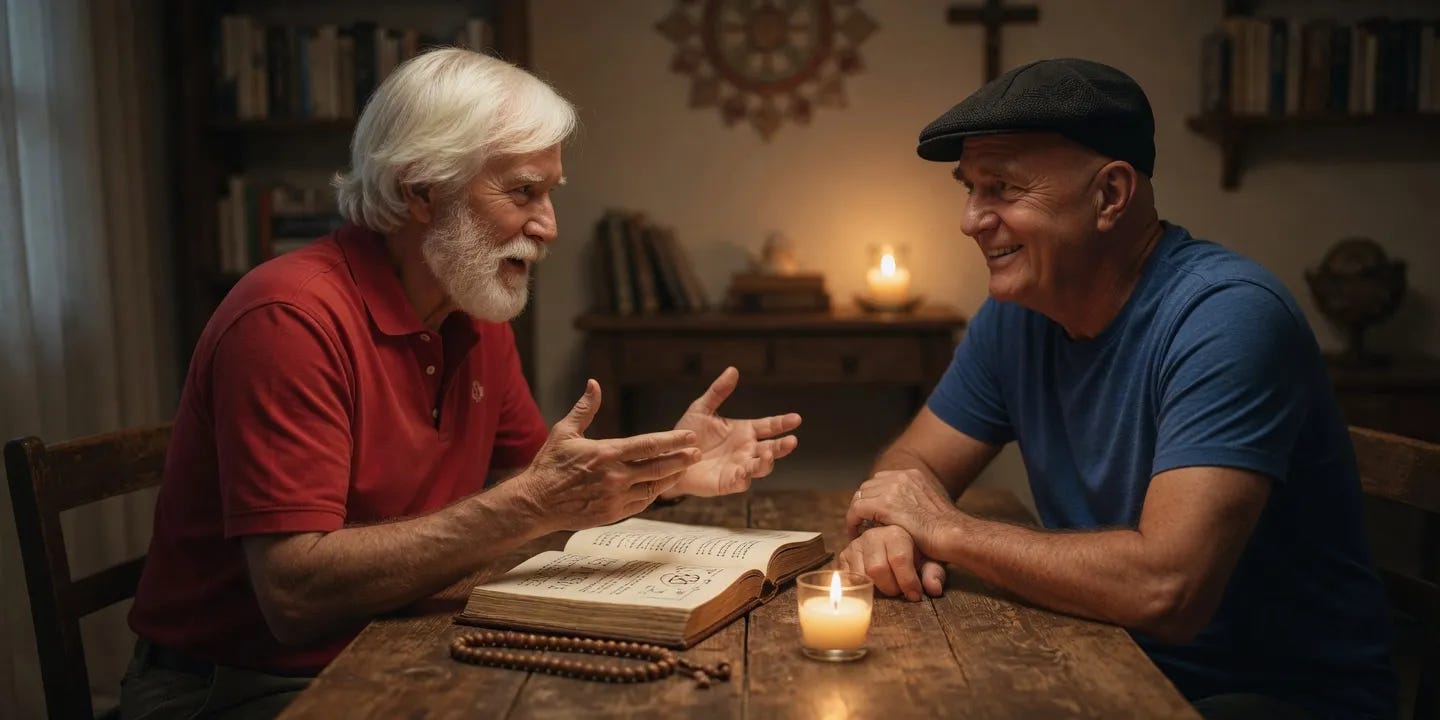
  • June 7 · 22 min

    #TR44 Proof the Simulation Is Glitching… And It Wants You to Notice

    Introduction: Building on the Perfect Game In my recent Consciousness Hub essay, “LIFE – The Perfect Game: Easy to Play, Difficult to Master” (May 1, 2026), I described human existence as a meticulously designed virtual reality learning environment created by the Larger Consciousness System (LCS), a vast, non-physical, information-based system of evolving consciousness. This game is intentionally balanced: it is accessible to all from birth, yet mastery requires consistently choosing love over fear and awareness over reactivity. Its enduring appeal across lifetimes stems from the continual opportunity for consciousness to lower entropy by becoming more organised, compassionate, and aware The LCS’s Elegant Clue System Picture slipping on the most advanced virtual reality headset ever developed. The graphics are flawless, the physics are highly convincing, and the sensations are so authentic that one quickly forgets the artificial nature of the experience. Pain and love both feel genuine, and the world appears undeniably tangible. This exemplifies the sophistication of the Larger Consciousness System. The physical universe is one of its virtual digital simulations, rendered dynamically as a data stream. Anomalies, glitches, and extraordinary phenomena are not random errors; rather, they are intentional features that indicate information flow, probability manipulation, data reuse across avatars or lifetimes, and occasional interventions between rule-sets. The LCS evolves through facilitating the growth of Individuated Units of Consciousness (IUCs) — the fundamental “players” in the simulation, each a unique fragment of the larger system. More evolved IUCs can, with appropriate permissions from the LCS, temporarily “jump realities” or interact across simulation threads to provide timely help, guidance, or learning opportunities. These interventions respect free will and serve the overall evolution of consciousness. These clues encourage a balanced approach: maintaining curiosity without gullibility and scepticism without outright dismissal. They encompass both intensely personal experiences and widespread phenomena, aligning individual readiness with collective progress. Consciousness Hub Substack is a reader-supported publication. To receive new posts and support our work, consider becoming a free or paid subscriber. Personal and Mass-Scale Clues in Action Reincarnation and data persistence are among the most compelling connections. According to MBT, while entropy is retained across lifetimes, specific data from previous lives is typically not transferred, as this could impede evolution within the new experience package. Occasionally, however, certain data is carried over if it is believed to facilitate learning in the current life and provide feedback to others seeking greater understanding. The case of James Leininger, a toddler who recalled precise and verifiable details of a WWII fighter pilot’s life and death—such as plane type, ship name, comrades, and the crash at Iwo Jima—unknown to his family, exemplifies non-local information transfer. In LCS terms, this represents an Individuated Unit of Consciousness (IUC) transmitting valuable learning data across incarnations. The simulation does not entirely reset the avatar; low-entropy patterns persist or become accessible. Similar phenomena are observed in child prodigies who demonstrate exceptional abilities in music, mathematics, or languages with minimal training, often linked to past-life recall. These instances suggest that the LCS efficiently reuses information from the broader database. Xenoglossy and acquired savant syndrome further illustrate this phenomenon. Individuals, sometimes following trauma or injury, may suddenly speak fluent foreign languages or develop extraordinary abilities. For example, Jason Padgett began perceiving the world through mathematical fractals after sustaining an injury. Such occurrences can be interpreted as temporary removal of the avatar’s filters, allowing direct access to the LCS’s broader information field and supporting the view that the brain functions as a local interface rather than the origin of consciousness. Synchronicities, mysterious interventions, and probability adjustments manifest these clues in real time, sometimes involving IUCs with elevated permissions interacting across realities to provide assistance. A notable contemporary example is the experience of British SAS operator Christian Craighead (“Obi-Wan Nairobi”) on January 15, 2019. While returning to Nairobi after training, he felt compelled to stop for a hitchhiker, an action he later described as illogical. The man entered the vehicle, and after a short drive, he looked at Craighead and stated, “May God bless you many times this day.” The man then disappeared. Hours later, al-Shabaab terrorists attacked the DusitD2 hotel complex in Nairobi. Craighead responded immediately, equipped himself, and led a heroic assault alongside Kenyan forces, actions credited with saving over 700 lives. He was subsequently awarded the Conspicuous Gallantry Cross. Within the MBT/LCS framework, this event exemplifies a non-local nudge or probability adjustment: an IUC with appropriate permissions briefly interacts across simulation threads to deliver a specific blessing and prepare the avatar for a significant learning or protection event. The precise timing and unusual message suggest a direct intervention by the system for evolutionary benefit Collective and Reality-Level Clues Crop circles, which are intricately geometric patterns characterised by bent rather than broken stems and electromagnetic anomalies, serve as visible code hints or probability adjustments. These phenomena suggest the presence of underlying informational geometry within the simulation. The fact that a few more primitive human versions have been created helps maintain uncertainty among those who remain totally sceptical. (if video is not available in your region try a VPN and choose USA) Personal Nudges in Everyday Life Many individuals have experienced unexplained events: a sudden intuition that proves accurate, a coincidence so precisely timed that it appears orchestrated, a stranger arriving at the exact moment with a pertinent message, and déjà vu. Within the MBT framework, these occurrences are often interpreted as subtle nudges by the LCS—gentle probability refinements or IUC-assisted hints intended to foster growth without imposing belief. Near-Death Experiences, OBEs, and Remote Viewing Near-death experiences (NDEs), out-of-body experiences (OBEs), and remote viewing provide veridical evidence of non-local consciousness. People report accurate distant observations during clinical death or trauma. Trained remote viewers have achieved statistically significant results. These demonstrate consciousness functioning beyond the local avatar, directly querying the LCS’s information field — with some IUCs able to assist or observe across realities. Mass Emergence: The Telepathy Tapes Mass emergence via The Telepathy Tapes illustrates the scaling Campbell describes. Thousands of parents of non-speaking (often neurodivergent) children report clear, repeatable telepathic or psi abilities. This growing, documented phenomenon serves as a collective clue: when enough consciousnesses reach readiness, information leaks and IUC interactions grow widespread, making the simulation’s rules harder to ignore. Why Meditation Matters — The Personal Laboratory Campbell consistently recommends meditation and similar practices as the most direct and repeatable method for testing MBT. Meditation quiets the avatar’s internal noise, lowers entropy, and enables expanded awareness and access to non-physical data. This practice may facilitate personal interactions with helpful IUCs or direct guidance from the LCS. When combined with open-minded skepticism—observing clues, testing them personally, and integrating effective insights—this approach transforms the Perfect Game from a confusing environment into a meaningful and rewarding pursuit. Conclusion: The Game Is Revealing Itself Rather than rendering life meaningless, understanding this model imparts profound purpose to every moment. Life can be compared to an advanced flight simulator, where turbulence, emergencies, and even failures are integral to the training process. These challenges exist to enable consciousness to learn to choose love over fear. As discussed in the original essay, recognising the simulation transforms life from apparent randomness to purposeful evolution. The clues support this perspective by motivating individuals to engage more skillfully, diminishing the fear of death (viewed as logging out), and emphasising the importance of lowering entropy through love, curiosity, and cooperation. The game has always been fair. For those who maintain open-minded scepticism and engage in personal development, its elegant design, including the presence of helpful IUC visitors when necessary, is becoming increasingly apparent. “The LCS is not hiding the rules. It is revealing them — one personal nudge, one permitted intervention, and one mass phenomenon at a time — but only what we are ready to receive according to our current level of evolution (that is, how much entropy we have lowered in our consciousness), both on an individual and collective level, so that more players can truly master the Perfect Game. Written and Produced by Stephen Griffin aided by Grok and Notebook If this post resonates with you, consider supporting the work with a paid subscription. Every dollar goes directly to consciousnesshub.org to help fund Tom Campbell’s project and keep this content free and accessible for everyone. Your support makes a real difference — thank you so much. This is a public episode. If you'd like to discuss this with other subscribers or get access to bonus episodes, visit theplayersguide.substack.com/subscribe

  • May 30 · 21 min

    #TR42 When The Truth Becomes a Lie

    Two individuals have profoundly shaped my understanding of the human experience: Wayne Dyer and Tom Campbell. Though they came from very different worlds, I discovered that both had arrived at remarkably similar truths about consciousness, spirituality, and reality itself. Looking back, I feel that finding Dyer’s teachings first was almost essential — Dyer was my springboard. His words gently prepared my mind so I could later fully embrace Tom Campbell’s My Big TOE. A Transformative Epiphany Before Wayne Dyer entered my life, I had almost no interest in spirituality. I wrongly assumed it was just another word for organised religion, which I had little time for. Everything changed the day I read these words: “My beliefs are that the truth is a truth until you organise it, and then it becomes a lie. I don’t think that Jesus was teaching Christianity. Jesus was teaching kindness, love, concern, and peace. What I tell people is don’t be Christian, be Christ-like. Don’t be Buddhist, be Buddha-like. Religion is orthodoxy, rules and historical scriptures maintained by people over long periods of time. Generally, people are raised to obey the customs and practices of that religion without question. These are customs and expectations from outside the person and do not fit my definition of spiritual.” That passage hit me like a lightning bolt. For the first time, I saw the clear distinction between religion and spirituality. It felt as though a door had swung open in my mind. Not long afterwards, I was introduced to Tom Campbell’s work, and I was astonished by how deeply his ideas echoed what Dyer had already awakened in me. Truth Beyond Organisation Dyer’s simple yet powerful line — “the truth is a truth until you organise it, and then it becomes a lie” — completely reframed how I view belief systems. It showed me that real truth lives in direct experience, not in rigid institutions. This laid a strong foundation, but Campbell’s work took my understanding further still. Through his scientific, repeatable, experience-based approach in My Big TOE, what began as inspiration with Dyer evolved into a far more comprehensive and actionable framework. Be Christ-like, Not Christian What moved me most was Dyer’s invitation to stop identifying with labels: “I don’t think that Jesus was teaching Christianity; Jesus was teaching kindness, love, concern, and peace.” And his famous advice: “Don’t be Christian, be Christ-like. Don’t be Buddhist, be Buddha-like.” These words encouraged me to move beyond simply believing in something and instead focus on becoming more loving, compassionate, and aware in my daily life. Campbell says something very similar — that the real work is lowering entropy through our choices and intentions. Both teachers gently pulled me away from external identities and toward inner transformation. External Rules versus Inner Knowing Dyer pointed out that most of us are: “raised to obey the customs and practices of that religion without question. These are customs and expectations from outside the person and do not fit my definition of spiritual.” Reading this helped me understand why so much of my earlier life felt hollow. I had been following rules from the outside rather than listening to the wisdom within. Campbell reinforced this by showing me that true spirituality is an internal, experiential journey — a personal exploration of consciousness rather than blind acceptance of handed-down beliefs. A Harmonious Path Forward Bringing Wayne Dyer and Tom Campbell together has been one of the most meaningful discoveries on my spiritual journey. Their combined wisdom feels like two different paths leading to the same beautiful clearing, with Campbell’s model providing an even clearer map for continued growth. They have taught me that the path to higher awareness is not found in organised dogma, but in: * Embodying love and kindness in everyday life * Questioning what we have been told * Building a deeply personal connection with the larger consciousness system As I continue to navigate my own beliefs, I carry their words with me. May we all find the courage to step beyond external structures and embrace the living, non-physical essence that resonates at the core of our being. Written and produced by Stephen Griffin aided by Grok and Notebook. If this post resonates with you, consider supporting the work with a paid subscription. Every dollar goes directly to consciousnesshub.org to help fund Tom Campbell’s project and keep this content free and accessible for everyone. Your support makes a real difference — thank you so much. Full Version of Wayne Dyer’s film ‘The Shift’. A must-watch! This is a public episode. If you'd like to discuss this with other subscribers or get access to bonus episodes, visit theplayersguide.substack.com/subscribe
  • May 23 · 18 min

    #TR41 Child Trauma in the My Big TOE (MBT) Framework

    Childhood trauma may result in enduring emotional scars that influence self-perception and worldview over long periods. According to My Big TOE (MBT), these wounds are neither permanent nor inevitable. They originate from fear-based interpretations formed during childhood and can be understood, released, and transformed through conscious choice. This essay examines the origins of childhood trauma within the MBT model, explores its continuing nature, and outlines practical methods for overcoming trauma to achieve greater freedom, love, and purpose. The Nature and Origins of Childhood Trauma In Tom Campbell’s My Big TOE (MBT), trauma, particularly psychological and mental trauma rooted in childhood, is not mainly caused by external events. Instead, it is conceptualised as a fear-based contraction of consciousness. Trauma develops when a negative experience is internalised as a core belief, such as: “I am defective. I am unlovable. I am not enough.” This internalisation is especially potent in childhood, as young children are naturally self-centred. Their limited perspective leads them to interpret every hurtful interaction as an indication of their individual worth. A parent’s anger, neglect, favouritism, physical abuse, or abandonment is seldom recognised by the child as stemming from the parent’s own fears or unaddressed issues. Instead, the child often concludes, “If I were worthy, this wouldn’t be happening.” This mechanism operates regardless of whether the wound is severe (such as abuse, molestation, or abandonment) or apparently minor (such as not receiving attention or a desired toy). In both scenarios, fear is internalised as a truth about the self, establishing a persistent filter through which subsequent experiences are interpreted How Trauma Becomes Self-Reinforcing Once established, the belief in personal inadequacy becomes a self-perpetuating cycle. Subsequent slights, rejections, or difficulties are interpreted as further evidence of defectiveness. Relationships become strained, and the capacity to love diminishes. Self-centred fear may result in withdrawal, anger, depression, or even suicidal ideation. Life experiences appear to confirm the initial wound, thus intensifying the contraction of consciousness. Within the MBT framework, this process is described as an increase in entropy, in which fear generates greater disorder in consciousness. Physical life, conceptualised as a virtual reality, serves as a training ground for the evolution of consciousness. Trauma represents a stagnation point in which individual development is impeded, as the individual remains confined by fear-based choices rather than progressing toward love and expanded awareness. Trauma Is Not Inevitable — It Depends on Acceptance A central insight in MBT is that identical events may traumatise one individual while leaving another relatively unaffected. Trauma is not an automatic response; it results from accepting a fear-based interpretation. Individuals who reject negative interpretations, such as “This is their limitation, not proof of my worth,” may experience hardship but do not internalise it as self-loathing. For example, soldiers exposed to violence, children enduring abuse, or individuals encountering negativity online may respond differently: some internalise guilt or inadequacy, while others attribute the experience externally and continue to develop. This variation stresses the importance of personal responsibility. Although external events may be uncontrollable, individuals retain agency over how they perceive and answer to these experiences. The Route to Healing: Shifting Perception and Reducing Entropy Within the MBT framework, healing childhood trauma begins with recognising its true nature: it is not a permanent mark on the individual, but rather a belief system constructed from a child’s limited perspective and fear. As individuals mature, this perspective can be consciously revised. Essential steps include: * Reframe personal narratives from a wider perspective. Recognise that early wounds frequently reflect the abuser’s fears or limitations, rather than the individual’s inherent value. This deliberate shift in perception distinguishes ongoing distress from authentic freedom. * Decline to internalise fear. Avoid interpreting life events as confirmation of personal defectiveness. Instead, consider challenges as feedback from the virtual reality, rather than as personal judgments. * Consistently make choices centred on love. Shift from self-centred fear toward increased concern for others. Posing questions such as “How can I help?” rather than “Why am I not enough?” facilitates the expansion of consciousness and the dissolution of maladaptive patterns. * Transform adversity into a driver of personal evolution. Reflect on questions such as, “What can be learned? How can this experience foster greater compassion and effectiveness within this reality?” Many individuals who overcome significant trauma develop increased resilience, compassion, and purpose by utilising these experiences to reduce personal entropy. * Develop a strong feeling of purpose. Possessing a meaningful rationale enables individuals to endure a wide range of challenges. In MBT, the ultimate aim is the evolution of consciousness, characterised by increased love, reduced fear, and enhanced capacity to contribute to the Larger Consciousness System. Practical Support for Reprocessing Trauma While intellectual understanding is valuable, MBT also emphasises the importance of direct inner work. Practices such as meditation, exploration of non-physical realities, and the cultivation of conscious intent can facilitate the reprocessing of stored fear at the level of consciousness, rather than only addressing the body or mind. Techniques that reduce fear and promote love-based intent accelerate healing by enabling consciousness to reorganise itself. Thriving Beyond Trauma Ultimately, MBT presents a hopeful perspective: childhood trauma does not have to define an individual’s trajectory. Physical reality is conceptualised as a virtual learning environment in which challenges, including profound wounds, serve to promote growth. By consistently choosing love over fear, expansion over contraction, and contribution over self-pity, even the most painful experiences can be transformed into catalysts for significant personal evolution. A pain-free life is not guaranteed. Adverse events and fear are inevitable. The essential consideration is whether fear is accepted as a core identity or utilised as a form of resistance that strengthens the capacity to love and grow. Through clear understanding, deliberate choice, and a determination to reduce entropy, it is possible not only to live with childhood trauma but also to overcome it and thrive as a more evolved, compassionate, and empowered consciousness. Written and Produced by Stephen Griffin aided by Grok and Notebook. If this post resonates with you, consider supporting the work with a paid subscription. Every dollar goes directly to consciousnesshub.org to help fund Tom Campbell’s project and keep this content free and accessible for everyone. Your support makes a real difference — thank you so much. This is a public episode. If you'd like to discuss this with other subscribers or get access to bonus episodes, visit theplayersguide.substack.com/subscribe
  • May 16 · 21 min

    #TR40 Handling True Believers Without Conflict

    In a world full of passionate convictions, the ability to disagree respectfully is necessary. Yet some conversations are simply not worth having. When facing “true believers”—people who treat their views as sacred, non-negotiable truths—continued discussion often does more harm than good. Learning to recognise these situations and exit gracefully is a vital social skill that protects both your peace and the relationship. Consciousness Hub Substack is a reader-supported publication. To receive new posts and support our work, consider becoming a free or paid subscriber. What Makes a True Believer True believers hold their positions with dogmatic certainty. Whether the topic is religion, politics, conspiracy theories, identity, or pseudoscience, they see opposing views not as different perspectives but as moral failings or delusions. Challenges to their beliefs trigger defensiveness rather than reflection. Our moral intuitions often arrive first, with reason quickly following to justify and defend them. Deeply held beliefs naturally resist contradictory evidence due to powerful mental biases. Authentic growth, however, comes not from clinging to certainty or needing to be right, but from lowering defensiveness, staying open to new information, and focusing on evolving the quality of our consciousness through wisdom, understanding, and the capacity to love. Examples include the family member who insists vaccines contain microchips, the colleague convinced one ethnic group is inherently superior, or the online acquaintance who views any criticism of their ideology as heresy. In each case, the belief forms part of their core identity, not just an opinion. At a family gathering, your uncle launches into a detailed theory that a certain political group is orchestrating global events. You gently offer a counter-fact. Instead of considering it, he doubles down and accuses you of being “brainwashed.” The more you engage, the more heated it becomes. When Not to Engage The moment you notice the conversation has shifted from exchange to evangelism—or when facts and logic are dismissed outright—disengagement becomes the wisest response. Continuing rarely changes minds and frequently damages relationships. Your goal is not victory, but peace and self-preservation. “I respect that you feel strongly, but I don’t share that view, and I’d rather not argue about it.” Useful Strategies for Graceful Exit * Polite Disengagement: Offer a neutral exit line: “I can see this is really important to you, but I’m not comfortable debating it right now. Let’s talk about something else.” Or simply: “I need to step away—talk to you later.” * Signal Disinterest Without Rudeness Use short, non-committal responses: “Interesting,” “Hmm,” or “I see.” A useful technique here is “grey rocking”—becoming deliberately boring and unresponsive on the topic (like a plain grey rock) to remove the emotional fuel the conversation needs. This is especially helpful with narcissists or extremists who thrive on reaction. * Redirect or Close the Topic: “I respect that you feel strongly, but I don’t share that view, and I’d rather not argue about it.” Then change the subject firmly: “Anyway, how’s the project you were working on?” * Escalate Only When Necessary. If someone becomes aggressive or you’re trapped (e.g., at a family dinner, in a workplace, or with a child facing adult pressure), involve a third party or physically remove yourself. Safety and mental health come first. You cannot reason someone out of a position they didn’t reason themselves into. Why Debate Usually Fails True believers are often immune to rational persuasion because their beliefs serve deep emotional needs—certainty, belonging, or moral superiority. Genuine belief change usually requires trust, rapport, and voluntary self-questioning—not confrontation. Arguing can support their “persecuted truth-teller” narrative. You cannot reason someone out of a position they didn’t reason themselves into. Investing energy here usually leads only to frustration for you and further entrenchment for them. Sometimes the most respectful response is simply to withdraw. Conclusion Tolerance doesn’t mean endless debate. Knowing when to disengage is as vital as knowing when to engage well. By valuing boundaries over futile arguments, we protect our peace and relationships. Written and Produced by Stephen Griffin aided by Grok and Notebook If this post resonates with you, consider supporting the work with a paid subscription. Every dollar goes directly to consciousnesshub.org to help fund Tom Campbell’s project and keep this content free and accessible for everyone. Your support makes a real difference — thank you so much. This is a public episode. If you'd like to discuss this with other subscribers or get access to bonus episodes, visit theplayersguide.substack.com/subscribe
  • May 9 · 21 min

    #TR39 Lost as Hell? Good. Now, Go Travel and Figure Your Life Out.

    You’re between 18 and 22. School is finally done, and suddenly the big question hits: “What the hell am I supposed to do with my life?” Everyone around you seems to have a plan. You feel completely lost. Good ! That emptiness isn’t a crisis. It’s an invitation. This is the moment when you stop living by other people’s rules and start figuring out who you really are. In the past, people believed you should choose one sensible career at eighteen and stick with it for fifty years. That made sense in a simpler world. Today, everything changes so quickly that feeling confused isn’t a glitch; it’s a feature. My strongest advice: Go travel. If you’re unsure about your next step, save what you can and travel for at least 6 to 12 months. Work along the way. Stack shelves, wash dishes, pick fruit, clean hostels—do whatever it takes. You don’t need to be rich. You just need to be willing. I did exactly that at 19. I left the UK and worked in a Hotel and restaurant in Zurich. And honestly, the first language I had to learn wasn’t German — it was proper English. With my strong Essex accent, hardly anyone understood a word I was saying. I quickly realised that communication matters, and that language is one of the most powerful tools you can develop when you travel. Those years moving between Switzerland, Austria, and London taught me more than any classroom ever could. I arrived speaking broad Essex English and eventually became proficient in German and French, and fluent in Spanish. Learning languages didn’t just help me get jobs or survive abroad — it changed the way I saw people and the world. Every new language opens another way of thinking, another culture, another version of reality. It expands your awareness. It wasn’t about seeing beautiful mountains, but about making real decisions every day with limited information in a new place. That’s the best training for awareness. That’s how you grow. Why travel changes everything (the real mindset shifts) Travel isn’t just about seeing new places. It rewires how you think and who you believe you can become. Here’s what actually happens: * You shift from thinking “I need a perfect plan” to “I can figure it out as I go.” You let go of fear-based control. * You move from fearing the unknown to feeling excited about it, because you start trusting the process. * From comparing yourself to others to genuinely discovering yourself. * You go from thinking “I’m not good enough” to realising “I’m more capable than I thought.” Your ego gets smaller, and your confidence grows naturally. * From fixed expectations to open possibilities. * From victimhood to ownership. These aren’t just ‘nice’ feelings. There are measurable reductions in fear and ego. And that shift is more valuable than any degree. I learned this the hard way. At 18, I worked at a kiosk in Victoria Station, selling snacks and magazines. I pushed for the trainee management course, got it, then got the gut punch: they said I was still too immature and let me go. It felt like a real failure at the time. But when the amazing manager asked what I wanted to do next, I said at the top of my head: “Go abroad.” He picked up the phone, and five minutes later, I had a job offer in Zurich. That closed door was the simulation responding to my intent. The same thing happened a few years later — a job in Spain fell through at the last minute. Really disappointed, I ended up back in London, feeling defeated. Instead of quitting, I kept the intent clear. A few ‘lucky’ breaks later, I landed a management role in southern Spain that shaped the next 35 years of my life. That’s how it works. When you step outside your comfort zone with real intent and a willingness to handle whatever comes, life gives you the experiences you need, even if they don’t look like what you expected .How to actually make it happen (even if you’re broke) * Aim to save a few thousand euros if you can. * But if you can’t, just start. Many people turn up with very little, find work on arrival, and figure it out day by day. * Learn at least the basics of the local language — it makes everything easier. Even trying opens doors with people. * Don’t underestimate languages. They build confidence, adaptability, and connection in ways most schools never teach. * Excellent Working Holiday Visas: Australia, New Zealand, Canada, Japan, and several European countries. * Good starting points: Spain, Portugal, Eastern Europe, Southeast Asia. * Useful resources: Workaway.info, WWOOF, Seasonaljobs.net, and the right Facebook groups. * Many travellers survive by combining hostel work, seasonal jobs, cheap local transport, and simply learning to need less. Not everyone can get on a plane right away. Family, money, and anxiety are all real barriers. That’s okay. What matters is the spirit of the advice: break your normal routine for a while. Even moving to another city in your own country can give you the space you need. One last story On a day off in Switzerland, I randomly took a train to Geneva. While standing on the platform, I called my mum. She told me to visit an old friend of hers I’d never heard of — my “godmother.” I almost didn’t go. I went anyway. That spur-of-the-moment decision led to meeting her and her husband. Their connections opened doors to amazing jobs in 5-star hotels across Switzerland and Austria. She became a lifelong mentor and friend. You don’t need to have it all figured out. You only need to start moving. Save what you can. Book the ticket. Say yes to the uncomfortable thing. Trust that closed doors often lead to better ones. The real gift of travel is learning to live gracefully with uncertainty. You stay open, curious, and flexible even when you don’t know what’s coming next. Physical travel is great, but if you can work with some inner travel, too. Meditation, exploring your mind, and learning how your own fear, ego, beliefs, and reactions work is a deeper version of the same journey. In many ways, you can travel inward just as deeply without ever leaving your room. But when you combine both, outer travel and inner exploration become incredibly powerful. One expands your world, the other expands your awareness. The goal isn’t just to figure out a career. The deeper goal is to understand who you are as a person, to become less fearful, less driven by ego, more open, more authentic, and more loving. Once that starts happening, the career part sorts itself out naturally. You don’t need to be rich. You don’t need to be fearless. You don’t need to have the whole plan. You just need to be willing. The willingness is what matters. If you know fear is holding you back right now, this Substack exists for that reason: to help people better understand themselves, handle uncertainty, and build a life that truly feels like their own. If you want to go even deeper, I highly recommend checking out www.consciousnesshub.org So yeah, if you’re between 18 and 22 and you feel completely lost, that’s actually good. That emptiness is your invitation. Pack light. Say yes to the uncomfortable thing. Trust the process. Keep moving. The version of you that comes back won’t just have a better résumé or clearer direction. You’ll be more resilient, more open, and more deeply yourself. The road is open. Go. You’ve got this. Written and Produced By Stephen Griffin aided by Grok and Notebook If this post resonates with you, consider supporting the work with a paid subscription. Every dollar goes directly to consciousnesshub.org to help fund Tom Campbell’s project and keep this content free and accessible for everyone. Your support makes a real difference — thank you so much. This is a public episode. If you'd like to discuss this with other subscribers or get access to bonus episodes, visit theplayersguide.substack.com/subscribe
  • May 1 · 52 min

    #TR38 LIFE - The Perfect Game - Easy to Play, Difficult to Master.

    This essay delivers a fresh, easy-to-digest introduction to Tom Campbell’s groundbreaking My Big TOE (Theory of Everything). With simple, everyday metaphors, it unpacks the core ideas of simulation theory and reveals how they can transform our understanding of life, personal growth, and our true place in this wild reality. And yes — it also explains exactly why grasping this perspective really matters. Tom Campbell: The Mystical ScientistCampbell stands out as a mystical scientist—a trained physicist who rigorously applies the scientific method to subjective realities and consciousness. His uniqueness lies in developing repeatable experiments grounded in scientific principles even within these domains, allowing empirical testing of what others treat as purely philosophical or spiritual. He consistently advocates approaching such ideas as an open-minded sceptic while living gracefully with uncertainty, fostering genuine inquiry without rigid dogma. An important part of his work is the emphasis that anyone can directly experience the Larger Consciousness System (LCS) through practices such as meditation or out-of-body exploration, if they choose to do so, thereby providing firsthand verification of the theory. Thousands of people are actively doing exactly that. True to his scientific ethos, Campbell repeatedly stresses: don’t take my word for anything—test it yourself. For centuries, most religions have taught that an all-seeing God watches everything we do and judges us from above. Tom Campbell’s My Big TOE offers a different and more practical picture. He proposes that we are living in a giant virtual reality learning lab—a refined simulation created by what he calls the Larger Consciousness System, or LCS. How the Simulation Began and Evolved According to Campbell, everything initiated with a simple, dimly aware consciousness known as the Absolute Unbounded Oneness (AUO). This foundational spark of self-awareness functioned like basic information processing, recognising its own existence. As an information system, it naturally sought to evolve by lowering its entropy—becoming more organised and capable—over immense spans of time, eventually forming the vast Larger Consciousness System (LCS). To accelerate its growth, the LCS began designing virtual digital simulations as learning laboratories. Lacking external friction or boundaries in its homogeneous state, it partitioned itself to create rule-bound environments for experimentation and rapid learning. Our universe started as one such experiment, with basic rules and initial conditions. Interestingly, quantum physics began putting real meat on the bones of this idea over 100 years ago, with discoveries such as the observer effect and wave-particle duality suggesting that reality behaves more like information responding to consciousness than like solid, independent matter. The LCS allowed the simulation to run, observed outcomes, and iteratively refined the rules—like a developer patching a game based on player interactions—transforming a basic setup into our rich, high-definition world. You Are the Player, Not (just) the Avatar Consider this simulation as a highly advanced flight simulator or video game. Unlike entertainment-focused games, its purpose is to provide learning and growth for each participant. In this analogy, you—the player—are a consciousness guiding an avatar, or in-game character, within the simulation. You are not (just) the avatar. Your body is the character you’re controlling. The physical body and its biological systems form the in-game avatar, while the true self—the player—exists entirely as consciousness outside the simulation. When it dies, you simply log out, review what you learned, and choose whether to play again. Death affects only the avatar; the player remains untouched, stepping back to evaluate progress before optionally returning with a new avatar. This framework aligns with humanity’s deep intuition of immortal consciousness transcending physical form. The immersion is deliberately complete, so choices carry genuine weight and learning occurs effectively; biological sensations like pain and emotion deliver high-fidelity feedback to the player. The Rules of the Game The rules of this simulation were not fixed from the start. The LCS began with certain initial conditions, ran the simulation, observed what produced real growth and what didn’t, and steadily refined and updated the rule set. Just like a software programmer improves a game based on player behaviour, the simulation’s rules have evolved through trial and error over vast amounts of time. The core metric for progress is entropy within consciousness. High-entropy states arise from fear, selfishness, and ego-driven actions, which generate disorder and hinder collective evolution—much like selfish behaviour destabilises a team or community. Low-entropy states emerge from kindness, honesty, cooperation, and love, which build order, resilience, and functional complexity. Lowering personal entropy through these choices is the game's fundamental win condition. Pain and discomfort aren’t punishment — it’s the smartest possible feedback. If destructive choices produced lasting positive outcomes, growth would stall; instead, pain functions as efficient data signalling when one is off course, similar to how a driving simulator uses realistic consequences to teach safe habits rather than removing all risk and feedback. Every day, you are making real choices in the game: Will I act out of fear, anger, or selfishness? Or will I choose kindness, honesty, and love? These choices are not trivial. Every decision either increases chaos and disorder (high entropy) in your consciousness or reduces it (low entropy). Lowering entropy is like cleaning up and upgrading your character. A fearful, selfish player creates lag, bugs, and bad experiences for themselves and others. A loving, aware player moves through the game with more skill, creativity, and joy — and helps make the whole multiplayer world better. Just because someone has ‘played the game’ 80 times less than you doesn’t make them a bad person — it simply means they’re earlier in their learning process. It is important to remember that each of us is at a different stage of the game. Someone who has lived through 100 different avatars (experience packages) will naturally be more evolved than someone who has only had 20 lifetimes — just as a person who has played The Sims 100 times will be far more skilled than someone who has only played it 20 times. Players operate at varying experience levels; those causing disruption are often simply earlier in their learning curve, still discovering through trial and error that high-entropy paths lead to stagnation. This perspective calls for compassion rather than judgment, recognising we are all teammates in a shared multiplayer environment working toward cooperation. The Human Experience: Easy to Play, Hard to Master. What makes this simulation so incredibly popular — the reason billions of consciousnesses keep voluntarily logging back in lifetime after lifetime — is that The human experience is the perfect game: it is easy to play but hard to master. The entry barrier is beautifully low. You don’t need special skills, advanced degrees, or rare talents to begin. Almost anyone can “play” being human: breathe, feel, choose, love, suffer, laugh, and learn. A newborn baby starts the game effortlessly. The controls are intuitive — your thoughts, emotions, and actions are the natural interface. You can pick it up in seconds and immediately begin having real experiences Yet mastering it is extraordinarily difficult. True mastery requires consistently choosing love over fear, awareness over reactivity, and growth over comfort across thousands of decisions, under pressure, and amid pain, loss, pleasure, distraction and uncertainty. Very few players ever reach the highest levels of low-entropy consciousness in a single lifetime. That combination — ridiculously accessible at the start, yet infinitely deep and challenging to perfect — creates the ultimate addictive quality. It is why we keep coming back. Just like the most beloved video games throughout history (from chess and Go to modern open-world masterpieces), the human simulation offers endless replay value because the fundamentals are simple, but the path to excellence is profound, personal, and never fully exhausted. The game respects every player’s current level while constantly inviting them to grow. ‘‘We are not separate competitors — we are teammates learning together in a massive multiplayer simulation.’’ Because we are all pieces of the same Larger Consciousness System, this is not a single-player game. It is a massive multiplayer simulation. When one player grows and becomes more loving, the game becomes richer for everyone else. In the end, we are not separate competitors — we are teammates learning together. Why Understanding the Simulation Matters Ongoing experiments, including advanced quantum tests at institutions like Cal Poly, inspired by Campbell, aim to detect evidence of the simulation’s efficient rendering mechanisms—such as how reality may only fully manifest observed elements, akin to a video game optimising computational resources. If these experiments succeed and Campbell’s paradigm shift gains scientific acceptance, it might transform humanity’s view of itself and the world. Scientists have become the modern “high priests” of truth, so a consciousness-based model of reality would carry enormous weight. This movement would shift us away from the old materialistic view (where consciousness is just a side effect of brain chemistry) toward a new understanding: consciousness is fundamental, and the physical world emerges from it. The possible benefits are deep: * We would begin to see ourselves as deeply interconnected parts of one larger system, naturally growing increasingly empathetic and less driven by ego and selfishness. * Society could move from patterns of control, power, and competition toward cooperation, sharing, and compassion — helping reduce greed, conflict, and manipulation. * Personally, we would regard challenges as important learning experiences rather than random bad luck, building greater resilience plus a more positive approach to life. * Disciplines, for example, psychology, medicine, and education, could make real breakthroughs by addressing consciousness directly rather than just treating surface symptoms. * Over time, this perspective may ease polarisation and division by supporting a more embracing, empathetic worldview and encouraging genuine dialogue and teamwork. Life: Easy to play. Very Difficult to master. Addictively replayable. In short, Tom Campbell’s model fundamentally changes the nature of existence. It rescues life from being a random, chaotic, material accident and elevates it into a purposeful, conscious, and deeply meaningful evolution. If this model holds, the next time you sit quietly alone, consider what the unrendered world behind you looks like until observed—highlighting the simulation’s elegant efficiency. By recognising that we are all players in the same evolving game, humanity could shift toward a kinder, more eco-friendly, and more peaceful world — one where we grow together rather than tear each other apart. Written and Produced by Stephen Griffin with the aid of Grok and Notebook. If this post resonates with you, consider supporting the work with a paid subscription. Every dollar goes directly to consciousnesshub.org to help fund Tom Campbell’s project and keep this content free and accessible for everyone. Your support makes a real difference — thank you so much. This is a public episode. If you'd like to discuss this with other subscribers or get access to bonus episodes, visit theplayersguide.substack.com/subscribe

  • April 25 · 21 min

    #TR37 Why Being “Moderately Annoying” Beats Picking a Side

    In a world flooded with loud, conflicting opinions on almost everything, it’s easy to feel pulled toward extreme positions. This essay examines how we can resist polarisation by embracing nuance, evidence, and personal responsibility — using real-world examples from health, diet, and future visions of society to show that well-balanced thinking leads to better conversations and wiser choices. The Problem: Why Narratives Become Polarised In today’s hyperconnected world, we are bombarded from all sides by competing narratives on nearly every issue — from climate change and global institutions to diet, gender, and personal identity. While different viewpoints enrich society, the extreme polarisation they often produce makes it harder than ever to form thoughtful, evidence-based opinions. Loud voices dominate social media and headlines, distorting reality and turning dialogue into tribal conflict. To prevent being pulled into this sea of extremism, we must actively cultivate critical thinking, media literacy, and intellectual humility. Modern media rewards outrage and simplicity. Algorithms amplify the most emotional and extreme views, making minority positions seem mainstream — a cognitive trap known as the availability heuristic. Repeated exposure may gradually shift beliefs, sometimes away from scientific evidence. This is why developing the habit of questioning stories are essential . Consciousness Hub Substack is a reader-supported publication. To receive new posts and support our work, consider becoming a free or paid subscriber. Obesity and Body Positivity: Compassion Without Denial Three timely issues show how an even-handed approach can close divides while respecting both evidence and human nature. First, the obesity and body positivity debate emphasises the tension between mental health and bodily reality. The body positivity movement has helped reduce harmful stigma and boosted self-esteem for many. Yet this should not override science: obesity substantially increases the risk of type 2 diabetes, heart disease, and certain cancers. Although some people carry genes that make them more likely to gain weight easily, this does not mean they are destined for obesity; it simply means that staying healthy may require more effort and discipline than for someone without those genetic tendencies. Supporting healthier choices is not “fat-shaming” — it is compassionate realism. True support signifies helping people improve their well-being rather than denying that choices have consequences Meat Consumption: Moderation Over Extremes Second, debates over meat consumption frequently descend into all-or-nothing tribalism. While reducing meat intake offers clear benefits for health, animal welfare, and the environment, aggressive demands for immediate elimination often create backlash. A more practical path is moderation: even partial shifts toward plant-based meals can meaningfully lower greenhouse gas emissions and resource use while remaining achievable for most people. By emphasising gradual, flexible change rather than ideological purity, we respect personal choice and cultural traditions while still making real progress. “Own Nothing and Be Happy”: Technology, Choice, and Freedom Third, the slogan “Own nothing and be happy,” associated with the World Economic Forum, has fuelled deep suspicion. Critics see it as a vision of eroded individual liberty and top-down control. A more grounded view recognises it partly reflects technological change. Decades ago, futurist Jacque Fresco predicted that society would move from possessing physical media collections to convenient digital access — a shift many now embrace through streaming services that are cheaper, more convenient, and less wasteful. Market forces tend to preserve real choice: just as vinyl records remain available for fans, people will likely continue accessing the goods and lifestyles they value. The deeper issue is making sure that new models of consumption expand freedom and sustainability rather than restrict them. Applying Balance in Everyday Life A balanced mindset also changes everyday life. In political discussions, seek common ground rather than scoring points. On social media, deliberately explore opposing views and avoid echo chambers. In families and friendships, treat genuine disagreement as an opportunity for comprehension rather than a threat. One of the most effective ways to engage true believers—those deeply invested in a particular ideology—is to resist the urge to insist “you are right and they are wrong.” Instead, ask curious, forward-looking “how” questions. For example: * How exactly would that policy play out in practice? * How do you see this working in the real world, given [specific constraint or trade-off]? * What outcomes would you expect, and how would we measure success? This approach shifts the conversation from tribal combat to collaborative problem-solving. It gently exposes gaps in reasoning without triggering defensiveness, invites evidence and nuance, and often reveals where ideology meets reality. Many rigid positions soften (or at least become more interesting) when their holder has to bridge the gap between belief and practical results. The Power of Nuance Progress rarely comes from forcing opinions or winning arguments. It emerges when we present ideas clearly and respectfully, then allow better ones to prevail through open, good-faith competition. History consistently shows that rigid extremism collapses under its own weight, while nuance, evidence, and intellectual humility drive lasting change. ‘‘Remember, its is usually more important to know, than it is to be right.’’ In a world submerged in polarised noise, the strongest position is not shouting louder — it is thinking more clearly. By choosing balance, evidence, and humility, we can cross divides, promote meaningful conversation, and build a society equipped for real progress. Written and Produced by Stephen Griffin aided by Grok and Notebook If this post resonates with you, consider supporting the work with a paid subscription. Every dollar goes directly to consciousnesshub.org to help fund Tom Campbell’s project and keep this content free and accessible for everyone. Your support makes a real difference — thank you so much. This is a public episode. If you'd like to discuss this with other subscribers or get access to bonus episodes, visit theplayersguide.substack.com/subscribe

Showing 1–20 of 20 episodes