Skip to content
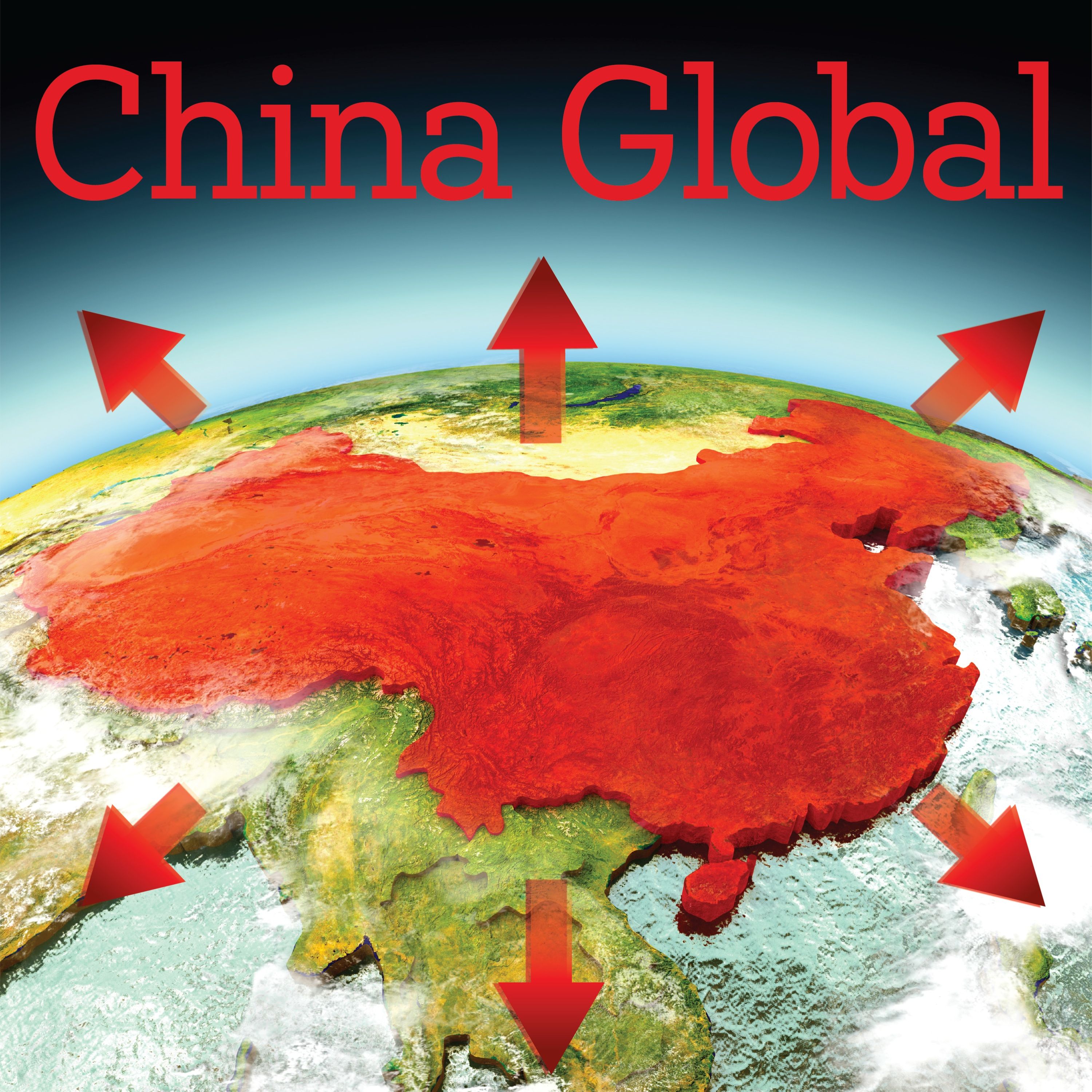
Artwork for China Global
NewsPoliticsNews CommentaryGovernment

China Global

The German Marshall Fund

China’s rise has captivated and vexed the international community. From defense, technology, and the environment, to trade, academia, and human rights, much of what Beijing does now reverberates across the map. China Global is a new podcast from the German Marshall Fund that decodes Beijing’s global ambitions as they unfold. Every other week, host Bonnie Glaser will be joined by a different international expert for an illuminating discussion on a different aspect of China’s foreign policy, the worldview that drives its actions, the tactics it’s using to achieve its goals—and what that means for the rest of the world.

Play
  • 20 episodes
  • fortnightly
  • Avg 33 min
  • English
  • #131
    Wednesday · 32 min

    Prospects for US-China Cooperation to Reduce AI Risks

    Artificial intelligence is emerging as both a powerful source of competition between the United States and China and an area where the two countries may have a shared interest in reducing risk. Washington and Beijing have sharply different views about technology, national security, and governance, yet they also face some of the same potential dangers from increasingly capable AI systems—from cyberattacks and biological threats to unintended escalation and the loss of human control over critical

  • #130
    August 4 · 32 min

    Is China Trying to Rewrite the Rules at Sea?

    Thirty years ago, the People's Republic of China ratified the UN Convention on the Law of the Sea. Since then, Beijing has frequently invoked UNCLOS to support its maritime claims and legal positions, while advancing interpretations of the Convention that many other states –but not all – reject. This June the China Institute for Marine Affairs under the Ministry of Natural Resources marked the 30-year anniversary with an extensive report providing Beijing's interpretation of UNCLOS, including

  • #129
    July 21 · 31 min

    China's Evolving Economic Statecraft Toolkit

    China's growing use of economic power for strategic and political purposes has become one of the defining features of international competition. Beijing is no longer simply using trade and investment to promote economic growth—it is increasingly deploying a sophisticated toolkit of laws, regulations, export controls, market access, infrastructure investment, and technological standards to advance its broader geopolitical objectives. In today's episode, we'll explore how China's approach to eco

  • #128
    July 7 · 32 min

    Europe's China Policy at a Critical Juncture

    In today’s episode, we’ll examine the state of Europe-China relations and the trajectory of the EU’s policy toward China at a pivotal moment. The EU-China relationship has become increasingly complex and contentious. The growing trade imbalance is among the top priority issues: The EU had a record trade deficit in goods with China of 360 billion Euros last year. China’s support for Russia’s war in Ukraine also remains a major concern. At the same time, uncertainty in the transatlantic relationsh

  • #127
    June 23 · 37 min

    China's Push in the South China Sea

    On today’s episode of the China Global Podcast, we’re going to discuss the South China Sea. The past year has been marked by four intersecting dynamics: First, a sharp escalation of Chinese Coast Guard and maritime militia operations, especially against the Philippines. Second, a resumption of large-scale Chinese island construction after nearly a decade-long pause; Third, increasingly sophisticated Chinese legal and administrative moves to consolidate and institutionalize its claims; And fourth

  • #126
    May 26 · 33 min

    Unpacking the Trump-Xi Summit

    Summits between US and Chinese leaders are important events. They provide opportunities to discuss sensitive issues, manage friction, and to identify ways to solve problems and promote cooperation where possible. A great deal of preparation usually goes into a US-China summit, involving hundreds of phone calls, virtual, and in-person meetings between US and Chinese officials. The May 14-15 summit in Beijing was atypical, perhaps not surprisingly since Donald Trump is a very atypical president

  • #125
    May 12 · 31 min

    China's Push to Internationalize the RMB

    A currency becomes “internationalized” when it is widely used beyond its home economy for trade, financial transactions, and as a store of value. Achieving that status can lower transaction costs and exchange rate risks, while also enhancing the issuing country’s geopolitical influence. Today, the global financial system remains overwhelmingly dollar-centric, with China’s renminbi playing a comparatively modest role. Yet over the past decade, Beijing has taken steps to expand its global use, exp

  • #124
    April 28 · 29 min

    Why China–North Korea Ties Are Warming Again

    In the 1950s, Mao Zedong described the relationship between China and North Korea as “as close as lips and teeth.” Over subsequent decades, the relationship has ebbed and flowed, alternating between close alignment and periods of strain. In recent months, China-NK ties appear to be warming once again. A series of high-level exchanges, including Kim Jong Un’s attendance at China’s Victory Day parade last September, followed by a trip to North Korea by Chinese Premier Li Qiang the following month,

  • #123
    April 14 · 34 min

    Unpacking the Xi-Cheng Meeting: Objectives and Outcomes

    On today’s episode, we’ll discuss the recent meeting between Chinese leader Xi Jinping and KMT Chairwoman Cheng Li-wun, the first in a decade between a Chinese Communist Party General Secretary and a KMT Chair. Ms. Cheng was elected party chair only four months ago, and her top priority was to meet with Xi Jinping. She has not yet visited the United States, but says she intends to do so later this year. In their public statements, Xi Jinping and Cheng Li-wun highlighted several common themes

  • #122
    March 31 · 28 min

    What the Iran War Means for China’s Energy Security

    On February 28th, the United States and Israel launched airstrikes on multiple sites in Iran, marking the beginning of a wider military conflict with Iran. Tehran responded with attacks on Israel, US military bases, and US allies across the Middle East and closed the Strait of Hormuz. These events have caused a major disruption in the global supply of oil and gas. China, as the world’s largest energy importer, is exposed to these disruptions, but its long-term energy security strategy has left i

  • #121
    March 17 · 40 min

    What to Expect from the Trump-Xi Summit: A Conversation with Dr. Da Wei

    President Donald Trump is expected to visit Beijing from March 31 to April 2 for a summit with Chinese leader Xi Jinping. It will mark the first meeting between the two leaders since they agreed to a trade truce last October that ended months of escalating tensions prompted by tariffs imposed by the United States and Chinese restrictions on rare earth exports. U.S. Treasury Secretary Scott Bessent and U.S. Trade Representative Jamieson Greer will meet Chinese Vice Premier He Lifeng in Paris la

  • #120
    March 3 · 34 min

    China-Iran Relations: Transactional or Strategic?

    The United States is once again considering military strikes to curb Iran’s nuclear activities and missile program. China has emerged as a particularly important partner of Iran, serving as the country’s largest trade partner and one of its few sources of consistent diplomatic backing. For Beijing, the stakes in the relationship extend beyond energy security, but also include great power competition with the US and China’s broader strategic ambitions in the Middle East. There are reports that Ir

  • #119
    February 17 · 32 min

    If China Attacks Taiwan: China's Economic Vulnerabilities

    Today’s episode is the third in a series of three that examine the potential consequences for China if a military operation against Taiwan were to fail. In each of these episodes, we’re speaking with authors of a recently published German Marshall Fund study of the possible costs that China would incur across four different, but interrelated areas: the Chinese economy, the military, Chinese social stability, and international costs. The report is titled, “If China Attacks Taiwan” and it is poste

  • #118
    February 3 · 37 min

    If China Attacks Taiwan: Beijing Risks Social Instability in a Taiwan Conflict

    Today’s episode is the second in a three-part series that examines the potential consequences for China if a military operation against Taiwan were to fail. In each of these episodes, we’re speaking with authors of a recently published German Marshall Fund study of the possible costs that China would incur across four different, but interrelated areas: the Chinese economy, the military, Chinese social stability, and international costs. Our podcast today focuses on the potential costs for domest

  • #117
    January 21 · 38 min

    If China Attacks Taiwan: Military Risks and International Costs

    Concern about the possibility of a Chinese attack against Taiwan has surged in recent years. Wargames and research studies have focused primarily on identifying gaps in US and allied capabilities with the goal of strengthening deterrence. A relatively understudied question, however, is the potential consequences for China if a military operation against Taiwan were to fail. To address this gap, the German Marshall Fund led a study of the possible costs that China would incur across four differen

  • #116
    January 6 · 31 min

    China’s Latin America Strategy: A Collision Course with the U.S.?

    Although geographically distant from Chinese shores, Latin America and the Caribbean occupy an important place in Chinese foreign policy. In the past decade, China has significantly expanded its influence in the region. The main vector of Chinese involvement has been economic, including securing access to commodities such as soybeans, copper, oil, and lithium, creating markets for Chinese companies, and deepening financial ties through trade, lending, and infrastructure investment. On December

  • #115
    Dec 11, 2025 · 29 min

    Taiwan Sparks Tensions: Inside the China-Japan Dispute

    Tensions between China and Japan have spiked since November 7 when Japan’s newly elected prime minister, Sanae Takaichi, said in the Japanese parliament that a Chinese attack on Taiwan would be a situation threatening Japan’s survival. Under Japan's 2015 security laws, that suggests Japan's self-defense forces could be activated to respond. The following day, the Chinese consul general in Osaka, Xue Jian, posted that China had no choice but to cut off the prime minister’s head. China-Japan relat

  • #114
    Nov 25, 2025 · 31 min

    Inside the 2025 US-China Economic and Security Commission Report: Key Findings and Recommendations

    The US-China Economic and Security Review Commission has just released its 2025 annual report to Congress. The annual report’s analysis and recommendations are a crucial source of information for Congress, the executive branch, and observers of US-China relations. This year’s report includes 28 key recommendations for Congress.   On this episode of China Global, we have two Commissioners joining us to discuss the report, Commissioner Aaron Friedberg and Commissioner Mike Kuiken. Commissioner Fr

  • #113
    Nov 11, 2025 · 30 min

    The Trump-Xi Summit and Future of US-China ties

    On October 30, US President Trump and China’s leader Xi Jinping met in Busan, South Korea. It was their first face-to-face meeting in 6 years. There was a lot at stake in this meeting for the US and China, as well as for the rest of the world. In my view, the outcome is best described as a fragile truce. The path forward for US-China relations remains uncertain – greater stability and predictability is possible, but not assured. Intense competition across several domains, especially technology,

  • #112
    Oct 28, 2025 · 30 min

    The Fourth Plenum: Decoding China's Roadmap to 2030

    From October 20-23, the Central Committee of the Chinese Communist Party held its Fourth Plenum in Beijing, marking an important moment as the Party sets the direction for China’s development for the next five years. The session adopted recommendations for the 15th Five-Year Plan, endorsing Xi Jinping’s goals of high-quality development, scientific and technological self-reliance, and strengthening national security in response to rising global instabilities. The Central Committee also announced

Showing 1–20 of 20 episodes