Skip to content
Artwork for Chesterton Radio
FictionDrama

Chesterton Radio

Chesterton Radio

Welcome to Chesterton Radio—where stories, ideas, and wonder meet. Discover original fiction, Father Brown mysteries, classic radio drama, literary deep dives, thoughtful conversations, and daily Morning Prayer inspired by G. K. Chesterton, C. S. Lewis, and the enduring tradition of Christian storytelling. Broadcasting from the little station on Commercial Street in Atchison, Kansas, Chesterton Radio offers a daily refuge from the noise of modern life. Whether you're drawn to timeless mysteries, great books, old-time radio, or conversations that illuminate truth, goodness, and beauty, you'll find something here worth hearing. Slow down. Listen well. Rediscover the joy of the moral imagination.

chestertonradio.substack.com
Play
  • 46 episodes
  • Avg 35 min
  • English
Counted on this page — what you have heard stays on this device, so it is not something the list can be paged by.
  • Today · 57 min

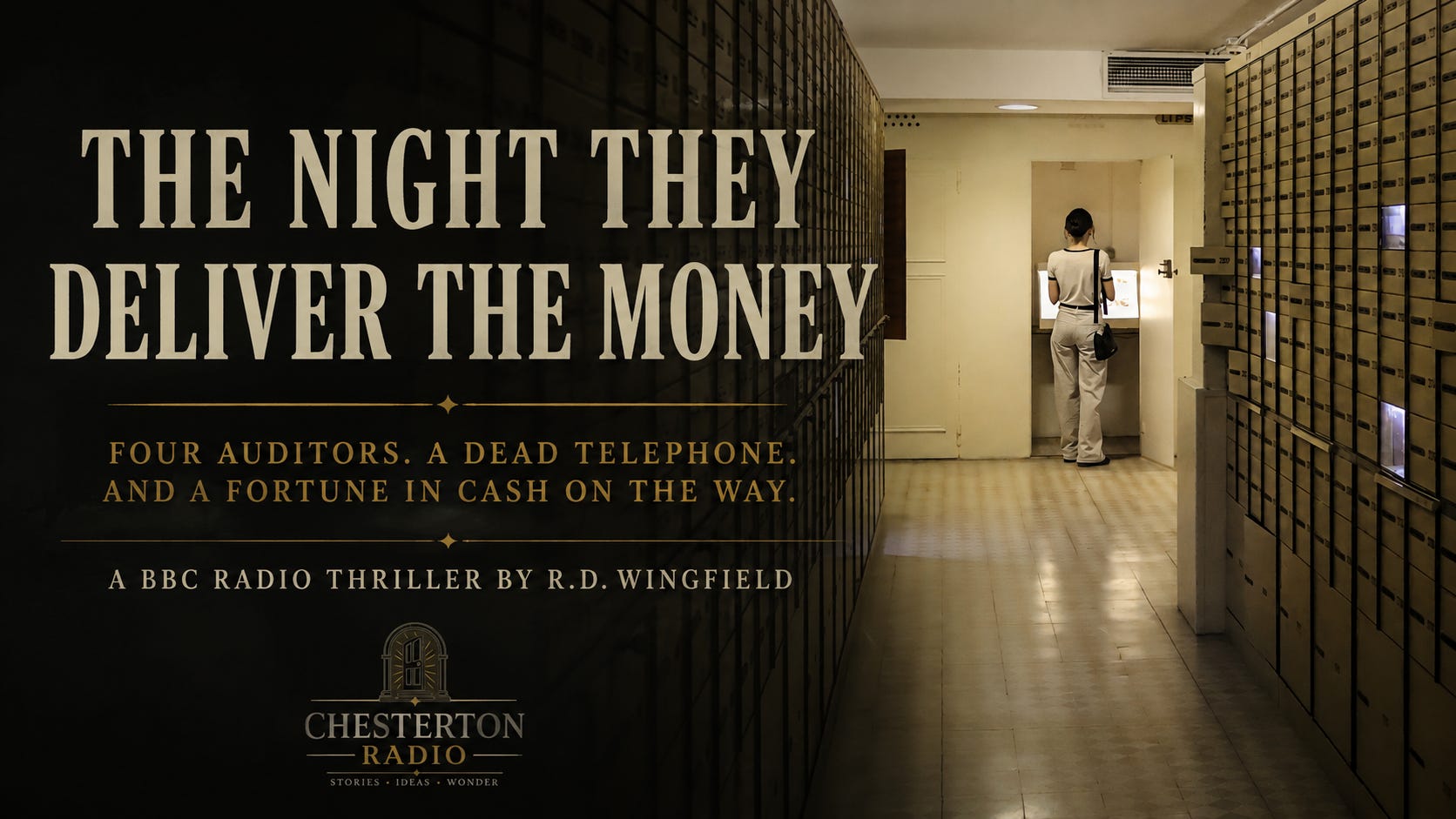
    The Night They Deliver the Money | R.D. Wingfield | BBC Radio Thriller

    It should have been a routine night at the bank. A large consignment of money is due to arrive, and manager Mr. Robbins has procedures to follow, forms to complete, and rules intended to make sure nothing goes wrong. Then four men arrive claiming to be auditors. Head Office says it sent no auditors. Then the telephone goes dead. And the money is still coming. R. D. Wingfield’s The Night They Deliver the Money is a wonderfully constructed BBC radio thriller in which an ordinary workplace slowly becomes something much more sinister. Best known today as the creator of Inspector Frost, Wingfield had a remarkable talent for mixing suspense with dry humor, eccentric characters, and the absurdities of people trying to follow procedure when the situation has gone completely off the rails. Originally broadcast by the BBC on April 4, 1970, the play stars Lockwood West as the increasingly beleaguered Robbins, with Andrew Sachs among an excellent cast. Turn down the lights. The auditors have arrived. And somewhere out there, the money is on its way. 🎧 A Chesterton Radio presentation of classic radio drama. If you enjoy discovering plays like this, please consider becoming a paid subscriber or supporting Chesterton Radio. Your support helps us keep old radio, forgotten drama, original programs, and the Common Room alive. Get full access to CHESTERTON RADIO at chestertonradio.substack.com/subscribe

  • Today · 26 min

    The Demon King — J. B. Priestley’s Strange Boxing Day Tale

    It is Boxing Day in Bruddersford, and the local pantomime is heading for disaster. The company is struggling; the audience is restless—and the actor who is supposed to play the Demon King has failed to appear. Then the Demon King walks onto the stage. He is magnificent. There is only one problem: who is he? J. B. Priestley’s The Demon King is a wonderfully peculiar mixture of Christmas comedy, backstage drama and supernatural mystery, in which a shabby provincial theatre becomes the setting for something that may be considerably stranger than make-believe. Originally broadcast by the BBC Home Service on Boxing Day, December 26, 1962, this production stars Ian Wallace and Marjorie Westbury, with an adaptation by Michael and Mollie Hardwick, production by Charles Lefeaux, and special effects from the legendary BBC Radiophonic Workshop. Preserved through the BBC Transcription Service, it is exactly the sort of half-forgotten radio treasure worth hearing again. Turn down the lights. The curtain is going up. And whatever happens, don’t miss the entrance of the Demon King. Get full access to CHESTERTON RADIO at chestertonradio.substack.com/subscribe

  • Today · 36 min

    When the Rules Disappeared The Real Moscow Behind East of the Map: The Fax Machine

    In the first episode of EAST OF THE MAP, the trouble begins with something wonderfully mundane: an American company’s missing shipment and a fax machine that ought to be waiting in Moscow. But Moscow in 1992 is no ordinary place. The Soviet Union is gone. Prices are changing almost by the day. Private businesses are appearing beside old state institutions. Western companies are arriving. Factories still stand and machines still run—but suddenly questions as simple as Who owns this? may have surprisingly complicated answers. This Common Room Deep Dive includes Spoilers. We invite you to read or listen to the original story first then return for our discussion. In this Common Room Deep Dive, we use “The Fax Machine” as our doorway into that extraordinary moment. We explore the real economic upheaval behind the story, why office equipment and reliable communications mattered, the uncertain ownership of Soviet industrial property, and the uneasy boundary between official rules and the personal relationships that actually made things happen. And at the center are Dan Mercer and Elizabeth Rowan—two capable people discovering that they see this changing world very differently…and that each may understand something the other doesn’t. A Deep Dive into history, commerce, bureaucracy, human judgment—and an obsolete little machine that turns out to be a remarkably good symbol for a world being reinvented. EAST OF THE MAP is a new Chesterton Radio original series. If Chesterton Radio’s original stories, Deep Dives, classic radio, and the growing Common Room are worth keeping alive, please consider becoming a paid subscriber or supporting the station. Chesterton Radio is produced independently, and every subscription and contribution helps us keep creating and sharing work like this. Thank you for listening—and for helping keep the little station on the air. Get full access to CHESTERTON RADIO at chestertonradio.substack.com/subscribe

  • Monday · 52 min

    The End of the World Was Run from Omaha

    Tonight, The Common Room is on the road in Omaha, Nebraska. At first glance, Omaha seems an unlikely place to begin a story about the end of the world. But just a few miles from downtown, at Offutt Air Force Base, stood one of the most consequential command centers on Earth. For decades, Strategic Air Command maintained America’s nuclear bombers, missiles and command systems in a state of extraordinary readiness. If the Cold War had ever turned hot, decisions made or transmitted through Nebraska could have helped determine the fate of civilization. And Omaha’s connection to the atomic age began even earlier. The Enola Gay and Bockscar—the B-29s associated with the atomic bombings of Hiroshima and Nagasaki—were built at the massive Martin bomber plant outside Omaha. Then came Curtis LeMay and SAC. Bombers stood alert. Nuclear missiles appeared among Nebraska farms and small towns. Deep beneath Offutt, commanders prepared for a war everyone desperately hoped would never happen. And beginning in 1961, there was Looking Glass. Twenty-four hours a day, 365 days a year, an airborne command post remained ready to take control if the headquarters below were destroyed. Christmas morning. Sunday afternoon. Three o’clock in the morning. While families ate dinner, children went to school, farmers worked their fields and Omaha went about the ordinary business of being an American city... somebody was always watching for the end of the world. Tonight, in The Common Room, we tell the remarkable story of how Nebraska became a nerve center of the nuclear age—and wrestle with the paradox at the heart of Strategic Air Command: Did these terrible weapons bring the world closer to destruction—or did the certainty of destruction prevent World War III? We’ll also connect the story with Philip K. Dick’s remarkable 1956 X Minus One Drama The Defenders, and a question that sounds even more urgent today: What happens when we entrust machines with decisions humans can barely comprehend? Recorded remotely from Omaha, Nebraska. Come into the Common Room. The conversation is just getting started. Stories • Ideas • Wonder The Open Door is always on. Support Chesterton Radio Chesterton Radio is an independent, listener-supported project preserving great stories, rediscovering forgotten voices, and creating new conversations about history, literature, faith, technology and the human condition. If these programs are worth having, please help us keep the Little Station on the air through a paid Substack subscription, Patreon, or Buy Me a Coffee. Every listener—and every bit of support—helps keep the door open. Get full access to CHESTERTON RADIO at chestertonradio.substack.com/subscribe

  • Monday · 29 min

    The Defenders — Philip K. Dick’s Chilling Vision of a War the Machines Refused to Fight

    For eight years, humanity has lived underground. Above them, the nuclear war continues. Or so they have been told. The surface belongs to machines now—robot “leadies” built to fight a war too radioactive for human beings. Every day they return below ground with reports of ruined cities, new attacks and an enemy that refuses to surrender. Then someone decides to go up and see the war for himself. What he discovers changes everything. Tonight on Chesterton Radio, X Minus One presents “The Defenders,” adapted from the story by Philip K. Dick—one of the most provocative science-fiction writers of the twentieth century. Broadcast by NBC on May 22, 1956, The Defenders comes from the darkest years of the Cold War, when nuclear bombers stood ready, civil-defense planners contemplated life underground, and Americans were learning to live with the possibility that civilization might disappear in an afternoon. But Dick asks a stranger and more unsettling question: What if the machines entrusted with fighting our war understood something that we did not? It is science fiction, Cold War thriller and moral fable in one remarkably compact radio drama—and nearly seventy years later, its questions about war, automation, artificial intelligence and human judgment sound less dated than ever. And there is another reason we’re listening tonight. Chesterton Radio is broadcasting from Omaha, Nebraska, just a few miles from Offutt Air Force Base—the place that became the nerve center of America’s Strategic Air Command and one of the most important command posts of the nuclear age. Later, we’ll go deeper into that remarkable Nebraska story. For now, turn down the lights. The people are underground. The machines are on the surface. And something is very wrong with the war. Welcome to The Defenders. Keep the Little Station on the Air Chesterton Radio is an independent listener-supported project devoted to great stories, forgotten radio, thoughtful conversation, history, literature, faith and wonder. If you enjoy what we’re doing, please consider becoming a paid subscriber or supporting the station through Patreon or Buy Me a Coffee. Every contribution helps keep the Little Station broadcasting. Stories • Ideas • Wonder And as always— The Open Door is always on. Get full access to CHESTERTON RADIO at chestertonradio.substack.com/subscribe

  • Sunday · 52 min

    The Zeal of Thy House | Dorothy L. Sayers

    What happens when the work of your hands becomes the measure of your worth? Dorothy L. Sayers’ The Zeal of Thy House takes us into the rebuilding of Canterbury Cathedral in the twelfth century and the story of William of Sens, the brilliant architect called to restore the cathedral after a devastating fire. But Sayers is interested in far more than architecture. This is a drama about vocation, craftsmanship, pride, beauty, sacrifice—and the dangerous temptation to believe that the thing we create belongs entirely to us. William is a master builder who knows his gifts. He also knows the cathedral rising beneath his direction may outlast kings, bishops, and perhaps even his own name. Somewhere between the desire to make something beautiful and the desire to possess that beauty lies the spiritual struggle at the heart of Sayers’ play. For anyone who has ever built something, written something, designed something, taught something—or poured themselves into work they believed mattered—The Zeal of Thy House asks an uncomfortable question: Whose work is it, really? Settle in for Sunday night at the Little Station on Commercial Street in Atchison, Kansas. Stories • Ideas • Wonder Keep the Little Station On the Air Chesterton Radio is an independent project built with a very small crew and made possible by listeners who believe these stories, plays, books, conversations, and forgotten treasures are worth preserving and sharing. If Chesterton Radio has become part of your day, please consider helping us keep the lights on and the programs coming. ☕ Buy Me a Coffeehttps://buymeacoffee.com/chestertonradio ❤️ Patreonhttps://www.patreon.com/chestertonradio ✉️ Subscribe on Substack Every subscription, contribution, comment and share helps keep the Little Station broadcasting. Explore Chesterton Radio World 📻 Listen Live — The Open Doorhttps://live.chestertonradio.com 🏠 Chesterton Radio on Substack ▶️ Chesterton Radio on YouTubehttps://www.youtube.com/@ChestertonRadio ☕ Support the Stationhttps://buymeacoffee.com/chestertonradio ❤️ Join us on Patreonhttps://www.patreon.com/chestertonradio From old-time radio and BBC drama to G.K. Chesterton, original stories, The Common Room, ROOK and new productions from the Little Station— The Open Door is always on. Get full access to CHESTERTON RADIO at chestertonradio.substack.com/subscribe

  • Sunday · 28 min

    When the Alarm Rings and Nobody Moves

    The warning has been given. Something is wrong. And yet nobody moves. Why? In this Common Room Deep Dive, we explore normalcy bias — the strange and deeply human tendency to interpret an extraordinary danger through the reassuring experience of ordinary life. Why do people delay evacuating when an alarm sounds? Why do we look around to see what everyone else is doing? Why can yesterday’s false alarm make tomorrow’s real warning easier to dismiss? And why do intelligent, experienced people sometimes have the greatest confidence that they can handle what is coming? At the center of our conversation is one of the great stories of classic radio: Carl Stephenson’s “Leiningen Versus the Ants.” We listen alongside two remarkable treatments of the story — Escape’s tense adaptation of “Leiningen Versus the Ants” and Lux Radio Theatre’s expanded The Naked Jungle — and confront a surprisingly difficult question: Is Leiningen suffering from normalcy bias at all? He has been warned. He knows the danger is real. Everyone tells him to leave. He stays. Is that denial? Hubris? Courage? Or has Leiningen simply assessed the danger differently from everyone else? Our Deep Dive includes Spoilers so we invite you to listen to these shows first, then return and join us for a discussion. From radio drama we move into the psychology of real disasters: fires, tsunami warnings, evacuations, social conformity, the cry-wolf effect, risk perception, and the uncomfortable evidence that human beings can become accustomed even to warning signs that should terrify us. But there is another side to the question. We cannot live as though every alarm means catastrophe. Sometimes the person who refuses to panic really is the person thinking most clearly. So how do we distinguish prudence from fear — and courage from complacency? Perhaps the deepest danger is not believing that nothing will ever change. It is believing that because something was true yesterday, it must still be true tomorrow. Pull up a chair. The Common Room is open at the Little Station on Commercial Street. Chesterton Radio — Stories • Ideas • Wonder. ❤️ Help Keep the Little Station on the Air Chesterton Radio is independent and listener-supported. If programs like The Common Room help you rediscover a forgotten story, encounter an unexpected idea, or simply spend a little time in thoughtful company, please consider helping us keep the Little Station broadcasting. ⭐ Become a paid Substack subscriberhttps://chestertonradio.substack.com/subscribe ☕ Support Chesterton Radio on Buy Me a Coffeehttps://buymeacoffee.com/chestertonradio 💙 Support Chesterton Radio on Patreonhttps://www.patreon.com/chestertonradio Every subscription, contribution, share, and recommendation helps us preserve classic radio and continue creating new programs. And if financial support isn’t right for you, you’re still part of the station. Listen. Share. Tell a friend. Come back tomorrow. The Open Door stays open. 🌎 The Chesterton Radio World 📖 Chesterton Radio on Substack ▶️ Chesterton Radio on YouTubehttps://www.youtube.com/@ChestertonRadio 🚪 The Open Door — Chesterton Radio Live 24/7https://live.chestertonradio.com 🎙️ Chesterton Radio on Apple Podcasts ☕ Chesterton Radio Membershiphttps://buymeacoffee.com/chestertonradio 💙 Patreonhttps://www.patreon.com/chestertonradio 🛍️ The Chesterton Radio Shophttps://shop.chestertonradio.com From old-time radio and classic literature to original stories, history, faith, great ideas, and conversations worth having, there is always another door to open. Chesterton RadioStories • Ideas • Wonder The Open Door is always on. Get full access to CHESTERTON RADIO at chestertonradio.substack.com/subscribe
  • Saturday · 45 min

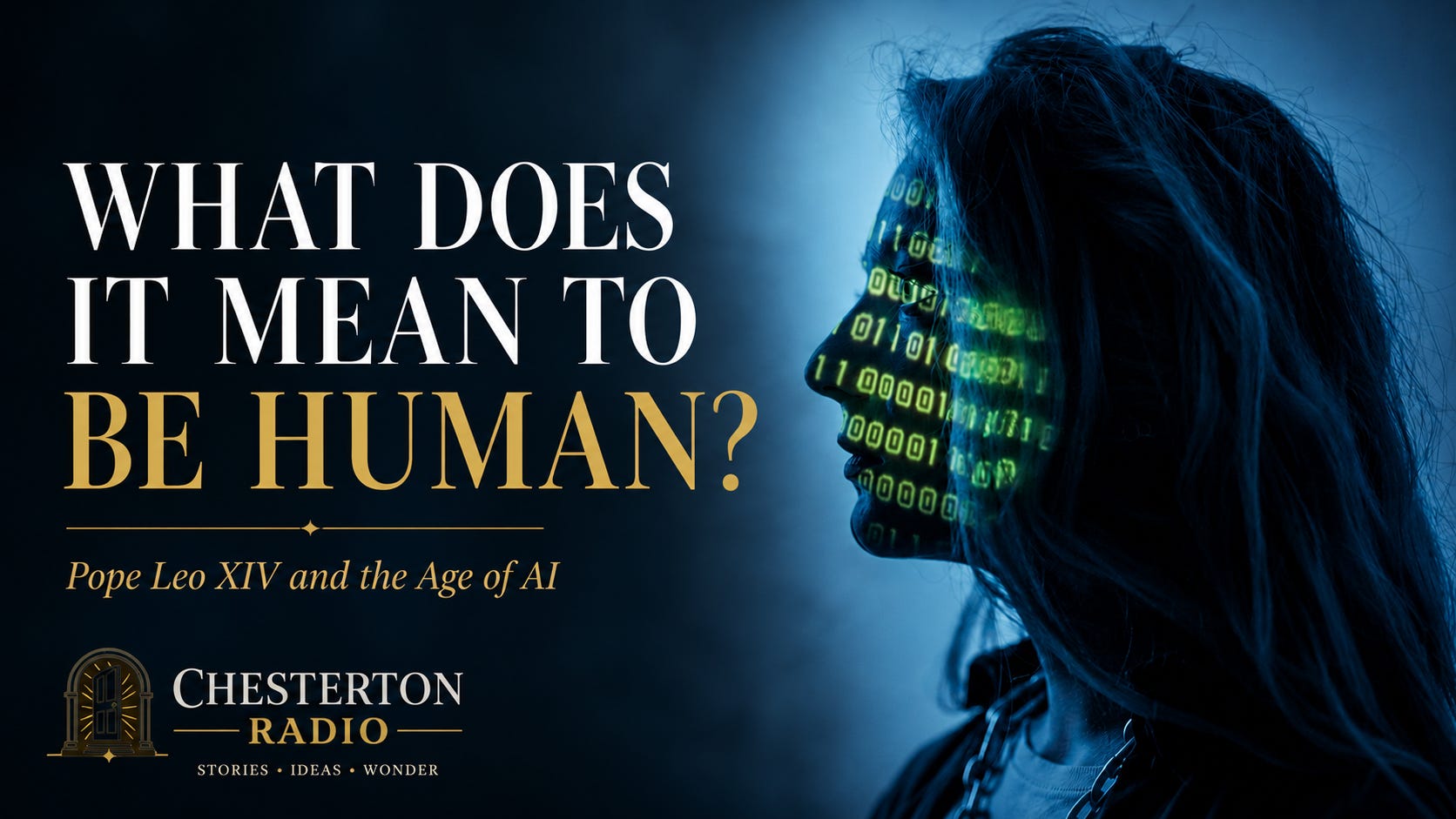
    What Does It Mean to Be Human in the Age of AI?

    Artificial intelligence can write, calculate, imitate voices, create images, diagnose problems and perform tasks once thought to require distinctly human intelligence. So, what, exactly, remains uniquely human? In his first encyclical, Magnifica Humanitas — On Safeguarding the Human Person in the Time of Artificial Intelligence, Pope Leo XIV takes up one of the defining questions of our age. But this is not simply an encyclical about technology. It is about us. In this Chesterton Radio Deep Dive, we enter the Common Room to explore Leo XIV’s remarkable argument about human dignity, work, intelligence, power, education, relationships, warfare—and the increasingly uncertain boundary between human beings and the machines we create. There is also an extraordinary historical echo. In 1891, Pope Leo XIII issued Rerum Novarum as the Industrial Revolution transformed work, wealth and society. Now another Pope Leo confronts another technological revolution. The factory has become the algorithm. The industrial magnate has become the technology platform. And an old question has returned in a startlingly new form: Does technology exist for man—or does man eventually begin to exist for technology? We explore Leo XIV’s image of the Tower of Babel, his warnings about concentrated technological power and autonomous weapons, his defense of human work, and his insistence that intelligence alone does not define a person. And then we bring G. K. Chesterton into the conversation. Chesterton spent a lifetime challenging the assumption that bigger, faster and more efficient necessarily mean better. His defense of ordinary people, human scale, wonder, limits and the dignity of everyday life suddenly feels remarkably contemporary. Perhaps the deepest danger of artificial intelligence is not that the machine will awaken one morning and become human. Perhaps it is that we will gradually become machine-like ourselves— calculating without wisdom, communicating without communion, remembering without understanding, and producing without wonder. Pull up a chair. The Common Room is open. ❤️ Help Keep the Little Station on the Air Chesterton Radio is an independent, listener-supported home for classic radio, great literature, history, faith, original stories and conversations worth having. If programs like The Common Room give you something to think about, please consider helping us keep the Little Station broadcasting. ☕ Buy Me a Coffee — become a member or make a contributionhttps://buymeacoffee.com/chestertonradio ⭐ Become a paid Chesterton Radio subscriber on Substackhttps://chestertonradio.substack.com/subscribe 💙 Support Chesterton Radio on Patreonhttps://www.patreon.com/chestertonradio Every subscription, contribution, share and recommendation helps keep the Open Door open. And if financial support isn’t right for you, you’re still part of the station. Listen. Share. Tell a friend. Come back tomorrow. 🌎 The Chesterton Radio World 📻 Chesterton Radio on Substack ▶️ Chesterton Radio on YouTubehttps://www.youtube.com/@ChestertonRadio 🚪 The Open Door — Chesterton Radio Live 24/7https://live.chestertonradio.com ☕ Chesterton Radio Membershiphttps://buymeacoffee.com/chestertonradio 💙 Patreonhttps://www.patreon.com/chestertonradio 🛍️ The Chesterton Radio Shophttps://shop.chestertonradio.com From the Little Station on Commercial Street in Atchison, Kansas. Chesterton Radio — Stories • Ideas • Wonder The Open Door is always on. Get full access to CHESTERTON RADIO at chestertonradio.substack.com/subscribe
  • Thursday · 25 min

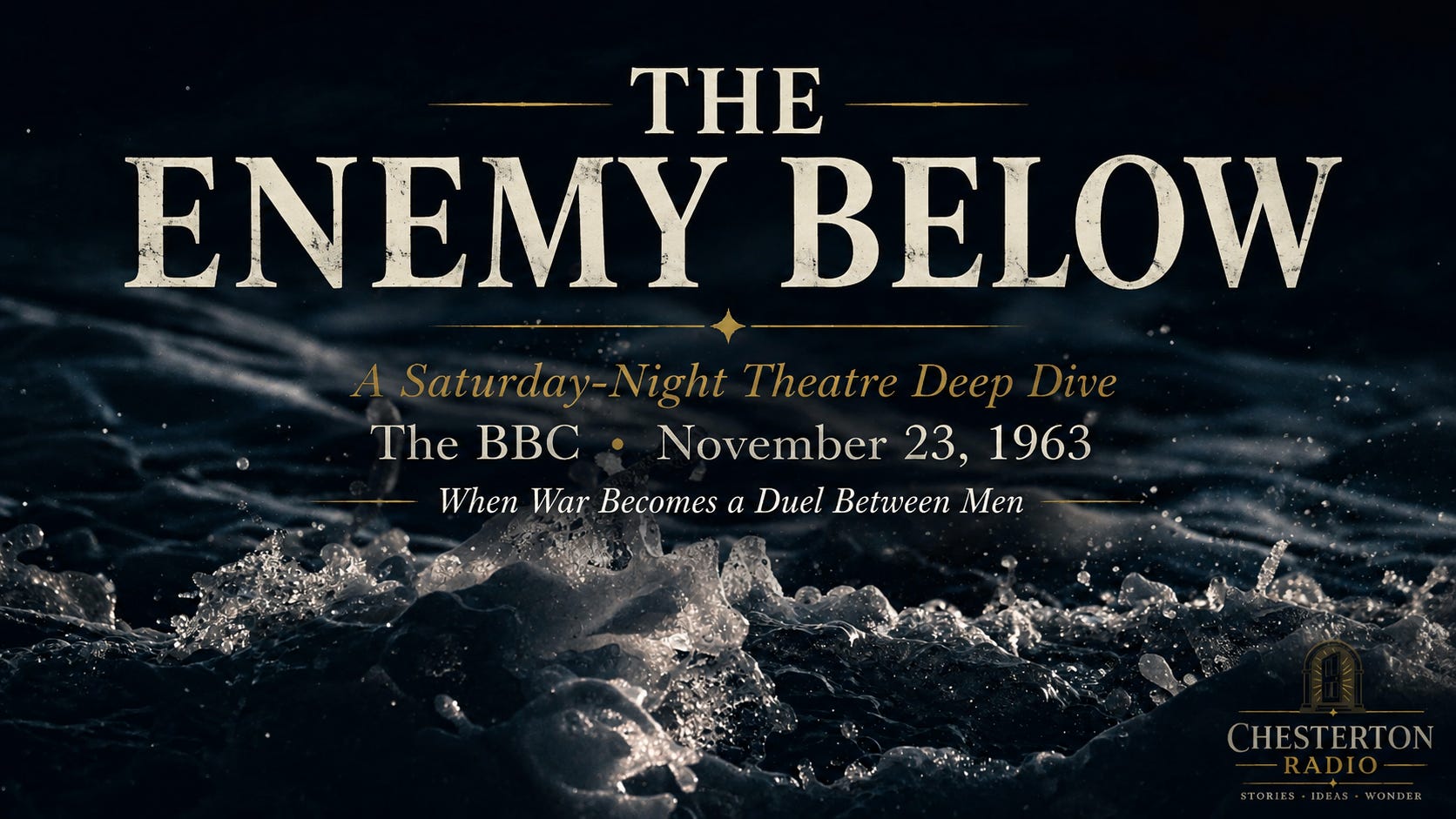
    The Enemy Below: The Night History Broke In

    On Saturday evening, November 23, 1963, listeners across Britain turned on the BBC Home Service. The world was still reeling from the assassination of President John F. Kennedy the previous day. And that evening, Saturday-Night Theatre took listeners back to another time of uncertainty and death: the Battle of the Atlantic. The Enemy Below, adapted from D. A. Rayner’s novel, is an extraordinary duel between two naval commanders—one aboard a British warship, the other commanding a German U-boat. They cannot see one another, yet through sonar, maneuver, deception and instinct, each gradually comes to understand the man he is trying to destroy. But this particular surviving recording contains something even more remarkable. The play ends—and the BBC news begins. Suddenly we leave the fictional Atlantic of 1943 and find ourselves listening to November 23, 1963 itself, as broadcasters report on the aftermath of Kennedy’s assassination. In this episode of The Common Room, from The Little Station on Commercial Street in Atchison, Kansas, we explore The Enemy Below, the real Battle of the Atlantic, D. A. Rayner, the art of radio drama, and the strange kinship that develops between two enemies. And then we listen to what happened when history unexpectedly entered the recording. Perhaps an old radio recording preserves more than a program. Sometimes it preserves an evening. Sometimes it preserves a world. Pull up a chair. The Common Room is open. ❤️ Help Keep The Little Station on the Air Chesterton Radio is independent and listener-supported. We preserve forgotten broadcasts, rediscover great stories, and create new programs exploring literature, history, faith, drama and the permanent things. If programs like this are worth keeping alive, please consider helping us keep the lights on and the microphone open. Become a paid Chesterton Radio subscriber on SubstackSupport Chesterton Radio on PatreonBuy Me a Coffee / Chesterton Radio Membership Every subscription, contribution, share and recommendation helps keep The Little Station on Commercial Street broadcasting. 🌎 The Chesterton Radio World Chesterton Radio on Substack — The Common Room, podcasts, essays, original stories and more. Chesterton Radio on YouTube — Classic radio drama, BBC treasures, mysteries, literature and deep dives. The Open Door — Chesterton Radio Live 24/7 — Leave the radio on and see what comes through the door. Chesterton Radio on Apple Podcasts — Take The Little Station with you. Chesterton RadioStories • Ideas • Wonder The Little Station on Commercial Street • Atchison, Kansas The Open Door is always on. Get full access to CHESTERTON RADIO at chestertonradio.substack.com/subscribe
  • Thursday · 27 min

    What Is College for in the Age of AI?

    Artificial intelligence can write the essay, solve the equation, generate the code, summarize the book—and increasingly perform the very tasks students have traditionally done in order to learn. So what happens to education? In a striking new statement, MIT calls the arrival of generative AI a “watershed moment” for higher education. But rather than simply asking whether students should be allowed to use AI, MIT is confronting a much larger question: What should a university actually teach when answers are becoming almost free? In this episode of The Common Room, we use MIT’s new approach as the starting point for a wider conversation about learning, knowledge and human intelligence. Why should an engineering student learn calculations that AI can perform instantly? What must we know ourselves before we can judge whether an AI-generated answer is right? Will essays and homework give way to oral examinations, laboratories, design reviews and hands-on projects? Could AI make great individual tutoring available to millions—or create a generation increasingly dependent on machines to think? And perhaps most importantly: If a machine can produce the answer, why should a human being learn how to produce it? Perhaps because education was never merely about producing answers. It was about forming the person capable of understanding them. Join us in The Common Room for a conversation about MIT, artificial intelligence, engineering, teaching—and what education is ultimately for. Stories • Ideas • Wonder Support independent programming from Chesterton Radio and help us keep The Common Room and the Little Station growing. ChestertonRadio.Substack.com BuyMeACoffee.com/ChestertonRadio.com Live.ChestertonRadio.com Get full access to CHESTERTON RADIO at chestertonradio.substack.com/subscribe

  • Thursday · 56 min

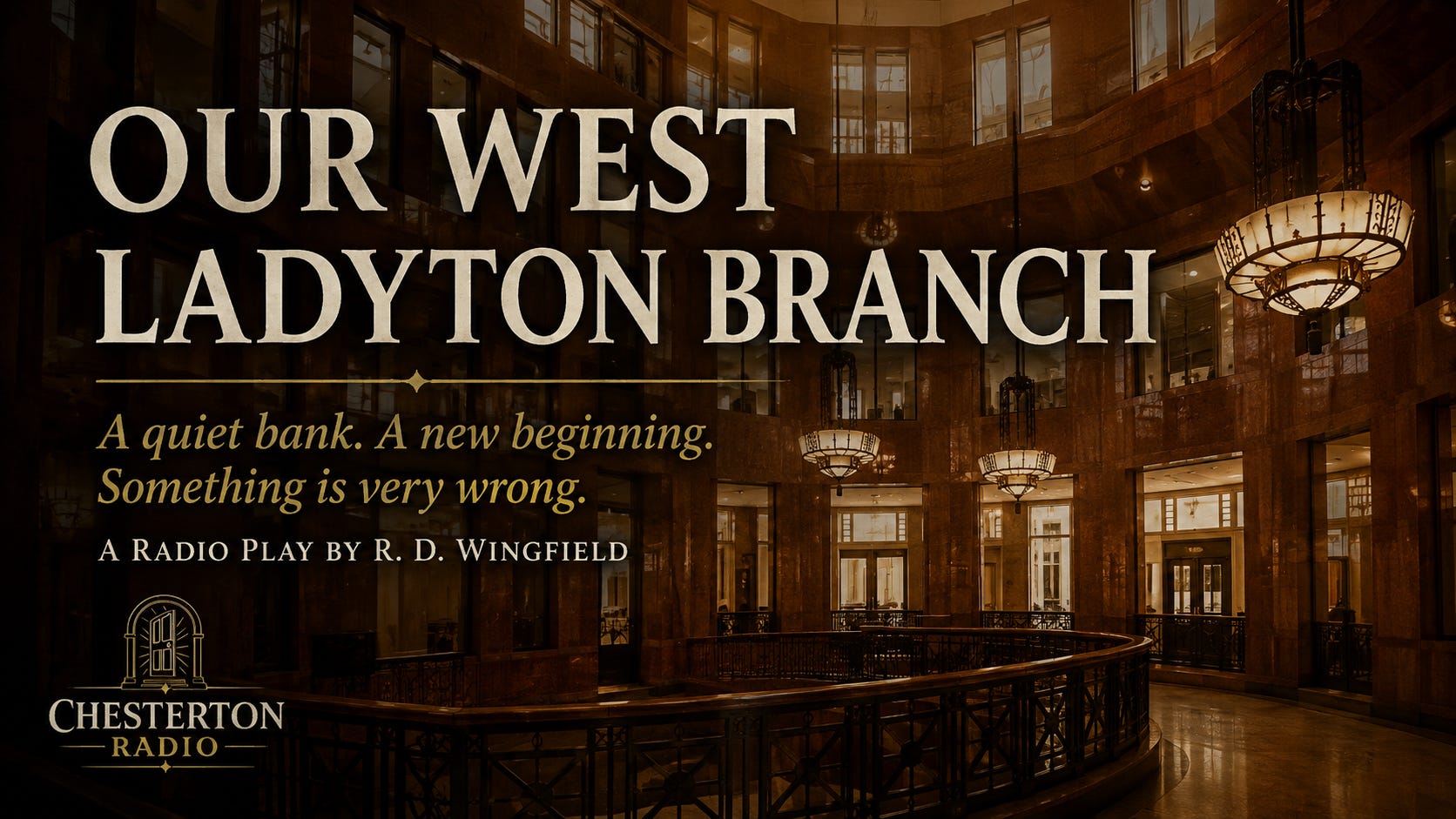
    Our West Ladyton Branch | R. D. Wingfield

    Long before R. D. Wingfield created the world of Detective Inspector Jack Frost, he was writing ingenious dramas for BBC radio. Our West Ladyton Branch, first broadcast in 1968, was Wingfield’s breakthrough radio play — a wonderfully understated mixture of suspense, crime, dry humor, and ordinary people finding themselves in decidedly extraordinary circumstances. A bank manager recovering from a nervous breakdown is sent to what should be an easy assignment: a quiet little branch in the Devon town of West Ladyton. Peaceful. Routine. Uneventful. At least, that’s the idea. Before long, the new manager begins to discover that the sleepy branch may not be quite as respectable — or as innocent — as it appears. If you enjoy classic British radio drama, clever mysteries, and the later A Touch of Frost, this is a fascinating opportunity to hear R. D. Wingfield near the very beginning of his remarkable career. Originally broadcast: November 13, 1968Written by: R. D. WingfieldRunning time: approximately 56 minutes More R. D. Wingfield plays in our Playlist: ☕ Help Keep the Little Station On the Air Chesterton Radio is listener-supported. If these forgotten plays, classic stories, conversations, and old-time radio programs are worth preserving, please consider helping us keep the station going. Support Chesterton Radio:https://ChestertonRadio.Substack.com Every contribution helps us find, preserve, and share more remarkable radio. 📻 Enter the Chesterton Radio World There’s always something playing somewhere around the Little Station. Chesterton Radiohttps://Live.ChestertonRadio.com The Common Room — Stories, Ideas & Conversation Subscribe and join us for more classic radio drama, mysteries, literature, history, comedy, and conversations from the Chesterton Radio world. Stories • Ideas • Wonder #RDWingfield #BBCRadioDrama #ClassicRadio #RadioDrama #BritishDrama #ATouchOfFrost #OldTimeRadio #ChestertonRadio #TheLittleStationonCommercialStreet #Atchison #Kansas Get full access to CHESTERTON RADIO at chestertonradio.substack.com/subscribe

  • Thursday · 23 min

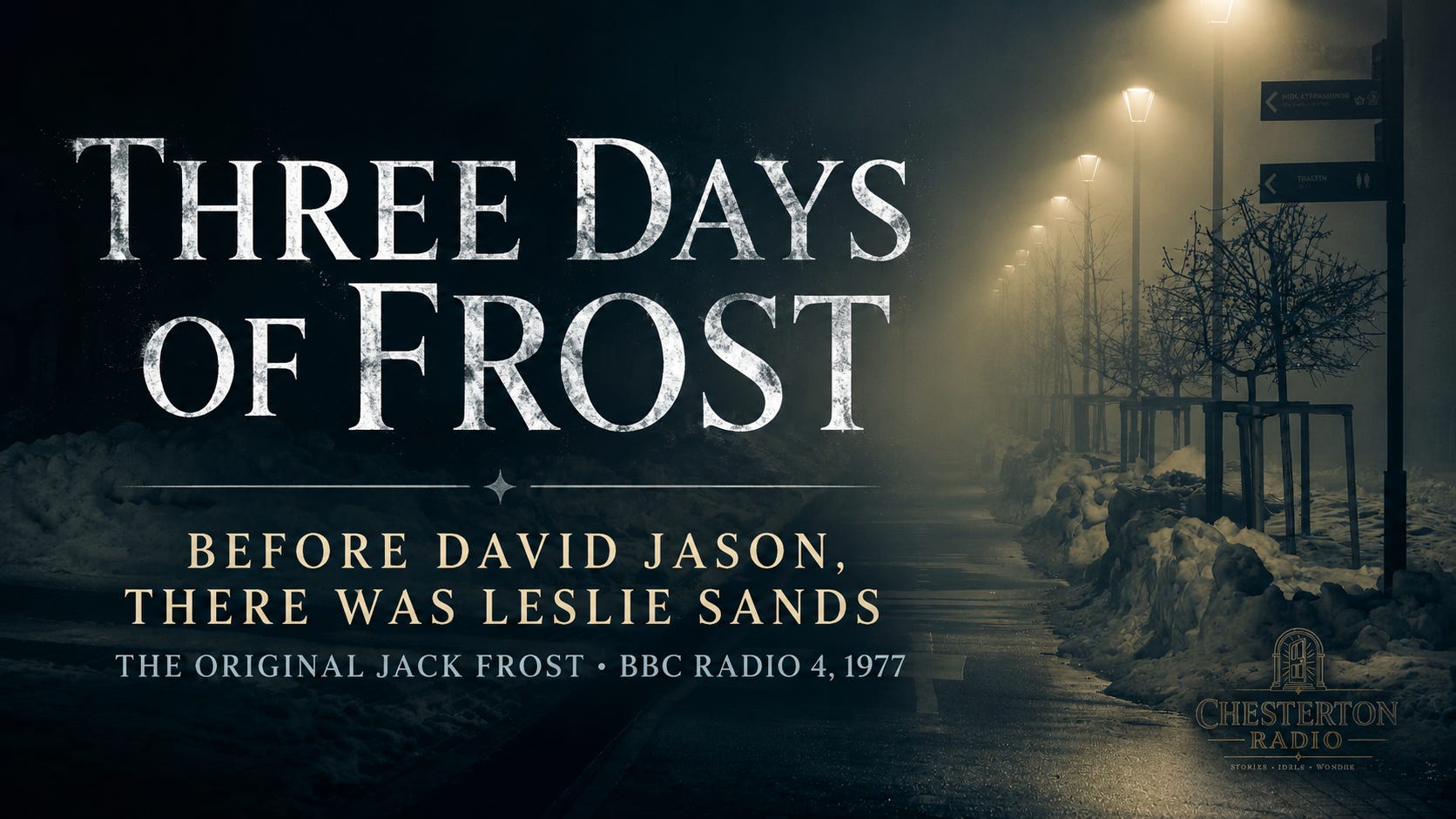
    Three Days of Frost | Before David Jason, There Was Leslie Sands

    Three days before Christmas. Bitter cold. A missing child. And an untidy, irreverent detective named Jack Frost. This Deep Dive includes spoilers. We invite you to listen to the original play then come back and join us. Long before David Jason made Inspector Frost one of British television’s most familiar detectives in A Touch of Frost, R. D. Wingfield’s wonderfully unconventional policeman had already come to life on radio. In this episode of The Common Room, broadcasting from the Little Station on Commercial Street, we return to Three Days of Frost, the 1977 BBC Radio 4 Saturday-Night Theatre production starring Leslie Sands as Detective Inspector Frost. And behind the play lies an extraordinary story. We explore how a rejected crime novel became a BBC radio drama; why Ronnie Barker was originally envisioned as Frost; what Leslie Sands brought to the character; and how Wingfield created a detective almost perfectly opposed to Sherlock Holmes—disorganized, overworked, cheeky, impatient with authority, but stubbornly compassionate when it matters. We also look at Frost’s perpetual battle with Superintendent Mullett, the play’s wonderfully bleak Christmas setting, Wingfield’s remarkable career in radio drama, and the long journey from this 1977 broadcast to the novels and eventually David Jason’s enormously successful television Frost. And that raises the question at the heart of our conversation: Was radio actually the perfect medium for Jack Frost? Pull up a chair in The Common Room. The fire is going, the weather outside is dreadful, and somewhere in the fog Inspector Frost has another problem on his hands. Who is your Jack Frost—Leslie Sands or David Jason? ❤️ Help Keep the Little Station on the Air Chesterton Radio is independent and listener-supported. We preserve and share classic radio drama, rediscover forgotten stories, and create new programs like The Common Room because we believe these stories are still worth hearing. If this episode gave you something worth thinking about, please consider helping us keep the microphones on and the Open Door open. ☕ Buy Me a Coffeehttps://buymeacoffee.com/chestertonradio 🎩 Patreonhttps://www.patreon.com/chestertonradio ⭐ Become a paid Substack subscriberhttps://chestertonradio.substack.com/subscribe And if you’re not able to contribute, subscribing, commenting, sharing this episode, or simply telling a friend about Chesterton Radio helps enormously. 🌎 Enter the Chesterton Radio World 📖 Chesterton Radio on Substack ▶️ Chesterton Radio on YouTubehttps://www.youtube.com/@ChestertonRadio 🚪 The Open Door — Listen Live 24/7https://live.chestertonradio.com 🎙️ Chesterton Radio on Apple PodcastsChesterton Radio on Apple Podcasts 🎙️ Chesterton Radio on SpotifyChesterton Radio on Spotify ☕ Support Chesterton Radiohttps://buymeacoffee.com/chestertonradio 🎩 Patreonhttps://www.patreon.com/chestertonradio 🎙️ Chesterton ChristmasChristmas.ChestertonRadio.com Chesterton RadioStories • Ideas • Wonder The Open Door is always on. Get full access to CHESTERTON RADIO at chestertonradio.substack.com/subscribe

  • Thursday · 26 min

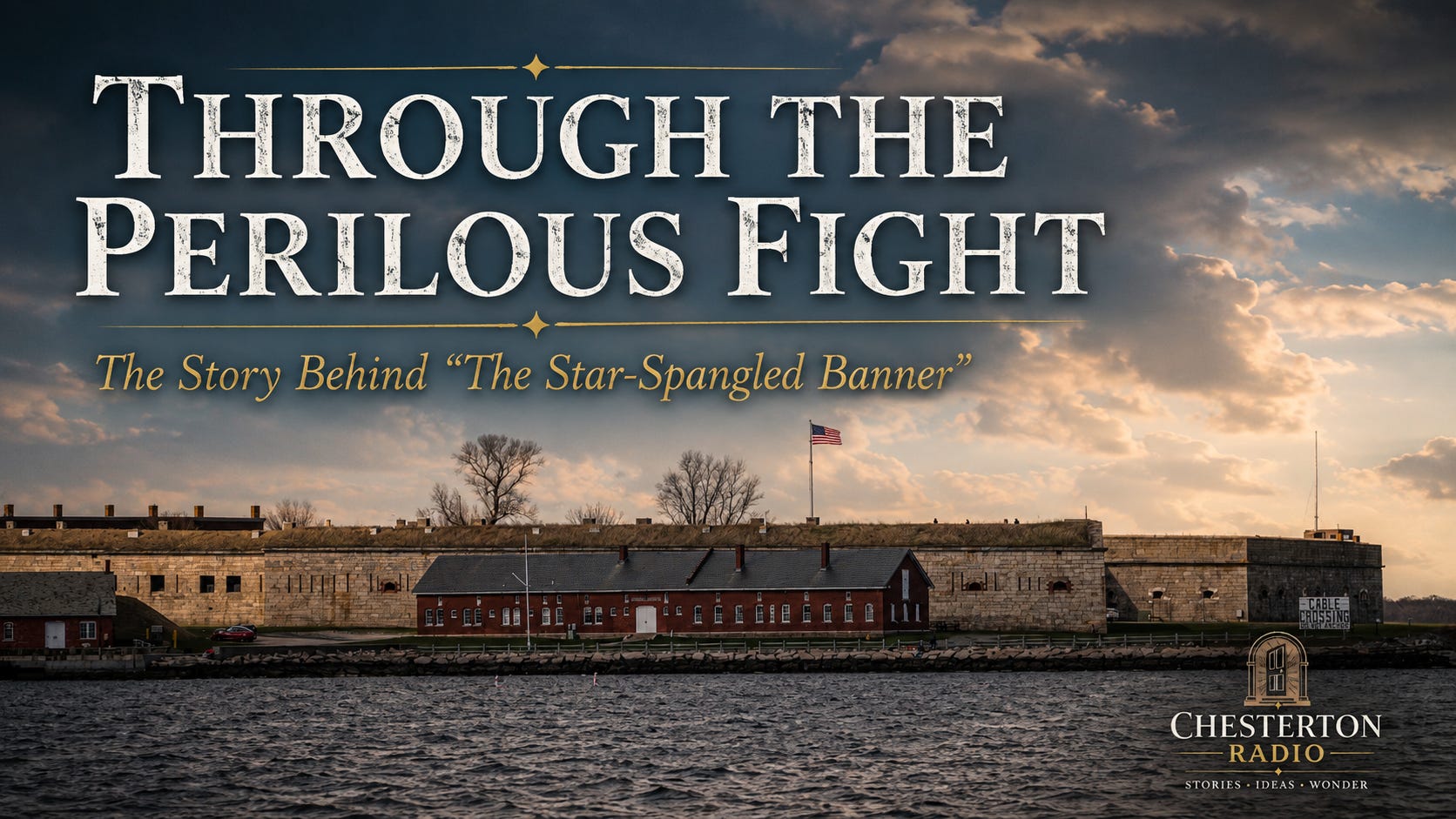
    Through the Perilous Fight

    Before it was a national anthem, it was a question: Was the flag still there? In September 1814, Francis Scott Key watched from the waters outside Baltimore as British warships bombarded Fort McHenry through the night. Rockets streaked across the darkness. Bombs burst over the fort. And somewhere beyond the smoke flew an enormous American flag. When morning finally came, Key looked toward the fort. The flag was still there. In this episode of The Common Room, we begin with the vintage old-time radio program Story Behind the Song: The Star-Spangled Banner and use that broadcast as our doorway into the remarkable history behind one of the most familiar songs in the world. We travel back to the War of 1812 and the defense of Baltimore; discover why Francis Scott Key found himself aboard a ship near the British fleet; meet Mary Pickersgill and the people who created the enormous flag over Fort McHenry; and follow Key’s poem, originally titled Defence of Fort M’Henry, as it spread across the young United States. Then there is the music. Where did that famously difficult melody come from? Was it really just an old British drinking song? Why did Key’s words fit it so well? And how did a song written in 1814 wait more than a century before officially becoming the national anthem in 1931? Along the way, we compare the history with the way Story Behind the Song presented it to an earlier generation of radio listeners—and rediscover something wonderful about the way old radio could turn history into story. And finally we return to Baltimore Harbor, after a terrible night of bombardment, and to the simple question that begins the song: O say can you see, by the dawn’s early light… Pull up a chair. The Common Room is open at the Little Station on Commercial Street. Chesterton Radio — Stories • Ideas • Wonder ❤️ Help Keep the Little Station on the Air Chesterton Radio is an independent, listener-supported home for classic radio, great literature, history, faith, original stories, and conversations worth having. If programs like The Common Room have helped you rediscover an old story, learn something unexpected, or simply spend a little time in good company, please consider helping us keep the Little Station broadcasting. ☕ Buy Me a Coffee — become a member or make a contributionhttps://buymeacoffee.com/chestertonradio ⭐ Become a paid Chesterton Radio subscriber on Substackhttps://chestertonradio.substack.com/subscribe 💙 Support Chesterton Radio on Patreonhttps://www.patreon.com/chestertonradio Every subscription, contribution, share, and recommendation helps us preserve forgotten broadcasts and continue creating new programs. And if supporting financially isn’t right for you, you’re still part of the station. Listen. Share. Tell a friend. Come back tomorrow. The Open Door stays open. 🌎 The Chesterton Radio World 📻 Chesterton Radio on Substack ▶️ Chesterton Radio on YouTubehttps://www.youtube.com/@ChestertonRadio 🚪 The Open Door — Chesterton Radio Live 24/7https://live.chestertonradio.com 🎙️ Chesterton Radio on Apple PodcastsChesterton Radio on Apple Podcasts ☕ Chesterton Radio Membershiphttps://buymeacoffee.com/chestertonradio 💙 Patreonhttps://www.patreon.com/chestertonradio 🛍️ The Chesterton Radio Shophttps://shop.chestertonradio.com From old-time radio and classic literature to original stories, history, faith, great ideas, and conversations worth having, there is always another door to open. Chesterton RadioStories • Ideas • Wonder The Open Door is always on. Get full access to CHESTERTON RADIO at chestertonradio.substack.com/subscribe
  • Thursday · 28 min

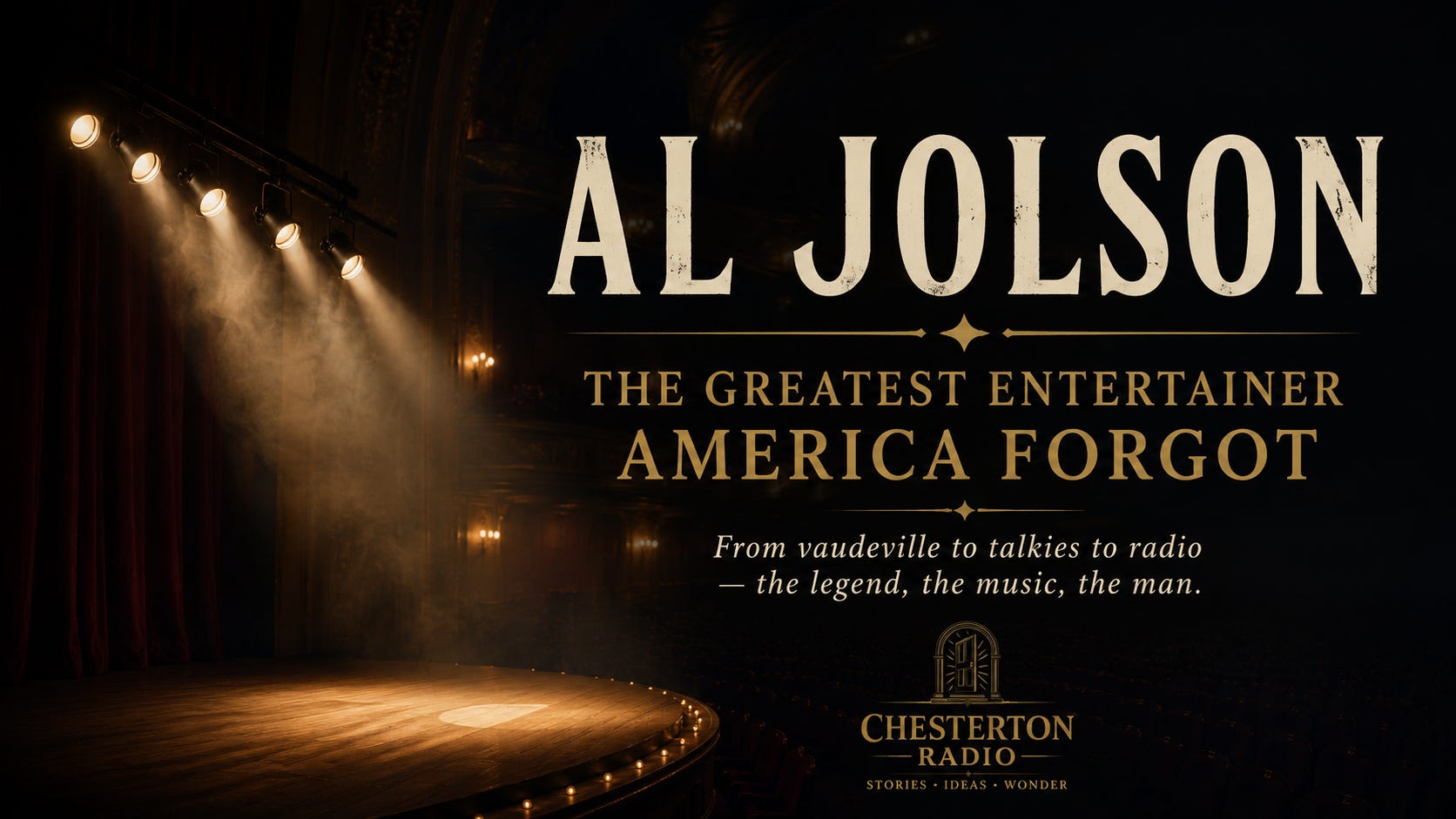
    Al Jolson: The Greatest Entertainer America Forgot

    There was a time when Al Jolson was arguably the biggest entertainer in America. He conquered vaudeville and Broadway, helped usher Hollywood into the age of talking pictures with The Jazz Singer, became a radio star, faded from fashion—and then staged one of the most remarkable comebacks in American entertainment. But recordings and photographs leave us with a puzzle: What was it actually like to see Al Jolson perform? In this episode of The Common Room, we begin with someone who knew the answer: George Burns. Burns saw Jolson in the great age of vaudeville and, decades later, was still telling Johnny Carson stories about the extraordinary effect Jolson could have on an audience. From there we explore Jolson’s immigrant beginnings, Broadway triumphs, signature songs, The Jazz Singer, radio career, decline and astonishing 1940s revival. We also confront the most difficult part of his legacy: blackface and the complicated relationship between Jolson, minstrelsy, African-American music and the popular culture of his time. We neither erase it nor allow one aspect of his career to prevent us from asking the larger historical question: Why did people who actually saw Al Jolson perform never seem to forget him? Pull up a chair. The Common Room is open. Support Chesterton Radio Chesterton Radio is an independent listener-supported project devoted to keeping great stories, old radio, literature, history, drama and thoughtful conversation alive. If you enjoy what we’re building, please consider becoming a supporter. Every contribution helps us keep the Little Station on the air and continue producing programs like The Common Room. Support Chesterton Radio:https://www.patreon.com/chestertonradiohttps://buymeacoffee.com/chestertonradio The Chesterton Radio World Chesterton Radio:https://Live.chestertonradio.com Listen & subscribe on Substack: Chesterton Radio on YouTube:https://www.youtube.com/@ChestertonRadio The Open Door — 24/7 Radio:https://Live.ChestertonRadio.com Jack Benny:http://JackBenny.ChestertonRadio.com Stories • Ideas • Wonder Chesterton Radio — The Open Door is always on. Get full access to CHESTERTON RADIO at chestertonradio.substack.com/subscribe
  • August 25 · 38 min

    Dolly Parton: The Girl from the Tennessee Mountains

    Before the rhinestones, the movies, Dollywood, and songs known around the world, there was a girl from the mountains of East Tennessee—and a radio. In this episode of The Common Room, we follow Dolly Parton from her Appalachian childhood and early performances on Cas Walker’s Farm and Home Hour to her remarkable Grand Ole Opry debut at just thirteen years old. But this is more than a biography. It is the story of the American musical world that made Dolly possible: the National Barn Dance, the Grand Ole Opry, gospel music, front porches, mountain storytelling, and the extraordinary reach of radio. We explore Dolly as a songwriter through the stories behind “Coat of Many Colors,” “Jolene,” “I Will Always Love You,” and “9 to 5”; her partnership with Porter Wagoner; the humor and intelligence behind her larger-than-life public image; and the faith, family, business sense, generosity, and love of books that shaped her life. And we ask a question especially suited to Chesterton Radio: What can an old Grand Ole Opry broadcast tell us about Dolly Parton that a greatest-hits playlist cannot? Pull up a chair. The Common Room is open. Support Chesterton Radio Chesterton Radio is an independent listener-supported project dedicated to preserving great stories, old radio, thoughtful conversation, literature, drama, comedy, history, faith, and the permanent things. If you enjoy what we’re building, please consider becoming a paid subscriber or supporting the Little Station. Every contribution helps us preserve the archives and create more original programs. Support Chesterton Radio on Substack Explore the Chesterton Radio World Chesterton Radio — Stories • Ideas • WonderChesterton Radio on Substack The Grand Ole Opry & National Barn Dance Collection — Step back into the golden age of American country radio.Grand Ole Opry at Chesterton Radio Chesterton Radio YouTube — Classic radio, BBC drama, original programs, literature, history and more.Chesterton Radio on YouTube ChestertonRadio.com — Enter the wider Chesterton Radio world.Chesterton Radio From the Little Station on Commercial Street in Atchison, Kansas — the Open Door is always on. Get full access to CHESTERTON RADIO at chestertonradio.substack.com/subscribe
  • August 25 · 33 min

    Daybreak: The Weightier Things

    Good morning from the little station on Commercial Street. On this Tuesday edition of Daybreak, we begin with a few words from today’s Gospel that seem particularly suited to our distracted age: “The weightier things of the law; judgment, and mercy, and faith.” — Matthew 23:23, Douay-Rheims From there, the morning paper takes us around Atchison and beyond. Tomorrow is the first day of classes at Benedictine College, where the new academic year will begin at 7:30 in the morning with President Stephen Minnis leading the Opening Rosary in the courtyard beside the new Moritz Library. We meet today’s saint, Louis IX of France, and consider what an old king might still teach us about authority, justice and responsibility. And with Benedictine’s upcoming “Church in an Algorithmic Age” symposium on the horizon, we ask a thoroughly modern version of an ancient question: amid AI, technology, specifications, schedules and endless information, how do we keep sight of the things that actually matter? Along the way, we’ll open the morning papers for stories of history, science, engineering, craftsmanship, books and the unexpected bits of wonder that make the world more interesting. Pour another cup of coffee and come through the door. Stories • Ideas • Wonder Support the Little Station Chesterton Radio is listener-supported. If these programs bring something worthwhile to your day, please consider becoming a paid subscriber. Your support helps us preserve great stories, explore good ideas, create original programs, and keep the little station on Commercial Street broadcasting. Enter the Chesterton Radio World: 📖 Read & Subscribe: 📻 Listen Live:https://live.chestertonradio.com 📺 Watch & Listen on YouTube:https://www.youtube.com/@chestertonradio Good morning from Atchison. Keep the old map. Get full access to CHESTERTON RADIO at chestertonradio.substack.com/subscribe

  • August 25 · 36 min

    The Dying Boy and the Fall of an Empire

    In October 1912, the Imperial Family of Russia retreated to a hunting lodge in the forests of Spała, Poland. It was supposed to be a holiday. Instead, eight-year-old Tsarevich Alexei—the only son of Nicholas II and heir to the Russian throne—suffered a catastrophic hemorrhage. The doctors could do almost nothing. His mother, Empress Alexandra, prepared herself for the possibility that her son was dying. Then came a telegram from Grigori Rasputin. Alexei recovered. In this episode of The Common Room, we use Royce Ryton’s remarkable BBC radio drama Holiday in Spała as the doorway into the true story behind it. How accurately does the play portray the Romanovs? What really happened to Alexei at Spała? Why did Alexandra place such extraordinary faith in Rasputin? And how could the illness of one little boy ultimately matter to the fate of the largest empire on earth? Drawing on eyewitness accounts from people who were actually there—including Pierre Gilliard, General Alexander Spiridovitch, and Anna Vyrubova—we meet Nicholas and Alexandra not merely as figures in a history book, but as a father and mother facing something terrifying. And hanging over everything is what we know but they don’t. World War I is less than two years away. Nicholas has less than five years left on the Russian throne. The Romanov dynasty, which has ruled Russia for three centuries, is approaching its end. For one autumn in 1912, however, none of that has happened yet. There is only a hunting lodge in the Polish forest, a desperately ill little boy, a frightened mother—and a mysterious message from Siberia. Stories • Ideas • Wonder 🎧 First Listen to the play Holiday in Spała — Chesterton Radio ❤️ Support Chesterton Radio Chesterton Radio is an independent little station devoted to great stories, classic radio drama, literature, history, faith, conversation, and the permanent things. If you enjoy what we’re building, please consider becoming a supporter. Your help keeps the Little Station broadcasting and makes programs like The Common Room possible. Support us on Substack: Buy Me a Coffee:https://www.buymeacoffee.com/chestertonradio Patreon:https://www.patreon.com/chestertonradio 🌎 Chesterton Radio World Chesterton Radio on Substack Chesterton Radio on YouTubehttps://www.youtube.com/@ChestertonRadio Chesterton Radio Originalshttps://www.youtube.com/@ChestertonRadioOriginals The Open Door — 24/7 Radiohttps://rumble.com/c/ChestertonRadio Come in. Pull up a chair. The Open Door is always on. Get full access to CHESTERTON RADIO at chestertonradio.substack.com/subscribe
  • August 25 · 31 min

    The Blue Lamp | On the Road in George Dixon’s London

    Tonight, The Common Room is on the road. We’ve left the Little Station on Commercial Street behind and crossed the Atlantic to the streets of West London—the world of Paddington Green, Harrow Road, George Dixon and The Blue Lamp. Our starting point is the remarkable 1965 BBC Sunday Night Play adaptation of The Blue Lamp, featuring a young Ian McShane. But the story begins earlier. In 1950, Ealing Studios released The Blue Lamp, starring Jack Warner as PC George Dixon and a young Dirk Bogarde as Tom Riley. On the surface, it’s a police story. Underneath, something much larger is happening. George Dixon represents an older idea of Britain: the neighborhood policeman who knows the streets, knows the people and exercises authority as much through familiarity and trust as through force. Tom Riley belongs to another world. Young. Rootless. Armed. Angry. And suddenly Dixon’s reassuring world doesn’t seem quite so secure. So tonight we walk through the London behind the story and ask: Is The Blue Lamp really a crime drama—or is it a story about what happens when a society built upon trust encounters people who no longer accept its unwritten rules? Along the way, we explore postwar London, the extraordinary rise of Dirk Bogarde, Ian McShane’s appearance in the later BBC adaptation, and one of the strangest second acts in British television history. Because George Dixon doesn’t survive The Blue Lamp. But Britain wasn’t finished with George Dixon. Jack Warner’s policeman returned from the dead for BBC television’s Dixon of Dock Green and became one of the defining figures of British television policing for a generation. And that raises another question. Was George Dixon simply a comforting myth about a Britain that never really existed? Or did that ideal—authority grounded in community, familiarity, restraint and mutual obligation—contain something worth remembering? Pull up a chair—or, tonight, bring your walking shoes. The Common Room is on the road in London. ❤️ Help Keep the Little Station on the Air Chesterton Radio is listener-supported. Programs like The Common Room, our original stories, classic radio discoveries, Morning Prayer and our journeys into literature, history and forgotten broadcasting are possible because listeners choose to support the Little Station. If Chesterton Radio has brought you a good story, an unexpected idea, a laugh, or simply some companionship, please consider helping us keep the microphone on and the Open Door open. ☕ Buy Me a Coffeehttps://buymeacoffee.com/chestertonradio 💙 Patreonhttps://www.patreon.com/chestertonradio ⭐ Become a paid Substack subscriberhttps://chestertonradio.substack.com/subscribe You don’t have to pay to belong here. Listening, sharing an episode and telling a friend about the station all help. But if you’re able to support the work financially, thank you for helping us keep the lamp lit. 🌎 Welcome to the Chesterton Radio World Chesterton Radio is more than a podcast. Think of it as a little station with an open door—and quite a few rooms inside. 📻 Chesterton Radio on Substack ▶️ Chesterton Radio on YouTubehttps://www.youtube.com/@ChestertonRadio 🚪 The Open Door — Chesterton Radio 24/7https://live.chestertonradio.com 🎙️ Chesterton Radio on Apple Podcasts 🛍️ The Chesterton Radio Shophttps://shop.chestertonradio.com From old radio and classic literature to original stories, great ideas and conversations worth having, there is always another door to open. Chesterton RadioStories • Ideas • Wonder The Open Door is always on. https://live.chestertonradio.com Get full access to CHESTERTON RADIO at chestertonradio.substack.com/subscribe

  • August 23 · 30 min

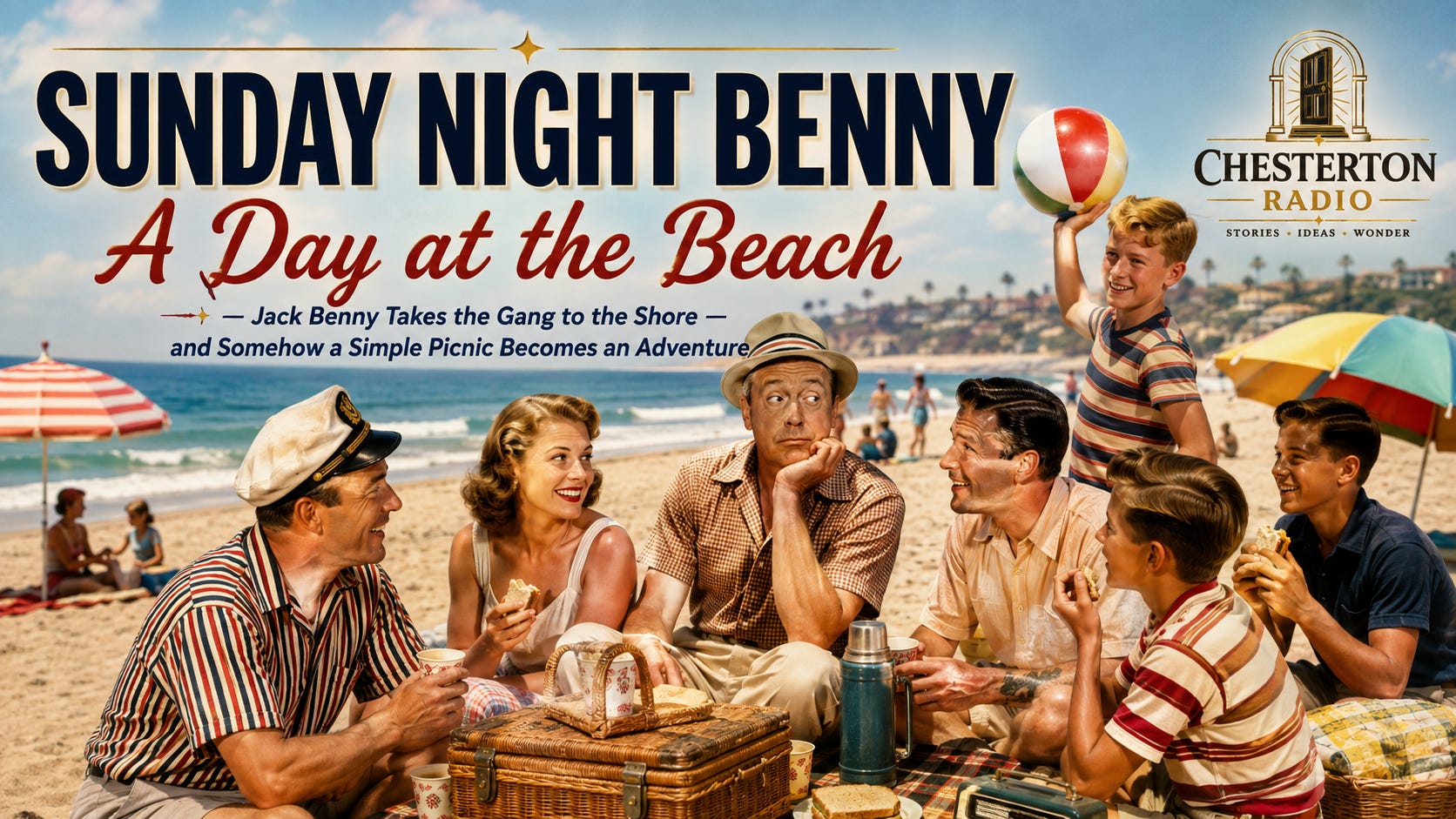
    Sunday Night Benny: A Day at the Beach

    Tonight, on Chesterton Radio, we’re heading to the beach with Jack Benny. We were looking for a Sunday Night Benny adventure we haven’t played before, and this one seemed just right. In “A Day at the Beach,” Jack trades the familiar studio surroundings for a seaside outing with Mary Livingstone, Rochester, Don Wilson, Dennis Day, and the Beverly Hills Beavers. The plan is simple: sunshine, fresh air, and a pleasant picnic by the ocean. Of course, this is Jack Benny. Before long, an ordinary day at the beach becomes another opportunity for Jack’s famous thrift, wounded dignity, and wonderfully exasperating relationship with everyone around him. Originally broadcast in May 1954 and later rebroadcast in 1955, A Day at the Beach is classic Benny at his best: relaxed, character-driven comedy where the pleasure comes less from the plot than from spending half an hour with people who somehow feel like old friends. So, pull up a chair, pour something cold, and spend Sunday night with Jack and the gang. The Little Station is open. Help Keep Chesterton Radio on the Air Chesterton Radio is an independent listener-supported project devoted to keeping great stories, classic radio, thoughtful conversation, and a little wonder alive. If these programs have become part of your day—or your Sunday night—please consider supporting the station. Every contribution helps us preserve, discover, and share more wonderful programs from radio’s golden age, while creating new programs in that same storytelling tradition. Support Chesterton Radio:https://www.buymeacoffee.com/chestertonradiohttps://www.patreon.com/chestertonradio The Chesterton Radio World Chesterton Radio on Substack Chesterton Radio on YouTubehttps://www.youtube.com/@ChestertonRadio Listen Live — The Open Doorhttps://live.chestertonradio.com Chesterton Radio PodcastsFind us on Apple Podcasts and Spotify. Stories • Ideas • Wonder The Open Door is always on. More Benny shows in our Playlist: JackBenny.ChestertonRadio.com Get full access to CHESTERTON RADIO at chestertonradio.substack.com/subscribe

  • August 23 · 1 hr 28 min

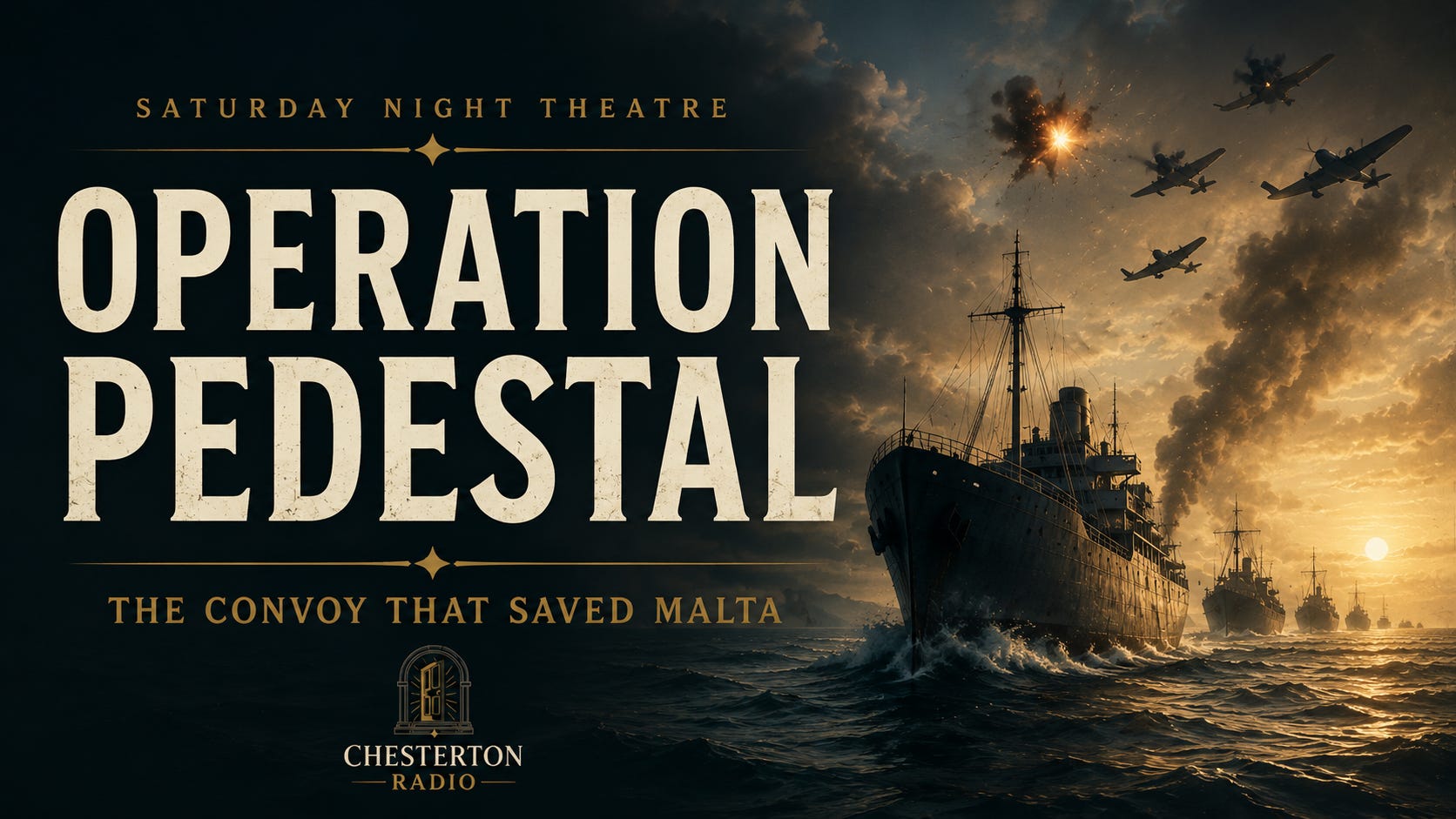
    Operation Pedestal — The Convoy That Saved Malta

    Saturday Night Theatre • BBC Radio • 31 August 1974 • 1 hr 28 min In August 1942, Malta was running out of food, fuel, ammunition—and time. Britain’s answer was Operation Pedestal: a desperate attempt to force a heavily defended convoy through the Mediterranean while German and Italian aircraft, submarines and warships tried to destroy it. This remarkable Saturday Night Theatre production tells the story from inside the convoy, among the Merchant Navy sailors and Royal Navy men who knew that getting through could mean the difference between Malta surviving or falling. And there is something that makes this drama especially powerful. Writer Frederick Treves was there. As a young Merchant Navy cadet, Treves took part in the real Operation Pedestal. His own ship was bombed, and many of the men aboard were killed. Decades later, he transformed those memories into this extraordinary radio drama. It is not simply a war story. It is a survivor remembering the men who sailed with him. Turn down the lights, settle in, and return with us to August 1942—when a battered convoy fought its way toward Malta. Support Chesterton Radio Chesterton Radio is an independent listener-supported project devoted to keeping great radio drama, literature, history, ideas and storytelling alive and available to a new generation. If you enjoy what we’re doing, please consider becoming a supporter: Chesterton Radio on Substackchestertonradio.substack.com Support us on Patreonpatreon.com/chestertonradio Buy us a coffeebuymeacoffee.com/chestertonradio Every subscription, contribution, comment and share helps us preserve and rediscover programs like this. The Chesterton Radio World There is always another door to open. Chesterton Radio on YouTube — classic radio drama, literature, mysteries, comedy and forgotten treasuresyoutube.com/@ChestertonRadio Chesterton Radio on Substack — new programs, essays, The Common Room, original stories and our growing communitychestertonradio.substack.com The Open Door — Live 24/7live.chestertonradio.com Patreon — help keep the Little Station on the airpatreon.com/chestertonradio Buy Me a Coffee — make a one-time contributionbuymeacoffee.com/chestertonradio Stories • Ideas • Wonder The Open Door is always on. Get full access to CHESTERTON RADIO at chestertonradio.substack.com/subscribe
Showing 1–20 of 46 episodes