Skip to content
Artwork for Chat By The Pitch
SportsSoccerKids & FamilyParentingEducationSelf-Improvement

Chat By The Pitch

Ian Babcock

Welcome to Chat By The Pitch — the soccer podcast that goes beyond the game.

Hosted by Ian Babcock, Chat By The Pitch is built around real conversations with the people shaping soccer from every angle — coaches, players, parents, club leaders, educators, entrepreneurs, analysts, and innovators. This isn’t a highlight show and it isn’t built around hot takes. It’s about the stories, lessons, challenges, and experiences that actually define the modern game.

Whether you’re a parent trying to better understand youth soccer, a coach looking to grow, a player chasing the next level, or simply someone passionate about the sport, Chat By The Pitch gives you honest, long-form conversations that dig deeper than surface-level opinions.

Every episode explores what really happens behind the scenes:
• The realities of youth soccer culture
• Coaching philosophy and player development
• Leadership and communication
• Parenting athletes in today’s environment
• The mental side of competition
• Building healthy club culture
• Technology changing the game
• The pathway from grassroots to elite levels
• Mistakes, lessons, and success stories from people living the game every day

Guests range from grassroots coaches and academy directors to former professional players, educators, authors, performance specialists, and creators working to improve soccer at every level. Some episodes focus on tactics and development. Others focus on leadership, culture, parenting, business, and the human side of sports.

What makes Chat By The Pitch different is the conversation style. These are not rushed interviews with canned answers. Ian approaches each episode as a passionate soccer parent, coach, and student of the game, creating open discussions that feel authentic, relatable, and educational. The goal is to ask the questions many people in soccer are already thinking about — but rarely hear discussed honestly.

Listeners come to Chat By The Pitch for:
• Real conversations instead of scripted interviews
• Practical insights coaches and parents can actually use
• Different perspectives from across the soccer world
• Stories that inspire growth on and off the field
• Honest discussions about the challenges in youth sports
• A deeper understanding of player development and leadership

If you care about soccer beyond the scoreboard — the people, the process, the culture, and the future of the game — this podcast is for you.

New episodes released regularly.

Connect with Chat By The Pitch on social media and join the conversation happening around the game we all love.

Play
  • 22 episodes
  • weekly
  • Avg 44 min
  • English
Counted on this page — what you have heard stays on this device, so it is not something the list can be paged by.
  • S1 · E184
    Thursday · 47 min

    Coach the Players in Front of You: Andy Cook on Systems vs. Individuals

    Andy Cook took a left back, put her at number nine, and she scored 22 goals and won a league. That’s not a hunch — that’s a coaching philosophy. In Part 2, Andy Cook gets into the part of youth soccer player development that doesn’t fit on a session plan: culture, trust, and reading the player in front of you. He took over a Nottingham Forest side sitting one place above relegation and, four years later, won the league and the cup with several of the same players who’d been there on day one. The thing he changed first wasn’t the formation. It was telling every player, every week, exactly why she was starting or why she wasn’t. He’s blunt about systems, too. If you’ve got a Ford Mustang in the garage, you don’t work on it like it’s a Lamborghini — and the coaches he rates most, Pep included, are the ones who bend the shape to the players rather than the other way around. For anyone coaching youth, his line is simple: until 18, the individual is everything, and the team is a scoreboard that doesn’t matter yet. There’s also a straight conversation about why England has caught up to the United States in the women’s game, two non-negotiables he’ll build any program on, and the answer he gives parents when they ask what to look for in a coach. Plus the signature closer — his greatest influence as a player, and separately as a coach. Key Talking Points Becoming a dad while coaching Sunderland’s academy — and how watching his own son learn changed how he coaches Nottingham Forest: taking over a side one place above relegation and winning a league and cup double four years later The one rule he set on day one — every selection decision gets explained, however long it takes Moving Charlotte Greengrass from left back to number nine, and the 22-goal season that followed Coaching the players in front of you instead of the formation in your head — with Pep, Haaland, and Bayern as the case study Why the individual is paramount until 18, and why teams at youth level don’t win anything on their own Protecting joy: at 27 you should still play the game like you’re 7 — and what screaming from the sideline does to a 7-year-old Why England caught up to the US women’s game, and where he ranks the technical nations Accountability and respect as the only two non-negotiables — right down to how you leave the away changing room His answer for parents: look for honesty, and check whether what the coach says shows up on the pitch Quotes from Andy Cook “Every decision I make, I’m gonna explain it to you. It doesn’t matter whether it takes me an hour or whether it takes me two minutes.” “My eyes don’t lie. If I’ve got a group of footballers in front of me, my first instinct is always to go, what can they do now?” “If a guy brings a Ford Mustang into your garage, you’re not gonna deal with it like you would a Lamborghini.” “Teams at youth level don’t do anything. It’s the individual.” “At 27, you should still play the game like you’re 7.” “If at 7 years old you’re having the fun kicked out of you because somebody on the sideline is screaming, whether that’s a parent or a coach, I think it’s so wrong.” “You put her up front, and it was like you’d freed her from the shackles of a defender.” “The two biggest ones for me are accountability and respect, and that really starts with me.” “I want a team that leaves the changing room better than what it was when we got in there.” “The first thing that a parent needs to look out for is honesty.” Connect with Andy Cook ✖️ X: @AndyCook87 Follow Chat By The Pitch 🌐 Website: chatbythepitch.com 🎥 YouTube: Chat By The Pitch 📸 Instagram: @ChatByThePitch 🎵 TikTok: Chat.By.The.Pitch ✖️ X / Twitter: @ChatByThePitch 📘 Facebook: Chat By The Pitch 🎧 Spotify: Chat By The Pitch 🍎 Apple Podcasts: Chat By The Pitch 🎧 Subscribe & Review: Your support helps us keep bringing conversations with players, coaches, and leaders that matter. #ChatByThePitch #YouthSoccer #PlayerDevelopment #SoccerCoaching #ProtectTheJoy #TeamCulture #WomensFootball #NottinghamForest #NewcastleUnited #WSL #NWSL #Lionesses #SoccerParents #CoachingPhilosophy #DevelopmentOverWinning #FootballCoaching #JohnWooden #PatSummitt #SoccerPodcast #NorthTexasSoccer
  • S1 · E183
    August 20 · 52 min

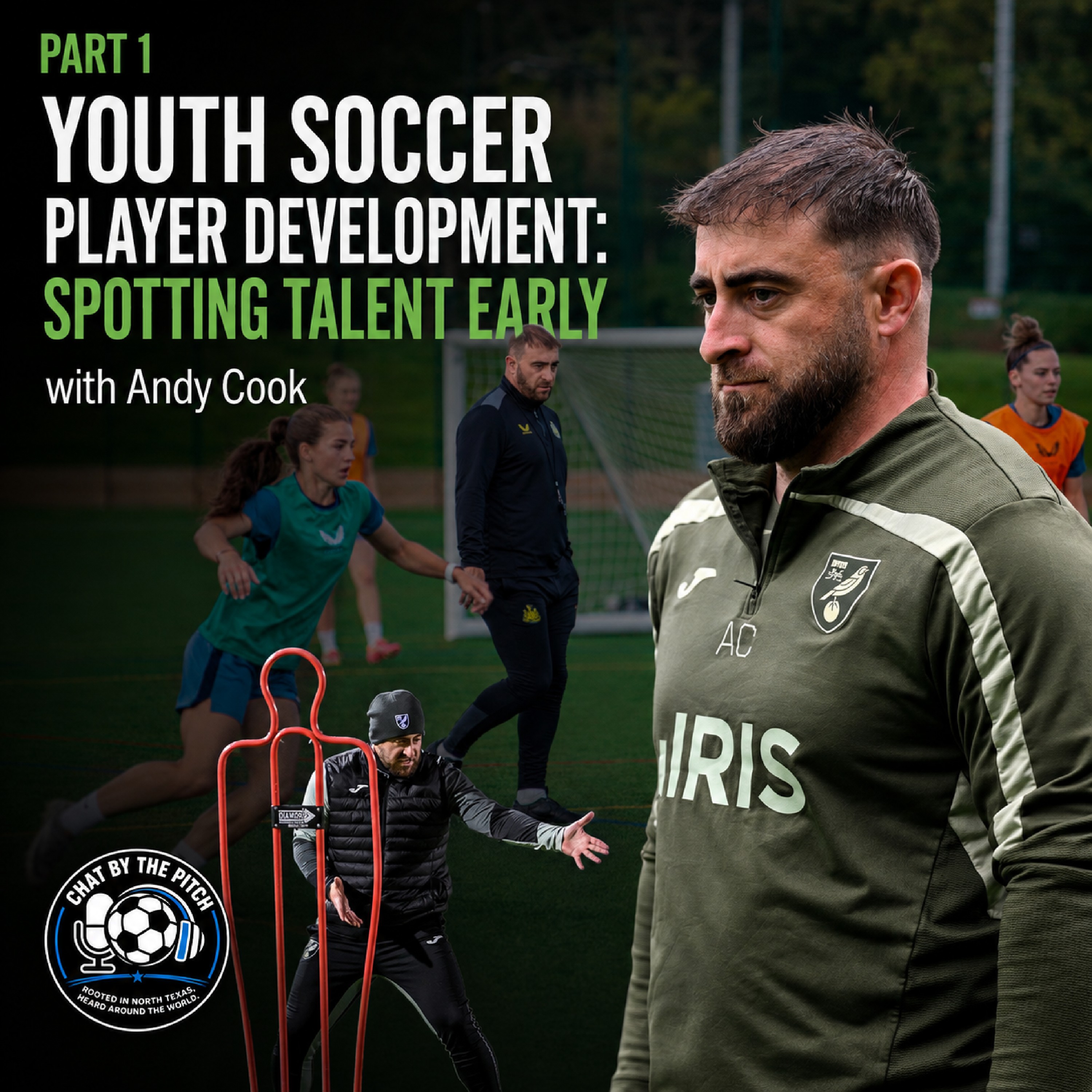
    Youth Soccer Player Development: Spotting Talent Early with Andy Cook

    Andy Cook coached Beth Mead at 14 and Leah Williamson at 15. He wasn’t looking for tactics or trophies — here’s what he was actually watching for. In Part 1, UEFA A licensed coach Andy Cook takes Ian Babcock through a youth soccer player development story that starts with a season ticket at Middlesbrough and ends up inside Arsenal’s women’s program. He got his first coaching badge at 16, in a country where full-time coaching jobs in the women’s game simply didn’t exist yet, and stacked qualification on qualification for a decade on nothing but what he calls blind determination. Along the way he coached two future England internationals before either of them could drive. His answer for what made them stand out is refreshingly plain: could they control it, could they pass it, could they dribble it. Everything else — speed, tactics, position — got built out from the ball. He also talks openly about the parts that didn’t work: leaving Arsenal too early, and a first head coaching job at Oxford United where the football was fine and the man-management wasn’t. If you’re a parent trying to understand what a good coach is actually looking at, or a coach wondering whether the badges are worth it, this one’s for you. Part 2 picks up with culture, trust, and why the individual matters more than the team until 18. Key Talking Points Falling for the game as a Middlesbrough season-ticket kid in the mid-'90s, and playing local club football until 16 The moment he realized he'd never reach his best friend's level as a player — and why that pushed him straight into coaching Getting his first FA badge at 16, UEFA B at 19, and the UEFA A license at 26 — a decade of qualifications with no job market waiting on the other side "Blind determination" as a career strategy: planning a future in a profession that didn't exist yet Coaching Beth Mead at the Middlesbrough Girls' Centre of Excellence — two evenings a week, a gym session, and a Saturday game What he looked for in young players as a young coach: control it, pass it, dribble it — the physical stuff built out from there Arsenal at 24 under Laura Harvey — U17s, reserves, and a 15-year-old Leah Williamson training up with older players His theory on why today's young women's players may be more robust: more minutes, earlier, than the generation before them Leaving Arsenal for the FA — the regret, and the coach-education years that taught him to plan a session properly Oxford United, the smallest budget in the league, and the man-management lesson he's built the rest of his career on Quotes from Andy Cook “I always felt that I had different ideas to what I was being told as a boy.” “It was just blind determination. There was no job. There was no career.” “You have to plan your future based on something that you don't know.” “I thought, that is it, I've completed coaching. I've learned more every season since than I did in the first ten years.” “Could they control the ball? Could they pass the ball? Could they dribble with the ball? It all started from the ball, and then it built out from that.” “She was the best trainer, she was the one that had the best questions. She would stay back and want to do more.” “I'm always a little bit hesitant to say that's because of the work I did as a coach, because a youth player goes through so many different moments.” “If I'm really honest, I wish I didn't leave Arsenal. That's a regret I have.” “It was now trying to influence the coaches to then influence the players, and that is a completely different task, a completely different skill set.” “I never told them why I was picking them. All those man-management skills that I think are essential.” Connect with Andy Cook ✖️ X: @AndyCook87 Follow Chat By The Pitch 🌐 Website: chatbythepitch.com 🎥 YouTube: Chat By The Pitch 📸 Instagram: @ChatByThePitch 🎵 TikTok: Chat.By.The.Pitch ✖️ X / Twitter: @ChatByThePitch 📘 Facebook: Chat By The Pitch 🎧 Spotify: Chat By The Pitch 🍎 Apple Podcasts: Chat By The Pitch 🎧 Subscribe & Review: Your support helps us keep bringing conversations with players, coaches, and leaders that matter. #ChatByThePitch #YouthSoccer #PlayerDevelopment #SoccerCoaching #WomensFootball #WSL #Arsenal #Middlesbrough #BethMead #LeahWilliamson #UEFACoaching #CoachEducation #SoccerParents #YouthDevelopment #FootballCoaching #DevelopmentOverWinning #GrassrootsSoccer #TalentID #SoccerPodcast #NorthTexasSoccer
  • S1 · E182
    August 13 · 50 min

    From Houston to Denmark: The Cappis Family on Christian Cappis’ Path to Pro

    Turning down MLS. Walking away from an SMU scholarship. A trial at Bayern. Jay and Carey Cappis share how Christian Cappis bet on development — and won. In Part 2 of this conversation, the Cappis family walks Ian Babcock through Christian’s player pathway from club soccer in Houston to the professional game in Europe: captaining a national-champion FC Dallas Academy side, youth national team call-ups, an MLS rights battle between Houston and Dallas, and the decision to start at the bottom of the Danish Superliga instead — because development beats badges, free boots, and even bigger money. Jay and Carey get honest about the hard parenting moments too: letting go when Christian moved to Dallas his senior year, the summer he came home with no prospects while his friends left for college, and the day he was deported from Denmark over a paperwork mistake. It ends with the advice every soccer parent needs to hear: it’s their journey, professional soccer is a business, and your job is to support with eyes wide open. Key Talking Points Why Christian turned down bigger clubs — he scouted their recruiting versus their developing and knew where he wouldn’t grow Free boots, kits, and warmups are enticements, not development — how the family saw through the sales pitch “In charge from day one”: making his own decisions from a YMCA rejection at age two and a half through every club choice after Playing up with older kids, scoring the winning goal against the Texans, and how one bold team choice opened the next door Letting go: the senior-year move to FC Dallas Academy — and living like a pro (groceries, laundry, driving to work) before ever signing Youth national team life: “Hey Dad, I’m going to Spain today” The MLS rights battle between Houston and Dallas — and why Christian took his chances in Denmark instead Walking away from the SMU scholarship, the Bayern trial that almost happened, and the quiet summer where Christian never doubted Deported from Denmark with 24 hours to leave — the life education no classroom offers Player identity beyond soccer: marriage, cooking with a Michelin chef, and advice for parents — it’s their journey, and pro soccer is a business Quotes from the Guests “He’s been in charge from day one.” — Jay Cappis “Everybody wants you until they see you.” — Jay Cappis “Your choice, your responsibility, your consequences — all the way across the board.” — Jay Cappis “He could basically tell you, ‘I will not develop there. They’re great at recruiting the top players, but they’re not great at developing them.’” — Jay Cappis “He very calmly just kinda looks at me, and he’s like, ‘It’s okay. Don’t worry. We got this.’ He never doubted.” — Carey Cappis “You have a finite shelf life as an athlete... You can go back to college anytime.” — Jay Cappis “You’re on a journey with that child. It is not your journey. That is theirs to live.” — Jay Cappis “Professional athletics is a business... They will do what’s best for the club, and if that means it’s not good for you, that is not their problem.” — Jay Cappis “We never really set out with the goal of getting a college scholarship or even the goal of him being pro... it was more of just, well, what’s next?” — Carey Cappis “I’m not so much proud as I am pleased. He had a vision of what he wanted to do, and he pursued it.” — Jay Cappis Connect with the Cappis Family 📸 Instagram: cappis_property_group 📸 Instagram: jcappis Follow Chat By The Pitch 🌐 Website: chatbythepitch.com 🎥 YouTube: Chat By The Pitch 📸 Instagram: @ChatByThePitch 🎵 TikTok: Chat.By.The.Pitch ✖️ X / Twitter: @ChatByThePitch 📘 Facebook: Chat By The Pitch 🎧 Spotify: Chat By The Pitch 🍎 Apple Podcasts: Chat By The Pitch 🎧 Subscribe & Review: Your support helps us keep bringing conversations with players, coaches, and leaders that matter. #ChatByThePitch #YouthSoccer #SoccerParenting #PlayerDevelopment #ChristianCappis #CappisFamily #SoccerParents #DevelopmentOverWinning #ProPathway #USMNT #ClubSoccer #SoccerPodcast #YouthSports #GrassrootsSoccer #NorthTexasSoccer #PlayingAbroad

  • S1 · E181
    August 6 · 58 min

    The Cappis Family: How Soccer Parents Raise a Pro Without Pushing

    What does it actually take to raise a professional soccer player — without pushing? Jay and Carey Cappis, parents of U.S. pro Christian Cappis, open up the family playbook. In Part 1 of this two-part conversation, Ian Babcock sits down with the Cappis family to talk soccer parenting and youth soccer player development from the very beginning: a toddler with a ball glued to his foot, a kid so competitive he challenged the neighborhood to a foot race in his sleep, and parents who made one rule non-negotiable — it’s his journey, not theirs. Jay and Carey share how they evaluated clubs and coaches (including interviewing a club director before joining Texans Soccer Club), why development beats winning at every age, and how a family of six divided and conquered life in Houston — from parenting in the front seat of the car to a university model school that gave them their family time back. If you’re a soccer parent wondering how to support your player without being that parent, this one’s for you. Key Talking Points Raising four very different kids — and letting each one find their own sport and path Christian the early bloomer: walking at nine months, kicking a ball at his first birthday, and sleepwalking down the street at 6:00 AM looking for a foot race How Jay made sure soccer stayed Christian’s passion — including forcing breaks to prove he played because he wanted to, not because Dad was around Letting the child drive the journey instead of pushing it — and the school decision Christian made himself to chase the youth national team “Development is your A number one job” — the family standard at every level of play How to vet a youth soccer coach: watch multiple games, look for week-to-week improvement, and check who actually gets on the field Why the Texans Soccer Club culture of development over early-season results produced pros like Christian Cappis and Chris Richards Divide and conquer: managing four kids’ activities across a huge city, one activity per child, and parenting from the front seat of the car Turning long drives to training into relationship-building conversations — and knowing when your player just needs the radio The trust that paid off: why Christian’s first call was to his dad when Danish immigration showed up at the club Quotes from the Guests “He was so competitive, even when he was sleepwalking, he was going down the street going, ‘Hey, you wanna have a foot race?’” — Jay Cappis “I really honestly believe he probably could have been a professional at whatever sport he chose.” — Carey Cappis “It was his passion, and he couldn’t go three days without getting his foot on a ball.” — Jay Cappis “Development is your A number one job, no matter what level you’re at.” — Jay Cappis “It’s incredibly difficult to know what you’re getting with any particular coach until you get some hands-on experience with them.” — Jay Cappis “I don’t really care as a parent whether or not they are the best team in the league. What I care about is every week, do I see the team improving?” — Jay Cappis “I felt like I was parenting from the front seat of the car.” — Carey Cappis “It suddenly occurred to me that if we didn’t have that long drive, we would have never had this particular conversation.” — Jay Cappis “We didn’t get it right all the time... there’s lots of learning to go around for everybody in the family.” — Jay Cappis “We did our best to make sure every child had a parent.” — Carey Cappis Connect with the Cappis Family 📸 Instagram: cappis_property_group 📸 Instagram: jcappis Follow Chat By The Pitch 🌐 Website: chatbythepitch.com 🎥 YouTube: Chat By The Pitch 📸 Instagram: @ChatByThePitch 🎵 TikTok: Chat.By.The.Pitch ✖️ X / Twitter: @ChatByThePitch 📘 Facebook: Chat By The Pitch 🎧 Spotify: Chat By The Pitch 🍎 Apple Podcasts: Chat By The Pitch 🎧 Subscribe & Review: Your support helps us keep bringing conversations with players, coaches, and leaders that matter. #ChatByThePitch #YouthSoccer #SoccerParenting #PlayerDevelopment #ChristianCappis #CappisFamily #SoccerParents #DevelopmentOverWinning #ClubSoccer #YouthSports #SoccerPodcast #GrassrootsSoccer #NorthTexasSoccer #SoccerFamily #ParentEducation #YouthCoaching

  • S1 · E180
    July 30 · 52 min

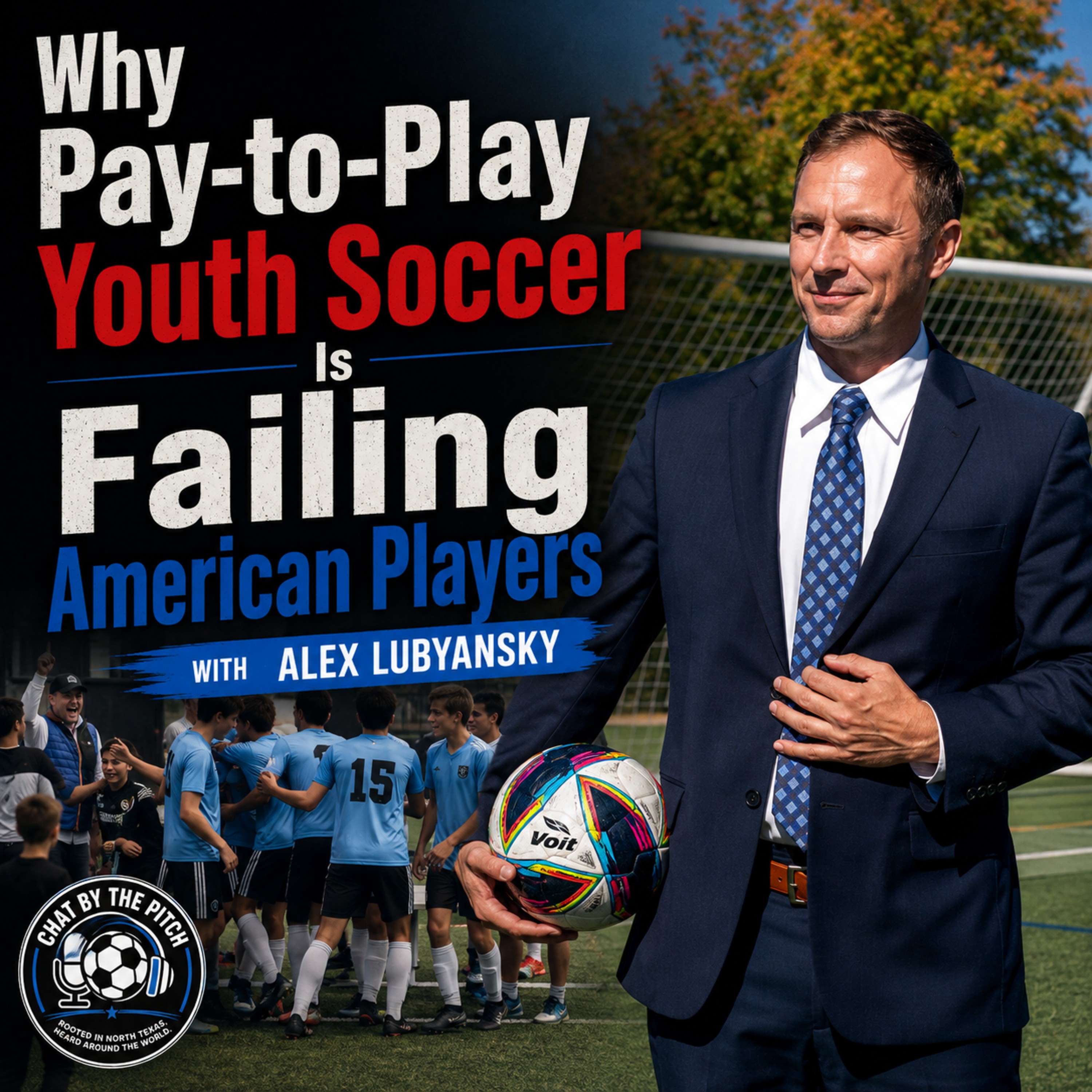
    Why Pay-to-Play Youth Soccer Is Failing American Players with Alex Lubyansky

    Is pay-to-play youth soccer actually developing players — or just monetizing false hope? Alex Lubyansky says it's the latter, and he's building the proof. Alex is the General Manager and Head Coach of Detroit Metro FC, a completely free, senior-level football club run on the European model — on American soil. He's also an M&A attorney, an A-licensed coach, a former sporting director in Europe, a soccer parent, and an immigrant from Kyiv whose first ball came out of a trash can. In this conversation with host Ian Babcock, Alex breaks down why there's no real pyramid in American soccer, why 99.9% of kids belong in rec, and why free play — not expensive coaching — is what actually develops players. If you're a soccer parent wondering whether club soccer is worth it, a coach frustrated with the system, or anyone asking how to fix US soccer, this episode gives you a clear-eyed map of how the machine works — and a working model for what comes next. Rooted in North Texas, heard around the world. Key Talking Points Detroit Metro FC's mission: a completely free, senior-level European model on American soil, built to reform US soccer from outside the system Why Alex says there is no real pyramid in American soccer — just a "circle" of pre-professional leagues, MLS included, that avoid playing each other The one honest test for any youth program: is a child being charged a subscription fee to participate? If yes, it's pay-to-play — no matter the badge The case that 99.9% of kids belong in recreational soccer, and why free play develops players faster than structured, expensive coaching How the pay-to-play machine monetizes false hope — and why frustrated parents and coaches misunderstand what the system is actually built to do The ID camp myth: why college rosters are filling with international players and what that means for American families chasing scholarships Alex's anti-nepotism rule: no owner, coach, or staff member's child is ever allowed to try out for Detroit Metro FC How the club is funded: capital plus belief, an ROI model over a vanity play — and lessons from the Wrexham story What real senior-level football looks like: open trials, honest cuts, and a merit-based roster spanning a 16-year-old to a 40-year-old Alex's fix for the youth game: give the game back to the kids — pickup, free play, safe spaces, mixed ages, and parents over private trainers Quotes from Alex Lubyansky "If you can afford a used car, you can start Detroit Metro FC in DFW, and I'll tell you how." "A pyramid implies that there's a way to go up and go down. That's not possible in the US. It's a circle." "What we are doing as a country is the best monetization of false hope in the history of the planet." "Coaching does not develop players." "I think 99.9% of kids in this country belong in recreational soccer." "Parents are way more important than coaches. Way more. It's not close." "Not making it is not a failure. Not trying is the failure." "You wanna fix youth soccer? Give the game back to the kids. Let them play pickup. Let them have fun." "I'm not selling you a franchise. I'm not asking you to invest in my league." "He never charged me. He wouldn't let me pay him if I offered for 900 days, and he turned me into a monster." Connect with Alex Lubyansky ⚽ Club: Detroit Metro FC — free, senior-level football in Detroit, Michigan 🎥 YouTube: Alex mentions his YouTube channel in the episode — link to be confirmed before publishing Follow Chat By The Pitch 🌐 Website: chatbythepitch.com 🎥 YouTube: Chat By The Pitch 📸 Instagram: @ChatByThePitch 🎵 TikTok: Chat.By.The.Pitch ✖️ X / Twitter: @ChatByThePitch 📘 Facebook: Chat By The Pitch 🎧 Spotify: Chat By The Pitch 🍎 Apple Podcasts: Chat By The Pitch 🎧 Subscribe & Review: Your support helps us keep bringing conversations with players, coaches, and leaders that matter. #ChatByThePitch #YouthSoccer #PlayerDevelopment #PayToPlay #FreePlay #SoccerParents #YouthSports #USSoccer #DetroitMetroFC #GrassrootsSoccer #SoccerCoaching #NorthTexasSoccer #SoccerPodcast #DevelopmentOverWinning #RecSoccer #EuropeanModel #SoccerCommunity #ClubSoccer #SoccerFamily #ProtectTheJoy

  • S1 · E179
    July 23 · 1 hr 2 min

    From Small Club to D1: Jada Davis on Betting on Yourself in Youth Soccer

    She didn't commit to soccer until the summer before her junior year — and still earned a Division I scholarship from a small club no college coach was watching. Former NCAA Division I player Jada Davis joins Chat By The Pitch to break down youth soccer player development from both sides of the touchline. A multi-sport kid from the DFW Metroplex who bounced from karate to dance to basketball before soccer ever stuck, Jada shares how a competitive streak, ID camps, and pure hustle carried her from a small private club to Prairie View A&M — where she collected an offer from every other school in the conference first, just to prove a point. Now a youth coach in Dallas with a background in personal training and sports nutrition, Jada opens up about the injuries that cut her college career short, the unexpected path into coaching, and how she builds a player-led culture where even her eight-year-olds run their own warmups and hold each other accountable. She also digs into the psychology of coaching girls through the Girls Academy Credential of Coaching Excellence — why words land differently than we intend, and why culture has to be player-driven. If you're a soccer parent heading into tryout season, a young player wondering if your club is “big enough” for college, or a coach trying to balance development over winning, this conversation is for you. Jada's advice is simple: find a coach who cares about the person first — and never let the size of your club decide the size of your dream. Key Talking Points A multi-sport childhood — karate, dance, basketball, volleyball, track, and cross-country — and how cross-training made her stronger and always in shape when she committed to soccer Falling in love with competing before falling in love with the sport, and why she didn't choose soccer until the summer before her junior year of high school Playing for a small private club instead of a big-name academy — and how ID camps, game film, and self-advocacy got her in front of college coaches anyway Choosing Prairie View A&M: putting an HBCU at the top of her list, having no plan B, and earning an offer from every other school in the conference first Two season-ending foot fractures, the decision to play through the pain, and what she'd tell players facing the same choice today The unexpected call from TOCA that turned a personal trainer into a youth soccer coach — and why she almost said no Building a player-led culture with eight-year-olds: player-run warmups, accountability between teammates, and zero tolerance for negative talk The Girls Academy Credential of Coaching Excellence: the psychology of coaching girls and why it doesn't matter what a coach means — it matters how players interpret it Parent buy-in, over-communication, and the ongoing conversation about development versus winning at the youth level Her tryout-season advice for families: find a coach who values the person before the athlete, and a club with real standards, culture, and a pathway Quotes from Jada Davis “I just like to compete. You could put Uno in front of me, and I'm probably gonna win nine out of 10 games.” “I don't think it matters what club you play on if you wanna play in college. You just have to make the effort yourself.” “She offered me the least, and I truly believed all I need is one season, and I was absolutely correct.” “I wanted to stick with something where I could just create my own path.” “I kinda steered away from coaching 'cause I was like, 'I don't wanna turn into the coaches that I hated.'” “It doesn't matter what we mean when we say it, it matters how they interpret it.” “It's their team. It's not my team. They're playing. I'm not playing.” “I don't care if you make mistakes as long as you fix them.” “You don't have respect for people when they don't care to get to know you.” “Sydney looked at me and she said, 'We got this.' It's something I live by. I think about it every day.” Connect with Jada Davis 📸 Instagram: @CoachJadaDavis 📘 Facebook: CoachJadaDavis Follow Chat By The Pitch 🌐 Website: chatbythepitch.com 🎥 YouTube: Chat By The Pitch 📸 Instagram: @ChatByThePitch 🎵 TikTok: Chat.By.The.Pitch ✖️ X / Twitter: @ChatByThePitch 📘 Facebook: Chat By The Pitch 🎧 Spotify: Chat By The Pitch 🍎 Apple Podcasts: Chat By The Pitch 🎧 Subscribe & Review: Your support helps us keep bringing conversations with players, coaches, and leaders that matter. #ChatByThePitch #YouthSoccer #PlayerDevelopment #SoccerParents #GirlsSoccer #YouthSports #SoccerCoach #CollegeSoccer #HBCU #PrairieViewAM #NorthTexasSoccer #DFWSoccer #ClubSoccer #DevelopmentOverWinning #MultiSportAthlete #CoachingGirls #SoccerCulture #TryoutSeason #SoccerJourney

  • S1 · E178
    July 16 · 53 min

    Be Present, Not Behind the Phone: AI Sports Cameras XbotGo

    What if you could capture every second of your kid's game — and actually be present to watch it? That's the promise Gabriel Roxas brings to Chat By The Pitch. Gabriel, PR manager for AI sports camera company XbotGo, joins Ian Babcock to talk about making game-day videography accessible to every soccer family — not just the ones who can afford a videographer. They dig into how autonomous, ball-tracking cameras let parents put the phone down and stay in the moment, why owning your footage with no subscription matters, and how tools like the Falcon and Chameleon are lowering the cost of capturing youth sports. Ian shares his honest, hands-on experience running the Falcon at his own kids' matches — live streaming to family who couldn't make it, marking highlights on the fly, and learning the quirks along the way. Gabriel unpacks the company's mission to democratize videography, the new TeamSnap partnership, and why watching your child's game with your own eyes beats watching it through a screen. Whether you're a soccer parent, coach, or club leader trying to share the game with more people, this conversation is about protecting the joy of youth sports — and making sure no moment goes unrecorded. Key Talking Points Making game-day videography accessible and affordable for every soccer family — not just the ones who can hire a videographer. Why being present at your child's game matters more than capturing it through a phone screen. The difference between the all-in-one Falcon ($699) and the phone-cradling Chameleon ($329), and who each one is for. How autonomous, ball-tracking cameras free parents from full-time filming duty on the sideline. Owning your footage outright with no subscription fee — a deciding factor for a lot of families. Live streaming games so out-of-town relatives and busy parents never miss a match. Marking highlights on the fly and auto-generating clips right after the final whistle. The 'follow me' mode that keeps an individual player as the star of the coverage. The new XbotGo–TeamSnap partnership bringing streaming, scheduling, and communication into one ecosystem. Gabriel's path from TV journalism to PR — and why storytelling is really about clearing a path for families to tell their own game-day stories. Quotes from Gabriel Roxas “We were all about democratizing the experience of videography for sports.” “It's really about allowing the people on the sidelines to actually be present in the game.” “For a sports parent, it's actually letting them be present in their child's moment.” “If you're experiencing something through the lens, you're not experiencing it with your naked eye.” “What we're doing is we're making people's lives better through technology.” “You have to learn how to play before you can learn how to win.” “At the very youngest level, you have to let children find their own joy and their own love for the game.” “This is something where the parent gets to own the camera themselves — a hundred percent control over it.” “It's finding that sweet spot: quality, usability, accessibility, and a reasonable price point for everybody.” “You can just set it and forget it — and you get to watch the game.” Connect with Gabriel Rojas & XbotGo 🌐 Website: xbotgo.com 🎥 YouTube: @XbotGo 📸 Instagram: xbotgo_official 🎵 TikTok: xbotgoofficial 📘 Facebook: xbotgo Follow Chat By The Pitch 🌐 Website: chatbythepitch.com 🎥 YouTube: Chat By The Pitch 📸 Instagram: @ChatByThePitch 🎵 TikTok: Chat.By.The.Pitch ✖️ X / Twitter: @ChatByThePitch 📘 Facebook: Chat By The Pitch 🎧 Spotify: Chat By The Pitch 🍎 Apple Podcasts: Chat By The Pitch 🎧 Subscribe & Review: Your support helps us keep bringing conversations with players, coaches, and leaders that matter. #ChatByThePitch #YouthSoccer #SoccerParents #YouthSports #AISportsCamera #XbotGo #SportsTech #GameDay #SoccerDad #SoccerMom #PlayerDevelopment #GrassrootsSoccer #SoccerFamily #YouthDevelopment #SportsParenting #LiveStreamSports #TeamSnap #NorthTexasSoccer #BeInTheMoment #ProtectTheJoy

  • S1 · E177
    July 9 · 42 min

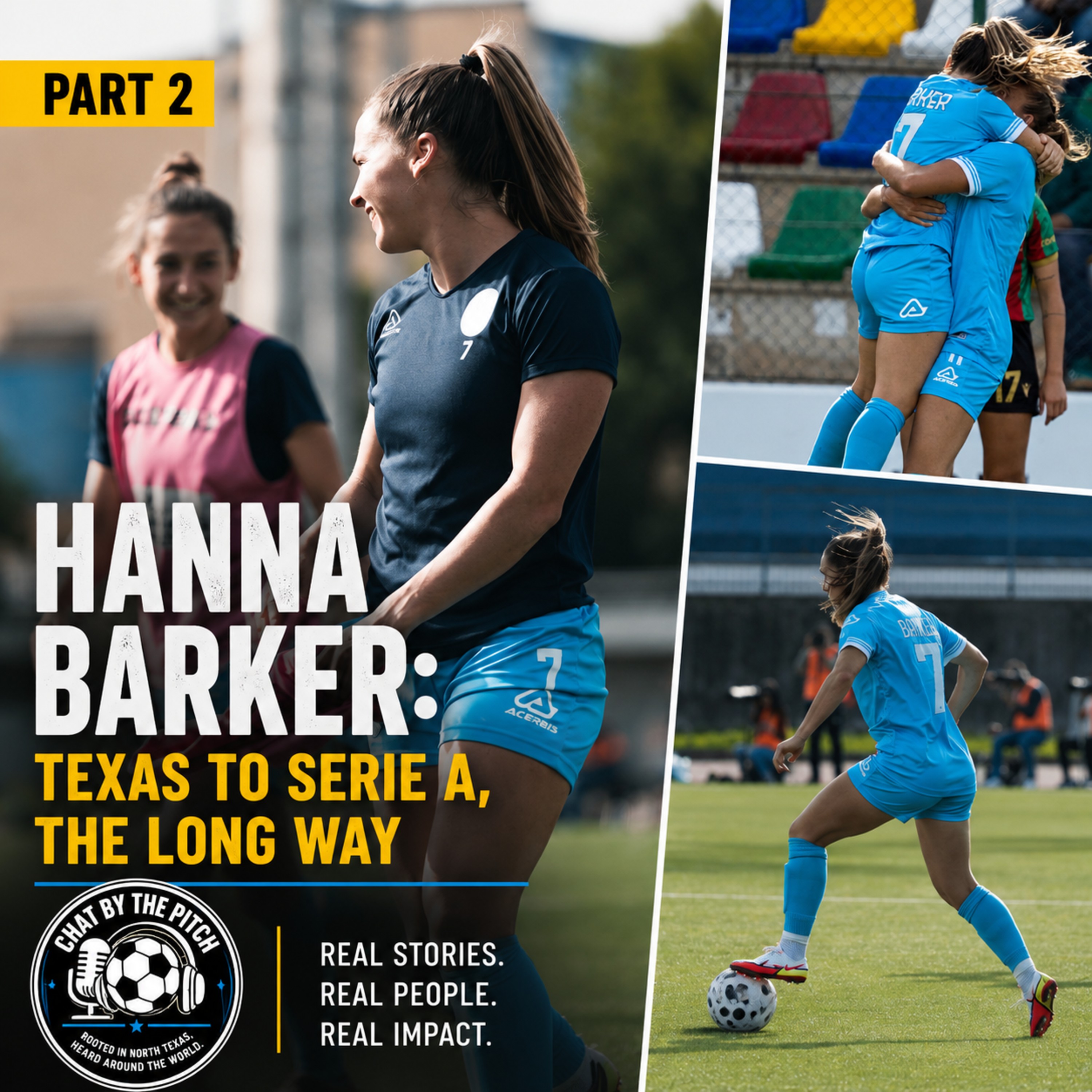
    Hanna Barker: Texas to Serie A The Long Way

    Hanna Barker turned a recovering ACL into a college career that ended with Freshman of the Year — then chased the pro game across four countries. In Part 2, Hanna and Ian trace the player pathway from college to the pros and the long road of playing abroad. She breaks down roles over positions and the playmaker’s mindset, why soccer IQ comes from being allowed to make mistakes, and how a safe environment lets players “fail forward.” It’s a clear-eyed look at what the student-athlete years really teach: time management, accountability, and leadership. Then the journey goes global. A mentor, Megan Dunnigan, opens the door to Iceland — the American route to the pros when the NWSL draft was only 30 names deep. From there it’s Hungary, a Champions League run in Budapest, two hard-earned seasons in Istanbul, and finally Serie A with underdog Napoli Women. For players, parents, and coaches mapping the road from youth soccer to the professional game, this one is about patience, mentorship, and building an identity beyond the sport. Don’t give up — something always comes around. Rooted in North Texas, heard around the world. Key Talking Points Roles over positions and embracing the playmaker mindset — don’t put yourself in a box Soccer IQ: reading the game, overlapping runs, and learning by being allowed to make mistakes Why a safe environment where players can “fail forward” produces real growth Starting college on a recovering ACL and rising to Freshman of the Year What student-athlete life teaches: time management, accountability, and leadership The mentor, Megan Dunnigan, who showed her the American pathway to the pros through Iceland The reality of the NWSL draft — only 30 names — and finding an alternative route overseas A career across Iceland, Hungary, a Champions League run in Budapest, and two seasons in Istanbul Turning resentment into her biggest growth, then landing in Serie A with Napoli Building an identity beyond soccer — a sports & performance psychology master’s and mentoring the next generation Quotes from Hanna Barker “If you don’t give up, you can’t lose, because something will always come around to what you want.” “The bad days will not last forever. The good days are not gonna last forever either — but at least enjoy them.” “Don’t put yourself in a box.” “The most important thing as a player is being on the field.” “You tell me what position you want me to play.” “It is okay to make mistakes, and you’re gonna fail, and that’s just part of the growth.” “If they can do it, I can do it.” “Stay patient in the process and don’t give up.” “I’m just a completely different person from college to now.” “I wouldn’t have been able to do any of this without playing soccer.” Connect with Hanna Barker 📸 Instagram: @hannabarkerr Follow Chat By The Pitch 🌐 Website: chatbythepitch.com 🎥 YouTube: Chat By The Pitch 📸 Instagram: @ChatByThePitch 🎵 TikTok: Chat.By.The.Pitch ✖️ X / Twitter: @ChatByThePitch 📘 Facebook: Chat By The Pitch 🎧 Spotify: Chat By The Pitch 🍎 Apple Podcasts: Chat By The Pitch 🎧 Subscribe & Review: Your support helps us keep bringing conversations with players, coaches, and leaders that matter. #ChatByThePitch #PlayingAbroad #WomensSoccer #SerieA #NapoliWomen #PlayerPathway #PlayerDevelopment #SoccerIQ #RolesOverPositions #ProSoccer #StudentAthlete #ACLComeback #SoccerJourney #WomenInSport #SoccerOverseas #DFWSoccer #TexasSoccer #Mentorship #DontGiveUp #FemaleAthlete

  • S1 · E176
    July 2 · 41 min

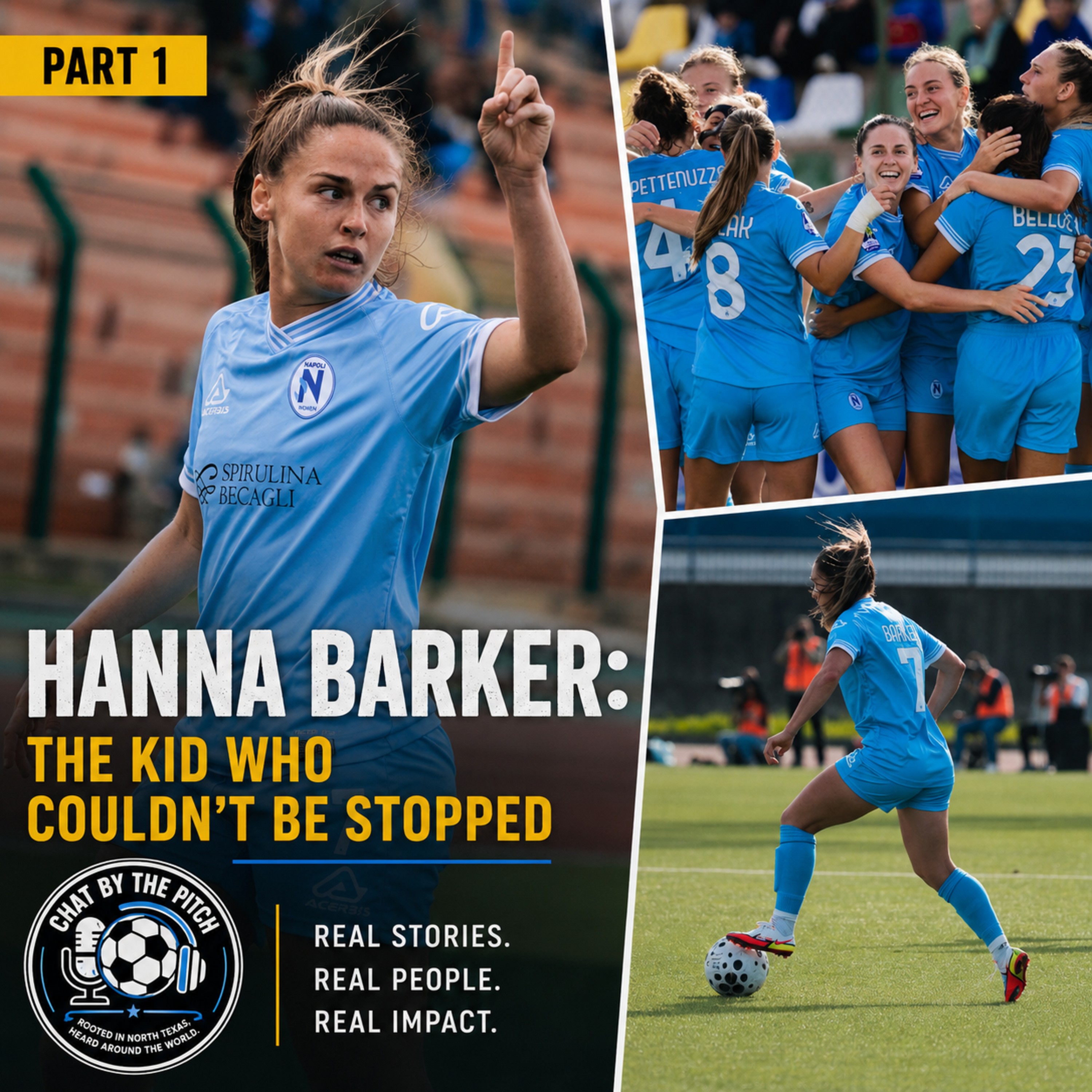
    Hanna Barker: The Kid Who Couldn't Be Stopped

    Before she was a winger for Napoli Women in Serie A, Hanna Barker was just a kid in Farmers Branch, Texas, kicking a ball around at her dad’s games. In Part 1, Hanna and Ian go back to the beginning — the youth soccer years that built everything that came later. She shares why she stayed at one club, Defeaters, for her entire youth career, how community and friendship kept her in love with the game, and why free play and multiple sports mattered more than private lessons and a packed schedule. It’s a real look at long-term player development over short-term winning. Then comes the hard part: two ACL tears as a teenager, and the mindset that brought her back in roughly eight months each time. Hanna’s advice on recovery — focus on what you can do, not what you can’t — is gold for any player or parent facing a setback. For soccer parents, youth coaches, and players chasing the game, this one is about protecting joy, growing together, and choosing the program that truly wants you. Rooted in North Texas, heard around the world. Key Talking Points Finding soccer early in Farmers Branch through her dad’s games and the younger-sibling advantage Joining Defeaters around age 10 and staying with the same group of girls for her entire youth career Why community and friendship — not private lessons — kept her in love with the game The value of multi-sport play and free time over early specialization and over-scheduling Parents who protected her from the political side of soccer and let her be a kid “Love the game so you survive the sport” — fostering joy that lasts a lifetime Coach Hugh’s style: discipline paired with the freedom to make mistakes and grow together Tearing her ACL twice as a teen — freshman and junior year — and the mental reset each time Reframing injury recovery: focus on what you can do, not on what you can’t Earning a full ride to Stephen F. Austin from a program that wanted her, and the support that carried her through her second comeback Quotes from Hanna Barker “I would not be the player who I am today without my ACL tears — it taught me a crazy level of resilience and perspective at such a young age.” “If you focus on what you’re able to do rather than what you can’t, it’ll take you a lot further.” “Focus on something else that you love if you can’t have that right now.” “There will always be injuries. It’s a part of the game, but it’s really how we bounce back from them.” “I always describe a team like a puzzle, and everyone has a little piece.” “It doesn’t matter your age. If you show up and you’re good, that’s who’s gonna play, and that’s how it should be.” “Someone always wishes they were where you’re at.” “They let me be a kid, and that’s something I’m always gonna be grateful for.” “You’re just a person who knows how to kick a ball.” “If you focus on what you have versus what you don’t have, it can really form a new perspective for you.” Connect with Hanna Barker 📸 Instagram: @hannabarkerr Follow Chat By The Pitch 🌐 Website: chatbythepitch.com 🎥 YouTube: Chat By The Pitch 📸 Instagram: @ChatByThePitch 🎵 TikTok: Chat.By.The.Pitch ✖️ X / Twitter: @ChatByThePitch 📘 Facebook: Chat By The Pitch 🎧 Spotify: Chat By The Pitch 🍎 Apple Podcasts: Chat By The Pitch 🎧 Subscribe & Review: Your support helps us keep bringing conversations with players, coaches, and leaders that matter. #ChatByThePitch #YouthSoccer #PlayerDevelopment #SoccerParents #WomensSoccer #ProtectTheJoy #DevelopmentOverWinning #ACLRecovery #FreePlay #YouthSoccerDevelopment #SoccerIQ #DFWSoccer #TexasSoccer #GrassrootsSoccer #SoccerJourney #FemaleAthlete #SoccerCoaching #LongTermDevelopment #SoccerMom #PlayUp

  • S1 · E175
    June 25 · 33 min

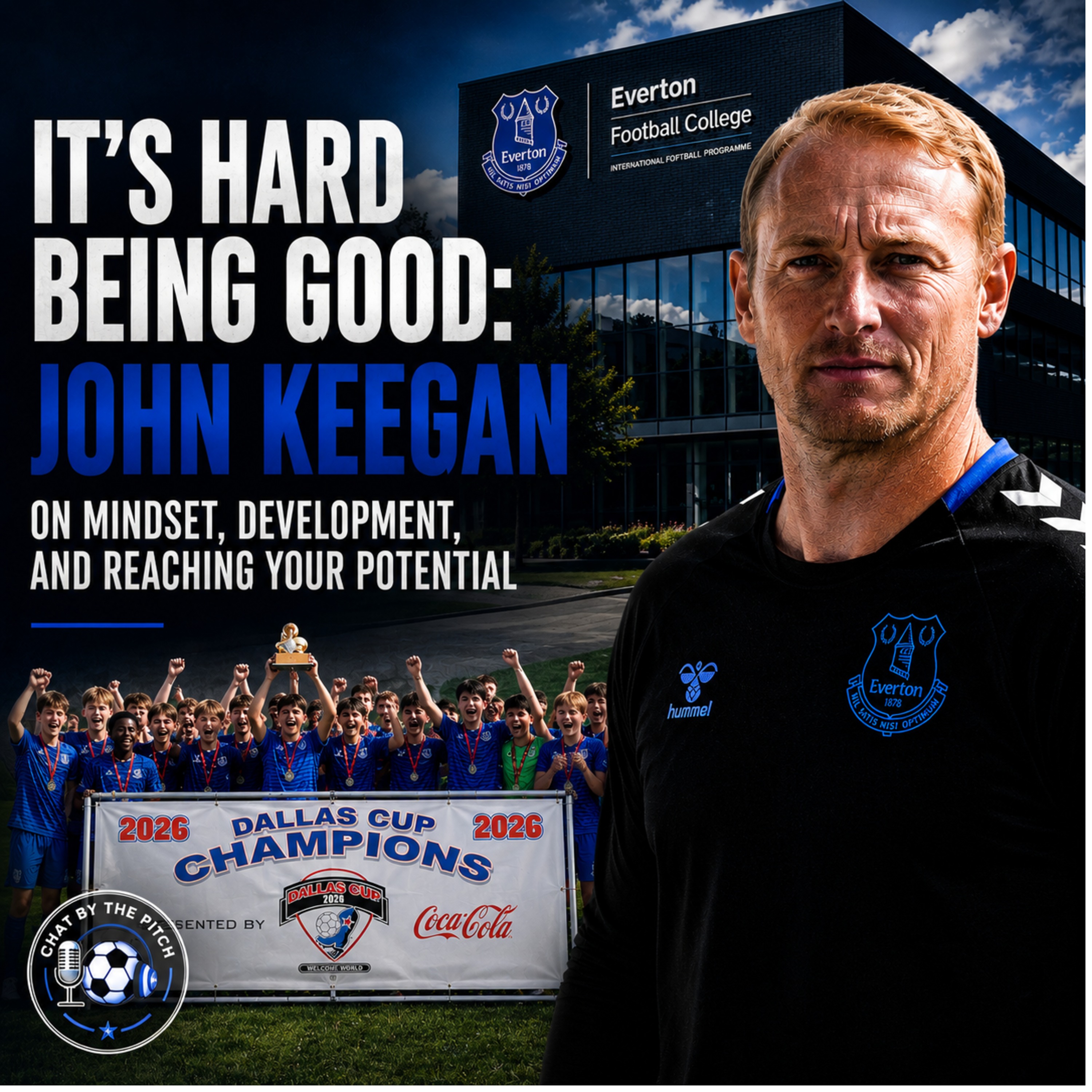
    It's Hard Being Good: John Keagan on Mindset, Development, and Reaching Your Potential

    What separates good players from great players? In Part 2 of this conversation, Everton FC's John Keagan dives into the mindset, work ethic, and personal responsibility required to reach your full potential in soccer and in life. From early college commitments and the transfer portal to player development, recruiting, and parenting in youth sports, John shares lessons learned from his playing and coaching career. The conversation explores why mentality often matters more than talent, how players earn opportunities, what coaches really look for when evaluating players, and why parents should focus on helping their children enjoy the game rather than trying to control every step of the journey. Whether you're a player chasing your goals, a coach developing young athletes, or a parent navigating the youth soccer landscape, this episode is packed with practical advice and timeless lessons. Key Talking Points Why early college commitments can be risky for players. How player development changes between ages 16 and 18. The realities of playing time and earning opportunities. Why coaches value mentality as much as talent. The difference between talented players and successful players. What Everton FC looks for when evaluating players. The role parents play in long-term player development. Why players should focus on effort and consistency. Lessons John learned from his father and former coaches. Why enjoying the game remains the most important goal. Quotes from John Keagan "A lot can change in two years." "If you're not playing, work harder." "Nobody has a God-given right to play." "Great desire and attitude aren't an ask—they're a given." "The mentality is everything." "If you dedicate yourself and do things correctly, you'll reach your level." "It's hard being good." "Give everything you've got every day, every session, every game." "Players will always reach the level they're supposed to." "Just let them enjoy playing the game." Connect with John Keagan 🌐 Website: evertonfc.ac.uk 📸 Instagram: @evertonfootballcollege 📧 Email: john.keegan@evertonfc.ac.uk Follow Chat By The Pitch 🌐 Website: chatbythepitch.com 🎥 YouTube: Chat By The Pitch YouTube 📸 Instagram: @ChatByThePitch 🎵 TikTok: Chat.By.The.Pitch ✖️ X / Twitter: @ChatByThePitch 📘 Facebook: Chat By The Pitch Facebook 🎧 Spotify: Chat By The Pitch on Spotify 🍎 Apple Podcasts: Chat By The Pitch on Apple Podcasts 🔗 Linktree: Chat By The Pitch Links 🎧 Subscribe & Review: Your support helps us keep bringing conversations with players, coaches, and leaders that matter. #ChatByThePitch #JohnKeagan #EvertonFC #YouthSoccer #PlayerDevelopment #SoccerParenting #SoccerCoaching #FootballDevelopment #MindsetMatters #WorkEthic #PlayerPathway #SoccerCulture #CollegeSoccer #YouthSports #Mentality #FootballEducation #SoccerPodcast #PlayerGrowth #ReachYourPotential #EvertonFootballCollege

  • S1 · E174
    June 18 · 37 min

    Inside Everton Football College: A Different Pathway to the Game

    What happens when a professional club creates a pathway that combines elite soccer development with education? In this episode, Ian sits down with John Keagan from Everton FC to discuss the club's Football College Program, how players transition from academy environments, and why education remains a critical piece of long-term player success. John shares how Everton has built opportunities for players to pursue professional football, university degrees, careers in sport, and scholarships around the world. The conversation also dives into the differences between youth soccer in England and the United States, the realities of pay-to-play, the importance of community-based football culture, and why parents should focus on helping their children enjoy the game rather than chasing professional contracts. Whether you're a player, parent, coach, or club leader, this episode offers a global perspective on player development, education, and building lifelong relationships with the game. Key Talking Points John Keagan's journey from professional player to coach and educator. The creation of Everton FC's Football College Program. How the English education system differs from the U.S. model. What a typical day looks like for Everton student-athletes. Success rates for players moving into university, professional soccer, or careers in sport. Scholarship opportunities available through Everton's programs. International player pathways into the UK. England vs. United States youth soccer culture. The challenges and realities of the American pay-to-play model. Why enjoyment and long-term participation should be the goal for young players. Quotes from John Keagan "We want everyone to be a success story." "It's very rare that students walk away from our program with nothing." "Everything that you would get with a professional team, we try to mimic." "Football is our national sport." "The standard of soccer in the United States is really high." "I think sometimes people are too critical of U.S. soccer." "Players will always find their level." "Everybody thinks their child is going to be the one." "People forget that it's a game to enjoy with your friends." "You still want people playing football in their forties, fifties, and beyond." Connect with John Keagan 🌐 Website: evertonfc.ac.uk 📸 Instagram: @evertonfootballcollege 📧 Email: john.keegan@evertonfc.ac.uk Follow Chat By The Pitch 🌐 Website: chatbythepitch.com 🎥 YouTube: Chat By The Pitch YouTube 📸 Instagram: @ChatByThePitch 🎵 TikTok: Chat.By.The.Pitch ✖️ X / Twitter: @ChatByThePitch 📘 Facebook: Chat By The Pitch Facebook 🎧 Spotify: Chat By The Pitch on Spotify 🍎 Apple Podcasts: Chat By The Pitch on Apple Podcasts 🔗 Linktree: Chat By The Pitch Links 🎧 Subscribe & Review: Your support helps us keep bringing conversations with players, coaches, and leaders that matter. Hashtags #ChatByThePitch #EvertonFC #JohnKeagan #YouthSoccer #PlayerDevelopment #SoccerParenting #FootballEducation #CollegeSoccer #SoccerPathways #YouthDevelopment #SoccerCoaching #MLSNext #ECNL #FootballCulture #Scholarships #SoccerFamilies #PlayerPathway #GrassrootsFootball #SoccerPodcast #FootballDevelopm

  • S1 · E173
    June 11 · 32 min

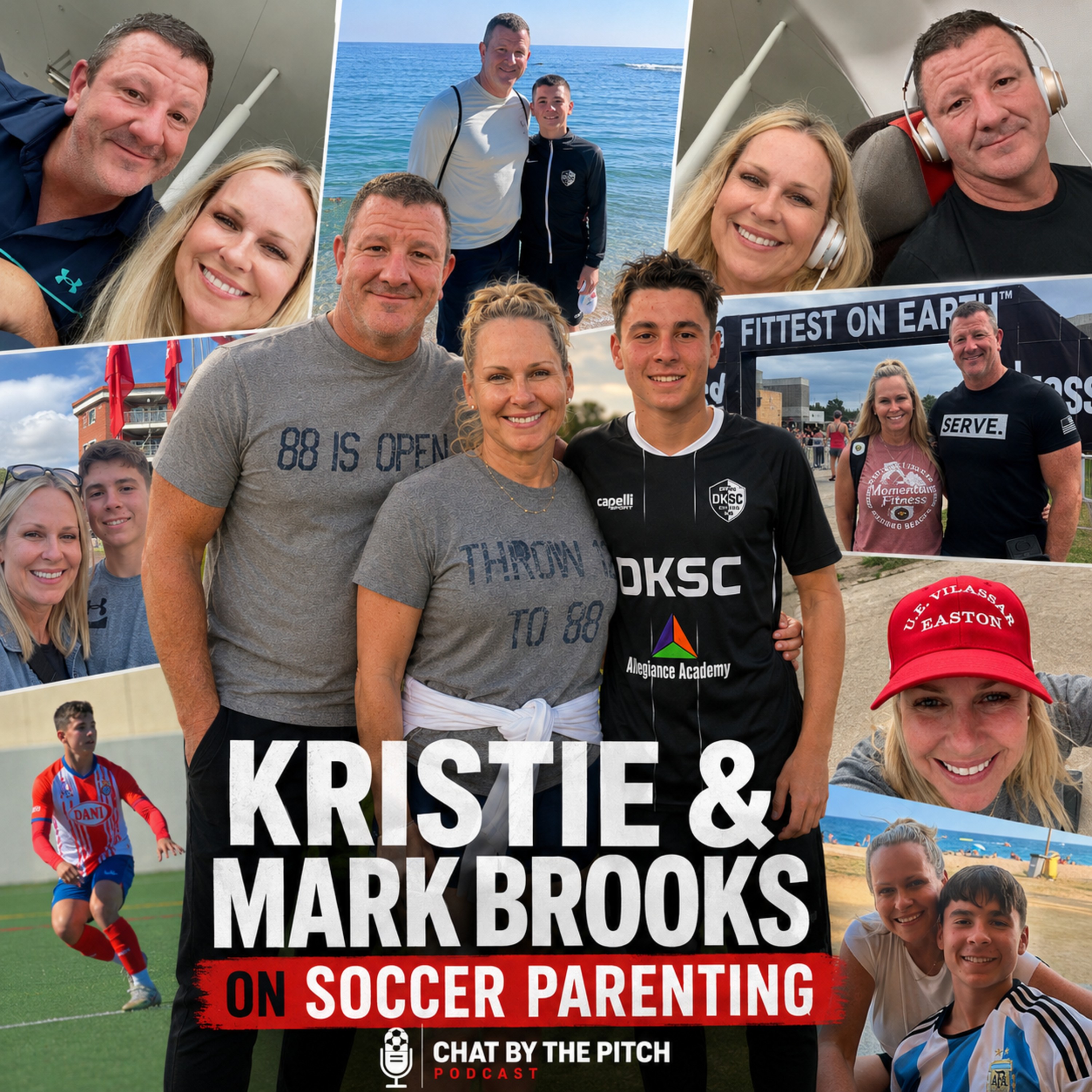
    Kristie & Mark Brooks on Soccer Parenting

    What does good soccer parenting actually look like? In Part 2, Kristie and Mark Brooks move beyond the Spain story and share the parenting lessons they learned while helping their son Easton chase soccer at a high level. We talk about pressure, parent behavior, coach relationships, letting kids advocate for themselves, mistakes parents make in youth soccer, and why too many adults unintentionally hurt their child’s development by trying to control the journey. If you’re a soccer parent trying to support your child without taking over, this conversation will challenge how you think about youth sports, development, pressure, and long-term growth. Key Talking Points Why parents should stop fighting every battle for kids Letting players advocate for themselves with coaches Parent behavior and how it impacts opportunities Why American soccer culture feels different from Europe Supporting a child without controlling the process Pressure, confidence, and love of the game The emotional challenge of parenting elite athletes Why joy matters more than pressure Advocating for overlooked players and teammates What soccer parenting should really look like Quotes From Kristie & Mark Brooks “Don’t make the coach hate your kid because you’re a jerk.” “We make him advocate for himself.” “Your kid should go out there and have fun.” “He puts more pressure on himself than we do.” “We all support each other as a family.” “You’re doing your child a disservice by dictating everything.” “If a kid wants something and works for it, we’ll help remove roadblocks.” “Parents should celebrate other kids’ success too.” “We let coaches coach unless something truly matters.” “Joy matters in development.” Follow Chat By The Pitch 🌐 Website: chatbythepitch.com 🎥 YouTube: Chat By The Pitch YouTube 📸 Instagram: @ChatByThePitch 🎵 TikTok: Chat.By.The.Pitch ✖️ X / Twitter: @ChatByThePitch 📘 Facebook: Chat By The Pitch Facebook 🎧 Spotify: Chat By The Pitch on Spotify 🍎 Apple Podcasts: Chat By The Pitch on Apple Podcasts 🔗 Linktree: Chat By The Pitch Links 🎧 Subscribe & Review: Your support helps us keep bringing conversations with players, coaches, and leaders that matter. #YouthSoccer #SoccerParenting #SoccerParents #PlayerDevelopment #YouthAthlete #SoccerDevelopment #YouthSports #ParentingAthletes #FootballDevelopment #SoccerJourney #SoccerCoach #SoccerCulture #YouthSoccerParents #SoccerMindset #EliteAthlete #SoccerFamily #ChatByThePitch #PlayerPathway #RaisingAthletes #YouthFootball

  • S1 · E172
    June 4 · 41 min

    Kristie & Mark Brooks on the Spain Soccer Process

    What does it really take for a teenager to move to Spain and chase a soccer dream? In Part 1, Kristie and Mark Brooks share the real story behind helping their son Easton move overseas at 14 to pursue soccer in Spain. From visas, FIFA cards, training environments, and team culture to the emotional side of letting your child leave home, this conversation pulls back the curtain on a process most families never truly understand. We also dig into the differences between American youth soccer and the Spanish system, how Easton earned trust through work ethic, and why family support matters when big opportunities appear. If you're a soccer parent, player, or coach trying to better understand player development, overseas pathways, or how to support a young athlete chasing something big — this episode matters. Key Talking Points Why Easton wanted to pursue soccer in Spain at 14 How work ethic helped Easton earn opportunities overseas Differences between American and Spanish soccer culture The truth about FIFA cards, visas, and eligibility Why parents in Spain behave differently around youth soccer Letting kids advocate for themselves with coaches The emotional reality of sending your child overseas Why joy and love of the game matter in development The role coaches played in Easton’s growth What families should know before chasing an overseas opportunity Quotes From Kristie & Mark Brooks “If our kid wants something and is willing to put the work in, then we’ll do the work on our end to make that dream happen.” “He puts more pressure on himself than we ever could.” “Go out there and have fun. When you overthink everything, you don’t play your best.” “We don’t fight those battles for him — he has to advocate for himself.” “Parents over there aren’t dictating everything like they do here.” “The stars have to align — talent, timing, coaches, belief, opportunity.” “He was the kid running every corner while everybody else cut the laps.” “He earned respect through work ethic.” “We aren’t helicopter parents — we help remove the roadblocks.” “Sometimes you just have to let them go figure it out.” Follow Chat By The Pitch 🌐 Website: chatbythepitch.com 🎥 YouTube: Chat By The Pitch YouTube 📸 Instagram: @ChatByThePitch 🎵 TikTok: Chat.By.The.Pitch ✖️ X / Twitter: @ChatByThePitch 📘 Facebook: Chat By The Pitch Facebook 🎧 Spotify: Chat By The Pitch on Spotify 🍎 Apple Podcasts: Chat By The Pitch on Apple Podcasts 🔗 Linktree: Chat By The Pitch Links 🎧 Subscribe & Review: Your support helps us keep bringing conversations with players, coaches, and leaders that matter. #YouthSoccer #SoccerParenting #SpainSoccer #PlayerDevelopment #YouthSoccerDevelopment #SoccerJourney #SoccerParents #InternationalSoccer #SoccerDevelopment #FutureFootballer #FootballDevelopment #YouthAthlete #PlayerPathway #SoccerFamily #YouthFootball #AmericanSoccer #SoccerPodcast #ChatByThePitch #EastonBrooks #SoccerInSpain

  • S1 · E171
    May 28 · 37 min

    Easton Brooks Soccer Journey

    What does it really look like for a 14-year-old American player to move to Spain and chase the dream of professional soccer? In this episode of Chat By The Pitch, Ian Babcock sits down with Easton Brooks to discuss his journey from local soccer in Texas to training and competing in Spain against academy-level opposition. Easton shares what it was like leaving home at 14, adapting to a completely different soccer culture, learning a new language, handling pressure without family nearby, and discovering how much the joy of the game matters. Easton also opens up about the mental side of development, learning the speed and intelligence of the Spanish game, balancing school and soccer overseas, and what young American players can learn from the European pathway. This episode is a must-listen for soccer families, players, and coaches trying to better understand player development, international football culture, and the realities of chasing the professional game overseas. Key Talking Points Easton’s first experience with soccer through “The Frogs” Realizing Spain could become a legitimate pathway Moving overseas at 14 years old Differences between American and Spanish soccer culture Technical ability vs soccer IQ Living independently in Spain Training intensity and film study overseas Handling pressure and adversity away from family Why joy and freedom matter in development The importance of family support during the process Quotes From Easton “As long as you’re having fun, that’s all that really matters.” “I knew I had put in the work.” “The game over there is a hundred times more intense.” “They already know what they’re doing before they receive the ball.” “The more fun you’re having, the better you’re going to play.” “I really learned to appreciate every moment with my family.” “I just tried my best and did what I knew.” “I wanted them to want me.” “I learned how to perform even without my family there.” “Playing the sport is a blessing.” Connect with Easton Brooks 📸 Instagram: EastonBrooks88 Follow Chat By The Pitch 🌐 Website: chatbythepitch.com 🎥 YouTube: Chat By The Pitch YouTube 📸 Instagram: @ChatByThePitch 🎵 TikTok: Chat.By.The.Pitch ✖️ X / Twitter: @ChatByThePitch 📘 Facebook: Chat By The Pitch Facebook 🎧 Spotify: Chat By The Pitch on Spotify 🍎 Apple Podcasts: Chat By The Pitch on Apple Podcasts 🎧 Subscribe & Review: Your support helps us keep bringing conversations with players, coaches, and leaders that matter. #ChatByThePitch #EastonBrooks #YouthSoccer #PlayerDevelopment #DallasCup #SpainSoccer #SoccerPodcast #USYouthSoccer #FootballDevelopment #SoccerParents #InternationalSoccer #MLSNext #ECNL #SpanishFootball #PlayerPathway #TexasSoccer #YouthFootball #SoccerJourney #FootballCulture #SoccerDevelopment

  • S1 · E170
    May 21 · 39 min

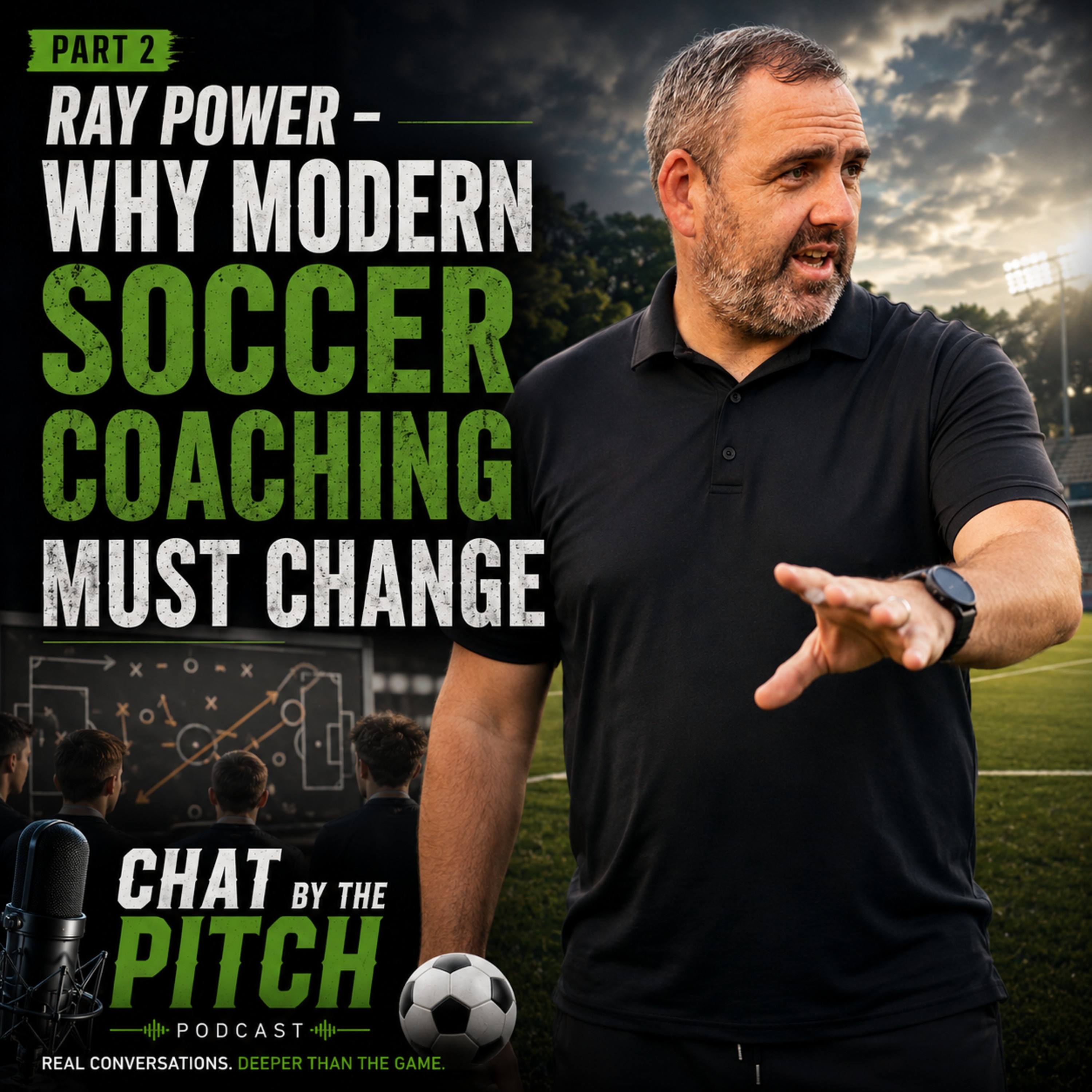
    Ray Power – Why Modern Soccer Coaching Must Change

    In Part 2, Ray Power and Ian Babcock continue the conversation by diving into coaching methodology, player development systems, training environments, and the importance of continuing coach education. Ray breaks down why static drills and long lines hurt player development, why game-like environments matter, and how the best coaches constantly evolve their understanding of the game. The conversation also explores curriculum building inside clubs, balancing development with winning, and why coaches must continue learning if they truly want to help players grow long term. Key Talking Points Why dynamic training environments matter The problem with line drills and stagnant sessions Teaching players through game-like situations Why youth coaches must continue their education Balancing club curriculum with coaching autonomy Winning versus long-term player development How professional environments shape player mentality Why coaching styles must evolve over time Creating environments that maximize touches and decision-making The importance of development-focused coaching culture Quotes from Ray Power “Winning should never come at the expense of development.” “There is no room for set plays at the younger ages.” “If kids are standing in lines, they’re not learning the game.” “Development happens in dynamic environments.” “You can wrap fitness, technique, and decision-making all into the game itself.” “The best coaches are constantly evolving.” “Coaching should never become cookie cutter.” “If you’re not changing as a coach, you’re falling behind.” “Players need a toolbox of experiences by the time they reach adulthood.” “The game itself should be the teacher whenever possible.” Connect with Ray Power 🌐 Stan Store / Courses: https://stan.store/CoachPower 💼 LinkedIn: http://linkedin.com/in/coachpowerpro ✖️ X / Twitter: @power_ray Follow Chat By The Pitch 🌐 Website: chatbythepitch.com 🎥 YouTube: Chat By The Pitch YouTube 📸 Instagram: @ChatByThePitch 🎵 TikTok: Chat.By.The.Pitch ✖️ X / Twitter: @ChatByThePitch 📘 Facebook: Chat By The Pitch Facebook 🎧 Spotify: Chat By The Pitch on Spotify 🍎 Apple Podcasts: Chat By The Pitch on Apple Podcasts 🔗 Linktree: Chat By The Pitch Links 🎧 Subscribe & Review: Your support helps us keep bringing conversations with players, coaches, and leaders that matter. #ChatByThePitch #RayPower #YouthSoccer #SoccerCoaching #CoachEducation #FootballDevelopment #PlayerDevelopment #SoccerParents #GrassrootsFootball #FootballCoaching #SoccerCulture #SoccerTraining #DevelopmentOverWinning #CoachingEducation #FootballPodcast #SoccerPodcast #DynamicTraining #YouthSports #PlayerGrowth #ModernCoaching

  • S1 · E169
    May 14 · 42 min

    Ray Power – Why Parents Need Soccer Education Too

    In Part 1 of this conversation, Ray Power joins Chat By The Pitch to talk about youth soccer development, coaching philosophy, parent education, and why keeping kids in love with the game matters more than early results. Ray shares his journey from teacher to professional coach educator, how writing Making the Ball Roll shaped his philosophy, and why modern coaching environments should focus on development, trust, communication, and long-term player growth. This episode dives deep into what parents misunderstand about coaching, why match day behavior matters, and how coaches can create environments where players actually learn and thrive. Key Talking Points Ray Power’s journey into coaching and coach education Why youth soccer should prioritize development over outcomes The importance of keeping kids in love with the game Why match day should not become joystick coaching The role parents play in youth player development Coaching environments built on trust and communication Why players need different coaching experiences growing up How coaches develop their own philosophy over time The difference between learning and simply chasing results Why parents need to better understand the development process Quotes from Ray Power “If we could just get out of the way of kids falling out of love with the game, everything after that will run its course.” “Do your coaching in training. Match day should mostly be reminders.” “The game evolves. Coaches have to evolve too.” “You can’t ruin the love of the game for kids.” “Good coaches will come, bad coaches will come — that’s part of development too.” “Kids grow from praise. They want to repeat what gets recognized.” “If you surround something with negativity all the time, that’s what it becomes.” “Parents often arrive without the motivation to learn, but with plenty to say.” “Winning at the expense of development is where youth soccer gets lost.” “The most important thing is making sure kids want to come back tomorrow.” Connect with Ray Power 🌐 Store & Courses: Stan Store – Coach Power 💼 LinkedIn: Ray Power on LinkedIn ✖️ X: @power_ray Follow Chat By The Pitch 🐦 X: @ChatByThePitch 📷 Instagram: @ChatByThePitch 📘 Facebook: Chat By The Pitch 🎧 Subscribe & Review: Your support helps us keep bringing conversations with players, coaches, and leaders that matter. Hashtags #ChatByThePitch #RayPower #YouthSoccer #FootballDevelopment #SoccerCoaching #PlayerDevelopment #CoachEducation #SoccerParents #GrassrootsFootball #YouthDevelopment #FootballCoaching #SoccerCulture #SoccerTraining #ParentEducation #PlayerGrowth #SoccerPodcast #FootballPodcast #YouthSports #DevelopmentOverWinning #MakingTheBallRoll

  • S1 · E168
    May 7 · 42 min

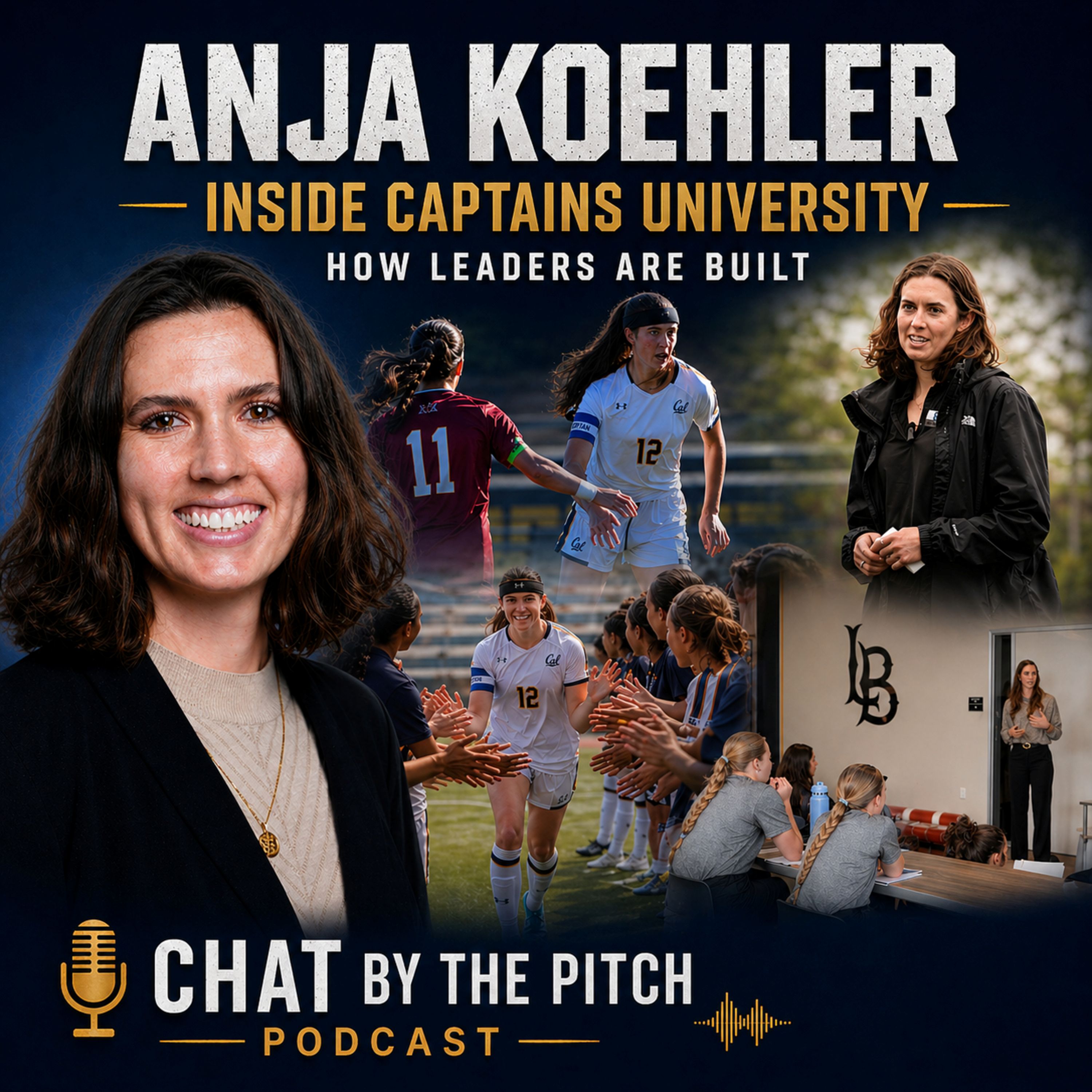
    Inside Captains University – How Leaders Are Built

    Part 2 is where everything connects. After hearing the journey, Anja Koehler breaks down how leadership is actually built—not assumed. Through Captains University, she’s created a system around something most players are expected to figure out on their own. Confidence. Communication. Decision-making. This isn’t about naming captains—it’s about developing leaders at every level of the game. Key Talking Points The mission behind Captains University Leadership as a learned skill—not a trait The three pillars: clarity, communication, confidence Why leadership should start earlier Real player-to-player communication challenges Handling conflict the right way Working alongside coaches and team culture Parents’ role in development Guided decision-making vs giving answers The 40–70 decision-making framework Quotes from Anja “Leadership isn’t just about the armband.” “The earlier you learn these tools, the better.” “Confidence comes from understanding who you are.” “You don’t need perfect information to make a decision.” “Your next decision doesn’t have to be your final decision.” “A team of leaders is more powerful than one leader.” “We should stop giving answers and start asking better questions.” “Leadership is something you learn over time.” “Communication changes everything.” “These tools go beyond soccer.” Connect with Anja Koehler & Captains University 🌐 Website: https://captainsuniversity.com/ 📸 Instagram: @captainsuniversity @anja_koehler 💼 LinkedIn: Captains University Anja Koehler 🎵 TikTok: @captainsuniversity 🎧 Follow Chat By The Pitch 🐦 X: @ChatByThePitch 📷 Instagram: @ChatByThePitch 📘 Facebook: Chat By The Pitch 🎵 TikTok: Chat.By.The.Pitch 🎧 Subscribe & Review: Your support helps grow the game and these conversations. #SoccerLeadership #LeadershipDevelopment #TeamCulture #CommunicationSkills #ConfidenceBuilding #SoccerParents #SoccerCoaching #PlayerDevelopment #YouthSoccer #DecisionMaking #AthleteGrowth #LeadershipSkills #NextGenLeaders #CoachEducation #ParentEducation #SportsLeadership #CaptainsUniversity #AnjaKoehler #ChatByThePitch #SoccerPodcast

  • S1 · E167
    April 30 · 56 min

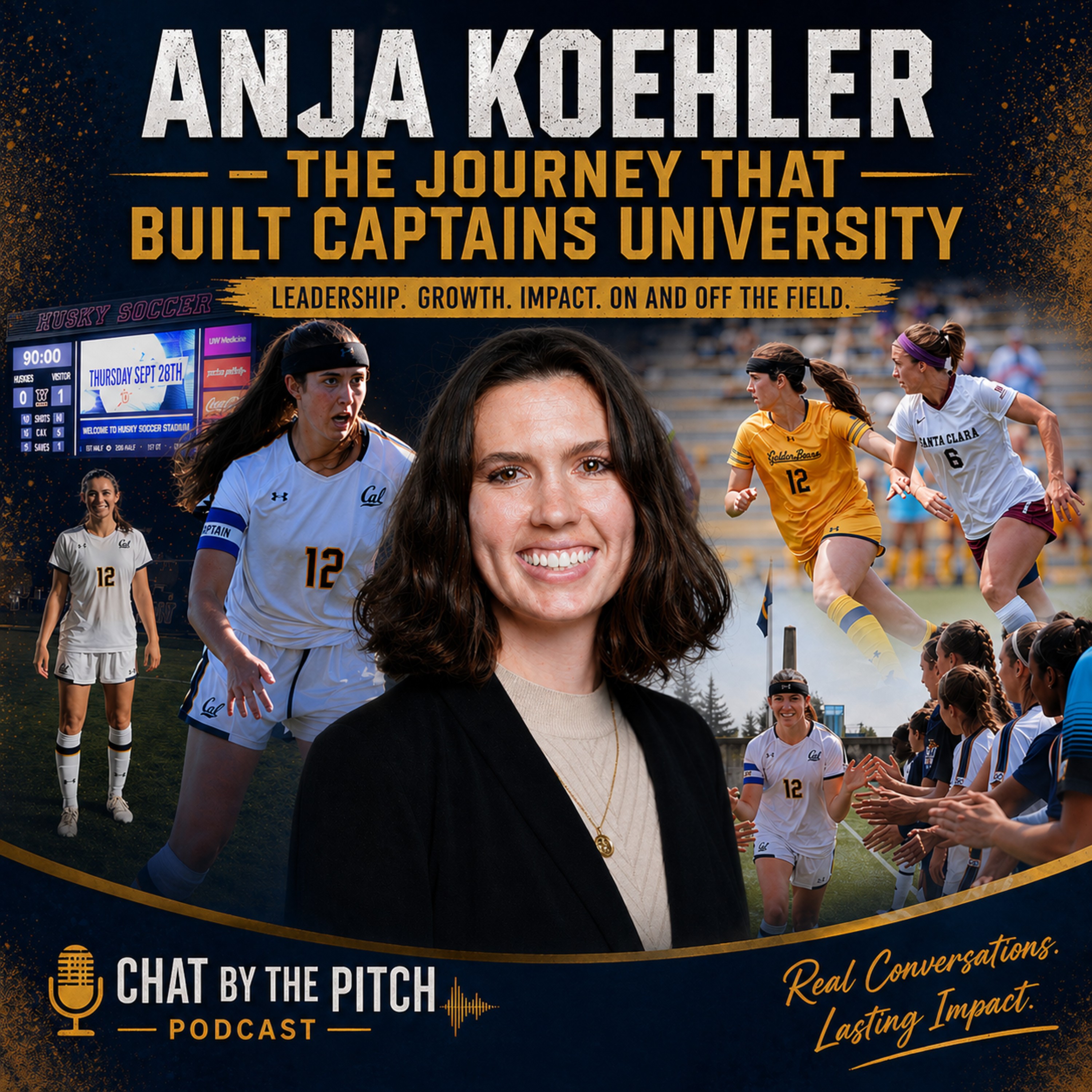
    Anja Koehler – The Journey That Built Captains University

    This one starts with the story—but it’s not the clean version. Anja Koehler walks through what it actually looked like to become a leader—being overlooked, losing confidence, earning it back, and figuring it out in real time. From youth soccer to becoming a Division I captain, this is the part most players never hear about. Before Captains University became a framework, it was lived experience. This is where it started. Key Talking Points Growing up in a soccer-driven environment Early development and competitive mindset Transition to high-level club soccer Not being the best player—and why that mattered Building habits outside structured training High school vs club leadership experiences College transition and injury setbacks Losing confidence and earning it back Turning point moments that changed everything Becoming a captain through consistency Quotes from Anja “I wasn’t the best player—but I knew I could work to become better.” “You have to keep going even when it’s not working.” “Your spot isn’t permanent—you earn it every day.” “Confidence came from the work I was putting in.” “That moment didn’t define me—it pushed me.” “It wasn’t a straight path, and that’s what made it real.” “You don’t just arrive—you build into it.” “Every setback forced me to grow.” “I just kept trying to get better every day Connect with Anja Koehler & Captains University 🌐 Website: https://captainsuniversity.com/ 📸 Instagram: @captainsuniversity @anja_koehler 💼 LinkedIn: Captains University Anja Koehler 🎵 TikTok: @captainsuniversity Follow Chat By The Pitch 🐦 X: @ChatByThePitch 📷 Instagram: @ChatByThePitch 📘 Facebook: Chat By The Pitch 🎧 Subscribe & Review: Your support helps grow the game and these conversations. #YouthSoccer #PlayerDevelopment #SoccerJourney #Resilience #AthleteMindset #SoccerParents #SoccerCoaching #TeamCulture #GrowthMindset #NextGenAthletes #CollegeSoccer #ECNL #WorkEthic #Confidence #SoccerLife #LeadershipJourney #SportsDevelopment #ChatByThePitch #CaptainsUniversity #AnjaKoehler

  • S1 · E166
    April 23 · 45 min

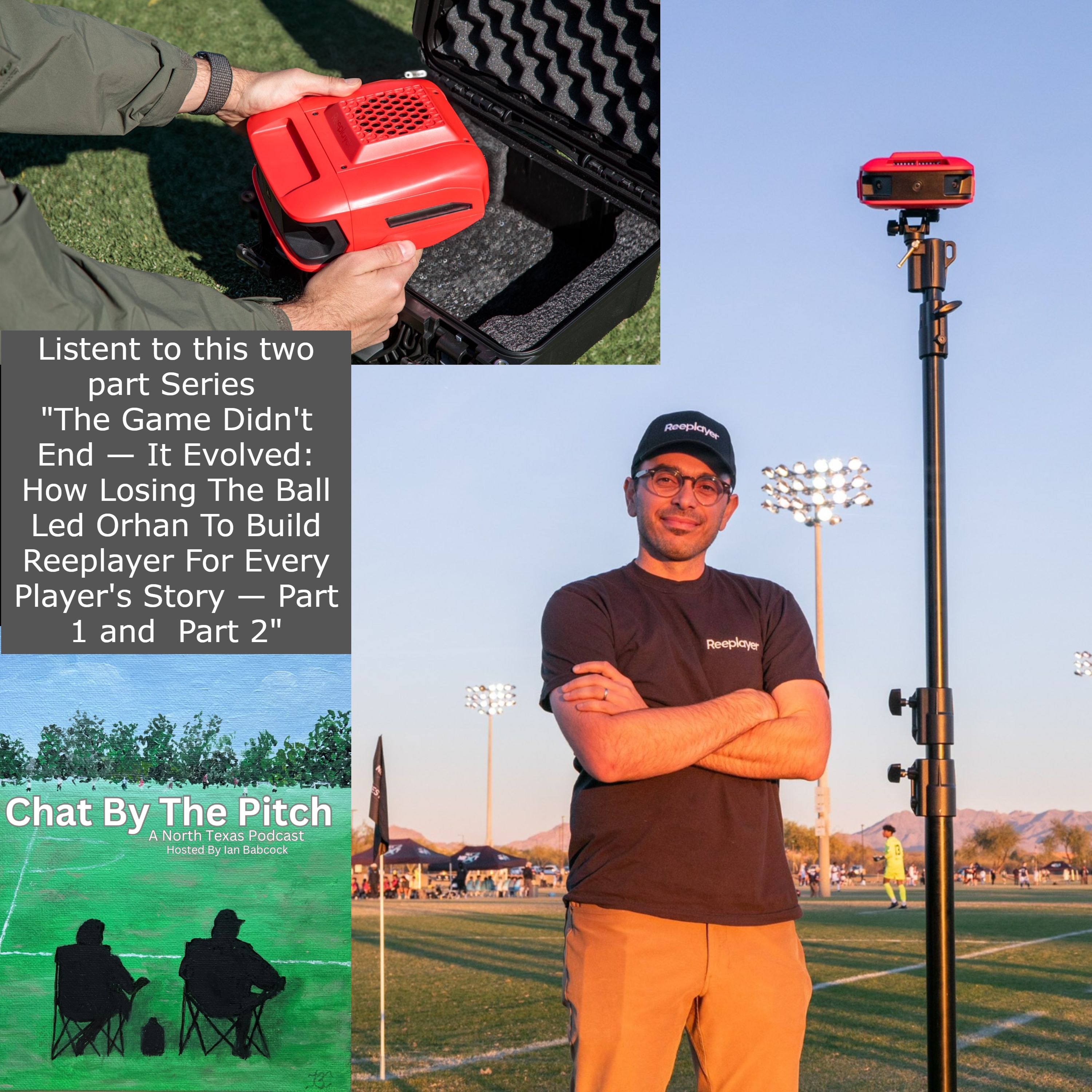
    The Game Didn't End — It Evolved: How Losing The Ball Led Orhan To Build Reeplayer For Every Player's Story Part 2

    Part 2 of this reissued conversation shifts into the details that matter when making a decision. We break down pricing, how different systems are built, and where things like AI and analytics actually stand today. There’s a lot of noise in this space — and this episode helps cut through it by focusing on what’s real, what’s not fully ready yet, and what families should actually expect. If you’re evaluating a camera system or trying to understand the value behind it, this is the conversation you need. Key Talking Points Pricing models across camera systems Subscription vs hardware-based models Why AI in sports analytics isn’t fully accurate yet The difference between marketing and reality Modular camera systems vs full replacements Live streaming capabilities and limitations Remote connectivity and real-time access The role of video in player development Positive vs negative reinforcement through film The future of sports media in youth soccer Quotes from Orhan (Part 2) “I’m not a big believer in AI doing stats yet.” “We won’t focus on analytics — we’ll focus on the footage.” “We’re not a camera company — we’re a media company.” “Parents shouldn’t feel like they’re stuck.” “Access to footage has to come first.” “We want to be shoulder to shoulder with our users.” “This is about young athletes, not just technology.” Connect with Reeplayer 🌐 Website: https://reeplayer.com 📸 Instagram: @reeplayer ✖️ X: @ReeplayerHQ 👍 Facebook: Reeplayer Follow Chat By The Pitch 🐦 X: @ChatByThePitch 📷 Instagram: @ChatByThePitch 📘 Facebook: Chat By The Pitch ▶️ YouTube: @ChatByThePitchPod 🎵 TikTok: Chat.by.the.pitch 🎧 Subscribe & Review: Your support helps us keep bringing conversations that matter. #YouthSoccer #SoccerDevelopment #PlayerDevelopment #SoccerParents #GameFilm #SoccerCoaching #SportsTech #Reeplayer #LiveStreamingSports #SoccerTraining #SoccerLife #NextGenAthletes #SoccerCommunity #AthleteDevelopment #SportsInnovation #CoachingEducation #SoccerCulture #FootballDevelopment #YouthSports #GameFootage

  • S1 · E165
    April 23 · 42 min

    The Game Didn't End — It Evolved: How Losing The Ball Led Orhan To Build Reeplayer For Every Player's Story Part 1

    This is a reissue of Part 1 of my conversation with Orhan from Reeplayer — brought back because the questions around camera systems are picking up again with the new season starting. In this episode, we focus on the foundation — why youth soccer still struggles to consistently capture games, what families are dealing with, and how access to footage impacts development. We also get into Orhan’s journey and what led to building Reeplayer, along with the bigger issue most people don’t realize exists. If you’re a parent, coach, or club looking at camera systems, this is where you should start. Key Talking Points The lack of recorded footage in youth soccer Why capturing games is still difficult for families Orhan’s journey from player to founder The original problem Reeplayer set out to solve Cost barriers in current camera systems Why parents don’t want to film games themselves The importance of access to game footage Instant processing vs traditional workflows Storage limitations with current systems How video impacts player development Quotes from Orhan “There’s over a billion hours of youth sports footage not being recorded.” “Parents just don’t want to hold their phones for an entire game.” “We wanted to make game footage accessible to all.” Connect with Reeplayer 🌐 Website: https://reeplayer.com 📸 Instagram: @reeplayer ✖️ X: @ReeplayerHQ 👍 Facebook: Reeplayer Follow Chat By The Pitch 🐦 X: @ChatByThePitch 📷 Instagram: @ChatByThePitch 📘 Facebook: Chat By The Pitch ▶️ YouTube: @ChatByThePitchPod 🎵 TikTok: Chat.by.the.pitch 🎧 Subscribe & Review: Your support helps us keep bringing conversations that matter. #YouthSoccer #SoccerDevelopment #PlayerDevelopment #SoccerParents #GameFilm #SoccerCoaching #SportsTech #Reeplayer #LiveStreamingSports #SoccerTraining #SoccerLife #NextGenAthletes #SoccerCommunity #AthleteDevelopment #SportsInnovation #CoachingEducation #SoccerCulture #FootballDevelopment #YouthSports #GameFootage

Showing 1–20 of 22 episodes