Skip to content
Artwork for Creative Figures
ArtsDesignBusinessEntrepreneurship

Creative Figures

Creative Figures

Creative Figures is a long-form interview show about how creative people actually live and work. One guest per episode — artists, designers, illustrators, writers, filmmakers, makers of every kind — and no hurry: the practice behind the portfolio, the decisions behind the career, the parts that never make the highlight reel. Between conversations, occasional solo episodes on craft and creative independence.

Filmed in full — watch at creativefigures.fm, or listen wherever you get your shows.

Hosted by Alen Kapetanovic.
Formerly CAPTN OffScript.

Play
  • 29 episodes
  • weekly
  • Avg 35 min
  • English
Counted on this page — what you have heard stays on this device, so it is not something the list can be paged by.
  • S3 · E104
    Friday · 3 min· Video

    Erik Herrström on the Pinterest trap

    Designer Erik Herrström on why starting a project on Pinterest leads every designer to the same work, and the research his studio uses instead. "If you start your project by going to those sites, you are gonna end up designing what all the other designers in the world are doing right now because it's fed to you by algorithms." In this bonus from his Creative Figures conversation, Erik answers what young designers should use instead of mood boards built on Pinterest, Savee, Are.na and other inspiration sites. Something can feel fresh on the morning you start, he explains, but most other designers are seeing the same thing at the same time. His studio starts with research instead: Reddit and YouTube to see how an audience talks and communicates, and sometimes Google Street View to understand a local area. That, he says, is often where the magic happens, and it makes more sense to clients than something that only looks shiny. Timestamps 00:00 Opening 00:13 What to use instead of mood boards 00:29 How algorithms make us design the same If you liked this episode, listen to the full conversation with Erik Herrström on Creative Figures. Erik Herrström STUDIO HERRSTRÖM: https://www.studioherrstrom.com/ The Echo: https://the-echo-book.com/ Instagram: https://www.instagram.com/herrstrom/ Studio Instagram: https://www.instagram.com/studioherrstrom/ LinkedIn: https://www.linkedin.com/in/erikherrstrom/ Studio LinkedIn: https://www.linkedin.com/company/studio-herrstrom/ Creative Figures Website https://creativefigures.fm YouTube: https://www.youtube.com/@CreativeFiguresFM Instagram: https://www.instagram.com/creativefigures.fm/ Hosted by Alen Kapetanovic. © Alen Kapetanovic. Madrid, Spain. All rights reserved. This work may not be used to train AI or for automated data mining purposes, including under Article 4(3) of Directive (EU) 2019/790.

  • S3 · E103
    October 16 · 3 min

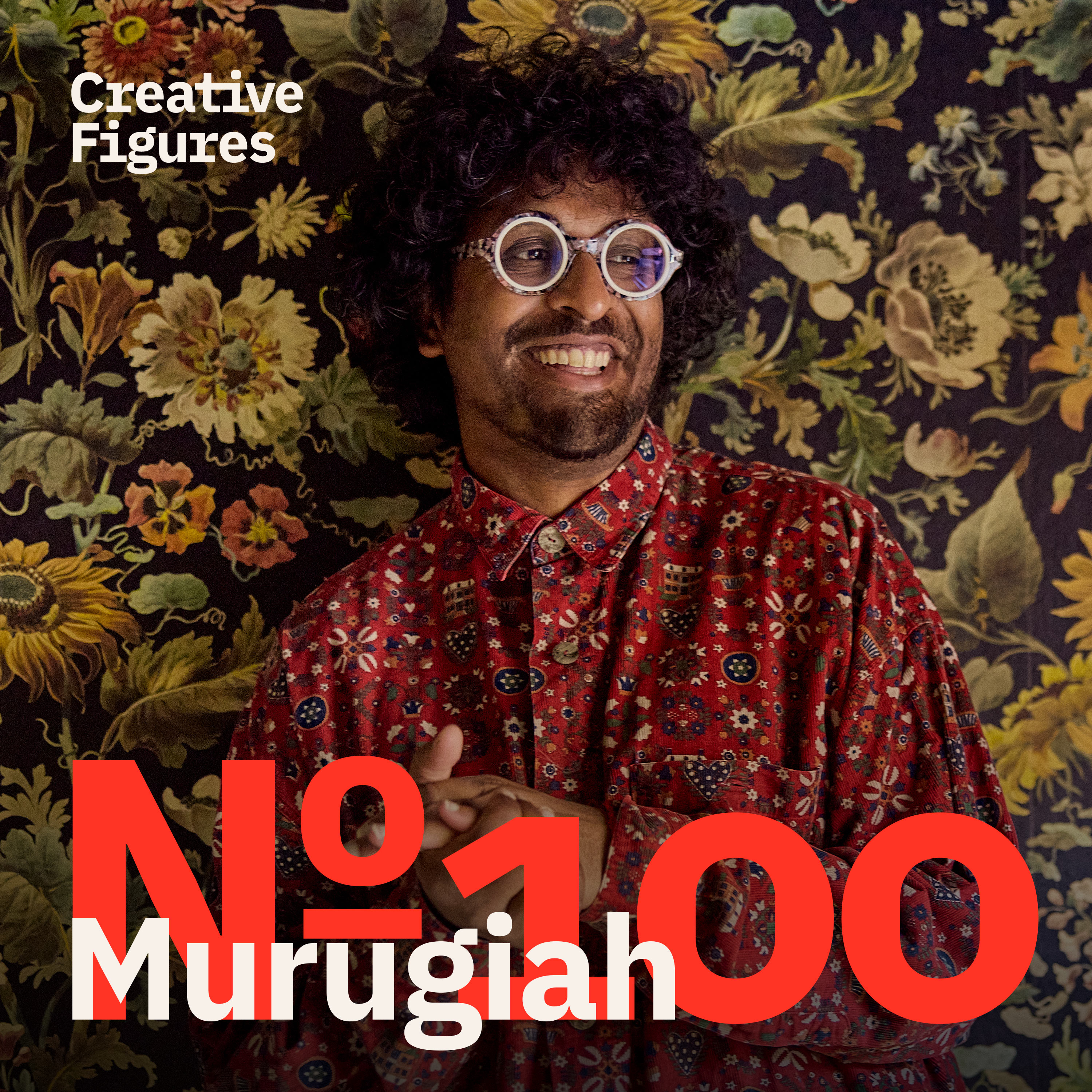
    Murugiah on reinvention and following the fun

    llustrator and artist MURUGIAH on whether artists should reinvent themselves, and why he follows the fun instead. "Don't let what you did last get in the way of what you want to do in the future." In this bonus from his Creative Figures conversation, MURUGIAH answers whether artists should reinvent themselves every few years, the way Madonna does. He describes how he moved from digital work to analogue painting through small adjustments, keeping his motifs and line style while changing the surface. He talks about a 3D animation projection project with a collaborator working in Unreal Engine, and why collaboration means letting go of how your work has looked before. And he explains why he lets his past digital work speak for itself while he focuses on getting good at painting. If you liked this episode, listen to the full conversation with Murugiah on Creative Figures. MURUGIAH Website: https://murugiah.com Instagram: https://www.instagram.com/_murugiah/ Creative Figures Website: https://creativefigures.fm YouTube https://www.youtube.com/@CreativeFiguresFM Instagram: https://www.instagram.com/creativefigures.fm/ Hosted by Alen Kapetanovic. © Alen Kapetanovic. Madrid, Spain. All rights reserved. This work may not be used to train AI or for automated data mining purposes, including under Article 4(3) of Directive (EU) 2019/790.

  • S3 · E102
    October 13 · 41 min· Video

    Nick Liefhebber on paper cuts, printmaking and working with limitations

    Illustrator Nick Liefhebber on paper cuts, woodcut printmaking, going independent one day at a time, and why limitations shape his work. "When you just start making things you like, it doesn't feel like work." Nick Liefhebber is an illustrator, designer and printmaker based in the Netherlands. He started as a graphic designer, and his turning point came when he decided to make work he didn't have to explain, just for himself. He left his job gradually, from five days a week to four, then three, before going independent. He explains why almost all of his work starts with physical materials such as cut paper, how woodcut and linocut are pushing his colourful work towards black and white, and why he blocks time for personal work that later shapes his client work. He also talks about social media feeling more like work, why he compares the future of illustration to an artisanal bakery, and what he would tell his ten-year-old self: trust yourself. Timestamps If you liked this episode, listen to Murugiah on Creative Figures. Nick Liefhebber Website: http://www.liefhebber.biz/ Shop: https://liefhebber.bigcartel.com/ Instagram: https://www.instagram.com/nick_liefhebber/ Behance: https://www.behance.net/Liefhebber/ Creative Figures 🔗 https://creativefigures.fm YouTube https://www.youtube.com/@CreativeFiguresFM Instagram: https://www.instagram.com/creativefigures.fm/ Hosted by Alen Kapetanovic. © Alen Kapetanovic. Madrid, Spain. All rights reserved. This work may not be used to train AI or for automated data mining purposes, including under Article 4(3) of Directive (EU) 2019/790.
  • S3 · E101
    October 6 · 54 min· Video

    Erik Herrström on brands that move culture, David Bowie and working without mood boards

    Designer Erik Herrström on his book The Echo, why his studio never shows clients a mood board, and designing identities for Whitney Houston and Elvis Presley. "We never show mood boards to our clients, ever." Erik Herrström grew up in a small village in the south of Sweden and built his first website at twelve. He interned at R/GA in New York on the redesign of Nike.com, later joined the team of a designer he had idolised as a teenager, and spent years at Spotify, where he worked on Spotify Wrapped. Six years ago he moved to Vienna, where he now runs STUDIO HERRSTRÖM. He talks about the David Bowie exhibition his team built in a SoHo subway station, creating identities with the estates of Whitney Houston and Elvis Presley, and why mood boards keep work measured against other people's references. He explains why he wrote The Echo, how beta readers changed its whole structure, and why he self-published it. He also shares his view on AI and brand design, and his advice for young designers: stay curious, avoid shortcuts, and ask to shadow someone experienced. Erik Herrström STUDIO HERRSTRÖM: https://www.studioherrstrom.com/ The Echo: https://the-echo-book.com/ Instagram: https://www.instagram.com/herrstrom/ Studio Instagram: https://www.instagram.com/studioherrstrom/ LinkedIn: https://www.linkedin.com/in/erikherrstrom/ Studio LinkedIn: https://www.linkedin.com/company/studio-herrstrom/ Creative Figures 🔗 https://creativefigures.fm YouTube: https://www.youtube.com/@CreativeFiguresFM Instagram: https://www.instagram.com/creativefigures.fm/ Hosted by Alen Kapetanovic. © Alen Kapetanovic. Madrid, Spain. All rights reserved. This work may not be used to train AI or for automated data mining purposes, including under Article 4(3) of Directive (EU) 2019/790.

  • S3 · E100
    October 1 · 47 min· Video

    Murugiah on persistence, identity and his first museum show

    Illustrator and artist MURUGIAH on leaving architecture, finding his own style, and opening the Quentin Blake Centre for Illustration with his first solo museum show. "Everything you've done, it doesn't have to just end. It can be fuel for what you do next." MURUGIAH trained as an architect for seven years before turning to illustration. Born in Burton upon Trent and raised in South Wales with Sri Lankan heritage, he spent more than a decade searching for a style that felt his own. A mentor's advice during the pandemic led him to make work about his childhood search for identity, and a new piece every week built the visual language behind his commissions, posters, clothing collaborations and public sculpture. He talks about his debut solo exhibition, MURUGIAH: Ever Feel Like…, one of three shows that opened the Quentin Blake Centre for Illustration in 2026, and explains why he feels no guilt about leaving architecture. He also speaks about the slowdown in commercial illustration and how he works across public art, talks, workshops and his own products. For artists starting out, he recommends persistence, obsession with the subjects you love, and a simple two-column exercise for finding work no one else could make. MURUGIAH Website: https://murugiah.com Instagram: https://www.instagram.com/_murugiah/ Creative Figures 🔗 https://creativefigures.fm YouTube https://www.youtube.com/@CreativeFiguresFM Instagram: https://www.instagram.com/creativefigures.fm/ Hosted by Alen Kapetanovic. © Alen Kapetanovic. Madrid, Spain. All rights reserved. This work may not be used to train AI or for automated data mining purposes, including under Article 4(3) of Directive (EU) 2019/790.
  • September 23 · 4 min

    E99 - Second Take: Kieron Anthony Lewis, "A Book Inside Concrete"

    Kieron Anthony Lewis opens this one by saying he cannot do the project justice by describing it. That you almost have to see it. He is right, which is awkward for a podcast. So here it is: a 456-page hardback with gold foiling along the edges, sealed inside a case made of concrete, cast in the shape of Tafawa Balewa Square in Lagos. Around seven kilos all in. The book features 161 artists connected to that square, produced in connection with the Lagos Biennial and timed to Nigeria's 65th independence anniversary. The brief, as he first understood it, was that they were going to make a coffee table book. He designed it over roughly two years in London, with London printers. The concrete case was made by the team in Lagos. Which means the first time he saw the two together was when he arrived in Nigeria, almost nervous, thinking — can you imagine if it doesn't fit? This is Second Take, a short format on the show. One idea, one guest, lifted out of a longer conversation. You do not need to have heard the original. Full conversation with Kieron: https://creativefigures.fm/s02-e12-kieron-anthony-lewis-on-editorial-design-identity-and-finding-meaning-through-work/ Find Kieron here: https://kieronlewis.com/ Instagram: https://www.instagram.com/kieronanthonyl/ Find me here: https://creativefigures.fm Instagram: https://www.instagram.com/creativefigures.fm/ Video version includes footage courtesy of Lagos Biennial https://lagos-biennial.org/ and Kieron Anthony Lewis https://kieronlewis.com/

  • September 2 · 6 min· Video

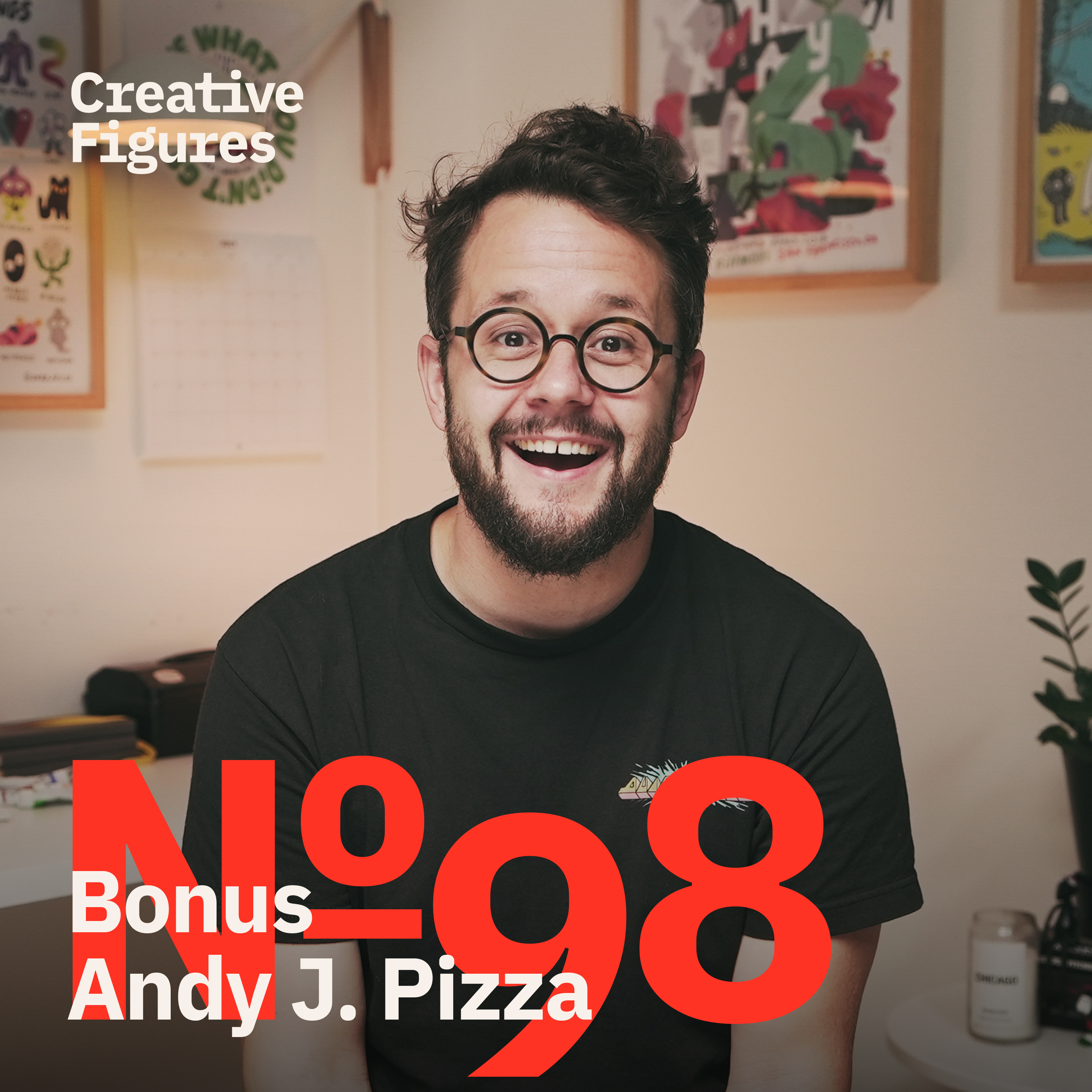
    E98 - Second Take: Andy J. Pizza, "Cultivate Yourself, Don't Overcome Yourself"

    I asked Andy how long it took him to start liking himself the way he is. He did not give me a number. He said it is something he has to constantly return to and refresh. This is Second Take, a short format on the show. One idea, one guest, lifted out of a longer conversation. You do not need to have heard the original. Around 25, Andy started to realise he probably has ADHD. His first reaction was not relief, it was grief, because this was not something he could hustle his way out of. Not long after, he found what he now calls the neurodivergent lens. Brains are different, not necessarily worse or better, and they perform differently in different contexts. Which brought him to a thought that changed things: maybe he is not broken, but in this society, this is a disability. From there he started trying to cultivate himself rather than overcome himself, and he explains why that shift matters particularly for artists. He also takes the Joseph Campbell line about the cave you fear to enter and argues it is usually read wrong. He does not present any of this as finished. He calls loving himself a continual battle. Full conversation with Andy: https://creativefigures.fm/s02-e30-andy-j-pizza-adhd-self-worth/ Find Andy here: https://www.andyjpizza.com/ https://www.creativepeptalk.com/ https://www.instagram.com/andyjpizza/ https://www.andyjpizza.com/rso Find me here: https://creativefigures.fm Instagram: https://www.instagram.com/creativefigures.fm/

  • August 26 · 7 min· Video

    E97 — Second Take: Gemma O'Brien, "What Flow Actually Feels Like"

    Gemma O'Brien describes flow as a forgetting of yourself. Fully absorbed, at one with the work, no sense of time passing. Then the conversation turns to boredom, and that half is the sharper one. This is Second Take, a short format on the show. One idea, one guest, lifted out of a longer conversation. You do not need to have heard the original. Gemma talks about why flow arrives by surprise rather than on demand, the difference between being absorbed and being zoned out, and why filling in a mural outline does not count. She contrasts it with scrolling, which also makes time disappear but leaves you without any sense of agency or control. She is also open about the parts of her job that bore her. Admin, client emails, the middle phase of a project that is all small tweaks and colour changes. A few years ago she resisted all of it, on the logic that this was supposed to be her passion so it should all be fun. She does not think that any more, and what she says instead is the part worth hearing. Full conversation with Gemma: https://captnoffscript.com/s02-e35-gemma-obrien-bored-of-herself/ Find Gemma here: Website: https://www.gemmaobrien.com/ Instagram: https://www.instagram.com/mrseaves101 Find me here: Instagram: https://www.instagram.com/captnoffscript Website: https://captnoffscript.com/

  • August 18 · 7 min

    E96 - Second Take: Mat Voyce, "I Hated Motion Design"

    Mat Voyce makes motion work for Nike, Pepsi and Disney+. He also tried animation at university, hated it, and decided he would never do it again. This is Second Take, a new short format on the show. One idea, one guest, lifted out of a longer conversation. You do not need to have heard the original. Mat got one A across eleven GCSEs. It was graphic design. He dropped out of AS levels because the school would not keep him on for two subjects. He went to art college, did nothing but design for two years, and left with a distinction and student of the year. Then he got to university, dropped back to the bottom of the pack, and sat the animation module he still shows in talks as the thing he swore off. He also talks about the big brand names arriving, and the imposter syndrome that came with them and never really left. Full conversation with Mat: https://captnoffscript.com/s02-e08-mat-voyce-on-anxiety-creativity-and-finding-your-thing/ Find Mat here: Instagram: https://instagram.com/matvoyce Website: https://www.matvoyce.tv/ Find me here: Instagram: https://www.instagram.com/captnoffscript Website: https://captnoffscript.com/

  • August 14 · 4 min

    Bonus 007 - Simon Flöter: His Grandfather's Love Letters & What He'd Make if Money Didn't Matter

    This is the seventh Captn OffScript bonus, and the last one of Season 2. After a main episode spent in the trenches, I asked Simon Flöter one question that flips it all upside down: if you woke up tomorrow with complete financial stability, never worrying about money again, what would you work on? It went to newsletter subscribers first as a private YouTube link. Today it's available here too. His first answer: he'd finish things. And then he told me about the letters. His father found a bundle his grandfather wrote to his grandmother, from 1930s Germany onwards, love letters mixed with the small facts of daily life. Simon barely knew him. His dream is to turn them into what he calls an online timepiece: the letters sorted so they read like a book, searchable, with the old words and the history behind each moment explained as you read. Two people in love, talking to each other across the darkest of decades, with the human side of it, in his words, kind of beautiful. Also on the list: fusing his design, code and illustration into something that doesn't exist yet, a zine with friends, and the video game he's always wanted to make. In this conversation we talked about: What he'd work on if money stopped mattering His grandfather's love letters from 1930s Germany The online timepiece he dreams of building from them Fusing design, code and illustration into something new A zine with friends, and the video game he's carried for years The main episode this bonus extends: S02/E38 — Simon Flöter on Life in the Trenches & Not Making Decisions From Fear https://captnoffscript.com/s02-e38-simon-floter-life-in-the-trenches Find Simon here: Design: https://floter.design/ Illustration: https://floter.ink/ Instagram: https://www.instagram.com/floter.ink LinkedIn: https://www.linkedin.com/in/floter/ Find me here: Website: https://captnoffscript.com Instagram: https://www.instagram.com/captnoffscript If this resonated, listen to: Kristof Devos (S02/E31) — another conversation about making things for the joy of making them. This was the final Captn OffScript bonus of Season 2. Newsletter subscribers get every bonus on YouTube a week before it reaches the podcast feeds. Subscribe at https://captn.myflodesk.com/newsletter to get them first when the show returns.

  • S2 · E38
    August 4 · 57 min

    S02/E38 - Simon Flöter on Life in the Trenches & Not Making Decisions From Fear

    For the final episode of Season 2, I didn't want a victory lap. Simon Flöter is a German illustrator, designer and developer living in Amsterdam, and he told me early on: this is not a success story. This is from the trenches. His commercial illustration work vanished this year, and he suspects AI swallowed it. Money got extremely tight. He just landed a job that should carry him through the rest of the year. And through all of it, he kept drawing, the way he has since he was a kid tracing Batman comics and getting rejected from every art school he applied to. We talked about the trenches most designers are actually in right now, why the anger at AI is really anger at corporate greed, and his advice that gives this episode its title: never make decisions from fear. In this episode: Growing up in Munich, where nobody said the word artist Tracing Batman comics and Playboy pages to learn anatomy Getting rejected from every art school, and drawing anyway Germany vs the Netherlands: who asks for your diploma The year the illustration jobs vanished His Zwarte Piet website, and why traditions can change Why coding feels like a puzzle, and what AI took from it "We can do this now, but is it good? Do we have to?" Don't decide from fear, and separate yourself from your work The poster he made for his partner Tracy Find Simon here: Design: https://floter.design/ Illustration: https://floter.ink/ Instagram: https://www.instagram.com/floter.ink LinkedIn: https://www.linkedin.com/in/floter/ Find me here: Website: https://captnoffscript.com Instagram: https://www.instagram.com/captnoffscript The final Friday bonus of the season: I asked Simon what he'd work on if money stopped mattering tomorrow. His answer involves his grandfather's love letters from 1930s Germany, a zine with friends, and a video game. Newsletter subscribers get it first, a week before it's public. Subscribe at https://captn.myflodesk.com/newsletter. If you enjoyed this episode, leaving a 5-star rating on Apple Podcasts or Spotify takes less than a minute and helps more people find the show. I'd be incredibly grateful. If you liked this episode, listen to: Martyna Wędzicka (S02/E33) — another conversation about holding onto your own way of working when everything pushes you to compromise. That's Season 2. Thank you for listening to every conversation, the big names and the trenches alike.

  • July 24 · 7 min

    Bonus 006 - Halli Thorleifsson: Rebuilding Yourself Brick by Brick

    This is the sixth bonus episode of Captn OffScript. In Halli Thorleifsson's main episode we covered everything he's built: the agency he sold to Twitter and rebuilt, the almost 2,000 wheelchair ramps, the tax he chose to pay. This is the conversation about what he's been rebuilding underneath it all, himself, in his words, brick by brick. It went to newsletter subscribers first as a private YouTube link. Today it's available here too. When Halli stopped drinking, he stopped the numbing but never went looking for what he'd been numbing. It took more than twenty years to come back to it. The hard things in his life, his disease, losing his mother young, had each gone into a box he never looked into. A survival technique that worked as a kid, and quietly stopped working as an adult. So he opened the boxes: two to three years of therapy, physical and mental, and, gradually and with help, letting the numbness lift after two decades. He's honest that nothing is fixed, that he's holding himself together mostly, and that he's better equipped than he's ever been. This is his path, not a template, and he shares it with an honesty very few people manage. In this conversation we talked about: Why he needs many things to work on, and what happens when he doesn't Rebuilding yourself brick by brick The boxes he packed away as a kid and never looked into Two to three years of therapy, physical and mental Learning to feel everything again, slowly and with help Timestamps: No chapters for this bonus. The main episode this bonus extends: S02/E37 — Halli Thorleifsson on Building Ueno Twice & Designing Things People Actually Use https://captnoffscript.com/s02-e37-halli-thorleifsson-building-ueno-twice Find Halli here: Website: https://www.haraldurthorleifsson.com/ Ueno: https://www.ueno.co/ Instagram: https://www.instagram.com/haraldurthorleifsson/ LinkedIn: https://www.linkedin.com/in/haraldur-thorleifsson-359aaa5b/ Find me here: Website: https://captnoffscript.com Instagram: https://www.instagram.com/captnoffscript If this resonated, listen to: Andy J. Pizza (S02/E30) — another honest conversation about the slow inner work behind a creative life. This was the sixth Captn OffScript bonus episode. Newsletter subscribers get future bonuses on YouTube a week before they reach the podcast feeds. Subscribe at https://captn.myflodesk.com/newsletter.

  • July 17 · 7 min

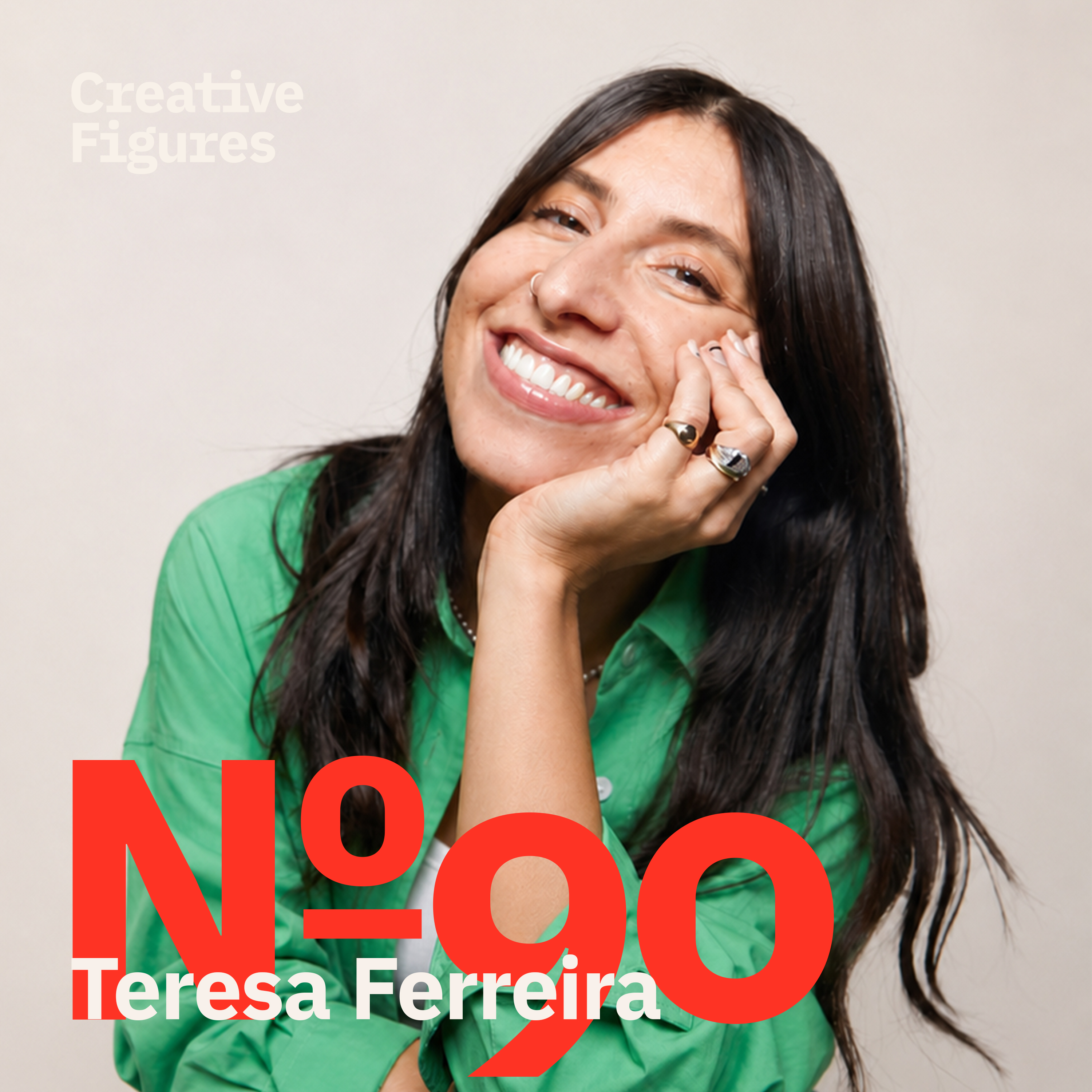
    Bonus 005 — Teresa Ferreira: Whose Voice Is That? Making Peace with Imposter Syndrome

    This is the fifth bonus episode of Captn OffScript. When Teresa Ferreira and I recorded her main episode, we got into imposter syndrome and self-worth, and it was honest enough that I kept it back for this. It went to newsletter subscribers first as a private YouTube link. Today it's available here too. Teresa's first point is the most reassuring one: imposter syndrome doesn't go away. Not with success, not with experience. You just get better at spotting it. Her tool for catching it is a question I've been repeating ever since, whose voice is that? Because the critical voice is almost never yours. It's usually something someone said to you growing up that you've disproved a hundred times since. We also got into why creatives tie their whole self-worth to their work, her brilliant line that nobody who looks after trees feels worthless when one doesn't grow, and the thing I admitted out loud: I check my stats most mornings before I've done anything else. The numbers don't measure you. They never did. In this conversation we talked about: Why imposter syndrome never goes away "Whose voice is that?" and how to catch it Why creatives tie their self-worth to their work Why your followers and earnings don't measure your value How the morning metrics check quietly steals your worth Timestamps: No chapters for this bonus. The main episode this bonus extends: S02/E36 — Teresa Ferreira on Digging Her Way Into Design & Letting Go of the Perfect Day https://captnoffscript.com/s02-e36-teresa-ferreira-digging-into-design Find Teresa here: Website: https://www.ferrgoodstudio.com/ Instagram: https://www.instagram.com/teresaferrgoodstudio/ LinkedIn: https://www.linkedin.com/in/ferreirateresa/ Find me here: Website: https://captnoffscript.com Instagram: https://www.instagram.com/captnoffscript If this resonated, listen to: Andy J. Pizza (S02/E30) — another honest conversation about self-worth and untangling who you are from what you produce. This was the fifth Captn OffScript bonus episode. Newsletter subscribers get future bonuses on YouTube a week before they reach the podcast feeds. Subscribe at https://captn.myflodesk.com/newsletter.

  • S2 · E37
    July 14 · 53 min

    S02/E37 - Halli Thorleifsson on Building Ueno Twice & Designing Things People Actually Use

    Haraldur "Halli" Thorleifsson built the design agency Ueno from nothing, sold it to Twitter in 2021, and made a decision almost nobody makes: he structured the sale so he'd pay as much tax as possible, in Iceland, on purpose. Because Iceland is the country that gave a kid from a poor family with muscular dystrophy the chance to build something in the first place. Then he started Ramp Up, which has put almost 2,000 wheelchair ramps across Iceland and is now expanding to Ukraine and Panama. And six or eight months ago, he rebooted Ueno to work on design in the AI era, because, in his words, he was bored, and his brain needs a problem to chew on. This was not the lightest conversation I've had on the show. It might be one of the most worth your time. In this episode: Why he chose to pay the tax everyone told him to avoid Growing up poor with muscular dystrophy Seeing the world as decisions people made, or didn't make Ramp Up: from 100 ramps in Reykjavik to almost 2,000 across Iceland The Musk moment, and what it taught him about perception vs reality Building Ueno twice, and designing beyond the text box in the AI era Getting humbled by users again and again, and going again anyway What AI means for young designers entering the industry The decision to stop drinking that changed everything Kids, independence, and the sweater he can't unravel Timestamps: 00:00 Meeting Halli Thorleifsson 00:40 Choosing to pay the tax in Iceland 06:40 Growing up poor with muscular dystrophy 09:29 Starting Ramp Up, and the world as decisions 12:06 Progress, and the case for impatience 14:52 The Musk moment, and perception vs reality 16:30 What he's building now, and getting humbled by users 18:59 Why he rebooted Ueno 24:05 What AI means for young designers 27:47 Sharing a studio with his artist wife 31:19 Getting sober, the decision that changed everything 33:13 New York, Tokyo and the cities that shaped him 35:03 What children force you to become 41:56 Creativity as building his own world 43:18 The sweater he can't unravel 45:54 What people should know about Iceland 49:15 Advice to eight-year-old Halli Find Halli here: Website: https://www.haraldurthorleifsson.com/ Ueno: https://www.ueno.co/ Instagram: https://www.instagram.com/haraldurthorleifsson/ LinkedIn: https://www.linkedin.com/in/haraldur-thorleifsson-359aaa5b/ Find me here: Website: https://captnoffscript.com Instagram: https://www.instagram.com/captnoffscript This week's Friday bonus: Halli and I go deeper into the rebuilding: rebuilding yourself brick by brick, the boxes he packed away as a kid and never looked into, and what surfaced when the numbness lifted after 20 years. It goes to newsletter subscribers first, a week before it's public. Subscribe at https://captn.myflodesk.com/newsletter. If you enjoyed this episode, leaving a 5-star rating on Apple Podcasts or Spotify takes less than a minute and helps more people find the show. I'd be incredibly grateful. If you liked this episode, listen to: Radim Malinic (S02/E34) — Halli says creativity let him build a world he wanted to live in; Radim's episode is the other side of that same coin.

  • S2 · E36
    July 7 · 53 min

    S02/E36 - Teresa Ferreira on Digging Her Way Into Design & Letting Go of the Perfect Day

    Some people walk a straight line into design. Teresa Ferreira dug her way in, through archaeology. She was born in Lisbon, spent part of her childhood in Macau, has lived in London for nineteen years, ran design at the Financial Times, and now runs her own studio, Ferrgood. When I said she felt like the whole world in one person, I wasn't exaggerating. What I didn't expect was how much of this conversation would be about slowing down and letting go. Teresa was talked out of art as a kid, found her way back through archaeological illustration, burned out twice, and eventually learned to release the idea of a perfect day that had been quietly setting her up to fail every single evening. In this episode: Growing up between Lisbon, Macau and London Being talked out of art, and finding design through archaeology From museum graphics to head of design at the Financial Times Building brands that last, and why she thinks in centuries Leaving the safety of a big brand, and the self-doubt that came with it Burning out twice, and what finally made her leave The "perfect day" she chased that set her up to fail Choosing a slower life, and getting good at saying no The one drawing she'd keep if she had to delete everything else Timestamps: 00:00 Meeting Teresa Ferreira 01:25 Growing up between Lisbon, Macau and London 04:04 The unlikely path from archaeology to design 10:35 Moving into graphic design and the Financial Times 13:00 Building brands that last 16:50 Self-doubt, and leaving the safety of big brands 19:28 Burning out, twice 25:03 The perfect balanced day 29:48 Letting go of perfectionism 33:43 Choosing a slower life 40:24 Journaling and daily practice 46:13 The drawing she'd keep, and advice to young Teresa Find Teresa here: Website: https://www.ferrgoodstudio.com/ Instagram: https://www.instagram.com/teresaferrgoodstudio/ LinkedIn: https://www.linkedin.com/in/ferreirateresa/ Find me here: Website: https://captnoffscript.com Instagram: https://www.instagram.com/captnoffscript This week's Friday bonus: Teresa and I go deep on imposter syndrome, why it never goes away, how to catch it by asking "whose voice is that?", and why the numbers have nothing to do with your worth. It goes to newsletter subscribers first, a week before it's public. Subscribe at https://captn.myflodesk.com/newsletter. If you enjoyed this episode, leaving a 5-star rating on Apple Podcasts or Spotify takes less than a minute and helps more people find the show. I'd be incredibly grateful. If you liked this episode, listen to: Kristof Devos (S02/E31) — another conversation about slowing down, resisting the hustle, and building a calmer creative life.

  • July 3 · 10 min· Video

    Bonus 004 - Gemma O'Brien: Making Peace with Burnout & Studying the Flow State

    This is the fourth bonus episode of Captn OffScript. When Gemma O'Brien and I recorded her main episode, we got into burnout and flow, and I held that part back for this. It went to newsletter subscribers first as a private YouTube link. Today it's available here too. Gemma has talked about burnout in a lot of other interviews, so I didn't want to rehash it. What I wanted, as someone who leans towards overworking, was the thing underneath it: how she sees it coming, and what she actually does about it now. Her answer was calmer than I expected. She's made peace with burnout by treating it as information about her process rather than a catastrophe. She talks about a sweet spot, too much work and you burn out, too little and you're bored and understimulated, and about looking after the foundations: sleep, rest, human connection, nature. Then we got into flow, which she's now studying formally, reading neuroscience papers on the very thing she's spent her life inside. Her line on it: she's like a chef who cooks an incredible meal for someone else, then comes home and eats McDonald's. In this conversation we talked about: Why she's made peace with burnout The sweet spot between overworking and being understimulated The foundations that make high-level work sustainable Studying flow state from the outside, and why that's tricky Why flow matters more as AI makes everything convenient Timestamps: [Awaiting confirmation] The main episode this bonus extends: S02/E35 — Gemma O'Brien on Getting Bored of Herself & Refusing to Pick One Thing https://captnoffscript.com/s02-e35-gemma-obrien-bored-of-herself Find Gemma here: Website: https://www.gemmaobrien.com/ Instagram: https://www.instagram.com/mrseaves101 LinkedIn: https://www.linkedin.com/in/studiogemmaobrien/ Find me here: captnoffscript.com @captnoffscript If this resonated, listen to: Radim Malinic (S02/E34) — another conversation about overwork, the cost of doing too much, and learning to look after yourself. This was the fourth Captn OffScript bonus episode. Newsletter subscribers get future bonuses on YouTube a week before they reach the podcast feeds. Subscribe at https://captn.myflodesk.com/newsletter.

  • June 26 · 6 min

    Bonus 003 - Radim Malinic: The Sabre-Tooth Tiger in Your Head & Why You Can't Unlearn Fear

    This is the third bonus episode of Captn OffScript. When Radim Malinic and I recorded his main episode, the conversation about fear came near the end, and it was good enough that I kept it back for this. It went to newsletter subscribers first as a private YouTube link. Today it's available here too. It's short, and it's the most reassuring thing I've put out in a while. Radim used to think you could unlearn fear, get rid of it entirely, and then realised you can't. Fear isn't a fault in the system. It's the system doing what it was built to do. We've been wired by evolution to look out for things that could kill us, and that wiring hasn't changed even though the threats have. So when you think about sharing your work with a thousand strangers, your body runs the exact same programme it would run for a sabre-tooth tiger in the bushes. Same mechanism, same flood of fear. The line I'd want you to keep: when you freeze, ask whether the tiger is actually coming. Most of the time, it isn't. In this conversation we talked about: Why fear can't be unlearned, only understood Why your brain treats sharing your work like a sabre-tooth tiger How we're wired for survival but live in an era of pleasure Why the reward only comes after the difficult part Real risk versus the risk your body invents Fear as a sensation you can work with The question to ask when you freeze The main episode this bonus extends: S02/E34 — Radim Malinic on Creativity as Escape & Becoming More of Who You Already Are https://captnoffscript.com/s02-e34-radim-malinic-creativity-as-escape Find Radim here: Website: https://radimmalinic.co.uk/ Podcast: https://radimmalinic.co.uk/podcast/ Instagram: https://www.instagram.com/radim.malinic/ LinkedIn: https://www.linkedin.com/in/brandnu/ Find me here: captnoffscript.com @captnoffscript If this resonated, listen to: CJ Cawley (S02/E32) — another conversation about doing the work and putting yourself out there even when everything tells you not to. This was the third Captn OffScript bonus episode. Newsletter subscribers get future bonuses on YouTube a week before they reach the podcast feeds. Subscribe at https://captn.myflodesk.com/newsletter.

  • S2 · E35
    June 23 · 54 min

    S02/E35 - Gemma O'Brien on Getting Bored of Herself & Refusing to Pick One Thing

    Gemma O'Brien is a lettering artist, a fine artist, a muralist, and most recently a student of neuroaesthetics. She's painted a billboard in Times Square, had work acquired by a museum, and she has a public Strava profile on her website, because running is as much a part of her as the lettering is. I'd been trying to get her on the show for a long time, and the hardest part was knowing where to start. So we talked about how someone ends up doing this many things at once, and why she has no intention of narrowing it down. The line that stayed with me: after ticking off every career goal she'd ever dreamed of, she went back to university because she'd grown "almost bored of myself." In this episode: Her intuitive path from law to lettering to neuroscience Why she has Strava on her website, and runs to galleries The 2008 video she uploaded by accident that launched her career Going back to school after a Times Square billboard and a museum acquisition Getting bored of herself, and wanting to feel fresh on stage again Where her love of lettering really came from Refusing to pick one thing, and making peace with the boring parts Still feeling imposter syndrome, and forgetting her own achievements The one word she'd keep if she had to destroy everything else Find Gemma here: Website: https://www.gemmaobrien.com/ Instagram: https://www.instagram.com/mrseaves101 LinkedIn: https://www.linkedin.com/in/studiogemmaobrien/ Find me here: captnoffscript.com @captnoffscript This week's Friday bonus: Gemma and I go deeper into burnout and the flow state, the hidden cost of doing this much, and what it takes to protect your focus. It goes to newsletter subscribers first, a week before it's public. Subscribe at https://captn.myflodesk.com/newsletter. If you enjoyed this episode, leaving a 5-star rating on Apple Podcasts or Spotify takes less than a minute and helps more people find the show. I'd be incredibly grateful. If you liked this episode, listen to: Jessica Hische (S02/E21) — another lettering artist on building a creative life on her own terms, and why imposter syndrome never fully goes away.

  • June 19 · 7 min

    Bonus 002 - Martyna Wędzicka: Posters Made of Yarn & Why Graphic Designers Don't Retire

    This is the second bonus episode of Captn OffScript. When Martyna Wędzicka and I recorded her main episode, we spent most of it on the past and the present. But right at the end, I asked her where she's heading next, and the answer was so warm and so hopeful that I held it back for this. It went to newsletter subscribers first as a private YouTube link. Today it's available here too. It's a short one, and a lovely one. Martyna noticed a pattern in her own career: roughly every four to five years, she rediscovers herself and her style. She thinks she's at the edge of one of those cycles right now, and the next thing turns out to be knitting. Her husband calls what she makes "her posters, made of yarn." She talks about fabric as another canvas, the same design thinking carried out in a different material, and about choosing the handmade on purpose as a counterweight to AI. And then the line I can't stop thinking about: graphic designers don't retire. In this conversation we talked about: The four-to-five-year pattern of reinventing herself Knitting, and why her husband calls it "posters made of yarn" Fabric as another canvas for the same design thinking Making things by hand as a counter to AI How she actually uses AI, and where she won't Why graphic designers don't retire Maybe becoming a fashion designer in ten years The main episode this bonus extends: S02/E33 — Martyna Wędzicka on Being Weird, Polish Design & Why You Can't Rush Your Style https://captnoffscript.com/s02-e33-martyna-wedzicka-being-weird-style Find Martyna here: Website: https://www.wedzicka.com/ Instagram: https://www.instagram.com/wedzicka_com/ LinkedIn: https://www.linkedin.com/in/martyna-w%C4%99dzicka-obuchowicz-69343252/ Facebook: https://www.facebook.com/wedzicka Find me here: captnoffscript.com @captnoffscript This was the second Captn OffScript bonus episode. Newsletter subscribers get future bonuses on YouTube a week before they reach the podcast feeds. Subscribe at https://captn.myflodesk.com/newsletter.

  • S2 · E34
    June 16 · 1 hr· Video

    S02/E34 - Radim Malinic on Creativity as Escape & Becoming More of Who You Already Are

    Radim Malinic has been a role model of mine for years. He's a designer, a writer, a speaker, he runs the agency Brand Nu, he hosts his own podcast, and he's built a whole philosophy around the idea of daring creativity. I expected this conversation to be about all of that output. Instead it became one of the most honest talks I've had on the show, about the cost of the work and the years he spent hiding inside it. He told me he once thought he was the happiest person in the world while crying into his birthday cake from overwork. We talked about creativity as escape, growing up in Czechoslovakia and wanting to blend in as an immigrant, reaching therapy at forty, and the philosophy he built out of all of it: become more of who you already are, because everyone else is taken. In this episode: What daring creativity actually means Becoming "singular" and refusing to compare yourself Doing things before he knew how, an agency before he'd ever worked in one The immigrant who wanted to be called John Smith Looking like the happiest person in the world while burning out Creativity as a way to hide from himself Reaching therapy at forty, and unlearning the stigma he grew up with Radical accountability and the anger he didn't know he had Why he'd happily delete all his work and start the next mountain Find Radim here: Website: https://radimmalinic.co.uk/ Podcast: https://radimmalinic.co.uk/podcast/ Instagram: https://www.instagram.com/radim.malinic/ LinkedIn: https://www.linkedin.com/in/brandnu/ Find me here: captnoffscript.com @captnoffscript This week's Friday bonus: Radim and I go deep on fear, why you can't unlearn it, and why your brain treats sharing your work with strangers like a sabre-tooth tiger in the bushes. It goes to newsletter subscribers first, a week before it's public. Subscribe at https://captn.myflodesk.com/newsletter. If you enjoyed this episode, leaving a 5-star rating on Apple Podcasts or Spotify takes less than a minute and helps more people find the show. I'd be incredibly grateful.

Showing 1–20 of 29 episodes