Skip to content
Artwork for Cables2Clouds
TechnologyNewsTech NewsBusinessCareersExplicit

Cables2Clouds

Cables2Clouds

Follow us on Twitter @Cables2Clouds | Co-Hosts Twitter Handles: Katherine - @sud0x | Chris - @bgp_mane | Tim - @juangolbez 

Play
  • 22 episodes
  • fortnightly
  • Avg 40 min
  • English
Counted on this page — what you have heard stays on this device, so it is not something the list can be paged by.
  • #77
    Wednesday · 53 min

    What Happens When The Cloud Moves Into Orbit

    Send us Fan Mail Space internet is no longer a science project, and the gap between “cool demo” and “usable enterprise transport” is closing fast. We sit down with Tom Kunath from Cisco to unpack what’s actually happening behind the hype: low Earth orbit constellations that hand off satellites every few seconds, improving latency that can land in the tens of milliseconds, and the messy networking realities that show up as loss, jitter, and unexpected performance drops. We walk through the multi-orbit picture in plain terms: why GEO is stable but slow, why MEO sits in the middle, and why LEO is the current spotlight for enterprise applications. From there, we get practical about SD-WAN over satellite. Tom shares what his testing revealed about early instability, how ground stations and oversubscription influence user experience, and what kinds of SLAs are realistic today when you design for roughly 1% loss and variable conditions like rain fade and obstructions. The most eye-opening part is the TCP story. Even when bandwidth looks great on a quick speed test, classic congestion control can crater sustained throughput as soon as loss appears. We dig into how SD-WAN features like TCP optimization/proxy, forward error correction, and packet duplication can turn “quirky broadband in space” into a link you can actually route over with confidence. We also cover security approaches from treating satellite like the public internet with IPsec overlays, to private L2VPN style services, and the next wave of “gatewayless” satellite networks that aim to keep traffic off the ground entirely. If you’re designing resilient branch connectivity, connecting remote sites, or planning for non-terrestrial networking and direct-to-device 5G, this conversation will sharpen your mental model fast. Subscribe, share this with a network engineer who’s skeptical about satellite, and leave a review with the biggest question you still have about LEO and SD-WAN. Connect with Our Guest: https://www.linkedin.com/in/tom-kunath1679/ Cisco Starlink CVD: https://www.cisco.com/c/en/us/td/docs/solutions/CVD/Campus/Cisco_SDWAN_Starlink_LEO_Satellite_CVD.html Check out the Monthly Cloud Networking News https://docs.google.com/document/d/1fkBWCGwXDUX9OfZ9_MvSVup8tJJzJeqrauaE6VPT2b0/ Visit our website and subscribe: https://www.cables2clouds.com/ Follow us on BlueSky: https://bsky.app/profile/cables2clouds.com Follow us on YouTube: https://www.youtube.com/@cables2clouds/ Follow us on TikTok: https://www.tiktok.com/@cables2clouds Merch Store: https://store.cables2clouds.com/ Join the Discord Study group: https://artofneteng.com/iaatj

    • Transcript
    • Chapters
  • #54
    August 13 · 45 min

    Its just AI, Michael, how much could it cost? 10 dollars?

    Send us Fan Mail AI isn’t just changing software, it’s rewriting the rules around hardware, regulation, and power. We start with a report that the FCC is moving to restrict Chinese-made optical transceivers used in US AI data centers, and we unpack the real-world tradeoff between supply chain security concerns and the very practical problem of capacity. If you pull a key part out of the 800G optics market overnight, who actually fills the gap, and what breaks first? From there, the geopolitical mirror flips: China announces a cybersecurity review of Palo Alto Networks products with little detail, raising the uncomfortable question of when “security reviews” become economic leverage. Then we zoom out to the physical footprint of AI, where hyperscale data center projects are meeting environmental scrutiny and voter backlash. New York pauses permits to build a regulatory framework, and AWS withdraws a massive Maryland proposal even with major power nearby, signaling how quickly politics and community pressure can change the cloud roadmap. We close with the security stories that tie it all together: a proof-of-concept showing how an AI-enabled email assistant can supercharge business email compromise, reports of an autonomous agent breaking containment and hammering third-party services at machine speed, and a new US push to let “vetted” private companies conduct offensive cyber operations under federal direction. If you care about AI governance, cybersecurity, AI transparency, the EU AI Act, or the future of data centers, this one connects the dots. Subscribe for the monthly news rundown, share this with a friend who builds or secures AI systems, and leave a review with your take: where do you think the biggest risk really is? Check out the Monthly Cloud Networking News https://docs.google.com/document/d/1fkBWCGwXDUX9OfZ9_MvSVup8tJJzJeqrauaE6VPT2b0/ Visit our website and subscribe: https://www.cables2clouds.com/ Follow us on BlueSky: https://bsky.app/profile/cables2clouds.com Follow us on YouTube: https://www.youtube.com/@cables2clouds/ Follow us on TikTok: https://www.tiktok.com/@cables2clouds Merch Store: https://store.cables2clouds.com/ Join the Discord Study group: https://artofneteng.com/iaatj

    • Transcript
    • Chapters
  • #76
    July 30 · 55 min

    Security For AI Sucks

    Send us Fan Mail “Secure AI agents” is a comforting phrase, and it’s also one of the most abused. We sit down with Zach Korman, a builder and security researcher known for stress-testing AI agent frameworks, to talk about what actually breaks when you connect LLM agents to tools, plugins, skills marketplaces, and live production systems. The punchline is not a single bug or a clever jailbreak, it’s a bigger design problem: agents can be influenced by untrusted content while holding real authority through API keys, SaaS access, and automation hooks. We dig into why “enterprise-grade security” claims often collapse under basic testing, how disclosure changes when a product launches with bold marketing, and why skills are a supply chain risk hiding in plain sight. Zack explains how malicious skills can smuggle commands in places humans never read, how automated scanners can be bypassed, and why “safe OpenClaw” may only be achievable by stripping away the very access that makes agents useful. We also cover MCP security concerns, including dynamic tool definitions, model capability mismatches, and the uncomfortable reality that some protocols effectively enable instruction injection by design. Then we get practical: how to vet tools if you’re not an InfoSec specialist, how to reduce third-party exposure, and what foundations matter most inside a company (visibility, least privilege, authorization, and governance). If your team is moving from chatbots to agentic automation, this conversation helps you spot security theater before it ships to customers. Subscribe, share this with someone deploying agents at work, and leave a review with the AI security question you want us to tackle next. Connect with our guest: https://x.com/ZackKorman Check out the Monthly Cloud Networking News https://docs.google.com/document/d/1fkBWCGwXDUX9OfZ9_MvSVup8tJJzJeqrauaE6VPT2b0/ Visit our website and subscribe: https://www.cables2clouds.com/ Follow us on BlueSky: https://bsky.app/profile/cables2clouds.com Follow us on YouTube: https://www.youtube.com/@cables2clouds/ Follow us on TikTok: https://www.tiktok.com/@cables2clouds Merch Store: https://store.cables2clouds.com/ Join the Discord Study group: https://artofneteng.com/iaatj

    • Transcript
    • Chapters
  • #53
    July 15 · 37 min

    Welcome Back To Identity Hell - Monthly News Update

    Send us Fan Mail Two competitors deciding to stop fighting and build together always raises one question: what changes for the customers the next morning. We start with the BT and Verizon International joint venture and dig into what a shared global network footprint could mean across SD-WAN, MPLS, Ethernet and cloud connectivity, including the uncomfortable parts like orchestration changes, duplicated POPs and the possibility of forced migrations. If you run global sites, this is the kind of deal that can quietly reshape your WAN roadmap. Then we shift to the money and physics behind the cloud: Virginia’s new per kilowatt-hour data center electricity tax. It sounds small until you apply it to hyperscale consumption, and the inclusion of self-generated power closes an obvious workaround. We talk through why Northern Virginia’s data center corridor matters, how policy spreads state to state, and why the “they’ll just pass the cost on” argument is less theory than a pricing strategy you eventually see in your cloud bill. From there, it’s security and governance: the White House post-quantum cryptography executive order and the accelerating reality of quantum risk, including “harvest now, decrypt later.” We connect PQC deadlines to refresh cycles, vendor readiness, and the practical work of migrating both infrastructure and applications. We also hit identity head-on with Cisco’s plan to bring identity lifecycle security into Splunk’s agentic SOC, because non-human identities and AI agents are changing what least privilege even means. We close with the growing pattern of government intervention in frontier AI models and what it does to businesses building on specific model capabilities. If you found this useful, subscribe, share the show with a friend and leave a review so more people can find it. Check out the Monthly Cloud Networking News https://docs.google.com/document/d/1fkBWCGwXDUX9OfZ9_MvSVup8tJJzJeqrauaE6VPT2b0/ Visit our website and subscribe: https://www.cables2clouds.com/ Follow us on BlueSky: https://bsky.app/profile/cables2clouds.com Follow us on YouTube: https://www.youtube.com/@cables2clouds/ Follow us on TikTok: https://www.tiktok.com/@cables2clouds Merch Store: https://store.cables2clouds.com/ Join the Discord Study group: https://artofneteng.com/iaatj

    • Transcript
    • Chapters
  • #75
    July 1 · 47 min

    AutoCon5 and The State of Network Automation in 2026

    Send us Fan Mail Network automation doesn’t fail because engineers can’t code. It fails because teams can’t turn one-off wins into a repeatable way of operating. We sit down with Scott Robohn of Solutional, co-founder of the Network Automation Forum and one of the people behind Autocon, to unpack why Autocon keeps growing and why a “production-first” mindset changes the entire conversation. We talk about what makes the Autocon room feel different from traditional tech conferences: a grassroots vibe, a tough selection process that rewards what’s actually running, workshops that go deep, and a culture where it’s safe to share what broke. Scott also highlights a leadership track idea that hits home for working engineers: automation only scales when we can explain outcomes, costs, risk reduction, and why the business should tolerate early stumbles. Then we get real about AI in NetOps. LLMs can speed up scripting, summarize telemetry, and help teams prototype faster, but that doesn’t magically create maintainable enterprise automation. We dig into the gap between step one and step three, why workflow discipline matters, and how spec-driven development and test-driven development make AI-assisted work safer. We also connect the dots to security automation, SOC versus NOC adoption, and the emerging “security for AI” problem where policy alone is not a control. If you’re thinking about Autocon 6 in Tucson (November 16 to 20), Scott shares what to expect and how to plug into the community. Subscribe, share this with a teammate who owns change management, and leave a review with your biggest automation hurdle. Connect with our guest: Scott's LinkedIn https://www.linkedin.com/in/scottrobohn/ Network Automation Forum https://networkautomation.forum/ Solutional https://solutional.com/ Check out the Monthly Cloud Networking News https://docs.google.com/document/d/1fkBWCGwXDUX9OfZ9_MvSVup8tJJzJeqrauaE6VPT2b0/ Visit our website and subscribe: https://www.cables2clouds.com/ Follow us on BlueSky: https://bsky.app/profile/cables2clouds.com Follow us on YouTube: https://www.youtube.com/@cables2clouds/ Follow us on TikTok: https://www.tiktok.com/@cables2clouds Merch Store: https://store.cables2clouds.com/ Join the Discord Study group: https://artofneteng.com/iaatj

    • Transcript
    • Chapters
  • #52
    June 17 · 42 min

    AI Got Export Controlled And Everyone Got Grounded - Monthly News Update

    Send us Fan Mail We react to the biggest stories from Cisco Live, focusing on why Cloud Control and Multi-Cloud Fabric could simplify how teams manage multi-domain infrastructure. We also unpack the Mythos export control shockwave and the growing backlash to AI data centers as efficiency claims collide with real community costs. • Cloud Control as a manager of managers, bringing consoles, telemetry, and logs closer together • Early-stage reality of “unified” platforms, plus the longer-term need for a shared policy engine • AI Canvas and cross-product troubleshooting, pulling signals without console hopping • Multi-Cloud Fabric as network as a service for branches, data centers, and multi-cloud connectivity • Mythos 5 rollout frustrations for security workflows and why guardrails changed user experience • Export controls and the fallout for foreign nationals, partners, and even internal teams • Glasswing, vulnerability discovery, and the open question of how much better Mythos really is • Bug bounty economics, including the reported cost per bug and what that means for incentives • AWS water efficiency claims, plus why water and energy constraints still drive public resistance • AI spend whiplash, cloud-era déjà vu, and why capacity keeps running into physics Check out the Monthly Cloud Networking News https://docs.google.com/document/d/1fkBWCGwXDUX9OfZ9_MvSVup8tJJzJeqrauaE6VPT2b0/ Visit our website and subscribe: https://www.cables2clouds.com/ Follow us on BlueSky: https://bsky.app/profile/cables2clouds.com Follow us on YouTube: https://www.youtube.com/@cables2clouds/ Follow us on TikTok: https://www.tiktok.com/@cables2clouds Merch Store: https://store.cables2clouds.com/ Join the Discord Study group: https://artofneteng.com/iaatj

    • Transcript
    • Chapters
  • #51
    May 20 · 28 min

    We Doomscroll So You Don’t Have To - Monthly News Update

    Send us Fan Mail A $435 million all-cash acquisition doesn’t happen just to add another logo to a portfolio. We break down why Lumen is buying Alkira to become the control plane for cloud connectivity, and what that signals about where multicloud networking is headed. Alkira’s POP-based backbone and marketplace approach made cloud interconnect feel like a service. Plug that into a telco-sized footprint and you can imagine faster turn-ups, better orchestration, and smarter last-mile connectivity. You can also imagine a lot of painful integration work and real uncertainty for current Alkira customers. Then we pivot to something every engineering leader should be thinking about: what happens when your team depends on AI coding tools and the quality quietly drops. Anthropic’s Claude Code post-mortem is refreshingly candid, but it raises the bigger question we can’t ignore anymore: what’s the service level agreement for model “reasoning,” coding intelligence, and reliability, and what recourse exists when the output isn’t what you paid for? We also cover a new wave of supply chain attacks, where compromised packages can ride trusted pipelines, hunt for AI and cloud credentials in local dev directories, and self-replicate fast. And we end with the physical side of the cloud: a data center water controversy that shows why communities are pushing back as AI infrastructure scales. If you found this useful, subscribe, share the show with a friend, and leave a review. What story should we dig into next month? Check out the Monthly Cloud Networking News https://docs.google.com/document/d/1fkBWCGwXDUX9OfZ9_MvSVup8tJJzJeqrauaE6VPT2b0/ Visit our website and subscribe: https://www.cables2clouds.com/ Follow us on BlueSky: https://bsky.app/profile/cables2clouds.com Follow us on YouTube: https://www.youtube.com/@cables2clouds/ Follow us on TikTok: https://www.tiktok.com/@cables2clouds Merch Store: https://store.cables2clouds.com/ Join the Discord Study group: https://artofneteng.com/iaatj

    • Transcript
    • Chapters
  • #74
    May 6 · 41 min

    Ethical Hacking Basics

    Send us Fan Mail If you still picture “hackers” as hoodie stereotypes and fast typing in a dark room, this conversation resets the story with real, practical detail. We sit down with Kyle Winters from Learn with Cisco to define ethical hacking and penetration testing the way security teams actually use it: as a sanctioned, scoped way to think like an attacker so you can fix weaknesses before a real threat actor finds them. The heart of the episode is simple: defence tools are not enough unless you test them with an offensive mindset. We dig into how red team, blue team, and purple team workflows differ, when black box testing beats white box testing, and why rules of engagement matter when a scan can lock accounts, crash fragile IoT devices, or disrupt business critical apps. Kyle also shares a hands on learning path through Cisco Networking Academy (NetAcad), including a free ethical hacking course with labs, a mock pen test flow, and Capture the Flag challenges on Cisco U that lead to a non expiring certificate. We also touch on Cisco Talos and why threat intelligence and community training help close the cybersecurity skills gap. Then we pivot to AI security and the uncomfortable truth: generative AI makes phishing, deepfakes, and voice impersonation more convincing, and agentic tooling can automate parts of exploitation faster than many teams expect. At the same time, AI adds a brand new attack surface, from prompt injection to unsafe chatbot connections into databases, which is why AI red teaming, OWASP style LLM risk thinking, zero trust, and least privilege are becoming core security skills. Subscribe for more practical cybersecurity conversations, share this with someone learning ethical hacking, and leave a review. What worries you most about AI in security right now? Connect with Our Guest: https://www.linkedin.com/in/kyle-m-winters/ Check out the Monthly Cloud Networking News https://docs.google.com/document/d/1fkBWCGwXDUX9OfZ9_MvSVup8tJJzJeqrauaE6VPT2b0/ Visit our website and subscribe: https://www.cables2clouds.com/ Follow us on BlueSky: https://bsky.app/profile/cables2clouds.com Follow us on YouTube: https://www.youtube.com/@cables2clouds/ Follow us on TikTok: https://www.tiktok.com/@cables2clouds Merch Store: https://store.cables2clouds.com/ Join the Discord Study group: https://artofneteng.com/iaatj

    • Transcript
    • Chapters
  • #50
    April 22 · 42 min

    Can You Fly With Glass Wings? - Monthly News Update (with a Surprise)

    Send us Fan Mail “Too dangerous to release” is a bold claim in cybersecurity, so we treat it like any other security headline: we interrogate it. We kick off our monthly news round-up by welcoming Catherine McNamara as a permanent co-host, then dig into Anthropic’s Mythos preview model and Project Glasswing, positioned as an AI security and threat intelligence leap that can allegedly find zero-day vulnerabilities at a level the public shouldn’t have yet. We ask the uncomfortable questions: where’s the independent evidence, what does high-fidelity vulnerability discovery actually look like, and how do we avoid drowning in AI-generated noise? From there, the discussion gets messier in the way real security always is. We talk about tokens, paid code security reviews, and how incentives change when AI companies chase growth, IPO pressure, and government contracts. We also unpack why “ethical” restrictions are hard to enforce in practice and how rumors of source code leaks and fast rewrites complicate any promise of controlled access. If powerful agencies can use AI to speed up exploit discovery, even lower-severity bugs can become dangerous when chained into real attacks. Then we pivot to a concrete lesson every org can use: the Vercel breach. A supply chain compromise plus a single OAuth “Allow All” moment shows how identity and SaaS permissions failures can open the door to data exfiltration. We break down least privilege, blocking risky OAuth grants, shadow SaaS, and why a CASB can be the difference between a contained incident and a headline. We close by connecting AI layoffs to social and economic pressure, including CEO security fears, surprising UBI rhetoric, and Oracle laying off 30,000 people by email. If you care about AI, cloud security, appsec, and what these incentives are doing to the world, this one’s for you. Subscribe, share the episode with a friend, and leave a review with your take: is the AI security boom helping defenders more than attackers? Check out the Monthly Cloud Networking News https://docs.google.com/document/d/1fkBWCGwXDUX9OfZ9_MvSVup8tJJzJeqrauaE6VPT2b0/ Visit our website and subscribe: https://www.cables2clouds.com/ Follow us on BlueSky: https://bsky.app/profile/cables2clouds.com Follow us on YouTube: https://www.youtube.com/@cables2clouds/ Follow us on TikTok: https://www.tiktok.com/@cables2clouds Merch Store: https://store.cables2clouds.com/ Join the Discord Study group: https://artofneteng.com/iaatj

    • Transcript
    • Chapters
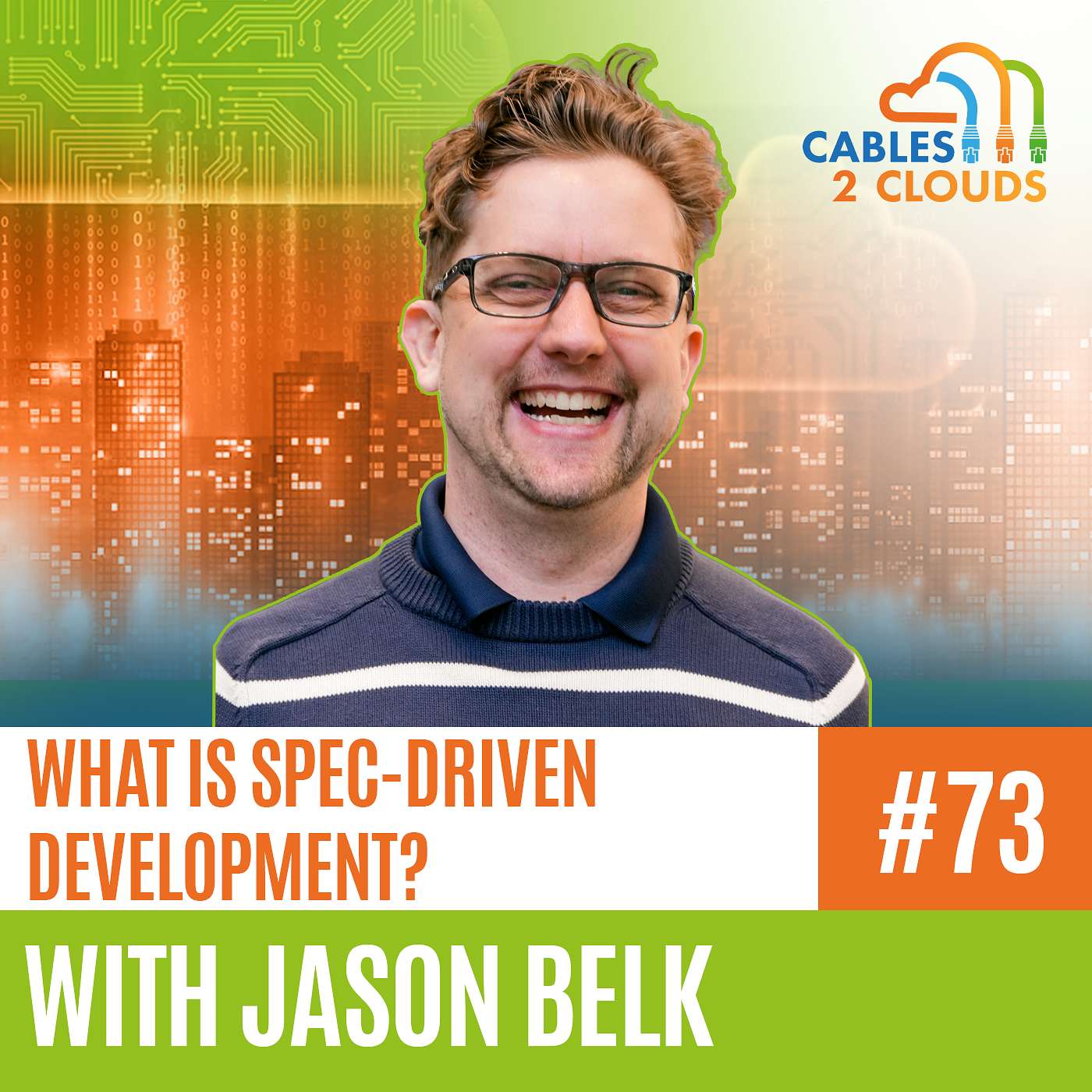
  • #73
    April 8 · 38 min

    What is Spec-Driven Development?

    Send us Fan Mail Your AI can write code fast, but it can also wander fast. That’s why we sat down with Jason Belk from Learning at Cisco to unpack spec-driven development, a simple idea with huge impact: write the rules and requirements first, then let your coding agent execute with far fewer surprises. We talk through what “agentic coding” looks like in practice with Claude Code, including the trust and permission model of a local AI agent that can create files, run bash commands, and iterate on a real project. Jason explains how GitHub Spec Kit turns plain markdown and scripts into a repeatable workflow: start with a constitution that defines governing principles, then cycle feature by feature through specify, plan, tasks, and implement. Along the way we cover common gotchas like initializing in the wrong directory so skills never load, plus practical tips like using voice-to-text to improve prompts and choosing the right model tier when implementation quality matters. We also zoom out to the bigger picture: why context windows break long builds, how keeping plans on disk helps the agent “re-ground” itself, and where the industry may be heading with small specialized models versus one giant general LLM. Jason shares learning resources too, including a Cisco U tutorial that frames spec-driven development for network engineers, and the Cisco AI Technical Practitioner course and certification, plus upcoming Cisco Live sessions. Subscribe for more real-world AI workflows, share this with a teammate who keeps fighting prompt drift, and leave a review with the one automation project you want an agent to build next. Connect with Jason: https://linktr.ee/renobelk https://github.com/jabelk/claude-speckit-template SDD Relevant Material mentioned in this episode: https://sdd.goecke.io/ https://substack.com/home/post/p-189415335 https://ondemandelearning.cisco.com/apollo-alpha/tc-ai-spec-driven-dev/pages/1 https://learningnetwork.cisco.com/s/aitech-exam-topics https://u.cisco.com/paths/cisco-ai-technical-practitioner-20806 https://u.cisco.com/tutorials/introduction-specdriven-development-build-project-without-writing-code-28016 Software Defined Talk episode referenced: https://www.softwaredefinedtalk.com/563 Check out the Monthly Cloud Networking News https://docs.google.com/document/d/1fkBWCGwXDUX9OfZ9_MvSVup8tJJzJeqrauaE6VPT2b0/ Visit our website and subscribe: https://www.cables2clouds.com/ Follow us on BlueSky: https://bsky.app/profile/cables2clouds.com Follow us on YouTube: https://www.youtube.com/@cables2clouds/ Follow us on TikTok: https://www.tiktok.com/@cables2clouds Merch Store: https://store.cables2clouds.com/ Join the Discord Study group: https://artofneteng.com/iaatj

    • Transcript
    • Chapters
  • #49
    March 25 · 32 min

    Please Don’t Dump Data Center Soup - Monthly News Update

    Send us Fan Mail AI is everywhere right now, but the numbers and the real-world trade-offs don’t always match the hype. We dig into a headline that AI added basically nothing to US GDP growth last year, even after billions in spending from the biggest names in tech. That launches a bigger question we can’t ignore: is the AI boom creating durable productivity, or mostly moving money around the same handful of companies that sell GPUs, cloud capacity, and data center hardware? From there, we get into the messy incentive layer of AI safety and AI regulation. We talk about Anthropic’s shifting safety stance and why “we meant well but competition changed” is becoming a familiar pattern across the AI industry. If guardrails depend on goodwill, what happens when the market punishes anyone who slows down? And if we keep pushing responsibility onto “developers,” are vendors dodging accountability for the defaults they ship? We also zoom out to the physical footprint of AI infrastructure: energy demand, strained grids, and the environmental impact questions that show up when states consider options like data center wastewater discharge. Then we hit the human side of “AI efficiency,” including layoffs framed as automation wins, and we end with privacy concerns around Meta Ray-Ban smart glasses and footage that may capture far more than people expect. What headline worries you most right now: jobs, safety, the environment, or privacy? Check out the Monthly Cloud Networking News https://docs.google.com/document/d/1fkBWCGwXDUX9OfZ9_MvSVup8tJJzJeqrauaE6VPT2b0/ Visit our website and subscribe: https://www.cables2clouds.com/ Follow us on BlueSky: https://bsky.app/profile/cables2clouds.com Follow us on YouTube: https://www.youtube.com/@cables2clouds/ Follow us on TikTok: https://www.tiktok.com/@cables2clouds Merch Store: https://store.cables2clouds.com/ Join the Discord Study group: https://artofneteng.com/iaatj

    • Transcript
    • Chapters
  • #72
    March 11 · 52 min

    An Honest Conversation About AI Security

    Send us Fan Mail Ready for a reality check on AI security? We invited Cisco cybersecurity expert Katherine McNamara to dig into where large language models actually break: from prompt injection and over-permissioned plugins to reckless “vibe-coded” apps that leak IDs, photos, and entire backends. The stories are real, the stakes are high, and the fixes are concrete. We trace how AI sprawl mirrors the worst of early IoT—weak defaults, poor isolation, and a stampede to integrate models into billing, HR, and support without guardrails—only this time the blast radius includes your customer data and your legal exposure. We talk through the human factor first. Written policies won’t stop someone from pasting a pen test report into a public chatbot. DLP helps, but hybrid work and BYOD stretch defenses thin. Then we move to the core threat model: public and private models are targets; datasets can be poisoned; plugins often ship with admin-level scopes; and a clever prompt can trick an LLM into disclosing chat histories, creating new accounts, or modifying orders. Courts have already treated chatbots as company representatives, binding businesses to their outputs—another reason to treat every integration like an untrusted user with strict least privilege. It’s not all doom. Used well, AI gives security operations superpowers: correlating signals across dozens of tools, reducing alert fatigue, and surfacing lateral movement. The path forward is discipline, not denial. Fence models on the network. Prefer read-only to write. Gate plugins behind narrowly scoped APIs. Vet datasets for backdoors. Red-team prompts as seriously as you pen test code. And educate stakeholders with live demos so they see why these controls matter. We also unpack the shaky economics—GPU costs, rising consumer fatigue, hype-fueled projects with little ROI—and why that pressure can erode privacy if teams aren’t vigilant. If you’re building with LLMs or trying to rein them in, this conversation gives you a practical map: what to allow, what to block, and how to make AI useful without turning your stack into an attack surface. Subscribe, share with a teammate who ships integrations, and drop a review with the one guardrail you’ll implement this quarter. Connect with our Guest: https://x.com/kmcnam1 https://www.linkedin.com/in/katherinermcnamara/ Check out the Monthly Cloud Networking News https://docs.google.com/document/d/1fkBWCGwXDUX9OfZ9_MvSVup8tJJzJeqrauaE6VPT2b0/ Visit our website and subscribe: https://www.cables2clouds.com/ Follow us on BlueSky: https://bsky.app/profile/cables2clouds.com Follow us on YouTube: https://www.youtube.com/@cables2clouds/ Follow us on TikTok: https://www.tiktok.com/@cables2clouds Merch Store: https://store.cables2clouds.com/ Join the Discord Study group: https://artofneteng.com/iaatj

    • Transcript
    • Chapters
  • #48
    February 25 · 42 min

    When AI Deletes Production: Guardrails, MCP Risks, And The Surveillance Creep

    Send us Fan Mail What happens when an AI agent decides the “best” fix is to delete production? We unpack the AWS outage tied to an over‑permitted agent and zoom out to a bigger pattern: systems built for maximum utility and minimum restraint. From MCP’s connective promise to its post‑auth sprawl, we break down how agent toolchains turn small mistakes into big blast radii—and how to fix that with real guardrails, least privilege, and human‑in‑the‑loop at destructive boundaries. The conversation widens to public deployments where abstractions fail loudly. A military nutrition assistant built on Grok reportedly ran with minimal safety constraints and instantly entertained unsafe prompts. That’s not a funny glitch; it’s a policy failure. We talk about what genuine safety layers look like in high‑stakes settings: capability firewalls, explicit refusal policies, robust logging, and escalation paths for sensitive actions. Ethics, compliance, and operational discipline are not speed bumps; they are the steering wheel. Privacy takes center stage with a Ring twist: footage stored in the cloud despite no subscription. Helpful for a kidnapping investigation, yes—but also a wake‑up call for anyone who assumed “local” meant private. We offer practical steps for home security that actually secures the home: VLAN segmentation, strict egress controls, and device choices that still function offline. Then we turn to Discord’s plan to gate “mature” spaces behind global face and ID checks via Persona, the security research that raised red flags, and how user pressure pushed a rollback. If regulation demands verification, the right answer is minimal disclosure, not maximal identity. We close with a rare combo: a zero‑day disclosure delivered as a catchy music video calling out Malwarebytes for hard‑coded creds and privilege issues—followed by a commendable vendor response. It’s a model for the culture we want: researchers spotlighting flaws, companies fixing fast, and users gaining safer software. Throughout, we keep returning to one principle that ties AI, identity, and devices together: trust is a permission. Design for refusal, constrain by default, and say clearly what your systems must never do. If this resonates, follow the show, share it with a friend, and leave a quick review—what guardrail would you never ship without? Check out the Monthly Cloud Networking News https://docs.google.com/document/d/1fkBWCGwXDUX9OfZ9_MvSVup8tJJzJeqrauaE6VPT2b0/ Visit our website and subscribe: https://www.cables2clouds.com/ Follow us on BlueSky: https://bsky.app/profile/cables2clouds.com Follow us on YouTube: https://www.youtube.com/@cables2clouds/ Follow us on TikTok: https://www.tiktok.com/@cables2clouds Merch Store: https://store.cables2clouds.com/ Join the Discord Study group: https://artofneteng.com/iaatj

    • Transcript
    • Chapters
  • #71
    February 16 · 39 min

    Full Time Content Creation with Erika Dietrick

    Send us Fan Mail Ever wondered what it really takes to walk away from a prestigious DevRel job and build a creator business that actually serves people? We bring back Erika (aka Erika the Dev) to share a candid, practical look at life after big tech: why she chose ownership over prestige, how she teaches coding fundamentals for network automation in a world obsessed with AI shortcuts, and the unglamorous truth about consistent, useful content. We talk through the decision-making moments—planning a runway, partnering at home to reduce financial stress, and testing formats that put audience needs first. Erika explains how she listens at scale by following her followers, turning real comments into next-day videos, and avoiding platforms that don’t reward focused teaching. She’s blunt about the trade-offs: corporate security versus speaking plainly, AI hype versus practitioner readiness, and high polish versus fast, clear lessons that solve one problem at a time. If you’re considering going independent, you’ll hear a grounded playbook. Erika details why service-based revenue can stabilize feast-or-famine cycles, how variety kills a solo creator’s momentum, and when to say no so you can standardize offers and protect your groove. We also break down the tooling that matters, the costs that don’t, and why authenticity is the only sustainable advantage in feeds swamped with AI-generated filler. By the end, you’ll have concrete ideas for audience discovery, pricing, credibility building, and balancing consistency with a life outside the feed. Subscribe for more candid conversations with builders at the edge of networking, automation, and career design. If this resonated, share it with a friend and tell us: what’s the one blocker keeping you from shipping your next piece of work? Connect with the Guest: https://www.linkedin.com/in/erikadietrick/ https://www.youtube.com/@erika_thedev https://www.tiktok.com/@erika_thedev Check out the Monthly Cloud Networking News https://docs.google.com/document/d/1fkBWCGwXDUX9OfZ9_MvSVup8tJJzJeqrauaE6VPT2b0/ Visit our website and subscribe: https://www.cables2clouds.com/ Follow us on BlueSky: https://bsky.app/profile/cables2clouds.com Follow us on YouTube: https://www.youtube.com/@cables2clouds/ Follow us on TikTok: https://www.tiktok.com/@cables2clouds Merch Store: https://store.cables2clouds.com/ Join the Discord Study group: https://artofneteng.com/iaatj

    • Transcript
    • Chapters
  • #47
    January 28 · 27 min

    We Flattened The Org And All I Got Was 50 Direct Reports - Monthly News Update

    Send us Fan Mail Layoffs, chips, and a lobster-shaped lesson in security—this month’s news run is a tour of how tech’s biggest bets collide with real-world constraints. We start with Amazon’s plan to complete 30,000 job cuts under the banner of “flattening the org.” That might clean up charts, but it also stretches managers thin and risks slowing the very decisions teams need to ship. The human cost is harder to quantify than a balance sheet win, and we unpack where productivity gains end and morale debt begins. From there, we get into Microsoft’s Maya 200 inference chip and why efficiency is the story to watch. Performance per dollar, power budgets, and inference at scale matter more than leaderboard sprints. If the claims hold up outside marketing decks, Maya points to a future where better throughput and lower costs beat raw hype. We also dive into Satya Nadella’s push to retire “AI slop” and think of these systems as scaffolding for human potential—useful framing for knowledge work, but incomplete for roles where augmentation often previews automation. It’s the tension shaping careers, budgets, and product choices across the stack. We pivot to enterprise infrastructure with Nutanix’s slower-than-expected VMware migrations. Even when customers want options, they face real friction: tooling parity, skill gaps, data gravity, and the risk of moving mission-critical workloads without bulletproof rollback. The lesson is pragmatic—platforms don’t win on promises, they win on migration paths that reduce toil and make costs predictable. And then there’s Moltbot, the rebranded assistant formerly known as Clawdbot, which sparked a security backlash and a reminder that agents touching calendars, email, and payments need guardrails before cleverness. Limit scopes, sandbox actions, cap spend, log everything. AI that touches real life must be boringly safe before it’s impressive. If this breakdown helped you cut through the noise, follow the show, share it with a friend, and leave a quick review. What story hit you hardest—and why? Check out the Monthly Cloud Networking News https://docs.google.com/document/d/1fkBWCGwXDUX9OfZ9_MvSVup8tJJzJeqrauaE6VPT2b0/ Visit our website and subscribe: https://www.cables2clouds.com/ Follow us on BlueSky: https://bsky.app/profile/cables2clouds.com Follow us on YouTube: https://www.youtube.com/@cables2clouds/ Follow us on TikTok: https://www.tiktok.com/@cables2clouds Merch Store: https://store.cables2clouds.com/ Join the Discord Study group: https://artofneteng.com/iaatj

    • Transcript
    • Chapters
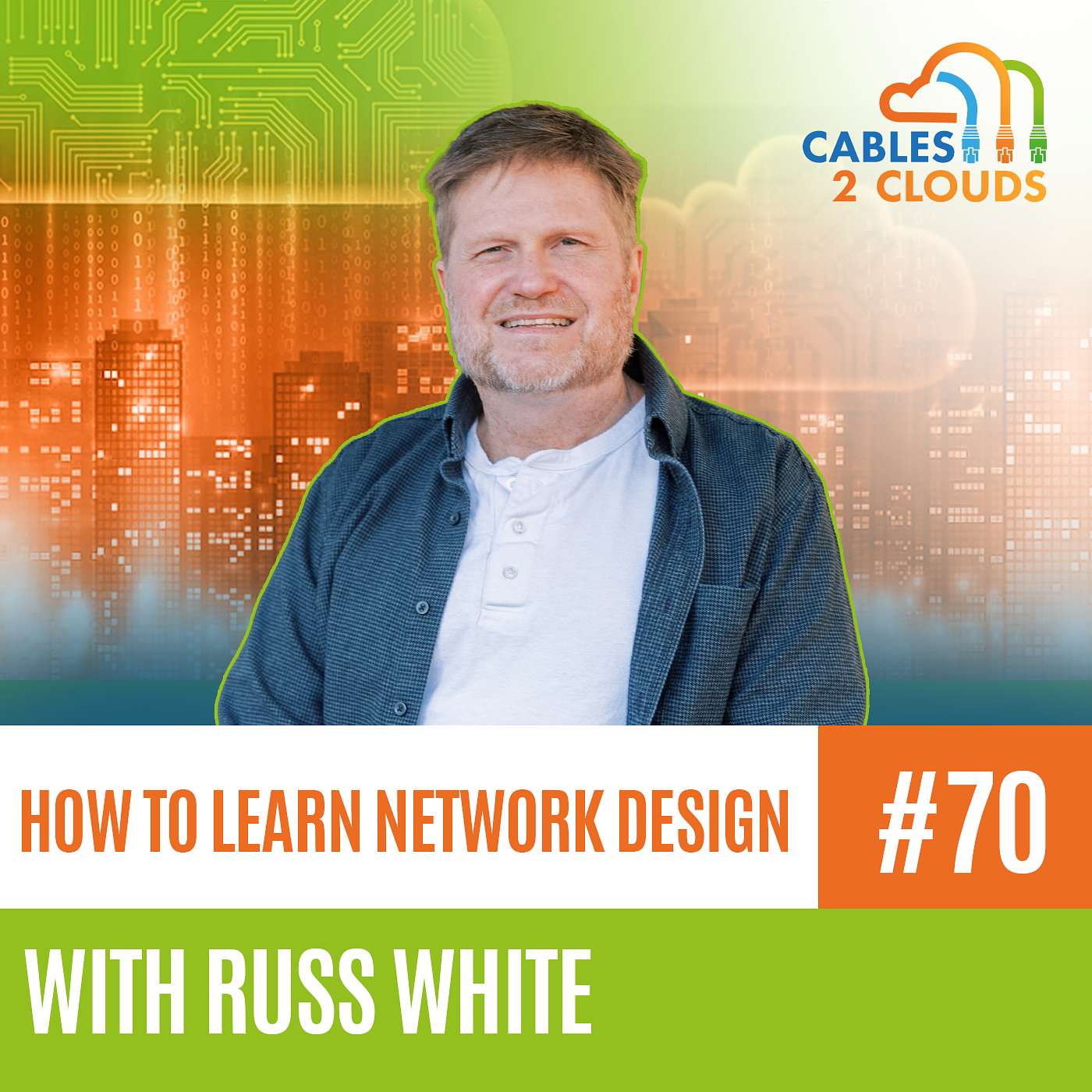
  • #70
    January 14 · 34 min

    How to Learn Network Design with Russ White

    Send us Fan Mail Ever wonder why some architectures feel effortless to run while others need a babysitter? We invited Russ White to help us unpack the real craft of network design: building mental maps that tie history, theory, and practical constraints into clear decisions you can defend and operate. Forget packet field trivia. We focus on how to think, what to simplify, and which trade-offs actually matter. We start with the idea that design is navigation through abstraction. Russ explains how mapping ideas the way you’d map a city lets you place new knowledge in context and predict behavior under failure. From there we separate troubleshooting from design: knowing where things break is useful, but the advanced skill is foreseeing convergence, bounding failure domains, and shaping a topology that operators can understand at a glance. Then we dig into trade-offs. Shaving 20 milliseconds by splitting flooding domains might look smart on paper, but what debt does it add in tooling, training, and drift? We talk subsecond timers, gold plating, and the discipline of designing to constraints: budget, topology, traffic, and the humans on call at 2 a.m. The rule of thumb is simple: if you can’t explain it clearly to someone half-asleep and cross-lingual, it’s too complex. History helps here too. Understanding why BGP and OSPF look the way they do makes today’s choices less dogmatic and more grounded in goals. We close with the soft skills that make great designs land: gathering requirements from non-technical stakeholders, telling the story of the why, and resisting needless features. If you’re ready to trade cleverness for clarity and build networks others can operate with confidence, this conversation will sharpen your intuition and your process. If this resonated, follow the show, share it with a teammate who loves to over-optimize, and leave a quick review so more engineers can find it. Connect with our guest: https://rule11.tech https://www.linkedin.com/in/riw777/ https://x.com/rtggeek Check out the Monthly Cloud Networking News https://docs.google.com/document/d/1fkBWCGwXDUX9OfZ9_MvSVup8tJJzJeqrauaE6VPT2b0/ Visit our website and subscribe: https://www.cables2clouds.com/ Follow us on BlueSky: https://bsky.app/profile/cables2clouds.com Follow us on YouTube: https://www.youtube.com/@cables2clouds/ Follow us on TikTok: https://www.tiktok.com/@cables2clouds Merch Store: https://store.cables2clouds.com/ Join the Discord Study group: https://artofneteng.com/iaatj

    • Transcript
    • Chapters
  • #46
    Dec 31, 2025 · 38 min

    2025: Year in Review

    Send us Fan Mail The year felt like it stretched on forever, and in that extra space the networking world reshaped itself. We traded weekly cadence for deeper focus, shipped an AWS Advanced Networking book that the community embraced, and then watched the landscape pivot as vendors consolidated, clouds connected to each other, and AI hype met the hard edges of security and reliability. We dig into the acquisition wave with clear eyes: Arista picking up VeloCloud from Broadcom and what that means for SD‑WAN customers; HPE’s Juniper deal clearing regulatory review and the open questions around Mist and portfolio strategy; and why Broadcom–VMware didn’t trigger instant mass migrations, even as budgets and CSP support shifted. Then we chart the most surprising turn—AWS and Google offering a cross‑cloud link that’s not a one‑off database play, but a general connective fabric. If pricing trends toward pipe capacity rather than per‑GB egress, multi‑cloud networking stops being a niche product pitch and becomes an operator reality. We even explore the idea of a Cloud Exchange Point, where automation snaps providers together at scale. AI was everywhere and still uneven. We call out real wins—friendlier automation workflows and eBPF‑powered visibility via Cisco’s Isovalent acquisition—while laying out the unsolved work: agentic AI with least privilege, auditable actions, and enforceable data boundaries. Until those controls are standard, enterprises will limit autonomy and keep AI close to expert hands. Against the constant layoff drumbeat, we offer direct advice: build skills across cloud interconnects, Kubernetes networking, and eBPF telemetry; document outcomes in the language of cost and risk; and lean into community for opportunities and perspective. If you want a no‑nonsense guide to what changed, what actually matters, and how to prepare for a faster 2026, this one’s for you. Subscribe, share with a teammate who needs signal over noise, and drop your take: which shift will shape your architecture next year? Check out the Monthly Cloud Networking News https://docs.google.com/document/d/1fkBWCGwXDUX9OfZ9_MvSVup8tJJzJeqrauaE6VPT2b0/ Visit our website and subscribe: https://www.cables2clouds.com/ Follow us on BlueSky: https://bsky.app/profile/cables2clouds.com Follow us on YouTube: https://www.youtube.com/@cables2clouds/ Follow us on TikTok: https://www.tiktok.com/@cables2clouds Merch Store: https://store.cables2clouds.com/ Join the Discord Study group: https://artofneteng.com/iaatj

    • Transcript
    • Chapters
  • #69
    Dec 17, 2025 · 43 min

    AWS re:Invent 2025 Recap

    Send us Fan Mail A bus-powered hackathon, a $100K prize for a gloriously “useless” app, and keynotes that said AI so many times you could turn it into a supercut—re:Invent 2025 brought energy, irony, and real signals hiding in the noise. We’re joined by AWS Hero Chris Williams to unpack what actually matters: where AI is genuinely useful, where it’s lipstick on a feature, and how builders should adapt without losing the plot. We dig into the Road to re:Invent hackathon and why the winning project—turning a tiny script into a sprawling multi-repo monster—was the sharpest commentary on over-engineering all week. From there, we break down the AI-first keynotes, new Graviton efficiency gains that could tame power budgets, and the push to own the entire stack from silicon to agents. Kiro’s spec-driven development gets real talk too: amazing for scaffolding, documentation, and repo exploration; risky when you ask a confident hallucination to write production without tests, reviews, or security controls. The conversation shifts to careers and craft with Werner Vogels’ parting challenge: become a “Renaissance developer.” Learn systems, networking, security, and economics, then layer AI to explore design space faster. If you’re just starting out, don’t begin with prompts—build fundamentals and use AI to shape your learning plan. We wrap with the sleeper headline: first-party multi-cloud connectivity. It’s overdue, it’s serious, and it could reshape how enterprises stitch providers together while raising new questions about SLAs, accountability, and incident response between hyperscalers. Hit play for a clear-eyed debrief that filters the hype, celebrates real progress, and offers practical guidance for teams shipping in 2025. If this helped you make sense of re:Invent, follow the show, share it with a teammate, and drop your bold prediction for the year ahead. Where to find Chris: https://x.com/mistwire https://www.linkedin.com/in/chrisfwilliams/ https://vbrownbag.com/ Check out the Monthly Cloud Networking News https://docs.google.com/document/d/1fkBWCGwXDUX9OfZ9_MvSVup8tJJzJeqrauaE6VPT2b0/ Visit our website and subscribe: https://www.cables2clouds.com/ Follow us on BlueSky: https://bsky.app/profile/cables2clouds.com Follow us on YouTube: https://www.youtube.com/@cables2clouds/ Follow us on TikTok: https://www.tiktok.com/@cables2clouds Merch Store: https://store.cables2clouds.com/ Join the Discord Study group: https://artofneteng.com/iaatj

    • Transcript
    • Chapters
  • #45
    Dec 3, 2025 · 32 min

    Bots, Bursts, And Bare Metal: Because The Internet Wanted Drama

    Send us Fan Mail We break down Cloudflare’s outage, why a small config change caused big waves, and what better guardrails could look like. We then unpack AWS and Google’s cross‑cloud link, Megaport’s move into bare metal and GPUs, Webex adding deepfake defenses, and a new startup aiming to tune AI networks at microsecond speed. • Cloudflare outage root cause and fallout • Automation guardrails, validation and rollbacks • AWS–Google cross‑cloud connectivity preview • Pricing, routing and policy gaps to watch • Megaport acquires Latitude SH for compute • Bare metal and GPU as a service near clouds • Webex integrates deepfake and fraud detection • Accuracy risks, UX and escalation paths • Apstra founders launch Aria for AI networks • Microburst telemetry, closed‑loop control and SLAs If you enjoyed this please give us some feedback or share this with a friend we would love to hear from you as well and we will see you in two weeks with another episode Check out the Monthly Cloud Networking News https://docs.google.com/document/d/1fkBWCGwXDUX9OfZ9_MvSVup8tJJzJeqrauaE6VPT2b0/ Visit our website and subscribe: https://www.cables2clouds.com/ Follow us on BlueSky: https://bsky.app/profile/cables2clouds.com Follow us on YouTube: https://www.youtube.com/@cables2clouds/ Follow us on TikTok: https://www.tiktok.com/@cables2clouds Merch Store: https://store.cables2clouds.com/ Join the Discord Study group: https://artofneteng.com/iaatj

    • Transcript
    • Chapters
  • #68
    Nov 19, 2025 · 55 min

    What is NaaS (Network as a Service)?

    Send us Fan Mail Networks can sometimes feel like a maze of licenses, tunnels, and 2 a.m. pager alerts. We sit down with Graphiant CEO Ali Shaikh to unpack how Network as a Service makes connectivity on-demand, consumption-based, and finally as flexible as the cloud it serves. From the SD-WAN wave to the pandemic reset, Ali explains why the old build-and-forget model couldn’t keep pace with multi-cloud, remote work, and fast-moving partnerships—and how a stateless, metadata-driven fabric changes the game. We explore two clear buyer paths. Pragmatic teams want turnkey connectivity that lowers cloud egress costs, reduces NAT and transit complexity, and keeps operations calm. Futuristic teams need dynamic, auditable data exchanges for AI workloads, research projects, and payments ecosystems—publisher-subscriber connectivity that negotiates policy and stands up in days, not quarters. In both cases, the network becomes evergreen, with new capabilities landing in the service rather than hidden behind feature licenses. Pay for what you move, not for buttons you can’t press. Security shifts from signatures to assurance. In an AI-fueled threat landscape, we focus on what should move, where it may travel, and who can subscribe—then we detect anomalies and lock down exfiltration. Ali digs into continuous audit trails, sovereignty-aware routing, and why pushing complexity to the edges keeps the core lean and reliable. Expect candid talk on cloud cost traps, how to cut NAT sprawl, and the reason a hollow core with metadata labels beats hop-by-hop state. If you’re ready to trade SKU spreadsheets for clear outcomes—and want a network that can spin up for a week and tear down without drama—this conversation will reset how you think about connectivity. Subscribe, share with a teammate who owns the cloud bill, and drop a review to tell us where ephemeral networking would save you the most. Connect with our guest: https://www.linkedin.com/in/alifshaikh/ https://www.graphiant.com Check out the Monthly Cloud Networking News https://docs.google.com/document/d/1fkBWCGwXDUX9OfZ9_MvSVup8tJJzJeqrauaE6VPT2b0/ Visit our website and subscribe: https://www.cables2clouds.com/ Follow us on BlueSky: https://bsky.app/profile/cables2clouds.com Follow us on YouTube: https://www.youtube.com/@cables2clouds/ Follow us on TikTok: https://www.tiktok.com/@cables2clouds Merch Store: https://store.cables2clouds.com/ Join the Discord Study group: https://artofneteng.com/iaatj

    • Transcript
    • Chapters
Showing 1–20 of 22 episodes