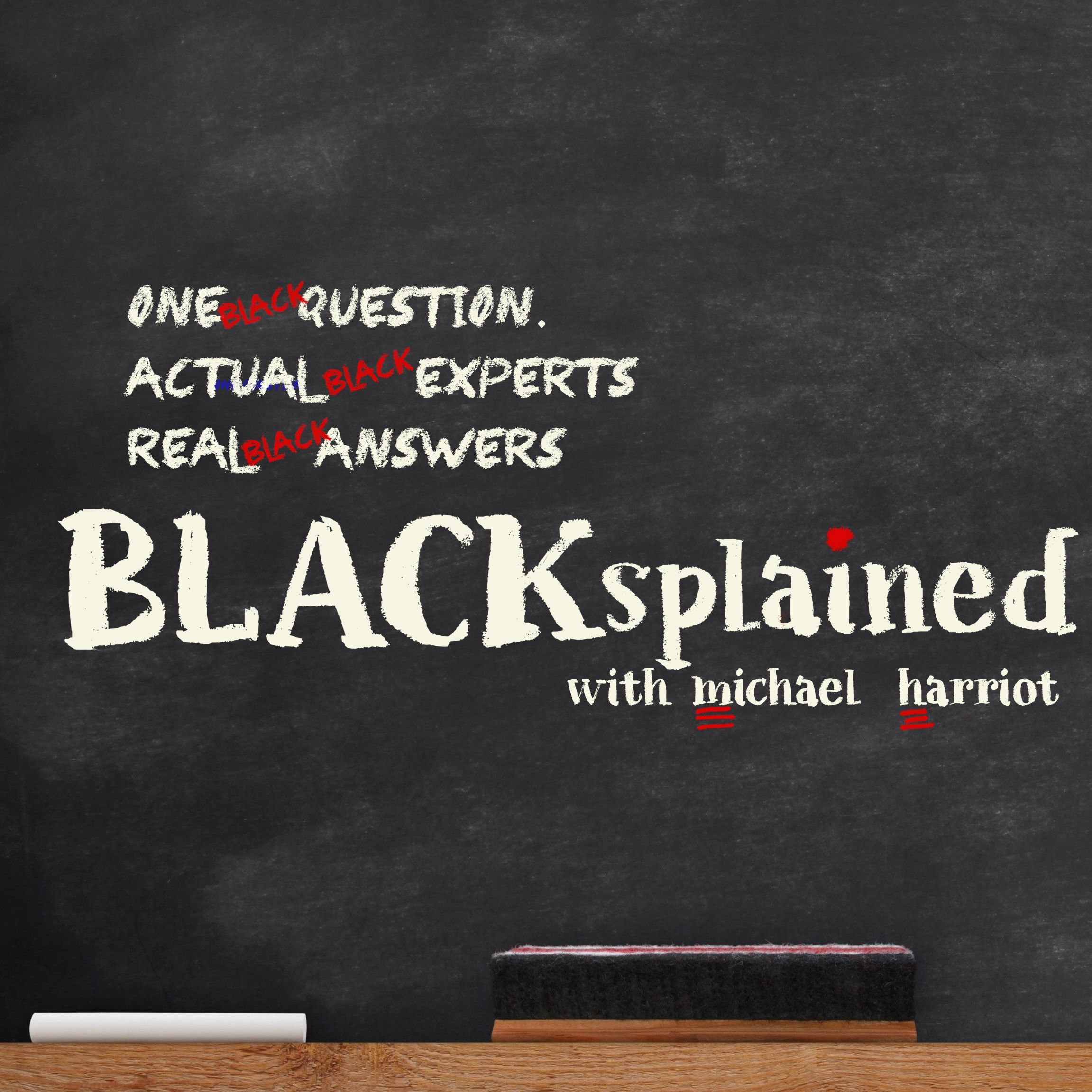
Artwork for Blacksplained
Society & Culture

Blacksplained

Michael Harriot

One question
Actual experts

Real answers

  • 3 episodes
  • Updated Yesterday

Episodes3

  • Yesterday · 1 hr 7 min

    Can White People Code-Switch? Blacksplained by Sunn m'Cheaux and Dr. Rachel E. Weissler

    Can white people code-switch, or is it a genetic ability that Black people are born with, like clapping on beat or making white people “fear for their lives”? Is it the same as “talking white” or is it a technical skill that people like Barack Obama, Kamala Harris and Ketanji Brown Jackson learned at the Respectability Politics School for Black Excellence? Do all white Gen-Zers (including Post Malone, Tyler Herro and Miley Cyrus) go through a Blaccent phase or are they reverse code-switching? This is why Blacksplained exists. Each week, we ask scholars, experts and people who know things to tackle one specific question about history, politics, culture, science or whatever’s got people talking. The smart, funny and insightful conversations end up in the most unexpected places while staying rooted in facts, truth and something that is often missing from the public discourse: a Black perspective. Sunn m’Cheaux is a sociolinguist, musician, educator, and Harvard University’s first (and only) Gullah instructor. m’Cheaux’s social media posts contextualizing language, race and culture have made him one of the internet’s favorite public scholars. Rachel Elizabeth Weissler is a raciolinguistic emotion perception researcher, African-American English scholar and a professor at the University of Oregon’s linguistics and Black studies departments. Dr. Weissler uses experimental methods from sociolinguistics, psycholinguistics and history to explore how Black language is used, how it changes and how it’s appropriated. But today, professors m’Cheaux and Weissler are going to Blacksplain: “Can white people code-switch?” Chapters 00:00 The Origin of Southern Accents 02:04 The Diversity of Southern Accents 04:05 The Influence of English Variations 06:45 The Impact of Language on Social Standing 11:07 The Concept of 'Talking White' 16:12 The Authenticity of Accents and Dialects 40:04 The Significance of Home and Contact 44:33 Context and Culture 46:16 Linguistic Gatekeeping 47:50 Preserving Black Language 54:08 Authenticity of Black Music 01:00:43 Cultural Evolution and Ownership 01:19:08 Defining Country Music

  • Yesterday · 54 min

    Superlawyer Lisa E. Davis Blacksplains How Black Genius Was Stolen, Exploited and Erased

    Each week, host Michael Harriot will pick one question about history, politics, science, culture or anything else worth talking about. But instead of giving his opinion or sharing his feelings on the subject, he’ll bring in a scholar, expert or professional who actually knows what they’re talking about. But these discussions won’t be neutral, performatively palatable or sterilized to make people comfortable. Instead of using “objectivity” as a standard (pronounced “Hoo why itt”), we’ll dive into each subject from an unapologetically Black perspective, grounded in real expertise and delivered with the wit, candor and cultural fluency that informs our ways of knowing. The result is a show that doesn’t just inform you; it will recontextualize what you thought you knew, give you new insight and make you realize that you aren’t going crazy. We’ll have real experts like today’s guest, attorney Lisa E. Davis Besides being one of the foremost entertainment and sports attorneys in the country, Davis is a certified “Super Lawyer” and the author of the new book: Our Minds Were Always Free: A History of How Black Brilliance Was Exploited—and the Fight to Retake Control. Today, she will help us answer the question: Can you steal Black genius? Let’s find out. One question. Actual experts. Real answers. Welcome to Blacksplained. Takeaways Theft of intellectual property has had a profound impact on the Black community The limitations of the law in addressing intellectual property theft are evident Ownership and control are critical in the music industry The role of record companies in curation and marketing is still significant in the digital age Chapters 00:00 Theft of Intellectual Property 01:12 Blacksplained: A New Perspective 02:12 The Exploitation of Black Brilliance 03:31 The Impact of Intellectual Property Theft 06:44 The Legacy of Intellectual Property Theft 08:37 Intellectual Property and Capitalism 11:24 The Limitations of the Law 16:03 The Impact on Music and Art 20:15 Ownership and Exploitation 27:41 The Difference in Cover Versions 30:05 Theft and Responsibility 32:44 Ownership and Control 35:31 Masters and Catalog Leasing 41:09 Intellectual Property and Creativity 47:11 Record Companies and Curation 49:14 The Role of Algorithms 52:28 Black Creativity and American Culture

  • July 27 · 44 min

    Will the Internet Kill the Black Press? Blacksplained by Roland S. Martin

    As we approach the 200th anniversary of the Black press, many people wonder if anyone is keeping that mission alive. If so, who? And how do we support them? Well, Blacksplained has the answer. Each week, ContrabandCamp’s newest weekly podcast poses one question to a scholar, expert or someone who actually knows what they’re talking about. This week, ContrabandCamp senior correspondent Tiffany D. Cross and Michael Harriot sat down with the founder of the Black Star Network streaming service and the host of the daily news show Roland Martin Unfiltered to answer this episode’s question: “Is the Black press still alive?” Chapters 00:00 Defining Journalism and Content Creation 03:00 The Role of Truth in Media 06:02 The Responsibility of Journalists 09:45 The Importance of Facts in Opinion Columns 13:07 The Impact of Subjectivity in Sports and Music 15:20 The Power of Facts in Debates 19:58 The Significance of Showing Up for Black People 22:08 Mission-Driven Service 24:14 Financial Support and Funding 25:36 The Importance of Black-Owned Media 26:34 Challenges and Opportunities in Black Media 27:38 Community Support and Engagement 29:53 The Role of Black-Owned Media in Society 31:38 Building and Sustaining a Media Business 33:26 The Power of Black-Owned Media 34:52 Sustaining Independence and Growth 39:26 The Value of Black-Owned Media 40:24 Sustainable Business Growth