Skip to content
Artwork for BioTalk Unzipped
ScienceLife SciencesHealth & FitnessMedicineBusiness

BioTalk Unzipped

Gregory Austin

BioTalk Unzipped, hosted by Gregory Austin and Dr. Chad Briscoe, unzips the stories behind medical progress through candid, intelligent, and often entertaining conversations with leaders across biotechnology, pharmaceuticals, medical technology, clinical research, bioanalysis, and drug development.

Each episode explores the science, strategy, setbacks, breakthroughs, and human stories shaping the future of medicine. From first-in-human trials and biomarkers to oncology, rare disease, AI, regulatory strategy, and emerging therapeutic technologies, BioTalk Unzipped makes complex life science topics engaging, accessible, and relevant.

The show feels like the conversation you would want to overhear after a great scientific conference: thoughtful, unscripted, curious, and grounded in real-world experience. We bring listeners inside the decisions, discoveries, and personal journeys behind the therapies and technologies that may one day reduce suffering and improve lives.

Play
  • 20 episodes
  • monthly
  • Avg 42 min
  • English
  • S1 · E45
    August 8 · 11 min

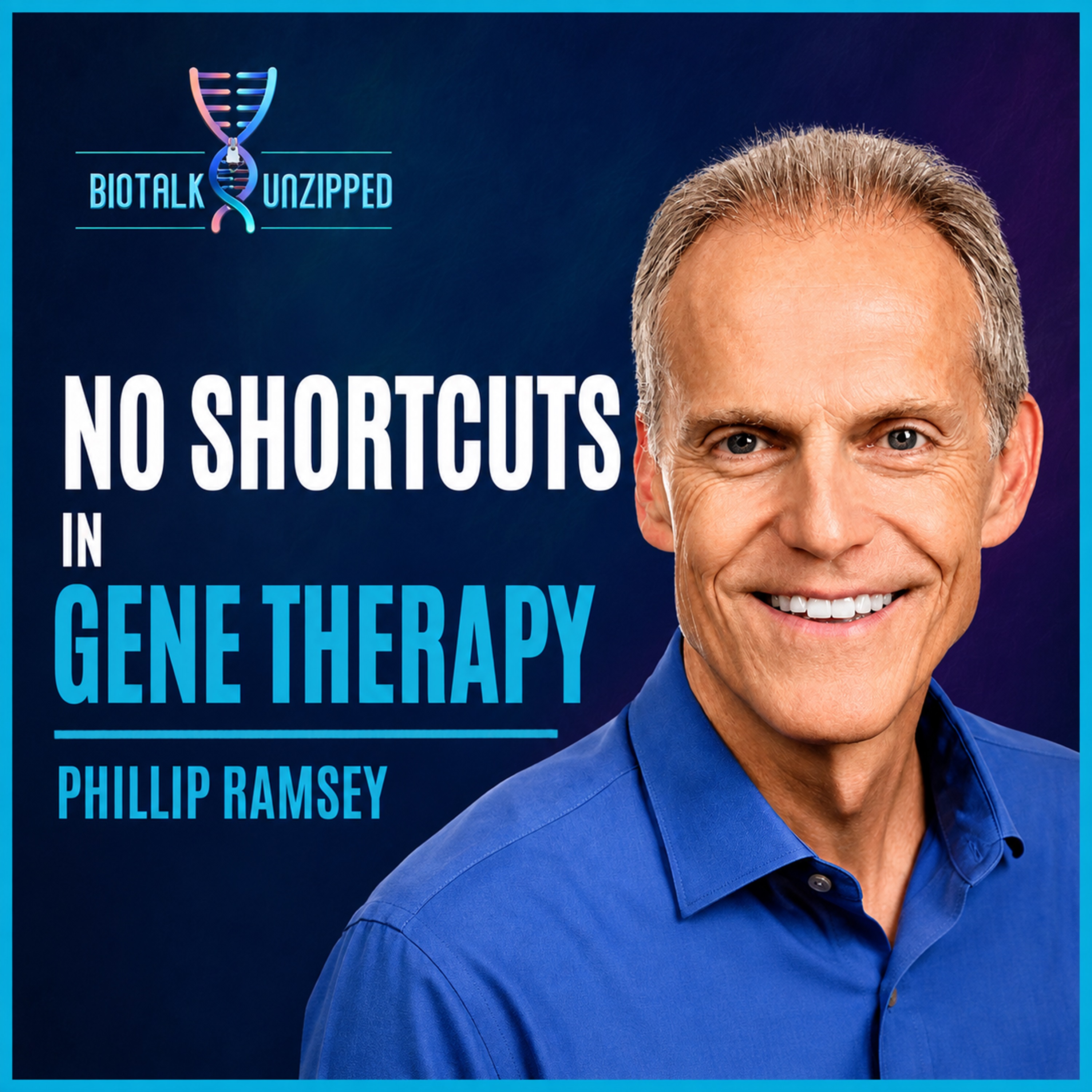
    Why Gene Therapy Is Still So Hard to Manufacture at Scale | Phillip Ramsey

    Why is gene therapy still so difficult to manufacture at scale after decades of progress? Phillip Ramsey, Chief Technical Officer at Sangamo Therapeutics, joins BioTalk Unzipped for a candid conversation about one of the central challenges facing advanced therapies: turning extraordinary science into reproducible, scalable medicines. Thank You to Our Sponsors Leucentra - https://leucentra.com/ Inspired by Science. Empowered by IT. Leucentra provides specialized IT consulting and services for life sciences and healthcare, helping organizations use technology more effectively to support innovation. TruTechnologies - https://trutechnologies.ai/ Clinical Trial Execution, Live. TruTechnologies provides live clinical trial execution technology that gives sponsors greater visibility into protocol activities, samples, and study data as they happen. About This Episode Recorded onsite at the AAPS National Biotechnology Conference in Boston, Phillip explains why gene therapy manufacturing has not yet reached the maturity of monoclonal antibody production. As technologies have evolved across retroviral vectors, lentiviral vectors, adenovirus, AAV, lipid nanoparticles, and other advanced modalities, development teams have repeatedly been required to rethink fundamental manufacturing and analytical questions. Phillip discusses why analytics are critical, why experience across multiple manufacturing lots and products matters, and why there simply is no shortcut to developing the scientific knowledge necessary to manufacture advanced therapies reliably. He also reflects on the uncertainty of biotechnology. Early in his career, Phillip was walking down a hallway when his CFO asked if he had cashed his paycheck. When he said no, she told him not to. It's a remarkable story that captures something rarely discussed about biotechnology: behind transformative science are people willing to operate through considerable uncertainty while trying to build something that has never existed before. Gregory and Phillip Discuss • Viral vector manufacturing and scale-up • Why analytics are essential to gene therapy development • AAV manufacturing challenges • Lentiviral vectors and other evolving delivery technologies • Lipid nanoparticles and changes in advanced therapy manufacturing • Why gene therapy cannot simply adopt the established monoclonal antibody manufacturing playbook • Building process knowledge across lots and products • Career resilience in biotechnology • Progress across AAV, CAR-T, and other advanced therapies • Gene therapy affordability • The importance of therapeutic durability • Outcomes-based payment models for advanced therapies Phillip's message for scientists and industry leaders is straightforward: don't assume the manufacturing problem has already been solved simply because a technology has existed for decades. The field is still evolving, and some knowledge cannot be shortcut. About Phillip Ramsey Phillip Ramsey is Chief Technical Officer at Sangamo Therapeutics and brings more than 35 years of experience across biotechnology and pharmaceutical manufacturing, technical development, operations, quality, and advanced therapies. Connect with Phillip Ramsey: https://www.linkedin.com/in/phillip-ramsey-a2074711/ Sangamo Therapeutics: https://www.sangamo.com/ Connect With BioTalk Unzipped Gregory Austin on LinkedIn: https://www.linkedin.com/in/gregoryaustin1/ Dr. Chad Briscoe on LinkedIn: https://www.linkedin.com/in/chadbriscoe/ BioTalk Unzipped: https://www.biotalkunzipped.com/ BioTalk Unzipped unzips, unlocks, and uncovers the stories behind medical progress through conversations with scientists, executives, entrepreneurs, and innovators advancing biotechnology, pharmaceuticals, and medical technology. Recorded onsite at the AAPS National Biotechnology Conference in Boston. Special thanks to AAPS and Rebecca Stauffer for supporting the BioTalk Unzipped interview series.

  • S1 · E44
    July 20 · 1 hr 4 min

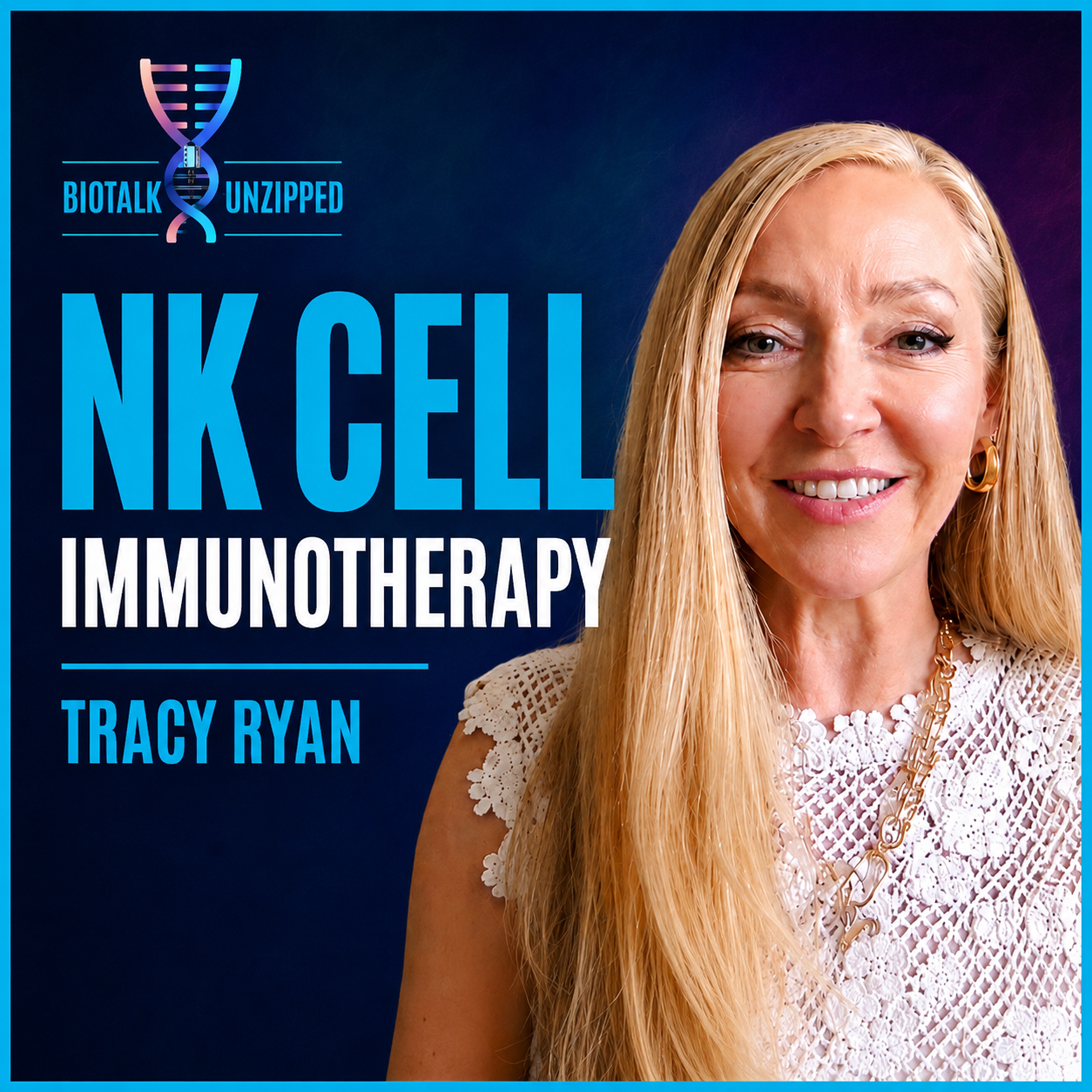
    Her Daughter’s Brain Tumor Turned Her Into a Biotech Founder | Tracy Ryan

    A mother’s search for answers to her daughter’s relentless brain tumor led her into natural killer cell biology, cancer immunotherapy, and biotech entrepreneurship. Sponsored by Leucentra, https://leucentra.com/ Inspired by science, empowered by IT. Leucentra helps life science and healthcare organizations evaluate, implement, and get more value from technology that supports innovation. Tracy Ryan, co-founder of NKore BioTherapeutics and former chief communications officer, joins Gregory Austin and Dr. Chad Briscoe to explain how her daughter Sophie’s pediatric brain tumor transformed her from a parent searching for options into a cancer advocate, research fundraiser, and biotechnology founder. The conversation examines the scientific reasoning that moved Tracy from medical cannabis advocacy toward NK-cell immunotherapy. She describes an immune-system finding involving Sophie’s natural killer cells, the work of the late UCLA scientist Dr. Anahid Jewett, and the development of an experimental allogeneic NK-cell platform designed to enhance immune activity without genetic engineering. The episode also explores the practical realities of translating an early scientific hypothesis into a therapeutic program, including donor selection, cell persistence, manufacturing, treatment outside the United States, regulatory requirements, clinical evidence, and the difficulty of raising capital for an emerging cell-therapy company. At the center of the discussion is a difficult question: how do scientists, founders, regulators, and families preserve urgency when patients need better options, while still requiring the controlled evidence needed to determine whether a therapy is safe and effective? What you will learn: • How Sophie’s pediatric brain tumor changed the direction of Tracy Ryan’s life • Why natural killer cells are important in immune surveillance and cancer biology • What differentiates allogeneic NK-cell approaches from CAR-T and CAR-NK therapies • How NKore’s experimental platform was designed to activate donor-derived NK cells • Why persistence, donor biology, manufacturing, and lymphodepletion matter in cell therapy • Why early human observations must remain distinct from controlled clinical-trial evidence • How regulatory pathways and capital constraints shape whether promising science reaches patients • What parents facing pediatric cancer need from the scientific and medical community About Tracy Ryan: Tracy Ryan is a pediatric cancer advocate, entrepreneur, public speaker, and biotechnology co-founder. She formerly served as chief communications officer of NKore BioTherapeutics. Her daughter Sophie was diagnosed with a brain tumor during infancy, leading Tracy and her family into more than a decade of advocacy, research support, fundraising, and therapeutic exploration. Tracy and her husband also established Saving Sophie to support pediatric cancer research and help families pursue care. Their family’s experience with medical cannabis was featured in the documentary Weed the People. Connect with Tracy Ryan: https://www.linkedin.com/in/tracyryan23/ Connect with Gregory Austin: https://www.linkedin.com/in/gregoryaustin1/ Connect with Dr. Chad Briscoe: https://www.linkedin.com/in/chadbriscoe/ Watch more BioTalk Unzipped episodes: https://www.youtube.com/@BioTalkUnzipped/videos Visit BioTalk Unzipped: https://www.biotalkunzipped.com Learn more about NKore BioTherapeutics: https://www.nkore.com Support Saving Sophie: https://www.savingsophie.org This episode is brought to you by founding sponsor Lucentra. Lucentra provides information technology consulting for life science and healthcare organizations, helping teams modernize infrastructure, strengthen security, and build scalable technology environments that support scientific innovation. Subscribe to BioTalk Unzipped for conversations with the scientists, founders, regulators, and business leaders shaping the future of medicine. Medical and scientific disclaimer: This conversation is provided for educational and informational purposes only. It does not constitute medical advice, diagnosis, or treatment guidance. The therapies and outcomes discussed may be investigational, preliminary, or based on individual experience. Early observations do not establish safety or efficacy. Patients and caregivers should consult qualified healthcare professionals before making medical decisions. #CancerImmunotherapy #NKCells #PediatricCancer

  • S1 · E43
    June 11 · 29 min

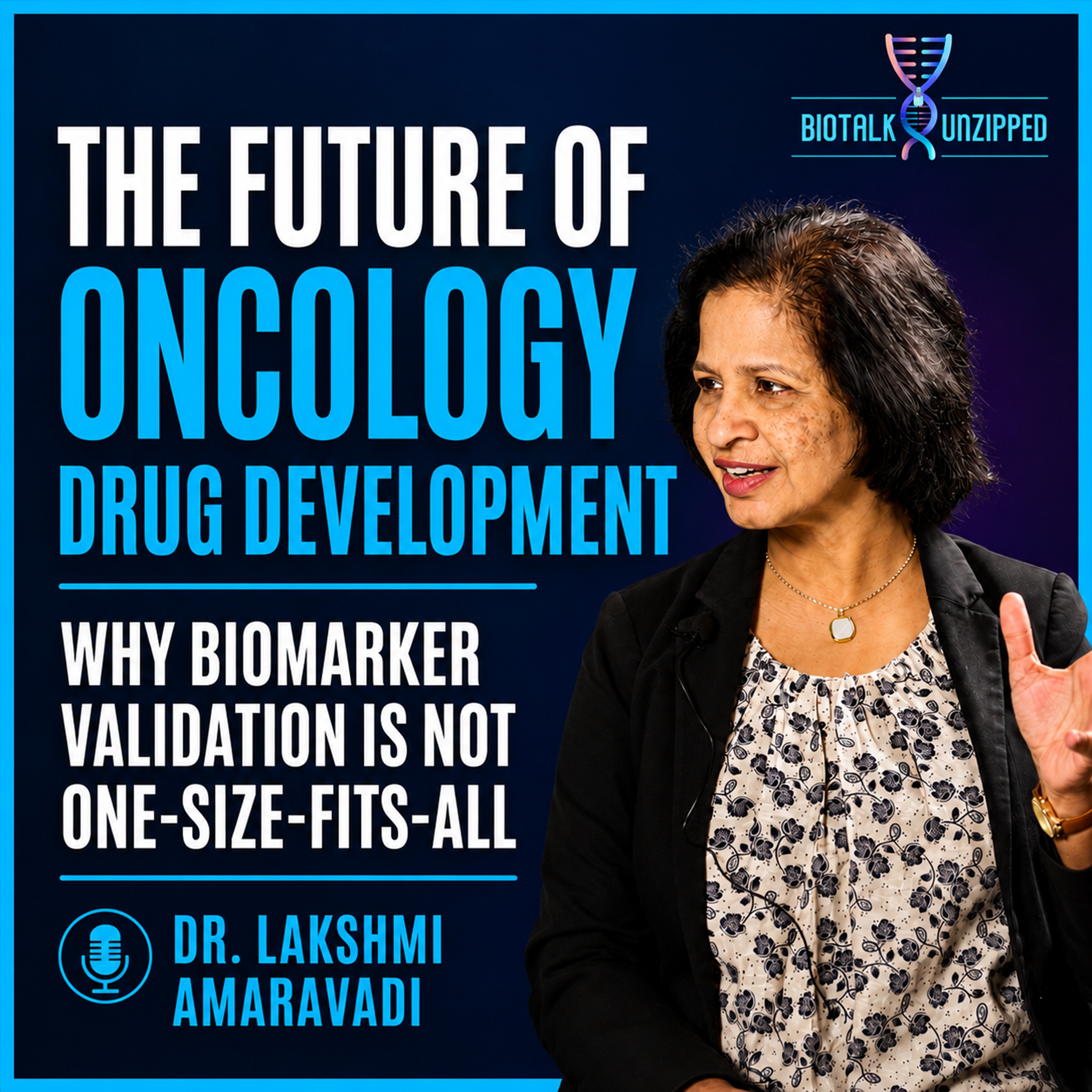
    The Future of Oncology Drug Development | Dr. Lakshmi Amaravadi

    Oncology drug development is becoming more complex, and bioanalysis can no longer be treated as simple drug measurement. Sponsored by Leucentra, https://leucentra.com/ Inspired by science, empowered by IT. Leucentra helps life science and healthcare organizations evaluate, implement, and get more value from technology that supports innovation. In this episode of BioTalk Unzipped, Gregory Austin and Dr. Chad Briscoe speak with Dr. Lakshmi Amaravadi, Head of Oncology Bioanalysis at AstraZeneca, live from AAPS PharmSci 360 in San Antonio. Dr. Amaravadi unpacks why biomarker validation is not one-size-fits-all, how context of use should guide scientific decision making, and why fit-for-purpose validation matters in modern oncology drug development. The conversation explores: 00:00 Why oncology bioanalysis is becoming more complex 02:12 FDA biomarker validation guidance and industry response 04:27 What “fit for purpose” means in practice 06:38 PK assay validation vs biomarker assay validation 07:52 What drives Dr. Amaravadi’s work in translational science 10:48 Why validation is not a checkbox exercise 12:19 Advice for young scientists entering bioanalysis 15:12 Why oncology drug development is uniquely complex 18:17 ADCs, bispecifics, T-cell engagers, and conditional T-cell engagers 19:38 Why bioanalysis now requires understanding biology 20:46 Dr. Amaravadi’s path from molecular biology to bioanalysis 24:34 Critical reagent management in complex oncology assays 26:42 Validation, qualification, and context of use 29:03 Final thoughts from AAPS PharmSci 360 This episode is especially relevant for scientists, bioanalytical leaders, translational researchers, clinical pharmacologists, oncology development teams, biomarker scientists, and anyone working at the intersection of drug development, assay validation, and precision medicine. Dr. Amaravadi discusses how oncology programs now involve ADCs, bispecifics, T-cell engagers, conditional T-cell engagers, complex linkers, multiple measurable species, immunogenicity considerations, and biomarker strategies that require deeper biological understanding. As she explains in the episode, the future of oncology bioanalysis is not simply measuring what is present. It is understanding what the measurement means in the context of the biology and the development decision. Follow BioTalk Unzipped for conversations with leaders in biotech, pharma, bioanalysis, clinical development, translational science, regulatory strategy, and the future of medicine. Guest Dr. Lakshmi Amaravadi https://www.linkedin.com/in/lakshmi-amaravadi/ Hosts Gregory Austin https://www.linkedin.com/in/gregoryaustin1/ Dr. Chad Briscoe https://www.linkedin.com/in/chadbriscoe/ Sponsor: Leucentra Related Links Celerion https://www.celerion.com/

    • Transcript
  • S1 · E42
    April 25 · 50 min

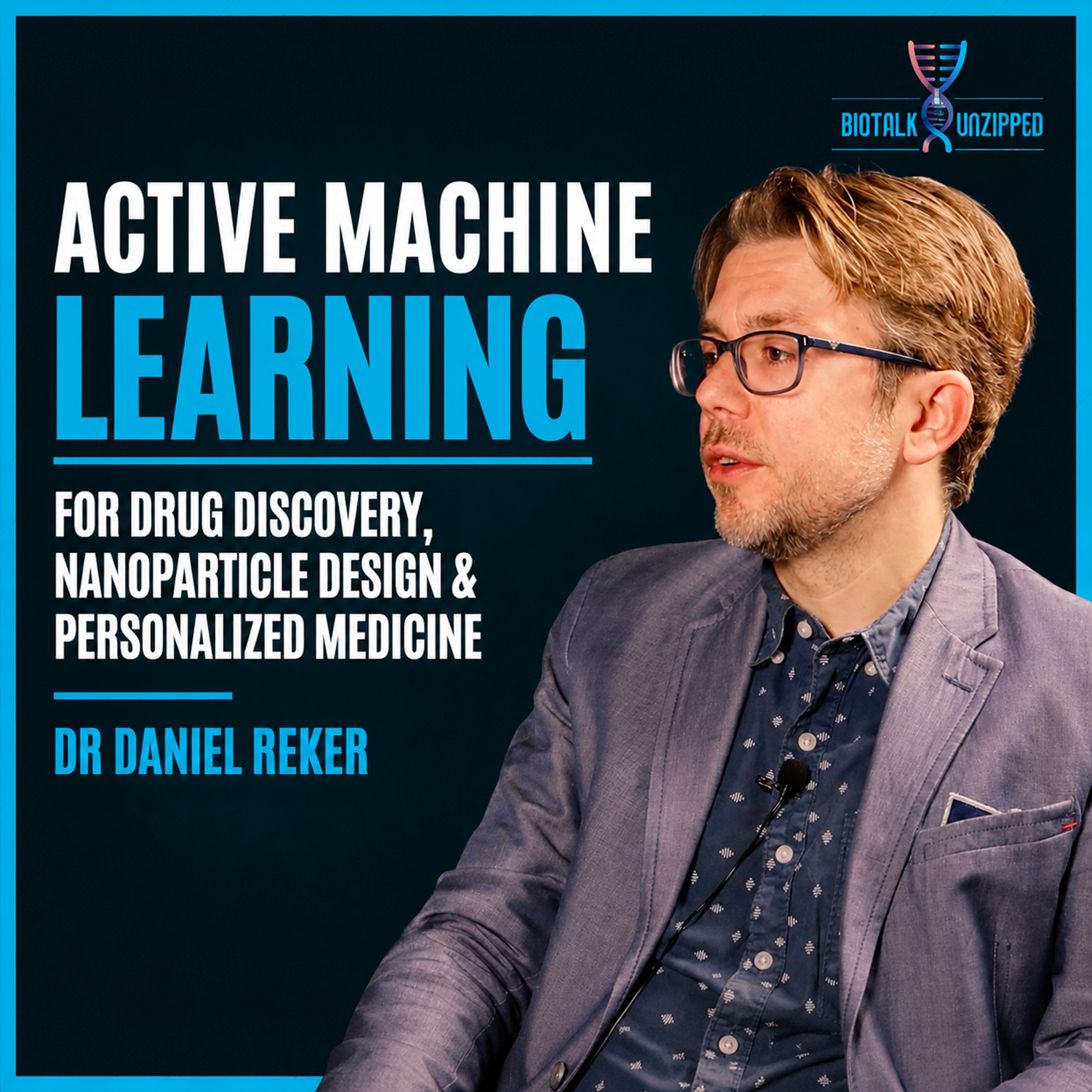
    Active Machine Learning for Drug Discovery & Nanomedicine with Dr. Daniel Reker

    Can artificial intelligence help make cancer therapies safer, more targeted, and more effective? In this episode of BioTalk Unzipped, Gregory Austin sits down with Dr. Daniel Reker, Assistant Professor at Duke University, for a wide-ranging conversation on active machine learning, nanomedicine, drug delivery, and the future of AI in biomedical research. This episode is brought to you by Leucentra. Inspired by Science Empowered by IT https://leucentra.com/ Dr. Reker works at the intersection of AI, chemistry, biomedical engineering, pharmacology, and molecular medicine. His lab develops computational and experimental approaches to better understand small molecules, nanoformulations, and drug delivery systems. The conversation explores how machine learning can support drug discovery and development, especially in areas where datasets are small and the biology is complex. Dr. Reker explains why nanoformulations may be able to improve targeted drug delivery, reduce toxicity, and potentially revive therapeutic agents that previously failed because of safety or tolerability issues. Gregory and Dr. Reker also discuss explainable AI, the risks of black box thinking, AI bias, predictive modeling, FDA considerations, non-animal models, and the responsible use of AI in education and science. Topics include: • Active machine learning in drug discovery • AI and nanomedicine • Cancer therapy and targeted drug delivery • How nanoformulations may reduce toxicity • Small datasets in biomedical AI • Explainable AI and scientific trust • AI bias and model limitations • Regulatory implications for predictive models • The role of AI in education and cognitive development • The future of integrated data in drug development Guest bio: Dr. Daniel Reker is an Assistant Professor at Duke University. His research focuses on computational and experimental approaches to molecular medicine, including active machine learning, drug delivery, nanoformulations, small molecules, and translational pharmacology. He was named to Forbes 30 Under 30 Europe in Science and Healthcare. Guest contact: Dr. Daniel Reker Email: daniel.reker@duke.edu LinkedIn: https://www.linkedin.com/in/danielreker/ Duke website: https://rekerlab.pratt.duke.edu/ Connect with BioTalk Unzipped: Gregory Austin https://www.linkedin.com/in/gregoryaustin1/ Dr. Chad Briscoe https://www.linkedin.com/in/chadbriscoe/ BioTalk Unzipped uncovers the stories behind medical progress through conversations with innovators across biotech, pharma, medtech, bioanalysis, clinical research, regulatory science, and drug development.

    • Transcript
  • S1 · E41
    March 19 · 1 hr

    Why Haven’t We Cured Cancer Yet? | Dr. Bob Liu Explains

    Why haven’t we cured cancer yet? A Genentech scientist explains the real reason. In this episode of BioTalk Unzipped, Gregory Austin and Dr. Chad Briscoe sit down with Dr. Bob Liu, Senior Principal Scientist at Genentech Roche, to unpack one of the most important and misunderstood questions in modern medicine. This is a rigorous, scientifically grounded conversation on cancer biology, immunotherapy, and the real constraints shaping oncology drug development today. Dr. Liu brings over a decade of experience across antibody drug conjugates (ADCs), bispecific antibodies, and CAR-T therapies, offering a rare, insider perspective on why a universal cure remains elusive and where meaningful progress is actually being made. Thanks to our Founding Sponsor: LEUCENTRA: Helping teams evaluate, implement, and get real value from IT solutions that support innovation, not slow it down. https://leucentra.com/ What You’ll Learn Why cancer is not one disease, but more than 200 biologically distinct conditions What “curing cancer” actually means in clinical oncology How immunotherapies like checkpoint inhibitors and CAR-T are changing outcomes The biological limits of eliminating every cancer cell How tumors evade immune detection and adapt over time Why only about 20% of patients respond to immuno-oncology therapies The role of biomarkers, molecular profiling, and precision medicine Why early detection remains one of the biggest unsolved challenges The economic and regulatory pressures shaping next-generation therapies Key Insight Cancer is not simply something to eliminate. It is a dynamic, adaptive system evolving within the human body. The future of oncology is not just eradication, but control, personalization, and intelligent engagement of the immune system. Notable Quotes “Cancer is a collection of more than 200 diseases, each requiring its own specific approach.” “The cure for some cancers is within reach, but for many others, early detection remains the critical challenge.” “Our immune system is constantly surveilling. The key is learning how to harness it effectively.” Timestamps 00:00 – Introduction 02:42 – Bob’s passion - AACR 04:28 – Why we haven’t cured cancer 07:09 – Defining a cancer cure 10:26 – Cancer classification and molecular signatures 14:16 – Methylation profiling in diagnosis 17:22 – Patient resources and navigation 21:14 – FDA shifts toward randomized trials for CAR-T 24:15 – Cost and access challenges 26:33 – Cancer vs cardiovascular disease progress 33:39 – The challenge of early detection 37:48 – Biomarker limitations 39:14 – Immune system dynamics in cancer 45:19 – Bioanalytical challenges in modern therapies 51:08 – Progress and future outlook About the Guest Dr. Bob Liu is a Senior Principal Scientist at Genentech Roche specializing in bioanalytical sciences and immunogenicity assessment for advanced oncology therapies, including T-cell bispecifics and CAR-T. Resources & Links FDA to tighten approval requirements for CAR-T therapies https://www.raps.org/news-and-articles/news-articles/2025/12/fda-to-tighten-approval-requirements-for-car-t-cel American Association for Cancer Research (AACR) https://www.aacr.org/ National Cancer Institute – Molecular diagnostics and biomarkers https://www.cancer.gov/about-cancer/diagnosis-staging/diagnosis Pattern recognition technologies in diagnostics https://toby.health Connect Dr. Bob Liu https://www.linkedin.com/in/bob-liu-42b8b278/ Dr. Chad Briscoe https://www.linkedin.com/in/chadbriscoe/ Gregory Austin https://www.linkedin.com/in/gregoryaustin1/ Final Thought The path to curing cancer is not a single breakthrough. It is a long, complex progression of scientific advances, better diagnostics, and deeper biological understanding. The progress is real. But the work is far from finished.

  • S1 · E40
    February 16 · 52 min

    The Intersection of Biotech, Patent Law, and AI with Dr. Kate Neville, IP Attorney

    Recorded October 31, 2025 In this episode of BioTalk Unzipped, Gregory Austin and Dr. Chad Briscoe sit down with Dr. Kate Neville, immunologist turned seasoned biotech patent attorney at Marshall, Gerstein & Borun, to unpack one of the most misunderstood and mission-critical areas of life sciences: intellectual property. If you are a biotech founder, scientist, executive, or investor, this conversation is essential listening. We explore what patent prosecution really means, when startups should begin thinking about IP protection, how “freedom to operate” can determine commercial viability, and how emerging AI tools are reshaping the patent landscape. Dr. Neville brings 25+ years of experience guiding university spin-outs, biotech startups, and global pharmaceutical companies through complex patent strategy. She has helped secure patents for FDA-approved drugs and offers a rare dual perspective as both scientist and attorney. In This Episode We Discuss: • The difference between patent prosecution and patent litigation • Why it is never too early for biotech startups to think about IP • The U.S. one-year grace period vs. Europe’s stricter disclosure rules • What “Freedom to Operate” really means for commercialization • Antibody patents, CDR regions, and the doctrine of equivalents • How premature disclosure can impact global patent strategy • The real-world back-and-forth of patent office “office actions” • AI-assisted prior art search at the USPTO — opportunity or risk? • How funding cycles influence patent filing decisions • Women in biotech leadership and venture funding disparities • The most rewarding part of protecting life-changing therapies We also break down the USPTO’s new AI pilot programs designed to modernize patent examination and discuss how artificial intelligence may impact biotech patenting over the next several years. Why This Matters Intellectual property is often the single most valuable asset in a biotech company. Strong IP strategy can unlock funding, partnerships, and market exclusivity. Weak or mistimed IP decisions can permanently limit global opportunity. For founders and scientists: timing, geography, and disclosure discipline matter more than most people realize. About Our Guest Dr. Kate Neville Partner, Marshall, Gerstein & Borun PhD in Immunology, JD LinkedIn: https://www.linkedin.com/in/kate-neville-phd/ Firm Bio: https://www.marshallip.com/katherine-l-neville-ph-d/ Charity Highlight: Girls on the Run Chicago An organization building confidence and resilience in young girls through mentorship and athletic achievement. https://www.girlsontherun.org/ Hosts Dr. Chad Briscoe Bioanalytical Scientific Leader https://www.linkedin.com/in/chadbriscoe/ Gregory Austin Director, Business Development | Bioanalysis https://www.linkedin.com/in/gregoryaustin1/ If you enjoyed this episode, subscribe to BioTalk Unzipped on Apple Podcasts, Spotify, or your preferred platform and share with a colleague in biotech, pharma, or life sciences innovation.

    • Chapters
  • S1 · E39
    Dec 22, 2025 · 49 min

    Long-acting Cell-Based Gene Therapy, Fabry Disease and Beyond with Glafabra CEO, Dr. Chris Hopkins

    In this episode of BioTalk Unzipped, hosts Gregory Austin and Dr. Chad Briscoe sit down with Glafabra CEO: Dr. Chris Hopkins, geneticist, biochemist, and biotech entrepreneur, to explore the science and strategy behind next generation cell-based gene therapies for rare diseases. With more than 25 years of experience spanning gene augmentation, rare disease biology, CRISPR licensing, and biotech formation, Dr. Hopkins shares how autologous, ex vivo engineered cell therapies may overcome key limitations of current enzyme replacement and viral gene therapies, particularly for Fabry disease. The conversation dives deep into: • How lentiviral gene augmentation in patient derived cells enables sustained enzyme production • Why redosing matters and where one time AAV therapies fall short • The scientific rationale for early intervention, including potential newborn treatment • Differences between autologous and emerging allogeneic approaches • Regulatory pathways for rare disease therapies and recent FDA developments • The role of non animal models in translational research • Montana’s early access therapy law and its broader implications • Building biotech platforms amid a challenging funding environment Topics include cell based gene therapy, Fabry disease, lentiviral vectors, stem cell engineering, rare disease drug development, regulatory science, and translational medicine. Subscribe to BioTalk Unzipped for in depth conversations with the scientists and leaders shaping the future of biomedical innovation. 00:00 - Intro 00:53 – Welcome to BioTalk Unzipped, Guest intro: Dr. Chris Hopkins 02:10 – Guest charity: Environmental Defense Fund 03:12 – His journey into rare-disease therapeutics and Glafabra 05:58 – Discovering a new enzyme-deficiency therapy 06:39 – Current standard of care 07:42 – How the new autologous cell therapy works 09:40 – Treating patients earlier (even newborns) 10:33 – Emerging therapies - AAV gene therapy vs. cell-based therapy 12:16 – Long-term results & repeat dosing 14:30 – Future plans: T-cells & allogeneic approaches 18:08 – New News: FDA resubmission for rare disease 20:00 – Navigating FDA pathways 22:06 – Non-animal testing & alternative models 25:50 – Montana’s early-access therapy law & medical tourism 29:03 – Could other states follow? 31:31 – Biotech’s current funding challenges 33:46 – New News: Gene therapy trial saves 4-year-old 37:09 – Long-term vision for expanding therapies 39:53 – Personal segment: outdoor life & skiing 44:43 – Guest question on international trade Dr. Christopher Hopkins https://www.linkedin.com/in/christopherehopkins/ Glafabra - https://www.glafabra.com/ Environmental Defense Fund - https://www.edf.org/ Dr. Chad Briscoe https://www.linkedin.com/in/chadbriscoe/ Celerion - https://www.celerion.com/ Gregory Austin https://www.linkedin.com/in/gregoryaustin1/ Celerion - https://www.celerion.com/ New News Articles: US FDA asks Stealth BioTherapeutics to resubmit application for rare genetic condition therapy https://www.reuters.com/business/healthcare-pharmaceuticals/us-fda-asks-stealth-biotherapeutics-resubmit-application-rare-genetic-condition-2025-05-29/ Gene therapy trial saves boy, 4, from 'death sentence' https://www.thetimes.com/uk/healthcare/article/gene-therapy-trial-great-ormond-street-70l2sgqw Montana, revolutionary law passed: unlimited research for longevity https://en.ilsole24ore.com/art/montana-approved-revolutionary-law-researching-longevity-without-limits-AHmDI7BB?refresh_ce=1 Key Takeaways 1. A new cell therapy could replace lifelong enzyme treatments for Fabry patients. 2. Unlike gene therapy, this treatment can be redosed — no one-and-done limit. 3. Early intervention, even in newborns, may become possible. 4. Montana’s new law could open a fast lane for experimental therapies in the U.S. 5. Despite a tough funding climate, breakthroughs show gene-edited cell therapies are reshaping the future. #CellTherapy #GeneEditing #RareDisease #BiotechInnovation #GeneticMedicine #HealthcareFuture #MedicalBreakthrough #CellBasedGeneTherapy #RareDisease #FabryDisease #GeneAugmentation #LentiviralVectors #Biotech #TranslationalScience #GeneticMedicine #BioTalkUnzipped https://youtu.be/VcPXZmK-XU8

  • S1 · E38
    Oct 23, 2025 · 31 min

    Fail Fast, Learn Faster: Drug Development in Rare Disease with Dr. Binodh DeSilva

    In this episode of BioTalk Unzipped, Gregory Austin and Dr. Chad Briscoe sit down with Dr. Binodh DeSilva, Senior Vice President of Bioanalysis at Ultragenyx Pharmaceutical, to explore the science and soul behind rare-disease drug development. From her early days studying electrochemistry at the University of Kansas to leading cutting-edge bioanalytical programs at Ultragenyx, Dr. DeSilva shares how curiosity and community shaped her four-decade career. She discusses the profound responsibility of working with limited, often irreplaceable patient samples with care. A special thanks to AAPS (https://www.aaps.org/) for their help and support of this episode. The conversation dives into: Balancing rigor and agility in small-population clinical studies Leveraging entrepreneurial mindsets from biotech within big pharma frameworks The promise of dried blood spots (DBS) and patient-centric sampling Mentorship, curiosity, and the future of scientific leadership Her return to Sri Lanka with KU faculty to recruit the next generation of scientists Throughout the discussion, DeSilva underscores a recurring theme: science thrives when curiosity meets compassion. This episode is a masterclass in both. Guest Links Dr. Binodh DeSilva https://www.linkedin.com/in/binodh-desilva/ Ultragenyx Pharmaceuticals - https://www.ultragenyx.com/ Hosts Dr. Chad Briscoe https://www.linkedin.com/in/chadbriscoe/ Celerion - https://www.celerion.com/ Gregory Austin https://www.linkedin.com/in/gregoryaustin1/ Celerion - https://www.celerion.com/ Keywords: BioTalk Unzipped, Binodh DeSilva, Ultragenyx, rare disease research, bioanalysis, dynamic drug development, dried blood spots, DBS sampling, biologics, AAPS NBC 2025, Gregory Austin, Chad Briscoe, Celerion, scientific leadership, mentorship in science, biopharma innovation, curiosity in research, Sri Lanka scientists, analytical chemistry, pharma innovation, drug development ethics.

  • S1 · E37
    Sep 12, 2025 · 17 min

    Unlocking Antibody Development with AI with Dr. Pin-Kuang Lai

    In this episode of BioTalk Unzipped, hosts Gregory Austin and Dr. Chad Briscoe interview Asst. Professor Pin-Kuang Lai from Stevens Institute of Technology about his keynote speech at AAPS NBC 2025 and the intersection of AI and molecular engineering, particularly in predicting the viscosity of monoclonal antibodies. They discuss the challenges of high concentration formulations, the importance of AI validation, and the future of formulation development. Lai shares insights from his international research journey and collaborations with pharmaceutical companies, as well as opportunities for students interested in this field. 00:00 Preview & Intro 01:58 Deep Viscosity and AI in Antibody Development 04:39 AI Validation and Model Reliability 07:12 International Journey and Collaborative Research 08:42 Future of Formulation Development 10:30 AAPS NBC Experience 11:30 Academic vs. Industry Career Paths 12:31 Collaboration with Pharmaceutical Companies 13:59 Modeling Protein Aggregation Challenges 14:43 Student Engagement and Research Opportunities 15:45 Expanding Applications of Machine Learning Dr. Pin-Kuang Lai https://www.linkedin.com/in/pin-kuang-lai/ Stevens Institute of Technology - https://www.stevens.edu/ Dr. Lai’s Publications - https://www.linkedin.com/in/pin-kuang-lai/details/publications/ The DeepViscosity Model - https://devpred.onrender.com/DeepViscosity Dr. Chad Briscoe https://www.linkedin.com/in/chadbriscoe/ Celerion - https://www.celerion.com/ Gregory Austin https://www.linkedin.com/in/gregoryaustin1/ Celerion - https://www.celerion.com/

  • S1 · E36
    Jul 3, 2025 · 22 min

    The Science and Hope of Brain Cancer with Dr. Robert Thorne, Denali Therapeutics

    In this powerful episode (#35) of BioTalk Unzipped, recorded live at the AAPS NBC conference in Boston, Gregory Austin engages in a deep conversation with a leading Neuroscientist, Dr. Robert Thorne, Denali Fellow at Denali Therapeutics, for an intimate and scientific deep dive into the evolving world of brain cancer treatment and CNS drug delivery. Both Gregory and Dr. Thorne share personal stories of losing family members to brain metastases, weaving in the emotional 'why' behind their professional paths. Dr. Thorne highlights the complexities of the blood-brain barrier, the heterogeneity of brain metastases, and cutting-edge delivery technologies—including focused ultrasound and molecular engineering approaches. The conversation also touches on pediatric brain tumors like diffuse midline glioma (DIPG), emerging research in lysosomal storage diseases, and the collaborative spirit driving innovation in neuroscience today. This is more than a technical discussion—it’s a human story about grief, hope, and the relentless pursuit of better outcomes for patients with brain diseases. 00:00 Preview & Intro 01:10 Robert Thorne’s Reflections on the AAPS NBC conference 03:14 The Professional Biotech and Pharma League 05:09 A Personal Story Shared: Family Loss to Brain Cancer 07:57 My Reason for Optimism Treating Brain Cancer 08:50 Why Brain Metastases Remain Hard to Treat 11:10 Scientific Advances in Drug Delivery for Brain Cancer 12:30 Seed and Soil Concept in Oncology 15:18 Pediatric Brain Tumors: DNET, DIPG, and Beyond 16:49 Looking Ahead: Hope for Future Therapies 21:32 Closing Gratitude Dr. Robert Thorne https://www.linkedin.com/in/robert-g-thorne/ Denali Therapeutics - https://www.denalitherapeutics.com/ Dr. Chad Briscoe https://www.linkedin.com/in/chadbriscoe/ Celerion - https://www.celerion.com/ Gregory Austin https://www.linkedin.com/in/gregoryaustin1/ Celerion - https://www.celerion.com/ Key Takeaways: Personal Connection Fuels Professional Passion: Both Gregory and Dr. Thorne were driven into the life sciences field by family experiences with brain tumors. The Blood-Brain Barrier (BBB) Remains a Major Challenge: Brain metastases from cancers like melanoma, lung, and breast cancer still present difficult delivery barriers for therapies. Heterogeneity in Brain Mets: Different metastases within the same patient can have vastly different BBB permeability, requiring multifaceted delivery strategies. Emerging Drug Delivery Innovations: Focused ultrasound, engineered biologics, and Denali’s own delivery platforms are all promising ways to improve CNS drug penetration. Pediatric Brain Cancers Present a Unique Set of Challenges: Diseases like diffuse midline glioma (DIPG) remain largely untreatable, but learnings from lysosomal storage disorders may translate in the future. The Power of Community in Science: The conference setting highlights how collaboration and diverse perspectives drive breakthroughs in bioanalysis and drug development.

  • S1 · E35
    Jun 8, 2025 · 28 min

    Inside AAPS NBC with AAPS President Dr. Russ Weiner

    In this special episode (#34) of BioTalk Unzipped, recorded live at the AAPS NBC conference in Boston, Gregory Austin and Dr. Chad Briscoe sit down with AAPS President Dr. Russ Weiner for an unfiltered look inside AAPS NBC, at the state of rare disease research, the evolution of therapeutic modalities, and the human stories that drive scientific innovation. From navigating the emotional weight of personal loss to watching his son experience the field firsthand, Russ shares not only his scientific insights but the heart behind his leadership. The conversation spans topics like the rising promise of AI diagnostics, challenges with biomarker sampling logistics, the role of CROs in rare disease trials, and the future of autologous vs. allogeneic therapies. Dr. Weiner also offers an inspiring vision of industry collaboration, sharing how organizations like AAPS are becoming conduits for progress across low- and middle-income countries, underrepresented diseases, and emerging biotechnologies. Whether you're in the lab, the boardroom, or on the frontlines of clinical trials, this episode will reignite your sense of purpose in this field. 00:00 Preview & Intro 01:22 What is conference life like as AAPS President 02:27 Mentoring & Fatherhood at AAPS 03:54 Setting up the Meeting Season for AAPS 05:43 Life back in the Rare Disease Space - a Passion 10:58 The different costs of pharmaceutical & biotech research 12:59 The generosity of Rare Disease Patients 14:41 Dr. Chad Briscoe asks Russ what can we do to help advance Rare Disease efforts 19:57 Rare Disease conversations happening at AAPS and global reach 22:37 Broad use of new technologies, including Olink 24:10 Biggest change expected in Pharma in 10 years Dr. Russ Weiner https://www.linkedin.com/in/russellweiner/ AAPS - https://www.aaps.org/home Dr. Chad Briscoe https://www.linkedin.com/in/chadbriscoe/ Celerion - https://www.celerion.com/ Gregory Austin https://www.linkedin.com/in/gregoryaustin1/ Celerion - https://www.celerion.com/ Takeaways: Treating rare diseases early is not only life-saving—it’s economically sound. Gene and cell therapies may carry high price tags, but they dramatically reduce long-term costs. The diagnostic delay for rare diseases—often 4 to 7 years—remains one of the biggest barriers to treatment. AI-powered diagnostics and data integration could change that. Dr. Russ Weiner shares how personal loss fueled his career in science and how mentoring the next generation, including his son, brings it full circle. The shift toward allogeneic cell therapies and in vivo CAR-T treatments will be key to driving down costs and increasing global accessibility. CROs must evolve: future-ready organizations will localize biomarker analysis and forge relationships with rare disease investigators to improve site performance. Technologies like Olink are revolutionizing biomarker discovery, enabling cost-effective, high-resolution multiplexing that was previously out of reach. Spatial imaging, AI pathology, and facial-recognition-based diagnosis are the next wave of precision medicine. Quotes “Treating rare disease isn’t just compassionate—it’s a smart investment. Do the math, and curing someone can be far cheaper than managing chronic care for a lifetime.” “You can’t say it’s not in your backyard when that backyard becomes yours the moment you're on the same plane.” (on global health and infectious disease risk) “Some of the most generous people in clinical research are rare disease patients. They fight so no one else has to.” “It took me six months to even scratch the surface of this portfolio—rare disease isn’t just rare, it’s overwhelmingly complex.”

  • S1 · E34
    May 12, 2025 · 59 min

    Building Successful Life Science Companies with Katrina Rogers

    In this powerful episode of BioTalk Unzipped, Gregory Austin and Dr. Chad Briscoe sit down with Katrina Rogers, a 25-year life sciences veteran, biotech equity advocate, and founder of Evergreen Bioscience Innovation and Katrina Rogers Consulting. Katrina shares her compelling journey from Pfizer to pioneering innovation ecosystems and mentoring underrepresented biotech founders. They unpack the role of board governance, the funding gap for female founders, and how "showing your science" is critical for regulatory success. Katrina also warns of dangerous gaps in understanding between regulators and innovators and why we must protect our basic science infrastructure. If you've ever dreamed of launching a breakthrough therapy, leading a biotech, or making your idea count, this episode is for you. 00:00 Episode Preview & BioTalk Unzipped Introduction 03:09 Katrina’s Charity Highlight: 2nd Harvest (link below) 04:04 Defining Moment in Life Science 05:35 Launching a Consultancy: Overcoming Fears 07:12 Leadership Lessons 09:30 The Importance of Board Composition 13:08 NEW NEWS: The Case for Female Founders 18:04 Knowledge Gaps Between Founders and Regulators 20:23 The Impact of Regulatory Changes 21:32 The Direct Attack on Basic Scientific Infrastructure 25:57 Understanding Market Needs 29:36 The Role of Founders in Leadership and Navigating Leadership Challenges 34:00 The Most Common Mistake by Biotech Founders & What To Do 35:27 Katrina’s Scope & Delivering Unpleasant News 36:51 NEW NEWS: Understanding Tariffs and Drug Pricing 42:23 Empowering Big Ideas 45:26 Overcoming Systemic Barriers 47:24 Advice to My Younger Self 49:38 Proposing Changes to FDA Innovation Pathways 54:54 The Future of Innovation in Biotechnology Katrina Rogers https://www.linkedin.com/in/katrinarogers/ https://krogersconsulting.com/ Katrina’s Favorite Charity: 2nd Harvest (Food Bank) - https://2-harvest.org/ Dr. Chad Briscoe https://www.linkedin.com/in/chadbriscoe/ Celerion - https://www.celerion.com/ Gregory Austin https://www.linkedin.com/in/gregoryaustin1/ Celerion - https://www.celerion.com/ NEW NEWS Biotech a Bright Spot for Female Founders Amid DEI Pullback, https://www.biospace.com/business/biotech-a-bright-spot-for-female-founders-amid-dei-pullback?utm_source=chatgpt.com Trump signals shift in drug import tariff policy https://www.techtarget.com/pharmalifesciences/news/366622459/Trump-signals-shift-in-drug-import-tariff-policy Quotables "The world needs your big idea." "Build trust and that will engender loyalty." "You need to have a board already established." "Show them your science." "Be Specific and people can be incredibly generous with their time." "Tariffs are incredibly blunt economic instruments." "You should at least try to get it out there." "Our culture has expectations that limit us." "You have to drive that vision." “Stop playing small - you’re meant for more.” “Put the Visionaries with the Doers and you’re unstoppable!” Takeaways Founders should evaluate their board members early in the process. Female founders are underrepresented but show higher returns on investment. Understanding customer needs is crucial for product development. Regulatory changes can create knowledge gaps for founders. Basic science is essential for innovation in drug development. Leadership challenges often stem from board dynamics. Problem-solving tools can help founders navigate challenges. The most common mistake is not doing enough discovery research. Building a network is crucial for early-stage entrepreneurs. People are generous with their time if you’re super specific about your need! Delivering unpleasant news is part of being a problem solver. Tariffs can disrupt supply chains and raise drug prices. Leadership roles require proactive vision and engagement. Cultural expectations can limit innovation and self-worth. Anyone can be an innovator with the right support. The skilled technical workforce is vital for future innovation. Passion drives significant advancements in biotechnology.

  • S1 · E33
    Apr 7, 2025 · 51 min

    Navigating Challenges in Drug Discovery with Dr. Alfred Botchway

    In this episode of BioTalk Unzipped, Gregory Austin and Dr. Chad Briscoe sit down with Dr. Alfred Botchway, CEO of Attentive Science, to discuss his journey in biomedical science and the groundbreaking work being done at the intersection of AI, non-clinical safety, and drug discovery. Dr. Botchway shares his insights on the role of AI in refining toxicology studies, how stress impacts human health, and his experience founding companies like Xenometrics and Attentive Science. The conversation dives deep into the complexities of Good Laboratory Practices (GLP), the importance of regulatory standards, and the exciting research happening in anxiety and PTSD treatments. Dr. Botchway also discusses the future of biomedical research, the need for greater collaboration between academia and industry, and how innovations in sample collection are transforming clinical trials. Whether you’re interested in AI, biomedical innovation, or the future of drug discovery, this episode offers valuable insights from a leader shaping the industry. Don’t forget to subscribe and let us know your thoughts in the comments below! Dr. Alfred Botchway https://www.linkedin.com/in/alfred-botchway-41b01a6/ CEO of Attentive Science: https://www.attentivescience.com/ Dr. Chad Briscoe https://www.linkedin.com/in/chadbriscoe/ Celerion - https://www.celerion.com/ Gregory Austin https://www.linkedin.com/in/gregoryaustin1/ Celerion - https://www.celerion.com/ 00:00 Introduction to BioTalk Unzipped 02:32 Dr. Alfred Botchway's Journey in Biomedical Science 03:48 Challenges Founding and Growing Xenometrics 07:30 Starting Attentive Science: A New Venture 09:37 Love of the Work - Variations 10:26 The Role of AI in Non-Clinical Safety Assessments 13:04 The Three Rs: Replace, Reduce, Refine, and AI 15:46 Regulatory Standards and Good Laboratory Practices 20:42 New News! - Research on Anxiety and Drug Discovery 27:07 Cortical Stimulation and Stress Management 27:45 Bridging Academia and Industry 29:26 Engaging the Next Generation in Science 32:42 The Value of Vocational Training in Science 34:47 Community Involvement and Giving Back 37:00 Cultural Influences on Leadership 42:39 Global Expansion and Strategic Goals 48:41 Innovations in Sample Collection for Clinical Trials Digital Twin Episodes reference with Tomas Helikar: Transforming Immunology: The Promise of Digital Twins with Dr. Tomáš Helikar https://youtu.be/jTM_Zlt3wxU Digital Twins: The Future of Drug Discovery with Dr. Tomáš Helikar https://youtu.be/NM5X0jTd6UA

  • S1 · E32
    Mar 17, 2025 · 41 min

    2024 Year In Review: BioTalk Unzipped

    In this episode of BioTalk Unzipped, hosts Gregory Austin and Dr. Chad Briscoe reflect on their journey over the past year, discussing key themes and insights gained from their guests. They explore the humanistic approach to healthcare, the impact of AI in drug development, common threads among successful individuals, personal growth through conversations, and the importance of leadership and mentorship in the industry. The episode concludes with exciting plans for future series focused on drug development and global healthcare innovations. Thanks to CREO Consulting for hosting this episode! https://creoconsulting.com/ Dr. Chad Briscoe https://www.linkedin.com/in/chadbriscoe/ Celerion - https://www.celerion.com/ Gregory Austin https://www.linkedin.com/in/gregoryaustin1/ Celerion - https://www.celerion.com/ Takeaways Every sample is a person, a patient, a loved one. Embrace the fear, take more risks. The importance of human connection in drug development. AI is becoming integral in drug discovery and development. Successful individuals often wish they had taken more risks. Leadership in the industry is about raising others up. Mentorship plays a crucial role in professional growth. Personal growth can come from listening and engaging with others. Innovative approaches are essential in addressing industry challenges. Keywords BioTalk, drug development, AI, mentorship, leadership, podcast, healthcare, innovation, personal growth, industry insights

  • S1 · E31
    Mar 3, 2025 · 1 hr 11 min

    Women in Pharmaceutical Sciences and their Allies with Dr. Ines Santos and Dr. Julie Sable

    In this episode of BioTalk Unzipped, hosts Gregory Austin and Chad Briscoe welcome Dr. Ines Santos and Dr. Julia Sable to discuss their experiences and contributions in the pharmaceutical sciences, particularly focusing on women's roles in the field. The conversation covers their personal journeys into science, the importance of STEAMpark.org in education, exciting projects they've worked on, challenges in CMC for cell and gene therapies, innovations in chiral bioanalysis, and recent industry developments. The panel emphasizes the significance of collaboration and mentorship in advancing medical progress. This conversation delves into the evolving landscape of cancer treatment, particularly the integration of combination therapies like CAR T and oncolytic viruses. It also highlights the importance of empowering women in pharmaceutical sciences through mentorship and community engagement, while emphasizing the role of allyship in fostering an inclusive environment. 01:20 Introduction to BioTalk Unzipped 02:01 Celebrating Women in Pharmaceutical Sciences 03:21 The Importance of STEAM Education 04:09 Personal Journeys into Science 08:02 Exciting Projects and Discoveries 13:52 Challenges in CMC for Cell and Gene Therapies 18:51 Innovations in Chiral Bioanalysis 22:46 NEW NEWS! - New ADC Approved 28:33 Exploring Combination Therapies in Cancer Treatment 32:26 Empowering Women in Pharmaceutical Sciences 37:30 Mentorship and Community Engagement 45:18 The Role of Allyship in Science 47:19 Breaking Barriers and Challenging Stereotypes 54:15 Engaging Diverse Voices in Discussions 56:49 Creating Inclusive Spaces for Feedback & Speaking Up 01:01:15 Avoiding Assumptions in Professional Settings 01:02:04 Setting Boundaries for Work-Life Balance 01:05:24 Measuring Success in Life 01:07:06 Connecting and Networking Effectively Dr. Ines Santos https://www.linkedin.com/in/insantos/ Dr. Julia Sable https://www.linkedin.com/in/julia-sable-5b794385/ STEAMpark https://www.steampark.org/ WIPS in AAPS https://community.aaps.org/communities/community-home?CommunityKey=fbfeb62a-884a-46cf-a5ed-24ef7eb43100 https://www.aaps.org/ Dr. Chad Briscoe https://www.linkedin.com/in/chadbriscoe/ Celerion - https://www.celerion.com/ Gregory Austin https://www.linkedin.com/in/gregoryaustin1/ Celerion - https://www.celerion.com/ New News Story: In Fierce Pharma - Pfizer's blockbuster ADC Adcetris nabs FDA approval to treat large B-cell lymphoma https://www.fiercepharma.com/pharma/pfizers-blockbuster-adc-adcetris-nabs-fda-approval-treat-large-b-cell-lymphoma Journal Article mentioned: Emerging applications of quantitative supercritical fluid chromatography-tandem mass spectrometry for chiral bioanalysis https://www.sciencedirect.com/science/article/abs/pii/S0021967325000767 Sound Bites "We want to build our next generation." "We all want the same result." "You have to have a level of extrovert." "If you see something, say something." "Take action this year." Image Credits: AAPS & WIPS logos: https://www.aaps.org/ Keywords BioTalk, pharmaceutical sciences, women in science, CMC challenges, chiral bioanalysis, CAR-T therapies, STEAM education, innovations in medicine, healthcare advancements, biotechnology, cancer treatment, CAR T therapy, women in science, mentorship, allyship, pharmaceutical sciences, community engagement, combination therapies, empowerment, gender equality, engagement, feedback, inclusivity, allyship, professional development, work-life balance, success, networking #pharmaceutical #women #womenempowerment #science #drugdevelopment #biotech #biopharma #mentor #mentorship #AAPS #WIPS

  • S1 · E30
    Feb 3, 2025 · 1 hr 9 min

    Can AI Become Your Doctor? FDA Regulation, Medical Devices & the Future of Healthcare

    Could artificial intelligence become your doctor someday? In this episode of BioTalk Unzipped, Gregory Austin and Dr. Chad Briscoe sit down with Dr. Alex Friedman, a regulatory affairs expert with deep experience in medical devices, FDA submissions, quality systems, and AI-enabled Software as a Medical Device. Alex helps unpack one of the most important questions in healthcare innovation: when does software become a regulated medical device, and what happens when AI begins influencing clinical decisions? The conversation moves from classic medical device classifications to 510(k) submissions, De Novo pathways, wearable health technology, clinical decision support software, adaptive AI, liability risk, and the future of “doctor-in-a-box” tools for underserved communities. This episode is especially relevant for medical device developers, digital health founders, regulatory affairs professionals, biotech leaders, clinicians, investors, and anyone trying to understand how AI will be safely integrated into healthcare. Alex explains why regulatory strategy is not just bureaucracy. It is a public health safeguard designed to protect patients, validate claims, and prevent companies from selling unproven technology into high-stakes clinical environments. As he puts it in the episode, “You can’t sell snake oil.” In this episode How FDA classifies medical devices by risk Why many Class II devices follow the 510(k) pathway What “substantial equivalence” means When software becomes a medical device Why AI-enabled software raises new regulatory questions How wearable technology may change cardiovascular monitoring Why medical claims create liability risk What makes adaptive AI especially difficult to regulate How FDA may approach predetermined change control plans Why inclusive training data matters for AI in healthcare How AI tools could improve care access in underserved communities Featured guest Dr. Alex Friedman is a bioengineer and regulatory affairs professional with more than a decade of experience in medical devices, quality systems, FDA submissions, and regulatory strategy. His work includes AI-enabled hospital software, clinical decision support, and Software as a Medical Device. Connect with Alex Friedman: https://www.linkedin.com/in/alexfriedman/ Charity spotlight Alex selected Americares, a nonprofit organization that delivers emergency medical aid and health programs to people affected by poverty and disaster. Learn more: https://www.americares.org/ Links and resources All BioTalk Unzipped episodes: https://www.youtube.com/@BioTalkUnzipped/videos BioTalk Unzipped LinkedIn: https://www.linkedin.com/company/biotalk-unzipped Gregory Austin: https://www.linkedin.com/in/gregoryaustin1/ Dr. Chad Briscoe: https://www.linkedin.com/in/chadbriscoe/ Mentioned in the episode Antshrike cardiac health app from Before Health Intelligence: https://www.accessnewswire.com/newsroom/en/computers-technology-and-internet/new-ai-powered-mobile-app-delivers-early-prediction-of-heart-attack-or-stroke-944424 Fierce MedTech 2025 forecast on AI, regulators, and government: https://www.fiercebiotech.com/medtech/2025-forecast-how-will-ai-regulators-and-government-intersect SISU Sense concussion mouthguard: https://www.sisuguard.com/sisusense/ HITIQ smart mouthguard: https://www.hitiq.com/smart-mouthguard Prevent Biometrics: https://preventbiometrics.com/ IDX-DR diagnostic software: https://www.healthvisors.com/en/idx-dr/

  • S1 · E29
    Jan 20, 2025 · 31 min

    The Future of Dosing: Pharmacometrics, Oncology & Virtual Trials with Dr. Nathan Teuscher

    In this episode of BioTalk Unzipped, Gregory Austin and Dr. Chad Briscoe continue their conversation with Dr. Nathan Teuscher, a clinical pharmacology and pharmacometrics expert with more than 20 years of experience in drug development. Nathan brings a clear, practical perspective on one of the most important questions in biopharma: how do we choose the right dose for the right patient, especially in complex areas like oncology and cell therapy? The conversation explores the changing landscape of pharmaceutical development, including virtual clinical trials, patient engagement, clinical pharmacology, pharmacometrics, oncology dose optimization, and the importance of collaboration across scientific disciplines. Nathan discusses why dose selection is not just a technical detail. It can shape safety, efficacy, patient experience, regulatory strategy, and ultimately whether a therapy succeeds. The episode also touches on FDA’s Project Optimus, the evolving expectations around oncology dosing, and the challenge of treating immunocompromised patients in areas such as cell therapy. The discussion also highlights how technology, data, and AI may help improve clinical trial design and patient selection, while still requiring thoughtful ethical judgment and scientific discipline. Nathan also shares advice for young scientists entering biopharma, including the importance of listening first, learning across disciplines, and approaching scientific collaboration with humility and curiosity. The episode closes with Nathan’s reflections on success, purpose, and his own Clinical Pharmacology Podcast, which helps educate listeners on clinical pharmacology, pharmacometrics, and drug development topics. In this episode Gregory, Chad, and Nathan discuss: The changing landscape of pharmaceuticals Virtual clinical trials and patient engagement How pharmacometrics supports better dose selection Why oncology dosing is evolving FDA’s Project Optimus and its impact on cancer drug development Challenges in cell therapy development Treating immunocompromised patients The role of collaboration in scientific progress Advice for young scientists in biopharma Nathan’s Clinical Pharmacology Podcast Featured guest Dr. Nathan Teuscher is a clinical pharmacology and pharmacometrics expert, founder of Aplos Analytics, and host of the Clinical Pharmacology Podcast. Nathan Teuscher: https://www.linkedin.com/in/nathanteuscher/ Aplos Analytics: https://aplosanalytics.com/ Email: nathan@aplosanalytics.com Clinical Pharmacology Podcast: https://teuschersolutions.com/ Spotify: https://creators.spotify.com/pod/show/clinical-pharmacology Apple Podcasts: https://podcasts.apple.com/us/podcast/clinical-pharmacology-podcast-with-nathan-teuscher/id1695617234 Collaboration with BioTalk Unzipped, Ep. 40: https://podcasts.apple.com/us/podcast/collaboration-with-biotalk-unzipped-ep-40/id1695617234?i=1000682122951 New News story After two rejections, FDA approves Mesoblast's first-of-its-kind cell therapy: https://www.fiercepharma.com/pharma/fda-nod-gvhd-cell-therapy-gives-australian-biotech-mesoblast Connect with BioTalk Unzipped All BioTalk Unzipped Episodes: https://www.youtube.com/@BioTalkUnzipped/videos Dr. Chad Briscoe: https://www.linkedin.com/in/chadbriscoe/ Celerion: https://www.celerion.com/ Gregory Austin: https://www.linkedin.com/in/gregoryaustin1/ BioTalk Unzipped on LinkedIn: https://www.linkedin.com/company/biotalk-unzipped Key themes Clinical pharmacology and pharmacometrics are central to smarter drug development because they help teams understand exposure, response, variability, safety, and dose optimization. In oncology, the field is moving beyond the assumption that the highest tolerated dose is automatically the best dose. Better dosing decisions can improve tolerability, patient experience, and development strategy. Virtual trials and digital tools may help reduce patient burden and increase access, but they must be designed with scientific rigor and ethical responsibility. Cell therapy presents unique challenges because patient immune status, disease severity, treatment history, and biology can all affect outcomes. Collaboration is not just a professional virtue. In modern drug development, it is a scientific necessity. Sound bites “If you want to be successful, seek first to understand, then be understood.” “If you’re looking to help people and in collaboration, you’ll be successful.” “Success in life is the happiness of loved ones around you.” Keywords BioTalk Unzipped, Nathan Teuscher, clinical pharmacology, pharmacometrics, drug development, dose optimization, oncology dosing, Project Optimus, virtual clinical trials, patient engagement, clinical research, cell therapy, Mesoblast, FDA approval, immunocompromised patients, biopharma collaboration, pharmaceutical development, clinical trial innovation, AI in pharma, data science in drug development, precision medicine, personalized medicine, Clinical Pharmacology Podcast, Aplos Analytics

  • S1 · E28
    Jan 6, 2025 · 33 min

    The Future of Pharmacometrics with Dr. Nathan Teuscher

    In this episode of BioTalk Unzipped, hosts Gregory Austin and Chad Briscoe welcome Dr. Nathan Teuscher, a seasoned expert in clinical pharmacology and pharmacometrics. The conversation explores Nathan's career journey, the innovative charity Light the World, and the transformative role of AI in drug development. They discuss the challenges and opportunities presented by AI, particularly in automating data analysis and rethinking traditional reporting methods in the pharmaceutical industry. The episode emphasizes the potential for small companies to leverage cloud-based tools and APIs to enhance efficiency and drive innovation in drug development. In this conversation, the speakers explore the intersection of data analysis, AI tools, and advancements in gene editing with organ transplants. Chapters 00:00 Episode Preview 00:55 Introduction to BioTalk Unzipped 02:06 Charity Spotlight: Light of the World 04:51 Nathan Teuscher's Career Journey 07:34 Differentiating AI Types in Life Science 12:41 Challenges with Large Language Models 15:39 Rethinking Reporting in Pharma 17:56 The Future of AI and Analytics in Pharma? 18:52 Leveraging APIs (Application Programming Interfaces) for Small Companies 23:05 Leveraging Data, AI, and APIs in 3 Dimensions 26:22 NEW NEWS! - Gene Editing Breakthroughs in Medicine How to reach us: Light the World Charity - Church of Jesus Christ Latter Day Saints https://www.churchofjesuschrist.org/comeuntochrist/light-the-world Nathan Teuscher https://www.linkedin.com/in/nathanteuscher/ Aplos Analytics - https://aplosanalytics.com/ Nathan Teuscher’s Podcast: Clinical Pharmacology Podcast https://teuschersolutions.com/ Collaboration with BioTalk Unzipped (Ep. 40) https://podcasts.apple.com/us/podcast/collaboration-with-biotalk-unzipped-ep-40/id1695617234?i=1000682122951 Dr. Chad Briscoe https://www.linkedin.com/in/chadbriscoe/ Celerion - https://www.celerion.com/ Gregory Austin https://www.linkedin.com/in/gregoryaustin1/ ECI - https://eci-rx.com / Sound Bites "We don't need to write reports anymore." Takeaways Nathan Teuscher has over 20 years of experience in clinical pharmacology and pharmacometrics. Light the World charity offers unique giving machines for donations. AI can automate repetitive tasks in drug development, freeing up human capital for innovation. There are two types of AI: large language models and automated data analysis. Large language models can be unreliable in scientific contexts. Pharmaceutical companies spend significant resources on report writing, which may not add value. Small companies can leverage APIs to access standardized calculations and data analysis. The pharmaceutical industry is often insular, limiting the potential of AI. AI could potentially eliminate the need for extensive written reports in drug development. Collaboration and data sharing are crucial for advancing AI in the pharmaceutical industry. Leveraging data effectively requires combining various data sets and tools. The evolution of AI tools is crucial for navigating new technologies. Gene editing represents a significant breakthrough in organ transplantation. New News Story: A woman in the US is the third person to receive a gene-edited pig kidney https://www.technologyreview.com/2024/12/17/1108905/a-woman-in-the-us-is-the-third-person-to-receive-a-gene-edited-pig-kidney/ Image Credits Pig Kidney, https://ny1.com/nyc/all-boroughs/news/2023/08/16/pig-kidney-works-in-a-donated-body-for-over-a-month--a-step-toward-animal-human-transplants Keywords BioTalk, pharmacology, AI in pharma, drug development, pharmacometrics, software development, clinical research, Light the World, charity, data analysis, AI tools, gene editing, kidney transplant, pharmaceuticals, virtual trials, healthcare innovation, drug development, patient engagement, medical technology, drug dosage, oncology, FDA approval, cell therapy, immunocompromised, collaboration, success, clinical pharmacology, podcast, healthcare

  • S1 · E27
    Dec 30, 2024 · 29 min

    Will FDA’s New LDT Rule Slow Drug Development? with Dr. Mark Arnold

    In this episode of BioTalk Unzipped, host Gregory Austin and co-host Chad Briscoe engage with Dr. Mark Arnold, a distinguished bioanalytical thought leader. They discuss the impact of recent FDA regulations on drug development, the importance of community support through the Samaritan Purse charity, especially on recent hurricane victims, and the exciting advancements in RNA editing technologies. The conversation highlights the collaborative nature of the pharmaceutical industry and the drive behind bioanalytical work, emphasizing the ultimate goal of delivering effective therapies to patients. Chapters 00:00 Introduction to BioTalk Unzipped at AAPS PharmSci 360 03:45 Samaritan's Purse Charity and Community Impact 05:16 Most impactful talk at AAPS? 11:50 Comparative Analysis of FDA and EU Regulations 17:37 The Drive Behind Bioanalytical Work 22:24 NEW NEWS! - Innovations in RNA Editing and Bioanalysis Takeaways ​The FDA's new rules on lab-developed tests could delay biomarker utilization in clinical trials. ​Community support through charities like Samaritan's Purse is crucial during crises. ​The importance of collaboration in advancing drug development and bioanalytical methods. ​Innovations in RNA editing present new bioanalytical challenges. ​The drive to help patients is a key motivator for professionals in the field. ​ Sound Bites ​"I worked on that drug and there's a clear benefit." ​"It's getting that new therapy to a patient." ​"This is going to change and potentially delay biomarkers." ​ New News Story: ​Wave sees RNA editing validation in early trial results ◦https://www.biopharmadive.com/news/wave-rna-editing-aatd-first-trial-data/729981/ How to reach us: Please donate to: Samaritan’s Purse https://www.samaritanspurse.org/ Mark Arnold https://www.linkedin.com/in/markearnoldphd/ Blog - https://bioanalysisandbiomarkers.blogspot.com/ Dr. Chad Briscoe https://www.linkedin.com/in/chadbriscoe/ Gregory Austin https://www.linkedin.com/in/gregoryaustin1/ Image Credits ​AAPS

  • S1 · E26
    Dec 16, 2024 · 37 min

    Digital Twins: The Future of Drug Discovery with Dr. Tomáš Helikar

    BioTalk Unzipped, hosts Gregory Austin and Chad Briscoe engage with Dr. Tomas Helikar in an exciting discussion on the future of AI, digital twins, and personalized medicine. From mathematical models and immune system simulations to groundbreaking collaborations with the Department of Defense, this episode uncovers how digital twins have the potential to transform drug discovery and clinical trials. Don’t miss insights on the ethical challenges of data privacy, the promise of animal digital twins, and the latest AI breakthroughs like MIT’s Sparrow algorithm! Chapters 01:00 How the mathematical models work. Normalization and Scaling in Computational Biology 07:55 Focus on the Immune System and Organ Models 09:05 Collaboration with the Department of Defense 11:03 Drug Discovery and Digital Twins 13:43 NEW NEWS! - AI in Drug Discovery: The MIT Sparrow Algorithm 17:51 Future of Digital Twins in Clinical Trials 18:59 Personalized Medicine and Individualized Treatments 23:33 The Potential of Animal Digital Twins 24:59 Building a Research Infrastructure for Digital Twins 26:03 Privacy and Ownership of Digital Twin Data 30:14 Encouraging Publication and Literature Engagement How to reach us: Tomas Helikar https://www.linkedin.com/in/tomashelikar/ X - https://x.com/tomashelikar Dr. Chad Briscoe https://www.linkedin.com/in/chadbriscoe/ Celerion - https://www.celerion.com/ Gregory Austin https://www.linkedin.com/in/gregoryaustin1/ ECI - https://eci-rx.com / Sound Bites "Publications are the currency in academia." New News Story: MIT’s SPARROW Redefines Drug Discovery With Smart Synthesis https://scitechdaily.com/mits-sparrow-redefines-drug-discovery-with-smart-synthesis/ Image Credits MIT Molecule, https://news.mit.edu/topic/algorithms?page=2

Showing 1–20 of 20 episodes