Skip to content
Artwork for Become an Epic Product Engineer
TechnologyBusinessCareers

Become an Epic Product Engineer

Kent C. Dodds

Become an Epic Product Engineer is Kent C. Dodds's interview podcast about skills that stay valuable as AI takes on more implementation: product engineering - blending technical depth with product judgment, user empathy, and problem clarity.

Each episode is a long-form conversation with a guest who has shipped real software and cares about building the right thing before making it right. You get full audio, transcripts, structured show notes, homework (one concrete action to try), and links from the conversation.

Canonical home for the show and every episode page: https://www.epicproduct.engineer/become-an-epic-product-engineer-podcast

New episodes publish on Wednesdays (America/Denver). Video is added on Transistor for supported podcast apps when available.

Complements Better with Kent - Kent's solo series on durable skills for people who ship software.

Play
  • 23 episodes
  • weekly
  • Avg 49 min
  • English
Counted on this page — what you have heard stays on this device, so it is not something the list can be paged by.
  • #5
    April 15 · 1 hr 1 min

    Human factors, product debt, and industrial design — product engineering with Will King

    Kent talks with Will King about bringing an industrial design mindset into software: human factors, observing real users, and why good product engineering starts with caring enough to notice what frustrates people. They dig into product debt, support as a product superpower, pruning features without breaking trust, and how to use AI agents for exploration and critique instead of only faster implementation. Will's path runs from designing bucket trucks to self-taught software engineering, education products, and database tooling, and that background gives this episode a distinctive lens: software is still a product people use with bodies, habits, emotions, and mental models. The conversation makes product sense concrete through examples like onboarding timing, course complexity, support workflows, and the small confidence signals that separate stable-feeling products from merely functional ones. You'll hear why watching users work keeps surfacing across this series, how to tell broken experiences from merely unpopular ones, why user feedback usually improves polish more than strategy, and how product engineers can stay valuable in an agent-heavy future by understanding both the user and the constraints of the software medium. Homework Use AI agents more for gathering than executing: explore multiple solution paths, adjacent domains, and missing context before you ship. Give agents richer context like user demographics, constraints, and likely mental models, then use your own judgment to evaluate what comes back. Slow down long enough to question assumptions before implementation; use AI as a creativity and critique tool, not just a code accelerator. Resources Will King - site Deploy Empathy (Michele Hansen) The Mom Test (Rob Fitzpatrick) Interface Craft (Josh Puckett) Guest: Will King Company: Crunchy Data GitHub: @wking-io 𝕏: @willking Host: Kent C. Dodds Website: kentcdodds.com 𝕏: @kentcdodds GitHub: @kentcdodds YouTube: kentcdodds-plus Podcast: epicproduct.engineer See on Epic Product Engineer

    • Transcript
  • #4
    April 8 · 45 min

    Vertical slices, Solo, and empathy — product engineering with Aaron D. Francis

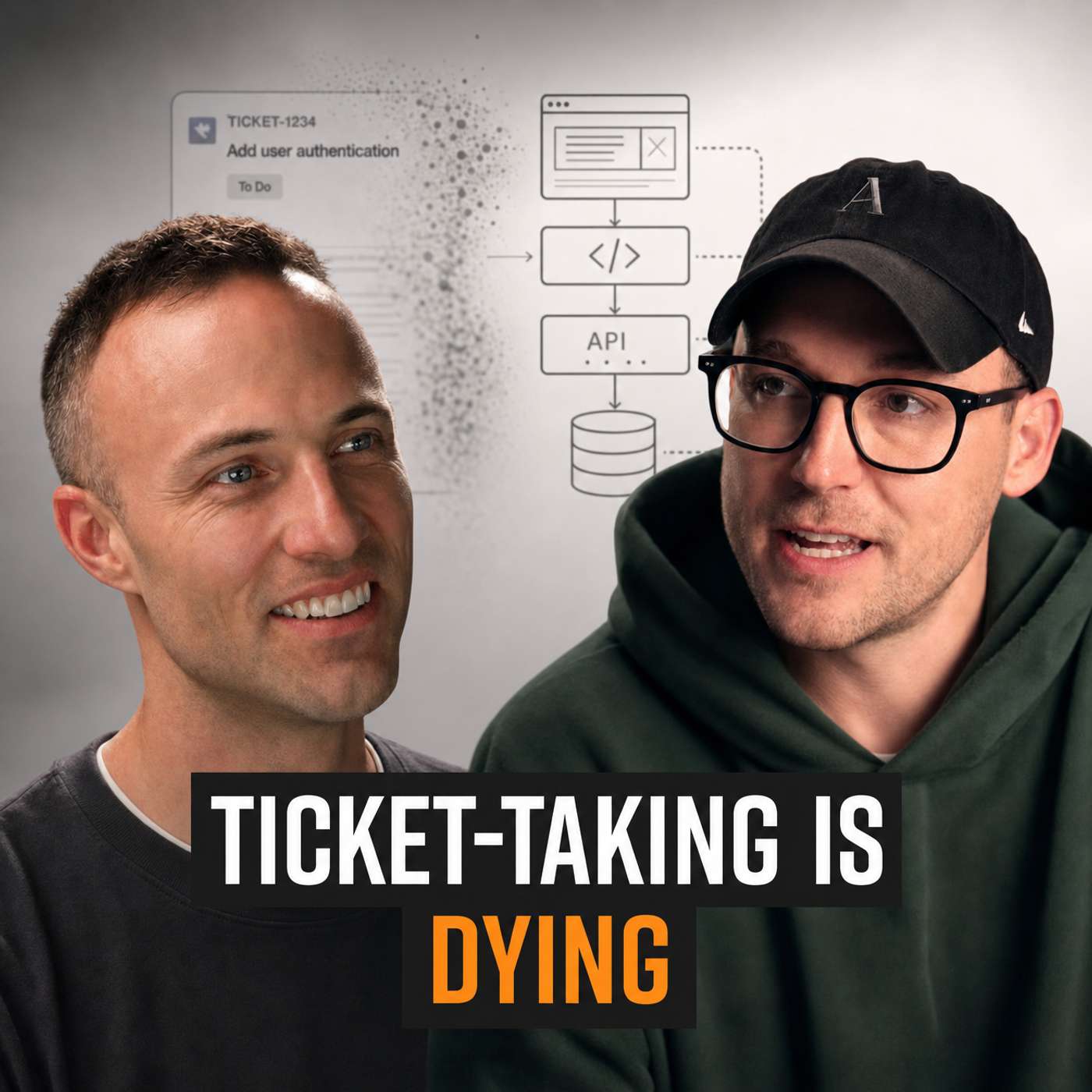
    Kent talks with Aaron D. Francis about product engineering: why ticket-taking implementation is losing ground to agents, what a vertical slice from UI to database really means, and how Aaron’s desktop app Solo came from a painful problem—not a feature spec. They go deep on scratch-your-own-itch products, separating agents from dev stacks, Jobs to Be Done, why users bring you solutions instead of problems, and how empathy (and letting go of “technically correct”) changes what you ship. Aaron builds in public—Laravel roots, education, and now Solo, a terminal multiplexer–style desktop app for organizing agents and dev stacks. This episode is a practical tour of product sense for developers: watching people work, reading support email with empathy, cow paths vs. fences, and why the “right” architecture can still lose if humans go home furious. You’ll hear how Aaron reasons from problem → solution when users ask for worktrees, when to duplicate UI affordances even when the model is “one,” and how introverts can still do discovery by treating outreach like an optimization mission—plus niche opportunities outside the Cursor clone gold rush. Homework When someone asks for a solution (e.g. a feature), slow down and ask what problem they’re really trying to solve—users often lead with implementations. Practice user empathy: imagine someone stressed, trying to finish work; question “technically correct” UX that blames the user instead of protecting them (confirmations, back-button data loss, etc.). If talking to people is hard, reframe discovery as a systematic search (spreadsheet energy, trusted partners, or domain friends)—or pair with someone who loves conversations. Resources Aaron D. Francis — X Jobs to Be Done (Clay Christensen) The Design of Everyday Things (Don Norman) Guest: Aaron D. Francis Company: Solo & Laravel education GitHub: @aarondfrancis 𝕏: @aarondfrancis Host: Kent C. Dodds Website: kentcdodds.com 𝕏: @kentcdodds GitHub: @kentcdodds YouTube: kentcdodds-plus Podcast: epicproduct.engineer See on Epic Product Engineer

    • Transcript
  • #3
    April 1 · 49 min

    Foundations, feedback, and agents — Dillon Mulroy on product at Cloudflare

    Kent talks with Dillon Mulroy, Principal Engineer at Cloudflare, about Agent Experience and dogfooding AI platform work: how Cloudflare closes the loop between builders and customers, why observability and support are product superpowers, and how to stay disciplined when agents tempt you to ship huge diffs overnight. They go deep on watching users work, firehose social feedback, partnering with support, and why “make pain painful” aligns incentives for better software. Dillon’s path runs from internal insurance tools to Vercel Domains to Cloudflare’s agent and dashboard work—always with the same through-line: care about the user, get real feedback, and invest in primitives so delighters don’t collapse under bad foundations. This episode covers metrics and paging as a product habit, learning from customer escalations, scoping small when AI speeds up coding, and building cross-functional relationships (support, sales, finance) as part of engineering judgment. You’ll hear practical parallels with episodes on delighters and onboarding tension, plus why reviewing agent-written code still matters for system intuition when things break at 2 a.m. Homework Try hard and care a lot; more practically, focus on foundations and primitives. Put good feedback systems in place so you know what’s going on with your product and where it doesn’t feel good—alerting and metrics, customer journey signals, or customer interviews. If you have a customer support team, sit with them and watch them triage cases for your product; get to know support—they’re sitting on a gold mine of product signal—and empathize with them like you do with users. Kent’s shorthand for the mindset Dillon agreed with: make pain painful—if your users are hurting, you should feel it too. Resources Cloudflare — Developers Cloudflare Agents Dillon Mulroy — site Dillon Mulroy — GitHub Guest: Dillon Mulroy Company: Cloudflare GitHub: @dmmulroy 𝕏: @dillon_mulroy Host: Kent C. Dodds Website: kentcdodds.com 𝕏: @kentcdodds GitHub: @kentcdodds YouTube: kentcdodds-plus Podcast: epicproduct.engineer See on Epic Product Engineer

    • Transcript
Showing 21–23 of 23 episodes