Skip to content
Artwork for B2BaCEO (with Ashu Garg)
BusinessEntrepreneurshipTechnology

B2BaCEO (with Ashu Garg)

Foundation Capital, Ashu Garg

B2BaCEO is the show about how to scale your enterprise startup and how to grow from founder to CEO. Hosted by Ashu Garg, general partner at Foundation Capital. Subscribe to the newsletter here: https://ashugarg.substack.com/

Play
  • 20 episodes
  • Avg 46 min
  • English
  • #63
    October 28 · 41 min

    Why vertical AI apps will win | Munjal Shah, Co-founder and CEO, Hippocratic AI

    Healthcare has always been built on scarcity. Throughout human history, there have never been enough doctors and nurses to meet demand, so care gets rationed. Today, we’re entering a platform shift as AI pushes the cost of clinical work toward zero. Munjal Shah, co-founder and CEO of Hippocratic AI, joins me to talk about building safe clinical AI agents, why vertical apps will beat one-size-fits-all models, and his biggest lessons as a four-time founder.

  • #62
    September 17 · 31 min

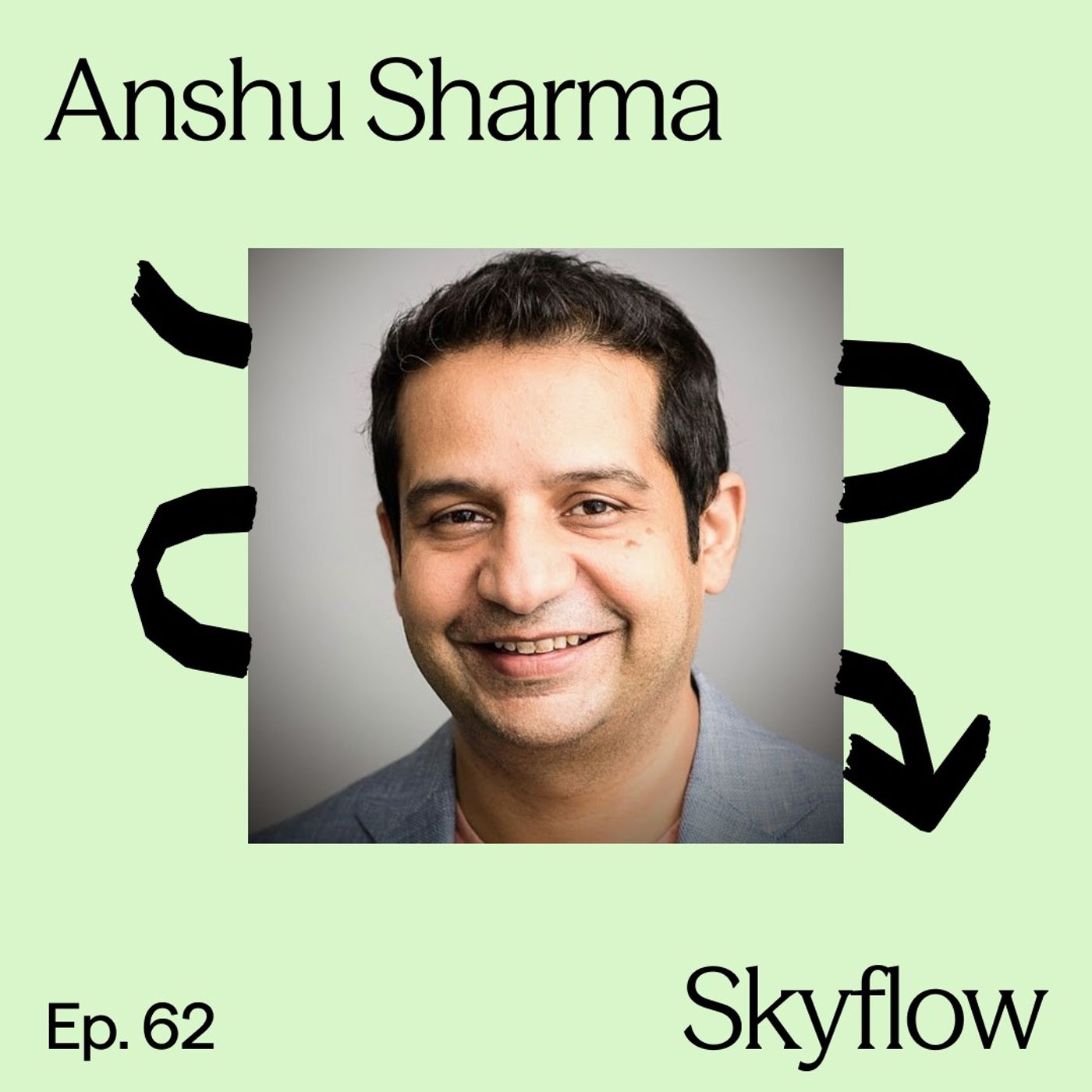
    How to solve AI's security problem | Anshu Sharma, Co-founder & CEO, Skyflow

    AI raises the stakes for security. Protecting data privacy against other humans or predictable software is one thing; with non-deterministic agents in the mix, the challenge grows exponentially. Anshu Sharma, founder and CEO of Skyflow, joins me to talk about securing sensitive customer data across data stores, models, and agents, as well as some of his biggest lessons as a three-time founder.

  • #61
    February 20 · 36 min

    The case for context graphs | Aaron Levie (Co-founder & CEO, Box)

    Aaron Levie has been on the podcast twice before. After we published our context graphs thesis, he wrote a response - so we invited him on to continue the conversation. A context graph is institutional memory for how an organization actually makes decisions: not how the process doc says it should, but how it works in practice. Enterprise software is very good at recording outcomes - the final price, the approved discount, the escalated ticket - but not the reasoning behind them. Which exceptions applied? What precedent mattered? Who approved what, and why? We call these missing records decision traces. Over time, they accumulate into a context graph: a living, queryable map of how an enterprise actually makes decisions, stitched across systems and time so precedent becomes searchable. We think the companies that capture that layer will define the next generation of enterprise software. Aaron read the piece and joined us to push it further. We get into how the services as software opportunity unfolds as agents scale, and what it actually takes to move them out of the sandbox and into production. Chapters: 00:00 Intro: Aaron’s third time on the podcast! 00:43 What is a context graph? 01:35 Aaron’s take: this won’t be zero-sum 04:10 Why systems of record may become more valuable in a world with 100x more agents 05:26 The difference between data and context 06:28 The moat incumbents have: workflow wiring, permissions, access controls 10:35 Which functions are most vulnerable to disruption 15:43 The trillion-dollar greenfield: high headcount, exception-heavy workflows 16:20 Ops as a wedge: RevOps, DevOps, SecOps, and glue work between systems 19:27 How PlayerZero is building context graphs for real engineering workflows 20:48 Is permissioned inference possible? 21:27 “Agents can’t keep secrets”: why access controls are so important 27:45 What Box is building 29:33 Multimodal context: screenshots, audio, and video 32:50 Why vibe coding won’t change the software industry’s power-law 35:03 Aaron’s advice to founders

  • #60
    January 15 · 48 min

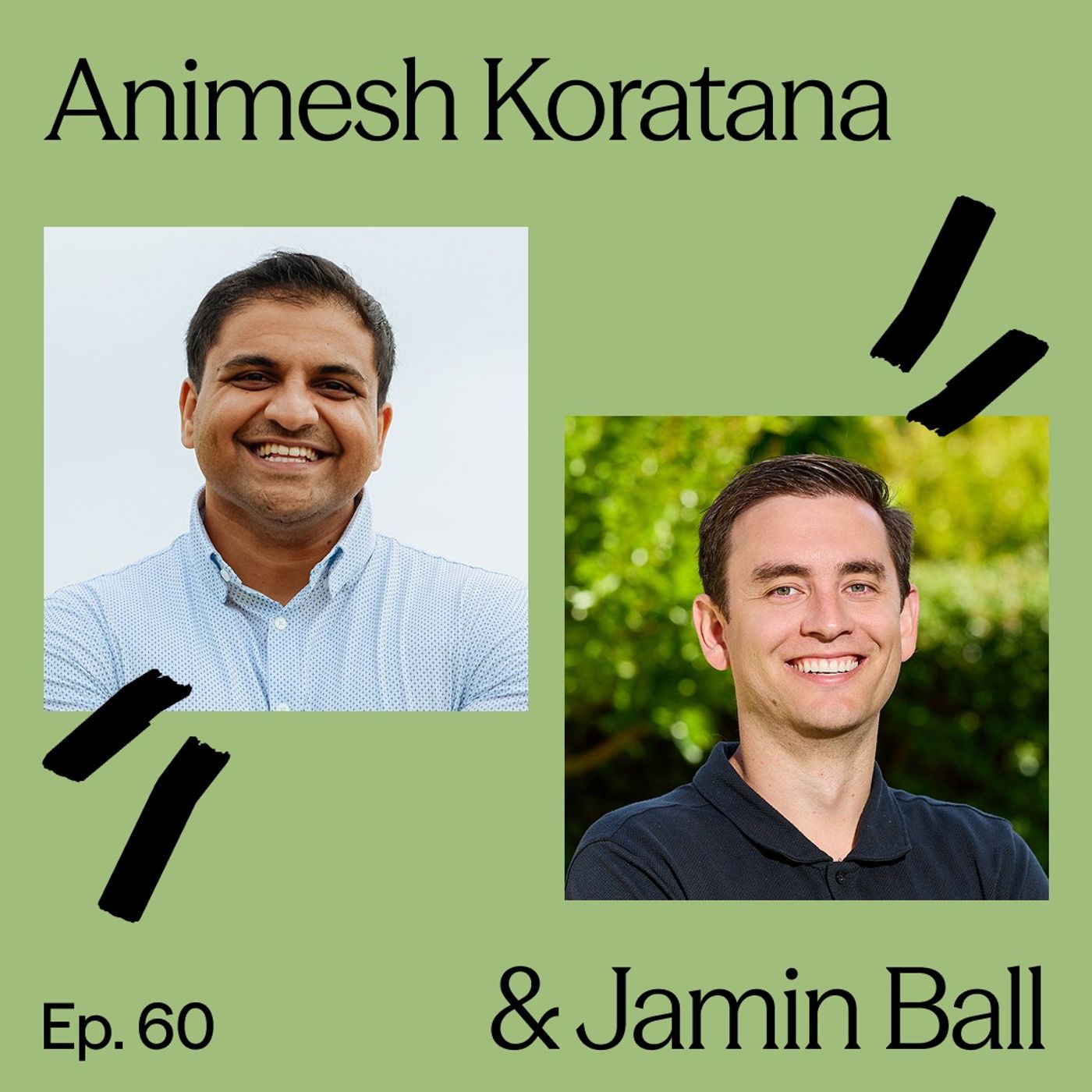
    Why context graphs are the missing layer for AI

    My guests today are Animesh Koratana and Jamin Ball. Animesh is the founder and CEO of our portfolio company PlayerZero, which is building AI production engineers that operate complex enterprise software autonomously - resolving production incidents, catching defects before release, and building durable models of how systems actually behave. Jamin is a partner at Altimeter Capital and the writer behind Clouded Judgement, a Substack where he analyzes emerging trends in enterprise software. Jamin recently sparked a debate with an essay titled “Long Live Systems of Record.” His core argument is that while agents are changing how software is used and where value accrues, they still depend on ground truth. Systems of record won't disappear so much as get pushed down the stack as new agent-native interfaces emerge on top. My partner Jaya and I felt compelled to respond, with Animesh contributing insights based on what he's seeing on the ground as he builds PlayerZero. From our perspective, the missing layer is what happens inside the workflow itself: the judgment, exceptions, and reasoning that agents and humans apply as work gets done. We call these decision traces, and we believe the context graph they form over time will become the most valuable asset for companies building and deploying AI systems. It's a genuine debate - and one that's only going to matter more as agents move from demos to production. Looking forward to keeping the conversation going! Chapters 00:00 Why Jamin’s essay sparked debate 00:35 Jamin’s argument: agents need ground truth 02:00 Animesh on why context graphs matter 07:58 What today's systems of record are missing 08:28 How PlayerZero thinks about context graphs 10:00 How context graphs could change org structures 11:10 How do you capture decisions without making people log everything? 14:35 Which systems of record are most at risk 17:04 Two workflows ripe for disruption: GTM and software development 22:31 Animesh on where context graphs can add most value 28:50 Why context graphs create moats for startups 30:00 Will context graphs be industry-specific or universal? 34:00 Bear case: do context graphs fail like semantic layers? 43:27 2026 predictions: big AI IPOs, world models, enterprise agent adoption 45:00 Hot takes: point solutions die; AI job-loss discourse hits a fever pitch 47:30 Jevons paradox: why agents create more work, not less

  • #59
    Sep 15, 2025 · 1 hr 2 min

    How to Build Artificial Superintelligence | Jonathan Siddharth, Founder & CEO of Turing

    My guest today is Jonathan Siddharth, co-founder and CEO of Turing. Jonathan incubated Turing in Foundation Capital’s Palo Alto office in 2018. Since then, it has grown into a multi-billion dollar company that powers nearly every frontier AI lab: OpenAI, Anthropic, Google, Meta, Microsoft, and others. If you’ve seen a breakthrough in how AI reasons or codes, odds are Turing had a hand in it. Jonathan has a provocative thesis: within three years, every white-collar job, including the CEO’s, will be automated. In this episode, we talk about what it will take to reach artificial superintelligence, why this goal matters, and how the agentic era will fundamentally reshape work. We also dig into his founder journey: what he learned from his first startup Rover, how he built Turing from day one, and how his leadership style has evolved to emphasize speed, intensity, and staying in the details. Jonathan has been at the edge of AI for years, and he has the rare ability to translate what’s happening at the frontier into lessons for builders today. Hope you enjoy the conversation! Chapters: 00:00 Cold open 00:02:06 Jonathan’s backstory: his experience at Stanford 00:06:37 Lessons from Rover 00:08:39 Early Turing: incubation at Foundation Capital and finding PMF 00:13:52 Why Turing took off 00:15:12 Evolving from developer cloud to AGI partner for frontier labs 00:16:49 How coding improved reasoning - and why Turing became essential 00:20:38 Founder lessons: building org speed and intensity 00:23:33 Why work-life balance is a false dichotomy 00:24:17 Daily standups, flat orgs, and Formula One culture 00:25:15 Confrontational energy and Frank Slootman’s influence 00:29:50 Positioning Turing as “Switzerland” in the AI arms race 00:34:32 The four pillars of superintelligence: multimodality, reasoning, tool use, coding 00:37:39 From copilots to agents: the 100x improvement 00:40:00 Why enterprise hasn’t had its “ChatGPT moment” yet 00:43:09 Jonathan’s thoughts on RL gyms, algorithmic techniques, and evals 00:46:32 The blurring line between model providers and AI apps 00:47:35 Why defensibility depends on proprietary data and evals 00:55:20 RL gyms: how enterprises train agents in simulated environments 00:57:39 Underhyped: $30T of white-collar work will be automated

  • #56
    Jan 24, 2025 · 42 min

    How to Solve AI-Powered Search (Arvind Jain, founder and CEO of Glean)

    In this episode, I spoke to Arvind Jain, founder and CEO of Glean. After helping build Google's search infrastructure and co-founding Rubrik (which recently hit $1B in revenue), Arvind launched Glean to solve the problem of enterprise search and help employees enhance their work with AI agents. We discuss his journey as a technical founder, insights on building successful startups, and his perspective on AI's future.

  • #54
    Oct 11, 2024 · 42 min

    How to Adapt and Win in Enterprise Software (Aaron Levie, Co-Founder & CEO of Box)

    Aaron Levie, co-founder and CEO of Box, has guided the cloud content management platform from a dorm room project into a publicly traded company with over $1B in annual revenue. In his second appearance on B2BaCEO, Aaron reflects on his founder journey, sharing how Box capitalized on cloud computing and their recent push to integrate generative AI.

  • #53
    Jul 16, 2024 · 32 min

    How to Build a Company Around Cutting-Edge AI (Srinath Sridhar, Founder of Regie.ai)

    In this episode, I talk with Srinath Sridhar, CEO & Cofounder of Regie.ai, who has always been ahead of the AI curve. Sri and his co-founder Matt Millen started Regie.ai in 2019 with the idea that GPT-3 would transform how all of us write emails. Today, Regie uses AI to automate sales prospecting for the enterprise. The company's Auto-Pilot automates most of the repetitive tasks involved in demand generation, including writing sequences, scheduling calls and responding to emails. Sri knew in

  • #52
    Jun 14, 2024 · 1 hr 7 min

    How to Build a Multi-Billion-Dollar Software Business (Mohit Aron, Founder of Cohesity)

    In this episode, I'm excited to welcome Mohit Aron back to B2BaCEO for the second time. As the founder of Cohesity and co-founder of Nutanix, Mohit is a titan in the world of enterprise GTM and infrastructure software. With two wildly successful companies under his belt, he's a true expert when it comes to building enterprise software businesses from the ground up. In our conversation, Mohit shares his proven frameworks for validating startup ideas. He reveals hard-won lessons from starting Nu

  • #50
    Mar 29, 2024 · 51 min

    How to Win Your First Enterprise Customer (Doug Winter, Founder and CEO at Seismic)

    My guest today is Doug Winter, the founder and CEO of Seismic, a leading enterprise sales enablement platform. Today, Seismic has a team of 1,500 people and nearly $400 million in recurring revenue. We start the conversation with Doug explaining what sales enablement actually means. From there, we turn to the early days of Seismic and unpack Doug’s approach to finding product-market fit, positioning, and targeting enterprise customers from day one. He speaks candidly about the challenges of sca

  • #49
    Dec 22, 2023 · 1 hr 3 min

    How to Shape the Future of AI (Naveen Rao, VP of Generative AI at Databricks)

    My guest this month is Naveen Rao, the co-founder of MosaicML and current head of Generative AI at Databricks. Naveen's journey is unique, as it echoes the evolution of AI itself. He’s best known for founding and selling two successful companies. The first, Nervana, an AI-focused chip company, was acquired by Intel for $400 million in 2016. The second, MosaicML, was acquired by Databricks in June for $1.3 billion. In our conversation, we unpack the insights and frameworks that led Naveen to ma

  • #48
    Nov 17, 2023 · 45 min

    How to Power the AI Boom (Robert Nishihara, Co-Founder & CEO of Anyscale)

    In this episode of B2BaCEO, I speak with Robert Nishihara, co-founder and CEO of Anyscale. Anyscale’s aspiration is to build the fastest, most cost-efficient infrastructure for running LLMs and AI workloads. When it is successful, Anyscale will be to the AI era what Microsoft was for the PC era: the underlying operating system on which all AI applications are developed and run. Anyscale is built on Ray, an open-source compute framework that Robert and his co-founders developed as PhD students a

  • #47
    Sep 15, 2023 · 48 min

    How to Build, Scale, and Sell a Startup (Tracy Young, Co-Founder of TigerEye & PlanGrid)

    My guest this month is Tracy Young, the co-founder and former CEO of PlanGrid, a productivity tool for construction companies. From going through YC and losing a co-founder to cancer, to being acquired by Autodesk for $875 million, Tracy has picked up many valuable lessons that other founders and CEOs can learn from. Our conversation unpacks these lessons, including finding (and keeping!) product-market fit, navigating startup growing pains, showing up effectively to board meetings, and managin

  • #46
    Jun 2, 2023 · 39 min

    How to Deploy AI in Your Company (Matei Zaharia, CTO & Co-Founder of Databricks)

    If you’re not hardcore about AI, then stop the podcast now — because this episode for real technology nerds. Ashu’s guest is Matei Zaharia, CTO and cofounder of Databricks, and a professor of computer science at Stanford University. Ashu and Matei cover a lot of ground — most of it technical, all of it very relevant for anyone who’s serious about building with artificial intelligence. They start with a discussion of Databricks’ early days: how the startup established a foothold in a market do

  • #45
    Apr 26, 2023 · 47 min

    How to Capture the AI Moment (Bobby Yerramilli-Rao, Chief Strategy Officer at Microsoft)

    As everyone listening to this podcast knows, the release of ChatGPT last November ushered in a new age of AI and catalyzed a wave of AI startups. For this episode of B2BaCEO, Ashu goes deep on AI with Bobby Yerramilli-Rao, former serial entrepreneur and investor, and current Chief Strategy Officer at Microsoft. Ashu picks Bobby’s brain on what sectors and problem spaces he thinks are ripe for innovation with AI and what the opportunities for startups are. They then dissect the four layers of t

  • #44
    Dec 16, 2022 · 27 min

    How to Grow in a Bear Market (Beerud Sheth, Co-Founder & CEO of Gupshup)

    Beerud Sheth is the Co-Founder and CEO of Gupshup, a leading platform for cloud messaging. Prior to that he was the cofounder of what is now Upwork, a pioneer of online freelancing and remote work. Beerud took the slow and steady pace to winning the race, building two unicorns over 25 years. On the show, he and Ashu draw from Beerud’s depth of experience and break down how a company can achieve capital-efficient growth in the current economic environment. They also lay out the case for why Ind

Showing 1–20 of 20 episodes