Skip to content
Artwork for Awkward Silences
TechnologyBusiness

Awkward Silences

User Interviews

Welcome to Awkward Silences by User Interviews, where we interview the people who interview people. Listen as we geek out on all things UX research, qualitative data, and the craft of understanding people to build better products and businesses. Hosted by Erin May and Carol Guest, VPs of growth/marketing and product at User Interviews. Take this survey and let us know what topics you want to hear next! userinterviews.com/awkwardsurvey

Play
  • 20 episodes
  • Avg 48 min
  • English
  • #206
    July 1 · 56 min

    #192 - Slowing Things Down to Speed Up Research with Jared Forney of Okta

    Erin May talks with Jared Forney, Research Operations Principal at Okta, about how the role of research and research operations is shifting as AI accelerates product development. Jared explains why scale and rigor do not have to be opposing forces and why teams need to return to their core goals before adding new tools. Jared dives into how he builds trust across legal, product, and design teams and why that trust becomes the capital you spend when driving big change. He shares why automating more work actually concentrates human attention rather than removing it, how he approaches knowledge management and orchestration across many data sources, and why written communication and technical skills now matter more than ever. Jared also answers audience questions on governance, getting buy in for research ops, working faster under compressed timelines, AI guard rails, and breaking into the field. Highlights 02:13 Upskilling for scale and rigor 04:33 Balancing speed with research quality 14:50 Where humans fit in AI workflows 25:00 Rethinking knowledge management and MCP 32:00 Best tactic for getting governance buy-in 41:35 Enabling faster research under pressure About Our Guest Jared is a Research Operations Principal based in the San Francisco Bay Area with 8+ years building research infrastructure from the ground up. His work sits at the intersection of governance, tooling, and enablement: building systems that help research teams move faster while keeping data practices sound. He's led repository migrations, developed AI governance frameworks, consolidated tooling ecosystems, and spoken at industry conferences about how operations can amplify — not constrain — great research. Connect with Jared on LinkedIn! Resources The Blueprint for Evaluating AI Across the Research Pipeline The State of Research Operation 2026 State of Synthetic Users Report AI in Research Risk Cascade

  • #204
    June 9 · 49 min

    #191 - Throwback: UX Lessons from a Decade Researching AI with Jess Holbrook of Microsoft

    This week we're revisiting one of Awkward Silences' most memorable episodes. Much of the conversation around AI in UX involves how it will shape and change researchers' work. This episodes's guest, Jess Holbrook, who leads UX research for Microsoft AI, thinks a lot about how this technology can be improved with design and UX best practices. Jess has spent over a decade working on the UX of AI at companies like Meta and Google. He's also helped develop foundational principles for the ethical use of LLMs. Jess joined Erin and Ben to reframe the AI conversation, focusing on how UXRs can and should adapt, what working on these systems has taught him about the UX discipline, and his philosophy for building teams that are ready to take on the innovative challenges of tomorrow. Jess's recommendations: Matt Webb, Maggie Appleton, and the Pessimists Archive Newsletter. Highlights 07:15 Human-Centered AI Evolution 17:53 Evolving AI Forecast Strategies 24:04 Diverse AI Team Building 33:27 Navigating Responsible AI Challenges 37:01 Qualitative Analysis with AI Tools 40:15 Optimism and Concerns About AI About Jess Senior Director of Research specializing in human-centered AI. Early stage investor in AI, AI hardware ecosystems, climate, and anything that seems like the world would be better with it in it. Currently leading UX research for Microsoft AI. Previously led the Generative AI team and supported all UX functions for the Responsible AI and data transparency teams at Meta. I also served on the Board of Forging Youth Resilience, a nonprofit that empowers young people to build physical and mental strength for life by providing access to a national network of community-based fitness programs and mentorship. Resources The AI in UX Research Report 20+ Tools for Every Research Phase Using AI in UX: A Day-in-the-Life

  • #205
    May 26 · 39 min

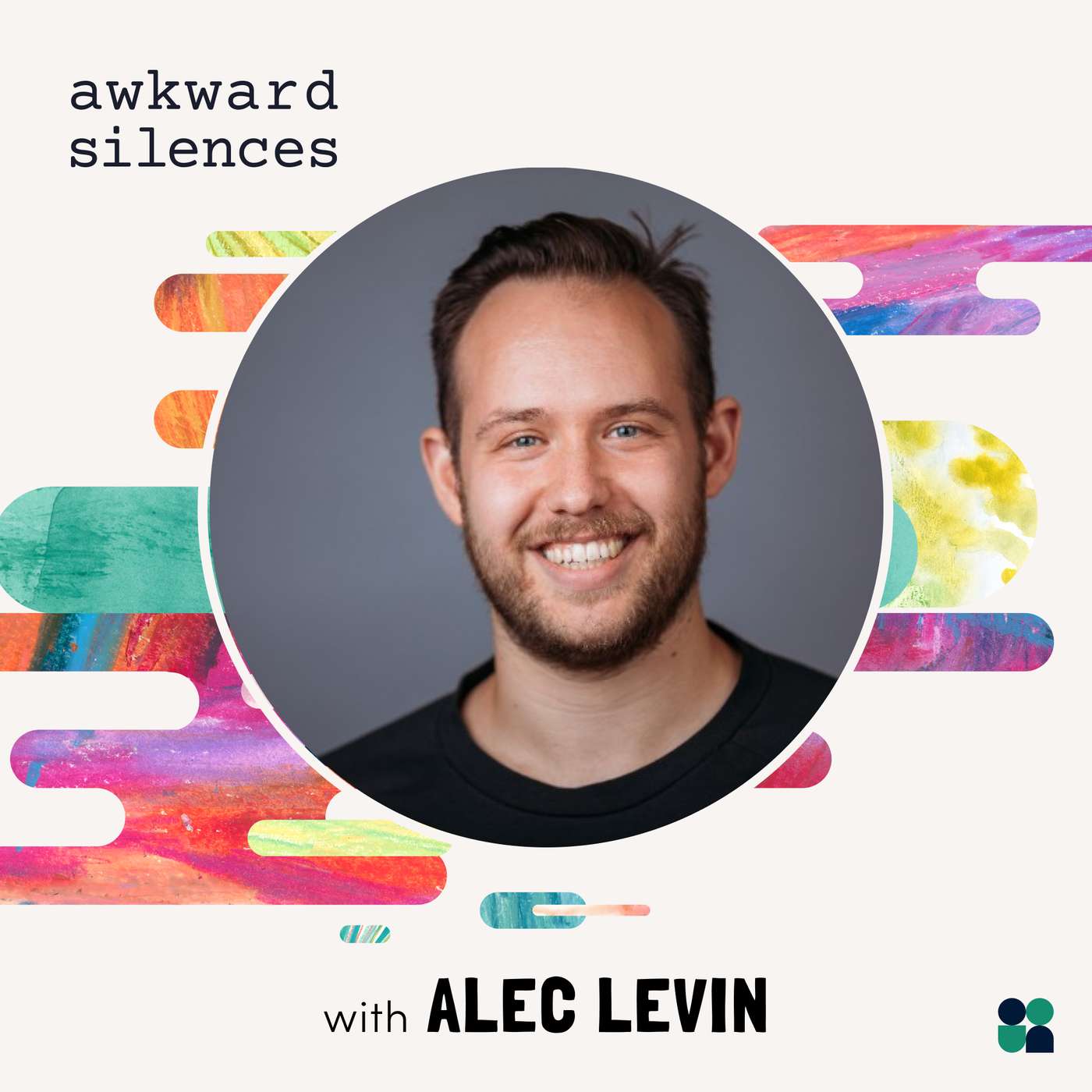
    #190 - How to Navigate the Constant Change in UX Research with Learners CEO Alec Levin

    Erin May sits down with Alec Levin, CEO and Co-Founder of Learners, to explore how researchers can navigate the rapid changes reshaping their field. Alec shares his vision for how AI and automation are creating unprecedented opportunities for research teams willing to step up and lead. Alec argues that while AI can handle routine tasks like usability testing and surveys, researchers have a chance to focus on higher-value discovery work that includes prototyping and coding. He emphasizes that this is a critical moment for researchers to define their own future rather than letting executives decide their role. The conversation covers practical examples of AI-powered research workflows, the importance of cross-functional collaboration, and why researchers need to be more proactive in pitching their vision internally. Highlights 03:40 Balance sheeting thinking for change 06:15 Connecting researchers through community 13:11 Discovery research importance 15:02 Vision needed for researcher evolution 24:08 Automated research workflows emerging 31:16 Human elements AI can't replace Resources AI for User Research 101 Workshop What is the New AI in Research Risk Cascade? Assessing the ROI of AI in UX Research Webinar AI Context Engineering for Research Course

  • #202
    May 12 · 47 min

    #189 - Throwback: Quantifying Research Impact with Ruby Pryor of Rex

    This week we're revisiting one of Awkward Silences' most memorable episodes. This episode welcomed Ruby Pryor, founder of Rex, a consulting firm specializing in UX research and strategic design. This episode gets into what it means to demonstrate the "business value" of one's work, specifically how researchers can and should quantify their impact in terms that are tangible to the company. Ruby shared ways to score early wins, build momentum, and overcome communication frictions to find shared value. Episode Highlights 03:14 - UX researcher impact: insights, optimization, prioritization, strategy 09:14 - Understanding organizational structures and strategy development collaboration 20:22 - Challenge of quantifying impact and strategic level 21:33 - Measuring strategy impact: challenges and indicators 30:04 - Prioritizing investments based on strong market indicators 38:51 - Stakeholders prioritize growth, revenue, and cost reduction About Our Guest Ruby Pryor is the founder of Rex, a service design and UX research consulting firm. Her previous roles include UX research at Grab, strategic design at Boston Consulting Group and management consulting at Nous Group. She has taught courses on increasing the impact of UX to learners from 5 continents and has spoken about design and UX at conferences in Asia and Europe. Resources on UX Research Impact How to Track the Impact of Your UX Research Leading an Impactful User Research Team Use Stakeholder Interviews to Drive Impact

  • #203
    April 28 · 49 min

    #188 - Why AI Can't Replace Qualitative Research with Sam Ladner of Workday

    Erin May sits down with Sam Ladner, Senior Principal Researcher of Strategy at Workday, to explore the evolving role of AI in qualitative research. Sam brings a refreshingly balanced perspective on where AI can genuinely help researchers and where it fundamentally cannot replace human insight. Sam explains how AI has transformed labor-intensive tasks like transcription and closed coding, freeing researchers to focus on the deeper work of sense-making and understanding outliers. She emphasizes that while AI excels at mathematical correlation hunting, qualitative research is about unriddling complex human experiences that require thinking, feeling, and imagination. The conversation covers practical applications like using MAXQDA for AI-assisted coding, the importance of explaining every outlier in qualitative work, and why emotional storytelling must remain exclusively human territory. Highlights 03:09 Why machines can't replace human sense-making 08:47 Human moments AI cannot understand 12:00 Explaining outliers in qualitative coding 16:27 Building effective coding systems for AI 21:33 Getting AI to do closed coding properly 29:26 When to use AI for low stakes research 37:23 AI cannot substitute for qualitative research About Sam Sam Ladner (she/her) is a sociologist who helps teams innovate, design, and learn. She is the author of Practical Ethnography: A Guide to Doing Ethnography in The Private Sector and Mixed Methods: A Short Guide to Applied Mixed Methods Research. She has worked on dozens of advanced software projects at Microsoft, Amazon, and most recently Workday, where she worked as a Senior Principal Researcher studying the future of work. She is now an independent researcher and consultant, writing her third book, tentatively titled Practical Foresight: Strategic Foresight in Applied Settings. She received her PhD in sociology from York University and lives in Toronto, Ontario, Canada. Resources Practical Ethnography: A Guide to Doing Ethnography in The Private Sector Mixed Methods: A Short Guide to Applied Mixed Methods Research Qual vs Quant vs Mixed-Methods Field Guide Qualitative Sample Size Calculator

  • #200
    April 14 · 40 min

    #187 - Throwback: Harnessing AI For Better Insights with George Whitfield of MIT and Google

    This week we're revisiting one of Awkward Silences' most memorable episodes. This episode welcomed George Whitfield, an expert in applying AI to the analysis of qualitative data. George discussed the intricate challenges of leveraging language models to interpret expansive open-ended data (like interview transcripts), and emphasized the importance of context and not just keyword or topic identification. Episode Highlights 03:48 - Innovating consumer insights using AI 12:21 - Importance of human involvement in AI tools 20:04 - Enhance discussion sections with AI tools 26:50 - AI-inspired insights provide inspiration, not guidance 34:12 - Interpretation beyond analyzing transcripts 36:46 - Applying engineering rigor to the process of building a business About Our Guest George Whitfield is an Entrepreneur-in-Residence at the Martin Trust Center for MIT Entrepreneurship, Lecturer at the MIT Sloan School of Management, and Software Engineer at Google. George holds 4 patents and has 3 degrees from MIT including a Bachelors in Electrical Engineering and Computer Science and a Masters and Ph.D. in Materials Science and Engineering. Resources on Qual Data and AI Our AI in UX Report shares findings from a survey of over 1,000 researchers What does it mean to "code" qualitative data? This breakdown explains it all. Interested in trying an AI tool for your analysis? Here are 20 worth considering.

  • #201
    March 31 · 42 min

    #186 - Positioning Your Portfolio for AI Skills with Aneta Kmiecik of Be Your Own Design Team

    Erin May sits down with Aneta Kmiecik, founder of Be Your Own Design Team, to tackle one of the biggest questions facing designers today: how to position AI skills in portfolios and resumes. With 15 years in creative industries and a community of 200,000 followers, Aneta brings unique insights into navigating career strategy during this AI transformation. Aneta reveals her Past Present Future framework for career positioning and explains why most companies aren't explicitly requiring AI skills yet, but smart candidates should still showcase them strategically. She discusses the three designer archetypes emerging at AI native companies and shares practical advice on standing out when AI can generate portfolios and case studies for everyone. CHAPTERS 00:00 Intro 04:06 AI Skills in Job Descriptions Reality Check 06:52 Research Strategy for AI Portfolio Positioning 14:23 Audience Context Determines AI Skill Positioning 17:49 Past Present Future Portfolio Framework 27:10 Common Portfolio Mistakes in AI Era 35:46 Future of AI Skills in Applications 38:39 Favorite Research Interview Techniques RESOURCES Lenny’s Podcast featuring Jenny Wen, Design Lead for Claude - https://www.youtube.com/watch?v=eh8bcBIAAFo 2024 AI in User Research Report - https://www.userinterviews.com/ai-in-ux-research-report CONNECT WITH ANETA KMIECIK: - LinkedIn: Aneta Kmiecik - Instagram: @ux.aneta - Newsletter: Be Your Own Design Team - Portfolio Course: uxportfolio.co

  • #199
    March 17 · 52 min

    #185 - How to Use AI Without Losing Your Research Soul with Nikki Anderson of Drop in Research

    Ben Wiedmaier sits down with user research consultant Nikki Anderson to explore how researchers can stay relevant when budgets are tight and stakeholders are stressed. Nikki runs Drop in Research where she helps teams conduct research, facilitate better meetings, and build research practices from the ground up. She shares how companies are increasingly coming to her with validation requests rather than discovery work, driven by pressure to ship fast and hit numbers. The conversation reveals practical strategies for mixed methods research, using facilitation to drive action from insights, and leveraging AI tools without compromising research quality. Nikki explains why she creates forcing functions to slow stakeholders down when they want to rush into AI features without understanding the problem. She advocates for parallel convergent research design where surveys, interviews, and secondary research happen simultaneously to deliver insights faster. The discussion covers why synthesis remains a bridge too far for AI, how to turn research presentations into collaborative workshops, and specific ways researchers can demonstrate value through facilitation skills. Highlights 00:00 Intro 05:20 Mixed Methods and Data Triangulation 10:07 Finding Small Tests When Teams Won't Wait 14:46 Stakeholder Stress Driving Validation Requests 23:30 Facilitation as Core Research Skill 40:03 Using AI for Research Planning 45:39 Demonstrating AI Skills to Stakeholders Resources - AI for User Research 101 Course - 30+ Tools for every phase of UX Research - AI Context Engineering for Research Course

  • #198
    March 3 · 39 min

    #184 - Use Context For More Influence with Kristen DeLap of Econify

    Ben talks with Kristen DeLap, fractional COO at Econify, to explore how UX'ers can build influence without formal authority. Kristen brings a unique perspective, having evolved from interior design to leading product teams at Herman Miller and now working as an operations executive. She shares practical strategies for understanding decision-making processes, translating design work into business impact, and creating the conditions where teams do their best work. They also cover essential skills for today's design professionals, including decision literacy, stakeholder translation, and the art of challenging assumptions diplomatically. Kristen emphasizes that while AI can generate design artifacts, it cannot create alignment across teams or orchestrate complex organizational dynamics. She offers concrete tactics like using customer stories to explain roadmaps, minimizing big presentation moments in favor of ongoing stakeholder engagement, and treating colleagues like users to better understand their motivations and constraints. Highlights 11:08 Design Skills That Can't Be Replaced by AI 15:56 Decision Literacy in Organizations 21:42 Surprising Realities of Leadership Meetings 24:36 Building Influence Without Organizational Power 29:01 Storytelling via Roadmaps Exercise 35:47 What Trade Off Are You Most Uncomfortable Making Resources A Framework for Decision-Driven Research Using Research Roadshows for Influence The UX Designer's Guide to Research

    • Transcript
  • #197
    February 17 · 48 min

    #183 - The Best Ways to Use AI in UX Research with Laura Klein of NN/g

    Erin and Ben chat with Laura Klein, Principal Experience Specialist at Nielsen Norman Group, about the practical realities of AI in user research. Laura teaches a class on AI for researchers and brings a refreshingly balanced perspective to cut through the hype. She explains why those "five simple prompts that will change your life" are mostly nonsense and shares where AI actually works well versus where researchers need to proceed with extreme caution. Laura also shares her green, yellow, and red light framework for AI adoption. She champions AI for tasks like transcription and meta-analysis of old research data, while warning against using it for synthesis and insights generation without serious human oversight. The conversation explores how AI can help teams move faster without sacrificing quality, the importance of collaborative analysis sessions, and why junior researchers need extra guidance when using these tools. This episode offers practical guidance for any researcher trying to separate AI reality from the marketing promises flooding their inbox. Highlights 07:07 Green light, yellow light, red light framework 11:59 Framework for deciding when to use AI 21:06 Will AI change the researcher role 31:23 Focus on what AI makes possible 35:17 Skills for advocating against AI hype 42:07 AI makes things that look like insights Resources Laura's NN/g AI Course The AI in UX Research Report Using AI Moderation for Research

    • Transcript
  • #196
    February 3 · 40 min

    #182 - The Future of Research (In a Moment of Change)

    Ben sits down with Basel Fakhoury, CEO and Co-founder of User Interviews, and Baran Erkel, Chief Strategy Officer at UserTesting, for a conversation about the research industry's evolution. With AI reshaping customer behaviors and business decisions, both executives emphasize how the need for customer insights has never been greater, even as budget pressures mount across organizations. Basek and Baran share frameworks for executive decision making, explore how AI tools are moving beyond simply replacing human moderators toward creating entirely new research methodologies, and stress that as AI transforms products and experiences over the next few years, customer insights will be fundamental to shaping organizational cultures that keep customers at the center. Highlights 05:15 How research influences corporate strategy 12:25 Building effective decision making cultures 19:07 Data formats that drive executive decisions 26:28 AI everywhere in research tooling landscape 29:30 Consolidating insights across teams and tools 36:45 Customer centric approach during acquisition integration Resources Read more about the acquisition The State of User Research Report Visual Design for Research Workshop

    • Transcript
  • #195
    January 20 · 51 min

    #181 - Why We Need Design Now More Than Ever with Karl Randay of 383

    Ben Wiedmaier sits with Karl Randay, Experience Director at 383, to explore how designers can stay relevant in an increasingly automated world. Karl shares insights from working with major brands like Hilton and Jaguar on digital innovation projects that blend strategy, research, and rapid prototyping. They also talk about the "beige-ification" of design, where templated systems and AI tools risk creating homogeneous experiences across brands. Karl explains how his team uses AI as a research copilot while maintaining human craft and creativity. He also breaks down the skills modern designers need beyond visual craft, including business acumen, stakeholder communication, and the ability to translate design impact into executive language. Highlights 06:26 Design challenges across multiple touchpoints 19:04 Simple questions unlock stakeholder priorities 25:31 Multi-skilled designers beyond specialization 32:23 Career growth through T-shaped skill development 36:53 The beige-ification of modern design 42:44 AI as creative exploration partner Resources Designer's Guide to UX Research The 4 Steps to Redesigning Sites Connecting Research & Design Leadership

    • Transcript
  • #194
    January 6 · 55 min

    #180 - What to Fix in '26 with Maria Rosala of NN/g & John Whalen of Brilliant Experience

    Ben is joined by Maria Rosala from Nielsen Norman Group and John Whalen from Brilliant Experience to wrap up 2025 and make some predictions for 2026. Maria and John share practical insights on everything from AI moderation tools to synthetic users, offering a balanced view of where these technologies excel and where human researchers remain irreplaceable. Maria and John also dig into the democratization of research across product teams, the importance of governance and strategy when implementing AI tools, and how researchers can position themselves as orchestrators of both human and artificial intelligence. Highlights 08:22 AI tools creating pressure for faster delivery 17:18 Governance and oversight for AI implementation 24:55 Composite and synthetic users explained 41:56 Hiring advice for new researchers 44:27 Demonstrating AI proficiency in job applications 49:25 Research industry predictions for 2026 Resources Research Wrapped 2025 The State of User Research Ultimate UX Jobs Board

    • Transcript
  • #193
    Dec 22, 2025 · 55 min

    #179 - The Future of Research Operations with Kate Towsey LIVE

    Erin May sits down with Kate Towsey, founder of Cha Cha Club and author of Research That Scales, for Research Ops Appreciation Week. Kate shares insights from producing an audio documentary series on the future of research ops, including her fascinating experience co-creating content with AI. She reveals how research ops teams are increasingly surviving layoffs while research teams are cut, explaining that ops professionals focus on unblocking systems and delivering measurable business value rather than gatekeeping processes. Kate emphasizes the critical shift happening in research ops from administrative firefighting to strategic systems design. She discusses the importance of discovery over knee-jerk solutions when building research ops from scratch, advocating for focused problem-solving rather than generic panel and library building. The conversation covers the newly released research ops career ladder, the growing need for strategy skills in the field, and how to effectively communicate value to executives by aligning with existing business priorities and measuring concrete outcomes. Highlights 03:54 Bringing past skills to research ops 17:45 AI context and memory limitations 26:37 Future vision for strategic research positioning 36:28 Quality governance in AI era 44:21 Strategy skills gap in research teams 50:27 Translating research value to executives Resources Strategy References Kate's Masterclass Research That Scales (Book) Kate's Substack The ResearchOps Review

    • Transcript
  • #192
    Dec 9, 2025 · 47 min

    #178 - How to Measure What Matters with Lyndsi Lee of Turnitin

    Ben talks with Lyndsi Lee, UX Manager at Turnitin, about moving beyond traditional metrics like NPS and CSAT to measure user experiences more effectively. The conversation centers on outcome-based assessment, a framework that breaks user experiences into atomic outcomes. Rather than asking broad satisfaction questions, this approach focuses on specific user goals like "users can complete repetitive tasks without friction." Lyndsi explains how teams can identify these outcomes through existing research and customer feedback, then prioritize them using methods like card sorting with actual users. The framework helps product teams move away from vague directives and toward specific, measurable improvements that directly impact user success. This episode offers practical guidance for researchers and product teams struggling to demonstrate impact beyond traditional satisfaction scores. Amazon Prime article Highlights 13:49 Complicated Opinion on NPS and CSAT 18:51 Outcome Based Assessment Framework 27:36 Getting Strategic with Stakeholder Buy-in 32:00 Traffic Light System for Stakeholders 38:57 Revisiting Outcome Statements Timeline 41:40 AI's Role in Quantitative Research About Lyndsi Lyndsi is a Senior Manager of UX Research at Turnitin, where she leads efforts to make the student and educator experience more meaningful, measurable, and user-centered. She started her career in public education as a school counselor and School Psychological Examiner, working alongside educators to support students’ learning needs. Eventually, she found her way into UX research, where she combined her love of psychology, education, and technology. Lyndsi is passionate about helping teams stay focused on what truly matters to users, and firmly believes that good research is part art, part science, and part really well-organized sticky notes. Resources Defining UX Success Metrics UX ROI Calculator Getting Started with Analytics

    • Transcript
  • #191
    Nov 25, 2025 · 52 min

    #177 - From Informing to Influencing with Shalin Pei & Natalie Golub of Coinbase

    Ben is joined by Shalin Pei, Head of Design and Research and Natalie Golub, Head of UXR , both from Coinbase's Base product. Base is part of the crypto space, functioning as a network that offers secure and low cost ways to build decentralized apps, essentially helping create what they call the new internet. The conversation reveals how their small but mighty teams operate in one of the fastest moving industries. Shalin and Natalie share how they've weaved internal stakeholders with customers, played with their structure to maximize visibility and effectiveness, and enabled partners to get more involved. It's a practical conversation on the value of experimentation, cooperation, and building influence. Highlights 14:00 Overcoming Impostor Syndrome in New Industries 25:37 Embedded Research in Live Design Sprints 32:33 The Power of Cross-Functional Collaboration 36:21 Documentation Challenges in Fast-Moving Industries 40:39 Partner-Led Research Methodology 43:33 Future of AI in Design and Research Resources The Designer's Guide to Research Aligning Research for More ROI Effective Product <> Research Collaboration

    • Transcript
  • #190
    Nov 11, 2025 · 36 min

    #176 - Building a Research Program from the Ground Up ft. Microsoft Azure Data

    Erin is joined by Samira Jain, Serena Hillman, and Jackie Ianni from Microsoft Azure Data to discuss how they built the Swift Research Lab over the past two years. The team shares their systematic five-step approach for creating research programs that result in stakeholder satisfaction while delivering insights every 1.5 weeks. The Azure Data team also break down their method for fostering relationships, building infrastructure and templates, measuring success, and continuously iterating. The discussion reveals how clear branding, stakeholder collaboration, and systematic infrastructure helped them action on high priority research requests while spotting cross cutting insights across Microsoft's product ecosystem. About Our Guests Dr. Serena Hillman is a Principal UX Research Manager in Azure Data at Microsoft. Her work focuses on Human-Data and Human-AI-Data Interaction, leading a team that explores how people engage with data and intelligent systems. She has studied user behavior across domains like video games, e-commerce, edTech, and enterprise cloud tools, and has published 40+ peer-reviewed papers presented at leading conferences and organizations including CHI, CSCW, Grace Hopper, Yahoo!, and Google. Samira Jain is a Senior UX Researcher on the Azure Data UX Team, where she has been for over five years. She leads SWIFT, a cross-team research program, which encompasses several key initiatives. With a foundation in product design, she brings dual fluency to her research practice—understanding why things matter from a user perspective and how they can be shaped from a design perspective. With extensive experience in both non-profit and enterprise research, Samira is dedicated to enhancing experiences for data professionals. Jackie Ianni is a UX Researcher on the Azure Data team at Microsoft, specializing in rapid evaluative and programmatic research. Before joining Microsoft, she worked as a researcher at both an agency and in-house, conducting global financial services research. Jackie is passionate about advancing UX research practice, exploring AI tools, and sparking conversations about the evolving role of research. Highlights 05:47 Five Step Program Development Method 09:02 Building Stakeholder Relationships 15:39 Continuously Improving Research Programs 18:37 Cross Product Insights and Breaking Silos 23:24 Collaborative Team Success Formula 33:58 AI Tools in Heuristic Reviews Resources Building a UX Research Team from Scratch Create Long Term Impact with Strong Relationships The Ultimate Guide to UX Research Strategy

    • Transcript
  • #189
    Oct 28, 2025 · 50 min

    #175 - The Scourge of Wasted Research with Jake Burghardt of Integrating Research

    Ben sits down with Jake Burghardt from Integrating Research to discuss his new book Stop Wasting Research and how organizations can maximize the product impact of their customer insights. Jake breaks down the critical problem of research waste, where valuable insights from studies get left behind instead of informing future decisions and planning cycles. Jake introduces his framework of three root causes driving research waste: preparation, motivation, and integration. He emphasizes practical solutions like creating insight summaries with stakeholders, building cross-silo research communities, and establishing recurring touchpoints beyond traditional study deliverables. The conversation covers actionable strategies for researchers at all levels, from individual contributors looking to extend their impact to research leaders building organizational initiatives that elevate research as a collective stakeholder voice. Highlights 08:15 Defining research waste and value 14:48 Identifying research waste in organizations 21:36 Breaking down research silos 30:21 Creating insight summary statements 37:38 Integration and recurring stakeholder touchpoints 42:52 Building research initiatives not individual efforts Resources Conducting Better Stakeholder Interviews The 2025 State of Research Strategy Report The Research ROI & Impact Calculator

    • Transcript
  • #188
    Oct 23, 2025 · 50 min

    # 174 - Qualitative Research's Enduring Impact with Nancy Baum of C+R Research LIVE

    The popularity of AI moderation tools, increased attention on "big" data sets (and streams), and the ongoing uncertainty in the research job market have (understandably) led some to wonder about the future of qualitative research. Our guest today, however, is bullish, and explains why. Nancy Baum leads the qualitative research practice at C+R Research. She has nearly 20 years' experience in the field, exposing her to many ebbs and flows. Nancy believes that qualitative practitioners are vital to sifting through the mounds of data, information, and competing interests flooding many companies' attention. Focusing on and uncovering the "Why?" and "How?" still matters today. Listen to learn ways to advocate for qual research, what Nancy thinks of AI-moderation, and how she's developing new researchers. Highlights 09:19 How stakeholders misunderstand qualitative research 22:46 AI moderation complements quantitative surveys 32:32 Customizing deliverables for stakeholder impact 41:09 Flexibility navigates unpredictable human conversations 47:49 Deep listening trumps active listening 50:26 Early stakeholder conversations secure research value Resources Try our qualitative sample size calculator The best qualitative research tools in 2025 Qual vs. quant vs. mixed method approaches

    • Transcript
  • #187
    Oct 14, 2025 · 54 min

    Research Ops 2.0, Episode 5: The People of ResearchOps

    In just ten years, ResearchOps has transformed from an obscure Silicon Valley speciality into a vibrant global profession. Despite economic headwinds, ResearchOps roles are emerging across industries far beyond tech, and the field is evolving at breathtaking speed. But where have we come from, and where are we going? In this five-part audio documentary, we’re exploring the past, present, and future of ResearchOps—and it’s exciting, fascinating, and, at times, pretty mindblowing stuff! Each episode features the voices of Cha Cha Club members, senior research leaders, and the smart minds behind User Interviews. In this fifth and final—”awwww”, we hear you say—episode of ResearchOps 2.0, we’re turning the spotlight on the people of ResearchOps: the curious minds, problem-solvers, and system-builders who’ve made this profession what it is today. We’ll explore who they are, where they’ve come from, and what drives them to transform how organisations learn from their users. If you’re a ResearchOps professional, this episode will make you feel seen and heard. If you’re a leader looking to hire a ResearchOps role, this episode will help you think differently about who might hire. And if you’re looking to transition into a ResearchOps career, this episode will give you a great sense of the skills you need and the incredible profession you’ll become a part of.

    • Transcript
Showing 1–20 of 20 episodes