Skip to content
Artwork for Animals with Aimee
Kids & FamilyPets & AnimalsEducation for Kids

Animals with Aimee

Animals with Aimee

Welcome to Animals with Aimee! 🦁🔬

Are you looking for high-quality, screen-free entertainment that your kids will actually beg for? Animals with Aimee is a fun, fact-filled science podcast designed to turn everyday car rides, afternoon quiet times, and homeschool lessons into wild, scientific adventures!

Hosted by Aimee, each bite-sized episode introduces junior biologists to the most fascinating creatures on Earth. From calculating the physics of an Archerfish’s water pistol to exploring the microscopic survival skills of the Tardigrade, we break down complex concepts like biology, physics, and ecology into kid-friendly lessons.

Perfect for:

Parents seeking engaging, guilt-free entertainment that replaces screen time with active learning.

Homeschooling Families looking for fun, NGSS-aligned elementary science content.

Teachers who want exciting audio lessons for their classrooms.

Keep the Adventure Going!
The fun doesn't stop when the audio ends. Visit animalswithaimee.com to join the Animal Lovers Club. Members unlock a vault of premium educational resources, including:

🖨️ Daily printable companion worksheets, coloring pages, and quizzes

🎧 100% ad-free listening

🎉 Exclusive on-air birthday shout-outs

Remember, animals are special—just like you! Grab your gear, hit play, and let's start exploring! 💚

Play
  • 22 episodes
  • daily
  • Avg 8 min
  • English

Support the show

Goes straight to the publisher. podnod takes nothing.

Counted on this page — what you have heard stays on this device, so it is not something the list can be paged by.
  • #55
    Today · 8 min

    Mudskipper: The Fin Walker

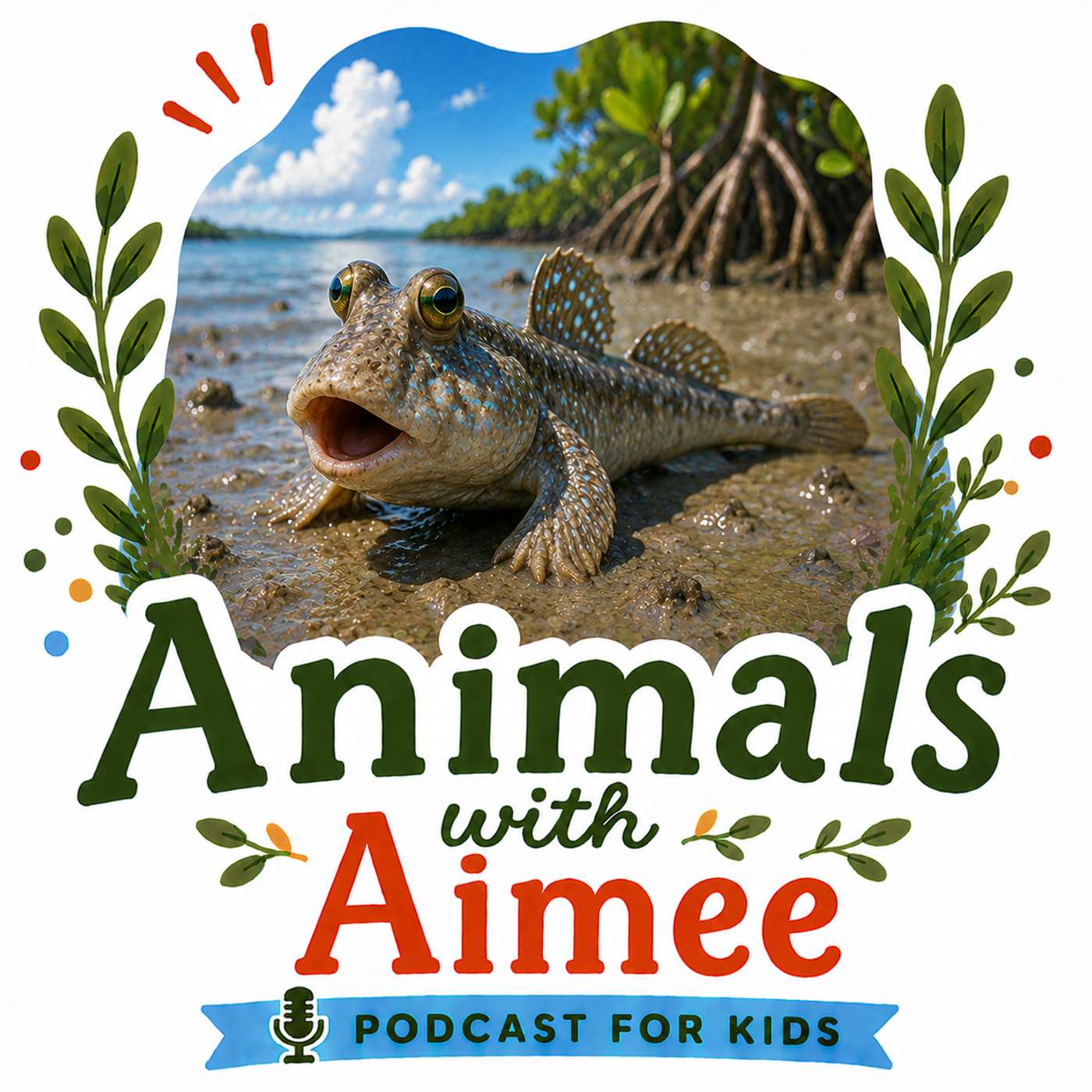
    Mudskipper: The Fin Walker! 🐟 | Animals with Aimee Grab your mud boots, explorers—today Aimee is diving (or rather, skipping!) into the muddy, murky world of one of the most unique creatures on Earth: the incredible Mudskipper! Have you ever heard of a fish that can walk on land, climb trees, and breathe air? 🌳 These truly amphibious fish spend up to 90% of their daily lives out of the water, using their strong, muscular pectoral fins like arms to crawl and skip across the mud in a move called "crutching"! In this episode, we explore how they carry trapped water in their gill chambers like reverse scuba tanks, why they roll their periscope-like eyes into water-filled cups to keep them wet, and how they dig deep underground burrows using their mouths like little shovels! 🤿👀 Plus, put on your thinking caps for the Wild Wisdom Challenge 🧠 and get ready for some fishy, mud-tastic laughs with our Wild Jokes 😂! Listen to learn: How Mudskippers breathe oxygen directly through their moist skin 💧 Why their bulging eyes give them a 360-degree view of coastal mudflats and mangrove swamps 🌿 How they use subterranean burrows to hide from predators and lay their eggs 🕳️ Why adaptability, curiosity, and stepping out of our comfort zones help us explore new worlds ✨ Join the Adventure! Grown-ups, help your kids explore even more by joining Aimee’s Animal Lovers Club at animalswithaimee.com for daily worksheets, ad-free listening, and exclusive Birthday Shout-outs 🎈! ★ Support this podcast on Patreon ★ Don't forget to rate and follow Animals with Aimee for notifications about our new episodes! Want to suggest our next animal? Send Aimee an email at aimee@animalswithaimee.com 💌. Help the Mudskipper If you want to support conservation efforts for the Mudskipper, consider a donation to KYMA Sea and Conservation Research.

    • Transcript
  • #54
    Yesterday · 8 min

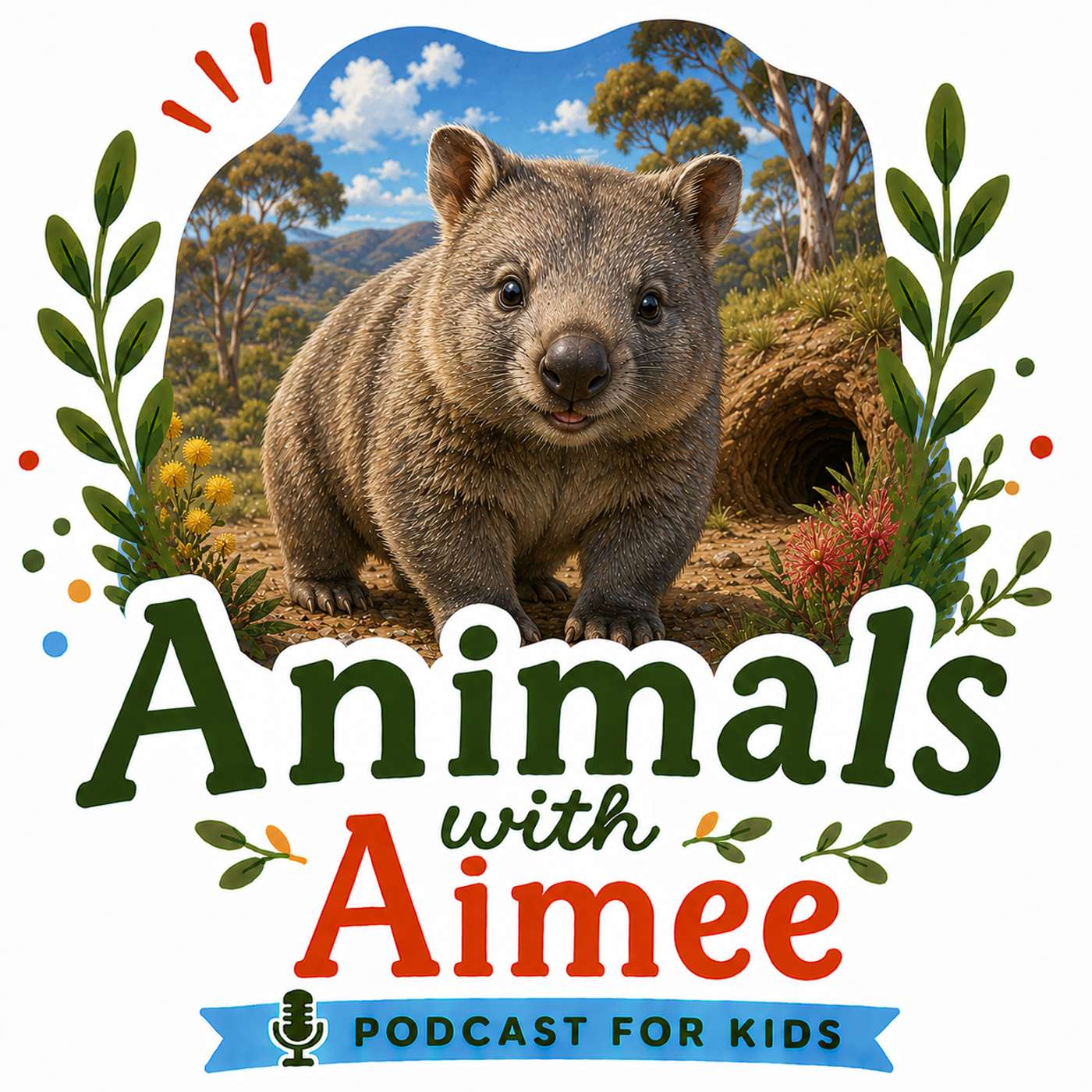
    Wombat: The Underground Bulldozer of Australia

    Wombat: The Underground Bulldozer of Australia! 🦘 | Animals with Aimee Grab your sunhats and hiking boots, explorers! 🥾 This week, Aimee is heading down under to the grassy hills and eucalyptus woodlands of Australia to meet a sturdy, burrow-building creature with a super unique superpower—the unstoppable Wombat! Did you know these furry little bulldozers are marsupials with a brilliant twist? Their pouches face backward to keep rocks and dirt out while mama wombats dig massive underground tunnel systems! 🕳️ In this episode, we learn how their shovel-like claws break through tough roots, how they use a thick plate of cartilage on their backsides to block predators, and the hilarious reason they are the only animals in the world with cube-shaped poop! 🧊💩 Plus, put on your thinking caps for the Wild Wisdom Challenge 🧠 and get ready for some wombat-tastic laughs with our Wild Jokes 😂! Listen to learn: Why wombats are nocturnal and "crepuscular" 🌙 How their continuously growing front teeth help them excavate burrows up to 100 feet long 🦷 Why their square-shaped droppings sit perfectly on top of rocks to mark their territory without rolling away 🪨 How being sturdy, grounded, and hard-working helps us overcome any obstacle 💪 Want to suggest our next animal? Send Aimee an email at aimee@animalswithaimee.com 💌. Help the Wombat The Northern Hairy-nosed Wombat (Lasiorhinus krefftii) is Critically Endangered (IUCN and Australian legislation), with a small global wild population around 400–450 individuals in protected Queensland reserves. If you would like to support conservation efforts for the Wombat, consider donating to The Wombat Foundation. Don't forget to rate and follow Animals with Aimee for notifications about our new episodes! Join the Adventure! Grown-ups, help your kids explore even more by joining Aimee’s Animal Lovers Club at animalswithaimee.com for daily worksheets, ad-free listening, and exclusive Birthday Shout-outs 🎈! ★ Support this podcast on Patreon ★

    • Transcript
  • #53
    Wednesday · 9 min

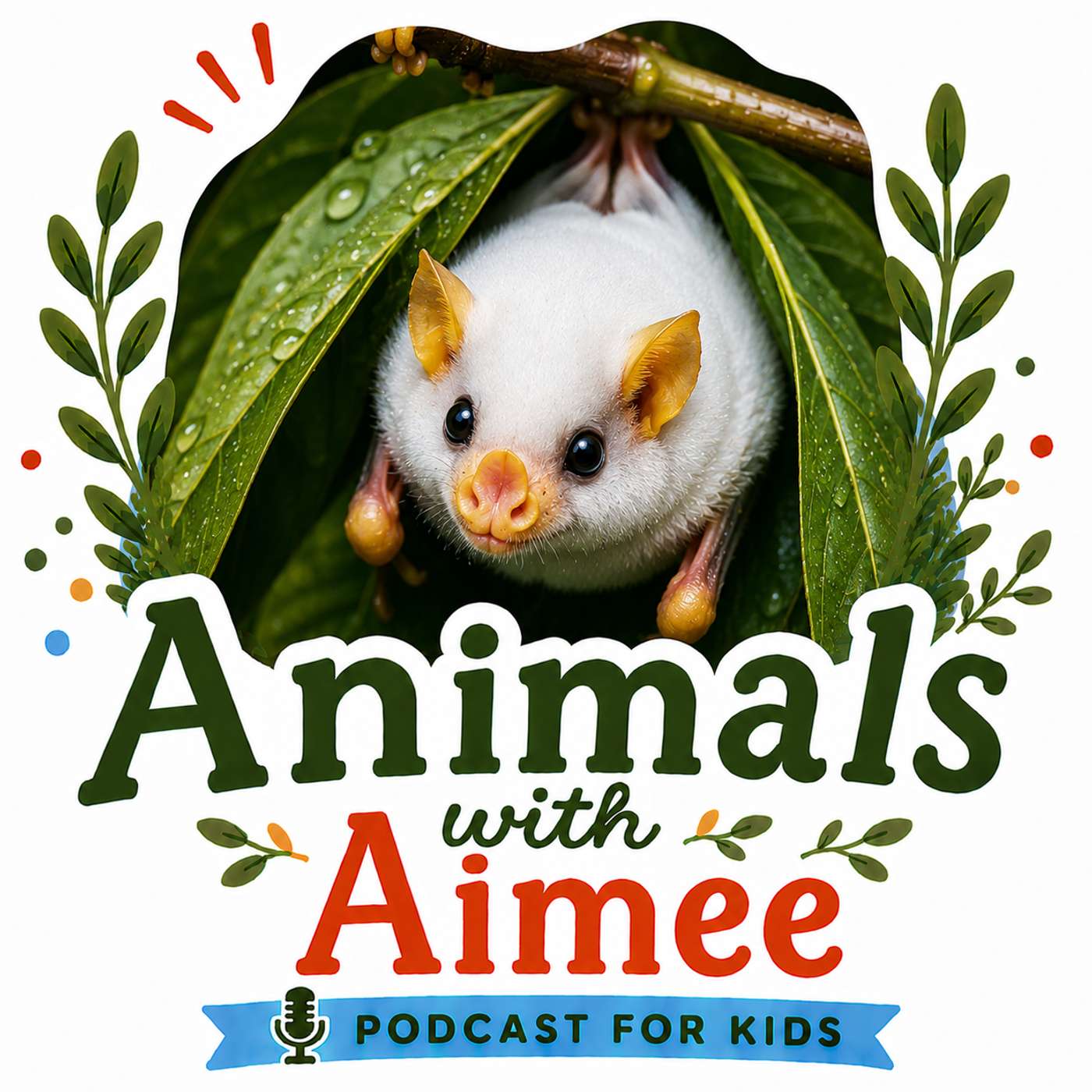
    Honduran White Bat: Rainforest Tent Builder

    Honduran White Bat: Rainforest Tent Builder! 🦇 Grab your rain boots and explorer hats, explorers! 🌧️ This week, Aimee is traveling deep into the lush, warm rainforests of Central America to meet a tiny animal that looks just like a fluffy white marshmallow—the extraordinary Honduran White Bat! How does such a tiny creature stay safe in a massive jungle? By building its very own tent! 🏕️ These master leaf architects use their tiny, sharp teeth to bite the veins of giant Heliconia leaves until the sides fold down into a cozy V-shaped home. In this episode, we learn how their bright white fur magically glows green in the sunlight to camouflage them from predators, why their love of figs helps grow the rainforest canopy, and how they use soft "whispering" echolocation to stay perfectly hidden! Plus, put on your thinking caps for the Wild Wisdom Challenge 🧠 and get ready for some batty laughs with our Wild Jokes 😂! Listen to learn: Why Honduran White Bats are smaller than a golf ball and weigh less than a single coin 🪙 How they huddle together in cozy family groups called "harems" to stay warm in tropical downpours 🌧️ What makes them crucial "frugivores" in the rainforest ecosystem 🥭 How even the smallest animals can be amazing architects and jungle protectors 🏗️ Want to suggest our next animal? Send Aimee an email at aimee@animalswithaimee.com 💌. Help the Honduran White Bat The Honduran White Bat (Ectophylla alba) is currently listed as Near Threatened (NT) on the IUCN Red List. To help support the conservation of the Honduran White Bat, consider donating to the Wildlife Conservation Society who work with local Indigenous Miskito communities in La Mosquitia (such as the Warunta region) to monitor populations. Thank you for listening! Don't forget to rate and follow Animals with Aimee for notifications about our new episodes! Join the Adventure! Grown-ups, help your kids explore even more by joining Aimee’s Animal Lovers Club at animalswithaimee.com for daily worksheets, ad-free listening, and exclusive Birthday Shout-outs 🎈! ★ Support this podcast on Patreon ★

    • Transcript
  • #52
    Tuesday · 9 min

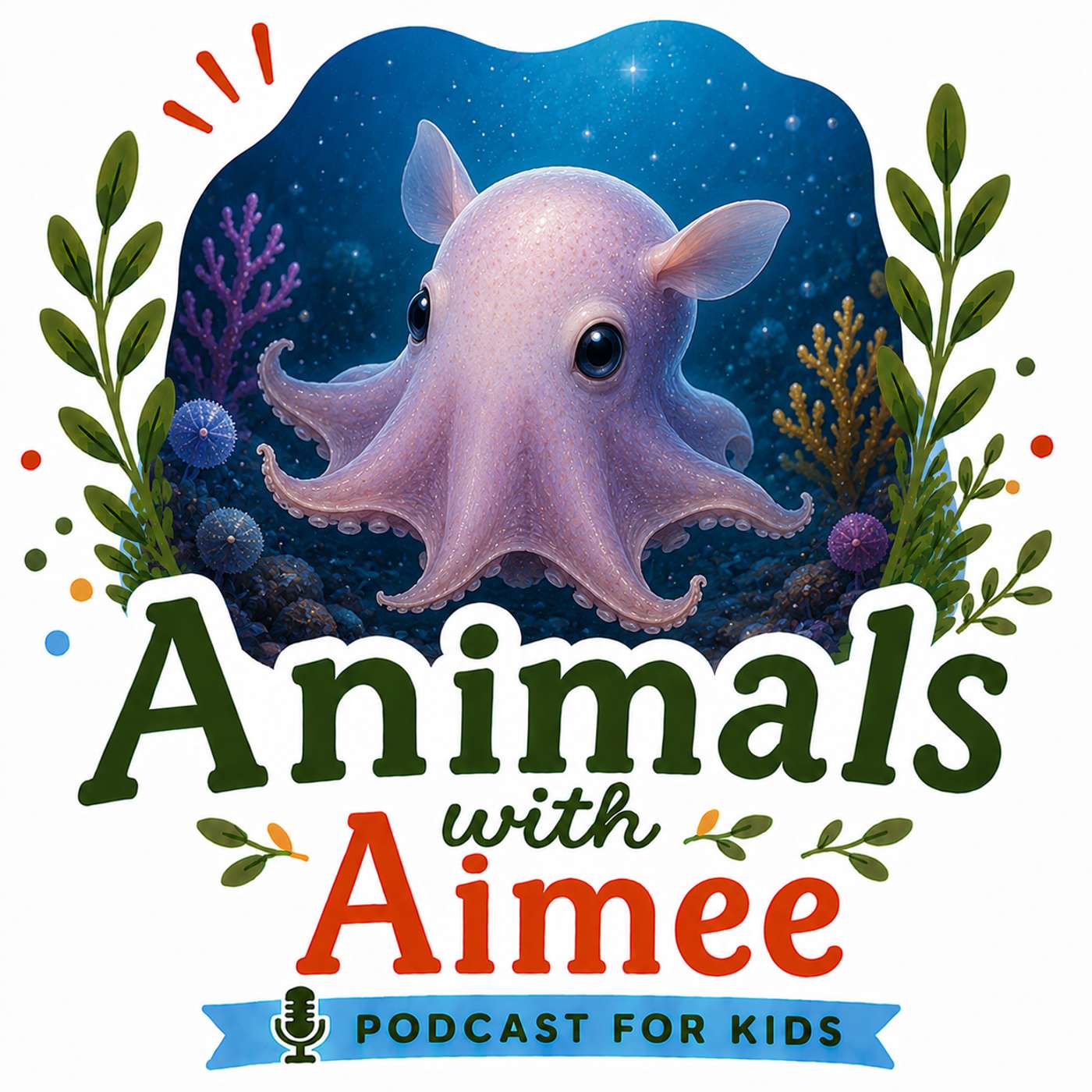
    Dumbo Octopus: The Octopus with Ears

    Dumbo Octopus: The Octopus with Ears! 🐙 Grab your diving masks and put on your flippers, explorers, because today Aimee is taking a super deep dive to the bottom of the sea to meet one of the cutest, squishiest, and most unique creatures in the entire ocean—the incredible Dumbo Octopus! Have you ever seen an octopus with ears? 🐘 The Dumbo Octopus gets its name from its big, flappy fins that look just like elephant ears, allowing it to glide and "fly" through the pitch-black freezing water thousands of meters below the surface. In this episode, we shine our deep-sea headlights on this tiny marvel to learn why it doesn't need an ink sac to hide, how it opens its webbed arms like a floating umbrella, and how it uses special funnel jet propulsion to zoom around! Plus, put on your thinking caps for the Wild Wisdom Challenge 🧠 and get ready for some ten-tickle giggles with our Wild Jokes 😂! Listen to learn: How the Dumbo Octopus survives extreme water pressure 3,000 to 4,000 meters down 🌊 Why it swallows its deep-sea food completely whole 🦐 How it flashes glowing bioluminescent lights to confuse predators ✨ Why embracing our special traits and being unique is wonderful 🌟 Join the Adventure! Grown-ups, help your kids explore even more by joining Aimee’s Animal Lovers Club at animalswithaimee.com for daily worksheets, ad-free listening, and Birthday Shout-outs 🎈! Want to suggest our next animal? Send Aimee an email at aimee@animalswithaimee.com 💌. ★ Support this podcast on Patreon ★ Help the Dumbo Octopus If you want to support the conservation of the Dumbo Octopus's precious ocean habitat, consider donating to Oceana. Thank you for listening! Don't forget to rate and follow Animals with Aimee for notifications about our new episodes!

    • Transcript
  • #51
    Monday · 8 min

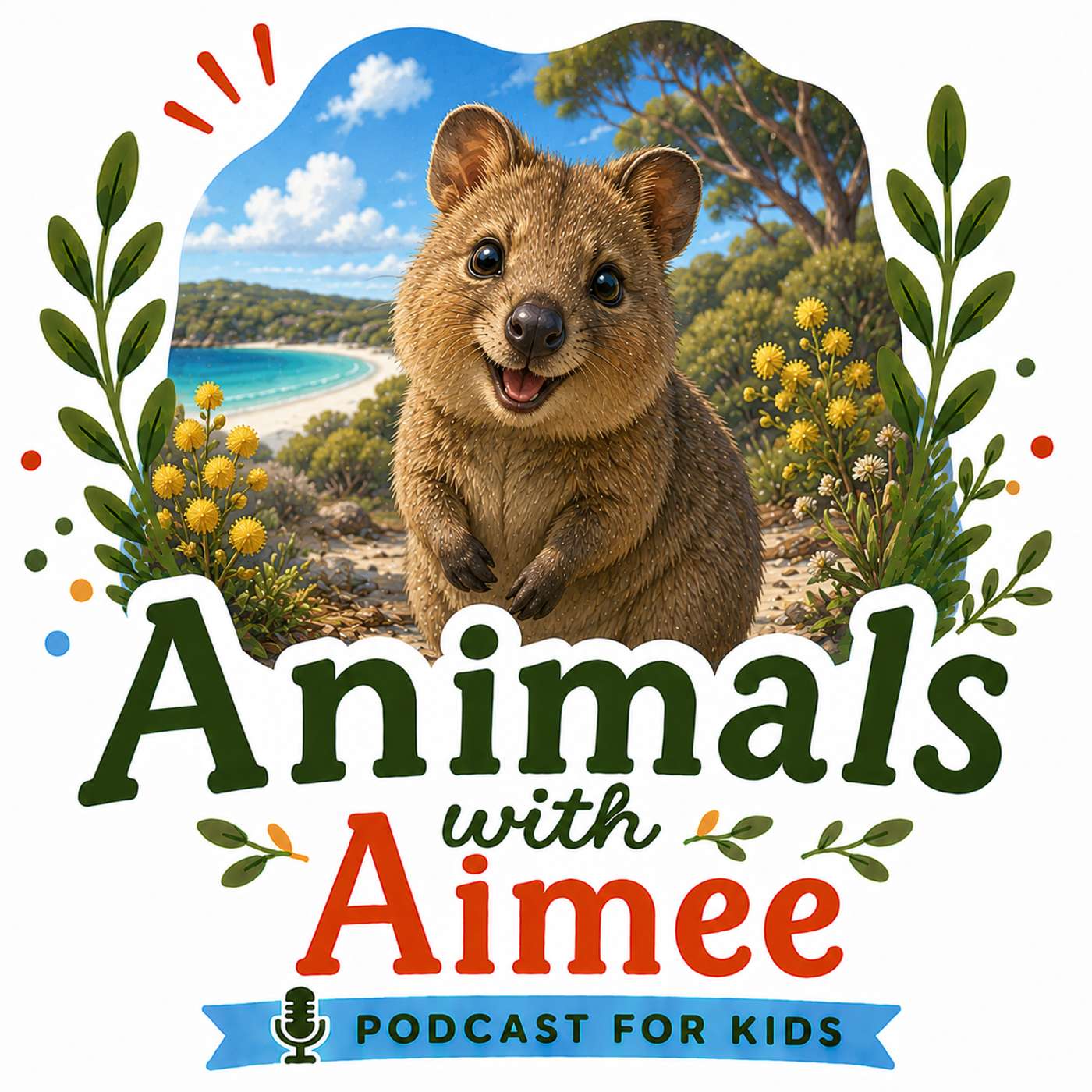
    Quokka: The Happiest Animal on Earth

    Quokka: The Happiest Animal on Earth! 🐨 | Animals with Aimee Grab your sunhats and binoculars, explorers! 🌴 This week, Aimee is hopping across the Indian Ocean to Rottnest Island in Western Australia to meet the cute, curious, and unstoppable Quokka! 🦘 Have you ever wondered why Quokkas are famous for being the "world's happiest animals"? That iconic selfie-ready smile is actually a clever trick to help them pant and cool down in the hot Australian sun ☀️. In this episode, we dive into fascinating facts about these tiny macropods, including their unique plant-eating habits 🌿, surprising tree-climbing skills 🌳, and how they safely store fat in their thick tails for balance and survival. Plus, put on your thinking caps to test your knowledge in our Wild Wisdom Challenge 🧠 and laugh out loud with some brand-new quokka-tastic jokes 😂! Listen to learn: Why Quokkas are cousins to kangaroos and wallabies 🦘 What it means to be a nocturnal "ruminant" 🌙 How their trusting nature makes them so friendly to humans 🤝 Why spreading joy and a positive smile can brighten anyone's day ✨ Help the Quokka The Quokka (Setonix brachyurus) is officially listed as Vulnerable on the IUCN Red List of Threatened Species. If you would like to support Quokka conservation efforts, consider a donation to the Rottnest Foundation. Thank you for listening! Don't forget to rate and follow Animals with Aimee for notifications about our new episodes! Join Aimee's Animal Lovers Club for activity sheets, birthday shout-outs, and more!Join the Adventure! Grown-ups, help your kids explore even more by joining Aimee’s Animal Lovers Club at animalswithaimee.com for daily worksheets, ad-free listening, and exclusive Birthday Shout-outs 🎈! ★ Support this podcast on Patreon ★

    • Transcript
  • #50
    Saturday · 8 min

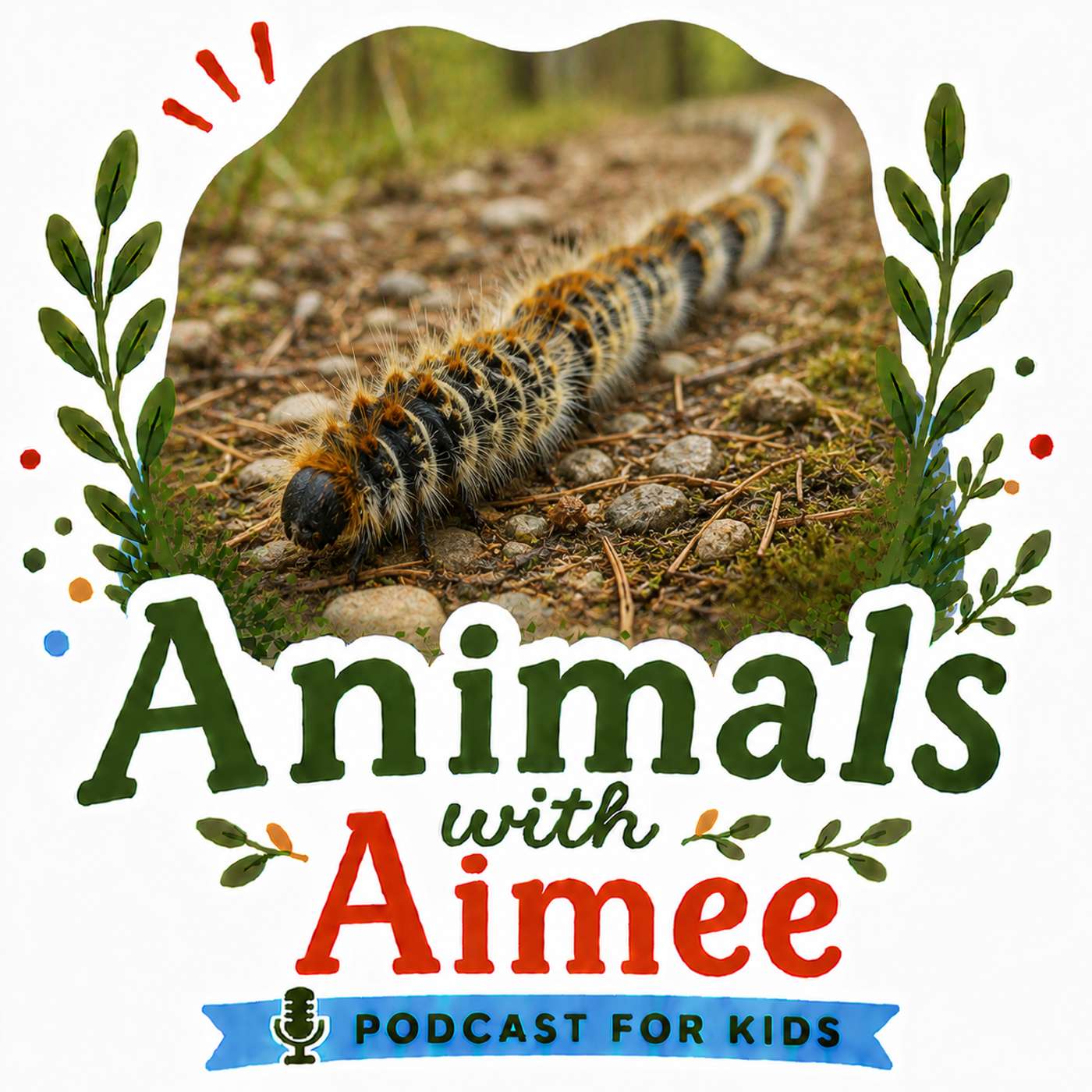
    Processionary Caterpillar: The Parade Leader of the Pines

    🐛🌲 Grab your hiking boots and warm jackets, explorers! This week, we are trekking through the sunlit pine forests of southern Europe and the Mediterranean to find a tiny insect that loves to march in a perfect, single-file line: the parade-loving Processionary Caterpillar. Join Aimee to learn all about this fuzzy herbivore and its unique processional behavior. We will discover how they use silk threads and scent trails to stay connected, why their microscopic hairs act as a powerful defensive armor, and how they build communal silk nests to stay warm in the winter. Stick around until the end for the Wild Wisdom Challenge and some fun caterpillar jokes! Grown-ups: Help your kids explore even more by joining Aimee’s Animal Lovers Club at animalswithaimee.com for daily worksheets, ad-free listening, and Birthday Shout-outs! To help study and protect insects like the Processionary Caterpillar, consider contributing to the Entomological Society of America. Thank you for listening! Don't forget to rate and follow Animals with Aimee for notifications about our new episodes! Join Aimee's Animal Lovers Club for activity sheets, birthday shout-outs, and more! ★ Support this podcast on Patreon ★

    • Transcript
  • #49
    November 13 · 7 min

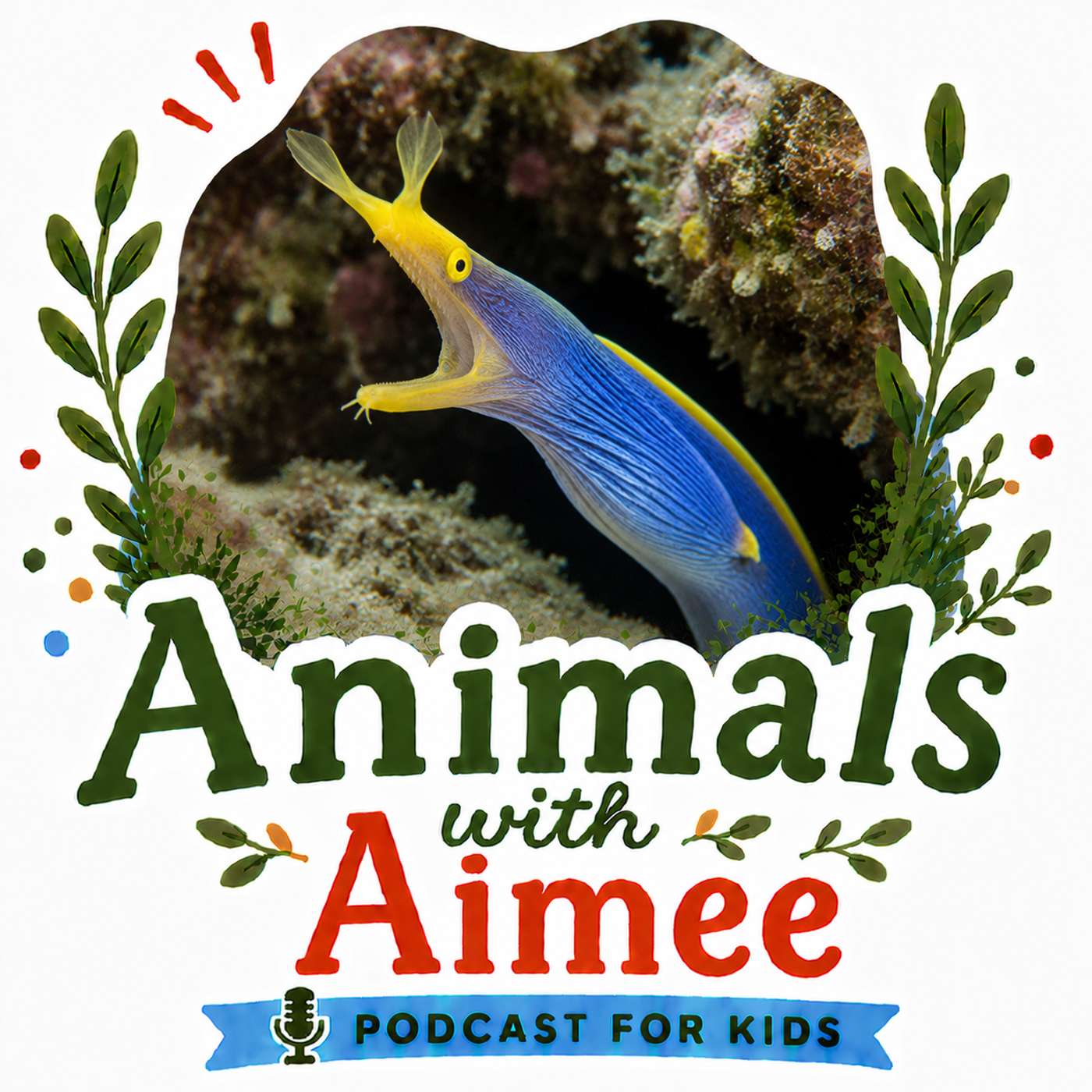
    Ribbon Eel: The Living Ribbon of the Reef

    Grab your snorkel and fins, explorers! This week, we are diving deep into the warm, tropical waters of the Indo-Pacific coral reefs to find a dazzling sea creature that sways in the ocean currents like a bright silk ribbon: the colorful, slithery Ribbon Eel. Join Aimee to learn all about this amazing carnivore and its incredible life cycle. We will discover how the Ribbon Eel undergoes a dramatic color-changing metamorphosis as it grows, why it always keeps its mouth wide open to breathe, and how its delicate, fan-like nostrils act as underwater scent sensors to hunt prey. Stick around until the end for the Wild Wisdom Challenge and some eel-y funny jokes! Grown-ups: Help your kids explore even more by joining Aimee’s Animal Lovers Club at animalswithaimee.com for daily worksheets, ad-free listening, and Birthday Shout-outs! If you are interested in helping to protect the Ribbon Eel's precious ocean habitat, consider donating to Oceana Thank you for listening! Don't forget to rate and follow Animals with Aimee for notifications about our new episodes! Join Aimee's Animal Lovers Club for activity sheets, birthday shout-outs, and more! ★ Support this podcast on Patreon ★

    • Transcript
  • #48
    November 12 · 7 min

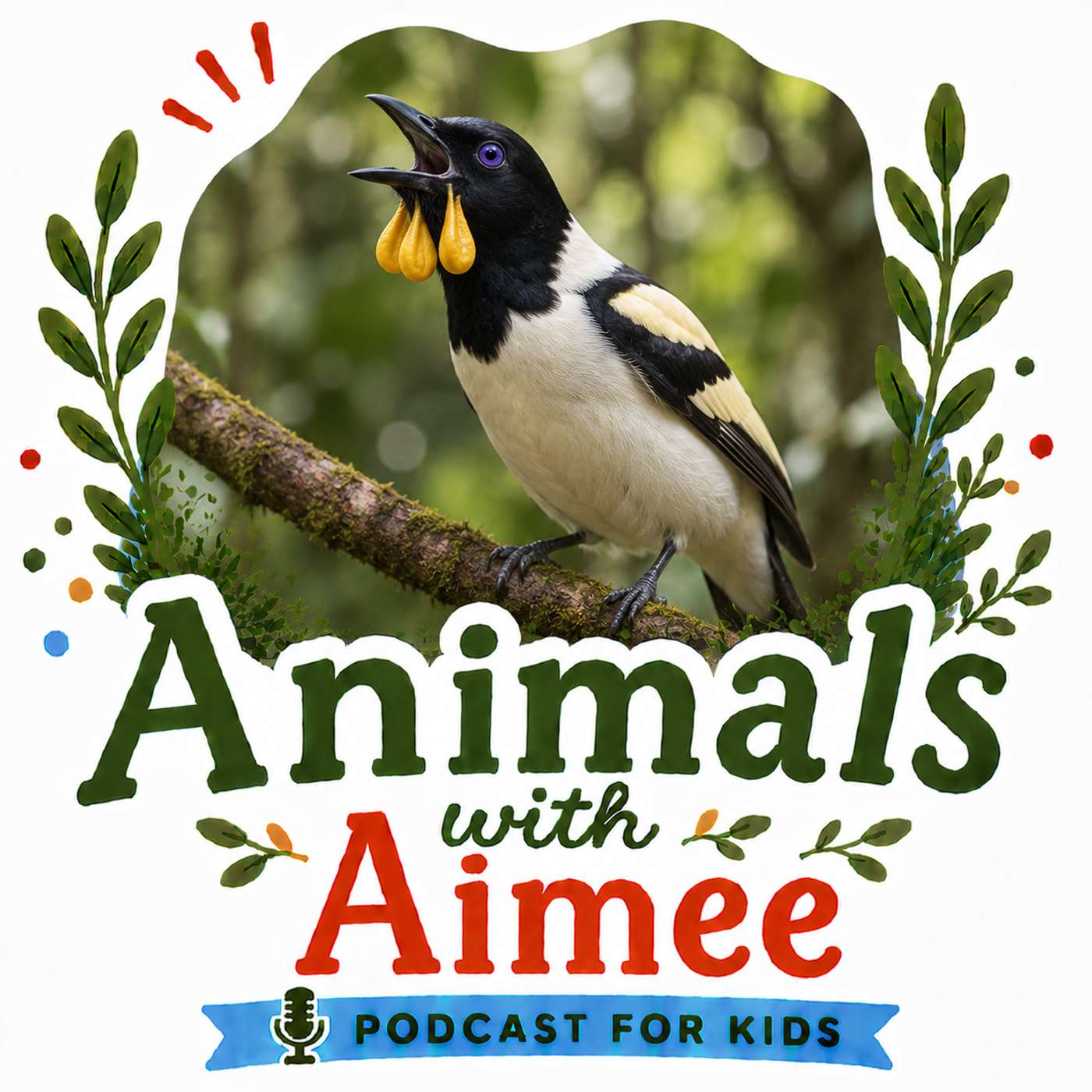
    Three-Wattled Bellbird: The Forest's Loudest Bell

    The Three-Wattled Bellbird: The Forest's Loudest Bell Grab your binoculars, explorers! This week, we are trekking deep into the misty mountain forests of Central America to meet the wild, wonderful, and booming Three-Wattled Bellbird. Join Aimee to learn all about this fascinating frugivore and its three worm-like wattles. We will discover how its ear-piercing "BONK" call makes it one of the loudest birds in the world, how they act as living tree-planters through seed dispersal, and why these birds have to go to "music class" just to learn their own songs. Stick around until the end for the Wild Wisdom Challenge and some high-flying jokes! Help support the conservation efforts for the Three-Wattled Bellbird in Costa Rica by donating to Amigos of Costa Rica Thank you for listening! Don't forget to rate and follow Animals with Aimee for notifications about our new episodes! Join Aimee's Animal Lovers Club for activity sheets, birthday shout-outs, and more! ★ Support this podcast on Patreon ★

  • #42
    June 6 · 8 min

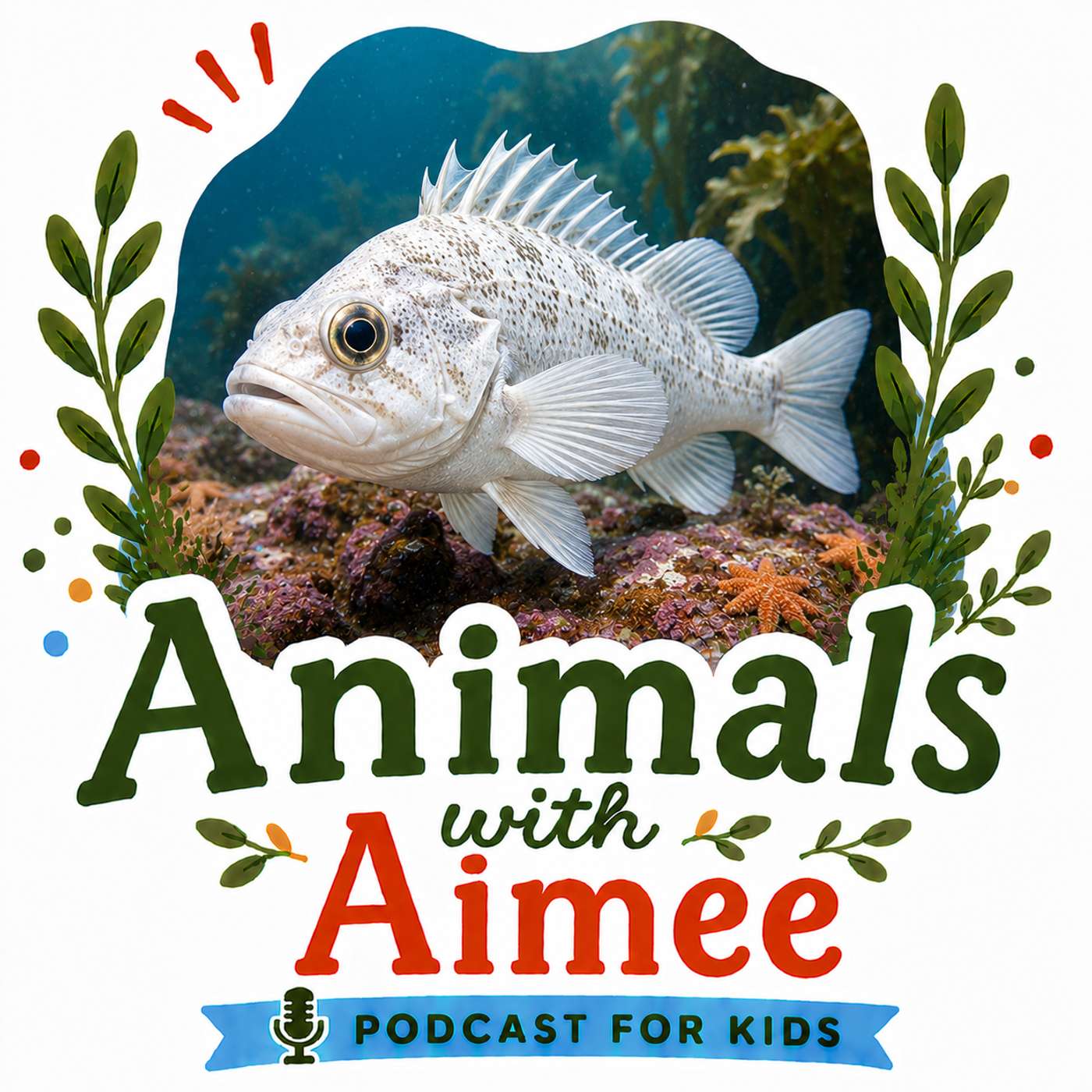
    White Rockfish: The Kelp Forest Ghost

    Grab your scuba gear and fire up your submarines, explorers! 🤿🛥️ Today on Animals with Aimee, we are diving deep into the chilly, kelp-filled waters of the Pacific Ocean 🌊 to find a fish that is the ultimate master of underwater hide-and-seek! Meet the stealthy, the spiky, the camouflaged White Rockfish! 🪨 In this deep-sea episode, junior marine biologists will uncover the wild science behind this amazing ocean survivor: 🥷 Rocky Reef Ninjas: Discover how the White Rockfish uses its mottled, pale coloring to blend perfectly into the rocks and sandy ocean floor! They are amazing "Ambush Predators" who wait perfectly still for a tasty snack to swim right past them. 🦐 ⏳ Underwater Grandpas: Did you know that rockfish are some of the longest-living fish in the entire ocean? We'll explore the wild science of their super-slow aging and how some rockfish species can live to be over 100 years old! 🎂 🛡️ Spiky Armor: Find out how they protect themselves from hungry sharks and seals! They have a row of sharp, sturdy spines running right down their backs that act like a built-in suit of armor. ⚔️ 🎈 The Swim Bladder: Learn about a special balloon-like organ inside their bodies called a "Swim Bladder" that helps them float and perfectly control their buoyancy in the deep, heavy water! 🐡 It’s a spectacular underwater adventure that proves the best way to survive in the deep sea is to be a master of disguise! 🌟 Support the White Rockfish: The White Rockfish has not yet been globally evaluated or formally listed as endangered. If you want to support the restoration of the world's oceans, consider donating to Oceana. Thank you for listening! Don't forget to rate and follow Animals with Aimee for notifications about our new episodes! Join Aimee's Animal Lovers Club for activity sheets, birthday shout-outs, and more! ★ Support this podcast on Patreon ★

    • Transcript
  • #41
    June 5 · 8 min

    Blood Pheasant: The Himalayan Snow Runner

    Grab your snow boots and your warmest mittens, explorers! 🥾❄️ Today on Animals with Aimee, we are hiking high into the snowy, freezing peaks of the Himalayan Mountains 🏔️ to find a beautiful bird that looks like it was painted with a brush! Meet the hardy, the speedy, the crimson-feathered Blood Pheasant! ❤️ In this high-altitude episode, junior ornithologists will uncover the wild science behind this amazing mountain survivor: 🎨 Painted Feathers: Discover how they got their very dramatic name! We'll learn all about the bright, brilliant red streaks splashed across their chests and faces that make them look like beautiful, living paintings against the white snow. 🏔️ High-Altitude Hikers: Find out how these tough little birds survive in the freezing, thin air of the highest mountains on Earth! We'll explore how their thick, fluffy feathers act like the perfect built-in winter coats. 🧥 🏃 The Snowy Sprinter: Did you know they prefer running over flying? Learn how their strong legs and specialized feet help them sprint across the icy ground and dig through the deep snow to find tasty seeds and moss! 🌱 👨‍👩‍👧‍👦 Feathered Flocks: We'll discover how they stick together in big family groups called "flocks" during the freezing winter months to share body heat and keep each other safe from sneaky mountain predators! 🦊 It’s a spectacular snowy adventure that proves you can be bright and beautiful even in the freezing cold! ❄️ Support Blood Pheasants Blood Pheasants range across the remote eastern Himalayas (India, Nepal, Bhutan, and China) and are currently categorized as Least Concern, direct financial support is generally channeled through broad-scale pheasant and upland habitat preservation rather than localized, emergency species funds. If you would like to support Pheasants, consider a donation to the World Pheasant Association. Thank you for listening! Don't forget to rate and follow Animals with Aimee for notifications about our new episodes! Join Aimee's Animal Lovers Club for activity sheets, birthday shout-outs, and more! ★ Support this podcast on Patreon ★

    • Transcript
  • #40
    June 4 · 8 min

    Brazilian Jewel Tarantula: The Secret Treehouse Builder

    Grab your magnifying glasses and your jungle gear, explorers! 🔍🌿 Today on Animals with Aimee, we are trekking into the deep, green rainforests of Brazil 🇧🇷 to find a spider that looks less like a creepy-crawly and more like a sparkling, metallic treasure! Meet the colorful, the clever, the dazzling Brazilian Jewel Tarantula! ✨ In this sparkling episode, junior arachnologists will uncover the wild science behind this amazing tree-dwelling spider: 💎 The Living Rainbow: Discover the science behind their incredible metallic pink, green, and blue colors! We'll learn why these dazzling, jewel-like colors actually help them camouflage in the colorful shadows of the rainforest. 🌳 Secret Treehouse Builders: Did you know these tarantulas don't live on the dirt? We'll explore how they are "Arboreal" (tree-dwelling) and use their special grippy feet to build amazing little homes high up in the branches! 🥷 The Bark Ninja: Find out how they construct clever, hidden trapdoors out of perfectly matched tree bark and sticky silk. When a tasty bug walks by, they pop out like a jack-in-the-box to catch their dinner! 🪲 🕸️ Sensory Silk: Learn how they lay out special silk tripwires outside their trapdoors to feel the tiny vibrations of approaching insects without even having to use their eyes! 🎶 It’s a spectacular jungle adventure that proves spiders can be both beautiful and brilliant builders! 🌟 Save the Brazilian Jewel Tarantula The Brazilian Jewel Tarantula is endemic to the shrinking Atlantic Forest biome. Supporting large-scale habitat protection organizations like Rainforest Trust helps secure and restore the specific native forests this species relies on. Thank you for listening! Don't forget to rate and follow Animals with Aimee for notifications about our new episodes! Join Aimee's Animal Lovers Club for activity sheets, birthday shout-outs, and more! ★ Support this podcast on Patreon ★

    • Transcript
  • #39
    June 3 · 7 min

    Coconut Crab: The Island Heavyweight

    Grab your sunscreen and your sturdiest boots, explorers! 🥾☀️ We are traveling to tropical islands in the Indian and Pacific Oceans to meet a creature that looks like it stepped right out of a prehistoric monster movie! 🏝️🦖 Today on Animals with Aimee, we are talking about the massive, armored, and colossal Coconut Crab (also known as Birgus latro)! 🦀 In this heavyweight episode, junior biologists will uncover the wild science behind the largest land-living arthropod in the entire world: 🏝️ Island Giants: Discover how these massive crabs can grow up to 3 feet wide from leg to leg and weigh as much as a bowling ball! 🎳 Because they are so heavy, they cannot swim; if they stay underwater for too long, they will actually drown. Instead, they live inside deep burrows lined with soft coconut husks to keep themselves safe from the hot tropical sun. ☀️ 🥥 The Mightiest Pinchers: Find out how they got their name by climbing palm trees to knock down coconuts! 🌴 We'll learn how the tightly packed muscle fibers inside their Exoskeleton act like biological hydraulic pressers to generate a crushing force stronger than the bite of most land predators! 💥 🫁 Specialized Breathing: How does a crab live entirely on land? They have a unique organ called a Branchiostegal Lung that absorbs oxygen directly from the air! It only works if it stays wet, so the crab uses its smaller back legs to scoop up moisture and damp down the inside of its breathing chamber. 💧 👃 Super Sniffers & Robbers: Learn how they use special Sensilla organs on their antennae to catch the scent of a cracked coconut or rotting fruit from miles away, using the exact same brain pathways as insects! 🐜 We'll also find out why their opportunistic Omnivorous diet and powerful noses lead them to steal pots, pans, and silverware from campsites, earning them the nickname the "Robber Crab"! 🏕️🍳 It is a true heavyweight champion adventure you won't want to miss! 🥊s Save the Coconut Crab: The Coconut Crab (Birgus latro) is listed as Vulnerable on the IUCN Red List of Threatened Species. The species faces severe population declines across much of its range due to overharvesting for food, coastal habitat loss from urbanization, and introduced predators. To help support the conservation of Coconut Crabs, consider donating to Island Conservation. Thank you for listening! Don't forget to rate and follow Animals with Aimee for notifications about our new episodes! Join Aimee's Animal Lovers Club for FREE activity sheets, birthday shout-outs, and more! ★ Support this podcast on Patreon ★

    • Transcript
  • #38
    May 20 · 7 min

    Chuditch: The Star-Covered Hunter

    Episode Title: Chuditch: The Star-Covered Hunter 🌌🐾 Grab your flashlights and your hiking boots, explorers! 🔦🥾 Today on Animals with Aimee, we are trekking into the eucalyptus forests of Western Australia 🇦🇺 to find a fierce little predator that looks like it's covered in tiny, glowing stars! ✨ Meet the spotted, the sneaky, the star-covered Chuditch! (Also known as the Western Quoll!) 🐾 In this nighttime adventure, junior zoologists will uncover the wild science behind this amazing marsupial: 🌌 Starry Camouflage: Discover how their beautiful brown fur and bright white spots act as perfect camouflage, helping them blend right into the dappled moonlight of the forest floor! 🦘 Pouch-Wearing Predators: Did you know they are marsupials just like kangaroos? We'll learn how Chuditch moms carry their tiny, jellybean-sized babies in a special pouch on their tummies to keep them safe while they hunt! 🥷 Midnight Ninjas: Find out how these stealthy hunters use their sharp claws and long, balancing tails to climb high into the branches in the pitch dark. 🌳 🦎 Fierce Foragers: Don't let their cute faces fool you! We'll explore how they use their sharp little teeth to hunt for giant bugs, lizards, and even small birds! 🪲 It’s a spectacular Australian safari that proves the fiercest hunters sometimes come in the cutest, star-spotted packages! 🌟 Thank you for listening! How to help the Chuditch: The chuditch, also known as the western quoll, is officially listed as Vulnerable nationally under Australia's EPBC Act and is similarly ranked under International Union for Conservation of Nature (IUCN) criteria. If you would like to support the conservation efforts of the Chuditch, consider donating to the Australian Wildlife Conservancy. Don't forget to rate and follow Animals with Aimee for notifications about our new episodes! Join Aimee's Animal Lovers Club for activity sheets, birthday shout-outs, and more! ★ Support this podcast on Patreon ★

    • Transcript
  • #37
    May 19 · 8 min

    Star-Nosed Mole: The Underground Alien

    Episode Title: Star-Nosed Mole: The Underground Alien 👽🌱 Grab your headlamps and your gardening gloves, explorers! 🔦🧤 Today on Animals with Aimee, we are digging deep into the damp, muddy soil of North America 🌎 to find a creature with the weirdest, wildest nose in the entire animal kingdom! Meet the muddy, the speedy, the alien-like Star-Nosed Mole! ✨ In this underground episode, junior zoologists will uncover the wild science behind this fascinating subterranean marvel: 👽 The Star of the Show: Discover the secrets of their incredible nose! It features 22 pink, fleshy tentacles covered in thousands of tiny, super-sensitive touch receptors called "Eimer's Organs" that help them "see" their way through the pitch-black dirt! ⚡ World's Fastest Snacker: Learn how this amazing mole can find, catch, and swallow a tasty bug in less than a quarter of a second—making it the absolute fastest eater of any mammal on Earth! 🪱 🫧 Underwater Sniffing: Find out the weird science behind how they can actually smell underwater! We will learn how they blow tiny air bubbles onto objects and sniff them back in to catch the scent of yummy aquatic snacks. 💧 🐾 Built-In Shovels: Did you know their huge, clawed front paws face backward to help them perfectly "swim" and carve their way through the heavy earth? 🚜 Thank you for listening! If you would like to help the Star-Nosed Mole, consider donating to a local wildlife rehabilitation center in your state. Don't forget to rate and follow Animals with Aimee for notifications about our new episodes! Join Aimee's Animal Lovers Club for activity sheets, birthday shout-outs, and more! ★ Support this podcast on Patreon ★

    • Transcript
  • #36
    May 17 · 7 min

    Tardigrade: The Indestructible Micro-Bear

    Tardigrade: The Indestructible Micro-Bear 🐻🔬 Grab your microscopes and your spacesuits, explorers! 🔬👩‍🚀 Today on Animals with Aimee, we are zooming way, way in on a tiny drop of water in a patch of backyard moss to find a creature so tough, it can literally survive floating in outer space! Meet the microscopic, the mighty, the indestructible Tardigrade! 💧 In this mind-blowing episode, junior biologists will uncover the wild science behind the ultimate survival champion: 🐻 The Water Bear: Did you know these tiny creatures have eight legs with little claws and walk just like chubby little bears? That's exactly why they are often called "Water Bears" or "Moss Piglets"! ⏳ The Time Traveler: Discover the incredible science of "Cryptobiosis"! When things get too dry or dangerous, the Tardigrade rolls up into a tiny ball called a "Tun" and basically presses the pause button on its life—sometimes for decades! ⏸️ 🚀 Space Survivors: Learn how these microscopic marvels can survive boiling water, freezing ice, crushing deep-ocean pressure, and even the dangerous radiation of actual outer space! 🌌 🔍 Backyard Explorers: Find out where these amazing micro-animals live (hint: you probably have some in the moss right outside your window!) and how you can look for them on your own scientific adventures. 🍃 It’s a microscopic safari that proves you don't have to be big to be a real-life superhero! 🦸‍♀️ Thank you for listening! Don't forget to rate and follow Animals with Aimee for notifications about our new episodes! Join Aimee's Animal Lovers Club for activity sheets, birthday shout-outs, and more! ★ Support this podcast on Patreon ★ Help the Tardigrade Because of the Tardigrade's resilient nature, it is not considered endangered. To help other invertebrates like the Tardigrade, consider supporting the Xerces Society for Invertebrate Conservation.

    • Transcript
  • #35
    May 16 · 8 min

    New Zealand Glowworm: The Cave's Living Constellation

    Episode Title: New Zealand Glowworm: The Cave's Living Constellation ✨🐛 Grab your headlamps and your warmest jackets, explorers! 🔦🧥 Today on Animals with Aimee, we are rappelling deep into the dark, damp limestone caves of New Zealand 🇳🇿 to find a tiny creature that makes the rocky ceiling look just like a beautiful starry night sky! 🌌 Meet the sticky, the starry, the luminous New Zealand Glowworm! ✨ In this magical underground episode, junior entomologists will uncover the glowing science behind these amazing cave dwellers: 💡 Chemical Lanterns: Discover the brilliant science of "Bioluminescence"! We'll learn how these tiny insects mix special chemicals in their bodies to create a beautiful, glowing blue light that acts like a neon sign for hungry bugs. 🕸️ Sticky Silk Snares: They don't just glow—they trap! Find out how these clever glowworms hang hundreds of tiny, mucus-covered silk threads from the cave ceiling. They use them just like glowing fishing lines to catch flying insects! 🦟 🪨 The Perfect Cave: Why do they live in the dark? We'll explore their unique underground habitats and find out why a damp, windless cave is the absolute perfect place to set up a delicate silk trap. 💧 🐛 Not Actually a Worm!: Surprise! We'll uncover the secret that these "worms" aren't worms at all, but actually the glowing larvae (babies) of a special kind of fungus gnat! 🪰 It’s a breathtaking underground adventure that will completely light up your imagination! 🌟 Thank you for listening! Don't forget to rate and follow Animals with Aimee for notifications about our new episodes! Join Aimee's Animal Lovers Club for activity sheets, birthday shout-outs, and more! ★ Support this podcast on Patreon ★ Help the New Zealand Glowworm New Zealand glowworms (Arachnocampa luminosa, or titiwai) are not currently considered endangered and are widespread in both the North and South Islands, particularly in wet, humid caves and forests. Although populations are generally stable, they face risks from habitat loss, climate change, and high-volume tourism, requiring active management at popular sites like Waitomo Caves. To help keep their habitat healthy, consider supporting the Waitomo Caves Museum and Discovery Centre.

    • Transcript
  • #34
    May 15 · 8 min

    Horned Lizard: The Desert's Spiky Squirt Gun

    Episode Title: Horned Lizard: The Desert's Spiky Squirt Gun 🦎🌵 Grab your sun hats and plenty of water, explorers! ☀️ Today on Animals with Aimee, we are hiking into the hot, sandy deserts of North America 🏜️ to find a tiny reptile with a defense mechanism that is straight out of a comic book! Meet the tough, the spiky, the armored Horned Lizard! 🛡️ In this wild episode, junior herpetologists will uncover the unbelievable science behind this desert survivor: 🩸 The Ultimate Squirt Gun: Discover the mind-boggling science of "Autohemorrhaging"! When a predator gets too close, this lizard can build up pressure in its head and squirt a stream of blood right out of its eyes! 👁️💦 🐜 Ant-Eating Machines: Learn how these little lizards can eat hundreds of ants a day! We'll find out how they use their sticky tongues and a special immunity to gobble up venomous harvester ants without getting a tummy ache. 👅 🪨 The Living Rock: Find out how their bumpy, spiky scales provide perfect "Camouflage" to help them blend right into the desert sand and rocks, making them practically invisible to hungry hawks! 🦅 💧 Rain Catchers: Did you know they can drink water with their backs? We’ll explore how the tiny channels between their scales catch the morning dew and funnel it straight to their mouths like built-in straws! 🌧️ It’s a spectacular desert safari that proves big surprises come in small, spiky packages! ✨ Thank you for listening! Don't forget to rate and follow Animals with Aimee for notifications about our new episodes! Join Aimee's Animal Lovers Club for activity sheets, birthday shout-outs, and more! ★ Support this podcast on Patreon ★ Help the Horned Lizard The Texas Horned Lizard (Phrynosoma cornutum) is listed as a threatened species in Texas and is protected by state law, making it illegal to take, possess, transport, or sell them without a permit. While not federally listed, they are considered a species of special concern or "greatest conservation need" across much of their range due to a 30% population decline caused by habitat loss, urbanization, and pesticide use. To help with the conservation efforts of Horned Lizards, consider supporting the Horned Lizard Conservation Society

    • Transcript
  • #33
    May 14 · 7 min

    Aye-Aye: The Midnight Drummer

    Aye-Aye: Madagascar’s Wonderful Weirdo 🐒🌙 Grab your flashlights and bug spray, explorers! 🔦 Today on Animals with Aimee, we are sneaking into the dark, nighttime rainforests of Madagascar 🇲🇬 to find a creature that looks a little bit spooky, but actually has some of the coolest biological tools on the planet! Meet the magical, the mysterious, the percussive Aye-Aye! 🥁 In this wonderfully weird episode, junior zoologists will uncover the wild science behind this amazing nocturnal primate: 🎧 Radar Ears: Discover how the Aye-Aye uses its giant, bat-like ears to listen for the tiniest bug movements deep inside thick tree trunks! 🥁 The Midnight Drummer: We'll learn all about "Percussive Foraging"—a fancy term for how this clever lemur relative taps on wood to find hollow spots hiding delicious grubs! 🪄 The Magic Finger: Find out the weird science behind their incredibly long, skinny middle finger! It has a special ball-and-socket joint so they can swivel it around to scoop up their dinner! 🪲 🦷 Rodent-Like Chompers: Did you know they are the only primates in the world with front teeth that never stop growing, just like a beaver? 🦫 It’s a spectacular nighttime safari that proves the weirdest animals are usually the most wonderful! ✨ Thank you for listening! Don't forget to rate and follow Animals with Aimee for notifications about our new episodes! Join Aimee's Animal Lovers Club for activity sheets, birthday shout-outs, and more! ★ Support this podcast on Patreon ★ Help the Aye-Aye The Aye-Aye (Daubentonia madagascariensis) is listed as Endangered on the IUCN Red List due to rapid population declines driven by habitat loss, fragmentation, and persecution as pests or bad omens. Native to Madagascar, they face extreme strain from deforestation, with an estimated population between 1,000 and 10,000 individuals. If you would like to help the conservation of the Aye-Aye and other animals like it, consider supporting Wildlife Madagascar.

    • Transcript
  • #32
    May 13 · 8 min

    Pistol Shrimp: The Ocean’s Sonic Blaster

    Episode Title: Pistol Shrimp: The Ocean’s Sonic Blaster 💥🦐 Grab your earplugs and your scuba gear, explorers! 🤿 Today on Animals with Aimee, we are diving into the shallow coral reefs to find a tiny crustacean with a superpower that absolutely defies physics! Meet the small, the snappy, the explosive Pistol Shrimp! 🌊 In this action-packed episode, junior marine biologists will learn how a creature the size of your thumb can be one of the loudest animals in the entire ocean. We are breaking down the wild science behind their sonic blast: 🦞 The Giant Claw: Learn about their asymmetrical bodies and the special peg-and-socket joint in their oversized snapper that locks and loads just like a spring-loaded water pistol! 💥 Sonic Boom Bubbles: Discover the mind-blowing physics of "Cavitation"! When they snap their claw, water shoots out so fast it literally tears the water apart, creating a low-pressure bubble that collapses with a BANG louder than a jet engine! ✈️ ☀️ An Underwater Sun: It’s not just loud—it’s incredibly hot! Find out how the popping bubble creates a flash of light ("Sonoluminescence") and temperatures as hot as the surface of the sun for just a split second! 🌡️ 🤝 Reef Roommates: We'll also explore their amazing "Mutualism" with the Watchman Goby, a fish that acts as the near-blind shrimp's seeing-eye guide in exchange for a safe, shared burrow! 🐟 It’s an underwater physics lesson that is guaranteed to blow you away! 🫧 Thank you for listening! Don't forget to rate and follow Animals with Aimee for notifications about our new episodes! Join Aimee's Animal Lovers Club for activity sheets, birthday shout-outs, and more! ★ Support this podcast on Patreon ★ Help the Pistol Shrimp Pistol shrimp are not currently considered endangered or threatened. With over 1,100 species, they are widely distributed in tropical and temperate coastal waters. While many populations are stable, they face potential threats from habitat destruction, ocean acidification, and climate change affecting coral reef ecosystems. To help conserve the Pistol Shrimp's habitat, consider supporting Oceanus Conservation.

    • Transcript
  • #31
    May 12 · 8 min

    Platypus: The Egg-Laying Mammal

    Episode Title: Platypus: The Egg Laying Mammal 🦆🦫 Grab your wetsuits and a pair of goggles, explorers! 🤿 Today on Animals with Aimee, we are splashing into the freshwater rivers of Australia 🇦🇺 to find an animal that is so unique, the first scientists who saw it thought it was a prank! Meet the marvelous, the mysterious, the electrifying Platypus! ✨ In this fun-filled episode, junior biologists will uncover the wild science behind nature’s craziest combination: 🥚 Mammal Mystery: Discover the weird world of "Monotremes" and how these furry friends are one of the only mammals on Earth that hatch from leathery eggs! ⚡ Super Senses: Find out how the Platypus uses "Electrolocation" in its rubbery, duck-like bill to hunt for yummy shrimp with its eyes, ears, and nose completely closed! 🦐 🧪 Secret Weapons: We'll learn about the venomous spurs hidden on the back legs of the boy platypuses—the ultimate built-in defense! 🥾 ✨ Glowing Fur: Did you know that under a UV light, a Platypus glows bright blue-green?! We dive into the magic of "Biofluorescence"! 🔦 It’s a wacky, wonderful water adventure you won’t want to miss! 🌊 Thank you for listening! Don't forget to rate and follow Animals with Aimee for notifications about our new episodes! Join Aimee's Animal Lovers Club for activity sheets, birthday shout-outs, and more! ★ Support this podcast on Patreon ★ Help the Platypus The Platypus (Ornithorhynchus anatinus) is classified as Near Threatened on the IUCN Red List (since 2016) due to declining numbers caused by habitat loss, drought, and climate change. If you would like to help the Platypus, consider supporting the Australian Platypus Conservancy

    • Transcript
Showing 1–20 of 22 episodes