Skip to content
Artwork for Analyzing Trends
ArtsDesignBusinessMarketing

Analyzing Trends

scenarioDNA

Analyzing Trends is written by Tim Stock and Marie Lena Tupot, co-founders of scenarioDNA, a cultural research and intelligence consultancy. Drawing on more than three decades of global fieldwork, semiotics, cultural mapping, futures analysis, and AI-assisted research, they examine how social change takes form through language, media, consumer behavior, technology, brands, and institutions. Their essays identify the cultural systems producing trends, explain how meanings change across markets and communities, and translate those findings into implications for strategy, innovation, policy, and design. Stock and Tupot are the authors of Story Systems and Cultural Research: A Mixed-Methods Guide to Forecasting Social Change.

Play
  • 20 episodes
  • Avg 9 min
  • English
  • S5 · E10
    Today · 6 min

    How Stories Become Intelligence

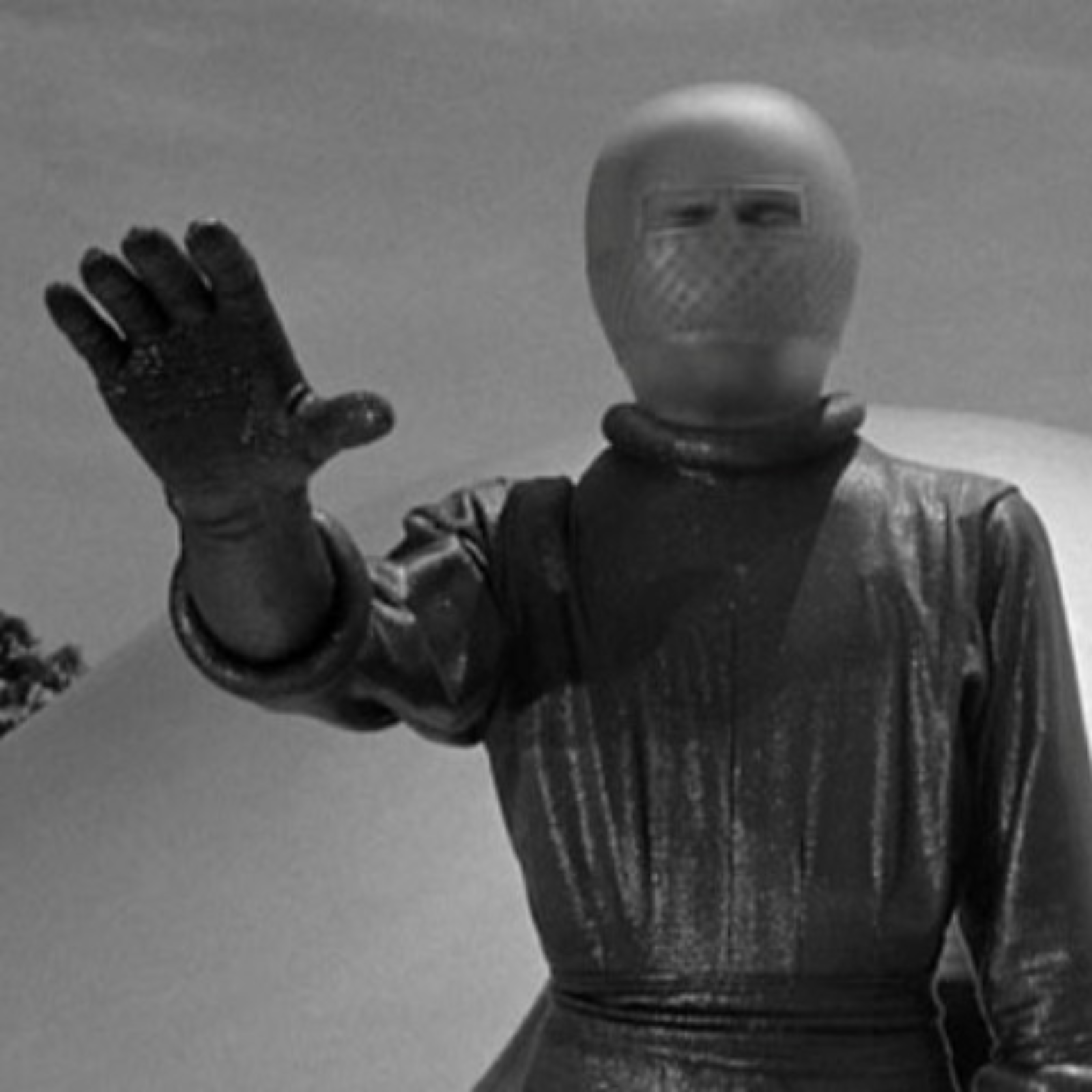
    People rarely notice social change as one clean signal, and most tools for reading culture are built to count it. With narrative intelligence, analysts read what the counting leaves out: the rule a story depends on and the price it collects later. Drawing on our book Story Systems and Cultural Research, this video shows how fairy tales and science fiction work together as intelligence tools. We read a fairy tale as speculative history, an old rule kept alive long after anyone states it, and science fiction as a speculative future that changes one condition and follows the consequences. Set side by side, Rapunzel and Her open up loneliness in a social media world, and Hansel and Gretel and Brave New World open up the move from the joy of cooking to the quieter appetite of the GLP-1 era. Companies often borrow the image from a story and drop its ending. In pre-emptive design, teams read the ending first and settle who can switch a future off before they build it. scenarioDNA Cultural intelligence

    • Transcript
  • S5 · E9
    Wednesday · 5 min

    Trophy Wife to Tradwife: How a Caricature Gets Counted.

    In the late eighties, Fortune magazine put "trophy wife" into wide use, in a story whose reporter noted that the woman she was describing works hard. This spring, a survey offered young American women four dream lives: tradwife, girlboss, digital nomad or trophy wife. Nearly half chose the option first described as a loving marriage, a stable job and a home full of kids, and headlines reported a generation obsessed with becoming trad wives. Tim Stock and Marie Lena Tupot of scenarioDNA follow how a portrait of a few people flattens into a caricature, how a survey turns the caricature into a percentage, and what happens when employers, cities and forecasters plan around the result.

    • Transcript
  • S5 · E8
    October 29 · 8 min

    Foresight Hallucinations

    This fall, two randomized trials of AI tutors pointed in opposite directions. Maryland undergraduates who were offered a tutor in their course finished with lower grades, while secondary students in England who revised with a tutor scored higher. Both results are real, and both come with details a headline drops: the Maryland tutor gave direct explanations by default, and only about one in seven students offered it ever used it. This episode follows a finding like that as it loses its conditions on the way into a scenario, and gives the result a name: a foresight hallucination. Joseph Voros's futures cone and Nele Fischer and Sascha Dannenberg's work on plausibility show where a team's assumptions about the present go unrecorded. The 2024 Wharton and Harvard tutoring studies show how two well-built experiments became opposite headlines. Fabricated citations get caught when someone looks them up, but a foresight hallucination cites real studies, so the only defense is keeping each finding attached to the conditions that produced it.

    • Transcript
  • S5 · E7
    October 17 · 8 min

    The Infinite Table

    Cultural research has more signal than structure, and the loudest signal usually sets the story. Knolling, the studio habit of squaring every tool on one surface so each can be seen at once, gives analysts a way to slow that stream down. Laid flat, signals show what they share and what is missing. Charles Sanders Peirce, a mathematician and logician, treated meaning as a relation that shows up in what people do. His logic of abduction starts from the item that fits no group. The pertinent negative, a term borrowed from emergency medicine, trains the eye to record what should be in a scene and is not. Together they turn choices that look irrational into evidence about what a group values. AI tools sort everything into equal rows. An analyst lays that output on the same table, checks what it repeats and what it leaves out, and knolls again next season to see whether the outlier has found neighbors. scenarioDNA Cultural Intelligence Workshop Series Story Systems and Cultural Research

    • Transcript
  • S5 · E6
    October 15 · 3 min

    Super is the New Smart

    Donald Trump told the UN General Assembly that artificial intelligence would now be called super intelligence, saying the word artificial makes AI sound fake. The word artificial describes where the technology came from, and the word super describes where it ranks. We trace the adjective's history from Gulf War smart bombs to smartphones and smart homes, and look at what happens when a machine borrows the words we use to praise people. Research on algorithm appreciation and algorithm aversion shows how a label changes the weight people give to machine advice. Pew Research Center data on smartphone overuse and an experiment in blocking mobile internet point toward a different ideal. Stanford's AI Index calls the current state of AI jagged intelligence. Models that reach gold-medal level in Olympiad mathematics misread an analog clock about half the time. The counter-ideal to smart technology is bounded technology: devices that do a defined job and can be switched off. scenarioDNA Cultural intelligence Semiotics | Foresight | Narrative Intelligence

    • Transcript
  • S5 · E5
    October 15 · 6 min

    The Word Before The Trend

    Cultural change shows up in the words people use long before it shows up in sales figures or policy. People describe a new experience to each other, try out phrases, and argue over what to call it. Reading those words closely shows what people are starting to tell apart, and what they still leave unsaid. Anaïs Nin knew this from the inside. As a girl learning English in New York, she decided that "you" was the most beautiful thing she had ever heard. She grew up speaking French, which makes a speaker choose between a familiar you and a formal one. English folds both into one small word, and most listeners never notice the choice inside it. We follow how people talk about being tired, from burnout at work to brain rot after a night on the phone. Each word puts the cause somewhere and steers around words people would rather not say. The same reading works on what designers make. A fashion caption states a season's choice as fact, and Starbucks calls its staff partners while their union calls them workers. Sorting words by who says them, and what they leave out, gives designers something they can act on. scenarioDNA Cultural Intelligence Workshop Series Semiotics | Foresight | Narrative Intelligence

    • Transcript
  • S5 · E3
    June 14 · 10 min

    The Signal Machine is Not the Thinking Machine

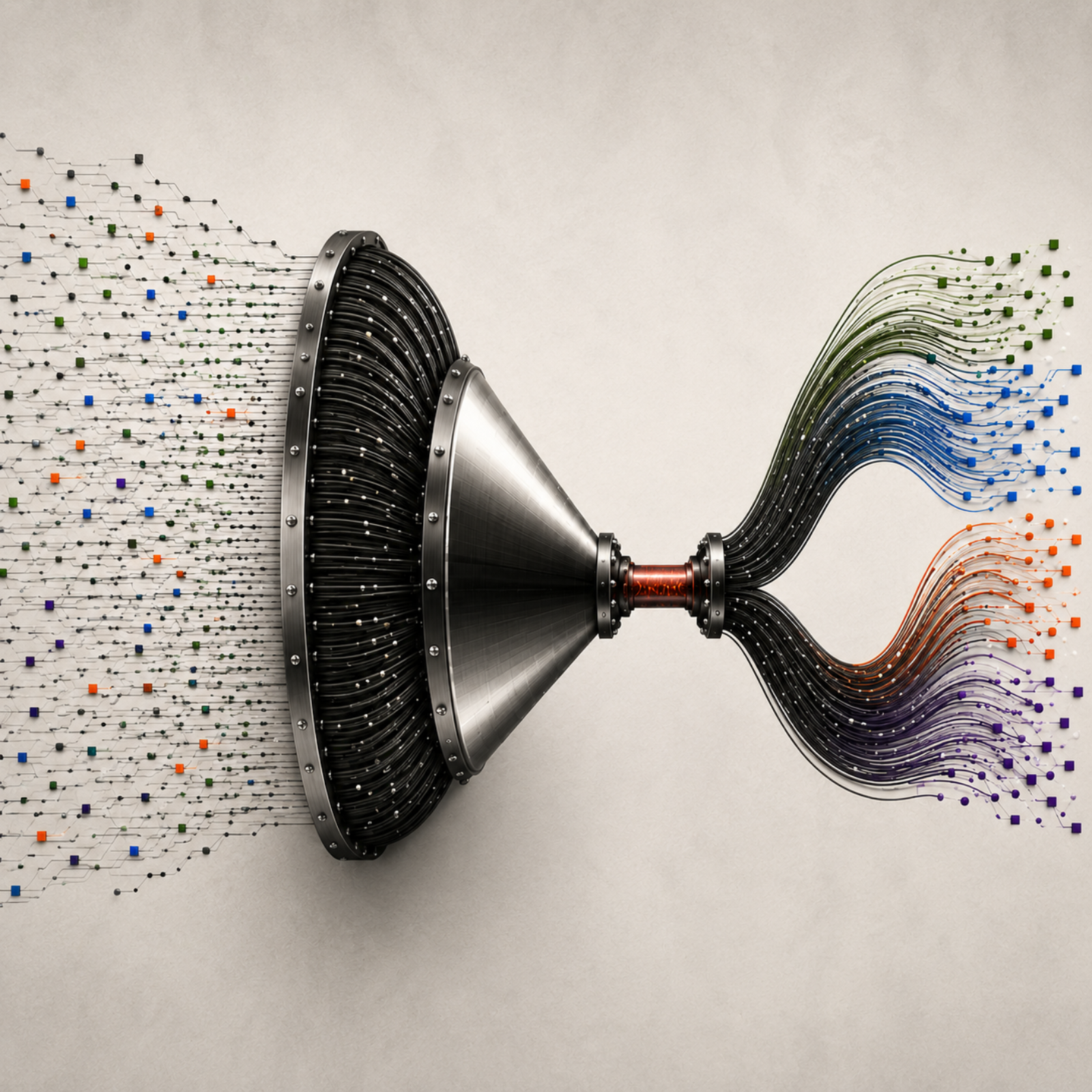
    Lately it feels like every organization has built a bigger pair of binoculars. There are dashboards for everything, weekly drops of “emerging signals,” and now AI sitting on top of it all, stitching neat summaries of what is supposed to be happening next. But in the rooms where decisions get made, the conversations still stall in the same place: everyone can point to the spike, nobody agrees on what it means. We keep upgrading the signal machine while leaving the thinking machine more or less where it was.That tension sits at the heart of our new book Story Systems and Cultural Research. If machines are going to handle more of the scanning and clustering, then foresight has to mature on the interpretation side: how we read contested words, map the stories people are rehearsing, and see the codes that make new behaviors feel allowed. It quietly changes the procurement question for organizations. It is no longer only “Which tool listens best?” but “What kinds of meaning-making are our tools smuggling in by default, and what kind of cultural reading practice do we want to build on top of them?”

    • Transcript
  • S5 · E4
    June 13 · 8 min

    The Invasion Economy

    When Prada draped the Chelsea Hotel in silver and cleared Katz’s tables for a dance floor this June, the filmmaker it hired to design the takeover described the project as satellites invading Manhattan. The experience economy has morphed into an invasion economy, in which a brand re‑skins mythologized addresses, broadcasts the takeover, and lifts off five days later.

    • Transcript
  • S5 · E2
    June 6 · 8 min

    Story Systems in the Age of Creator Cinema

    Hollywood still talks about “discoveries,” even as the hard work now happens in public, long before anyone calls it a film. Worlds are tested in comment sections, passed around as memes, and adjusted in the small edits that keep a clip in people’s feeds for one more loop. By the time a feature arrives, it is one more format a world moves through, not its origin. If you only look at the finished movie, you are looking at the afterimage, not the process that made people care.That process is easy to miss if you only track box office or subscribers. The more useful signal is what people return to: which scenes they quote, redraw, argue about, or quietly maintain. Those are the places where story behaves less like a product and more like a shared habit. Paying attention there is a kind of foresight. It treats shorts, fan edits, and low-budget experiments as evidence that a world already exists, and that the “breakout hit” is simply the moment everyone can see it at once.

  • S4 · E15
    June 3 · 8 min

    When Nostalgia Becomes Culture’s Operating System

    Most of what passes as “trend” right now is really about how we route memory. Feeds and platforms teach us to click what we already recognize, so nostalgia quietly becomes a default strategy. It feels safe, but if every brand keeps raiding its own archive, the past stops feeling special and starts feeling like inventory.The next phase of brand work has to focus less on throwbacks and more on continuity: building products, rituals, and experiences people want to return to, not just recognize once. We discuss this needed shift in strategy in our new book Story Systems, which looks at how cultural research can show where people use references for comfort, status, and belonging, and how brands can respond by adding new chapters to culture rather than replaying old scenes.

    • Transcript
  • S5 · E1
    May 13 · 7 min

    Recycling is a Story System

    California’s SB 343 “Truth in Recycling” law is interesting partly because it exposes how much the recycling symbol was never really about recycling. The chasing arrows became a civic ritual of the post-recession urban era: rinse the jar, sort the cardboard, participate in the system. In many cities, the blue bin became a quiet social signal tied to sustainability, institutional trust, and the belief that the system underneath everyday life was basically working.What’s changing now is not happening evenly across the country. Some places are moving toward stricter forms of systems accountability while others are drifting toward a politics shaped more by nostalgia, deregulation, and distrust of institutional complexity. After years of supply-chain failures, infrastructure strain, and visible institutional weakness, many people increasingly want visibility into the system beneath the symbol. SB 343 quietly shifts the recycling label from an aspirational gesture into something closer to an audited claim. The arrows now have to answer to infrastructure, not intention.

    • Transcript
  • S4 · E14
    May 9 · 11 min

    When Brand Strategy Runs Out of Story

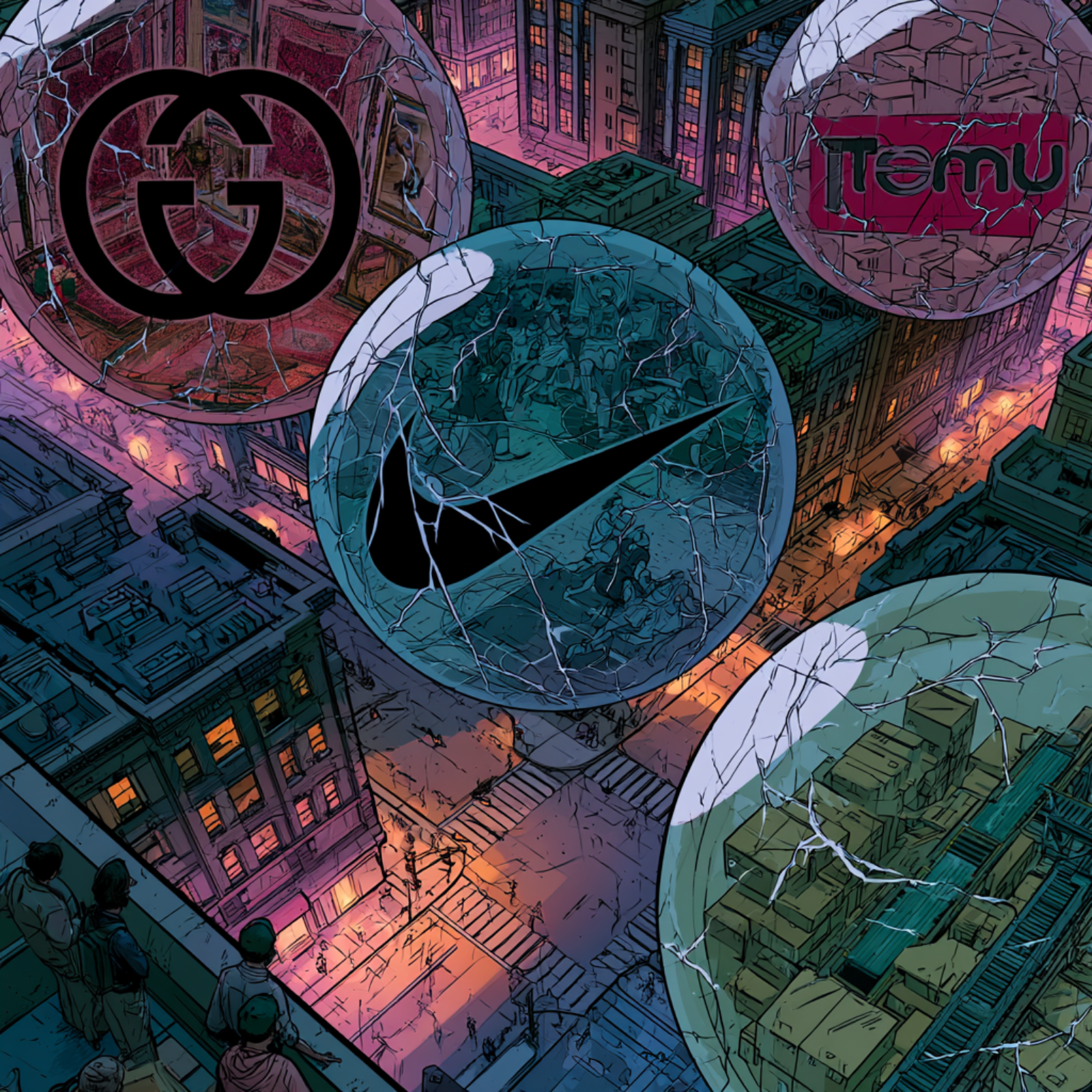
    Brands used to assume that if the numbers added up, the story would fall into place. The cases of Gucci, Nike, and Temu show the opposite is now true. Each looked structurally sound on paper, yet their business models began to erode as soon as culture stopped believing the myths that made those models feel legitimate. Heritage no longer guarantees authority, scale no longer guarantees centrality, and price no longer guarantees permission. Strategy can still tell you where value sits and how to pursue it. It cannot tell you whether anyone will still grant you the right to matter. That now depends on whether your narrative system matches the world people actually live in.

    • Transcript
  • S4 · E13
    May 8 · 15 min

    Imagining The Spaces We Will Need

    Physical spaces are not neutral settings. Our offices, kitchens, parks, malls, movie theaters, and classrooms, all tell us who belongs, what behavior is expected. They are narrative systems, not just built environments. Every layout, threshold, queue, sign, fixture, and seat rehearses a version of the future.This is one of the central arguments of our new book Story Systems and Cultural Research. Culture does not change only through new technologies, policies, or markets. It changes through the stories that organize behavior and make certain futures feel possible. When we learn to read those stories, we design more intentionally. Narrative systems help us move beyond trend language and ask a better question: what should future spaces help people become capable of doing together?I

    • Transcript
  • S4 · E12
    April 30 · 14 min

    Machines Don't Yawn

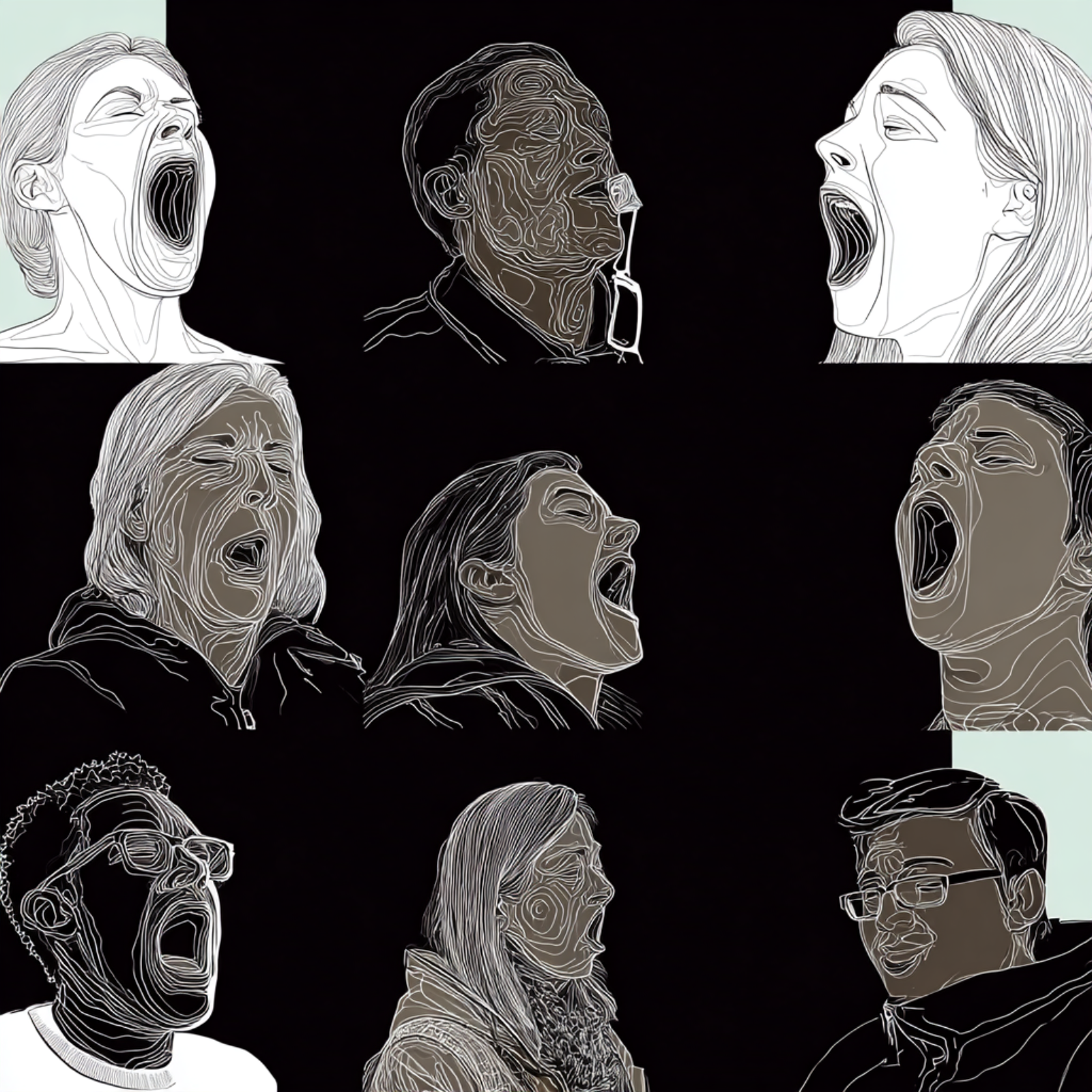
    Most of what we call “looking ahead” is really a mirror turned back on ourselves. Companies hire experts, build models, deploy AI to forecast markets and manage risk, but beneath the charts sit unspoken stories about who matters, who is expendable, and what “progress” is supposed to look like. In a time of conspiratorial thinking, wounded publics, and machine generated predictions, those stories harden into priors that shape what leaders even recognise as plausible. Machines don’t yawn. We do. The danger is not that we use probability, but that we mistake it for something neutral, disembodied, and somehow above culture. The work now is to treat intelligence systems as fast instruments for laying out the pieces, while we relearn how to see, question, and rearrange them together as humans who still yawn, hesitate, and change our minds.

    • Transcript
  • S4 · E11
    April 24 · 10 min

    Stealing Jester’s Privilege

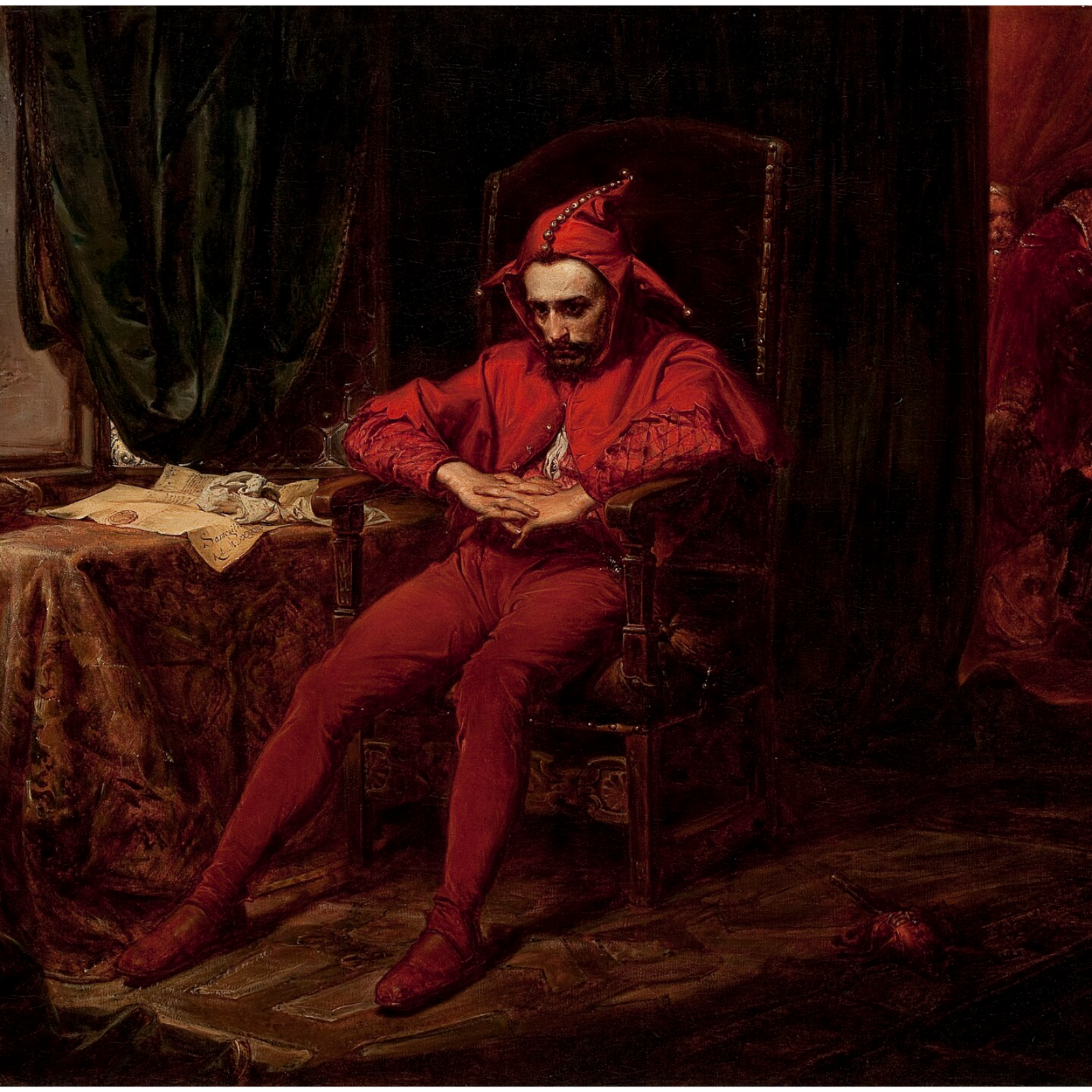
    We are living through a moment when “it was just a joke” has become a default way of speaking about serious things, from AI and product launches to corporate apologies and national policy. The old figure of the jester, who once used humor to tell hard truths to power, has been inverted: power now borrows the jester’s stance to float disruptive ideas, test public tolerance, and retreat into irony when challenged. At the same time, ordinary people rely on jokes and memes to cope with systems they no longer trust, turning contradictions into content that is instantly recognized but rarely resolved. The result is not a shortage of insight, but an inability to hold any single insight long enough for it to change how we act, leaving innovation, governance, and public discourse suspended in a loop of continuous exposure without commitment.

    • Transcript
  • S4 · E10
    April 23 · 8 min

    When the Iceberg Starts to Drift

    The mood of 2026 is friction at the surface. Reforms stall. Institutions grow brittle. Feeds fill with minor ruptures that never quite resolve. People talk about uncertainty, burnout, quiet cracking, but these are not abstract signals buried beneath events. They appear in work chats, neighborhood group texts, mutual-aid spreadsheets, and the steady accumulation of small adaptations. In that kind of world, the reassuring clarity of the iceberg begins to fail. When so much of the deeper story is already visible in the ways people improvise their lives, the task is less to dive for hidden truths than to learn how to read what is already in front of us.That is the working premise behind Story Systems and Cultural Research. In a recent workshop, a conversation about why foresight so often feels detached from culture brought us back to the relationship between Causal Layered Analysis and Culture Mapping: one clarifies how an issue is framed, the other shows where different stories already live and how they move. Taken together, they suggest that culture is not a submerged mass beneath events, but a moving field of narratives circulating across institutions, publics, and subcultures. The book traces how residual, dominant, emergent, and disruptive codes travel across that field, and how some narratives quietly harden into common sense while others register coming fractures. It asks how researchers, designers, and strategists can learn to read those patterns without falling back on trend lists or timeless archetypes.

    • Transcript
  • S4 · E9
    April 23 · 11 min

    The Loneliness Problem We’re Not Really Solving

    Loneliness today is less a simple lack of company than a breakdown in shared meaning about what it means to be connected. Individuals move through days saturated with notifications, group chats, and parasocial ties yet feel unseen, because contact no longer guarantees recognition or obligation. Publicly, the experience is translated into shorthand complaints about busyness, missing “third places,” or being “chronically online,” while institutions reduce it to metrics like interaction frequency or screen time, counting what is visible but missing whether anyone truly holds anyone else in mind. This gap between private feeling and public criteria leads to misdiagnosis, blaming individuals for a structural problem shaped by precarious work, eroded communal spaces, and platforms built for visibility rather than reciprocity. Addressing the crisis requires redesigning the social rules and rituals that define when a relationship counts, so that connection once again names something people can both feel internally and recognize together.

  • S4 · E8
    April 22 · 8 min

    When the Iceberg Starts to Drift

    The mood of 2026 is friction at the surface. Reforms stall. Institutions grow brittle. Feeds fill with minor ruptures that never quite resolve. People talk about uncertainty, burnout, quiet cracking, but these are not abstract signals buried beneath events. They appear in work chats, neighborhood group texts, mutual-aid spreadsheets, and the steady accumulation of small adaptations. In that kind of world, the reassuring clarity of the iceberg begins to fail. When so much of the deeper story is already visible in the ways people improvise their lives, the task is less to dive for hidden truths than to learn how to read what is already in front of us. That is the working premise behind Story Systems and Cultural Research. In a recent workshop, a conversation about why foresight so often feels detached from culture brought us back to the relationship between Causal Layered Analysis and Culture Mapping: one clarifies how an issue is framed, the other shows where different stories already live and how they move. Taken together, they suggest that culture is not a submerged mass beneath events, but a moving field of narratives circulating across institutions, publics, and subcultures. The book traces how residual, dominant, emergent, and disruptive codes travel across that field, and how some narratives quietly harden into common sense while others register coming fractures. It asks how researchers, designers, and strategists can learn to read those patterns without falling back on trend lists or timeless archetypes.

    • Transcript
  • S4 · E7
    April 16 · 9 min

    Looksmaxxing and the Cost of Being Seen

    Some of the most telling cultural warning signs do not look important at first. They arrive as spectacle, strange subcultures, compulsive self-performance, borrowed symbols, or people clearly pushing themselves too far. Then they get waved off as fringe behavior, filed under internet weirdness, or reduced to one damaged person making bad choices. But these moments are often not random at all. They are small exposures of a bigger pattern taking shape. That is why narrative systems matter. They let you see how scattered signals connect, how isolated incidents point to shared pressures, and how culture quietly shifts what it rewards, glamorizes, and excuses. Too often we label these moments too fast and dismiss them as anomalies. What we should be asking instead is what they are signaling repeatedly, and what kind of social reality they are helping to build. That is where deeper care and earlier intervention become possible.

    • Transcript
  • S4 · E6
    April 16 · 9 min

    The Histories and Futures of Credentialed Intelligence

    “Machines scale knowledge; humans preserve wisdom. Intelligence, therefore, is not automation but awareness: the capacity to reflect, adapt, and ethically co-create new systems of understanding.” - Story Systems and Cultural Research (Routledge) A lot of the conversation around AI still feels too narrow to me. We keep treating disruption as if it is mainly about tools getting better or jobs getting automated, when the deeper shift is really about institutional legitimacy. Consulting, higher education, and other knowledge systems were built on the idea that expertise was scarce, gated, and easy to certify. That story is starting to come apart. A lot of what Marie Lena Tupot and I explore in Story Systems and Cultural Research is how shifts like this are never just technical. They are narrative, cultural, and structural at the same time. What interests me more is how different futures open up depending on which parts of the past institutions choose to defend, recover, or let go of. Some will protect prestige long after purpose has weakened. Others may find more useful paths by reclaiming sidelined values like apprenticeship, stewardship, trust, and collective intelligence. No one of those narratives is the future. All of them are. The real question is not just what AI changes, but who gets to define what counts as intelligence, authority, and human value in the world that follows.

    • Transcript
Showing 1–20 of 20 episodes