transcript
show notes
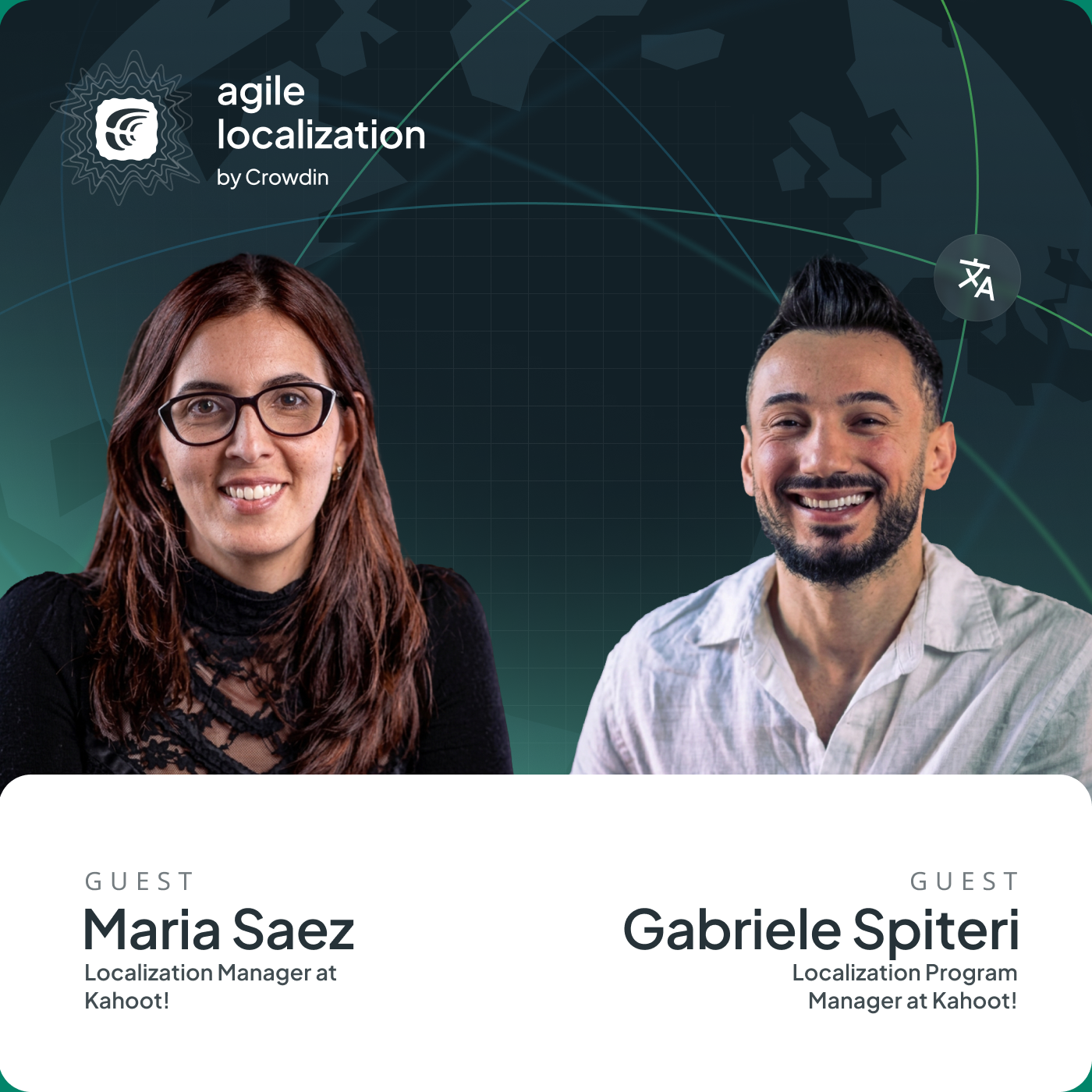
Kahoot! is a global learning and engagement platform that serves an unusually wide range of audiences across 22 languages, on top of more than 60 million public user-generated games. In this episode of The Agile Localization Podcast, host Stefan Huyghe sits down with Maria Saez and Gabriele Spiteri to share the frameworks, trade-offs, and hard-won lessons behind localizing a product that is simultaneously an e-learning tool and a live game experience.
Talk to an expert: https://crowdin.info/4avcwKU
What You’ll Learn
Gabriele Spiteri is a Localization Program Manager at Kahoot!, where he designs the frameworks that decide what gets centralized, what gets decentralized, and where AI belongs in the localization workflow. His work spans language launches, market entry strategy, and the behavioral and cultural mechanics that shape how Kahoot!'s games and learning experiences land across different regions. Gabriele is a strong advocate for moving localization upstream so that language, functionality, and user experience are shaped together rather than translated after the fact.
If you enjoyed this episode, make sure to subscribe, rate and review on Apple Podcasts, Spotify and YouTube Podcasts, instructions on how to do this are here.
The views, thoughts, and opinions expressed in this podcast are solely that of the speaker and do not reflect the views, opinions, policies, or position of Crowdin.
Agile Localization is handcrafted by our friends over at: fame.so
Talk to an expert: https://crowdin.info/4avcwKU
What You’ll Learn
- How to decide what to centralize vs. decentralize
- Why standardization can create a “false sufficiency”
- Choosing between human-led, AI-assisted, and fully automated workflows
- How to design localization strategies for radically different audiences
- Why localizing a product that is both software and a game
- The metrics that actually matter for measuring localization success
Gabriele Spiteri is a Localization Program Manager at Kahoot!, where he designs the frameworks that decide what gets centralized, what gets decentralized, and where AI belongs in the localization workflow. His work spans language launches, market entry strategy, and the behavioral and cultural mechanics that shape how Kahoot!'s games and learning experiences land across different regions. Gabriele is a strong advocate for moving localization upstream so that language, functionality, and user experience are shaped together rather than translated after the fact.
If you enjoyed this episode, make sure to subscribe, rate and review on Apple Podcasts, Spotify and YouTube Podcasts, instructions on how to do this are here.
The views, thoughts, and opinions expressed in this podcast are solely that of the speaker and do not reflect the views, opinions, policies, or position of Crowdin.
Agile Localization is handcrafted by our friends over at: fame.so
links4