Skip to content
Artwork for Agent Sense | Agentic Workflows & Operational AI

Agent Sense | Agentic Workflows & Operational AI

Monika Aggarwal, Operational AI, IBM and Frank Chavez, Technical Architect, IBM

You are listening to Agent Sense. Where we keep AI simple, practical, and grounded.

I am Monika Aggarwal. I specialize in Operational AI and in building agentic workflows grounded in decisions, data, and governance.I am joined by my colleague Frank Chavez. He is a Technical Architect and hands-on builder specializing in multi-agent orchestration and AI integration patterns.
I bring the enterprise and operational view. Frank brings the engineering view. We keep it simple and honest. Let’s start.”

Disclaimer: The views shared on this podcast are our own and do not represent IBM's viewpoint.

Play
  • 11 episodes
  • Avg 6 min
  • English
  • S2 · E1
    August 23 · 15 min

    Agent Memory is More than RAG

    Season 2, Episode 1 - Agent Memory Is More Than RAG AI agents can access huge amounts of enterprise data, yet they often forget the context that matters. In this episode of Agent Sense, Monika Aggarwal and Frank Chavez talk with Ran Aroussi, founder and lead architect of MUXI, about what it takes to build useful agent memory. We discuss why storing data and using RAG does not create memory, what agents should remember, how memory can be distilled and updated over time, and why enterprise memory needs context, relationships, time, and source traceability. Ran also shares his perspective on building memory as an organizational capability, with access controls and governance built into the architecture. A practical conversation for architects, engineers, and AI leaders building agents for production. Guest: Ran AroussiFounder and Lead Architect, MUXICreator of yfinance Agent Sense is hosted by Monika Aggarwal and Frank Chavez. #AgentSense #AIAgents #AgentMemory #RAG #EnterpriseAI #MUXI
  • S1 · E10
    August 12 · 4 min

    The Ambient Agent Pattern: AI That Works While You Sleep

    Most AI agents wait for a person to open a chat and give them a prompt. Ambient agents work differently. They listen for events across enterprise systems and start working when something changes. In this episode of Agent Sense, Monika Aggarwal and Frank Chavez discuss what makes an agent ambient and how the architecture changes when AI works continuously in the background. Using an SRE Ambient Agent as a mature example, they discuss how an agent can monitor operational signals, investigate incidents, invoke other agents and tools, involve a human when needed, and verify the outcome. The Ambient Agent design principle: Start with an event → Bound the action → Earn autonomy.

  • August 2 · 10 min

    Episode 9: Beyond Meeting Summaries: From Conversation to Action

    AI can summarize a meeting. Enterprise work starts after the summary. In this episode, Monika Aggarwal speaks with Artem Koren, co-founder and Chief Product Officer of Sembly AI, about how meeting context can move beyond notes and trigger real work. They discuss how AI can support follow-ups, workflow updates, CRM actions, and executive reporting across teams, countries, languages, and meeting platforms. Artem also explains why humans must steer agent execution and why enterprises should start with a controlled process, clear success measures, and a specific business outcome. Agent Sense keeps enterprise AI simple, practical, and grounded. Agent Sense reflects the personal perspectives and experiences of its hosts and guests. It is not an official IBM podcast.

  • S1 · E8
    July 17 · 8 min

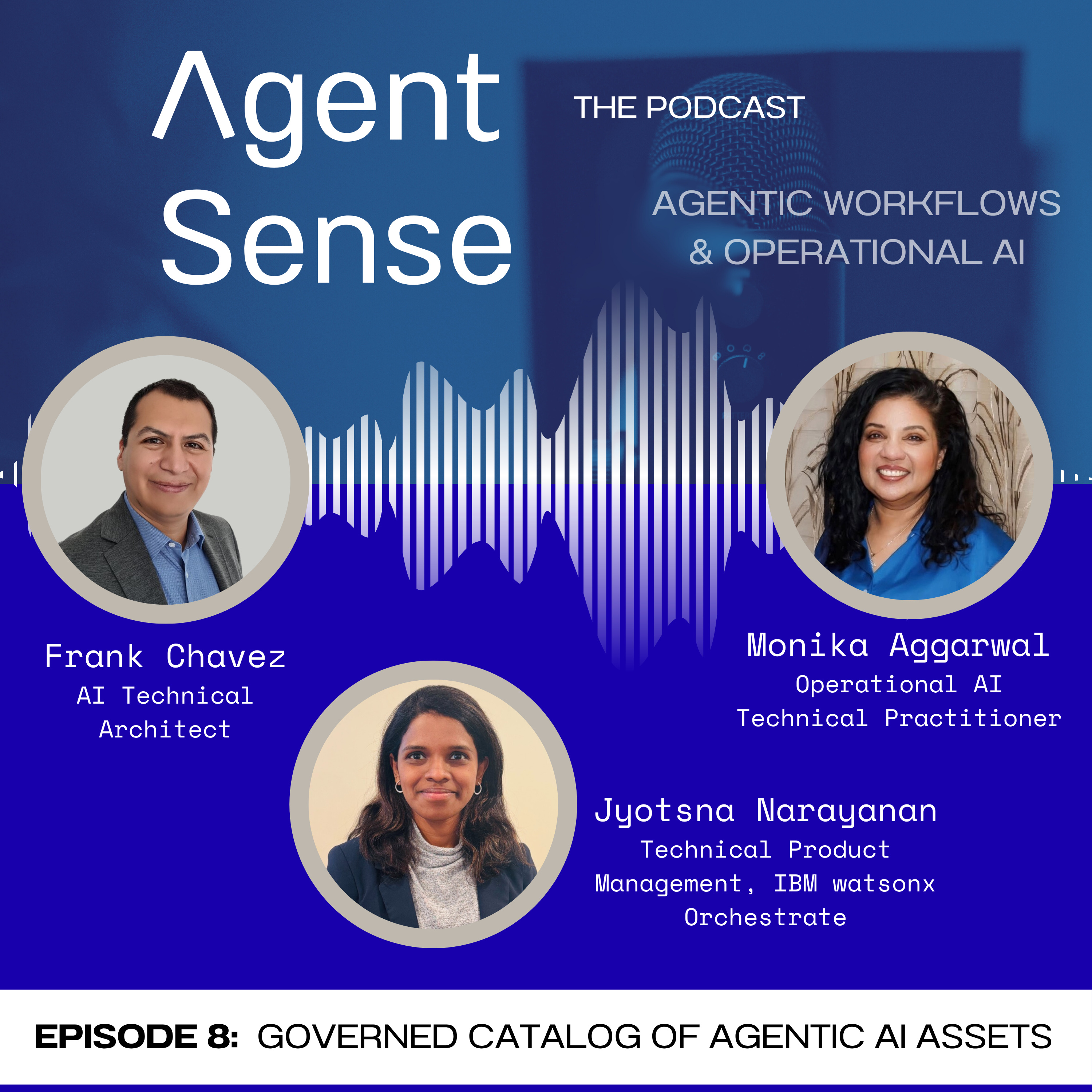
    𝑮𝒐𝒗𝒆𝒓𝒏𝒆𝒅 𝑪𝒂𝒕𝒂𝒍𝒐𝒈 𝒐𝒇 𝑨𝒈𝒆𝒏𝒕𝒊𝒄 𝑨𝑰 𝑨𝒔𝒔𝒆𝒕𝒔

    Agent Sense — Episode 8: Governed Catalog of AI Assets Enterprise AI agents does not fail from lack of ideas. They fail from agent sprawl: duplicate builds, unclear ownership, no way to know what is safe to reuse. Jyotsna Narayanan, Principal Product Manager for watsonx Orchestrate at IBM, joins host Monika Aggarwal to break down what a governed catalog of AI agents, tools, and MCP servers needs to include, how to evaluate reuse readiness using references like OWASP Top 10 and CoSAI, and where to start. Topics: AI agents, agentic AI, enterprise AI governance, AgentOps, MCP, Model Context Protocol, watsonx Orchestrate, agent catalog, AI reuse, enterprise automation, production AI. Vendor-agnostic, not monetized, based on field experience. Views are personal and do not represent IBM.

  • S1 · E7
    June 21 · 9 min

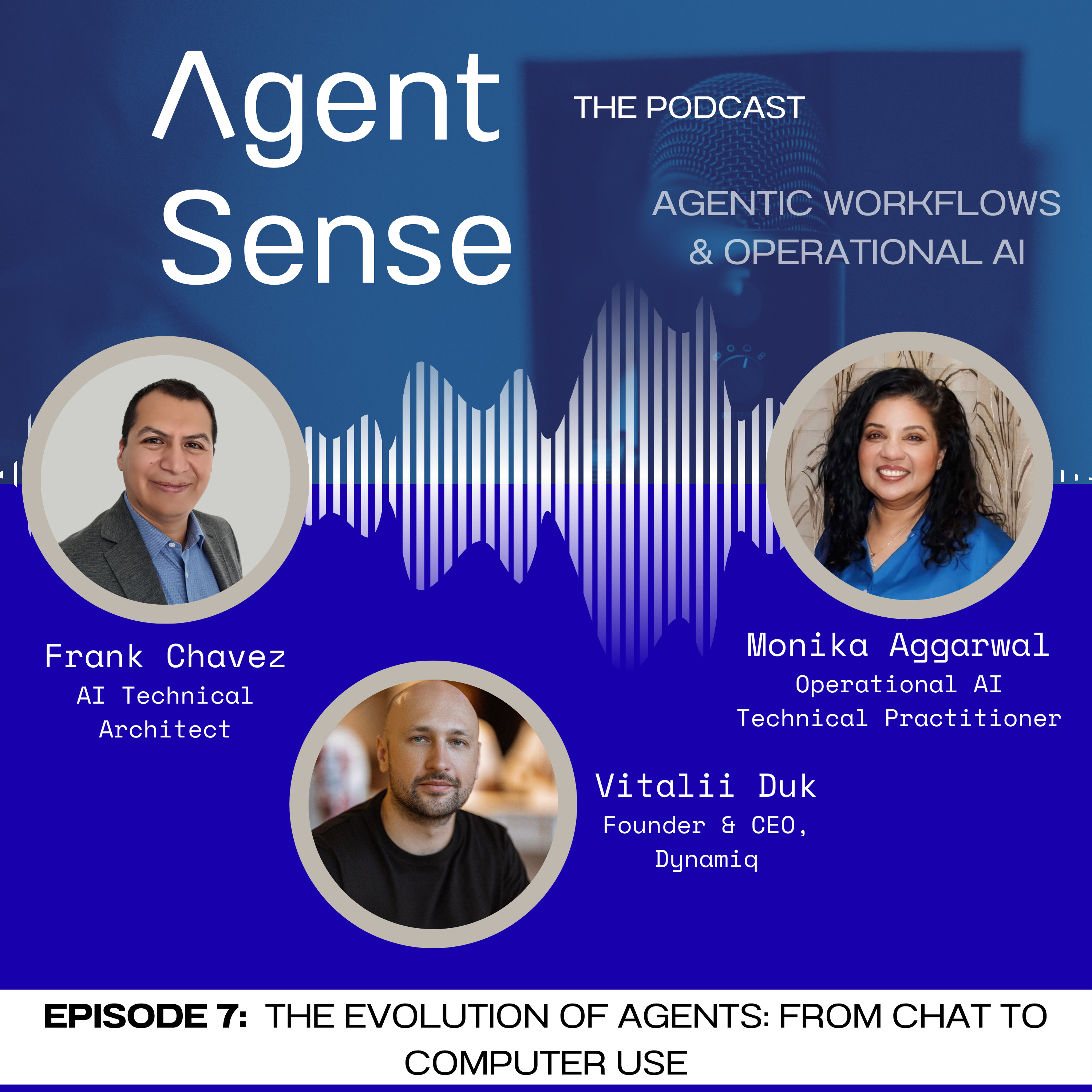
    𝑻𝒉𝒆 𝑬𝒗𝒐𝒍𝒖𝒕𝒊𝒐𝒏 𝒐𝒇 𝑨𝒈𝒆𝒏𝒕𝒔 𝑭𝒓𝒐𝒎 𝑪𝒉𝒂𝒕 𝒕𝒐 𝑪𝒐𝒎𝒑𝒖𝒕𝒆𝒓 𝑼𝒔𝒆

    The episode is about hashtag#9minutes long. In this episode, my co host Frank Chávez and I are joined by Vitalii Duk from Dynamiq to discuss how agents are moving from answering questions to doing work across tools, systems, and runtime environments. “𝑪𝒉𝒂𝒕 𝒎𝒆𝒂𝒏𝒔 𝒂𝒏 𝒂𝒈𝒆𝒏𝒕 𝒄𝒂𝒏 𝒂𝒏𝒔𝒘𝒆𝒓 𝒚𝒐𝒖𝒓 𝒒𝒖𝒆𝒔𝒕𝒊𝒐𝒏. 𝑪𝒐𝒎𝒑𝒖𝒕𝒆𝒓 𝒖𝒔𝒆 𝒎𝒆𝒂𝒏𝒔 𝒕𝒉𝒆 𝒂𝒈𝒆𝒏𝒕 𝒄𝒂𝒏 𝒕𝒂𝒌𝒆 𝒂𝒄𝒕𝒊𝒐𝒏 𝒂𝒄𝒓𝒐𝒔𝒔 𝒂𝒑𝒑𝒍𝒊𝒄𝒂𝒕𝒊𝒐𝒏𝒔, 𝒕𝒐𝒐𝒍𝒔, 𝒂𝒏𝒅 𝒘𝒐𝒓𝒌𝒇𝒍𝒐𝒘𝒔. 𝑻𝒉𝒂𝒕 𝒊𝒔 𝒘𝒉𝒆𝒓𝒆 𝒆𝒏𝒕𝒆𝒓𝒑𝒓𝒊𝒔𝒆 𝑨𝑰 𝒔𝒕𝒂𝒓𝒕𝒔 𝒕𝒐 𝒃𝒆𝒄𝒐𝒎𝒆 𝒐𝒑𝒆𝒓𝒂𝒕𝒊𝒐𝒏𝒂𝒍.” We share a practical frame: 🔹 Start with bounded, observable, and measurable agent use cases 🔹 Define the agent’s authority boundary before giving it access to systems 🔹 Use orchestration to manage work across tools, agents, approvals, and exceptions 🔹 Add observability, audit, and human review before scaling agent action 🔹 Treat Day 2 and Day 3 readiness as part of the design, not an afterthought 𝙏𝙝𝙞𝙨 𝙞𝙨 𝙩𝙝𝙚 𝙚𝙣𝙩𝙚𝙧𝙥𝙧𝙞𝙨𝙚 𝙖𝙧𝙘𝙝𝙞𝙩𝙚𝙘𝙩𝙪𝙧𝙚 𝙨𝙝𝙞𝙛𝙩: 𝙖𝙜𝙚𝙣𝙩𝙨 𝙖𝙧𝙚 𝙢𝙤𝙫𝙞𝙣𝙜 𝙛𝙧𝙤𝙢 𝙧𝙚𝙨𝙥𝙤𝙣𝙨𝙚 𝙩𝙤 𝙚𝙭𝙚𝙘𝙪𝙩𝙞𝙤𝙣. 𝙏𝙝𝙚 𝙫𝙖𝙡𝙪𝙚 𝙞𝙨 𝙣𝙤𝙩 𝙤𝙣𝙡𝙮 𝙞𝙣 𝙬𝙝𝙖𝙩 𝙩𝙝𝙚 𝙖𝙜𝙚𝙣𝙩 𝙘𝙖𝙣 𝙙𝙤. 𝙄𝙩 𝙞𝙨 𝙞𝙣 𝙝𝙤𝙬 𝙨𝙖𝙛𝙚𝙡𝙮, 𝙤𝙗𝙨𝙚𝙧𝙫𝙖𝙗𝙡𝙮, 𝙖𝙣𝙙 𝙧𝙚𝙥𝙚𝙖𝙩𝙖𝙗𝙡𝙮 𝙞𝙩 𝙘𝙖𝙣 𝙤𝙥𝙚𝙧𝙖𝙩𝙚 𝙞𝙣 𝙧𝙚𝙖𝙡 𝙗𝙪𝙨𝙞𝙣𝙚𝙨𝙨 𝙬𝙤𝙧𝙠.

  • S1 · E6
    May 4 · 4 min

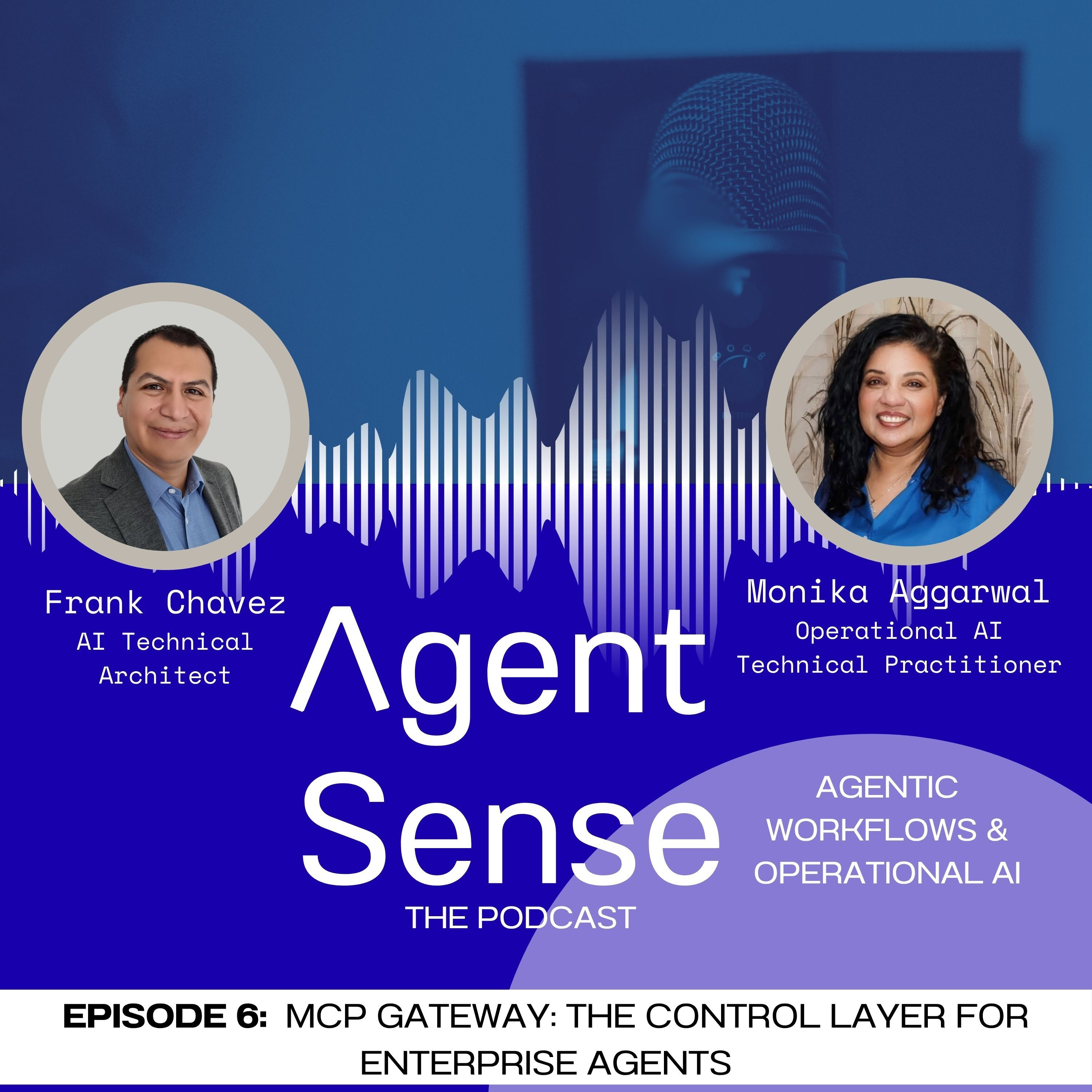
    MCP Gateway: The Control Layer for Enterprise Agents

    Episode 6 of Agent Sense continues from Episode 5, where we talked about MCP, A2A, and enterprise integration. In this episode, Monika Aggarwal and Frank Chávez discuss why enterprise agents need governed access to core systems before they can scale in production. MCP helps agents connect to tools and systems. But connection alone is not enough. As agents start working across ServiceNow, Workday, SAP, HR, IT, finance, and customer operations, enterprises need a control layer. That is where the MCP Gateway comes in. We discuss how an MCP Gateway helps manage identity, policy, approvals, audit, and traceability. It gives agents access to approved tools without opening direct, unmanaged paths into core enterprise systems. In about 4 minutes, we cover: 🔹 Why direct agent access to core systems creates risk 🔹 How MCP Gateway supports controlled enterprise access 🔹 Why public MCP servers are useful for testing, but not enough for production 🔹 How approved tools help agents scale across business workflows 🔹 Why traceability matters when agents take action Episode 5 was about connection. Episode 6 is about controlled access. Disclaimer: The views shared are based on our personal experience and do not represent the views of IBM. Tags for Spotify search: Agentic AI, Enterprise AI, MCP, MCP Gateway, AI agents, ServiceNow, Workday, SAP, AI governance, agent governance, operational AI, enterprise architecture, AI integration, agentic workflows.

  • S1 · E5
    March 25 · 4 min

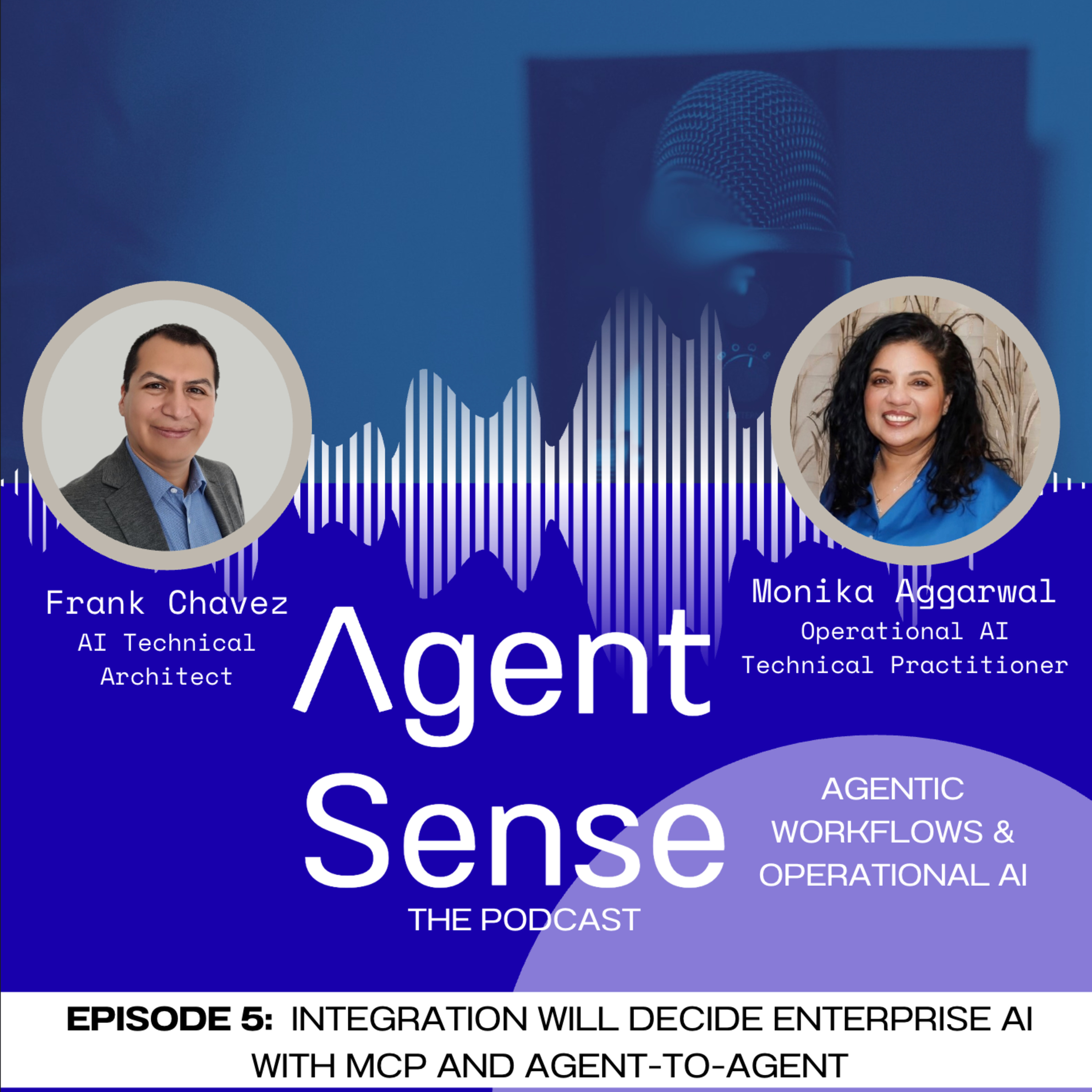
    Integration Will Decide Enterprise AI with MCP and Agent-to-Agent

    Theme: As AI systems evolve from single models into networks of autonomous agents, integration is the primary bottleneck. Core Integration Challenges: Fragmented Tool Access Context Loss Across Agents Tight Coupling & Low Reusability Lack of Standardized Communication Integration needs standards. MCP standardizes how agents connect to systems. Agent to agent communication standardizes how they pass work. 🔷 MCP connects agents to enterprise systems. 🔷 A2A connects agents to each other so work can move across the enterprise.

  • February 23 · 4 min

    Autonomous Databases, Where Autonomy Helps and Where It Hurts

    Theme: Do autonomous databases fix bad data, or do they mainly improve operational reliability? Why are organizations moving toward autonomous operations? In episode 3, we talked about an IT service agent that created operational noise during an outage. The AI agent acted fast, but the ownership and escalation data were wrong, so the actions were wrong. If the data underneath these systems is fragile, should the data layer become autonomous too? In eposide 4 we are talking about autonomous databases, and what they can and cannot do in incidents like this. I am Monika Aggarwal, AI Technical Practitioner. I build agentic workflows grounded in clear rules, good data, and governance. I am joined by my colleague Frank Chavez. He is a Technical Architect and hands-on builder specializing in multi-agent orchestration and AI integration patterns. I bring the enterprise and operational view. Frank brings the engineering view.

  • February 9 · 2 min

    Why IT Service Agents Fail in Production, A Data Readiness Problem

    Theme: Foundations & Data Readiness. Why do agents go rogue when the information source is weak? This is episode three: Why IT Service Agents Fail in Production, A Data Readiness Problem. Most enterprise agentic failures are not related to the model. They are data failures. We are using a real IT service ticketing example to show why data readiness matters for agents. I am Monika Aggarwal, AI Technical Practitioner. I build agentic workflows grounded in clear rules, good data, and governance. I am joined by my colleague Frank Chavez. He is a Technical Architect and hands-on builder specializing in multi-agent orchestration and AI integration patterns. I bring the enterprise and operational view. Frank brings the engineering view.

  • S1 · E2
    January 10 · 2 min

    Rules, Agents, Humans - A Practical Model for Agentic Workflows

    This episode explores the line between deterministic business logic and autonomous agents in real business operations, using a Commercial and Investment Banking onboarding scenario to show where rules work, where agents help, and where humans must stay in control. I am Monika Aggarwal, AI Technical Practitioner. I build agentic workflows grounded in clear rules, good data, and governance. I am joined by my colleague Frank Chavez. He is a Technical Architect and hands-on builder specializing in multi-agent orchestration and AI integration patterns. I bring the enterprise and operational view. Frank brings the engineering view.

Showing 1–11 of 11 episodes