Skip to content
Artwork for Advocacy at Work
Advocacy at Work · August 13 · 44 min

Four Years, One Protocol

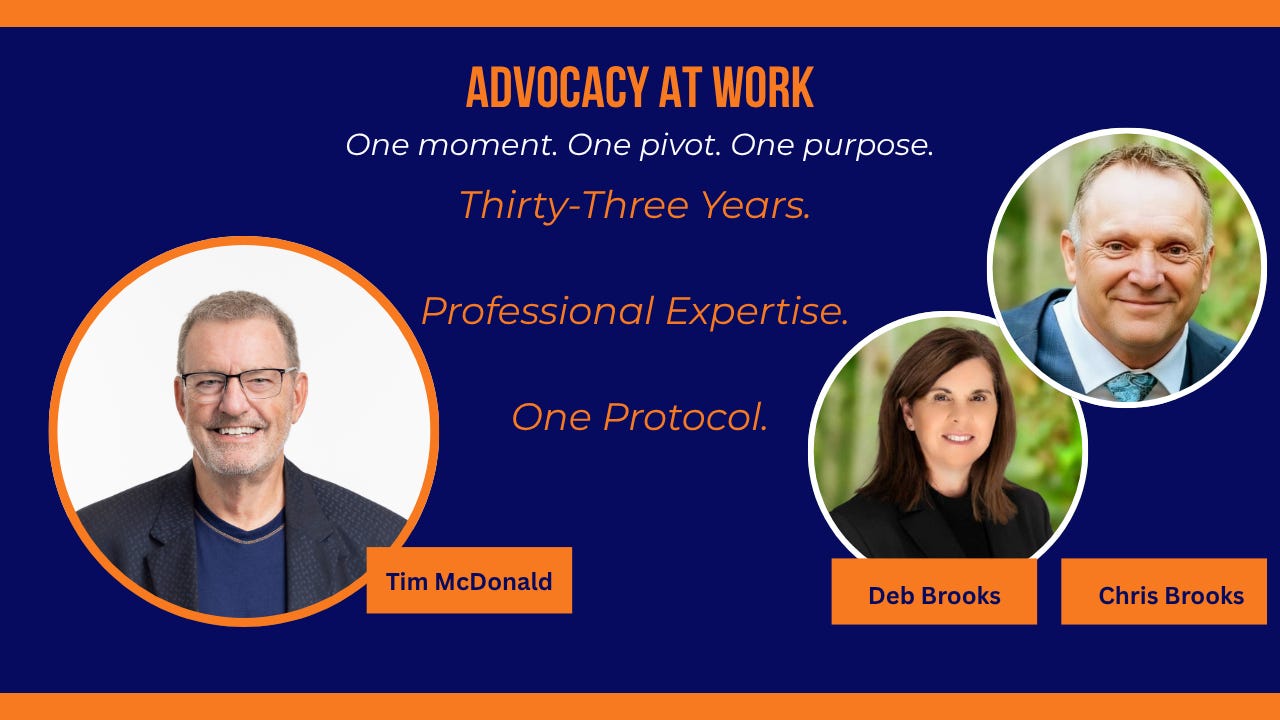
Ryan Bowman was born in 1991 with five congenital heart defects. One in 10 million. He had four open heart surgeries before his fifth birthday. The last one caused an acquired brain injury. Suddenly a bright, intelligent boy had to relearn how to talk, walk, eat. His mother, Deb Brooks, spent the next three decades knowing him better than any doctor ever would. She knew which change in his breathing meant something was wrong. She knew his nuances inside out. Ryan grew up wanting to be a mechanic. He loved Australian rules football. He raised a daughter with Deb’s help, and Deb was a doting grandmother with all the photos and videos to prove it. He died on February 16, 2025, aged 33. The care he received in his final weeks was, by any measure, not good enough. What happened after that is the reason this story exists. The Partnership Begins Chris Brooks reconnected with Deb, an old school friend, in late 2022. They’d barely started when Ryan got diagnosed with Hodgkin’s lymphoma on Christmas Eve that year. Chris made a decision right then: he would carry this load with her. What followed was more than two years toggling between Cancer House in Adelaide (which Chris still credits as an absolute lifesaver), the Royal Adelaide Hospital, and home. Four air ambulance transfers between Mount Gambier and Adelaide. Road ambulance trips beyond counting. Deb brought three decades of knowing exactly what Ryan needed. She could read his body like a book. She understood his nuances. Chris brought something different to the table. Forty years in Australian infrastructure and industrial services. A career built on procurement, tendering, submissions, and getting complex proposals across the line with people who didn’t have to say yes. Between them, they had what the situation required. The evidence, and the means to make someone act on it. “If we weren’t asking the questions or pushing the buttons, we’d get nowhere,” Chris says of that period. They were learning the system from the inside. Where the gaps were. Where escalation paths should have existed but didn’t. Where a family’s written wishes went when nobody was obliged to follow them. By the time Ryan’s heart specialist, one of Australia’s leading experts, sat them down and said twelve months, Deb and Chris had a working map of the system’s failure points. They got six. In Ryan’s final weeks, they couldn’t find local support. They didn’t even know hospice care existed in their region. The end-of-life plan they’d carefully written was completely ignored. “We treat our pets better,” Chris says. The Campaign Starts Before the End Most people stop there. Grief. A complaint. A letter that goes nowhere. Not Deb and Chris. Here’s what’s remarkable: the campaign didn’t start after Ryan died. It started while he was still alive. September 2024. Ryan was still fighting. Deb sat down and wrote a letter to the Health Advisory Council. That was the first major piece of correspondence, and it set the pattern for everything that followed. Not a complaint about what happened. A documented account of where the system had no mechanism for a family to be heard, and what could be done about it. She wrote to the CEO of the local health network too. They met. What followed was more than forty pieces of correspondence to state government alone. Ministers. Members of parliament. Department heads. Health network executives. Clinicians. Peak bodies. Each one written to be answered rather than filed. Each one building on the last. Chris brought four decades of professional habit to it. He’d spent a career learning that complaints don’t move organizations. Evidence moves organizations. Solutions move organizations. A well-constructed submission that makes it easy for a decision maker to say yes—that moves organizations. So they built one. Building the Case The target became clear early. South Australia had no mandated escalation protocol. Queensland had Ryan’s Rule—a mechanism allowing a patient, family member, or carer to escalate when something’s wrong and they’re not being heard. New South Wales had an equivalent. Western Australia had one. South Australia didn’t. Deb and Chris put together the comparative case. They gathered the interstate models. They went to the people who’d implemented them. They met palliative care specialists, clinicians, academics, administrators. They documented every meeting. They built and maintained a stakeholder register. Chris wrote the submissions. Together they assembled the evidence base into a package that a Chief Medical Officer could read and act on without having to do the work himself. Deb’s lived experience, three decades of it, was the foundation. Chris’s contribution was turning it into something a health department could actually implement. Neither half would have worked alone. Alongside the escalation work, they set up the Ryan Bowman Legacy of Care Foundation. Constitution. Governance. Policies. Procedures. Branding. Australian Charities and Not-for-profits Commission registration. Deductible gift recipient endorsement. The lawyer handling the DGR registration said she’d never seen a matter move that quickly. The Foundation was publicly announced in February 2026. The Meeting Blair Boyer took the health portfolio in mid-2026. On July 30, 2026, Chris went into a meeting with Allison Willis to meet the Minister and Professor Michael Cusack, SA Health’s Chief Medical Officer. Deb wasn’t there. She was in Queensland looking after her grandsons, Mason and Harry, while their mother Hayley settled into a new role in Operations at the Royal Flying Doctor Service. Which is its own kind of answer to what this family does. But here’s the thing: Allison Willis wasn’t a bystander to any of this. She’s spent 35 years in health. She started as a Director of Nursing at CARA’s disability healthcare support service. Nine years at the Nursing and Midwifery Board of Australia. Principal Adviser Policy and Strategy at the Health Consumers Alliance of South Australia. When that organization closed, she established and still convenes the Health Consumer Advocacy Network SA so consumers in the state wouldn’t be left without an independent voice. Most directly relevant? Between February 2023 and June 2024, SA Health engaged her as a policy consultant to run a consultative review with consumers, Local Health Networks, and SAAS. She updated the state’s strategic frameworks for consumer feedback, complaints, and consumer engagement. In other words, the person walking into that meeting had already written the ground the escalation protocol would sit on. Chris went in expecting resistance. He’d prepared for it. Boyer listened. Then he turned to Cusack and asked for his view. Cusack had the submission in front of him. He agreed with it. On July 1, 2026, SA Health committed to a mandated escalation protocol. The department’s “You’re Worried, We’re Listening” review is now out for public consultation. The Foundation has lodged its response. The initiative carries Ryan’s name: Ryan’s Voice. Twenty-two months from that first letter in September 2024 to this ministerial commitment. People who work in this space put the usual timeframe at three to five years. Allison, decades into this work, said afterwards that the case Chris had brought did what years of system-side reform hadn’t managed on its own. How They Actually Did It Chris is direct about the method, and it’s not complicated. “Instead of continually complaining, we wanted to bring solutions to the table.” They didn’t walk into that meeting angry. They walked in with three state models, documented outcomes, and a specific recommendation. They made the decision easy. There’s a second part to it that Chris attributes to their family GP, Dr. Tasnim Khan: “If you don’t ask, you don’t get.” And a third part, which is Deb’s, learned across 33 years of hospital corridors: “You get more flies with honey.” In the hospital, when Deb was advocating for Ryan, she’d take the nurse coming on shift to the side and tell them what to watch for.… This is a public episode. If you would like to discuss this with other subscribers or get access to bonus episodes, visit www.advocacyatwork.com
0:00-44:06

transcript

No transcript — this publisher did not publish one.

show notes

Ryan Bowman was born in 1991 with five congenital heart defects. One in 10 million.

He had four open heart surgeries before his fifth birthday. The last one caused an acquired brain injury. Suddenly a bright, intelligent boy had to relearn how to talk, walk, eat.

His mother, Deb Brooks, spent the next three decades knowing him better than any doctor ever would. She knew which change in his breathing meant something was wrong. She knew his nuances inside out.

Ryan grew up wanting to be a mechanic. He loved Australian rules football. He raised a daughter with Deb’s help, and Deb was a doting grandmother with all the photos and videos to prove it.

He died on February 16, 2025, aged 33.

The care he received in his final weeks was, by any measure, not good enough.

What happened after that is the reason this story exists.

The Partnership Begins

Chris Brooks reconnected with Deb, an old school friend, in late 2022. They’d barely started when Ryan got diagnosed with Hodgkin’s lymphoma on Christmas Eve that year.

Chris made a decision right then: he would carry this load with her.

What followed was more than two years toggling between Cancer House in Adelaide (which Chris still credits as an absolute lifesaver), the Royal Adelaide Hospital, and home. Four air ambulance transfers between Mount Gambier and Adelaide. Road ambulance trips beyond counting.

Deb brought three decades of knowing exactly what Ryan needed. She could read his body like a book. She understood his nuances.

Chris brought something different to the table. Forty years in Australian infrastructure and industrial services. A career built on procurement, tendering, submissions, and getting complex proposals across the line with people who didn’t have to say yes.

Between them, they had what the situation required. The evidence, and the means to make someone act on it.

“If we weren’t asking the questions or pushing the buttons, we’d get nowhere,” Chris says of that period.

They were learning the system from the inside. Where the gaps were. Where escalation paths should have existed but didn’t. Where a family’s written wishes went when nobody was obliged to follow them.

By the time Ryan’s heart specialist, one of Australia’s leading experts, sat them down and said twelve months, Deb and Chris had a working map of the system’s failure points.

They got six.

In Ryan’s final weeks, they couldn’t find local support. They didn’t even know hospice care existed in their region. The end-of-life plan they’d carefully written was completely ignored.

“We treat our pets better,” Chris says.

The Campaign Starts Before the End

Most people stop there. Grief. A complaint. A letter that goes nowhere.

Not Deb and Chris.

Here’s what’s remarkable: the campaign didn’t start after Ryan died. It started while he was still alive.

September 2024. Ryan was still fighting. Deb sat down and wrote a letter to the Health Advisory Council. That was the first major piece of correspondence, and it set the pattern for everything that followed. Not a complaint about what happened. A documented account of where the system had no mechanism for a family to be heard, and what could be done about it.

She wrote to the CEO of the local health network too. They met.

What followed was more than forty pieces of correspondence to state government alone. Ministers. Members of parliament. Department heads. Health network executives. Clinicians. Peak bodies. Each one written to be answered rather than filed. Each one building on the last.

Chris brought four decades of professional habit to it. He’d spent a career learning that complaints don’t move organizations. Evidence moves organizations. Solutions move organizations. A well-constructed submission that makes it easy for a decision maker to say yes—that moves organizations.

So they built one.

Building the Case

The target became clear early. South Australia had no mandated escalation protocol.

Queensland had Ryan’s Rule—a mechanism allowing a patient, family member, or carer to escalate when something’s wrong and they’re not being heard. New South Wales had an equivalent. Western Australia had one.

South Australia didn’t.

Deb and Chris put together the comparative case. They gathered the interstate models. They went to the people who’d implemented them. They met palliative care specialists, clinicians, academics, administrators. They documented every meeting.

They built and maintained a stakeholder register. Chris wrote the submissions. Together they assembled the evidence base into a package that a Chief Medical Officer could read and act on without having to do the work himself.

Deb’s lived experience, three decades of it, was the foundation. Chris’s contribution was turning it into something a health department could actually implement. Neither half would have worked alone.

Alongside the escalation work, they set up the Ryan Bowman Legacy of Care Foundation. Constitution. Governance. Policies. Procedures. Branding. Australian Charities and Not-for-profits Commission registration. Deductible gift recipient endorsement. The lawyer handling the DGR registration said she’d never seen a matter move that quickly.

The Foundation was publicly announced in February 2026.

The Meeting

Blair Boyer took the health portfolio in mid-2026.

On July 30, 2026, Chris went into a meeting with Allison Willis to meet the Minister and Professor Michael Cusack, SA Health’s Chief Medical Officer.

Deb wasn’t there. She was in Queensland looking after her grandsons, Mason and Harry, while their mother Hayley settled into a new role in Operations at the Royal Flying Doctor Service. Which is its own kind of answer to what this family does.

But here’s the thing: Allison Willis wasn’t a bystander to any of this.

She’s spent 35 years in health. She started as a Director of Nursing at CARA’s disability healthcare support service. Nine years at the Nursing and Midwifery Board of Australia. Principal Adviser Policy and Strategy at the Health Consumers Alliance of South Australia. When that organization closed, she established and still convenes the Health Consumer Advocacy Network SA so consumers in the state wouldn’t be left without an independent voice.

Most directly relevant? Between February 2023 and June 2024, SA Health engaged her as a policy consultant to run a consultative review with consumers, Local Health Networks, and SAAS. She updated the state’s strategic frameworks for consumer feedback, complaints, and consumer engagement.

In other words, the person walking into that meeting had already written the ground the escalation protocol would sit on.

Chris went in expecting resistance. He’d prepared for it.

Boyer listened. Then he turned to Cusack and asked for his view.

Cusack had the submission in front of him.

He agreed with it.

On July 1, 2026, SA Health committed to a mandated escalation protocol. The department’s “You’re Worried, We’re Listening” review is now out for public consultation. The Foundation has lodged its response. The initiative carries Ryan’s name: Ryan’s Voice.

Twenty-two months from that first letter in September 2024 to this ministerial commitment.

People who work in this space put the usual timeframe at three to five years.

Allison, decades into this work, said afterwards that the case Chris had brought did what years of system-side reform hadn’t managed on its own.

How They Actually Did It

Chris is direct about the method, and it’s not complicated.

“Instead of continually complaining, we wanted to bring solutions to the table.”

They didn’t walk into that meeting angry. They walked in with three state models, documented outcomes, and a specific recommendation. They made the decision easy.

There’s a second part to it that Chris attributes to their family GP, Dr. Tasnim Khan: “If you don’t ask, you don’t get.”

And a third part, which is Deb’s, learned across 33 years of hospital corridors: “You get more flies with honey.”

In the hospital, when Deb was advocating for Ryan, she’d take the nurse coming on shift to the side and tell them what to watch for.…


This is a public episode. If you would like to discuss this with other subscribers or get access to bonus episodes, visit www.advocacyatwork.com
links1