Artwork for Accidental Gods - The Thrutopian Podcast
Science

Accidental Gods - The Thrutopian Podcast

Accidental Gods

Another World IS still Possible. The old system was never fit for purpose - and now it's collapsing around us. So how do we co-create a Thrutopian future that we'd all be proud to leave as our legacy?

What stories can we weave of possibility? Of transformation? What happens if we commit to a world based on generative values: compassion, courage, integrity?

What happens if we let go of the race for meaningless money and commit instead to the things that really matter: clean air, clean water, clean soil - and clean, clear, courageous connections between all parts of ourselves, between ourselves and each other, between ourselves and the Web of Life - so that we can reclaim our birthright as self-conscious nodes in the web of life?

We can do this. Some of us already are. Every week on Accidental Gods we speak with the people who are living this world into being, courageous pathfinders who are exploring the emergent edge of inter-becoming.

As a species, we have all the answers, we just haven't yet crafted all the new stories and woven them into a future that works. We have the choice now - we can choose to transform…or we can face the chaos of a failing system.

Our Choice. Our Chance. Our Future.

Accidental Gods is a podcast and membership program devoted to exploring the ways we can create a future that we would be proud to leave to the generations yet to come.

Find the membership and the podcast pages here: https://accidentalgods.life
Find Manda's Thrutopian novel, Any Human Power here: https://mandascott.co.uk
Find Manda on BlueSky @mandascott.bsky.social
On LinkedIn https://www.linkedin.com/in/mandascottauthor/
On FaceBook https://www.facebook.com/MandaScottAuthor

  • 388 episodes
  • Updated Wednesday

Episodes388

  • Jul 28, 2021 · 51 min

    A Bridge to the Future: Walking the path between Wisdom and Despair with Matthew Taylor

    What is it that makes us human? How can we bring the best of ourselves to the current crises – individually, and as a civilisation? In this episode, we talk to Matthew Taylor, CBE FAcSS, and explore his ideas around ‘co-ordination theory’ and how we can use them to create new politics and new ways of organising our society to give more people a better, more equitable say in how we make things happen. Matthew Taylor, CBE FAcSS, is the Chief Executive of the NHS Confederation, but before that, he was Chief Executive of the Royal Society for the Arts (or more properly, for the Arts, Manufactures and Commerce) - and before that, he was head of the Number 10 Policy Unit for Tony Blair's Labour Government. He is a regular panelist on BBC Radio 4's Moral Maze, presents 'Agree to Differ' and occasionally, Analysis on the same channel. He's also deeply interested in the intersection between neurophysiology, psychology and human behaviour - and how we can bring these to bear on the current transformative moment in our history. In this episode, we explore his ideas around 'co-ordination theory' and how we can use them to create new politics and new ways of organising our society to give more people a better, more equitable say in how we make things happen. Matthew Taylor blog: https://www.thersa.org/blog/matthew-taylor Minimate: Co-ordination theory: https://youtu.be/-54DxHlOMnc The Podcast with Daniel Schmachtenberger and Tristan Harris: https://podcasts.apple.com/gb/podcast/your-undivided-attention/id1460030305?i=1000526825665

  • Jul 21, 2021 · 1 hr

    Active Hope: bringing resilience and reconnection to the world with Chris Johnstone and Madeleine Young

    As our world hurtles towards tipping points, how can we be part of the solution? How can we find resilience, in ourselves, our lives and our communities? Above all, how can we bring Active Hope to the world? Dr Chris Johnstone and Madeleine Young have set up an online training course based in Joanna Macy's work that reconnects and we talk about it in this week's podcast. With a background in medicine and psychology, Chris Johnstone's work over the last thirty years has focused on exploring what helps us face disturbing situations (whether in our own lives or the world) and respond in ways that nourish resilience and well-being. His books include Active Hope (co-authored with Joanna Macy and translated into more than eleven languages) and Seven Ways to Build Resilience. His online resilience courses have attracted students from more than sixty countries. He lives in the north of Scotland where he teaches online at CollegeOfWellbeing.com, ResilienceTraining.net and ActiveHope.Training Madeleine Young is a permaculturist, homeopath and XR activist. She's a trained facilitator in The Work that Reconnects and has helped to co-create the Active Hope online training. Find their free video-based online course in Active Hope at https://activehope.training Online resilience courses at https://resiliencetraining.net https://www.activehope.info http://collegeofwellbeing.com https://chrisjohnstone.info

  • Jul 14, 2021 · 55 min

    Being, Belonging, Beyond: Bringing the sacred to a turbulent world with Sue Philips of Sacred Design labs

    As we hover on the edge of the Great Turning, how can we find a spiritual practice that draws from the roots of who we are and yet provides the sustenance we need to help us navigate our changing world? Sue Philips of Sacred Design Labs explores the possibilities. Sacred Design Lab is a soul-centred research and development lab that explores and interprets the changing landscape of spiritual and community life. The Lab collaborates with divinely restless, intellectually curious and entrepreneurially practical leaders to help design and prototype the spiritual communities and infrastructure of the future, interpreting ancient best practice in the service of transformation. Sue Philips, one of the co-founders of the Lab says of herself that, 'I am relentlessly curious about liberating ancient wisdom to solve complex problems. I’m passionate about inspiring spiritual flourishing, designing for meaning making, and witnessing the transformation that happens when people roam around in what matters most. My wife and I share our 30-minute “family chapel” every morning, to remember who we want to be and what we care about, and to cultivate imagination for “the more beautiful world our hearts know is possible.”1 I’m part business strategist, part design geek, and part monastic. On any given day I might read liberation theology, human-centered design briefs, or business school case studies. Ideally all of them side by side. I graduated from Colgate University and the Episcopal Divinity School, and taught at Harvard Divinity School, where I am a Ministry Innovation Fellow. My wife and I live in Tacoma, WA with whichever of our five children is passing through.' As we hover on the edge of the Great Turning, increasingly, we seek a spiritual foundation that is fit for purpose in the twenty-first century. In this week's podcast, we discuss how that might come about, how we might recognise broad spiritual foundations that are universal and useful to support our connection with a numinous world. Links: Sacred Design Lab: https://sacred.design

  • Jul 7, 2021 · 44 min

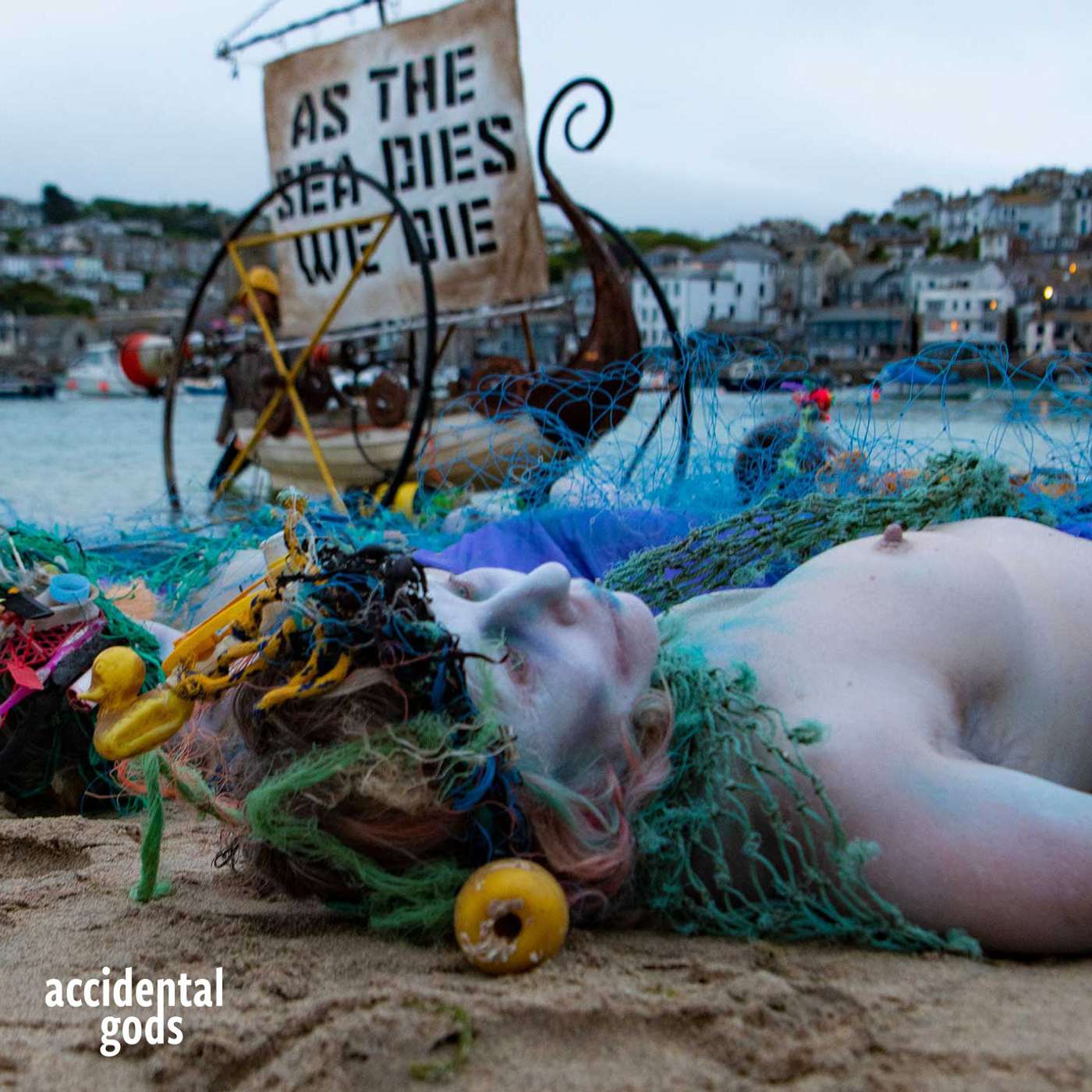
    The Mermaids had to happen! Reflections on G7 activism - and beyond with Sophie Miller

    In a world that is literally burning, with politicians whose positions of power are predicated on their not listening, what are the most creative, thoughtful, caring people on the planet doing to bring about change? Sophie Miller of Ocean and Extinction Rebellions was an integral part of the stunningly impressive actions at the G7 summit earlier this summer. In this second of two parts, she reflects on her experience - and looks ahead to future actions. Sophie Miller trained at Central St Martins before moving on to a decade-long career in television design. Now, she gives her time and energy to Extinction Rebellion as a Red Rebel - and to Ocean Rebellion, of which she is a co-founder. She lives in Cornwall, and so when she discovered that the first post-Covid G7 summit was taking place in her country and her county, she had to ask. In this week's second inspiring podcast, she describes what it actually takes to mount a successful action in the current political climate. She talks of the growing support from all aspects of the Fourth Estate and - movingly - of the practical - and spiritual - path that has brought her to this place and this time. She speaks as an activist who understands the damage done to the Oceans, knowing that there is still time to change what we're doing. We discuss the nature of policing, of totalitarianism - and the ways we can all work to transcend the crushing forces of authority to bring something deeper and more profound to our world. https://oceanrebellion.earth https://rebellion.global https://extinctionrebellion.uk

  • Jun 30, 2021 · 49 min

    Fire at Sea: bringing activism - and mermaids! - to the G7 summit with Sophie Miller

    "Never doubt that a small group of thoughtful, committed citizens can change the world. Indeed, it is the only thing that ever has.' As our world burns ever faster and our politicians cling ever more desperately to the old ways of being and behaving, Sophie Miller of Ocean Rebellion commits her creativity, artistry and courage to bringing truth to power. Sophie Miller trained at Central St Martins before moving on to a decade-long career in television design. Now, she gives her time and energy to Extinction Rebellion as a Red Rebel - and to Ocean Rebellion, of which she is a co-founder. She lives in Cornwall, and so when she discovered that the first post-Covid G7 summit was taking place in her country and her county, she had to ask. In this week's inspiring podcast, she describes the practical - and spiritual - path that has brought her to this place and this time - as an activist who understands the damage done to the Oceans -and that there is still time to change what we're doing. We discuss the nature of policing, of totalitarianism - and the ways we can transcend the crushing forces of authority to bring something deeper and more profound to our world. This is the first of two parts. Next week, we'll be back to find out how the activism transpired and where we all go from here. https://oceanrebellion.earth https://rebellion.global https://extinctionrebellion.uk

  • Jun 23, 2021 · 1 hr 4 min

    How to Save the our Planet: the Facts - with Professor Mark Maslin

    How did we get here? How bad are things really? Is there still hope? (Yes!) and... crucially - what can we do, individually, collectively, in our businesses, in our governments, around the world, to turn the bus from the edge of the cliff? Professor Mark Maslin is a climate scientist with a mission to explain in clear terms all we need to know. And he does it with panache, enthusiasm and optimism. How do we unpick the damage of Neoliberalism? How can we break the connections between work and income and unsustainable consumerism? Amidst the ideas of how our climate is changing, Professor Mark Maslin, FRGS, FRSA, offers answers to the social and economic ills of our time. Mark Maslin FRGS, FRSA is a Professor of Earth System Science at University College London. He is a Royal Society Industrial Fellowship, Executive Director of Rezatec Ltd and Director of The London NERC Doctoral Training Partnership. He is a member of Cheltenham Science Festival Advisory Committee and sits on the Corporate Social Responsibility Board of the Sopria-Steria Group and Sheep Included Ltd. Mark is a leading scientist with particular expertise in past global and regional climatic change. He has published over 175 papers in journals such as Science, Nature, and The Lancet. His areas of scientific expertise include causes of past and future global climate change and its effects on the global carbon cycle, biodiversity, rainforests and human evolution. He also works on monitoring land carbon sinks using remote sensing and ecological models and international and national climate change policies, and has presented over 50 public talks over the last five years including Google UK, Twitter EU, New Scientist Live, UK Space conference, Oxford, Cambridge, RGS, Tate Modern, Royal Society of Medicine, Fink Club, Frontline Club, British Museum, Natural History Museum, Goldman Sachs, the Norwegian Government, UNFCCC COP and the WTO. He has also written 8 popular books, over 60 popular articles. His “Climate Change: A Very Short Introduction” by Oxford University Press is now in its fourth edition and has sold over 50,000 copies. In this podcast, we talk about his most recent book, 'How to Save our Planet: the Facts' which does exactly what it says on the tin. A crips, cleanly written, utterly absorbing book, this is one of the clearest books ever written on the nature of the problems that assail us, the fact that it's not too late to change - and what we need to do at every level of society to change things. It's small enough to leave in the smallest room of the house - or by the kettle in the kitchen - so that everyone who comes by can pick it up and learn something useful. This is how we change the world, one aphorism at a time. Links from the podcast How to Save Our Planet: https://www.penguin.co.uk/books/320/320155/how-to-save-our-planet/9780241472521.html Mark Maslin's home page: https://www.geog.ucl.ac.uk/people/academic-staff/mark-maslin Review of Bill Gates's book: https://link.springer.com/article/10.1007/s12115-021-00581-z The Conversation: How bad could things be if we do nothing?: https://theconversation.com/climate-change-how-bad-could-the-future-be-if-we-do-nothing-159665

  • Jun 16, 2021 · 58 min

    Behave More! Rebuilding Our World Differently with Alexandra Kurland

    Imagine a world where we listen to the voices of the young as much as the old, the women as much as the men, all races, all abilities, all income streams - all species... where we honour difference, where compassion and empathy are our keynotes, not competition and separation. If this is the world we want, how do we get there? In this second of two parts, we explore the existential question of our time with behaviourist Alexandra Kurland. Alexandra Kurland is a horse clicker trainer, behaviourist, classical rider - and convenor of the annual (now bi-annual) Science Camp that explores the art and science of positive reinforcement. She is host of the Horses for Future podcast, co-host of the Equiosity podcast, and author of The Click that Teaches and a whole host of other books and online courses about horse training. In today's podcast - the second of two - Alex and Manda continue to dive deeply into the fundamental question of our time - how do we bring people of widely disparate political views to a point where we all pull together to create a flourishing, generative future for people and planet? We have the answers. We just need to see the possibilities and be emotionally and psychologically prepared to apply them. So this is a behavioural problem now, not a technological one. Which means it needs the brightest behavioural minds on the planet to begin to think about it. And we can start now... The Clicker Center: https://www.theclickercenter.com Equiosity: https://www.equiosity.com Horses for Future: https://kurlanda.wixsite.com/sequestercarbon Mary Hunter: PORTL shaping: https://behaviorexplorer.com/author/mary/ An Introduction to PORTL shaping: https://www.artandscienceofanimaltraining.org/tools/portl-shaping-game/ The New Climate War by Michael Mann: https://blackwells.co.uk/bookshop/product/The-New-Climate-War-by-Michael-E-Mann-author/9781913348687

  • Jun 9, 2021 · 48 min

    Behave! - Solving the existential crisis of our times, with Alexandra Kurland

    If we have all the technical and scientific answers to solving the climate and ecological crisis - which we do - how do we bring the greater mass of humanity to a place where we all work together, bringing our boundless creativity to the creation of a regenerative world? Exploring the world of behaviour with Alexandra Kurland, behaviourist, horse trainer and regenerative farmer. First of two parts. Alexandra Kurland is a horse clicker trainer, behaviourist, classical rider - and convenor of the annual (now bi-annual) Science Camp that explores the art and science of positive reinforcement. She is host of the Horses for Future podcast, co-host of the Equiosity podcast, and author of The Click that Teaches and a whole host of other books and online courses about horse training. In today's podcast - the first of two - Alex and Manda explore one of the fundamental questions of our time - how do we bring people of widely disparate political views to a point where we all pull together to create a flourishing, generative future for people and planet? We have the answers. We just need to see the possibilities and be emotionally and psychologically prepared to apply them. So this is a behavioural problem now, not a technological one. Which means it needs the brightest behavioural minds on the planet to begin to think about it. And we can start now... The Clicker Center: https://www.theclickercenter.com Equiosity: https://www.equiosity.com Horses for Future: https://kurlanda.wixsite.com/sequestercarbon Mary Hunter: PORTL shaping: https://behaviorexplorer.com/author/mary/ An Introduction to PORTL shaping: https://www.artandscienceofanimaltraining.org/tools/portl-shaping-game/ The New Climate War by Michael Mann: https://blackwells.co.uk/bookshop/product/The-New-Climate-War-by-Michael-E-Mann-author/9781913348687

  • Jun 2, 2021 · 1 hr 7 min

    The Hijacking of our Common Law - and how to set it free: with Mothiur Rahman of the New Economy Law Center

    Does the law take care of you? Does it work in your interests, for a common sense of justice - a genuine common-weal? If not, why not? And what can we do to change the way things are going? Mothiur Rahman of the New Economy Law Centre explores our current crisis of agency. Mothiur Rahman is founder of New Economy Law and a pioneer member of XR. In his first podcast with us, we explored the work he has done, helping to create a law that works for ordinary people. This week, we look at the ways the current system is breaking the law and how we can help to re-weave it into something that helps people and planet to flourish. New Economy Law Article: Stir for Action - Land and Power Article: Resurgence & Ecologist - Extinction Rebellion, A Civil Rights Movement Presentation: UKELA Wildlaw Conference hosted at Sussex University (2019) Presentation: Vaults Festival 2019 - Decoloniality & Rewilding Psyche

  • May 26, 2021 · 51 min

    Braver Angels: building trust, empathy and decency across the political chasm

    How can be rebuild trust in politics, politicians and each other? How would it feel to be free of partisan divisions? Could we heal our world in time? Braver Angels is dedicated to helping people bridge divides - to find the better angels of themselves and each other. Braver Angels - originally Better Angels - came into being after the divisive nightmare of the 2016 Presidential Election in the US. It began with a group of people in a barn in South Lebanon Ohio and has since spread to 20,000 people around the US, with chapters in other nations around the world. Their skill - their superpower - is to bring the social and humane technologies originally created to help bring together couples on the brink of the most acrimonious divorces. With skills in listening and a good dose of empathy, they help us to see the humanity in each other and so find the best of ourselves to bring to the table. John Wood Jr is an Ambassador for Braver Angels and has been working in the depths of the partisan divide. In this podcast episode, he shares the experience and wisdom of his journey, and that of the Braver Angels project. Details here: https://braverangels.org

  • May 19, 2021 · 1 hr 4 min

    River Dart Wild Church: Druid Christian Sam Wernham, founder of a land-based church explores the nature of wild contemplation.

    How does it feel to stand at the balance point between ancient Christian mysticism and the Druid's path of deep connection with the natural world? What do we become if we marry the traditions of Christianity with the far older, land-based traditions of this land - and all lands? In a living answer to these questions, Rev Sam Wernham founded the River Dart Wild Church and the Wild Monastics, as well as the Wild Spirit Community - all dedicated to a deep and sacred connection with the land. "When do you feel most alive? When are you most open and connected with a deeper sense of being? When do you fall in love with life and want to turn towards the world with hope and care? Perhaps, like us, your sacred ground is the earth under your feet… your sacred spaces are cathedrals of trees with branches filled with wind and rain, sunlight or stars… your baptismal pools are filled with deep brown river water or the wild and salty sea. Perhaps, like us, you yearn to share this… for spiritual community, for authentic meeting and deep silence with people and with all beings. So, welcome to wild church!" In this podcast, we explore Sam's journey to the founding of the Wild Church and Wild Monastics - how these fulfil the need for deep connection, and where her spiritual activism has taken her since the pandemic began. Wild Church (including Wild Monastics): https://www.riverdartwildchurch.com Wild Wisdom School: https://wildwisdomschool.com Wild Spirit Community: https://wildspiritcommunity.com/founder/ Blog Post: Returning to the Monastery of the Heart

  • May 12, 2021 · 57 min

    Why dignity matters more than nationalist pride with bestselling political columnist Ece Temelkuran

    Imagine a world where dignity is valued over nationalistic pride; where we know that 'enough' is the opposite of 'more'; where we understand the bonds that draw us together. Author Ece Temelkuran launches her new book 'Together' - and shares with us its message of human resilience. More at https://accidentalgods.life Ece Temelkuran is one of the Turkey’s best known novelist and political commentators. She has contributed to the Guardian, Newstatesman, New Left Review, Le Monde Diplomatique, Frankfurter Rundschau, Der Spiegel, The New York Times and Berliner Zeitung. Her books of investigative journalism broach subjects that are highly controversial in Turkey, such as the Kurdish and Armenian issues and freedom of expression. Her novel Women Who Blow on Knots won a PEN Translates award, sold over 120.000 copies in Turkey, and has been published in translation in Germany, Croatia, Poland, Bosnia and France with editions also forthcoming in China, Italy and the USA. Her non-fiction work: HOW TO LOSE A COUNTRY is a searing indictment of the rise of the neo-fascist right around the world, rooted firmly in her own experience in Turkey. TOGETHER breaks new ground - a series of ten essays, each exploring life - hers and the world's - and ways the human spirit rises above the exigencies and horrors that we can create - to manifest the bright points of human existence that signal hope for the world. The writing is lyrical, sharply insightful and deeply moving. In this podcast, we explore the woman beneath the words - and the ways we can take what she offers to bring us all closer together. Ece Temelkuran's Website https://www.ecetemelkuran.com Together: the book - https://blackwells.co.uk/bookshop/product/Together-by-Ece-Temelkuran-author/9780008393809

  • May 5, 2021 · 1 hr 9 min

    ReWorlding: Co-Creating a Politics of Wholeness with Eva Schonveld and Justin Kenrick

    How would the world flourish if our politics were based on trust? And how can we make that happen? Eva and Justin are co-creating the 'ReWorlding' online conference in late May and we came together to explore how even the making of this has been an exploration of what it is to be human, to trust, to grow and to dare to be different. Eva and Justin were guests of podcast 44 [https://accidentalgods.life/re-democratising-democracy/] - in which we explored the links between personal and collective trauma -and they outlined the work they were doing in Scotland to build towards a constitutional convention that would help to weave new democratic structures for an independent Scotland. Now they are weaving a new Gathering into being - an online week, bringing together people from all over the world to find new ways to be human in the 21st century - ways that will take us forward into a world that is regenerative for the human and more than human worlds. In their own words: "Reworlding is asking: how can we develop new decision making processes - and integrate with enduring ones - in order to collectively create a decolonised, just, empathic and regenerating world at every level? This is not a call to get involved in politics. This is a call to help create a new politics. Reworlding will bring together people who have: experience of working with their own and others’ trauma, and/ or experience of decision making systems that seek to enable a mutual world, and/ or experience of resisting domination to protect and enable a just and regenerative world This week is an exploration, a scouting out of what is already happening, and a searching ahead: imagining and working towards assembling a politics of wholeness, including through deepening our awareness of what colonises within and between us - and what liberates us." Links: More on the Gathering here: https://heartpolitics.squarespace.com

  • Apr 28, 2021 · 58 min

    Webs of Connection: Rebuilding soil, talking with bees and the magic of fungi with Navona Gallegos

    Regenerative Farming - or Agro-ecology - is being widely recognised as one of the best ways to mitigate the climate crisis. But how does it actually work? What can we do with our back gardens, our rooftops, our local verges to make a difference? Navona Gallegos explains the science - and the spirit - of working with the land. We first spoke with Navona Gallegos in podcast #55 (here) when she had newly moved onto the land she was starting to farm in New Mexico. In this podcast, she returns to talk about how her work is progressing there - and to talk more deeply about the actual mechanisms we can use to draw carbon down into our soils. She says this: "Where I am called is to bring more focus on the fungi, as that really is the 'how' of soil regeneration, be it agricultural, forest, greening deserts, whatever, and I don't hear people talking about that enough. We know fungi and their glomalin are what sequester carbon (mitigate climate change, reverse ocean acidification, etc.) and cycle macro and micro nutrients thereby increasing abundance and nutrient content in foods thereby increasing the capacities of those who eat those foods. Last time I spoke about fungi in relation to the soil food web, but I'd like to really make clear how and why fungi are the keystone to soil health and therefore human health, land health, etc. and how we support them and get out of their way. Fungi are the neural network of the Earth, communicating the state of the environment to plants and giving them the tools to respond. By facilitating plant growth, fungi are also changing climate patterns; there are many examples of how revegetating an arid area brings more rainfall. And so, I have a vision I'd like to speak on (that is SO possible) of vast stretches of land, even whole continents, once again connected in mycelial webs. I think that is a goal we should set for our species for the next seven generations because if we have that, we have connected ecosystems and watersheds that are clean, abundant, biodiverse, adaptable, and full of so much food, fiber, and fuel for humans and more than humans. Just like disease is broadly described as a breakdown of communication within the body, the destruction of those mycelial networks through tillage and other harmful practices marked the start of the wetiko culture. The 'how' is simple: plant a wide diversity of plants, mostly annuals; bring more wood into systems via mulch and hugel culture and leaving woody debris (and I can go into how that lignin is decomposed by fungi into humic substances, which are the storehouses of the soil for carbon and other nutrients and even DNA information of other types of life forms that is stable for thousands of years as well as cleans contaminated soil by binding contaminants, AND how fungi are the gatekeepers to those stores and information, choosing when to draw on them); use fungal​ composts (not bacterial dominated); stop​ disturbing the soil (there are ample resources now for no-till and I can elaborate); rotational grazing with animals to increase plants vigor and diversity; do not pull weeds, rather create a more fungal soil and watch the 'weeds' back off on their own (ie, create what we want rather than resist what we don't want). As far as the 'how' socially/politically, it's all about changing our thinking and viewing the world as alive. Rather than paving over an empty lot or growing mono-crop grass lawns, let's create ordinances that promote more ground cover and diversity. This advocacy doesn't just have to be about making more human food. We need rooftop gardens everywhere possible to mitigate the heat island effect and create positive feedback loops of rainfall and temp. that allow more growth. Mulch your leaves instead of bagging and throwing them away. Everyone can find a way to promote this either in stopping destructive gardening and growing practices or by advocating for community growing spaces or by guerilla hugeling, planting, seed-saving, foraging, and buying locally. Long-lived indigenous cultures all have practices that support fungal networks. One of the main issues I see when I consult on soil building is a psychological clinging to control when the system really needs to just be left alone and supported in simple ways. The more we rewild our minds and our communities, the more we will get away from the perceived need to micro-manage, the more we can hear the voices of the land so our actions are efficient and effective, AND simultaneously build the equivalent of human mycelial networks where we can trade tools and information in an open-source way. "I don't have a lot of concrete ideas myself around how to build political will. Rather, where I'm at is simply the acknowledgement that we need to change our thinking fundamentally and let go of scarcity/wetiko culture by reconnecting. Fungi are literally the (re)connectors of terrestrial life. My personal path toward reconnection is by changing how we grow food in our gardens and farms so that fungi thrive and imbue us with better nutrition as well as inoculate our guts us with, well, themselves and their voices (heard through our microbiome, cravings, hormonal regulation, etc.). Personally, the more I do this, the more I am connected to my (new-to-me) land through dreams of when it will rain, when a certain plant will drop seeds, etc. Or I am visited by a honey bee who spends twenty minutes walking on my hand and I am left with the knowledge that they are there, that they need me to plant flowers to them to pollinate. The more time I spend inoculating myself with the flora around me (eating the wild plants, grasses, bark), the more I am able to safely drink the water on this land without filtration, which I couldn't do when I arrived in Dec. When I do actions like mulching, I am walking the talk of my earth-based spirituality and the land spirits take notice and support."


  • Apr 21, 2021 · 1 hr 4 min

    Swimming in a New Sea: creating a different world of money with Jonathan Dawson of Schumacher College

    Imagine a world where money works differently. Where there's enough for everyone's needs, not their greed and where we work together for a life we all want. In this week's podcast, Jonathan Dawson, head of the Regenerative Economics program at Schumacher college explores how. Jonathan Dawson, co-creator of the Masters in Regenerative Economics at Schumacher college, is a sustainability educator and a former President of the Global Ecovillage Network. He has around 20 years experience as a researcher, author, consultant and project manager in the field of small enterprise development in Africa and South Asia and before joining the College he was a long-term resident at the Findhorn ecovillage. Jonathan is the principal author of the Gaia Education sustainable economy curriculum www.gaiaeducation.org, drawn from best practice within ecovillages worldwide, that has been endorsed by UNITAR and adopted by UNESCO as a valuable contribution to the UN Decade of Education for Sustainable Development. He teaches this curriculum at universities, ecovillages and community centres in Brazil, Spain and Scotland. He has also adopted the curriculum to virtual format and teaches it through the Open University of Catalunya in Barcelona. In this week's wide-ranging discussion, we explore the differences between the hard, mechanistic view of economics and the wider, more regenerative view that is based in moral philosophy. From there, we look at the ways we can change the stories we tell ourselves about value and worth and the ways we are moving forward in an ever-changing world. Links: Articles: DAWSON J. Teaching Economics for the 21st Century, Resilience.org. http://www.resilience.org/stories/2015-10-06/teaching-economics-for-the-21st-century DAWSON J. Changing Stories: Using narrative to shift societal values, Resurgence (March, 2015) http://newstoryhub.com/2014/08/changing-stories-using-narrative-to-shift-societal-values/ DAWSON J. A wave of disruption is sweeping in to challenge neoliberalism, Guardian, March 12, 2015 http://www.theguardian.com/sustainable-business/2015/mar/12/disruption-challenge-neoliberalism-commons-political-system Books: Kate Raworth: Doughnut Economics https://blackwells.co.uk/bookshop/product/Doughnut-Economics-by-Kate-Raworth-author/9781847941398 Mariana Mazzucato: The Mission Economy: https://blackwells.co.uk/bookshop/product/Mission-Economy-by-Mariana-Mazzucato-author/9780241419731 Tim Jackson: Post Growth: https://blackwells.co.uk/bookshop/product/Post-Growth-by-Tim-Jackson-author/9781509542529 Kim Stanley Robinson: The Ministry for the Future (fiction): https://blackwells.co.uk/bookshop/product/The-Ministry-for-the-Future-by-Kim-Stanley-Robinson-author/9780356508832 Bill Gates: How to Avoid a Climate Disaster: https://blackwells.co.uk/bookshop/product/How-to-Avoid-a-Climate-Disaster-by-Bill-Gates-author/9780241448304 TED TALK Rupert Sheldrake (banned by TED) https://youtu.be/JKHUaNAxsTg

  • Apr 14, 2021 · 57 min

    Wild Weeds/Living Foods: Katrina Blair of Turtle Lake Refuge on Wild Foraging, Plant Whispering and healing the earth

    How can we bring vibrancy, life, diversity and connection back to the land? How would we be if we listened to all the wild plants of our land? Katrina Blair first listened to plants at the age of 11 - and is now transforming her local community. In this inspiring podcast, she leads us through ways we, too, can connect with plants as our teachers. Katrina Blair began studying wild plants in her teens when she camped out alone for a summer with the intention of eating primarily wild foods. She gained an MA from John F Kennedy University in Orinda, CA in Holistic Health Education and - as she tells us in the podcast - went on to found Turtle Lake Refuge in 1998, a non-profit organisation whose mission is to celebrate the connection between personal health and wild lands. She teaches sustainable living practices, permaculture and wild edible and medicinal plant classes locally and internationally. She is the author of two books, one a raw food cook book's 'Recipes for Living Deep' and The Wild Wisdom of Seeds (linked below). The Mission Statement of Turtle Lake Refuge says that it exists to celebrate the connection between personal health and wild lands. We are inspired to promote and practice sustainable ways of living, honouring wild nature and the evolution of community. Examples of our work include growing, harvesting and preparing local, wild and living food for the community, educating about the great values of the wild edible and medicinal abundance available in our area, providing local micro greens for the public schools, restaurants and stores and educating about organic land stewardship practices through our project Bee Happy Lands. Links: Turtle Lake Refuge: http://www.turtlelakerefuge.org Recipes for Living Deep: http://www.turtlelakerefuge.org/rawfoodcookbook The Wild Wisdom of Weeds: http://www.turtlelakerefuge.org/wild-wisdom

  • Apr 7, 2021 · 48 min

    Honouring the Children: We bequeath them the Earth. What do they need from us in this time of transformation?

    “No decision shall be made and no action taken unless it holds the good of the children of all beings, of this generation and seven hence, at its heart.” How would our world be if we based every act on the impact it would have down the generations? What do our children - and their children - need us to do now, to grant them a flourishing future? A simple video asks that question and invites our children to answer. We talk to its makers. When David SmartKnight heard that the G7 summit was coming to Cornwall in June 2021, he went to the land and asked of it ‘What can I do?’ That night, he had a dream… and as is the way of things, when we align ourselves with life, the world joins our actions. Pretty soon he and his co-producer, Klaudia van Gool had a team of people, who came together to make a beautiful, moving 3 minute video and a project of awe-inspiring scope, to bring the words of the world’s children to the world’s leaders in ways they cannot ignore. As for David himself: Following a thriving career as an IT consultant, for 25 years David has asked: “What does it mean to live sustainably?”. This has resulted in studying & applying Permaculture, shamanism, Non-Violent Communication, storytelling, teaching, social enterprise, running a smallholding, planting and managing coppice, making greenwood furniture, keeping livestock and holding ceremonies. All woven into a second career as an environmental educator, devising and delivering a European-wide teacher training program, creating and piloting a sustainability curriculum for secondary, establishing two award-winning Environmental Education Centres and running eco-build projects as community empowerment exercises. “Sustainability”, he believes “is a completely inadequate ambition: what we actually need is regeneration, which, by necessity, requires both personal fulfilment and social justice.” Between his deep-nature connection business, the complexities (and joys) of single-parenting two teenagers and devoting much of his time to supporting the Regenerative Cultures strand underpinning Extinction Rebellion, David currently is spearheading “The Children’s Fire Project” – an ambition to bring the 7th Generation Principle to the heart of global economic thinking. And this is Klaudia: I grew up on the edge of a village in the south of the Netherlands, considering the fields out the back my play ground. I had an urge to garden and made small gardens around the house. I signed myself up as a youth member of a national nature conservation charity. It wasn’t until I decided on an Environmental Science degree after moving to the UK and having children, that things came together for me and I realised i couldn’t think of anything better to do than work in the field I loved, which I have continued to do ever since. I worked as an Environmental Business Services Adviser for the Groundwork Trust for eleven years, after personal experience of various small businesses ranging from construction to food processing. In addition to the degree in Environmental Science, I attended many trainings in the fields of business, permaculture, education & teaching, facilitation, management, sustainability skills and personal development. I have gathered many skills through training and practical experience: gardening, preserving, foraging, basketry, living willow structures, strawbale and cob building, bushcraft, herbal medicine and more. Once I started on the permaculture path, I got hooked, started teaching permaculture in 2007 and have taught 31 PDCs to date. This path had led to a social permaculture interest, see more here. In recent years I have been involved with Extinction Rebellion, mostly focussing on regenerative cultures and deepening my curiosity for ceremony and herbal knowledge and skills. The Children’s Fire Website: https://childrensfire.earth Video Link to 'Honouring the Children's Fire': https://youtu.be/4SO6dS1Qa9I Klaudia van Gool: http://klaudia.co.uk

  • Mar 31, 2021 · 1 hr 2 min

    Wild Law and Justice in action: Spiritual Activism with Mothiur Rahman, founder of New Economy Law

    Why does the law not protect us? Why does our government not strive every sinew to keep us safe at all levels? What would it look like if the law did protect, care for and sustain common people? Answers on this, and the depths of life from Mothiur Rahman, pioneer member of XR Muslims. Mothiur Rahman speaks with raw courage and a unique combination of vulnerability and strength as he describes his own journey to spiritual connection and how it informs his life, from supporting anti-fracking campaigners to working with XR visioning. From helping defeat the first major fracking application in the UK, to taking part in XR actions to highlight government inaction, Mothiur walks his talk with clear integrity, a sharp, engaged mind and a commitment to bringing about a regenerative future. New Economy Law Muslims for Extinction Rebellion FB page Article in Resurgence Magazine: "A Civil Rights Movement" Mothiur’s statement to be read at his trial (for XR Action - the case was dismissed before this could be read out) Mothiur's article in Stir for Action Land & Power:Community Charters Mothius's talk at Vaults Festival 2019 Decolonise/Decarbonise: Decoloniality & Rewilding the Psyche

  • Mar 24, 2021 · 1 hr 2 min

    ReWilding the Forests of Life: Alan Watson Featherstone, Trees for Life and moving forward

    How does it feel to commit - completely, without reservation - to the flow of life? Where do we find the courage and resilience to take the first steps on the path? And how does the world - that same flow of life - support us when we have done so? In this second of two parts with Alan Watson Featherstone we explore more deeply the creation of Trees for Life - how it arose and what it entailed... In itself, this is impressive, but what makes it inspiring for those of us who might not be able to set up a world-changing forest reWilding project, is the extent to which, having made a commitment to change the world, the world itself supports us in our endeavour. This is what is so inspiring about Alan's story, what gives us hope in a world hurtling towards so many tipping points: that if we listen to our innermost yearnings, if we follow our hearts and let our intuition lead us - then when we step onto the path of our calling the world supports us in our endeavour. Alan's website: https://alanwatsonfeatherstone.com Trees for Life: https://treesforlife.org.uk/alan-watson-featherstone-founder-of-trees-for-life/ Findhorn community https://www.findhorn.org Auroville community https://auroville.org Restore the Earth http://www.restoretheearth.co.uk Global Ecovillage Network https://ecovillage.org

  • Mar 17, 2021 · 53 min

    Seeds of Change: Growing a different Future with Alan Watson Featherstone

    What are we here for? What - exactly - is the purpose of life? Imagine a world where finding our life's purpose - and having the courage to follow it - was at the core of everything we did. Alan Watson Featherstone listened to the prompting of his heart and set up Trees for Life to ReWild the Great Caledonian Forest in Scotland. Three decades on, there are thousands of acres alive with new growth. In this first of two podcasts, he describes his journey to Findhorn. Alan is an ecologist, nature photographer, international speaker – and founder of Trees for Life, the charity that grew from a promise made at a Gathering, into a multi-million pound organisation owning – and ReWilding – thousands of acres of the Scottish Highlands. Along the way, he organised the planting of trees by the million, the fencing of thousands of acres to protect saplings – and helped lay the roots for the re-introduction of beavers to Scotland. His journey from electronics undergraduate to one of the world’s foremost advocates for Wild Land and our connection with nature is an inspiration for anyone and everyone who seeks to connect with a sense of purpose in life. Alan's website: https://alanwatsonfeatherstone.com Trees for Life: https://treesforlife.org.uk/alan-watson-featherstone-founder-of-trees-for-life/ Findhorn community https://www.findhorn.org Auroville community https://auroville.org Restore the Earth http://www.restoretheearth.co.uk Global Ecovillage Network https://ecovillage.org 'Dreaming Your Soul's Path' Gathering at Accidental Gods https://accidentalgods.life/dreaming-your-souls-path/